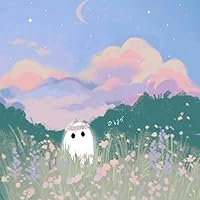
Such a pretty cover. Such a disappointing book 😭😭😭
What do you get when you cross an OwnVoices story with odd mythological tie-ins, a cheesy romance, and parental conspiracies? Hint: it’s this book, and it isn’t very good. At first glance, Our Wayward Fate looked perfect for me (Chinese-American story, discussions of racism, quirky protagonist who likes puns, etc), but like a poorly-planned recipe, the ingredients became stale very quickly and did not blend well, resulting in a forgettable trifle of a read.
As always, I’ll start by giving some of the good elements of the book, because truly, there were some redeeming traits, even if they mostly took the form of side details:
- The very explicit addressing of racism in ultra-white small-town Midwest cities, complete with both overt bullying and subtler microaggressions
- The Chinese culture and language! Ali eats Chinese dishes and intersperses random words of Chinese into her otherwise-English thoughts, and sometimes in other contexts as well. The author noted at the beginning that she put all of the Chinese words in correct Pinyin (or at least correct for the dialect she grew up speaking) but purposely did not include a glossary, trusting the reader to use context clues to understand Ali’s thoughts. I actually studied Chinese for several years, and I was delighted to find that there were only a handful of words/phrases I didn’t recognize (two of which were terms parents use when disciplining children, which obviously I would never have had a reason to learn)
- Yun, the precious, lonely, sweet ball of sunshine. Also, he’s gay and provides great commentary on intetsectionality
- Ali’s Bogóng, a super cool old dude
- The fact that Ali kicks serious butt at kung fu. I am all for girls who know how to fight.
See, unfortunately, while the details were nice, a lot of other elements just didn’t work. Here were some of the most egregious:
- Insta-love. Though the blurb makes it seem more like enemies-to-lovers, Ali spends all of about one chapter annoyed with Chase before the two are suddenly inseparable, swapping jokes and sharing food and shamelessly flirting and sneaking onto rooftops to make out. I am not making this up, I swear.
- Their relationship made so little sense. I get the solidarity in finding someone who has had similar experiences to yours, but beyond that, I didn’t see much real connection between Ali and Chase. To me, it felt more like they were clinging to each other out of desperation and just calling it love.
- The puns sucked. Sorry, but it had to be said. Most of the puns between Ali and Chase were just them making jokes about their last names (“I love Yu.” “Right back at Chu.” Ugh.) And then a handful of cow puns made by Ali and Yun. It got very repetitive, very fast.
- What the heck was that twist? Around 2/3 of the way through, this book went from an exploration of cultural identity to a full-blown parental conspiracy with international consequences. And then it gets handled so quickly and smoothly, it just doesn’t make any sense. Tbh this was my biggest issue, which sucks, because it was the crux of the entire story.
- The mythology integration was awkward. I get what the author was going for, making parallels about forbidden love and whatnot, but it just didn’t flow well. Plus, all the bits talking about “the park, as seen from afar” were very jarring and only made sense at the very end.
- Pacing. The book started okay, then dragged some, then suddenly went way too fast, and then had the longest, slowest, most boring epilogue. Not a fan.
- No consequences for illegal activities. Some legit breaking and entering happens, both at school and at the library, and even though Ali and Chase are caught, they don’t face any repercussions? Also, at one point, Yun steals his dad's credit card. Shortly thereafter, his dad cuts it off, but we never see anyone facing consequences for credit fraud or anything.
- Poorly developed family. Ali’s parents were like caricatures of Asian parents, with very few distinguishing traits and a whole lot of "work hard and be perfect because we want the best for you," and once their “complexity” is “revealed” at the end of the book, the shift feels abrupt and bizarre rather than organic.
- The humor wasn’t very funny. I am shocked that professional reviews described this story as hilarious, because it mostly just read as awkward, and not in an endearing way.
In short, this was an initially promising story meant to address real concerns of racism and Chinese identities in America, but due to sloppy execution, it was not able to deliver on that promise. Alas, perhaps this book and I were simply not meant to be.
Note: I was provided with an eARC of this book by Simon Pulse through NetGalley in exchange for an honest review; however, I was unable to get the file type to open properly on a device where I could actually read it. As such, this is a review of the final edition of the book, which is why it is so much later than the publication date. Thanks for bearing with me!