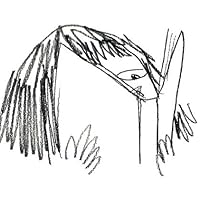
When I was a kid, I loved reading the comics in the newspaper, especially the Saturday edition that had a full colour pull-out section. I loved reading them all including Charlie Brown and Peanuts. So imagine my surprise when on a recent Instagram feed a cartoon appeared in Spanish with a girl with bushy hair that looked like something out of Peanuts. It was oddly funny. Her name was Mafalda.
Then a couple of weeks ago I listened to a podcast interview with a translator Frank Wynne and Argentinian author Samanta Schweblin about the English translation of Mafalda. Schweblin was funny and talked about how everyone in her youth in Argentina identified with the characters: Mafalda, Manolito, Susanita, and Felipe plus her nameless parents (mama and papa, of course). Then I checked my library and put my name on the new book order. When I went to check it out, it was a brand new book! I had one of the first copies.
What a cast. Mafalda hates soup but listens to her transitor radio, inspiring her to ask big questions like overpopulation, politics, social issues, communism versus capitalism, and even asks her parents to explain the Vietnam War (firmly dating her). She is six years old! Manolito, son of a Spanish immigrant, helps his dad in his bodega and he is all about capitalism. Susanita only wants to get married, be rich, and have successful children. Felipe is the dreamer, elusive, loves to procrastinate, and is hooked on The Lone Ranger comics. Unlike Peanuts, her parents are real people just trying to raise Mafalda, despite her challenges. These kids are not Peanuts at all (thank god).
The comic strip was first published in Argentina in 1964 and ended in 1973. It was created for an marketing campaign by Joaquín Salvador Lavado Tejón, also known as Quino. When the campaign was cancelled, he morphed it in a comic strip. It took off. Although Quino said he stopped because he didn’t want to repeat himself, others claim it was because of the political change in Argentine politics. It was widely read in Latin America.
Mafalda is sassy with her big questions. Yes Argentina surfaces a lot, and is presented as having lots of strikes, government problems and turmoil with the plummeting peso. There is a joke about the fish barely recognizing the peso at the bottom of the ocean. Some of these jokes are a little dated but others are very current. I found the funnier strips concerned the fact that the country is “upside” down as seen on the bottom of the globe or about the kids trying to use telepathy. Kids are creative at that young age. Maybe we lose something when we become adults? And yet, these are not comics for kids. God knows I wouldn’t have gotten half of them when I was a kid.
Now I can see what part of the world enjoyed back then. I believe there will more books coming out and I can’t wait. Fun stuff!