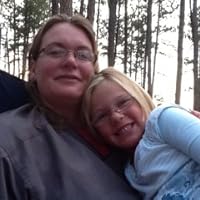
Mary Casanova is an award-winning children's author of novels and picture books. Many of her books stem from her life on the Minnesota-Canadian border; yet some of her stories have taken her as far away as France, Norway, and Belize for research. Whatever the setting for her books, Casanova writes stories that matter--and stories that kids can't put down.
Her book awards include: American Library Association "Notable," Aesop Accolades by the American Folklore Society, Parents' Choice "Gold" Award, Booklist Editor Choice, and two Minnesota Book Awards. Her books frequently land on state children's choice book master lists across the country. "The greatest reward for me," Casanova states, "is when a young reader tells me she or he loves one of my books. For me, it's all about communicating writer-to-reader through a character and story."
Casanova grew up in a family of ten children in St. Paul, Minnesota. In a bustling camp-like atmosphere, Casanova found that writing became her voice. "Words are my paintbrush," she explains, "my way of exploring the world around me."
Now, with 19 books published and many more under contract and forthcoming, she divides her time between writing and traveling. Nationally and internationally, at schools and conferences, Casanova shares her love of writing and reading with children and adults.
Her newest novel, The Klipfish Code, makes use of Mary's on-site research in Norway. The story explores an important facet of Norwegian history through the experiences of Marit, a 12-year-old Norwegian girl who finds a way to fight against the 5-year Nazi occupation of Norway. Marit and her brother Lars are separated from their parents (who are working for the Resistance) and sent to live on an island with their gruff grandfather and school teacher aunt. During the course of the story, Marit's aunt is one of the Norwegian school teachers that gets sent to a concentration camp for refusing to integrate Nazi propaganda into her classroom. With potential danger waiting every turn, Marit finds a way to help the Resistance and eventually reunite her family.
Mary's series, Dog Watch (Simon and Schuster) is based on her northern Minnesota village where dogs are allowed to roam free—as long as they don't get in trouble. If they get in trouble, they earn a sticker on their page at the village clerk's office; too many stickers and a trouble-making dog must remain at home. "I never know where the next story will come from. It’s a delight when the stories come right from this corner of the world I call home." She makes her home in a 100-year old house on Rainy Lake with her husband, Charles, and their three "above average" dogs and spends free time with their horses, Jay and Midnight.
Hunting, poaching, moose & Minnesota. This is 1000% not *my* genre, but I have so many kids who would love this story. It's simple, but has some good lessons on ethics of hunting and enough action to keep unmotivated readers hooked.
What an enjoyable book -- although suggested for ages 9-12, as an adult I found it to peak my interest. In fact at one point mid-book, I had to go do something else, and I had to fight with myself to stop reading it-- smiles. This was my first experience with Mary Casanova, and I am pleased by her work.
This book is one of my favorite books of all time! If you love nature you will love this book! It’s about a boy named Seth who’s dad’s a gamewarden who try’s to save a baby moose but poachers threaten him and say that if he tells someone about them they will go after his family.
A nice Elementary school book 3 and up about a boy who gets involved with poachers during the winter. He and a friend help the authorities catch these poachers and save a moose calf.
Set in the wilds of Northern Minnesota, Moose Tracks is a book many rural Minnesotan students will instantly relate to. Seth is a young boy who wants to prove himself to be brave. He has been begging his step-father to take him out into the woods and so he could see what his job of Game Warden is like, but he is continuously told it is too dangerous. Thinking that a daring act will make him feel courageous and mature, together with his friend and neighbor, Matt, he takes his shotgun out of the gun case and shoots a rabbit one day. Instead of bravery, however, all he feels is sick as he saws the paw off the rabbit as a souvenir of his feat. The next day, Seth takes his horse, Quest, out for a ride to try to follow some moose tracks he had seen and stumbles upon a dangerous pair of poachers that his father has been trying to catch. Again, desperate to prove himself, he attempts to stop the men, which only puts his life, and his family's life, in danger. Throughout the 3-day adventure story, Seth keeps that rabbits foot in his pocket and tries to sort out his feelings. He finally realizes that what he had done was not brave, but foolish. He had wasted the life of a beautiful rabbit for sport, much like those poachers that he loathes are doing to the majestic moose and bear in his woods.
Many students will identify with Seth's struggles to grow up find his place in his own family as his mother and stepfather are expecting a new baby in this contemporary realistic fiction novel. As a 12-year-old boy, he is both pulling away from his parents and longing for their attention at the same time.
In the classroom, this story would compliment a unit on the Minnesota history nicely. Casanova weaves bits of iron country history into her descriptions of the woods as the boys stumble upon abandoned mine shafts and discarded treasures. This book would be of particular interest to students in the fall months as they prepare for their own annual hunting season in the woods with their family. Valuing all life and taking only what is necessary to put food on the table is a powerful theme of the book.
My library rates this book's reading level at a 4.7, though in my opinion, some of the themes and description of events would be best suited to 5th-6th graders.
When I first picked up this book, I thought it was for a younger audience. The simpler language, even the text on the page gave clues that this book would be easy to read.
Then I read it and found out how wrong I was.
The story is about a 12 year old boy. He's chafing at not being allowed to go hunting, so he takes out his hunting rifle without permission and kills a rabbit. This opening sets the tone for the story - the pride of doing something for himself turns to a rather conflicted mass of feelings, backing up against the conflict of not feeling like his 'father' is really his father, especially with brand new baby in the house. His need to belong leads to a lot of argument and withdrawal that I think every teenager would identify with.
Then comes the true conflict - the poachers and the need to save a baby moose before it's too late. The danger is intense as the story continues - there's nothing neat and clean about this either. Gritty, real. Moving and exciting. This book becomes the perfect blend as the story progresses, and is one I would put into the hands of any boy, particularly an older one that's been struggling with reading.
The only thing I didn't like as much was the almost too glib way the boy dealt with his emotions about killing the rabbit. I don't feel that this was the author's intent, and it might have even been the choice of the editor to 'tighten things up' at the end. This might actually be a discussion point if you use the book in the classroom or with your child while homeschooling. Otherwise this is an outstanding book.
This was the author's first book and you can easily see how well she understands kids and their complex emotions at this age. She's fast becoming one of my favorite authors.
Okay, so before I start this review, I must state that I have not read this book in a numerous amount of years, as I have read it quite a long time ago, when I was back in Elementary School. I am now in High School, proudly home-schooled, thank you very much, and I don't remember everything, so I can't fully give an in-depth review of this book. But, do I really need to? Let me get to that in a moment. Also, I must state that I am a very very very critical reader. Seriously, one sentence can throw me off, and I will started debating whether I should give the book a two or a three. So, when I don't want to read a book, I gather up these pessimistic feelings about a book, because I just don't want to read it. This is the problem of reading a book for school. Now, this book was not my choice, but rather my teachers, and by the cover, as another reviewer stated, hunting is NOT MY THING, so I already had mean feelings and emotions towards this book. I didn't want to read it, which meant that I wasn't too excited about it, which adds and affects to my star rating of the book. Now, to get to my point. I didn't really like this book, the ending is coming back to me, and little pieces from the middle, and they were pretty good, but I didn't really like the book, so I won't provide a full in-depth review of the book. My biggest problems were: the typos (there were not just quite a few, but a lot) and not wanting to read it , and probably more I just can't remember. I am debating on whether I should give this book three stars, but I just didn't really like it that much, so I am giving this book two stars. Meh. I've read better.
Seth lived a normal life with both of his parents and his best friend lives next door. Seth's dad is a game warden and his mom home schools him during the day. One day when his parents were not home Seth and his best friend Matt took out his shotgun and Seth shot and illegal rabbit. He felt brave, but it also made him feel terrible inside. Seth's dad was getting into a case of poachers so he has been out late most nights. One day Seth found moose tracks so he decided to follow them. He walked up on a cow and a calf moose eating in the middle of a pasture. He then a hears a gun shot and sees the cow go down, but the calf got away until they shot it in the hind quarter. Luckily it didn't kill it and Seth got in the middle of them so they could finish it off. That night when Seth came in the barn the poachers were there and they told him if he tells anybody they will make so he never sees his family again. Seth then got knocked out in one swift solid punch. The setting of this book takes place in a Minnesota winter. It is exactly the same as we expierence each winter ourselves. Seth lives in the country and behind their land there is a ton of state land that he enjoyss riding his horse Quest on. They live 30 minutes away from town and have very icy roads at times. I would recommend this book to anyone who enjoys outdoor books. This book is aimed for the teenager audience.Also if you like Gary Paulson books this book reminded me of some Gary Paulson books. This book was 124 pages.
Seth's dad is a game warden and Seth wants to prove he is old enough to hunt and be a help when poachers are threatening the moose population. Seth learns a lesson about courage that starts with shooting a rabbit so he could have his own rabbit's foot. Through a series of dangerous events that include the poachers and a bull moose, Seth learns what real courage is.
Classroom Use: Problem Solving: Seth has a big problem when the poachers find him and his friend Matt. The boys have to figure out a way to stay safe, capture the poachers, and save the moose calf. Responsibility: Seth learns the hard way that obeying his parents is the best thing.
Writing Mentor Traits: Conventions: There are many examples of the proper use of a comma in the conversation sentences. Ideas: The idea of courage and being old enough run through the story. Seth learns a real lesson about courage and life. Word-Choice: The author does a great job describing the surroundings, especially in the woods. Readers have to carefully read to see when those descriptions come in handy for the plot.
A boy is disobeying his father, and killing rabbits. His dad doesn't like him shooting the animals. The 12 year old notices that there is a moose calf. However, there are poachers and trying to get the calf. He will do all he can to make sure they dont get the calf and it stays alive. Very great book to show how heroic a boy can be at a young age and be brave ecspecially since they are trying to kill the animals. He will takes risks and proving that he can be mature.
This is a great book for upper elementary boys that are struggling with reading. It would be motivating and an easy read for most- even those that find reading challenging. The way the book is packaged will not make them feel they are reading a "baby" book.