

What do you think?
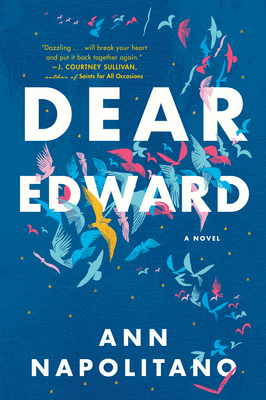
Dear Edward
Goodreads Choice Award
Nominee for Readers' Favorite Fiction (2020)One summer morning, twelve-year-old Edward Adler, his beloved older brother, his parents, and 183 other passengers board a flight in Newark headed for Los Angeles. Among them is a Wall Street wunderkind, a young woman coming to terms with an unexpected pregnancy, an injured vet returning from Afghanistan, a septuagenarian business tycoon, and a free-spirited woman running away from her controlling husband. And then, tragically, the plane crashes. Edward is the sole survivor.
Edward's story captures the attention of the nation, but he struggles to find a place for himself in a world without his family. He continues to feel that a piece of him has been left in the sky, forever tied to the plane and all of his fellow passengers. But then he makes an unexpected discovery--one that will lead him to the answers of some of life's most profound questions: When you've lost everything, how do find yourself? How do you discover your purpose? What does it mean not just to survive, but to truly live?
An alternative cover edition for this ISBN can be found here.
Edward's story captures the attention of the nation, but he struggles to find a place for himself in a world without his family. He continues to feel that a piece of him has been left in the sky, forever tied to the plane and all of his fellow passengers. But then he makes an unexpected discovery--one that will lead him to the answers of some of life's most profound questions: When you've lost everything, how do find yourself? How do you discover your purpose? What does it mean not just to survive, but to truly live?
An alternative cover edition for this ISBN can be found here.
340 pages, Hardcover
First published January 6, 2020
About the author
Ann Napolitano
10 books7,890 followersAnn Napolitano’s novel, Hello Beautiful, was published by Dial Press in March 2023 and was an instant New York Times bestseller and the 100th Oprah Book Club pick. The novel was published by Viking Penguin in the United Kingdom in July 2023, and currently has thirty-one international publishers. It was named one of the ten best books of the year by the Chicago Public Library, and one of the best books of the year by The New York Times, Amazon, NPR, The Washington Post, Time, Vogue, Glamour, Harper’s Bazaar, The New York Post and others. Hello Beautiful has also been long-listed for the 2024 Dublin Literary Award.
Dear Edward was published by Dial Press in January 2020 and was an instant New York Times bestseller, a Read with Jenna selection, and was released as an Apple TV+ series starring Connie Britton. The novel currently has twenty-eight international publishers. It was named one of the best books of 2020 by The Washington Post, The Boston Globe, Real Simple, Fast Company, Women’s World, Parade, LibraryReads and Amazon.
Her other two novels are A Good Hard Look, and Napolitano’s debut novel, Within Arm’s Reach, which will be re-issued with a new cover in April 2024. She was the Associate Editor of One Story literary magazine from 2014-2020. She received an MFA from New York University; she has taught fiction writing for Brooklyn College’s MFA program, New York University’s School of Continuing and Professional Studies and for Gotham Writers’ Workshop. She lives in Brooklyn with her husband and two sons.
Dear Edward was published by Dial Press in January 2020 and was an instant New York Times bestseller, a Read with Jenna selection, and was released as an Apple TV+ series starring Connie Britton. The novel currently has twenty-eight international publishers. It was named one of the best books of 2020 by The Washington Post, The Boston Globe, Real Simple, Fast Company, Women’s World, Parade, LibraryReads and Amazon.
Her other two novels are A Good Hard Look, and Napolitano’s debut novel, Within Arm’s Reach, which will be re-issued with a new cover in April 2024. She was the Associate Editor of One Story literary magazine from 2014-2020. She received an MFA from New York University; she has taught fiction writing for Brooklyn College’s MFA program, New York University’s School of Continuing and Professional Studies and for Gotham Writers’ Workshop. She lives in Brooklyn with her husband and two sons.
Ratings & Reviews
Friends & Following
Create a free account to discover what your friends think of this book!
Community Reviews
Displaying 1 - 30 of 22,294 reviews

March 14, 2020
Be sure to visit Bantering Books to read all my latest reviews.
I am conflicted.
I am a tad disappointed.
I thought I would love Dear Edward. I wanted to love it.
But I just didn't. And I think I know why -- but more on that in a minute.
Based on true events, Dear Edward is the coming-of-age story of (you guessed it!) Edward, a twelve-year-old boy who loses his entire family when their plane to California plummets to the ground. Edward is the sole survivor of the crash, while the lives of his father, mother, brother, and nearly 200 other people on the flight tragically come to an end.
The novel flits back and forth between telling the story of Edward's personal journey after the crash and giving us glimpses of the lives of a handful of other passengers on the flight. Both narrative threads ultimately culminate with the passengers' final moments before the crash of the plane.
One only has to read the blurb for Dear Edward to know that it is a novel about grief, loss, overcoming tragedy, and survival. Going into it, one expects a deeply emotional, heart-wrenching read.
But you know what? It really isn't-- and there's the rub.
Napolitano's writing is cold . . . distant, almost. Instead of a novel, I often felt as if I was reading a report written by a journalist . . . or that the story was being told by a play-by-play announcer.
Where is the emotion? The love? The grief? The sadness?
Because I didn't feel it. It just wasn't there.
And that absence of emotion was very problematic for me.
I didn't feel close to the characters. I didn't feel inserted into, consumed by the story. My mind wandered off at times because I just wasn't THAT emotionally invested in the novel.
Oh, there were a handful of times while reading where I was surprised to find that I had tears in my eyes. But I recognized that my tears were brought on more by my own personal empathy for Edward and his family -- not by Napolitano's writing. As a mother of two young boys, I couldn't help but imagine one of my sons in Edward's place. (How I shudder at the thought.)
But still . . . as flawed as it may be, Dear Edward really isn't a bad read. I did enjoy it.
It's just not a great read.
And it could've been.
If Napolitano had put a little heart into it, it really could've been.
Bantering Books
Instagram
Twitter
Facebook
I am conflicted.
I am a tad disappointed.
I thought I would love Dear Edward. I wanted to love it.
But I just didn't. And I think I know why -- but more on that in a minute.
Based on true events, Dear Edward is the coming-of-age story of (you guessed it!) Edward, a twelve-year-old boy who loses his entire family when their plane to California plummets to the ground. Edward is the sole survivor of the crash, while the lives of his father, mother, brother, and nearly 200 other people on the flight tragically come to an end.
The novel flits back and forth between telling the story of Edward's personal journey after the crash and giving us glimpses of the lives of a handful of other passengers on the flight. Both narrative threads ultimately culminate with the passengers' final moments before the crash of the plane.
One only has to read the blurb for Dear Edward to know that it is a novel about grief, loss, overcoming tragedy, and survival. Going into it, one expects a deeply emotional, heart-wrenching read.
But you know what? It really isn't-- and there's the rub.
Napolitano's writing is cold . . . distant, almost. Instead of a novel, I often felt as if I was reading a report written by a journalist . . . or that the story was being told by a play-by-play announcer.
Where is the emotion? The love? The grief? The sadness?
Because I didn't feel it. It just wasn't there.
And that absence of emotion was very problematic for me.
I didn't feel close to the characters. I didn't feel inserted into, consumed by the story. My mind wandered off at times because I just wasn't THAT emotionally invested in the novel.
Oh, there were a handful of times while reading where I was surprised to find that I had tears in my eyes. But I recognized that my tears were brought on more by my own personal empathy for Edward and his family -- not by Napolitano's writing. As a mother of two young boys, I couldn't help but imagine one of my sons in Edward's place. (How I shudder at the thought.)
But still . . . as flawed as it may be, Dear Edward really isn't a bad read. I did enjoy it.
It's just not a great read.
And it could've been.
If Napolitano had put a little heart into it, it really could've been.
Bantering Books

January 19, 2020
***ONE OF MY TOP TEN BOOKS OF THE YEAR***
This is my first 5 star read of 2020 and it is a great one! So many of my Goodreads friends were raving about this book and now I can see why.
The blurb tells a lot of the outline of this story. A plane en route from Newark to Los Angeles crashes, killing everyone on board except for 12 year old Edward Adler. I have found from doing some research that the author based this story on a real plane crash which occurred in 2010, it was traveling from South Africa to London when it crashed killing everyone except for one 9 year old boy. This isn’t a story about that crash but the author stated that it was this event which held her imagination for a long time and she knew that she had to write this story.
The novel travels back and forth in time between what was happening during the flight and Edward’s life afterward. The prose flows smoothly and I found both timelines equally interesting.
Fortunately for Edward he had an aunt, Lacey, and uncle John who cared very deeply for Edward. In the beginning Edward felt the most connection with Lacey because she lost her sister in the flight. Though never able to have a child of their own, Lacey and John play an integral part in helping to heal Edward and help him to carry on with his life.
It’s unimaginable to think of waking up in a hospital, having lost your entire family. He was also physically injured. The most dominant injury, to one of his legs, took many weeks in the hospital and many, many months of therapy for his body to become whole again. Of course the mind and heart are more difficult to heal and Edward was helped by many others in the novel. He becomes incredibly close to Shay, his next door neighbor, who is his age and they eventually form an unbreakable bond.
He has a wonderful psychologist, Mike, who seems to know how to gently steer Edward into finding ways to heal himself. The principal at his school asks Edward to help him care for his beloved ferns which he surrounds himself with in his school office. The adjustment to school was particularly difficult for Edward, not only because of his notoriety, but also because he had been home schooled for his entire life.
Without going into more of the plot I can tell you that this is a wonderful story that you will find yourself immersed in. The characters, along with the ones mentioned above, are very well developed and an interesting collection of people. On the plane there is a soldier on his way home, a pregnant single woman who is hoping her boyfriend will propose, a dying tycoon and a free spirited woman who is fleeing her present husband in the hopes of starting a new life in California.
At a point in the story Edward and Shay come across a finding which will come to help heal Edward in many, many ways.
The novel was heartbreaking in many ways but it was also filled with so many kind people that I was left feeling very hopeful in the end. Without divulging anything further I will say that it was one of the most satisfying endings that I have read in a very long time.
I highly recommend this novel to anyone who enjoys a great story with wonderful characters and a premise which will give you much to think about and ponder.
I received an ARC of this novel from the publisher through Edelweiss.
This is my first 5 star read of 2020 and it is a great one! So many of my Goodreads friends were raving about this book and now I can see why.
The blurb tells a lot of the outline of this story. A plane en route from Newark to Los Angeles crashes, killing everyone on board except for 12 year old Edward Adler. I have found from doing some research that the author based this story on a real plane crash which occurred in 2010, it was traveling from South Africa to London when it crashed killing everyone except for one 9 year old boy. This isn’t a story about that crash but the author stated that it was this event which held her imagination for a long time and she knew that she had to write this story.
The novel travels back and forth in time between what was happening during the flight and Edward’s life afterward. The prose flows smoothly and I found both timelines equally interesting.
Fortunately for Edward he had an aunt, Lacey, and uncle John who cared very deeply for Edward. In the beginning Edward felt the most connection with Lacey because she lost her sister in the flight. Though never able to have a child of their own, Lacey and John play an integral part in helping to heal Edward and help him to carry on with his life.
It’s unimaginable to think of waking up in a hospital, having lost your entire family. He was also physically injured. The most dominant injury, to one of his legs, took many weeks in the hospital and many, many months of therapy for his body to become whole again. Of course the mind and heart are more difficult to heal and Edward was helped by many others in the novel. He becomes incredibly close to Shay, his next door neighbor, who is his age and they eventually form an unbreakable bond.
He has a wonderful psychologist, Mike, who seems to know how to gently steer Edward into finding ways to heal himself. The principal at his school asks Edward to help him care for his beloved ferns which he surrounds himself with in his school office. The adjustment to school was particularly difficult for Edward, not only because of his notoriety, but also because he had been home schooled for his entire life.
Without going into more of the plot I can tell you that this is a wonderful story that you will find yourself immersed in. The characters, along with the ones mentioned above, are very well developed and an interesting collection of people. On the plane there is a soldier on his way home, a pregnant single woman who is hoping her boyfriend will propose, a dying tycoon and a free spirited woman who is fleeing her present husband in the hopes of starting a new life in California.
At a point in the story Edward and Shay come across a finding which will come to help heal Edward in many, many ways.
The novel was heartbreaking in many ways but it was also filled with so many kind people that I was left feeling very hopeful in the end. Without divulging anything further I will say that it was one of the most satisfying endings that I have read in a very long time.
I highly recommend this novel to anyone who enjoys a great story with wonderful characters and a premise which will give you much to think about and ponder.
I received an ARC of this novel from the publisher through Edelweiss.

January 15, 2020
Wow! I got Arc copy of this book and wrote a review long time ago for NetGalley and now I realized I didn’t share on Goodreads. Luckily my favorite producer assistant Casey, who always gives me hard times by making me rewrite my scenes at least 80 times and taking my middle finger emojis as daily gift sent me this book as an Olive Branch with dozen Sprinkles cupcakes . Okay, she’s forgiven for now!

I started to flip pages as I was devouring banana dark chocolate cupcake. (I highly recommend this flavor and it fits well with tear jerker books because tryptophan in chocolate makes you happy and saves you from emotional breakdowns!)
So I reread some parts and remembered how much I loved this book and even though I consumed lots of cupcakes, I still cried a lot. Then I took my book to the gym and continue reading when I was running like a hamster on treadmill. I kept whining a lot and told the story of twelve years old Edward Adler who lost his entire family at the plane crash and how he gathers his broken pieces of his life while he was dealing with his grief, his new life conditions, guilt feelings because of being only one to survive. I realized I created a chaos and contagious panic attack crisis at my gym place.
Can you imagine those humongous guys who were even bigger than Jason Momoa started howling like wolves after hearing Edward’s story? They did. And it was so nasty and disturbing!!!So I left the place before they revoke my membership and locked myself at home to terrorize only my husband, dogs and douchebag neighbors with my ugly scream cries.
I truly love Edward and I cannot imagine someone’s brokenness after losing his loved ones at the same time. But luckily there are helping hands try to reach to him. His Aunt Lacey and Uncle John deals with their own problems but they also cared little boy a lot, doing their best to protect him suffer more.
The neighbor next door, definitely sweet kind of girl next door Shay and Edward’s growing friendship also warmed my heart and put wider smiles on my cheeks.
And let’s not forget Dr. Mike and school principal. One of them use therapy and other one use his plants to nourish his damaged soul by healing him mentally.
The flashbacks put more light on passengers’ back stories which were so intriguing. There are so many interesting characters from a young pregnant mother to wounded soldier, dying man etc.
I think I mostly affected by Edward’s grief about his elder brother. He didn’t only lose a family member, he also lost his best friend and I know exactly how it feels and hurts! Oh boy! Here comes another sob!
Overall: amazing book based on true story with remarkable and unforgettable characters. I’m drying my tears and telling you please go, get this book and read it! Then instead of sending me thank you notes, send me more black/ white Sprinkles cupcakes (second favorite flavor)
Thanks to Random House for publishing this amazing story👏🏻👏🏻👏🏻
I started to flip pages as I was devouring banana dark chocolate cupcake. (I highly recommend this flavor and it fits well with tear jerker books because tryptophan in chocolate makes you happy and saves you from emotional breakdowns!)
So I reread some parts and remembered how much I loved this book and even though I consumed lots of cupcakes, I still cried a lot. Then I took my book to the gym and continue reading when I was running like a hamster on treadmill. I kept whining a lot and told the story of twelve years old Edward Adler who lost his entire family at the plane crash and how he gathers his broken pieces of his life while he was dealing with his grief, his new life conditions, guilt feelings because of being only one to survive. I realized I created a chaos and contagious panic attack crisis at my gym place.
Can you imagine those humongous guys who were even bigger than Jason Momoa started howling like wolves after hearing Edward’s story? They did. And it was so nasty and disturbing!!!So I left the place before they revoke my membership and locked myself at home to terrorize only my husband, dogs and douchebag neighbors with my ugly scream cries.
I truly love Edward and I cannot imagine someone’s brokenness after losing his loved ones at the same time. But luckily there are helping hands try to reach to him. His Aunt Lacey and Uncle John deals with their own problems but they also cared little boy a lot, doing their best to protect him suffer more.
The neighbor next door, definitely sweet kind of girl next door Shay and Edward’s growing friendship also warmed my heart and put wider smiles on my cheeks.
And let’s not forget Dr. Mike and school principal. One of them use therapy and other one use his plants to nourish his damaged soul by healing him mentally.
The flashbacks put more light on passengers’ back stories which were so intriguing. There are so many interesting characters from a young pregnant mother to wounded soldier, dying man etc.
I think I mostly affected by Edward’s grief about his elder brother. He didn’t only lose a family member, he also lost his best friend and I know exactly how it feels and hurts! Oh boy! Here comes another sob!
Overall: amazing book based on true story with remarkable and unforgettable characters. I’m drying my tears and telling you please go, get this book and read it! Then instead of sending me thank you notes, send me more black/ white Sprinkles cupcakes (second favorite flavor)
Thanks to Random House for publishing this amazing story👏🏻👏🏻👏🏻

December 9, 2019
Many of us know what it feels like to grieve the loss of loved ones, but how unimaginable to lose your whole family at twelve years old as the sole survivor of a plane crash. Who is there to understand what Edward Adler, this young boy, broken physically and emotionally, is feeling? Is there anyone to help him heal, to find his way through the trauma and horrific loss? Perhaps it’s his Aunt Lacey, who has not only lost her sister, but suffers her own personal losses. Or maybe her husband John, who is determined to protect Edward from those who may want to exploit him, from any more hurt. Or maybe his therapist, Dr. Mike. Maybe it’s the young girl, Shay, who lives next door and becomes a source of solace for Edward. Maybe it’s his principal who helps nurture Edward by having him nurture the plants in his office. Maybe it’s the families of some of the others who have perished in the crash. Perhaps it’s all of them. It takes a village.
This is such a heartbreaking story and I cried for Edward multiple times as he grieves the loss of his family, particularly at the moments when he thinks of his older brother Jordan, with whom he shared a special bond. The sadness I felt was not just for his family, but for a number of other passengers that we meet in alternating narratives which reveal their personal stories and why they are on the flight. We learn what his parents and brother are thinking about and also an injured soldier, a dying man, a pregnant young woman, a flamboyant woman who believes in reincarnation, among others. Later in the story we get a glimpse of the grief of their loved ones in a stunning way.
It’s thought provoking in a number of ways - how does a young boy bear his grief, this loss, the trauma of what he has experienced but it made me consider how little we know of the burdens that people whose paths we cross might carry. This book is full of sadness, without a doubt, but it is also filled with shared sorrow, love, friendship and caring. A beautiful story.
I received an advanced copy of this book from Random House through NetGalley.
This is such a heartbreaking story and I cried for Edward multiple times as he grieves the loss of his family, particularly at the moments when he thinks of his older brother Jordan, with whom he shared a special bond. The sadness I felt was not just for his family, but for a number of other passengers that we meet in alternating narratives which reveal their personal stories and why they are on the flight. We learn what his parents and brother are thinking about and also an injured soldier, a dying man, a pregnant young woman, a flamboyant woman who believes in reincarnation, among others. Later in the story we get a glimpse of the grief of their loved ones in a stunning way.
It’s thought provoking in a number of ways - how does a young boy bear his grief, this loss, the trauma of what he has experienced but it made me consider how little we know of the burdens that people whose paths we cross might carry. This book is full of sadness, without a doubt, but it is also filled with shared sorrow, love, friendship and caring. A beautiful story.
I received an advanced copy of this book from Random House through NetGalley.

April 11, 2020
3.5 stars...
Yes I realize I am going to be the unpopular opinion. I couldn't wait to chose this for my BOTM. I did worry that the material would be a bit too emotional for me and that I would be ugly crying all over the book....but I didn't. I am not sure why but it didn't elicit that strong of an emotion from me. OMG am I heartless??
Edward does the impossible. He survives a plane crash that claims the life of all the other passengers...all 191 one of them. His entire world is onboard that plane- his mom, dad and brother. How does one move on from something like this? Especially a 12 year old boy that just lost everything in a matter of seconds?
The timeline was split into after the crash and right before the crash. We get to meet his family members and several of the other passengers during these chapters of the book. Although I did appreciate it- I felt there wasn't much character development with the passengers and I felt a bit detached from them.
Although I did really find the whole premise very sad and an interesting story line..I lacked connecting with Edward. I guess the writing had a bit of detachment to it and it didn't dig deep enough into my emotions. Which is odd because I am a pretty emotional reader.
Overall I did enjoy the book- I just wanted to cry my eyes out!! I guess I am never happy- I hesitated picking up the book because it might be too sad, yet I complain because it didn't give me the ugly cries!! I did love the relationship that Edward and Shay developed- helping each other out in their own way. I found that to be a beautiful blessing for them both.
Yes I realize I am going to be the unpopular opinion. I couldn't wait to chose this for my BOTM. I did worry that the material would be a bit too emotional for me and that I would be ugly crying all over the book....but I didn't. I am not sure why but it didn't elicit that strong of an emotion from me. OMG am I heartless??
Edward does the impossible. He survives a plane crash that claims the life of all the other passengers...all 191 one of them. His entire world is onboard that plane- his mom, dad and brother. How does one move on from something like this? Especially a 12 year old boy that just lost everything in a matter of seconds?
The timeline was split into after the crash and right before the crash. We get to meet his family members and several of the other passengers during these chapters of the book. Although I did appreciate it- I felt there wasn't much character development with the passengers and I felt a bit detached from them.
Although I did really find the whole premise very sad and an interesting story line..I lacked connecting with Edward. I guess the writing had a bit of detachment to it and it didn't dig deep enough into my emotions. Which is odd because I am a pretty emotional reader.
Overall I did enjoy the book- I just wanted to cry my eyes out!! I guess I am never happy- I hesitated picking up the book because it might be too sad, yet I complain because it didn't give me the ugly cries!! I did love the relationship that Edward and Shay developed- helping each other out in their own way. I found that to be a beautiful blessing for them both.

December 18, 2019
4.5 stars
It’s been a long time since I read a book where the story and the characters took hold of my heart and wouldn’t let go. Anyone who has followed my reviews for any amount of time knows that I don’t typically like child narrators. This is the exception. It’s a stunning piece of storytelling. I love a story that delves into psychological issues, and how one heals from unbearable tragedy is the ultimate psychological challenge. I had the pleasure of buddy reading this with my good friend Marialyce, and it’s a book we both loved and tore through in record time.
Edward, his brother, and his parents board a plane to start a new life in California. They don’t make it, as the plane crashes midflight. 191 die while Edward is miraculously the only survivor.
Edward’s emotional struggles with the loss of his beloved family, the burden of survivor’s guilt, as well as his sudden notoriety as the “miracle boy”, is dealt with in such a compassionate and authentic way that I wondered more than once as I read if the author has experience with grief. She knows you never get over a loss, and there is no timeline or “closure”. But there is life after loss, although it’s a different life.
After Edward heals from his physical injuries he goes to live with his aunt and uncle, and does the hard work of learning how to live again. How do you move forward when you’ve lost everything, including yourself, the person you were before the loss? He befriends Shay, the 12 year old girl next door, and it is one of the most delightful friendships I’ve had the pleasure of reading.
All of the adults in Edward’s life, from his aunt and uncle, to the school personnel and his therapist have a part to play in his recovery and all were incredibly knowledgeable and insightful, even when dealing with their own struggles. They were all terrific characters that felt realistic. But Edward still struggles until he makes a discovery that, along with Shay’s help, serves as the catalyst for his healing.
The story alternates between Edward’s chapters and chapters that highlights the other passengers on the flight, from the quirky to the serious. Learning their backstories put the losses into perspective but thankfully the author doesn’t manipulate the reader into an emotional response. They simply add interest and depth to the story.
This sounds unbearably sad but it is a beautiful, heartfelt story that is never maudlin or manipulative. The ending brought tears through my smiles. This is a book that is ultimately hopeful, a story that restores faith in the human spirit, and one that will stay with me a long time to come. Highly recommended! 5 stars for how this book made me feel.
• I received a digital copy of this book via NetGalley in exchange for an honest review
• For our duo review of this book and others please visit https://yayareadslotsofbooks.wordpres...
It’s been a long time since I read a book where the story and the characters took hold of my heart and wouldn’t let go. Anyone who has followed my reviews for any amount of time knows that I don’t typically like child narrators. This is the exception. It’s a stunning piece of storytelling. I love a story that delves into psychological issues, and how one heals from unbearable tragedy is the ultimate psychological challenge. I had the pleasure of buddy reading this with my good friend Marialyce, and it’s a book we both loved and tore through in record time.
Edward, his brother, and his parents board a plane to start a new life in California. They don’t make it, as the plane crashes midflight. 191 die while Edward is miraculously the only survivor.
Edward’s emotional struggles with the loss of his beloved family, the burden of survivor’s guilt, as well as his sudden notoriety as the “miracle boy”, is dealt with in such a compassionate and authentic way that I wondered more than once as I read if the author has experience with grief. She knows you never get over a loss, and there is no timeline or “closure”. But there is life after loss, although it’s a different life.
After Edward heals from his physical injuries he goes to live with his aunt and uncle, and does the hard work of learning how to live again. How do you move forward when you’ve lost everything, including yourself, the person you were before the loss? He befriends Shay, the 12 year old girl next door, and it is one of the most delightful friendships I’ve had the pleasure of reading.
All of the adults in Edward’s life, from his aunt and uncle, to the school personnel and his therapist have a part to play in his recovery and all were incredibly knowledgeable and insightful, even when dealing with their own struggles. They were all terrific characters that felt realistic. But Edward still struggles until he makes a discovery that, along with Shay’s help, serves as the catalyst for his healing.
The story alternates between Edward’s chapters and chapters that highlights the other passengers on the flight, from the quirky to the serious. Learning their backstories put the losses into perspective but thankfully the author doesn’t manipulate the reader into an emotional response. They simply add interest and depth to the story.
This sounds unbearably sad but it is a beautiful, heartfelt story that is never maudlin or manipulative. The ending brought tears through my smiles. This is a book that is ultimately hopeful, a story that restores faith in the human spirit, and one that will stay with me a long time to come. Highly recommended! 5 stars for how this book made me feel.
• I received a digital copy of this book via NetGalley in exchange for an honest review
• For our duo review of this book and others please visit https://yayareadslotsofbooks.wordpres...

February 5, 2020
Dear Edward by Ann Napolitano is a 2020 Dial Press publication.
A sad, uncomfortable, and heartrending journey- but ultimately a story of hope and inspiration!
Twelve- year old, Edward is the sole survivor of a plane crash, which took the lives of 191 people, including Edward’s parents and older brother. Now living with his aunt and uncle, Edward is faced with the daunting task of recovering physically, mentally and emotionally. This story follows Edward's coming of age journey, as he copes with the aftermath of the crash.
Along with his devoted family, Edward also finds an unexpected support system through his friendship with Shay, one his neighbors. The two become inseparable, when Shay offers Edward her unconditional support, honesty, and love. Their relationship defied convention at times, but Shay became Edward's rock on so many levels.
Edwards’s present -day journey is alternated with the stories of a select group of passengers who were on board the plane with Edward, giving the reader a bit of insight into their personal lives leading up to the flight, and how they co-mingled on the plane before the crash.
This book was inspired by true events and is understandably melancholy. The story is centered around grief, the way it affects people in different ways, and how they cope. How will Edward come out on the other side of something this traumatic?
Right from the beginning, I wanted to hug Edward and comfort him. What a resilient soul, so broken, but also brave and determined. If the story had stayed centered on Edward and the obstacles he and his family faced and how they worked through their grief and all the psychological pain of recovering under the glare of the media spotlight, I would have given the book all the stars and a rave review.
However, I have some mixed feelings about the airplane sequences. It was very uncomfortable to read about these people under those circumstances. I wondered if there might have been a different way to introduce them- perhaps telling their story as a prelude to the crash, before turning the spotlight over to Edward.
I felt it would only be right to give the reader some insight into Edward’s life before the crash, and naturally I could understand the impulse of the surviving family members to reach out to Edward, to want to ask him questions, but these passages made me squirm with unease and kept the book shrouded in pain and darkness longer than necessary- often overshadowing or disrupting insights into Edward’s progress.
I also found it a bit curious that the author chose to relate the story in such a neutral, disconnected format. Except for Shay, the other character's backstory and interactions often seemed to take place at a great distance, save for one or two moments of intimate conversations.
However, as the story progressed the grayness slowly lifts, and the sun gradually begins to peek out from behind the gloomy clouds, eventually lighting Edward’s world with long overdue, but generous warmth.
Edward's journey is long, slow, and painful, but he finds strength and wisdom through many avenues, building mental and emotional fortitude with grace, despite his profound grief.
But, of course, he didn’t do it alone. I would be lying if I didn’t admit, that for me, Shay steals the show. What an amazing character!! In this whole drama, she was the bright light that led Edward out of the tunnel of darkness. That is not to say that others in his life weren’t as essential- because they were. It took all these special people, who stayed solid and committed to Edward, for him to become whole again- and he was worth every bit of the effort! Their work and support paid off and I think each of them was blessed and touched by Edward as well. I loved the way the story concluded on such a wonderful and positive note. This story is a testament to the human spirit, and to the power of love and friendship.
Although, I felt the story was too remote much of the time, it did eventually morph into a stirring, inspirational and uplifting novel.
I’m very conflicted about my rating here. The book has some issues that were big enough to take me out of the story at times, but it was so moving and profound, I hate to lower my rating. I’ve been waffling between a 3 or 4- which usually means I seek middle ground with a 3.5- but I couldn’t decide if I wanted to round up or down. Ultimately, despite some reservations I’ve decided to round up because the story is one that has lingered in my mind for days, which, for me, overrides some of the book’s weaker areas.
3.5 rounded up
A sad, uncomfortable, and heartrending journey- but ultimately a story of hope and inspiration!
Twelve- year old, Edward is the sole survivor of a plane crash, which took the lives of 191 people, including Edward’s parents and older brother. Now living with his aunt and uncle, Edward is faced with the daunting task of recovering physically, mentally and emotionally. This story follows Edward's coming of age journey, as he copes with the aftermath of the crash.
Along with his devoted family, Edward also finds an unexpected support system through his friendship with Shay, one his neighbors. The two become inseparable, when Shay offers Edward her unconditional support, honesty, and love. Their relationship defied convention at times, but Shay became Edward's rock on so many levels.
Edwards’s present -day journey is alternated with the stories of a select group of passengers who were on board the plane with Edward, giving the reader a bit of insight into their personal lives leading up to the flight, and how they co-mingled on the plane before the crash.
This book was inspired by true events and is understandably melancholy. The story is centered around grief, the way it affects people in different ways, and how they cope. How will Edward come out on the other side of something this traumatic?
Right from the beginning, I wanted to hug Edward and comfort him. What a resilient soul, so broken, but also brave and determined. If the story had stayed centered on Edward and the obstacles he and his family faced and how they worked through their grief and all the psychological pain of recovering under the glare of the media spotlight, I would have given the book all the stars and a rave review.
However, I have some mixed feelings about the airplane sequences. It was very uncomfortable to read about these people under those circumstances. I wondered if there might have been a different way to introduce them- perhaps telling their story as a prelude to the crash, before turning the spotlight over to Edward.
I felt it would only be right to give the reader some insight into Edward’s life before the crash, and naturally I could understand the impulse of the surviving family members to reach out to Edward, to want to ask him questions, but these passages made me squirm with unease and kept the book shrouded in pain and darkness longer than necessary- often overshadowing or disrupting insights into Edward’s progress.
I also found it a bit curious that the author chose to relate the story in such a neutral, disconnected format. Except for Shay, the other character's backstory and interactions often seemed to take place at a great distance, save for one or two moments of intimate conversations.
However, as the story progressed the grayness slowly lifts, and the sun gradually begins to peek out from behind the gloomy clouds, eventually lighting Edward’s world with long overdue, but generous warmth.
Edward's journey is long, slow, and painful, but he finds strength and wisdom through many avenues, building mental and emotional fortitude with grace, despite his profound grief.
But, of course, he didn’t do it alone. I would be lying if I didn’t admit, that for me, Shay steals the show. What an amazing character!! In this whole drama, she was the bright light that led Edward out of the tunnel of darkness. That is not to say that others in his life weren’t as essential- because they were. It took all these special people, who stayed solid and committed to Edward, for him to become whole again- and he was worth every bit of the effort! Their work and support paid off and I think each of them was blessed and touched by Edward as well. I loved the way the story concluded on such a wonderful and positive note. This story is a testament to the human spirit, and to the power of love and friendship.
Although, I felt the story was too remote much of the time, it did eventually morph into a stirring, inspirational and uplifting novel.
I’m very conflicted about my rating here. The book has some issues that were big enough to take me out of the story at times, but it was so moving and profound, I hate to lower my rating. I’ve been waffling between a 3 or 4- which usually means I seek middle ground with a 3.5- but I couldn’t decide if I wanted to round up or down. Ultimately, despite some reservations I’ve decided to round up because the story is one that has lingered in my mind for days, which, for me, overrides some of the book’s weaker areas.
3.5 rounded up

January 6, 2020
Ann Napolitano's melancholic novel depicts the coming of age of Edward Adler, who at the tender age of 12 loses the life he is familiar with along with the loss of his family, his parents and his beloved older brother, Jordan, in a tragic plane crash in Colorado, in which almost 2oo others die. Edward is the only survivor, the boy who lived becomes the centre of a storm of public and national interest. A traumatised Edward with his unbearable burden of grief and sorrow goes to live in West Milford, New Jersey with his Aunt Lacey, having to handle her own losses, and his protective Uncle John. Having been home schooled, he has to come to terms with going to school, getting used to other children, socialising with them. His greatest solace comes with his neighbour, a girl of his own age, Shay, and the close friendship he develops with her.
In a narrative that goes back and forth in time, we learn about the wide ranging lives and stories of the other passengers on that plane, their families, and the letters that bulge with their hopes and expectations of Edward. We follow Edward as he endeavours to initially just survive and then to forge a new path in life, and the response and support he receives from a community. This is a beautiful, moving, emotionally heartbreaking and tearful novel of what it is to be human, for sadly grief and loss is an integral part of what it is to live, and the importance of reaching out, connecting, and supporting each other. Edward is so young to be weighed down by such all consuming loss, guilt and grief, having to endure, and I could not help but feel for him, the enormity of what he must handle, until gradually glimpses of hope and joy begin to appear in his life. Highly recommended. Many thanks to Penguin UK for an ARC.
In a narrative that goes back and forth in time, we learn about the wide ranging lives and stories of the other passengers on that plane, their families, and the letters that bulge with their hopes and expectations of Edward. We follow Edward as he endeavours to initially just survive and then to forge a new path in life, and the response and support he receives from a community. This is a beautiful, moving, emotionally heartbreaking and tearful novel of what it is to be human, for sadly grief and loss is an integral part of what it is to live, and the importance of reaching out, connecting, and supporting each other. Edward is so young to be weighed down by such all consuming loss, guilt and grief, having to endure, and I could not help but feel for him, the enormity of what he must handle, until gradually glimpses of hope and joy begin to appear in his life. Highly recommended. Many thanks to Penguin UK for an ARC.

January 6, 2020
UPDATE…Paul and I are watching the series on Apple TV.
We’ve seen two episodes so far…..
I’ve cried 4 times — ( twice in each episode)..
I thought the book was outstanding—-
But the SERIES is FRICKEN AMAZING…. phenomenal!!!!
SO WELL DONE!!! THE most heart- gripping show I’ve seen and felt in YEARS!!!
Highly recommend it!!! But be aware - it’s impossible- for some of us (during tender times) not to cry.
The casting is WONDERFUL!!!
“Miracle Boy”....
“It’s like they think I’m famous”.
“You are famous, kinda”.
Oh My!!
This story broke my heart and left me in tears.
One of the things I thought about was the ways we hide from the world when we need others most - and how love, tragedy, and the need for connection may be the only things to bring us back out.
We’ve seen two episodes so far…..
I’ve cried 4 times — ( twice in each episode)..
I thought the book was outstanding—-
But the SERIES is FRICKEN AMAZING…. phenomenal!!!!
SO WELL DONE!!! THE most heart- gripping show I’ve seen and felt in YEARS!!!
Highly recommend it!!! But be aware - it’s impossible- for some of us (during tender times) not to cry.
The casting is WONDERFUL!!!
“Miracle Boy”....
“It’s like they think I’m famous”.
“You are famous, kinda”.
Oh My!!
This story broke my heart and left me in tears.
One of the things I thought about was the ways we hide from the world when we need others most - and how love, tragedy, and the need for connection may be the only things to bring us back out.

November 30, 2019
A compassionate and realistic look at a young boy confronting paralyzing grief and survivor guilt. His family, moving from New York to LA, are on an airplane, when the plane crashes and Eddie, 12, is the only survivor. Taken in by his mother's sister and her husband, a couple that has suffered their own private grief, he no longer feels as if he fits in his own skin. Shay, a girl his own age, his new neighbor may be the door that allows him to find a way to move forward.
In alternating chapters we meet some of the people on the doomed flight, a look into their personal lives and hopes for their future and regrets from their pasts. Such great characters, this author has created, people who try to help Eddie and people who his life touches. The way to healing is hard, but Eddie is never alone, something he needs to realize for himself. Fate is not in ones control, and a tragedy such a this touches many, not only those involved. This emotional novel does a fantastic job showing how essential human connection is, and how it can be of benefit if one can open themselves to acceptance. Friendship, love, and hope. The ending had me teary eyed, despite the sadness, I loved watching these characters heal and grow.
ARC from Dial Press/Random House.
In alternating chapters we meet some of the people on the doomed flight, a look into their personal lives and hopes for their future and regrets from their pasts. Such great characters, this author has created, people who try to help Eddie and people who his life touches. The way to healing is hard, but Eddie is never alone, something he needs to realize for himself. Fate is not in ones control, and a tragedy such a this touches many, not only those involved. This emotional novel does a fantastic job showing how essential human connection is, and how it can be of benefit if one can open themselves to acceptance. Friendship, love, and hope. The ending had me teary eyed, despite the sadness, I loved watching these characters heal and grow.
ARC from Dial Press/Random House.

September 4, 2020
I guess I have to be contrary on this one. I thought I’d really love it based on the great reviews and the premise. While reading I barely hung by my fingernails always ready at any minute to bail out of the book. I think part of the problem for me is a lot of tension is given up for two reasons. With the onset we know everyone dies in the plane crash accept Edward. The narrative alternates from post-crash with Edward to pre-crash with the victims on the flight. Although, they are interesting character studies I as a reader knows their ultimate outcome. Which might’ve worked had this structure not produced a staccato story telling feel. We just get into one character and we are ripped out to go to the next chapter, like in a car with one foot on the brake and one on the gas (I know I’ve used this analogy before). Also, the choice of the distant narrator that didn’t allow me to get right down on the ground with the characters added to my reading displeasure. So in the end it was a tad bit too stylistic and literary for my tastes.
David Putnam Author of The Bruno Johnson series.
David Putnam Author of The Bruno Johnson series.
June 21, 2019
Went into this expecting an emotional gut-punch...left somewhat underwhelmed. I’m not even entirely sure what was missing for me, but I just didn’t connect to the story the way I was expecting.
If you’ve read any blurb or review about Dear Edward so far, you probably are aware of the premise. A boy survives a plane crash that kills everyone else on board, then deals with the effects after the fact. It’s very sad, and I was expecting a lot of grief, but I didn’t really feel much of that overall. I think where Ann Napolitano succeeded was in the writing of a 12-year-old survivor’s trauma. Edward is a well constructed main character who is convincingly suffering from PTSD and depression, among other things. He feels disconnected from a good portion of the events of the book, which is a realistic depiction of someone going through this type of tragedy.
That said, I really think she dropped the ball on the flashbacks. It felt like Napolitano was trying to replicate those types of scenes from Lost where they’d flash into random characters’ lives, but it just did not translate here. I don’t know how to fix it, exactly. Maybe if they were condensed and combined near the end? Or if we had gotten more information about the other passengers in the ‘present day’ story? But as it was just jumps to a half a dozen strangers, who were all stereotypes or caricatures , that had no relevance to Edward and his family/friends....besides that they should be remembered? I guess? I think without those parts, the narrative would have been stronger.
I guess I didn’t know how disappointed I was until now. I appreciate that it wasn’t just tragedy porn, which something like this could easily fall into, but I don’t think the plot or characters carried the weight like those from Celeste Ng or Ann Patchett, which this has been compared to. There wasn’t much of a...story? It was just a tragic circumstance and not much beyond that. Napolitano is a talented writer, though, so I’m not put off from reading more by her going forward.
*Thanks to Random House & Netgalley for an advance copy!
**For more book talk & reviews, follow me on Instagram at @elle_mentbooks!
If you’ve read any blurb or review about Dear Edward so far, you probably are aware of the premise. A boy survives a plane crash that kills everyone else on board, then deals with the effects after the fact. It’s very sad, and I was expecting a lot of grief, but I didn’t really feel much of that overall. I think where Ann Napolitano succeeded was in the writing of a 12-year-old survivor’s trauma. Edward is a well constructed main character who is convincingly suffering from PTSD and depression, among other things. He feels disconnected from a good portion of the events of the book, which is a realistic depiction of someone going through this type of tragedy.
That said, I really think she dropped the ball on the flashbacks. It felt like Napolitano was trying to replicate those types of scenes from Lost where they’d flash into random characters’ lives, but it just did not translate here. I don’t know how to fix it, exactly. Maybe if they were condensed and combined near the end? Or if we had gotten more information about the other passengers in the ‘present day’ story? But as it was just jumps to a half a dozen strangers, who were all stereotypes or caricatures , that had no relevance to Edward and his family/friends....besides that they should be remembered? I guess? I think without those parts, the narrative would have been stronger.
I guess I didn’t know how disappointed I was until now. I appreciate that it wasn’t just tragedy porn, which something like this could easily fall into, but I don’t think the plot or characters carried the weight like those from Celeste Ng or Ann Patchett, which this has been compared to. There wasn’t much of a...story? It was just a tragic circumstance and not much beyond that. Napolitano is a talented writer, though, so I’m not put off from reading more by her going forward.
*Thanks to Random House & Netgalley for an advance copy!
**For more book talk & reviews, follow me on Instagram at @elle_mentbooks!

November 17, 2019
“So much could be solved, she thinks, if we simply held hands with each other more often.”
12 year old Eddie Adler boards flight 2977 from Newark to Los Angeles with his parents, and his older brother Jordan.
191 souls will perish with Eddie being the sole survivor of the crash.
The whole country is captivated with Eddie (now referred to as Edward) and his story. They think he is LUCKY.
They don’t understand the pain of being the one “left behind”.
The story is told from the alternating timelines of “ the flight” and the years that follow..
The “flight chapters” acquaint you with some of the other passengers. Not all of them were likable, and I felt like I should’ve grieved more for these people who lost their lives...
Edward’s chapters were much more poignant, as he struggles to make sense of his new life. His chapters brought both tears, and smiles..
They were the more captivating, as were the people who rally around Edward to try and bring him comfort and hope.
His friendship with Shay is truly one of the most moving friendships you will ever have the pleasure of reading about!
My one critique:
The author shares that she spoke with those who administer insurance claims, with those in the military, and with pilots for AUTHENTICITY.
She SHOULD HAVE also spoken with flight attendants.
Veronica was a cliche. Not a chance that her unprofessional behavior would happen or go unnoticed.
And
what MIGHT be done with an elderly passenger who suffers what her passenger suffers while inflight...not a chance...and I have done the job for 34 years...
Would’ve been an easy 5 stars if not for those two things....
Still..highly recommended!
Available now!
Thank you to Netgalley, Viking, and Ann Napolitano for the digital ARC I received in exchange for a candid review!
12 year old Eddie Adler boards flight 2977 from Newark to Los Angeles with his parents, and his older brother Jordan.
191 souls will perish with Eddie being the sole survivor of the crash.
The whole country is captivated with Eddie (now referred to as Edward) and his story. They think he is LUCKY.
They don’t understand the pain of being the one “left behind”.
The story is told from the alternating timelines of “ the flight” and the years that follow..
The “flight chapters” acquaint you with some of the other passengers. Not all of them were likable, and I felt like I should’ve grieved more for these people who lost their lives...
Edward’s chapters were much more poignant, as he struggles to make sense of his new life. His chapters brought both tears, and smiles..
They were the more captivating, as were the people who rally around Edward to try and bring him comfort and hope.
His friendship with Shay is truly one of the most moving friendships you will ever have the pleasure of reading about!
My one critique:
The author shares that she spoke with those who administer insurance claims, with those in the military, and with pilots for AUTHENTICITY.
She SHOULD HAVE also spoken with flight attendants.
Veronica was a cliche. Not a chance that her unprofessional behavior would happen or go unnoticed.
And
what MIGHT be done with an elderly passenger who suffers what her passenger suffers while inflight...not a chance...and I have done the job for 34 years...
Would’ve been an easy 5 stars if not for those two things....
Still..highly recommended!
Available now!
Thank you to Netgalley, Viking, and Ann Napolitano for the digital ARC I received in exchange for a candid review!

January 9, 2020
Dear Edward
is powerful, poignant, and beautiful.
One summer morning nearly 200 people board a plane in Newark bound for Los Angeles. Some are headed to Los Angeles to start a new chapter in their lives, like 12-year-old Edward Adler, who is moving with his parents and older brother so his mother can take a screenwriting job. Others are traveling for business, pleasure, or obligation.
Somewhere over Colorado, the plane crashes, killing 186 of the 187 passengers onboard. Only Edward survives.
Edward is devastated by the loss of his family, especially his beloved 15-year-old brother, Jordan. He can’t fathom how, once he heals physically, he’ll be able to have a life when his family won’t, and he feels awkward living amidst the relationship challenges his aunt and uncle (who took him in) are dealing with. He likes to think that his family is still living somewhere up in the air while he is down on the ground.
Edward is viewed as a miracle by the families of those lost in the crash as well as the rest of the world. It’s an immense pressure to bear, especially for a young boy. He is unsure how to plan for a future when he understands how uncertain life is, and he knows what it’s like to be left behind.
"It feels unkind that they are shoving their emotions at him when his own sadness and fear are so vast that he has to hide from them. The tears of these strangers sting against his raw skin. His ears click and people hold handkerchiefs to their mouths and then the nurse reaches the end of the corridor and the mechanical door slides open and they are outside. He looks down at his busted legs, to avoid seeing the lethal sky."
One night he finds some things related to the accident that at first are overwhelming, but ultimately provide a source of comfort for him. He can be more than just the kid who survived, he can find a way to make a difference. But he also can’t do it alone, which means he has to let others in again.
This book was so moving, so thought-provoking. Ann Napolitano does such a great job because in less-skilled hands, this could be utterly maudlin and depressing.
The story alternates between the present and the time from boarding until the plane crashes, so you get to know some of those who were on the plane a little better, and you understand what caused the plane to crash. That's a little difficult to read.
This really was a great read, although I’m glad I don’t have to get on a plane anytime soon!!
Check out my list of the best books I read in 2019 at https://itseithersadnessoreuphoria.blogspot.com/2020/01/the-best-books-i-read-in-2019.html.
Check out my list of the best books of the decade at https://itseithersadnessoreuphoria.blogspot.com/2020/01/my-favorite-books-of-decade.html.
See all of my reviews at itseithersadnessoreuphoria.blogspot.com.
Follow me on Instagram at https://www.instagram.com/the.bookishworld.of.yrralh/.
One summer morning nearly 200 people board a plane in Newark bound for Los Angeles. Some are headed to Los Angeles to start a new chapter in their lives, like 12-year-old Edward Adler, who is moving with his parents and older brother so his mother can take a screenwriting job. Others are traveling for business, pleasure, or obligation.
Somewhere over Colorado, the plane crashes, killing 186 of the 187 passengers onboard. Only Edward survives.
Edward is devastated by the loss of his family, especially his beloved 15-year-old brother, Jordan. He can’t fathom how, once he heals physically, he’ll be able to have a life when his family won’t, and he feels awkward living amidst the relationship challenges his aunt and uncle (who took him in) are dealing with. He likes to think that his family is still living somewhere up in the air while he is down on the ground.
Edward is viewed as a miracle by the families of those lost in the crash as well as the rest of the world. It’s an immense pressure to bear, especially for a young boy. He is unsure how to plan for a future when he understands how uncertain life is, and he knows what it’s like to be left behind.
"It feels unkind that they are shoving their emotions at him when his own sadness and fear are so vast that he has to hide from them. The tears of these strangers sting against his raw skin. His ears click and people hold handkerchiefs to their mouths and then the nurse reaches the end of the corridor and the mechanical door slides open and they are outside. He looks down at his busted legs, to avoid seeing the lethal sky."
One night he finds some things related to the accident that at first are overwhelming, but ultimately provide a source of comfort for him. He can be more than just the kid who survived, he can find a way to make a difference. But he also can’t do it alone, which means he has to let others in again.
This book was so moving, so thought-provoking. Ann Napolitano does such a great job because in less-skilled hands, this could be utterly maudlin and depressing.
The story alternates between the present and the time from boarding until the plane crashes, so you get to know some of those who were on the plane a little better, and you understand what caused the plane to crash. That's a little difficult to read.
This really was a great read, although I’m glad I don’t have to get on a plane anytime soon!!
Check out my list of the best books I read in 2019 at https://itseithersadnessoreuphoria.blogspot.com/2020/01/the-best-books-i-read-in-2019.html.
Check out my list of the best books of the decade at https://itseithersadnessoreuphoria.blogspot.com/2020/01/my-favorite-books-of-decade.html.
See all of my reviews at itseithersadnessoreuphoria.blogspot.com.
Follow me on Instagram at https://www.instagram.com/the.bookishworld.of.yrralh/.

January 11, 2020
Yep....as advertised: "Riveting. Uplifting. Unforgettable."
Flight 2977.
Did you know...."Clouds usually float at 2,000 to 15,000 feet. Planes fly at 30,000 to 40,000. Outer space begins at 300,000."
I didn't know that exactly and don't know what it is about disaster novels (and movies) that entices me so, but in DEAR EDWARD, Eddie Adler himself, how his life evolves, and the stories of the other doomed passengers made for an addictive, fast read.
Eddie is only 12, his brother Jordan 15 when his family boards a plane in New York bound for a new life in Los Angeles to mom's new job and their new home, but Colorado is as far as they get....before disaster strikes.
In DEAR EDWARD, Eddie, now Edward amazingly survives the crash, but now must survive life without his family and with memories of the horror as he adjusts to a new world with Uncle John and Aunt Lacey, the media and everyone else who wants his story. But us readers are the only ones who get the details....right down to the bitter end....and a hopeful future.
Inspired by a true story, Ann Napolitano backs into the tragic event building characters and storyline into a beautifully written work of fiction.
We all know...."It is statistically more dangerous to travel in a car than in an airplane. In absolute numbers, there are more than five million car accidents compared to twenty aeronautic accidents per year, so, in fact, flying is safer."

June 29, 2020
I expected a whole lot more from this coming of age story with an encouraging premise. But, Dear Edward by Ann Napolitano was a mediocre experience.
The idea of a young sole survivor (Eddie/Edward) of a plane crash, where he lost his Mother, Father and Brother, and then picking up the pieces of his shattered life sounded interesting to me. Lots of scope there to get really involved with the characters and their stories.
But the whole thing was terribly lacklustre. The format was just a bit mundane, as chapters predictably alternated between Eddie recovering and the plane crash. The method used for the reader to become familiar and emotionally attached to each character was told by way of their back stories. These were largely explained during the ‘plane crash’ chapters. This just didn’t work for me, it seemed overly contrived and, in the end, I didn’t feel anything for the poor bastards as they plummeted towards the earth, nor for poor Eddie for that matter. I feel horrible saying this, so just to be clear, I certainly wasn’t happy they perished, just not as sad or as devastated as I should have been. "Miffed" would have sufficed.
When this happens, it doesn’t matter how good the plot is, the whole experience becomes a bit transactional and totally pedestrian.
I did like some of the nerdy, scientificky stuff about planes stalling, and pitch, and airspeed, but this relief was only delivered in aliquots.
Run-of- the-mill fare for me.
2 stars
The idea of a young sole survivor (Eddie/Edward) of a plane crash, where he lost his Mother, Father and Brother, and then picking up the pieces of his shattered life sounded interesting to me. Lots of scope there to get really involved with the characters and their stories.
But the whole thing was terribly lacklustre. The format was just a bit mundane, as chapters predictably alternated between Eddie recovering and the plane crash. The method used for the reader to become familiar and emotionally attached to each character was told by way of their back stories. These were largely explained during the ‘plane crash’ chapters. This just didn’t work for me, it seemed overly contrived and, in the end, I didn’t feel anything for the poor bastards as they plummeted towards the earth, nor for poor Eddie for that matter. I feel horrible saying this, so just to be clear, I certainly wasn’t happy they perished, just not as sad or as devastated as I should have been. "Miffed" would have sufficed.
When this happens, it doesn’t matter how good the plot is, the whole experience becomes a bit transactional and totally pedestrian.
I did like some of the nerdy, scientificky stuff about planes stalling, and pitch, and airspeed, but this relief was only delivered in aliquots.
Run-of- the-mill fare for me.
2 stars

July 27, 2020
4.5 rounded to 5 stars
What a wonderful book this is! I just came off a DNF read so this novel was especially welcome. Ann Napolitano is a new author for me, but she is definitely on my radar now.
It is not a spoiler to say 12-year-old Edward is the sole survivor of a terrible plane crash killing nearly 200 people on board, including his family. The book goes back in forth in time between the thoughts and actions of the passengers and crew on the ill-fated flight hours to minutes before the end and Edward in his struggle to navigate the aftermath. This time shifting is very well done and allows readers to get a glimpse into the lives of a number of the victims who lost their lives that day. I think this technique enriches the story significantly as does the beautiful epilogue.
Poor Edward. He is put in the hands of his aunt and uncle who do their very best to help him cope, but it ends up taking a village to help him survive the world without his parents and especially his brother Jordan with whom he was very close. A key player here is his neighbor of the same age, Shay, my favorite character other than Edward. I also loved Edward’s uncle John. Ms. Napolitano has set herself up for a tough challenge in imbuing life back into our young protagonist. Kudos to her for finding a rather unique, in my opinion, way to help him through. It’s always a bonus to not have predictability.
The start was a bit slow for me as we got to know others on the plane (hence the loss of ½ star), but once the pace picked up, I could barely put the book down. I was captivated and so invested in what was going to happen to Edward. This is a superb example of a great character study with an enormous amount of growth and development in our main character. Furthermore, it was gratifying to see significant growth in several of the supporting characters as well. Major themes of the story include loss, patience, the power of human connection, love, and healing.
If you are looking for a strong character study with excellent writing and cast members you can invest in, this one is for you. Highly recommended!
Thank you, Libby app and Hennepin County Library for the loan of an e-copy, and thank you, Diane S—your review brought me to this one.
What a wonderful book this is! I just came off a DNF read so this novel was especially welcome. Ann Napolitano is a new author for me, but she is definitely on my radar now.
It is not a spoiler to say 12-year-old Edward is the sole survivor of a terrible plane crash killing nearly 200 people on board, including his family. The book goes back in forth in time between the thoughts and actions of the passengers and crew on the ill-fated flight hours to minutes before the end and Edward in his struggle to navigate the aftermath. This time shifting is very well done and allows readers to get a glimpse into the lives of a number of the victims who lost their lives that day. I think this technique enriches the story significantly as does the beautiful epilogue.
Poor Edward. He is put in the hands of his aunt and uncle who do their very best to help him cope, but it ends up taking a village to help him survive the world without his parents and especially his brother Jordan with whom he was very close. A key player here is his neighbor of the same age, Shay, my favorite character other than Edward. I also loved Edward’s uncle John. Ms. Napolitano has set herself up for a tough challenge in imbuing life back into our young protagonist. Kudos to her for finding a rather unique, in my opinion, way to help him through. It’s always a bonus to not have predictability.
The start was a bit slow for me as we got to know others on the plane (hence the loss of ½ star), but once the pace picked up, I could barely put the book down. I was captivated and so invested in what was going to happen to Edward. This is a superb example of a great character study with an enormous amount of growth and development in our main character. Furthermore, it was gratifying to see significant growth in several of the supporting characters as well. Major themes of the story include loss, patience, the power of human connection, love, and healing.
If you are looking for a strong character study with excellent writing and cast members you can invest in, this one is for you. Highly recommended!
Thank you, Libby app and Hennepin County Library for the loan of an e-copy, and thank you, Diane S—your review brought me to this one.

March 15, 2020
this is an intelligently crafted and emotionally charged coming-of-age story, and that focus is what makes this novel so effective. had this only been a story about a plane crash, i wouldnt not have been so touched. its edwards journey and growth after the tradgedy that really pulls on my heartstrings.
im already a sucker for coming-of-age stories, but one so deeply rooted in loss and heartbreak is really moving. i hurt from edwards struggles, found joy in his successes, and loved when he did. my heart found a soft spot for him in such a short amount of pages.
this is definitely one of those books where you will immediately go to those close to you, after you turn the last page, and tell them how much you love them.
↠ 4 stars
im already a sucker for coming-of-age stories, but one so deeply rooted in loss and heartbreak is really moving. i hurt from edwards struggles, found joy in his successes, and loved when he did. my heart found a soft spot for him in such a short amount of pages.
this is definitely one of those books where you will immediately go to those close to you, after you turn the last page, and tell them how much you love them.
↠ 4 stars

December 18, 2019
The sign of a truly great story is one that makes you
feel
and this was the case with Dear Edward. Even with tragedy front and center, I loved this book.
Edward is the sole survivor of a plane crash on his family’s flight from New York to California, where they were planning to live. The plane went down unexpectedly in Colorado and more than 180 people died. He is only 12 years old and returns to the east coast to life with his Aunt Lacey and Uncle John, who are suffering their own losses. Edward becomes close with his next door neighbor, Shay, who is the same age as him.
The story focuses on Edward’s life, post-accident, but does include several chapters going back to the flight, detailing not only his family’s thoughts and actions, but those of some of the other passengers on board.
I cannot imagine enduring such loss - ever, but especially as a 12 year old. Edward lost his father, mother, and 15 year old brother, Jordan. He feels isolated as he tries to make sense of the world without them. I felt so much sadness on his behalf. While it’s not something to move beyond, I did enjoy Edward’s journey of healing, as he attempted to establish a new normal, develop the various relationships in his life, and search for some semblance of hope again.
There is a lot to think about in Dear Edward, a journey of grief and growth as well as a wonderful reminder to be grateful for all we have.
Thank you to NetGalley and Random House Publishing Group for providing an advance copy in exchange for an honest review.
Edward is the sole survivor of a plane crash on his family’s flight from New York to California, where they were planning to live. The plane went down unexpectedly in Colorado and more than 180 people died. He is only 12 years old and returns to the east coast to life with his Aunt Lacey and Uncle John, who are suffering their own losses. Edward becomes close with his next door neighbor, Shay, who is the same age as him.
The story focuses on Edward’s life, post-accident, but does include several chapters going back to the flight, detailing not only his family’s thoughts and actions, but those of some of the other passengers on board.
I cannot imagine enduring such loss - ever, but especially as a 12 year old. Edward lost his father, mother, and 15 year old brother, Jordan. He feels isolated as he tries to make sense of the world without them. I felt so much sadness on his behalf. While it’s not something to move beyond, I did enjoy Edward’s journey of healing, as he attempted to establish a new normal, develop the various relationships in his life, and search for some semblance of hope again.
There is a lot to think about in Dear Edward, a journey of grief and growth as well as a wonderful reminder to be grateful for all we have.
Thank you to NetGalley and Random House Publishing Group for providing an advance copy in exchange for an honest review.

February 3, 2020
⭐️⭐️⭐️⭐️⭐️
Oh, poor, dear, sweet Edward.
The sole survivor of a devastating plane crash that claimed 191 lives—including his entire immediate family—Edward is just twelve years old, sheltered, and wholly unprepared for the unimaginable reality he must now face.
The novel opens with an unexpectedly humorous scene as Edward and his family navigate airport security. His beloved older brother, Jordan, stubbornly refuses to go through screening, insisting instead on a pat-down. It’s a moment of levity that feels so real and relatable—one I can’t quite do justice in retelling, but it perfectly sets the stage for what follows.
From the outset, the reader knows the plane will crash. Yet Ann Napolitano masterfully builds suspense through alternating chapters. As we move closer to the fateful moment, she introduces us to the other passengers—their private thoughts, worries, and quiet hopes. Napolitano captures the beautiful banality of air travel: strangers sharing confined space, each carrying their own unseen stories.
In the alternating timeline, Edward struggles to make sense of his survival. Taken in by his childless aunt and uncle—relatives he barely knows—he feels unmoored and out of place. His grief is immense, compounded by overwhelming survivor’s guilt. Suddenly thrust into the spotlight, Edward becomes a reluctant symbol of tragedy, and the weight of it all is almost too much to bear.
Enter Shay, his outspoken and refreshingly unfiltered neighbor. Shay refuses to conform to expectations and, more importantly, refuses to let Edward disappear into his grief. Through her friendship, Edward begins to find a fragile but vital spark of hope.
The title Dear Edward carries a poignant double meaning, as letters from the families of the deceased begin arriving—each one addressed to Edward, each one an attempt to make sense of loss. These letters add another deeply emotional layer to an already powerful narrative.
This is a beautifully written story about grief, survival, and the slow, uncertain path toward healing.
In her afterward, Napolitano shares that the novel was inspired in part by real-life plane crashes, including one in Libya where a young boy was the sole survivor. She also draws on black box recordings from another crash, highlighting how easily human error can lead to catastrophe—an unsettling but compelling element that grounds the story in reality.
I experienced this as an audiobook, narrated by Cassandra Campbell, who is absolutely pitch-perfect. Her performance elevates the emotional depth of the story, and I highly recommend this format.

April 4, 2022
Sometimes a story comes a long and grabs your heart and doesn’t let go. This is one of them.
Because...It is sad, uncomfortable, a heartrending journey...
But...Ultimately ultimately a story of hope and inspiration.
So...How do you reconcile being the sole survivor of a plane crash in which you lose your whole family?
Or...How do you face the daunting task of recovering physically, mentally and emotionally?
This story follow’s Edward’s coming of age journey, as he copes with the aftermath of the crash...
But...It does more than that – it also gives us insight through alternate chapters into the stories of a select group of passengers who were on board the plane with Edward.
So...What happened on that ill-fated flight? What will happen to Edward?
Stay with it – feel the emotions – perhaps even have a box of Kleenex by your side.
Because...It is sad, uncomfortable, a heartrending journey...
But...Ultimately ultimately a story of hope and inspiration.
So...How do you reconcile being the sole survivor of a plane crash in which you lose your whole family?
Or...How do you face the daunting task of recovering physically, mentally and emotionally?
This story follow’s Edward’s coming of age journey, as he copes with the aftermath of the crash...
But...It does more than that – it also gives us insight through alternate chapters into the stories of a select group of passengers who were on board the plane with Edward.
So...What happened on that ill-fated flight? What will happen to Edward?
Stay with it – feel the emotions – perhaps even have a box of Kleenex by your side.

February 24, 2020
3.5 Stars
An insightful and thought provoking novel with a unique premise. I was so pleased I didn't have to read horrific or gory details of the crash and have to applaud the author for her handling of the story.
One summer morning, twelve-year-old Edward Adler, his beloved older brother, his parents, and 183 other passengers board a flight in Newark headed for Los Angeles. Among them are a Wall Street wunderkind, a young woman coming to terms with an unexpected pregnancy, an injured veteran returning from Afghanistan, a business tycoon, and a free-spirited woman running away from her controlling husband. Halfway across the country, the plane crashes. Edward is the sole survivor.
I was a little wary going into this one as I was afraid that it was going to be a heart-breaking and graphic read but am happy to report that while it is emotional, it never felt depressing and I think that is due to the short chapters and the switching back and forth between stories of the passengers on board and Edward's life after the crash.
The novel is very cleverly written and the handful of characters we learn about on board are vivid and real. The aftermath of the crash and how life continues for Edward and family members who have lost loved ones is very realistic. You cant help but place yourself in the story and I think this is why this book resonates with so many readers.
A short book that packs a punch and a story that will stay with me and a book that would make a good book club discussion read.
An insightful and thought provoking novel with a unique premise. I was so pleased I didn't have to read horrific or gory details of the crash and have to applaud the author for her handling of the story.
One summer morning, twelve-year-old Edward Adler, his beloved older brother, his parents, and 183 other passengers board a flight in Newark headed for Los Angeles. Among them are a Wall Street wunderkind, a young woman coming to terms with an unexpected pregnancy, an injured veteran returning from Afghanistan, a business tycoon, and a free-spirited woman running away from her controlling husband. Halfway across the country, the plane crashes. Edward is the sole survivor.
I was a little wary going into this one as I was afraid that it was going to be a heart-breaking and graphic read but am happy to report that while it is emotional, it never felt depressing and I think that is due to the short chapters and the switching back and forth between stories of the passengers on board and Edward's life after the crash.
The novel is very cleverly written and the handful of characters we learn about on board are vivid and real. The aftermath of the crash and how life continues for Edward and family members who have lost loved ones is very realistic. You cant help but place yourself in the story and I think this is why this book resonates with so many readers.
A short book that packs a punch and a story that will stay with me and a book that would make a good book club discussion read.

August 23, 2019
”We contain the other, hopelessly and forever.”
-- James Baldwin
An examination of the sorrow that follows losing loved ones, as well as the suffering that follows any harrowing ordeal, this centers primarily on twelve-year-old Edward Adler who is the sole survivor of a plane crash.
During the early part of the flight we learn bits and pieces about some of the 183 passengers. One young woman has just found out she is pregnant, while another woman is leaving behind a husband, an elderly business mogul has an assistant flying with him, a woman, Edward’s mother, working on a script for a movie in first class while her two sons and husband sit in coach, another woman who believes that she has been reincarnated many times. Many other characters stories are shared in a more limited sense, but this is really Edward’s story.
After the plane crash, and after a somewhat lengthy stay in the hospital Edward goes to live with his mother’s sister and her husband in West Milford, New Jersey, overlooking Greenwood Lake. It’s not that far from where his family had lived in NYC, but it has the benefit of being remote and relatively quiet, although it had lost some of the charm it once held as a summer resort town over the years.
When the girl next door befriends Edward, it is like a lifeline for him, and he grabs hold to it, but it is still a while before Edward begins to even begin to return to his pre-sole survivor status. Joy is fleeting for some time, but there are moments where his trust and comfort in the company of Shay show his walls coming down, if not with everyone then with her.
There are some very lovely, and some very emotional elements of this story, but the frequently changing perspectives took a bit of a toll on me for the story overall. Still, I found this to be a very compelling story. My eyes filled with tears at moments, and other moments had me smiling as I saw Edward finding his way toward a life with love, and the peace that follows discovering the path to the life he was meant to live.
Pub Date: 14 Jan 2020
Many thanks for the ARC provided by Random House Publishing Group – Random House / The Dial Press
-- James Baldwin
An examination of the sorrow that follows losing loved ones, as well as the suffering that follows any harrowing ordeal, this centers primarily on twelve-year-old Edward Adler who is the sole survivor of a plane crash.
During the early part of the flight we learn bits and pieces about some of the 183 passengers. One young woman has just found out she is pregnant, while another woman is leaving behind a husband, an elderly business mogul has an assistant flying with him, a woman, Edward’s mother, working on a script for a movie in first class while her two sons and husband sit in coach, another woman who believes that she has been reincarnated many times. Many other characters stories are shared in a more limited sense, but this is really Edward’s story.
After the plane crash, and after a somewhat lengthy stay in the hospital Edward goes to live with his mother’s sister and her husband in West Milford, New Jersey, overlooking Greenwood Lake. It’s not that far from where his family had lived in NYC, but it has the benefit of being remote and relatively quiet, although it had lost some of the charm it once held as a summer resort town over the years.
When the girl next door befriends Edward, it is like a lifeline for him, and he grabs hold to it, but it is still a while before Edward begins to even begin to return to his pre-sole survivor status. Joy is fleeting for some time, but there are moments where his trust and comfort in the company of Shay show his walls coming down, if not with everyone then with her.
There are some very lovely, and some very emotional elements of this story, but the frequently changing perspectives took a bit of a toll on me for the story overall. Still, I found this to be a very compelling story. My eyes filled with tears at moments, and other moments had me smiling as I saw Edward finding his way toward a life with love, and the peace that follows discovering the path to the life he was meant to live.
Pub Date: 14 Jan 2020
Many thanks for the ARC provided by Random House Publishing Group – Random House / The Dial Press

December 4, 2019
On 12th June 2013 the Adler family (Bruce, Jane and sons Jordan and Eddie) board a plane at Newark Airport bound for Los Angeles. They are a lovely family and the bond between the brothers is strong and they converse without words. By the evening all those
on board are dead except for Eddie, the sole survivor, the miracle boy. This beautifully written story is told in alternate storylines detailing the flight itself (the crash is chilling) and Edward’s story as he learns to survive, overcome his grief, love and hope again. Eddie stays behind with the victims and its Edward who survives.
There is a lot to admire in the storytelling. The characters on the plane are acutely observed from utterly bonkers Florida escaping another husband, libidinous Mark Lassio, soldier Benjamin Stillman struggling with his sexuality and newly pregnant Linda. Jordan Adler is wonderful and I love the fraternal bond. The characters who help Edward to survive are terrific too, his aunt and uncle and especially Besa and Shay who live next door. Shay in particular helps bring Edward back to life and she, apart from Edward, is the standout character.
The power in the writing lies in how Ann Napolitano depicts Edwards struggle post crash. He initially feels ambivalent, flat, cloaked in a stifling blanket, he can’t eat, can’t sleep and he’s an object of fascination. He’s gawped at, photographed,, touched, written about in truth and lies in every form of media. He struggles to move on but after a lapse of time is expected to. However, with Shay’s friendship and support and letters from the relatives of victims from the flight he regains his purpose, becomes lighter and begins to live again.
Overall, it’s a very well written, beautiful and emotional story. I love reading Edwards thoughts and how he comes to certain realisations. The friendship between him and Shay is a thing of beauty as she helps him heal and he helps her make the best of her life. Shay fills the void left by Jordan just as he fills a void in her. It’s wonderful, life affirming and a book I won’t forget in a hurry.
Thank you to NetGalley and Penguin Books UK for the ARC.
on board are dead except for Eddie, the sole survivor, the miracle boy. This beautifully written story is told in alternate storylines detailing the flight itself (the crash is chilling) and Edward’s story as he learns to survive, overcome his grief, love and hope again. Eddie stays behind with the victims and its Edward who survives.
There is a lot to admire in the storytelling. The characters on the plane are acutely observed from utterly bonkers Florida escaping another husband, libidinous Mark Lassio, soldier Benjamin Stillman struggling with his sexuality and newly pregnant Linda. Jordan Adler is wonderful and I love the fraternal bond. The characters who help Edward to survive are terrific too, his aunt and uncle and especially Besa and Shay who live next door. Shay in particular helps bring Edward back to life and she, apart from Edward, is the standout character.
The power in the writing lies in how Ann Napolitano depicts Edwards struggle post crash. He initially feels ambivalent, flat, cloaked in a stifling blanket, he can’t eat, can’t sleep and he’s an object of fascination. He’s gawped at, photographed,, touched, written about in truth and lies in every form of media. He struggles to move on but after a lapse of time is expected to. However, with Shay’s friendship and support and letters from the relatives of victims from the flight he regains his purpose, becomes lighter and begins to live again.
Overall, it’s a very well written, beautiful and emotional story. I love reading Edwards thoughts and how he comes to certain realisations. The friendship between him and Shay is a thing of beauty as she helps him heal and he helps her make the best of her life. Shay fills the void left by Jordan just as he fills a void in her. It’s wonderful, life affirming and a book I won’t forget in a hurry.
Thank you to NetGalley and Penguin Books UK for the ARC.

June 22, 2021
4.5 stars
I was pleasantly surprised by this very moving book. I had heard many good things and had seen it nominated for some awards but went in warily because hype is not always a good thing. In this case, I think the hype paid off.
From the very first pages I was drawn into the variety of characters you meet as they embark on a cross-country plane journey. My enthrallment only increased as we learned more about their journey and the aftermath. Also, there was a lot of back and forth time jumping in this story; in a recent review I mention that this bothers me in about 50% of the books I read. I did not have an issue with it here at all. All in all, it is a book that captured my attention the entire time.
One major point of warning . . . this book deals with several difficult scenarios. It is powerful and heart-wrenching at points. You will need your tissues and I fear that it may be too much for those who do not like stories that might stoke their sorrow. There are many lights and the end of many tunnels in this story, but the road to get there is a very bumpy one.
If you enjoy good storytelling, interesting characters, and your emotions torn asunder, give Dear Edward a try!
I was pleasantly surprised by this very moving book. I had heard many good things and had seen it nominated for some awards but went in warily because hype is not always a good thing. In this case, I think the hype paid off.
From the very first pages I was drawn into the variety of characters you meet as they embark on a cross-country plane journey. My enthrallment only increased as we learned more about their journey and the aftermath. Also, there was a lot of back and forth time jumping in this story; in a recent review I mention that this bothers me in about 50% of the books I read. I did not have an issue with it here at all. All in all, it is a book that captured my attention the entire time.
One major point of warning . . . this book deals with several difficult scenarios. It is powerful and heart-wrenching at points. You will need your tissues and I fear that it may be too much for those who do not like stories that might stoke their sorrow. There are many lights and the end of many tunnels in this story, but the road to get there is a very bumpy one.
If you enjoy good storytelling, interesting characters, and your emotions torn asunder, give Dear Edward a try!

November 25, 2019
3.5 stars, rounded up
This novel tracks what happens to a young man who is the sole survivor when a plane crashes in Colorado. What caught me off guard is that we are given glimpses into the lives of the other passengers on board. I wasn’t initially crazy about this aspect and wasn’t sure where it was going. As the book goes on, it becomes apparent why you have learned about them, as their loved ones interact with Edward or the brief encounters they had with Edward shape him.
Napolitano does a great job expressing the survivor’s guilt and grief that Edward feels. But we also get to see how he slowly does move forward with his life. I also felt for Edward’s aunt and uncle, attempting to deal with this unexpected wrinkle in their life. But Shay ends up being Edward’s saving grace as she’s the only one that doesn’t walk on eggshells around him.
This was a well written book, but it also was uneven. I was much more interested in Edward’s sections than the other passengers. It drags a little in the middle. But the ending was totally uplifting and a good reminder to all of us.
My thanks to Netgalley and Random House for an advance copy of this book.
This novel tracks what happens to a young man who is the sole survivor when a plane crashes in Colorado. What caught me off guard is that we are given glimpses into the lives of the other passengers on board. I wasn’t initially crazy about this aspect and wasn’t sure where it was going. As the book goes on, it becomes apparent why you have learned about them, as their loved ones interact with Edward or the brief encounters they had with Edward shape him.
Napolitano does a great job expressing the survivor’s guilt and grief that Edward feels. But we also get to see how he slowly does move forward with his life. I also felt for Edward’s aunt and uncle, attempting to deal with this unexpected wrinkle in their life. But Shay ends up being Edward’s saving grace as she’s the only one that doesn’t walk on eggshells around him.
This was a well written book, but it also was uneven. I was much more interested in Edward’s sections than the other passengers. It drags a little in the middle. But the ending was totally uplifting and a good reminder to all of us.
My thanks to Netgalley and Random House for an advance copy of this book.

January 7, 2020
How do you go on living when you lose your whole family in one fell swoop?
For 12 year old Edward, losing his parents and older brother in a plane crash where 191 people died and he was the sole survivor, this is a tragedy so enormous that he doesn't know how to handle the grief. His childless Aunt and Uncle who he barely knows take him in and he finds comfort in the companionship of Shay, the 12 year old girl next door, but the loss of his parents and older brother leaves a gaping hole he can never fill.
Written in two time lines, the novel follows Edward's family and some of the other passengers during the long flight from Newark to LA up to the moment of the crash, as well as the difficult years afterwards as Edward tries to navigate high school and adolescence while coping with grief and trauma and rebuilding his life. Weighed down with guilt at surviving and unable to cope with the public's expectations of him, he finds it difficult to connect with the kids at his school, who are jealous of his fame and what they see as privileged treatment by teachers.
I didn't expect to be so emotionally invested in this novel. I felt so sad for Edward, losing not only his family but his future with them, particularly his 15 year old brother who will never get to grow up alongside him. His Aunt and Uncle are awkward in their efforts to find the best way to help him deal with the aftermath of the trauma and do their best to protect him from publicity and the grieving relatives of the crash victims and he encounters kindness from a range of people, including his therapist and his understanding Headmaster. Shay provides him with unconditional friendship and companionship and it's lovely to watch the two of them grow up together. Eventually Edward finds a way to connect with others left behind by the victims of the crash, and to help make some of their lives easier. A beautiful, moving story of the power of love, friendship and caring for others to help heal a young boy and give him hope for the future.
With many thanks to Netgalley and Penguin Books for a digital ARC to read
For 12 year old Edward, losing his parents and older brother in a plane crash where 191 people died and he was the sole survivor, this is a tragedy so enormous that he doesn't know how to handle the grief. His childless Aunt and Uncle who he barely knows take him in and he finds comfort in the companionship of Shay, the 12 year old girl next door, but the loss of his parents and older brother leaves a gaping hole he can never fill.
Written in two time lines, the novel follows Edward's family and some of the other passengers during the long flight from Newark to LA up to the moment of the crash, as well as the difficult years afterwards as Edward tries to navigate high school and adolescence while coping with grief and trauma and rebuilding his life. Weighed down with guilt at surviving and unable to cope with the public's expectations of him, he finds it difficult to connect with the kids at his school, who are jealous of his fame and what they see as privileged treatment by teachers.
I didn't expect to be so emotionally invested in this novel. I felt so sad for Edward, losing not only his family but his future with them, particularly his 15 year old brother who will never get to grow up alongside him. His Aunt and Uncle are awkward in their efforts to find the best way to help him deal with the aftermath of the trauma and do their best to protect him from publicity and the grieving relatives of the crash victims and he encounters kindness from a range of people, including his therapist and his understanding Headmaster. Shay provides him with unconditional friendship and companionship and it's lovely to watch the two of them grow up together. Eventually Edward finds a way to connect with others left behind by the victims of the crash, and to help make some of their lives easier. A beautiful, moving story of the power of love, friendship and caring for others to help heal a young boy and give him hope for the future.
With many thanks to Netgalley and Penguin Books for a digital ARC to read

December 18, 2019
4.5 stars
“And how can you mend a broken heart?
How can you stop the rain from falling down?
How can you stop the sun from shining?
What makes the world go round?
How can you mend this broken man?
How can a loser ever win?
Please help me mend my broken heart and let me live again” (Bee Gees)
Tragedy and death has confronted all of us. There has been loss in our lives be it a parent, grandparent, spouse, child, family, or friends. It touches everyone, but perhaps never as much as it touches a person who has been left alive after all others have perished. Why me? Why am I still here?
“I can still feel the breeze that rustles through the trees
And misty memories of days gone by
We could never see tomorrow, no one said a word about the sorrow” (Bee Gees)
Young Edward, his family and one hundred eighty three others, board a plane thinking to arrive at their destination hours later. No one thought of not getting to their destination, never seeing those they cared for again, of having their life end in tragedy and a fiery crash. However, Edward knows. He knows that he is the only survivor, the only one left of these many souls, the only one left to carry within him the nightmare of what he went through and how his life was irreversibly changed.
After recovering from his wounds, Edward goes to live with his aunt and uncle, a kindly couple who themselves are suffering the loss of a sister and the loss of the dream of having their own child. Edward meets and forms a strong attachment to the girl across the street, Shay, who offers him hard won comfort and seems to be exactly the person he needs. There are also other wonderful characters. The principal of Edward’s school, whose love for plants nurtures Edward as well, allowing Edward to grow while giving him solace and a sense of peace in the ferns he keeps. There is Dr Mike, who so understands how to draw Edward out, how to allay his guilt, how to make him know that he has the ability to heal and only needs to discover the way to find that road to inner peace.
And then there are the letters, written to Edward from the families of survivors, the people who know loss, the people who want him to go forward almost as if Edward is living their loved one’s lives for them.
Sadness and melancholy pervade this story and certainly we understand why. Though sadness often does lead to times of happiness, times when you begin to understand yourself, and times that make for a way ahead that is filled with promise. This is what Edward needs to know and strives to learn.
This wonderful story, loosely based on a real event, will have you realizing what many of us know, that the joy and love of family can sustain you through the worst that life can dole out. Edward, only thirteen at the time, will progress down a road filled with thorns and brambles to come to a road that, while not always filled with sunshine, will always offer days that are.
“Please help me mend my broken heart and let me live again” (Bee Gees)
I most heartily recommend this story as Ms Napolitano has given us a detailed look at loss, survivor guilt, and grief. The depth of this story is truly amazing. We all have been there. We all know what it’s like to lose someone, we all know a portion of what Edward feels. We all are on his side wishing life’s very best for a young man who has experienced ultimate loss.
Thank you to Ann Napolitano, Random House and NetGalley for a copy of this beautiful story.
Always on the lookout for something different, something that will awaken emotions in our hearts and minds, something that will impact us, Jan and I decided to read Dear Edward. It was a book that touched us in so many ways.
"The most beautiful people we have known are those who have known defeat, known suffering, known struggling, known loss, and have found their way out of these depths. (Elisabeth Kubler-Ross)
To see our duo reviews: http://yayareadslotsofbooks.wordpress...
“And how can you mend a broken heart?
How can you stop the rain from falling down?
How can you stop the sun from shining?
What makes the world go round?
How can you mend this broken man?
How can a loser ever win?
Please help me mend my broken heart and let me live again” (Bee Gees)
Tragedy and death has confronted all of us. There has been loss in our lives be it a parent, grandparent, spouse, child, family, or friends. It touches everyone, but perhaps never as much as it touches a person who has been left alive after all others have perished. Why me? Why am I still here?
“I can still feel the breeze that rustles through the trees
And misty memories of days gone by
We could never see tomorrow, no one said a word about the sorrow” (Bee Gees)
Young Edward, his family and one hundred eighty three others, board a plane thinking to arrive at their destination hours later. No one thought of not getting to their destination, never seeing those they cared for again, of having their life end in tragedy and a fiery crash. However, Edward knows. He knows that he is the only survivor, the only one left of these many souls, the only one left to carry within him the nightmare of what he went through and how his life was irreversibly changed.
After recovering from his wounds, Edward goes to live with his aunt and uncle, a kindly couple who themselves are suffering the loss of a sister and the loss of the dream of having their own child. Edward meets and forms a strong attachment to the girl across the street, Shay, who offers him hard won comfort and seems to be exactly the person he needs. There are also other wonderful characters. The principal of Edward’s school, whose love for plants nurtures Edward as well, allowing Edward to grow while giving him solace and a sense of peace in the ferns he keeps. There is Dr Mike, who so understands how to draw Edward out, how to allay his guilt, how to make him know that he has the ability to heal and only needs to discover the way to find that road to inner peace.
And then there are the letters, written to Edward from the families of survivors, the people who know loss, the people who want him to go forward almost as if Edward is living their loved one’s lives for them.
Sadness and melancholy pervade this story and certainly we understand why. Though sadness often does lead to times of happiness, times when you begin to understand yourself, and times that make for a way ahead that is filled with promise. This is what Edward needs to know and strives to learn.
This wonderful story, loosely based on a real event, will have you realizing what many of us know, that the joy and love of family can sustain you through the worst that life can dole out. Edward, only thirteen at the time, will progress down a road filled with thorns and brambles to come to a road that, while not always filled with sunshine, will always offer days that are.
“Please help me mend my broken heart and let me live again” (Bee Gees)
I most heartily recommend this story as Ms Napolitano has given us a detailed look at loss, survivor guilt, and grief. The depth of this story is truly amazing. We all have been there. We all know what it’s like to lose someone, we all know a portion of what Edward feels. We all are on his side wishing life’s very best for a young man who has experienced ultimate loss.
Thank you to Ann Napolitano, Random House and NetGalley for a copy of this beautiful story.
Always on the lookout for something different, something that will awaken emotions in our hearts and minds, something that will impact us, Jan and I decided to read Dear Edward. It was a book that touched us in so many ways.
"The most beautiful people we have known are those who have known defeat, known suffering, known struggling, known loss, and have found their way out of these depths. (Elisabeth Kubler-Ross)
To see our duo reviews: http://yayareadslotsofbooks.wordpress...
November 7, 2019
Thank you, Netgalley and Random House for sending me a digital ARC, in exchange for an honest review.
I REALLY wanted to like "Dear Edward" by Ann Napolitano, but everything was just so dull and pointless. Even though the writing was decent, I had a difficult time keeping track of all the different narratives. There were too many characters. I was only interested in hearing about Edward's story, but the narrative kept switching back too many times and I became bored (I get bored very easily). I ended up skimming the majority of the second half. This book was too long as well. I just wanted it to be over. The story lacked emotion. I didn't feel any connection to any of the characters, their backstories weren't compelling enough. The main focus should've been on Edward. He was supposed to the heart and soul of this book, and he felt more like an afterthought. A very underwhelming plot, and I didn't like overall tone. It felt very disjointed, sterile, and awkward. A lot of people love this book so I'm in the minority here. A frustrating read to say the least. Ugh.
Release date: January 7, 2020
I REALLY wanted to like "Dear Edward" by Ann Napolitano, but everything was just so dull and pointless. Even though the writing was decent, I had a difficult time keeping track of all the different narratives. There were too many characters. I was only interested in hearing about Edward's story, but the narrative kept switching back too many times and I became bored (I get bored very easily). I ended up skimming the majority of the second half. This book was too long as well. I just wanted it to be over. The story lacked emotion. I didn't feel any connection to any of the characters, their backstories weren't compelling enough. The main focus should've been on Edward. He was supposed to the heart and soul of this book, and he felt more like an afterthought. A very underwhelming plot, and I didn't like overall tone. It felt very disjointed, sterile, and awkward. A lot of people love this book so I'm in the minority here. A frustrating read to say the least. Ugh.
Release date: January 7, 2020

January 1, 2020
3.5 Stars rounded up to 4
This book has several elements that usually draw me in; a boy on the precipice of becoming a teenager, tragic circumstances that test the meddle of a human being, and triumph over adversity, to name a few.
Eddie Adler is just twelve years old when he and his parents and his older brother Jordan board an airplane from New York to Los Angeles. The plane ultimately crashed in Colorado before its destination, killing all its passengers except for one: Eddie. The book is told in alternating chapters, via Eddie's reality after the crash and then exploring the various passengers on the plane and what exactly happened during its fateful flight. I don't like to read about a lot of different characters and immediately connected with Eddie, so I would internally groan when it would go back to the "flight" chapters with the other passengers.
Eddie preferred to be called Edward after the crash, since he felt like two different people pre and post crash. He hero worshipped his older brother Jordan that perished in the crash, and took solace in wearing his former clothes, even when they were a bit too big on him. He also found peace and comfort in a girl named Shay who lived next door to Edward's aunt and uncle (who were now his guardians). Shay had once met Jordan years ago, having been impressed at how he jumped off the top of a car. Another poignant element was how Aunt Lacey and Uncle John were never able to have their own children, yet now they were suddenly going to raise Edward.
I enjoyed how certain teachers found ways to help Edward navigate his grief in creative fashion, and to help him grow as a person. I also appreciated how Aunt Lacey was dealing with the grief of losing her sister (and repeated miscarriages), yet she and her husband John found the strength as a family unit to soldier through unfamiliar waters and do their best in the wake of unspeakable tragedy. As the alternating chapters come to a close, it is slowly revealed how the plane crash occurred, and how Eddie manages in the years following the crash. I didn't connect with the characters that died on the plane, so those chapters provided a weakness in the book for me personally. I would have enjoyed the book much more if the book could have been narrated solely from Edward's point of view. Aside from my personal preferences, this was a quality book.
Thank you to Random House Publishing Group who provided an advance reader copy via NetGalley.
This book has several elements that usually draw me in; a boy on the precipice of becoming a teenager, tragic circumstances that test the meddle of a human being, and triumph over adversity, to name a few.
Eddie Adler is just twelve years old when he and his parents and his older brother Jordan board an airplane from New York to Los Angeles. The plane ultimately crashed in Colorado before its destination, killing all its passengers except for one: Eddie. The book is told in alternating chapters, via Eddie's reality after the crash and then exploring the various passengers on the plane and what exactly happened during its fateful flight. I don't like to read about a lot of different characters and immediately connected with Eddie, so I would internally groan when it would go back to the "flight" chapters with the other passengers.
Eddie preferred to be called Edward after the crash, since he felt like two different people pre and post crash. He hero worshipped his older brother Jordan that perished in the crash, and took solace in wearing his former clothes, even when they were a bit too big on him. He also found peace and comfort in a girl named Shay who lived next door to Edward's aunt and uncle (who were now his guardians). Shay had once met Jordan years ago, having been impressed at how he jumped off the top of a car. Another poignant element was how Aunt Lacey and Uncle John were never able to have their own children, yet now they were suddenly going to raise Edward.
I enjoyed how certain teachers found ways to help Edward navigate his grief in creative fashion, and to help him grow as a person. I also appreciated how Aunt Lacey was dealing with the grief of losing her sister (and repeated miscarriages), yet she and her husband John found the strength as a family unit to soldier through unfamiliar waters and do their best in the wake of unspeakable tragedy. As the alternating chapters come to a close, it is slowly revealed how the plane crash occurred, and how Eddie manages in the years following the crash. I didn't connect with the characters that died on the plane, so those chapters provided a weakness in the book for me personally. I would have enjoyed the book much more if the book could have been narrated solely from Edward's point of view. Aside from my personal preferences, this was a quality book.
Thank you to Random House Publishing Group who provided an advance reader copy via NetGalley.
Displaying 1 - 30 of 22,294 reviews