

What do you think?

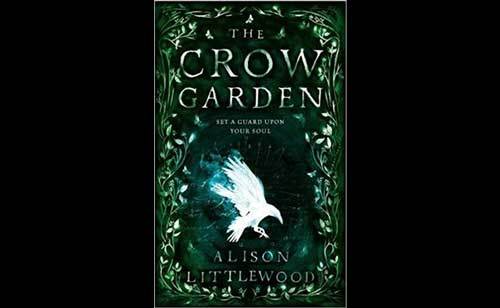
The Crow Garden
'There's an amazing sense of place and time in this novel, as Littlewood perfectly captures the literary style, attitudes, and class consciousness of Victorian England' - Publishers Weekly Susan Hill meets Alfred Hitchcock in Alison Littlewood's latest chiller: mad-doctor Nathaniel is obsessed with the beautiful Mrs Harleston - but is she truly delusional? Or is she hiding secrets that should never be uncovered ...? Haunted by his father's suicide, Nathaniel Kerner walks away from the highly prestigious life of a consultant to become a mad-doctor. He takes up a position at Crakethorne Asylum, but the proprietor is more interested in phrenology and his growing collection of skulls than the patients' minds. Nathaniel's only interesting case is Mrs Victoria Harleston: her husband accuses her of hysteria and delusions - but she accuses him of hiding secrets far more terrible. Nathaniel is increasingly obsessed with Victoria, but when he has her mesmerised, there are unexpected results: Victoria starts hearing voices, the way she used to - her grandmother always claimed they came from beyond the grave - but it also unleashes her own powers of mesmerism ...and a desperate need to escape. Increasingly besotted, Nathaniel finds himself caught up in a world of seances and stage mesmerism in his bid to find Victoria and save her. But constantly hanging over him is this warning: that doctors are apt to catch the diseases with which they are surrounded - whether of the body or the mind
368 pages, Paperback
First published October 5, 2017
About the author
Alison Littlewood
116 books169 followersAlison Littlewood was raised in Penistone, South Yorkshire, and went on to attend the University of Northumbria at Newcastle (now Northumbria University). Originally she planned to study graphic design, but “missed the words too much” and switched to a joint English and History degree. She followed a career in marketing before developing her love of writing fiction.
Her first book, A Cold Season (2011), was selected for the Richard and Judy Book Club and described as ‘perfect reading for a dark winter’s night.’
Alison's latest novel is The Crow Garden (2017), is a tale of obsession set amidst Victorian asylums and séance rooms.
You can find her living with her partner Fergus in deepest Yorkshire, England, in a house of creaking doors and crooked walls. She loves exploring the hills and dales with her two hugely enthusiastic Dalmatians and has a penchant for books on folklore and weird history, Earl Grey tea and semicolons.
She is on Twitter as @Ali__L
Her first book, A Cold Season (2011), was selected for the Richard and Judy Book Club and described as ‘perfect reading for a dark winter’s night.’
Alison's latest novel is The Crow Garden (2017), is a tale of obsession set amidst Victorian asylums and séance rooms.
You can find her living with her partner Fergus in deepest Yorkshire, England, in a house of creaking doors and crooked walls. She loves exploring the hills and dales with her two hugely enthusiastic Dalmatians and has a penchant for books on folklore and weird history, Earl Grey tea and semicolons.
She is on Twitter as @Ali__L
Ratings & Reviews
Friends & Following
Create a free account to discover what your friends think of this book!
Community Reviews
Displaying 1 - 30 of 108 reviews

June 16, 2026
What a mess! The blurb says this is “Susan Hill meets Alfred Hitchcock”. It really isn’t. It is set in 1856 in Victorian England and looks at the asylum system and the increasing popularity of mesmerism and phrenology. We have in Nathaniel (Nate) Kerner, a truly unreliable narrator who manages to miss the obvious throughout the novel. He takes up a position as an alienist at Crakethorne Asylum and falls in love with a woman who has been placed there for treatment by her husband.
It feels like Littlewood is going for every Victorian stereotype, pretty much imitating the “penny-dreadful”. The novel vaguely reminded me of the plot of Shutter Island and there was added (implied) bestiality. It’s all too awful.
It feels like Littlewood is going for every Victorian stereotype, pretty much imitating the “penny-dreadful”. The novel vaguely reminded me of the plot of Shutter Island and there was added (implied) bestiality. It’s all too awful.

February 22, 2018
Oh my God..
I've been struggling to finish this book for four whole months. This is the first time I ever even considered not finishing a book, but I had to, since I got an arc. It got me into a horrible mood where I couldn't even read other, good books. But I've finally made it. Here goes.
I love Gothic, I adore Victorian. Horror, Mystery, an asylum, paranormal, I loved absolutely everything from the description, and I loved the cover. The description also said: "Susan Hill meets Alfred Hitchcock". Let's just say if Susan Hill ever met Alfred Hitchcock in a book like this, she would die either of boredom or shame, and poor Alfred would roll in his grave.
The Crow Garden actually is everything of the above (except the overstated comparison), but it also is horribly, terribly boring. There is no plot. For the first couple of pages we get the sense that something is building up, that some plot is going to happen, but the only plot here went out looking for Susan Hill to fix her up.
A brief summary: Doctor Nathaniel Kerner is haunted by his father's suicide, but he wants to become a famous alienist like him, so he goes to claim his new position at Crakethorne Asylum. There he insta-falls in love with a married patient Victoria Harleston whose husband accuses her of hysteria because she once boarded an omnibus quite rashly and by herself. In turn, she accuses him of his previous-marriage-son's death. Then one day a mesmerist comes to Crakethorne, becomes obsessed with Mrs. Harelston and she escapes the asylum.
None of these plot points further evolve. The rest of the book is Dr. Kerner pining for Victoria, describing her beautiful body parts, hiding her in his house, then committing her to the asylum again for no reason at all, then pining some more, and then .... comes the most mental "plot" twist I ever read, where Mrs. Harelston mesmerizes everybody in the asylum (where did she learn that) and escapes yet again. And here is the ultimate twist - she made Kerner think that the gatekeeper's dog is actually her. So he was shacking up with a dog for the last couple of pages, while she was suntanning at sea. The end.
The writing is okay, good even. I had no troubles understanding it, but I was seriously -MEGA- annoyed by the lower class accent. It was overused and over-abused and clownified. It only added to my misery of reading this soul-eating book.
I think the real rating here is 1, but since I did manage to finish this, quite heroically I may add, let's raise it to 1.5.
Arc provided by Netgalley
I've been struggling to finish this book for four whole months. This is the first time I ever even considered not finishing a book, but I had to, since I got an arc. It got me into a horrible mood where I couldn't even read other, good books. But I've finally made it. Here goes.
I love Gothic, I adore Victorian. Horror, Mystery, an asylum, paranormal, I loved absolutely everything from the description, and I loved the cover. The description also said: "Susan Hill meets Alfred Hitchcock". Let's just say if Susan Hill ever met Alfred Hitchcock in a book like this, she would die either of boredom or shame, and poor Alfred would roll in his grave.
The Crow Garden actually is everything of the above (except the overstated comparison), but it also is horribly, terribly boring. There is no plot. For the first couple of pages we get the sense that something is building up, that some plot is going to happen, but the only plot here went out looking for Susan Hill to fix her up.
A brief summary: Doctor Nathaniel Kerner is haunted by his father's suicide, but he wants to become a famous alienist like him, so he goes to claim his new position at Crakethorne Asylum. There he insta-falls in love with a married patient Victoria Harleston whose husband accuses her of hysteria because she once boarded an omnibus quite rashly and by herself. In turn, she accuses him of his previous-marriage-son's death. Then one day a mesmerist comes to Crakethorne, becomes obsessed with Mrs. Harelston and she escapes the asylum.
None of these plot points further evolve. The rest of the book is Dr. Kerner pining for Victoria, describing her beautiful body parts, hiding her in his house, then committing her to the asylum again for no reason at all, then pining some more, and then .... comes the most mental "plot" twist I ever read, where Mrs. Harelston mesmerizes everybody in the asylum (where did she learn that) and escapes yet again. And here is the ultimate twist - she made Kerner think that the gatekeeper's dog is actually her. So he was shacking up with a dog for the last couple of pages, while she was suntanning at sea. The end.
The writing is okay, good even. I had no troubles understanding it, but I was seriously -MEGA- annoyed by the lower class accent. It was overused and over-abused and clownified. It only added to my misery of reading this soul-eating book.
I think the real rating here is 1, but since I did manage to finish this, quite heroically I may add, let's raise it to 1.5.
Arc provided by Netgalley

October 9, 2017
I received a copy of this book from Netgalley, in exchange for an honest review.
Dark, classically Victorian in tone, but *slightly* predictable in places.
Firstly, let's talk about that book title, and that cover. Both magnificent. How could I resist such a sinister-sounding novel, especially a period piece, with asylums, seductions and deception?
For the most part, the book delivered on its promises, and was a satisfying read, with just a few little parts that had minor issues. The story starts at an asylum in bleak Yorkshire, where a doctor commences his career; focusing on a well-to-do woman who also happens to be rather beautiful.
Their relationship develops and shifts throughout the book, framed within some wonderfully evocative locations; the eerie 'Crow Garden' outside the asylum, the Egyptian Hall in London, the stillness of the mother's house. It's pleasingly ambiguous at times, which gives the reader plenty of chance to engage in some guesswork, and it reads like a classic, enjoyable gothic novel; spooky, compelling and intriguing.
Just a few minor comments - the use of the asylum itself... perhaps one of those locations that is starting to feel a little predictable for Victorian-style books? I was delighted when the author took the action out of the asylum and into the wider world, as it instantly established itself as something 'different' then - though perhaps this is just me having a somewhat jaded view on much-used locations in books! Also, there were occasions where I found it a little tricky to suspend my disbelief; but to be honest, I tend not to judge too harshly on these types of things, as long as they don't obstruct the narrative flow!
Overall, an entertaining read, and I enjoyed the author's style of storytelling very much.
Dark, classically Victorian in tone, but *slightly* predictable in places.
Firstly, let's talk about that book title, and that cover. Both magnificent. How could I resist such a sinister-sounding novel, especially a period piece, with asylums, seductions and deception?
For the most part, the book delivered on its promises, and was a satisfying read, with just a few little parts that had minor issues. The story starts at an asylum in bleak Yorkshire, where a doctor commences his career; focusing on a well-to-do woman who also happens to be rather beautiful.
Their relationship develops and shifts throughout the book, framed within some wonderfully evocative locations; the eerie 'Crow Garden' outside the asylum, the Egyptian Hall in London, the stillness of the mother's house. It's pleasingly ambiguous at times, which gives the reader plenty of chance to engage in some guesswork, and it reads like a classic, enjoyable gothic novel; spooky, compelling and intriguing.
Just a few minor comments - the use of the asylum itself... perhaps one of those locations that is starting to feel a little predictable for Victorian-style books? I was delighted when the author took the action out of the asylum and into the wider world, as it instantly established itself as something 'different' then - though perhaps this is just me having a somewhat jaded view on much-used locations in books! Also, there were occasions where I found it a little tricky to suspend my disbelief; but to be honest, I tend not to judge too harshly on these types of things, as long as they don't obstruct the narrative flow!
Overall, an entertaining read, and I enjoyed the author's style of storytelling very much.
August 23, 2017
4.5*
Following the folklore-soaked mystery “The Hidden People”, Alison Littlewood returns to the Victorian era with her latest book, “The Crow Garden”. The novel’s narrator is Nathaniel Kerner, a young “alienist” or “mad-doctor”, who has found a placing as under-physician at Crakethorne Manor, a remote asylum in desolate, rural Yorkshire. The son of a doctor, Kerner has his demons to exorcise – he still feels guilty about having, when still a boy, indirectly encouraged his father’s suicide. This gives him the incentive to prove himself as a “progressive” physician, a proponent of a more humane approach to the treatment of psychological problems. The asylum director, Doctor Chettle, is not too keen about Kerner’s methods, preferring his own phrenological theories and experiments with electric shock treatments. Yet, he gives Kerner a free hand with their latest patient, the “hysterical” Mrs Victoria Harleston, who has been admitted at the behest of her husband. Harleston claims that she is haunted by the ghost of her husband’s son, and that she has the gift of conversing with the dead. After initial sessions with the patient leave little effect, Kerner invites a “mesmerist” in the hope of curing Harleston. The session, however, has unexpected consequences, leaving Kerner in doubt as to whether Harleston is really mad or whether there might be some truth in her allegations and imaginings.
The novel shifts between the mists of Yorkshire and the thick, industrial fog of London; between the oppressive ambience of the mental asylum and the creepy goings-on of the City’s “spiritualist” circles. These settings are well researched and, apart from building a chilling atmosphere, they also give us an authentic snapshot of 19th Century life. The Victorian era however does not merely provide a backdrop to the plot. On the contrary, I felt that the novel is itself a tribute to the popular novels of the time, particularly those of a Gothic, supernatural bent. The narrative voice and dialogue are perfectly pitched – they could have come out of Dickens or, better still, Wilkie Collins. There are also plenty of Gothic tropes – ghostly manifestations, noctural perambulations in grimy streets, madness, obsession and (with more than a nod to “The Woman in White”) the wife placed in an asylum against her will. And as with the best supernatural fiction, there is that constant niggling doubt as to whether the allegedly otherworldly manifestations are all a product of the mind.
Some of Wilkie Collins’s works had a radical (for their time), proto-feminist message. I feel that Littlewood cannily taps into this vein, giving her Victorian novel a more contemporary flavour and going beyond mere pastiche. Her subject-matter and approach – making the 19th Century relevant and appealing to contemporary readers – reminded me of Sarah Waters’s brilliant early novels “Fingersmith” and “Affinity”. “The Crow Garden” certainly deserves to share a shelf with them.
Following the folklore-soaked mystery “The Hidden People”, Alison Littlewood returns to the Victorian era with her latest book, “The Crow Garden”. The novel’s narrator is Nathaniel Kerner, a young “alienist” or “mad-doctor”, who has found a placing as under-physician at Crakethorne Manor, a remote asylum in desolate, rural Yorkshire. The son of a doctor, Kerner has his demons to exorcise – he still feels guilty about having, when still a boy, indirectly encouraged his father’s suicide. This gives him the incentive to prove himself as a “progressive” physician, a proponent of a more humane approach to the treatment of psychological problems. The asylum director, Doctor Chettle, is not too keen about Kerner’s methods, preferring his own phrenological theories and experiments with electric shock treatments. Yet, he gives Kerner a free hand with their latest patient, the “hysterical” Mrs Victoria Harleston, who has been admitted at the behest of her husband. Harleston claims that she is haunted by the ghost of her husband’s son, and that she has the gift of conversing with the dead. After initial sessions with the patient leave little effect, Kerner invites a “mesmerist” in the hope of curing Harleston. The session, however, has unexpected consequences, leaving Kerner in doubt as to whether Harleston is really mad or whether there might be some truth in her allegations and imaginings.
The novel shifts between the mists of Yorkshire and the thick, industrial fog of London; between the oppressive ambience of the mental asylum and the creepy goings-on of the City’s “spiritualist” circles. These settings are well researched and, apart from building a chilling atmosphere, they also give us an authentic snapshot of 19th Century life. The Victorian era however does not merely provide a backdrop to the plot. On the contrary, I felt that the novel is itself a tribute to the popular novels of the time, particularly those of a Gothic, supernatural bent. The narrative voice and dialogue are perfectly pitched – they could have come out of Dickens or, better still, Wilkie Collins. There are also plenty of Gothic tropes – ghostly manifestations, noctural perambulations in grimy streets, madness, obsession and (with more than a nod to “The Woman in White”) the wife placed in an asylum against her will. And as with the best supernatural fiction, there is that constant niggling doubt as to whether the allegedly otherworldly manifestations are all a product of the mind.
Some of Wilkie Collins’s works had a radical (for their time), proto-feminist message. I feel that Littlewood cannily taps into this vein, giving her Victorian novel a more contemporary flavour and going beyond mere pastiche. Her subject-matter and approach – making the 19th Century relevant and appealing to contemporary readers – reminded me of Sarah Waters’s brilliant early novels “Fingersmith” and “Affinity”. “The Crow Garden” certainly deserves to share a shelf with them.

November 16, 2017
Had a very promising start, but then devolved into disjointed nonsense; are they sleeping together- she's not mad, I don't think, so is she just a beautiful seductress (clichés ahoy), or is he going crazy...?
Got fed up with the whole "she's a beautiful delicate noble snowflake who needsmy uncomfortable romantic overtures protecting" crap, which just...no, dude. She's a patient.
Could have been something grand, if they'd run with the whole disaffected wife stuck in madhouse by disgruntled husband who wants someone pliable and dutiful, maybe with a cold case to solve on the side, but instead we got this.
Got fed up with the whole "she's a beautiful delicate noble snowflake who needs
Could have been something grand, if they'd run with the whole disaffected wife stuck in madhouse by disgruntled husband who wants someone pliable and dutiful, maybe with a cold case to solve on the side, but instead we got this.

October 2, 2017
I'm grateful to the publisher for an advance copy of this book.
In Littlewood's latest horror story we are back in Victorian England, visiting that quintessential Gothic location (second, perhaps, to the ruined Priory), the lunatic asylum.
Dr Nathaniel Kerner has taken up a post at Crakethorne Asylum, described most encouragingly in the opening chapter: a brooding, chilly building beset by wind and haunted by the crows after which it is named (Grey stone was unleavened by lightness or decoration") and presided over the Dr Chettle who, we soon learn, has little interest in his patients and spends most of his time pursuing phrenology - even then, a marginal and quackish science. Kerner has tragedies in his own past and is driven to earn the (posthumous) approval of his discredited father, indeed one might think he's not the most stable and suitable of characters to be treating the "insane" (as they're labelled).
Despite this, Kerner's ideas of treatment by talking seem modern and enlightened compared with the regimes of blisters, bleeding, electric shocks and cold baths apparently in vogue at the time. The book is sharp in its perceptions, discussing what's almost a hierarchy of establishments practicing more or less modern or primitive treatments, and of the way this plays into the choices made by those responsible for committing unfortunate relatives to their "care".
In particular, Kerner's life is to become entangled with that of Mrs Victoria Harleston, committed for shrinking form performing her "wifely duties". Mr Harleston is eager that his wife be brought to obedience and presses Kerner and Chettle to do whatever is necessary. The scenes in which Littlewood exposes the situation of a woman at the mercy of the (male) law and society are some of the most chilling I've read in fiction, supernatural or otherwise - but that isn't the end of this story. Rather there is much, much to be told with Victoria herself emerging as a fascinating, passionate and contradictory character - especially compared with poor Nathaniel who's mostly two steps behind her. (indeed, as a viewpoint character he can become a bit tiresome at times, with his assumptions about women's fragility and a rather touchy ego to boot - at others his pomposity becomes almost endearing).
Littlewood uses a clever motif to explore Victoria and Nathaniel's relationship, quoting from Byron (for her) and Robert Browning (for him). These are their preferred poets (the good Doctor rather huffily confiscating her book of Byron's verse which he declares unsuitable and likely to make her delusions worse) and indeed as the story proceeds they take to referring to "my poet" or "your poet", the subtlety of the relationship marked by Kerner's beginning to see more passionate depths in his Browning that he had realised before. The whole effect has something of the Gothic romance - and claustrophobia - of Wuthering Heights combined with the menace of Wilkie Collins or Dickens exposing the cruelty of the Victorian mental health system. At the same time, this system is contrasted with short but spells that do, indeed, promise "asylum" from the darkness without, moments when the reader does begin to hope for some good resolution.
Reading over this I realise I have said anything about the supernatural elements in the book - well, they are there, contributing especially to the brooding menace of the final part but in this story the burden of the horror is, I think, really borne by darkness that emanates from humanity. The questions the story raises - about sanity, madness and evil - are independent of whatever it is those restless crow spirits may be up to, and in the end, it's man (or Man) who is the monster here, I think.
An excellent, chilling, autumn read, all about the dangers of power, obsession, and guilt, this is sure to be another hit from Littlewood to follow up The Hidden People.
In Littlewood's latest horror story we are back in Victorian England, visiting that quintessential Gothic location (second, perhaps, to the ruined Priory), the lunatic asylum.
Dr Nathaniel Kerner has taken up a post at Crakethorne Asylum, described most encouragingly in the opening chapter: a brooding, chilly building beset by wind and haunted by the crows after which it is named (Grey stone was unleavened by lightness or decoration") and presided over the Dr Chettle who, we soon learn, has little interest in his patients and spends most of his time pursuing phrenology - even then, a marginal and quackish science. Kerner has tragedies in his own past and is driven to earn the (posthumous) approval of his discredited father, indeed one might think he's not the most stable and suitable of characters to be treating the "insane" (as they're labelled).
Despite this, Kerner's ideas of treatment by talking seem modern and enlightened compared with the regimes of blisters, bleeding, electric shocks and cold baths apparently in vogue at the time. The book is sharp in its perceptions, discussing what's almost a hierarchy of establishments practicing more or less modern or primitive treatments, and of the way this plays into the choices made by those responsible for committing unfortunate relatives to their "care".
In particular, Kerner's life is to become entangled with that of Mrs Victoria Harleston, committed for shrinking form performing her "wifely duties". Mr Harleston is eager that his wife be brought to obedience and presses Kerner and Chettle to do whatever is necessary. The scenes in which Littlewood exposes the situation of a woman at the mercy of the (male) law and society are some of the most chilling I've read in fiction, supernatural or otherwise - but that isn't the end of this story. Rather there is much, much to be told with Victoria herself emerging as a fascinating, passionate and contradictory character - especially compared with poor Nathaniel who's mostly two steps behind her. (indeed, as a viewpoint character he can become a bit tiresome at times, with his assumptions about women's fragility and a rather touchy ego to boot - at others his pomposity becomes almost endearing).
Littlewood uses a clever motif to explore Victoria and Nathaniel's relationship, quoting from Byron (for her) and Robert Browning (for him). These are their preferred poets (the good Doctor rather huffily confiscating her book of Byron's verse which he declares unsuitable and likely to make her delusions worse) and indeed as the story proceeds they take to referring to "my poet" or "your poet", the subtlety of the relationship marked by Kerner's beginning to see more passionate depths in his Browning that he had realised before. The whole effect has something of the Gothic romance - and claustrophobia - of Wuthering Heights combined with the menace of Wilkie Collins or Dickens exposing the cruelty of the Victorian mental health system. At the same time, this system is contrasted with short but spells that do, indeed, promise "asylum" from the darkness without, moments when the reader does begin to hope for some good resolution.
Reading over this I realise I have said anything about the supernatural elements in the book - well, they are there, contributing especially to the brooding menace of the final part but in this story the burden of the horror is, I think, really borne by darkness that emanates from humanity. The questions the story raises - about sanity, madness and evil - are independent of whatever it is those restless crow spirits may be up to, and in the end, it's man (or Man) who is the monster here, I think.
An excellent, chilling, autumn read, all about the dangers of power, obsession, and guilt, this is sure to be another hit from Littlewood to follow up The Hidden People.

July 27, 2019
3.5 stars rounded up.
Dr Nate Turner begins his position at Crakethorne Asylum and finds one of his patients, Mrs Harleston, very interesting indeed. When she escapes from the asylum he tracks her down in London and his love for her becomes unavoidable, despite her husband’s protestations. But is Mrs Harleston really mad, or actually incredibly clever?
An entertaining Victorian asylum story, full of vivid detail and dialogue, but like other reviewers have said, it did become a bit far fetched and by the end even I had lost touch with reality! Still an enjoyable read though.
Dr Nate Turner begins his position at Crakethorne Asylum and finds one of his patients, Mrs Harleston, very interesting indeed. When she escapes from the asylum he tracks her down in London and his love for her becomes unavoidable, despite her husband’s protestations. But is Mrs Harleston really mad, or actually incredibly clever?
An entertaining Victorian asylum story, full of vivid detail and dialogue, but like other reviewers have said, it did become a bit far fetched and by the end even I had lost touch with reality! Still an enjoyable read though.

Did Not Finish
February 3, 2023NAH this shit is so boring and unbearable... mc is just obsessed with his patient and the only reason he wants to help her is bc she's hot and vulnerable
truly a drag and stupid - dnf @ p. 173
truly a drag and stupid - dnf @ p. 173

October 13, 2017
Visit the locations in the novel The Crow Garden
Gothic atmosphere, set in an asylum in the midst of the Yorkshire Moors….mesmerism in theatres in London? Well this couldn’t be more atmospheric if it tried. Having loved the Little People, I was keen to read this one and it’s a unique world Alison draws, thats for sure. She approaches the shockingly true story of how women could so easily be taken into asylums on the word of their husbands. The scenes – for this novel reads like a series of scenes dimly lit with the sound of candles crackling in your ear, are horrific and even disturbing.
The author also uses many literary references in the novel -with poets Brown and Byron being used to show each of the main characters personalities. The world of mesmerism is drawn with detailed and disturbing words and the overall effect for me was chilling, disturbing and a darn good gothic read.

September 17, 2017
Physician, heal thyself...I'm a sucker for tales set in lunatic asylums and other institutions, so this was just the ticket for the first truly autumnal night. Dr Nathaniel Kerner takes a position at Crakethorn Manor, becomes fascinated by a bewitching young patient, Vita, and must deal with the her husband and the asylum's director. So what we have here is a Gothic Victorian Romantic Melodrama, with haunting Yorkshire atmosphere.
The mansion is beset with symbolically sinister crows, madness is in the air and a bout of mesmerism brings forth deeper disturbances. Littlewood's linear, descriptive prose evokes the period nicely, there are some solid twists, and if there's never any real doubt about the outcome (such tales usually canter toward the same conclusion) it's a richly evocative tale packed with rising hackles, cold breaths on the neck and prickling skin.
The mansion is beset with symbolically sinister crows, madness is in the air and a bout of mesmerism brings forth deeper disturbances. Littlewood's linear, descriptive prose evokes the period nicely, there are some solid twists, and if there's never any real doubt about the outcome (such tales usually canter toward the same conclusion) it's a richly evocative tale packed with rising hackles, cold breaths on the neck and prickling skin.

Did Not Finish
June 5, 2020I couldn't finish this. I tried for a whole 6 months but just... no. I was looking forward to a nice, riveting, slightly creepy story of Victorian asylums, but instead nothing happens at all.
October 27, 2017
https://lynns-books.com/2017/10/23/th...
The Crow Garden is a wonderfully evocative novel that brings to us a gothic story set in Victorian England. The story is positively bursting at the scenes with the trappings of a novel set in this era, asylums, mad doctors, mesmerists, ghosts and pea soup fog, and yet the author manages to inject new life into those tropes by introducing such an unusual story and at the same time giving, to my mind, a nod to maybe a couple of the classics. Wilkie Collins certainly sprang to mind whilst reading this – although I’m not suggesting that the story is the same in any way – more the style of writing somehow, not to mention the theme of women being closeted into asylums when they became problematic to their husbands.
At the start of the story we meet Nathaniel Kerner as he takes up his position at Crakethorne Asylum, a remote institution based in the wilds of Yorkshire. Perhaps Nathaniel was naive in taking this position, if first impressions are anything to go by that is. Crakethorne bares little resemblance to the material Nathaniel read prior to taking up his new role and his initial description puts you in mind of the foreboding Thornfield House from Jane Eyre. Crakethorne is a dark and ominous building, built with grey stone with no embellishments to soften it’s demeanour, set in unkempt grounds that play home to the many crows that the book is named for it’s a place of howling winds and harsh treatments. Small wonder that most of the inmates speak of ghosts.
Nathaniel is a man with his very own skeleton cupboard. He blames himself for the death of his father and is determined to try and redeem himself by helping those in need. His new ideas don’t sit too well with the asylum’s proprietor. Dr Chettle is more interested in phrenology (study of skulls) and is more inclined to old fashioned methods for his inmates. Chettle comes across initially as a bit preoccupied, maybe a bit crazy himself but as the book progresses his character definitely takes on a more sinister tone. But, I get ahead of myself.
Nathaniel immediately takes on his roster of patients and we learn more from his journals. One of his patients is a young woman called Mrs Harleston, a well to do young lady of society who seems to have become hysterical/delusional after experiencing an ‘episode’. Her husband wants her ‘fixing’ and able to perform her wifely duties as soon as possible (he’s a real charmer for sure). The young doctor finds himself becoming increasingly obsessed with his new patient, he of course tells himself that she is a respectable woman, intelligent, fragile and of a standing that should dictate respectful treatment – lets just be honest though, she’s a very attractive woman and he is besotted. His attempts to help Mrs Harleston become ever more desperate as he seeks to prevent Dr Chettle from using more drastic treatments and eventually he resorts to engaging a mesmerist, after which things go horribly wrong.
The writing is really strong. I read this and could easily have thought I was reading a much older book – that’s how well the author captures the style and feel of Victorian England. The story itself is a mystery, it has hints of the supernatural, although these could be easily explained as delusions, but, more than that it takes a good look at the treatment of women in a society where they were little more than belongings. Quite shocking really, as was the treatment of those suffering from mental health issues.
In terms of the characters. Well, they’re all a bit difficult to like to be brutally honest. Nathaniel, well, I don’t suppose he’s a bad character as such but I wanted to slap him, more often than not. He’s from the school of thought that ‘women don’t know what’s best for them’ and lets just be blunt, he’s not really being very professional now is he – it’s as clear as the nose on your face that he has feelings for Mrs Harleson and added to that is the feeling that, to my mind, he wasn’t really intent on helping her. Deep down I think he wanted to keep her where she was. Mrs Harleson, well, at first I’m going to say I didn’t like her. Even after finishing and thinking about the novel some more I would say she’s manipulative, but then, on reflection, she lives in a society where she has no say, her husband can have her committed to an asylum at the drop of a hat and she’s basically at the whim of men who are determined to call her insane whether she is or not. With that in mind, well, I find her actions a lot more easy to understand. Sorry to be a bit mysterious but I’m trying to avoid spoilers.
Settings. Well, we start off with the asylum which is wonderfully conjured and as events progress we move to London where the streets are thick with fog. Victorian London has become enamoured with illusionists and Nathaniel finds himself drawn into the spiritualist circles and ultimately led to a new performer at the Egyptian Hall.
In terms of criticisms. Well, I found myself quite engrossed with this book and it definitely worked it’s charm on me but, I felt like the two different settings were a little disjointed. That’s probably not very well explained, All I can say is that the change from one setting to the other felt hastily drawn and not as well thought out as the proceeding or following chapters. I also felt like the ending was a little bit rushed when compared to the pacing for the rest of the story and this just made me feel as though I’d missed something or that maybe something had been cut from the story. I would also mention that if you have a penchant for fast moving action stories then this doesn’t really fall into that bracket.
Overall though I really enjoyed this. A story of deception, secrets, lies and the slow descent into madness. As I mentioned it has a tone reminiscent of the classics. Collins, Dickens and from amongst more contemporary authors Hill and Waters. Beautifully written and wonderfully evocative. A real thought provoker that calls to mind the old saying ‘be careful what you wish for’.
I received a copy through Netgalley, courtesy of the publisher, for which my thanks. The above is my own opinion.
The Crow Garden is a wonderfully evocative novel that brings to us a gothic story set in Victorian England. The story is positively bursting at the scenes with the trappings of a novel set in this era, asylums, mad doctors, mesmerists, ghosts and pea soup fog, and yet the author manages to inject new life into those tropes by introducing such an unusual story and at the same time giving, to my mind, a nod to maybe a couple of the classics. Wilkie Collins certainly sprang to mind whilst reading this – although I’m not suggesting that the story is the same in any way – more the style of writing somehow, not to mention the theme of women being closeted into asylums when they became problematic to their husbands.
At the start of the story we meet Nathaniel Kerner as he takes up his position at Crakethorne Asylum, a remote institution based in the wilds of Yorkshire. Perhaps Nathaniel was naive in taking this position, if first impressions are anything to go by that is. Crakethorne bares little resemblance to the material Nathaniel read prior to taking up his new role and his initial description puts you in mind of the foreboding Thornfield House from Jane Eyre. Crakethorne is a dark and ominous building, built with grey stone with no embellishments to soften it’s demeanour, set in unkempt grounds that play home to the many crows that the book is named for it’s a place of howling winds and harsh treatments. Small wonder that most of the inmates speak of ghosts.
Nathaniel is a man with his very own skeleton cupboard. He blames himself for the death of his father and is determined to try and redeem himself by helping those in need. His new ideas don’t sit too well with the asylum’s proprietor. Dr Chettle is more interested in phrenology (study of skulls) and is more inclined to old fashioned methods for his inmates. Chettle comes across initially as a bit preoccupied, maybe a bit crazy himself but as the book progresses his character definitely takes on a more sinister tone. But, I get ahead of myself.
Nathaniel immediately takes on his roster of patients and we learn more from his journals. One of his patients is a young woman called Mrs Harleston, a well to do young lady of society who seems to have become hysterical/delusional after experiencing an ‘episode’. Her husband wants her ‘fixing’ and able to perform her wifely duties as soon as possible (he’s a real charmer for sure). The young doctor finds himself becoming increasingly obsessed with his new patient, he of course tells himself that she is a respectable woman, intelligent, fragile and of a standing that should dictate respectful treatment – lets just be honest though, she’s a very attractive woman and he is besotted. His attempts to help Mrs Harleston become ever more desperate as he seeks to prevent Dr Chettle from using more drastic treatments and eventually he resorts to engaging a mesmerist, after which things go horribly wrong.
The writing is really strong. I read this and could easily have thought I was reading a much older book – that’s how well the author captures the style and feel of Victorian England. The story itself is a mystery, it has hints of the supernatural, although these could be easily explained as delusions, but, more than that it takes a good look at the treatment of women in a society where they were little more than belongings. Quite shocking really, as was the treatment of those suffering from mental health issues.
In terms of the characters. Well, they’re all a bit difficult to like to be brutally honest. Nathaniel, well, I don’t suppose he’s a bad character as such but I wanted to slap him, more often than not. He’s from the school of thought that ‘women don’t know what’s best for them’ and lets just be blunt, he’s not really being very professional now is he – it’s as clear as the nose on your face that he has feelings for Mrs Harleson and added to that is the feeling that, to my mind, he wasn’t really intent on helping her. Deep down I think he wanted to keep her where she was. Mrs Harleson, well, at first I’m going to say I didn’t like her. Even after finishing and thinking about the novel some more I would say she’s manipulative, but then, on reflection, she lives in a society where she has no say, her husband can have her committed to an asylum at the drop of a hat and she’s basically at the whim of men who are determined to call her insane whether she is or not. With that in mind, well, I find her actions a lot more easy to understand. Sorry to be a bit mysterious but I’m trying to avoid spoilers.
Settings. Well, we start off with the asylum which is wonderfully conjured and as events progress we move to London where the streets are thick with fog. Victorian London has become enamoured with illusionists and Nathaniel finds himself drawn into the spiritualist circles and ultimately led to a new performer at the Egyptian Hall.
In terms of criticisms. Well, I found myself quite engrossed with this book and it definitely worked it’s charm on me but, I felt like the two different settings were a little disjointed. That’s probably not very well explained, All I can say is that the change from one setting to the other felt hastily drawn and not as well thought out as the proceeding or following chapters. I also felt like the ending was a little bit rushed when compared to the pacing for the rest of the story and this just made me feel as though I’d missed something or that maybe something had been cut from the story. I would also mention that if you have a penchant for fast moving action stories then this doesn’t really fall into that bracket.
Overall though I really enjoyed this. A story of deception, secrets, lies and the slow descent into madness. As I mentioned it has a tone reminiscent of the classics. Collins, Dickens and from amongst more contemporary authors Hill and Waters. Beautifully written and wonderfully evocative. A real thought provoker that calls to mind the old saying ‘be careful what you wish for’.
I received a copy through Netgalley, courtesy of the publisher, for which my thanks. The above is my own opinion.
July 29, 2020
I really enjoyed this book. I originally bought it because of the cover and the blurb made it sound intriguing. I love anything gothic or victorian and even though treatment was awful in those days I am quite fascinated by olden day asylums. I would have preferred the majority of the book to be set in the asylum but the turn it took outside of it was still enjoyable. Towards the middle of the book I began to anticipate how the ending would be and was satisfied with the one I got and also a little surprised (in a good way). Would definitely recommend but I can see how others might find it slow, I enjoy classics so I didn't feel that the slow pace or plot was boring. I wound up not really liking Nathaniel in the middle but ended up feeling really sorry for him eventually.

September 24, 2017
I received a free copy of this book through Book Bridgr in return for an honest review.
This book is difficult for me to rate. The Crow Garden was an immensely interesting read but one that I still struggled. I found the plot interesting and the aspects of psychology and the supernatural. I liked the little literary references and looking back on how things have changed but the writing style just wasn't for me.
My preference on writing style aside, this is a mostly thought provoking read with some interesting moments of horror and humour. If you like reads about asylums and mesmerism - what's essentially hypnotherapy today - then this will definitely be an interesting book for you.
This book is difficult for me to rate. The Crow Garden was an immensely interesting read but one that I still struggled. I found the plot interesting and the aspects of psychology and the supernatural. I liked the little literary references and looking back on how things have changed but the writing style just wasn't for me.
My preference on writing style aside, this is a mostly thought provoking read with some interesting moments of horror and humour. If you like reads about asylums and mesmerism - what's essentially hypnotherapy today - then this will definitely be an interesting book for you.

August 8, 2020
This is a brooding gothic melodrama that is set in that most Victorian of places, the asylum. Nathaniel Kerner is appointed by one run by Dr Algernon Chettle called Crakethorn. It is located between North and West Ridings in Yorkshire and offered clean air, water gardens and healing springs. Chettle is a proponent of the science of phrenology, the study of skulls to try to elicit information about the mind and brain contained within the skull.
He is allocated the newest patient there, Victoria Harleston, who has been sent by her husband from another institute to be cured of her madness. She is a striking young woman, who at first glance doesn’t seem to be suffering in the same way that some of the other patients are. Kerner’s methods are very different from Chettles, but even they have very little effect on her. Stuck for ideas he invites a ‘mesmerist’ to try to cure her, but after he is left wondering if she really is mad, or the revelation that she reveals whilst under his influence is true.
The second part of the book is set in London. Kerner heads there in search of Harleston after she manages to escape Crakethorn. There is strong spiritualist undercurrent in the city with various seances and events taking place. It feels creepy that the first part of the book. In the final part of the book, they are all back at Crakethorn, and it is slowly dawning on Kerner just why Chettle has the asylum in the first place…
I liked the brooding atmospheric backdrop to all the scenes in the book. It feels well researched and authentic too, from the way that she describes the smells from the dogs, the way that different classes interact and the barbaric treatment of the patients in the asylum. The supernatural and spiritualist elements feel like they have been lightly dusted over the plot, they are there to enhance rather than be the central element. It has some really strong female characters too, but I thought it was overly convoluted and complicated and for me was missing that one moment of utter dread that a book of this style demands. Not entirely my book, but I thought it was well written nonetheless.
He is allocated the newest patient there, Victoria Harleston, who has been sent by her husband from another institute to be cured of her madness. She is a striking young woman, who at first glance doesn’t seem to be suffering in the same way that some of the other patients are. Kerner’s methods are very different from Chettles, but even they have very little effect on her. Stuck for ideas he invites a ‘mesmerist’ to try to cure her, but after he is left wondering if she really is mad, or the revelation that she reveals whilst under his influence is true.
The second part of the book is set in London. Kerner heads there in search of Harleston after she manages to escape Crakethorn. There is strong spiritualist undercurrent in the city with various seances and events taking place. It feels creepy that the first part of the book. In the final part of the book, they are all back at Crakethorn, and it is slowly dawning on Kerner just why Chettle has the asylum in the first place…
I liked the brooding atmospheric backdrop to all the scenes in the book. It feels well researched and authentic too, from the way that she describes the smells from the dogs, the way that different classes interact and the barbaric treatment of the patients in the asylum. The supernatural and spiritualist elements feel like they have been lightly dusted over the plot, they are there to enhance rather than be the central element. It has some really strong female characters too, but I thought it was overly convoluted and complicated and for me was missing that one moment of utter dread that a book of this style demands. Not entirely my book, but I thought it was well written nonetheless.

April 7, 2019
3.5...maybe 4...???
I've struggled with settling on a rating for this book because it's almost like judging two separate books. The first half was a bit slow and felt a tad repetitive tbh and then it suddenly all kicked off and seemed to change direction completely. Plus there was that brilliantly bonkers ending...
I've struggled with settling on a rating for this book because it's almost like judging two separate books. The first half was a bit slow and felt a tad repetitive tbh and then it suddenly all kicked off and seemed to change direction completely. Plus there was that brilliantly bonkers ending...

October 12, 2019
Yes, I really liked it.
The book starts off as a horror story about a young woman made captive by the upper class society she is part of. She's been committed to a bleak asylum by her overbearing husband, and assigned a newly qualified alienist to take over her case. But the young man has issues of his own ...
I loved the way the first person viewpoint was used to tell a story that the young man didn't know he was telling.
The book starts off as a horror story about a young woman made captive by the upper class society she is part of. She's been committed to a bleak asylum by her overbearing husband, and assigned a newly qualified alienist to take over her case. But the young man has issues of his own ...
I loved the way the first person viewpoint was used to tell a story that the young man didn't know he was telling.
October 21, 2025
A slow burner for sure, but chillingly Gothic with a painfully good conclusion. All the eerie horror of Victorian noir, mixed with a commentary on mental illness (and repression of women) seen through a modern lens. Really enjoyable spooky autumn read.

November 28, 2021
Appropriately enough, The Crow Garden is mesmerising. The characters fracture and fragment, creating the most unsettling miasma. Not what I expected at all - darker and more disturbing.
July 7, 2021
So much potential but really convoluted plot

November 5, 2021
the authors way of storytelling is so unique and captivating. took a while to get through and the plot felt a bit repetitive in parts but love the overall feel to it

November 7, 2017
This is the first book I’ve read by Alison Littlewood, although I do remember hearing about The Hidden People a year or two ago and thinking it sounded interesting. I was attracted to The Crow Garden by its striking cover, but it sounded appealing too, with its Victorian setting and comparisons to Wilkie Collins and Susan Hill, so I thought I would give it a try.
Our narrator, Nathaniel Kerner, is a newly qualified ‘mad-doctor’ on his way to Yorkshire to take up his first position at Crakethorne Manor, an asylum for those ‘troubled in mind’. The tone of the novel is set immediately, with descriptions of dark skies, desolate heaths and remote villages on the journey north and Nathaniel’s first sight of his new place of work, a bleak grey stone building with iron bars on the windows. The asylum is run by Doctor Chettle, a man whose preferred methods of treatment – cold baths, electric shocks and phrenology – are very different from Nathaniel’s. Nathaniel will have the opportunity to try out some of his own ideas when he is assigned his first patient, the beautiful Victoria Adelina Harleston.
Mrs Harleston has been brought to Crakethorne by her husband following an incident on a London omnibus. Accusing her of hysteria, he demands that Nathaniel and Chettle stop at nothing to find a cure for his wife. Believing that the best way to get to the bottom of a patient’s problems is by talking and listening, Nathaniel gradually begins to uncover Mrs Harleston’s story. Far from making things clearer, however, the situation only becomes more confusing. Is Mrs Harleston really insane or is there more to her hysteria than meets the eye? Nathaniel knows he is becoming too deeply involved in the life of his patient but he has vowed to help her and now there’s no going back.
This is the sort of story and setting I usually enjoy, but I think there’s a limit to how many novels about Victorian asylums you can read and I am now close to reaching that limit! I was pleased when, in the middle of the book, the action moved away from Crakethorne for a while and into the streets of London. Here Nathaniel is swept up in the world of mesmerists, spiritualists and séances and although these are also common elements in Victorian historical fiction, I found that the book became much more interesting from this point onwards. Nathaniel’s narration also starts to become increasingly less reliable (although I won’t tell you why as I want to leave you to discover some of the novel’s surprises for yourself) and it is difficult to tell exactly what is real and what isn’t, which gives the rest of the novel a disturbingly hypnotic and unsettling feel.
I appreciated the effort Alison Littlewood makes to tell Nathaniel’s story in language appropriate to the 19th century. It’s something that is always important to me in historical fiction, but even more so in books of this type in which the atmosphere and the setting play such a big part. A few poorly chosen words and phrases can so easily pull you out of the time period, but thankfully Littlewood gets it just about right.
The Crow Garden was an interesting read but, as I’ve said, I think I’ve read too many books with similar settings and themes to really get anything new out of this one. The Asylum by John Harwood, Affinity by Sarah Waters, The Girl Who Couldn’t Read by John Harding and, of course, Wilkie Collins’ classic The Woman in White all came to mind while I was reading, and I would recommend all of those ahead of this book. It didn’t help that I disliked the character of Mrs Harleston so didn’t have the sympathy for her that I would usually have with a woman at her husband’s mercy and committed to an asylum against her will.
Despite not really loving this book, though, I did find it entertaining – and with its atmosphere, Gothic undertones and subtle touches of the supernatural, it’s an ideal autumn or winter read.
Our narrator, Nathaniel Kerner, is a newly qualified ‘mad-doctor’ on his way to Yorkshire to take up his first position at Crakethorne Manor, an asylum for those ‘troubled in mind’. The tone of the novel is set immediately, with descriptions of dark skies, desolate heaths and remote villages on the journey north and Nathaniel’s first sight of his new place of work, a bleak grey stone building with iron bars on the windows. The asylum is run by Doctor Chettle, a man whose preferred methods of treatment – cold baths, electric shocks and phrenology – are very different from Nathaniel’s. Nathaniel will have the opportunity to try out some of his own ideas when he is assigned his first patient, the beautiful Victoria Adelina Harleston.
Mrs Harleston has been brought to Crakethorne by her husband following an incident on a London omnibus. Accusing her of hysteria, he demands that Nathaniel and Chettle stop at nothing to find a cure for his wife. Believing that the best way to get to the bottom of a patient’s problems is by talking and listening, Nathaniel gradually begins to uncover Mrs Harleston’s story. Far from making things clearer, however, the situation only becomes more confusing. Is Mrs Harleston really insane or is there more to her hysteria than meets the eye? Nathaniel knows he is becoming too deeply involved in the life of his patient but he has vowed to help her and now there’s no going back.
This is the sort of story and setting I usually enjoy, but I think there’s a limit to how many novels about Victorian asylums you can read and I am now close to reaching that limit! I was pleased when, in the middle of the book, the action moved away from Crakethorne for a while and into the streets of London. Here Nathaniel is swept up in the world of mesmerists, spiritualists and séances and although these are also common elements in Victorian historical fiction, I found that the book became much more interesting from this point onwards. Nathaniel’s narration also starts to become increasingly less reliable (although I won’t tell you why as I want to leave you to discover some of the novel’s surprises for yourself) and it is difficult to tell exactly what is real and what isn’t, which gives the rest of the novel a disturbingly hypnotic and unsettling feel.
I appreciated the effort Alison Littlewood makes to tell Nathaniel’s story in language appropriate to the 19th century. It’s something that is always important to me in historical fiction, but even more so in books of this type in which the atmosphere and the setting play such a big part. A few poorly chosen words and phrases can so easily pull you out of the time period, but thankfully Littlewood gets it just about right.
The Crow Garden was an interesting read but, as I’ve said, I think I’ve read too many books with similar settings and themes to really get anything new out of this one. The Asylum by John Harwood, Affinity by Sarah Waters, The Girl Who Couldn’t Read by John Harding and, of course, Wilkie Collins’ classic The Woman in White all came to mind while I was reading, and I would recommend all of those ahead of this book. It didn’t help that I disliked the character of Mrs Harleston so didn’t have the sympathy for her that I would usually have with a woman at her husband’s mercy and committed to an asylum against her will.
Despite not really loving this book, though, I did find it entertaining – and with its atmosphere, Gothic undertones and subtle touches of the supernatural, it’s an ideal autumn or winter read.

December 30, 2022
Is madness contagious?
By dint of being a 'mad doctor', a precursor,one imagines,to the more respected field of psychoanalysis which was in its very fetal stages at the time this book is set,Nathaniel Kerner's decision to move to a Yorkshire set asylum, inhabited by women placed there by their husbands, seems certifiable.
In the grounds of Crakethorne is the Crow Garden, a graveyard of the patients who have died there and that motif is so well used, Nathaniel sees these wretched souls as having been failed by their doctors and here he may succeed rather than add to the sorry lot of inhabitants.
His ideas of what we now consider talking therapy were fighting the more traditional explanations of basically being a woman with your own mind.
The reasons for placing a person in an asylum were mostly based on their sex and if you care to look it up, there are some very tenuous diagnoses such as reading too much.....
The 'treatments' are barbaric, including water torture and basically beating the personality out of the person until you are left with a shambling mess.
These people were taken out of polite society so that no one could see them which also means anything could be done to them in the name of 'research', with little to no objection.
Who would listen to the reasonings of those committed to an asylum?
The fine line between madness and sanity wrestles through the novel in Nathan's mind as he becomes infatuated with a woman, Vita, committed by her husband.
Her claims are wild and unsettling,especially that she hears voices and given the Victorian interest in spiritualism versus burgeoning science, Nathan listens to her and sees a potential way to cure her.
But when he begins to hear voices himself,is that the power of suggestion or something more sinister trying to work through him?
And if he does manage to cure Vita, will it bring him some respite from his wretched guilt over his father's suicide?
A fascinating and deeply chilling novel on how we perceive and treat -or rather hide away-the mentally challenged , it really made me reflect in how far we have come in the field of mental health. Or rather, we have not in so many ways.
This book touched me on a personal level , the stories which are told through my family reflect resilience in the face of public opinion at a time when locking away the obviously mentally afflicted was the thing to do.
There were so many instances of chances missed and legacies handed down because of the poor treatment of those with depression, or brain damage, that even so far after the Victorian age, we still have such a long long way to go.
By dint of being a 'mad doctor', a precursor,one imagines,to the more respected field of psychoanalysis which was in its very fetal stages at the time this book is set,Nathaniel Kerner's decision to move to a Yorkshire set asylum, inhabited by women placed there by their husbands, seems certifiable.
In the grounds of Crakethorne is the Crow Garden, a graveyard of the patients who have died there and that motif is so well used, Nathaniel sees these wretched souls as having been failed by their doctors and here he may succeed rather than add to the sorry lot of inhabitants.
His ideas of what we now consider talking therapy were fighting the more traditional explanations of basically being a woman with your own mind.
The reasons for placing a person in an asylum were mostly based on their sex and if you care to look it up, there are some very tenuous diagnoses such as reading too much.....
The 'treatments' are barbaric, including water torture and basically beating the personality out of the person until you are left with a shambling mess.
These people were taken out of polite society so that no one could see them which also means anything could be done to them in the name of 'research', with little to no objection.
Who would listen to the reasonings of those committed to an asylum?
The fine line between madness and sanity wrestles through the novel in Nathan's mind as he becomes infatuated with a woman, Vita, committed by her husband.
Her claims are wild and unsettling,especially that she hears voices and given the Victorian interest in spiritualism versus burgeoning science, Nathan listens to her and sees a potential way to cure her.
But when he begins to hear voices himself,is that the power of suggestion or something more sinister trying to work through him?
And if he does manage to cure Vita, will it bring him some respite from his wretched guilt over his father's suicide?
A fascinating and deeply chilling novel on how we perceive and treat -or rather hide away-the mentally challenged , it really made me reflect in how far we have come in the field of mental health. Or rather, we have not in so many ways.
This book touched me on a personal level , the stories which are told through my family reflect resilience in the face of public opinion at a time when locking away the obviously mentally afflicted was the thing to do.
There were so many instances of chances missed and legacies handed down because of the poor treatment of those with depression, or brain damage, that even so far after the Victorian age, we still have such a long long way to go.

October 21, 2017
I received a copy of this from the publishers in return for a fair and honest review.
The creepy cover sets the tone for this story set in Victorian England and focusing on the asylum/madhouses of the time. The way the patients were treated and how those treating them saw them - some of the methods used were quite horrifying and is fascinating to see how times have changed in how we treat those with mental illness.
It follows the story of Nathaniel Kerner, who has his own memories of madness in the family, and with the ghost of his fathers' suicide hanging over him, he sets out to right the wrongs he feels he was involved in, despite only being a child at the time of this fathers' death, and he becomes a 'mad-doctor' to carry on where his father left off. He wants to help those and learn more of how the brain works, and he finds himself at Crakethorne Asylum in deepest, darkest Yorkshire where he encounters Mrs Victoria Harleston. She is a patient there due to her husband complaining of her 'hysteria' and wants her 'mended' - the Victoria that Nathaniel meets though seems anything but crazy, and he soon becomes obsessed with her.
I really enjoyed the way this book is set - we get his point of view, his case notes and his own journal notes to see how he approaches those he meets, as well as looking back to his own past and dealing with his mother who, herself seems traumatized by the past.
His approach to treatment leads him to the world of the mesmerists, or hypnotists as we now know them, and this unlocks a much darker side to the story which is more chilling than horrifying, as you are left guessing as to the validity of those mesmerists, and of the patients and their experiences.
I found this to be such a hypnotic book to read - sorry for the pun! - with the wonderfully moody settings, the damaged characters and the insight to medical practices of the time. And there doesn't need to be actual monsters to create a horror story when there are people around who can be a lot scarier!!
The creepy cover sets the tone for this story set in Victorian England and focusing on the asylum/madhouses of the time. The way the patients were treated and how those treating them saw them - some of the methods used were quite horrifying and is fascinating to see how times have changed in how we treat those with mental illness.
It follows the story of Nathaniel Kerner, who has his own memories of madness in the family, and with the ghost of his fathers' suicide hanging over him, he sets out to right the wrongs he feels he was involved in, despite only being a child at the time of this fathers' death, and he becomes a 'mad-doctor' to carry on where his father left off. He wants to help those and learn more of how the brain works, and he finds himself at Crakethorne Asylum in deepest, darkest Yorkshire where he encounters Mrs Victoria Harleston. She is a patient there due to her husband complaining of her 'hysteria' and wants her 'mended' - the Victoria that Nathaniel meets though seems anything but crazy, and he soon becomes obsessed with her.
I really enjoyed the way this book is set - we get his point of view, his case notes and his own journal notes to see how he approaches those he meets, as well as looking back to his own past and dealing with his mother who, herself seems traumatized by the past.
His approach to treatment leads him to the world of the mesmerists, or hypnotists as we now know them, and this unlocks a much darker side to the story which is more chilling than horrifying, as you are left guessing as to the validity of those mesmerists, and of the patients and their experiences.
I found this to be such a hypnotic book to read - sorry for the pun! - with the wonderfully moody settings, the damaged characters and the insight to medical practices of the time. And there doesn't need to be actual monsters to create a horror story when there are people around who can be a lot scarier!!

May 8, 2022
I have to say I never really understood why this book had such a low score until it finally hit me, four chapters or so before the ending.
In all honesty, I would say this book suffers from some kind of identity crisis: it appears to be something, develops into another and ends as something entirely different from what one would expect upon reading the first chapters. The real problem, however, does not reside there, but in the ending itself: rather abrupt, confusing, with some questions that were never properly addressed and a completely oblivious protagonist (specially the dumb protagonist!)
It was all very frustrating, how I was led to believe that this would be some kind of mystery novel mixed with alienism (a thematic that I find quite fascinating). Then, all of a sudden, everything revolved around a forbidden love between a doctor and his patient, the supernatural and mesmerism (also known as hypnotism). But the weird twist it took towards the end just killed it for me, and the fact that Nathaniel never once conceded that he was, indeed, completely and utterly played, the fact that he always thought everybody around him mad when in reality he was the one lost to his own delusion... it baffles me, really, I have no words to describe the sheer exasperation I felt during those last chapters.
I can't decide if I should score it with 2 stars for the ending alone or if I should give it 3 stars because I actually enjoyed the majority of the book (until they ruined it for me, of course), so I guess I will settle for 2.5 stars.
In all honesty, I would say this book suffers from some kind of identity crisis: it appears to be something, develops into another and ends as something entirely different from what one would expect upon reading the first chapters. The real problem, however, does not reside there, but in the ending itself: rather abrupt, confusing, with some questions that were never properly addressed and a completely oblivious protagonist (specially the dumb protagonist!)
It was all very frustrating, how I was led to believe that this would be some kind of mystery novel mixed with alienism (a thematic that I find quite fascinating). Then, all of a sudden, everything revolved around a forbidden love between a doctor and his patient, the supernatural and mesmerism (also known as hypnotism). But the weird twist it took towards the end just killed it for me, and the fact that Nathaniel never once conceded that he was, indeed, completely and utterly played, the fact that he always thought everybody around him mad when in reality he was the one lost to his own delusion... it baffles me, really, I have no words to describe the sheer exasperation I felt during those last chapters.
I can't decide if I should score it with 2 stars for the ending alone or if I should give it 3 stars because I actually enjoyed the majority of the book (until they ruined it for me, of course), so I guess I will settle for 2.5 stars.
September 23, 2017
This was the first book i've read that was mainly set in an asylum . I enjoyed the historical aspects of this story as well as the creepy, ghostly parts in and around the asylum . It's a wonderful mix of mystery, romance, horror and history .
Some of the treatments of the patients or inmates as they called them, were quite distressing but sadly those things did happen for real in some of these places .
Dr Nathaniel Kerner was an intriguing character as was Mrs Victoria Harleston .
It was written in a very interesting way with several diary entries from Dr Kerner as well as some letters which add visual interest to the book .
I recommend it to any fans of asylum, mystery, historical fiction and romance books.
I received a free e book copy of this book from NetGalley in exchange for an honest review .
Some of the treatments of the patients or inmates as they called them, were quite distressing but sadly those things did happen for real in some of these places .
Dr Nathaniel Kerner was an intriguing character as was Mrs Victoria Harleston .
It was written in a very interesting way with several diary entries from Dr Kerner as well as some letters which add visual interest to the book .
I recommend it to any fans of asylum, mystery, historical fiction and romance books.
I received a free e book copy of this book from NetGalley in exchange for an honest review .

December 13, 2017
This dark and disturbing book is the first I have read by Littlewood, and is recommended if you like a Gothic take on the world. It takes a naive young doctor to an awful lunatic asylum in Yorkshire plagued by crows, and weaves in spiritualism and mesmerism. Highly atmospheric, a central theme is cruelty to those who are mentally ill, and the uncertain boundaries between sanity and insanity, between the real and what might be the supernatural. I will look for Littlewood's other books, but not a light holiday read. I think about a 4.5 stars.
Disclosure: I received this book in a Twitter giveaway from the publisher. There was no explicit request to review it.
Disclosure: I received this book in a Twitter giveaway from the publisher. There was no explicit request to review it.
Read
April 11, 2018Yes, this novel transports the reader back to Victorian England. Hypnotism, Spiritualism,asylums with some ghostly chills.I loved it .The cover caught my attention. Will be looking to read some more by this author as this was my first one!

May 31, 2019
So disappointed with this book (I listened to it on RB Digital). It had all the signs of being a chilling story of mad people in one of the dismal asylums of the 1800s and I was enjoying its gothic horror-ness until it went all saggy in the middle. It seemed to lose the plot from there.

November 24, 2017
I received this book from Netgalley free of charge in exchange for an honest and fair review. I was very intrigued with the summary and cover of the book. I love me a good Victorian era creepy asylum/supernatural read! And this book didn’t fail to deliver that.
Littlewood easily keeps the language and atmosphere in her writing to transport you right to the misty location and time of Crakethorne. You can feel the imposing stones and foggy countryside around you as you explore the asylum with our narrator Nathaniel Kerner. I feel that Nathaniel’s character was well developed throughout the story starting as a bright and eager new “mad doctor” ready to try his new age treatments to altruistically help his patients and ending with disillusionment in those around him. I enjoyed the “slow burn” development of Nathaniel as it made you feel that your opinions were changing WITH him rather than ABOUT him.
Then enter the mysterious and beautiful damsel in distress. In the initial introduction of Mrs Victoria Harleston, she was intriguing and plausible. But as she was further developed I grew tired of the interactions between Nathaniel and Victoria. These interactions always made me feel like they were repetitive, Nathaniel always treating her like a fragile flower and Victoria using the men in her life to get out from under her lot in life. I would say that these interactions needed to be better formulated to get the whole picture, not just Nathaniel’s love sick perspective.
I would give the beginning of the book a 4 for the atmosphere that Littlewood created, the introduction of mesmerism, the opposing and evolving views of treating the mentally ill, the hint of a mysterious death, the initial stories of the assorted patients at Crakethorne, the change of scenery from the asylum to London’s spiritual scene........ but about 2/3’s of the way through the book kind of lost me.
I would give the last third of the book a 3 for several reasons. The beginning of the book started to develop side stories (the death of Mr Harleston’s first wife and child, the ghost scene, the other patients stories from Crakethorne, the seances in London) that I felt were left unfinished. And though I do love it when an author doesn’t spoon feed you the story and leaves the ending a bit open to your own interpretation, I found the ending too loose.
So my final rating would be a 3.5. I would recommend this book to someone who enjoys a good Victorian gothic read that moves slowly and leaves a bit of the story to your imagination.
Littlewood easily keeps the language and atmosphere in her writing to transport you right to the misty location and time of Crakethorne. You can feel the imposing stones and foggy countryside around you as you explore the asylum with our narrator Nathaniel Kerner. I feel that Nathaniel’s character was well developed throughout the story starting as a bright and eager new “mad doctor” ready to try his new age treatments to altruistically help his patients and ending with disillusionment in those around him. I enjoyed the “slow burn” development of Nathaniel as it made you feel that your opinions were changing WITH him rather than ABOUT him.
Then enter the mysterious and beautiful damsel in distress. In the initial introduction of Mrs Victoria Harleston, she was intriguing and plausible. But as she was further developed I grew tired of the interactions between Nathaniel and Victoria. These interactions always made me feel like they were repetitive, Nathaniel always treating her like a fragile flower and Victoria using the men in her life to get out from under her lot in life. I would say that these interactions needed to be better formulated to get the whole picture, not just Nathaniel’s love sick perspective.
I would give the beginning of the book a 4 for the atmosphere that Littlewood created, the introduction of mesmerism, the opposing and evolving views of treating the mentally ill, the hint of a mysterious death, the initial stories of the assorted patients at Crakethorne, the change of scenery from the asylum to London’s spiritual scene........ but about 2/3’s of the way through the book kind of lost me.
I would give the last third of the book a 3 for several reasons. The beginning of the book started to develop side stories (the death of Mr Harleston’s first wife and child, the ghost scene, the other patients stories from Crakethorne, the seances in London) that I felt were left unfinished. And though I do love it when an author doesn’t spoon feed you the story and leaves the ending a bit open to your own interpretation, I found the ending too loose.
So my final rating would be a 3.5. I would recommend this book to someone who enjoys a good Victorian gothic read that moves slowly and leaves a bit of the story to your imagination.
Displaying 1 - 30 of 108 reviews