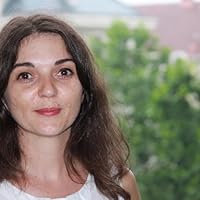
A lot has changed since well-known Canadian author Robin Pascoe wrote Culture Shock! A Parent's Guide. The world has become globalized, digitalized, and sadly, terrorized. That's the big picture that Pascoe examines in Raising Global Nomads. In her own life, the author's day job raising her two children has ended as her daughter begins a career as an environmental activist and her son heads to university. In her fifth book for expatriate families, the author recounts with honesty and trademark humour what worked for her family and shares the hard lessons learned. Parenting styles in general, and of third culture kids in particular, have changed dramatically, prompting this timely and comprehensive reexamination of the challenges of parenting abroad.
ROBIN PASCOE is the author of five books about global living and a new memoir "The Carry-On Imperative: A Memoir of Travel, Reinvention & Giving Back." She has never been awarded a scholarship, a fellowship, an honorary degree, or a prize for her writing, her volunteerism, or her philanthropy. She did, however, win Best Girl Camper 1966 at Camp Kadimah, probably for her bubbly personality. At the age of sixty, after stepping back as the Expat Expert, Pascoe joined her husband and son to create a brand for their family’s wildly successful global education company, Maple Bear. Now, in her so-called retirement, she is helping out with another family project, fighting climate change in rural Costa Rica at an environmental education not-for-profit founded by her daughter. She currently divides her time between two paradises: magical Costa Rica and beautiful British Columbia, Canada.
This book provided a decent overview of what one might expect when moving a family overseas. There were some helpful hints and plenty of food for thought here. I was a bit off-put by her assumption that when one takes a position abroad one earns a lot of money, has a relocation service or company backing during the move and household help after. Her recommendation to turn to those extra privileges when things get tough is not appropriate for everyone. Those of us who live this life are privileged to have the opportunity to live in many different places, meet many kinds of people and have all sorts of zany experiences, but not all of us have the privilege of company backing, high-paying positions, a relocation service, household help, or even job security. As the wife of a researcher, I found this book lacking in the gritty details of helping kids to not only live through, but thrive in this kind of nomadic life. That said, I found Pascoe's anecdotes and tips reassuring and appreciated the final chapter on identity development.
Very interesting book on parenting Third Culture Kids (TCK). I found most interesting the chapters about identity, culture shock and grief.
On Identity
"Global citizenship does not mean giving up a sense of roots so much as extending our sense of what roots involve."
"The concept of nationality presents global nomads (TCK) with an interesting paradox. For many of us, nationality is relatively uninformative as a cultural descriptor, at least in the long term."
It's true for my family as well as other "nomad" families that the nationality on your passport does not tell much about your culture. It can be difficult to answer the question "Where are you from?" As she said, "You can't find where you come from on a map."
I live in South Africa now and I find the national celebration of "Heritage Day" (a public holiday here) such a fantastic idea! In local and international schools (and even at work) people are encouraged to dress up with clothes from the country, countries or regions they're "from" and bring art, food or tell stories from there. It has a very positive effect on TCK because they can express the complexity of their "heritage" and see the complexity of other kids' heritage.
On culture shock
I can be mild, it can be severe depending on how different the new country is, how prepared the family is, etc. One thing I learned is that even when you're very happy with the move, you can still experience culture shock.
"A child's shock may mimic an adult's but children lack the verbal skills to express their feelings or if they're teenagers, may choose not to activate their verbal skills. That's why it helps when parents provide the words. The words capture the meaning of the situation and also help the child accept his feelings."
So "Keep an eye open for those children with a lost look." That's so true!
On Grief
Grief for the people and the things we left behind. "Most books place relocation high on the list of event that can trigger grief, along with more obvious major events such as death and divorce."
Just like not everybody will react the same way to death or divorce, not everybody will react the same way to the grief caused by a relocation.
"Sensitive people want to be rooted and find it exceedingly difficult each time they must leave friends and family."
Some will thrive, others won't, and will need some time to settle in.
"An exciting new expatriate life can emerge only once all the stages of grief - shock, denial, anger, bargaining, depression and acceptance - are acknowledged."
This is such a lovely book on the theme of relocation, but it can also be very informative for multicultural families. Read it if you have a Third Culture Kid.
Robin Pascoe is an expat mom with many many years under her belt living abroad and raising children. She has written other books on culture shock and how to deal with relationships when moving abroad and in this book she recounts her experience about the difficulties and situations that parents find themselves in as they raise their third culture children.
I bought this book because I thought it might apply to raising my children, however, my situation is that of an immigrant to another country, not a parent who will be moving around and still having a "home base" in my home country. I am more or less a lifer in another country that isn't my home country and my children are going to grow up feeling more Peruvian than American culturally but I did gain some insight into what the lives of third culture kids and their parents is like.
I did find that this passage really resonated with me as we will be moving to different cities throughout Peru over the course of my parenting career.
"Parenting can be a hundred times more complicated in a foreign environment, where everyday issues are magnified. Giver yourself credit for doing it. The challenges of moving are to ensure that your family continues to enjoy each other's company, to support each other, to become active members of your new community, and to seek out and appreciate all that life abroad has to offer."
I appreciate the format of the book and the sections in each chapter that are short and written in an easily digested manner. Pascoe covers everything from finding the right schools and figuring out the work life balance to identity formation. She looks to foster a sense of community when parents so desperately feel alone in a new environment.
The only thing that is missing is the mention of online support groups, however the books was published in 2006 so expat Facebook groups and online forums weren't really a thing yet. Pascoe does include a resources list at the end of the book with books and websites mentioned.
This book should definitely be a required reading for any parents who will be living abroad and raising children.
In the tradition of Dave Pollock and Ruth E. Van Reken, Robin Pascoe examines all the issues about family expatriation in a global and ever changing world. She studies in a systematic way the steps that expatriated families encounter, i.e. the announcement of the departure to an unknown country, the settling, the search of the school, the health abroad, the repatriation to the (unknown) home country, etc. … But Robin Pascoe’s book is much more than a simple guide for expatriate families and their children. On the basis of her own experience (she is the spouse of a Canadian diplomat and lived in China, South Korea and Singapour) and numerous testimonials scattered with humor and perceptiveness all around her book, the author give smart and practical advice in order to be better prepared to the challenge of parenting abroad and in a context of recurring expatriation. The positive aspect of this book is also the contributions of two expat experts. Lois J. Bushong deals with the too often taboo topic of expatriate families’ mental health (depression, drug, alcohol, divorce, etc. …). Barbara F. Shaetti writes about TCK’s identity development. She gives solutions to parents in order to tackle this step with serenity. « Raising Global Nomads » is then a comprehensive, useful, lively and exiting book. A must read without moderation!
As I research Third Culture Kid things for my children, I find myself spending more time processing my own TCK-ness as a result of my parent's divorce, marriages, moving, and religious cultures. Robin Pascoe, and the other contributors, offer some tangible, helpful suggestions to facilitate successful identity processing as well as encourage the fruit of life abroad rather than the thorns.
I enjoyed the last few chapters the most, especially this quote: "Cultural marginality, Bennett says, is the experience typical of people who have been molded by exposure to two or more cultural traditions; they are on the cultural margins, rather than the mainstream, of each of the cultures that influence them..."
This book lost a star because... I found the first half of the book belittling to spouses and suggesting there is little you can do about changing your family dynamic if you are dissatisfied.
Implications for teachers: how aware and empathetic am I toward my students who are new to the school regarding what they may be going through. What can the school do to help acclimate new students/parents to their new situation?
The only thing I don't like about this book, so far, is that she insists on writing as if it will ALWAYS be the father's job which takes the family overseas.
Well written book aimed at a very specific readership of parents moving their children with them between countries for a few years at a time. It's not aimed at migrants like me, but some of it still felt directly relevant, particularly the chapter at the end about integrating one's identities. As (at least) the fourth generation of my maternal line to migrate and bring my kids up in a different country from the one I grew up in, it's an issue for us too.
To the author's great credit, she kept me interested and thinking even for the chapters with less personal relevance.