Two young friends embark upon an epic journey across 1940s middle America in search of answers, a family, and a place to call home.
The only kind of life Brighton Turner understands is the one she has endured within the dreary walls of a rural Pennsylvania asylum. A nurse has thoughtfully educated and raised Brighton, but she has also kept vital information from her in order to keep her close. Brighton befriends a boy whom she calls Angel—he doesn’t know his name—and as the two of them learn more about what lies beyond the walls they call home, they fight for their release and eventually escape.
However, the world outside the only place they’ve ever known is not what they expect. They have no real names, no money, and no help—and they must rely upon the kindness of strangers as they walk and hitchhike from Pennsylvania to Michigan to find their last hope of a home.
This heartbreaking journey, narrated in gorgeous prose, explores what it means to belong—and to scour the universe with fresh eyes for the brightness within.
Go to www.elizabethbyleryounts.com to subscribe to the newsletter and receive the audio of the first chapter of THE SOLACE OF WATER as a thank you gift.
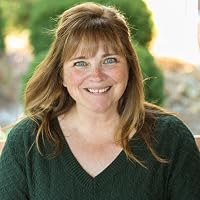
Award-winning author Elizabeth Byler Younts writes historical fiction for Harper Collins/Thomas Nelson. She gained a worldwide audience through her first book Seasons: A Real Story of an Amish Girl. She is also the author of the Carol award-winning novel The Solace of Water, critically-acclaimed novel The Bright Unknown, and The Promise of Sunrise series. She has consulted on Amish lifestyle and the Pennsylvania Dutch dialect for two award-winning television shows. Elizabeth lives in Central Pennsylvania with her husband, two daughters, and a small menagerie of well-loved pets.
EXCERPT: I didn't know when I stopped struggling, but at some point I did. I didn't feel the razor run across my scalp; I only felt the closeness of Nurse Wilma's hot and soft body that smelled of night-shift sweat. The stench made my stomach jerk and sputter, but there was nothing inside to come up.
Lorna was still chanting about the yellow canary and that the mine was safe. But I knew she was wrong. The mine wasn't safe and we were all going to die here. Panic filled me while the restrains squeezed my arms and legs. The room was full of other patients, but none of them could help me. Then mother walked into the room and stood near the chair. Even though her eyes didn't seem to see me, she must have sensed something was happening to me. She rarely came out of the room on her own. My breathing heightened and I started to scream. Nurse Joann, that's who she was to me now, told me to stop, but when I wouldn't she cupped her hands over my mouth and the back of my neck with such steadfastness that I couldn't even try to bite. All I could do was listen to all the other voices and sounds in the room. But no one could hear me.
ABOUT THIS BOOK: Pennsylvania, 1940s. The only life Brighton Friedrich has ever known is the one she has endured within the dreary walls of Riverside Home—the rural asylum where she was born. A nurse, Joann, has educated and raised Brighton, whose mother is a patient at the hospital. But Joann has also kept vital information from Brighton—secrets that if ever revealed would illuminate Brighton’s troubling past and the circumstances that confine her to Riverside. Brighton’s best friend is a boy she calls Angel, and as they grow up together and face the bleak future that awaits them, they determine to make a daring escape.
Nothing can prepare Brighton and Angel for life beyond Riverside’s walls. They have no legal identities, very little money, and only a few leads toward a safe place to land. As they struggle to survive in a world they’ve never seen before, they must rely on each other and the kindness of strangers—some of whom may prove more dangerous than the asylum they’ve fled.
MY THOUGHTS: Asylum means an offer of protection. But there was no protection at Riverside Home for the Insane. Quite the opposite.
I nearly stopped reading The Bright Unknown a third of the way through. I found it thoroughly depressing. But after reading Kathleen Gray's moving review, I persevered, and although I didn't love this book as she did, I did enjoy it more, and am glad I finished it.
I worked as a psychiatric nurse in the early 1970's, and although the conditions were greatly improved by then, there were still some similarities in the way that unwanted family members, those who were born with some affliction that may be an embarrassment to the family, were still hidden away in the 'chronic' wards. Electric convulsive therapy was still used extensively, though far more humanely. I do recall seeing a straightjacket, but can't ever remember one being used. Instead there were padded cells and sedatives.
There were still some of the 'old school' nurses who were cruel and treated the patients inhumanely, but they were definitely in the minority.
Reading The Bright Unknown has stirred up a slew of memories for me, some good and some not so good. I still can't really define how I feel about this book, told from Brighton's point of view over two timelines, the late 1930s/early 1940s and 1990. It is a sad book, in that those who are closest to us are often the cruelest. It shows the idiocy of the old adage 'you have to be cruel to be kind.'
I can't say that I enjoyed this book, but it was an experience. It does show that shattered lives can be rebuilt, that human spirit can overcome great adversity, and that love can conquer all.
😢🤔🙂
There are two passages in particular that struck a chord in my heart:
'Weeds bloomed, but that didn't make them flowers.'
'A lot of bad had to happen for us to have all the good in our lives.'
THE AUTHOR: Award-winning author Elizabeth Byler Younts writes historical fiction for Harper Collins/Thomas Nelson. She gained a worldwide audience through her first book Seasons: A Real Story of an Amish Girl. She is also the author of the Carol award-winning novel The Solace of Water, critically-acclaimed novel The Bright Unknown, and The Promise of Sunrise series. She has consulted on Amish lifestyle and the Pennsylvania Dutch dialect for two award-winning television shows. Elizabeth lives in Central Pennsylvania with her husband, two daughters, and a small menagerie of well-loved pets.
DISCLOSURE: Thank you to Thomas Nelson Fiction via NetGalley for providing a digital ARC of The Bright Unknown by Elizabeth Byler Younts for review. All opinions expressed in this review are entirely my own personal opinions.
For an explanation of my rating system, please refer to my Goodreads.com profile page or the about page on sandysbookaday.wordpress.com
Taking place in rural Pennsylvania , which is where I live this book caught my eye. I enjoy reading about the struggles people go through in asylums too so I knew this would be a perfect fit for me. This was a quick read for me one I started it I could hardly put it down. I went through a real mixed bag of emotions reading it anger,wonder,feeling pain for the characters,happiness,heartbreak and truly wondering how humans could treat each other in such a manner. This book is bold,bright,beautiful,gritty and not afraid to explore past history in a way that makes this story stick with you. Unforgettable a true must read! Thank you Elizabeth Byler Younts for a phenomenal story!
Published October 22nd 2019 by Thomas Nelson I was given a complimentary copy of this book. Thank you. All opinions expressed are my own.
“All I knew of regular girls came from books. But my fictional friends Heidi, Pollyanna, Betsy, Anne, Sarah—none of them had regular lives either. So perhaps there were no regular girls anywhere.”
In evocative prose, Elizabeth Byler Younts draws us into the world of Brighton and Angel, a pair of Dickensian-type innocents who shine the light of kindness and courage in some very dark places.
Brighton and Angel meet while incarcerated in a mental institution as children, where their formative years are spent. There, they witness firsthand the callous treatment of women exhiled because of schizophrenia, bi-polar disorder, postpartum depression, etc. Some are committed simply because their families wish to be rid of them.
Brighton and Angel find comfort in books, songs, nurturing adults, and each other. Still, I found parts of this story tough to read and, at first, wanted to leave this fictional world behind.
However, the story worked on me and revealed my prejudices. As I allowed myself to be pulled into the book, I saw a reason to value the characters—for these poor women, no matter how far gone they were, recognized and responded to love.
And though many of them were severely limited, they gave back whatever affection and hope they could.
For me, this story became an encouraging reminder that God’s love can penetrate whatever traps us—prison walls, disordered minds, unforgiving hearts—and free us from mistaken prejudices, evildoers, and even ourselves. I won’t soon forget it!
So reader friends, my recommendation is that you spend some time with this unique, weighty story. You can safely dive into this fictional world, because there will be hope and goodness and dreams-come-true for Brighton and Angel—though not exactly in the way you might envision.
Just remember that “the darkest night produces the brightest stars.”
Thank you to NetGalley and Thomas Nelson for giving me the opportunity to read this book.
Quotes I liked . . .
“The sun and I are old friends, and she greets me with a nod as I walk beneath her veil of heat. The walk to my mailbox that’s at the end of a long drive has been part of my daily routine for years. Sometimes I amble down the natural path twice, just for the fresh air, but mostly to remind myself that I can. I don’t take freedom for granted.”
“The fresh, rain-soaked whiffs were suffocated in the stale spaces of this place. It was more than simply moist and dank and smelling like rot, more than the decay of daft dreams, more than misery joining the beating of hearts. It was death itself. The scattered remains of us—the barely living—our eyes, ears, hearts, and souls lying like remnants everywhere. The older nurse squared my shoulders and tried to fix my hospital gown and hair. I knew, however, that I was nowhere pretty enough to be fixed. Weeds bloomed, but that didn’t make them flowers.”
“‘All things bright and beautiful.’ I sang it as loud as I could, and because I only knew the first four lines, I just repeated them over and over. When I got to the last line I stopped and yelled it as loud as I could in the sky. ‘The Lord God made them all.’”
“The one who had taught me to jump rope, to read, and to be very quiet when any visitors were in the ward and I wasn’t to be seen . . . One of the first to rock me to sleep.She’d been one of the many women who had been brought to the hospital because she was too sad to get out of bed and care for her own children. No one had ever come back for her. By the time I was born, she was over fifty and had spent over twenty years in the hospital. She was a fixture on the ward.”
“I knew she was humming for me. It reminded me of a lullaby, and the melody warmed the cold air and my breathing met the slow and even tempo. This mother of mine understood me better than anyone understood her.”
“The flowering weeping willow’s boughs reached for me in the summery breath. It called out to me. Come to me. Let my delicate white tears fall over you. I extended my hand, even though I knew the branches were too far away to let their beauty cry over me.”
“Why anyone would think something akin to a prison sentence would bring back happiness and sanity, I will never understand. It is strange to think that people felt better turning those deemed flawed invisible. That putting them out of sight was what was important. I’m sure there were those who had good intentions and believed the doctors were only trying to help, with a copy of the Hippocratic oath on the wall in every office. No, many families weren’t to blame. Naivety and ignorance aren’t sins, after all. But I’m not sure the hurt they caused is entirely forgivable.”
“My little word is feather light in the air and travels around the graves, greeting them. My throat is filled with knots and tears and a bittersweet joy I can’t explain. For several long minutes we sit there. We don’t speak but let the voices from our past rise up to meet us, to welcome us, and to be grateful that we’d shared so much life and love.”
This was a an absolute gem. Authentic, gritty, and full of hope. Just my kind of book. Highly recommend!
From Endorsement: As bold as it is beautiful, as haunting as it is full of hope, The Bright Unknown is a story that will latch onto the minds and hearts of readers, and not easily let go. With luscious language that gives birth to unforgettable characters, Younts is not afraid to explore the dark places for the sake of finding light. I could not put this novel down!
I read this book start to finish yesterday. I am going to honor my book hangover and wait before starting the next one, because this story is not meant to be dismissed or discarded. #TheBrightUnknown is brave and bold and heartbreaking, but so beautiful, too. The ending was what I was hoping for (Thank you, Elizabeth Byler Younts!!). Every page, every line is so carefully crafted, it just sings. If you want historical fiction that will stick with you, this is it.
This wasn't really my "cup of tea". It was interesting idea, but there wasn't a lot of action. I felt bored out of my mind. *shrugs*
**FTC DISCLOSURE** I received a complimentary copy of this book from NetGalley in exchange for a review. Opinions expressed in this review are completely my own.
This new-to-me author has written a heart wrenchingly, moving story with a dual timeline. Set in the late 1920 to 1940's in Pennsylvania and the 1990's in Michigan it follows the story of Brighton aka Nell and Angel. Brighton is born in the Riverside Home for the Insane where her mother had been committed. For the next 18 years, she is mothered by one of the nurses. Her best friend is Angel an albino boy who was committed by his parents. This is the story of the atrocities they witnessed and underwent in a time period when mental illness or just being different was not understood or was not culturally acceptable.
Yount's research and understanding of this horrible time period in history when most states ran mental institutions that became dumping grounds for those who were just depressed or different was incredible. I remember when I was a young child and teen when you wanted to put someone down or tease them you would say "Watch out they will send you to Norwalk." Everyone knew that was the crazy asylum. But later we would find out the horrible conditions and treatments that were used there.
This book not only grips your heart but tears your soul apart with its descriptions of the people who had to live with these atrocious conditions and treatments that did not help but rather did massive damage. It is a book readers will long remember, and thank God that we have come a long way in dealing with mental illness but knowing there is much more to learn. The author deals beautifully with a difficult topic that is not often addressed.
**I received a complimentary copy of this book from Thomas Nelson through NetGalley. Opinions are mine alone. I was not compensated for this review.
We all know these words well, but the lovely Elizabeth Byler Younts dives into the depths of these issues, creating a setting that brings out the stark reality of a psychiatric hospital in the 1950s. As I became invested in the characters lives I had to stop reading many times and take a deep breath. You feel the pain Brighton experiences & many of the subjects and feelings described are things I have seen at a much, much lower intensity.
While I feel like this book could be categorized as "dark", there is a hope shining throughout. Grace. Angel. Escape. And then a realization that ONE true person provides ultimate hope!
Honestly, this book is a must. While I realize often fiction is a way to escape, we also must see truth and the reality of what life can be...it is so very hard, but through it there is The Bright Unknown that pulls us forward from out of the darkness into a broken, but beautiful joyful outlook at life.
I was pleased with the ending. It captured the whole tone of the book and I had tears in my eyes as I read the last words.
*Content* I would recommend this story for adult readers, because of the intense subject line (much to do with a psychiatric hospital) Romance was sweet & while the Christian aspect of this book wasn't at the forefront of the book, you do see Brighton realizing there is strength outside herself. There is one phrase that the Lord's name was used flippantly, which disappointed me.
Forgive me because I don't believe I even have the words to do this novel justice. I finished a day ago and I'm still sitting in a book fog. There's so much that I loved but can't share to avoid spoilers, but this novel had me hook, line, and sinker from the very first chapter.
Although The Bright Unknown is marketed as historical romance, there is also an element of time-slip involved. The majority of the story is a look back on Brighton's upbringing in the asylum. The mystery surrounding her presence there certainly had my mind racing considering all types of conspiracies. I was amazed how I was able to still be shocked and surprised as each piece of the puzzle was strategically revealed with impeccable timing. The other piece is Nell being forced to look back at her childhood in ways she never expected yet she seems to find a sense of healing through her own painful past.
I appreciated the attention that this book brought to mental health and how it was handled in the past. One quote that really stuck out to me was:
"Don't forget that thousand of souls lived and died there and were ostracized by society. Many are buried in the back corner because no one claimed their bodies. Don't forget the history of what has happened at Riverside and other facilities like it, and don't let history repeat itself. And when you meet someone who might struggle with mental illness, see the person behind the frightened eyes. Not just the diagnosis."
I think this quote exquisitely sums up the motivation for this piece. Through Brighton's eyes you get a unique perspective on the many types of people who found themselves trapped in asylums. In many cases it was obvious they didn't belong, but after barbaric procedures and drugs their very souls were irreparably crushed. I don't remember the exact quote, but at one point Brighton mentioned that their souls died first and their physical bodies some time after. This novel was so masterfully written that you couldn't help but see the heart of the people behind the eyes and the injustice they were powerless to fight.
This was not a fluffy story in any way, shape, or form. It will break your heart as you desperately cling to the threads of hope. I read this book while on a road trip with my husband and found myself trying to hide my face at the gas station so no one could see I was crying. I say all the time that a good book is one that makes me feel something, and this book had me sucked in so deeply that it seemed to blur the lines between reality and fiction.
Have your box of tissues handy but this is a read I highly, highly recommend. Elizabeth Byler Younts has quickly become a must-read author and I can't wait to see what she comes up with next!
*I received a copy of this book through CelebrateLit. Thoughts and opinions expressed are mine alone.
The Bright Unknown is an enigma. The picture looks like a girl in a sweet dress with her teddy bear standing outside a large estate, serene even. I cannot imagine where this cover came from as nothing like this was in the book. The setting was an insane asylum where patients were not allowed outside, and there’s primarily misery inside. The girl on the cover had only worn hospital gowns all her life.
This story begins in 1990 with Nell receiving a package with a roll of film. When she was 16 (and she thought her name was Brighten) she got her hands on a camera. This film canister, and the many more held onto by the woman who found them, represent the inhumane treatment of the patients at this "hospital".
Forty-four chapters chronicle the years 1928 to 1941. Only 12 short chapters are “current day” which is 1990.
Those forty-four chapters were full of some of the hardest stories to read. "Brighten" was born to an unwed mother who was diagnosed with melancholia, and was "hospitalized". Her mother became more or less catatonic soon after her admittance and spent the rest of her life there. Brighton was allowed to stay with her mother all that time..
Throughout Brighten's eighteen years at this asylum (as a perfectly normal youth) three people made her existence livable: The floor nurse she called Nursey, an albino boy she called Angel (since he had never been given a name) and Grace, a girl who was there because her parents needed her out of the way.
Life was hard on all of them, then one day it got so much worse. Brighten overheard something that changed life as she knew it.
As I said before, she received a package in 1990, so little by little the reader becomes aware of how Brighten finally came to be on the outside.
The film in the package was how this book ties all the events of her life together.
Although the ending was satisfying, I wished there had been a balance between all the hardships of her youth and the life she lived after. Too much was uncomfortable. Many times I wanted to stop because I normally read for enjoyment. I continued this book not because I was enjoying it, but because I just wanted to read something good about this poor thing. But the awful was far too great for me to give this a favorable rating.
But if you like really good writing and feel hardships are simply part of a fascinating plot, then this book might be just the ticket!
The Bright Unknown by Elizabeth Byler Younts is a powerful, moving and heart breaking Christian historical tale. I am not ashamed to say that the tears fell as I read some of the truly horrifying scenes of great cruelty from those who were supposed to care for the most vulnerable. The novel has two timelines – 1990 and 1937 moving forwards to 1941. It is told through the eyes of one woman born into the state asylum. The reader becomes completely entwined into the story as we witness the appalling and barbaric treatment. State asylums were places of great cruelty. People were incarcerated into them and left, abandoned by the world and their families in the misguided belief that it was ‘best’ for them. The world was a cruel place – people were placed into these institutions for terrible reasons as disability was not understood but feared and seen as a stigma. Women and children had few rights and these could be overridden by domineering males in society. “See the person behind the frightened eyes. Not just the diagnosis.” The inmates were all people in need of love, care and attention. They did not deserve to be treated so abominably. The reader is horrified by the conditions, conditions that were seen as acceptable by those in charge at the time. There was no compassion or love. Surprisingly there were friendships that flourished. Love, care and compassion were found among the patients. Bonds and promises were made that would last a lifetime. We need to be aware of the words that we speak and the actions that we use. Both can have the effect of life or death for others. “When you’re treated like a worthless piece of flesh, eventually you believe it.” We sadly, live up or down to the opinion of others of us. Hope can bloom in the darkest of places. “Darkness vanished when light touched it.” We need just a crumb of hope to cling to. Even on the darkest night, we can still see the stars. Sometimes we feel abandoned by everyone and even wonder if God exists for us. “I prayed to a God I was sure was out there somewhere.” God never leaves us. He sees our pain. The asylum was a prison with walls. Sometimes we erect our own walls and stay within them to be safe but we are our own jailer. We need to demolish these walls and begin to live in the freedom that God desires for us. We may cling to what we know but there is a big wide world beyond our walls just waiting for us. The Bright Unknown broke my heart. The fact that people were treated so barbarically and cruelly in the twentieth century in a civilised country is just horrific. To counter this, there was a love that ran throughout the novel that warmed my heart. I want to leave you with my favourite and most powerful quote. It comes from a character who steps into a church for the first time and sees a statue of Jesus on the cross: “I couldn’t help him from his captivity, but I wondered if he could help me from mine.” I received this book for free. A favourable review was not required and all views expressed are my own.
MY REVIEW: Review of The Bright Unknown by Elizabeth Byler Younts: I went out on a limb getting this book, I passed it over once then saw that JustReads had it on tour and figured that maybe since I was seeing it everywhere I should try it out . . . I knew that it would be a hard book to read with everything that happened in asylums in history but WOW I didn’t expect it to be so very emotional.
The characters were so lifelike and their struggles so heartrending that I felt their every emotion with a hurting heart.
This heartbreaking, emotion searing, unusual love filled, story is a need to read for all.
And how have I not read this author’s work before?
Rating: 5 stars.
Recommendation: 16/18 up for violence, abuse, mistreatment, and racism.
Verse: Luke 6:38 Give, and it shall be given unto you; good measure, pressed down, and shaken together, and running over, shall men give into your bosom. For with the same measure that ye mete withal it shall be measured to you again. (King James Version)
Disclaimer: I voluntarily reviewed a complimentary copy of this book which I received from the author. All views expressed are only my honest opinion.
Wow -- what a gorgeously written novel! I have not been so completely transported by a novel in a long time. I couldn't read fast enough to devour this story or slow enough to savor the lyrical prose. Younts courageously addresses the way we treat those we label ‘different’. She always amazes me with the brilliance of her prose and in this novel, she shines even brighter with a final twist to her story that was completely unexpected and so perfectly right. This story will linger in your heart long after you turn the last page, challenging your thoughts in the best of ways. There is much to discuss here for book clubs. Highly recommended!
The Bright Unknown shines a light on the reasons one was admitted to a mental institution in the 1930s and 1940s and the practices used to "treat" patients. The novel had me turning pages because I wanted to know how Brighton's story would end. I didn't love this novel as much as The Solace of Water, but it was an engaging story.
Beautifully, lyrically written, Younts shares little known horrors found behind the closed doors of mental institutions in days not so long past. It is a tale of revelation, compassion, human dignity and the human dignity stolen from inmates sometimes wrongfully institutionalized. It is a story of courage and fortitude and determination to escape and grow and thrive, despite making that journey with every disadvantage. It was an honor to read this book.
I was hooked from the first line. “I’m not sure whom I should thank – or blame – for the chance to become an old woman. Though as a young girl, sixty-seven seemed much older than it actually is.”
This author does a brilliant job of taking readers to a place no one wants to go and/or even think about. This is an extraordinary novel that tugged at my heartstrings right from the start with it’s larger than life characters and their horrific situations. This is a moving story I don’t think I could have continued reading had it not been for the time-slip approach to writing this story that seamlessly flipped from present and past, then back again. I was captivated by the way this haunting tale was told through Brighton’s eyes.
Its nail biting suspenseful in parts and in others I imagined worse than had actually happened. (I was grateful for that) Because of this story telling style I was able to read about young Brighton and her friends who were in that horrible place where they did despicable things to the people that lived there.
Brighton learns that help and support can come in unexpected ways to lead us out of darkness to a hope and fresh light.
This wasn’t an easy read. It’s sad to know that this was not an isolated situation. People were put in institutions for selfish reasons and left there with no hope of getting out. Brighton was born and raised there. This story is of surviving the pains of life, grief, tragedy, revelations, family issues yet it’s a hopeful and powerful read.
The grief and friendship were both raw, genuine as the youngsters sought freedom the only way they knew how. It’s honest, innocent and gritty. I liked the natural spiritual thread and how Brighton had a peace in her soul when she said the Lord’s prayer she was taught as a child.
Each person in the asylum longed to be seen, heard, acknowledged, they wanted to belong to someone and be understood, they needed friendship and kindness. It was amazing how this author weaves in a message of hope in the middle of dark and somewhat creepy moments. Brighton says this about herself, “None of the doctor’s diagnoses – feeble-minded, melancholia, or deaf, mute- could be used to describe me. I didn’t even have a bad temper.”
I was captivated by this story and by Brighton and her compelling need to help those around her. She thought living in an Insane hospital was normal until it wasn’t. She had met a boy when she was 5 and they learned how to read and write by a nurse named Nursey. She adopted them as her own. Brighton narrates, “By ate 14, I knew that being a resident of the Riverside home for the insane was not how everyone else in the world lived. But it had been my life since birth.”
I was proud of Brighton and her friends. They didn’t stop fighting the good fight for their freedom. After they get out of the institution, they realize living in the world has its own traps and situations to watch out for. They trusted their instincts. It was hard but they grew up fast.
I was first introduced to this author through her novel The Solace of Water where she tackled another tough situation in a hopeful, honest manner. I would never have read a story about an insane asylum if I hadn’t thought this would be written in the same manner. It was. This is an amazing read and one that would work for your next book club pick.
Disclosure of Material Connection: I received a complimentary copy of this book from Netgalley. I was not required to write a positive review. The opinions I have expressed are my own. I am disclosing this in accordance with the Federal Trade Commission’s 16 CFR, Part 255 “Guides Concerning the Use of Endorsements and Testimonials in Advertising”
"All the darkness in the world cannot extinguish the light of a single candle." St. Francis
Exquisite prose softens the blows of this most unusual story; the story of one young life among so many, brought forth into a world of darkness, yet bestowed with a determination to carry the light. Meet Brighton Friedrich, whose struggles to live a normal life took place within the walls of an asylum for the insane, and whose friends consisted of those whom the world had intentionally forgotten.
Befriending a young boy growing up in similar circumstances, Brighton and Angel form an alliance of souls, often wondering if they have the courage to live in a brighter unknown. Theirs would be a journey filled with dreams, nightmares, fancies and fears . . . . . "but as long as I kept my eyes open there was always a sliver of light to follow".
It's so rare to read a story where each line forms its own verse of poetry, like a mountain brook babbling continually over the rocks and boulders that contain it; eventually leading it home.
Brighton's mom was taken to the Riverside Home for the Insane. She was pregnant and unmarried. Brighton was born in the asylum and because her mom was a patient, she also could not leave. She lived in a world of being a patient when she was normal. She saw first hand the abuse and neglect of all the patients. A lot of the patients had things like psychosis, schizophrenia, and catatonia. However, a lot of them were there for no valid reason. Maybe they were retarded, albino, orphaned or mongoloid. Brighton met her best friend there, an albino that didn't have a name. She named him Angel. He was put in the asylum because his parents were high class and didn't want him being associated with them. Her other friend, Grace was also from an affluent family. She was placed in the asylum for loving the wrong man. She was eventually lobotomized and sterilized. Now Brighton has an opportunity to tell the community what it was like growing up there. Watching the women she considered family being beaten and starved. She has gone through many painful ordeals in her life. Now, she will keep her promise and let everyone know exactly what happened in Riverside Home for the Insane.
I was kind of disappointed with this one, but first it had nothing to do with the writing or even the characters, but I didn't connect with them the way I would've liked. I guess maybe going back an forth of past and present events happening. It is worth reading, but just not entirely to my liking.
This is a beautifully written book about a horrific subject with characters that you won't soon forget. The story grabbed me from the first page and kept me interested until the last page. Even though some of it was difficult to read, there was always a feeling of hope, no matter how difficult the circumstances.
The story begins in 1937 and Brighton is 14 years old. She has lived in the Riverside Home for the Insane for her entire life. Her mom was a resident when Brighton was born and since there was no one else to take care of her, she grew up sharing a room with her mother. One of the nurses took care of her, taught her to read and read books to her when she was growing up. Her mother was extremely depressed and non-verbal but Brighton loved her dearly and helped to take care of her. When she was younger, she met a boy at the asylum who was a little bit older than her but like her was not insane. He was put into the hospital because he was an albino and an embarrassment to his upper class parents. He didn't even have a name so Brighton named him Angel. A new girl shows up one day. Grace is a little older than Brighton but she was admitted to the hospital because her parents didn't approve of the boy she wanted to marry. She tells Brighton and Angel about the outside world - things that they'd never seen or heard about and they all realize that they don't belong where they are and need to escape. They have no money and very little understanding of how to handle being out in the world but they are determined not to remain where they are. Will they be able to find peace and happiness in the world or will they miss their families and the other patients that they have learned to love and care about? Will they find happiness?
The Bright Unknown will definitely be one of my top 10 books for 2019.
Thanks to the author for a copy of this book to read and review. All opinions are my own.
The Bright Unknown by Elizabeth Byler Younts is a rare gem, a masterpiece of lyrical writing, rich characterization, sublime storytelling, emotion and hope. I was about to give up on ever finding a novel of this high quality in the Christian fiction genre. It’s not an easy read nor a fast one, but rather a compelling read that begs to be experienced. Kindness, caring, and innocence are contrasted with ignorance and greed. With a timeless relevancy, it forces us to examine the way we perceive those who are different, to see beyond the diagnosis. My mind, heart and emotions were captured with the first sentence and never wavered.
The Bright Unknown is Brighton’s story, a young girl born and raised at the Riverside Home for the Insane in the 1940s era. Life there was all she had known and was therefore normal, until suddenly it wasn’t – all because of a girl named Grace. Brighton’s friendship with another resident, who she named Angel, is priceless. The plight of the patients is hard to read, for in a time when ignorance abounded regarding mental illness, some were there simply because their families wanted them committed.
One strength of this story is the author’s exquisite prose and I savored every word and nuance of expression. This is just one example … “The flowering weeping willow’s boughs reached for me in the summery breath. It called out to me. Come to me. Let my delicate white tears fall over you. I extended my hand, even though I knew the branches were too far away to let their beauty cry over me.”
The Bright Unknown may seem like a dark story – and it is – but themes of hope, forgiveness and redemption are woven throughout. The conclusion is so very satisfying. The writing of Elizabeth Byler Younts is not to be missed, and The Bright Unknown goes on my “best of the best” list.
Very highly recommended.
I received a copy of this book through JustRead Tours and Thomas Nelson. The opinions expressed in this review are entirely my own.
This is a story that needed to be told. It gives the reader an up close and personal look at what went on in mental hospitals in the last century, and also the traveling freak shows that exploited people that were different in that time period. This story starts back in t940s. The author has her own way of spinning a tale and it is beautiful.
The story is about Brighton, a young girl born and raised in the asylum that her mother was admitted to when she was pregnant, and raised in the asylum until she was able to get out as an adult. It is also about her two friends, Angel, an albino who was in the home simply because his parents were embarrassed by him; and Grace, a teenager who was placed in the home by her father because he disapproved of her boyfriend.
I had trouble putting this book down so I finished it fairly quickly. I highly recommend it to anyone who likes a good story and is interested in US history around the time of WWII. You will not be disappointed.
I have voluntarily reviewed a complimentary copy of this book which I received from JustRead Publicity Tours. All views expressed are only my honest opinion.
It’s daunting to sit here and try to put into words everything I experienced while reading this book. It’s a deeply thoughtful novel, and beautifully written, but at times I was so angry I didn’t know if I could keep reading. The stark reality—the inhumanity—of mental health “care” in generations past, not to mention the reasons some were subjected to such “care”, is painful knowledge to open yourself to, and that’s exactly what you will do when you read Brighton’s story. And yet, by the time I turned the final page, I felt as though I had been on a healing journey with Brighton. The heartache and the pain were no less real, but I truly felt as though the words of Saint Francis of Assisi, which Brighton also held onto, had been proven true: “All the darkness in the world cannot extinguish the light of a single candle.”
I think the only reason I was able to continue reading at some points was because of the way the story was structured. The story opens in the “present day”—which, for the purposes of this story, is 1990—when Brighton, or Nell as she is now known, is sixty-seven. From that very first chapter, the reader knows that she has been married for over forty years and had children of her own, “amending her own childhood through motherhood.” That knowledge is like St Francis’s single candle, shining forth its light as the next chapter moves back to 1937 and Brighton’s childhood.
The majority of the story is then told from Brighton’s point of view as she’s growing up in the asylum, but every few chapters the reader returns to the present, where some photographs and other items from Brighton’s childhood at the asylum have been unearthed and returned to her—quite unexpectedly. These chapters were a much needed respite from the weight of Brighton’s childhood, but as painful as parts of her story were, I was utterly transfixed and almost desperate to know how it unfolded, to know how she reached a point where she was able to escape the asylum, let alone marry. And as Brighton herself says, “The wrongs can’t be righted, but remembering and knowing are important. Without remembrance, there is often repetition.”
So while this is not a book you should pick up lightly, it is definitely a book you should pick up. All else aside, if anyone can bring beauty out of such a story, it is a writer the likes of Elizabeth Byler Younts, her prose full of imagery and emotional nuance that taps into the heart of human experience.
I received a copy of this novel from the publisher. This has not influenced the content of my review, which is my honest and unbiased opinion.
Elizabeth Byler Younts brings a unique voice to Christian fiction. With hauntingly beautiful prose, she explores the ties of friendship, the power of love and forgiveness with gut-wrenching emotion.
Her story of two forgotten children, growing up behind the doors of an asylum in the 1930's will tug at the emotions. Their escape into the real world comes with many struggles, but freedom from the horrors of the asylum may take years to overcome.
It is a sign of a good author, when a reader cares for the characters as if they are real people. I found myself thinking of Brighton and Angel when I was away from the book, eager to get back to read more of their story.
The author's impeccable attention to detail is apparent as she writes of the misconceptions and treatments of mental illness in the 1930's.
I received a complimentary copy of this book from the author/publisher and was not required to write a positive review. All opinions expressed are mine.
I am so glad that this was a dual-timeline story. I don't know that I could have read of Brighton's painful past if not for the promise that life held hope. The book opens with Nell/Brighton receiving a letter requesting her to come to a town meeting to tell what she knows about the Riverside Home for the Insane. Included is a film canister and the promise of more of them.
The next chapter introduces us to Brighton as a child in the asylum where she was born in the 1920s. Her mother can communicate only by humming. Nurse Joann has loved Brighton since she attended the birth and has raised her to the best of her ability, teaching her to read, and then protecting an albino boy who becomes Brighton's best friend, Angel. As Brighton grows, she learns some of the secrets of her past and learns more of the outside world from a young woman Grace who is imprisoned in the asylum for loving a Black man. Younts describes some of the "treatments" that Brighton sees and what her prospects and Angel's will be if they remain in the asylum. Grace, Brighton, and Angel determine to escape.
This was a powerful story of heartache, friendship and love in the midst of hopelessness, pain, and misunderstanding. At times, it felt too heavy to continue reading. We need to read books that tell the horrible things that have been done to the mentally ill and misunderstood, so that we never repeat them, but it is heartbreaking to read of them. This is a character-driven plot. I'm glad that I read it because it was a good and powerful story, but I'm glad that I'm done with the story. It's not that I wouldn't want to learn more of Nell/Brighton, but I want the emotional relief of something else, something that I know was not true.
What a fascinating novel! The Bright Unknown by Elizabeth Byler Younts was a wonderful read. I honestly couldn't put it down. The story read like a time-slip novel. I believe there are three different time periods the readers will travel to, but Younts has labeled each section, so it was easy to follow along. On the other hand, the characters were unique. I really enjoyed seeing the world through Brighton's eyes as she lived and explored the only world she ever knew. The asylum. I couldn't imagine living somewhere and thinking it was normal to see all that, but if that is all you knew, then I guess you had no choice. The entire time I couldn't wait to see how Brighton escaped. It took a while to get there, but I think that worked in Younts' favor; it kept me flipping through the story. I enjoyed how Younts showed us that there is more to people with disabilities than what people see at first glance. Some of these people are the sweetest people you ever met. I have worked with a number of them over the years and have enjoyed talking with them. Some kept me laughing; while some made me think. The Bright Unknown made me think. This was a unique story, and I enjoyed spending time with it. Younts is a talented writer, and now I need to seek out her first story. If you like the honesty of this story, you might enjoy The Curse Of Misty Wayfair by Jaime Jo Wright, it also takes place at an asylum.
I received a complimentary copy of The Bright Unknown by Elizabeth Byler Younts from Thomas Nelson Publishing, but the opinions stated are all my own.
Ik vond het een mooi verhaal, maar ook een taai verhaal. Ik heb mezelf meerdere malen gedwongen door te lezen. Dat is uiteindelijk maar goed ook. Op de helft van het boek had ik geen aansporing meer nodig en bleef lezen.
A heartbreaking story of survival and friendship comes to life in author Elizabeth Byler Younts novel, The Bright Unknonw. Although Younts has written a fiction story, she brings to life the horrific circumstances of a variety of types of people, those who really need to be there and those that do not, living inside an insane asylum. It is a beautifully and powerfully written story that is both depressing and enlightening. Younts tackles a hard subject matter with beautiful efficiency. This novel is not for the faint of heart. It’s hard, and wonderful, and emotional, and a story that will leave readers thinking about it long after they turn the last page.
Genre: historical, Christian Publisher: Thomas Nelson Publication date: October 22, 2019 Number of pages: 368
A review copy of this book was provided by the publisher via NetGalley via JustRead Publicity Tours. A review was not required and all views and opinions expressed are my own.