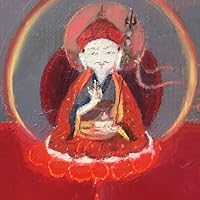
A fifth-century Indian Buddhist monk, Bodhidharma is credited with bringing Zen to China. Although the tradition that traces its ancestry back to him did not flourish until nearly two hundred years after his death, today millions of Zen Buddhists and students of kung fu claim him as their spiritual father.
While others viewed Zen practice as a purification of the mind or a stage on the way to perfect enlightenment, Bodhidharma equated Zen with buddhahood and believed that it had a place in everyday life. Instead of telling his disciples to purify their minds, he pointed them to rock walls, to the movements of tigers and cranes, to a hollow reed floating across the Yangtze.
This bilingual edition, the only volume of the great teacher's work currently available in English, presents four teachings in their entirety. "Outline of Practice" describes the four all-inclusive habits that lead to enlightenment, the "Bloodstream Sermon" exhorts students to seek the Buddha by seeing their own nature, the "Wake-up Sermon" defends his premise that the most essential method for reaching enlightenment is beholding the mind. The original Chinese test, presented on facing pages, is taken from a Ch'ing dynasty woodblock edition.
Bodhidharma was a Buddhist monk who lived during the 5th or 6th century CE. He is traditionally credited as the transmitter of Chan Buddhism to China, and regarded as its first Chinese patriarch.
تا وقتی جایی دیگر به دنبال بودا می گردی، هرگز نخواهی دید که جان خود تو بوداست. بودایی را به پرستش بودایی دیگر وادار نکن. جان خود را به دعا کردن به درگاه بودا وادار نکن. بودا سوترا نمی خواند. بودا به شریعت پایبند نمی ماند، یا آن را زیر پا نمی گذارد. برای یافتن بودا، باید به درون خود نظر کنی. هر کس که درون خود را دید بوداست. اگر به درون خود ننگری، دعا کردن به درگاه بوداها، خواندن سوتراها، پیشکشی دادن و رعایت شریعت، هیچ سودی ندارد. حتی اگر یک بودا یا بودی-ساتوا در مقابلت ظاهر شد، نیازی به تعظیم نیست. آن ها که عبادت می کنند، معرفت ندارند، و آنان که معرفت دارند، عبادت نمی کنند. * همین طور طواف کردن به دور معابد. معبد بدن و ذهن توست. وقتی آگاهی تو بی وقفه گرد بدن و ذهنت می چرخد، این را طواف به دور معبد می نامند. فرزانگان کهن از این راه به نیروانا می رسیدند. اما مردم امروز معنای این عبارت را متوجه نمی شوند. به جای نگاه کردن به درون، پیوسته نگاه به بیرون دارند. این ها با بدن مادّی به دور معبدهای مادّی طواف می کنند، شب و روز از پا نمی نشینند، بیهوده خودشان را خسته می کنند و ذره ای به خویشتن حقیقی خود نزدیک نمی شوند. * جان تو، خود نیرواناست. شاید که بپنداری جایی ورای جان خود بودا یا روشنا را توانی یافت. اما چنین مکان وجود ندارد.
Four teachings of the founder of Zen are presented here in English for the first time. As with most foundational works I am surprised at how simple complex concepts are presented; strips Zen down to the bone. One of the best books on Buddhism I have ever read. Holds up against newer books on the subject.
One primary thing to remember reading any religious or spiritual philosophies atleast from the antiquities is that there's this susceptibility of a lot of symbolisms involved. They are not meant to be read and interpreted literally but poetically and symbolically.
Religion is basically a misunderstood poetry when interpreted with reason, Joseph Campbell says so. If we see it as it is, insights could be reaped for the individuals. The kind of insights that could never be revealed from the rational positivist world. And yes, this was a meditating read.
_____
"Buddha is Sanskrit for what you call aware, miraculously aware. Responding, perceiving, arching your brows, blinking your eyes, moving your hands and feet, it’s all your miraculously aware nature."
"The Way is basically perfect. It doesn’t require perfecting. The Way has no form or sound. It’s subtle and hard to perceive. It’s like when you drink water: you know how hot or cold it is, but you can’t tell others."
"Using the mind to look for reality is delusion. Not using the mind to look for reality is awareness. Freeing oneself from words is liberation. Remaining unblemished by the dust of sensation is guarding the Dharma. Transcending life and death is leaving home."
"If you use a trap to catch fish, once you succeed you can forget the trap. And if you use language to find meaning, once you find it you can forget language."
Excellent clear interpretation of the dharma - "one mind" as transmitted by Gautama the Buddha, Red Pine does an awesome job recounting the the history, myth and legend surrounding the mystical figure of Bodhidharma. Straight forward and very easily understood, the "precepts" are powerful and profound - cuts straight to the heart of Buddhism. It dispels Buddhist "Idol worship" ceremonies, mystique, traditions like a great cliff notes should. No offense, but Catholics could use a dude like this to shake the cobwebs off a dying religion, make Christianity relevant once more... Christ' original pure message of LOVE and SALVATION through the father.
Love it and highly recommended reading. Short, so you can absorb the zen/chan nourishment in one afternoon. Total fulfillment of emptiness.
"To find a buddha, you have to see your nature. Whoever sees his nature is a buddha (...) And the buddha is the person who's free: free of plans, free of cares. (...) Just know your mind. Beyond your mind there's no other buddha. (...) Buddha is Sanskrit for what you call aware, miraculously aware.
Among Shakyamuni's ten greatest disciples, Ananda was foremost in learning. But he didn't know the Buddha. All he did was study and memorize. "
This was, sort of, a crash course on Zen Buddhism. Beware, be mindful, because there's a lot of mind in it. Mind-to-mind.
MANY roads lead to the Path, but basically there are only two: reason and practice. To enter by reason means to realize the essence through instruction and to believe that all living things share the same true nature, which isn’t apparent because it’s shrouded by sensation and delusion. Those who turn from delusion back to reality, who meditate on walls, the absence of self and other, the oneness of mortal and sage, and who remain unmoved even by scriptures are in complete and unspoken agreement with reason. Without moving, without effort, they enter, we say, by reason.
To find a buddha all you have to do is see your nature. Your nature is the buddha. And the buddha is the person who’s free: free of plans, free of cares. If you don’t see your nature and run around all day looking somewhere else, you’ll never find a buddha. The truth is, there’s nothing to find.
And without effort you’ll gain possession of an infinite number of virtues, perfections, and doors to the truth. Seeing through the mundane and witnessing the sublime is less than an eye-blink away. Realization is now. Why worry about gray hair? But the true door is hidden and can’t be revealed. I have only touched upon beholding the mind.
this book is FUN! written by a 5th century Zen monk yet the tone feels very current and refreshing to me.
"Buddhas don't save buddhas. If you use your mind to look for a buddha, you won't see the buddha. As long as you look for a buddha somewhere else, you'll never see that your own mind is the buddha. Don't use a buddha to worship a buddha. And don't use the mind to invoke a buddha. Buddhas don't recite sutras. Buddhas don't keep precepts. And buddhas don't break precepts. Buddhas don't keep or break anything. Buddhas don't do good or evil."
like a riddle or tongue twister reading aloud the simple and profound message comes through the playful writing. a reminder to come down to earth from the intellectual, esoteric and ritualized aspects of Buddhism to its heart of self-awareness...points the way clearly by telling you everywhere to Not look and to not get seduced by cultural trappings and idolizing. a good reality check and doorway into the mind's true state. the at times angry tone towards the deluded is humorous...
"A buddha is an idle person. He doesn't run around after fortune and fame. What good are such things in the end? People who don't see their nature and think reading sutras, invoking buddhas, studying long and hard, practicing morning and night, never lying down, or acquiring knowledge is the Dharma, blaspheme the Dharma. Buddhas of the past and future only talk about seeing your nature. All practices are impermanent. Unless they see their nature, people who claim to have attained unexcelled complete enlightenment are liars."
"Arhats don't know the Buddha. All trapped by cause and effect. Such is a mortal's karma: no escape from birth and death. By doing the opposite of what he intended, such people blaspheme the Buddha. Killing them would not be wrong." (!!!!)
"The stupa is your body and mind. When your awareness circles your body and mind without stopping, this is called walking around a stupa. The sages of long ago followed this path to nirvana. But people today don't understand what this means. Instead of looking inside they insist on looking outside. They use their material bodies to walk around material stupas. And they keep at it day and night, wearing themselves out in vain and coming no closer to their real self."
This is an especially awesome, extremely short, tersely-written book. Rereading it now, I think about the first time I read it, at work in the parking lot, a night that it was raining. Sitting in the booth, watching the reflection of the streetlight in a puddle by the speed bump, seeing the image disturbed by raindrops.
This book deals mostly with the mind,delusion,karma etc.Book is very small and each sentence is meaningful.Not a single sentence is without a purpose.Some paragraph was not easy to understand for me.Still i am feeling delighted after reading this book.
'Many roads lead to the Path, but basically there are only two: reason and practice. To enter by reason means to realize the essence through instruction and to *believe* that all living things share the same true nature, which isn't apparent because it's shrouded by sensation and delusion. Those who turn from delusion back to reality, who meditate on walls, the absence of self and other, the oneness of mortal and sage, and who remain unmoved even by scriptures are in complete and unspoken agreement with reason. Without moving, without effort, they enter, we say, by reason.
To enter by practice refers to four all-inclusive practices: suffering injustice, adapting to conditions, seeking nothing, and practicing the Dharma.
The sutras say, 'When you meet with adversity don't be upset, because it makes sense.' With such understanding you're in harmony with reason. And by suffering injustice you enter the path.
As mortals, we're ruled by conditions, not by ourselves. All the suffering and joy we experience depend on conditions... But while success and failure depend on conditions, the mind neither waxes nor wanes. Those who remain unmoved by the wind of joy silently follow the path. [though evidently the wind of joy still blows upon them.]
...the wise wake up. They choose reason over custom. They fix their minds on the sublime and let their bodies change with the seasons. All phenomena are empty. They contain nothing worth desiring. Calamity forever alternates with Prosperity. To dwell in the three realms is to dwell in a burning house... Does anyone with a body know peace? Those who understand this detach themselves from all that exists and stop imagining or seeking anything. The sutras say, 'To seek is to suffer. To seek nothing is bliss.' When you seek nothing, you're on the Path.
The Dharma is the truth that all natures are pure. By this truth, all appearances are empty. Defilement and attachment, subject and object don't exist. The sutras say, 'The Dharma includes no being because it's free from the impurity of being, and the Dharma includes no self because it's free from the impurity of self.' Those wise enough to believe and understand this truth are bound to practice according to the dharma. And to eliminate impurity they teach others, but without becoming attached to form... while practicing the six virtues to eliminate delusion they practice nothing at all. This is what's meant by practicing the Dharma.
Everything that appears in the three realms comes from the mind. Hence buddhas of the past and future teach mind to mind without bothering about definitions.
You ask. That's your mind. I answer. That's my mind. If I had no mind, how could I answer? If you had no mind, how could you ask? That which asks is your mind. Through endless kalpas without beginning, whatever you do, wherever you are, that's your real mind, that's your real buddha. *This mind is the buddha* says the same thing. Beyond this mind you'll never find another buddha. To search for enlightenment or nirvana beyond this mind is impossible. The reality of your own self-nature, the absence of cause and effect, is what's meant by mind. Your mind is nirvana.
Trying to find a buddha or enlightenment is like trying to grab space. Space has a name but no form. It's not something you can pick up or put down. And you certainly can't grab it. The buddha is a **product** of the mind. Why look for a buddha beyond this mind?
Buddhas of the past and future only talk about the mind... Beyond the mind there's no buddha, and beyond the buddha there's no mind. If you think there's a buddha beyond the mind, where is he? There's no buddha beyond the mind, so why envision one?
...If you don't believe me, deceiving yourself won't help. It's not the buddha's fault. People, though, are deluded. They're unaware that their own mind is the buddha...
Buddhas don't save buddhas. If you use your mind to look for a buddha, you won't see the buddha... Don't use a buddha to worship a buddha. And don't use the mind to invoke a buddha. Buddhas don't recite sutras. Buddha don't keep precepts. And buddhas don't break precepts. Buddhas don't keep or break anything. Buddhas don't do good or evil.
Whoever sees his nature is a buddha; whoever doesn't is a mortal... If you don't understand by yourself, you'll have to find a teacher to get to the bottom of life and death. But unless he sees his nature, such a person isn't a teacher. Even if he can recite the Twelvefold Canon, he can't escape the Wheel of Birth and Death. He suffers in the three realms without hope of release.
...the buddha is the person who's free: free of plans, free of cares... The truth is, there's nothing to find. But to reach such an understanding you need a teacher and you need to struggle to make yourself understand. Life and death are important. Don't suffer in vain. There's no advantage in deceiving yourself. Even if you have mountains of jewels and as many servants as there are grains of sand along the Ganges, you see them when your eyes are open. But what about when your eyes are shut? You should realize then that everything you see is like a dream or illusion.
If you don't find a teacher soon, you'll live this life in vain. It's true, you have buddha-nature. But... only one person in a million becomes enlightened without a teacher's help.
If, though, by the conjunction of conditions, one understands what the Buddha meant, that person doesn't need a teacher. Such a person has a natural awareness superior to anything taught. But unless you're so blessed, study hard, and by means of instruction you'll understand.
To say he attains anything at all is to slander a buddha. What could he possibly attain? Even focusing on a mind, a power, an understanding, or a view is impossible for a buddha [bad focusing, bad awareness] The nature of his mind is basically empty, neither pure nor impure. He's free of practice and realization... A buddha is someone who does nothing, someone who can't even focus his mind on a buddha. A buddha isn't a buddha. Don't think about buddhas. If you don't see what I'm talking about, you'll never know your own mind.
People who don't see their nature and imagine they can practice thoughtlessness all the time are liars and fools. they fall into endless space. They're like drunks.
The mind is always present. You just don't see it.
...this body is your real body. And this real body is your mind. And this mind, through endless kalpas without beginning, has never varied. It has never lived or died, appeared or disappeared, increased or decreased. It's not... past or future. It's not true or false. It's not male or female. It doesn't appear as a monk or a layman, an elder or a novice, a sage or a fool, a buddha or a mortal. It strives for no realization and suffers no karma. It has no strength or form. [Heidegger: beyng is what unfolds with no need of power, but also no not-needing] It's like space. You can't possess it and you can't lose it. Its movements can't be blocked by mountains, rivers, or rock walls. Its unstoppable powers penetrate the Mountain of Five Skandhas and cross the River of Samsara. No karma can restrain this real body. But this mind is subtle and hard to see. It's not the same as sensual mind.
They're like puppets. It's theirs to use.
The mind's capacity is limitless, and its manifestations are inexhaustible. Seeing forms with your eyes, hearing sounds with your ears, smelling odors with your nose, tasting flavors with your tongue, every movement or state is all your mind. At every moment, where language can't go, that's your mind.
The sutras say, 'A tathagata's forms are endless. And so is his awareness.' The endless variety of forms is due to the mind. Its ability to distinguish things, whatever their movement or state, is the mind's awareness. But the mind has no form and its awareness no limit.
A material body of the four elements is trouble. A material body is subject to birth and death. But the real body exists without existing, because a tathagata's real body never changes.
Our nature is the mind. And the mind is our nature. This nature is the same as the mind of all buddhas.
Even if a buddha or bodhisattva should suddenly appear before you, there's no need for reverence. This mind of ours is empty and contains no such form. Those who hold onto appearances... fall from the Path. Those who worship don't know, and those who know don't worship. I point this out because I'm afraid you're unaware of it. Keep this in mind, even if something unusual should appear. Don't embrace it, and don't fear it, and don't doubt that your mind is basically pure. Where could there be room for any such form?
If you seek direct understanding, don't hold on to any appearance whatsoever, and you'll succeed. I have no other advice.
*Buddha* is Sanskrit for what you call *aware, miraculously aware.* Responding, perceiving, arching your brows, blinking your eyes, moving your hands and feet, it's all your miraculously aware nature... the mind... the buddha. And the buddha is the path. And the path is zen. Seeing your nature is zen. Unless you see your nature, it's not zen.
The true Way is sublime. It can't be expressed in language. Of what use are scriptures? But someone who sees his own nature finds the Way, even if he can't read a word... the entire Canon becomes so much prose. Its thousands of sutras and shastras only amount to a clear mind. Understanding comes in midsentence.
The way is basically perfect. It doesn't require perfecting. The Way has no form or sound. It's subtle and hard to perceive. It's like when you drink water: you know how hot or cold it is, but you can't tell others. Of that which only a tathagata knows men and gods remain unaware.
The ultimate truth is beyond words. Doctrines are words. They're not the way. The way is wordless. Words are illusions... they're all cradles of rebirth... Don't cling to appearances, and you'll break through all barriers.
No matter what kind of karma, a buddha transforms it. Heaven and hell are nothing to him. But the awareness of a mortal is dim compared to that of a buddha, who penetrates everything, inside and out.
To understand this mind you have to act without acting. Only then will you see things from a tathagata's perspective.
But when you first embark on the Path, your awareness won't be focused. You're likely to see all sorts of strange, dreamlike scenes. But you shouldn't doubt that all such scenes come from your own mind and nowhere else.
If, as in a dream, you see a light brighter than the sun, your remaining attachments will suddenly come to an end and the nature of reality will be revealed. Such an occurrence serves as the basis for enlightenment. But this is something only you know. You can't explain it to others.
Or if, while you're walking, standing, sitting or lying in a quiet grove, you see a light, regardless of whether it's bright or dim, don't tell others and don't focus on it. It's the light of your own nature.
Or if, while you're walking, standing, sitting, or lying in the stillness and darkness of night, everything appears as though in daylight, don't be startled. It's your own mind about to reveal itself.
If you see your nature, you don't need to read sutras or invoke buddhas. Erudition and knowledge are not only useless but also cloud your awareness. Doctrines are only for pointing to the mind. Once you see your mind, why pay attention to doctrines?
Once mortals see their nature, all attachments end. Awareness isn't hidden. But you can only find it right now. It's only now. If you really want to find the way, don't hold on to anything.
I don't talk about sex simply because you don't see your nature. Once you see your nature, sex is basically immaterial... Even if some habits remain, they can't harm you, because your nature is basically pure... Your real body is basically pure. It can't be corrupted. Your real body has no sensation, no hunger or thirst, no warmth or cold, no sickness, no love or attachment, no pleasure or pain, no good or bad, no shortness or length, no weakness or strength. [Body Without Organs] Actually, there's nothing here.
Once you stop clinging and let things be, you'll be free, even of birth and death. You'll transform everything. You'll possess spiritual powers that can't be obstructed. And you'll be at peace wherever you are. If you doubt this, you'll never see through anything. You're better off doing nothing. Once you act, you can't avoid the cycle of birth and death. But once you see your nature, you're a buddha even if you work as a butcher.
Regardless of what we do, our karma has no hold on us.
In India, the twenty-seven patriarchs only transmitted the imprint of the mind. And the only reason I've come to China is to transmit the instantaneous teaching of the Mahayana: *This mind is the buddha.* I don't talk about precepts, devotions, or ascetic practices such as immersing yourself in water and fire, treading a wheel of knives, eating one meal a day, or never lying down. These are fanatical, provisional teachings... If you don't see your own miraculously aware nature, you'll never find a buddha even if you break your body into atoms.
The buddha is your real body, your original mind... It's not the mind of materialists or nihilists. Except for a tathagata, no one else can fathom it.
But this mind isn't somewhere outside the material body of four elements. Without this mind we can't move. The body has no awareness. Like plant or stone, the body has nature. So how does it move? It's the mind that moves.
Language and behavior, perception and conception are all functions of the moving mind. All motion is the mind's motion. Motion is its function. Apart from motion there's no mind, and apart from the mind there's no motion. But motion isn't the mind. And the mind isn't motion. Motion is basically mindless. And the mind is basically motionless. But... there's no mind for motion to exist apart from, and no motion for mind to exist apart from... Even so, the mind neither moves nor functions, because the essence of its functioning is emptiness and emptiness is essentially motionless. Motion is the same as the mind. And the mind is essentially motionless. [Heidegger: Time and Being belong to each other most intimately yet are not at all simply identical.]
Hence the sutras tell us to move without moving, to travel without traveling, to see without seeing, to laugh without laughing, to hear without hearing, to know without knowing, to be happy without being happy, to walk without walking, to stand without standing. And the sutras say, 'Go beyond language. Go beyond thought.' Basically, seeing, hearing, and knowing are completely empty. Your anger, joy, or pain is like that of a puppet. You can search, but you won't find a thing.
To give yourself up without regret is the highest charity. To transcend motion and stillness is the highest meditation... People who reach such understanding... cure all illnesses without treatment. Such is the power of great zen.
Using the mind to look for reality is delusion. Not using the mind to look for reality is awareness. Freeing oneself from words is liberation. Remaining unblemished by the dust of sensation is guarding the Dharma. Transcending life and death is leaving home.
...those who discover the greatest of all vehicles stay on neither this shore nor the other shore. They're able to leave both shores... When we're deluded there's a world to escape. When we're aware, there's nothing to escape.
Whoever knows that the mind is a fiction and devoid of anything real knows that his own mind neither exists nor doesn't exist. Mortals keep creating the mind, claiming it exists. And arhats keep negating the mind, claiming it doesn't exist. And bodhisattvas and buddhas neither create nor negate the mind...The mind that neither exists nor doesn't exist is called the Middle Way.
If you use your mind to study reality, you won't understand either your mind or reality. If you study reality without using your mind, you'll understand both. Those who don't understand, don't understand understanding. And those who understand, understand not understanding... The absence of both understanding and not understanding is true understanding.
Seeing with true vision, form isn't simply form, because form depends on mind. And mind isn't simply mind, because mind depends on form. Mind and form create and negate each other. That which exists exists in relation to that which doesn't exist. And that which doesn't exist doesn't exist in relation to that which exists. This is true vision. By means of such vision nothing is seen and nothing is not seen. Such vision reaches throughout the ten directions without seeing: because nothing is seen; because not seeing is seen; because seeing isn't seeing. What mortals see are delusions. True vision is detached from seeing.
The mind and the world are opposites, and vision arises where they meet. When your mind doesn't stir inside, the world doesn't stir outside. When the world and mind are both transparent, this is true vision. And such understanding is true understanding.
When you understand, reality depends on you. When you don't understand, you depend on reality. When reality depends on you, that which isn't real becomes real. When you depend on reality, that which is real becomes false. When you depend on reality, everything is false. When reality depends on you, everything is true. Thus, the sage doesn't use his mind to look for reality, or reality to look for his mind, or his mind to look for his mind, or reality to look for reality. **His mind doesn't give rise to reality. And reality doesn't give rise to his mind.** And because both his mind and reality are still, he is always in samadhi.
There's no language that isn't the dharma. To talk all day without saying anything is the Way. To be silent all day and still say something isn't the Way. Hence neither does a tathagata's speech depend on silence, nor does his silence depend on speech, nor does his speech exist apart from his silence. Those who understand both speech and silence are in samadhi. If you speak when you know, your speech is free. If you're silent when you don't know, your silence is tied... Language is essentially free. It has nothing to do with attachment. And attachment has nothing to do with language
Mortality and buddhahood are like water and ice.
Mortals liberate buddhas and buddhas liberate mortals. This is what's meant by impartiality. Mortals liberate buddhas because affliction creates awareness. And buddhas liberate mortals because awareness negates affliction. There can't help but be affliction. And there's can't help but be awareness.'
A short book, but a tremendously useful one. One commonly misunderstood aspect of Buddhism is how it used elements of the Brahmanic belief systems in a metaphorical way, not a literal way. One of the texts in this book explicitly spells that out, and shows this was a tradition that accompanied Zen Buddhism from its early days in China. The translation is also highly readable.
The book started off with a description of the four noble truths. While the Bodhidharma is kind of severe through his teachings, I enjoyed how he broke the Buddha's metaphors down. I remember an instructor once saying that by cleaning the house you are at the same time polishing your soul. As if the physical things we do can improve our spiritual growth. The Bodhidarma kind of puts the metaphor into the context of a spiritual teaching not to be taken literally.
The mind is the Buddha.
This is a good thought. It reminds me of the quote by Emerson, "Though we travel the world over to find the beautiful, we must carry it with us or we find it not." That is to say it's pointless to look for enlightenment outside of your own mind. It reminds me of the Upanishads that said we are already enlightened. The Bodhidarma teaches that it is our desire, anger, and delusion that keep us from realizing that fact. If the mind is an ocean, the Buddha is a fish in the ocean. As a fisherman catches the fish from the ocean, he no longer needs the ocean. How can you get to the point of catching the fish? By cultivating virtue, believing in the Mahayana, contemplation of body and mind, "severing the bonds of ignorance", and lastly always being aware.
Bodhidharma was an Indian man who lived in India and China around the year 400.
Dude seemed a bit cryptic, but I like where he's going with it. Here are some passages from the book:
"When you don't understand, you're wrong. When you understand, you're not wrong. This is because the nature of wrong is empty. When you don't understand, right seems wrong. When you understand, wrong isn't wrong, because wrong doesn't exist. The sutras say, "Nothing has a nature of its own." Act. Don't question. When you question, you're wrong. Wrong is the result of questioning."
...
"When you understand, reality depends on you. When you don't understand, you depend on reality. When reality depends on you, that which isn't real becomes real. When you depend on reality, that which is real becomes false. When you depend on reality, everything is false. When reality depends on you, everything is true."
...
"True vision isn't just seeing seeing. It's also seeing not seeing. And true understanding isn't just understanding understanding. It's also understanding not understanding. If you understand anything, you don't understand. Only when you understand nothing is it true understanding. Understanding is neither understanding nor not understanding."
These are the writings of the man credited with the founding of the first Shaolin Temple, and the invention of Zen Buddhism. By all accounts this dude was mad as a bucket of fish but it certainly makes an interesting read for anyone curious about the worlds religions. Miracles attributed to him include coming back from the dead and using a single twig as a boat.
From the "Bloodstream Sermon" 'Arhats don’t know the Buddha. All they know are so many practices for realization, and they become trapped by cause and effect. Such is a mortal’s karma: no escape from birth and death. By doing the opposite of what lie intended, Such people blaspheme the Buddha. Killing them would not be wrong. The sutras say, "Since icchantikas(deluded ones) are incapable of belief, killing them would be blameless, whereas people who believe reach the state of Buddhahood."'
This is the only text I know of in the entirety of Buddhist literature that encourages this kind of behavior, and the bible and koran contain such proclamations with alarming frequency, but this single passage has probably caused a great deal of harm. I would also recommend Zen at War by Brian Daizen Victoria.
I have so much difficulty not absolutely adoring bilingual texts. (Then again, I absolutely adore what seems like most human records, come to think of it.) I find it so pleasing to identify the characters for whatever with the hint of the English translation on the other side. This is the first reason I particularly appreciated this book.
Then the other, perhaps more important reason, regards what was actually being translated between the two tongues. It seems the dominant language of the text is Red Pine's English, as the endnotes are in English. Anyway, what it was is Zen Buddhism, which is an important philosophy to embrace. I found it so helpful to have the hànzì on the left clarify what the dense blabber on the right was trying to say.
As a Christian maybe I shouldn’t be recommending this book, but it’s probably the best Buddhist book I’ve read (and there was a time when I read a lot of them), and one of the better books I’ve read in general. Talk about the diamond that cuts through illusion – the Diamond Sutra doesn’t really cut the way this book does. It’s pretty powerful, straight-ahead stuff. Incidentally, I once read that part of this book was a source for a section of TS Eliot’s The Waste Land, but that’s a fuzzy old memory.
The format here is English text with the Chinese of which it's a translation on the facing pages. So if you're working on learning to read Chinese, this could be a help. I'm not learning Chinese so the main result for me was that it boosts the page count to that of a short book from what otherwise would be a ridiculously short book, coming in at about 60 pages.
Even so, this seems overly long for a doctrine that claims to go beyond scriptures. As Zen writing goes, this one doesn't stand out from the crowd much.
No permanecer en la permanencia ni en la no permanencia. No estar apegado a las palabras y a la no palabra. Bodhidharma más alla de todo pensamiento dogmático Nos muestra como no ser arrastrados por las corrientes cósmicas de los fenómenos y a cultivar una mente que camine con la liviandad del dragón. *Comprender, que no hay nada que comprender*
In this short but crystal clear translation of Bodhidharma, Red Pine takes you on the old Zen masters journey from India to China where he began to teach the dharma. This book is full of profound insights into the nature of Zen through the mind of Bodhidharma. It is one of those books you could finish in an afternoon but contemplate for a lifetime.
You will need to have a basic to intermediate understanding of Zen Buddhism to catch on. Until I studied Buddhism, Zen Buddhism and it's historical foundations, I could not understand nor fully appreciate the Zen Teachings of Bodhidharma.
I've told people that after reading this I don't need any more Buddhist literature. Bodhidharma has completed my Buddhist library with a single diamond clear text. It was like getting punched in the face by a log on a chain. Perfect.
Red Pine (Bill Porter), author of Road to Heaven: Encounters with Chinese Hermits and a celebrated translator of Buddhist poetry and scripture, gives us a spirited translation of four talks attributed to Bodhidharma even though debates over authorship, and even the existence of Bodhidharma as more than a legend, have not rested.
Bodhidharma's "Outline of Practice" outlines the dharma as this Brahman-born monk taught it in China after being sent there by his teacher, Prajnatara. A confusing distinction made in these talks, especially the "Outline," has to do with what Bodhidharma calls "reason" (again, in this translation) and meditation practice. They are presented as two avenues to "zen," but the definitions make it hard to distinguish them. Throughout, there is an inside/outside (or mind/body) kind of thinking which may be expedient thinking for the sake of his students, or his own enduring mind-habit.
Otherwise, his teaching is very clear: attain your true self, attain what the Heart Sutra is talking about; and at that point, what is there to do? Realizing the paramitas without a trace of actor or action, the student can use form with a clear mind and help others. In the "Bloodstream Sermon," there are questions and answers, as Bodhidharma teaches and occasionally spars with monks in China (at a time when Buddhism in China was heavily philosophical). Bodhidharma is able to turn cognitive understanding on its ear and make it point these sleepy students to "just doing it." If you do not find your true self, he says, all invocations, offerings and precepts are useless. "The thousands of sutras and shastras only amount to a clear mind."
With the "Breakthrough Sermon," the conceptualizing gets pretty convoluted. Dharma speeches are like acupuncture needles, and what may have pointed directly 1,500 years ago sounds mysterious. This talk refers to the Nirvana Sutra and the Sutra of the Ten Stages, which were revolutionizing Buddhism in China.
It is interesting to watch how Bodhidharma intercepts questions which are often reverently Buddhist and spin them around to the three poisons (anger, greed, delusion) and our need to practice just now. And yet one might wonder that even as he criticizes external devotions, he seems to be making something special about "inner" work and enlightenment. Is there such thing as practice without inside and outside?
Not an easy text as introduction to Zen teachings but definitely recommended. Like other old text, additional readings clarify concepts, inspire more and improve your understanding. You always find something to learn from them.
The teachings are essential and there are not useless words. Insights bring the reader to deeply understand sacred text and Sutra, in my humble opinion.
Often you must read carefully and you must pay attention and put lots of effort in order to get the idea.
Bodhidharma explains in the last few chapters the real meaning behind sages teachings. In order to reach enlightenment you do not focus on external practices. Sages use metaphors to facilitate beginners mind to understand the Way. Bodhidharma says that you must focus on your perceptions and your inner grow.
As others before me said, disciple must not be a repeater. He must renew the teachings and find new formulations that are right at the moment and in such new conditions. He must accomplish much more. Bodhidharma succeed on it and the reader must do the same.
Bodhidharma is the 6th Century Indian monk who is credited with founding Zen Buddhism and Kung Fu at the Shaolin temple. Also known as Da Mo in Chinese, and Daruma in Japanese, he is the spiritual father of countless martial artists whose systems trace their origins to Shaolin.
In this slim volume Red Pine (an American monk living in Taiwan) gives an outline of the history, myth and legend surrounding the mystical figure of Bodhidharma and translates these short, enigmatic writings attributed to him.
While others viewed Buddhism as a steady practice on the way to enlightenment, Bodhidharma’s Zen pointed directly to reality, to everyday life. Instead of telling his disciples to purify their minds, he pointed them to rock walls, to the movements of tigers and cranes, to a hollow reed floating in the Yangtze.
I have attempted to read this book a couple of years ago but I couldn't make sense of it, simply because I didn't study Buddhism and its practices thoroughly. Having studied Buddhism, in addition to reading other books on Zen, re-reading this book was more enjoyable and eye-opening. This is by far the best book I have read on Chan and Zen. Bodhidharma's works are full of metaphors and references to the Sutras, which this book greatly help outline, in addition to interpreting classical Buddhist practices in a metaphorical way that points back to the basic concepts of Buddhism itself, i.e.: the 4 noble truths (Bodhidharma has his own version of these), the 3 marks of existence, the 6 sense doors, the 6 precepts and the noble eightfold path. I find this book highly recommended for anyone who wants to study Chan/Chinese Zen.
Ohh Bodhidharma! Sabia que llevaste el budismo a China, sabia que fundaste los pilares del Kung Fu. Pero tu libro... los textos que fundaron el budismo Zen en China y oriente, son el sello que caracterizan el linaje de la escuela Zen.
Los tratados sobre el linaje de la fe, El sermon del despertar, entre otros textos bilingues en chino y español, hacen ideales para comprender las enseñanzas del Dharma que imparte el budismo Chan, el Zen y el budismo en general, de manera tan sutil como una hoja en el viento y tan penetrante como una hoja de acero, tal como la mirada severa de Bodhidharma de la portada.
Going through this short book very, very slowly. We just spent eight weeks at my local Zen center going over *just* the Outline of Practice chapter, line by line. What does it mean to enter the path by reason (alternate translations include "principle" or "insight")? What does it mean to "suffer injustice"?
This is not a long book, and you can get through it quickly, but I found it much more gratifying to go through slowly and deliberately with a spirit of inquiry. This is likely to stay on my "currently reading" shelf for some time.