“Carruth [is] one of the lasting literary signatures of our time.”— Library Journal (starred review) “Carruth...contains multitudes.”— Booklist (starred review) “Carruth is a people’s poet... a virtuoso of form.”— The Nation This “portable Carruth” gathers new poems with the essential works from a major American poet. Included are lyrics, short narratives, comic, meditative, and erotic poems that engage politics, music, rural poverty, and the cultural responsibility of artists. As Sam Hamill writes in the “Carruth’s great body of work is a world... Like the jazz he so loves, his poetry ranges from the formal to the spontaneous, from local vernacular to righteous oratory, from beautiful complexity to elegant understatement.” From “A Few Dilapidated Arias” “Our crumbling civilization”–a phrase I have used often during recent years, in letters to friends, even in words for public print. And what does it mean? Can a civilization crumble? At once appears the image of an old slice of bread, stale and hard, green with mold, shaped roughly like the northeastern United States, years old or more, so hard and foul that even my pal Maxie, the shepherd/husky cross who eats everything, won’t touch it. And it is crumbling, turning literally into crumbs, as the millions of infinitesimal internal connecting fibers sever and loosen. The dust trickles and seeps away. Hayden Carruth , a longtime resident of Vermont, currently lives in upstate New York, where he taught at Syracuse University. His many honors include the National Book Award and the National Book Critics Circle Award.
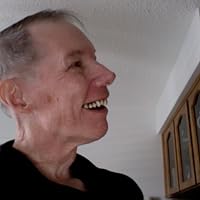
Hayden Carruth was an American poet, literary critic, and anthologist known for his distinctive voice, blending formal precision with the rhythms of jazz and the blues. Over a career spanning more than sixty years, he published over thirty books of poetry, as well as essays, literary criticism, and anthologies. His work often explored themes of rural life, hardship, mental illness, and social justice, reflecting both his personal struggles and his political convictions. Born in Waterbury, Connecticut, Carruth studied at the University of North Carolina at Chapel Hill and later earned an M.A. from the University of Chicago. His early career included serving as editor-in-chief of Poetry and as an advisory editor of The Hudson Review for two decades. He later became poetry editor at Harper’s Magazine and held teaching positions at Johnson State College, the University of Vermont, and Syracuse University, where he influenced a new generation of poets. Carruth received numerous awards, including the National Book Critics Circle Award for Collected Shorter Poems (1992) and the National Book Award for Scrambled Eggs and Whiskey (1996). His later works, such as Doctor Jazz and Last Poems, further cemented his reputation as a major voice in American poetry. His influential anthology The Voice That Is Great Within Us remains a landmark collection of American verse.
Why speak of the use of poetry? Poetry is what uses us.
------- From Scrambled Eggs & Whiskey
Ecstasy
For years it was in sex and I thought this was the most of it so brief a moment or two of transport out of oneself or in music which lasted longer and filled me with the exquisite wrenching agony of the blues and it is equally transitory and obscure as I sit in my broken chair that cats have shredded by the stove on a winter night with wind and snow howling outside and I imagine the whole world at peace at peace and everyone comfortable and warm the great pain assuaged a moment of the most shining and singular sensual gratification.
Personal stuff, so you get to know Hayden quite well -- married to a woman a generation younger, lost his daughter to cancer, anti-war in every way, New England Yankee writer/poet. Some of the poem read too conversational. Liked it best when he turned his gaze away from the diary and out to nature. Best was one about loons -- difficult to capture in a poem. But he comes close. Very, in fact!
Hayden Carruth lived and breathed poetry and his vast oeuvre is represented in this too brief book, a selection of poems chosen by his editor Sam Hamill. What is here is great, beautiful, and truly representative. But there is so much to Carruth that feels missing here. This might be a "portable" Carruth and a strong introduction, but one hopes it leads readers to find the full books and explore the poet's full range.
Over many years of reading poetry, I've come to trust that any poetry book published by Copper Canyon Press is going to be an adventure. This collection , hand-picked by Press founder, Sam Hill, is no exception. I'd read enough of Hayden Carruth's work that I expected to be impressed, and I was.
The poems are selected from 12 previous collections (oh, if all of us poets could boast of so many published books!) with an addition of new poems at finish to keep the appetite whetted for more yet to come. It is interesting to watch for change and growth in the whole of Carruth's work, but that his talent was richly showing early on - the first batch selected dates back to 1959's "The Crow and the Heart" - is clear:
Of all disquiets sorrow is most serene. Its interval of soft humility Are lenient; they intrude on our obscene Debasements and our fury like a plea For wisdom...
Sorrow can shape us better than dismay.
Carruth understands the peaks and valleys of a man's life. As Sam Hill notes in his introduction, this is a poet who has struggled with angels and demons alike, finding both in himself. So his work reflects such struggles, and we swing upwards with him to whisper with angels, just as we slide into shadows with him, to weep and gnash teeth with dark demons. If a poet creates often from the grit inside him, as an oyster its pearl, then this poet proves the old axiom. We must know the demon to recognize the angel; we must strive to be angelic to fully understand the power of the demonic.
Carruth writes glorious love poems to his wife, filled with appetite and relish and adoration. He writes love poems to his daughter, lost too early to cancer. He writes love poems to the natural world around him, and to the characters that are found in humanity. He writes love poems to sorrow.
This is a poet who lives his life seam to seam, depth to height, and journals it into his lyric work. To share in his journey, this is a collection not to be missed.
Hope to find this one thru the library. I already own a previous collection and I'm afraid there will be too many duplicates in this one. That said, I love the work of HC, exploring the deep undercurrents of life and aging.
this is a real treasurer to have for carrying around in a back pack or on the road. A wonderful choice of some of Carruth's best shorter works. A must have for Carruth fans.
I came to Carruth through Samuel Green (WA poet laureate). Wonderful, marvellous stuff. Beautiful connection to nature, the farming life and New England.