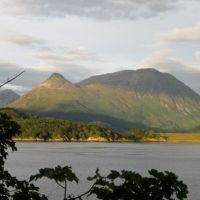
Tuscany offers some of the most spectacular scenery in Europe, and with beautiful villages and villas at every turn, what better way to explore the countryside than on foot? Over 15 months of changing seasons, Rosemary George did just that, visiting myriad wine producers while savoring the local sights. In Treading Grapes, each chapter features a walk through a particular wine region, offering learned advice on key estates as well as places to visit and favorite restaurants.
Unless you are extremely interested in the wine business in Tuscany, you will be bored to tears by this book. As you can tell, I was not interested. I didn't realise the book would have such a narrow focus. I thought it would be about a 50/50 combination of travel talk, and food/wine talk. No such luck.
Here's an example of a paragraph that will put you to sleep, unless you are a Tuscan wine enthusiast. "In 1932 came the first legal recognition of the various zones where un vino denominato del Chianti could be produced, namely Chianti Classico, Montalbano, Rufina, Colli Fiorentini, Colli Senesi, Colli Aretini and Colline Pisane. The area recognized as Chianti Classico was almost identical to that laid down by the Grand Duke in his edict of 1716. There were no precise regulations; that would not come until the creation of the system of Denominazione di Origine Controllata, or DOC, which came into effect with the Italian wine law of 1963. The DOC for Chianti and Chianti Classico gave legal recognition to the areas agreed in 1932, and the percentages of permitted grape were agreed as follows. Sangiovese formed the backbone, with 50 to 80 per cent; Canaiolo was the secondary variety, with 10 to 30 per cent; the white grapes Trebbiano Toscano and Malvasia del Chianti contributed anything between 10 and 30 per cent; and that left a 5 per cent of complementary grape varieties, which could cover anything grown in the vineyards of Tuscany, such as Mammolo, or Colorino, which was particularly recommended for the governo method."
1 Star = Yuck. I wish I hadn't wasted my time reading it.
This was a bit of stylistic mismatch for me. The book consists of chronicles of a series of walks Ms. George took with her husband through the Tuscan countryside visiting various wineries along the way.
Apart from small line drawings at the beginning of each chapter there are no illustrations or pictures, and Ms. George’s style of prose tends towards the “just the facts” style. While this is fine for descriptions of wine making techniques, vineyard composition, etc., but less than engaging for me when it comes to discussing the Tuscan countryside and history of the region.
There is a lot of great information in the book, but I would use it more as a reference prior to a trip than as a source of daydreams while sitting next to the fire on a cold autumn evening.