

What do you think?

Kambur
Küçük Adam Ne Oldu Sana, Herkes Tek Başına Ölür, Kurtlar Sofrasında gibi romanlarıyla tanınan 20. yüzyıl Alman edebiyatının en önemli isimlerinden Hans Fallada’nın yazdığı öyküler okurla ilk kez buluşuyor.
Fallada’nın çeşitli gazete ve dergilerde yayınladığı öyküler yıllar yılı arşivlerin karanlığına gömülmüş, ta ki 2017’de yapılan bir araştırmaya kadar… Yazarın biyografisi üzerine yeni çalışmalar yürütülürken ortaya çıkan bu öyküler, edebiyat dünyası için gerçek bir keşif! Kambur, 1920-1940 dönemi Almanya’sının bir profilini çizerken, yoksulluk ve haksızlıklara karşın ayakta kalmaya çalışan bir toplumu anlatıyor. Fallada’nın zor geçen gençlik yıllarının izlerini taşıyan bu yirmi dört öykü, yazara özgü gerçekçi, yalın ve duru anlatımla kaleme alınmış.
“Güçsüzlerin yazarı” kabul edilen Hans Fallada, yazgısını anlattığı küçük insanları bu yapıtında da anıtlaştırıyor.
“Fallada, kararlılığı ve dünyevi görüşleriyle toplum yaşamındaki çelişkileri kolayca sezme ve onları ustalıkla anlatma yeteneğine sahip bir yazardır.”
- Thomas Hüetlin, Der Spiegel
Fallada’nın çeşitli gazete ve dergilerde yayınladığı öyküler yıllar yılı arşivlerin karanlığına gömülmüş, ta ki 2017’de yapılan bir araştırmaya kadar… Yazarın biyografisi üzerine yeni çalışmalar yürütülürken ortaya çıkan bu öyküler, edebiyat dünyası için gerçek bir keşif! Kambur, 1920-1940 dönemi Almanya’sının bir profilini çizerken, yoksulluk ve haksızlıklara karşın ayakta kalmaya çalışan bir toplumu anlatıyor. Fallada’nın zor geçen gençlik yıllarının izlerini taşıyan bu yirmi dört öykü, yazara özgü gerçekçi, yalın ve duru anlatımla kaleme alınmış.
“Güçsüzlerin yazarı” kabul edilen Hans Fallada, yazgısını anlattığı küçük insanları bu yapıtında da anıtlaştırıyor.
“Fallada, kararlılığı ve dünyevi görüşleriyle toplum yaşamındaki çelişkileri kolayca sezme ve onları ustalıkla anlatma yeteneğine sahip bir yazardır.”
- Thomas Hüetlin, Der Spiegel
- GenresGerman Literature
178 pages, Paperback
First published January 1, 2018
About the author
Hans Fallada
248 books813 followersHans Fallada, born Rudolf Wilhelm Adolf Ditzen in Greifswald, was one of the most famous German writers of the 20th century. His novel, Little Man, What Now? is generally considered his most famous work and is a classic of German literature. Fallada's pseudonym derives from a combination of characters found in the Grimm fairy tales: The protagonist of Lucky Hans and a horse named Falada in The Goose Girl.
He was the child of a magistrate on his way to becoming a supreme court judge and a mother from a middle-class background, both of whom shared an enthusiasm for music and to a lesser extent, literature. Jenny Williams notes in her biography, More Lives than One that Fallada's father would often read aloud to his children the works authors including Shakespeare and Schiller (Williams, 5).
In 1899 when Fallada was 6, his father relocated the family to Berlin following the first of several promotions he would receive. Fallada had a very difficult time upon first entering school in 1901. As a result, he immersed himself in books, eschewing literature more in line with his age for authors including Flaubert, Dostoyevsky, and Dickens. In 1909 the family relocated to Leipzig following his father's appointment to the Imperial Supreme Court.
A rather severe road accident in 1909 (he was run over by a horse-drawn cart, then kicked in the face by the horse) and the contraction of typhoid in 1910 seem to mark a turning point in Fallada's life and the end of his relatively care-free youth. His adolescent years were characterized by increasing isolation and self-doubt, compounded by the lingering effects of these ailments. In addition, his life-long drug problems were born of the pain-killing medications he was taking as the result of his injuries. These issues manifested themselves in multiple suicide attempts. In 1911 he made a pact with his close friend, Hanns Dietrich, to stage a duel to mask their suicides, feeling that the duel would be seen as more honorable. Because of both boys' inexperience with weapons, it was a bungled affair. Dietrich missed Fallada, but Fallada did not miss Dietrich, killing him. Fallada was so distraught that he picked up Dietrich's gun and shot himself in the chest, but miraculously survived. Nonetheless, the death of his friend ensured his status as an outcast from society. Although he was found innocent of murder by way of insanity, from this point on he would serve multiple stints in mental institutions. At one of these institutions, he was assigned to work in a farmyard, thus beginning his lifelong affinity for farm culture.
While in a sanatorium, Fallada took to translation and poetry, albeit unsuccessfully, before finally breaking ground as a novelist in 1920 with the publication of his first book Young Goedeschal. During this period he also struggled with morphine addiction, and the death of his younger brother in the first World War.
In the wake of the war, Fallada worked several farmhand and other agricultural jobs in order to support himself and finance his growing drug addictions. Before the war, Fallada relied on his father for financial support while writing; after the German defeat he was no longer able, nor willing, to depend on his father's assistance. Shortly after the publication of Anton and Gerda, Fallada reported to prison in Greiswald to serve a 6-month sentence for stealing grain from his employer and selling it to support his drug habit. Less than 3 years later, in 1926, Fallada again found himself imprisoned as a result of a drug and alcohol-fueled string of thefts from employers. In February 1928 he finally emerged free of addiction.
Fallada married Suse Issel in 1929 and maintained a string of respectable jobs in journalism, working for newspapers and eventually for the publisher of his novels, Rowohlt. It is around this time that his novels became noticeably political and star
He was the child of a magistrate on his way to becoming a supreme court judge and a mother from a middle-class background, both of whom shared an enthusiasm for music and to a lesser extent, literature. Jenny Williams notes in her biography, More Lives than One that Fallada's father would often read aloud to his children the works authors including Shakespeare and Schiller (Williams, 5).
In 1899 when Fallada was 6, his father relocated the family to Berlin following the first of several promotions he would receive. Fallada had a very difficult time upon first entering school in 1901. As a result, he immersed himself in books, eschewing literature more in line with his age for authors including Flaubert, Dostoyevsky, and Dickens. In 1909 the family relocated to Leipzig following his father's appointment to the Imperial Supreme Court.
A rather severe road accident in 1909 (he was run over by a horse-drawn cart, then kicked in the face by the horse) and the contraction of typhoid in 1910 seem to mark a turning point in Fallada's life and the end of his relatively care-free youth. His adolescent years were characterized by increasing isolation and self-doubt, compounded by the lingering effects of these ailments. In addition, his life-long drug problems were born of the pain-killing medications he was taking as the result of his injuries. These issues manifested themselves in multiple suicide attempts. In 1911 he made a pact with his close friend, Hanns Dietrich, to stage a duel to mask their suicides, feeling that the duel would be seen as more honorable. Because of both boys' inexperience with weapons, it was a bungled affair. Dietrich missed Fallada, but Fallada did not miss Dietrich, killing him. Fallada was so distraught that he picked up Dietrich's gun and shot himself in the chest, but miraculously survived. Nonetheless, the death of his friend ensured his status as an outcast from society. Although he was found innocent of murder by way of insanity, from this point on he would serve multiple stints in mental institutions. At one of these institutions, he was assigned to work in a farmyard, thus beginning his lifelong affinity for farm culture.
While in a sanatorium, Fallada took to translation and poetry, albeit unsuccessfully, before finally breaking ground as a novelist in 1920 with the publication of his first book Young Goedeschal. During this period he also struggled with morphine addiction, and the death of his younger brother in the first World War.
In the wake of the war, Fallada worked several farmhand and other agricultural jobs in order to support himself and finance his growing drug addictions. Before the war, Fallada relied on his father for financial support while writing; after the German defeat he was no longer able, nor willing, to depend on his father's assistance. Shortly after the publication of Anton and Gerda, Fallada reported to prison in Greiswald to serve a 6-month sentence for stealing grain from his employer and selling it to support his drug habit. Less than 3 years later, in 1926, Fallada again found himself imprisoned as a result of a drug and alcohol-fueled string of thefts from employers. In February 1928 he finally emerged free of addiction.
Fallada married Suse Issel in 1929 and maintained a string of respectable jobs in journalism, working for newspapers and eventually for the publisher of his novels, Rowohlt. It is around this time that his novels became noticeably political and star
Ratings & Reviews
Friends & Following
Create a free account to discover what your friends think of this book!
Community Reviews
Displaying 1 - 10 of 10 reviews

July 4, 2019
Of course they're both laughing - in the midst of envy, in the rubble. Because they only have this one life. And you can't start early enough to fill it with love and happiness.
This tiny book –purportedly edited in this minuscule size for the purpose of pocketing while travelling – looked perfect to smuggle in the handbag to have a sneaky dose of words at hand for the hours I would spent in the back of the car. While putting it there, from the moment I ventured a quick look at the first page my curiosity took over and I gobbled it up in between ironing and filling the suitcases.
I loved Fallada’s Little Man, What Now? when we read it with the book club. Reading two short stories by him last year (Short Treatise on the Joys of Morphinism, Three years in Life), they struck me as largely autobiographical. At the time of reading the novel I was unaware of the turbulent life Fallada had, struggling with alcoholism and morphine addiction, and having been imprisoned twice. The autobiographical features of his work aren’t that surprising of a writer who asserted in 1946 ‘Everything in my life ends up in my books’– a testimonial which inspired the title of the biography his Dutch translator Anne Folkerstma she published on him in 2015 (Hans Fallada: Alles in mijn leven komt terecht in een boek).
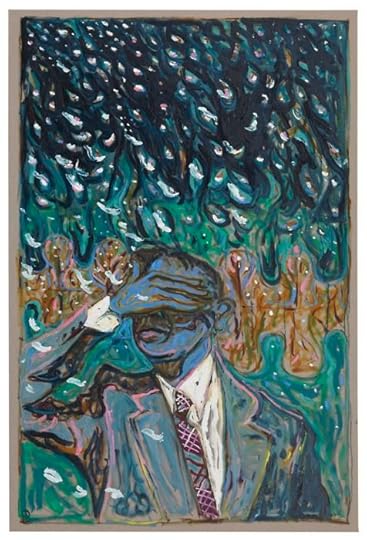
(Billy Childish, The soft ashes of Berlin snowing on Hans Fallada’s nose (2010))
In view of what I had read before of him, these five stories and their themes felt familiar: simple, unadorned prose on ordinary German people and their living conditions, their struggle for life and with unemployment, slogging and scraping for money during the interbellum, naivety and its cost, the belief in and hope for a better life against one’s better judgement, waiting for miracles to happen to get out of the drab - love, despair, hope, jealousy, the big emotions thriving people’s lives but written in a light touch and mild irony. The five stories draw largely on Hans Fallada’s own experiences (drinking, precarious employment, his experiences working for a newspaper and in agriculture). Three of the five stories can be found in English in Tales from the Underworld: Selected Shorter Fiction (The Lucky Beggar (1932); The Wedding Ring (1925); I Get a Job (1932)); the last story (written in 1945) can be read in German in the 2018 collection Junge Liebe zwischen Trümmern: Erzählungen.
Three stories focus on love. While love shows a delusive unhappy face of jealousy and obsession in ‘The wedding Ring’ – Fallada in the last, posthumously published story (Young love amidst the rubble) evokes shocking happiness and fun. A newlywed young couple living in the midst of the rubble of ruined Berlin displays a blatant joie de vivre and happiness now the war is over, provoking envy and resentment – a joyful pendant of the far darker tale at the same time and place The Silent Angel by Heinrich Böll. Fallada’s (and his young wife’s) heavy addiction to morphine at the time of writing the story might have added to the exalted tone of the scenes. The story echoes unwavering resilience and hope, whatever happens.
The other two stories, like Little Man, What Now? focus on unemployment and precarious existence, how the struggle to survive affects the psyche, demeaning odd jobs imply one has to bow for the hand that feeds nothing can protect one from falling from grace from one moment to another without warning. Illusions, (false) hope and wrong decisions affect the relationships of the ones struck by the loss of the job and ruin friendships and embitter marriages. Ordinary people fight for their dignity which can mean losing everything.
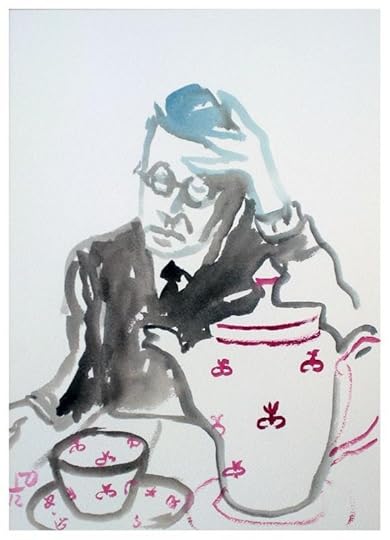
(Billy Childish, Tea Drinker (Hans Fallada))
As the format of the short story didn’t leave much room for a strong and emphatic characterisation I thought these stories interesting to read as finely conveying the zeitgeist, rendering what seems a truthful impression of the lives of ‘ordinary people’ in Germany during the interwar years and shortly after, but was more moved by Little Man, What Now? Quite sensibly, Fallada’s gift to create well fleshed-out, touching characters like Emma ‘Lämmchen’ Mörschel shines out more pre-eminently in a novel.
This tiny book –purportedly edited in this minuscule size for the purpose of pocketing while travelling – looked perfect to smuggle in the handbag to have a sneaky dose of words at hand for the hours I would spent in the back of the car. While putting it there, from the moment I ventured a quick look at the first page my curiosity took over and I gobbled it up in between ironing and filling the suitcases.
I loved Fallada’s Little Man, What Now? when we read it with the book club. Reading two short stories by him last year (Short Treatise on the Joys of Morphinism, Three years in Life), they struck me as largely autobiographical. At the time of reading the novel I was unaware of the turbulent life Fallada had, struggling with alcoholism and morphine addiction, and having been imprisoned twice. The autobiographical features of his work aren’t that surprising of a writer who asserted in 1946 ‘Everything in my life ends up in my books’– a testimonial which inspired the title of the biography his Dutch translator Anne Folkerstma she published on him in 2015 (Hans Fallada: Alles in mijn leven komt terecht in een boek).
(Billy Childish, The soft ashes of Berlin snowing on Hans Fallada’s nose (2010))
In view of what I had read before of him, these five stories and their themes felt familiar: simple, unadorned prose on ordinary German people and their living conditions, their struggle for life and with unemployment, slogging and scraping for money during the interbellum, naivety and its cost, the belief in and hope for a better life against one’s better judgement, waiting for miracles to happen to get out of the drab - love, despair, hope, jealousy, the big emotions thriving people’s lives but written in a light touch and mild irony. The five stories draw largely on Hans Fallada’s own experiences (drinking, precarious employment, his experiences working for a newspaper and in agriculture). Three of the five stories can be found in English in Tales from the Underworld: Selected Shorter Fiction (The Lucky Beggar (1932); The Wedding Ring (1925); I Get a Job (1932)); the last story (written in 1945) can be read in German in the 2018 collection Junge Liebe zwischen Trümmern: Erzählungen.
Three stories focus on love. While love shows a delusive unhappy face of jealousy and obsession in ‘The wedding Ring’ – Fallada in the last, posthumously published story (Young love amidst the rubble) evokes shocking happiness and fun. A newlywed young couple living in the midst of the rubble of ruined Berlin displays a blatant joie de vivre and happiness now the war is over, provoking envy and resentment – a joyful pendant of the far darker tale at the same time and place The Silent Angel by Heinrich Böll. Fallada’s (and his young wife’s) heavy addiction to morphine at the time of writing the story might have added to the exalted tone of the scenes. The story echoes unwavering resilience and hope, whatever happens.
The other two stories, like Little Man, What Now? focus on unemployment and precarious existence, how the struggle to survive affects the psyche, demeaning odd jobs imply one has to bow for the hand that feeds nothing can protect one from falling from grace from one moment to another without warning. Illusions, (false) hope and wrong decisions affect the relationships of the ones struck by the loss of the job and ruin friendships and embitter marriages. Ordinary people fight for their dignity which can mean losing everything.
(Billy Childish, Tea Drinker (Hans Fallada))
As the format of the short story didn’t leave much room for a strong and emphatic characterisation I thought these stories interesting to read as finely conveying the zeitgeist, rendering what seems a truthful impression of the lives of ‘ordinary people’ in Germany during the interwar years and shortly after, but was more moved by Little Man, What Now? Quite sensibly, Fallada’s gift to create well fleshed-out, touching characters like Emma ‘Lämmchen’ Mörschel shines out more pre-eminently in a novel.
February 28, 2020
24 öykü arasında yalnızca 1 tanesinden keyif almadım ki bilindiği üzere bu türün hayranı değilim artı Alman yazarlara karşı eğilimim hiç yok.
Tüm bunlar göz önünde bulundurulduğunda şey diyebilir miyiz? Yazarla tanışmak için ideal seçim.
Kesinlikle.
Tüm bunlar göz önünde bulundurulduğunda şey diyebilir miyiz? Yazarla tanışmak için ideal seçim.
Kesinlikle.

January 13, 2021
‘... en dan lachen ze allebei. Natuurlijk lachen ze allebei - te midden van afgunst, tussen het puin. Want ze hebben alleen dit ene leven. En je kunt niet vroeg genoeg beginnen om het te vullen met liefde en geluk.’

October 30, 2023
Alman edebiyatı okumayı pek tercih etmiyorum ama yine de arada okumak için sürükleniyorum. 24 öyküden oluşan bu kitapta öykülerin hepsinin bir derdi var. Hepsinin yaşamdan alıntı olduğu çok belli oluyor. İkinci Dünya Savaşı'na çok güzel noktalardan değinmiş; savaşın insanlara neler yaptığını öyküler de görebiliyorsunuz. Fallada'nın kalemini çok beğendim; yazım dili beni çok etkiledi. Ustaca kurgulanmış öyküler hatta 1 ayda yazmış hepsini😊 Kitabın en başında kendisiyle ilgili çevirmenin cok güzel bir önsözü var. Elinize aldığınızda çabucak okunuyor ama ben zamana yayarak okumayı tercih ettim. Alman edebiyatından okuma yapacaksanız mutlaka listenizde bu kitapta olsun derim😉

December 14, 2023
Hans Fallada'nın romanlarına da bakmak isterim ama bizde öykü anlamında ondan iyiler var. Arka kapaktaki övgülere ve kapak resmine aldandım da Almanların Mustafa Kutlu'su gibi geldi. Bazı öykülerde bir sonda ilahi koymadığı kalmış. Bazı öyküler öykü özelliği taşımıyor. Sondaki "Atalarım" öyküsü bir öykü değil resmen deneme. Bazı orijinal konuları da heba etmiş yazar. Gerçekten biz edebiyatımıza haksızlık ediyoruz. Bizde Fallada'dan iyiler var.
September 11, 2024
Niet het "beste" maar toch zeker moeite...zoals de rest van Hans Fallada.

September 18, 2026
Mooie intro in het werk van Fallada

March 3, 2020
Met Liefde en puin heb ik alle werken van Hans Fallada gelezen. Het was zeker geen ‘last but not least’ boekje. Liefde en puin is een verzameling van een vijftal kortverhalen die in het interbellum in Duitse dagbladen verschenen.
March 8, 2020
Zelfs in dit kleine bundeltje met 5 verhalen vind je de hele eerste helft van het 20e eeuwse Duitse burgerleven terug, armoede, recessie, werkloosheid, en - in het titelverhaal - vreugde ondanks de omstandigheden

February 20, 2018
Fallada bleibt Fallada. Aus dem Leben geschrieben. Hat seine Längen, aber trotzdem gut zum Durchhören
Displaying 1 - 10 of 10 reviews