

What do you think?

In the Quick
June is a brilliant but difficult girl with a gift for mechanical invention who leaves home to begin grueling astronaut training at the National Space Program. Younger by two years than her classmates at Peter Reed, the school on campus named for her uncle, she flourishes in her classes but struggles to make friends and find true intellectual peers. Six years later, she has gained a coveted post as an engineer on a space station—and a hard-won sense of belonging—but is haunted by the mystery of Inquiry, a revolutionary spacecraft powered by her beloved late uncle’s fuel cells. The spacecraft went missing when June was twelve years old, and while the rest of the world seems to have forgotten the crew, June alone has evidence that makes her believe they are still alive.
She seeks out James, her uncle’s former protégé, also brilliant, also difficult, who has been trying to discover why Inquiry’s fuel cells failed. James and June forge an intense intellectual bond that becomes an electric attraction. But the relationship that develops between them as they work to solve the fuel cell’s fatal flaw threatens to destroy everything they’ve worked so hard to create—and any chance of bringing the Inquiry crew home alive.
She seeks out James, her uncle’s former protégé, also brilliant, also difficult, who has been trying to discover why Inquiry’s fuel cells failed. James and June forge an intense intellectual bond that becomes an electric attraction. But the relationship that develops between them as they work to solve the fuel cell’s fatal flaw threatens to destroy everything they’ve worked so hard to create—and any chance of bringing the Inquiry crew home alive.
8 pages, Audiobook
First published March 2, 2021
Ratings & Reviews
Friends & Following
Create a free account to discover what your friends think of this book!
Community Reviews
Displaying 1 - 30 of 765 reviews

January 1, 2021
The best part of this story is the synopsis.
The worst part? The dialogue has no quotation marks. You have to pay attention and filter out action from words and all I'll say is I'm glad this was a short read. But if that's a deal breaker for you, now you know.
This would probably make a great movie as there is some THE MARTIAN-esque similarities as far as disaster and thinking on your feet but in space. But where I hear the book THE MARTIAN is as good as the movie, in this case, were this ever to be adapted, the same would not be said.
What I did find interesting were the literary paralells to a beloved classic, which I did not pick up on until quite far into the story, but once I saw I couldn't unsee. It doesn't stick to said plot 100% -- it couldn't -- but where it can, it does. I didn't hate it but it didn't salvage this, either.
This is a story I wish I could've loved because of the interesting plot/themes but the execution, and main character, and lack of punctuation, really dragged down.
** I received an ARC from NetGalley and the publisher (thank you!) in exchange for an honest review. **
----
This review can also be found at A Take From Two Cities.
The worst part? The dialogue has no quotation marks. You have to pay attention and filter out action from words and all I'll say is I'm glad this was a short read. But if that's a deal breaker for you, now you know.
This would probably make a great movie as there is some THE MARTIAN-esque similarities as far as disaster and thinking on your feet but in space. But where I hear the book THE MARTIAN is as good as the movie, in this case, were this ever to be adapted, the same would not be said.
What I did find interesting were the literary paralells to a beloved classic, which I did not pick up on until quite far into the story, but once I saw I couldn't unsee. It doesn't stick to said plot 100% -- it couldn't -- but where it can, it does. I didn't hate it but it didn't salvage this, either.
This is a story I wish I could've loved because of the interesting plot/themes but the execution, and main character, and lack of punctuation, really dragged down.
** I received an ARC from NetGalley and the publisher (thank you!) in exchange for an honest review. **
----
This review can also be found at A Take From Two Cities.

March 29, 2021
I've been procrastinating on this review because this book has been highly anticipated after I loved this author's first book, If, Then.
If I had realized this was intended to be Jane Eyre meets The Martian I may have gone in with more caution. It's just a taste thing - I overwhelmingly dislike retellings. They often force the author to make the characters do things that don't make sense for them in honor of the larger form, and that might explain some of the choices here. To me there were too many unbelievable things in what felt practically present day (but couldn't be) and a strange lack of intelligence and oversight by those I would expect to have it while the child who shouldn't be that smart seems to have no limits.
Such a good cover though.
I had a copy from the publisher through NetGalley. The book came out March 2, 2021.
If I had realized this was intended to be Jane Eyre meets The Martian I may have gone in with more caution. It's just a taste thing - I overwhelmingly dislike retellings. They often force the author to make the characters do things that don't make sense for them in honor of the larger form, and that might explain some of the choices here. To me there were too many unbelievable things in what felt practically present day (but couldn't be) and a strange lack of intelligence and oversight by those I would expect to have it while the child who shouldn't be that smart seems to have no limits.
Such a good cover though.
I had a copy from the publisher through NetGalley. The book came out March 2, 2021.

April 5, 2021
June is an astronaut who believes that some astronauts believed lost on a prior space mission are still alive. She joins a new mission during which the crew faces problems from a design flaw.
This book was science fiction lite, bogged down with mundane details. Way too much time was spent on June’s childhood and education. Finally, she gets into space, but then there is more mundane detail. Also don’t believe the blurb about an “electric attraction”. June and James have one unnecessary sex scene at around the 78% point of the book. It was kind of embarrassing (if a tongue can part your legs, that is a very strong tongue). The story doesn’t really end. The book just stops. This book was a disappointment.
I received a free copy of this book from the publisher.
This book was science fiction lite, bogged down with mundane details. Way too much time was spent on June’s childhood and education. Finally, she gets into space, but then there is more mundane detail. Also don’t believe the blurb about an “electric attraction”. June and James have one unnecessary sex scene at around the 78% point of the book. It was kind of embarrassing (if a tongue can part your legs, that is a very strong tongue). The story doesn’t really end. The book just stops. This book was a disappointment.
I received a free copy of this book from the publisher.

February 8, 2021
Thank you Random House for a complimentary copy. I voluntarily reviewed this book. All opinions expressed are my own.
In The Quick
By: Kate Hope Day
REVIEW ☆☆☆☆
Synopsis
A young, ambitious female astronaut’s life is upended by a love affair that threatens the rescue of a lost crew in this brilliantly imagined novel, in the tradition of Station Eleven and The Martian.
*****
I loved Kate Hope Day's previous novel, If, Then, so my expectations for In The Quick were high indeed.
First of all, I seriously love the cover. I mean, it's all about space, and it's pink. What's not to love?
As for the story, you should know the synopsis doesn't truly describe the book because it is neither a romance nor a rescue mission.
The heroine, June, possesses a brilliant mind for mechanics, etc., but she is sorely lacking in people skills. Awkward and misunderstood by everyone except her intellectually gifted uncle, he alone encourages June, and she, in his shadow, often, covertly, learns about spacecraft engineering. Specifically, the Inquiry, a spacecraft powered by fuel cells designed by her uncle that, regrettably, goes missing when June is twelve. The first part of the book addresses June's childhood. You get a sense of her thought process, personality and the origin of her desire to work in outer space.
June begins astronaut training. This is a difficult program, made more so by being two years younger than her peers. Intellectually, however, June is already beyond them. Six years on, June is finally, as she always dreamed, a space station engineer. Here, after years of hard work, June finds true commonality and belonging. Imagine always feeling outcast, then, finally, finding your people. June does well at her job, but the missing Inquiry lingers at the back of her mind. After years gone everyone has forgotten it, except June. While working, June makes a discovery, reaffirming her belief that the Inquiry crew are, in fact, alive. June's time on the space station is the most engaging fast paced section in the book. With witty dialogue, meaningful interactions and complex problems, the story progresses quickly.
Circumstances lead June to James, a guy who studied under her uncle. James has been trying to understand why the Inquiry's fuel cells, designed by June's uncle, failed. He and June are well matched intellectually and might be able to solve this mystery together. June cannot ignore her gut feeling about the missing spacecraft. She intuitively knows her life's direction, and with every turn of a new corner, June's resolve further hardens into a quickly approaching reality.
June and James are odd ones-highly intelligent-with a strange and evolving, perhaps from loneliness, relationship that lacks any substantial emotion. Additionally, the environment surrounding June and James is eerily weird. Everything here feels dark, bleak, harsh and isolated. Atmospherically speaking, the set up is perfect with slower pacing that subsequently matches both mood and tone.
I won't disclose the various twists giving chase to the last page. My biggest issue is the abrupt inconclusive end. The story is going in this direction, and now, it is going in that direction. In the meantime, I am aimlessly floating away into deep space....
Overall, I found In The Quick quintessentially inspiring, defiantely feminist and quietly terrifying. It was also reminiscent of The Martian in some ways. Both project a vast sense of nothingness, yet encompass everything at once. The feelings of utter despair and fledgling hope continually battle for dominance of an abstraction that neither can ever claim-the human mind scape. As long as horizons exist, despair will not triumph over the human spirit of ingenuity and progress. Hope will ignite, given even the tiniest pinprick of light, from a fragile spark into an unextinguishable flame.
In The Quick
By: Kate Hope Day
REVIEW ☆☆☆☆
Synopsis
A young, ambitious female astronaut’s life is upended by a love affair that threatens the rescue of a lost crew in this brilliantly imagined novel, in the tradition of Station Eleven and The Martian.
*****
I loved Kate Hope Day's previous novel, If, Then, so my expectations for In The Quick were high indeed.
First of all, I seriously love the cover. I mean, it's all about space, and it's pink. What's not to love?
As for the story, you should know the synopsis doesn't truly describe the book because it is neither a romance nor a rescue mission.
The heroine, June, possesses a brilliant mind for mechanics, etc., but she is sorely lacking in people skills. Awkward and misunderstood by everyone except her intellectually gifted uncle, he alone encourages June, and she, in his shadow, often, covertly, learns about spacecraft engineering. Specifically, the Inquiry, a spacecraft powered by fuel cells designed by her uncle that, regrettably, goes missing when June is twelve. The first part of the book addresses June's childhood. You get a sense of her thought process, personality and the origin of her desire to work in outer space.
June begins astronaut training. This is a difficult program, made more so by being two years younger than her peers. Intellectually, however, June is already beyond them. Six years on, June is finally, as she always dreamed, a space station engineer. Here, after years of hard work, June finds true commonality and belonging. Imagine always feeling outcast, then, finally, finding your people. June does well at her job, but the missing Inquiry lingers at the back of her mind. After years gone everyone has forgotten it, except June. While working, June makes a discovery, reaffirming her belief that the Inquiry crew are, in fact, alive. June's time on the space station is the most engaging fast paced section in the book. With witty dialogue, meaningful interactions and complex problems, the story progresses quickly.
Circumstances lead June to James, a guy who studied under her uncle. James has been trying to understand why the Inquiry's fuel cells, designed by June's uncle, failed. He and June are well matched intellectually and might be able to solve this mystery together. June cannot ignore her gut feeling about the missing spacecraft. She intuitively knows her life's direction, and with every turn of a new corner, June's resolve further hardens into a quickly approaching reality.
June and James are odd ones-highly intelligent-with a strange and evolving, perhaps from loneliness, relationship that lacks any substantial emotion. Additionally, the environment surrounding June and James is eerily weird. Everything here feels dark, bleak, harsh and isolated. Atmospherically speaking, the set up is perfect with slower pacing that subsequently matches both mood and tone.
I won't disclose the various twists giving chase to the last page. My biggest issue is the abrupt inconclusive end. The story is going in this direction, and now, it is going in that direction. In the meantime, I am aimlessly floating away into deep space....
Overall, I found In The Quick quintessentially inspiring, defiantely feminist and quietly terrifying. It was also reminiscent of The Martian in some ways. Both project a vast sense of nothingness, yet encompass everything at once. The feelings of utter despair and fledgling hope continually battle for dominance of an abstraction that neither can ever claim-the human mind scape. As long as horizons exist, despair will not triumph over the human spirit of ingenuity and progress. Hope will ignite, given even the tiniest pinprick of light, from a fragile spark into an unextinguishable flame.

April 3, 2021
Let's talk about science fiction. Bear with me, I'm trying to explain what is most wrong with this book.
What is fiction for? I hear critics argue this all the time, but the answer seems simple to me: many things. One of the main ones being to illustrate the human condition through narrative and character. Entertainment and education are both up there as well, but I'm not trying to be exhaustive here. So what about science fiction? Again, the answer is many things, but we don't stray too far from the same things as ordinary fiction, but with a qualifier, that being suspension of disbelief via an appeal to science and/or engineering.
On that basis, this book is an interesting one to judge, because it succeeds quite well as fiction, but fails horribly as science fiction.
It's about the way that the main character June, a genius engineer from childhood, imprints on her uncle (a similar genius) and obsessively pursues a life furthering his work. And it's about the way her genius isolates her from the people around her, while she simultaneously needs human contact from the same people she's isolated from. It's all very emotional and "literary".
But where it all fails is in the appeal to science. Science and engineering don't work the way this story needs them to work, and the author is either ignorant of this or believes her narrative is more important than the basic reality of the fields that she's ostensibly playing with. The idea of a single genius inventing a key part of a spaceship with only him and his students understanding it is about as stupid as showing a chef in a major restaurant cooking one meal at a time.
And then there's the concept of the "pink planet". Lots of things that the narrative does with it set constraints on it: it's a moon of something else, it's got enough gravity to move on normally and to retain an atmosphere, it's close enough to the Sun that solar panels work properly, it's atmosphere is survivable for very short periods of time (which sets bounds on atmospheric pressure and temperature).
All of which means that in a world without FTL travel, that the "pink planet" can't exist (it's too big for us to not already know about it, and the only planets big enough to have a moon with its other characteristics, Jupiter and Saturn, are too far from the sun for solar panels to do much). And every further detail about the place further breaks suspension of disbelief.
It all reminds me very much of Amberlough (a book about pre-war Nazi Germany that has details that don't quite work there, so it's set in a fantasy world instead) or Station Eleven a book about a pandemic apocalypse that both ignores epidemiology and engineering (the basics of civilization would not be still absent after 20 years; textbooks weren't infected). In all three cases we have a writer who wants to tell a particular story and are just too damn lazy and/or arrogant to try to get the details of their story right, or they have publishers and editors who are not scientifically or historically literate enough to call the authors on their crap.
What is fiction for? I hear critics argue this all the time, but the answer seems simple to me: many things. One of the main ones being to illustrate the human condition through narrative and character. Entertainment and education are both up there as well, but I'm not trying to be exhaustive here. So what about science fiction? Again, the answer is many things, but we don't stray too far from the same things as ordinary fiction, but with a qualifier, that being suspension of disbelief via an appeal to science and/or engineering.
On that basis, this book is an interesting one to judge, because it succeeds quite well as fiction, but fails horribly as science fiction.
It's about the way that the main character June, a genius engineer from childhood, imprints on her uncle (a similar genius) and obsessively pursues a life furthering his work. And it's about the way her genius isolates her from the people around her, while she simultaneously needs human contact from the same people she's isolated from. It's all very emotional and "literary".
But where it all fails is in the appeal to science. Science and engineering don't work the way this story needs them to work, and the author is either ignorant of this or believes her narrative is more important than the basic reality of the fields that she's ostensibly playing with. The idea of a single genius inventing a key part of a spaceship with only him and his students understanding it is about as stupid as showing a chef in a major restaurant cooking one meal at a time.
And then there's the concept of the "pink planet". Lots of things that the narrative does with it set constraints on it: it's a moon of something else, it's got enough gravity to move on normally and to retain an atmosphere, it's close enough to the Sun that solar panels work properly, it's atmosphere is survivable for very short periods of time (which sets bounds on atmospheric pressure and temperature).
All of which means that in a world without FTL travel, that the "pink planet" can't exist (it's too big for us to not already know about it, and the only planets big enough to have a moon with its other characteristics, Jupiter and Saturn, are too far from the sun for solar panels to do much). And every further detail about the place further breaks suspension of disbelief.
It all reminds me very much of Amberlough (a book about pre-war Nazi Germany that has details that don't quite work there, so it's set in a fantasy world instead) or Station Eleven a book about a pandemic apocalypse that both ignores epidemiology and engineering (the basics of civilization would not be still absent after 20 years; textbooks weren't infected). In all three cases we have a writer who wants to tell a particular story and are just too damn lazy and/or arrogant to try to get the details of their story right, or they have publishers and editors who are not scientifically or historically literate enough to call the authors on their crap.

November 17, 2020
Thanks to Netgalley for providing a copy of this book for review.
For some reason, I really loved the cover of this book. You never see pink associated with astronauts! The figure seems to be falling away from the cover and beckoning you in.
So I was fine with reading this slightly alternate history. I wasn't sure about when the book was set, but it seemed a bit retro. However, in this book a new pink planet has been found and crewed ships have just begun exploring the solar system.
At the beginning of the book, this manned exploration team has fallen out of contact. June, the main character, lives with her uncle. Her uncle is a brilliant scientist who developed the fuel cell that the exploration ship used. This uncle has also been teaching June how to think like an engineer, or an inventor. He encourages her to take things apart to see how they work, to think through alternatives until she hits an obstacle and then either find a way around that obstacle or find an entirely different path.
This uncle has recently died and June's aunt and cousin don't seem to be kindred spirits to her the way her uncle was. In short order, June is shipped off to the boarding school at the base for aspiring engineers and astronauts.
So far, so good. I don't love reading books that bring you all the way from childhood through the adult main character's life. To me, it seems like a waste of time and a good author could start you where the action is and allow the reader to learn backstory later, as necessary, and more organically to the plot. But I could get through a bit of backstory to get to the good part.
But more and more time with June as a child! What did she eat at the cafeteria. How did she learn to scuba dive (which seemed suspicious to me; the kids learned in a pool and then "dropped weight" in order to rise. But scuba divers don't drop weight when they're diving, they increase the amount of air in their BCDs.) Did June make friends. More and more of this. It was all so... mundane.
So I skipped ahead. And even in space, time is given to June brushing her teeth (and not in a exciting space way). To what June is eating. To her learning how to deal with people. To June continually focusing on the immediate problem and not understanding the larger situation, in which she might be putting people in danger by dealing only with the immediate problem. It still felt... mundane. None of the wonder of space. Just immature people misunderstanding each other again and again.
So, the novel wasn't really about space. It was about a young neuro-atypical woman who leverages her strengths but doesn't understand her weaknesses. And no one tells her how to. This is literary fiction dressed up with a science fiction ribbon. And I've got a short tolerance for books like these because rarely is the science aspect up to par.
For some reason, I really loved the cover of this book. You never see pink associated with astronauts! The figure seems to be falling away from the cover and beckoning you in.
So I was fine with reading this slightly alternate history. I wasn't sure about when the book was set, but it seemed a bit retro. However, in this book a new pink planet has been found and crewed ships have just begun exploring the solar system.
At the beginning of the book, this manned exploration team has fallen out of contact. June, the main character, lives with her uncle. Her uncle is a brilliant scientist who developed the fuel cell that the exploration ship used. This uncle has also been teaching June how to think like an engineer, or an inventor. He encourages her to take things apart to see how they work, to think through alternatives until she hits an obstacle and then either find a way around that obstacle or find an entirely different path.
This uncle has recently died and June's aunt and cousin don't seem to be kindred spirits to her the way her uncle was. In short order, June is shipped off to the boarding school at the base for aspiring engineers and astronauts.
So far, so good. I don't love reading books that bring you all the way from childhood through the adult main character's life. To me, it seems like a waste of time and a good author could start you where the action is and allow the reader to learn backstory later, as necessary, and more organically to the plot. But I could get through a bit of backstory to get to the good part.
But more and more time with June as a child! What did she eat at the cafeteria. How did she learn to scuba dive (which seemed suspicious to me; the kids learned in a pool and then "dropped weight" in order to rise. But scuba divers don't drop weight when they're diving, they increase the amount of air in their BCDs.) Did June make friends. More and more of this. It was all so... mundane.
So I skipped ahead. And even in space, time is given to June brushing her teeth (and not in a exciting space way). To what June is eating. To her learning how to deal with people. To June continually focusing on the immediate problem and not understanding the larger situation, in which she might be putting people in danger by dealing only with the immediate problem. It still felt... mundane. None of the wonder of space. Just immature people misunderstanding each other again and again.
So, the novel wasn't really about space. It was about a young neuro-atypical woman who leverages her strengths but doesn't understand her weaknesses. And no one tells her how to. This is literary fiction dressed up with a science fiction ribbon. And I've got a short tolerance for books like these because rarely is the science aspect up to par.

September 10, 2020
This was an absolutely stellar read! It is filled with multiple elements; it has romance, mystery, suspense, space/aeronautical theme and a science fiction feel to everything. The book completely held my attention through the entire reading and I must admit that I had difficulty putting it down. I initially expected the book to be a certain read and yet finished the book completely surprised.
June is a fascinating character. She is one part child and one part of adult. She is a bold, difficult, brave and yet simplistic main character. She was intriguing and complex. I found the story to be absolutely enthralling. Watching the plot develop was amazing. This book isn't in my typical genre, but I'm so very thrilled that I read it. It was a complete pleasure. You should run, not walk, to read this book!
I would like to thank Kate Hope Day, Random House Publishing and Netgalley for the opportunity to read this book in exchange for a fair and honest review.
June is a fascinating character. She is one part child and one part of adult. She is a bold, difficult, brave and yet simplistic main character. She was intriguing and complex. I found the story to be absolutely enthralling. Watching the plot develop was amazing. This book isn't in my typical genre, but I'm so very thrilled that I read it. It was a complete pleasure. You should run, not walk, to read this book!
I would like to thank Kate Hope Day, Random House Publishing and Netgalley for the opportunity to read this book in exchange for a fair and honest review.

May 21, 2021
Don't give away your copy of Jane Eyre just yet.
Day nails the original heroine's smarty-pants personality, but the book runs waaay overlong, bogged down by endless unwelcome paragraphs of June's philosophical pondering. Also, I thought

7 hrs reading time, 160 wpm
Day nails the original heroine's smarty-pants personality, but the book runs waaay overlong, bogged down by endless unwelcome paragraphs of June's philosophical pondering. Also, I thought
7 hrs reading time, 160 wpm

September 9, 2020
In a dystopian world where children are trained to become astronauts in their teens, protagonist June is a precocious, self-centered, thoughtless child who grows into a hubristic, self-centered, thoughtless, and reckless adult. Driven to show that she is always, always right and better, June rejects the critical necessity of teamwork in engineering in order to follow her own agenda, leading to the ends of others' careers and health. In addition to having one of the least sympathetic narrators I've ever read, this book offers a view of engineering and science that is completely antithetical to the way those things should work. Engineers are unethical, withholding vital information; they keep deadly secrets in space; they behave like children. Perhaps this is intended as a cautionary tale about what happens when we let the cult of genius aggrandize itself unchecked, but I think the author genuinely thinks this is all heroic or realistic or something. Want good books about women in space? Go read The Calculating Stars and its sequels instead.

May 31, 2023
According to her bio, Kate Hope Day was an associate producer at HBO prior to turning to writing. This may explain the superficiality of every element. The science is entirely glossed over, the society of Day’s world functions in a vacuum, and the characters have no distinct personalities. The plot uses devices that are only superficially examined. Anything in this book that a reader might wish to know more about by asking "why" is left sitting on the page.
I see her visual arts background as being the main influencer in this work. After all, in any theatrical endeavor the script, as it sits on the table, tends to be in the same form as In the Quick. It’s only when that script is transformed into a movie, TV show, or play that the actors, the set, and the props all work to transform a superficial script into a convincing show of real life. Unfortunately, that transformation never happens with In the Quick.
The actual story is comprised of a conglomeration of neat stuff about space exploration that has probably captured Day’s imagination over the years. The main character is a young girl named June that somehow knows the detailed workings of chemical, electrical, and mechanical engineering. She then proceeds to grow up into a young adult and becomes an astronaut. From there, the story follows a nonsensical path to the end where June becomes a hero.
Lastly, Day apparently has a problem with using quotation marks. While there are some writers that can pull this off, in those instances their writing is so masterful that this sparseness of style enhances the experience that they have created. All of the issues associated with In the Quick, however, makes this stylistic element into an additional self-created hindrance to the delivery of the story.
I see her visual arts background as being the main influencer in this work. After all, in any theatrical endeavor the script, as it sits on the table, tends to be in the same form as In the Quick. It’s only when that script is transformed into a movie, TV show, or play that the actors, the set, and the props all work to transform a superficial script into a convincing show of real life. Unfortunately, that transformation never happens with In the Quick.
The actual story is comprised of a conglomeration of neat stuff about space exploration that has probably captured Day’s imagination over the years. The main character is a young girl named June that somehow knows the detailed workings of chemical, electrical, and mechanical engineering. She then proceeds to grow up into a young adult and becomes an astronaut. From there, the story follows a nonsensical path to the end where June becomes a hero.
Lastly, Day apparently has a problem with using quotation marks. While there are some writers that can pull this off, in those instances their writing is so masterful that this sparseness of style enhances the experience that they have created. All of the issues associated with In the Quick, however, makes this stylistic element into an additional self-created hindrance to the delivery of the story.

February 26, 2021
For me, at first, this book was all about the cover. That gorgeous pink color with an astronaut on it. I was all in as soon as I saw it.
As for the inside, it was... different. June is a brilliant, eccentric mechanical genius. For most of her life, since the age of 12, she tries to solve the puzzle of why the fuel cells her uncle invented have failed and stranded a soaceship in deep space and probably killed the crew.
The synopsis describes this book as a romance, but I didn’t really see a romance as much as a kind of obsession. And the “romance” is not even a part of the story until the last part of the book.
The parts of this book that I loved were the ones that take place in space, or on the pink planet (a moon) which did well at describing the realism of being in space or on a harsh world. And there was also some pretty good science. Just give me space and science and I’m a happy camper.
I also enjoyed the first part of the story when June is 12 and in school learning how to live and work in space.
But... June as a character wasn’t really that likable. She was single minded and it seemed like she kept causing everyone to have serious accidents just to get what she wanted.
This book is written without quotation marks so there are times when you’re not sure who’s speaking. It pulled me out of the story several times as I had to reread those parts a few times to figure out who was speaking. It wasn’t a deal breaker for me however as I got used to this style of writing pretty quickly.
All in all, I did enjoy the story, mostly due to the space and science, and I seriously couldn’t get enough of that wonderful cover!
*Thank you so much to Random House and NetGalley for the advance copy!*
As for the inside, it was... different. June is a brilliant, eccentric mechanical genius. For most of her life, since the age of 12, she tries to solve the puzzle of why the fuel cells her uncle invented have failed and stranded a soaceship in deep space and probably killed the crew.
The synopsis describes this book as a romance, but I didn’t really see a romance as much as a kind of obsession. And the “romance” is not even a part of the story until the last part of the book.
The parts of this book that I loved were the ones that take place in space, or on the pink planet (a moon) which did well at describing the realism of being in space or on a harsh world. And there was also some pretty good science. Just give me space and science and I’m a happy camper.
I also enjoyed the first part of the story when June is 12 and in school learning how to live and work in space.
But... June as a character wasn’t really that likable. She was single minded and it seemed like she kept causing everyone to have serious accidents just to get what she wanted.
This book is written without quotation marks so there are times when you’re not sure who’s speaking. It pulled me out of the story several times as I had to reread those parts a few times to figure out who was speaking. It wasn’t a deal breaker for me however as I got used to this style of writing pretty quickly.
All in all, I did enjoy the story, mostly due to the space and science, and I seriously couldn’t get enough of that wonderful cover!
*Thank you so much to Random House and NetGalley for the advance copy!*

September 4, 2020
This book! June, lovely June. At twelve she is engaging and smart and passionate. Her love for an uncle, now dead, is palpable. He stoked her dreams and even though he’s gone June carries. I loved following her through the aunt’s house and cringed in so many places. She takes everything apart and it’s wonderful. It hurt my heart when she arrived at Peter Reed. Thrust into an unfamiliar setting in the middle of the school year and too young on top of it all her passion and inventiveness carried me through the beginning. The remaining story and the big thrust of the book is a lost ship, Inquiry. Built to run on her Uncle’s fuel cell design it has been lost and Inquiry’s location and the fuel cell problem become the focus for her and I was riveted. Such a great story. Scratched that itch I’ve had for space and astronauts. Really loved this book.

Read
June 3, 2021The comps to Jane Eyre, The Martian, and Station Eleven are spot on. This is a fabulous book about space and a girl on a mission to prove that the expedition that everyone had written off as a lost cause was anything but. June is intelligent, and she has to really push that to prove herself as more than a girl who has been granted entrance into space because of her uncle's legacy.
There is romance here, but as June learns, romance can't become a distraction from pursuing what it is she wants to do.
The writing is compelling, the descriptions of space and the Pink Moon -- made up, despite many of the other elements of space here being entirely based in reality -- are vivid. I'm a big fan of how Day didn't distinguish dialog, as it really adds an aspect to June's personality and drive that might otherwise get lost in technicalities of speech. This'll annoy many readers but for me, it was a savvy choice.
June is 12 and 18/19 in the book in various parts, and the story itself would be an excellent crossover read for YA fans. It's a shorter and quicker read, and it can be put alongside other outstanding women in space books like Goldilocks.
There is romance here, but as June learns, romance can't become a distraction from pursuing what it is she wants to do.
The writing is compelling, the descriptions of space and the Pink Moon -- made up, despite many of the other elements of space here being entirely based in reality -- are vivid. I'm a big fan of how Day didn't distinguish dialog, as it really adds an aspect to June's personality and drive that might otherwise get lost in technicalities of speech. This'll annoy many readers but for me, it was a savvy choice.
June is 12 and 18/19 in the book in various parts, and the story itself would be an excellent crossover read for YA fans. It's a shorter and quicker read, and it can be put alongside other outstanding women in space books like Goldilocks.

Did Not Finish
February 5, 2021DNF at 20%
One of my biggest issues when it comes to sci-fi is when too many creative liberties are taken since it’s still supposed to be rooted in science. In the Quick definitely falls down that trap immediately.
Here we have the 12 year old niece of a renowned aerospace engineer who. After his death, rumors circulate that the fuel cells that her uncle made for the latest shuttle (the Inquiry) were faulty. She refuses to believe this since her uncle’s fuel cells were always perfect.
So, the 12 year old pulls out all of the complex iterations of the different fuel cells that her uncle constructed with his four lab assistants. She pours over them in order to see where the mistake is.
Okay, what 12 year old understands the complexities of aerospace engineering to the point that they could accurately pinpoint the issue of a faulty fuel cell that went missed by a subject matter expert and his four lab assistants?! This girl is a regular 12 year old kid not some prodigy with increased intelligence or anything technology related.
Furthermore, there are zero quotations in this book when it comes to dialogue, so trying to figure out what is dialogue versus action is trying to say the least. Also, when multiple people are talking, it’s difficult to figure out who is talking.
Yeah, so this whole this is a big NOPE from me.
Thank you to Random House Publishing for providing a review copy. This did not influence my review. All opinions are my own.
One of my biggest issues when it comes to sci-fi is when too many creative liberties are taken since it’s still supposed to be rooted in science. In the Quick definitely falls down that trap immediately.
Here we have the 12 year old niece of a renowned aerospace engineer who. After his death, rumors circulate that the fuel cells that her uncle made for the latest shuttle (the Inquiry) were faulty. She refuses to believe this since her uncle’s fuel cells were always perfect.
So, the 12 year old pulls out all of the complex iterations of the different fuel cells that her uncle constructed with his four lab assistants. She pours over them in order to see where the mistake is.
Okay, what 12 year old understands the complexities of aerospace engineering to the point that they could accurately pinpoint the issue of a faulty fuel cell that went missed by a subject matter expert and his four lab assistants?! This girl is a regular 12 year old kid not some prodigy with increased intelligence or anything technology related.
Furthermore, there are zero quotations in this book when it comes to dialogue, so trying to figure out what is dialogue versus action is trying to say the least. Also, when multiple people are talking, it’s difficult to figure out who is talking.
Yeah, so this whole this is a big NOPE from me.
Thank you to Random House Publishing for providing a review copy. This did not influence my review. All opinions are my own.

Did Not Finish
March 16, 2021Quit around 20 pages after two things:
First: when the 12 year old protagonist figures out the problem in rocket fuel cells just by reading some charts, when her scientist uncle and all of his assistants hadn't noticed the flaw in his invention. AS IF his calculations wouldn't be checked and rechecked by a whole bunch of other NASA scientists before sending a manned spacecraft out past Saturn using those fuel cells. Nah. One guy does some math, it gets checked by his assistants, and that's it. No one else verifies it. They build the ship, and send it off to fail. Darn, if only they had thought to show it to an untrained middle-schooler first!.............Still, I was ready to suspend my disbelief, but then my second issue arose.
After a couple chapters it became clear that the author chose to use one of my biggest pet peeves: a lack of quotation marks. WHY?? Why do they do this??? Punctuation helps you clarify your story, so why would you take it away?? It pulls the reader out of the story when they have to make an effort to discern dialogue from the rest of the narration. STOP DOING THIS.
I was going to see if this book was on audio, because when I read audiobooks I don't notice missing quotation marks....so it can be a way for me to still enjoy the book. See: The Handmaid's Tale(which ended up not having quotation marks for an actual reason) or The Pull of the Stars. But then I skimmed some other reviews, and wasn't impressed enough to buy the audiobook.
Bummer. This book was touted as being "perfect for fans of The Martian" but that's a pretty big claim to make. The Martian started out with a great hook and a literal bang, and had a level of believability to it. Even if the sciencey stuff went over your head, you could appreciate the snarky narrator and the adventure. This book failed to make a good impression. Onwards to the next book!
First: when the 12 year old protagonist figures out the problem in rocket fuel cells just by reading some charts, when her scientist uncle and all of his assistants hadn't noticed the flaw in his invention. AS IF his calculations wouldn't be checked and rechecked by a whole bunch of other NASA scientists before sending a manned spacecraft out past Saturn using those fuel cells. Nah. One guy does some math, it gets checked by his assistants, and that's it. No one else verifies it. They build the ship, and send it off to fail. Darn, if only they had thought to show it to an untrained middle-schooler first!.............Still, I was ready to suspend my disbelief, but then my second issue arose.
After a couple chapters it became clear that the author chose to use one of my biggest pet peeves: a lack of quotation marks. WHY?? Why do they do this??? Punctuation helps you clarify your story, so why would you take it away?? It pulls the reader out of the story when they have to make an effort to discern dialogue from the rest of the narration. STOP DOING THIS.
I was going to see if this book was on audio, because when I read audiobooks I don't notice missing quotation marks....so it can be a way for me to still enjoy the book. See: The Handmaid's Tale(which ended up not having quotation marks for an actual reason) or The Pull of the Stars. But then I skimmed some other reviews, and wasn't impressed enough to buy the audiobook.
Bummer. This book was touted as being "perfect for fans of The Martian" but that's a pretty big claim to make. The Martian started out with a great hook and a literal bang, and had a level of believability to it. Even if the sciencey stuff went over your head, you could appreciate the snarky narrator and the adventure. This book failed to make a good impression. Onwards to the next book!

September 13, 2020
At first a seemingly straight forward science fiction a-la The Martian and Ad Astra with later allusions to Moon (Sam Rockwell) and Gravity (Sandra Bullock) lingering in the Pink silt. June was such a captivating character that her life will pull you in immediately from the very first chapter.
This is a story of a young brilliant girl, the niece of a genius scientist astronomer, who becomes captivated at a young age by a tragic manned mission that her uncle had direct responsibility for its failure. The entirety of the novel, June attempts to solve the issue of the energy cell that failed the Inquiry mission as she discovers at the young age of 12 a missed communication method through the sanitation system that Inquiry has been attempting to use. No one believes her, of course, until she becomes an actual astronaut and the very people that worked on the original mission schematics become her colleagues. One of these colleagues is James. A romance blooms between them as they work together to solve the issue of the cell; but as with most sci-fi stories, we are ultimately left with a sense of melancholy instead as June departs without James on her much awaited rescue mission for the Inquiry.
Perhaps the most enthralling aspect of Kate Hope Day’s writing is the hyper-real aspect of June’s world. In other terms, this story is a possible outcome of human error in the foreseeable future. Although we do not often see specific mathematical or scientific outlines of what June is having to learn or create, Hope Day’s words flow lyrically across the page as if It is meant to express how science becomes art. Inclusively, we are given a very hopeful aspect of humanity that if we work together we can save each other. My only regret for this book is that it could not continue – to show us a successful mission – or to continue to live in June and James’ world. Praise for In The Quick!
This is a story of a young brilliant girl, the niece of a genius scientist astronomer, who becomes captivated at a young age by a tragic manned mission that her uncle had direct responsibility for its failure. The entirety of the novel, June attempts to solve the issue of the energy cell that failed the Inquiry mission as she discovers at the young age of 12 a missed communication method through the sanitation system that Inquiry has been attempting to use. No one believes her, of course, until she becomes an actual astronaut and the very people that worked on the original mission schematics become her colleagues. One of these colleagues is James. A romance blooms between them as they work together to solve the issue of the cell; but as with most sci-fi stories, we are ultimately left with a sense of melancholy instead as June departs without James on her much awaited rescue mission for the Inquiry.
Perhaps the most enthralling aspect of Kate Hope Day’s writing is the hyper-real aspect of June’s world. In other terms, this story is a possible outcome of human error in the foreseeable future. Although we do not often see specific mathematical or scientific outlines of what June is having to learn or create, Hope Day’s words flow lyrically across the page as if It is meant to express how science becomes art. Inclusively, we are given a very hopeful aspect of humanity that if we work together we can save each other. My only regret for this book is that it could not continue – to show us a successful mission – or to continue to live in June and James’ world. Praise for In The Quick!

May 12, 2021
I'm DNF'ing. I was really stuck on something that seems so basic in designing and engineering a very complex vehicle, and its various components and systems, that would have high safety and quality standards (why would no one have NOT have factored in the effect of vibrations?!?! What about destructive and non-destructive testing of a variety of stresses upon materials and systems?!!") Never mind the whole pink planet thing and lack of FTL in this world.
So, I'm not bothering to finish this story that claims to be science fiction. The literary side of things seemed to work, at least as far as I got in the book, but the science and engineering side of things almost immediately didn't work for me.
So, I'm not bothering to finish this story that claims to be science fiction. The literary side of things seemed to work, at least as far as I got in the book, but the science and engineering side of things almost immediately didn't work for me.

Did Not Finish
October 12, 2022DNF @ chapter 2 because I just really cannot do the no quotation marks thing right now. Also the writing style feels a bit barebones for me. I may try again later.

April 5, 2021
A book that fails on every level? Full rant on my podcast, SFBRP episode #451.
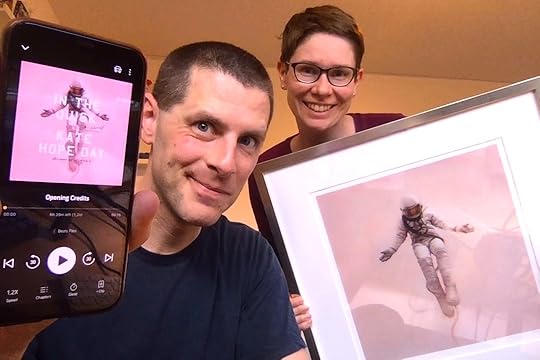
New SFBRP! Luke tells Juliane to stop defending a book she hasn't read: In the Quick by Kate Hope Day.
https://www.sfbrp.com/archives/1825
New SFBRP! Luke tells Juliane to stop defending a book she hasn't read: In the Quick by Kate Hope Day.
https://www.sfbrp.com/archives/1825

September 24, 2020
THE MARTIAN meets JANE EYRE in this rich sophomore novel. I was immediately snagged by Kate Hope Day's prose and totally wrapped up in June's story from page one. Recommend!

July 2, 2022
3.5 stars.
I’m not going to lie — I book this book on a whim based solely and completely on the fact that the pink astronaut cover grabbed my attention in a bookstore and wouldn’t let me walk away!
Much to my surprise, while In the Quick is a science fiction book about a young engineering prodigy whose obsessive need to understand the why of things leads her into a fiercely competitive astronaut program and ultimately, into interplanetary exploration… it’s also a retelling of Jane Eyre. How wild is that?
In In the Quick, June’s beloved uncle, a renowned pioneer in spaceship engineering, dies when June is twelve. He raised her to think, to question, to seek answers, and she delighted in hovering in the background while his students worked with him on challenging prototypes and design projects. But after his death, June is lost in her aunt’s house, unloved and misunderstood — and when the spaceship Inquiry goes dark after a fuel cell failure, June’s worldview is thrown into chaos.
The fuel cells were her uncle’s greatest achievement. What could have gone wrong, and why? Even past the point when the world seems to have concluded that the Inquiry and its crew are lost, June is compelled to seek answers. She soon enrolls at the National Space Program school, determined to forge a path for herself that takes her into space and gives her the knowledge to understand and unravel the mysteries of the failed fuel cells.
June’s journey ultimately takes her to a moon called the Pink Planet, where swirling silt creates a permanently pink atmosphere, and where exposure to the silt results in a hallucinogenic, numbed state. The Pink Planet is an outpost developed as a jumping off point for the vast voyages intended for the Inquiry and its sister ship, but once the Inquiry mission failed, the Pink Planet stations were left in a state of minimal use and shocking disrepair. Once on the Pink Planet, June reconnects with her uncle’s former student James, who is similarly obsessed with June’s uncle’s work. Together, they begin an intense creative phase to finally solve the puzzle of the fuel cells… and to figure out if there truly is any hope still of finding the Inquiry after all this time.
In the Quick is a fairly short book, and it’s a quick read. It’s oddly compelling — the forays into engineering and design are kept to lightly descriptive passages, so the science is never overwhelming for those of us without advanced degrees. The story of June’s growth and education is interesting, although she’s a somewhat hard character to love. We don’t get very deep into her inner life, apart from her never-satisfied quest for knowledge. We know she experiences loss and loneliness, but the friendships she forms along her journey always feel secondary to her scientific obsession.
It’s entertaining to see the Jane Eyre storylines woven into In the Quick. We’re not beaten over the head with them — if someone reading In the Quick hasn’t read Jane Eyre, they’re not going to feel lost or confused in any way. Instead, there are some basic patterns and motifs built into the story (I had to giggle over the opening scene of June reading a book while hidden away in a window seat), and it’s surprising to see how well it all works in a novel of space exploration and interplanetary travel!
I did find the overall plot to have a somewhat flat effect by the end. There are pieces that are never fully explained — in fact, given how central the Pink Planet is to the story, I don’t believe we’re ever told where it is. We know that it’s a moon, despite being named the Pink Planet, but a moon of what?
The book ends, in my opinion, on a very abrupt note, and left me feeling frustrated. Without saying exactly what the ending is, I’ll just say that I wanted more explained about what had transpired over the years since the Inquiry was lost. June’s obsession with the Inquiry leads to her conviction that the crew was still out there somewhere, alive but unable to power their ship or communicate — but if that’s true, how did they survive all these years? The lack of an explanation felt very unsatifsying to me.
If I had to categorize this book, I’d describe it as “literary science fiction”. It’s an interesting, ambitious novel, with themes of classic literature woven into a space story. Overall, I enjoyed reading In the Quick, but for me, I prefer my sci-fi with a lot clearer grounding in the science of it all. I want to understand the details and marvel at how a work of fiction can make it all seem possible. In the Quick is more about the moods and passions and human drives involved, and while it was a good read, it wasn’t 100% my style of science fiction.
Still, I’m glad I gave in to the impulse to grab a copy! In a year where much of my reading is planned well in advance, it was a treat to read on a whim and experience something unexpected. Jane Eyre in space? Well, that was definitely a new, unexpected twist for me, and I’m happy that I gave it a chance.
I’m not going to lie — I book this book on a whim based solely and completely on the fact that the pink astronaut cover grabbed my attention in a bookstore and wouldn’t let me walk away!
Much to my surprise, while In the Quick is a science fiction book about a young engineering prodigy whose obsessive need to understand the why of things leads her into a fiercely competitive astronaut program and ultimately, into interplanetary exploration… it’s also a retelling of Jane Eyre. How wild is that?
In In the Quick, June’s beloved uncle, a renowned pioneer in spaceship engineering, dies when June is twelve. He raised her to think, to question, to seek answers, and she delighted in hovering in the background while his students worked with him on challenging prototypes and design projects. But after his death, June is lost in her aunt’s house, unloved and misunderstood — and when the spaceship Inquiry goes dark after a fuel cell failure, June’s worldview is thrown into chaos.
The fuel cells were her uncle’s greatest achievement. What could have gone wrong, and why? Even past the point when the world seems to have concluded that the Inquiry and its crew are lost, June is compelled to seek answers. She soon enrolls at the National Space Program school, determined to forge a path for herself that takes her into space and gives her the knowledge to understand and unravel the mysteries of the failed fuel cells.
June’s journey ultimately takes her to a moon called the Pink Planet, where swirling silt creates a permanently pink atmosphere, and where exposure to the silt results in a hallucinogenic, numbed state. The Pink Planet is an outpost developed as a jumping off point for the vast voyages intended for the Inquiry and its sister ship, but once the Inquiry mission failed, the Pink Planet stations were left in a state of minimal use and shocking disrepair. Once on the Pink Planet, June reconnects with her uncle’s former student James, who is similarly obsessed with June’s uncle’s work. Together, they begin an intense creative phase to finally solve the puzzle of the fuel cells… and to figure out if there truly is any hope still of finding the Inquiry after all this time.
In the Quick is a fairly short book, and it’s a quick read. It’s oddly compelling — the forays into engineering and design are kept to lightly descriptive passages, so the science is never overwhelming for those of us without advanced degrees. The story of June’s growth and education is interesting, although she’s a somewhat hard character to love. We don’t get very deep into her inner life, apart from her never-satisfied quest for knowledge. We know she experiences loss and loneliness, but the friendships she forms along her journey always feel secondary to her scientific obsession.
It’s entertaining to see the Jane Eyre storylines woven into In the Quick. We’re not beaten over the head with them — if someone reading In the Quick hasn’t read Jane Eyre, they’re not going to feel lost or confused in any way. Instead, there are some basic patterns and motifs built into the story (I had to giggle over the opening scene of June reading a book while hidden away in a window seat), and it’s surprising to see how well it all works in a novel of space exploration and interplanetary travel!
I did find the overall plot to have a somewhat flat effect by the end. There are pieces that are never fully explained — in fact, given how central the Pink Planet is to the story, I don’t believe we’re ever told where it is. We know that it’s a moon, despite being named the Pink Planet, but a moon of what?
The book ends, in my opinion, on a very abrupt note, and left me feeling frustrated. Without saying exactly what the ending is, I’ll just say that I wanted more explained about what had transpired over the years since the Inquiry was lost. June’s obsession with the Inquiry leads to her conviction that the crew was still out there somewhere, alive but unable to power their ship or communicate — but if that’s true, how did they survive all these years? The lack of an explanation felt very unsatifsying to me.
If I had to categorize this book, I’d describe it as “literary science fiction”. It’s an interesting, ambitious novel, with themes of classic literature woven into a space story. Overall, I enjoyed reading In the Quick, but for me, I prefer my sci-fi with a lot clearer grounding in the science of it all. I want to understand the details and marvel at how a work of fiction can make it all seem possible. In the Quick is more about the moods and passions and human drives involved, and while it was a good read, it wasn’t 100% my style of science fiction.
Still, I’m glad I gave in to the impulse to grab a copy! In a year where much of my reading is planned well in advance, it was a treat to read on a whim and experience something unexpected. Jane Eyre in space? Well, that was definitely a new, unexpected twist for me, and I’m happy that I gave it a chance.

April 13, 2021
3.5 Stars. I’m torn on my star rating and review!
On one hand, I loved the story and the writing. I mean, I took it outside around 2pm and didn’t stop reading ‘til I was done around 7pm (I didn’t take accurate time checks), and that smacks of a good time and at least 4 stars.
But on the other hand, I had some critiques. I never thought I’d ever say this IRL or in a book but... I missed the bureaucracy! Where was all the red tape and rules and regulations that would drive us crazy but also ground the story and give it weight and realism? And I also didn’t feel the “intense” connection between the characters that came in near the end. But it also came so late in the story that it wasn’t a big loss. And that all says 3 Stars.
Overall, though, it was inventive and consuming. I loved June and was invested in the scientific exploration and problem-solving. So... 3.5 Stars if I’m being technical, but emotionally, I’m still leaning closer to 4 Stars.
On one hand, I loved the story and the writing. I mean, I took it outside around 2pm and didn’t stop reading ‘til I was done around 7pm (I didn’t take accurate time checks), and that smacks of a good time and at least 4 stars.
But on the other hand, I had some critiques. I never thought I’d ever say this IRL or in a book but... I missed the bureaucracy! Where was all the red tape and rules and regulations that would drive us crazy but also ground the story and give it weight and realism? And I also didn’t feel the “intense” connection between the characters that came in near the end. But it also came so late in the story that it wasn’t a big loss. And that all says 3 Stars.
Overall, though, it was inventive and consuming. I loved June and was invested in the scientific exploration and problem-solving. So... 3.5 Stars if I’m being technical, but emotionally, I’m still leaning closer to 4 Stars.

April 18, 2021
My most disappointing read of the year so far :(
I was going to give this a 2 star review but the more I think about the story, the more I realize that there was really nothing I enjoyed about it. I absolutely loved the author's previous book If, Then. It was a character focused story with a speculative element that moved the story along. The writing was easily accessible for readers just getting into the genre.
This story had both too much science stuff and not nearly enough science stuff. There's a lot of focus on the mundane aspects of being in space - dealing with zero gravity, trying to work in that environment and what it does to your body, the dangers of performing simple tasks poorly, etc. And yet I never knew why the main character was going on these missions or what she was supposed to accomplish. She has her own mystery that she's trying to solve, but why does she keep being sent into space in the first place? I feel like everyone is just hanging out up there and not getting much done. I think the author should have either gone hard science fiction and really focused on the technology and survival aspects of the story, or gotten rid of it all together and just had the characters floating around in space while focusing on their personal relationships.
June is also a pretty bad astronaut. She causes several accidents which seriously injured members of her team, and I also imagine were very expensive for whatever organization was sending her up there. She should have been fired after her first mission.
I didn't realize until I was about 80% into this book that this story is supposed to be a Jane Eyre retelling. I never read Jane Eyre but I have a general idea of the storyline. I think if anyone goes into this book looking forward to that aspect of the story they will be very disappointed. This is not a romance by any means. The love interest doesn't show up until 3/4 of the way through the book, and the big plot point which is directly from Jane Eyre doesn't make any sense in the characters' situation.
I was just so confused throughout this whole story. I don't think the main character really grew or learned anything new, so it fails as a character study, and it fails as a science fiction or survival adventure. If the author was new to me I would have DNF'd the book, but since I loved her previous work, I pushed through just hoping it would surprise me. I honestly don't think anyone would take anything away from this book after reading it.
I was going to give this a 2 star review but the more I think about the story, the more I realize that there was really nothing I enjoyed about it. I absolutely loved the author's previous book If, Then. It was a character focused story with a speculative element that moved the story along. The writing was easily accessible for readers just getting into the genre.
This story had both too much science stuff and not nearly enough science stuff. There's a lot of focus on the mundane aspects of being in space - dealing with zero gravity, trying to work in that environment and what it does to your body, the dangers of performing simple tasks poorly, etc. And yet I never knew why the main character was going on these missions or what she was supposed to accomplish. She has her own mystery that she's trying to solve, but why does she keep being sent into space in the first place? I feel like everyone is just hanging out up there and not getting much done. I think the author should have either gone hard science fiction and really focused on the technology and survival aspects of the story, or gotten rid of it all together and just had the characters floating around in space while focusing on their personal relationships.
June is also a pretty bad astronaut. She causes several accidents which seriously injured members of her team, and I also imagine were very expensive for whatever organization was sending her up there. She should have been fired after her first mission.
I didn't realize until I was about 80% into this book that this story is supposed to be a Jane Eyre retelling. I never read Jane Eyre but I have a general idea of the storyline. I think if anyone goes into this book looking forward to that aspect of the story they will be very disappointed. This is not a romance by any means. The love interest doesn't show up until 3/4 of the way through the book, and the big plot point which is directly from Jane Eyre doesn't make any sense in the characters' situation.
I was just so confused throughout this whole story. I don't think the main character really grew or learned anything new, so it fails as a character study, and it fails as a science fiction or survival adventure. If the author was new to me I would have DNF'd the book, but since I loved her previous work, I pushed through just hoping it would surprise me. I honestly don't think anyone would take anything away from this book after reading it.

February 23, 2021
This book made very little sense pretty much from the beginning. On the plus side, it was very short with short chapters and snappy prose, making it easy to read quickly.
June, at 12 years old, is a math and physics savant. Which would be fine if she was the only one. Instead, she joins a school of them (though she's about 2 years younger than everyone else). Basically, this school is churning out astronauts in their teens. But also their classes are being taught by older teenage astronauts? I don't know, I just couldn't help but be like "they put the fate of space exploration in the hands of a bunch of teenagers?"
Also, apparently this book was supposed to have queer rep. As someone who is used to using a magnifying glass to make out queer rep, I was expecting not to have to. And yet, there's no direct on-page queerness. No labels, no attraction, no discussion. Instead there are two side characters of the same gender who are occasionally seen in close proximity. Is this queer rep??
The fiery "romance" that takes up the whole synopsis doesn't come in until about 80% into the book and that point everyone is certifiably insane (especially the love interest - who is at times a petulant child, a genius inventor, and a cold and potentially murderous psychopath - I don't think those are good "love interest" traits!)
There's almost no oversight over what they're doing - both in school and in space. Y'all. I don't think you understand how EXPENSIVE space is. How much energy it takes per unit volume to send something to space, to create components that will hold up to heat, cold, velocity, vibration, exposure to vacuum, impact, etc etc. You don't send teenagers up in space without oversight; they can't just wander around and shirk their maintenance tasks for weeks at a time. They would literally die.
Also, the ending was unsatisfactory.
{Thank you Random House for the advanced copy in exchange for my honest review; all thoughts are my own}
June, at 12 years old, is a math and physics savant. Which would be fine if she was the only one. Instead, she joins a school of them (though she's about 2 years younger than everyone else). Basically, this school is churning out astronauts in their teens. But also their classes are being taught by older teenage astronauts? I don't know, I just couldn't help but be like "they put the fate of space exploration in the hands of a bunch of teenagers?"
Also, apparently this book was supposed to have queer rep. As someone who is used to using a magnifying glass to make out queer rep, I was expecting not to have to. And yet, there's no direct on-page queerness. No labels, no attraction, no discussion. Instead there are two side characters of the same gender who are occasionally seen in close proximity. Is this queer rep??
The fiery "romance" that takes up the whole synopsis doesn't come in until about 80% into the book and that point everyone is certifiably insane (especially the love interest - who is at times a petulant child, a genius inventor, and a cold and potentially murderous psychopath - I don't think those are good "love interest" traits!)
There's almost no oversight over what they're doing - both in school and in space. Y'all. I don't think you understand how EXPENSIVE space is. How much energy it takes per unit volume to send something to space, to create components that will hold up to heat, cold, velocity, vibration, exposure to vacuum, impact, etc etc. You don't send teenagers up in space without oversight; they can't just wander around and shirk their maintenance tasks for weeks at a time. They would literally die.
Also, the ending was unsatisfactory.
{Thank you Random House for the advanced copy in exchange for my honest review; all thoughts are my own}

August 20, 2022
1.5 stars rounded up
Once again, I fall into the trap of the cover buy. This book is BEAUTIFUL. Too bad that's the best part of the book.
What was the point of this book? This is science fiction! That means the science should be interesting! But this book was just so boring and mundane. And the science really wasn't accurate. Why was she in space? She doesn't know what she's doing. That makes her a safety risk. So much time was spent on completely pointless things. The cafeteria at the school, making friends, classes. All of it was pointless. There was even a part about brushing her teeth, but not in a cool, science-y way you'd have to do in space.
Also, for the LOVE OF GOD. WHY ARE THERE NO QUOTATION MARKS??
Once again, I fall into the trap of the cover buy. This book is BEAUTIFUL. Too bad that's the best part of the book.
What was the point of this book? This is science fiction! That means the science should be interesting! But this book was just so boring and mundane. And the science really wasn't accurate. Why was she in space? She doesn't know what she's doing. That makes her a safety risk. So much time was spent on completely pointless things. The cafeteria at the school, making friends, classes. All of it was pointless. There was even a part about brushing her teeth, but not in a cool, science-y way you'd have to do in space.
Also, for the LOVE OF GOD. WHY ARE THERE NO QUOTATION MARKS??

March 23, 2021
FINALLY a book that dares to answer the age-old question: what if jane eyre! was! in! space!
the combination may seem almost gimmicky, but it’s almost maddeningly perfect — what environment, after all, can be more hostilely indifferent or sublimely haunted than space?
i loved so much how amazingly this both adapted jane eyre (in space!!!) and told an exceptionally gripping story wholly its own. i loved june, i loved the settings, i loved the horrific bodily effects of ascending to and living in space (which reminded me often of wolf 359), and i loved the romance. kickstarter campaign to produce a miniseries please.
the combination may seem almost gimmicky, but it’s almost maddeningly perfect — what environment, after all, can be more hostilely indifferent or sublimely haunted than space?
i loved so much how amazingly this both adapted jane eyre (in space!!!) and told an exceptionally gripping story wholly its own. i loved june, i loved the settings, i loved the horrific bodily effects of ascending to and living in space (which reminded me often of wolf 359), and i loved the romance. kickstarter campaign to produce a miniseries please.

March 6, 2021
At the beginning pages, I wasn’t sure I would like this book but the more I read, the more I enjoyed it. Unique and imaginative. I loved gifted and persistent June, how she resolved challenges within and outside her orbit as a young 12-year old girl and later as engineer on the space station. A complex, absorbing character. Kate Hope Day was an associate producer at HBO. Maybe she has enough pull to bring this book to life on tv or film!

August 7, 2021
I enjoyed this book, though like many others gave said, it's very scifi-lite. I didn't realize it was a Jane Eyre retelling, until suddenly it very obviously was. That definitely answered why the story felt so familiar.
With that said, it's a good story, but I did feel like it was missing something. I would have loved to know more about the pink planet and the science, expeditions, etc. As it is, we hardly get any info on June's preparation and how she gets there, just all of a sudden this teenager is out in space all on her own.
I'd also completely disagree with the synopsis. The love affair was hardly intense and comprised such a small portion of the book that we could have had the exact same book, even without it. Honestly, I could see it being a stronger story if they had remained friends and colleagues instead of trying to force the romance.
With that said, it's a good story, but I did feel like it was missing something. I would have loved to know more about the pink planet and the science, expeditions, etc. As it is, we hardly get any info on June's preparation and how she gets there, just all of a sudden this teenager is out in space all on her own.
I'd also completely disagree with the synopsis. The love affair was hardly intense and comprised such a small portion of the book that we could have had the exact same book, even without it. Honestly, I could see it being a stronger story if they had remained friends and colleagues instead of trying to force the romance.

October 4, 2022
The space novel I needed.

March 18, 2021
Однажды писательница Кейт Хоуп Дей посмотрела фильм "Марсианин", прочла книгу Скотта Келли "Стойкость: мой год в космосе" и подумала "а чем я хуже их?"
По сюжету, 12-летняя девочка Джун почему-то воспитывается в семье дяди и у нее необычайная склонность в конструированию предметов. Она хочет стать астронавтом и разобраться, что случилось с космическим кораблем Inquiry, связь с которым неожиданно прервалась и никому неизвестно, жива ли команда. Шесть лет спустя она осуществляет свою мечту.
Компиляция у автора получилась почти дословная, в потому скучная и вторичная. Она даже саму себя периодически повторяет слово в слово целыми абзацами. Логики нет никакой вообще, герои не развиваются, их поступки никак не объясняют. Основная идея не раскрыта, сюжетные линии брошены на половине. Никому не рекомендую.
P.S. В книге есть эпизод, когда Джун шла по другой планете, оступилась, ударилась шлемом об стойку солнечной батареи и шлем у нее отсоединился от скафандра. Я прямо вслух сказала "ИЗОЛЕНТА! Доставай изоленту!" но нет, последовал нежданчик гораздо тупее.
По сюжету, 12-летняя девочка Джун почему-то воспитывается в семье дяди и у нее необычайная склонность в конструированию предметов. Она хочет стать астронавтом и разобраться, что случилось с космическим кораблем Inquiry, связь с которым неожиданно прервалась и никому неизвестно, жива ли команда. Шесть лет спустя она осуществляет свою мечту.
Компиляция у автора получилась почти дословная, в потому скучная и вторичная. Она даже саму себя периодически повторяет слово в слово целыми абзацами. Логики нет никакой вообще, герои не развиваются, их поступки никак не объясняют. Основная идея не раскрыта, сюжетные линии брошены на половине. Никому не рекомендую.
P.S. В книге есть эпизод, когда Джун шла по другой планете, оступилась, ударилась шлемом об стойку солнечной батареи и шлем у нее отсоединился от скафандра. Я прямо вслух сказала "ИЗОЛЕНТА! Доставай изоленту!" но нет, последовал нежданчик гораздо тупее.
Displaying 1 - 30 of 765 reviews