This lyrical and articulate mix of the practical and the poetic combines personal story, wildland ecology, restoration gardening practices, and native plant horticulture. Judith Lowry's voice and experiences make a rich matrix for essays that include discussions of wildflower gardening, the ecology of native grasses, wildland seed-collecting, principles of natural design, and plant/animal interactions. Though this book is based on California gardens, readers from all parts of the country will be inspired and informed by these examples of gardening to include "the larger garden beyond the fence."
Gardening with a Wild Heart promises to be a classic for lovers of nature writing, gardeners, bioregionalists, and students and professionals in horticulture, landscape design, and ecological restoration.
As someone deeply in love with California and currently in the middle of the beautiful, messy, and profound process of restoring our Oakland property back to its native roots, Gardening with a Wild Heart has left me in awe. I am completely in love with this book. I didn’t want it to end.
Judith Larner Lowry is not just a native plant expert; she is a philosopher, a poet, and an absolute force of nature.
Lowry infuses every single page with inspiration, information, poetry, and beauty all in one. I am just so moved by how beautifully she articulates our responsibility to the land.
If you love California or if you have even a small patch of earth you want to return to its wild, natural glory, buy this book immediately. It will change your garden, but more importantly, it will change your heart.
A unique book espousing the benefits of native plant gardening and other interesting musings. Lowry calls the gardener who chooses local native California plants a "restorationist," because they are attempting to restore the landscape to the condition it was in before humans came and planted a bunch of eucalyptus. You have to love an author who writes "As I prune, weed, and mulch around it, I ponder its ways" (talking about coyote bush). Also included is a section encouraging the reader to "consider a changeful day spent with cream cups." The anecdote about the author organizing a day to remove the invasive French broom from the roadside and the ensuing controversy in her town leads to a broader reflection about native vs nonnative plants, whereas some in her town amazingly called the author "genocidal, racist, and worst of all, 'well meaning'" for trying to remove the French broom. Lowry makes a good case for planting local native plants in our gardens, not only to support the local wildlife but to establish a deeper connection to the land which has supported human life for centuries.
Woops! I haven't finished it yet, but I am getting a lot out of it. I am relatively new to gardening with natives (maybe 2 years) and I have so much to learn.
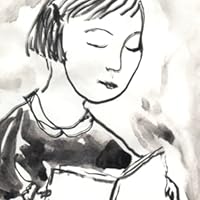
Judith has a lovely writing style, the book is well organized but I docked it a star because I think the photos could be improved or the book could have included some more hand-drawn illustrations. The ones that front each chapter are lovely but not labeled or explained. The same illustrator could have been asked to contribute drawings of particular plants mentioned. I read this book with my laptop and my California Native Plants for the Garden close at hand so I can constantly look up the plants she is referring to.
Also, the instructional part could have been improved with photos and illustrations. I think it is a mistake to publish are gardening book in this type of format. We amateur gardeners need much more image rich books to guide and assist our endeavors.
I knew I was going to love reading this book by page four where Judith Larner Lowry was waxing poetic about the Coyote Bush, which is one of the first native plants I learned to identify in our mostly wild yard.
The title of the book Gardening with a Wild Heart: Restoring California’s Native Landscapes at Home could not have described my personal mission more succinctly as I am attempting to restore a tiny patch of land on the California Central Coast.
While reading the book, I felt more as if I was having a conversation with the author than reading a book. She balanced practical suggestions with stories and a little philosophy. When I read the bit about her coveting wood chip piles in her neighborhood, I started laughing because I too covet the wood chip piles I see around town. I did take offense to her calling Monterey pine trees pests as they are precious where I live, but that was the only disagreement we had throughout the book.
“By seeing your particular piece of land as a part of a larger plant-animal community and seeking to enhance old and established relationships through your style of gardening, you join that community.” —Judith Larner Lowry
Gardening with a Wild Heart was a delight to read. I think anyone interested in growing native plants at home or restoring the land surrounding their home would enjoy reading the book and learn something from it.
"For the past twenty-eight years Judith Larner Lowry has been the proprietor of Larner Seeds in Marine County, California. Her essay on native plant gardening and other topics have appeared in numerous magazines and anthologies, including American Nature Writing 1996." ~~back cover
A charming little book, with more emphasis on the web of life than on just planting a native plant or two here and there. It certainly has inspired me to work more towards turning my yard back to its native habitat.
This was a well-done, thoughtful book. I found that while I was reading it, I often had a feeling of reading something really profound. It sounds cheesy, but it's a deep feeling that's difficult to describe- maybe something about finding community in the appreciation of native ecosystems before European colonization. I read this shortly after being deeply disappointed at how narrow the selection of native gardening books seems to be at my local library. Many gardening books rely heavily on conventional, often destructive nonnative plantings for nothing other than aesthetic purpose, which seems rather shallow in my opinion. I have strong feelings on this given how many long laborious hours of pulling invasives from wildlife refuges and national parks I have spent so far in my life, and the gratification I have had replacing them with native plants which benefitted the local wildlife and landscapes much better. I also appreciated the inclusion of native people's practices, as well as lived experiences which were added. Sometimes it seemed a bit patronizing towards native cultures, but I recognize the effort it made towards including these important stories and viewpoints.
I appreciate the change in thinking about a xeriscape landscape that this book brought
Now I'm interested in finding remnants of the local chaparal. Now I'm curious about the makeup of the native soil. These are new questions that weren't in my thinking before. I appreciate Ms Lowry trying to help us accept that some otherwise agreeable neighbors might want to protect eucalyptus trees. She also gave me permission to have a mix of solutions to my native/low water/HOA acceptable remaining of my front yard. The book has a definite feminine vibe.
A beautiful book for any plant lover interested in native plants and restoration gardening in California. Full of resources, anecdotes, and personal stories which make the idea of turning your yard into a native garden seem achievable. I am removing one star due to the surprisingly high number of editing errors. I read the ebook and I'm assuming the hardcopy does not have these issues. Regardless, this is one that I would love to have on my bookshelf.
My wild gardening heart needs more illustrations in books about gardening. I only read bits of this one; hence, no rating. It's well written but the structure is unclear...too wild? Too touchy-feely? It's very personal; not something I want to read right now...I want to see plants and design and go garden right now.
Some excellent, introductory advice for individuals looking to know more about native plants and using them in our gardens. This book also provides much historical and cultural insight into the issues surrounding native plant soveriegnty, invasive species, and the destruction of indigenous teachings and knowledge. An excellent resource.
This is a good reference book for planning a garden or modifying an existing one. It's something you return to, not just a book you read from start to finish.
Lovely vignettes about native plants, native vistas, and the use and growing of native plants. Provides a wealth of quotes from and references to other resources.
I find this resonates with me, perhaps because I try to pay attention to my beautiful surroundings. I have had the book for quite a while and read parts of it in the past. I just finished reading the whole thing. For many years (42) we have lived beyond the end of the road in the Santa Cruz Mountains. I have been fascinated with the native plants and learned to know the intrusive invaders. In the middle ground I have flirted with planting Mediterranean plants that have survived and become part of the family. For example native bees, who have been at risk for a few years, prefer our native manzanita to the Mediterranean rosemary but will adapt to either when it is in bloom. Judith, a lyrical author and advocate, understands the need for both people and plants to adapt to new situations. She makes an eloquent case for our beautiful California natives. She articulates wonderfully well what I have seen in action.
Elegantly written & packed with useful information to help gardeners rethink how & what they plant & nurture. Seed-saving, food cropping with CA native plants, restoration gardening are just some of topics Lowry covers here.
This was a nice book, it seemed to paint native Americans in a God like way, but it has made me wince at all the ice plant the state seems to think is best for freeway landscaping. Why not throw in some sage or deer grass? Less water, less erosion, and less fire danger.
I loved this book. Motivated me on many levels to convert to California natives. Lots of good resources for learning opportunities in the bay area community.
This book has really helped me hone my philosophy about gardening, ecological restoration, living in general. Just bought every book Judith has written :)