

What do you think?

Ο διάβολος στη λευκή πόλη
Η απίστευτη ιστορία δύο ανδρών, ενός αρχιτέκτονα και ενός κατά συρροή δολοφόνου, που η μοίρα ένωσε με έναν παράξενο τρόπο…
Ο αρχιτέκτονας ήταν ο Ντάνιελ Χάντσον Μπέρμαν, ένας ευφυής διευθυντής τεχνικών έργων και δημιουργός πολλών από τα σημαντικότερα κτίρια των ΗΠΑ, όπως του Κτιρίου Φλατάιρον στη Νέα Υόρκη και του Σταθμού Γιούνιον στην πρωτεύουσα Ουάσινγκτον. Μέσα σε ελάχιστο χρονικό διάστημα και ξεπερνώντας σημαντικές δυσκολίες, κατάφερε να κατασκευάσει τη διάσημη Λευκή Πόλη, γύρω από την οποία στήθηκε η Διεθνής Έκθεση του Σικάγου.
Ο δολοφόνος ήταν ο Χένρι Χ. Χολμς, ένας νεαρός, ευπαρουσίαστος γιατρός που, σε μια μοχθηρή παρωδία της Λευκής Πόλης, έχτισε ακριβώς στα δυτικά του χώρου της έκθεσης το δικό του «Ξενοδοχείο της Διεθνούς Έκθεσης» – ένα μέγαρο βασανιστηρίων που περιλάμβανε τραπέζι ανατομίας, θάλαμο αερίων και κρεματόριο. O Χολμς χρησιμοποίησε το δέλεαρ της μεγάλης έκθεσης και τα δικά του σατανικά θέλγητρα για να παρασύρει αμέτρητες νεαρές κοπέλες στον θάνατο.
Μια αφήγηση που συνδυάζει τον θαυμασμό για τα ιστορικά στοιχεία με την έξαψη ενός εξαιρετικού μυθιστορήματος.
Ο αρχιτέκτονας ήταν ο Ντάνιελ Χάντσον Μπέρμαν, ένας ευφυής διευθυντής τεχνικών έργων και δημιουργός πολλών από τα σημαντικότερα κτίρια των ΗΠΑ, όπως του Κτιρίου Φλατάιρον στη Νέα Υόρκη και του Σταθμού Γιούνιον στην πρωτεύουσα Ουάσινγκτον. Μέσα σε ελάχιστο χρονικό διάστημα και ξεπερνώντας σημαντικές δυσκολίες, κατάφερε να κατασκευάσει τη διάσημη Λευκή Πόλη, γύρω από την οποία στήθηκε η Διεθνής Έκθεση του Σικάγου.
Ο δολοφόνος ήταν ο Χένρι Χ. Χολμς, ένας νεαρός, ευπαρουσίαστος γιατρός που, σε μια μοχθηρή παρωδία της Λευκής Πόλης, έχτισε ακριβώς στα δυτικά του χώρου της έκθεσης το δικό του «Ξενοδοχείο της Διεθνούς Έκθεσης» – ένα μέγαρο βασανιστηρίων που περιλάμβανε τραπέζι ανατομίας, θάλαμο αερίων και κρεματόριο. O Χολμς χρησιμοποίησε το δέλεαρ της μεγάλης έκθεσης και τα δικά του σατανικά θέλγητρα για να παρασύρει αμέτρητες νεαρές κοπέλες στον θάνατο.
Μια αφήγηση που συνδυάζει τον θαυμασμό για τα ιστορικά στοιχεία με την έξαψη ενός εξαιρετικού μυθιστορήματος.
656 pages, Paperback
First published February 11, 2003
About the author
Erik Larson
43 books71.2k followersErik Larson is the author of nine books and one audio-only novella. His latest book, The Demon of Unrest, is a non-fiction thriller about the five months between Lincoln’s election and the start of the Civil War. Six of his books became New York Times bestsellers. Two of these, The Splendid and the Vile: A Saga of Churchill, Family, and Defiance During the Blitz and Dead Wake: The Last Crossing of the Lusitania, both hit no. 1 on the list soon after launch. His chronicle of the Chicago World’s Fair of 1893, The Devil in the White City, was a finalist for the National Book Award, and won an Edgar Award for fact-crime writing. It lingered on various Times bestseller lists for the better part of a decade and is currently in development at Disney Studios. Erik’s In the Garden of Beasts, about how America’s first ambassador to Nazi Germany and his daughter experienced the rising terror of Hitler’s rule, is currently in development with StudioCanal and Playtone.
Erik’s first book of narrative nonfiction, Isaac’s Storm, about the giant hurricane that destroyed Galveston, Texas, in 1900, won the American Meteorology Society’s prestigious Louis J. Battan Author’s Award. The Washington Post called it the “Jaws of hurricane yarns.” Erik is particularly pleased to have won the Chicago Public Library Foundation’s 2016 Carl Sandburg Literary Award for Non-Fiction.
His audio novella, No One Goes Alone, while a work of fiction, is a ghost story based on real-life events and characters, including famed 19th-century psychologist William James. Erik refers to it as a ghost story with footnotes.
He graduated summa cum laude from the University of Pennsylvania, where he studied Russian history, language and culture; he received a masters in journalism from Columbia University. After a brief stint at the Bucks County Courier Times, Erik became a staff writer for The Wall Street Journal, and later a contributing writer for Time Magazine. His magazine stories have appeared in The New Yorker, The Atlantic Monthly, Harper’s, and other publications.
He has taught non-fiction writing at San Francisco State, the Johns Hopkins Writing Seminars, the University of Oregon, and the Chuckanut Writers Conference in Bellingham, Wash., and has spoken to audiences from coast to coast. A former resident of Seattle, he now lives in Manhattan with his wife, a neonatologist, who is also the author of the nonfiction memoir, Almost Home, which, as Erik puts it, “could make a stone cry.” They have three daughters in far-flung locations and professions. Their beloved dog Molly resides in an urn on a shelf overlooking Central Park, where they like to think she now spends most of her time.
Erik’s first book of narrative nonfiction, Isaac’s Storm, about the giant hurricane that destroyed Galveston, Texas, in 1900, won the American Meteorology Society’s prestigious Louis J. Battan Author’s Award. The Washington Post called it the “Jaws of hurricane yarns.” Erik is particularly pleased to have won the Chicago Public Library Foundation’s 2016 Carl Sandburg Literary Award for Non-Fiction.
His audio novella, No One Goes Alone, while a work of fiction, is a ghost story based on real-life events and characters, including famed 19th-century psychologist William James. Erik refers to it as a ghost story with footnotes.
He graduated summa cum laude from the University of Pennsylvania, where he studied Russian history, language and culture; he received a masters in journalism from Columbia University. After a brief stint at the Bucks County Courier Times, Erik became a staff writer for The Wall Street Journal, and later a contributing writer for Time Magazine. His magazine stories have appeared in The New Yorker, The Atlantic Monthly, Harper’s, and other publications.
He has taught non-fiction writing at San Francisco State, the Johns Hopkins Writing Seminars, the University of Oregon, and the Chuckanut Writers Conference in Bellingham, Wash., and has spoken to audiences from coast to coast. A former resident of Seattle, he now lives in Manhattan with his wife, a neonatologist, who is also the author of the nonfiction memoir, Almost Home, which, as Erik puts it, “could make a stone cry.” They have three daughters in far-flung locations and professions. Their beloved dog Molly resides in an urn on a shelf overlooking Central Park, where they like to think she now spends most of her time.
Ratings & Reviews
Friends & Following
Create a free account to discover what your friends think of this book!
Community Reviews
Displaying 1 - 30 of 46,737 reviews

June 12, 2013
Poor Erik Larson.
He wanted to write an extensive, in-depth look at the 1893 World's Fair, which was a collaboration of some of the greatest creative minds in the country (including the guy who designed the Flatiron building in New York and Walt Disney's dad) and gave us, among other things, the Ferris Wheel, the zipper, shredded wheat, and Columbus Day. The entire venture was almost a disaster, with delays, petty fighting, bad weather, and more delays, but it was ultimately a massive success and helped make the city of Chicago what it is today.
Here's what it must have looked like when Larson pitched his idea for the book:
Larson: "And the fair didn't go flawlessly - towards the end of the fair, the mayor of Chicago was assassinated by a crazy guy, and there were tons of disappearances over the course of the fair, and a lot of them were probably the work of this serial killer who had opened a hotel near the fairgrounds -
Editor: "Wait, serial killer? And it's connected to the fair? Cool, let's try to include that in the book. Also the crazy assassin sounds good, too."
Larson: "No, the killer - H.H. Holmes - really wasn't connected to the fair at all. I mean, he used the fair as a way to collect victims, but he would have killed tons of people even without it. In fact, after the fair he moved on and kept murdering people, so the fair really didn't have any effect on his methods..."
Editor: "Doesn't matter! How about you alternate between chapters about the fair and chapters about Holmes killing people?"
Larson: "But I don't really know much about that. Nobody does - Holmes never admitted to killing all those people, even after the police found human remains in his basement. I don't really know any actual details about the killings."
Editor: "That's okay, you can just make it up. I'll give you some trashy crime novels to read, that'll give you some ideas. Now tell me more about the assassination."
Larson: "He was just some mentally unbalanced person who thought he deserved a position in the mayor's office and shot the guy when he realized it wasn't going to happen. But the death cast a pall over the entire closing ceremony of the fair, and it - "
Editor: "Good, let's sprinkle in some bits about the crazy guy throughout the book, too. Now, back to Holmes: did he maybe kill somebody at the fair, or did they find a body on the grounds or something?"
Larson: "No, the Chicago police didn't even notice anything was happening. It wasn't until he left Chicago that a detective from another state tracked him down."
Editor: "Okay, so we'll make the end of the book about the manhunt for Holmes and his capture."
Larson: "What does any of this have to do with the World's Fair?"
Editor: "Hell if I know. You're the writer, not me - you figure it out. Here's a check. Now go make me a bestseller!"
Four stars for the World's Fair stuff, two stars for the pulpy unrelated bullshit.
He wanted to write an extensive, in-depth look at the 1893 World's Fair, which was a collaboration of some of the greatest creative minds in the country (including the guy who designed the Flatiron building in New York and Walt Disney's dad) and gave us, among other things, the Ferris Wheel, the zipper, shredded wheat, and Columbus Day. The entire venture was almost a disaster, with delays, petty fighting, bad weather, and more delays, but it was ultimately a massive success and helped make the city of Chicago what it is today.
Here's what it must have looked like when Larson pitched his idea for the book:
Larson: "And the fair didn't go flawlessly - towards the end of the fair, the mayor of Chicago was assassinated by a crazy guy, and there were tons of disappearances over the course of the fair, and a lot of them were probably the work of this serial killer who had opened a hotel near the fairgrounds -
Editor: "Wait, serial killer? And it's connected to the fair? Cool, let's try to include that in the book. Also the crazy assassin sounds good, too."
Larson: "No, the killer - H.H. Holmes - really wasn't connected to the fair at all. I mean, he used the fair as a way to collect victims, but he would have killed tons of people even without it. In fact, after the fair he moved on and kept murdering people, so the fair really didn't have any effect on his methods..."
Editor: "Doesn't matter! How about you alternate between chapters about the fair and chapters about Holmes killing people?"
Larson: "But I don't really know much about that. Nobody does - Holmes never admitted to killing all those people, even after the police found human remains in his basement. I don't really know any actual details about the killings."
Editor: "That's okay, you can just make it up. I'll give you some trashy crime novels to read, that'll give you some ideas. Now tell me more about the assassination."
Larson: "He was just some mentally unbalanced person who thought he deserved a position in the mayor's office and shot the guy when he realized it wasn't going to happen. But the death cast a pall over the entire closing ceremony of the fair, and it - "
Editor: "Good, let's sprinkle in some bits about the crazy guy throughout the book, too. Now, back to Holmes: did he maybe kill somebody at the fair, or did they find a body on the grounds or something?"
Larson: "No, the Chicago police didn't even notice anything was happening. It wasn't until he left Chicago that a detective from another state tracked him down."
Editor: "Okay, so we'll make the end of the book about the manhunt for Holmes and his capture."
Larson: "What does any of this have to do with the World's Fair?"
Editor: "Hell if I know. You're the writer, not me - you figure it out. Here's a check. Now go make me a bestseller!"
Four stars for the World's Fair stuff, two stars for the pulpy unrelated bullshit.

July 29, 2011
This book is two, two, two books in one!
Sorry, that was annoying. But it’s almost as if Erik Larson wrote two really short books—one about the 1893 World’s Columbian Exposition and another about the murder spree of Dr. H. H. Holmes—and then shoved them together to create a single story. The result isn’t bad, and I think Larson is successful at maintaining clean seams between the two narratives, but it’s hard to argue these two occurrences are anything but abstractedly related. Yes, Holmes lived in Chicago at the time of the fair and lured a bunch of people to his murder castle (he be snatchin’ yo’ people up!), but the events didn’t weigh heavily on the fair itself or on the atmosphere surrounding it. No alarm bells went off anywhere in Chicago as a result of his, um, unsavory indiscretions.
Still, there is a lot of interesting stuff here, information specific to the world’s fair, and it is fun to learn new things. For example, the Chicago Columbian Exposition exudes a long list of firsts: it saw the invention of the world’s first ferris wheel, it led the nation in its first public observance of the Pledge of Allegiance, and it helped to establish alternating current as the industry standard for electricity distribution. Even that awful snake charmer song has its origins in the Chicago World’s Fair.

While writing this review, I’ve come to learn that Leonardo DiCaprio, that beautiful man with the screaming cherry tomato head on a toothpick body, is producing the film adaptation, and will also play the role of serial killer H. H. Holmes. For this I am pleased.
Sorry, that was annoying. But it’s almost as if Erik Larson wrote two really short books—one about the 1893 World’s Columbian Exposition and another about the murder spree of Dr. H. H. Holmes—and then shoved them together to create a single story. The result isn’t bad, and I think Larson is successful at maintaining clean seams between the two narratives, but it’s hard to argue these two occurrences are anything but abstractedly related. Yes, Holmes lived in Chicago at the time of the fair and lured a bunch of people to his murder castle (he be snatchin’ yo’ people up!), but the events didn’t weigh heavily on the fair itself or on the atmosphere surrounding it. No alarm bells went off anywhere in Chicago as a result of his, um, unsavory indiscretions.
Still, there is a lot of interesting stuff here, information specific to the world’s fair, and it is fun to learn new things. For example, the Chicago Columbian Exposition exudes a long list of firsts: it saw the invention of the world’s first ferris wheel, it led the nation in its first public observance of the Pledge of Allegiance, and it helped to establish alternating current as the industry standard for electricity distribution. Even that awful snake charmer song has its origins in the Chicago World’s Fair.
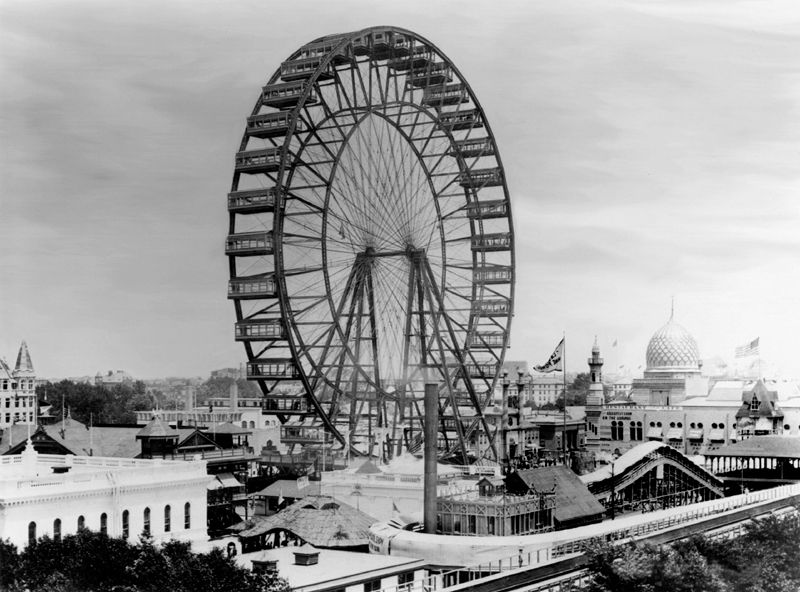
While writing this review, I’ve come to learn that Leonardo DiCaprio, that beautiful man with the screaming cherry tomato head on a toothpick body, is producing the film adaptation, and will also play the role of serial killer H. H. Holmes. For this I am pleased.

February 6, 2020
4.5
FASCINATING!
FASCINATING!

November 11, 2017
Overwhelmingly underwhelming
1893 was a year to remember - the World's Fair came to Chicago and H. H. Holmes (one of America's most famous serial killers) took full advantage. He stalked the streets and murdered whomever he pleased.
I really liked the idea of this one - to take one of America's greatest triumphs and splicing his story along with one of the greatest horrors. However. There's too high of a disconnect between these two sides
This reads like two separate books thrown together at inopportune moments - as soon one half got the least bit exciting, we'd swap. It was frustrating and ultimately exasperating to read.
The World Fair section was interesting in its own right, but it paled so much in comparison to the serial killer that it became something to slog through.
For the World's Fair - we see the entirety of its creation and eventual destruction. Ample page space was given to dissecting every. single. mind-numbing. detail.
Roughly half the book was wasted on petty squabbles about the building paint, boats in the harbor and the landscaping. (I finally understand how my mother can fall asleep while reading.)
Then, once I nodded off between 2-3 times, we'd jump to the insane murderer. But, there was a huge disconnect regarding page space.
The longer the book went on, the shorter those H. H. Holmes sections would be - towards the end, we'd only get we'd get 1 to 10 pages from H. H. Holmes' perspective for every couple chapters of building plans. Fabulous.
The two main stories weren't entirely separate - they did tangentially intersect - notably H. H. Holmes managed to lure so many people into his hotel because of the fair and he did take one of his victims to the fair but those connections did not seem strong enough for a joint book.
While I appreciate the time and effort it took to research such a complete account of 1893, I had a hard time enjoying the novel. It felt like more of a mess than anything.
Popsugar 2018 Reading Challenge: A book you meant to read in 2017 but didn't get to
YouTube | Blog | Instagram | Twitter | Facebook | Snapchat @miranda_reads
1893 was a year to remember - the World's Fair came to Chicago and H. H. Holmes (one of America's most famous serial killers) took full advantage. He stalked the streets and murdered whomever he pleased.
I really liked the idea of this one - to take one of America's greatest triumphs and splicing his story along with one of the greatest horrors. However. There's too high of a disconnect between these two sides
This reads like two separate books thrown together at inopportune moments - as soon one half got the least bit exciting, we'd swap. It was frustrating and ultimately exasperating to read.
The World Fair section was interesting in its own right, but it paled so much in comparison to the serial killer that it became something to slog through.
For the World's Fair - we see the entirety of its creation and eventual destruction. Ample page space was given to dissecting every. single. mind-numbing. detail.
Roughly half the book was wasted on petty squabbles about the building paint, boats in the harbor and the landscaping. (I finally understand how my mother can fall asleep while reading.)
Then, once I nodded off between 2-3 times, we'd jump to the insane murderer. But, there was a huge disconnect regarding page space.
The longer the book went on, the shorter those H. H. Holmes sections would be - towards the end, we'd only get we'd get 1 to 10 pages from H. H. Holmes' perspective for every couple chapters of building plans. Fabulous.
The two main stories weren't entirely separate - they did tangentially intersect - notably H. H. Holmes managed to lure so many people into his hotel because of the fair and he did take one of his victims to the fair but those connections did not seem strong enough for a joint book.
While I appreciate the time and effort it took to research such a complete account of 1893, I had a hard time enjoying the novel. It felt like more of a mess than anything.
Popsugar 2018 Reading Challenge: A book you meant to read in 2017 but didn't get to
YouTube | Blog | Instagram | Twitter | Facebook | Snapchat @miranda_reads

August 27, 2008
So, no offense to those that liked this book, but I'm throwing in the towel after 75 pages. It's just not holding my interest. Part of the reason for this is that Larson's writing style is way too speculative for my taste in non-fiction. I just finished reading the Path Between Seas by David McCullough, and he does such an amazing job of making complicated, historical events interesting, without fabricating scenes that "could have" happened. Even that wouldn't have bothered me that much if Larson had said something more like, "It's likely he did this, since we know this about his personality" or whatever, rather than "He reached out and touched her hand as he spoke to her." There was no clear distinction between what definitely happened, and what maybe could have happened. That got bothersome.
I could have just ignored the non-fiction aspect and enjoyed the story, if not for Larson's habit of getting bogged down in inconsequential details. He seemed to throw facts (or conjectured facts) in whenever the fancy struck him, rather than keeping the story moving.
And finally, I got annoyed with the jumping back and forth between Holmes's story and the architecture/Worlds Fair story. Just when I'd get into one, we'd switch to the other. He could have done a better job of interweaving those.
So, since my curiosity is piqued, but not enough to continue reading this book, I'm just going to do some Wikipedia reading and call it good.
I could have just ignored the non-fiction aspect and enjoyed the story, if not for Larson's habit of getting bogged down in inconsequential details. He seemed to throw facts (or conjectured facts) in whenever the fancy struck him, rather than keeping the story moving.
And finally, I got annoyed with the jumping back and forth between Holmes's story and the architecture/Worlds Fair story. Just when I'd get into one, we'd switch to the other. He could have done a better job of interweaving those.
So, since my curiosity is piqued, but not enough to continue reading this book, I'm just going to do some Wikipedia reading and call it good.

September 12, 2008
Humour me and please allow the channeling an eighth grader for just a moment. OMG Squeee!!1 Teh best!! (Would an eighth grader say "teh best"?) And now we return you to our regularly scheduled review.
I'm not a huge fan of non-fiction. Scratch that. I'm a huge fan of non-fiction, but not so huge a fan of reading non-fiction. While I appreciate learning and broadening my understanding of the world around and as it once was, I find myself pretty quickly distracted from whatever non-fictional work I pick up. The fact is: most writers of non-fiction are more experts in their field of study than they are expert authors. They deliver the goods well, but aren't quite as adept at prettying them up for consumption.
Erik Larson, however, is a genius. Or something. I could not put this book down. (In the figurative sense—it actually took me about two weeks to read.) The entire length of my time in this book was marked with moments of in which I would stop reading, interrupt my wife from the depths of her studies, and remark again how good this book was.
(I'm sure that she would have been happier had Larson just been your average purveyor of non-fictionalizations.)
In The Devil in the White City, Larson chronicles chiefly a tale of two city-dwellers. Architect, Daniel Burnham and pharmacist, Henry Holmes. One would helm the creation of a wonderland of awe-striking beauty and refinement. The other would become one of America's earliest and most diabolical serial killers. All this against the backdrop of the 1893 World's Columbian Exposition (a.k.a. the Chicago World's Fair).
Daniel Burnham, the self-made architect, who designed the Rookery in Chicago would design the Flatiron Building in New York, assembled a team of the best American architects of the day for the task of crafting a World's Fair in Chicago that would be even more exquisite than the one held in Paris years earlier. The Paris Exposition had also unveiled Gustave Eiffel's incredible tower, so Burnham put a call out to American engineering: something grander would have to be proposed and built. National reputation was at stake as well as civic pride. Larson explores in exciting detail the glories and the tragedies of this great endeavor.
In contrast to this paean to human ingenuity and spirit, Larson focuses the other half of his narrative on a man as diligent in his chosen task as Burnham was in his. H.H. Holmes, the self-style pharmacist, who killed upwards of twenty-seven (mostly young women, fresh to the city), built for himself a hideous parody of the grand buildings that the world would soon celebrate. Bit by bit, he crafted what would later be known as his murder castle, a hotel whose ground floor hosted several businesses and whose other floors would boast far more sinister use. The second and third floors contained numerous rooms and hallways and secret compartments and switches. Airtight rooms with gas outlets. Walk-in vaults purpose not for keeping out but for keeping in. And a slicked chute to the basement where a kiln, acid, and limepits awaited. Holmes was handsome and charming in a way that made him irresistible to women. He was also a psychopath who would turn the American attention far too late.
Larson, as a chronicler, is top notch. He entertains even as he educates. And he leaves just enough narrative tension to compel the reader along his path. Larson knows how to keep enough information back to avoid rendering the latter half of his book naught but excruciating anti-climax. The Devil in the White City is certainly an accomplishment and I wouldn't hesitate to recommend it to anyone.
If forced to, I will admit* two quibbles with the book: 1) I was thirsty for more pictures and wanted desperately to see these buildings that Burnham and company were so busied upon; and 2) on the whole Larson keeps his voice clean of any emotive spots not merited by the characters themselves, but there were two moments when I was sure I was hearing Larson's voice beam through (it could have been worse—at least those two moments were funny).
*note: see what I did there? You didn't actually have to force me.
I'm not a huge fan of non-fiction. Scratch that. I'm a huge fan of non-fiction, but not so huge a fan of reading non-fiction. While I appreciate learning and broadening my understanding of the world around and as it once was, I find myself pretty quickly distracted from whatever non-fictional work I pick up. The fact is: most writers of non-fiction are more experts in their field of study than they are expert authors. They deliver the goods well, but aren't quite as adept at prettying them up for consumption.
Erik Larson, however, is a genius. Or something. I could not put this book down. (In the figurative sense—it actually took me about two weeks to read.) The entire length of my time in this book was marked with moments of in which I would stop reading, interrupt my wife from the depths of her studies, and remark again how good this book was.
(I'm sure that she would have been happier had Larson just been your average purveyor of non-fictionalizations.)
In The Devil in the White City, Larson chronicles chiefly a tale of two city-dwellers. Architect, Daniel Burnham and pharmacist, Henry Holmes. One would helm the creation of a wonderland of awe-striking beauty and refinement. The other would become one of America's earliest and most diabolical serial killers. All this against the backdrop of the 1893 World's Columbian Exposition (a.k.a. the Chicago World's Fair).
Daniel Burnham, the self-made architect, who designed the Rookery in Chicago would design the Flatiron Building in New York, assembled a team of the best American architects of the day for the task of crafting a World's Fair in Chicago that would be even more exquisite than the one held in Paris years earlier. The Paris Exposition had also unveiled Gustave Eiffel's incredible tower, so Burnham put a call out to American engineering: something grander would have to be proposed and built. National reputation was at stake as well as civic pride. Larson explores in exciting detail the glories and the tragedies of this great endeavor.
In contrast to this paean to human ingenuity and spirit, Larson focuses the other half of his narrative on a man as diligent in his chosen task as Burnham was in his. H.H. Holmes, the self-style pharmacist, who killed upwards of twenty-seven (mostly young women, fresh to the city), built for himself a hideous parody of the grand buildings that the world would soon celebrate. Bit by bit, he crafted what would later be known as his murder castle, a hotel whose ground floor hosted several businesses and whose other floors would boast far more sinister use. The second and third floors contained numerous rooms and hallways and secret compartments and switches. Airtight rooms with gas outlets. Walk-in vaults purpose not for keeping out but for keeping in. And a slicked chute to the basement where a kiln, acid, and limepits awaited. Holmes was handsome and charming in a way that made him irresistible to women. He was also a psychopath who would turn the American attention far too late.
Larson, as a chronicler, is top notch. He entertains even as he educates. And he leaves just enough narrative tension to compel the reader along his path. Larson knows how to keep enough information back to avoid rendering the latter half of his book naught but excruciating anti-climax. The Devil in the White City is certainly an accomplishment and I wouldn't hesitate to recommend it to anyone.
If forced to, I will admit* two quibbles with the book: 1) I was thirsty for more pictures and wanted desperately to see these buildings that Burnham and company were so busied upon; and 2) on the whole Larson keeps his voice clean of any emotive spots not merited by the characters themselves, but there were two moments when I was sure I was hearing Larson's voice beam through (it could have been worse—at least those two moments were funny).
*note: see what I did there? You didn't actually have to force me.

February 8, 2016
[Edited, pictures added 1/5/21]
A fascinating book and an easy read. Chapter by chapter, in simple chronological order, the author juxtaposes preparations for the 1893 Chicago World’s Fair with the doings of one of the country’s first serial murderers. A movie is in the works.

From the Fair chapters we learn how Chicago’s boosterism won it the fair from other competitors including Washington and New York. Construction was last-minute and in panic mode, but it got done. There’s a lot about Frederick Law Olmstead who was in charge of park design but he was elderly, in poor health, and struggling to stay on top of the project. A lot of the focus is on the lead architect and fair planner, Daniel Burnham, and construction of the “White City,” as the classical buildings came to be known.

The serial killer was H. H. Holmes, a pharmacist who capitalized on the World’s Fair by building a hotel. It had special rooms in the basement to kill his victims and dispose of their bodies in a gas oven. Mostly his victims were young women but he was an equal opportunity killer, murdering some men and children as well – at least 20 victims but maybe many more.
The author spares us most of the gory details. Once you get into it, it’s hard to believe this story is NON-fiction as the author insists on telling us, but all the events really are from diaries, letters, newspapers and police reports. Fascinating, with a lot of local color of the Windy City in that era.

Eric Larson (b. 1954) specializes in writing fictional accounts of historical events. Two of his better-known books are Isaac's Storm about the hurricane that destroyed Galveston TX in 1900, and Dead Wake about the sinking of the Lusitania.
Top photo of the Chicago World's Fair from architecture.com
HH Holmes from soapboxie.com
The author from independent.com
A fascinating book and an easy read. Chapter by chapter, in simple chronological order, the author juxtaposes preparations for the 1893 Chicago World’s Fair with the doings of one of the country’s first serial murderers. A movie is in the works.
From the Fair chapters we learn how Chicago’s boosterism won it the fair from other competitors including Washington and New York. Construction was last-minute and in panic mode, but it got done. There’s a lot about Frederick Law Olmstead who was in charge of park design but he was elderly, in poor health, and struggling to stay on top of the project. A lot of the focus is on the lead architect and fair planner, Daniel Burnham, and construction of the “White City,” as the classical buildings came to be known.
The serial killer was H. H. Holmes, a pharmacist who capitalized on the World’s Fair by building a hotel. It had special rooms in the basement to kill his victims and dispose of their bodies in a gas oven. Mostly his victims were young women but he was an equal opportunity killer, murdering some men and children as well – at least 20 victims but maybe many more.
The author spares us most of the gory details. Once you get into it, it’s hard to believe this story is NON-fiction as the author insists on telling us, but all the events really are from diaries, letters, newspapers and police reports. Fascinating, with a lot of local color of the Windy City in that era.
Eric Larson (b. 1954) specializes in writing fictional accounts of historical events. Two of his better-known books are Isaac's Storm about the hurricane that destroyed Galveston TX in 1900, and Dead Wake about the sinking of the Lusitania.
Top photo of the Chicago World's Fair from architecture.com
HH Holmes from soapboxie.com
The author from independent.com

March 25, 2016
The White City rises above the lake like a fantasy from another time that never existed but the eyes do not deceive this image is real, bright lights glow at night and millions of respectful , quiet, mesmerized people look and walk by, the moon shines and reflects on the gigantic white buildings and glittering waters, magic drapes all...The Chicago World's Fair of 1893 arguably the greatest one in history, the citizens of this metropolis the second city of the nation need to show everyone that they are more than hog killers, with speeding trains and prosperous businessmen , this is a sophisticated town particularly to arch rival New York . In a short while after winning the contest to hold this extravaganza beating St. Louis, Washington and the big enemy New York City for the honor from Congress the next step yes committees , Americans love them they multiply like rabbits but get in the way of progress. At long last emerging from countless delays, officially named the "World's Columbian Exposition" to commemorate the 400th anniversary of Columbus's discovery of America, in 1492, but its six months run will start a year later in 1893. A leading Chicago architect Mr. Daniel Burnham and his partner John Root are chosen for the enormous job to build it, but also residing in the overcrowded fast growing, violent, dirty city Dr. Herman Webster Mudgett alias (one of many ) H.H.(Henry) Holmes, America's first well known serial killer. The two will never meet but their stories will make headlines around the globe. Mr. Burnham task seems impossible, made worse when his closest friend in business and in private life dies John Root, the committees don't and can't make decisions; days pass still nothing is being accomplished, at last the authority is granted him to be the boss, Burnham (" Make no little plans; they have no magic to stir men's blood"). Slowly things begin to appear on a grand- scale the white, ( all the same color) huge, electrified buildings soaring into the sky, the scary, new Ferris Wheel will take you there if it is ever built, lagoons are made , islands formed , canals dug, the waters come from sparkling Lake Michigan, boats follow, the ugly, empty Jackson Park begins to fill, something special even at this early stage is felt...Dr. Holmes likes pretty young women just off farms and small towns, the feelings are mutual he pays attention to their every word, looks into their eyes, touches them gently the handsome, soft, well spoken con man has plenty of charm few are not enamored, wealthy too, owner of the strange rather gloomy, with mysterious odors the World's Fair Hotel nicknamed "The Castle ", he keeps marrying the women a real lady killer...but will murder men too. This nonfiction book is very entertaining and always informative, you can imagine yourself back to the very spectacular, enormously successful , thrilling, magical fair the numerous attractions in hundreds of buildings, from the very popular, exotic , belly dancers to the unsuitable Buffalo Bill's Wild West Show , he made a fortune just outside the exposition grounds , they don't make this kind anymore..

June 3, 2010
Larson could be the worst nonfiction writer working in America today. When he notes that "[Frederick Law] Olmsted was no literary stylist. Sentences wandered through the report like morning glory through the pickets of a fence" he might as well be describing himself. It's painful to make your way through his books. The melodrama is over the top. He'll go on for several pages about some unnamed person, attempting to heighten the "mystery," and anyone who graduated second grade will quickly realize he's talking about the inventor of the Ferris Wheel. But only several chapters later - in the manner of Nancy Drew abruptly tumbling to the bottom of a dark well - he'll have the mystery man dramatically sign his name to a letter: George Washington Gale Ferris. George Washington Gale Ferris !!!!!!!! I did not see that coming.
His narrative is peppered with the most insignificant, totally unrelated factoids, I suppose because they amused him and he couldn't stand the thought of leaving them out. He loves nothing more than to set a scene - so and so in a Pullman car or a fine dining club, this and that person on an ocean liner, attempting to send a cable to someone on the Titanic - merely in order to convey some piece of information totally unrelated to the wholly gratuitous scene. As to historical accuracy, doubtless there's a fair bit; he does have lots of end notes, and he consulted many historical sources. But he also embellishes novelistically in a way that no real historian would ever allow himself to do. It's shameful, and shameless. He asserts in the text that such and such happened, but if you check the endnotes, it didn't really happen - but it could have, he says. It was likely, he felt. After reading Isaac's Storm, which was also heavily embellished and the endnotes similarly acknowledging such, I don't trust anything this man writes. I wash my hands of him.
His narrative is peppered with the most insignificant, totally unrelated factoids, I suppose because they amused him and he couldn't stand the thought of leaving them out. He loves nothing more than to set a scene - so and so in a Pullman car or a fine dining club, this and that person on an ocean liner, attempting to send a cable to someone on the Titanic - merely in order to convey some piece of information totally unrelated to the wholly gratuitous scene. As to historical accuracy, doubtless there's a fair bit; he does have lots of end notes, and he consulted many historical sources. But he also embellishes novelistically in a way that no real historian would ever allow himself to do. It's shameful, and shameless. He asserts in the text that such and such happened, but if you check the endnotes, it didn't really happen - but it could have, he says. It was likely, he felt. After reading Isaac's Storm, which was also heavily embellished and the endnotes similarly acknowledging such, I don't trust anything this man writes. I wash my hands of him.

March 3, 2021
REVIEW VANISHED! Noticed Feb 17, 2022. 🤬
REPOSTED: Feb 28, 2022
“Beneath the gore and smoke and loam, this book is about the evanescence of life, and why some men choose to fill their brief allotment of time engaging the impossible, others in the manufacture of sorrow. In the end it is a story of the ineluctable conflict between good and evil, daylight and darkness, the White City and the Black.” Erik Larson
Paris welcomed the world to its “Exposition Universelle” in 1889. It opened its doors to the world’s fair and had as it’s showstopper the Eiffel Tower. It seemed that France declared to all who saw the tower that they had overtaken the United States as the glorious leader in metalworks. The gauntlet had been thrown and American pride was at stake. When it was determined that America would hold a world’s fair to commemorate the 400th anniversary of the discovery of the “new world” by Columbus, Chicago won out over other major cities in contention for the right to host the event. The entire city worked as one to will the decision in its favor. From the moment in June 1889 that Chicago was granted the World Columbian Exposition of 1893, it had but a few scant months to organize location, financing, architects, engineers, tradespeople, exhibit collections, supplies, laborers, etc. and will the construction of a fair in all its magnanimity and splendor to be open on May 1,1893. Of course, it was understood that Chicago would have its own showstopper, but what it would be was yet to be invented! The World Columbian Exposition of 1893 was very significant in the development of many of the products/creations still in use today.
This organized chaos provided the backdrop for THE DEVIL IN THE WHITE CITY: MURDER, MAGIC, AND MADNESS AT THE FAIR THAT CHANGED AMERICA. The story is the juxtaposition of good and evil: the Gilded Age vs the Panic of 1893; the “White City” of the fair vs the “Black City” of Chicago; and, Daniel Burnham, lead architect of the exposition project vs H H Holmes, prolific serial killer – both blue-eyed, handsome, and skillful in their chosen professions.
H H Holmes was also an “architect” of sorts visualizing and having built a hotel meeting his unique specifications. His hotel would be for those travelers arriving to experience the fair; and, if a traveler happened to be a young woman, so much the better. “I was born with the devil in me,' [Holmes] wrote. 'I could not help the fact that I was a murderer, no more than the poet can help the inspiration to sing.”
Chicago’s world fair was a divining rod for the prolific ingenuity physically displayed by its white opulence and grandeur, hence “The White City, while “The Black City” was a reflection of the real struggle of the common man in Chicago displayed by destitution, violence, and wickedness surrounding the fair. For all the many good things that the Exposition had in its favor, time, the Chicago winters, economic depression, bank failures, and resulting unemployment were all betting against the Exposition’s success.
The use of alternating the chapters between the main characters helped to drive the suspense and pulse of the story. It was riveting and definitely not boring. The amount of research put into this writing project is evident from the copious Notes at the end of the book. I definitely recommend this Erik Larson work of nonfiction and rate it 5 stars. Happy reading!!
REPOSTED: Feb 28, 2022
“Beneath the gore and smoke and loam, this book is about the evanescence of life, and why some men choose to fill their brief allotment of time engaging the impossible, others in the manufacture of sorrow. In the end it is a story of the ineluctable conflict between good and evil, daylight and darkness, the White City and the Black.” Erik Larson
Paris welcomed the world to its “Exposition Universelle” in 1889. It opened its doors to the world’s fair and had as it’s showstopper the Eiffel Tower. It seemed that France declared to all who saw the tower that they had overtaken the United States as the glorious leader in metalworks. The gauntlet had been thrown and American pride was at stake. When it was determined that America would hold a world’s fair to commemorate the 400th anniversary of the discovery of the “new world” by Columbus, Chicago won out over other major cities in contention for the right to host the event. The entire city worked as one to will the decision in its favor. From the moment in June 1889 that Chicago was granted the World Columbian Exposition of 1893, it had but a few scant months to organize location, financing, architects, engineers, tradespeople, exhibit collections, supplies, laborers, etc. and will the construction of a fair in all its magnanimity and splendor to be open on May 1,1893. Of course, it was understood that Chicago would have its own showstopper, but what it would be was yet to be invented! The World Columbian Exposition of 1893 was very significant in the development of many of the products/creations still in use today.
This organized chaos provided the backdrop for THE DEVIL IN THE WHITE CITY: MURDER, MAGIC, AND MADNESS AT THE FAIR THAT CHANGED AMERICA. The story is the juxtaposition of good and evil: the Gilded Age vs the Panic of 1893; the “White City” of the fair vs the “Black City” of Chicago; and, Daniel Burnham, lead architect of the exposition project vs H H Holmes, prolific serial killer – both blue-eyed, handsome, and skillful in their chosen professions.
H H Holmes was also an “architect” of sorts visualizing and having built a hotel meeting his unique specifications. His hotel would be for those travelers arriving to experience the fair; and, if a traveler happened to be a young woman, so much the better. “I was born with the devil in me,' [Holmes] wrote. 'I could not help the fact that I was a murderer, no more than the poet can help the inspiration to sing.”
Chicago’s world fair was a divining rod for the prolific ingenuity physically displayed by its white opulence and grandeur, hence “The White City, while “The Black City” was a reflection of the real struggle of the common man in Chicago displayed by destitution, violence, and wickedness surrounding the fair. For all the many good things that the Exposition had in its favor, time, the Chicago winters, economic depression, bank failures, and resulting unemployment were all betting against the Exposition’s success.
The use of alternating the chapters between the main characters helped to drive the suspense and pulse of the story. It was riveting and definitely not boring. The amount of research put into this writing project is evident from the copious Notes at the end of the book. I definitely recommend this Erik Larson work of nonfiction and rate it 5 stars. Happy reading!!

February 12, 2017
For me, reviewing this book is similar to trying to review any Nicolas Cage movie from the past 20 years, in that if I was asked if Cage's over-the-top performance was the best thing or the worst thing about the movie, I could only answer...
"Yes!"

(Pictured - one of Nicolas Cage's more subdued performances; Not pictured - sanity)
If you were to ask me my favorite thing about this book, I would immediately answer, "Erik Larson's writing style!"
This book is mostly talked about for the portions pertaining to one of America's first serial killers, Dr. H. H. Holmes. In fact, when the greenlit movie adaptation by Martin Scorsese was recently announced, it focused primarily on the casting of Holmes. Yet, more time is spent in the book detailing the history of the 1893 World's Fair, particularly architect Daniel Burnham's struggles in trying to get everything finished in time for the Fair's opening. I'm actually not much of a history buff, so I feared the "true crimeless" segments of the book wouldn't hold my interest, but I'm happy to announce that I was wrong. Larson's wit made even some of the dryer parts of the novel entertaining, and he even manages to build suspense when he's raising questions we may already know the answer to, like what engineering marvel would the Fair's organizer's decide on to hopefully rival the Eiffel Tower unveiled at France's world fair?
As for the segments detailing Dr. H. H. Holmes and his grotesque crimes, this is where Larson's writing really shines. Instead of treating this strictly as a historical account ("and then this happened, and then this happened...), Larson actually writes these moments in the style of a thriller. He gets into Holmes head with the same prowess that Thomas Harris used to make Hannibal Lecter continue to chill our bones long after we had put the book down. There were times I almost forgot I was even reading a nonfiction book, as in these moments Larson's novel read more like something we'd expect to find in the horror section.
Which is why if you were to ask me what my least-favorite thing about this book was, I would immediately answer, "Erik Larson's writing style!"
Bet you didn't see that coming, eh? That was a twist right out of an M. Night Shyamalan movie!

(This clip is from "Robot Chicken" and led to "What A Twist" becoming a running joke on the show. If you already knew that, you are officially as cool as me. Whether you take that as a compliment or a reason to start sobbing is completely up to you!)
While Larson's writing during the Holmes segments was undeniably gripping, I felt he went a little overboard with his speculative approach. He describes what was going through the victims' heads moments before Holmes murdered them, things Larson has no way of knowing were actually true. This did take me out of the book quite a few times, as when I'm reading nonfiction and the author keeps adding details that can't actually be confirmed, it make me begin to wonder how true this true crime novel really is!
I did enjoy reading "Devil in the White City", although I would say it's more a book for history enthusiasts than true crime fans, as the 1893 World's Fair is clearly the novel's main event, while Dr. Holmes is more of a sideshow freak. Whether you're here for the Fair or the murder castle, Erik Larson's skills as a writer makes this an interesting read, as long as you don't mind getting somechocolate in your peanut butter speculative fiction in your true crime.

(2-and-a-half-hours of fighting over chocolate in peanut butter... still a better movie than "Batman V Superman: Dawn of Justice"!)
"Yes!"
(Pictured - one of Nicolas Cage's more subdued performances; Not pictured - sanity)
If you were to ask me my favorite thing about this book, I would immediately answer, "Erik Larson's writing style!"
This book is mostly talked about for the portions pertaining to one of America's first serial killers, Dr. H. H. Holmes. In fact, when the greenlit movie adaptation by Martin Scorsese was recently announced, it focused primarily on the casting of Holmes. Yet, more time is spent in the book detailing the history of the 1893 World's Fair, particularly architect Daniel Burnham's struggles in trying to get everything finished in time for the Fair's opening. I'm actually not much of a history buff, so I feared the "true crimeless" segments of the book wouldn't hold my interest, but I'm happy to announce that I was wrong. Larson's wit made even some of the dryer parts of the novel entertaining, and he even manages to build suspense when he's raising questions we may already know the answer to, like what engineering marvel would the Fair's organizer's decide on to hopefully rival the Eiffel Tower unveiled at France's world fair?
As for the segments detailing Dr. H. H. Holmes and his grotesque crimes, this is where Larson's writing really shines. Instead of treating this strictly as a historical account ("and then this happened, and then this happened...), Larson actually writes these moments in the style of a thriller. He gets into Holmes head with the same prowess that Thomas Harris used to make Hannibal Lecter continue to chill our bones long after we had put the book down. There were times I almost forgot I was even reading a nonfiction book, as in these moments Larson's novel read more like something we'd expect to find in the horror section.
Which is why if you were to ask me what my least-favorite thing about this book was, I would immediately answer, "Erik Larson's writing style!"
Bet you didn't see that coming, eh? That was a twist right out of an M. Night Shyamalan movie!
(This clip is from "Robot Chicken" and led to "What A Twist" becoming a running joke on the show. If you already knew that, you are officially as cool as me. Whether you take that as a compliment or a reason to start sobbing is completely up to you!)
While Larson's writing during the Holmes segments was undeniably gripping, I felt he went a little overboard with his speculative approach. He describes what was going through the victims' heads moments before Holmes murdered them, things Larson has no way of knowing were actually true. This did take me out of the book quite a few times, as when I'm reading nonfiction and the author keeps adding details that can't actually be confirmed, it make me begin to wonder how true this true crime novel really is!
I did enjoy reading "Devil in the White City", although I would say it's more a book for history enthusiasts than true crime fans, as the 1893 World's Fair is clearly the novel's main event, while Dr. Holmes is more of a sideshow freak. Whether you're here for the Fair or the murder castle, Erik Larson's skills as a writer makes this an interesting read, as long as you don't mind getting some
(2-and-a-half-hours of fighting over chocolate in peanut butter... still a better movie than "Batman V Superman: Dawn of Justice"!)

June 16, 2021
Fantastic book! I have always been fascinated by the Colombian Exhibition, and weaving in the story of the fair, into a gripping serial killer case was fascinating!

March 12, 2019
in 1893, chicago took the world by storm when it hosted the world fair and created the marvel that was ‘the white city.’ and the man behind it all was architect, daniel burnham. not far down the street from the fair grounds, there was another man by the name of dr. henry holmes who took advantage of those visiting the city by luring women to his hotel and killing them. he is considered americas first serial killer.
so what do these two men have in common? other than being in the same city at the same time, absolutely nothing. although this book will try to convince you otherwise. there honestly isnt anything connecting the two, so i am confused as to why there is so much focus on them both in this. i can understand a book about the history and creation of the chicago world fair, and i also get writing a book about the crimes of dr. holmes, but putting the two together did not make any sense to me.
while reading about the building and design of the fair was interesting, its very dense compared to how holmes’ story is written. its almost like an information overload compared to the true crime chapters surrounding dr. holmes (which is what i was more interested in). it almost felt like the murders of dr. homes were just a fun little fact that was sprinkled throughout a history book about the 1893 world fair. so i think the synopsis and title are a little misleading with regard to the focus of this story.
overall, this is quite an educational book. its not quite as entertaining as i thought it would be, but very informative nonetheless. the gilded age and importance of the world fair isnt something i knew much about, so it was neat to learn about it. although, i might try to find another book about dr. holmes, as this didnt quite satisfy my interest in him.
↠ 3.5 stars
so what do these two men have in common? other than being in the same city at the same time, absolutely nothing. although this book will try to convince you otherwise. there honestly isnt anything connecting the two, so i am confused as to why there is so much focus on them both in this. i can understand a book about the history and creation of the chicago world fair, and i also get writing a book about the crimes of dr. holmes, but putting the two together did not make any sense to me.
while reading about the building and design of the fair was interesting, its very dense compared to how holmes’ story is written. its almost like an information overload compared to the true crime chapters surrounding dr. holmes (which is what i was more interested in). it almost felt like the murders of dr. homes were just a fun little fact that was sprinkled throughout a history book about the 1893 world fair. so i think the synopsis and title are a little misleading with regard to the focus of this story.
overall, this is quite an educational book. its not quite as entertaining as i thought it would be, but very informative nonetheless. the gilded age and importance of the world fair isnt something i knew much about, so it was neat to learn about it. although, i might try to find another book about dr. holmes, as this didnt quite satisfy my interest in him.
↠ 3.5 stars

May 13, 2024
Chicago is Awesome, This Book Not So Much
Growing up, I lived in Southwest Michigan, and a trip to Chicago was like visiting a magical land. It was a once-in-a-lifetime experience to visit The Science and Industry Museum.
I love Chicago! I love true crime! This book should have been a no-brainer, right?
Sadly wrong.
Oh goodness! This book was boring. It is primarily about The Chicago’s World Fair. It runs like a very typical project. The author talks about a whole list of various issues: fire, timelines, water, designs, optics, labor, management. But it just wasn’t told in a compelling way.
There are a bunch of warring architects, but these were just names to me.
The Green Light at the End of the Dock (How much I spent):
Hardcover Text – $19.80 on Blackmarket Books Detroit
Electronic Text - Free through Libby
Audiobook - Free through Libby
Connect With Me!
Blog Threads BookTube Facebook Insta My Bookstore at Pango
Growing up, I lived in Southwest Michigan, and a trip to Chicago was like visiting a magical land. It was a once-in-a-lifetime experience to visit The Science and Industry Museum.
I love Chicago! I love true crime! This book should have been a no-brainer, right?
Sadly wrong.
Oh goodness! This book was boring. It is primarily about The Chicago’s World Fair. It runs like a very typical project. The author talks about a whole list of various issues: fire, timelines, water, designs, optics, labor, management. But it just wasn’t told in a compelling way.
There are a bunch of warring architects, but these were just names to me.
The Green Light at the End of the Dock (How much I spent):
Hardcover Text – $19.80 on Blackmarket Books Detroit
Electronic Text - Free through Libby
Audiobook - Free through Libby
Connect With Me!
Blog Threads BookTube Facebook Insta My Bookstore at Pango
April 2, 2008
Heard the one about the architect and the serial killer? It's not a bad joke, but it is a great book. The architect was Daniel Burnham, the driving force behind the Chicago World's Fair of 1893; the killer was H.H. Holmes, a Svengali-type figure who lured young women to his hotel and did the most gruesome things, the least shocking of which was murder. The two men never met, but The Devil in the White City brings their stories together, and although it reads like a novel, everything is thoroughly researched fact.
The book
The Great Columbian Exhibition of 1893 was Chicago's big chance to shake off its old image as a hog-slaughtering, dirty and dangerous town and to take its place as America's second city. Although the fair's theme gave a backward nod to the 400th anniversary of Columbus bumping into the Americas on his way to India, its vision was futuristic: for the first time, electric lighting, clean water, and planned green spaces could be experienced on a massive scale. Innovations - the Ferris Wheel, the hamburger, an elevated railway, Juicy Fruit gum, the zip fastener and shredded wheat among them - enhanced the feeling that the next century would belong to America. The buildings were monumental, the exhibits eclectic (one example: a map of the USA made entirely of pickles) and the visitors were awestruck. They called it the White City, from the colour of main buildings that were imposing by day, dazzling by night.
Much of this was down to Daniel Burnham. His can-do reputation for building skyscrapers made him a natural choice as project manager. But we're frequently reminded that he had to push himself to the limit and step on quite few toes to ensure the Fair's success, a job made all the more difficult by economic recession, bickering architects, striking workers, pompous politicians and Chicago's notorious weather.
As if all this weren't enough to occupy the reader, a parallel story takes us inside the grim world of H.H. Holmes. Capitalising on the advent of the Fair, Holmes built his own hotel to attract single young women who were streaming into the city from across America in search of work, independence and a new life in the big city. One such unfortunate believed she was on the threshold of marriage to this enchanting gentleman; in reality, she was destined for a gas chamber in the hotel basement. She was not to be the last to fall for his charms, but even in death there was no rest. Holmes literally picked over the bones of his victims, selling their remains to medical students eager to examine recently deceased corpses - no questions asked. At first, the benefit for Holmes was financial, but as time passed, the chase, the kill, the post mortem had become ends in themselves. A single-minded detective and a stroke of luck brought Holmes to justice, but even when he realised the game was up, he managed to keep his unsettling cool.
My thoughts
I had a strong feeling that I would take to this book, and from start to finish I was never disappointed. It fairly zings along, both stories proving absorbing, while casting out facts like frisbees.
Although Burnham and Holmes are the book's dominant characters, there are walk-on parts for numerous figures who made their own mark on the White City. Buffalo Bill, Thomas Edison, and Scott Joplin are among the famous names, and the description of George Ferris's efforts to debut his eponymous wheel is a story in itself. But the lesser-known characters are also worthy of note. I pitied poor Frederick Olmsted's attempts to landscape the exhibition in the midst of an enormous, muddy construction site and a fit of depression. But I can see how ahead of his time he really was, insisting on natural greenery instead of a regimented collection of flower beds. Then there was Patrick Prendergast, whose descent into madness was to have a shocking impact on the Fair's final days; it's here that Larson's descriptive powers really come into their own.
As for the serial killer, the author doesn't dwell on the sensationalist aspects of his more grisly activities, but what he leaves to the imagination is far more powerful. Extracts from letters written by a child kidnapped by Holmes are among the most upsetting words I've ever read - a reminder that the worst of human nature may not only
be found in our own times.
But my lasting impression from this book is one of optimism, of Burnham straining every nerve and sinew to achieve the impossible, and the ordinary folk of Chicago bursting with pride at what had been achieved.
The U.S. edition of the book has the subtitle "the fair that changed America" - and that's certainly true, right down to the Pledge of Allegiance which can trace its origins to the exhibition's opening day. Beyond that, the Chicago Fair of 1893 not only showed America how it could be, but how it would be - better living and working conditions, convenience foods, domestic appliances, gadgets and more time for fun. In short, it heralded the prospect of a decent day's pay for a full day's work, a clean, safe environment, and of course the God-given right to eat shredded wheat.
Who would like this book?
I enjoyed it because of an interest in cities and architecture. But it would equally appeal to readers who are into engineering, politics, social history,horticulture, true crimes: does that leave anyone out?
The book
The Great Columbian Exhibition of 1893 was Chicago's big chance to shake off its old image as a hog-slaughtering, dirty and dangerous town and to take its place as America's second city. Although the fair's theme gave a backward nod to the 400th anniversary of Columbus bumping into the Americas on his way to India, its vision was futuristic: for the first time, electric lighting, clean water, and planned green spaces could be experienced on a massive scale. Innovations - the Ferris Wheel, the hamburger, an elevated railway, Juicy Fruit gum, the zip fastener and shredded wheat among them - enhanced the feeling that the next century would belong to America. The buildings were monumental, the exhibits eclectic (one example: a map of the USA made entirely of pickles) and the visitors were awestruck. They called it the White City, from the colour of main buildings that were imposing by day, dazzling by night.
Much of this was down to Daniel Burnham. His can-do reputation for building skyscrapers made him a natural choice as project manager. But we're frequently reminded that he had to push himself to the limit and step on quite few toes to ensure the Fair's success, a job made all the more difficult by economic recession, bickering architects, striking workers, pompous politicians and Chicago's notorious weather.
As if all this weren't enough to occupy the reader, a parallel story takes us inside the grim world of H.H. Holmes. Capitalising on the advent of the Fair, Holmes built his own hotel to attract single young women who were streaming into the city from across America in search of work, independence and a new life in the big city. One such unfortunate believed she was on the threshold of marriage to this enchanting gentleman; in reality, she was destined for a gas chamber in the hotel basement. She was not to be the last to fall for his charms, but even in death there was no rest. Holmes literally picked over the bones of his victims, selling their remains to medical students eager to examine recently deceased corpses - no questions asked. At first, the benefit for Holmes was financial, but as time passed, the chase, the kill, the post mortem had become ends in themselves. A single-minded detective and a stroke of luck brought Holmes to justice, but even when he realised the game was up, he managed to keep his unsettling cool.
My thoughts
I had a strong feeling that I would take to this book, and from start to finish I was never disappointed. It fairly zings along, both stories proving absorbing, while casting out facts like frisbees.
Although Burnham and Holmes are the book's dominant characters, there are walk-on parts for numerous figures who made their own mark on the White City. Buffalo Bill, Thomas Edison, and Scott Joplin are among the famous names, and the description of George Ferris's efforts to debut his eponymous wheel is a story in itself. But the lesser-known characters are also worthy of note. I pitied poor Frederick Olmsted's attempts to landscape the exhibition in the midst of an enormous, muddy construction site and a fit of depression. But I can see how ahead of his time he really was, insisting on natural greenery instead of a regimented collection of flower beds. Then there was Patrick Prendergast, whose descent into madness was to have a shocking impact on the Fair's final days; it's here that Larson's descriptive powers really come into their own.
As for the serial killer, the author doesn't dwell on the sensationalist aspects of his more grisly activities, but what he leaves to the imagination is far more powerful. Extracts from letters written by a child kidnapped by Holmes are among the most upsetting words I've ever read - a reminder that the worst of human nature may not only
be found in our own times.
But my lasting impression from this book is one of optimism, of Burnham straining every nerve and sinew to achieve the impossible, and the ordinary folk of Chicago bursting with pride at what had been achieved.
The U.S. edition of the book has the subtitle "the fair that changed America" - and that's certainly true, right down to the Pledge of Allegiance which can trace its origins to the exhibition's opening day. Beyond that, the Chicago Fair of 1893 not only showed America how it could be, but how it would be - better living and working conditions, convenience foods, domestic appliances, gadgets and more time for fun. In short, it heralded the prospect of a decent day's pay for a full day's work, a clean, safe environment, and of course the God-given right to eat shredded wheat.
Who would like this book?
I enjoyed it because of an interest in cities and architecture. But it would equally appeal to readers who are into engineering, politics, social history,horticulture, true crimes: does that leave anyone out?

November 10, 2015
I was genuinely excited to get back into this story every time I picked it up. At times, this jumble of factual events felt like a tale I would contrive while wandering aimlessly around Wikipedia (even though Erik Larson says he did not get information from the internet because, apparently all, data found on the internet is questionable).
Most of the dramatic facts this book will tell you show up near the top of the internet, and many are proclaimed at a bars when someone lets everyone know where Pabst won their blue ribbon and follows with, “A young man by the name of George Farris went to that same fair in Chicago, 1893 — and he built himself a wheel.”
The best story and the reason why I wanted more was the story of Holmes, who murdered dozens while becoming America’s first serial killer. I didn’t really care for the ten plus pages describing where the fair would go and then what park in said city it would be in. Some of these details were distracting and took too long. As the reader, I just wanted to get to the gruesome parts.
People like to say that non-fiction, “reads like fiction,” when they think it is good but that doesn’t make much sense to me. Books without dialogue generally feel to me like Wikipedia, and they're good when I am able to stay interested.
Most of the dramatic facts this book will tell you show up near the top of the internet, and many are proclaimed at a bars when someone lets everyone know where Pabst won their blue ribbon and follows with, “A young man by the name of George Farris went to that same fair in Chicago, 1893 — and he built himself a wheel.”
The best story and the reason why I wanted more was the story of Holmes, who murdered dozens while becoming America’s first serial killer. I didn’t really care for the ten plus pages describing where the fair would go and then what park in said city it would be in. Some of these details were distracting and took too long. As the reader, I just wanted to get to the gruesome parts.
People like to say that non-fiction, “reads like fiction,” when they think it is good but that doesn’t make much sense to me. Books without dialogue generally feel to me like Wikipedia, and they're good when I am able to stay interested.

September 30, 2026
Erik Larson can write and research his socks off. But man oh man, I spent much of The Devil in the White City wondering why he hadn’t written two separate books...
Overall rating: 3/5 🌕🌕🌕
Maybe I should have known that a detailed book about building the 1893 Chicago World’s Fair wouldn’t be my thing. I know I've gone into Narrative Nonfiction books without knowing about the topic before and loved them. But I’d seen so many glowing reviews that I thought Larson would make me care. Instead, I ended up skimming a lot of this book. I was more interested in H. H. Holmes than in the fair, but even his chapters weren’t enough to make me look forward to picking the book up.
Plot Summary
In 1893, Chicago is preparing to host a huge world’s fair, officially called the World’s Columbian Exposition. Architect Daniel Burnham is in charge of turning an enormous plan into the White City, with all the buildings, deadlines and people that entails. He also has to carry on after the death of his partner.
Elsewhere in Chicago is H. H. Holmes, a charming doctor who draws people close while hiding what he does to them. Larson switches between Burnham building the fair and Holmes exploiting the city around it.
Writing and research: 4.5/5
The man can clearly write and research his socks off. He seems to have chased down every person, building, decision and obstacle involved in the fair. I can see why people rate the book so highly, and I’m still keen to try another Larson.
That’s what made this such a strange read for me. I could appreciate how well a passage was written and still be bored by what it was telling me. Give Larson the history of paint drying and he might write it beautifully. I’d still need a reason to care about the paint.
The White City: 2/5
There were bits that caught my attention. I liked discovering that the original Ferris wheel was built for the fair and named after its inventor. I enjoy those little “oh, that’s where that came from” moments.
But much of the planning and construction was too dense for me. I’d read another stretch about how it all came together, realise I’d stopped taking it in, and skim ahead.
I also felt a step behind the audience Larson was writing for. He’d mention a famous American person or a product such as Shredded Wheat or Cracker Jack (I still don't know what either of those things are), and I’d think, “Am I meant to know why that matters?” I’m a New Zealander who reads quite a lot of history, but I’d never heard of this fair before picking up the book. The book showed me how much it meant to Chicago and America without quite making me care about it myself.
It reminded me of how a detailed book about the Christchurch earthquakes might land differently for me than for someone overseas. I’d bring my own sense of why the event mattered. With the fair, I needed the book to do more of that work.
Holmes’s story: 3/5
I preferred these chapters. They moved more easily, and I was more curious about Holmes than about which part of the fair would be finished next.
Afterwards, though, I was disappointed to learn that some of the scenes involving Holmes rely on plausible reconstruction. That doesn’t make the whole account fiction, but it changed how I felt about passages that seemed to know what people were thinking or doing when no one could have recorded it. I’d have liked a clearer feel for where the evidence ran out.
Why these two stories?: 2.5/5
This was my biggest problem. Why didn’t Larson write one book about the fair and another about Holmes? They’re both enormous subjects. Having them happen in the same city at roughly the same time didn’t, on its own, make me want to read them together.
There is a connection. The fair drew people to Chicago, which gave Holmes opportunities. But it felt too thin to hold the two halves together. I’d start getting interested in Holmes and then find myself back among the buildings, committees and deadlines. It was like reading a detailed history of the fair with a true-crime book interrupting it every few chapters.
I kept waiting for the stories to become more dependent on each other. Given the title and the premise, I thought they would. For me, they never quite did.
Why only 3 stars?
• The fair: I could see what an achievement it was, but I spent too much of that story skimming.
• The split: The two histories connect, but not strongly enough to feel like one book to me.
• The reconstruction: The Holmes chapters interested me more, then left me questioning how much of some scenes was known.
I’m glad I finished it. The writing and research lifted it to three stars, and I’d read Larson again. Maybe the topic was always going to be a tough sell for me. I just thought, given how loved this book is, that he’d win me over.
🔹 Who I’d recommend this to: 🔹 If you already want to know how the Chicago fair was built, there’s a huge amount here. If you’re mainly coming for Holmes and expecting a true-crime book, know that you’ll spend a lot of time with Burnham and the fair.
🔹 Other narrative nonfiction I’d recommend alongside this: 🔹 For history that kept me engaged with the people and the stakes, try Midnight in Chernobyl . For a true story where conflicting accounts became part of the fascination, try The Wager . I also really enjoyed Into Thin Air if you want survival and immediate danger.
🔹 A question for you: 🔹 Which Erik Larson book should I try next?
Overall rating: 3/5 🌕🌕🌕
Maybe I should have known that a detailed book about building the 1893 Chicago World’s Fair wouldn’t be my thing. I know I've gone into Narrative Nonfiction books without knowing about the topic before and loved them. But I’d seen so many glowing reviews that I thought Larson would make me care. Instead, I ended up skimming a lot of this book. I was more interested in H. H. Holmes than in the fair, but even his chapters weren’t enough to make me look forward to picking the book up.
Plot Summary
In 1893, Chicago is preparing to host a huge world’s fair, officially called the World’s Columbian Exposition. Architect Daniel Burnham is in charge of turning an enormous plan into the White City, with all the buildings, deadlines and people that entails. He also has to carry on after the death of his partner.
Elsewhere in Chicago is H. H. Holmes, a charming doctor who draws people close while hiding what he does to them. Larson switches between Burnham building the fair and Holmes exploiting the city around it.
Writing and research: 4.5/5
The man can clearly write and research his socks off. He seems to have chased down every person, building, decision and obstacle involved in the fair. I can see why people rate the book so highly, and I’m still keen to try another Larson.
That’s what made this such a strange read for me. I could appreciate how well a passage was written and still be bored by what it was telling me. Give Larson the history of paint drying and he might write it beautifully. I’d still need a reason to care about the paint.
The White City: 2/5
There were bits that caught my attention. I liked discovering that the original Ferris wheel was built for the fair and named after its inventor. I enjoy those little “oh, that’s where that came from” moments.
But much of the planning and construction was too dense for me. I’d read another stretch about how it all came together, realise I’d stopped taking it in, and skim ahead.
I also felt a step behind the audience Larson was writing for. He’d mention a famous American person or a product such as Shredded Wheat or Cracker Jack (I still don't know what either of those things are), and I’d think, “Am I meant to know why that matters?” I’m a New Zealander who reads quite a lot of history, but I’d never heard of this fair before picking up the book. The book showed me how much it meant to Chicago and America without quite making me care about it myself.
It reminded me of how a detailed book about the Christchurch earthquakes might land differently for me than for someone overseas. I’d bring my own sense of why the event mattered. With the fair, I needed the book to do more of that work.
Holmes’s story: 3/5
I preferred these chapters. They moved more easily, and I was more curious about Holmes than about which part of the fair would be finished next.
Afterwards, though, I was disappointed to learn that some of the scenes involving Holmes rely on plausible reconstruction. That doesn’t make the whole account fiction, but it changed how I felt about passages that seemed to know what people were thinking or doing when no one could have recorded it. I’d have liked a clearer feel for where the evidence ran out.
Why these two stories?: 2.5/5
This was my biggest problem. Why didn’t Larson write one book about the fair and another about Holmes? They’re both enormous subjects. Having them happen in the same city at roughly the same time didn’t, on its own, make me want to read them together.
There is a connection. The fair drew people to Chicago, which gave Holmes opportunities. But it felt too thin to hold the two halves together. I’d start getting interested in Holmes and then find myself back among the buildings, committees and deadlines. It was like reading a detailed history of the fair with a true-crime book interrupting it every few chapters.
I kept waiting for the stories to become more dependent on each other. Given the title and the premise, I thought they would. For me, they never quite did.
Why only 3 stars?
• The fair: I could see what an achievement it was, but I spent too much of that story skimming.
• The split: The two histories connect, but not strongly enough to feel like one book to me.
• The reconstruction: The Holmes chapters interested me more, then left me questioning how much of some scenes was known.
I’m glad I finished it. The writing and research lifted it to three stars, and I’d read Larson again. Maybe the topic was always going to be a tough sell for me. I just thought, given how loved this book is, that he’d win me over.
🔹 Who I’d recommend this to: 🔹 If you already want to know how the Chicago fair was built, there’s a huge amount here. If you’re mainly coming for Holmes and expecting a true-crime book, know that you’ll spend a lot of time with Burnham and the fair.
🔹 Other narrative nonfiction I’d recommend alongside this: 🔹 For history that kept me engaged with the people and the stakes, try Midnight in Chernobyl . For a true story where conflicting accounts became part of the fascination, try The Wager . I also really enjoyed Into Thin Air if you want survival and immediate danger.
🔹 A question for you: 🔹 Which Erik Larson book should I try next?

December 10, 2021
Even though I had reviewed this book on 11-21-2021, Goodreads was showing it as "Want To Read" on 12-10-2021. When I went to change it, my entire review, along with all of the lovely comments I had gotten, disappeared. Now I am reposting it.
Erik Larson has taken on the role of an infomercial guy, in his 2003 book The Devil in the White City. Do you want to know the history of the Chicago World’s Fair of 1893? That’s great, BUT WAIT, there’s more! Do you like reading about true crime and one of the first known serial killers in the U.S? That is even better, BUT WAIT, there’s more! I’ll throw in a side story about the nut case who murdered the mayor of Chicago.
I found the history of the World’s Fair to be the most interesting part of the book and felt it should have been a stand-alone story. Larson captures the zeitgeist of Chicago in the 1890s. The grand buildings were all painted white, giving the grounds the name of “The White City.” The fair development and building were bogged down with bureaucracy, bad weather, union strikes, worker injuries, a short time frame to complete, and some poor structural designs. The people involved included the famous landscape architect Frederick Law Olmsted and Walt Disney’s father. Under the guidance of architect Daniel Burnham, the fair ended without losing money during a terrible economic time. The names that are dropped during the story were a who’s who of the American elite. Visitors included Nikola Tesla, President Benjamin Harrison, and Frank Lloyd White. Buffalo Bill set up his famous Wild West Show starring Annie Oakley just outside the fairgrounds. The 1893 World’s Fair introduced us to the Ferris Wheel, the tallest skyscrapers, grounds lighted by incandescent bulbs, and shredded wheat.
The story involving “The Devil”, H. H. Holmes was mostly interesting as Larson details the criminal activities of a charming serial killer who killed numerous people at the time of the fair. The smaller story regarding the crazy Pendergrast seemed unnecessary to the book. The intermixing of the true-crime tales with the history of the fair was a bit odd but mostly worked.
3.5 stars, rounded up to 4 because of Larson’s excellent story-telling ability.
Erik Larson has taken on the role of an infomercial guy, in his 2003 book The Devil in the White City. Do you want to know the history of the Chicago World’s Fair of 1893? That’s great, BUT WAIT, there’s more! Do you like reading about true crime and one of the first known serial killers in the U.S? That is even better, BUT WAIT, there’s more! I’ll throw in a side story about the nut case who murdered the mayor of Chicago.
I found the history of the World’s Fair to be the most interesting part of the book and felt it should have been a stand-alone story. Larson captures the zeitgeist of Chicago in the 1890s. The grand buildings were all painted white, giving the grounds the name of “The White City.” The fair development and building were bogged down with bureaucracy, bad weather, union strikes, worker injuries, a short time frame to complete, and some poor structural designs. The people involved included the famous landscape architect Frederick Law Olmsted and Walt Disney’s father. Under the guidance of architect Daniel Burnham, the fair ended without losing money during a terrible economic time. The names that are dropped during the story were a who’s who of the American elite. Visitors included Nikola Tesla, President Benjamin Harrison, and Frank Lloyd White. Buffalo Bill set up his famous Wild West Show starring Annie Oakley just outside the fairgrounds. The 1893 World’s Fair introduced us to the Ferris Wheel, the tallest skyscrapers, grounds lighted by incandescent bulbs, and shredded wheat.
The story involving “The Devil”, H. H. Holmes was mostly interesting as Larson details the criminal activities of a charming serial killer who killed numerous people at the time of the fair. The smaller story regarding the crazy Pendergrast seemed unnecessary to the book. The intermixing of the true-crime tales with the history of the fair was a bit odd but mostly worked.
3.5 stars, rounded up to 4 because of Larson’s excellent story-telling ability.

November 8, 2013
Erik Larson is an amazing historical writer -- one of those rare breed who can bring the past to life and make it seem immediate, fresh, intimate and amazing. The book is based on fact, but it reads like the best of novels, going back and forth between the team racing to put together the most important peacetime event in U.S. history, and a psychopathic murderer who is stalking the city at the same time, preying on young women with a cold efficiency that makes Jack the Ripper look like (excuse the pun) a hack. I had no particular interest in the Chicago World's Fair, but Larson is a teacher who can make you forget you are learning. Anywhere he chooses to take you, you can be assured the ride is worth the price of admission.

January 23, 2022
This was my first time reading a book by author Erik Larson, so I didn't know what to expect.
He told two stories. One was a historical narrative from the perspective of Daniel H. Burnham who was the Director of Works and had the daunting challenge of constructing the 1893 World's Columbian Exposition in Chicago in a little over two years time.
The other story was a true crime narrative about Herman W. Mudgett who was better known by one of his many aliases, H. H. Holmes. Holmes was an unknown psychopathic serial killer who owned a pharmacy and hotel near the fair site.
Larson's superb writing skills intertwined these two stories to create a masterful portrayal of the events in that time. My only disappointment was the lack of pictures that would have even better enhanced my reading pleasure.
He told two stories. One was a historical narrative from the perspective of Daniel H. Burnham who was the Director of Works and had the daunting challenge of constructing the 1893 World's Columbian Exposition in Chicago in a little over two years time.
The other story was a true crime narrative about Herman W. Mudgett who was better known by one of his many aliases, H. H. Holmes. Holmes was an unknown psychopathic serial killer who owned a pharmacy and hotel near the fair site.
Larson's superb writing skills intertwined these two stories to create a masterful portrayal of the events in that time. My only disappointment was the lack of pictures that would have even better enhanced my reading pleasure.

March 10, 2017
Extremely well written and researched, unsettling, entertaining, educational and fascinating are all words that come to mind on finishing Eric Larson's book The Devil in the White City: Murder, Magic, and Madness at the Fair That Changed America
The Chicago World's Fair of 1893 was a remarkable achievement for the city of Chicago and it's architect Daniel H. Burnham and while the city was celebrating and enjoying this new wonder of the world, another man by the name of H.H. Holmes, a handsome and charming doctor was luring victims to their deaths and becoming America's first Serial Killer. This is the incredible true account of two very different men and the different paths their lives would lead them.
This is my second Book by Eric Larson having read and loved Dead Wake: The Last Crossing of the Lusitania previously I was looking forward to another book by this author. His books are extremely well researched and very detailed and he leaves no stone unturned when telling a story.
I loved learning about the Fair and the magnificent buildings, The World's first Ferris Wheel, Buffalo Bill’s Wild West show, electric boats, all the different elements that went into planning and organising such an amazing event. I loved how this book crossed over with numerous other books I had read about this time, (especially the quote from the notorious Chicago May who was born in Ireland only a few miles from my home and ended up becoming one of Chicago's most notorious Crooks of that time) I enjoyed the descriptions of families travelling long distances to the fair from small farms and towns and their amazement at witnessing these spectacular attractions and miracle of electricity for the first time. Eric Larson's descriptions are vivid and captivating and you actually imagine you are there at the centre of the city's excitement. Of course then you are brought back to reality with the murder and mayhem created by H.H Holmes and wonder how a man like this could have murdered so many innocent people and nobody noticed or suspected him.
A word of warning The Devil is in the detail and Eric Larson book's are high on detail and facts which I loved but some may find a tad tedious as the story does drag slightly in places but the historical information and descriptions are excellent and I loved every minute spent with this book.
I listened to this one on audio and the narration was excellent.
The Chicago World's Fair of 1893 was a remarkable achievement for the city of Chicago and it's architect Daniel H. Burnham and while the city was celebrating and enjoying this new wonder of the world, another man by the name of H.H. Holmes, a handsome and charming doctor was luring victims to their deaths and becoming America's first Serial Killer. This is the incredible true account of two very different men and the different paths their lives would lead them.
This is my second Book by Eric Larson having read and loved Dead Wake: The Last Crossing of the Lusitania previously I was looking forward to another book by this author. His books are extremely well researched and very detailed and he leaves no stone unturned when telling a story.
I loved learning about the Fair and the magnificent buildings, The World's first Ferris Wheel, Buffalo Bill’s Wild West show, electric boats, all the different elements that went into planning and organising such an amazing event. I loved how this book crossed over with numerous other books I had read about this time, (especially the quote from the notorious Chicago May who was born in Ireland only a few miles from my home and ended up becoming one of Chicago's most notorious Crooks of that time) I enjoyed the descriptions of families travelling long distances to the fair from small farms and towns and their amazement at witnessing these spectacular attractions and miracle of electricity for the first time. Eric Larson's descriptions are vivid and captivating and you actually imagine you are there at the centre of the city's excitement. Of course then you are brought back to reality with the murder and mayhem created by H.H Holmes and wonder how a man like this could have murdered so many innocent people and nobody noticed or suspected him.
A word of warning The Devil is in the detail and Eric Larson book's are high on detail and facts which I loved but some may find a tad tedious as the story does drag slightly in places but the historical information and descriptions are excellent and I loved every minute spent with this book.
I listened to this one on audio and the narration was excellent.

July 10, 2015
The Devil in The White City is a fascinating study of the genius of two men and how they applied that genius. At first I was worried that the book would be too gory but most of the details are left to the imagination.
However, the Fair is what captivated me. How these men managed to build such beauty and excitement with limited time, funds and a less than favorable location, is amazing. I live in Milwaukee, about a hour and a half from Chicago and I know this area well, that brought it home to me a lot. The descriptive writing painted a picture of the dazzling buildings as well as the many famous visitors. The Ferris Wheel was such an engineering feat that it's hard to believe that it all worked, sustaining the incredible weight of the cars and the people. The writing is absolutely superb and I could not put this book down. Afterward I spent many hours on the internet searching for photographs from the fair and was amazed to view it, it was even more spectacular than I had imagined. Strangely the Chicago Museum has very little on the Fair and the development of the Ferris Wheel.
There was so much to learn from this book about this time period when Chicago struggled to prove itself and it did! As described in the book I'm sure it was depressing to see the fair end and go back to a regular life, particularly during those economically distressed time. The killings and plotting of H. Holmes were a tremendous shock to the 1800's society. I shiver to think how callous we have now become to such crimes.
I will highly recommend this book to everyone who loves great writing and particularly to lovers of historical fiction.
However, the Fair is what captivated me. How these men managed to build such beauty and excitement with limited time, funds and a less than favorable location, is amazing. I live in Milwaukee, about a hour and a half from Chicago and I know this area well, that brought it home to me a lot. The descriptive writing painted a picture of the dazzling buildings as well as the many famous visitors. The Ferris Wheel was such an engineering feat that it's hard to believe that it all worked, sustaining the incredible weight of the cars and the people. The writing is absolutely superb and I could not put this book down. Afterward I spent many hours on the internet searching for photographs from the fair and was amazed to view it, it was even more spectacular than I had imagined. Strangely the Chicago Museum has very little on the Fair and the development of the Ferris Wheel.
There was so much to learn from this book about this time period when Chicago struggled to prove itself and it did! As described in the book I'm sure it was depressing to see the fair end and go back to a regular life, particularly during those economically distressed time. The killings and plotting of H. Holmes were a tremendous shock to the 1800's society. I shiver to think how callous we have now become to such crimes.
I will highly recommend this book to everyone who loves great writing and particularly to lovers of historical fiction.

February 3, 2013
This is really a great read filled with meticulously researched historical facts and notable people of the time. Even Helen Keller made an appearance at the 1893 Chicago World's Fair! Alternating chapters educate the reader about the enormous undertaking and time constraints of building "The White City" combined with the daily bloodthirsty activities of serial killer Herman Webster Mudgett aka Dr. H. H. Holmes.
Reading about B. H. Burnham's construction of the fair during a time of deadly diseases, grotesque environmental conditions and bank failures was certainly enlightening, but most intriguing for me was erection of the monstrous "Ferris" Wheel with enclosed glassed-in seats. (googled some amazing photos)
And this dude Dr. HHH.....Picture a young, handsome prosperous man with mesmerizing big blue eyes who is in fact an evil psychopath, sniveling cheat and conniving polygamist. This devil incarnate killed on a whim and caused turmoil in so many families with his slithering knack of preying on the weak and vulnerable; and while I wasn't too surprised at the naivety of the young women, the men falling for his sleazy schemes really shocked me.
This work of non-fiction is jam-packed with interesting facts, faces and descriptive details that are too numerous to even begin to mention here, but now, whenever I see Cracker Jack, I'll sure remember where it originated.

May 1, 2016
Utterly compelling.

September 16, 2008
The White City is the Chicago Columbia Exposition, a world fair in which all the buildings were painted white; the time the late 1800s during the fair; the Devil is a serial killer. Yet this is a non-fiction book. Larson has written a very informative as well as entertaining story. The Columbian Exposition was a very big deal. Chicago had vied for the honor of presenting a world’s fair, and when they were selected the energy of the famed slaughterhouse city was put to the wheel. There are many personalities involved, not least Daniel Burnham, one of the top architects of his day and the coordinator of the entire project design. He brought in Frederick Law Olmstead and many other top architects. Chicago was determined to outdo the French, whose world fair in Paris had been a triumph, introducing, among other things, the Eiffel Tower, and mass use of alternating current. Larson describes the conflicting and outlandish personalities of the time, and makes us marvel that the thing ever actually got done. The Chicago Exposition introduced some significant items of its own, not least of which was a very progressive notion of city planning, for the enterprise required attention to a multitude of facets simultaneously in order to come to fruition. One of the structures built was then the largest building in the world. The fair introduced Mister Ferris’ first working wheel. The Disney family attended and the fair may have inspired Walt to a development of his own. Buffalo Bill made millions with his entertainment just outside the fair gates (The fair had not allowed him to be a part of the show inside). Weather was a formidable opponent to the construction, as was the state of the economy, namely plummeting.
Counterbalancing the travails and triumphs of creating the fair, the Devil of the title was a young man named Holmes (no, not Sherlock). He had a very winning way with people, particularly creditors and attractive young women. He had some flaws however. Among them was a complete inability to empathize with anyone. He was an extreme example of what we refer to today as a psychopath. He set up shop in Chicago about that time, acquired some property and constructed on it a building of his own design. It was called The Castle, and one might be forgiven for imagining it with lightning bolts blasting stormy skies. For it was here that he murdered untold numbers of people, women, men, children. He designed the building to incorporate a space in which he could trap and gas people. He also allowed for his need to incinerate the bodies without releasing much aroma. His charm kept the suspicious at bay. Eventually, of course, he was found out and brought to justice, but not until he had slain somewhere between 50 and 200 people.
Larson peppers the book with dozens of satisfying factoids, about the people he is describing and about the times. It was, despite some of the darker subject matter, a very engaging, informative, and yes, fun read.
Counterbalancing the travails and triumphs of creating the fair, the Devil of the title was a young man named Holmes (no, not Sherlock). He had a very winning way with people, particularly creditors and attractive young women. He had some flaws however. Among them was a complete inability to empathize with anyone. He was an extreme example of what we refer to today as a psychopath. He set up shop in Chicago about that time, acquired some property and constructed on it a building of his own design. It was called The Castle, and one might be forgiven for imagining it with lightning bolts blasting stormy skies. For it was here that he murdered untold numbers of people, women, men, children. He designed the building to incorporate a space in which he could trap and gas people. He also allowed for his need to incinerate the bodies without releasing much aroma. His charm kept the suspicious at bay. Eventually, of course, he was found out and brought to justice, but not until he had slain somewhere between 50 and 200 people.
Larson peppers the book with dozens of satisfying factoids, about the people he is describing and about the times. It was, despite some of the darker subject matter, a very engaging, informative, and yes, fun read.
This entire review has been hidden because of spoilers.

August 22, 2019
Ferris wheels, Cracker Jacks, Buffalo Bill and a serial killer!
As Chicago entered the final decade of the 19th century, it was a black city with a black heart, a figurative and literal pig sty run by a civil administration rife with graft and dominated by the stink of the pig slaughtering industry that was run by the local equivalent of capitalist robber barons. In a shocking affront to New York City's insufferable sense of superiority, Chicago's city fathers somehow won the right to host the 1893 World Fair. Despite the astonishing crime rates, the filth, the brothels, the sewage, the dirt, the overwhelming stench of the local pork packing factories and the noise and smoke of railways right in the center of the city, they were determined to prove to themselves, to a spiteful and jealous New York, to the USA and, indeed, to the world that they were a modern city, that they could put together an exposition of architectural beauty and technological marvels that could best the recent bravura performance in Paris that showcased the astonishing Eiffel Tower.
THE DEVIL IN THE WHITE CITY is, in fact, two stories. The first is the story of the Herculean efforts and undoubted success of architect, Daniel H Burnham, in designing and creating the 1893 Columbian Exposition, a World's Fair that did indeed meet and exceed every expectation and lofty dream that even the most hopeful of Chicago's citizens might have envisioned. Unlike so many authors of non-fiction material, Erik Larson has put together a story that reads like a novel. We learn that the 1893 World's Fair hosted the unveiling of such myriad US innovations as Cracker Jacks, the Ferris wheel and shredded wheat. The engineers and architects responsible for building the fair were also instrumental in leading the USA to the choice of an electrical system based on AC current. We witness dignitaries and leaders from around the world have their breath taken away as they attend a fair that indeed showcases the US entry into the technology of the 20th century. Appearances from the likes of Buffalo Bill and Annie Oakley make Larson's exciting story even more colourful.
The second story is one of black, sinister evil that, at least in a metaphorical sense, contrasts with the uniform blinding white exterior of the magnificent structures that graced the grounds of the fair. Dr H.H. Holmes, born Herman Webster Mudgett, arguably the first documented American serial killer, opened a hotel very close to the fair. "Hotel" is a very charitable description of the building. In fact, it was a killing ground, a house of horrors equipped with a crematorium, gas chambers, surgical dissection tables, air tight vaults to torture and suffocate his victims. While the official count says that the charismatic and multiply bigamous Holmes was responsible for 27 murders, some estimates run as high as 200.
From the point of view of creating an amazing story, Larson's decision to juxtapose two such different topics was brilliant - black and white, the magic and beauty of the fair contrasted with the evil and horror of a killer, light versus dark and hope versus despair. The story of Holmes' astonishing ability to get away with so much for so long is even an interesting contrast against the ultimate dogged pursuit of the evidence that would ultimately convict him.
One of the editorial reviews of this books says:
"Author Erik Larson imbues the incredible events surrounding the 1893 Chicago World's Fair with such drama that readers may find themselves checking the book's categorization to be sure that The Devil in the White City is not, in fact, a highly imaginative novel."
Indeed, I read another review which made it quite clear that the author of the review had indeed suffered from this misunderstanding. The point is, of course, that Erik Larson has done his work that well. Interesting, informative and exciting, THE DEVIL IN THE WHITE CITY is a thoroughly enjoyable read. Highly recommended.
Paul Weiss
As Chicago entered the final decade of the 19th century, it was a black city with a black heart, a figurative and literal pig sty run by a civil administration rife with graft and dominated by the stink of the pig slaughtering industry that was run by the local equivalent of capitalist robber barons. In a shocking affront to New York City's insufferable sense of superiority, Chicago's city fathers somehow won the right to host the 1893 World Fair. Despite the astonishing crime rates, the filth, the brothels, the sewage, the dirt, the overwhelming stench of the local pork packing factories and the noise and smoke of railways right in the center of the city, they were determined to prove to themselves, to a spiteful and jealous New York, to the USA and, indeed, to the world that they were a modern city, that they could put together an exposition of architectural beauty and technological marvels that could best the recent bravura performance in Paris that showcased the astonishing Eiffel Tower.
THE DEVIL IN THE WHITE CITY is, in fact, two stories. The first is the story of the Herculean efforts and undoubted success of architect, Daniel H Burnham, in designing and creating the 1893 Columbian Exposition, a World's Fair that did indeed meet and exceed every expectation and lofty dream that even the most hopeful of Chicago's citizens might have envisioned. Unlike so many authors of non-fiction material, Erik Larson has put together a story that reads like a novel. We learn that the 1893 World's Fair hosted the unveiling of such myriad US innovations as Cracker Jacks, the Ferris wheel and shredded wheat. The engineers and architects responsible for building the fair were also instrumental in leading the USA to the choice of an electrical system based on AC current. We witness dignitaries and leaders from around the world have their breath taken away as they attend a fair that indeed showcases the US entry into the technology of the 20th century. Appearances from the likes of Buffalo Bill and Annie Oakley make Larson's exciting story even more colourful.
The second story is one of black, sinister evil that, at least in a metaphorical sense, contrasts with the uniform blinding white exterior of the magnificent structures that graced the grounds of the fair. Dr H.H. Holmes, born Herman Webster Mudgett, arguably the first documented American serial killer, opened a hotel very close to the fair. "Hotel" is a very charitable description of the building. In fact, it was a killing ground, a house of horrors equipped with a crematorium, gas chambers, surgical dissection tables, air tight vaults to torture and suffocate his victims. While the official count says that the charismatic and multiply bigamous Holmes was responsible for 27 murders, some estimates run as high as 200.
From the point of view of creating an amazing story, Larson's decision to juxtapose two such different topics was brilliant - black and white, the magic and beauty of the fair contrasted with the evil and horror of a killer, light versus dark and hope versus despair. The story of Holmes' astonishing ability to get away with so much for so long is even an interesting contrast against the ultimate dogged pursuit of the evidence that would ultimately convict him.
One of the editorial reviews of this books says:
"Author Erik Larson imbues the incredible events surrounding the 1893 Chicago World's Fair with such drama that readers may find themselves checking the book's categorization to be sure that The Devil in the White City is not, in fact, a highly imaginative novel."
Indeed, I read another review which made it quite clear that the author of the review had indeed suffered from this misunderstanding. The point is, of course, that Erik Larson has done his work that well. Interesting, informative and exciting, THE DEVIL IN THE WHITE CITY is a thoroughly enjoyable read. Highly recommended.
Paul Weiss

November 16, 2018
I have been meaning to read this book since it was published and I finally got around to it 15 years later.
The Devil in the White City combines two of my favorite subjects Serial Killers & Victorian America. I've read a lot of other reviews for this book and people seem to really hate the fact that this book isn't just about H.H.Holmes. A lot of the reviewers apparently never read the back of the book or they would have known that its a split biography. The Devil in the White City is obviously about H. H.Holmes but its also about the 1893 Worlds Fair which was held in Chicago.
For me The Worlds Fair was the most fascinating part. Maybe that's because I went in knowing about Dr. Holmes but the fair was completely new to me. I had to fight the urge to Google people and places while I read because I really wanted more information.
Here are a few things the 1893 Worlds Fair introduced:The Ferris Wheel, Pabst Blue Ribbon beer, Aunt Jemima boxed pancakes, and juicy fruit gum.
For me this book lived up to the hype. Erik Larson paints a vivid and engrossing picture of the rise of Chicago and the first known American Serial Killer. If you enjoy books about True Crime or if you just enjoy a good History book then I highly recommend this book.
The Devil in the White City combines two of my favorite subjects Serial Killers & Victorian America. I've read a lot of other reviews for this book and people seem to really hate the fact that this book isn't just about H.H.Holmes. A lot of the reviewers apparently never read the back of the book or they would have known that its a split biography. The Devil in the White City is obviously about H. H.Holmes but its also about the 1893 Worlds Fair which was held in Chicago.
For me The Worlds Fair was the most fascinating part. Maybe that's because I went in knowing about Dr. Holmes but the fair was completely new to me. I had to fight the urge to Google people and places while I read because I really wanted more information.
Here are a few things the 1893 Worlds Fair introduced:The Ferris Wheel, Pabst Blue Ribbon beer, Aunt Jemima boxed pancakes, and juicy fruit gum.
For me this book lived up to the hype. Erik Larson paints a vivid and engrossing picture of the rise of Chicago and the first known American Serial Killer. If you enjoy books about True Crime or if you just enjoy a good History book then I highly recommend this book.

November 4, 2013
3 "fascinating but somehow lacking" stars !
2015 Most Average of Average Award
Don't get me wrong. I enjoyed this book quite a bit. This was history made accessible but almost too accessible and readable to the detriment of depth and perhaps some additional analysis.
This is a book that ties together (rather loosely) the development and execution of the Chicago World Fair in the 1890s and a sociopathic doctor serial-killer. The stories were not treated equally and at times the emphasis on the design and development of the architecture of the fair overshadowed the story of the doctor who was at times presented as an after-thought.
To Mr. Larson's credit he took a wealth of information and presented it in an easily understandable style that read like a very long and pretty good Vanity Fair article. I, however, as a reader was not wholly satisfied and the two stories were not treated equally and sometimes the connections seemed rather loose and haphazard.
All in all, though, I enjoyed this book and will read further books by Mr. Larson.
2015 Most Average of Average Award
Don't get me wrong. I enjoyed this book quite a bit. This was history made accessible but almost too accessible and readable to the detriment of depth and perhaps some additional analysis.
This is a book that ties together (rather loosely) the development and execution of the Chicago World Fair in the 1890s and a sociopathic doctor serial-killer. The stories were not treated equally and at times the emphasis on the design and development of the architecture of the fair overshadowed the story of the doctor who was at times presented as an after-thought.
To Mr. Larson's credit he took a wealth of information and presented it in an easily understandable style that read like a very long and pretty good Vanity Fair article. I, however, as a reader was not wholly satisfied and the two stories were not treated equally and sometimes the connections seemed rather loose and haphazard.
All in all, though, I enjoyed this book and will read further books by Mr. Larson.

June 1, 2017
Pre-review:
Damn, it is exactly my type of thing! *jumps to read*

(Link: https://giphy.com/gifs/ursula-lecture...)
Actual review starts here:
Note: Buddy-read with DayDreamer .
Rating: one of the best books in my 2017 reading list' 20 sparkling stars: when you open this book, please be ready for the unimaginable from both the good and the evil! Be prepared to be seduced by the magic and wonders of the glorious Chicago's World Fair ( or the so-called 'White City') *and* the twisted, gruesome but intriguing Murder Castle!
Let us all DREAM BIG together with Daniel Burnham and his merry band of American architects! Let follow them to go through all the dramatic twists and turns that created the World's Columbian Exposition/Chicago's World Fair! There are so many dramas you couldn't have imagined but actually took place during the construction of this massive event!
Let's just THINK BIG! If you wanted to kill a lot of people for your own pleasure and you also want to make a profit out of your activities, then why not build an entire building for the sole purpose of...murdering people just for the hell of it!? *evil grins*
Plus, meanwhile in London, Jack the Ripper!
Still, I have to admit the parts of the book about the infamous H. H. Holmes is a bit flat compared with what had been written for Daniel Burnham and his merry band of architects, Holmes's tale reads like a dry true crime story. Don't get me wrong, Holmes' many deeds and his gruesome Murder Castle are still highly intriguing to read about, still I want more from his story even after I was finished with it.
Documentary for H. H. Holmes: https://www.youtube.com/watch?v=oPvOT...
Documentary: Slaughtered At The Murder Hotel https://www.youtube.com/watch?v=WyMeT...
Murder Castle Explained: https://www.youtube.com/watch?v=drfRQ...
PS: and there seems to be a movie adaptation with Martin Scorsese and Leonardo DiCaprio in it! Isn't it wonderful?
Chinese review (short):
這本書真的很好看哦,內容一方面是講述一個連環殺手在1891年左右時, 自己充當建築師建造了史上首座以大量殺人及謀財害命為主要用途的惡夢之屋。
而另一邊廂,芝加哥以至全美國有頭有面的建築師們也在如火如荼地興建有如夢想宮殿, 一心要和巴黎鐵塔比美的萬國博覽館建築群。
以上乃真人真事, 既獵奇又令人意想不到。
“I was born with the devil in me,' [Holmes] wrote. 'I could not help the fact that I was a murderer, no more than the poet can help the inspiration to sing.”
Damn, it is exactly my type of thing! *jumps to read*
(Link: https://giphy.com/gifs/ursula-lecture...)
Actual review starts here:
Note: Buddy-read with DayDreamer .
Rating: one of the best books in my 2017 reading list' 20 sparkling stars: when you open this book, please be ready for the unimaginable from both the good and the evil! Be prepared to be seduced by the magic and wonders of the glorious Chicago's World Fair ( or the so-called 'White City') *and* the twisted, gruesome but intriguing Murder Castle!
Let us all DREAM BIG together with Daniel Burnham and his merry band of American architects! Let follow them to go through all the dramatic twists and turns that created the World's Columbian Exposition/Chicago's World Fair! There are so many dramas you couldn't have imagined but actually took place during the construction of this massive event!
Let's just THINK BIG! If you wanted to kill a lot of people for your own pleasure and you also want to make a profit out of your activities, then why not build an entire building for the sole purpose of...murdering people just for the hell of it!? *evil grins*
“His weakness was his belief that evil had boundaries.”
Plus, meanwhile in London, Jack the Ripper!
Still, I have to admit the parts of the book about the infamous H. H. Holmes is a bit flat compared with what had been written for Daniel Burnham and his merry band of architects, Holmes's tale reads like a dry true crime story. Don't get me wrong, Holmes' many deeds and his gruesome Murder Castle are still highly intriguing to read about, still I want more from his story even after I was finished with it.
Documentary for H. H. Holmes: https://www.youtube.com/watch?v=oPvOT...
Documentary: Slaughtered At The Murder Hotel https://www.youtube.com/watch?v=WyMeT...
Murder Castle Explained: https://www.youtube.com/watch?v=drfRQ...
PS: and there seems to be a movie adaptation with Martin Scorsese and Leonardo DiCaprio in it! Isn't it wonderful?
Chinese review (short):
這本書真的很好看哦,內容一方面是講述一個連環殺手在1891年左右時, 自己充當建築師建造了史上首座以大量殺人及謀財害命為主要用途的惡夢之屋。
而另一邊廂,芝加哥以至全美國有頭有面的建築師們也在如火如荼地興建有如夢想宮殿, 一心要和巴黎鐵塔比美的萬國博覽館建築群。
以上乃真人真事, 既獵奇又令人意想不到。

August 13, 2007
Ohhhh, this book is creeeeeepy and all-true!!! Being from Chicago I was in an awful thrall the entire time. The only thing that was missing for me would have been some kind of map to show where exactly the Fair was located, and all the other buildings he talks about... I think the fair was probably located roughly on what the Museum Campus is now, but I still would like to see a map.
And the people! Burnham and Root and Atwood... and Carter Henry Harrison! It says his mansion was on Ashland, I'm wondering exactly where. And Mudgett... I wonder where all of his buildings were... it sends chills up my spine just to think about it. I wonder if anyone has put together a tourist's map based on this book?
O.K., beyond my personal reasons for being fascinated, the writing is excellent, and really well documented. And the charming thing is that he documented everything in the back of the book in a really simple way, so if you were so inclined you would not have to be a big fancy scholar to follow his paper trail and see all of this stuff for yourself. Power to the people!
And the writing style is accessible and the voice is also very appropriate... he kind of veers between eulogist and undertaker. And the few times that he takes liberties and describes things that no one could ever really possibly have documented, he does so in a way that is careful and responsible. And I think for him not to have taken the liberties would have been a mistake... I think everyone who read the book would have thought there was something missing.
And what's ultimately really rewarding about this book is that the author outlines all the ways in which the influences of Fair of 1893 reverberated in American culture (and the world) for years afterward. Our aesthetic sensibility as a nation was permanently changed. And our technological sensibility. And to think that all of this was planned so fast, it was like a supernova in the middle of this underdeveloped backwater (oh, I said it. I live here now, and sometimes I still think of Chicago that way.). And that with all that progress comes this darkness, too, there's this underside to everything.
And with that lovely thought, I'm going to try and find the Wooded Island. Ciao!
And the people! Burnham and Root and Atwood... and Carter Henry Harrison! It says his mansion was on Ashland, I'm wondering exactly where. And Mudgett... I wonder where all of his buildings were... it sends chills up my spine just to think about it. I wonder if anyone has put together a tourist's map based on this book?
O.K., beyond my personal reasons for being fascinated, the writing is excellent, and really well documented. And the charming thing is that he documented everything in the back of the book in a really simple way, so if you were so inclined you would not have to be a big fancy scholar to follow his paper trail and see all of this stuff for yourself. Power to the people!
And the writing style is accessible and the voice is also very appropriate... he kind of veers between eulogist and undertaker. And the few times that he takes liberties and describes things that no one could ever really possibly have documented, he does so in a way that is careful and responsible. And I think for him not to have taken the liberties would have been a mistake... I think everyone who read the book would have thought there was something missing.
And what's ultimately really rewarding about this book is that the author outlines all the ways in which the influences of Fair of 1893 reverberated in American culture (and the world) for years afterward. Our aesthetic sensibility as a nation was permanently changed. And our technological sensibility. And to think that all of this was planned so fast, it was like a supernova in the middle of this underdeveloped backwater (oh, I said it. I live here now, and sometimes I still think of Chicago that way.). And that with all that progress comes this darkness, too, there's this underside to everything.
And with that lovely thought, I'm going to try and find the Wooded Island. Ciao!
Displaying 1 - 30 of 46,737 reviews