

What do you think?

1776
Esteemed historian David McCullough covers the military side of the momentous year of 1776 with characteristic insight and a gripping narrative, adding new scholarship and a fresh perspective to the beginning of the American Revolution. It was a turbulent and confusing time. As British and American politicians struggled to reach a compromise, events on the ground escalated until war was inevitable. McCullough writes vividly about the dismal conditions that troops on both sides had to endure, including an unusually harsh winter, and the role that luck and the whims of the weather played in helping the colonial forces hold off the world's greatest army. He also effectively explores the importance of motivation and troop morale--a tie was as good as a win to the Americans, while anything short of overwhelming victory was disheartening to the British, who expected a swift end to the war. The redcoat retreat from Boston, for example, was particularly humiliating for the British, while the minor American victory at Trenton was magnified despite its limited strategic importance.
Some of the strongest passages in 1776 are the revealing and well-rounded portraits of the Georges on both sides of the Atlantic. King George III, so often portrayed as a bumbling, arrogant fool, is given a more thoughtful treatment by McCullough, who shows that the king considered the colonists to be petulant subjects without legitimate grievances--an attitude that led him to underestimate the will and capabilities of the Americans. At times he seems shocked that war was even necessary. The great Washington lives up to his considerable reputation in these pages, and McCullough relies on private correspondence to balance the man and the myth, revealing how deeply concerned Washington was about the Americans' chances for victory, despite his public optimism. Perhaps more than any other man, he realized how fortunate they were to merely survive the year, and he willingly lays the responsibility for their good fortune in the hands of God rather than his own. Enthralling and superbly written, 1776 is the work of a master historian. --Shawn Carkonen
755 pages, Paperback
First published March 20, 2005
About the author
David McCullough
103 books12k followersDavid McCullough was a Yale-educated, two-time recipient of both the Pulitzer Prize (Truman; John Adams) and the National Book Award (The Path Between the Seas; Mornings on Horseback). His many other highly-acclaimed works of historical non-fiction include The Greater Journey, 1776, Brave Companions, The Great Bridge, The Wright Brothers, and The Johnstown Flood. He was honored with the National Book Foundation's Medal for Distinguished Contribution to American Letters, the National Humanities Medal, and the Presidential Medal of Freedom in addition to many other awards and honors. Mr. McCullough lived in Boston, Mass.
Ratings & Reviews
Friends & Following
Create a free account to discover what your friends think of this book!
Community Reviews
Displaying 1 - 30 of 10,190 reviews

August 23, 2013
There are several reasons why I think this book is important, and it has a lot to do with the state of our schools. You've probably heard that public education in America is becoming more of a shambles each decade. I work at a college and often feel like I'm on the front lines of this battle. While we have a number of good students, we also have a fair number 18- and 19-year-olds who simply aren't prepared for higher education and who, if the economy weren't so degree-oriented, probably wouldn't choose to go to college at all. A number of factors have been blamed for the decline of American schools, but one of the biggest culprits in my opinion is the overemphasis on standardized testing, especially as codified by the dreadful No Child Left Behind Act.
Both students and teachers have complained that high schools place so much emphasis on memorizing facts for the annual tests that it leaves little room for critical thinking, or interesting stories of history and literature, or anything else that makes learning fun and inspiring. I think this is a travesty, and it's not just the students who are being cheated — it is all of society, because without an educated citizenry we are lost.
We. Are. Lost.
Every time I see the title of McCullough's book, 1776, it reminds me of this issue because of an incident in a colleague's classroom. An English professor was making a point about how people today rely so much on their smartphones and the Internet that no one bothers to remember anything anymore because they assume they can just Google it. The professor pointed out that this lack of internal knowledge can hinder understanding and complex thinking. As an example he asked his students when America was founded.
Dead silence.
There were about 30 students in the class, and none of them knew. The professor said, "Seriously? You don't know when our country was founded?" After a few more moments of silence a student meekly raised his hand and said, "If we didn't have to memorize it for the test, we probably don't know it."
Big sigh.
OK, boys and girls, America was founded on July 4, 1776, when the Declaration of Independence was approved by the Continental Congress. This event happened in the midst of the American Revolutionary War, which is the focus of McCullough's book.
I wanted to read 1776 for several reasons. First, I had loved McCullough's biography on President Harry Truman and was eager to read more of his books. Second, it has been almost 20 years since I was in an American history class, and I wanted to revisit the details of how my country was founded. The stories, myths and legends about each nation are passed through the generations and become part of someone's culture and identity. I don't think these stories should be forgotten.
The book focuses on battles with the British between 1775 and 1777. It opens with a quote from a letter written by General George Washington in January 1776: "The reflection upon my situation and that of this army produces many an uneasy hour when all around me are wrapped in sleep. Few people know the predicament we are in."
Reading this book reminded me of how fragile America's independence was. Few of the "rebels" had military experience. Weapons and gun powder were in short supply. Because the colonial men had volunteered to fight, some resisted following military orders and didn't understand army discipline. Plus, the Brits controlled the sea. But for a few lucky turns of fate, the British might have won the war. McCullough concluded the book with this summation: "Especially for those who had been with Washington and who knew what a close call it was at the beginning — how often circumstance, storms, contrary winds, the oddities or strengths of individual character had made the difference — the outcome seemed little short of a miracle."
My favorite stories in the book were of the fortification of Dorchester Heights during the Siege of Boston, the Battle of Long Island and how the colonialists managed to retreat the entire Army in one night, and Washington's crossing of the Delaware. McCullough weaves a pleasant narrative and makes long-ago events seem very real. I liked his inclusion of quotes from letters, and the details of each military strategy, including how the weather was that day. And his description of Washington made me want to read a good biography about him.
I listened to this on audio CD, and McCullough is an excellent narrator. I highly recommend it to fans of history. Hooray for lifelong learning!
Both students and teachers have complained that high schools place so much emphasis on memorizing facts for the annual tests that it leaves little room for critical thinking, or interesting stories of history and literature, or anything else that makes learning fun and inspiring. I think this is a travesty, and it's not just the students who are being cheated — it is all of society, because without an educated citizenry we are lost.
We. Are. Lost.
Every time I see the title of McCullough's book, 1776, it reminds me of this issue because of an incident in a colleague's classroom. An English professor was making a point about how people today rely so much on their smartphones and the Internet that no one bothers to remember anything anymore because they assume they can just Google it. The professor pointed out that this lack of internal knowledge can hinder understanding and complex thinking. As an example he asked his students when America was founded.
Dead silence.
There were about 30 students in the class, and none of them knew. The professor said, "Seriously? You don't know when our country was founded?" After a few more moments of silence a student meekly raised his hand and said, "If we didn't have to memorize it for the test, we probably don't know it."
Big sigh.
OK, boys and girls, America was founded on July 4, 1776, when the Declaration of Independence was approved by the Continental Congress. This event happened in the midst of the American Revolutionary War, which is the focus of McCullough's book.
I wanted to read 1776 for several reasons. First, I had loved McCullough's biography on President Harry Truman and was eager to read more of his books. Second, it has been almost 20 years since I was in an American history class, and I wanted to revisit the details of how my country was founded. The stories, myths and legends about each nation are passed through the generations and become part of someone's culture and identity. I don't think these stories should be forgotten.
The book focuses on battles with the British between 1775 and 1777. It opens with a quote from a letter written by General George Washington in January 1776: "The reflection upon my situation and that of this army produces many an uneasy hour when all around me are wrapped in sleep. Few people know the predicament we are in."
Reading this book reminded me of how fragile America's independence was. Few of the "rebels" had military experience. Weapons and gun powder were in short supply. Because the colonial men had volunteered to fight, some resisted following military orders and didn't understand army discipline. Plus, the Brits controlled the sea. But for a few lucky turns of fate, the British might have won the war. McCullough concluded the book with this summation: "Especially for those who had been with Washington and who knew what a close call it was at the beginning — how often circumstance, storms, contrary winds, the oddities or strengths of individual character had made the difference — the outcome seemed little short of a miracle."
My favorite stories in the book were of the fortification of Dorchester Heights during the Siege of Boston, the Battle of Long Island and how the colonialists managed to retreat the entire Army in one night, and Washington's crossing of the Delaware. McCullough weaves a pleasant narrative and makes long-ago events seem very real. I liked his inclusion of quotes from letters, and the details of each military strategy, including how the weather was that day. And his description of Washington made me want to read a good biography about him.
I listened to this on audio CD, and McCullough is an excellent narrator. I highly recommend it to fans of history. Hooray for lifelong learning!

October 9, 2008

David McCullough - image from Ohio Magazine
This is an interesting book that describes in personal detail the battles of the early revolution. We see George and company in Boston, New York City, Pennsylvania and New Jersey. McCullough paints portraits of the military leaders of those campaigns, Howe primarily, and Clinton for the Brits, Greene, Knox, GW and a handful of others for the Yanks. He shows us some of GW’s correspondence and we learn of his disaffection for New Englanders. The troops were a rag tag bunch and George was constantly strained to keep them from running away, serving out their enlistments and going home, dying of various diseases. I did not have much of a sense of how much Tory sympathy there was until reading this. If Edward R. Murrow was still about I suppose it would have made a pretty fair episode of “You are There.” It was an entertaining as well as informative read.

August 18, 2020
As the title suggests, this book covers only the year 1776, the first full year of the Revolutionary War. McCullough, with his impeccable research, used diaries, letters, and papers from officials on both sides as he narrowed his focus, giving us an up close and personal accounting of this year.
The history books have romanticized the war to some extent, but this is a fresh look at history that doesn’t gloss over the failures and difficulties that faced Washington and his army. Washington isn’t presented as a mythological figure, but one who faced heavy criticism, challenges, and failures. Privately, Washington expressed doubts and discouragement, yet, he never wavered in his leadership, perseverance and determination to the troops.
There were many sacrifices and hardships. The ragtag army was untrained and undisciplined and the officers lacked experience. Despicable acts were perpetrated by both sides. Lack of sanitation and illness was rampant. Desertions were frequent. There were regional conflicts. The states were reluctant to send more troops and Congress often didn’t meet Washington’s requests for funds and supplies. Weather could either help or hinder the troops and the lack of military intelligence was a challenge. Yet, the soldiers who stayed, accustomed to hard work and adversity, demonstrated incredible bravery against seemingly insurmountable odds.
King George III and the British commander, General Howe, underestimated the Americans at their peril. It’s fair to say we would never have won the war without Washington’s leadership. Was he without faults? No. It’s unfair to judge him by the standards of today. He was highly respected by the soldiers and certainly was the man for the job.
At a time with so much turmoil and social unrest this book is an excellent reminder that our nation has endured much and emerged stronger and better than before, and we will again.
1776 is a year we Americans celebrate as the year we gained independence. We must never forget it was a year of unimaginable suffering, failures, and discouragement, but also a year of courage, determination, victories and bravery. Our success was nothing short of a miracle and a testament to the human spirit’s desire for independence.
This is narrative non-fiction at its finest by one of the best historians of our time. McCullough delivers a riveting tale, making history come alive.
A fun, lighter (but accurate) look at Washington’s life is You Never Forget Your First: A Biography of George Washington, a book I read recently and very much enjoyed: https://www.goodreads.com/review/show...
* This was a buddy read with my friend Marialyce, one we both enjoyed immensely and highly recommend. For our duo review please visit https://yayareadslotsofbooks.wordpres...

July 19, 2011
Pulitzer prizes are sexy!
This chronicles Washington's army from just after Bunker Hill to the dramatic crossing of the Delaware and his Christmas attack of the Hessians at Trenton. Well researched and superbly written, very entertaining.
McCullough paints a vivid portrait of legendary time.

This chronicles Washington's army from just after Bunker Hill to the dramatic crossing of the Delaware and his Christmas attack of the Hessians at Trenton. Well researched and superbly written, very entertaining.
McCullough paints a vivid portrait of legendary time.

December 30, 2011
How did a group of farmers beat the English Empire? Through blood, sweat and tears. Noted American Historian, David McCullough, beautifully tells the story of the birth of the United States of America. He takes just one year in the American Revolution to tell how both sides of the war felt and thought. He shows how King George III thought of the Colonists as petulant children who did not have any legitimate complaints. He showed how George Washington was worried about the chance of Victory for the Colonists despite how optimistic he appeared in public. Both larger than live leaders, on either sides of the Atlantic, are shown as human. One thought he would easily win (King George III) and one had doubts (George Washington) as he held the fate of the Colonies in his hands. There is a lot of historical information given as one would expect from such a book. Battles I had never heard of were discussed in detail. McCullough excels in doing his research and writing about history in such a riveting manner. The harsh elements, spread of disease, the battles, lack of supplies, and the horrors of battle are vivid and powerful. David McCullough is a gifted writer who does not disappoint.
Highly recommend!
See more of my reviews at www.openbookpost.com
Highly recommend!
See more of my reviews at www.openbookpost.com

November 23, 2008
In 1776 David McCullough captures the importance of that year's quintessential struggle for our country.
By focusing on this single year, as opposed to the entire war, McCullough is able to dissect more minutely the individual battles, turning points, specific leaders, and the result is one of the most humanistic depictions of George Washington I've ever read. Here he becomes more than mythic god of the American past, but rather a living, breathing, flawed man.
Telescoping in on actions like The Battle of Long Island, oft overlooked in American Revolution text with a broader view, gives the reader a chance to appreciate the ebb and flow of the war, as the retreating Patriots fled the rushing sweep of the oncoming British force and turned what might have been their ultimate defeat into an amazing escape during the almost magical midnight evacuation of New York. Conjuring up such exciting scenes is McCullough's bread and butter.
While the American Revolution was not fought entirely on moralistic principles about freedom (many a "founding father" had a financial stake in this idea of independence), in view of the trials and deprivations suffered by those who fought in 1776, who's valor helped coin the phrase "The Spirit of '76", who can deny their pure motives? Even if you can't stomach such patriotism, you can at least admire the courage it must of taken to face such odds.
I've read McCullough before. His The Johnstown Flood swept me away. Thus far he has impressed and entertained, so much so that by the end of 1776 I was yearning for 1777.
By focusing on this single year, as opposed to the entire war, McCullough is able to dissect more minutely the individual battles, turning points, specific leaders, and the result is one of the most humanistic depictions of George Washington I've ever read. Here he becomes more than mythic god of the American past, but rather a living, breathing, flawed man.
Telescoping in on actions like The Battle of Long Island, oft overlooked in American Revolution text with a broader view, gives the reader a chance to appreciate the ebb and flow of the war, as the retreating Patriots fled the rushing sweep of the oncoming British force and turned what might have been their ultimate defeat into an amazing escape during the almost magical midnight evacuation of New York. Conjuring up such exciting scenes is McCullough's bread and butter.
While the American Revolution was not fought entirely on moralistic principles about freedom (many a "founding father" had a financial stake in this idea of independence), in view of the trials and deprivations suffered by those who fought in 1776, who's valor helped coin the phrase "The Spirit of '76", who can deny their pure motives? Even if you can't stomach such patriotism, you can at least admire the courage it must of taken to face such odds.
I've read McCullough before. His The Johnstown Flood swept me away. Thus far he has impressed and entertained, so much so that by the end of 1776 I was yearning for 1777.

July 4, 2015
1776 was a particularly important year in the American story – and not just because of the Declaration of Independence that was adopted by the Second Continental Congress on July 4th of that year. For Americans who supported the cause of independence, the year 1776 was filled with dramatic highs and lows, as David McCullough conveys in his 2005 book 1776, a work that takes the reader all the way through that singularly dramatic calendar year from beginning to end.
McCullough is, of course, one of the pre-eminent American historians working today. His core theme seems to be American innovation and achievement in the face of heavy odds, as with his works about the building of the Brooklyn Bridge, the construction of the Panama Canal, and the Wright Brothers’ achievement of powered flight. He has also focused on American leaders; his biographies of John Adams and Harry S Truman encouraged reconsideration and renewed appreciation for the work and the legacy of two often-underestimated U.S. presidents. His 1776 follows squarely in both of those thematic trajectories.
1776 actually begins by looking back to September 1775, when General George Washington’s military plans included a couple of self-evident duds: an ill-fated attack on the French Canadian city of Quebec, and what would have been a disastrous direct attack on the British-held and exceptionally well-fortified city of Boston. McCullough explains well why it is fortunate that Washington’s plan to attack Boston was ultimately a road not taken:
His second plan was to end the waiting and strike at Boston – which, it was understood, could mean destruction of the town. British defenses were formidable. In fact, defenses on both sides had been strengthened to the point where many believed neither army would dare attack the other. Also, a siege by definition required a great deal of prolonged standing still and waiting. But standing still and waiting were not the way to win a war, and not in Washington’s nature. (p. 51)
Luckily, Washington’s own subordinate officers, in one council of war after another, talked the tall Virginian out of launching his Boston attack; and the British ultimately evacuated Boston, of their own accord, in March of 1776. The Loyalist refugees leaving Boston included Harvard graduates, members of prestigious families like the Faneuils of Faneuil Hall, and even John Hancock’s former mistress. General Howe’s fleet left, and then George Washington’s Continental Army came in; and Washington was impressed by
...the strength of the enemy’s defenses. The town was “amazingly strong…almost impregnable, every avenue fortified,” he wrote. But if this gave rise to any second thoughts about his repeated desire to send men against such defenses, or the wisdom of his council of war in restraining him, Washington kept such thoughts to himself. Just as he had shown no signs of despair when prospects looked bleak, he now showed no elation in what he wrote, or in his outward manner or comments. (p. 107)
If you’re expecting that this book about the year 1776 will include a great deal about the Declaration of Independence that was promulgated from the rebel capital at Philadelphia in July of that year, then you may be disappointed. The Declaration gets only three pages out of a 294-page book. With his interest in the on-the-ground strategic and tactical realities of the year’s Revolutionary campaigns, McCullough acknowledges the Declaration’s soaring language of “all men are created equal,” of “life, liberty, and the pursuit of happiness,” but points out that a cynic could argue that “Such courage and high ideals were of little consequence…the Declaration itself being no more than a declaration without military success against the most formidable force on Earth” (p. 136).
Yet McCullough, in no mood for cynicism, ultimately acknowledges that the Declaration was much more than a paper eagle being waved in the face of the British lion:
At a stroke the Continental Congress had made the Glorious Cause of America more glorious still, for all the world to know, and also to give every citizen soldier at this critical juncture something still larger and more compelling for which to fight. Washington saw it as a “fresh incentive,” and to his mind it had not come a moment too soon. (p. 137)
The year 1776 still held plenty of setbacks and challenges for the independence-minded Americans. Most of the British forces that had left Boston in March had headed for New York, and the Continental forces outside the city were confident; but the Continental troops were untrained, camp fever was rampant, and the British were well-dug-in and more than ready for a fight.
What resulted was a major defeat for the Continental forces at the Battle of Brooklyn on August 27, 1776 – an unalloyed disaster that could have resulted in the destruction of George Washington’s entire army, if not for a gallant and exceedingly costly counter-assault by the Continental Army’s Maryland Line. Defeat at Brooklyn in late August was followed by a disorderly retreat through New York and into New Jersey in September:
The army that had shown such remarkable discipline and unity through the long night of the escape from Brooklyn had rapidly become engulfed with despair, turned surly and out of hand. Gangs of soldiers roamed the streets of New York, breaking into houses and taking whatever they wanted….Men in the ranks complained they had been “sold out.” Some were openly saying they longed for the return of General Lee. Washington’s leadership was in question. (pp. 201-02)
As if things didn’t seem apocalyptic enough in New York City in those days, the city suffered what is still called its “Great Fire” on September 20, 1776; as many as 1,000 buildings, or 25 percent of all the structures in the city, were destroyed. Unsurprisingly, the British and the Americans blamed one another for the conflagration, though the actual cause of the disaster has never been ascertained.
The Continental Army’s long retreat across New Jersey and into Pennsylvania continued through November, witnessed by no less a luminary of the Revolution than Thomas Paine: “Sick at heart over the suffering and despair he saw, but inspired by the undaunted resolution of many around him, Paine is said to have committed his thoughts to paper during the retreat, writing at night on a drumhead by the light of a campfire” (p. 251). Whether he was writing by a campfire’s light or not, Paine was as inspired by the Revolutionary cause as ever; and on December 23, Paine published The American Crisis, with its famous opening line, “These are the times that try men’s souls.”
And if some pro-independence Americans might have been happy with The American Crisis as a Christmas present, George Washington had a much better gift in store. In a moment that was later immortalized on canvas (albeit inaccurately) by artist Emmanuel Leutze, Washington led his Continental Army troops on a Christmas-night crossing of the icy Delaware River, from Pennsylvania to New Jersey, and successfully attacked an encampment of holiday-minded Hessians at Trenton on the early morning of December 26.
American casualties: 5 wounded, plus 2 who died from exposure to the cold. Hessian casualties: 22 killed, 83 wounded, and about 900 captured. It was just the kind of big victory the American cause needed – and it left Americans, as the pivotal year of 1776 ended, looking ahead to 1777 and the rest of the Revolutionary War with a renewed determination to fight through to final victory.
Ultimately, McCullough characterizes the year 1776 as “a year of all-too-few victories, of sustained suffering, disease, hunger, desertion, cowardice, disillusionment, defeat, terrible discouragement, and fear…but also of phenomenal courage and bedrock devotion to country”. Looking at the year 1776 in its totality, it is hard not to agree with McCullough that “the outcome seemed little short of a miracle” (p. 294); and McCullough conveys well the improbable, miraculous qualities of that historic year throughout his 1776.
McCullough is, of course, one of the pre-eminent American historians working today. His core theme seems to be American innovation and achievement in the face of heavy odds, as with his works about the building of the Brooklyn Bridge, the construction of the Panama Canal, and the Wright Brothers’ achievement of powered flight. He has also focused on American leaders; his biographies of John Adams and Harry S Truman encouraged reconsideration and renewed appreciation for the work and the legacy of two often-underestimated U.S. presidents. His 1776 follows squarely in both of those thematic trajectories.
1776 actually begins by looking back to September 1775, when General George Washington’s military plans included a couple of self-evident duds: an ill-fated attack on the French Canadian city of Quebec, and what would have been a disastrous direct attack on the British-held and exceptionally well-fortified city of Boston. McCullough explains well why it is fortunate that Washington’s plan to attack Boston was ultimately a road not taken:
His second plan was to end the waiting and strike at Boston – which, it was understood, could mean destruction of the town. British defenses were formidable. In fact, defenses on both sides had been strengthened to the point where many believed neither army would dare attack the other. Also, a siege by definition required a great deal of prolonged standing still and waiting. But standing still and waiting were not the way to win a war, and not in Washington’s nature. (p. 51)
Luckily, Washington’s own subordinate officers, in one council of war after another, talked the tall Virginian out of launching his Boston attack; and the British ultimately evacuated Boston, of their own accord, in March of 1776. The Loyalist refugees leaving Boston included Harvard graduates, members of prestigious families like the Faneuils of Faneuil Hall, and even John Hancock’s former mistress. General Howe’s fleet left, and then George Washington’s Continental Army came in; and Washington was impressed by
...the strength of the enemy’s defenses. The town was “amazingly strong…almost impregnable, every avenue fortified,” he wrote. But if this gave rise to any second thoughts about his repeated desire to send men against such defenses, or the wisdom of his council of war in restraining him, Washington kept such thoughts to himself. Just as he had shown no signs of despair when prospects looked bleak, he now showed no elation in what he wrote, or in his outward manner or comments. (p. 107)
If you’re expecting that this book about the year 1776 will include a great deal about the Declaration of Independence that was promulgated from the rebel capital at Philadelphia in July of that year, then you may be disappointed. The Declaration gets only three pages out of a 294-page book. With his interest in the on-the-ground strategic and tactical realities of the year’s Revolutionary campaigns, McCullough acknowledges the Declaration’s soaring language of “all men are created equal,” of “life, liberty, and the pursuit of happiness,” but points out that a cynic could argue that “Such courage and high ideals were of little consequence…the Declaration itself being no more than a declaration without military success against the most formidable force on Earth” (p. 136).
Yet McCullough, in no mood for cynicism, ultimately acknowledges that the Declaration was much more than a paper eagle being waved in the face of the British lion:
At a stroke the Continental Congress had made the Glorious Cause of America more glorious still, for all the world to know, and also to give every citizen soldier at this critical juncture something still larger and more compelling for which to fight. Washington saw it as a “fresh incentive,” and to his mind it had not come a moment too soon. (p. 137)
The year 1776 still held plenty of setbacks and challenges for the independence-minded Americans. Most of the British forces that had left Boston in March had headed for New York, and the Continental forces outside the city were confident; but the Continental troops were untrained, camp fever was rampant, and the British were well-dug-in and more than ready for a fight.
What resulted was a major defeat for the Continental forces at the Battle of Brooklyn on August 27, 1776 – an unalloyed disaster that could have resulted in the destruction of George Washington’s entire army, if not for a gallant and exceedingly costly counter-assault by the Continental Army’s Maryland Line. Defeat at Brooklyn in late August was followed by a disorderly retreat through New York and into New Jersey in September:
The army that had shown such remarkable discipline and unity through the long night of the escape from Brooklyn had rapidly become engulfed with despair, turned surly and out of hand. Gangs of soldiers roamed the streets of New York, breaking into houses and taking whatever they wanted….Men in the ranks complained they had been “sold out.” Some were openly saying they longed for the return of General Lee. Washington’s leadership was in question. (pp. 201-02)
As if things didn’t seem apocalyptic enough in New York City in those days, the city suffered what is still called its “Great Fire” on September 20, 1776; as many as 1,000 buildings, or 25 percent of all the structures in the city, were destroyed. Unsurprisingly, the British and the Americans blamed one another for the conflagration, though the actual cause of the disaster has never been ascertained.
The Continental Army’s long retreat across New Jersey and into Pennsylvania continued through November, witnessed by no less a luminary of the Revolution than Thomas Paine: “Sick at heart over the suffering and despair he saw, but inspired by the undaunted resolution of many around him, Paine is said to have committed his thoughts to paper during the retreat, writing at night on a drumhead by the light of a campfire” (p. 251). Whether he was writing by a campfire’s light or not, Paine was as inspired by the Revolutionary cause as ever; and on December 23, Paine published The American Crisis, with its famous opening line, “These are the times that try men’s souls.”
And if some pro-independence Americans might have been happy with The American Crisis as a Christmas present, George Washington had a much better gift in store. In a moment that was later immortalized on canvas (albeit inaccurately) by artist Emmanuel Leutze, Washington led his Continental Army troops on a Christmas-night crossing of the icy Delaware River, from Pennsylvania to New Jersey, and successfully attacked an encampment of holiday-minded Hessians at Trenton on the early morning of December 26.
American casualties: 5 wounded, plus 2 who died from exposure to the cold. Hessian casualties: 22 killed, 83 wounded, and about 900 captured. It was just the kind of big victory the American cause needed – and it left Americans, as the pivotal year of 1776 ended, looking ahead to 1777 and the rest of the Revolutionary War with a renewed determination to fight through to final victory.
Ultimately, McCullough characterizes the year 1776 as “a year of all-too-few victories, of sustained suffering, disease, hunger, desertion, cowardice, disillusionment, defeat, terrible discouragement, and fear…but also of phenomenal courage and bedrock devotion to country”. Looking at the year 1776 in its totality, it is hard not to agree with McCullough that “the outcome seemed little short of a miracle” (p. 294); and McCullough conveys well the improbable, miraculous qualities of that historic year throughout his 1776.

May 13, 2009
This isn't the book I wanted to read, or was expecting to read, but it was good nonetheless.
What I was expecting:
1. A book about the first full year of the American Revolution (this part was accurate).
2. Insight into the causes of the Revolution (absent almost completely).
3. Portrayals of the way the two sides saw each other, and why (somewhat present).
4. Stuff about George Washington and the other founding fathers (there was some stuff on George Washington, mostly in his role as commander in chief of the first continental army, but there was almost nothing on his personal life or anything outside his new role).
5. Explanations of battles (this is basically all the book consisted of).
6. Lots about the writing of the Declaration of Independence (there was NONE OF THIS).
So you can see I was probably setting myself up for failure, but luckily halfway through I forced myself to adjust my expectations and get over it. I ended up enjoying the book for what it was, and not what I wanted it to be.
What this book actually was:
1. A book about the full first year of the Revolution, during which time the US army almost lost the war, but managed through perseverance and some luck to turn things around.
2. Insight into each individual battle of the war during the period of January 1776-January 1777 and how each one set the tone for the war to come.
3. Portrayals of the strategies employed by both sides, and reasonably conclusions for why the did so.
4. A focus on George Washington and his main generals in the war, including Nathanael Greene and Henry Knox, as well as soldiers int he war and other people who McCullough was able to track down primary sources for. The book is told almost exclusively through finding and piecing together different primary sources from the day (letters, journals, proclamations, articles, essays, etc.) It is very much in their own words and there is very little outside analysis on McCullough's part, aside from the decisions he made in putting the whole thing together.
5. Lots and lots of battles, including detailed descriptions of the living conditions of both sides of soldiers, including the pros and cons of the British being so regulated and traditional, and the Americans being so disorganized, inexperienced, but enthusiastic.
6. In large part, this book actually works to de-mythologize and unromanticize everything you learned in elementary school about the Revolution, and focuses on how the first year of the war influenced the rest of it.
I would definitely be interested in reading more books by this author, especially his one on John Adams, which I have a feeling is the one I should have been reading in the first place, given what I wanted from this one. Mostly, though, it just made me want to read more books about this time in history, because it made me realize that aside from those common romanticizations most Americans hold about the Revolutionary war, I know almost nothing concrete about it, a situation I really need to rectify as soon as possible.
What I was expecting:
1. A book about the first full year of the American Revolution (this part was accurate).
2. Insight into the causes of the Revolution (absent almost completely).
3. Portrayals of the way the two sides saw each other, and why (somewhat present).
4. Stuff about George Washington and the other founding fathers (there was some stuff on George Washington, mostly in his role as commander in chief of the first continental army, but there was almost nothing on his personal life or anything outside his new role).
5. Explanations of battles (this is basically all the book consisted of).
6. Lots about the writing of the Declaration of Independence (there was NONE OF THIS).
So you can see I was probably setting myself up for failure, but luckily halfway through I forced myself to adjust my expectations and get over it. I ended up enjoying the book for what it was, and not what I wanted it to be.
What this book actually was:
1. A book about the full first year of the Revolution, during which time the US army almost lost the war, but managed through perseverance and some luck to turn things around.
2. Insight into each individual battle of the war during the period of January 1776-January 1777 and how each one set the tone for the war to come.
3. Portrayals of the strategies employed by both sides, and reasonably conclusions for why the did so.
4. A focus on George Washington and his main generals in the war, including Nathanael Greene and Henry Knox, as well as soldiers int he war and other people who McCullough was able to track down primary sources for. The book is told almost exclusively through finding and piecing together different primary sources from the day (letters, journals, proclamations, articles, essays, etc.) It is very much in their own words and there is very little outside analysis on McCullough's part, aside from the decisions he made in putting the whole thing together.
5. Lots and lots of battles, including detailed descriptions of the living conditions of both sides of soldiers, including the pros and cons of the British being so regulated and traditional, and the Americans being so disorganized, inexperienced, but enthusiastic.
6. In large part, this book actually works to de-mythologize and unromanticize everything you learned in elementary school about the Revolution, and focuses on how the first year of the war influenced the rest of it.
I would definitely be interested in reading more books by this author, especially his one on John Adams, which I have a feeling is the one I should have been reading in the first place, given what I wanted from this one. Mostly, though, it just made me want to read more books about this time in history, because it made me realize that aside from those common romanticizations most Americans hold about the Revolutionary war, I know almost nothing concrete about it, a situation I really need to rectify as soon as possible.

October 11, 2019
McCullough's celebrated 1776 covers a crucial turning point in the American war of independence from the British empire. However, I felt that this book was not as fascinating as Washington's Crossing by Fischer. In Fischer's book, we get a much more detailed account of the defeat in New York, the retreat across New Jersey and the crossing and re-crossing of the Delaware which I found more gripping than the more superficial coverage by McCullough. I guess the positive point of McCullough is the broader historical perspective starting in the loss of Boston and giving a brief panorama to the end of the war just at the end. His focus is clearly on Washington and his evolution as a leader from a hesitant commander making mistakes in New York to his more determined aggressive move towards Newark. However, if this topic truly interests you, I would recommend Fischer over this one.
I think that I will return to this period in a few months, probably with Ron Chernow's Washington: A Life, but it might be a while.
I think that I will return to this period in a few months, probably with Ron Chernow's Washington: A Life, but it might be a while.

February 8, 2008
David McCullough has again exceeded all expectations in his latest book, "1776." Like most historical narratives, the reader often knows the ending well in advance. In "1776", every reader had to have expected that McCullough would close his book describing Washington's daring yet gallant crossing of the Delaware and the Continental Army's subsequent triumph at Trenton. Nevertheless, as I approached the end of the book I found myself anxiously awaiting that moment ... I literally read-on with bated breath.
David McCullough does a masterful job of describing with ease the events as they unfolded chronologically. Though as he does so, he more importantly provides acute analysis into the psyches of the main players. As much as this book was a narrative about the Continental Army from Bunker Hill, to Dorchester Heights, to Long Island and the Battle of Brooklyn, down through New Jersey and ulitmately victory at Trenton, the book could have as easily been a biography of sorts about His Excellency, George Washington.
McCullough's portrait of Washington is not unlike others that have been popularly written. Expectedly, the book portrays our first president as a man of faith and stellar, quasi-consecrated leadership. At the same time though, McCullough is careful not to deify the General and provides keen insights into Washington's probable feelings of self-doubt and diffidence, especially after the nearly catastrophic and ego-piercing defeats at Brooklyn and Fort Washington. Furthermore, McCullough exposes the fact that those close to Washington, General Charles Lee and Joseph Reed, lost much confidence in the General after the Continental Army's retreat across the Hudson and down through New Jersey.
With all of this provided as a backdrop though, a true picture of George Washington - his character, his dominion, his authority - is brought into sharp focus through McCullough's description of the Army's treacherous but euphoric victory over the Hessians at Trenton. I could literally picture Washington's animation and feel his exuberance when in the face of a potential call to retreat, he exclaimed to those under his command, "It's a fine fox chase, my boys!" One can only imagine the scene of chaos that filled the streets on that early winter morning; yet it is easy to picture General Washington sitting atop his horse, jubilantly inciting his troops to action. At the same time, because of McCullough's adroit description of the sometimes lackadaisical and even distracted British Commander, William Howe, one can only imagine Howe's consternation when learning of the defeat of the hired Hessian helpers.
Having mentioned Commander Howe, I also appreciated McCullough's determination in devoting a large portion of the book to characterizing British personalities and actions. Too few authors of the Revolutionary Period spend enough time measuring what was going through the minds of the British, the "enemy" at the time. Considering the fact that many living in the colonies during this period considered themselves loyal subjects of the King, it seems logical that a book describing the events of 1776 would adequately delve into British sentiment regarding the "rebels'" declaration of independence and the skirmishes and all-out war that followed. After all, the foot soldiers in the Continental Army were closely related, literally, to loyalists throughout the colonies.
In illustrating the overall British ethos, especially that of the King's Army, McCullough repeatedly denotes periods during the war where the Continental Army was and should have been on the cusp of ruin but for the seemingly high-minded haughtiness of the British leaders; most notably the aforementioned Commander Howe. Howe is painted as a somewhat apathetic and listless commander, severely lacking the killer instinct possessed by so many other leaders of the time on both sides. McCullough interestingly notes the stark difference between Commander William Howe and both his brother, Admiral Lord Richard Howe, and General Henry Clinton. Had General Clinton's thinking been adopted, the Continental Army probably never would have reached Dorchester Heights in the dead of night and thus would probably never have made it out of Boston.
In "1776", David McCullough has closely matched the superiority "John Adams" and his numerous other historical works. David McCullough truly is a "master of the art of narrative history." Like both of the late Stephen Ambrose and the late David Halberstam, David McCullough has become, in my mind, a national treasure.
David McCullough does a masterful job of describing with ease the events as they unfolded chronologically. Though as he does so, he more importantly provides acute analysis into the psyches of the main players. As much as this book was a narrative about the Continental Army from Bunker Hill, to Dorchester Heights, to Long Island and the Battle of Brooklyn, down through New Jersey and ulitmately victory at Trenton, the book could have as easily been a biography of sorts about His Excellency, George Washington.
McCullough's portrait of Washington is not unlike others that have been popularly written. Expectedly, the book portrays our first president as a man of faith and stellar, quasi-consecrated leadership. At the same time though, McCullough is careful not to deify the General and provides keen insights into Washington's probable feelings of self-doubt and diffidence, especially after the nearly catastrophic and ego-piercing defeats at Brooklyn and Fort Washington. Furthermore, McCullough exposes the fact that those close to Washington, General Charles Lee and Joseph Reed, lost much confidence in the General after the Continental Army's retreat across the Hudson and down through New Jersey.
With all of this provided as a backdrop though, a true picture of George Washington - his character, his dominion, his authority - is brought into sharp focus through McCullough's description of the Army's treacherous but euphoric victory over the Hessians at Trenton. I could literally picture Washington's animation and feel his exuberance when in the face of a potential call to retreat, he exclaimed to those under his command, "It's a fine fox chase, my boys!" One can only imagine the scene of chaos that filled the streets on that early winter morning; yet it is easy to picture General Washington sitting atop his horse, jubilantly inciting his troops to action. At the same time, because of McCullough's adroit description of the sometimes lackadaisical and even distracted British Commander, William Howe, one can only imagine Howe's consternation when learning of the defeat of the hired Hessian helpers.
Having mentioned Commander Howe, I also appreciated McCullough's determination in devoting a large portion of the book to characterizing British personalities and actions. Too few authors of the Revolutionary Period spend enough time measuring what was going through the minds of the British, the "enemy" at the time. Considering the fact that many living in the colonies during this period considered themselves loyal subjects of the King, it seems logical that a book describing the events of 1776 would adequately delve into British sentiment regarding the "rebels'" declaration of independence and the skirmishes and all-out war that followed. After all, the foot soldiers in the Continental Army were closely related, literally, to loyalists throughout the colonies.
In illustrating the overall British ethos, especially that of the King's Army, McCullough repeatedly denotes periods during the war where the Continental Army was and should have been on the cusp of ruin but for the seemingly high-minded haughtiness of the British leaders; most notably the aforementioned Commander Howe. Howe is painted as a somewhat apathetic and listless commander, severely lacking the killer instinct possessed by so many other leaders of the time on both sides. McCullough interestingly notes the stark difference between Commander William Howe and both his brother, Admiral Lord Richard Howe, and General Henry Clinton. Had General Clinton's thinking been adopted, the Continental Army probably never would have reached Dorchester Heights in the dead of night and thus would probably never have made it out of Boston.
In "1776", David McCullough has closely matched the superiority "John Adams" and his numerous other historical works. David McCullough truly is a "master of the art of narrative history." Like both of the late Stephen Ambrose and the late David Halberstam, David McCullough has become, in my mind, a national treasure.

October 8, 2022
This book didn’t have any overarching themes. It just talked about what happened in 1776. When I started reading it felt like I had jumped into the middle of a book. But David McCullough is a good enough writer that he can make this approach work.
I didn’t realize this book was going to focus almost entirely on military battles. It didn’t get into politics, for instance any of the details around the Declaration of Independence except noting how this was communicated to the troops.
More specifically, it focused on the battles George Washington presided over, and George Washington himself. But I didn’t learn anything surprising about Washington I didn’t already know from Ron Chernow’s biography, which I recently read.
In summary, Washington is depicted as a mediocre strategist, but a great leader. As a strategist, he has a history of some poor decisions and indecisiveness. Thankfully, he was at times talked out of his opinions, such as his desire to make a full attack on Boston. Where he excelled was in his leadership skills: ability to motivate, to listen with an open mind, to stay calm, and to put his ego in check.
I really enjoyed the story of Henry Knox sneaking munitions up to Dorchester Heights without the British knowing. What an amazing story. It seemed like a scene in a movie.
McCullough captures how bleak things looked in late 1776, after losing several battles in New York, and being low on supplies. Morale was low and troops were deserting. Washington’s leadership was key to keeping things together.
One last random note is about General Charles Lee. He was portrayed as being rather clownish in Hamilton the Musical (I don’t remember if this was also how he was portrayed in the Chernow book) but I came away with a different view of him from this book. He seemed to have some ability as a strategist, and George Washington trusted his judgment.
I didn’t love this book as much some of my favorite GR reviewers did, but it might just be a matter of style preference. I didn’t enjoy the meandering feel, but the writing was just as elegant as you would expect from McCullough.
I didn’t realize this book was going to focus almost entirely on military battles. It didn’t get into politics, for instance any of the details around the Declaration of Independence except noting how this was communicated to the troops.
More specifically, it focused on the battles George Washington presided over, and George Washington himself. But I didn’t learn anything surprising about Washington I didn’t already know from Ron Chernow’s biography, which I recently read.
In summary, Washington is depicted as a mediocre strategist, but a great leader. As a strategist, he has a history of some poor decisions and indecisiveness. Thankfully, he was at times talked out of his opinions, such as his desire to make a full attack on Boston. Where he excelled was in his leadership skills: ability to motivate, to listen with an open mind, to stay calm, and to put his ego in check.
I really enjoyed the story of Henry Knox sneaking munitions up to Dorchester Heights without the British knowing. What an amazing story. It seemed like a scene in a movie.
McCullough captures how bleak things looked in late 1776, after losing several battles in New York, and being low on supplies. Morale was low and troops were deserting. Washington’s leadership was key to keeping things together.
One last random note is about General Charles Lee. He was portrayed as being rather clownish in Hamilton the Musical (I don’t remember if this was also how he was portrayed in the Chernow book) but I came away with a different view of him from this book. He seemed to have some ability as a strategist, and George Washington trusted his judgment.
I didn’t love this book as much some of my favorite GR reviewers did, but it might just be a matter of style preference. I didn’t enjoy the meandering feel, but the writing was just as elegant as you would expect from McCullough.

September 15, 2024
Birth of a Nation
Coming into this book, I don’t know what to expect. Critically acclaimed, but short, David McCullough’s 1776 in some respects has lived up to its reputation. The book provides a historical account of one of the most pivotal years in American history, with McCullough taking the reader through the critical events that defined the American Revolution. He focuses on the military campaigns, the struggles of the Continental Army, and the leadership of George Washington. Unlike many accounts of the Revolution that centre primarily on political debates and ideological battles, McCullough’s narrative is refreshingly focused on the war itself, shedding light on the human elements behind the grander historical events.
McCullough has an ability to make history come alive, which impressed me and has given me interest in his other work. He paints vivid portraits of the key figures on both sides of the conflict, from the resilient and often beleaguered George Washington to British General William Howe, whose strategic missteps greatly influenced the outcome of the war. McCullough doesn’t present these individuals as flawless heroes or villains, but as real people facing extraordinary challenges, with all their strengths, weaknesses, and uncertainties. This balanced portrayal adds depth to the story and humanizes the Revolutionary War in a way that many historical texts do not.
The research behind 1776 is impeccable as one might expect. McCullough draws from a wide range of primary sources letters, diaries, and official document, to provide the reader with an intimate look at the events and decisions that shaped the year. This meticulous attention to detail enriches the narrative, offering a nuanced perspective of key battles like the Siege of Boston, the retreat from New York, and the surprise attack at Trenton. He presents the struggles of the ragtag Continental Army, often outnumbered and under-resourced, in a way that emphasises both the desperation of the cause and the resilience of its fighters.
While 1776 is focused primarily on the military aspects of the Revolution, it is not without its moments of reflection on the broader implications of the war. McCullough subtly weaves in themes of leadership, perseverance, and the uncertain nature of history, making 1776 not just a historical account, but also a meditation on the factors that drive great change. Washington’s leadership, in particular, is a central theme, and McCullough skillfully demonstrates how his vision, moral strength, and tenacity were essential to keeping the Revolution alive, even in the bleakest of times.
If there is a critique to be made of 1776, it might be that the book is somewhat narrowly focused on the American side of the conflict. While the British perspective is not entirely ignored, it is less developed compared to McCullough’s deep dive into the experiences of the Americans. This leaves some of the complexities of the British strategy and decision-making slightly underexplored. However, this choice can also be seen as a strength, as McCullough’s focus allows for a more cohesive and tightly woven narrative.
In conclusion, 1776 is an engaging and accessible account of one of the most critical years in American history. It balances scholarly rigor with compelling storytelling, making it an excellent read for both history enthusiasts and general readers. McCullough succeeds in taking well-known events and breathing new life into them, reminding readers of the fragility and fortitude behind the American fight for independence. It’s a history book that reads like a novel, filled with tension, drama, and a deep respect for the people who shaped the nation’s early days. Overall I found McCullough’s analysis and viewpoint balanced which I appreciate, this was not a political pamphlet, just good storytelling.
Coming into this book, I don’t know what to expect. Critically acclaimed, but short, David McCullough’s 1776 in some respects has lived up to its reputation. The book provides a historical account of one of the most pivotal years in American history, with McCullough taking the reader through the critical events that defined the American Revolution. He focuses on the military campaigns, the struggles of the Continental Army, and the leadership of George Washington. Unlike many accounts of the Revolution that centre primarily on political debates and ideological battles, McCullough’s narrative is refreshingly focused on the war itself, shedding light on the human elements behind the grander historical events.
McCullough has an ability to make history come alive, which impressed me and has given me interest in his other work. He paints vivid portraits of the key figures on both sides of the conflict, from the resilient and often beleaguered George Washington to British General William Howe, whose strategic missteps greatly influenced the outcome of the war. McCullough doesn’t present these individuals as flawless heroes or villains, but as real people facing extraordinary challenges, with all their strengths, weaknesses, and uncertainties. This balanced portrayal adds depth to the story and humanizes the Revolutionary War in a way that many historical texts do not.
The research behind 1776 is impeccable as one might expect. McCullough draws from a wide range of primary sources letters, diaries, and official document, to provide the reader with an intimate look at the events and decisions that shaped the year. This meticulous attention to detail enriches the narrative, offering a nuanced perspective of key battles like the Siege of Boston, the retreat from New York, and the surprise attack at Trenton. He presents the struggles of the ragtag Continental Army, often outnumbered and under-resourced, in a way that emphasises both the desperation of the cause and the resilience of its fighters.
While 1776 is focused primarily on the military aspects of the Revolution, it is not without its moments of reflection on the broader implications of the war. McCullough subtly weaves in themes of leadership, perseverance, and the uncertain nature of history, making 1776 not just a historical account, but also a meditation on the factors that drive great change. Washington’s leadership, in particular, is a central theme, and McCullough skillfully demonstrates how his vision, moral strength, and tenacity were essential to keeping the Revolution alive, even in the bleakest of times.
If there is a critique to be made of 1776, it might be that the book is somewhat narrowly focused on the American side of the conflict. While the British perspective is not entirely ignored, it is less developed compared to McCullough’s deep dive into the experiences of the Americans. This leaves some of the complexities of the British strategy and decision-making slightly underexplored. However, this choice can also be seen as a strength, as McCullough’s focus allows for a more cohesive and tightly woven narrative.
In conclusion, 1776 is an engaging and accessible account of one of the most critical years in American history. It balances scholarly rigor with compelling storytelling, making it an excellent read for both history enthusiasts and general readers. McCullough succeeds in taking well-known events and breathing new life into them, reminding readers of the fragility and fortitude behind the American fight for independence. It’s a history book that reads like a novel, filled with tension, drama, and a deep respect for the people who shaped the nation’s early days. Overall I found McCullough’s analysis and viewpoint balanced which I appreciate, this was not a political pamphlet, just good storytelling.

February 12, 2018
"1776" is an interesting narrative covering the Revolutionary War from the Siege of Boston in late 1775, through the British victories in New York, to the successful American battles in windy, snowy weather in New Jersey. The war did not end until 1783, so this book only covers the historic year when the Declaration of Independence was signed.
It's a joy to read David McCullough's writing because he makes the historical figures seem so real with their strengths and flaws. The book is well-researched with many quotations from primary sources. "1776" concentrates on the military situation since McCullough wrote more about the politics of the time in another book.
The American army looked like a ragtag group of volunteers who had insufficient training, clothing, food, and weapons, but possessed ingenuity and spirit. The professional British troops (with the paid Hessians) had better training, good uniforms, and more weapons. The British also had the finest navy in the world which was especially advantageous in New York City which is surrounded on three sides by water.
The book included many illustrations of the main players of 1776, both American and British. Three period maps were also included, but some of the small print was difficult to read. Since I'm from the northeast, I was familiar with Boston, New York, and New Jersey. A reader from another country might want to find maps online to use with McCullough's excellent military descriptions. Overall, this was an engaging, well-written book.
It's a joy to read David McCullough's writing because he makes the historical figures seem so real with their strengths and flaws. The book is well-researched with many quotations from primary sources. "1776" concentrates on the military situation since McCullough wrote more about the politics of the time in another book.
The American army looked like a ragtag group of volunteers who had insufficient training, clothing, food, and weapons, but possessed ingenuity and spirit. The professional British troops (with the paid Hessians) had better training, good uniforms, and more weapons. The British also had the finest navy in the world which was especially advantageous in New York City which is surrounded on three sides by water.
The book included many illustrations of the main players of 1776, both American and British. Three period maps were also included, but some of the small print was difficult to read. Since I'm from the northeast, I was familiar with Boston, New York, and New Jersey. A reader from another country might want to find maps online to use with McCullough's excellent military descriptions. Overall, this was an engaging, well-written book.

April 22, 2021
This is a well written and researched account of 1776, the early days of the American Revolution.
I was partially interested in learning about the parts that took place on Long Island, where I have lived my whole life. The maps were amazing to see the places and names that still remain today.
I learned so much that was missed in history class.
October 1775, King GeorgeIII declared America in rebellion to the crown. There were Americans followers who were loyal to the King. The British army was powerful.
We meet George Washington, Nathaniel Green and Henry Knox. The American army consisted of farmers schoolteachers and shoemakers. Young boys who became soldiers.
George Washington Commander in Chief never led an army into battle.
We learn of the hardships and failures along the way. Defeat followed defeat. When all hope is gone George Washington proposes a plan.
This book is such an important part of American history and who we are today. It is a compelling read.
I was partially interested in learning about the parts that took place on Long Island, where I have lived my whole life. The maps were amazing to see the places and names that still remain today.
I learned so much that was missed in history class.
October 1775, King GeorgeIII declared America in rebellion to the crown. There were Americans followers who were loyal to the King. The British army was powerful.
We meet George Washington, Nathaniel Green and Henry Knox. The American army consisted of farmers schoolteachers and shoemakers. Young boys who became soldiers.
George Washington Commander in Chief never led an army into battle.
We learn of the hardships and failures along the way. Defeat followed defeat. When all hope is gone George Washington proposes a plan.
This book is such an important part of American history and who we are today. It is a compelling read.

January 18, 2016
“1776 had been as dark a time as those devoted to the American cause had ever known- indeed, as dark a time as any in the history of the country.”
1776 is a work of staggering simplicity and monumental achievement. This text gives one the appropriate sense of grandeur and history that the year 1776 richly deserves. Yet at the same time it brings such sweeping history into minute detail and humanity, making the reader realize that these giants of history were fully human, and like us, at times amazingly inspired and sometimes flawed.
Mr. McCullough is not only a wonderful historian, but he is also a very gifted writer and the prose leaps off the page. The reader’s mind easily finds accessible the scenarios which are described in the text. McCullough's masterly and vivid style is no small feat.
Mr. McCullough has said that "History is about people...time and human nature." and 1776 captures the essence of all of those qualities. Holding the book together is a well-rounded and honest portrayal of George Washington, and McCullough's ability to find little know nuggets of personal history flesh out even further this well-known father of our nation.
On my reread of this book my appreciation for it only deepened, due to the fact that McCullough uses so many primary sources in this book. I especially enjoyed the use of the letters and diaries of regular soldiers and volunteers in the Continental Army. Actually, primary sources from all sides of the conflict are deployed in a seamless manner that greatly enlivens the text.
Quotes:
David McCullough’s-
• “Weather could be the great determiner between failure and success, the great test of one's staying power.”
• “It was such a resolve and an acceptance of mankind and circumstances as they were, not as he wished them to be, that continued to carry Washington through.”
Primary Sources-
• “A people unused to restraint must be led, they will not be drove.”
~George Washington
• “Let me ask you, sir, when is the time for brave men to exert themselves in the cause of liberty and their country, if this is not?”
~George Washington
• “… but necessity, dire necessity, will, nay must, justify an attempt.”
~ George Washington
• “We are in the very midst of a revolution, the most complete, unexpected and remarkable of any in the history of nations.”
~ John Adams
After reading 1776 one realizes that this first year of our nation was nothing short of a miracle. McCullough does something in this book that is difficult to do. He does justice to a miracle. This text should be on the bookshelf of any serious student of America. Not only for its historical record, but also because it gives the reader an even greater appreciation for the beacon of freedom in the world that is America!
* I reread this book, and amended this review, on the occasion of the 250th anniversary of the United States of America.
1776 is a work of staggering simplicity and monumental achievement. This text gives one the appropriate sense of grandeur and history that the year 1776 richly deserves. Yet at the same time it brings such sweeping history into minute detail and humanity, making the reader realize that these giants of history were fully human, and like us, at times amazingly inspired and sometimes flawed.
Mr. McCullough is not only a wonderful historian, but he is also a very gifted writer and the prose leaps off the page. The reader’s mind easily finds accessible the scenarios which are described in the text. McCullough's masterly and vivid style is no small feat.
Mr. McCullough has said that "History is about people...time and human nature." and 1776 captures the essence of all of those qualities. Holding the book together is a well-rounded and honest portrayal of George Washington, and McCullough's ability to find little know nuggets of personal history flesh out even further this well-known father of our nation.
On my reread of this book my appreciation for it only deepened, due to the fact that McCullough uses so many primary sources in this book. I especially enjoyed the use of the letters and diaries of regular soldiers and volunteers in the Continental Army. Actually, primary sources from all sides of the conflict are deployed in a seamless manner that greatly enlivens the text.
Quotes:
David McCullough’s-
• “Weather could be the great determiner between failure and success, the great test of one's staying power.”
• “It was such a resolve and an acceptance of mankind and circumstances as they were, not as he wished them to be, that continued to carry Washington through.”
Primary Sources-
• “A people unused to restraint must be led, they will not be drove.”
~George Washington
• “Let me ask you, sir, when is the time for brave men to exert themselves in the cause of liberty and their country, if this is not?”
~George Washington
• “… but necessity, dire necessity, will, nay must, justify an attempt.”
~ George Washington
• “We are in the very midst of a revolution, the most complete, unexpected and remarkable of any in the history of nations.”
~ John Adams
After reading 1776 one realizes that this first year of our nation was nothing short of a miracle. McCullough does something in this book that is difficult to do. He does justice to a miracle. This text should be on the bookshelf of any serious student of America. Not only for its historical record, but also because it gives the reader an even greater appreciation for the beacon of freedom in the world that is America!
* I reread this book, and amended this review, on the occasion of the 250th anniversary of the United States of America.

November 1, 2022
David McCullough passed away earlier this year. According to many he was one of the best working historians in the states. Those claims could be backed up with multiple Pulitzer Prizes under his belt. I had yet to read any of his books even though History is my preferred genre, so I thought I’d correct that by starting with 1776.
This reads like you're being narrated a story by a much wiser elder…a great story-teller, filled with many small side-stories and interesting facts. One example I remember is the story of how the young American army regulars were almost constantly drunk, with a British surgeon observing “inordinate amounts of rum” surrounding rebel camps. McCullough digs into primary sources and estimates that the colonial soldiers were drinking a bottle of rum per day, per man.
I was awed when trying to visualize the story of the complete British armada arriving off Staten Island…a force of nearly 400 ships large and small as well as 73 warships. McCullough makes the lofty claim that it was the largest most powerful force ever sent from any one nation in history! All told, 32,000 well armed, well equipped and well trained soldiers landed on Staten Island, more than the total population of the largest colonial city in America (Philly) at the time. And all that to quell a rebellion fought by farmers, fishers, sailors and skilled artisans…most with no prior combat experience!
The book mostly focuses on Washington and a few of his close generals, and their counterparts in the British army. My interest is with the first nations of this land, but there wasn’t much mention of that particular aspect of the war. Nor is it required, of course, since that isn’t the focus of this book. Calloway’s 'The Indian World of George Washington' covers that base. But I was struck with a few related thoughts from two passages:
On page 99, McCullough notes that on March 9 1776, a new type of warfare was brought to New England such as was never before seen in those lands, with a thunderous all-night bombardment of Dorchester. By 1776, ‘New England’ was already fully conquered by the English. McCullough writes that Joseph Reed, a Philadelphia attorney would himself write of the British the following passage in a letter:
“I cannot help being astonished that a people should come 3,000 miles at such risk, trouble and expense to rob, plunder and destroy another people”.
The cognitive dissonance is striking. He literally wrote that about the British empire destroying the “American” people…when just 100 years prior those “American”…(really British people), did the very same thing to the Narrangansetts, Pokanokets, Pequots, Nausets, Massachusetts, Nipmucks, Sakonnets, and many more (as I learned thanks to Philbrick’s magnificent book 'Mayflower').
The other passage, really a one-off sentence, that stayed with me, was on page 47, during the “character background” section of the book for Washington. McCullough mentions that Washington, from Virginia, was very wealthy at a young age, owning 54,000 thousand acres of land and 100 slaves. McCullough moves on after that, and doesn’t come back to the topic. But it's an amazing fact to me. For one man to own 54,000 acres, land that was so violently stolen not long prior (Powhatan land in Virginia), seems absurd. And to have 100 slaves, working for you every day all day. A large enterprise of free labor. Take away all the inhumanity for a moment. Just imagine if it was labor alone… that’s a 100 employee enterprise, a solid mid-size company, and not one penny of labor has to be recompensed. All profit. It was just amazing for me to think that most of the “founding fathers”, the heroes of the American republic, and especially George Washington, their whole way of lives was supported and made possible by the use of the first nation’s traditional lands and slave labor. Yes… I suppose I kinda knew this before, but I feel that knowing the facts (as much as possible) does matter. 54,000 acres and 100 slaves!
Anyways, I digress. Overall, I enjoyed this book. I really like David McCullough’s prose. His style of writing history is engaging. Indeed the literary world lost a great wordsmith. I look forward to checking out his other books, especially the one on the Wright Brothers and his book on the creation of the Panama Canal. 3.5 to 4 Stars.
This reads like you're being narrated a story by a much wiser elder…a great story-teller, filled with many small side-stories and interesting facts. One example I remember is the story of how the young American army regulars were almost constantly drunk, with a British surgeon observing “inordinate amounts of rum” surrounding rebel camps. McCullough digs into primary sources and estimates that the colonial soldiers were drinking a bottle of rum per day, per man.
I was awed when trying to visualize the story of the complete British armada arriving off Staten Island…a force of nearly 400 ships large and small as well as 73 warships. McCullough makes the lofty claim that it was the largest most powerful force ever sent from any one nation in history! All told, 32,000 well armed, well equipped and well trained soldiers landed on Staten Island, more than the total population of the largest colonial city in America (Philly) at the time. And all that to quell a rebellion fought by farmers, fishers, sailors and skilled artisans…most with no prior combat experience!
The book mostly focuses on Washington and a few of his close generals, and their counterparts in the British army. My interest is with the first nations of this land, but there wasn’t much mention of that particular aspect of the war. Nor is it required, of course, since that isn’t the focus of this book. Calloway’s 'The Indian World of George Washington' covers that base. But I was struck with a few related thoughts from two passages:
On page 99, McCullough notes that on March 9 1776, a new type of warfare was brought to New England such as was never before seen in those lands, with a thunderous all-night bombardment of Dorchester. By 1776, ‘New England’ was already fully conquered by the English. McCullough writes that Joseph Reed, a Philadelphia attorney would himself write of the British the following passage in a letter:
“I cannot help being astonished that a people should come 3,000 miles at such risk, trouble and expense to rob, plunder and destroy another people”.
The cognitive dissonance is striking. He literally wrote that about the British empire destroying the “American” people…when just 100 years prior those “American”…(really British people), did the very same thing to the Narrangansetts, Pokanokets, Pequots, Nausets, Massachusetts, Nipmucks, Sakonnets, and many more (as I learned thanks to Philbrick’s magnificent book 'Mayflower').
The other passage, really a one-off sentence, that stayed with me, was on page 47, during the “character background” section of the book for Washington. McCullough mentions that Washington, from Virginia, was very wealthy at a young age, owning 54,000 thousand acres of land and 100 slaves. McCullough moves on after that, and doesn’t come back to the topic. But it's an amazing fact to me. For one man to own 54,000 acres, land that was so violently stolen not long prior (Powhatan land in Virginia), seems absurd. And to have 100 slaves, working for you every day all day. A large enterprise of free labor. Take away all the inhumanity for a moment. Just imagine if it was labor alone… that’s a 100 employee enterprise, a solid mid-size company, and not one penny of labor has to be recompensed. All profit. It was just amazing for me to think that most of the “founding fathers”, the heroes of the American republic, and especially George Washington, their whole way of lives was supported and made possible by the use of the first nation’s traditional lands and slave labor. Yes… I suppose I kinda knew this before, but I feel that knowing the facts (as much as possible) does matter. 54,000 acres and 100 slaves!
Anyways, I digress. Overall, I enjoyed this book. I really like David McCullough’s prose. His style of writing history is engaging. Indeed the literary world lost a great wordsmith. I look forward to checking out his other books, especially the one on the Wright Brothers and his book on the creation of the Panama Canal. 3.5 to 4 Stars.

February 10, 2017
McCullough’s ‘1776’ is a book about discovery: the force within oneself, one body of people, to be free without the anxiety of what it means to govern themselves independently.
Democracy was what they yearned for. The majority of the American people wanted to unite and unite they did. McCullough discusses the trials and tribulations of the first full year of the American Revolutionary War in the north to northeastern part of the colonies with clear and concise language. He uses many quotes and phrases from a myriad of source material and in a way that puts the reader in the streets of Boston, on the battlefields of Trenton and Princeton and in the heart of the early Patriot; that rag-tag farmer, blacksmith, carpenter and other highly inexperienced soldiers that fought and died for the Glorious Cause.
As this book speaks about 1776 in general, it also discusses George Washington, the General of the Continental Army (the name of the American army) and later, founding father and first President of the United States. McCullough isn’t biased, by any means. He shows Washington’s ability to lead an army with his optimism towards the campaign and his uplifting oratory on topics of freedom, but also shows him to be indecisive in matters (as with giving up Fort Washington and Fort Lee, along with not covering the Jamaica Pass in the Battle of Long Island which was a decisive victory for the British) due to his inexperience at leading any army, much less a battalion.
At times, it feels like a biography of Washington and that year of his life rather than about the battles and the importance of what they signified, but it was still an interesting and engaging read. I personally hadn’t read up on the ‘Revolution’ since my early years in school and it was nice to revisit things that I had forgotten and learned a few things as well.
Democracy was what they yearned for. The majority of the American people wanted to unite and unite they did. McCullough discusses the trials and tribulations of the first full year of the American Revolutionary War in the north to northeastern part of the colonies with clear and concise language. He uses many quotes and phrases from a myriad of source material and in a way that puts the reader in the streets of Boston, on the battlefields of Trenton and Princeton and in the heart of the early Patriot; that rag-tag farmer, blacksmith, carpenter and other highly inexperienced soldiers that fought and died for the Glorious Cause.
As this book speaks about 1776 in general, it also discusses George Washington, the General of the Continental Army (the name of the American army) and later, founding father and first President of the United States. McCullough isn’t biased, by any means. He shows Washington’s ability to lead an army with his optimism towards the campaign and his uplifting oratory on topics of freedom, but also shows him to be indecisive in matters (as with giving up Fort Washington and Fort Lee, along with not covering the Jamaica Pass in the Battle of Long Island which was a decisive victory for the British) due to his inexperience at leading any army, much less a battalion.
At times, it feels like a biography of Washington and that year of his life rather than about the battles and the importance of what they signified, but it was still an interesting and engaging read. I personally hadn’t read up on the ‘Revolution’ since my early years in school and it was nice to revisit things that I had forgotten and learned a few things as well.

April 16, 2024
Colonial farmers were just built different. 100% increase in my appreciation for our fighting forefathers achieved.

August 18, 2020
Look to our past...could anything make you more aware of the way in which our country's very beginning came to be than a book by the esteemed author David McCullough? He writes with such a clear vision of what had transpired and makes history become not only alive but one in which the blinders are removed and the true story is told.
Such is the case with his book 1776. This is the year that started everything, the year we discovered the grit, the courage, and the valor needed to cast off the country of Great Britain and eventually become a little fledgling nation on its path to glory.
However, the route to freedom was fraught with danger and led by General Washington, who clearly saw exactly the situation we were in. “In truth, the situation was worse than they realized, and no one perceived this as clearly as Washington. Seeing things as they were, and not as he would wish them to be, was one of his salient strengths.” The war was not going well for the Americans. In fact, Jan and I often marveled at how on earth we could ever win. Out flanked, out maneuvered, and met by the greatest army the earth had ever known seemed a recipe for disaster. For many it was exactly that, disaster.
Yet met by the forces of the British General Howe, George Washington, Nathaniel Greene, and Henry Knox became leaders. Young, inexperienced facing insurmountable odds, these men persevered through conditions that were appalling, life threatening, and seemingly impossible. Yet, succeed they did. Although, it did seem that at times the very weather seemed to favor the impoverished army made up of farmers, blacksmiths, store keepers and others who had little or no training, no uniforms, few supplies, and the fate of treason and death hanging over their heads.
Mr McCullough pulls no punches. He doesn't make this history one of glory with bugles blazing and drums pounding. He makes the reader understand the very gritty and horribleness of the war, the fact that the British soldiers plus the mercenaries, the Hessians, looked upon the Americans as rebels, as no accounts, as the figurative dirt beneath their feet. He makes us understand that we were ripe for losing. It was probably something laughed about across the sea in the court of George the Third. We were doomed, failure was the determined outcome, death to those who would dare to challenged England, the master of all they surveyed.
Yet, here we are, a nation founded on the will of people who did what needed to be done. “There are no people on earth in whom a spirit of enthusiastic zeal is so readily kindled, and burns so remarkably, as Americans” Perhaps in all the history of the world, there is no more a valiant story than the one Mr McCullough relates to us. We can be proud of what transpired before us, of the bravery, the very fearlessness, fortitude, and heroism that proceeded us. Perhaps in every way, we can find within ourselves the very mettle our ancestors had to face the multiple challenges of an America we currently live in. I hope and pray that we do.
Is there anyone who is not troubled by the times we live in? We face each day unrest, violent protests, looting, the loss of respect for values, attacks against opinions unacceptable to some, and if that isn't enough we also face the up and down onslaught of a virus no one seems to understand. Jan and I both decided it was time to take a look to our past and how we started as a nation, a country, a land that we love. In answer to the feelings and despicable behavior we view nightly on the news, we picked up David McCullough's 1776 and were transported to a time where people truly fought for a new nation, for the values of freedom, and made the ultimate sacrifice.
To see our reviews: http://yayareadslotsofbooks.wordpress...
Such is the case with his book 1776. This is the year that started everything, the year we discovered the grit, the courage, and the valor needed to cast off the country of Great Britain and eventually become a little fledgling nation on its path to glory.
However, the route to freedom was fraught with danger and led by General Washington, who clearly saw exactly the situation we were in. “In truth, the situation was worse than they realized, and no one perceived this as clearly as Washington. Seeing things as they were, and not as he would wish them to be, was one of his salient strengths.” The war was not going well for the Americans. In fact, Jan and I often marveled at how on earth we could ever win. Out flanked, out maneuvered, and met by the greatest army the earth had ever known seemed a recipe for disaster. For many it was exactly that, disaster.
Yet met by the forces of the British General Howe, George Washington, Nathaniel Greene, and Henry Knox became leaders. Young, inexperienced facing insurmountable odds, these men persevered through conditions that were appalling, life threatening, and seemingly impossible. Yet, succeed they did. Although, it did seem that at times the very weather seemed to favor the impoverished army made up of farmers, blacksmiths, store keepers and others who had little or no training, no uniforms, few supplies, and the fate of treason and death hanging over their heads.
Mr McCullough pulls no punches. He doesn't make this history one of glory with bugles blazing and drums pounding. He makes the reader understand the very gritty and horribleness of the war, the fact that the British soldiers plus the mercenaries, the Hessians, looked upon the Americans as rebels, as no accounts, as the figurative dirt beneath their feet. He makes us understand that we were ripe for losing. It was probably something laughed about across the sea in the court of George the Third. We were doomed, failure was the determined outcome, death to those who would dare to challenged England, the master of all they surveyed.
Yet, here we are, a nation founded on the will of people who did what needed to be done. “There are no people on earth in whom a spirit of enthusiastic zeal is so readily kindled, and burns so remarkably, as Americans” Perhaps in all the history of the world, there is no more a valiant story than the one Mr McCullough relates to us. We can be proud of what transpired before us, of the bravery, the very fearlessness, fortitude, and heroism that proceeded us. Perhaps in every way, we can find within ourselves the very mettle our ancestors had to face the multiple challenges of an America we currently live in. I hope and pray that we do.
Is there anyone who is not troubled by the times we live in? We face each day unrest, violent protests, looting, the loss of respect for values, attacks against opinions unacceptable to some, and if that isn't enough we also face the up and down onslaught of a virus no one seems to understand. Jan and I both decided it was time to take a look to our past and how we started as a nation, a country, a land that we love. In answer to the feelings and despicable behavior we view nightly on the news, we picked up David McCullough's 1776 and were transported to a time where people truly fought for a new nation, for the values of freedom, and made the ultimate sacrifice.
To see our reviews: http://yayareadslotsofbooks.wordpress...

September 9, 2021
I never thought I would ever finish this one. I'm not sure what caused me to delay picking it up each day or what kept me from being more interested. It is one of the parts of American history that I sadly admit to not being very well versed. I really would like to change that as the Revolutionary war ought to be at the forefront of what we, Americans, know about our heritage. It's definitely going to take more than a class in elementary school to spur on the younger generations to learn about their country and how it came to be free. This is what patriotism is all about and it is ever lacking today. This was my first time reading McCullough's work and maybe this one isn't his best. It will be some time before I decide to pick up another, but I will give him another shot. It was very extensively researched with so many documents and letters to draw from. Maybe I wanted more than just the one year highlighted, 1776. It reads like a story of the underdogs fighting against all odds to find their way against a very powerful and vast enemy. How the newly declared independent Americans ever found their footing and won this war, is truly remarkable based on descriptions here of how little training, supplies, and weapons they actually had.

January 3, 2017
This is the first book of the nine I have read by David McCullough that I have not given either a four or five star rating. Three stars is a book I like but I do not think it compares well to his other books.
It isn't comprehensive enough. Why does he cover only the first year of the Revolutionary War? There is no explanation given. It actually starts with the Siege of Boston in the fall of 1775, yet it does not cover Bunker Hill or the Battle of Lexington which occurred earlier in the same year. We are delivered a snapshot, albeit a moving, well-told and accurate portrayal of the war's first year, but only the first year. It is a year of struggle and hardship and a battle against impossible odds. Ill-equipped, without adequate funds from Congress and a scarcity of trained officers, how could one successfully fight the British navy, army and hired mercenaries? George Washington, leader of the Continental Army, is perceptively portrayed, as well as the patriots Nathaniel Greene and Henry Knox. Washington's perseverance is what shines through. It is these three men that get the largest attention of the figures mentioned. The book reads as a mini-portrait of these three men during one year and a suite of battles. First the Siege of Boston. In New York the Battle of Brooklyn Heights, Kip's Bay, Harlem Heights followed by White Plains, all of which were lost during the three month period August through October of 1776. Fort Washington was surrendered in November, followed by the fall of Fort Lee without a fight. Enlistments expired. Men were without training, gunpowder, arms or even shoes. Filth and disease were the norm. Only finally at Trenton in New Jersey on December 26, 1976 was there a significant win. While McCullough does a good job of describing the conditions and the logistics of the battles, I’ll have to admit that battles are simply not my cup of tea.
The author reads his own audiobook. His voice is rather turbid, the effect being that occasionally I had difficulty hearing precisely what was said. The speed is slow, and I appreciated this. I liked how he read the quotes. Through his inflection the listener can hear exactly why he chose the quotes he did; through his intonation one understand their relevance and they do not sound dated. Few authors can read their own books as well as McCullough does. I would not avoid the audiobook because he has chosen to read it himself.
However, I must point out that it is very helpful to have maps. There are no PDF files accompanying this audiobook. I looked at maps in another book which I have - The American Revolution by Bruce Lancaster. This book follows the entire war from start to finish, from Lexington to Yorktown. For a book on George Washington I can recommend Washington: A Life by Ron Chernow.
I wanted more.
It isn't comprehensive enough. Why does he cover only the first year of the Revolutionary War? There is no explanation given. It actually starts with the Siege of Boston in the fall of 1775, yet it does not cover Bunker Hill or the Battle of Lexington which occurred earlier in the same year. We are delivered a snapshot, albeit a moving, well-told and accurate portrayal of the war's first year, but only the first year. It is a year of struggle and hardship and a battle against impossible odds. Ill-equipped, without adequate funds from Congress and a scarcity of trained officers, how could one successfully fight the British navy, army and hired mercenaries? George Washington, leader of the Continental Army, is perceptively portrayed, as well as the patriots Nathaniel Greene and Henry Knox. Washington's perseverance is what shines through. It is these three men that get the largest attention of the figures mentioned. The book reads as a mini-portrait of these three men during one year and a suite of battles. First the Siege of Boston. In New York the Battle of Brooklyn Heights, Kip's Bay, Harlem Heights followed by White Plains, all of which were lost during the three month period August through October of 1776. Fort Washington was surrendered in November, followed by the fall of Fort Lee without a fight. Enlistments expired. Men were without training, gunpowder, arms or even shoes. Filth and disease were the norm. Only finally at Trenton in New Jersey on December 26, 1976 was there a significant win. While McCullough does a good job of describing the conditions and the logistics of the battles, I’ll have to admit that battles are simply not my cup of tea.
The author reads his own audiobook. His voice is rather turbid, the effect being that occasionally I had difficulty hearing precisely what was said. The speed is slow, and I appreciated this. I liked how he read the quotes. Through his inflection the listener can hear exactly why he chose the quotes he did; through his intonation one understand their relevance and they do not sound dated. Few authors can read their own books as well as McCullough does. I would not avoid the audiobook because he has chosen to read it himself.
However, I must point out that it is very helpful to have maps. There are no PDF files accompanying this audiobook. I looked at maps in another book which I have - The American Revolution by Bruce Lancaster. This book follows the entire war from start to finish, from Lexington to Yorktown. For a book on George Washington I can recommend Washington: A Life by Ron Chernow.
I wanted more.

September 7, 2008
I decided to read this book because it is on the best seller list and there are about 350 people who have reserved the book on line at the library. I am STILL baffled as to how many people have read and want to read this book. The book is about the Revolutionary war in the year 1776. It is well written. I feel like I missed a lot of school. I don’t remember anything about the Revolutionary war. I didn’t realize how much was fought in New York City and Long Island. I didn’t realize how long it lasted. I remember some of the names but vaguely and I didn’t know their importance. One of the main issues in this book is disease and how it really devastated a lot of the American troops. Mostly because they were filthy and didn’t clean themselves. The British troops were healthly. They were a well disciplined well established army and navy. They knew how to care for themselves and avoid disease. One of the interesting aspects of the book is the strategy of the leaders. William Howe and George Washington. Their successes and failures. My interpretation is the British were winners. The Americans had small successes here and there. I think the author gave to much credit for the battle at the end in New Jersey. Howe had left and went to NY. The Americans did win the battle but only a portion of the British were there. I did learn a lot reading this book, but I struggled to get through it. It didn’t really excite me or peak my interest.

August 1, 2015
I listened to this on audio-book, although I do have a hard back copy in my library. David McCollough's distinct voice, which makes his speeches so enjoyable, also makes him the perfect candidate to read his own books. His is the recognizable voice from the 90's as the narrator of Ken Burns PBS classic "The Civil War". The only McCullough book I've read is his Pulitzer Prize winning biography, John Adams.
1776 is not quite on the level with John Adams, but it's very good, very enlightening, about a part of history that most of us just received the highlights of during high school history class. Of course the main highlight of the year was the signing of the Declaration of Independence on July 4th. But this book focuses on the military campaign of George Washington and the Continental Army. For the most part 1776 wasn't a very good year for either. It did see the British Army and it's naval fleet evacuate Boston after Washington, in a brilliant one night manoeuvre, move his army and artillery onto Dorchester Heights, making the British retreat necessary. Washington then moved the army to New York to defend there, but the British Fleet returned, and with superior forces, total naval domination of the harbor and rivers, they routed the Continental's in a series of battles, finally capturing Ft. Washington. What was significant though about this episode was the fact that the British could have ended the war right then if they had pushed their advantage. But in another brilliant night manoeuvre, Washington stole quietly across the river with his army and escaped.
Washington moved his army to New Jersey to be in a position to defend the Capitol, Philadelphia. They camped on the west side of the Delaware River while the British occupied the east side which included Trenton and Princeton. This set the stage for the famous night crossing of the Delaware by boat, and the successful attack and taking of Trenton the next morning. They followed up the next day by taking Princeton, probably saving the army and the country from defeat.
The war would last another five years before Cornwallis surrendered at Yorktown in 1881. The treaty of Paris was signed in 1883 officially bringing peace. A lot happened in those years, but this book focused on 1776 and the events I've mentioned here. Again I'll say that I think my appreciation of the book was enhanced by listening instead of reading.
1776 is not quite on the level with John Adams, but it's very good, very enlightening, about a part of history that most of us just received the highlights of during high school history class. Of course the main highlight of the year was the signing of the Declaration of Independence on July 4th. But this book focuses on the military campaign of George Washington and the Continental Army. For the most part 1776 wasn't a very good year for either. It did see the British Army and it's naval fleet evacuate Boston after Washington, in a brilliant one night manoeuvre, move his army and artillery onto Dorchester Heights, making the British retreat necessary. Washington then moved the army to New York to defend there, but the British Fleet returned, and with superior forces, total naval domination of the harbor and rivers, they routed the Continental's in a series of battles, finally capturing Ft. Washington. What was significant though about this episode was the fact that the British could have ended the war right then if they had pushed their advantage. But in another brilliant night manoeuvre, Washington stole quietly across the river with his army and escaped.
Washington moved his army to New Jersey to be in a position to defend the Capitol, Philadelphia. They camped on the west side of the Delaware River while the British occupied the east side which included Trenton and Princeton. This set the stage for the famous night crossing of the Delaware by boat, and the successful attack and taking of Trenton the next morning. They followed up the next day by taking Princeton, probably saving the army and the country from defeat.
The war would last another five years before Cornwallis surrendered at Yorktown in 1881. The treaty of Paris was signed in 1883 officially bringing peace. A lot happened in those years, but this book focused on 1776 and the events I've mentioned here. Again I'll say that I think my appreciation of the book was enhanced by listening instead of reading.

April 23, 2018
Technically I didn't actually read this for school, but it's so clearly written and informative that I'm putting it there.
David McCullough employs a lucid style in this book, detailed without being ornate, that conveys a lot of information in a short amount of pages. He's even-handed in his portrayals of the notable persons on both sides of the war, mostly focusing on them as soldiers and statesmen rather than as people. It's a refreshing approach, neither hagiography nor demonization. Both sides had noble idealists mixed with Machiavellians, fops, violent Neanderthals, and (on the British side, at least) mercenaries.
The book also makes it clear that war is mostly drudgery and discomfort, augmented by the terror of pursuit and ambush, and punctuated with spurts of carnage that often as not leave no clear victor. The only way it achieves anything is when one side decides that enough of its people have died. This particular war certainly had important goals, goals that would change the trajectory of human history, but that doesn't make it any less vile a business.
Having gotten this baseline of knowledge, I feel ready to tackle more books about the American Revolution. In fact, I'm quite excited to do so.
Recommended, especially if you have to write a paper about the Revolution. It's packed with useful info and very accessible.
David McCullough employs a lucid style in this book, detailed without being ornate, that conveys a lot of information in a short amount of pages. He's even-handed in his portrayals of the notable persons on both sides of the war, mostly focusing on them as soldiers and statesmen rather than as people. It's a refreshing approach, neither hagiography nor demonization. Both sides had noble idealists mixed with Machiavellians, fops, violent Neanderthals, and (on the British side, at least) mercenaries.
The book also makes it clear that war is mostly drudgery and discomfort, augmented by the terror of pursuit and ambush, and punctuated with spurts of carnage that often as not leave no clear victor. The only way it achieves anything is when one side decides that enough of its people have died. This particular war certainly had important goals, goals that would change the trajectory of human history, but that doesn't make it any less vile a business.
Having gotten this baseline of knowledge, I feel ready to tackle more books about the American Revolution. In fact, I'm quite excited to do so.
Recommended, especially if you have to write a paper about the Revolution. It's packed with useful info and very accessible.

November 6, 2012
Instead of writing about one specific person, event, or group, the author traced the entire year of 1776 in revolutionary America. I came away from reading this believing that 1) the United States was extremely lucky to have survived the year, 2) George Washington wasn't a very good strategist or field commander, and 3) George Washington had extraordinary stamina and a profound belief that the fight was worth the suffering.

August 26, 2019
I do not know whether the fault lies in myself or in my education, but I often find myself astonishingly ignorant of American history (among other things). Here is yet another case. Even though I live near where many of the events in this book take place—in Tarrytown, near New York—I had scant idea of the war’s progress in this area. Indeed, I had only the haziest notion of the conflict, and had seldom paused to give it much thought.
This book is an excellent place to start a remedial education. McCullough writes what is basically a straightforward military history, focusing on strategy, leadership, and battles. McCullough is a born storyteller and a master of narrative history, pulling the reader seamlessly into the past. There is little discussion of sources, hardly any authorial presence, and no analysis whatsoever. McCullough quotes liberally from diaries and letters, creating a kind of literary tapestry woven together by his gentle narration. The result is a masterful illusion: the feeling of being a spectator observing the historical scene unfold.
Even so, the reader may be disappointed to find how much is left out of this book. With his eye firmly fixed on the military situation, McCullough hardly touches on the drafting and signing of the Declaration of Independence, to give the most prominent omission. This is understandable, however, since this volume is a sort of companion to McCullough’s John Adams, which deals with the political situation of the times. Still, the reader may be disappointed to find how exclusively the narrative is focused on military matters. On the other hand, I thought that McCullough did well to include so much about the British side, which helps to prevent the book from becoming a silly patriotic romp.
In short, this book is an admirable introduction to the Revolutionary War. It is basic information written in a strong hand. For any who find themselves as ignorant as I am, we must count ourselves lucky to have such a fine writer to help fill in the innumerable gaps in our education.
This book is an excellent place to start a remedial education. McCullough writes what is basically a straightforward military history, focusing on strategy, leadership, and battles. McCullough is a born storyteller and a master of narrative history, pulling the reader seamlessly into the past. There is little discussion of sources, hardly any authorial presence, and no analysis whatsoever. McCullough quotes liberally from diaries and letters, creating a kind of literary tapestry woven together by his gentle narration. The result is a masterful illusion: the feeling of being a spectator observing the historical scene unfold.
Even so, the reader may be disappointed to find how much is left out of this book. With his eye firmly fixed on the military situation, McCullough hardly touches on the drafting and signing of the Declaration of Independence, to give the most prominent omission. This is understandable, however, since this volume is a sort of companion to McCullough’s John Adams, which deals with the political situation of the times. Still, the reader may be disappointed to find how exclusively the narrative is focused on military matters. On the other hand, I thought that McCullough did well to include so much about the British side, which helps to prevent the book from becoming a silly patriotic romp.
In short, this book is an admirable introduction to the Revolutionary War. It is basic information written in a strong hand. For any who find themselves as ignorant as I am, we must count ourselves lucky to have such a fine writer to help fill in the innumerable gaps in our education.

May 14, 2021
Learned a ton of details about this piece of history. It's amazing when you understand how some particular events, many times out of human hands, such as an unexpected storm, could change the course of history. This is a good book for those who enjoy history.

February 11, 2008
This book was fascinating and compelling, told in an informative style that makes the reader feel present at the events themselves (as is characteristic of McCullough). As a longtime Civil War enthusiast, I found I knew very little regarding the American Revolution, so this book proved to be a treasure trove of interesting facts. The realism with which Washington is described, in both strengths and weaknesses, is a welcome contrast to the near-reverence seen in other texts. "1776" allows us to see a man of much indecision, of undesired fame, and of questionable military ability. But we the readers are also struck by the image of this same man, riding his horse into battle alongside his half-naked, untrained, starving "soldiers", and singlehandedly inspiring them to fight and die for our freedom. And the events of that fateful year take on even more significance when one realizes that, as McCullough points out, Washington and his contemporaries were essentially committing high treason.

November 19, 2013
The most spellbinding account of history I've read so far!
I could not put this book down!
When I realize all that American soldiers endured during the Revolution, the situations that favored us merely by chance, and the miraculous deeds that eventually won the war for us, I am in awe of America!
George Washington was not perfect, nor were his men. And maybe it's that imperfection which elevates them to true hero status, because they overcame countless defeats and obstacles, but also their own vices and insufficiencies in order to win the war for American independence.
This is not your average historical dry recitation of facts.
It is a story like your Grandpa might have told, except it's real, and it is our history.
I could not put this book down!
When I realize all that American soldiers endured during the Revolution, the situations that favored us merely by chance, and the miraculous deeds that eventually won the war for us, I am in awe of America!
George Washington was not perfect, nor were his men. And maybe it's that imperfection which elevates them to true hero status, because they overcame countless defeats and obstacles, but also their own vices and insufficiencies in order to win the war for American independence.
This is not your average historical dry recitation of facts.
It is a story like your Grandpa might have told, except it's real, and it is our history.

July 22, 2025
Rather than holding himself as an academic or even a scholarly historian, David McCullough seems to depict what might be termed an everyman's commentary on the past, while at the same time providing a wealth of documentation. This was certainly the case with his 2005 work, 1776.
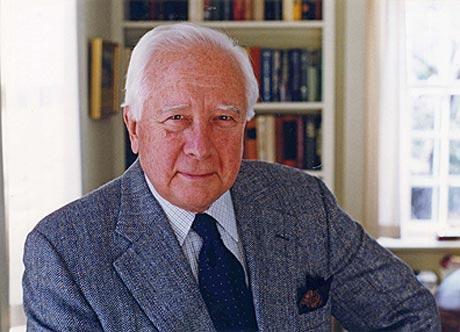
One of the most appealing aspects of David McCullough's many books is that he attempted to give voice to opposing opinions. Thus, whether it be Presidents George Washington, John Adams, Theodore Roosevelt or Harry Truman, McCullough, while not pledging neutrality, presents both positive & negative characteristics of those he seeks to detail.
In his book, 1776, McCullough portrays 43 year old George Washington as often confused, distracted & even thoroughly indecisive, as well as demonstrating keen leadership qualities.
Meanwhile, Britain's George III at age 37 is presented in a rather flattering light, a plain man uninterested in the trappings of royalty, preferring to content himself with his books, his art work & his violin, while also wanting to demonstrate Britain's strength to the upstart colonists.
One of the elements that has always caused both interest & uncertainty is the question of just what caused so very many in the colonial territories that eventually became the United States to remain Loyalists rather than to embrace the cause of revolution from Great Britain.
It is reckoned that from 20 to 30% of would-be Americans, including many Quakers, stayed loyal to George III & many if not most were ultimately forced to flee their homes for Canada or Britain. As an example, Benjamin Franklin's son William, who was a fervent Loyalist, fled to England, to the end, considering himself British rather than American.
In 1776 came news of a Declaration of Independence, renouncing allegiance to King George III, with John Adams intoning,
Rather than being a cohesive army, most of the colonial fighting force was comprised of an assortment of militias, often seeming more loyal to their individual home states than to the concept of a "United States"; in fact, Washington himself felt that his own Virginians were far superior to the men from any of the other colonies, with Virginia appearing almost as a semi-sovereign entity, if only in its own estimation.
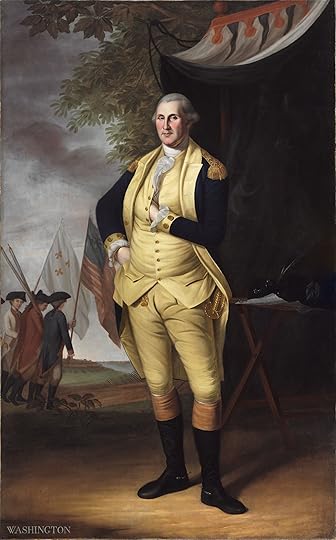
Washington lost most of the early battles and salvaged what little men & munitions he had only via a series of retreats. In spite of that, his resolve was unswerving. And it was said that Washington "had more courage & strength than met the eye; in his own inner resources & in the abilities of those who remained with him, he always resolved to carry on." Here is McCullough's further commentary of America's revolutionary leader:
Beyond that, so much seemed to depend on the vagaries of the weather, enhancing or halting the movement of either the British or the revolutionary forces. At one point, had the wind been more favorable, the assembled British naval forces might have almost completely decimated Washington's troops. In another case, the depth of the ice in winter allowed both men & the heavy canons of the colonial forces to cross a frozen river unmolested.
The year 1776 was merely the beginning of a long & concerted effort to achieve freedom from Britain for the American colonies. A century after the conclusion of the Revolutionary War, Britain's Sir George Trevelyan wrote in his classic study of that war: "It may be doubted whether so small a number of men ever employed so short a space of time with greater & more lasting effects on the history of the world.
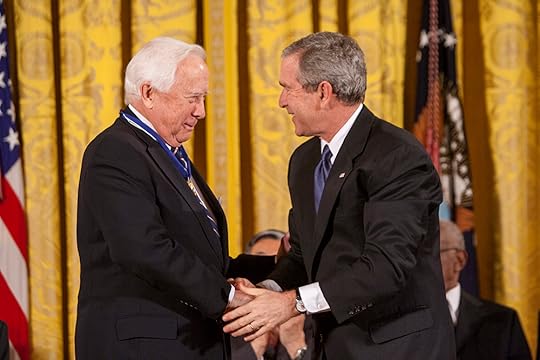
As the United States approaches the 200th anniversary of the pivotal year of its Declaration of Independence from Britain, David McCullouch's excellent book, 1776, represents an excellent historical counterpart to the pending celebration of America's birth.
I've read three of David McCullough's books & enjoyed each of them. in June 2011, I was able to attend a gathering where McCullough spoke locally and to have him autograph his then just-released, The Greater Journey: Americans in Paris and two other books. McCullough possessed a rare gentlemanly reserve, a wonderful speaking voice and he relayed to millions of readers, his personal love of America's history.
*Within my review are two images of author David McCullouch, including his receiving the Presidential Medal of Freedom in 2006. Also included is an image of General George Washington. **There are extensive black & white + color images within the book.
One of the most appealing aspects of David McCullough's many books is that he attempted to give voice to opposing opinions. Thus, whether it be Presidents George Washington, John Adams, Theodore Roosevelt or Harry Truman, McCullough, while not pledging neutrality, presents both positive & negative characteristics of those he seeks to detail.
In his book, 1776, McCullough portrays 43 year old George Washington as often confused, distracted & even thoroughly indecisive, as well as demonstrating keen leadership qualities.
Meanwhile, Britain's George III at age 37 is presented in a rather flattering light, a plain man uninterested in the trappings of royalty, preferring to content himself with his books, his art work & his violin, while also wanting to demonstrate Britain's strength to the upstart colonists.
One of the elements that has always caused both interest & uncertainty is the question of just what caused so very many in the colonial territories that eventually became the United States to remain Loyalists rather than to embrace the cause of revolution from Great Britain.
It is reckoned that from 20 to 30% of would-be Americans, including many Quakers, stayed loyal to George III & many if not most were ultimately forced to flee their homes for Canada or Britain. As an example, Benjamin Franklin's son William, who was a fervent Loyalist, fled to England, to the end, considering himself British rather than American.
In 1776 came news of a Declaration of Independence, renouncing allegiance to King George III, with John Adams intoning,
We are now in the very midst of revolution. By renouncing allegiance to the King, the delegates at Philadelphia committed treason, embarking on a course from which there was no turning back.Initially, the revolutionaries are ill-equipped, poorly clothed, untrained & hardly resolute, a ragtag assembly of townsmen & farmers, who while well-intentioned are little match for the seasoned British soldiers & their mercenary counterparts, the Hessians from Germany.
Rather than being a cohesive army, most of the colonial fighting force was comprised of an assortment of militias, often seeming more loyal to their individual home states than to the concept of a "United States"; in fact, Washington himself felt that his own Virginians were far superior to the men from any of the other colonies, with Virginia appearing almost as a semi-sovereign entity, if only in its own estimation.
Washington lost most of the early battles and salvaged what little men & munitions he had only via a series of retreats. In spite of that, his resolve was unswerving. And it was said that Washington "had more courage & strength than met the eye; in his own inner resources & in the abilities of those who remained with him, he always resolved to carry on." Here is McCullough's further commentary of America's revolutionary leader:
George Washington was not a brilliant strategist or tactician, not a gifted orator, not an intellectual. But he learned from experience, never forgot what was at stake & he never gave up. In short, he demonstrated unrelenting perseverance.Two rather amazing quirks of the Revolutionary War seemed to be that many fighting men drifted in & out, not actually deserting but going home to help with the crops or because they were otherwise needed by their families. Also, many men actually did desert, even changing sides at times, especially when the opposing force appeared in better command of the war, being better able to clothe, feed & pay its recruits as promised.
Beyond that, so much seemed to depend on the vagaries of the weather, enhancing or halting the movement of either the British or the revolutionary forces. At one point, had the wind been more favorable, the assembled British naval forces might have almost completely decimated Washington's troops. In another case, the depth of the ice in winter allowed both men & the heavy canons of the colonial forces to cross a frozen river unmolested.
The year 1776 was merely the beginning of a long & concerted effort to achieve freedom from Britain for the American colonies. A century after the conclusion of the Revolutionary War, Britain's Sir George Trevelyan wrote in his classic study of that war: "It may be doubted whether so small a number of men ever employed so short a space of time with greater & more lasting effects on the history of the world.
As the United States approaches the 200th anniversary of the pivotal year of its Declaration of Independence from Britain, David McCullouch's excellent book, 1776, represents an excellent historical counterpart to the pending celebration of America's birth.
I've read three of David McCullough's books & enjoyed each of them. in June 2011, I was able to attend a gathering where McCullough spoke locally and to have him autograph his then just-released, The Greater Journey: Americans in Paris and two other books. McCullough possessed a rare gentlemanly reserve, a wonderful speaking voice and he relayed to millions of readers, his personal love of America's history.
*Within my review are two images of author David McCullouch, including his receiving the Presidential Medal of Freedom in 2006. Also included is an image of General George Washington. **There are extensive black & white + color images within the book.
Displaying 1 - 30 of 10,190 reviews