The concluding volume in a poetic trilogy, Alexis Pauline Gumbs's Dub: Finding Ceremony takes inspiration from theorist Sylvia Wynter, dub poetry, and ocean life to offer a catalog of possible methods for remembering, healing, listening, and living otherwise. In these prose poems, Gumbs channels the voices of her ancestors, including whales, coral, and oceanic bacteria to tell stories of diaspora, indigeneity, migration, blackness, genius, mothering, grief, and harm. Tracing the origins of colonialism, genocide, and slavery as they converge in Black feminist practice, Gumbs explores the potential for the poetic and narrative undoing of the knowledge that underpins the concept of Western humanity. Throughout, she reminds us that dominant modes of being human and the oppression those modes create can be challenged, and that it is possible to make ourselves and our planet anew.
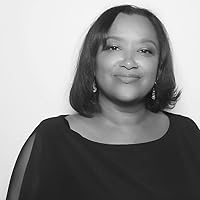
Alexis Pauline Gumbs is a poet, independent scholar, and activist. She is author of Spill: Scenes of Black Feminist Fugitivity and coeditor of Revolutionary Mothering: Love on the Front Lines and the Founder and Director of Eternal Summer of the Black Feminist Mind, an educational program based in Durham, North Carolina.
this collection of poetry was revelatory... the structure of this book works both as a narrative and a sociopoetic oracle, allowing it to act as a vehicle for dialogue with the reader. reading these poems felt very timely for me as someone trying to understand their place in the cosmos and woven in lonely between the threads of love. the collective use of "we" and intimate depictions of nonhuman relatives (whether it be whales wailing or hibiscus blossoms flowering) spoke to me in a way that helped me feel less alone in how i love and am loved. at the beginning of the book, Gumbs ends her note with this quote: "When you think it's time to come up for air, go deeper. When you think your heart will break, stay there, stay with it. But at the same time, when you think you gotta hold onto something (like who you think you are), let go." in sharing wisdom from Sylvia Wynter and from her own ancestors, Gumbs leads us on a meditative journey through grief, loss, pain, beauty, and always love. So grateful for this text.
some of my favorite poems were: "whale chorus," "commitment," "nunánuk," "Anguilla," "it's your father," "blood chorus," "birth chorus," "staying," and "letting go"
lovedddd this book— i read it before creating anything, to start journal entries, as a form of prayer. the poetry here reads the way my dreams feel, like time travel, an oceanic portal. meditating on ancestry and Blackness, i’m inspired by this piece’s ability to balance finding your past & future in natural/spiritual/non-human worlds while still learning from this life & remaining deeply human.
big rec if u appreciate experimental poetry (style has roots in jamaican dub poetry! can u hear the music as u read?) + as a resource to reimagine ourselves. it’ll be a favorite for a longggg time, if u read it we gotta chat 🫶🏾
The final book in the trilogy, Dub, made me finally see the whole series come together. We see post-slavery, post-capitalism, and now post-apocalypse, where we are one with the ocean and nature. This book was considerably more peaceful and less violent/ graphic than the last two. Slavery and harm seemed so far in the past at this time. It also read like instructions at times, with how to get to the point of peacefulness. I enjoyed the images that accompanied each chapter.
Looking back on the trilogy after finishing it, this felt like a good example of non-western storytelling. It doesn’t necessarily need a central conflict, it can just be vibes, existence, and enjoying the stream of consciousness of feelings, images, and thoughts.
would vote best rhymes ive read in a while. narrative and expansive and beautiful poetry about ancestry, ecology, blackness, change, deep listening… i <3 u alexis pauline gumbs
I am biased. There isn’t anything I’ve read by Gumby’s that I don’t love, but this book is a craft in ancestral ecological witnessing. It is exactly what I expect and admire about decolonial black feminist prose—even the structure subverts.
Alexis Pauline Gumbs has a beautiful way of allowing words to wash together, rhythmically like the ocean, or rapidly like a river. The popping, start-stopping poetry of Dub is a tour through a history of colonialism, semi-autobiographical storytelling and suggested futures. The structure is poetry and narrative, swift and untethered to typical rules of writing. There is a message in that lack denial of (western) structure, I think, just as with Sylvia Winter's writing, who Gumbs references. The poems move through a slave's history to a philosophical positioning on unlearning and interconnectedness as postcolonial practice. This isn't a book for one sitting, but one to dip in and out of, to appreciate, mull over, and enjoy, and it is immaculately written and presented.
breathe. breathe. breathe. sing. let that water move within you. let it be you. let your every cilia dance you into healing. let the warm salt water brighten you. your tears. sleep. and when you dream of working, sleep again. sleep until you dream of floating. dream until your edges soft. dream until you birth yourself in water singing with the bones of all your lost. dream until you breathe not from your mouth, not from your nose but through your hair and through your skin. dream until you claim the ocean. breathe until you feel no need to swim. breathe until your dreams flow out your brain. breathe and let them in your heart. breathe and we will call you again. that’s a start.’
16 ‘we don’t have the luxury of surface.’
20 ‘there is no you i don’t surround.’
24 ‘how could the waves we sent become words you could hold, or could they?’
61 ‘there were witnesses. sea grape leaves, burr grass, pelicans, actual eels. there were vines and spines for everything you did, reflectively overgrown. brutally cut down. there was nothing here that was not you and what you did to who you thought wasn’t you. it’s true. nothing went unseen, even in the unlit dirt roads of night. even underwater or in caves. nothing went unseen or undreamed in the short long lifetimes of the enslaved. nothing is unknown. you. don’t take nothing to your grave. except maybe bones. and even those will be repurposed for limestone soon. there is no permanent space for doom or gloom, only growth. and the green, brown life around you, sees everything.’
176 ‘it wasn’t so much that she could predict the future. it was more that she could breathe into the past. open her body to the forgotten. relive it other ways. she could do it any day as if no one had ever died. or since dead as if no one had been lost. or since lost as if the lessons lasted like love or what would have been love, if someone had been waiting with an impossibly open heart. if someone had been still enough to still sense it anyway. yes. sense. so she made that her work.’
181 ‘we made the planet round so we could hold you. made that one star bright enough and pulled you close. we are still shaping this planet, like a baby’s head. are you symbiont or parasite. playmate or pest. we made this planet round, surrounded on all sides by sound, surrounded in all spaces by us. we can as easily cradle you as crush.’
242 ‘add it up. years of sand and salt. that way you have of breathing the calmest parts of the ocean. poems, half-memorized and forgiven. belief that you can float. enough peace to actually float, at least a few minutes at a time. a place to go and eat and cry when you have lost too much weight to stay lost. the possibility of a personal writing retreat. the possibility of a group writing retreat. a place to come be with the moon. the subtle rewriting of spirit prompted by the month-long sound of the ocean. the mothering it invites with gratitude. the lagoon dreams. the names in Hutson’s book. the beautiful painting of the woman giving birth to the world. the necklace that opened your voice beyond lifetimes. that way of wearing exactly what you want to wear. an intimate knowledge of impermanence. humility. lack of entitlement. as every day the ocean takes the land away. as other things you thought you could stand on erode. an instinct for ceremony any time any place. the poetry trained readiness for miracles on a day. the space to love yourself. the time to come ask questions. the patience to sit with old people, to hear the same stories and find something new. the ear to listen past shouting. the lung control to shout when you need to. the words. the rapport with birds. the oneness with whales. the recognition of sails as nothing without breath. the bridge across death. the geography of clouds. eye contact with horizon. the site-specific ability to turn off your phone. the illusion of security. the illusion of home for what it offered. the thousands of footsteps proffered. your signature in sand. we give what we give in form. and its form is not land.’
Dub: Finding Ceremony is a deeply imaginative, thought-provoking, and beautifully layered work. Alexis Pauline Gumbs blends poetry, history, ecology, ancestry, and Black feminist thought into something that feels both intimate and expansive. The way the book draws on ocean life, ancestral voices, migration, grief, and healing creates a powerful meditation on what it means to remember, survive, and imagine a different way of being.
This is not simply a book to read, it’s an experience to sit with and reflect upon. Lyrical, challenging, and profoundly original, Dub: Finding Ceremony invites readers to question inherited ideas and consider how healing and transformation might reshape our relationship with ourselves, our communities, and the planet.
I think this collection is much more meaningful should you take the time with it. Read it aloud, feel it as you stumble your way through an apartment's tender floors. Make a ritual of it, and try not to rush through.
I think reading Dub page-by-page is not giving it proper time for its lessons and support to root within your mind.
I'm going to quote a reviewer from the back cover "Part prayer, oration, exhortation, commentary and story, Dub amplifies ancestral stories to become mythopoesis in the making" M. NourbeSe Philip. I read this book slowly over the past month because it takes time to take it all in fully. Magnificent!
it had whales and i like whales but even then i was a little confused that being said i think they are meant to be read aloud and i didnt read them aloud
Truly a masterpiece. I read this in fits and spurts because it's so deep. I take time to think about the poems (many of them are paragraphs with no capital letters; many are best read out loud because of the rhythm, rhyme, and rap-like repetition of sounds), often journalling afterward. I don't understand many of the references, definitely none of the ones to Sylvia Wynter's work, with which I'm completely unfamiliar. I highly recommend this book; it's incredible. I think I'll be reading this again and again.
From the publisher: In these prose poems, Gumbs channels the voices of her ancestors, including whales, coral, and oceanic bacteria, to tell stories of diaspora, indigeneity, migration, blackness, genius, mothering, grief, and harm. Tracing the origins of colonialism, genocide, and slavery as they converge in Black feminist practice, Gumbs explores the potential for the poetic and narrative undoing of the knowledge that underpins the concept of Western humanity. Throughout, she reminds us that dominant modes of being human and the oppression those modes create can be challenged, and that it is possible to make ourselves and our planet anew.