

What do you think?

Expelled from Eden: A William T. Vollmann Reader
William T. Vollmann is one of our greatest living writers. Masterworks such as You Bright and Risen Angels, The Royal Family, and Rising Up and Rising Down—his latest work, a stunning 3,300-page tour-de-force—have launched him into the literary stratosphere. He stands today as one of America's leading contenders for a future Nobel Prize in literature. Here is his long-awaited "best-of" collection, intended both as an introduction for the curious reader, and as a necessary addition to the existing fan's collection. With excerpts from all of Vollmann's novels (including several not yet published), journalistic pieces, essays, correspondence, and poetry, Expelled from Eden creates a unique, kaleidoscopic portrait of one of America's most notorious, protean, devastating, and necessary writers.
520 pages, Paperback
First published December 1, 2004
About the author
William T. Vollmann
101 books1,603 followersWilliam Tanner Vollmann is an American author, journalist, and essayist known for his ambitious and often unconventional literary works. Born on July 28, 1959, in Los Angeles, California, Vollmann has earned a reputation as one of the most prolific and daring writers of his generation.
Vollmann's early life was marked by tragedy; his sister drowned when he was a child, an event that profoundly impacted him and influenced his writing. He attended Deep Springs College, a small, isolated liberal arts college in California, before transferring to Cornell University, where he studied comparative literature. After college, Vollmann spent some time in Afghanistan as a freelance journalist, an experience that would later inform some of his works.
His first novel, You Bright and Risen Angels (1987), is a sprawling, experimental work that blends fantasy, history, and social commentary. This novel set the tone for much of his later work, characterized by its complexity, depth, and a willingness to tackle difficult and controversial subjects.
Vollmann's most acclaimed work is The Rainbow Stories (1989), a collection of interlinked short stories that explore the darker sides of human nature. His nonfiction is equally notable, particularly Rising Up and Rising Down (2003), a seven-volume treatise on violence, which was a finalist for the National Book Critics Circle Award.
Over the years, Vollmann has continued to write prolifically, producing novels, short stories, essays, and journalistic pieces. His work often delves into themes of violence, poverty, and the struggles of marginalized people. He has received several awards, including the National Book Award for Fiction in 2005 for Europe Central, a novel about the moral dilemmas faced by individuals during World War II.
Vollmann is known for his immersive research methods, often placing himself in dangerous situations to better understand his subjects. Despite his literary success, he remains somewhat of an outsider in the literary world, frequently shunning public appearances and maintaining a low profile.
In addition to his writing, Vollmann is also an accomplished photographer, and his photographs often accompany his written work. Painting is also an art where's working on, celebrating expositions in the United States, showing his paintings. His diverse interests and unflinching approach to his subjects have made him a unique voice in contemporary American literature.
Vollmann's early life was marked by tragedy; his sister drowned when he was a child, an event that profoundly impacted him and influenced his writing. He attended Deep Springs College, a small, isolated liberal arts college in California, before transferring to Cornell University, where he studied comparative literature. After college, Vollmann spent some time in Afghanistan as a freelance journalist, an experience that would later inform some of his works.
His first novel, You Bright and Risen Angels (1987), is a sprawling, experimental work that blends fantasy, history, and social commentary. This novel set the tone for much of his later work, characterized by its complexity, depth, and a willingness to tackle difficult and controversial subjects.
Vollmann's most acclaimed work is The Rainbow Stories (1989), a collection of interlinked short stories that explore the darker sides of human nature. His nonfiction is equally notable, particularly Rising Up and Rising Down (2003), a seven-volume treatise on violence, which was a finalist for the National Book Critics Circle Award.
Over the years, Vollmann has continued to write prolifically, producing novels, short stories, essays, and journalistic pieces. His work often delves into themes of violence, poverty, and the struggles of marginalized people. He has received several awards, including the National Book Award for Fiction in 2005 for Europe Central, a novel about the moral dilemmas faced by individuals during World War II.
Vollmann is known for his immersive research methods, often placing himself in dangerous situations to better understand his subjects. Despite his literary success, he remains somewhat of an outsider in the literary world, frequently shunning public appearances and maintaining a low profile.
In addition to his writing, Vollmann is also an accomplished photographer, and his photographs often accompany his written work. Painting is also an art where's working on, celebrating expositions in the United States, showing his paintings. His diverse interests and unflinching approach to his subjects have made him a unique voice in contemporary American literature.
Ratings & Reviews
Friends & Following
Create a free account to discover what your friends think of this book!
Community Reviews
Displaying 1 - 24 of 24 reviews

May 25, 2014
The Royal Family Followed by a Character Assassin
This review continues some of the themes explored in an earlier review of "The Royal Family":
https://www.goodreads.com/review/show...
Some Alternative Titillation for the Inn Crowd
Here are some alternative titles for this Reader:
* "I Shall Not Be Deterred"
* "Excreted from Eden, Exalted in the Land of Nod(s)".
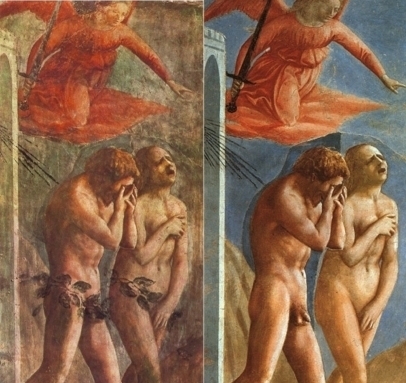
"O, woe is me, t'have seen what I have seen, see what I see!"
On Vollmann's Uncut Transgressive Length
It was Jack Kerouac's assertion that he didn't need to edit his novels that elicited the comment from Truman Capote:
"But, that's not writing...that's typing."
It seems to be an unread badge of courage with Vollmann that he refuses to edit or cut his work, as if everything he writes is precious and worthy of publication at someone else's expense.
Is anybody else sick of reading about what a hero Vollmann is because he won't allow his work to be edited?
Perhaps, a Reader such as this, then, is the only way his work may be digested.
The Paradox of Absolute Freedom
"A man's gotta know his limitations, Briggs,
Or he will just explode.
You lived in your imagination, Briggs.
You blew up in the road."
Robyn Hitchcock
https://www.youtube.com/watch?v=VP7Ns...
From Eden to the Land of Nod
The "Land of Nod", for those not intimate with "The Royal Family" or the "Old Testament", is part of the Cain and Abel myth, which forms the metaphorical basis of the whole of "The Royal Family", if not most of Vollmann's oeuvre.
God expelled Cain from Eden to the Land of Nod. He wandered there for the rest of his life, wearing the Mark of Cain.
Cain was expelled, but Vollmann can't say he's been expelled from Eden by anybody. Instead, he has chosen the Land of Nod and its transgressiveness. This is a self-conscious personal and authorial strategy that Vollmann (or Vollmann's Implied Author = VIA) turns into an inverted self-righteousness.
The Pride of Defiance
This is what the narrator of "The Royal Family" has to say about the land of Nod:
"Abel prayed timidly to a God Whom he feared, of Whom he expected nothing - correctly, as we know from the tale's round words, for God declined to protect him.
"As for Cain, he abandoned himself to anger and crime. He couldn't kill God or the angel, so he killed Abel. Somewhat wanting in backbone that murderer was, too, for he pleaded innocent, just like any cheap pimp who's gotten busted.
"But grant him this: In the end he did at least wear his Mark with defiant pride, and set out most adventurously to take up housekeeping with Lilith's daughters and other whores in the land of Nod, which I've always assumed was the place that heroin addicts go to...
"And Cain, I read, begat Pontius Pilate, who begat firstly innocent bystanders, and secondly good Germans, and thirdly Mr. Henry Tyler, that newly ageing lump of flesh with the same stale problem of an irremediable spiritual impotence - nay, rottenness - of which he had not been the cause and for which there could be no solution.
"Acquiescence would render him more contemptible than he already was, and quite possibly doom him - I cite the precedent of Abel - while backbone would get him into trouble just as it had Cain."
Something is impotent, something is rotten, in the state bearing the Mark of Cain. At the very least, it's the protagonist, even if he wears his Mark with defiant pride.
Long Journey to the End of the Scheidt
The more you read Vollmann, the more you have to deal with his self-pity, his self-indulgence and his auto-pedestalisation.
This is the sequence of my reading of seven works over a period of about 18 months. By the end, the experience started to remind me of Jimi Hendrix' last minutes.
"Whores for Gloria"
https://www.goodreads.com/review/show...
"The Ice-Shirt"
https://www.goodreads.com/review/show...
"The Rainbow Stories"
https://www.goodreads.com/review/show...
"Rising Up and Rising Down"
https://www.goodreads.com/review/show...
"Europe Central"
https://www.goodreads.com/review/show...
"Butterfly Stories "
https://www.goodreads.com/review/show...
"The Royal Family"
https://www.goodreads.com/review/show...
"Dupe Dupe!"
It was the last novel that really made me question whether Vollmann is worth the effort. By the same token, it's the one work that sets out his concerns and obsessions most transparently. In a way, (genital) warts and all.
I no longer buy the argument that his work is about empathy with the Other. It's about preoccupation with the Self. Some times unadulterated, most times adulterated, but rarely adult.
There is something relentlessly juvenile about his subject matter and style. After a while, the non-stop whoring makes the reader feel as out of place as a eunuch in a circle jerk.
I wonder how he'll relate to his juvenilia as, like all of us, he ages. Will he still be jumping someone else's train at 65?
Well, why not, all he need's to get him started is One Bourbon, One Scotch, One Beer, and One (John Lee) Hooker!
https://www.youtube.com/watch?v=c3o8-...
Mitsein on the Wall Label
I use the (Heideggerian) philosophical term "Mitsein" for what Vollmann described in his essay, "American Writing Today: A Diagnosis of the Disease" (1990):
"...we should strive to feel not only about Self, but also about Other.
"Not the vacuum so often between Self and Other. Not the unworthiness of Other. Not the Other as a negation or eclipse of Self. Not even about the Other exclusive of Self, because that is but a trickster-egoist’s way of worshiping Self secretly.
"We must treat Self and Other as equal partners."
This is the wall label for the exhibition of Vollmann's fiction, because (assuming it's not tongue in cheek) it's the standard he sought to impose on other authors as at 1990.
"A Trickster-Egoist’s Way of Worshiping Self Secretly"
You'll rarely find in Vollmann any insight into an actual relationship that doesn't depend on the exchange of a fee for service.
Everything is viewed through the prism of a power relationship, the power that a man with money has over a woman who is available for purchase. These relationships are motivated solely by sex and money, not equality.
For all the whinging and whining about Love! (Man!), Vollmann never escapes the commodification of relationships into the arena of true Mitsein.
The empathy felt by Vollmann's male protagonists is only ever for the women they can acquire.
I am not really personally interested in whether Vollmann or his protagonists exhibit Mitsein in their relationships with the Third World in its entirety.
I am, however, interested in the extent to which the protagonists in his fiction exhibit any semblance of Mitsein in their one-on-one relationships with either the same or any other sex, i.e., in the relationship between one Subject and one Object.
Whatever the level of empathy, their relationships never transcend, and are never explored beyond, their sexuality. Women are functional in his fiction, utilitarian, the objects of the subjects' obsession, and nothing more.
Magnificent Abscession
This type of fiction luxuriates in its own transgression. It requires transgression as a condition of interest. It is only interesting, because it is transgressive. Strip away the transgression and it's vacuous, inept, inane. There's nothing there. Except, perhaps, 21st century Schreibtisch self-obsession. The Big Zero:
"We all know the story of the whore who, finding her China white to be less and less reliable a friend no matter how much of it she injected into her arm, recalled in desperation the phrase ‘shooting the shit,’ and so she filled the needle with her own watery excrement and pumped it in, producing magnificent abscesses."
Still in the short time we have before Vollmann wins the Nobel Prize, I urge you to read (or shoot) his shit, in the hope that, to paraphrase Erica Jong, for you, it might taste like watermelon.
In a Knutshell
Ersatz Mitsein für das Gaddis House Committee.
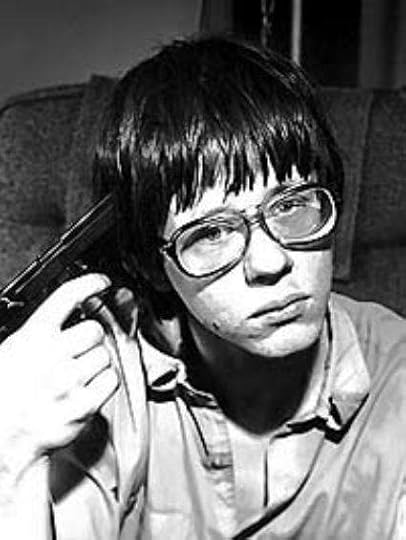
Do you feel lucky, punk?
Authentic Mitsein
In "Rising Up and Rising Down", Vollmann discusses the merits of the Marquis de Sade with rare skill.
I read the last two of the above Vollmann novels as part of a sequence of readings about Sade.
I felt the analysis of these three women was far more insightful than the belletristic superstructure Vollmann has purported to build on Sade's base:
Simone de Beauvoir - "The Marquis de Sade - An Essay"
https://www.goodreads.com/review/show...
Angela Carter - "The Sadeian Woman: An Exercise in Cultural History"
https://www.goodreads.com/review/show...
Rikki Ducornet - "The Fan-Maker's Inquisition: A Novel of the Marquis de Sade"
https://www.goodreads.com/review/show...
All three works are highly recommended. If you read any of them, you'll soon find it easy to differentiate between a talented mind and a talking dick.
A Joke from Vollmann the Trickster
"Q: How do you explain your obsession with whores?
A: I thought my parents said, when I grew up, I would marry a bonkologist."
I Guess I Got What I Deserve
Whether dead
Or pretty,
I’m in love
With a whore
Who’s always
Stoned or pissed
Or shitty.
SOUNDTRACK:
Lou Reed - "Last Great American Whale"
https://www.youtube.com/watch?v=xTlsS...
"It's a lot like what my painter friend Donald said to me
Stick a fork in their ass and turn them over, they're done."
DJ IAN'S RATING:
Warning: You are about to Encounter Turdulence
This book is rated four and a half turds, rounded up to one star. This performance could not have been more polished.
"My Bullshit is Worth More Than Other People’s Diamonds!"
Unser Bill also receives a special lifetime achievement award for the elaborate practical joke that is his literary gift to the world.
To paraphrase Lou Reed:
"A year of my shit beats a lifetime of yours!"
DJ Ian would like to thank the leader in turd world discrimination:
POSTSCRIPT:
My Helmet Cam Won't Turn Off
"I don't care to exclude any detail. Everything is precious to me...Out of laziness I quote myself verbatim...If you wish, I can make this chapter even more tedious...Scarcely a word could be deleted from this without wounding the meaning."
Life is too short to edit what you write, for that would detract from the time available to live and create more detail. But at what point does the detail become tedious? Ask the Pale King, who knows these things.
Vollmann drills into everything in his life experience. He is a human drill. DFW would ask, at what point does the drill become a bore?
Vollmann the subject mines everything that is before his very eyes. Everything is ore for him. Everything is awe. Everything is aweful.
All is grist for the mill, only the grain is never truly separated from the chaff, nor is it ground or processed, let alone refined. Vollmann can't bring himself to discard the chaff. He can't tell what is precious, because vanity persuades him(self) that all is precious.
He turns the helmet cam on, but can't turn it off (except to insert interstitial wall labels that announce, self-consciously, the next bit is IMPORTANT!). Even Andy Warhol stopped after 24 hours.
In Awe/Ore of the Author's Persona
A frank opinion from Biblioklept:
"I like William T. Vollmann the persona probably more than I like William T. Vollmann the writer...
"I can’t think of a writer who does more and says more and, because of his maximalist approach, will be largely unread, both for his career and for posterity—unless he concedes to edit.
"I think the irony is that, in wanting to give everything to his reader and wanting to preserve everything about his subjects—an act of love, compassion, empathy, what have you—in these grand, hopeless gestures, Vollmann paradoxically displays that intrinsic not-giving-a-fuckness. He needs an editor."
http://biblioklept.org/2011/09/09/book/
There was a point when I read and enjoyed Vollmann for the awe. Now, regrettably, there is more ore than awe.
If Vollmann can't be bothered to separate the wheat from the chaff, he simply challenges us to digest it for him.
I can't be bothered keeping up with his helmet cam footage. I have my own helmet cam to keep up with.
The Gift of the Gab
Vollmann is now more performance artist than writer.
He doesn't have the facility with words to mount a lifetime Proustian (re)construction of the present as it becomes past.
He is at heart a selfish and self-indulgent writer. These objects in front of him are not documented or preserved for their own sake. They are simply instruments or tools with which the author constructs and perpetuates his own persona(e). They are raw material for his masks. They are the orange peels of Dolores' fake tits.
Faux Regard
I had hoped for a beautiful gaze, un beau regard (whether or not the object is classically beautiful), but Vollmann offers only faux regard.
I care about you, only because and to the extent that I care more about me. You are an object intended only for my consumption.
This is not love or empathy. Vollmann does not give, nor does he give a fuck.
You exist, so that I might grab and drag you into my consciousness. I will ingest you, then dissipate.
It's a relief, then, but a little ironic, when his acolytes say they don't want you in their "feed"!
Why Settle for Dolores When You Could Have Lexia?

This review continues some of the themes explored in an earlier review of "The Royal Family":
https://www.goodreads.com/review/show...
Some Alternative Titillation for the Inn Crowd
Here are some alternative titles for this Reader:
* "I Shall Not Be Deterred"
* "Excreted from Eden, Exalted in the Land of Nod(s)".
"O, woe is me, t'have seen what I have seen, see what I see!"
On Vollmann's Uncut Transgressive Length
It was Jack Kerouac's assertion that he didn't need to edit his novels that elicited the comment from Truman Capote:
"But, that's not writing...that's typing."
It seems to be an unread badge of courage with Vollmann that he refuses to edit or cut his work, as if everything he writes is precious and worthy of publication at someone else's expense.
Is anybody else sick of reading about what a hero Vollmann is because he won't allow his work to be edited?
Perhaps, a Reader such as this, then, is the only way his work may be digested.
The Paradox of Absolute Freedom
"A man's gotta know his limitations, Briggs,
Or he will just explode.
You lived in your imagination, Briggs.
You blew up in the road."
Robyn Hitchcock
https://www.youtube.com/watch?v=VP7Ns...
From Eden to the Land of Nod
The "Land of Nod", for those not intimate with "The Royal Family" or the "Old Testament", is part of the Cain and Abel myth, which forms the metaphorical basis of the whole of "The Royal Family", if not most of Vollmann's oeuvre.
God expelled Cain from Eden to the Land of Nod. He wandered there for the rest of his life, wearing the Mark of Cain.
Cain was expelled, but Vollmann can't say he's been expelled from Eden by anybody. Instead, he has chosen the Land of Nod and its transgressiveness. This is a self-conscious personal and authorial strategy that Vollmann (or Vollmann's Implied Author = VIA) turns into an inverted self-righteousness.
The Pride of Defiance
This is what the narrator of "The Royal Family" has to say about the land of Nod:
"Abel prayed timidly to a God Whom he feared, of Whom he expected nothing - correctly, as we know from the tale's round words, for God declined to protect him.
"As for Cain, he abandoned himself to anger and crime. He couldn't kill God or the angel, so he killed Abel. Somewhat wanting in backbone that murderer was, too, for he pleaded innocent, just like any cheap pimp who's gotten busted.
"But grant him this: In the end he did at least wear his Mark with defiant pride, and set out most adventurously to take up housekeeping with Lilith's daughters and other whores in the land of Nod, which I've always assumed was the place that heroin addicts go to...
"And Cain, I read, begat Pontius Pilate, who begat firstly innocent bystanders, and secondly good Germans, and thirdly Mr. Henry Tyler, that newly ageing lump of flesh with the same stale problem of an irremediable spiritual impotence - nay, rottenness - of which he had not been the cause and for which there could be no solution.
"Acquiescence would render him more contemptible than he already was, and quite possibly doom him - I cite the precedent of Abel - while backbone would get him into trouble just as it had Cain."
Something is impotent, something is rotten, in the state bearing the Mark of Cain. At the very least, it's the protagonist, even if he wears his Mark with defiant pride.
Long Journey to the End of the Scheidt
The more you read Vollmann, the more you have to deal with his self-pity, his self-indulgence and his auto-pedestalisation.
This is the sequence of my reading of seven works over a period of about 18 months. By the end, the experience started to remind me of Jimi Hendrix' last minutes.
"Whores for Gloria"
https://www.goodreads.com/review/show...
"The Ice-Shirt"
https://www.goodreads.com/review/show...
"The Rainbow Stories"
https://www.goodreads.com/review/show...
"Rising Up and Rising Down"
https://www.goodreads.com/review/show...
"Europe Central"
https://www.goodreads.com/review/show...
"Butterfly Stories "
https://www.goodreads.com/review/show...
"The Royal Family"
https://www.goodreads.com/review/show...
"Dupe Dupe!"
It was the last novel that really made me question whether Vollmann is worth the effort. By the same token, it's the one work that sets out his concerns and obsessions most transparently. In a way, (genital) warts and all.
I no longer buy the argument that his work is about empathy with the Other. It's about preoccupation with the Self. Some times unadulterated, most times adulterated, but rarely adult.
There is something relentlessly juvenile about his subject matter and style. After a while, the non-stop whoring makes the reader feel as out of place as a eunuch in a circle jerk.
I wonder how he'll relate to his juvenilia as, like all of us, he ages. Will he still be jumping someone else's train at 65?
Well, why not, all he need's to get him started is One Bourbon, One Scotch, One Beer, and One (John Lee) Hooker!
https://www.youtube.com/watch?v=c3o8-...
Mitsein on the Wall Label
I use the (Heideggerian) philosophical term "Mitsein" for what Vollmann described in his essay, "American Writing Today: A Diagnosis of the Disease" (1990):
"...we should strive to feel not only about Self, but also about Other.
"Not the vacuum so often between Self and Other. Not the unworthiness of Other. Not the Other as a negation or eclipse of Self. Not even about the Other exclusive of Self, because that is but a trickster-egoist’s way of worshiping Self secretly.
"We must treat Self and Other as equal partners."
This is the wall label for the exhibition of Vollmann's fiction, because (assuming it's not tongue in cheek) it's the standard he sought to impose on other authors as at 1990.
"A Trickster-Egoist’s Way of Worshiping Self Secretly"
You'll rarely find in Vollmann any insight into an actual relationship that doesn't depend on the exchange of a fee for service.
Everything is viewed through the prism of a power relationship, the power that a man with money has over a woman who is available for purchase. These relationships are motivated solely by sex and money, not equality.
For all the whinging and whining about Love! (Man!), Vollmann never escapes the commodification of relationships into the arena of true Mitsein.
The empathy felt by Vollmann's male protagonists is only ever for the women they can acquire.
I am not really personally interested in whether Vollmann or his protagonists exhibit Mitsein in their relationships with the Third World in its entirety.
I am, however, interested in the extent to which the protagonists in his fiction exhibit any semblance of Mitsein in their one-on-one relationships with either the same or any other sex, i.e., in the relationship between one Subject and one Object.
Whatever the level of empathy, their relationships never transcend, and are never explored beyond, their sexuality. Women are functional in his fiction, utilitarian, the objects of the subjects' obsession, and nothing more.
Magnificent Abscession
This type of fiction luxuriates in its own transgression. It requires transgression as a condition of interest. It is only interesting, because it is transgressive. Strip away the transgression and it's vacuous, inept, inane. There's nothing there. Except, perhaps, 21st century Schreibtisch self-obsession. The Big Zero:
"We all know the story of the whore who, finding her China white to be less and less reliable a friend no matter how much of it she injected into her arm, recalled in desperation the phrase ‘shooting the shit,’ and so she filled the needle with her own watery excrement and pumped it in, producing magnificent abscesses."
Still in the short time we have before Vollmann wins the Nobel Prize, I urge you to read (or shoot) his shit, in the hope that, to paraphrase Erica Jong, for you, it might taste like watermelon.
In a Knutshell
Ersatz Mitsein für das Gaddis House Committee.
Do you feel lucky, punk?
Authentic Mitsein
In "Rising Up and Rising Down", Vollmann discusses the merits of the Marquis de Sade with rare skill.
I read the last two of the above Vollmann novels as part of a sequence of readings about Sade.
I felt the analysis of these three women was far more insightful than the belletristic superstructure Vollmann has purported to build on Sade's base:
Simone de Beauvoir - "The Marquis de Sade - An Essay"
https://www.goodreads.com/review/show...
Angela Carter - "The Sadeian Woman: An Exercise in Cultural History"
https://www.goodreads.com/review/show...
Rikki Ducornet - "The Fan-Maker's Inquisition: A Novel of the Marquis de Sade"
https://www.goodreads.com/review/show...
All three works are highly recommended. If you read any of them, you'll soon find it easy to differentiate between a talented mind and a talking dick.
A Joke from Vollmann the Trickster
"Q: How do you explain your obsession with whores?
A: I thought my parents said, when I grew up, I would marry a bonkologist."
I Guess I Got What I Deserve
Whether dead
Or pretty,
I’m in love
With a whore
Who’s always
Stoned or pissed
Or shitty.
SOUNDTRACK:
Lou Reed - "Last Great American Whale"
https://www.youtube.com/watch?v=xTlsS...
"It's a lot like what my painter friend Donald said to me
Stick a fork in their ass and turn them over, they're done."
DJ IAN'S RATING:
Warning: You are about to Encounter Turdulence
This book is rated four and a half turds, rounded up to one star. This performance could not have been more polished.
"My Bullshit is Worth More Than Other People’s Diamonds!"
Unser Bill also receives a special lifetime achievement award for the elaborate practical joke that is his literary gift to the world.
To paraphrase Lou Reed:
"A year of my shit beats a lifetime of yours!"
DJ Ian would like to thank the leader in turd world discrimination:
POSTSCRIPT:
My Helmet Cam Won't Turn Off
"I don't care to exclude any detail. Everything is precious to me...Out of laziness I quote myself verbatim...If you wish, I can make this chapter even more tedious...Scarcely a word could be deleted from this without wounding the meaning."
Life is too short to edit what you write, for that would detract from the time available to live and create more detail. But at what point does the detail become tedious? Ask the Pale King, who knows these things.
Vollmann drills into everything in his life experience. He is a human drill. DFW would ask, at what point does the drill become a bore?
Vollmann the subject mines everything that is before his very eyes. Everything is ore for him. Everything is awe. Everything is aweful.
All is grist for the mill, only the grain is never truly separated from the chaff, nor is it ground or processed, let alone refined. Vollmann can't bring himself to discard the chaff. He can't tell what is precious, because vanity persuades him(self) that all is precious.
He turns the helmet cam on, but can't turn it off (except to insert interstitial wall labels that announce, self-consciously, the next bit is IMPORTANT!). Even Andy Warhol stopped after 24 hours.
In Awe/Ore of the Author's Persona
A frank opinion from Biblioklept:
"I like William T. Vollmann the persona probably more than I like William T. Vollmann the writer...
"I can’t think of a writer who does more and says more and, because of his maximalist approach, will be largely unread, both for his career and for posterity—unless he concedes to edit.
"I think the irony is that, in wanting to give everything to his reader and wanting to preserve everything about his subjects—an act of love, compassion, empathy, what have you—in these grand, hopeless gestures, Vollmann paradoxically displays that intrinsic not-giving-a-fuckness. He needs an editor."
http://biblioklept.org/2011/09/09/book/
There was a point when I read and enjoyed Vollmann for the awe. Now, regrettably, there is more ore than awe.
If Vollmann can't be bothered to separate the wheat from the chaff, he simply challenges us to digest it for him.
I can't be bothered keeping up with his helmet cam footage. I have my own helmet cam to keep up with.
The Gift of the Gab
Vollmann is now more performance artist than writer.
He doesn't have the facility with words to mount a lifetime Proustian (re)construction of the present as it becomes past.
He is at heart a selfish and self-indulgent writer. These objects in front of him are not documented or preserved for their own sake. They are simply instruments or tools with which the author constructs and perpetuates his own persona(e). They are raw material for his masks. They are the orange peels of Dolores' fake tits.
Faux Regard
I had hoped for a beautiful gaze, un beau regard (whether or not the object is classically beautiful), but Vollmann offers only faux regard.
I care about you, only because and to the extent that I care more about me. You are an object intended only for my consumption.
This is not love or empathy. Vollmann does not give, nor does he give a fuck.
You exist, so that I might grab and drag you into my consciousness. I will ingest you, then dissipate.
It's a relief, then, but a little ironic, when his acolytes say they don't want you in their "feed"!
Why Settle for Dolores When You Could Have Lexia?

June 26, 2013
I haunt Washington DC and environs. (I haunt them because I do not live here; I pervade its essences; I appear at its locales and then disappear from them; I am known and unknown here; some friends would claim I am dead, it has been so long since they've seen me, while others have shared a drink with me last evening; I haunt this city because my mortal life extends before and behind me, but drifts off at the horizon of both points, into a nothing-neverness-void, where I will ultimately be worth less than nothing, because memories of me will only detract from the here-and-now of the rememberer [don't pity me, you also only haunt places and nothing more.]) This city is populated by IMPORTANT AND RICH PERSONS who are beautiful and clean and well-dressed and achieve things and purchase wine and tapas at bars and walk dogs and smile bright bleached white smiles to each other in semaphore and have sex with each other sometimes and exchange business cards and generally do a swell job of arousing the envy of their peers and some of these people influence history and make laws and erect ideologies that affect other human beings on earth. These are Good People. There also lives here that .1. thing I saw at .1. in the morning in the belly of the Gallery Place metro station that was neither man nor woman but some swollen mass of vibrating flesh dressed in a pink workout suit with blood on its brow limping and using an umbrella as a cane and walking like a broken clock (like I imagine Beckett's Molloy walking); it would stop every few stunted steps and hock green and red gobs onto the third rail and they would sizzle and spark. The thing looked at me from the opposite platform and made a ghastly face and it was either Death or touched by Death and it looked like disease incarnate. It had a blonde wig on and its eyes were terrifying vortices. This thing dwelt underground but there are similar ones who live out in daylight in close proximity to the smiling professionals and weavers of the Law. Sometimes they attack and devour the Good People; but mostly they are forgotten or rendered invisible or a nuisance, like a bothersome insect. When one drags its stinky tatters into a pleasant park where the Good Bright People are picnicking everyone sort of closes their ranks and cups the glass shimmering with Sancerre and speaks in low tones and looks over shoulders until the threat has dissipated. Often police will take care of these situations, and then the Good Smiling People are put at ease and stop having to waste their time and valuable thought-energy thinking about those things that dwell underground and limp about and smell awfully in the sunlight. Washington DC is a fabulously wealthy town, where sometimes a single tapa can cost upwards of .20. dollars and mix drinks are as little as .15.. New cars are standing still on all of our streets, but don’t leave bags or anything valuable in them for too long unattended. There has been an ongoing local debate about why our metro stations generally smell like Death, and in the city paper some of the speculations were given voice: sewer gas escaping ducts, the burning stench of the metro trains’ new organic brake pads, general filthiness, or the rotting of accumulated rat corpses. My opinion is that the stench is a prophetic emission from the earth itself letting us know, in a medium other than language (because who gives credence to words and pledges in this town anyway?), that it is space-time’s explicit mission and purpose to churn us under the dirt into wormfood and grub-feces, and that all of our striving and creating of infrastructure and industrial churning out of trinkets and manufacturing of laws protecting capital and creating special economic zones and non-profit clean needle programs and food and clothes donation trucks will do nothing as bulwarks against oblivion. Those half-dead ones spitting their serpent’s venom on the third rail and smiling horrific smiles as it sizzles are only getting ahead in the real world; being half-dead already, they’ve ceased playing games; while all around them the successful, motivated, proactive populace of Our Nation’s Capital is engaged in a manic frolic of Here We Go Round The Mulberry Bush.

Vollmann peering through the border fence.
I’m turning 36 soon and I’ve been thinking as I’m haunting this world what it means that I am an American phantasm living so much at the center and heart of millennial America. (The heart is dull concrete; police on every corner remind me I’m a dutifully taxpaying Roman; parking meters chirp; when it rains the droplets soar upward stealing the green from the parks which turn gray.) So I’ve been reading more American literature, because who speaks better to fellow ghosts than the disembodied voices of our most useless civilians, and trying to pinpoint what, if any, good can be said of this late-capitalist utopia. (And a utopia it is, all you have to do is grit your teeth and grind them down to the nerves and steel yourself against empathy and common sense and you’re a third the way home). I suppose if you could check one off in the column for the “good guys” you could check off Vollmann. The impetus for his body of work seems to be to resurrect the discarded and the forgotten humans (those things) into some more dignified realm of being; to rally attention to the abuses that make possible We Good People's blind, ignorant, callous comfort. There are systems of power and historical forces that have created such strange circumstances, which inevitably become modes of life, and in Vollmann’s work we have a documentation of this: a fully-opened eye admitting its naivete but giving a go at understanding. Attempting to avoid hypocrisy, Vollmann goes and lives with his subjects, participates in their rituals, dwells with them in the darkness and risks things to know them and be able to write of them, so that it is not exploitation but a very dignified, humane act, his art. All these clean lawyers and World Bankers and do-gooding non-profiteers on Constitution Avenue and in K Street bars after a tough day at the office would require about a Mac Truck load of Purell to feel fresh after a single one of his stories. (But no worries, they have memories attuned to dispersal and reprogramming, a wonderful strange selectivity of memory, where the longest, dullest legal briefs can be recited ad infinitum but the weeping, congealed eyes of the starving mangy mutt on the street outside the office is erased immediately.) This is easy, but it isn’t hyperbole. Remember, these images are easy because ubiquitous. Vollmann’s images, his words, drawings, and photographs, are neither easy, nor purposefully difficult, nor too self-serious, nor too other-pitying, but utterly humane. Life is stilled and captured as it is; not how we dream it to be. The flux of labor and capital are laid skeleton-bare. The baton is stilled above the cowering body; the finger is stopped on the cusp of the trigger. The consequences and the lives are rendered. Black and white, light and shadow, obfuscating color spectrums, voices.
Expelled From Eden: A William T Vollmann Reader cost me 66 cents plus shipping. Imperial, 1300 pages, years of research, and originally a 55 dollar list price cost me a few buckskins, far less than a tapa, and it is in pristine hardcover. The accompanying photographic book, a gorgeous, huge volume, carefully and lovingly printed, cost me about the same. A couple of bucks. I could say this is because no one gives a good goddamn; but I prefer to believe that it is because price of sale does not even contain a symbolic representation of value.
Vollmann peering through the border fence.
I’m turning 36 soon and I’ve been thinking as I’m haunting this world what it means that I am an American phantasm living so much at the center and heart of millennial America. (The heart is dull concrete; police on every corner remind me I’m a dutifully taxpaying Roman; parking meters chirp; when it rains the droplets soar upward stealing the green from the parks which turn gray.) So I’ve been reading more American literature, because who speaks better to fellow ghosts than the disembodied voices of our most useless civilians, and trying to pinpoint what, if any, good can be said of this late-capitalist utopia. (And a utopia it is, all you have to do is grit your teeth and grind them down to the nerves and steel yourself against empathy and common sense and you’re a third the way home). I suppose if you could check one off in the column for the “good guys” you could check off Vollmann. The impetus for his body of work seems to be to resurrect the discarded and the forgotten humans (those things) into some more dignified realm of being; to rally attention to the abuses that make possible We Good People's blind, ignorant, callous comfort. There are systems of power and historical forces that have created such strange circumstances, which inevitably become modes of life, and in Vollmann’s work we have a documentation of this: a fully-opened eye admitting its naivete but giving a go at understanding. Attempting to avoid hypocrisy, Vollmann goes and lives with his subjects, participates in their rituals, dwells with them in the darkness and risks things to know them and be able to write of them, so that it is not exploitation but a very dignified, humane act, his art. All these clean lawyers and World Bankers and do-gooding non-profiteers on Constitution Avenue and in K Street bars after a tough day at the office would require about a Mac Truck load of Purell to feel fresh after a single one of his stories. (But no worries, they have memories attuned to dispersal and reprogramming, a wonderful strange selectivity of memory, where the longest, dullest legal briefs can be recited ad infinitum but the weeping, congealed eyes of the starving mangy mutt on the street outside the office is erased immediately.) This is easy, but it isn’t hyperbole. Remember, these images are easy because ubiquitous. Vollmann’s images, his words, drawings, and photographs, are neither easy, nor purposefully difficult, nor too self-serious, nor too other-pitying, but utterly humane. Life is stilled and captured as it is; not how we dream it to be. The flux of labor and capital are laid skeleton-bare. The baton is stilled above the cowering body; the finger is stopped on the cusp of the trigger. The consequences and the lives are rendered. Black and white, light and shadow, obfuscating color spectrums, voices.
Expelled From Eden: A William T Vollmann Reader cost me 66 cents plus shipping. Imperial, 1300 pages, years of research, and originally a 55 dollar list price cost me a few buckskins, far less than a tapa, and it is in pristine hardcover. The accompanying photographic book, a gorgeous, huge volume, carefully and lovingly printed, cost me about the same. A couple of bucks. I could say this is because no one gives a good goddamn; but I prefer to believe that it is because price of sale does not even contain a symbolic representation of value.

Read
March 28, 20129. Are you a censor? Do you tell people not to say “girl”? Shame on you! If nothing offends you, you’re a saint or you’re psychotic. If a few things offend you, deal with them--fairly. If you’re often offended by things, you’re probably a self-righteous asshole and it’s too bad you weren’t censored yourself--by your mother in an abortion clinic. --From “List of What Porn Is (and Isn’t)”
Larry McCaffery compares Expelled from Eden: A William T. Vollmann Reader (2004) to Bruce Spingsteen’s 20-CD boxset Wreck on the Highway (1985, but never released). This Vollmann Boxset has both elements--the best of and the rare and the previously unreleased. The best of consists of excerpts from all of Vollmann’s books published prior to 2004, but including selections from the then soon to be released Europe Central, which is interestingly referred to as a “collection” and not the novel it became, and the then work-in-progress, Imperial. To complete the best of today would require a sample from the forth-coming Last Stories and The Dying Grass, Uncentering the Earth, Poor People, Riding Toward Everywhere, and Kissing the Mask. The rare includes prefaces and afterwards and such items Vollmann has loaned to various books, such as the afterword to Danilo Kiš’s A Tomb for Boris Davidovich, and today would be supplemented with such things as his introduction to the latest Best Travel Writing volume which he edited. The unreleased include things like a story from his college days, a letter written to the Saudi’s about mining asteroids, and a few stellar letters against his publisher’s desire to eviscerate his books with cuts, like a junky whore dealing with her suffering.
So but the rare and unreleased make this Reader invaluable to the Vollmanniac. The book excerpts make this a tempting place to get a flavour across the board of Bill’s work. My intention was to skip the excerpts, but the revisiting of familiar territory was too tasty and the fore-step into books which I’ve not yet read was quickly determined unavoidable. Please don’t fail to notice that short bits do not predict the whole. A few excerpts, like that from The Rifles, in which Bill survives in extreme arctic conditions for days, are relatively stable stand-alone bits, but it’s the whole shape of the novel which counts. On the other hand, the survey of Vollmann’s then only seventeen years of publication reveals the extent to which his prose is tightly constrained by the material which he is working through, from the hallucinatory “The Agony of Parker” excerpted from You Bright and Risen Angels (1987) to the placid, functional, documentary restraint of “The Water of Life” which finally appeared in book form in 2009’s Imperial.
A few complaints:
1. For a bibliography one must go to what would be a companion volume were it not so ridiculously expensive, Hemmingson’s A Critical Study and Seven Interviews.
2. It does not include a coupon for 10% off my next purchase from CoTangent Press.
3. I just know there’s more stuff could’ve been stuffed in here.
4. Photographs are printed in a low quality book print. Better would have been a companion quarto volume, hand-sewn and printed on high quality photographic paper.
5. More of Vollmann’s maps and drawings should have been included. Or, again, a companion volume, this one in folio, should have been printed on heavy paper and hand-sewn with duly purchased whore’s hair.
We should not need to wait long for Volume Two of the Vollmann Reader to appear.
List of Social Changes that Would Assist the Flourishing of Literary Beauty
1. Abolish television, because it has no reverence for time.
2. Abolish the automobile, because it has no reverence for space.
3. Make citizenship contingent upon literacy in every sense. Thus, politicians who do not write every word of their own speeches should be thrown out of office in disgrace. Writers who require editors to make their books “good” should be depublished.
4. Teach reverence for all beauty, including that of the word. --WTV, Expelled, p457.
______________
A list of books (selected, but the majority (all?) of what will be of interest to the crowd here) which are listed in Larry McCaffery’s “A William T. Vollmann Chronology,” pp387ff of Expelled from Eden. Consider them Bill’s influences.
See also “William T. Vollmann’s Favorite ‘Contemporary’ Books” (taken from a 1990 interview with McCaffery) from Eden reproduced by bibliokept here:
http://biblioklept.org/2011/09/24/wil...
East of Eden
Ovid's Metamorphoses
The Tale of Genji
Grænlendinga saga
Kanami Kiyotsugu (Noh playwright)
The Prince
Ignatius Loyola's The Spiritual Exercises
Shakespeare
Japanese Ukiyo (wood-block prints)
Gibbon's The Rise and Fall of the Roman Empire
William Blake's Songs of Innocence
Wordsworth, Coleridge, other British poets
Blake's Songs of Experience, Europe, The First Book of Urizen
Wordsworth & Coleridge's Lyrical Ballads & W's Preface thereto.
Poe's The Narrative of Arthur Gordon Pym of Nantucket & Related Tales
Das Kapital
Verne's Journey to the Center of the Earth
War and Peace
Dostoyevsky's Crime and Punishment and The Idiot (cf The Royal Family)
Maldoror
Percival Lowell's Mars & Mars And Its Canals
Well's The War of the Worlds
Burroughs, his early pulp novels
The Brothers Karamazov
A Tomb for Boris Davidovich
Treasure Island
H.R. Haggard's King Solomon's Mines, She, Allan Quatermain
Anthony Hope (The Prisoner of Zenda)
Knut Hamsun's Mysteries & Hunger
The Winning of Barbara Worth by Harold Lloyd Bell
Rev. Silas T. Rand's compilation of Micmac legends
The Jungle Book other Kipling books
HG Well's The Time Machine
Crane's Maggie & George's Mother
Frank Norris (McTeague), Jack London (Before Adam), other naturalists
John Muir's First Summer in the Sierras
Doyle's The Lost World
A Princess of Mars
The Tractatus of Wittgenstein
Burroughs' Pellucidar
The Grapes of Wrath
For Whom the Bell Tolls
Orwell's Homage to Catalonia & The Road to Wigan Pier
Shostakovich's String Quartet, No. 1
Philosophical Investigations
The Golden Age of American sci-fi: Sturgeon, van Vogt, Heinlein, Bradbury.
For Whom the Bell Tolls
Koestler's Darkness at Noon
Let Us Now Praise Famous Men
Kawabata's Snow Country
Mishima's Confessions of a Mask
Mark Rothko's color fields
Post-War American sci-fi: Sturgeon, Dick, Blish, Heinlein, Bester
William L. Shirer's The Rise and Fall of the Third Reich: A History of Nazi Germany
The Vinland Sagas
Dick's The Man in the High Castle & Martian Time-Slip
Asimov's The Foundation Trilogy
Blish's Cities in Flight
Slaughterhouse-Five
Harlan Ellison's Dangerous Visions
Experimental sci-fi by Dick, Le Guin, Gene Wolfe, Joanna Russ, Delany, Thomas Disch, Roger Zelazny
Kawakata's House of the Sleeping Beauties and Other Stories
Kipling, H. Rider Haggard, Robert Louis Stevenson, Jack London, Stephen Crane.
Michael Lesy's Wisconsin Death Trip
Palm-of-the-Hand Stories (cf The Atlas)
Penguin’s Writers from the Other Europe series.
George Konrad's The Case Worker
Dante's Purgatorio
Ken Miller
Vollmann had not read Gravity's Rainbow until after Angels had been written/published.
This reproduces nearly everything listed in the Chronology. I may have made a few errors or committed a few unintended omissions. Expelled is recommended for both Vollmann noobies and scholars alike. And at US$2.00+shipping, it's a steal.

June 29, 2011
There aren't many Readers that get you excited about trying books you've not yet gotten to; a lot seem to entomb writers. This one doesn't. Of course, it helps that, with William Vollmann's productivity, a Reader can never catch him standing still.

December 31, 2013
What looks like a spotty teenager holding a gun to his own head (yes, really) in the author's photo about sums it up. Apologies to Vollmann worshippers, I'm sure he's great. Just didn't find any evidence here.

September 14, 2015
I plan to keep reading Vollmann's books, particularly his whore novels. He's a terrific writer. His openness to experience is truly inspiring. Reading him I think, Damn it, I live right here in this city of crazy people and I don't nearly get as much from it as I should. Vollmann will make you want to talk to strangers. His implacable (yest-still-unconsummated) death drive is also something to behold. Personally I have no desire to travel to the magnetic north and nearly freeze to death (for basically no reason), but I can appreciate that someone out there does.
This collection also highlights some of his shortcomings. As a thinker his ideas he tend to be trite and shallow. For being so insanely well-traveled, and all his genuine sympathy for people around the world, he can be startlingly parochial. He sometimes uses "un-American" as a put down, which for me is like nails on the chalk board. Is he being ironic? Well, some of the essays here suggest that he really does uncritically accepts US cold war ideology. Note how he condemns the Soviet invasion of Afghanistan as an absolute evil; and then won't even acknowledge that there was a US invasion of Vietnam. Instead he speaks euphemistically of our possibly justified "involvement." There's this truly godawful passage (from "Review of Reporting Vietnam"):
"Perhaps in the beginning [the Vietnam war] was excusable. To the extent that our century has been Stalin's century, it has been monstrous. We did not want Stalin's system to spread anymore than it already had. And so, rightly accusing the Communists of installing themselves under the guise of national sovereignty, we ourselves ignored Vietnam's right to self-determination..."
Vollmann wrote these words in 1999. By then this account of American good intentions had been thoroughly debunked for decades. You'd think someone as well-read as Vollmann could at least peruse the Pentagon Papers. His willingness to minimize and excuse his own country's war crimes is disappointing. Especially since he's otherwise a brilliant writer and deeply humane person.
This collection also highlights some of his shortcomings. As a thinker his ideas he tend to be trite and shallow. For being so insanely well-traveled, and all his genuine sympathy for people around the world, he can be startlingly parochial. He sometimes uses "un-American" as a put down, which for me is like nails on the chalk board. Is he being ironic? Well, some of the essays here suggest that he really does uncritically accepts US cold war ideology. Note how he condemns the Soviet invasion of Afghanistan as an absolute evil; and then won't even acknowledge that there was a US invasion of Vietnam. Instead he speaks euphemistically of our possibly justified "involvement." There's this truly godawful passage (from "Review of Reporting Vietnam"):
"Perhaps in the beginning [the Vietnam war] was excusable. To the extent that our century has been Stalin's century, it has been monstrous. We did not want Stalin's system to spread anymore than it already had. And so, rightly accusing the Communists of installing themselves under the guise of national sovereignty, we ourselves ignored Vietnam's right to self-determination..."
Vollmann wrote these words in 1999. By then this account of American good intentions had been thoroughly debunked for decades. You'd think someone as well-read as Vollmann could at least peruse the Pentagon Papers. His willingness to minimize and excuse his own country's war crimes is disappointing. Especially since he's otherwise a brilliant writer and deeply humane person.

February 3, 2019
Did what a good reader should: i bought two more of his books before i'd finished this one.

May 4, 2024
If you know William T. Vollmann the novelist, you know his tendency to turn every work of fiction into a prism through which to allow his personal obsessions to refract. Thus it’s no surprise when “The Grave of Lost Stories,” Vollmann’s fictionalized take on Poe’s final days spent mourning his late wife/cousin Virginia Clemm, transfigures Poe’s loss into a distorted reflection of Vollmann’s own guilt over the death of his sister by drowning while under his watch as children. “Zoya,” taken from the then-upcoming
Europe Central
, tackles the same complex system of “moral calculus” of justified violence Vollmann devised for the massive, seven-volume
Rising Up and Rising Down: Some Thoughts on Violence, Freedom and Urgent Means
, and an excerpt from
The Ice-Shirt
, his chronicle of the arrival of the Norse people in Greenland in the 10th century, crosscuts between the Inuit creation myth of Elder and Younger Brother and an interview with the performer Miss J. as she prepares to take the stage at the San Francisco drag bar the Black Rose.
If you know William T. Vollmann the memoirist, you know his Proustian tendency to shift back and forth across timelines, transforming the farewell party thrown by his friends in “The Ghost of Magnetism” into a crystal ball through which he takes in the Bay Area in its totality, in Vollmann’s eyes a surreal memoryscape populated by Ken the street photographer (Ken Miller, who appears in The Rainbow Stories , Butterfly Stories , The Royal Family and a myriad of other Vollmann publications), Elaine Suicide, Mark Dagger, Sheet-Rock Fred and any number of skinheads and streetwalkers. Or take one of Vollmann’s (rightly) best-known pieces, the hallucinatory “The Best Way to Smoke Crack” from The Atlas , in which Vollmann reaches “that age when a man’s virility begins to wilt flabbily,” metamorphosizes into a cockroach and helps redecorate a rundown Tenderloin tenement in a quest to recapture some of his youthful brio.
If you know William T. Vollmann the travel journalist, you know his readiness to dive into the most exotic and dangerous territories on the planet, from his famous self-funded trip to Afghanistan to join the mujahideen in 1982 (chronicled in An Afghanistan Picture Show: Or, How I Saved the World ) to his numerous trips to the Arctic (conducting research for the Seven Dreams novel cycle), from rafting down the highly toxic New River to its final, selenium-enriched resting place in the Salton Sea ( Imperial ) to the forbidden zone around the Fukushima Daiichi Nuclear Power Plant evacuated after the 2011 tsunami ( Into the Forbidden Zone: A Trip through Hell and High Water in Post-earthquake Japan ). Expelled from Eden even expands Vollmann’s globetrotting ambitions extraterrestrially, as evidenced by the inclusion of “A Bizarre Proposition,” a “dead serious” letter to the Saudi Embassy penned in 1979 in which Vollmann pleads to be launched into space to mine asteroids for the Saudi government.
If you know William T. Vollmann the prose stylist, you know the divide between his early and late work, from the densely lyrical comic book fantasias of You Bright and Risen Angels to the pared-down minimalism characterizing his later work. “When I was writing the first few books,” Vollmann tells The Paris Review,
McCaffery’s compiling of a wide range of pieces from Vollmann’s career up to the time of publication — including long before Vollmann’s first appearance in print, such as the story “The Conquest of Kianazor,” written when Vollmann was only 19 and a student at Deep Springs College, the aforementioned “A Bizarre Proposition,” or “The Advantages of Space,” another letter, this time addressed to Freeman Dyson — illustrates succinctly the precise manner in which Vollmann’s writing reached maturity from its explosive origins to its later (relative) restraint.
(As an aside, if you know Larry McCaffery the editor, you know any collection he undertakes is a comprehensive deep dive into his chosen subject. The underlying simile — structuring the book as an analogue to a Bruce Springsteen rarities compilation — lays fertile ground for McCaffery to extract from across Vollmann’s vast written works, dividing his bibliography under the headings of Background and Influences, Death, War, and Violence, Love, Sex, Prostitutes, and Pornography, Travel, and Writing, Literature, and Culture.
And if you know Larry McCaffery the editor, you know the actual copyediting isn’t necessarily his strong suit, so expect more than a few typos and incorrect names.)
If you know William T. Vollmann the writer, you know that label doesn’t begin to describe his complex, multifaceted oeuvre. Case in point: the exhaustive bibliography assembled by McCaffery for this volume requires its own additional appendix covering Vollmann’s “book-objects,” photography projects, even proposed films, both fiction and nonfiction. (A proposal for a documentary entitled The Queen of Whores to be produced by Janice Biggs offers a tantalizing glimpse at an unrealized project, while an excerpt from Vollmann’s own screenplay adapted from his novel Whores for Gloria perhaps demonstrates why he has yet to cross over into the film world.) Few artists offer their audience so clear a statement of purpose as when Vollmann declares in the essay “Writing,”
If you know William T. Vollmann the artist, you know his unwillingness to compromise on any creative front: the section on Writing, Literature, and Culture begins with reproductions of letters sent by Vollmann to a multitude of editors and publishers detailing exactly why he’s rejected their edits or suggestions. A self-professed “un-deleter,” Vollmann would sooner sacrifice his publishing royalties than his integrity on the page, choosing instead to earn his income solely through his journalistic assignments. “This is why I am sometimes so difficult to work with at Viking,” he writes to his longtime editor Paul Slovak.
It’s his stubbornness, his resolve and his dedication which makes Vollmann Vollmann, the uncompromising un-deleter willing to follow every story or inquiry through to its conclusion regardless where it takes him. “In any event,” Vollmann writes to his then-new agent Susan Golomb, “it is my life’s work, and, if it comes remotely close to realizing its aims, it should be classed in the canon of great books.” The particular letter addresses the seemingly-exorbitant length of Rising Up and Rising Down, but the sentiment could apply to any of Vollmann’s works with ease. His un-deletion is not mere prolixity. His books are written the way they must be, the only way they can be.
And if you don’t know William T. Vollmann? Try Expelled from Eden. There are few better ways to meet one of our most important living writers.
If you know William T. Vollmann the memoirist, you know his Proustian tendency to shift back and forth across timelines, transforming the farewell party thrown by his friends in “The Ghost of Magnetism” into a crystal ball through which he takes in the Bay Area in its totality, in Vollmann’s eyes a surreal memoryscape populated by Ken the street photographer (Ken Miller, who appears in The Rainbow Stories , Butterfly Stories , The Royal Family and a myriad of other Vollmann publications), Elaine Suicide, Mark Dagger, Sheet-Rock Fred and any number of skinheads and streetwalkers. Or take one of Vollmann’s (rightly) best-known pieces, the hallucinatory “The Best Way to Smoke Crack” from The Atlas , in which Vollmann reaches “that age when a man’s virility begins to wilt flabbily,” metamorphosizes into a cockroach and helps redecorate a rundown Tenderloin tenement in a quest to recapture some of his youthful brio.
If you know William T. Vollmann the travel journalist, you know his readiness to dive into the most exotic and dangerous territories on the planet, from his famous self-funded trip to Afghanistan to join the mujahideen in 1982 (chronicled in An Afghanistan Picture Show: Or, How I Saved the World ) to his numerous trips to the Arctic (conducting research for the Seven Dreams novel cycle), from rafting down the highly toxic New River to its final, selenium-enriched resting place in the Salton Sea ( Imperial ) to the forbidden zone around the Fukushima Daiichi Nuclear Power Plant evacuated after the 2011 tsunami ( Into the Forbidden Zone: A Trip through Hell and High Water in Post-earthquake Japan ). Expelled from Eden even expands Vollmann’s globetrotting ambitions extraterrestrially, as evidenced by the inclusion of “A Bizarre Proposition,” a “dead serious” letter to the Saudi Embassy penned in 1979 in which Vollmann pleads to be launched into space to mine asteroids for the Saudi government.
If you know William T. Vollmann the prose stylist, you know the divide between his early and late work, from the densely lyrical comic book fantasias of You Bright and Risen Angels to the pared-down minimalism characterizing his later work. “When I was writing the first few books,” Vollmann tells The Paris Review,
“what I would do is write a bunch of sentences and then go back and expand and explode those sentences, pack as much into them as I could, so they’d kind of be like popcorn kernels popping… all this stuff in there to make the writing dense, and beautiful for its density. I still do that from time to time, but I’m getting increasingly interested in taking things out as I write. It’s fun for me to try to write concise, compact things. It’s a very good exercise for me. And I think it’s important to try to do different things—change what I write about, and also the way I write. Otherwise, I’d just be repeating myself, which wouldn’t be good for me, or fair to my readers.”
McCaffery’s compiling of a wide range of pieces from Vollmann’s career up to the time of publication — including long before Vollmann’s first appearance in print, such as the story “The Conquest of Kianazor,” written when Vollmann was only 19 and a student at Deep Springs College, the aforementioned “A Bizarre Proposition,” or “The Advantages of Space,” another letter, this time addressed to Freeman Dyson — illustrates succinctly the precise manner in which Vollmann’s writing reached maturity from its explosive origins to its later (relative) restraint.
(As an aside, if you know Larry McCaffery the editor, you know any collection he undertakes is a comprehensive deep dive into his chosen subject. The underlying simile — structuring the book as an analogue to a Bruce Springsteen rarities compilation — lays fertile ground for McCaffery to extract from across Vollmann’s vast written works, dividing his bibliography under the headings of Background and Influences, Death, War, and Violence, Love, Sex, Prostitutes, and Pornography, Travel, and Writing, Literature, and Culture.
And if you know Larry McCaffery the editor, you know the actual copyediting isn’t necessarily his strong suit, so expect more than a few typos and incorrect names.)
If you know William T. Vollmann the writer, you know that label doesn’t begin to describe his complex, multifaceted oeuvre. Case in point: the exhaustive bibliography assembled by McCaffery for this volume requires its own additional appendix covering Vollmann’s “book-objects,” photography projects, even proposed films, both fiction and nonfiction. (A proposal for a documentary entitled The Queen of Whores to be produced by Janice Biggs offers a tantalizing glimpse at an unrealized project, while an excerpt from Vollmann’s own screenplay adapted from his novel Whores for Gloria perhaps demonstrates why he has yet to cross over into the film world.) Few artists offer their audience so clear a statement of purpose as when Vollmann declares in the essay “Writing,”
“Every joy which I have ever experienced, even the most physiological, ultimately reaches me as aesthetic. Whether writing is knowing or whether it is singing, the love remains, the joy, the daring, the exaltedness when one approaches, at however far a remove, perfection. Shake the greatest art ever, and dross will come out. But honest effort for its own sake is beauty. If the writer is talented and lucky enough, then the result may be beautiful, too. …If the result is beautiful, then others can see it and feel it. But look through a camera at a face or a landscape, and you might see the perfection of it even if you fail to trip the shutter, or if you set the wrong f-stop. Write a bad poem, and you still might have seen God or gained enlightenment at the feet of the Devil.”
If you know William T. Vollmann the artist, you know his unwillingness to compromise on any creative front: the section on Writing, Literature, and Culture begins with reproductions of letters sent by Vollmann to a multitude of editors and publishers detailing exactly why he’s rejected their edits or suggestions. A self-professed “un-deleter,” Vollmann would sooner sacrifice his publishing royalties than his integrity on the page, choosing instead to earn his income solely through his journalistic assignments. “This is why I am sometimes so difficult to work with at Viking,” he writes to his longtime editor Paul Slovak.
“If I abrogated my responsibility to the books, I would truly have no integrity. I try to make up for my stubbornness where I can, by readily agreeing to any and all cover art and copy, by not fussing if my name gets misspelled on the spine of my own book, by not being a hardball negotiator about contracts.”
It’s his stubbornness, his resolve and his dedication which makes Vollmann Vollmann, the uncompromising un-deleter willing to follow every story or inquiry through to its conclusion regardless where it takes him. “In any event,” Vollmann writes to his then-new agent Susan Golomb, “it is my life’s work, and, if it comes remotely close to realizing its aims, it should be classed in the canon of great books.” The particular letter addresses the seemingly-exorbitant length of Rising Up and Rising Down, but the sentiment could apply to any of Vollmann’s works with ease. His un-deletion is not mere prolixity. His books are written the way they must be, the only way they can be.
And if you don’t know William T. Vollmann? Try Expelled from Eden. There are few better ways to meet one of our most important living writers.
July 14, 2008
Vollmann is both the worst and best writer. At times he is so bad that it is a wonder his editor ever let those rank jumble of garbage words and sentences- if you can call them sentences-run through a printing press. But there are other times when he must be taking some really good drugs because he conjures up some really brilliant pieces. This reader is a good place to start with Vollmann since if you are a serious reader there will come a time when his name will be passed around the circle of literary friends you now have but kind of wish you didn't because they think they have their finger on the pulse of humanity, but really they are just a bunch of mud heads who emulate the real genius minds that are out there and never get much credit for there originality and creativity and there ability to be two steps ahead of everyone else, some make it most don't. Hurray for the true artist. And may we bury the loudmouths who spill their vanity at every conversation.

June 1, 2010
A mixed bag, and a good resource to orient yourself as a reader as to whether or not Vollmann's worth your time... or what *kind* of Vollmann captures your fancy.
I haven't read any of his phonebook-sized novels, and this reader didn't really make me want to. Why? Because the dreariest, most self-indulgent sections here are excerpted from his longer works. It's no wonder that many of Vollmann's letters included in this volume are jeremiads against editors, as his fiction seems badly in need of one. I'm all for experimentation and digression, but not at the expense of precision.
While the fiction's flaccid, the journalism and political tracts sing. I especially enjoyed "Some Thoughts on the Value of Writing During Wartime," "Across the Divide," and his meditations on death, which wowed me when I came across it in the Better of McSweeney's anthology, and only improved upon rereading.
I haven't read any of his phonebook-sized novels, and this reader didn't really make me want to. Why? Because the dreariest, most self-indulgent sections here are excerpted from his longer works. It's no wonder that many of Vollmann's letters included in this volume are jeremiads against editors, as his fiction seems badly in need of one. I'm all for experimentation and digression, but not at the expense of precision.
While the fiction's flaccid, the journalism and political tracts sing. I especially enjoyed "Some Thoughts on the Value of Writing During Wartime," "Across the Divide," and his meditations on death, which wowed me when I came across it in the Better of McSweeney's anthology, and only improved upon rereading.

July 14, 2026
A great starting point for any budding Vollmann readers. I got distracted, read Europe Central and The Dying Grass, and well.. here we are. The countdown for A Table for Fortune starts now.

July 19, 2007
I got a soft spot for this gun wielding, prostitute loving, million page book writing nutso-nerdo. I think sometimes if I was smarter, and crazier, and got beat up more in high school, I might have ended up like him. So, I read a fair bit of Vollman (and buy and don’t read a fair amount more). This one is for either the completist (because of the nice, short biographical pieces including one on his time at Deep Springs College, or for the total novice who would like to read about the time he tried to join the rebels fighting the Soviets in Afghanistan.
A lot of what is in here already appeared in places like The Atlas, so it’s not really worth it if you’ve read that. If you haven’t and you’re curious about the ugliest guy to ever win the National Book Award, you could do worse than to check this one out.
A lot of what is in here already appeared in places like The Atlas, so it’s not really worth it if you’ve read that. If you haven’t and you’re curious about the ugliest guy to ever win the National Book Award, you could do worse than to check this one out.
July 6, 2025
Fascinating at every turn. I agree with Hemmingson that authors like Vollmann, much like John Steinbeck, continue to save the world through their honesty, their sentimentality, and their open concern for the Other.

September 11, 2025
we should all write more ironic volunteer applications to ridiculous ventures. Vollmann is a beautiful man.

September 9, 2007
No other author is quite like Vollmann. The publicity photo features the pimply young man/writer holding a .380 Baretta to his head in 1985.
His profile of the Afghan Taliban in November 2000 for the The New Yorker contains the uncanny predictive statement: "soon Afghans will be hijacking American planes and bombing embassies everywhere".
Tremendously varied and uneven material--pictures of and meditations on San Francisco whores and skinheads coexist with serious meditations on tribal and nationalist violence from "Rising Up and Rising Down". Vollmann must be the premier enfant terrible of American letters. He is always travelling--to war-torn Sarajevo, to Afghanistan, to Pakistan, to Columbia, to Malaysia, writing empathetic reports on our fellow humans, bullets whistling past his head.
I trust his insights, not necessarily about the B-girls of Thailand, but about the wretched and war-torn of the earth. You could say he is primarily a journalist, but he also won the National Book Award for the novel Europe Central in 2005.
His profile of the Afghan Taliban in November 2000 for the The New Yorker contains the uncanny predictive statement: "soon Afghans will be hijacking American planes and bombing embassies everywhere".
Tremendously varied and uneven material--pictures of and meditations on San Francisco whores and skinheads coexist with serious meditations on tribal and nationalist violence from "Rising Up and Rising Down". Vollmann must be the premier enfant terrible of American letters. He is always travelling--to war-torn Sarajevo, to Afghanistan, to Pakistan, to Columbia, to Malaysia, writing empathetic reports on our fellow humans, bullets whistling past his head.
I trust his insights, not necessarily about the B-girls of Thailand, but about the wretched and war-torn of the earth. You could say he is primarily a journalist, but he also won the National Book Award for the novel Europe Central in 2005.

September 8, 2007
It's hard to be a fan of someone who's most widely known as a guy who writes about about frequenting prostitutes, but there are so many other layers to him. This book is a good way to sample the layers, and for better-read Vollmann fans, it provides insight into the scope of his career, especially through unpublished works, letters, and disparate magazine articles he's written. IMHO, Vollmann is one of few living prose writers with a sophisticated, clever writing style. He could rewrite a computer handbook and make it sound interesting, possibly beautiful.

January 8, 2008
I cannot recommend Vollmann enough and have become a bit of a fanatic over the years. Since I don't have the energy to go back and rate/review each book I have read of his, I will add Expelled for Edem to my list as a sort of catch-all. However, if anyone is interested in getting into Vollmann, this may be the place to start. He is an exceptional writer and master observer of our ancient, modern, and post-modern world.

January 14, 2010
Vollmann is interesting, and I'd definitely recommend this reader to anyone who'd like to get into his work but doesn't know where to start. As with most anthologies, it was a mixed bag. Some pieces I loved and will come back to, some I didn't and won't ever read again.
Overall: 3 stars. I don't think Vollmann is ever going to become a favorite writer, but I'm glad he's out there doing his thing.
Overall: 3 stars. I don't think Vollmann is ever going to become a favorite writer, but I'm glad he's out there doing his thing.

January 20, 2009
Shockingly good for a book of seemingly random essays and excerpts. Includes one of my favorite Vollmann essays "Melville's Magic Mountain," a lyrical piece about Mt. Greylock and the composition of Moby Dick. It also contains some great teaser pieces from unpublished Imperial manuscript, which are tantalizing.
Read
August 18, 2008This is not necessaary to read because Bill Vollmann is obscure or hard to follow, in fact he is the opposite. However, this helps illuminate the recurring themes found in the thousands and thousands of pages he writes and assuages some of the fears you have about his crack and hooker habits

October 2, 2008
The preface and introduction to this reader effectively ruin it. Skip those first pages; rip them out!
The journalistic and otherwise non-fiction passages throughout are really rigorous and sober, as sharp and deep as an criminal inquest. The man is never, ever, ever, superficial.
The journalistic and otherwise non-fiction passages throughout are really rigorous and sober, as sharp and deep as an criminal inquest. The man is never, ever, ever, superficial.
February 4, 2008
If you find Vollman a little overwhelming, and let's face it he can be, this is a nice reader that has gathered bits and pieces from here and there so you can delve without losing your head.
December 26, 2010
Get it, read it, love it.

January 22, 2010
"Understanding is the opposite of weakness"
Displaying 1 - 24 of 24 reviews