Jump to ratings and reviews
Rate this book

Ruslan and Ludmila

Rate this book
Ruslan and Ludmila is an epic fairy tale by Russia's most celebrated poet, Alexander Pushkin. Set during the age of Kievan Rus', the poem tells the tale of the abduction of a Russian princess, Ludmila, by the evil wizard Chernomor on her wedding night. Ruslan, Ludmila's beloved newlywed, embarks on an exciting quest to find and rescue Ludmila, all the while battling rival knights, evil sorceresses and other fantastic foes.

Based on the folktales Pushkin heard as a child, Ruslan and Ludmila first appeared in the literary magazine Son of the Fatherland in the spring of 1820. Enthusiastically received by the public, the story garnered Pushkin significant national attention and marked the beginning of his illustrious literary career. The poem inspired Mikhail Glinka's famous opera of the same name, and is regarded as staple of the Russian folktale tradition.

83 pages, Kindle Edition

First published January 1, 1820

115 people are currently reading
3724 people want to read

About the author

Alexander Pushkin

3,084 books3,443 followers
Works of Russian writer Aleksandr Sergeyevich Pushkin include the verse novel Eugene Onegin (1831), the play Boris Godunov (1831), and many narrative and lyrical poems and short stories.

See also:
Russian: Александр Сергеевич Пушкин
French: Alexandre Pouchkine
Norwegian: Aleksander Pusjkin
Spanish:Aleksandr Pushkin

People consider this author the greatest poet and the founder of modern literature. Pushkin pioneered the use of vernacular speech in his poems, creating a style of storytelling—mixing drama, romance, and satire—associated ever with greatly influential later literature.

Pushkin published his first poem at the age of 15 years in 1814, and the literary establishment widely recognized him before the time of his graduation from the imperial lyceum in Tsarskoe Selo. Social reform gradually committed Pushkin, who emerged as a spokesman for literary radicals and in the early 1820s clashed with the government, which sent him into exile in southern Russia. Under the strict surveillance of government censors and unable to travel or publish at will, he wrote his most famous drama but ably published it not until years later. People published his verse serially from 1825 to 1832.

Pushkin and his wife Natalya Goncharova, whom he married in 1831, later became regulars of court society. In 1837, while falling into ever greater debt amidst rumors that his wife started conducting a scandalous affair, Pushkin challenged her alleged lover, Georges d'Anthès, to a duel. Pushkin was mortally wounded and died two days later.

Because of his liberal political views and influence on generations of Russian rebels, Pushkin was portrayed by Bolsheviks as an opponent to bourgeois literature and culture and a predecessor of Soviet literature and poetry. Tsarskoe Selo was renamed after him.

Ratings & Reviews

What do you think?
Rate this book

Friends & Following

Create a free account to discover what your friends think of this book!

Community Reviews

5 stars
3,244 (43%)
4 stars
2,189 (29%)
3 stars
1,420 (19%)
2 stars
432 (5%)
1 star
127 (1%)
Displaying 1 - 30 of 154 reviews
Profile Image for Kalliope.
738 reviews22 followers
November 28, 2019


Next year we will celebrate the second centenary of the ‘beginning’ of Russian literature. Ruslan & Ludmila, Pushkin’s first book, was published in 1820. He really began to work on it a couple of years earlier, while studying in the Imperial Lyceum at the age of seventeen-eighteen, but devoted himself entirely to the epic during his first and softer exile. The tales that his nurse had told him were a major source of inspiration.

I have read it twice and watched the eponymous opera by Mikhail Glinka (1804-1857) eponymous opera in parallel. . Even though A Life of the Tsar was Glinka’s first opera, Ruslan was conceived soon after, around 1836, and the plan was that Pushkin and he would work on it together. Unfortunately, Pushkin’s fatal duel a few months later prevented this.

Glinka then did something astonishing: he composed the music without a libretto. In his score he included scansion marks for the librettist to work on later (in the end several writers worked on the opera’s text with Shirkov being the major contributor). Glinka however left the indication that several sections were to follow Pushkin’s verses verbatim. And one of the Arias of the Bard Bayan in the first Act, which is believed to be Glinka’s homage to the disappeared Pushkin.

These two works form then a pair that beginning the very fruitful new era of Russian arts. Pushkin became the cornerstone of all subsequent literature as he synthesized the language into a new medium, and Glinka also showed the way to his successor with his very inventive combination of Western practices with ingenious harmonies which had, supposedly, an Oriental origin. The Five or Mighty Handful (Balakirev, Cui, Mussorsgky, Borodin and Rimsky-Korsakov) just walked along the path Glinka had marked.

I can think of no other country where literature and music wedded so fruitfully and harmonically. There are so many Russian operas based on the Russian literary classics, that a whole lifetime could be spent studying them together.


There are of course differences between the two Ruslans and Ludmilas.

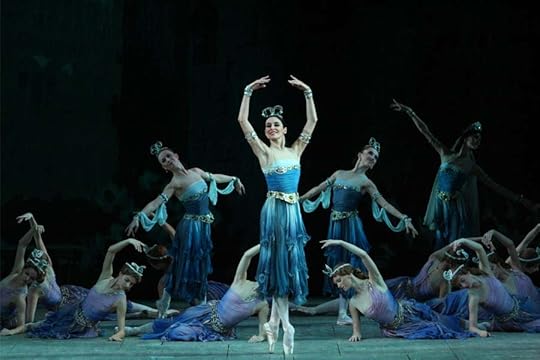
Pushkin’s epic has six Cantos as well as a Prologue and an Epilogue (both of these were added later) while Glinka’s opera has five Acts. The plot differs somewhat between the two and the order of the episodes has been adjusted given the constraint of sceneries changing only with each Act. Also, one character, the warrior Rogdai, is dropped in the opera. Glinka also introduced several ballets, with one in particular corresponding strikingly and beautifully with the very lyrical passage of Khan Ratmir being presented with ‘lovely damsels’ in a forest.


But there are other, more subtle, differences. One is the much more sensual and hedonistic tone of the poem (and Ratmir in the forest is one of them) which includes a few more insinuating sexual references. Another one, that provides the poem with an additional level of interest, is the direct intermissions of the narrator. This makes the fable a much more personal work since the reader is brought in almost as an accomplice.

Dear reader, I am much astray if
You have not guessed who that knight was.
…...
I babble nonsense, it is enough
Give me a moment to recover
.......
I care no more to be confined
To lonely toil, perfecting style,
Bent to a page,…….


The Narrator also seems keen to end the poem and some critics have found that Pushkin grew somewhat impatient with his poem towards the end of the composition.

How shall I end my lengthy story?
I’m sure you’ve guessed my dearest friend!
Since lately it’s being somewhat gory
You may be pleased to have an end
Where all is pleasant.


While reading the text I also paid attention to references outside its fantastic world, with a mention of Armida and Rinaldo out of Ariosto’s Rolando,

....then she found
Herself in gardens more enchanting
Than those in which Armida held
The Kinght Rinaldo captive, planting
Love in his heart, by love impelled.


and Scheherezade out of the Arabian nights,

..But enough
Someone’s described this kind of stuff
Long before me: Scheherezade.
I couldn’t measure up to her.


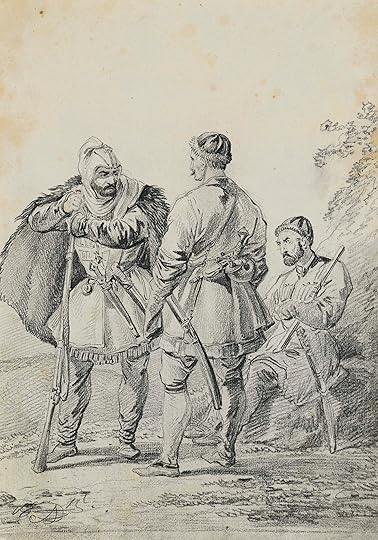
Or to the painter Vladimir Orlovsky (1777–1832)

.....up, Orlovsky, your swift pencil
And sketch that unexpected meeting
Of knights not bent on friendly counsel.


There is also humour in Pushkin’s writing. The best instance is when the Narrator makes somewhat fun of the heroine Luidmila when she, sunk in her sorrow, decides that she will fast herself to death.

Ludmila knows the way to die!
You do not tempt me in the least
With tedious music and this feast;
I’ll fast to death: no mead, no meat,
Shall pass my lips till life has ceased..”
And with these thoughts begins to eat.


This is not to say that the opera does not offer comic elements. One of Ruslan’s adversaries, Farlaf, is a parody – not only in the way he is characterized but in his musical part. His singing has the fast, abrupt, cutting lines and spitting words typical of Rossini’s light operas.

Another point at which the two works offer a parallel is in Ruslan’s monologue in the valley of death; it corresponds to one of the most captivating of Ruslan’s arias in the opera, “Oh pole!”. And if we saw that Glinka had included an homage to the dead writer in the lines of the court Bard, Ruslan’s monologue and its aria read and sound like a foreboding in the part of Pushkin.

Who implored heaven with his prayer?
Who deserved fame, but alas fell?
..
And possibly I too shall pass
In such a way into darkness!


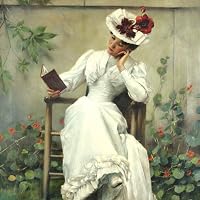
I had been avoiding Pushkin because I am not good in reading verse, but I have found this poem a great joy to read, even if it required two visits. The translation by D.M. Thomas seems wonderful, as far as I can judge.


Profile Image for Vishy.
806 reviews285 followers
October 11, 2019
I have wanted to read Alexander Pushkin's 'Ruslan and Lyudmila' for a long time and so I decided to read it now.

I discovered that I have three translations of the book. One of the interesting decisions I had to take was which translation to read. Initially, I thought I'll read all three. But after I started reading, I thought I'll read the one which appeals to me more, and which flows more smoothly for me, and reference back to the other two and read specific passages. This is what I did in the end. More about the translations in a while.

The story told in 'Ruslan and Lyudmila' goes like this. The young prince Ruslan is married to the beautiful princess Lyudmila. But on their wedding night, Lyudmila is kidnapped by the evil dwarf Chernomor. Ruslan and three other young men who are his rivals ride away the next morning in search of Lyudmila. Are they able to save Lyudmila from the evil dwarf? You have to read the story to find out.

I enjoyed reading 'Ruslan and Lyudmila' very much. Most of the characters were very interesting, but two of them were my favourites. When Ruslan rides through a Steppe-like plain, he spots a mountain in the middle. But when he comes closer, he discovers that it is a head, a huge head, and it is living. At present it seems to be sleeping. Ruslan takes his lance and pokes the giant head's nostrils. The head sneezes. What happens after that – there is a reason they say 'Don't poke the bear' – you have to read the story to find out. That head is one of the most fascinating characters in the story and one of my favourites. Another favourite character was one of Ruslan's rivals Ratmir. His life undergoes some major changes and when he comes out on the other side – you'll have to read to find out what happened, it is so amazing.

There are six cantos in the story – yes, the story is one long poem. At the end of the fifth canto, a heartbreaking thing happens. Why does this always happen in the penultimate chapter, in the penultimate episode, in the penultimate book? Why does someone always die in the ninth episode of 'Game of Thrones'? Why does one of the main characters die in the penultimate volume of the Harry Potter series? I am wondering whether Pushkin started this penultimate chapter thing. But I can't tell you what happened to whom in that chapter. That is for you to discover.

Now a word on the translations.

All the three translations were interesting and very different from each other. The first one by Roger Clarke was a bilingual edition. It had the Russian text on the left and the English translation on the right. It was an easy to understand translation and Clarke had explained in his note at the end of the book on why he translated the original into free verse and didn't use Pushkin's rhyming scheme. The second edition was a translation by D.M.Thomas. Thomas had tried to keep the rhyming scheme intact and he had explained in his introduction how he tried preserving Pushkin's tetrameter intact and why he tried doing that. This was very interesting, because here we have two translators who did opposite things and tried providing justification for the same, and they both sounded convincing! The third translation was by Jacob Krup and I felt that it was written in such a way so that it could appeal to children. The Roger Clarke translation was the one which flowed more smoothly for me, and that is the one I read, while comparing passages with the other two. I am giving below the first passage from the story from all the three translations. Tell me which one you like the most.

Translation 1 (by Roger Clarke) :

"By an arc of sea a green oak stands;
to the oak a chain of gold is tied;
and at the chain's end night and day
a learned cat walks round and round.
Rightwards he goes, and sings a song;
leftwards, a fairy tale he tells."

Translation 2 (by D.M.Thomas) :

"A green oak by the salt sea weathered;
And to it by a gold chain bound
A highly learned cat is tethered,
Who on the chain goes round and round :
Walks to the left – he tells a story,
Walks to the right – a song he sings."

Translation 3 (by Jacob Krup) :

"At the seashore's a golden chain;
That golden chain entwines an oak.
A learned cat around that oak
Day and night keeps his walk :
Goes to right – a song he sings;
Returning, left – a tale he brings."

So, who is the winner – Clarke or Thomas or Krup? :)

This is my first book by Pushkin. I can't wait to read more books by him. Have you read 'Ruslan and Lyudmila'? What do you think about it?
Profile Image for Çağdaş T.
175 reviews285 followers
June 8, 2017
İçinde büyücülerin, cadıların, Yunan ve Rus Mitlerinin bulunduğu destansı bir masalı lirik bir poema'ya dönüştürmüş Puşkin. Şarkılar arasında kopukluk- acelecilik hissettim ben. Grimm masallarındaki tadı dahi alamadım. Neyse ki bir solukta bitiyor.
Profile Image for Aylin.
176 reviews65 followers
August 31, 2021
Destansı bir şiiri bana senden başka kim okutabilirdi bilmiyorum. Seviyorum seni Sayın Puşkin 💜
Yorum bu kadar🙃
Profile Image for Suad Alhalwachi.
908 reviews103 followers
June 6, 2022
Poetry as a story and a long one too, but I loved it. I bet you the collection of these stories will be fantastic to read in its native language but the translation was great too. Ruslan has found his Ludmila, and also I found out that Snow White and the seven dwarfs had been written first by Pushkin as the princess and the seven champions. Always witches, step mothers, greedy Kings, and people who can never have enough of what life offers.

I tried to read it to the grandkids but they didn’t understand the poetry part. So I had to tell it as a story. A good book to keep as the art is amazing and reminds me of Khayam’s art done by the Iranian artists.

I thank Maram for gifting me with the book.

PS it took me long to finish it as I have many other books to finish before the year ends.

New year resolution: read a book at a time.
Profile Image for Edita.
1,585 reviews591 followers
August 1, 2023
Oh, if a mortar, in a love,
Loses a hope for his passion,
His life would have been a sad life,
But still with its continuation.
Yet, after many long a year,
Just to embrace his girl beloved,
The object of his wish, pine, tear,
And, aft a minute, her, so ardent,
To lose for ever… Oh, my friend,
I’d have been better with the dead.
Profile Image for Yasemin Günindi.
60 reviews4 followers
Read
October 4, 2020
Ruslan ve Ludmila, Puşkin’in ilk poeması ve Petesburg döneminin sona erdiği eseri. Altı şarkı ve son bir epilogdan oluşan bu destansı-masalsı poema, eğer benimki gibi sıradan bir hayatınız varsa günlük hayatta karşılaşmanızın olanaksız olduğu olay ve görüntülerle bezeli olmasına rağmen Puşkin’in betimlemeleriyle gözünüzün önünden geçip gitmesi hiç de zor olmayan bir hal alıyor. Bu sıra dışı olaylar karşısında, kahramanların verdiği “insancıl” tepkiler bunu kolaylaştırıyor. Puşkin’in yarattığı dünyada cadılar, büyücüler, konuşan kafalar yaşasa da karakterleri gerçek. Bu gerçekçilik, yazıldığı dil (halk dilinden birebir alınma ifadeler), bolca cinsellik içermesi, Rus olmayan birçok karakter olması ve iyi olup olmamalarının ırklarına bağlı olmayışı gibi şeyler dönemin soyluların pek hoşuna gitmemiş tabii. Ancak Kayhan Yükseler’in yazdığına göre, dönemin gençleri çok sevmiş. Ben, bu poema beşinci şarkıyla bitseydi çok şaşırırdım. Altıncı şarkıyla beraber tam bir Hollywood sonu yaşansa da Ruslan ve Ludmila’yı sevdim. Puşkin dinlediği halk masallarından yola çıkarak yazmış, bu mitolojik temellerden sembolleri yakalayıp çıkartmaktan zevk aldım.
Tüm poema boyunca aklımda Sen to Chihiro no Kamikakushi tarzı bir çizgi film/animasyon senaryosu yazdım, bitirdikten sonra The Stolen Princess adlı uyarlama bir Ukrayna animasyonu olduğu gördüm, daha çok Disneyvari. Fragmanlarından izlediğim kadarıyla Çernomor’un yanındaki Araplar konuşan kek-pasta-şekerleme olmuşlar. İthaf kısmında bir kediden dinlediğini söylüyordu anlatıcı, herhalde bu kediyi alıp masalın ortasına katmışlar. Korkunç renkli gözleri dışında güzel olabilir, bir şans vermek lazım.
Profile Image for Ozan .
131 reviews48 followers
August 31, 2023
oh... evrenin bilinci beni affetsin ki bunu yaptım. Puşkin'in şiirine 3 yıldız verdim... (heh)

Evet, beğenmedim, ama neden bir sorun, neden, neden ?

Ruslan ve Ludmilla ile dikkatleri üzerine çekti Puşkin, genç bir şair olarak. Şairliğine diyeceğim yok, adam çocuken bile gayet masalsı şiirler yazabiliyormuş gördüğünüz gibi, zaten kim Puşkin'in sairliğini eleştirebilir ki... Keşke Rusça bilsem de bu Rusya'yı mest eden şiirlerini adam akıllı okuyabilsem.

Ama, Puşkin bu şiiri yazdığında henüz çok genç, o yüzden bu şiir bilgelikten uzak biraz, hatta tam tersine bilgeliğe karşı... Musibet denilen büyücü ki şiir de bilge adamı temsil ediyor, güzel prensesi kaçırıyor. Bilgeler'e genelde malum olduğu için, kötü haber verirler doğruları söyleyerek, o yüzden dokuz köyden kovulurlar, bizim ata sözümüzün de dediği gibi, musibet olarak görülürler. İşte burda bu musibetlerden biri, kızı kaçırıyor.... Kuru iftra ya... Bilgeler kız kaçırmazlar, tamamen Puşkin'in çamur atması (heh) sonra ne oluyor peki, bilgelikten uzak ilkel asker bozuntusu Ruslan geliyor. Askerler, Bilgelerin zıttıdırlar. Geliyor musibeti öldürüyor, kızı kapıyor gidiyor. (heheh) Bak sen, askerler bilgelikten uzak, ilkel davranışları ile tabiki kendilerine karşı olan musibetleri öldürürler.

Puşkin, gideceğin daha çok yol var... Ama doğru yolu bulup büyük bir ''Müsibet'' şair olacaksın... ve ''Müsibet'' olduğun için günün birinde bir asker de bir düelloda seni öldürecek... Bütün ''Müsibetler'' aynı sonumu paylaşıyorlar yoksa... Üzücü... İlk şiirimiydi Ruslan ile Ludmilla bilmiyorum, ama Puşkin'in yaşamının sonuna paralel.
Profile Image for Sash Chiesa .
66 reviews54 followers
September 30, 2015
Had I been 15, I would've certainly fallen in love with or say fantasized about Ruslan and though I'm not, this poetical work has been successful in charming me. Pushkin's dedication, "Queens of my heart, you lovely girls, they're meant for you and only you" was something I felt throughout. He weaves Russian mythology and folklore in a vibrant manner. With beautiful and warm rhythms, mesmerizing narrative, Ruslan and Lyudmila is a delightful read. In Pushkin's own words, he, "covet(s) no one's compliments --just cherish the delicious hope that one of you, though furtively, might peep at these mischievous verses and feel a fluttering of love.", thusly it's an adorable fairy tale and that's that.
Profile Image for Steven Godin.
2,782 reviews3,373 followers
October 22, 2020

O wondrous genius of rhyme,
O bard of love and love's sweet dreaming,
You who portray the sly and scheming
Dwellers of hell and realms divine,
Of this inconstant Muse of mine
The confidant and keeper faithful!
Forgive me, Northern Orpheus, do,
For recklessly presuming to
Fly after you in my tale playful
And catching in a most quaint lie
Your wayward lyre....
Profile Image for Magdalen.
224 reviews113 followers
October 21, 2016
All in all a nice fairy tale, (written in a poem form)
BUT the vocabulary killed me. I didn't expect it to find it so hard.
Profile Image for Elentarri.
2,065 reviews65 followers
December 30, 2022
Completed in March 1820, Ruslan & Lyudmila is the second longest of Pushkin's completed poetical works.  This is a light-hearted and entertaining fantasy/fairytale narrative poem that tells of Ruslan's adventures while searching for his abducted bride, Princesss Lyudmila.  The plot makes use of a variety of tropes and characters from various Russian fairytales, such as the sorcerer, various Russian nature spirits, a shaman, and the kidnapped princess.  A fun little fairytale story in verse.

NOTE:  This review is for the Alma Classics dual language edition translated by Roger Clarke [ISBN: 978-1-84749-296-8].  The translation reads smoothly.  This particular edition has the Russian on the left page and the English translation on the right page.  There is also additional material that includes a biography of Alexander Pushkin and a brief history and context of the poem.
Profile Image for Jonathan Widell.
173 reviews30 followers
April 17, 2015
I read the English translation while listening to a Russian reader read it aloud on an audiobook. Pushkin's verse continues to astound me with its easy flow. Listening to a Russian read the original turns the experience into nothing short of magic. As a Finn, I found it amusing that the Finnish wizard plays such a crucial role in the story and saves the beleaguered Kiev from the barbaric Pechenegs by bringing the protagonist Ruslan back to life at the end of the story. The Finnish wizard is to Ruslan what Merlin was to King Arthur. Ludmila, Ruslan's legally wedded wife, who was kidnapped by the evil Chernomor before they consummated their marriage and whose liberation becomes his sole goal, is portrayed beautifully in such lines as:

Like some dread dream, oblivion
Ludmila chains. She cannot rise
And, in a stupor, moveless lies....
The soft, grey light of early dawn
Revives her, deep within her rouses
Unconscious fear and restlessness;
Sweet thoughts of joy her heart possess,
For surely her beloved spouse is
Nearby!
Profile Image for Ploppy.
43 reviews32 followers
March 24, 2022
Swords! Knights! Magic! Lovely damsels! Giant bodiless heads! Impotent evil dwarves with really long beards! Battles! Decapitations! Kind Finnish blokes! Witty asides by the author! And all in dazzling rhymed tetrameters!
Profile Image for Illiterate.
2,774 reviews56 followers
January 3, 2022
On one level, it’s a folk epic. On another, the poet’s framing voice affectionately teases both genre and audience.
Profile Image for Paçimuçka.
42 reviews26 followers
March 30, 2020
Kitabı satın alırken hakkında çok fazla bilgim ya da beklentim yoktu, bu yüzden kapak yazısında Rus edebiyatının ilklerinden olduğunu okuyunca beğeneceğimi ummuştum ancak sonuç hayal kırıklığı.
İçerdiği masalsı unsurlar ve o dönemin edebiyatında rastlanmayan karakter çeşitliliği bakımından bir "ilk" olması kitabı değerli kılmış olabilir ancak dümdüz bir edebiyat eseri olarak bakıldığında beni tatmin etmedi.
Olay örgüsü çok dağınık, bir ordan bir burdan bir şey okuyorsunuz. Rusçanın azizliği, zarfların cümle diziliminde belirli bir yeri olmaması Türkçe çeviride sorun yaratmış. Bazen bir cümle beş altı satır aldığı için kafanız karışıyor, cümlenin başını unutuyorsunuz, tekrar okumanız gerekiyor.
Masalsı unsur demişken, Puşkin bu kitapla kendini kanıtlamaya çalışmış gibi geldi bana. Rus folklorü, Yunan mitolojisi, Fransız halk hikayeleri derken masalsı saydığımız şeyler kocaman bir çorba olmuş. Hiçbir uyum yok atıf yaptığı unsurlar arasında.
Bir de aklıma takılan şey, kitabın tanıtımında neden inatla "poema" sözcüğünün kullanıldığı. Türk edebiyatında -benim bildiğim kadarıyla- eserin şekli manzum hikayedir.
Profile Image for Critical Sandwich.
409 reviews16 followers
December 27, 2023
A whimsical russian tale taking place sometime in late 10 century or early 11th century. Full of slavic folklore references and magic. I've always been impressed by Pushkin's rhythme and his way with words. The man might've been a degenerate, but he could write in rhyme. I didn't know quite a lot of words he used but it didn't lessen my enjoyment from reading it
Profile Image for rosshalde.
105 reviews3 followers
April 30, 2013
Ruslan ve Ludmila Puşkin'in yazdığı ilk önemli poemalarından sayılıyor. Yazar yaşadığı dönemde ortaya çıkan farklı bir siyasi düşüncenin etkisi altında olduğu için yazdıklarını - özellikle manzum biçiminde yazdıklarını- okurken az çok Rus kültür tarihini bilmek gerekiyormuş. Bugüne kadar 19. yy Rus edebiyatından pek haz etmedim, ama arka planı hakkında fikir sahibi olunca eserlere bakış açım değişti ve görmediğim şeyleri görmeye başladım. Bu açıdan baktığımda Puşkin'in bu eseri gerçekten yenilikçi yönü ile çağdaşlarının verdiği eserlerden sıyrılıyor. Bir yazarın neden büyük bir yazar olduğunu hakkındaki methiyelerden değil de eserlerini okurken fark etmeye başladığınız an gerçekten okuduklarınızdan bir tık daha fazla zevk almaya başlıyorsunuz.

Eser hakkında bir şeyler söylemek gerekirse;

Puşkin 1800lerin başında anayasal monarşiyi destekleyen, ulusalcı bir siyasi akım olan dekabristlerden etkilenmiş bir yazar olarak bu eserinde ulusalcı görüşünü yer yer göstermekten çekinmemiş. Bir anlamda Fransız etkisi altında kalan Petersburg eşrafına tepki olarak da görülebilecek olan bu akımın kültürel kolu Rus özüne dönüş, Rus milliyetçiliği, Rus köylüsü gibi kavramları yüceltmiştir. Bu da bir peri masalı formunda yazılmış bu eserde de kendini sık sık göstermekte. Örneğin;

"...Orada Rus ruhu var... Orası Rus kokuyor!", "Rus gücüne şaşıp kalan büyücü", "Teslim ol Rus gücüne" gibi dizeler de Rus milliyetçiliği rahatça görülebildiği gibi,

"...Sosyetenin ve dedikodunun unuttuğu ben,
Neva kıyılarından çok uzaklarda
Karşımda görüyorum şimdi
Kafkasya'nın gururlu tepelerini.
Yamacında kayalık uçurumların,
Yalçın dorukların üzerinde
Besleniyorum sessiz duygularla,
Vahşi ve kasvetli doğa tablolarının
olağan üstü güzelliğiyle..."


Dizelerinde de görüldüğü gibi Petersburg sosyetesinin yerden yere vururken tam olarak olmasa da halkçı denilebilecek bir anlayışı benimsemiştir.

Eserde Finli ve Hazar Hanı olan 2 karaktere de yer vermesi çoğu eleştirmen tarafından milliyetçiliktense dürüstlük gibi erdemleri öne çıkardığı şeklinde yorumlanmış. Ben bunu doğru bulmuyorum. Dekabristleri biraz araştırma fırsatına sahip olan herkesinde bilebileceği bazı şeyler var; Ruslar, yani dekabristler, Finli, Gürcü ve Sibirya'da yaşayan diğer tüm halkların Ruslaştırılması, Tatar ve Yahudilerin ülkeden kovulması, sürgün edilmesi hatta öldürülmesi düşüncesini barındırmaktaydı. En ılımlı dekabrist olan Volkonski bile yahudilerİ "iğrenç" olarak tanımlayabilecek cesareti göstermiş bir kimseydi. Dolayısıyla Puşkin'in burada Finli ve Hazarlı karakterlere yer vermesi ırkçılık karşıtı olarak değerlendirilemez. Kaldı ki eserin bir çok yerinde bu karakterler sadece Rus prens ve prenseslerine hayranlık duymak ve yardım etmek, kul köle olmak için var olmuştur.

Yıllarca Tatar boyunduruğunda kalmış Rusların milliyetçi kompleksleri bu eserde de Peçeneklerle kendini göstermiş;

"..Çarpıştılar..."Geber, Gavur!" naralarıyla
Dehşet sarıyor Peçenekleri;
Akınların çılgın öğrencileri
Sesleniyorlar dağılan atlarına,
Direnmeyi göze alamayarak daha fazla,
Tozlu savaş alanından vahşi çığlıklarla,
Cehenneme mahkum düşman
Kaçıyor Kievlilerin kılıcından;
Rus kılıcı düşman sürüsünü cezalandırıyor;
Kiev bayram ediyor..."


Yine aynı şekilde;

"...Ruslan'dı o. Tanrısal fırtına gibi
Çökmüştü bizim yiğit, Basurman'a.."
dizesindeki "Basurman" terimi müslümanlar için kullanılan gavur gibi bir hakaret kelimesidir.

Yine belirtilmesi gereken başka bir şey ise Puşkin'in bu ve başka bir çok masal formunda hikayesinin kurgusunu ve bazı karakterlerini "binbir gece masalları" ve "Grimm masalları"ndan araklamasıdır. Hatta bunu ilk olarak Anna Ahmatova dile getirmiş fakat doğal olarak Ruslardan büyük tepki görmüştür.

Tabii bunlar Puşkin'in edebi yeteneklerine bir eleştiri olamaz, sonuç olarak anlatmak istediği ve vermek istediği mesajları çok net bir şekilde vermiş. Anlatımını sade tutarak dönemin bir çok eleştirmeninden tepki almıştır "kaba bir köylü şiiri" şeklinde cümlelere maruz kalmıştır. Bu şiirle Klasiszm akımını yenilgiye uğrattığı söylenen Puşkin, hocası Jukovski'ye şu dizelerde yer verir;

"...Bağışla beni Orpheus'u kuzeyin,
Bu eğlenceli hikayemde
Şimdi peşinden uçup gittiğim
Ve kaprisli esin perimin lirini de
Bu güzel yalanla açığa vurduğum için."


Burada Kuzeyin Orpheus'u derken hocası Jukovski'yi kastetmekte.

Son olarak bu kitabın en önemli yönü olarak belirtilen şeye değinmeden geçmek olmaz. Cinsellik kavramına farklı bir bakış açısı getiriyor yazar. Bugün için değil ancak yazıldığı dönem itibari ile ahlaksız sayılabilecek bazı durumlara vermesi dönemin bir çok eleştirmenini rahatsız etmiş. Prenses Ludmila'nın evlendikten sonra kaçırılmasıyla Kral kızını getirenle onu evlendireceğini söylemesi bir çok eleştirmence "evliliğin cinsel rekabete engel olmadığının vurgulanması" olarak yorumlanmış. Ben açıkçası bu açıdan pek dikkat etmedim.

Yalnız şiirin çevirisi ve muhteşem çevirmen notları için Kayhan Yükseler'e minnet borçlu olduğumu belirtmek isterim son olarak. Eğer kendisinin dipnotları olmasaydı bu eseri okumak için elimin altında bir mitoloji sözlüğü bulundurmam gerebilirdi.

Profile Image for Preetam Chatterjee.
6,737 reviews355 followers
December 8, 2025
This work is pure enchantment — a wild, youthful, mischievous poem that feels like the lovechild of a fairy tale, a satire, a ballad, and a magic trick.

If Eugene Onegin is Pushkin’s mature masterpiece, then Ruslan and Ludmila is his joyous announcement to the world: “I’m here, I’m brilliant, and I’m going to reinvent Russian literature while having the time of my life.”

The poem opens with that iconic line — the sea, the oak, the learned cat — a line that Russians grow up reciting the way Bengalis recite Tagore.

The moment you read it, you know you're entering a world where rules bend, logic dances, and imagination reigns.

Pushkin is still young here, but his control of rhythm and narrative swagger is already dazzling. He writes like a prodigy who knows exactly how gifted he is.

The plot itself is charmingly chaotic: Ludmila, the princess, is abducted by the sorcerer Chernomor, and Ruslan sets out to rescue her, competing with three rival suitors. On paper, it’s classic folklore material.

But Pushkin isn’t retelling — he’s remixing. Satire runs through every stanza. Heroism is both celebrated and mocked. Magic is both real and ridiculous. The poem moves between drama and comedy with the agility of a cat — that same cat from the oak tree, perhaps, spinning stories.

Pushkin uses this fantastical plot to poke fun at literary conventions, social order, romance clichés, and even himself.

The narrator constantly breaks the fourth wall. Characters argue with narrative destiny. It’s meta before “meta” was a thing — Pushkin basically invented the Russian version of the postmodern wink.

What strikes you is the poem’s kinetic energy. Every canto sparkles with movement — duels, quests, enchantments, flying swords, talking heads.

The language is lush but not heavy. Pushkin writes with a lightness that feels like he’s tossing pearls in the air just to see how they catch the sun.

And yet beneath all the mischief, the poem radiates a genuine love for Russian folklore. Pushkin isn’t mocking tradition — he’s revitalizing it. He takes the raw material of old tales and injects it with emotional warmth and literary elegance.

He’s doing for Russian myth what Tagore did for Bengali folk tradition — elevating it without sterilizing it.

Ruslan himself is an endearing figure — brave, loyal, sometimes foolish, always human. Ludmila is spirited rather than passive, though Pushkin mostly keeps her within the fairy-tale frame. Chernomor, with his long beard and comic villain energy, is iconic.

Even minor characters feel alive, as if they’ve stepped out of a storyteller’s memory.

What’s most impressive is how Ruslan and Ludmila sets the stage for everything Pushkin would later achieve.

You see the lyrical grace, the narrative precision, the playful irony — all embryonic but unmistakable. Reading it is like watching a star ignite.

The poem remains one of those rare works that is fun, literary, and foundational all at once. It’s mischievous magic you never want to outgrow.

Recommended.
Profile Image for Marc Gerstein.
600 reviews202 followers
May 11, 2017
I’ve heard this characterized as a fairy tale or a children’s story and I can see where it has a ton of appeal on that basis. And, we know, Glinka thought it had enough adult reach to have written an opera based on it (and movie adaptations followed). But beyond all that, I think this is an incredible and important literary work in and of itself.

It can always be debated whether a work of literature is best appreciated by focusing entirely on the work standing on its own, versus reading it with a full sense of the historical and cultural context around it. I’m a both-of-the-above guy and “Ruslan and Ludmila” is a good case in point for this approach. I started it by approaching it entirely on its own. But as I kept going, I started to infer bigger-picture issues I saw Pushkin addressing and then, having looked at the context afterward, saw that I was spot on.

He was staking out a position in an important dilemma being addressed by the Russian literary community in the wake of the defeat of Bonaparte, the extent to which Russian literature should stick with its unique Slavic roots or adapt Western forms. Pushkin pushed for the latter.

“Ruslan and Ludmila” isn’t just a folksy tale of love, bravery, chivalry, etc. It’s a sharp biting send-up, or satire, of the genre and often it’s laugh-out-loud funny and it seems to have been intended by Pushkin to have been seen as such, at least among St. Petersburgh writers and intellectuals if not by children; sort of like Gulliver’s travels – a great adventure story built on the foundation of sharp satire. The clue is that fairy-tale writers don’t invoke Homer, but Pushkin does and in a way that outdoes ABCs “The Bachelor” series.

There’s always the issue of poetry in translation. Yeah, I get it. By not knowing Russian, I’m getting less than 100%. That’s life. Many who read Shakespeare, Dickens, Homer, Virgil, Dante, etc., etc., etc., etc. are in the same boat. I’ll take two thirds of greatness over 100% of mediocrity any day. Even so, the translation I read did seem to at least try to honor key poetic devices Pushkin used, such as his rhyme scheme switch-ups as he wanted to variously slow down or accelerate the pace.
Profile Image for Alp Turgut.
430 reviews141 followers
August 4, 2018
Puşkin'in eski ve epik bir Rus masalını konu aldığı "Ruslan i Lyudmila / Ruslan and Ludmila / Ruslan ve Ludmila ", cesur şövalye Ruslan'ın kaçırılan prenses Ludmila'yı şeytani büyücü Çernomor'dan kurtarışını anlatan harika bir destansı şiir örneği ve Puşkin'in en ünlü iki şiirinden biri. Destansı şiir olması ve fantastik havası sebebiyle Homeros'un "İlyada" ve "Odysseia" başyapıtlarının izinden giden eserde Puşkin'in şiir diline hayran kalıyorsunuz. Sürükleyici ve zevkli bir okuma keyfi sunmasının yanında ilginç bir halk hikayesini okuyucuyla buluşturan şiir, kesinlikle Puşkin'in okunması gereken eserleri arasında.

06.05.2015
İstanbul, Türkiye

Alp Turgut

http://www.filmdoktoru.com/kitap-labo...
Profile Image for Anna Kļaviņa.
817 reviews207 followers
January 15, 2023
On seashore far a green oak towers,
And to it with a gold chain bound,
A learned cat whiles away the hours
By walking slowly round and round.
To right he walks, and sings a ditty;
To left he walks, and tells a tale....

У лукоморья дуб зеленый;
Златая цепь на дубе том:
И днем и ночью кот ученый
Все ходит по цепи кругом;
Идет направо - песнь заводит,
Налево - сказку говорит.

Masterpiece. I grow up listening to this poem and watching movie. (http://www.youtube.com/movie?v=2UoO2t... with English subtitles)

Profile Image for Karen.
300 reviews
June 3, 2018
Pushkin is so very enjoyable to read, and so easy. This volume is beautiful, with the original Russian on the left, and English translation on the right. The note on the translation was really interesting, and made me appreciate the complexity of making a great Russian work so easily accessible in English, but it also reinforced how much I'm missing, not being able to *hear* its original lyricism.
Profile Image for Molin.
759 reviews
December 18, 2021
O wondrous genius of rhyme,
O bard of love and love’s sweet dreaming,
You who portray the sly and scheming
Dwellers of hell and realms divine,
Of this inconstant Muse of mine
The confidant and keeper faithful!
Forgive me, Northern Orpheus, do,
For recklessly presuming to
Fly after you in my tale playful
And catching in a most quaint lie
Your wayward lyre....

---

I didn't expect to enjoy read this book but here i am. I really like it. Weird fairytales i would say but who cares
Profile Image for N.
159 reviews8 followers
December 2, 2011
I used to think that this was a lovely fairy tale, but then I met a Pushkin scholar who told me that this is actually a story of sexual perversion with major homo-erotic undertones. I like it much better now.
Profile Image for Henry Heading.
93 reviews
June 1, 2021
The fact that Pushkin wrote this at 22 is incredible. Ruslan and Lyudmila has it all: Poetry, romance, redemption, sexual innuendos, comedy, drama, heartbreak, mythology, Giant heads and most importantly a guy with a magic beard!!
Profile Image for Ayse.
111 reviews2 followers
August 24, 2025
Prens Vladimir'in kızı Ludmila ve yiğit şövalye Ruslan'ın evlendiği gün, Ludmilla bir büyücü tarafından kaçırılır. Bunun üzerine Ruslan ve üç şerefsiz şövalye Ludmila'yı kurtarmak için bir maceraya atılırlar.
Bu üç şerefsize ben Farfara, Rutkay ve Sikmir diyorum. Ula karı evli sizin hâlâ gözünüz var. Valla bu her istediği kadın kendinin olacakmış gibi davranan davarlardan evlenince de kurtulamıyoruz, Çarlık Rusya'sında bu böyle diye neden şaşırayım? Bir de Vladimir diyor ki kızımı kim getirirse onla evlendiririm. Babacığım kızın evli ya hani??? Sen evlendirdin? Ruslan'ı sen seçtin? Üstelik Ludmila, Ruslan'ı seviyor? Bu durum sende bir şeyler uyandırıyor mu? Yok... Ha Ludmila ha oturanın oyuna devam ettiği sandalye kapmaca. Puh sana yazıklar olsun Güneş Baba!
Bu üç şerefsiz, minnoş âşık Ruslan ve cüce büyücünün komik, mitoloji ve büyü dolu masalını eğlenerek okudum. Puşkin'in eserlerini ne zaman okusam hep keşke Rusça bilseydim diye düşünürüm, bu kitabın her satırında bunu düşündüm. Maalesef Kiril zor ve ben bunun için çok yaşlıyım. Bir de ne zaman Ruslan ve Ludmila'yı düşünsem arka fonda Lana del Rey - Cherry çalıyor, bu ikisine mi yazdın mi şarkıyı doğru söyle kadın?
Profile Image for Sandor-Martin Filip.
20 reviews2 followers
May 17, 2020
A fost un poem captivant, amuzant și foarte plăcut la citire. Este asemănător cu un basm românesc, dar cu o atmosferă mai veselă, deși nu mai puțin grotească pe alocuri.
Profile Image for Aredas.
18 reviews1 follower
September 26, 2021
Красиво подобраны слова. Изумляешься как так просто можно написать такой сложный текст.
Я как и большинство народа дальше предисловия не заходил... а, жаль... ;)
Displaying 1 - 30 of 154 reviews

Can't find what you're looking for?

Get help and learn more about the design.