

What do you think?

Skogluft (Forest Air): The Norwegian Secret to Bringing the Right Plants Indoors to Improve Your Health and Happiness
Why do we spend so much time indoors, which is not our natural habitat? Why have trends such as forest-bathing become so popular? The answer to the last question lies in the proven benefits we obtain from our connection with nature – from increased productivity to feelings of happiness and an enhanced sense of wellbeing.
For millions of years, humans developed in natural environments, in close contact with sunlight, vegetation and fresh air. But most of us spend 80-90% of our time indoors far from the environments for which we are naturally suited and in which we evolved. Skogluft’s mission is to bring a natural living environment back into your home and workplace.
Based on years of research data on the impact between nature and people, gathered together by a Norwegian mechanical engineer, Jorn Viumdal, Skogluft reveals how installing a wall of easily available plants in your home environment can dramatically improve health, strengthen the immune system and increase productivity. The plants are easily available, cheap to buy and simple to look after.
Here is a low-tech solution to a problem created by our increasing dependence on a world dominated by high technology. Learn the simple techniques to beautify your world and create air you can live with all year around and experience the health and wellness effects for yourself.
For millions of years, humans developed in natural environments, in close contact with sunlight, vegetation and fresh air. But most of us spend 80-90% of our time indoors far from the environments for which we are naturally suited and in which we evolved. Skogluft’s mission is to bring a natural living environment back into your home and workplace.
Based on years of research data on the impact between nature and people, gathered together by a Norwegian mechanical engineer, Jorn Viumdal, Skogluft reveals how installing a wall of easily available plants in your home environment can dramatically improve health, strengthen the immune system and increase productivity. The plants are easily available, cheap to buy and simple to look after.
Here is a low-tech solution to a problem created by our increasing dependence on a world dominated by high technology. Learn the simple techniques to beautify your world and create air you can live with all year around and experience the health and wellness effects for yourself.
287 pages, Kindle Edition
First published January 1, 2018
About the author
Jørn Viumdal
1 bookJørn Viumdal began his career as a mechanical engineer, but in 1987 he changed his life and contacted NASA, which was developing research on the well-being of astronauts on space stations. Together with the University of Environmental Research and Bioscience in Ås, Norway, he continued his career studying the relationship between man and nature, with the aim of discovering how to turn indoor spaces into healthier rooms. Since then, Jørn has been working to bring elements of nature into homes, schools, daycares and offices.
Jørn Viumdal created the first company, Greentime Ås in Norway dedicated to creating a practical working environment based on research data on the impact between people and nature. SKOGLUFT ("Forest Air" in Norwegian) is the culmination of everything Jørn has studied and practiced for more than 30 years.
He works with the University of Environmental Research and Bioscience in Norway. -Google Books
Jørn Viumdal created the first company, Greentime Ås in Norway dedicated to creating a practical working environment based on research data on the impact between people and nature. SKOGLUFT ("Forest Air" in Norwegian) is the culmination of everything Jørn has studied and practiced for more than 30 years.
He works with the University of Environmental Research and Bioscience in Norway. -Google Books
Ratings & Reviews
Friends & Following
Create a free account to discover what your friends think of this book!
Community Reviews
Displaying 1 - 30 of 50 reviews

January 22, 2020
This might be the dumbest book I've ever read. It's 300 pages long, and the entire thing - the entire thing - is he wants you to hang pothos on your wall. Pothos! The official plant of college freshmen! And that's it, that's the book. It's so absolutely crammed with filler - like airport self-help book filler. "I'm going to tell you a story now. Once I met a woman who was so sad that she had no hope at all. But after I put some pothos on her wall, her entire life turned around! In fact, Norwegian doctors are positive that hanging some pothos on your wall makes your lungs work up to 80% better." It is so, so, so, so dumb.
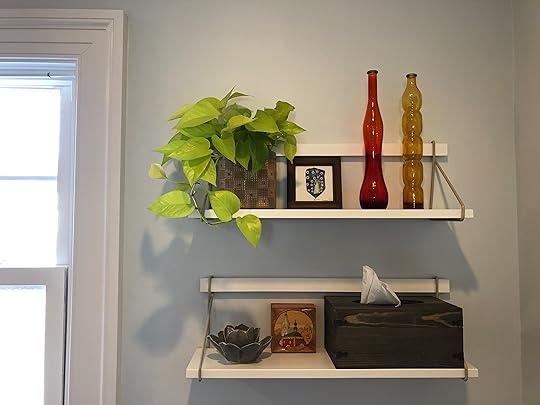
Here's a neon pothos in our bathroom. I love it! I don't need a book about it!
fucking pothos on your wall, unbelievable. That's this guy's job! He's, like, pothos on your wall guy! He goes around to companies and hangs fuckin' pothos on their walls. Someone was like you should write a book about this, it's so great. He was like the thing with that is, it's really only one sentence? It's just, like, "Hang some pothos on your walls," and that's it? But they were like, I'm sure we can get a book out of this. But they were wrong! This is 300 pages stitched together, but it's not a book.
Here's a neon pothos in our bathroom. I love it! I don't need a book about it!
fucking pothos on your wall, unbelievable. That's this guy's job! He's, like, pothos on your wall guy! He goes around to companies and hangs fuckin' pothos on their walls. Someone was like you should write a book about this, it's so great. He was like the thing with that is, it's really only one sentence? It's just, like, "Hang some pothos on your walls," and that's it? But they were like, I'm sure we can get a book out of this. But they were wrong! This is 300 pages stitched together, but it's not a book.

June 17, 2019
This could've been an article... not an entire book.

May 10, 2021
Liker generelt bøker om «biophilia» og skogbading, men denne kunne vært kortere og mindre insisterende på å overbevise leser om at skogluft er bra for deg. Jeg var allerede overbevist og ville heller se kule bilder av oppsettet av plantene enn gjentagende avsnitt om huleboere og studier! (Selv om dette er et viktig poeng!)

August 29, 2021
I cannot believe I just spent several hours reading three HUNDRED pages that could effectively have been one sentence: put up a wall of pothos plants and be happier.
(It has to be pothos, apparently. All other plants can go screw themselves, because they won't work to make you happy. POTHOS. Oh, and here's an essay on forest bathing written by a Japanese guy, and they know happiness.)
UGH.
Two stars because a) it's hard to write a book, b) it can't be re-stated enough that being outside is good for the soul, and c) they didn't kill a dog. (I give one star to those.). I didn't light it on actual fire, so it wasn't offensively bad, but was Offensively Bad Adjacent, for sure.
Skip this one, y'all. Find a blog somewhere about nature deficiency or, y'know, about how to grow a pothos plant. (hint: it's the easiest plant ever. put water on it every week or so, and voila. I just saved you $26.95.)
(It has to be pothos, apparently. All other plants can go screw themselves, because they won't work to make you happy. POTHOS. Oh, and here's an essay on forest bathing written by a Japanese guy, and they know happiness.)
UGH.
Two stars because a) it's hard to write a book, b) it can't be re-stated enough that being outside is good for the soul, and c) they didn't kill a dog. (I give one star to those.). I didn't light it on actual fire, so it wasn't offensively bad, but was Offensively Bad Adjacent, for sure.
Skip this one, y'all. Find a blog somewhere about nature deficiency or, y'know, about how to grow a pothos plant. (hint: it's the easiest plant ever. put water on it every week or so, and voila. I just saved you $26.95.)
February 19, 2021
I found this book on a sale price at Barnes and Nobles and based upon the cover and the title which indicated to me I would learn a little more about another culture's way of living, I purchased it. When I started reading it, I did come across the same feelings I have noticed by other readers: It's a lot of build up and a lot of reading material just to say plant a wall of pothos plants. But since I wasn't really reading this book for a DIY project, I actually didn't mind that he wrote so much building up to his DIY project because I enjoyed the journey getting to that chapter. I loved reading his perspective on how we have slowly become more caveman like than our "caveman" ancestors. I love the studies he talks about. I love the design of the book. I loved how it encouraged me to be in nature more. I loved how it talked about lighting. I really enjoyed it. So if you are picking it up just for the ending, the solution, the directions, just go online. But if you are interested in how Norway has started incorporating plants into their spaces, how society has turned its back on nature and inadvertently turned its back on thriving, how perhaps pills aren't the magical solution and living in balance with God's creation just might be the remedy you need, this is a good book to get started on your quest.
What I loved most:
I do love that he gives step by step directions how to make the wall and where to get the supplies at
What I didn't love as much:
Honestly, just that the hardcover did have problem staying open.
Recommend for:
Ages 18+ only because I don't think younger ages may care about the studies
Homeowners, renters
Homeschoolers
Office Workers
Teachers
Architects
Interests in nature
What I loved most:
I do love that he gives step by step directions how to make the wall and where to get the supplies at
What I didn't love as much:
Honestly, just that the hardcover did have problem staying open.
Recommend for:
Ages 18+ only because I don't think younger ages may care about the studies
Homeowners, renters
Homeschoolers
Office Workers
Teachers
Architects
Interests in nature

December 7, 2019
2.5 stars
I saw Skogluft Forest Air at my local library, and because I tend to love all things related to Scandinavia, nutritious movement, and biophilia, I checked it out.
I expected to love the layout as much as the content, but...
The layout is odd. It is sparse, yet cluttered. I cannot quite explain it, but the book design irked me.
More irksome than the design is the content; it is so bloody redundant and repetitive that I wanted to scream. I skimmed through the unnecessarily long (287 pages) book.
I really wanted to love Skogluft Forest Air.
I saw Skogluft Forest Air at my local library, and because I tend to love all things related to Scandinavia, nutritious movement, and biophilia, I checked it out.
I expected to love the layout as much as the content, but...
The layout is odd. It is sparse, yet cluttered. I cannot quite explain it, but the book design irked me.
More irksome than the design is the content; it is so bloody redundant and repetitive that I wanted to scream. I skimmed through the unnecessarily long (287 pages) book.
I really wanted to love Skogluft Forest Air.

September 11, 2020
Could have been written in 30 pages rather than a whole book. Perhaps more unique images, plant variations, or specific purchasing instructions
with images might help?
with images might help?

December 19, 2021
This book is 287 pages long, and if it were 283 pages shorter it would still be a waste of space and time. You try to be spontaneous and pick a book off a shelf on a lark, without looking at reviews, and you get burned by shit like this. It looks great, it's jumping off the Hygge trend of course valorizing anything scandinavian by putting a random scandinavian word on the cover and calling it "the art of fuckall", and I admit I'm a sucker for it, so I grabbed it. It turns out it's 300 pages of him telling you to put shitty pothos on your wall (the thing on the cover), and why that's good for you. The "product" is so boring! Pothos are so boring! The studies he discusses in glacial tempo are boring!!!! Reading this book stressed me out more than any stupid plant wall would ever relax me. If you want an actually interesting book about keeping houseplants, read The New Plant Parent: Develop Your Green Thumb and Care for Your House-Plant Family.

December 18, 2019
Far longer than it needed to be, the actual "technique" is buried in pieces amid anecdotes, and there's way too much woo-woo for my taste. The Scandinavian design porn photos were nice, though.
The entire meat of the book: buy 20+ Golden Pothos plants, make sure they get enough light and water to thrive, and maybe they'll make you feel better in some intangible way. (Note that much of the science Jørn likes to cite doesn't actually support — and often contradicts — his claimed benefits. And you'll probably fail miserably with his prescribed three-week watering scheme in the forced-air HVAC hell that is America. Water as needed, my babies; we're not in Oslo anymore.)
But hey, it got me to buy more houseplants to make a cool-looking plant wall, so it wasn't a total loss.
The entire meat of the book: buy 20+ Golden Pothos plants, make sure they get enough light and water to thrive, and maybe they'll make you feel better in some intangible way. (Note that much of the science Jørn likes to cite doesn't actually support — and often contradicts — his claimed benefits. And you'll probably fail miserably with his prescribed three-week watering scheme in the forced-air HVAC hell that is America. Water as needed, my babies; we're not in Oslo anymore.)
But hey, it got me to buy more houseplants to make a cool-looking plant wall, so it wasn't a total loss.

July 19, 2021
Literally a book trying to sell a product. This was a waste of my time and money.
September 4, 2019
As other reviewers mentioned, it is a long book. What I loved though was the way that it is formatted allows you to read only the highlights and bullet points. This worked fine for me for the first 5 chapters, especially since I've read the previous studies (NASA, etc.) on the effects of plants cleaning the air and the need for light. From chapter 6 on, I read the whole chapter since these had more to do with the nuts and bolts of how to do the system.
I will definitely be implementing this in a couple of rooms in my house. And he does talk about how to make this work if you can't attach things to walls, such as in a rental.
The book style is somewhat repetitive, but the info is important and the process to make a Forest Air wall is easy. That's why I gave it 4 stars.
I will definitely be implementing this in a couple of rooms in my house. And he does talk about how to make this work if you can't attach things to walls, such as in a rental.
The book style is somewhat repetitive, but the info is important and the process to make a Forest Air wall is easy. That's why I gave it 4 stars.

October 14, 2019
This book read like a marketing funded white paper to me. I like the ideas presented but did not find much depth given the length of this book. I thought the title was one of the more interesting aspects. I think this book could have been improved by presenting more, varied ideas, such as different plants, wall mounting structures, interior design/architecture, discussing the research articles in more detail, etc. In the end I thought it was fairly repetitive and a missed opportunity to explore the concept deeply.
January 12, 2021
90% of this book is trying to sell you the book, 9.5% is good graphics, 0.5% is the information you are reading it for.

May 23, 2021
It's like a way-too-long blog post that pretends to be 'deep and innovative'. But it's worse - it's a book.

June 27, 2020
Mielenkiintoisia lauseita:
Kuinka paljon aikaa arvelet meidän viettävän sisätiloissa tavallisena arkipäivänä? Useat eurooppalaiset ja amerikkalaiset tutkimukset osoittavat, että vietämme 90 prosenttia ajastamme sisällä. 90 prosenttia!
Luonnonpuute on todellinen taudinaiheuttaja. Viherilma on kuuri. Molemmat asiat on todistettu tieteellisesti.
Jos astumme huoneeseen ja tunnemme sen vaikuttavan kuolleelta, suljetulta tai pimeältä, mikään designsohva tai tyylikäs nojatuoli ei pysty vakuuttamaan kehoa päinvastaisesta. Ajattelemme ehkä sen olevan kuvittelua, haukottelemme hieman, tunnemme epämääräisen pakoreaktion ja heitämme epämiellyttävyyden mielestämme. Niinpä väsymys, alakulo tai ärtymys tulevat vasta jonkin ajan kuluttua. Eivätkä ne ole vain tunteita. Kyseessä on elimistön puolustusmekanismien hieno ja tarkka analyysi, ja jos sinulla ei ole saatavilla muunlaista tietoa, sitä on uskoakseni viisasta kuunnella. Reagoimme erityisesti tullessamme sisätiloihin, koska luola, talo tai asunto eivät ole pysyviä paikkoja. Ne ovat kärjistetysti paikkoja, joihin menemme, jotta emme tulisi syödyiksi. Luonnonoloissa voi olla melkein yhtä vaarallista tulla suljetuksi sisälle kuin kulkea puolustuskyvyttömänä ulkona.
Sekä kouluissa että päiväkodeissa lapset ovat paljon sisällä, varsinkin kylmänä vuodenaikana, kun on jo ennestäänkin pimeää. SIksi on tärkeää muistaa, että lapset reagoivat huonoihin ympäristöihin yhtä vahvasti kuin aikuisetkin. He eivät valita tapetin kuosista tai pulpetin väristä. Ei, se näkyy suoraan käytöksessä. Kuolleet huoneet ja huono valaistus aiheuttavat väsymystä, joka puolestaan tekee lapsista uupuneita ja aggressiviisia. Koska lapset eivät tiedä, mikä on hullusti, he eivät pysty säätelemään ongelmallista käytöstään tai selittämään, miksi he väsyvät ja uupuvat. Lapsilla ei ole mitään keinoa ilmaista tätä vastenmielisyyttä, koska lasten aivot keskittyvät oppimaan, kehittymään ja sopeutumaan 24 tuntia vuorokaudessa.
Useimmilla on tunne, että todellinen maailma on ulkona ja että oikeastaan olemme siellä enemmän. Ehkä se piti paikkansa 200 vuotta sitten, mutta kuten muistat, ei enää. Olemme menneet sisälle ja lukinneet oven, ja luonnonpuutteesta on tullut normaalitila. Ja muuten - kun puhumme kaukaisista esi-isistämme, kutsumme heitä mieluusti hieman halveksivasti luolamiehiksi. Entä miksi kutsuisit ihmistä, joka vietätä sisätiloissa 90 prosenttia ajastaan? Niin, juuri siksi.
Kodin ulkopuolinen elämä asettaa meille tiukkoja vaatimuksia. Tarvitsemme aikaa kotona käsitelläksemme kokemaamme ja valmistautuaksemme kohtaamaan maailman uudelleen. On tärkeää saada sisätiloissa oikeita virikkeitä, jotta saa mahdollisuuden toipumiseen ja terveyden ja tarmon palauttamiseen. Se ei tapahdu kalliin tekniikan tai ylenpalttisen luksuksen avulla, vaan aivan yksinekrtaisesti niin, että ympärillämme on oikeita luonnon elementtejä.
Yhteenvetona voidaan todeta: Vehreä ympäristö ja keinotekoinen päivänvalo vähensivät terveysongelmia selvästi.
Päänsärkyä ja muita ongelmia ei ole tarkoitettu ihmiskehon normaalitilaksi, vaan varoitusmerkiksi ulkoisista rasituksista, vaarallisista elintavoista ja huonosta ympäristöstä. Kun ympäristö on kunnossa, varoituksia ei tarvita.
Luonnonpuute saa meidät sairastumaan, ja kasvien ja päivänvalon lisääminen saa meidät taas tervehtymään. Ehkä ajattelet tämän olevan liian hyvää ollakseen totta? Uskotko, että tämä on vain koehenkilöiden kuvittelua? Uskon voivani vakuuttaa sinut, ettei asia ole näin. Mietipä, mitkä käyttäjäryhmät osallistuivat tutkimuksiimme. Ensinnäkin koululaiset ja päiväkotien lapset. Lapset eivät ole kiinnostuneita sisustuksesta eivätkä usko kasvien parantavaan voimaan. He eivät tienneet, että kasveilla pitäisi olla mitään vaikutusta, eivätkä luultavasti edes ajatelleet niitä. Jos kasvit toimivat, meidän pitäisi tarkkailla ennen kaikkea heidän käytöstään. Sen me teimmekin. Tutkimus osoitti, että lapset keskittyivät paremmin, stressi väheni, ja luokissa oli rauhallisempaa ja vähemmän hengitystieongelmia, päänsärkyä ja väsymystä. Lisäksi henkilökunta ja opettajat kertoivat ongelmatilanteiden ja aggressioiden vähentyneen, sosiaalisen ympäristön parantuneen ja sairauspoissaolojen vähentyneen. Lapset kokevat välittömästi aisteillaan ja reagoivat kehollaan. Jos siirrymme erääseen toiseen käyttäjäryhmään, lääkäreihin, kukaan ei taida olla yhtä varpaillaan huuhaan ja valetieteen suhteen kuin he. Saimme silti aikaan saman vaikutuksen siellä, missä maan terävimmät aivot ovat skeptisinä läsnä.
Mikä saa kasvit ja valon tehoamaan? Ensimmäinen prosessi on psykologinen. Tuoreiden kasvien läsnäolo näyttää vievän meidät rauhan ja tyytyväisyyden tilaan ja hillitsevän stressiä. Toinen on ilmaa puhdistava vaikutus. Kolmas on valaistus. Saamme päivänvalosta vahvistuksen sille, että on oikein olla hereillä.
Urbaani elämäntapa on ollut maailmanlaajuinen menestystarina. Näemme kuitenkin nyt, että monet ihmiskunnan edistysaskelien nousevat käyrät eli elinaika, elämänlaatu ja terveys junnaavat paikoillaan. Meillä on jonkinlainen miettimistauko. Meillä on myös uudenlaisia vaivoja. Väsymys, stressi ja hengitystieongelmat ovat koko läntisen maailman kansantauteja. Olen osoittanut sinulle, että luonnonpuute on yksi syistä. Mitä sille voi tehdä? Yksi vastaus on luonnon tuominen lähiympäristöihimme.
Tavalliset huonekasvit imevät joitakin kuormittavimmista myrkyistä, joita on päivittäisessä ympäristössämme. Miksi sillä on meille merkitystä, kun pitoisuudet ovat yleensä niin pieniä? Tässä yhteydessä on tärkeää tietää, että ihmiset pystyvät havaitsemaan eron jo vähäistenkin pitoisuksien kohdalla. Koemme terveydentilamme paranevan, kun näiden haitallisten aineiden määrä vähenee, vaikka taso olisikin reilusti alle suositeltujen raja-arvojen.
Vuonna 2001 tehty tutkimushanke osoitti, että työpöydällä olevilla kasveilla oli merkittävä vaikutus hyvinvointiin ja tehokkuuteen toimistotyöntekijöillä, jotka viettivät päivittäin yli neljä tuntia tietokoneiden ja sähkölaitteiden äärellä.
Jotta sekä kasvi että sinä olisitte tyytyväisiä, tarvitsemme vain yhdenlaista valoa: valkoista valoa, jonka lämpötila on vähintään 5 000K. Se on ainoa luku, joka sinun tarvitsee painaa mieleesi.
Valon voimakkuuden mittayksikkö on lux. Sen arvon tulisi oikeastaan olla mahdollisimman suuri. Ajatuksia herättävä tieto on se, että valon voimakkuus ulkona aurinkoisena päivänä voi olla 32 000 - 100 000 luxia. Työvalaisimen vaatimus sisätiloissa on 500 luxia. Tätä standardia voisi ehkä olla syytä muuttaa.
Valo, kastelu, multa. Nämä olivat kolme tärkeää asiaa. Lisäksi oli eräs muukin asia, joka ei ollut mnusta aivan välttämätön, mutta jota oli hieman vaikeampi määritellä. Kasvin piti antaa vaikutus elinvoimasta. Sen ei pitänyt edustaa vain elämää, vaan sen yltäkylläisyyttä. Avainsana, johon päädyin, oli kasvu. Oli kaikkein tärkeintä valita kasvi, joka kasvoi näkyvästi, niin sanotusti silmissä, jotta ihmiset saisivat sen tunteen, joka arjestamme oli hävinnyt - että meitä ympäröi jokin elävä, johon osallistumme ja joka rikastaa elämäämme.
Köynnöskasveilla ja niiden sijoittamisella seinälle on toinenkin etu. Niistä tulee osa maailmaasi aivan eri tavalla. Kun sinun ei tarvitse nähdä kasveja hankalasti käsiteltävinä esineinä, joita on siirrettävä aina kun pyyhkii pölyjä ja jotka kilpailevat lattiatilasta, voit tavallaan unohtaa ne ja siirtää katseen niihin vain halutessasi. Todellisuudessa katsot niitä luultavasti varsin usein, kuten Åsin yliopiston tekemä tutkimus osoitti. Siinä paljastui, että tutkimukseen osallistuneet henkilöt, jotka kävivät läpi taulukoita tietokoneen ruudulta, käyttivät lähistöllä olevia kasveja silmien lepuuttamiseen pitkien lukusarakkeiden väsytettyä heidät. He saivat myös vertailuryhmää paremmat pisteet kognitiivisissa testeissä ja keskittymiskyvyssä, vain joitakin mainitakseni.
Eikö ole muuten aika kumma, että kasveja on niin vaikea hoitaa? Ehkä se ei ole ihmekään, kun ajattelemme, mitä kaupassa myytävä kasvi on ehtinyt kokea ja mihin se joutuu sen jälkeen. - - Kun kasvi lopulta pääsee kotiisi, se elää vähintään neljättä elämäänsä ja kaipaa epätoivoisesti rauhaa, vettä ja oikeanlaista valoa.
Kasvien vihreiden lehtien katseleminen piristää meitä. Oletko miettinyt, miksi lehdet ovat vihreitä? Kasvi pystyy hyödyntämään kaikki valon värit vihreää lukuun ottamatta. Valo, jota kasvi ei tarvitse, heijastuu takaisin meille, ja tuo väri on tuttu ja rakas näky.
Kuinka paljon aikaa arvelet meidän viettävän sisätiloissa tavallisena arkipäivänä? Useat eurooppalaiset ja amerikkalaiset tutkimukset osoittavat, että vietämme 90 prosenttia ajastamme sisällä. 90 prosenttia!
Luonnonpuute on todellinen taudinaiheuttaja. Viherilma on kuuri. Molemmat asiat on todistettu tieteellisesti.
Jos astumme huoneeseen ja tunnemme sen vaikuttavan kuolleelta, suljetulta tai pimeältä, mikään designsohva tai tyylikäs nojatuoli ei pysty vakuuttamaan kehoa päinvastaisesta. Ajattelemme ehkä sen olevan kuvittelua, haukottelemme hieman, tunnemme epämääräisen pakoreaktion ja heitämme epämiellyttävyyden mielestämme. Niinpä väsymys, alakulo tai ärtymys tulevat vasta jonkin ajan kuluttua. Eivätkä ne ole vain tunteita. Kyseessä on elimistön puolustusmekanismien hieno ja tarkka analyysi, ja jos sinulla ei ole saatavilla muunlaista tietoa, sitä on uskoakseni viisasta kuunnella. Reagoimme erityisesti tullessamme sisätiloihin, koska luola, talo tai asunto eivät ole pysyviä paikkoja. Ne ovat kärjistetysti paikkoja, joihin menemme, jotta emme tulisi syödyiksi. Luonnonoloissa voi olla melkein yhtä vaarallista tulla suljetuksi sisälle kuin kulkea puolustuskyvyttömänä ulkona.
Sekä kouluissa että päiväkodeissa lapset ovat paljon sisällä, varsinkin kylmänä vuodenaikana, kun on jo ennestäänkin pimeää. SIksi on tärkeää muistaa, että lapset reagoivat huonoihin ympäristöihin yhtä vahvasti kuin aikuisetkin. He eivät valita tapetin kuosista tai pulpetin väristä. Ei, se näkyy suoraan käytöksessä. Kuolleet huoneet ja huono valaistus aiheuttavat väsymystä, joka puolestaan tekee lapsista uupuneita ja aggressiviisia. Koska lapset eivät tiedä, mikä on hullusti, he eivät pysty säätelemään ongelmallista käytöstään tai selittämään, miksi he väsyvät ja uupuvat. Lapsilla ei ole mitään keinoa ilmaista tätä vastenmielisyyttä, koska lasten aivot keskittyvät oppimaan, kehittymään ja sopeutumaan 24 tuntia vuorokaudessa.
Useimmilla on tunne, että todellinen maailma on ulkona ja että oikeastaan olemme siellä enemmän. Ehkä se piti paikkansa 200 vuotta sitten, mutta kuten muistat, ei enää. Olemme menneet sisälle ja lukinneet oven, ja luonnonpuutteesta on tullut normaalitila. Ja muuten - kun puhumme kaukaisista esi-isistämme, kutsumme heitä mieluusti hieman halveksivasti luolamiehiksi. Entä miksi kutsuisit ihmistä, joka vietätä sisätiloissa 90 prosenttia ajastaan? Niin, juuri siksi.
Kodin ulkopuolinen elämä asettaa meille tiukkoja vaatimuksia. Tarvitsemme aikaa kotona käsitelläksemme kokemaamme ja valmistautuaksemme kohtaamaan maailman uudelleen. On tärkeää saada sisätiloissa oikeita virikkeitä, jotta saa mahdollisuuden toipumiseen ja terveyden ja tarmon palauttamiseen. Se ei tapahdu kalliin tekniikan tai ylenpalttisen luksuksen avulla, vaan aivan yksinekrtaisesti niin, että ympärillämme on oikeita luonnon elementtejä.
Yhteenvetona voidaan todeta: Vehreä ympäristö ja keinotekoinen päivänvalo vähensivät terveysongelmia selvästi.
Päänsärkyä ja muita ongelmia ei ole tarkoitettu ihmiskehon normaalitilaksi, vaan varoitusmerkiksi ulkoisista rasituksista, vaarallisista elintavoista ja huonosta ympäristöstä. Kun ympäristö on kunnossa, varoituksia ei tarvita.
Luonnonpuute saa meidät sairastumaan, ja kasvien ja päivänvalon lisääminen saa meidät taas tervehtymään. Ehkä ajattelet tämän olevan liian hyvää ollakseen totta? Uskotko, että tämä on vain koehenkilöiden kuvittelua? Uskon voivani vakuuttaa sinut, ettei asia ole näin. Mietipä, mitkä käyttäjäryhmät osallistuivat tutkimuksiimme. Ensinnäkin koululaiset ja päiväkotien lapset. Lapset eivät ole kiinnostuneita sisustuksesta eivätkä usko kasvien parantavaan voimaan. He eivät tienneet, että kasveilla pitäisi olla mitään vaikutusta, eivätkä luultavasti edes ajatelleet niitä. Jos kasvit toimivat, meidän pitäisi tarkkailla ennen kaikkea heidän käytöstään. Sen me teimmekin. Tutkimus osoitti, että lapset keskittyivät paremmin, stressi väheni, ja luokissa oli rauhallisempaa ja vähemmän hengitystieongelmia, päänsärkyä ja väsymystä. Lisäksi henkilökunta ja opettajat kertoivat ongelmatilanteiden ja aggressioiden vähentyneen, sosiaalisen ympäristön parantuneen ja sairauspoissaolojen vähentyneen. Lapset kokevat välittömästi aisteillaan ja reagoivat kehollaan. Jos siirrymme erääseen toiseen käyttäjäryhmään, lääkäreihin, kukaan ei taida olla yhtä varpaillaan huuhaan ja valetieteen suhteen kuin he. Saimme silti aikaan saman vaikutuksen siellä, missä maan terävimmät aivot ovat skeptisinä läsnä.
Mikä saa kasvit ja valon tehoamaan? Ensimmäinen prosessi on psykologinen. Tuoreiden kasvien läsnäolo näyttää vievän meidät rauhan ja tyytyväisyyden tilaan ja hillitsevän stressiä. Toinen on ilmaa puhdistava vaikutus. Kolmas on valaistus. Saamme päivänvalosta vahvistuksen sille, että on oikein olla hereillä.
Urbaani elämäntapa on ollut maailmanlaajuinen menestystarina. Näemme kuitenkin nyt, että monet ihmiskunnan edistysaskelien nousevat käyrät eli elinaika, elämänlaatu ja terveys junnaavat paikoillaan. Meillä on jonkinlainen miettimistauko. Meillä on myös uudenlaisia vaivoja. Väsymys, stressi ja hengitystieongelmat ovat koko läntisen maailman kansantauteja. Olen osoittanut sinulle, että luonnonpuute on yksi syistä. Mitä sille voi tehdä? Yksi vastaus on luonnon tuominen lähiympäristöihimme.
Tavalliset huonekasvit imevät joitakin kuormittavimmista myrkyistä, joita on päivittäisessä ympäristössämme. Miksi sillä on meille merkitystä, kun pitoisuudet ovat yleensä niin pieniä? Tässä yhteydessä on tärkeää tietää, että ihmiset pystyvät havaitsemaan eron jo vähäistenkin pitoisuksien kohdalla. Koemme terveydentilamme paranevan, kun näiden haitallisten aineiden määrä vähenee, vaikka taso olisikin reilusti alle suositeltujen raja-arvojen.
Vuonna 2001 tehty tutkimushanke osoitti, että työpöydällä olevilla kasveilla oli merkittävä vaikutus hyvinvointiin ja tehokkuuteen toimistotyöntekijöillä, jotka viettivät päivittäin yli neljä tuntia tietokoneiden ja sähkölaitteiden äärellä.
Jotta sekä kasvi että sinä olisitte tyytyväisiä, tarvitsemme vain yhdenlaista valoa: valkoista valoa, jonka lämpötila on vähintään 5 000K. Se on ainoa luku, joka sinun tarvitsee painaa mieleesi.
Valon voimakkuuden mittayksikkö on lux. Sen arvon tulisi oikeastaan olla mahdollisimman suuri. Ajatuksia herättävä tieto on se, että valon voimakkuus ulkona aurinkoisena päivänä voi olla 32 000 - 100 000 luxia. Työvalaisimen vaatimus sisätiloissa on 500 luxia. Tätä standardia voisi ehkä olla syytä muuttaa.
Valo, kastelu, multa. Nämä olivat kolme tärkeää asiaa. Lisäksi oli eräs muukin asia, joka ei ollut mnusta aivan välttämätön, mutta jota oli hieman vaikeampi määritellä. Kasvin piti antaa vaikutus elinvoimasta. Sen ei pitänyt edustaa vain elämää, vaan sen yltäkylläisyyttä. Avainsana, johon päädyin, oli kasvu. Oli kaikkein tärkeintä valita kasvi, joka kasvoi näkyvästi, niin sanotusti silmissä, jotta ihmiset saisivat sen tunteen, joka arjestamme oli hävinnyt - että meitä ympäröi jokin elävä, johon osallistumme ja joka rikastaa elämäämme.
Köynnöskasveilla ja niiden sijoittamisella seinälle on toinenkin etu. Niistä tulee osa maailmaasi aivan eri tavalla. Kun sinun ei tarvitse nähdä kasveja hankalasti käsiteltävinä esineinä, joita on siirrettävä aina kun pyyhkii pölyjä ja jotka kilpailevat lattiatilasta, voit tavallaan unohtaa ne ja siirtää katseen niihin vain halutessasi. Todellisuudessa katsot niitä luultavasti varsin usein, kuten Åsin yliopiston tekemä tutkimus osoitti. Siinä paljastui, että tutkimukseen osallistuneet henkilöt, jotka kävivät läpi taulukoita tietokoneen ruudulta, käyttivät lähistöllä olevia kasveja silmien lepuuttamiseen pitkien lukusarakkeiden väsytettyä heidät. He saivat myös vertailuryhmää paremmat pisteet kognitiivisissa testeissä ja keskittymiskyvyssä, vain joitakin mainitakseni.
Eikö ole muuten aika kumma, että kasveja on niin vaikea hoitaa? Ehkä se ei ole ihmekään, kun ajattelemme, mitä kaupassa myytävä kasvi on ehtinyt kokea ja mihin se joutuu sen jälkeen. - - Kun kasvi lopulta pääsee kotiisi, se elää vähintään neljättä elämäänsä ja kaipaa epätoivoisesti rauhaa, vettä ja oikeanlaista valoa.
Kasvien vihreiden lehtien katseleminen piristää meitä. Oletko miettinyt, miksi lehdet ovat vihreitä? Kasvi pystyy hyödyntämään kaikki valon värit vihreää lukuun ottamatta. Valo, jota kasvi ei tarvitse, heijastuu takaisin meille, ja tuo väri on tuttu ja rakas näky.

November 27, 2022
TL;DR: Plant a few Pothos plants vertically, water them once in three weeks and put some 5000K lights on them. That's it, your life indoors will drastically improve!
*
The book is filled with quality pictures of Pothos plants, close-ups of leaves and wall planters in various environments, from home to office. It's all so... green, which is a nice thing, as it is consistent with the concept of the book. A very easy read, with many repetitive ideas (this becomes annoying halfway through), using both studies and the author's experience to sell the idea that we need more nature. Since we're most certainly already convinced of that, with a few exceptions of interesting data, the book could do without with its first about 200 pages.
And then we learn how to make our own wall planter, how to make the right setup (soil, lights etc) and how to care for this very special plant: the Pothos.
I wouldn't buy it a second time, but I'd gift it to someone who contemplates adding plants to their home, but never tried caring for any plant before, as the Pothos is very hard to kill.
(Note: I'm writing this review as a successful indoor tropical plant gardener, caring at present for about 100 pots of plants, huge and small)
*
The book is filled with quality pictures of Pothos plants, close-ups of leaves and wall planters in various environments, from home to office. It's all so... green, which is a nice thing, as it is consistent with the concept of the book. A very easy read, with many repetitive ideas (this becomes annoying halfway through), using both studies and the author's experience to sell the idea that we need more nature. Since we're most certainly already convinced of that, with a few exceptions of interesting data, the book could do without with its first about 200 pages.
And then we learn how to make our own wall planter, how to make the right setup (soil, lights etc) and how to care for this very special plant: the Pothos.
I wouldn't buy it a second time, but I'd gift it to someone who contemplates adding plants to their home, but never tried caring for any plant before, as the Pothos is very hard to kill.
(Note: I'm writing this review as a successful indoor tropical plant gardener, caring at present for about 100 pots of plants, huge and small)
This entire review has been hidden because of spoilers.

Did Not Finish
November 9, 2019DNF around 50%. Honestly I don't think this needs to be a whole book and could be better as an essay. The establishing chapters about our need to connect with nature were interesting, but I kept running up against the fact that the author was only talking about one way to bring greenery into your life, a plant wall. Which is fine and interesting, but I couldn't connect with the mechanical nature of it being touted as the scientifically best method. Maybe it's better if that's something you're specifically looking for, but I just thought this book was just a general book on introducing plants into your life.
There's plenty of ways to reconnect with nature that don't involve building a plant wall. Just stick some plants on your desk. Build a terrarium. Find out if there's a conservatory garden in your community. Invest in warm clothing and drag yourself into a forest in the dead of winter. Get some succulents and cacti if you forget to water plants. Get a tropical plant or fern if you're anxious and need something to care for regularly.
There's plenty of ways to reconnect with nature that don't involve building a plant wall. Just stick some plants on your desk. Build a terrarium. Find out if there's a conservatory garden in your community. Invest in warm clothing and drag yourself into a forest in the dead of winter. Get some succulents and cacti if you forget to water plants. Get a tropical plant or fern if you're anxious and need something to care for regularly.

October 1, 2022
This book of “Norwegian Secrets for Bringing Natural Air and Light into Your Home and Office to Dramatically Improve Health and Happiness” seemed to hold such promise. The book itself is lovely—quality paper, nice illustrations, a very readable font an format… Yet it is quite a disappointment.
This book seems like a written infomercial. Basically the author wants you to buy a bunch of pothos (yeah, those plants you had back in college that either grow long enough to take over your apartment or fade away and die for no particular reason) and plant them in 9 rectangular boxes and hang them on the wall. This square of greenery will nourish all your senses and each of your body parts as long as you water them once every three weeks.
Seriously, you don’t need to read this book to learn about Skogluft. An 8 page article would do.
This book seems like a written infomercial. Basically the author wants you to buy a bunch of pothos (yeah, those plants you had back in college that either grow long enough to take over your apartment or fade away and die for no particular reason) and plant them in 9 rectangular boxes and hang them on the wall. This square of greenery will nourish all your senses and each of your body parts as long as you water them once every three weeks.
Seriously, you don’t need to read this book to learn about Skogluft. An 8 page article would do.

October 9, 2020
Probs 2.5/5.
Whew, this was unnecessarily long, and part of that is the design of the book (whole pages dedicated to quotes pulled directly from the text, small bubbles of "important info" also pulled directly from the text, examples popped into boxes for no distinct reason other than to add a little fun arrow and some handwriting noting that it's an "example"). I haven't read any of the sources, but it was all a bit "hmm, okay..." as I am about most hippie stuff. I would've liked more hard sources in there with good citation rather than the way it was presented. Either way, it's an interesting concept and plants do make me feel better just by being around them, and it looks aesthetically pleasing to have this specific set-up. Maybe I'll set that up some day!
Whew, this was unnecessarily long, and part of that is the design of the book (whole pages dedicated to quotes pulled directly from the text, small bubbles of "important info" also pulled directly from the text, examples popped into boxes for no distinct reason other than to add a little fun arrow and some handwriting noting that it's an "example"). I haven't read any of the sources, but it was all a bit "hmm, okay..." as I am about most hippie stuff. I would've liked more hard sources in there with good citation rather than the way it was presented. Either way, it's an interesting concept and plants do make me feel better just by being around them, and it looks aesthetically pleasing to have this specific set-up. Maybe I'll set that up some day!
May 16, 2021
At 281 pages, this book is needlessly long and repetitive. It reads more like a marketing campaign for the Forest Air System than an instructional book on why and how to install and maintain an indoor plant airwall.
If you want to skip to the meat of the subject:
- read the introduction (10 pages)
- optionally, read chapter 1 for a few case studies and a spackling of info not covered in the introduction (another 26 pages)
- skip to chapter 8 for the relatively small bit of info on installing and caring for your plant wall (35 pages)
There now, you've just been saved from needlessly reading over 210 pages of superfluous material. You're welcome love.
If you want to skip to the meat of the subject:
- read the introduction (10 pages)
- optionally, read chapter 1 for a few case studies and a spackling of info not covered in the introduction (another 26 pages)
- skip to chapter 8 for the relatively small bit of info on installing and caring for your plant wall (35 pages)
There now, you've just been saved from needlessly reading over 210 pages of superfluous material. You're welcome love.
February 16, 2020
This was a bit of a waste, really. It has some good ideas about having more greenery indoors, but it takes about a hundred pages to discuss a few points and another hundred to explain why Jorn's specific system (put a bunch of golden pothos plants on the wall) should be used. Golden pothos are bad for cats and dogs, by the way, so his solution is "put it higher" and not "here are other plants that could work" so that was a bit annoying.
The page design is awful. Enormous margins, quotes pulled out to bubbles on the sides, and short quotes taking up an entire opposing page are all just wasteful in print. This isn't a blog or news article, it's a 300 page book, if someone's going to bother picking it up they're probably going to be okay with reading a whole page.
Really, though, this whole thing could have been an entry in someone's blog. There's enough good content for that, but it's clear that this was stretched out a lot to fill a book.
The page design is awful. Enormous margins, quotes pulled out to bubbles on the sides, and short quotes taking up an entire opposing page are all just wasteful in print. This isn't a blog or news article, it's a 300 page book, if someone's going to bother picking it up they're probably going to be okay with reading a whole page.
Really, though, this whole thing could have been an entry in someone's blog. There's enough good content for that, but it's clear that this was stretched out a lot to fill a book.

October 13, 2020
This book is painfully long. 6/8 of the chapters were testimonials of people who put plants in their rooms and some statistic to match. The reveal of the plant SENT ME. I was like... all these plants look like the golden pothos. And that was page 20.
I was in need of practical advice (i.e. care, where to put, pot configurations, etc.) but it seems that the tips are only useful for Scandi regions. I live in the tropics and I have to water every week because the leaves get crisp.
I didn't really get anything from this book at all.
I was in need of practical advice (i.e. care, where to put, pot configurations, etc.) but it seems that the tips are only useful for Scandi regions. I live in the tropics and I have to water every week because the leaves get crisp.
I didn't really get anything from this book at all.

October 10, 2025
it's very insightful with all the research about how plants can help your mood, I read this bokk at a good time as I've just started to buy more plants and get into that, his idea was just making a plant wall, which I *might* do?
But the book was mainly just insightful about the benefits of plants and inspired me to think about where to place the plants in my room 😂
the book could have easily been like 100 pages shorter though, he repeats himself ALOT
But the book was mainly just insightful about the benefits of plants and inspired me to think about where to place the plants in my room 😂
the book could have easily been like 100 pages shorter though, he repeats himself ALOT

August 20, 2020
The last like, 5 pages are about actual plant care / design and the majority of it just feels like a trying to sell us on plants as wellness decor. Like a design firm’s business pitch turned into a coffee table book with not near enough photos. I’m already into plants that’s why I’m reading the book.
July 8, 2019
Although this is an idea I support and agree is beneficial I found the book overly repetitive and monotonous. Perhaps it was the translation or the feeling that the book needed to be a certain length but it took a long way around to get to the point.

July 29, 2022
Reclame voor een plantensysteem dat de schrijver heeft bedacht terwijl je ook zelf een paar epipremnums of eigenlijk iedere gewenste luchtzuiverende plant kunt kopen en dan heel veel geld bespaard voor hetzelfde effect.

November 22, 2022
The science (explained in a way that made it very easy to understand and using non-technical terms at all) behind Forest Air is interesting, but it could have been explained in about 1/4th the space the author used. 75% of this book could have been edited out, it was so repetitive.

February 16, 2023
Good to read to get all possible details on Forest Air Method. A lot of info about benefits of house plants on your physical and mental health. Super detailed book, but for me far too detailed.
Love the photography though! Brilliant pictures.
Love the photography though! Brilliant pictures.
May 27, 2025
Very repetitive. Basically, the guy spends 9 10th of this book to explain his idea and what it’s going to bring. The rest, telling us how to make his plan holder, barely has any details when it’s really what we would expect from the book.

August 3, 2019
Great information, but this should've been a way way shorter book. Information was repeated over and over again without adding anything new.
Displaying 1 - 30 of 50 reviews