I am a huge fan of queer history, particularly when documented through personal narrative. So, really, how could I not love this book? It’s historical perfection.
The book is divided into 3 parts - before Stonewall, during Stonewall, and after Stonewall. I found the before and during portions to be the most captivating - how, despite the odds, queer folks were organizing and telling their stories even before the “hairpin drop heard around the world.” There’s just so much rich history there and so many lessons to learn.
BEFORE: No surprise here - I found Audre Lorde’s essay about navigating NYC as a queer Black woman in the 1960s to be especially great, and the excerpt from John Rechy’s “City of Night” is a must (honestly, you should read his entire autobiographical novel if you haven’t yet). But bar none, Judy Grahn’s entry “The Psychoanalysis of Edward the Dyke” was my favorite, perhaps of the entire book; it’s a sarcastic, fictional short story about a queer woman’s visit to her therapist that was downright hilarious.
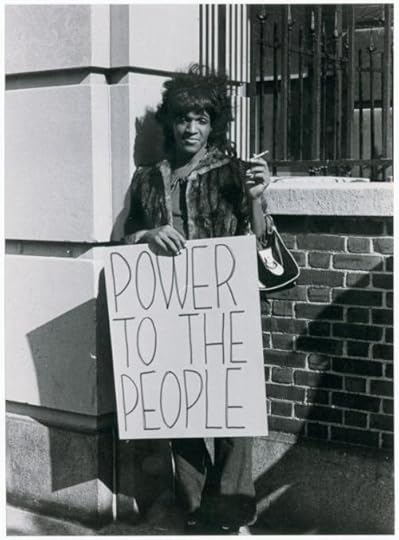
DURING: The interviews with Marsha P. Johnson, Sylvia Rivera, and Miss Major Griffin-Gracy shouldn’t be skipped; their stories are queer canon, period, and are absolutely vital when it comes to depicting our movement’s defining events. I also found the contrast between Howard Smith and Lucian Truscott IV accounts to be super compelling. Both were journalists who reported on the first night of the Stonewall Riots, from inside and outside the bar, respectively. Although their tone can be patronizing and borderline offensive (which honestly isn’t surprising as it was 1969 and both were straight, cis men who were witnessing something completely foreign to their personal perspectives), I found their accounts to be really compelling.
AFTER: Rev. Troy Perry’s entry, which includes a description of the groups present at the first Gay Liberation Day march in LA in 1970, is super interesting. Though it shouldn’t come as a surprise, it was amusing to learn that even then, nearly 50 years ago, there were divisions within the community over who should or shouldn’t be allowed to participate in Pride (apparently there was a “Homosexuals for Ronald Reagan” group from Orange County that, to no surprise, wasn’t especially well-received). It goes to show that some things haven’t changed much even after 50 years. I guess that’s just how families are.
In short, I absolutely loved this book. Though I highlighted a few favorites here, all the essays in this collection are incredibly good, and each one offers a pivotal lens on an event and time in queer history that we’d all do well to learn more about. I consider this book a must-read, one we should come back to every Pride season.