By mid-1877, trouble in the Northwest is brewing like a foul broth. Ill will is growing between white settlers and the Non-Treaty bands of the Nez Perce. The American government is forcing the Indians from their homelands onto the reservation. Many go quietly, thinking more about their families than of the pride of their warriors. But for a few holdouts, there's no room for compromise. Their history, their heritage and their ancestors are buried beneath that land. Although severely outnumbered and outgunned, a few brave warriors will heed the call of...CRIES FROM THE EARTH.
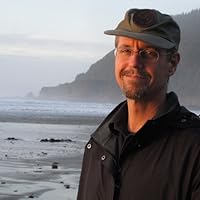
Terry C. Johnston was born January 1, 1947 in Arkansas City, Kansas. Nineteen publishers rejected Johnston's first novel, Carry the Wind, before it was printed in 1982. However, this first novel was to gain the honor of receiving the Western Writers of America Medicine Pipe Bearer's Award for best first fiction. Johnston is known for his eye for historical detail, and he is a stickler for accuracy. He is known for traveling and exploring down known and unknown dusty roads during the hot summer months, and traversing slippery, muddy roads and hiking through snow to stand upon a historical sight that he would tell his readers in an upcoming book. "Parking in the lower lot, I trudged up the hill to reach the spot where Colonel John Gibbon's infantry waited out the last hours before their attack on the unsuspecting camp. Standing there in the icy snowstorm I was totally overwhelmed by the sight of those skeletal cones of lodgepoles standing stark against the low, gray sky . . ." Some of the sites that he would stand upon were known to the world like the Little Big Horn Battlefield and others would be obscure to the average reader like the Weippe Prairie north of Lochsa. He is known to combine "a roaring good tale with fascinating insights into the lives and times of his principal characters, generally managing to employ his extensive knowledge to enhance a story rather than intrude upon it" (Whitehead, 1991). Johnston would say that he considered himself "not a literary writer but a storyteller." His desire was to reach and teach thousands if not millions of readers about the early western frontier.
He accomplished part of this goal, not only through his books, but through discussions given to elementary children, lectures at symposiums, and historical one-week tours "during which you will re-live the grit and blood, the tears and tragedy of the great Indian Wars." He would blend historical fact with human emotion to re-create the past during his historical tours each summer. One presentation he gave to a fourth grade class was about the Plains Indian culture. He held a discussion with a Honors English class in Castle Rock middle school about "research, writing, and editing that goes into producing two historical novels each year, when compared to their "term papers." He gave keynote speeches at seminars and lectures at symposiums. He traveled all around Montana to sign books for fans, and he signed the books at the local Albertson's in each town. He held radio interviews that "took me into cities, talking before audiences, I never would have managed to reach otherwise."
This is the 14th book in Terry C. Johnston's Plainsmen series, published in 1999. This one is about the outbreak of the Nez Perce War of 1877, leading to the Battle of White Bird Canyon, the first clash between the Nez Perce warriors and the US Cavalry. It's a wild ride, as Johnston throws us right into the action from the start and the fast pace never lets up (and we're talking about 429 pages leading to the Afterward). The story focuses on a huge cast of characters, Nez Perce and white military personnel and civilians. All were actual people and Johnston had to make educated guesses about their thinking, that is, why they made the decisions that they did and behaved as they did. What I'm most impressed by is this author's attention to detail and authenticity. No one is writing better historical fiction set in the West. I also appreciate the author's Afterward. A bibliography of non-fiction books about the Nez Perce and the conflict of 1877 in the Northwest is included. Sadly, as I understand from Goodreads, Terry C. Johnston passed away, in 2001. "Cries from the Earth" is the first book of what Johnston intended to be a trilogy within his Plainsmen series. The follow-up book is "Lay the Mountains Low," published in 2000. After that, Johnston died, so I believe he did not finish his Nez Perce trilogy. Perhaps some reader out there can correct me on that.
Terry C Johnston books are the most brilliant western historical fiction available today. The man has an uncanny accuracy for getting insides of the minds of historical personages and drawning relatedable human beings. Every book I have read of his, except for the Custer series, seems to ring true. Highly recommended!!!
The history of the Nez Perce Indians has been one of my favorite study and reading topics for many years. So, it is only natural that I read, and enjoyed, "Cries From the Earth". I learned a lot of new important and intriguing details in reading this novel than any other book on the subject.
My only criticism is simply that I felt the story would have been more interesting to me if it were presented in more of a non-fiction documentary format than in the novel format. Many people, perhaps most, will disagree with me--it is just a matter of personal taste.
Be warned that Terry C. Johnston depicts history exactly as he sees it. His vision is probably as accurate as anyone's too, as it is based on a huge amount of research. Furthermore, he doesn't concern himself with trying to be politically correct. Readers who are only casually familiar with this history may encounter some unpleasant revelations.
As good as the book itself was, for me the best part was actually the Afterword in which the author describes some of his experiences, insights, and thoughts that he had while doing on-site research for this book. I wished the whole story had been told by the author in the same way.
This is the first Terry C. Johnston book that I have read. I am looking forward to reading others.
For those like myself with an interest in the American Indian wars, this is a good read. The events and characters represent historical fact, but the author has given them life and dialogue and put them in a narrative that reads like Western fiction. Chief Joseph is the main character as befits his legacy in history, but others on both sides are brought to life as well. I enjoyed it and I plan to read the next in this series on the Nez Perce war.