Jump to ratings and reviews
Rate this book

Latająca góra

Rate this book
In a publishing world that is all too full of realist novels written in undistinguishable prose, discernable only by their covers, The Flying Mountain stands out—if for no other reason than that it consists entirely of blank verse. And that form is most suitable for the epic voyage Christoph Ransmayr relates: two brothers leave the south-west coast of Ireland on an expedition to Trans-Himalaya, the land of Kham, and the mountains of eastern Tibet—looking for an untamed, unnamed mountain that represents perhaps the last blank spot on the map.

As they advance towards their goal, the brothers find their past, and their rivalry, inescapable, inflecting every encounter and decision as they are drawn farther and farther from the world they once knew.

Only one of the brothers will return.

Transformed by his loss, he starts a life anew, attempt to understand the mystery of love, yet another quest that may prove impossible.

The Flying Mountain is thrilling, surprising and lyrical by turns; readers looking for something truly new will be rewarded for joining Ransmayr on this journey.


Christoph Ransmeyer is an award-winning Austrian author whose books have been translated into over 30 languages. His prodigious travels provided the material for Atlas of an Anxious Man, published by Seagull Books in 2016.

Simon Pare is a translator from the French and German who lives in Paris. His recent translations include the The Panama Papers and Atlas of an Anxious Man.

264 pages, Paperback

First published September 22, 2006

28 people are currently reading
809 people want to read

About the author

Christoph Ransmayr

41 books124 followers
Born in Wels, Upper Austria, Ransmayr grew up in Roitham near Gmunden and the Traunsee. From 1972 to 1978 he studied philosophy and ethnology in Vienna. He worked there as cultural editor for the newspaper Extrablatt from 1978 to 1982, also publishing articles and essays in GEO, TransAtlantik and Merian. After his novel Die letzte Welt was published in 1988 he did extensive traveling in Ireland, Asia, North and South America. In 1994 he moved to West Cork, Ireland, as a friend offered him to lease a splendid house at the Atlantic coast for a very affordable rent, and also because of the artists exemption in the Irish income taxation. In 1997 Ransmayr read his short story Die dritte Luft oder Eine Bühne am Meer, written for this occasion, as keynote speech for the Salzburg Festival. After his marriage in the Spring of 2006 Ransmayr returned to live in Vienna.

Ratings & Reviews

What do you think?
Rate this book

Friends & Following

Create a free account to discover what your friends think of this book!

Community Reviews

5 stars
167 (40%)
4 stars
146 (35%)
3 stars
63 (15%)
2 stars
33 (7%)
1 star
4 (<1%)
Displaying 1 - 30 of 48 reviews
Profile Image for Vit Babenco.
1,785 reviews5,793 followers
November 12, 2021
The Flying Mountain begins with delirious visions of an amateur climber freezing high in the mountains…
Out of a sky that at its zenith
seemed already to take on the blackness of space
fell frozen butterflies, Apollo butterflies,
like those we had seen weeks earlier in the valleys of Kham,
circling in huge swarms
above the prayer flags festooning
a ruined monastery,
above a glacier lake,
a rhododendron forest.

But he was saved and now he recollects the past, his parents, his unhappy childhood, his brother and their journey to the distant mountains.
An allure of the faraway ranges and unknown heights is irresistible…
Arcades, cornices, buttresses, struts,
demons, praying saints, gargoyles
– all the colours of weathered – stone
and all raining down on us.
…like sand fills the glass body
of a suddenly inverted timer.
Time, our time, was running out…

Having lost a summit of his mountain, he has found a summit of his love instead…
I sank into her, I hid in her
and in her I was protected from every threat
and beyond the reach of every law and gasped,
yes ultimately screamed my pleasure into the hand
she held over my mouth
while she muffled her own scream
against my chest, leaving
a pattern there with her teeth.

Summits, valleys – it is also a relief of our lives.
Profile Image for Meike.
Author 1 book4,962 followers
March 17, 2021
Someone actually dared to translate this lyrical text, and The Flying Mountain was rightfully nominated for the International Booker Prize 2018
I feel a kind of personal gratitude towards Ransmayr for making German sound so enchanting and beautiful – his choice of words and lyrical descriptions are sublime, and the rhythm and tone of his sentences are magical. This unusual text is a verse epic written by an Austrian and first published in 2006, and it tells the story of two brothers who travel to the Himalayas in search of a yet-uncartographed mountain local Tibetans call “The Flying Mountain” (“Der fliegende Berg”).

The free verse causes the sentences to be printed in ragged margin, they are, as Ransmayr says in his foreword, “flying sentences”: “The flying sentence is free, it does not only belong to the poets.” The formal presentation of the story has a severe influence on the reading experience, it structures the tempo and guides the attention within sentences – I found Ransmayr’s achievement in this context very impressive.

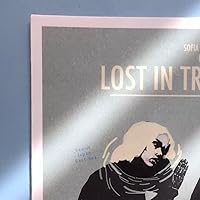
Topic-wise, this book centers on a signature theme of this author: Travel (this is my third Ransmayr, I also read Cox oder Der Lauf der Zeit (which takes a Brit to China) and Atlas eines ängstlichen Mannes (which takes the reader all around the world)). Ransmayr seems to be fascinated by the aspect of search that is implied in all travel, and how the traveler, by putting distance between himself and what lies behind him, gets the chance to reflect upon himself from a different point of view. Our protagonists in “The Flying Mountain” are Irish, and their family was heavily influenced by the Troubles (the Northern Ireland conflict). Both brothers have a special relationship to the sea, Pad, the narrator, even worked as a sailor, and they are now travelling to the mountains, in search for the unknown (please note how the English and the German book covers are complementing each other thematically).

Liam, the other brother, works as a cartographer and found hints that the “Flying Mountain” exists, so he was the one who inspired this manic journey. He is going out of his element and risks everything to explore new territory, while Pad acts more like his brother’s keeper. Ransmayr’s examination of the urge to create, explore and conquer reminded me of Boyle’s Water Music, which also meditates on the question where this human drive comes from. Pad and Liam represent opposing motives, and their conflict plays out in front of the panorama of the majestic Himalayas.

Reading this book, you can feel Ransmayr’s love of nature and his humbleness when confronted with the powers of the natural world. I realize that depending on personal taste, some readers might find some pathos in these renderings, but I enjoy the overflowing spirit of this text, and I always feel Ransmayr’s sincerity and heart shining through every sentence. This is an author who is not afraid to go all in, he does not care about being cool, he just cares about beauty and emotion, so in a way you might say that Ransmayr is a Romanticist writing about the postmodern world.

"The Flying Mountain" is a wonderful book, and utterly untranslatable. Whoever manages to convey the power of Ransmayr’s verse in another language deserves all translation prizes available for this feat. Here’s a passage in which Nyema, a local woman with whom Pad falls in love, explains the meaning of the name of the mountain the brothers want to climb:

“Phur-Ri, sagte Nyema, a mountain that flies,
dieser Berg, der strahlendste und größte von allen,
sollte jeden, der aufrecht gehen und sprechen konnte,
daran erinnern, daß nichts, nichts!,
und sei es noch so mächtig, so schwer,
eisgepanzert, unbetretbar, unbesiegbar,
für immer bleiben durfte,
sondern daß alles davonmußte,
verfliegen!, irgendwann auf und davon,

daß dann aber auch das Verschwundene nicht für immer verschwunden blieb,
sondern nach dem Stillstand und Neubeginn,
selbst der allerfernsten Zeit und,
wenn auch verwandelt,

zersprungen zu tausend neuen Formen und Gestalten,
wiederkehrte und ein Rad oder ein Stern
oder bloß eine Gebetsmühle, eine Wollspindel
sich von neuem zu drehen begann,

dafür, allein dafür sollte der Phur-Ri ein Denkmal sein,
wenn er sich wieder und wieder erhob,
manchmal nur für Stunden oder Tage
erhob und verschwand, ja, davonflog
und doch immer wiederkehrte,

manchmal bereits nach einigen Atemzügen
eines Zeugen seines Flugs,
manchmal erst nach Wochen
voll Regen, Sturm, Schnee (…)

jeder konnte diesen Berg fliegen sehen.“


Wow.
Profile Image for Paul Fulcher.
Author 2 books1,959 followers
April 9, 2018
And I huddled in his arms,
six thousand, eight hundred and forty metres above the sea,
and stared through a thick flurry of flakes
at the plumes of ice above Phur-Ri,
at the dazzling peak of the Flying Mountain,
where I had carved
our names in the snow
with the handle of my ice-pick.
I was alive.


The final book from the MBI longlist, and perhaps the one where my feelings are most ambiguous. Ultimately I wouldn't see this as a winner, but it is hovering near my personal shortlist.

Christoph Ransmayr's 2006 novel Der fliegende Berg has been translated into English by Simon Pare as The Flying Mountain - a long-overdue and highly welcome translation given the flurry of translations into other languages (French, Italian, Croatian, Dutch, Polish, Slovenian, Serbian and Hungarian) that rapidly followed its publication.

One apparent barrier to translation is Ransmayr's use of broken - or his preferred term, flying - lines, although he sees this as prose rather than poetry, from his introduction:

Since most poets have abandoned metrical language and now, instead of verses, use free rhythms and floating lines arranged in stanzas, here and there a misunderstanding has arisen that any text consisting of floating lines, ie, lines of unequal length, is poetry. That is incorrect. A floating line – or better: a flying line – is free and does not belong to poets alone.

Although this also means the translation isn't constrained by any specific rhyme or metrical pattern, it still leaves the challenge of reproducing the cadence of the line-breaks as Pare explained in an interview with the MBI:
I had a lot of fun playing with the line breaks and finding a rhythm in English that mirrored the unique cadence Christoph Ransmayr has created in German by writing prose that resembles poetry. Reconciling such apparent opposites is absolutely essential to this novel, especially relating to the phenomena encountered at high altitude and sea level, and it was enthralling to test how the vocabulary and atmosphere of one could be applied to the other. The Flying Mountain strains syntax and language and yet, if I have done my job properly, it should be as pleasurable to read as it is in German.
The story itself is rather simpler than the prose style - indeed were this written in plain text it wouldn't be a particularly long book. It tells of two Irish brothers, Liam and Pádraic (nicknamed Mousepad or Pad by his brother), the latter our narrator. The novel opens dramatically as Pádraic tells us:

I died
six thousand, eight hundred and forty metres above sea level
on the fourth of May in the Year of the Horse.

My deathplace
lay at the foot of an ice-armoured needle of rock
in whose lee I had survived the night.

The air temperature at the time of my death
was minus 30 degrees Celsius
and I saw the moisture
of my final breath crystallize
and disperse like smoke into the light of dawn.
I felt no cold. I was in no pain.
The pulsing of the wound in my left hand
was strangely dulled.
Through the bottomless chasms at my feet
fists of cloud came drifting from the south-east.

The ridge leading from my shelter up and up
to the pyramidal peak
was lost in driving banners of ice,
but the sky above the highest heights
remained so deep a blue
that in it I thought I could make out the constellations
of Boötes, Serpens and Scorpio.


The German, for comparison:
Ich starb
6840 Meter über dem Meeresspiegel
am vierten Mai im Jahr des Pferdes.

Der Ort meines Todes
lag am Fuß einer eisgepanzerten Felsnadel,
in deren Windschatten ich die Nacht überlebt hatte.

Die Lufttemperatur meiner Todesstunde
betrug minus 30 Grad Celsius,
und ich sah, wie die Feuchtigkeit
meiner letzten Atemzüge kristallisierte
und als Rauch in der Morgendämmerung zerstob.

Ich fror nicht. Ich hatte keine Schmerzen.
Das Pochen der Wunde an meiner linken Hand
war seltsam taub.
Durch die bodenlosen Abgründe zu meinen Füßen
trieben Wolkenfäuste aus Südost.

Der Grat, der von meiner Zuflucht
weiter und weiter
bis zur Psyramide des Gipfels emporführte,
verlor sich in jagenden Eisfahnen,
aber der Himmel über den höchsten Höhen
blieb von einem so dunklen Blau,
daß ich darin Sternbilder zu erkennen glaubte:
den Bärenhüter, die Schlange, den Skorpion.


We soon learn that the two have been caught in a storm while climbing alone in the Himalayas on an unclimbed peak, Phur Ri, and that Pad actually survives his near-death experience, saved by Liam, only for Liam to die later on, swept away by an avalanche.

Their father was a fanatical Irish nationalist, a terrorist supporter (if not an active participant). His nationalism (when not in the form of plans for military campaigns against the Brits) takes two opposite yet consistent forms, a strong attachment to his locality and a proprietary interest in the Irish diaspora:

It was this Ireland
that so many emigrants' dreams
or sheer poverty had spun into an endless web
a cat's cradle spanning Australia and both Americas,
New Zealand and various South Pacific islands,
the shores of Indonesia and southern Africa,
that my father finally felt was grand enough,
big enough, to merit
the distinction of being called true


And the two brothers represent each of these axes, Liam who makes his home in a tiny island off the Dunlough coast, and Pad who, until eventually persuaded to return home by Liam, roams the world working on ships.

My decision to give up my life in the machine rooms
and shaft alleys of freighters
or in drab, noisy harbourside hotels
and, like a castaway, to seek dry land
on Horse Island, a rock in the Atlantic,
touched on a longing that tied me
to many emigrant relatives,
scattered over three continents,
and also to my brother -

a longing for something
he invoked in one of his letters
as an immovable place beneath
an immovable sky


The two brothers became interested in climbing via the “training” their father made them undertake in the Caha Mountains as part of his paramilitary obsession. Liam is the favourite son, participating enthusiastically, whereas Mousepad’s timidity earned their father’s scorn, although Liam keeps his sexuality secret from his conservative patriach.

Liam’s 'immovable place under an immovable sky' is not just the rock on which he lives but also, his obsession, a Tibetan mountain he glimpses in a 19th century photo, which he believes to be an undiscovered (at least in the West) peak, a flying mountain which soars into the sky.

one could make out
beyond a glacier-covered saddle
another ridge that seemed to sweep
forcefully and steeply up towards
a second peak, even higher than the battlements
of the visible wall of ice!


Liam trains Pad on Horse Island before the brothers journey to Tibet, a journey whose purposes has to be hidden from the Chinese authorities. They are taken to a group of nomads who, while regarding sherpa style duties as beneath their dignity, are happy to let the brothers accompany them to their pasture grounds at high altitude, where the mountain the brothers seek is known to them. For Nymea, a widowed single mother (her husband killed by Chinese troops) with whom Pad develops a strong relationship, the peak is also known as flying mountain, Phur Ri in her language, but it has a very different context. In her legends, the mountains had flown to the aid of humankind:

flown to them at a time
when humans began to raise themselves
from the animal kingdom in which they had
hitherto been trapped, and could at last
throw back their heads
and look up at the sky,
at the passing clouds.

It was then, and no earlier, that the mountains
settled on plains, deserts, meadows and savannahs
so that this feeble race, so exposed
to the snow and all kinds of storms
might have leeward slopes on which grass
for its livestock and herbs would flourish, offering spots
for fires and tents, shelter and room to live.
...
However huge and immovable
these mountains might appear now, Nyema had said,
none of them would remain
in the human world for ever; one after the other,
they would lift off once again one day
and disappear whence they had come


Having started his account with his brother’s death, and his own narrow escape, on the descent of Phur Ri, Pad, writing from Horse Island as he disposes of his brother’s possessions and prepares to return to a life in the mountains of Tibet, reflects on the story that led up to this point. The brothers’ life histories, Liam’s discovery of Phur Ri, and the tale of their expedition and fatal ascent.

There are some implicit links in the novel between the British / Irish situation and the Chinese control of Tibet, made most explicit with the naming of the world's highest mountain after the (Welsh not English, although this isn't mentioned in the book) surveyor George Everest (who, although this isn't mentioned in the book, actually opposed the idea) despite the British team merely surveying it and not actually discovering, let alone ascending it, and it already having given names, in Nepali Sagarmāthā and Tibetan as Chomolungma.

While Ireland, under its English masters, was sliding
into the most disastrous famine in its history,
Sir Everest and his fellows were sizing up
even choicer pickings for an insatiable Majesty
in London: Indian colonies! Tea plantations
against a picturesque backdrop of mountain chains
whose triangulation from a safe distance
produced unheard of summit heights;
twenty, twenty-five, twenty-nine thousand feet!
Approximately at least!


The remote Irish setting of the non-climbing parts of the novel reflects Ransmayr's own time living in the area, and it was fascinating to discover that the story of the two brother climbing an unconquered mountain, and one dying on the descent, was inspired by the real life, and highly controversial in the world of mountaineering, story of Günther and Reinhold Messner. Reinhold is now a long-standing friend of the author, and has taken him to altitude in Tibet and Nepal.

see here for the story of the Messner brothers https://www.theguardian.com/world/200...
and here for an interview with Messner and Ransmayr http://sz-magazin.sueddeutsche.de/tex...

The final story in this novel itself is very different - e.g. the Messner's were expert climbers not rank amateurs like the Irish pair - but Ransmayr has drawn heavily on his own experience climbing with Messner as well as anecdotes from the latter's experience such as the 'black snow' the two brothers experience on the mountain:

I was alive.
It was snowing.
Black snow?
Black snow.

Like charred,
shredded paper from an invisible fire,
black flakes came tumbling
out of the cloudless sky.


This turns out to the bodies of frozen butterflies, who ascended too high, a phenomenon Messner has actually witnessed, but this paper from Edinburgh University (https://www.research.ed.ac.uk/portal/...) argues that such images of black flakes are a recurring motif in Ransmayr and hark back to the holocaust.

A fascinating work and one that will remain with me but I have some reservations.

The “flying line” prose fits the narrative but felt, at least in English, as something of a gimmick, a format that perhaps lends the text a lyrical air that the words themselves don’t always justify. Various twitter accounts and internet sites that manufacture apparent poetry from banal words (e.g. instruction manuals) rather make this point - see e.g. http://verbatimpoetry.blogspot.co.uk/.... Indeed I soon found myself looking through it and reading the book as normal prose.

And the story itself only really flies when in the mountains. The descriptions of the scenery and the local customs and beliefs really do soar but the parts dealing with the brothers’ lives before the fatal climb, particularly their dangerously eccentric father, remain in the lowlands.
Profile Image for withdrawn.
262 reviews253 followers
June 7, 2021
Such an amazing book. Christoph Ransmayr has written a book that engulfs, almost drowns, the reader in a sea of emotions while leading her to mountainous heights. A story of the relationship of two Irish brothers who set out to scale a previously unknown Himalayan mountain in Tibet - but much more than that. A study of the ongoing pain of Irish politics - a comparison to Chinese aggression in Tibet. A struggle for dominance between the two brothers, ongoing since childhood - a love story across cultures. The geography of a tiny island off Ireland - the towering landscape of Tibet. Human emotion and geography both always at a tipping point.

And the visions presented swim before the reader’s eyes as poetic images. This is not simple prose - it is an ever changing apparition in a never ending cycle of time and place. This apparition is presented in blank verse - but this is a blank verse which is never pretentious, never obscure. Form and substance are perfectly cast.

We see the world through the thoughts of the surviving brother who, through the force of events, brings a crystalline clarity to his world. Translator, Simon Pare, has not missed a beat here. I never stumbled on a thought, on an image. Author and translator have melded into one.

There is little mystery, we are exposed to the results of the action from the outset. (Except for one fact that is kept from us until the end - one fact that I kept looking with great concern - just to keep me turning pages I suppose.) Wonderful. We know that and how one of the brothers dies on the mountain. It is from there that the story unfolds into the past, the present and the uncertainty of the future.

A poem to the humanity in all of us. A plea to offer some understanding to our families and to those others from the other side of the world who seem so different. I highly recommend this to anyone who knows how to read. I need to find more Christoph Ransmayr. He seems to be on a mission to introduce us to each other.
Profile Image for Hendrik.
440 reviews111 followers
April 18, 2025
„Der fliegende Berg“ ist eines dieser Bücher, bei dem sich die Leserschaft fast einhellig einer Meinung zu sein scheint. Jedenfalls attestiert man ihm überwiegend eine herausragende literarische Qualität. Das birgt natürlich immer die Gefahr zu hoch geschürter Erwartungen, die womöglich am Ende nicht eingelöst werden. Im Fall von Christoph Ransmayr bewegt man sich in dieser Frage aber meist auf sicherem Terrain. Von daher wusste ich schon im Voraus der Lektüre , dass mir das Buch wahrscheinlich ziemlich gut gefallen wird. In der Tat hat es nicht enttäuscht. Das liegt vor allem an der Art und Weise, wie sich Form und Inhalt wechselseitig durchdringen. Schon der Blick auf den Satzspiegel der ersten Seiten offenbart Ungewohntes. Der gesamte Text ist nämlich im Flattersatz gesetzt, wodurch die Erzählung bereits optisch in die Nähe berühmter Heldenepen wie Homers Odyssee rückt. Doch verweist die mäandernde Form der Satzenden auch auf die beiden Hauptmotive Berge und Meer, die das Grundgerüst einer Geschichte zweier ungleicher Brüder bildet. Das Schwarz-Weiß der Sätze gleicht der fließenden Bewegung der Meeresbrandung an der irischen Küste, wie auch den wehenden Schneefahnen über den Gipfeln des Himalaya.

Es sind die Erinnerungen des jüngeren Bruders, ständig zwischen den geographischen Polen Irland und Tibet oszillierend, aus denen wir vom Verschwinden des älteren erfahren. Im Bild der beiden Geschwister, durch das Band der Familie gewissermaßen zu einer lebenslänglichen Seilschaft verurteilt, wiederholt sich übrigens die den gesamten Roman bestimmende Struktur des Gegensatzes. Gleiches gilt für Iren und Tibeter, zwei Völker, die in ihrer Geschichte Okkupation und Unterdrückung erfahren haben, oder immer noch erfahren. Und auch in der Suche nach dem letzten weißen Flecken auf der Landkarte, dem Gipfel des Fliegenden Berges kommt einmal mehr das Prinzip der Polarität zum tragen. An dieser Stelle prallen Mythos und berechnete Welt aufeinander. Das ist von der formalen Gestaltung her sehr raffiniert gemacht. Die eigentliche Tragik der Geschichte liegt im Versuch des älteren Bruders ein Held in einer postheroischen Welt zu sein. Ihn treibt eine unerfüllte Sehnsucht an, die auf die Beziehung zum eigenen Vater verweist. Einem Mann der seinen eigenen Ansprüchen nicht ganz gerecht wurde. Fraglich ob das Besteigen eines Berges in unserer Zeit noch zum Heldenstatus reicht, aber zumindest ist es ein guter Stoff für einen Roman.
Profile Image for Jennifer.
283 reviews7 followers
May 4, 2018
Whilst The Flying Mountain was longlisted for the 2018 Man Booker International Prize, I'm surprised it didn't make the shortlist. The author has extensive knowledge of Ireland and Asia as well as mountain climbing in Transhimalaya which I appreciate the details. I was on the edge of my seat reading the glacier climbing scenes.

The story follows two adult brothers who leave home on Horse Island off the southwestern coast of Ireland for Transhimalaya in eastern Tibet with the goal to climb an unnamed mountain in an unmarked territory on the map discovered by the older brother on his computer's screen saver. They enter China on a visa for an educational tour through the country on farming along with other foreign dignitaries. The two discretely deviate from the group to go to eastern Tibet close to the border of Nepal for the Transhimalayan mountain range. There they join a tribe of natives as they make their months' long journey to move their yaks and goats for summer grazing from one side of the region, where the tribe winters, to the base of the Flying Mountain, as the natives call the unnamed mountain the brothers mean to climb. During this journey, the younger brother who is the narrator will come to understand much about his strained relationship with his older brother and their childhood with their domineering father.

This is a story of family and love written in beautiful blank verse. I loved it!
Profile Image for LindaJ^.
2,521 reviews6 followers
April 12, 2018
This is one of the books on the 2018 MBI longlist. It is a novel written in verse. Who knew? I did not know what the longlist books were about when I gathered them, and I did not read the book jackets before I started. So, I was distressed when I opened this one and saw verse - verse? This is a novel, right? Oh well, it is on the list, so get to it.

I quickly found that the verse was easy to read and the story - the story of two brothers - was beautiful and haunting. It takes us from Ireland to Tibet and back. The book starts at the end (at least for one of the two) -- with one brother dead. From there we move back and forth through the lives of the brothers. We learn about their childhood, their crazy father who took them on maneuvers, and their mother who left. We learn how they left and then returned to that island off the coast of Ireland, where they trained to climb mountains. We learn how they finagled their way to Tibet and joined with a nomadic tribe to go up and up into the mountains. We are with them when they climb the summit of one mountain, fail to reach it on the next, and when they make their final climb up The Flying Mountain. The book ends back with one brother back on the island in Ireland, at least until the weather allows him to leave.

One of the brothers falls in love with a nomadic woman. This story, however, is merely a distraction from the story of the brothers. One of the main characters in this story is the weather - the mercurial changing weather and nature.

Yet even at cruising altitude
mountain peaks pierced the pack ice of the clouds
and drifted away like islands,
and we were buffeted by the spray, buffeted by the waves,
breakers, jet streams, seasonal turbulence,
as if the Irish Sea were surging after Liam and me
(as every other emigrant) into the highlands
of Tibet. Spring must
be well advanced there.


Yet the holes, furrows and ditches
that we, both victors and terrified fugitives,
kept trying to dig as we rushed downhill,
jumping up, then, barely back on our feet,
falling into cover again, lying,
panting, and here and there
and always along an escape route determined
purely by gravity, trying to beat a path
with our clotted, gloved claws,
revealed nothing but inviolable, shallow rock.
The peaks, the ridges, and our path
were swept virtually clean: no shelter.
And without a tent there was no staying, even
in the snowy hollows; the storm scraped them from the rock
or leveled them out, filled them with needles and crystals
like sand fills the glass body
of a suddenly inverted timer.
Time, our time, was running out.


One reason this book captured me was the memories it stirred of a friend, who was a climber -- buildings, rock faces, and mountains. He dreamed of climbing a big mountain. Many years ago, he went for it - on his own. He flew to South America (I forget which country) and got himself on a mountain. Then he was caught in an avalanche and died. I got his last postcard, sent the day before he headed out to the mountain, a week after his funeral.
Profile Image for Danilo.
48 reviews45 followers
February 13, 2017
Ukratko, glavni junak sa bratom odlučuje da se popne na jedan planinski vrh kod Tibeta. Od knjige sam očekivao više avanturističkog duha, a dobio sam nešto drugo, priču o porodici, moći prirode i ljubavi. I nije mi žao što sam se prevario.
Opisan je specifičan odnos dva brata, ali i cele porodice. Koliko su sve te veze zamršene i koliko iz straha odbijamo da dublje pogledamo u njih.
Moć prirode ovde nije opisana kao ona klasična, gde čoveku ne vredi sa njom da se bori. Ima i toga, ali ima i one isceliteljske moći gde, kada se čovek suoči sa prirodom, suoči se sa samim sobom, i u toj jednostavnosti i čistoti prirode vidi i stvari koje nisu pred njim. Koje je ostavio zamršene kod kuće.
Tu je i priča o ljubavi između, naizgled, nespojivih likova. Iz druge kulture, načina života, okruženja i razmišljanja. Ali pisac lagano dokazuje koliko su sve te stvari nebitne kada se stvari postave na čisto platno tj. moćnu prirodu.

Ocena 3 je za mene dobra ocena. Nije četvorka jer je knjiga, iako napisana u prozi, podeljena u stihove, i to zna na momente da zbuni pri čitanju. Takođe sam imao konstantan utisak da se zbog toga nešto izgubilo i u prevodu knjige. Moguće je i da grešim, ali to ne menja činjenicu da sam ja stekao takav utisak. :)
Profile Image for Markus.
276 reviews95 followers
March 17, 2018
Flüssigkristallschirme,
was für ein Wort!
Korrekt müßte es
Flüssigkristallbildschirme heissen,
aber das sind Nichtigkeiten.

Als dieses Buch geschrieben wurde,
zu Beginn des neuen Jahrtausends,
waren solche Bildschirme brandneu,
exklusiv und deshalb
nur bei Eingeweihten zu finden.

Das wird die Botschaft
dieses Wortes sein,
wenn es um Liam geht,
den älteren Bruder,
der virtuelle Berge auf
Flüssigkristallschirmen entstehen lässt,
bevor sie wirklich werden,
Liam der Geometer,
ein Mann der Berge,
im Unterschied zu seinem Bruder,
der ein Kind des Meeres ist.

Zwischen dem Meeresspiegel
und den Gipfeln der höchsten Berge
liegen mehr als 8000 Meter.

Wer das Buch aufschlägt, ist zuerst überrascht: Der ganz Text ist im Flattersatz geschrieben, sieht aus wie Verse, jedoch ohne geregeltes Versmass. Das war auf den ersten 50 Seiten irritierend, es handelt sich doch um normale Prosa. Man gewöhnt sich aber daran und es verändert den Leserhythmus durchaus im Sinne der Ransmayrschen Sprache.

Diese Sprache ist schwer befrachtet von Erhabenheit, Schönheit und Poesie und wenn es mir gelingt, mein Misstrauen und den Argwohn gegenüber dieser überbordenden Pracht zu besänftigen, trägt sie mich in bizarre Landschaften aus Felstürmen mit Zinnen und Kanzeln, auf Yakweiden in tibetischen Hochtälern unter vom Mondlicht verchromten Wolken und in eisklirrende Sphären himmelhoher Gipfel mit magischen Namen.

Wolkenfronten, Nebelmauern, Dunstschwaden,
alle Spielformen des Wasserdampfs schienen
von einer in Zeitlupe ablaufenden Explosion erfaßt,

segelten, wirbelten aneinander vorüber oder stürzten
lautlos ineinander und verbanden sich dabei’
zu immer neuen berstenden, verfliegenden Formen,
die manchmal Ausblicke freigaben auf Grate, Wände,
driftende Gipfel, über denen
von Sternen durchsprengte Himmelskeile
als Funkensträuße zerstoben.


Die Geschichte dieses Bergsteigerromans, inspiriert von der Expedition auf den Nanga Parbat 1970, bei der Reinhold Messners Bruder Günther ums Leben kam, ist, anders als das Vorbild, simpel und wird vom jüngeren der Brüder in der Ich-Form erzählt.

Sie beginnt mit dem Tod und dem Ende der Geschichte. Die Spannung geht dadurch nicht verloren, denn der Leser, der natürlich wissen will, wie es zur Katastrophe kam, erfährt langsam und schrittweise alle Details der Reise nach Tibet und der Besteigung des fliegenden Bergs. Das virtuelle Bild eines geheimnisvollen, nirgends kartografierten Gipfels im Land Kham, zuerst nur sichtbar auf den Flüssigkristallschirmen Liams, führt zur abenteuerlichen Entdeckungsfahrt und wird am Ende zur tragischen Wirklichkeit.

Die Reisebeschreibung ist immer wieder von Rückblenden unterbrochen, Erinnerungen an die Jugendzeit in Irland und den Vater, durch dessen eigenwillige und zwiespältige Persönlichkeit die zwei Söhne ganz unterschiedlich geprägt werden. Die komplementären Charaktere und die Entwicklung der brüderlichen Beziehung, zwischen Bewunderung und Konkurrenz, Konflikt und Versöhnung, sind äußerst einfühlsam und überzeugend beschrieben.

Auch die Begegnung der Europäer mit den offiziellen Vertretern der chinesischen Volksrepublik und später mit der nativen Kultur der tibetischen Nomaden von Kham sind lebendig in Szene gesetzt. Die Bergsteiger schliessen sich auf ihrem Weg ins Hochgebirge einem Clan an, der seine Yakherden in die hochgelegenen Sommerweiden treibt. Der Erzähler freundet sich mit Nyema, einer jungen Witwe aus dem Clan an und schon bald wird sie ihm wichtiger als alle Gipfel, während sein Bruder nur das ehrgeizige Ziel, die Eroberung des Unbekannten im Auge hat und alle Warnungen der Einheimischen ausschlägt.

Die Gipfel der Berge sind den Göttern und Dämonen vorbehalten, was die invasiven Europäer ignorieren und als Aberglaube abtun. Die Tibeter lachen sie dafür aus, akzeptieren sie aber trotz aller Ignoranz. Liam bezahlt mit dem Tod, der einfühlsamere Pad mit dem Verlust seines Bruders, quälenden Selbstvorwürfen und Schuldgefühlen. Die Moral der Geschicht’ ist wohl etwas platt, was aber durch die sensible und geschmackvolle Gestaltung aufgewogen wird.

Die Schilderung der Charaktere, ihrer Beziehungen und der Begegnung unterschiedlicher Kulturen, die Reflexion menschlicher Regungen wie Ehrgeiz, Verantwortung, Verbundenheit und deren Folgen, nicht zuletzt auch das grandiose landschaftliche Bühnenbild, all das ist wirklich gelungen und hinterließ in mir einen tiefen und nachhaltigen Eindruck.

Obwohl Sprache und Konzept etwas oldschool aussehen (das muss nichts Schlechtes sein), der Stil ein bisschen manieriert und das Ganze eine Spur zu idealistisch und pathetisch daher kommt, bleibt Ransmayr doch unter der Baumgrenze des guten Geschmacks und kratzt mit einem Scheisshimmelsgipfel im letzten Moment die Kurve vor dem Felssturz in den Kitsch.
Ob der Gebrauch des fliegenden Satzes den Text wirklich aufwertet oder als blosse Anspielung auf den Namen des Berges nur das Volumen des Buchs aufbläst, wage ich mangels Vergleichsmöglichkeit nicht zu beurteilen, es ist in jedem Fall ein interessanter Versuch.

Alles zusammen (einschließlich der inflationären Verwendung von Flüssigkristallschirmen) ergibt unter dem Strich ★★★★.
Profile Image for Bine.
804 reviews111 followers
May 20, 2017
Extrem tolle Sprache, beeindruckende Form.
Es wird die Geschichte zweier Brüder erzählt, die von einer kleinen Insel in Irland zu einem unentdeckten Berg in Tibet reisen, und zwar in Versform. Man hat das Gefühl, ein sehr langes Gedicht zu lesen, was jedoch wie ein Roman erzählt, als nicht "verdichtet" ist. Eine sehr interessante aber auch fordernde Erfahrung. Leicht zu lesen war das ganze nicht, aber es hat sich gelohnt.
Leider hat das Buch mich nur schwer packen können, was den Spannungsverlauf der Geschichte angeht. denn über lange Strecken geschieht nicht und von Anfang an weiß man, wie es endet.
Das erste Kapitel ist aber genial und sollte jeder ein Mal lesen.
Außerdem lernt man die Charaktere auf vielschichtigen Ebenen kennen und verfolgt sie gerne auch auf ihrer inneren Reise.
Also ein sehr wertvolles Buch, das mir aber viel Konzentration abverlangt hat. Darum nur 4 Sterne, weil der Lesespaß doch oft hinten ansteht.
Profile Image for Philippe.
751 reviews724 followers
April 10, 2020
This was a thoroughly engrossing story; it allowed me to immerse myself deeply in the mountain world that I so love. More particularly in the mythic realm of our planet's Greater Ranges, the territory of those magnificent peaks of 7.000 meter and higher. Whoever has walked in the shadow of these giants will never forget the feeling of awe and reverence that is evoked by their presence. Ransmayr did a great job of capturing those sentiments in powerful words and images.

The impact of the Himalayan splendour is heightened by the depth of the emotional conflict that plays out between the two protagonists - brothers, Irishmen - who are venturing into the unknown, both geographically and emotionally. In more than one way, this is a report of a journey to the margins of existence. And remarkably enough it is there, in that great Void, that new beginnings become possible.
Profile Image for Tim.
70 reviews33 followers
March 20, 2018
Der fliegende Berg (translated as The Flying Mountain) by Christoph Ransmayr is longlisted for the Man Booker International Prize.

The two brothers Pad (the narrator) and Liam have little in common. Sons of a radical Irish IRA-supporting father, Pad escapes his home by putting out to sea and returns only at his brother’s request. Home is a small house on top of a stormy, isolated cliff on Horse Island in the Irish Sea. There, Liam sits surrounded by computers managing data streams from across the globe – maps, satellite images, weather reports. One night he discovers satellite images of Phu-Ri, the Flying Mountain as it is called by Tibetan nomads. Following the call of the mountain, Liam and Pad travel to Eastern Tibet to climb the summit.

Ransmayr writes about the quasi-religious obsession, the deeply rooted desire to physically experience, to conquer what is scientifically measurable on surveying maps, because to Liam, salvation can only be found in translating maps, data streams, and satellite images into real-world adventure. The nomads the brothers travel with warn Liam and Pad of the mountain’s evil spirits – a symbol of a seemingly archaic worldview that contrasts with the brothers’ religion of natural science: everything that can be measured can be subjugated. While Pad immerses himself in the magic of the land and its people, Liam stays obsessively focused on his goal. He sacrifices his humanity and morality, and on its way the fraternal connection to Pad, who starts to rebel against Liam’s recklessness. The feud between the brothers crescendos, exacerbated by Pad’s budding love to Nyema, a widow to an Everest Sherpa.

Der fliegende Berg is at its core a very simple novel about constant change and the unpredictability of nature and the human spirit. It’s a story of opposites: the sea and the mountains, fraternal affection and hatred, death and resurrection, suppression and catharsis. None of these themes are new to literary fiction, yet Ransmayr manages to write with such poetic force just this side of a very thin line between beauty and kitsch which gives them new vigour.
Profile Image for Petya.
299 reviews23 followers
May 12, 2017
Ich kann mich zwischen 3 und 4 Sternen nicht entscheiden, leider weil es mich als Hörbuch nicht aufmerksam genug machen konnte. Im Bus oder im Bett zu hören war für mich schlicht unmöglich, ich bin immer wieder eingenickt und große Teile verpasst. Beim Zurückspulen habe ich doch immer dieselben Teile wieder verpennt! :)

Jedenfalls fand ich das irgendwann nicht so schade, weil ich einen Entschluss gefasst hatte: Das Buch ist Gold! Ich muss es mir kaufen und lesen! Als Hörbuch hat es eben schon mein Interesse geweckt. Eine großartige Besonderheit war es natürlich, dass meine Version vom Autor selbst gelesen wurde. Vielleicht besteht Ransmayr immer darauf, das weiß ich nicht :) Es war schön, seine Intonation zu hören, die Sätze so zu hören, wie sie geschrieben und gemeint sind.

Es gibt also ein Update, sobald ich es auf Papier gelesen habe.

UPDATE: Lieblingsbuch aller Zeiten.
Profile Image for Leonie.
333 reviews43 followers
March 9, 2025
Christoph Ransmayr is one of these authors you may stumble upon by accident or by a friendly recommendation and then keep returning to his worlds, whenever you see him listed as an author. I ordered this book on a total whim, just because he was the author after having adored his novel “The Last World”, which continues to split the reading community in half. Truth be told, I expected it to be a while before I picked it up to actually read it, as these books require a special sort of mood to be in, so it utterly surprised me, when I started reading it almost right away.
The beautiful thing about buying books without putting too much thought into the process is going in without any sort of expectation – the only research I did was checking my friends’ rating for this book and that was all, so imagine my surprise to find out this book is written in blank verse. Now here it gets somewhat tricky to review a book in english that I have read in its original german publication, it has been widely translated into other languages, though my review of course centers the german version. My expectation of reading in a slower pace due to the verse style was quickly diminished, as I immediately started tearing through the chapters as if it were regular novel style.
In “Der fliegende Berg” we meet Padraic, our narrator, who embarks on a journey with his utterly complementary brother Liam, to find a mountain in the transhimalayan country Kham that might be the final white spot on any map and they strive to be the first people scaling it. Their journey consists of far more than just climbing one mountain and a majority of the book describes the way they need to go, to finally get to the mountain.
Reading the summary on the back of the book I have to admit, I expected a bit more of the surrounding elements mentioned there, as some are encountered, yes, but quickly passed over before any kind of deeper understanding could have been formed. The journey with a nomadic group of people to get closer to their destination however has been described in great detail, which I came to find very interesting, yet a little too heavily tilted in this direction in comparison to the other aspects mentioned in the blurb. This was a clear case of my expectations differing from the reality of the content.
Throughout the journey, the reader keeps peaking into the past of the two brothers, of their rifts and differences, their similarities and shared upbringing. The seamless switching between glances into their childhood and into the more recent past of Liam and Padraic might take a little to get used to, does not hinder the enjoyment of reading at all, though. With every page read, the reader gets to grasp a little more of the brother’s differences, ongoing conflicts and heavily buried emotions, effortlessly weaving the past into the present, glances of home for one and the everlasting shadow the other brother never truly steps out of.
Ransmayr manages to form a beautifully woven story, that spans not only decades but also places on opposing sides of the world, conflicts smouldering below the surface of political, familial and introspective scopes, leaving not much to be desired. For me personally, the book tilted a little to quickly, towards the end and I would have wished for some aspects to be more prominent, but this is a great read for everyone who enjoys Ransmayr’s style of storytelling.

Profile Image for Johann Guenther.
806 reviews28 followers
February 16, 2023
RANSMAYR, Christoph: „Der fliegende Berg“, Frankfurt 2006
Schon einige Jahre lag dieses Buch auf dem Stoß der ungelesenen. Die unkonventionelle Schreibweise schreckte mich ab es zu lesen. Ich dachte, es sei in Reimen geschrieben. Jetzt habe ich es zur Hand genommen und wollte gar nicht mehr aufhören zu lesen. Großartig. Einmalig. Toller Stil.
Die Geschichte selbst: zwei Brüder aus Irland besteigen einen unerlaubten Berg in China. Auf abenteuerliche Weise kommen sie hin. Der jüngere, schwächere Bruder verliebt sich in eine Einheimische und seine Ziele verschieben sich. Der Ältere bleibt am Berg und der Jüngere muss seinen Nachlass verwalten …
Ransmayr muss solche Situationen selbst erlebt haben, um alles so genau und auch schön beschreiben zu können. Ein poetisches Meisterwerk, das man lesen muss.
„Manchmal habe ich das Gefühl,
ich müsste aus noch einem
und einem weiteren Traum erwachen,
um endlich dort anzukommen, wo ich wirklich bin.
Und manchmal bin ich mir nicht einmal mehr sicher,
ob mein Bruder und ich den Gipfel des fliegenden Berges
tatsächlich erreicht haben oder ob wir irgendwo oben,
sehr hoch oben, der Versuchung erlegen sind,
unseren Weg schon auf einem der Vorgipfel
für ausgestanden zu halten, auf einem Vorgipfel,
von dem uns dann der Sturm in die Tiefe zurückjagte.“ (Seite 359)
(Hinterbrühl Krems, 03.04.2013)
40 reviews26 followers
May 20, 2018
Can appreciate it but not my cup of tea...
Profile Image for Daniela.
467 reviews38 followers
July 16, 2013
Was für ein überwältigendes und beeindruckendes Buch!

Ransmayr beschreibt hier das Schicksal zweier Brüder, Liam und Pádraic, die sich aus dem Südwesten Irlands in die Gebirge Osttibets aufmachen, um dort den "fliegenden Berg" zu besteigen, einen mysteriösen weißen Fleck auf der Landkarte. Nur einer von beiden wird von dieser Reise zurückkehren. Seine Erinnerungen an die Reise durch Tibet verschmelzen mit dem Andenken an die Jugend der Brüder in Irland, welche geprägt ist von der Strenge des Vaters, eines IRA-Sympathisanten, und vom Verlust der Mutter, die mit dem Vater bricht und - unverzeihlich! - nach Belfast und damit aus dem Leben ihrer Kinder verschwindet. Jeder Schritt, mit dem die beiden sich dem Phur-Ri, dem fliegenden Berg, nähern, bringt den Leser auch weiter in die gemeinsame Vergangenheit der Brüder. Ihre Bergtouren in den irischen Caha Mountains und in den Bergen von Kham werden von Ransmayr zu einem Panoptikum nicht nur des Bergsteigens, sondern auch des Lebens zusammengefügt.

Schon der Beginn zieht einen in seinen Bann:

"Ich starb
6840 Meter über dem Meeresspiegel
am vierten Mai im Jahr des Pferdes.

Der Ort meines Todes
lag am Fuß einer eisgepanzerten Felsnadel,
in deren Windschatten ich die Nacht überlebt hatte.

Die Lufttemperatur meiner Todesstunde
betrug minus 30 Grad Celsius,
und ich sah, wie die Feuchtigkeit
meiner letzten Atemzüge kristallisierte
und als Rauch in der Morgendämmerung zerstob."

Der Flattersatz (oder "fliegender Satz"), dessen sich Ransmayr hier bedient, unterstreicht nicht nur die lyrischen Qualitäten des Textes, sondern erinnert auch formal an ein Versepos bzw. Formen des oralen Erzählens, wobei die Leerzeilen wie ein Luftholen des Erzählers wirken. Besonders schön daher auch die Verknüpfung mit den mündlich tradierten Geschichten und Legenden des Nomadenvolkes in Tibet, mit dem gemeinsam die Brüder reisen. Sehr einfühlsam beschrieben ist auch die Liebesgeschichte zwischen Pádraic und Nyema, einer Witwe aus dem Volk ebendieser Khampas, die ihn die Ehrfurcht vor der Sprache, dem Erzählen, dem geschriebenen Wort vermittelt.

Am beeindruckendsten ist jedoch die sprachliche Ausführung: Ransmayr ist ein großer Stilist, der mit seiner kristallklaren, geschliffenen Sprache (Berg-)Welten vor uns erstehen lässt, in die einzutauchen einfach nur ein Genuss ist. Dabei findet er Bilder und Metaphern, die sich zwar wiederholen, aber nie plakativ werden, sondern immer wieder aufs Neue gefangen nehmen.

Eine wirklich großartige erzählerische Leistung!
Profile Image for Sini.
600 reviews162 followers
May 29, 2022
De roman "De vliegende berg" (2007) van de Oostenrijkse maestro Christoph Ransmayr, heeft een op zijn minst opmerkelijke opening: "Ik stierf/ 6840 meter boven de zeespiegel/ op de vierde mei van het jaar van het paard. // De plaats van mijn dood/ was de voet van een bevroren rotsnaald/ waar ik in de luwte de nacht had overleefd.". Later in deze roman blijkt de ik- figuur wel bijna maar niet helemaal te zijn gestorven: wel gestorven is zijn broer, bij de beklimming van de nooit eerder beklommen Tibetaanse Phur- Ri, de "vliegende berg". En dat alles wordt ons verteld in vrije regelval, of- zoals Ransmayr het liever noemt- "vliegende regelval": een vorm die vooral doet denken aan poëzie, zij het poëzie die niet rijmt en die vrije, onverwachte ritmes volgt. Misschien om te benadrukken dat het verhaal te ongewoon is om in conventioneel proza te passen, en te ongrijpbaar om zich te lenen voor de gebonden stijl (met rijm en vaste ritmes) van diverse meer traditionele dichters. Of misschien om ons te herinneren aan de niet heel prozaïsche regelval van het epos of van oude mythen.

Vrij vroeg in dit epos vertelt de ik figuur over "[...] een hunkering/ die me met veel, over drie continenten/ verspreide emigranten van onze familie/ en ook met mijn broer verbond:// een hunkering naar iets/ dat hij in zijn brieven/ als een ONBEWEEGLIJKE PLEK onder een / ONBEWEEGLIJKE HEMEL opriep.// Natuurlijk wisten we stiekem beiden/ dat zo'n plek niet kon bestaan,/ nooit, nergens,/ maar zelfs wanneer hij me Horse Island/ na een van zijn nachten achter de telescoop/beschreef als een door westenwinden/ en op- en ondergaande sterrenbeelden/ omwerveld tapijt/ dat een elliptische baan rond de zon trok// dook op het eind van dat soort fantasieën/ uitgerekend dat met ruïnes bezaaide eiland/ altijd weer als een toevluchtsoord op/ uit de Atlantische Oceaan bij Dunlough,/ een ombruiste geborgenheid,/ ontrukt aan de tijd/ en even ver weg en onverstoorbaar als een utopie". En een aantal bladzijden later filosofeert hij: "Misschien hebben we inderdaad/ een onstilbare behoefte/ om zelfs in encyclopedisch vastgelegde gebieden/ op zoek te gaan naar wat onbekend en onbetreden is,/ nog niet door sporen en namen beschadigd- / naar die volmaakte witte vlek, die we dan met een beeld van onze dagdromen/ kunnen inkleuren". Dat dus is wat de ik- figuur deelt met zijn oudere broer Liam, en ook met zijn gestorven vader : een verlangen naar onontgonnen gebieden, naar witte vlekken op de kaart, naar regio's in de fysieke werkelijkheid en in het eigen hoofd die nog onontdekt en onbeschreven zijn. Vrije, vliegende gebieden, die ongrijpbaar zijn voor onze conventies. Regionen en ervaringshorizonten dus die misschien niet eens bestaan, vermoedelijk zelfs niet eens kunnen bestaan, maar die beide broers enorm verlokken juist door hun ongrijpbaarheid. Alsof het onvoorstelbare en onbestaande voor hen altijd intrigerender en rijker is dan het tastbare en werkelijke, en alsof het onmogelijke intensere verlangens en ervaringen oproept dan het voorstelbare en mogelijke.

Dit verlangen naar het onmogelijke en onvoorstelbare maakt Ransmayr mooi voelbaar, door zijn pakkende en suggestieve gebruik van de vrije regelval en door zijn vaak treffende beeldspraak. En precies dit verlangen verlokt beide broers om naar Tibet af te reizen en daar, geholpen door Tibetaanse nomaden, op zoek te gaan naar de vrijwel onbekende en nooit eerder beklommen "vliegende berg" . Volgens Tibetaanse legenden kan die berg, deze Phur- Ri, inderdaad vliegen, al was het maar om ons eraan te herinneren dat zelfs een onwrikbaar lijkende berg ooit zal opstijgen in de leegte. Bovendien zijn alle Tibetaanse bergen, althans volgens de nomaden, "luchtige paviljoenen" waar de goden en beschermgeesten wonen. En hun toppen herbergen dan het Onvoorstelbaar Goddelijke, maar staan ook op de rand van het nog onvoorstelbaardere Niets. Uiteraard fascineert dat alles de ik- figuur zeer. Bovendien is de bergtop van de Phur- Ri steeds op fascinerende en tantaliserende wijze verhuld en terugwijkend, door het steeds veranderende spel van wolken en licht dat die top omvademt. Ook voor de ik- figuur is de Phur- Ri dus een berg die vliegt. Of in elk geval een subliem fenomeen, grootser dan gedacht en aanschouwd kan worden, een fenomeen bovendien dat soms op sensationele wijze alle grenzen van tijd en ruimte overstijgt. Hetgeen dan vooral indringend naar voren komt tijdens de even fatale als hallucinante beklimming van die "vliegende berg", en in de tastende en omcirkelende wijze waarop de ik- figuur daar later aan terugdenkt.

Ransmayr is in "De vliegende berg" vaak heel goed op dreef, vooral in passages waarin hij sublieme ervaringen evoceert of het verlangen naar die sublieme, alle conventies ontstijgende ervaringen. Dat kan hij als weinig anderen. Minder geslaagd vind ik echter dat hij in dit boek werkelijk alles met alles wil verknopen. De liefde van de ik- figuur voor de Tibetaanse Nyema vind ik bijvoorbeeld best ontroerend, zeker in de passages waarin zijn luisterend oor en haar vertellende stem bijna mystiek met elkaar versmelten, maar het verveelde mij dat die liefde zo vaak wordt verknoopt met herinneringen aan zijn weggelopen moeder. Interessant vond ik de vrijheidsdrang van de Ierse ik- figuur en Liam, en vooral van hun Iers-patriottische vader, maar het verveelde mij om zo veel associaties te zien tussen de Engelsen (die de Ieren onderdrukten) en de Chinezen (die de Tibetanen onderdrukken). Ik vind het best mooi dat de ik- figuur de Tibetaanse tijdsrekening overneemt, en de climax van zijn leven dus situeert in "het jaar van het paard" , maar dat het geïsoleerde eiland waarop Liam en hij een tijd wonen dan ook nog eens "Horse Island" heet ..... nee, dat ligt er voor mij te dik bovenop. Mooi vind ik hoe de aanblik en de beklimming van de "vliegende berg" ook een geestelijke en filosofische ontdekkingsreis inhouden, zodanig dat de ik- figuur de tijd niet langer als lineair opvat maar als cyclisch, zodat hij op de bergtop tegelijk ook de zee uit zijn vaderland ervaart en in het hier en nu tegelijk ook zijn verleden voelt stromen. Maar dat gebeurt mij te vaak en te nadrukkelijk, soms ook op naar mijn smaak te sentimentele wijze. Te veel nadrukkelijkheid kortom, te veel sentimentaliteit soms ook: dat bederft voor mij deze roman in verzen, hoe fraai hij soms ook is.

Ik vond "De vliegende berg" dus lang niet zo imponerend als andere Ransmayr- romans. Vooral "De laatste wereld", "Morbus Kitahara" en "Cox, of het verglijden van de tijd" zijn naar mijn idee echt een paar klassen sterker. Maar ook dit boek bevat een aantal fraaie passages, over het verlangen naar oningevulde en ongrijpbare witte plekken, en over sublieme ervaringen. Dus ik ben wel wat teleurgesteld omdat Ransmayr naar mijn idee beter kan, maar ik ben zeker niet ontevreden.
Profile Image for Brooke Salaz.
256 reviews13 followers
July 19, 2018
Highly evocative. Having experienced the Himalaya region of Sikkim, around Kanchenjunga specifically, this lyrical blank verse tale of love and loss while attempting to scale the eponymous mysterious peak that seems to be missing from any map resonated for me. I could feel the cold, thin air and incredible, stark beauty where all feels oneiric and every act has bigger consequences than down below. The changing perspectives that come upon one suddenly though you're moving at a snail's pace, dizzy, somewhat ill at times but at others euphoric, I thought Ransmayr captured beautifully. Interwoven is the story of two brothers who are very different and often at odds but ultimately share fierce and unshakeable love. Very movingly told.
Profile Image for Johannes.
3 reviews
July 12, 2012
One of my absolute favorite books. The story of two brothers, climbing a mountain in the Himalaya, being with each other. Poetry at times, harsh, and then again music. It was a real pleasure to read this beautiful language and get soaked into the story.
Profile Image for Jenni.
23 reviews2 followers
January 25, 2010
In Versen gedichtete Prosa, die einfach nur schön ist und die Geschichte zweier Brüder erzählt.
Profile Image for Marco.
278 reviews8 followers
February 11, 2020
Großes Buch! Ransmayr beweist einmal mehr, welch ein bedeutender deutschsprachiger Autor er ist.

Es geht um zwei Brüder, die sich lange nicht gesehen haben und nun eine Reise in den Himalaya planen.
Der sogenannte fliegende Berg soll bestiegen werden. Ein Berg, der bisher weder bestiegen noch irgendwie kartografiert ist. Er existiert nur in dem Mythen der Einheimischen.
Die Suche und letztendlich die Besteigung des Berges zwingt die Brüder ihre Beziehung zu reflektieren, sich mit ihrer Vergangenheit auseinander zu setzen.
Also nicht nur eine Reise im wörtlichen Sinne, sondern auch im Geiste zur eigenen Persönlichkeit.

Das ist kein Spannungs-oder Actionroman. Es wird viel reflektiert, innere Monologe bestimmen den Roman. Die Handlung ist sphärisch, mysteriös, mann kann nicht immer auseinander halten, was Traum und Realität ist.
Ransmayr zeigt einmal mehr, was für ein großer Stilist er ist. Die Sätze sind mäandert lang, tlw. eine halbe Seite.

Geschrieben wird,
Im sogenanntem Flattersatz,
Also ohne Punkt,
Die Sätze sind treppenartig angelegt,
Und so entsteht ein interessanter Lesefluss,
Mal zu und annehmend,
Diese Art zu schreiben,
Kennt man sonst nur aus Gedichtbänden,
Wenn man sich erst dran gewöhnt hat,
Sehr interessante Schriftart,

Tolles Werk, anspruchsvoll, aber lohnenswert. Ein weises Buch.
Profile Image for Lenora Good.
Author 16 books27 followers
March 3, 2019
Herr Ransmayr had me with the first two words: "I died"

What? Wait a minute. If you are dead how can you write such a beautiful book? I had to keep reading, and frankly found it difficult to put down.

The story is narrated by Padraig and is about growing up with his brother, Liam, the alpha male, the father's favorite, the one who knew no fear. It tells how Liam not only got Paddy to move to his island off the coast of Ireland, but got him to go on a trip he didn't want to make to Tibet to climb a mountain that flew.

This is a story of two men who love each other, who fight, who grow, how one learns acceptance and the other learns survival. I laughed out loud in places, and I cried in places, and I truly think I am better for having read this book. It is one I will read a second time, perhaps a third.

Please, don't let the idea of it being blank or free verse, a long narrative poem, cause you not to pick it up, and read it. I guarantee you will only be aware of the form when you first pick it up. The story is gripping from the beginning, to the flash backs to Captain Daddy and his maneuvers in the Irish mountains, to the climbing of the mountains in Tibet. Ransmayr is a master at his craft.
Profile Image for DougQuaid71.
9 reviews2 followers
November 13, 2018
… heute weiß ich,
daß uns ein Lachen vielleicht ins Leben zurückholen,
uns dort aber nicht halten kann.

Was Nyema, was ihren Clan
und mich und wohl die meisten von uns
am Leben erhält,
muß mit dem manchmal tröstlichen,
manchmal bedrohlichen Rätsel zu tun haben,
daß wir, wo immer wir sind,
nicht die einzigen sind:

Immer ist noch jemand da,
der zumindest von uns weiß, der uns nicht losläßt
oder von dem wir nicht lassen können,
jemand, der durch unsere Erinnerungen,
Ängste und Hoffnungen geht,
uns in den Armen hält, wärmt, füttert
oder uns keuchend, singend
auf einem Schlitten aus Ästen und Fellen
durch ein Geröllfeld schleift.


Die von Ransmayr gewohnt poetische und blumige Sprache findet sich hier in einer besonderen Form wieder, dem Flattersatz. Die Geschichte über Brüder und Gegensätze, die letzen Endes mehr verbindet, als sie trennt, liest sich infolgedessen so schleppend, aber auch so bedächtig wie jeder Schritt der beiden Gipfelstürmer in 6000 Metern Höhe.
83 reviews
April 17, 2019
This along with Cognett`s Acht Berge is one of the best books I have read in the last year. Ransmayr sounds like he is very familiar with the mountains of the Transhimalaya - and he is! He underwent the intrepid adventure of having scaled some of these colossal heights with Reinhold Messner.
The story is of two Irish brothers, one of whom does not return from their tour, making reference to Messner who returned from one of his challenging climbs without his brother. The relationship between the brothers in the story is very complex and psychologically well elaborated on. The language is so poetic that you savor it like good wine. The atmosphere and isolation of Tibet and its mountains is well depicted, and you realize how everything is reduced to its essence in such an endeavor. It sort of clears your mind and leaves lasting impressions. Definitely worth reading.
Und jetzt in deutsch - dieses Buch ist faszinierend - psychologisch, von der Sprache, von der Geschichte. Lese es und Cognettis Acht Berge dazu.
Author 2 books4 followers
April 26, 2021
This was an intriguing book. It was long-listed for the 2018 Man Booker International Prize and is written using poetic line breaks, or "flying lines" which the author points out at the start of the book are not poetry but prose. So he may not describe it as a verse novel but others do. I found it to be lyrical and lovely, with its haunting exploration of a brother-brother relationship growing up in a difficult family, and how they finally bridge the divide that has grown between them as adults when they climb the slopes of a little-known mountain in Tibet. It is beautiful and sad. I also found it a bit slow and tedious at times - I'm not sure if it was due to the extra long sentences which sometimes were a bit much to concentrate on, or because he gave away the ending right at the start - even in the blurb on the inside cover - that the brother dies - and in the opening few chapters we are witness to the final dramatic scenes - so we are left reading just to find out the details and the context and with limited suspense about how things actually pan out.
Profile Image for mia :).
28 reviews
May 13, 2025
Insgesamt: Es war nicht so mein Ding, ich konnte mich schwer in die Geschichte und das Setting hineinversetzen sowie auf die manchmal doch etwas schwierigere Sprache konzentrieren. Obwohl ich den Schreibstil in Form von Strophen und die besondere Sprache des Romans mochte.
Direkt im ersten Kapitel wird man richtig in den Roman gezogen. Das muss man mal lesen. Ich hatte gehofft, dass es so weiter geht, aber bei mir hat das nicht so funktioniert und die Spannung war auch weg, weil man schon seit Beginn weiß, wie es ausgeht.

Trotzdem war es eine interessante Leseerfahrung. Vor allem der Umgang mit Räumlichkeit und Wegen sowie die Thematik, dass Menschen den Drang danach haben alles Unbekannte zu erforschen und zu entdecken haben mein Interesse etwas geweckt.
203 reviews
February 9, 2019
I love mountaineering and free verse, as well as ambitious writing, so this seemed like an obvious pick for me. The first two chapters were an ecstatic vision. Chapter 3 and 4 sucked. It picked up again, but then the second half was lousy. Shallow characters and feeling, ultimately not believable motives or story telling. Reads like a second draft which needed a third. A dreary, boring anticlimax and clumsy repetitive writing past the halfway point. Hard to tell if the author has climbed. I thought so at first, but if yes, then not properly I think.
Profile Image for Simona.
238 reviews23 followers
April 12, 2018
I’m not a big fan of poetry, and this novel is a novel in verses, which author describes as flying line, rather than a verse form. Reading the beginning, though, causes discomfort, but the narrative form is still closer to prose than 'classical' poetry. For me, this story is primarily a story about love on all levels and forms, written in a beautiful, lyric language. Gentle and harsh, ugly and beautiful, ups and downs ... as Life is.
Displaying 1 - 30 of 48 reviews

Can't find what you're looking for?

Get help and learn more about the design.