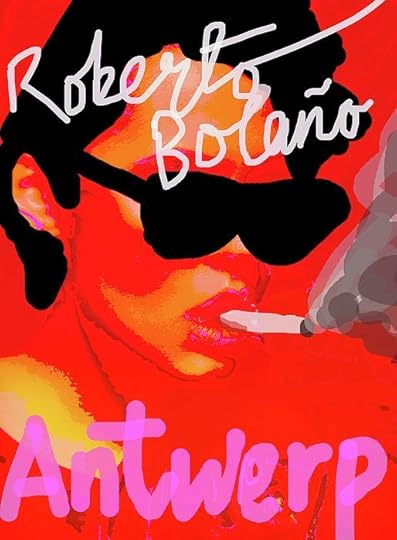
Jump to ratings and reviews
Rate this book

آنت ورپ

Rate this book
این کتاب را برای خودم نوشتم، و حتی از این هم مطمئن نیستم. این نوشته‌ها تا مدت‌ها صفحاتی آشفته بودند که بازخوانی می‌کردم و شاید هم دستی تویشان می‌بردم، مطمئن از این‌که وقت تنگ است. اما وقت برای چه؟ درست نمی‌دانم. من این کتاب را برای ارواح نوشتم که تنها همراهان زمان‌اند؛ چرا که بیرونِ زمان ایستاده‌اند.

120 pages, Paperback

First published September 1, 2002

149 people are currently reading
3903 people want to read

About the author

Roberto Bolaño

139 books6,767 followers
For most of his early adulthood, Bolaño was a vagabond, living at one time or another in Chile, Mexico, El Salvador, France and Spain. Bolaño moved to Europe in 1977, and finally made his way to Spain, where he married and settled on the Mediterranean coast near Barcelona, working as a dishwasher, a campground custodian, bellhop and garbage collector — working during the day and writing at night.

He continued with his poetry, before shifting to fiction in his early forties. In an interview Bolaño stated that he made this decision because he felt responsible for the future financial well-being of his family, which he knew he could never secure from the earnings of a poet. This was confirmed by Jorge Herralde, who explained that Bolaño "abandoned his parsimonious beatnik existence" because the birth of his son in 1990 made him "decide that he was responsible for his family's future and that it would be easier to earn a living by writing fiction." However, he continued to think of himself primarily as a poet, and a collection of his verse, spanning 20 years, was published in 2000 under the title The Romantic Dogs.

Regarding his native country Chile, which he visited just once after going into voluntary exile, Bolaño had conflicted feelings. He was notorious in Chile for his fierce attacks on Isabel Allende and other members of the literary establishment.

In 2003, after a long period of declining health, Bolaño passed away. Bolaño was survived by his Spanish wife and their two children, whom he once called "my only motherland."

Although deep down he always felt like a poet, his reputation ultimately rests on his novels, novellas and short story collections. Although Bolaño espoused the lifestyle of a bohemian poet and literary enfant terrible for all his adult life, he only began to produce substantial works of fiction in the 1990s. He almost immediately became a highly regarded figure in Spanish and Latin American letters.

In rapid succession, he published a series of critically acclaimed works, the most important of which are the novel Los detectives salvajes (The Savage Detectives), the novella Nocturno de Chile (By Night In Chile), and, posthumously, the novel 2666. His two collections of short stories Llamadas telefónicas and Putas asesinas were awarded literary prizes.

In 2009 a number of unpublished novels were discovered among the author's papers.

Ratings & Reviews

What do you think?
Rate this book

Friends & Following

Create a free account to discover what your friends think of this book!

Community Reviews

5 stars
838 (20%)
4 stars
1,401 (33%)
3 stars
1,351 (32%)
2 stars
466 (11%)
1 star
121 (2%)
Displaying 1 - 30 of 614 reviews
Profile Image for s.penkevich [hiatus-will return-miss you all].
1,573 reviews14.9k followers
October 10, 2021
Nothing lasts, the purely loving gestures of children tumble into the void.

I hope this book is in my pocket at the moment of my death. Cancer, most likely, or perhaps the cacophony of a horrific car crash. Certainly not old age, given my lifestyle, though it is a nice dream. Possibly a snap moment of gratuitous violence or any other aberration from the mundane that a solipsistic individual would register as the utter apocalypse. Whatever the circumstances, I can only hope that my blood soaks into the pages of this beautiful work as I am ejected from this world, as I pass from present to past tense, and I move from a reality of the physical to one of prose. Because once we are gone all that remains are the stories, anecdotes like metaphors that build towards an impression of personality which seem like fiction due to the undeniable degree of exaggeration or polishing in order to drive home a more perfect point. Antwerp by Roberto Bolaño is the immaculate lovechild of the novella and the prose poem, a surrealistic mosaic impression of the world built through page-length chapters of prose that tell a story, somewhat, the way a poem provides an abstract account of reality. Set mostly in Barcelona, Antwerp dances in disjointed scenes of campgrounds, hotel rooms, ghettos and bars following the lives of those surrounding the character Roberto Bolano as he wanders about and writes. There is murder, there is intrigue, there is loneliness and there is silence.

Silence is love just as your raspy voice is a bird.

Bolaño wrote that ‘the only novel that doesn’t embarrass me is Antwerp,’ much like how he says his poetry makes him ‘blush less’ than his prose. Antwerp, written when he was 27 but not published until the year before his death, seems to be the coming-of-age moment in his writing. Although it would be another decade before he would switch from poetry to novels, this wonderfully avant-garde work of his feels like the growth spurt of his brilliance as he dares to dream and experiment. '[A]ll his rules about plot only apply to novels that are copies of other novels,' and Bolaño dares to make something that is both is and isn't a novel with these 56 prose segments. The stories diverge and scatter with a dreamlike quality to them, events often appearing in a collection of juxtaposed fragments. Memories flash like lightning across the sky, blinking on and off to light the darkness and disappear again. Everything is slippery and elusive.

This has been my second reading of the book, the first being the slightly different draft that appears in The Unknown University under the earlier title People Walking Away. I tend to prefer the earlier title, because isn’t that much of what life inevitably is? People scattering like shrapnel each towards their own horizon. Their shadows lingering last like children called home for bedtime, stretched out long and grand before vanishing forever.

4.5/5

Of what is lost, irretrievably lost, all I wish to recover is the daily availability of my writing, lines capable of grasping me by the hair and lifting me up when I'm at the end of my strength. (Significant, said the foreigner.) Odes to the human and the divine. Let my writing be like the verses of by Leopardi that Daniel Biga recited on a Nordic bridge to gird himself with courage.
Profile Image for Fabian.
1,004 reviews2,114 followers
August 12, 2019
Infuriatingly abstract... Thematically nebulous... & super-dooper, ah, ambiguous... !

More poem than novel, less flash-fiction than sporadic spurts of cranial activity, odd observations... The atmosphere of desolation (the most popular and valuable of all of Bolano's writerly attributes) is splintered and refuses to be a twig, a branch or a tree. Is this the act of an anarchist? It never makes a point or implies that it will. I guess its unapologetic...? Anyway, it's like seeing beauty but only through some super smudgy, very odd lens.
Profile Image for Sidharth Vardhan.
Author 23 books771 followers
December 29, 2016
'All his rules about plot only apply to novels that are copies of other novels

I agree and also knowledge of any such rules only imprison the imagination of novelists. Still lots of great novels break those rules, but not all of them. I think a novelist shouldn't even care about such rules - all great art is simply unconscious of any such constraints ..... but I must also add that novelists that write just for sake of breaking those rules are also showing a similar consciousness of those rules and so are still prisioned by those very rules, it is just that they are locked out rather than locked in - a true rebel isn't one who just breaks rules, that just means pretentious disobedience, but one who does that for a reason.

Writers like Beckett, Borges, Calvino, Woolf and Joyce might look like breaking such rules but I don't think that they were trying so hard to do so, it is just that they had something to write and when they pursued that 'something' some rules got broken. Others like Dostoevsky, Flaubert, Charlotte Bronte might look like following those rules - they weren't, it is just that what they write happened to be within realm of such rules. And they too created something beautiful, and not merely coping other novels.

And in this case it is not so, while there is no story, no plot, no anything, there is nothing much valuable to replace it with either- just a bunch of sexual crimes described in vignettes that have prose that sometimes read beautifully but not so much.
Profile Image for Kenny.
599 reviews1,493 followers
March 12, 2025
All I can come up with are stray sentences, he said, maybe because reality seems to me like a swarm of stray sentences.
Antwerp ~~ Roberto Bolaño


1
4.5/5

I know that this review makes no sense at all. How appropriate this is for Bolaño’s Antwerp.

I wrote this book for myself, and even that I can’t be sure of. writes Roberto Bolaño in his short introduction to Antwerp, a novel he wrote when he was just 27 years old but kept from publication until shortly before his death. The uncertainty with which my beloved Bolaño attributes his youthful desire to create a novella of such disturbed, unsettled genius is certainly in keeping with the uncertainty of the novella itself, which very much reflects the working of an active, uninhibited mind that adamantly rejects processing its ideas into a neat, conventional package.

Written in 1980 during Bolaño’s last year in Barcelona ~~ a time when Bolaño’s said he, lived exposed to the elements, without my papers, the way other people live in castles ~~ Antwerp shows the genius of a writer very much on the verge of something ~~ the impressive, prodigious last decade of Bolaño’s life, in which he published 10 novels and three short story collections. Bolaño said of Antwerp , I never brought this novel to any publishing house, of course. They would have slammed the door in my face. This fact alone makes this book worth reading.

Antwerp is very much the product of a writer well aware of the rules of writing, but he simply doesn't give a fuck. As Bolaño’s alter ego Arturo Belano, points out toward the end of Antwerp, There are no rules. This makes both Bolaño and Antwerp dangerous.

1

Antwerp exists in a dream state, very aware of the terror and allure of waking life. Antwerp weaves a fragmented tapestry in which one voice gives way to another, shifting tenses, perspectives, and even genders, often within the span of a single sentence. Characters appear, appear to be murdered, then suddenly reappear in different forms through the book.

The only thing that is clear is that a girl was murdered, a body was found, and somebody saw it. Those three things are enough for Bolaño to disturb reality; they are enough to call everything into question. Those of you that have read 2666 will understand what I mean.

1

Antwerp is a work that ~~ like most of Bolaño writings ~~ appears to have neither a beginning nor an end ~~ Antwerp is freed from the span of time. How fitting it is that the first work Bolaño wrote ended up being the last work he published.

1
Profile Image for Greg.
1,128 reviews2,147 followers
April 28, 2010
The only novel that doesn't embarrass me is Antwerp"-Roberto Bolaño

A quick look at the reviews for this book show some people who really don't like it. They are probably right

This is a young work. It's darkly romantic (without sentimentality). It wears it's belief in the power of literature and words right on it's sleeve (so to speak, because books don't have sleeves, and this one doesn't even have a dust jacket).

Of what is lost, irretrievebly lost, all I wish to recover is the daily availablity of my writing, lines capable of grasping me by the hair and lifting me up when I'm at the end of my strength

There isn't necessarily a story going on here. More of a collection of impressions from a murky moment of hazy criminality. There is a logic of youth here; a wide-eyed yet jaded perspective that moves along an edge just that side of respectability, but still close enough to the safe-world that one is not irrevocably lost to the nether-world of drug-dealers, and narcs who finger bang 18 year old girls in the ass, and bums who share the nocturnal spaces open to those who choose to sleep outside of safe homes.

This is the kind of book one would be embarrassed by later in life. It's the kind of book that has a painful innocence to it, the sort of book that reminds me of the things I did in the past, the stupid things I said, and the secret things I wrote that no one ever saw that make me cringe down to the marrow in my bones when I think of them. And no way would I want to willingly share them with the world, anymore than they are already out there in the world.

This is the kind of book that reminds me of that type of feeling in oneself, but which when one see's on display from someone else, especially when it is so artfully created that one can just savor the beauty of it, even if the inherent flaws of youth can be seen on each and every page.


Profile Image for Ed.
Author 1 book444 followers
January 1, 2018
Antwerp is unexpectedly brilliant for such a short work: 78 pages, mostly half-filled. It is composed of 56 short fragments (each the length of a single paragraph) of disjointed, surreal, prose-poetry, which tell a strange and complex story through the implied connections between these impressionistic images.

This was Bolaño's first novel, which he tinkered with for twenty years before publishing. It is almost like a key to his work, a framework for what would come later. It features Bolaño's obsession with sexual violence, but there is something much deeper here: a recurring questioning; a relentless search for meaning and purpose. The writing is darkly comedic, full of strange quips and asides, which seem to exist outside the universe of the novel. This is the genesis of Bolaño as a writer. It is deeply personal. Bolaño himself exists inside the novel, and the novel as much as it is about any one thing, is really about his being born and defined as a writer.

It's clear that not everyone would enjoy this this kind of thing, and I'm cautious about turning the wrong type of reader onto this novel, and so I present the below passage, which is "chapter" 2 in its entirety:

Twin highways flung across the evening, when everything seems to indicate that memory and finer feelings are kaput, like the rental car of a tourist who unknowingly ventures into war zones and never returns, at least not by car, a man who speeds down highways strung across a zone that his mind refuses to accept as a barrier, vanishing point (the transparent dragon), and in the news Sophie Podolski is kaput in Belgium, the girl from the Montfaucon Research Center (a smell unbefitting a woman), and the lips say "I see waiters, hired for the summer, walking along a deserted beach at eight o'clock at night" ... "Slow movements, real or unreal I don't know" ... "A sandswept group" ... "For an instant, a fat eleven-year-old girl lit up the public pool"..."So is Colan Yar after you too?" ... "The highway, a black-topped strip of prairie?" ... The man sits at one of the cafes in the hypothetical ghetto. He writes postcards because breathing prevents him from writing the poems he'd like to write. I mean: free poems, no extra tax. His eyes retain a vision of naked bodies coming slowly out of the sea. Then all that's left is emptiness. "Waiters walking along the beach" ... "The evening light dismantles our sense of the wind"...


If the above makes you furrow your brow and scratch your head in bewilderment, then you are probably right to give this one a miss. However if you are a fan of Bolaño and this kind of writing lights your brain on fire as it did mine, then do not skip over this lesser-known of his works.
Profile Image for Barry Pierce.
598 reviews8,926 followers
November 1, 2015
Hmmm I've read this and I still have no clue what it is. This is just a pocket book. 78-pages in all. Split into 56 vignettes. You could call it a crime story but there is no evidence. There is a narrative but only Bolaño knows where that is. It's like a cake before entering the oven. All the ingredients are there, the flour, the baking powder, the eggs, but it's still not a cake. I think I liked this. I think.
Profile Image for Praj.
314 reviews900 followers
March 29, 2013
Play the flute, O dear death,
Frantic solitude engraves,
In your mellow embrace,
Letters of a fleeting breath.

Sometimes, I just lay on the floor fearing of being drowned in the emotional mayhem conferred by a book for being loyal to its words. And, then at times when I have no answers to the myriad questionnaires I seek refuge in these written words as a lost soul finding its home. The desire for a transparent ceiling seems surreal like a fish praying for wings. The fatalities of trust, love, sex, respect, ethics, sovereignty muddied in doubt are far from being a pompous cavalcade of death or life; a grotesque portrait of ceremonial inscrutability. “Words are empty” branded over their breasts, the mouth-less women lead a comatose march down the street bowing to the old man comforting a frightened bleeding vagina. ”Don’t be afraid” , screamed the anarchic breeze thrusting the penis through obedient surrender. A violence of an unapologetic penis behind the flowery enchanted mirage. “Destroy your stray phrases” , resonate through the ears of the nameless girl as courage is more terrifying than pleasure. The youth at the newspaper stand stood aghast at the sight of six mutilated corpses strewn on the pages. Six campers dead. Kids blown up. Power is the heroin of vengeance. Doubt its coke. Death squads parading in patriotic veils; a tribute to the “dirty war”. Anonymous lives constricted to the page of a newspaper archive. A man carrying a tin of sardines asking for a match. People stare at his hunchback while he lights his half cigarette. Robert Bolano was his name; the man who offered hunchback a cigarette light. Mexico is his mind; Spain his heart. A blonde comes running into his arms singing her love; a fleeting happy memory for she would eventually break his heart. Police sprint like a wild stampede scouting pretty faces for the night as the hunchback runs through the woods. An Englishman strapping a white sheet onto the burly tree at the end of the bicycle road. The stomping of angry feet, the feeble breathe of a vagrant pollute the sanity of the trees; the Englishman trying to pen words, the hunchback running through the bicycle path ; a deafening explosion; a crimson sardine graffiti. The cold steel burns in the wrath of a running train; the monotonous perversion of an obstinate contraption. A sorrowful cry of anguish from a nameless girl, “Will death be peaceful than life?” someone drags her to an isolated building; a tranquil hospice. Papers or sex? Drugs or sex? Torture or a smoky barrel? Rational or Irrational. Traitors!! Drive all the hunchbacks to the sea. We do not want our children with humps. Let them be washed like footsteps on the sand. My land! Our Land! No muddied blood, purity; the rebellion of selfish mouths. A camouflaging devil ironically promises paradise. The ghosts of past are dismissed on hallucinatory grounds. A curly haired writer walks in a bar; bartender pours him a drink. A deadly bomb. Somewhere a cat loses its whiskers. The record playing an old song, but the dancing stops. Faces on the wall. Photos in case files. Reminiscences in an album lingering in grieving hands. Grenades are the new voices and gangsters their mothers. The girl who wrote dragons succumbed to the cannibal figs. The cops are tired now and all they need is a fuck. Burn those files! Damn those fuckers! Another immigrant dissolved in acidic wrath. The unemployed youth rests reading the crime story of an amateur writer, gazing at the drug laden whore. "Memory slowly dictated soundless sentences" . Beware of Colan Yar! Flee you silly birds before the wolf and its warriors gulp you down. The mouth-less women reappear cleaning the blood stained road to Antwerp; pigs chewing on an pale arm.

I yearn for the cerulean heavens but the wretched vertical opaqueness blurs my sight. I still lay on the hard floor. Then I think of Bolano and his psyche of writing this poetic chronicle. His words sprinting on the paper, amid the rapes and murders committed behind meticulously festooned habitats. I think about Sara Bendeman , Lola Muriel and several women ; an innocence lost in swirling vortex of torment. All those hunchbacks, who could never build a home away from home. In an interview, Bolano had declared his children to be his true motherland. It is to them that he found a true sense of belonging. His was a nomad all through his life; through his travels and his wandering mind. “Reality is a drag” . Hallucination ; the festering mental façade. But isn’t life an ornate façade after all. Everyone wants to wear their rose-tinted blinders and sweep the pragmatic debris in their basement. Genuine voices are muted by vacant pride and rage and violence become mutinous gold. Faces and names walk into nothingness with time, gladly literature brings them alive. Bolano awakens the dead and give them their voices once again. He brings Sophie Podolski back into my room. This 55-piece fragmented articulation is a lyrical ode to asphyxiated bureaucracy and to countless who rebel with transparent dragons.

Play the flute, O dear death,
Wild figs eat themselves,
From their rancid flesh,
Humble ghosts ascends.


Profile Image for Steven Godin.
2,782 reviews3,373 followers
April 28, 2023

Written at the time when Bolaño was making the transition from poetry to prose in his late twenties, Antwerp is certainly the strangest and most experimental work of fiction I've read by him so far. I actually finished it and felt the need to read it again - helped by the fact it was under 80 pages long - because the first time around was like getting lost in a fog: disorientated by words and images incoherently shifting around in various forms within an eschewing overlapping pattern of scenes, characters and fragmented voices. Even the second reading didn't gel in the ways I'd hoped, but at least it felt more like a piece of music that wasn't out of tune. One thing I felt more than anything was this feeling of menace and violence boiling up underneath. It made me uncomfortable. It got a response. I liked searching for clues, even though they may never have existed. The 56 staccato sentenced vignettes that make up the short narrative I admired for their anti-novel stance; and while there is a loose plot revolving around a murder, a detective, and a young woman, you don't come here expecting something like orthodox storytelling because it's wholly absent.
Profile Image for sigurd.
207 reviews33 followers
November 19, 2017
Il libro che Bolaño più amava tra i suoi è anche quello meno amato dai suoi lettori e, potremmo concludere, nessun autore forse è il miglior interprete di se stesso. Devo dire che dissento un po’ dai bolaniani e non posso dare proprio tutti i torti a Bolaño. Del resto Anversa (o Amberes, nell’originale) è un romanzo che non può non piacermi, nonostante abbia cercato di odiarlo per varie ragioni, che mi pare inopportuno discutere con estranei. Non può non piacermi perché Anversa è una specie di tela astratta, alla Kandiskij, dove persistono sul campo, appena abbozzati, lacerti di realtà, figure umane e scomposte. Questi sono gli unici elementi che il lettore ha in mano per decifrare un qualcosa che sembra avere un senso, ma forse non ce l’ha; che sembra non avere un senso e forse ce l’ha. In mezzo però a questa pista, si aprono squarci lirici impagabili, alcuni forse giovanili e pieni di sottile intemperanza; altri invece prodotti con estrema raffinatezza, sensibilità e gusto, come creati da un vecchio signore che ben conosce il mestiere. Non è un caso se questo fu il primo libro scritto da Bolaño e l’ultimo da lui pubblicato. Diciamo che in questo primo, primissimo Bolaño, c’è dentro tutto un mondo letterario, e anche un’avventura, l’intera avventura, per chi vorrà percorrerla.
Qualche sera fa discutevo con una cara amica di una poesia del giovane Bolano che mi piace postare qui, e citare sempre, perché è anche una di quelle poesie, forse non bellissima, in cui però ci ho letto una storia che parla di me e a me.

I cani romantici
A quel tempo avevo vent’anni
ed ero pazzo.
Avevo perso un paese
ma guadagnato un sogno.
E se avevo quel sogno
il resto non importava.
Né lavorare, né pregare,
né studiare la notte
insieme ai cani romantici.
E il sogno viveva nel vuoto del mio spirito.
Una camera di legno,
in penombra,
in uno dei polmoni del tropico.
E a volte mi guardavo dentro
e visitavo il sogno: statua eternata
in pensieri liquidi,
un verme bianco che si contorce
nell’amore.
Un amore sfrenato.
Un sogno dentro un altro sogno.
E l’incubo mi diceva: crescerai.
Ti lascerai alle spalle le immagini del dolore e del labirinto
e dimenticherai.
Ma crescere a quel tempo sarebbe stato un crimine.
Sono qui, dissi, con i cani romantici
e qui io resterò.

(Trad. Ilide Carmignani)

Questa poesia parla dei vent’anni.
I vent’anni sono il simbolo della giovinezza, ma in Bolaño si tingono sempre di una sfumatura polemica, iconoclasta. A vent’anni non si è solo giovani, si diventa anche pazzi. A vent’anni puoi perdere un paese, non importa quale, ma quasi sempre più è alto il valore di quella perdita e più il sogno che guadagni è forte e sei disposto a fare qualsiasi cosa pur di difenderlo, a qualunque costo. Te lo coltivi, e di notte lo visiti, a volte questo sogno è come una statua che tu hai costruito con questi pensieri un po’ inafferrabili, liquidi, perché la gioventù è fatta di slanci e gli slanci raramente sono ragionati, raramente hanno un senso; e a volte questo sogno è un verme bianco, una specie di lombrichetto che si contorce in qualcosa di più grande, di sfrenato, un amore selvaggio, assoluto, un amore che diventa come un sogno dentro un altro sogno. I cani romantici, questi giovani pazzi e furiosi, possono fare queste due cose: possono innalzare statue, possono far crescere un ideale, possono seguire senza sosta un mito e morire per esso oppure possono contorcersi nel fango, morire nel dolore di un amore non corrisposto, di un amore perduto. La gioventù romantica non sa fare altro.
Ma arriverà il tempo in cui qualcuno, i cani romantici non avranno difficoltà a riconoscerlo come l’incubo, quel qualcuno ti dirà: crescerai. Ti lascerai alle spalle le immagini del dolore e del labirinto e dimenticherai. Quella sofferenza che ci avrà lacerato i fianchi, che ci avrà fatto perdere il senno, la perderemo, non ci rimarrà più nulla, dimenticheremo. Ci lasceremo dietro le immagini del dolore e del labirinto, ossia le immagini di quel percorso tortuoso che è la passione divorante degli anni giovanili. Anche Aldo Busi, ricordo perfettamente quel suo famoso incipit, lo dice con parole molto belle:
Che resta di tutto il dolore che abbiamo creduto di soffrire da giovani? Niente, neppure una reminiscenza. Il peggio, una volta sperimentato, si riduce col tempo a un risolino di stupore, stupore di essercela tanto presa per così poco, e anch’io ho creduto fatale quanto si è poi rivelato letale solo per la noia che mi viene a pensarci. A pezzi o interi, non si continua a vivere ugualmente scissi? E le angosce di un tempo ci appaiono come mondi talmente lontani da oggi, oggi, che ci sembra inverosimile aver potuto abitarli in passato.
L’incubo una mattina ci sveglia e quel sogno che abitavamo da giovani, in cui tutte le angosce venivano cavalcate come destrieri alati, svanisce. E la vita ci mostra la sua parabola. Ma è molto bello quando vedi qualcuno che si stacca dalla coda. Io ho sempre in mente l’immagine della Magnani in Roma Città Aperta quando si lancia contro le camionette tedesche a rincorrere il suo amore, il suo sogno. Lì hai proprio l’impressione di una massa uniforme di gente, che si mette in coda con il biglietto, sono tutti in fila verso la morte, non importa se sarà domani o dopo qualche anno o dopo cent’anni, tutti moriranno, ma pochi si staccheranno dagli altri, pochi sapranno farlo come Anna, con la sua forza, mentre insegue il suo sogno. Ed è solo lei che i posteri ameranno e ricorderanno, non gli altri. Anna, come Roberto Bolaño, sembra dire a quell’incubo No, non mi avrai. Sono qui con i cani romantici, con coloro che sanno morire e vivere per il sogno.
E qui io resterò.
Profile Image for Jeff Jackson.
Author 4 books527 followers
September 13, 2012
At first this reads like a bunch of noir-inflected prose poems -- but as the characters begin to repeat, locations stubbornly reappear, and dead bodies pile up in familiar configurations, you realize this is a deeply fractured crime novel, of sorts. Or maybe a hallucinatory poetic sequence that's extracted its essence from a well-worn pile of detective fiction. However you care to classify this assortment of startling images, pulp scenarios, and aggressive displacements, there's an underlying-but-elusive coherence that will either spark your imagination or give you a pounding headache. I loved it.
Profile Image for Darwin8u.
1,835 reviews9,034 followers
August 26, 2021
Broken mirrors and incomplete sentences. Vignettes at dusk. Sex and movies. Four small films where the sections are cut and taped randomly.
Profile Image for Kokelector.
1,085 reviews106 followers
October 18, 2025
Increíble como un escritor va forjando su pluma, su temple y su voz. Una novela escrita en 1980, pero que Roberto Bolaño no sintió la seguridad de presentarla hasta 2002, cuando ya no era un desconocido en la literatura. Un crimen, una pelirroja, un jorobado, recuerdos difusos que se entremezclan en forma de relatos, de cuentos, de pensamientos de escritura, de las ganas de estar leyendo y siendo el propio autor, un personaje más dentro de la trama; cómo le gustaba jugar a esa invención. Una novela que va por un camino propio para ir demostrando que la escritura es un oficio, un ejercicio diario de adiestramiento de la voz, de la mente y de las palabras. La construcción de una historia inconexa, que se va conectando por delgados hilos hasta dejarte ante una obra que no entiendes del todo, pero que disfrutas de principio a fin. Uno de los mejores escritores que siempre puedes tener a mano para salvar las ganas de estar leyendo.

(...) “𝘌𝘯 𝘶𝘯𝘢 𝘧𝘰𝘵𝘰 𝘱𝘦𝘲𝘶𝘦ñ𝘢, 𝘦𝘯 𝘣𝘭𝘢𝘯𝘤𝘰 𝘺 𝘯𝘦𝘨𝘳𝘰 𝘤𝘰𝘮𝘰 𝘵𝘰𝘥𝘢𝘴, 𝘱𝘶𝘦𝘥𝘦 𝘷𝘦𝘳𝘴𝘦 𝘭𝘢 𝘱𝘭𝘢𝘺𝘢 𝘺 𝘶𝘯 𝘱𝘦𝘥𝘢𝘤𝘪𝘵𝘰 𝘥𝘦𝘭 𝘮𝘢𝘳. 𝘉𝘢𝘴𝘵𝘢𝘯𝘵𝘦 𝘣𝘰𝘳𝘳𝘰𝘴𝘢. 𝘚𝘰𝘣𝘳𝘦 𝘭𝘢 𝘢𝘳𝘦𝘯𝘢 𝘩𝘢𝘺 𝘢𝘭𝘨𝘰 𝘦𝘴𝘤𝘳𝘪𝘵𝘰. 𝘗𝘶𝘦𝘥𝘦 𝘲𝘶𝘦 𝘴𝘦𝘢 𝘶𝘯 𝘯𝘰𝘮𝘣𝘳𝘦, 𝘱𝘶𝘦𝘥𝘦 𝘲𝘶𝘦 𝘯𝘰, 𝘵𝘢𝘭 𝘷𝘦𝘻 𝘴ó𝘭𝘰 𝘴𝘦𝘢𝘯 𝘭𝘢𝘴 𝘱𝘪𝘴𝘢𝘥𝘢𝘴 𝘥𝘦𝘭 𝘧𝘰𝘵ó𝘨𝘳𝘢𝘧𝘰.” “𝘈𝘱𝘳𝘦𝘵ó 𝘭𝘢𝘴 𝘴𝘪𝘦𝘯𝘦𝘴 𝘥𝘦 𝘭𝘢 𝘮𝘶𝘤𝘩𝘢𝘤𝘩𝘢 𝘮𝘪𝘦𝘯𝘵𝘳𝘢𝘴 𝘱𝘦𝘯𝘴𝘢𝘣𝘢 𝘲𝘶𝘦 𝘭𝘰𝘴 𝘥𝘦𝘥𝘰𝘴 𝘦𝘯𝘵𝘳𝘢𝘣𝘢𝘯 𝘺 𝘴𝘢𝘭í𝘢𝘯 𝘴𝘪𝘯 𝘯𝘪𝘯𝘨ú𝘯 𝘢𝘥𝘰𝘳𝘯𝘰, 𝘴𝘪𝘯 𝘯𝘪𝘯𝘨𝘶𝘯𝘢 𝘧𝘪𝘨𝘶𝘳𝘢 𝘭𝘪𝘵𝘦𝘳𝘢𝘳𝘪𝘢 𝘲𝘶𝘦 𝘭𝘦𝘴 𝘥𝘪𝘦𝘳𝘢 𝘰𝘵𝘳𝘢 𝘥𝘪𝘮𝘦𝘯𝘴𝘪ó𝘯 𝘥𝘪𝘴𝘵𝘪𝘯𝘵𝘢 𝘲𝘶𝘦 𝘶𝘯 𝘱𝘢𝘳 𝘥𝘦 𝘥𝘦𝘥𝘰𝘴 𝘨𝘳𝘶𝘦𝘴𝘰𝘴 𝘪𝘯𝘤𝘳𝘶𝘴𝘵𝘢𝘥𝘰𝘴 𝘦𝘯 𝘦𝘭 𝘤𝘶𝘭𝘰 𝘥𝘦 𝘶𝘯𝘢 𝘥𝘦𝘴𝘤𝘰𝘯𝘰𝘤𝘪𝘥𝘢.” “𝘓𝘢 𝘴𝘰𝘭𝘦𝘥𝘢𝘥 𝘦𝘴 𝘶𝘯𝘢 𝘷𝘦𝘳𝘵𝘪𝘦𝘯𝘵𝘦 𝘥𝘦𝘭 𝘦𝘨𝘰í𝘴𝘮𝘰 𝘯𝘢𝘵𝘶𝘳𝘢𝘭 𝘥𝘦𝘭 𝘴𝘦𝘳 𝘩𝘶𝘮𝘢𝘯𝘰. 𝘓𝘢 𝘱𝘦𝘳𝘴𝘰𝘯𝘢 𝘢𝘮𝘢𝘥𝘢 𝘶𝘯 𝘣𝘶𝘦𝘯 𝘥í𝘢 𝘵𝘦 𝘥𝘪𝘳á 𝘲𝘶𝘦 𝘯𝘰 𝘵𝘦 𝘢𝘮𝘢 𝘺 𝘯𝘰 𝘦𝘯𝘵𝘦𝘯𝘥𝘦𝘳á𝘴 𝘯𝘢𝘥𝘢. 𝘌𝘴𝘰 𝘮𝘦 𝘱𝘢𝘴ó 𝘢 𝘮í. 𝘏𝘶𝘣𝘪𝘦𝘳𝘢 𝘲𝘶𝘦𝘳𝘪𝘥𝘰 𝘲𝘶𝘦 𝘮𝘦 𝘦𝘹𝘱𝘭𝘪𝘤𝘢𝘳𝘢 𝘲𝘶é 𝘥𝘦𝘣í𝘢 𝘩𝘢𝘤𝘦𝘳 𝘱𝘢𝘳𝘢 𝘴𝘰𝘱𝘰𝘳𝘵𝘢𝘳 𝘴𝘶 𝘢𝘶𝘴𝘦𝘯𝘤𝘪𝘢. 𝘕𝘰 𝘥𝘪𝘫𝘰 𝘯𝘢𝘥𝘢.” “𝘌𝘴𝘤𝘳𝘪𝘵𝘶𝘳𝘢 𝘴𝘪𝘯 𝘥𝘪𝘴𝘤𝘪𝘱𝘭𝘪𝘯𝘢. 𝘌𝘳𝘢𝘯 𝘤𝘰𝘮𝘰 𝘤𝘶𝘢𝘳𝘦𝘯𝘵𝘢 𝘵𝘪𝘱𝘰𝘴, 𝘵𝘰𝘥𝘰𝘴 𝘤𝘰𝘯 𝘴𝘶𝘦𝘭𝘥𝘰𝘴 𝘥𝘦 𝘩𝘢𝘮𝘣𝘳𝘦. 𝘊𝘢𝘥𝘢 𝘮𝘢ñ𝘢𝘯𝘢 𝘦𝘭 𝘢𝘯𝘥𝘢𝘭𝘶𝘻 𝘴𝘦 𝘳𝘦í𝘢 𝘦𝘴𝘵𝘳𝘦𝘱𝘪𝘵𝘰𝘴𝘢𝘮𝘦𝘯𝘵𝘦 𝘥𝘦𝘴𝘱𝘶é𝘴 𝘥𝘦 𝘭𝘦𝘦𝘳 𝘦𝘭 𝘱𝘦𝘳𝘪ó𝘥𝘪𝘤𝘰. 𝘓𝘶𝘯𝘢 𝘤𝘳𝘦𝘤𝘪𝘦𝘯𝘵𝘦 𝘦𝘯 𝘢𝘨𝘰𝘴𝘵𝘰. 𝘌𝘯 𝘴𝘦𝘱𝘵𝘪𝘦𝘮𝘣𝘳𝘦 𝘦𝘴𝘵𝘢𝘳é 𝘴𝘰𝘭𝘰. 𝘌𝘯 𝘰𝘤𝘵𝘶𝘣𝘳𝘦 𝘺 𝘯𝘰𝘷𝘪𝘦𝘮𝘣𝘳𝘦 𝘳𝘦𝘤𝘰𝘨𝘦𝘳é 𝘱𝘪ñ𝘢𝘴.” “𝘌𝘭 𝘢𝘶𝘵𝘰𝘳 𝘥𝘪𝘫𝘰: «𝘯𝘰 𝘱𝘶𝘦𝘥𝘰 𝘴𝘦𝘳 𝘱𝘦𝘴𝘪𝘮𝘪𝘴𝘵𝘢 𝘯𝘪 𝘰𝘱𝘵𝘪𝘮𝘪𝘴𝘵𝘢, 𝘵𝘰𝘥𝘰 𝘦𝘴𝘵á 𝘥𝘦𝘵𝘦𝘳𝘮𝘪𝘯𝘢𝘥𝘰 𝘱𝘰𝘳 𝘦𝘭 𝘤𝘰𝘮𝘱á𝘴 𝘥𝘦 𝘦𝘴𝘱𝘦𝘳𝘢 𝘲𝘶𝘦 𝘴𝘦 𝘮𝘢𝘯𝘪𝘧𝘪𝘦𝘴𝘵𝘢 𝘦𝘯 𝘭𝘰 𝘲𝘶𝘦 𝘭𝘭𝘢𝘮𝘢𝘮𝘰𝘴 𝘳𝘦𝘢𝘭𝘪𝘥𝘢𝘥». 𝘕𝘰 𝘱𝘶𝘦𝘥𝘰 𝘴𝘦𝘳 𝘶𝘯 𝘦𝘴𝘤𝘳𝘪𝘵𝘰𝘳 𝘥𝘦 𝘤𝘪𝘦𝘯𝘤𝘪𝘢 𝘧𝘪𝘤𝘤𝘪ó𝘯 𝘱𝘰𝘳𝘲𝘶𝘦 𝘩𝘦 𝘱𝘦𝘳𝘥𝘪𝘥𝘰 𝘨𝘳𝘢𝘯 𝘱𝘢𝘳𝘵𝘦 𝘥𝘦 𝘮𝘪 𝘪𝘯𝘰𝘤𝘦𝘯𝘤𝘪𝘢 𝘺 𝘢ú𝘯 𝘯𝘰 𝘮𝘦 𝘩𝘦 𝘷𝘶𝘦𝘭𝘵𝘰 𝘭𝘰𝘤𝘰… 𝘗𝘢𝘭𝘢𝘣𝘳𝘢𝘴 𝘲𝘶𝘦 𝘯𝘢𝘥𝘪𝘦 𝘥𝘪𝘤𝘦, 𝘲𝘶𝘦 𝘯𝘢𝘥𝘪𝘦 𝘦𝘴𝘵á 𝘰𝘣𝘭𝘪𝘨𝘢𝘥𝘰 𝘢 𝘥𝘦𝘤𝘪𝘳…” (...)

Acá lo puedes encontrar-
Profile Image for Giuseppe Sirugo.
Author 9 books50 followers
October 16, 2025
Si se tuviera que atribuir un adjetivo, diría que con Anversa, Roberto Bolaño (1953-2003) buscó la introspección. Habiendo fallecido a una edad temprana y en plenos años creativos de lo que podría haber sido su vida como escritor, las historias de este libro se mantienen tal como las dejó publicadas la primera vez, abiertas a una futura profundización y análisis.

La narrativa alude a un trasfondo anarquista que deriva fácilmente hacia lo policial. A lo largo de sus cerca de cincuenta capítulos, los argumentos, la abstracción de la historia (o de historias conjuntas), los crímenes, la vulgaridad sexual y la mención de narcóticos son presentados de forma sutil. En la versión italiana de 131 páginas, las historias son cortas y fragmentadas, como si el autor hubiera querido simplemente 'garabatear', sabiendo que recuperaría esos destellos de pensamiento más tarde, quizás para ampliarlos y crear nuevos volúmenes. No obstante, en la versión original el libro es más voluminoso, y la escritura parece basarse en la multiplicación y la reproducción de motivos. Cabe mencionar que el autor estaba habituado a la lectura, incluso de su propia obra. Mentalmente, esta coherencia lógica lo llevaba a una serie de impresiones y sensaciones que, aunque desordenadas en su cerebro, valía la pena registrar para entender a dónde podían llevarlo. Este ejercicio, en última instancia, parece ser el resultado de un intenso hábito de lectura y de su soledad.

Anversa fue uno de los primeros libros que el poeta comenzó a escribir y el último que le publicaron mientras él seguía vivo. Más allá de la interpretación que el lector quiera darle, muchos capítulos pueden verse como estrofas que el poeta chileno habría reescrito voluntariamente. Bolaño dejó una especie de puerta abierta en el libro, como si todo el asunto fuera algo incomprensible pero cerrado, o algo que, al final, debía ser reescrito desde el principio. Esta es la sensación que puede tener el lector, y que el autor no niega.
Profile Image for Alborz Baghipour.
41 reviews116 followers
September 25, 2015
در یک کلام ویران‌کننده! «آنت‌ورپ» تشکیل شده از قطعاتی کوتاه و شاعرانه، شبیهِ تکه‌تکه‌های خاطراتی که در طول داستان از جلوی چشمان خواننده عبور می‌کنند. تصاویری از "گوژپشتی که قوزش را به کاج کوچک و پوسیده‌ای تکیه داده و کنسرو ساردین و سُس گوجه می‌خورد"، "صورت‌هایی با چشم‌های بسته و دهان‌هایی گشوده که لام‌تاکام حرف نمی‌زنند"، "کارگرانی که دست‌مزدشان را بصورت هروئین دریافت می‌کنند" و روبرتو بولانیویی که به یکی از کاراکترهای مکزیکی داستان کمک می‌کند چون " او هم سال‌ها پیش عاشق دختری مکزیکی بوده". بولانیو در این اثرش سرکشانه قواعد رمان را برهم می‌زند و آنچنان از «زبان» بهره می‌گیرد که رمان را تبدیل به شعری ناب می‌کند
همانطور که در بعدالتحریر آنت‌ورپ خاطر نشان کرده: بگذار نوشته‌هایم شبیه اشعار «لئوپاردی» باشند که «دانیل بیگا» روی پُلی نوردیک از بر می‌خواند تا خود را به شجاعت مجهز کند
Profile Image for Tanuj Solanki.
Author 6 books446 followers
June 4, 2014
SEX STAIN

‘Will you visit me?’ ‘My boss says it takes 0.54 seconds for a person to decide to open an email after reading the subject line.’ ‘But I took decisions. And I also think there is an element of destiny here.’ ‘There is a book on my crotch. The story I’m reading is titled ‘MY ONE TRUE LOVE.’’ ‘There is a sex stain on his bed sheet.’ ‘This is the Swiss countryside. Electric fences and cows grazing behind them. Also little Santas hanging on attic windows.’ ‘Thank you for this. You are a terrific writer.’ ‘Give me a buzz when you come this side of the town.’ ‘The society kids are playing badminton and not having sex, which is strange, given that this is vacation time and the parents are out the whole day.’ ‘Did you say sex storm?’ ‘There were white wires spread across his floor, white wires and black pubes, but all said and done I’m a fan of his writing.’ ‘If you come we will watch a strange and slow Chinese movie, and I promise you will cry if you don’t allow yourself to get bored.’ ‘Late at night, when the highways are otherwise empty, a raging auto-rickshaw looks like the bow-head of mystery.’ ‘He is waiting for October, for sixteen days of vacation, when he will sit on a desk in Interlaken and write a masterpiece.’ ‘There is an element of destiny here.’ ‘Sometimes I read a large article and I immediately want to write an equally large response to it, but then I spend a lot of time thinking of a title for my piece, a title that can berate the title of that article that I’m responding to, and this search for a title is so tiring that I never quite end up writing my article.’ ‘Have you read my email yet?’ ‘Let us imagine Interlaken, and let us imagine making love in the interval of that Chinese movie in your house in Interlaken.’ ‘Oh yes, don’t forget me, for it is I who has immortalized you.’ ‘On the doorknob hang unwashed boxer shorts. The flower vases are filled with cigarette butts. He has lost the simple abyss of the flower vase.’ ‘I have a job in Interlaken now. I’m happy because I can go to ski every day and meet mountain guides.’ ‘He is heartbroken, that much is clear.’ ‘When I’m spontaneous I write weird things, like of women who arrive in a spaceship and plunder a town, leaving nothing but a few dogs of singed skin who are too nostalgic to bark. What comes out is unpublishable of course. All spontaneity needs to be checked by a certain level of artifice.’ ‘Thank you for this. I’m excited to read this, to discover the treasures it has to offer. Will you visit me?’ ‘His clothes are strewn everywhere and his wardrobes are full of books.’

**

This makes 2012 a queer reading year for me. The longest and the shortest books read have been by bolano. And no, I havnt read 2666.
Profile Image for Jason Pettus.
Author 20 books1,452 followers
May 7, 2010
(Reprinted from the Chicago Center for Literature and Photography [cclapcenter.com:]. I am the original author of this essay, as well as the owner of CCLaP; it is not being reprinted illegally.)

For those who don't know, in recent years the new poster-child for American intellectuals has become the late Chilean author Roberto Bolano, for a whole perfect storm of small reasons: a former leftist political radical who wrote manytimes impenetrably dense yet poetic manuscripts, his rough-and-tumble life led to his early death just a year before the first of his dozen books started getting published in English, a combination of circumstances that apparently the NPR crowd can't get enough of. And indeed, I was a big fan as well of the first Bolano book I read, 1996's Nazi Literature in the Americas, an inventive speculative experiment in which he details Wikipedia-style a whole series of fake fascist intellectuals in both North and South America who never actually existed; but as I've come to realize while trying to make my way these last six months through his magnum opus 2666 (which I'm still only halfway done with), and have now seen confirmed in his very first book Antwerp, when lacking a compelling subject matter to hold a particular manuscript together, Bolano's writing tends to devolve into typical flowery academic horsesh-t territory, as if he was literally sitting there with a giant stack of other books in front of him while writing his own, picking random sentences from random volumes and writing them down in an random order and calling it "art."

Antwerp is especially bad at this, a collection of half-page unrelated semi-prose pieces that sound like they were written on the backs of bar napkins to prove to drunk girls how deep he was, and I have to say that if this is the kind of stuff I can expect from the rest of Bolano's untranslated oeuvre, then I'm not looking forward to the rest of Bolano's untranslated oeuvre whatsoever. I definitely plan on trying to finish 2666, and also plan on reading The Savage Detectives, easily his best-received book so far in the US, and like Nazi Literature containing a strong theme holding the entire manuscript together (young wandering South American political rebels, that is); but for sure from this point on, I'm going to be a lot choosier about which Bolano projects I decide to take on, a lesson I unfortunately had to learn the hard way in this case.

Out of 10: 2.2
Profile Image for Mila.
236 reviews11 followers
December 19, 2017
“Nuestras historias son muy tristes, sargento, no intente comprenderías…”

Amberes es el libro más complejo, más radical, más rimbaldiano de Bolaño. Un libro de juventud, experimental, anárquico, de una opaca pureza, hecho de frases nominales, impresiones fragmentarias y técnicas de escritura cinematográfica..
La trama es tangencialmente policial con leitmotivs inquietantes y misteriosos que, así como observaron muchos lectores, recuerdan una película de Lynch.
Como en 2666, no es el crimen ni su resolución que parecen interesarle a Bolaño, sino el aterrador secreto que se esconde en los espacios, en la incompletud, entorno al cuál la escritura en su materialidad misma se constituye como un salvavidas.

“De lo perdido, de lo irremediablemente perdido, sólo deseo recuperar la disponibilidad cotidiana de mi escritura, líneas capaces de cogerme del pelo y levantarme cuando mi cuerpo ya no quiera aguantar más.”
Profile Image for Jonfaith.
2,145 reviews1,745 followers
October 3, 2021
Hamlet and La Vita Nuova, in both works there's a youthful breathing.

Likely 3.5 stars rounded up given the celestial inception. Antwerp is a series of images both barren and disturbing. Certain actions replicate and distort. An oozing reflection of the author glimmers in lost corners. The campgrounds outside Barcelona are deserted in the off-season but not entirely bereft of sinister possibility. These stretches are familiar terrain to those versed in Bolano’s world. That ground is also governed by youthful breathing.
Profile Image for N.
1,214 reviews58 followers
December 30, 2024
Loneliness is an aspect of natural human egotism. One day the person you love will say she doesn’t love you, and you won’t understand- Roberto Bolano

A bizarre, abstract, and beautiful bits of flash fiction and chapter fragments that only Master Bolano can come up with. It is a slim book of ideas about love, literature, detective fiction, politics and loneliness. Beautiful.
Profile Image for Read By RodKelly.
281 reviews804 followers
May 31, 2020
Definitely the work of a naïf Bolaño. Fractured beauty bent into incoherence. A through-line of murder, sex, drugs and poetry binds these elusive fragments, though the sum of its parts is somewhat unsatisfying. However, there are always a wealth of ideas to chew on from Bolaño.
Profile Image for ©hrissie ❁ .
93 reviews470 followers
October 18, 2021
Yes, Yes, Yes! Literature! Finally.

Are there no extra stars?


- Review to come -
46 reviews
May 3, 2023
Cel mai ermetic text de-al lui Bolaño dintre cele citite de mine.

„Tăcerea cutreieră prin curți fără să lase hârtii scrise, dintre cele pe care ulterior le vom numi operă. Tăcerea citește scrisori așezată într-un balcon. Păsări ca o răgușeală, ca o femeie cu vocea groasă. De-acum nu mai pretind toată singurătatea iubirii, nici pacea iubirii, nici oglinzile. Tăcerea strălucește pe culoarele pustii, la radiourile pe care nimeni nu le mai ascultă. Tăcerea este iubirea, așa cum vocea ta răgușită este o pasăre. Și nu există vreo operă care să justifice lentoarea mișcărilor și piedicile.” (p. 100 - din fragmentul 44. Niciodată iarăși singur)
Profile Image for Lakis Fourouklas.
Author 14 books36 followers
November 10, 2011
“I wrote this book for the ghosts” says the author, before adding that this “my only novel that doesn’t embarrass me…”
The thing is though that this book is not neither a novel, nor a novella; it’s not even a short story collection. If anyone asked me I would say that what we have here is a collection of clippings of life and of random thoughts that somehow manage to meet at one point or another and thus make sense.
The author is doing here what he does best; he’s playing. He’s playing with the words and the meanings and a non linear sense of time in order to tell the reader a story in shards; the story of a writer that struggles with words and the story of a hunchback; the story of a red-haired prostitute and the cop that abuses her. And also the story of a day and one more. All that takes place in the city of Barcelona.
If there’s one thing that stands out in this small book, apart from the literary acrobatics, is the way the author drops into the text his cues; the cues that don’t seem to have anything to do with the story but somehow manage to make it better. Here are a few examples: “Forget the gesture that never came”, “Monogamy moves with the same rigidity as the train”, “There are silences made just for us”, “The gun was only a word”, “Loneliness is an aspect of natural human egotism”, “Only the inventors survive”, “Destroy your stray phrases”, “Everything is the projection of a forlorn kid”.
Antwerp is not one of those books that have a beginning, a middle and an ending. The author seems more interested in walking on a tightrope made of words than telling a story. What he brings to light are parts of his inner world: his dreams, his thoughts and even his delusions. And for once again he reminds us of old man Borges, because every now and then he tends to address the reader with a mocking smile, as if implying that he’s not to be taken seriously by anyone. Bolaño seems to be changing costumes and roles all the time and so he sometimes becomes the author, other times the reader and yet other times the protagonist of the book; the god of his own creation.
I’m certain that anyone who’s familiar with his work will enjoy this small gem of a book.
Profile Image for Estocolmo Bolívar.
16 reviews1 follower
March 10, 2023
No estoy segura de qué acabo de terminar de leer. Mejor así, al menos estoy feliz. Lo que sí sé es que todo aquí es esencial, y suda nostalgia a mares. Todas las historias entrelazadas en este libro están contadas como si las apreciáramos desde ventanas borrosas por la lluvia, nada es lineal y aparenta un vidrio roto que alguien trata de reconstruir pausadamente. ¿Quién no está cansado? Bolaño, el jorobadito, la joven misteriosa, el inglés, la niña en la terraza del bar que baila, baila y baila...

Así que, momento de historia: debido a mi despreciable cariño por la cadena capitalista de cafés más famosa del mundo (porque no, todavía no he llegado al auge de mi existencia en el que soy cliente regular de un café-recoveco hogareño con ventanales), ahora mis mañanas están llenas de...gente. Porque el único Starbucks sin gente en esta capital latinoamericana de San Antonios, Don Maminos y Starbucks a tope a todas horas del día, de pronto se volvió conocido. Nada dura para siempre. Y esta es una historia en la que nada interesante sucede: estoy sentada, como todos los días, con chocolate caliente gratis, pero esta vez sonrío maquiavelicamente ante la computadora. Esta última es la única diferencia, porque recordé que por olvido había abandonado este libro hace casi un mes, así que terminé mirando por la ventana del Starbucks y pensando que no, el mundo no está tan mal. Tremendo lío, pero por esto leo, aunque a veces destroze y cuestione y genere cataclismos de living room donde uno solo quiere paz. Leo porque hay valor en esas palabras entretejidas con un aire de funeral, esperanza o ambos, valor inventado porque es el único que se nos da.

Y esa es la conclusión. Adoré este extraño libro. Parece que leo un secreto ancestral, que toco hielo derritiéndose en finísimas láminas y lo que queda es esto: la poesía en prosa abstracta, surreal e intranquila de Roberto Bolaño diciéndome que vague por donde quiera vagar en un patético escenario sin espectadores.
Profile Image for Lee Klein .
911 reviews1,055 followers
August 27, 2012
Fragmented abstract notes (sometimes complete with cinematographic direction) for the most pretentious art film ever made? Representative phrase: "All I can come up with are stray sentences, he said, maybe because reality seems like a swarm of stray sentences. Desolation must be something like that, said the hunchback." Unattributed jags of dialogue/quotation. Occasional self-conscious commentary on the book's form. Quick cuts within paragraphs consistently derailed my attention (not necessarily dull, just difficult to follow -- requires serious concentration/retention). Cops, yet no clearly defined robbers or crime (none apphrehended by me on first read, at least). A session of covert finger-buggery really jumped out! Definitely felt like personal writing: a prose poem, screenplay, writer's notebook, dream diary, cut-up crime novel, interspersed with overheard fragments from Spanish TV? Needs to be read a few times to do it proper justice (ie, justify the sticker price). Physically, it's a beautiful little hardbody -- otherwise, beguiling, charismatic, plastic, skewed: unnamed characters walk away in single file till they disappear in wind and sand.
Profile Image for Lee Foust.
Author 11 books213 followers
November 1, 2017
Impressions of impressions. Isolated sentences. A campground in Spain. A murder, or maybe a few murders. An unnamed girl, an Englishman, a hunchback, several policemen and an ambulance medic. The writer writing it all writing it all, maybe. In-between fruit-picking jobs, other campgrounds. "Quotations." A book stripped of plot. The only true mystery as there is nothing solved, no single crime investigated, perhaps no book even written. I read it along with the Dada Manifestos of Tristan Tzara while traveling around Romania. Apropos of evading convention. I, critic, dissolved into the white space filling the last page and still refuse to tell you what to think. You thought so, I know.
Profile Image for jeremy.
1,202 reviews309 followers
February 3, 2010
"i wrote this book for myself, and even that i can't be sure of. for a long time these were just loose pages that i reread and maybe tinkered with, convinced i had no time. but time for what? i couldn't say exactly. i wrote this book for the ghosts, who, because they're outside of time, are the only ones with time. after the last rereading (just now), i realize that time isn't the only thing that matters, time isn't the only source of terror. pleasure can be terrifying too, and so can courage..."

when bolaño wrote those words in 2002, so as to introduce antwerp upon its first publication, it had already been some twenty-two years since the book had been written. considered his first novel, antwerp cannot properly be described as a "novel" in any real sense, but then bolaño's writing has always defied easy classification anyway. this slim work is comprised of fifty-six short passages, each no more than a very long paragraph. while antwerp has a few recurring characters, it revolves around only the barest of plots. what is most intriguing about this slim work is that so many of bolaño's trademark themes, character types, and creative stylings are in clear gestation. shady cops, nameless women, unsolved violence, sexual aggression, transient nobodies, anonymous settings (campgrounds, beaches, etc.), and a love for literature; it's no wonder a close friend of bolaño described this as his "big bang." his singular prose is already well developed (as his years of writing and reading poetry evidently paid off), and although this is the earliest of works, there is no real hint of amateurish haste.

nearly each of the segments in antwerp concludes with a few, sometimes seemingly unrelated, quotations (by the character? the narrator? the ever-present author?), written as if bolaño had an image, thought, or phrase in his mind that he simply had to commit to paper. "the writer, i think he was english, confessed to the hunchback how hard it was for him to write. all i can come up with are stray sentences, he said, maybe because reality seems to me like a swarm of stray sentences. desolation must be something like that, said the hunchback." it is easy to imagine bolaño furiously scribbling out the pages that would become this book, overcome by a gift he was just learning to wield effectively. antwerp is an essential read for anyone even mildly interested in bolaño's works. with nearly a dozen of his works available in english (and the remainder soon to come), it is a treasure to behold antwerp now, so as to look back and imagine a yet to be discovered talent in the infancy of its white-hot brilliance.

of what is lost, irretrievably lost, all i wish to recover is the availability of my writing, lines capable of grasping me by the hair and lifting me up when i'm at the end of my strength...
Displaying 1 - 30 of 614 reviews

Can't find what you're looking for?

Get help and learn more about the design.