

What do you think?

Memorias de una estudiante victoriana
«Memorias de una estudiante victoriana» es un intento de condensar los recuerdos de una vida libre y dedicada a los libros, pero también el primer paso en el proceso de mistificación necesario para el reconocimiento de su autora. Si hoy en día Jane Harrison es una de las intelectuales victorianas más estudiadas, y la helenista más famosa de todos los tiempos, es en parte gracias a que congeló en sus memorias una versión glamurosa de su propia vida, inventándose a sí misma.
Independencia, entusiasmo y libertad son tres palabras que recorren la obra de la escritora, historiadora y sufragrista Jane Ellen Harrison (Yorkshire, 1850 - Londres, 1928).
Fue la primera profesora universitaria de su país, cuando las mujeres victorianas estaban recluidas en el ámbito doméstico. Se especializó en mitos griegos para intentar demostrar, con Nietzsche, que en ellos había más vida, música y sangre de la que sus coetáneos estaban dispuestos a reconocer.
Conoció a George Elliot, a la princesa prusiana y al emperador del Japón. Escribió en la revista de Oscar Wilde, discutió con André Gide, se ganó la admiración de poetas como T.S. Eliot e influyó en Virginia Woolf hasta el punto de inspirarle «Una habitación propia» (1929).
Vivió entre Cambridge, Londres y el París de los felices años veinte. Tuvo amantes hombres y mujeres, y al final de su vida cambió Grecia por Rusia, empezando de cero pasados los sesenta, con la única intención de reafirmar definitivamente una voz propia.
Independencia, entusiasmo y libertad son tres palabras que recorren la obra de la escritora, historiadora y sufragrista Jane Ellen Harrison (Yorkshire, 1850 - Londres, 1928).
Fue la primera profesora universitaria de su país, cuando las mujeres victorianas estaban recluidas en el ámbito doméstico. Se especializó en mitos griegos para intentar demostrar, con Nietzsche, que en ellos había más vida, música y sangre de la que sus coetáneos estaban dispuestos a reconocer.
Conoció a George Elliot, a la princesa prusiana y al emperador del Japón. Escribió en la revista de Oscar Wilde, discutió con André Gide, se ganó la admiración de poetas como T.S. Eliot e influyó en Virginia Woolf hasta el punto de inspirarle «Una habitación propia» (1929).
Vivió entre Cambridge, Londres y el París de los felices años veinte. Tuvo amantes hombres y mujeres, y al final de su vida cambió Grecia por Rusia, empezando de cero pasados los sesenta, con la única intención de reafirmar definitivamente una voz propia.
174 pages, Paperback
First published January 1, 1925
About the author
Jane Ellen Harrison
96 books49 followersJane Ellen Harrison (9 September 1850 – 15 April 1928) was a British classical scholar and linguist. Harrison is one of the founders, with Karl Kerenyi and Walter Burkert, of modern studies in Ancient Greek religion and mythology. She applied 19th century archaeological discoveries to the interpretation of ancient Greek religion in ways that have become standard. She has also been credited with being the first woman to obtain a post in England as a ‘career academic’. Harrison argued for women's suffrage but thought she would never want to vote herself. Ellen Wordsworth Crofts, later second wife of Sir Francis Darwin, was Jane Harrison's best friend from her student days at Newnham, and during the period from 1898 to her death in 1903.
https://en.wikipedia.org/wiki/Jane_El...
https://en.wikipedia.org/wiki/Jane_El...
Ratings & Reviews
Friends & Following
Create a free account to discover what your friends think of this book!
Community Reviews
Displaying 1 - 30 of 33 reviews

January 18, 2018
"There was an odd rule throughout the College that no girl might buy a book."
Jane Ellen Harrison (1850 – 1928) was a British classical scholar and linguist. She is known for being one of the few Victorian female scholars and has received recent attention (in particular through Mary Beard’s book The Invention of Jane Harrison). Her work is mostly associated with Greek religion and rituals, so in that sense she was a pioneer in classical studies. As I became interested in her work, I came across a small book written at the end of her life in 1925. In it, she muses about her childhood, going to college, her work in classical studies, as well as old age. It was very interesting to read her perspectives on life in Victorian England, going to college and her interactions with a number of famous people from the period. Among others she met John Ruskin, Samuel Butler, George Eliot and Henry James in person.
” And then last, but oh, so utterly first, came George Eliot. It was in the days when her cult was at its height—thank heaven I never left her shrine!—and we used to wait outside Macmillan’s shop to seize the new instalments of Daniel Deronda. She came for a few minutes to my room, and I was almost senseless with excitement. I had just repapered my room with the newest thing in dolorous Morris papers. Someone must have called her attention to it, for I remember that she said in her shy, impressive way, “Your paper makes a beautiful background for your face.” The ecstasy was too much, and I knew no more.”
It was also very enjoyable to read about her travels to Greece and Russia in search of rituals and archaeological sites and objects. She was quite an adventurous lady. Among other things she went to Greece with a German professor – Dr. Brunn:
” He let me go with him on his Peloponnesos Reise and his Insel Reise. They were marvels of organisation, and the man himself was a miracle. He would hold us spellbound for a six hours’ peripatetic lecture, only broken by an interval of ten minutes to partake of a goat’s-flesh sandwich and etwas frisches Bier. Once I saw, to my sorrow, three Englishmen tailing away after the frisches Bier . I was more grieved than surprised. They were Oxford men. It was worth many hardships to see forty German professors try to mount forty recalcitrant mules. My own horsemanship, as already hinted, is nothing to “write home about ”, but compared to those German professors I am a centaur.”
” I mention these ritual dances, this ritual drama, this bridge between art and life, because it is things like these that I was all my life blindly seeking. A thing has little charm for me unless it has on it the patina of age. Great things in literature, Greek plays for example, I most enjoy when behind their bright splendours I see moving darker and older shapes.”

Jane Ellen Harrison as Euripides’ Alcestis
She had some very interesting views on education and life in general: ”If I could have my life over again, I would devote it not to art or literature, but to language. Life itself may hit one hard, but always, always one can take sanctuary in language. Language is as much an art and as sure a refuge as painting or music or literature. It reflects and interprets and makes bearable life; only it is a wider, because more subconscious, life.”
She was a bit disgruntled with the state of classical education in the United Kingdom:
” Nowadays it seems you learn only what is reasonable and relevant. I went to Rome with a young friend, educated on the latest lines, and who had taken historical honours at Cambridge. The first morning the pats of butter came up stamped with the Twins. “ Good old Romulus and Remus,” said I. “ Good old who? ” said she. She had never heard of the Twins and was much bored when I told her the story; they had no place in “ constitutional history ”, and for her the old wolf of the Capitol howled in vain: “ Great God! I’d rather be ”!
At times she turned quite poetic: ” I like to live spaciously, but rather plainly, in large halls with great spaces and quiet libraries. I like to wake in the morning with the sense of a great, silent garden round me.”
I wish I could have learned more from her. She was very careful about what she said about people and especially so in regards to people that were alive at the time of writing her book. She shared plenty of wisdom among all her antics. It would have been nice to have known her in person, but this book at least gives a sense of her as a strong bright woman in a patriarchal society. She passed away three years after finishing her book. I’m glad to have met her in this little memoir.
” Life does not cease when you are old, it only suffers a rich change. You go on loving, only your love, instead of a burning, fiery furnace, is the mellow glow of an autumn sun.”
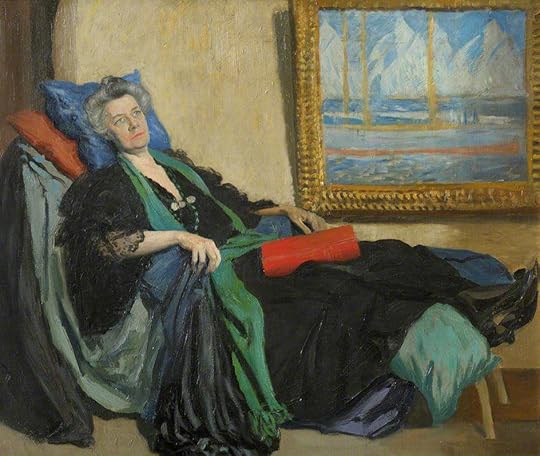
Jane Ellen Harrison, Newnham College, by Augustus John
Her memoir is freely accessible at: https://archive.org/details/b29981244
Jane Ellen Harrison (1850 – 1928) was a British classical scholar and linguist. She is known for being one of the few Victorian female scholars and has received recent attention (in particular through Mary Beard’s book The Invention of Jane Harrison). Her work is mostly associated with Greek religion and rituals, so in that sense she was a pioneer in classical studies. As I became interested in her work, I came across a small book written at the end of her life in 1925. In it, she muses about her childhood, going to college, her work in classical studies, as well as old age. It was very interesting to read her perspectives on life in Victorian England, going to college and her interactions with a number of famous people from the period. Among others she met John Ruskin, Samuel Butler, George Eliot and Henry James in person.
” And then last, but oh, so utterly first, came George Eliot. It was in the days when her cult was at its height—thank heaven I never left her shrine!—and we used to wait outside Macmillan’s shop to seize the new instalments of Daniel Deronda. She came for a few minutes to my room, and I was almost senseless with excitement. I had just repapered my room with the newest thing in dolorous Morris papers. Someone must have called her attention to it, for I remember that she said in her shy, impressive way, “Your paper makes a beautiful background for your face.” The ecstasy was too much, and I knew no more.”
It was also very enjoyable to read about her travels to Greece and Russia in search of rituals and archaeological sites and objects. She was quite an adventurous lady. Among other things she went to Greece with a German professor – Dr. Brunn:
” He let me go with him on his Peloponnesos Reise and his Insel Reise. They were marvels of organisation, and the man himself was a miracle. He would hold us spellbound for a six hours’ peripatetic lecture, only broken by an interval of ten minutes to partake of a goat’s-flesh sandwich and etwas frisches Bier. Once I saw, to my sorrow, three Englishmen tailing away after the frisches Bier . I was more grieved than surprised. They were Oxford men. It was worth many hardships to see forty German professors try to mount forty recalcitrant mules. My own horsemanship, as already hinted, is nothing to “write home about ”, but compared to those German professors I am a centaur.”
” I mention these ritual dances, this ritual drama, this bridge between art and life, because it is things like these that I was all my life blindly seeking. A thing has little charm for me unless it has on it the patina of age. Great things in literature, Greek plays for example, I most enjoy when behind their bright splendours I see moving darker and older shapes.”
Jane Ellen Harrison as Euripides’ Alcestis
She had some very interesting views on education and life in general: ”If I could have my life over again, I would devote it not to art or literature, but to language. Life itself may hit one hard, but always, always one can take sanctuary in language. Language is as much an art and as sure a refuge as painting or music or literature. It reflects and interprets and makes bearable life; only it is a wider, because more subconscious, life.”
She was a bit disgruntled with the state of classical education in the United Kingdom:
” Nowadays it seems you learn only what is reasonable and relevant. I went to Rome with a young friend, educated on the latest lines, and who had taken historical honours at Cambridge. The first morning the pats of butter came up stamped with the Twins. “ Good old Romulus and Remus,” said I. “ Good old who? ” said she. She had never heard of the Twins and was much bored when I told her the story; they had no place in “ constitutional history ”, and for her the old wolf of the Capitol howled in vain: “ Great God! I’d rather be ”!
At times she turned quite poetic: ” I like to live spaciously, but rather plainly, in large halls with great spaces and quiet libraries. I like to wake in the morning with the sense of a great, silent garden round me.”
I wish I could have learned more from her. She was very careful about what she said about people and especially so in regards to people that were alive at the time of writing her book. She shared plenty of wisdom among all her antics. It would have been nice to have known her in person, but this book at least gives a sense of her as a strong bright woman in a patriarchal society. She passed away three years after finishing her book. I’m glad to have met her in this little memoir.
” Life does not cease when you are old, it only suffers a rich change. You go on loving, only your love, instead of a burning, fiery furnace, is the mellow glow of an autumn sun.”
Jane Ellen Harrison, Newnham College, by Augustus John
Her memoir is freely accessible at: https://archive.org/details/b29981244

January 19, 2018
Jane Harrison retired from Cambridge after teaching Greek culture just as the dig at Troy began by Schliemann. She favored J. G. Frazer's title "The Golden Bough" and praised his inclusive premise. And Freud's "Totemism and Taboo" made a positive impression though not for the therapeutic hour.
These and other names from the late nineteenth and early twentieth centuries were contemporaries, authors, scholars and British politicians. She met Turgenev, Ruskin, George Eliot, Henry James, Tennyson, Walter Raleigh and many more. Gladstone's daughter, Helen was a friend. George Eliot was her favorite author who once visited her college room because of the unusual wallpaper that "flattered her face".
This memoir talks of her interests as a child when learning for a girl was just beginning to be institutionalized. She came to her profession as an Hellenist which was not inclusive of Greek language just as Archeology and Anthropology were recognized as organized scholarships. She tells readers that the latter fit her interests and would have broadened her teaching scope.
Jane Harrison wanted men as friends, not husbands. She sought learning from men and didn't miss having children. She talks of aging and her beliefs of existing in some form after death. Immortality was counter to what her body had always provided her in life, consciousness. Without consciousness, we would not exist.
This isn't a biography written by another. This memoir, under 100 pages, is her words, her perceptions, her life measured at its end by the one who lived it.
Favorite
These and other names from the late nineteenth and early twentieth centuries were contemporaries, authors, scholars and British politicians. She met Turgenev, Ruskin, George Eliot, Henry James, Tennyson, Walter Raleigh and many more. Gladstone's daughter, Helen was a friend. George Eliot was her favorite author who once visited her college room because of the unusual wallpaper that "flattered her face".
This memoir talks of her interests as a child when learning for a girl was just beginning to be institutionalized. She came to her profession as an Hellenist which was not inclusive of Greek language just as Archeology and Anthropology were recognized as organized scholarships. She tells readers that the latter fit her interests and would have broadened her teaching scope.
Jane Harrison wanted men as friends, not husbands. She sought learning from men and didn't miss having children. She talks of aging and her beliefs of existing in some form after death. Immortality was counter to what her body had always provided her in life, consciousness. Without consciousness, we would not exist.
This isn't a biography written by another. This memoir, under 100 pages, is her words, her perceptions, her life measured at its end by the one who lived it.
Favorite

October 25, 2019
4.5 ★★★★☆
Reseña en español | Review in English (below)
Memorias de Una Estudiante Victoriana son, como su nombre indica, las memorias escritas por Jane Ellen Harrison, lingüista, mitógrafa, antropóloga especialista en estudios clásicos y la primera profesora universitaria de Reino Unido, y publicadas en 1925, cuando contaba con setenta y cinco años, por Hogarth Press –la editorial de Virginia y Leonard Woolf–. Aun siendo unas memorias de apenas 100 páginas, me han resultado interesantísimas al leer grandes reflexiones sobre su vida de estudiante –era una de esas personas que nunca quiso dejar de estudiar y aprender–, entretenidas por su carácter cínico, defensora de la educación reglada de las mujeres, y con una intensa vida social.
Estas Memorias llevaban tiempo en mi lista de pendientes tras varias recomendaciones de amigas cercanas debido tanto a su temática, época, y la relación con Virginia Woolf –Jane Harrison fue la inspiradora para las conferencias de Una Habitación Propia–, y casi cometo el grandísimo error de hacerme con una edición en inglés –por la manía tan mía de intentar leerlo todo en su idioma original–. Me alegra enormemente haberme hecho con la edición a cargo de Aurora Ballesteros de la Editorial Trifolium, y es que, lo mejor de este libro se encuentra en el Estudio Preliminar, las notas al texto, el anexo biográfico y contexto cultural, y la bibliografía seleccionada.
Las memorias pueden ser interesantes per se, pero el estudio y las notas hacen mucho más y mejor al texto que escribió Jane Harrison, plagado de anécdotas sobre la vida social victoriana, sus amistades con grandes personalidades y sus logros académicos y profesionales. En su escrito, Jane Harrison no es humilde, pero es que no necesita serlo: ella logró entrar en el ámbito universitario (vetado a las mujeres hasta 1869) y destacar en una rama profesional en la que, hasta ese momento, era exclusiva de los hombres. Pese a que nos puedan chirriar las constantes menciones a su lista de amigos populares, en el texto nos encontramos con grandes reflexiones personales sobre el contexto histórico y cultural que le tocó vivir…
…, con opiniones sobre la educación de los más jóvenes, el estudio del arte, la mitología o la lingüística, entre otras.
Memorias de Una Estudiante Victoriana es uno de esos libros que al terminarlo te deja con una sonrisa en la boca, y que has acabado subrayando fragmentos enteros de texto por la capacidad crítica hacia la sociedad victoriana y eduardiana. Aunque no creo que estas Memorias sean para todos los gustos, está recomendadísimo para quienes os guste leer sobre la época victoriana y la educación de las mujeres, si os interesa Virginia Woolf, o si simplemente queréis conocer un poquito de la vida de una figura un tanto controvertida pero que pasa a la historia por ser la primera profesora universitaria en Inglaterra.
———————
Reminiscences of a Student's Life are the memoirs of Jane Ellen Harrison, linguist, mythologist, anthropologist specialized in classical studies and the first university woman professor in the United Kingdom, and published in 1925, when she was seventy-five years old, by Hogarth Press –the publisher house created by Virginia and Leonard Woolf–. Although the text is barely 100 pages long, it’s been very interesting to read great reflections on her life as a student –she was one of those people who never wanted to stop studying and learning–, it was entertaining by her cynical character, a defender of women's formal education, and with a bustling social life.
These Reminiscences had been on my tbr list for a while after several recommendations from close friends due to both their theme and the relationship with Virginia Woolf –Jane Harrison was the inspiration for A Room Of One’s Own–, and I almost made the big mistake of reading the open source English edition instead of the Spanish one in charge of Aurora Ballesteros from the Editorial Trifolium. So, I strongly suggest you read it from a good annotated edition with, if possible, a preliminary study and selected bibliography.
The Reminiscences of Jane Harrison are interesting per se, but the thorough study and the explanatory notes make the text even better. Full of anecdotes about Victorian social life, her friendships with great personalities and her academic and professional achievements, in her writings, Jane Harrison is not humble, but she needn't be: she managed to enter the university field (banned from women until 1869) and stand out in a professional branch in which, until that moment, it was exclusive to men. Although we can squeak at the constant mentions to her list of popular friends, in the text we find great observations on the historical and cultural context she lived, with opinions on the education of the younger, the study of art, mythology or linguistics, among others.
Reminiscences of a Student's Life is one of those books that, when finished, leaves you with a great smile on your face, and you’ve ended up underlining entire pieces of text because of the critical capacity towards Victorian and Edwardian society she had. Although I don’t think this memoirs are for all tastes, I highly recommended it for those who like to read about the Victorian era and the education of women, if you’re interested in Virginia Woolf, or if you simply want to know a little more about the life of a somewhat controversial figure that goes down in history for being the first university woman professor in England.
«Si pudiera volver a empezar mi vida, la dedicaría no al arte ni a la literatura, sino a la lengua. Hay golpes en la vida muy fuertes, pero uno siempre —siempre— puede encontrar un refugio sagrado en el lenguaje. La lengua es una obra de arte, y es un refugio tan seguro como la pintura, la música o la literatura. Refleja, interpreta y hace soportable la vida. Es, en realidad, una vida más ancha, de la que no somos conscientes.»
Reseña en español | Review in English (below)
Memorias de Una Estudiante Victoriana son, como su nombre indica, las memorias escritas por Jane Ellen Harrison, lingüista, mitógrafa, antropóloga especialista en estudios clásicos y la primera profesora universitaria de Reino Unido, y publicadas en 1925, cuando contaba con setenta y cinco años, por Hogarth Press –la editorial de Virginia y Leonard Woolf–. Aun siendo unas memorias de apenas 100 páginas, me han resultado interesantísimas al leer grandes reflexiones sobre su vida de estudiante –era una de esas personas que nunca quiso dejar de estudiar y aprender–, entretenidas por su carácter cínico, defensora de la educación reglada de las mujeres, y con una intensa vida social.
Estas Memorias llevaban tiempo en mi lista de pendientes tras varias recomendaciones de amigas cercanas debido tanto a su temática, época, y la relación con Virginia Woolf –Jane Harrison fue la inspiradora para las conferencias de Una Habitación Propia–, y casi cometo el grandísimo error de hacerme con una edición en inglés –por la manía tan mía de intentar leerlo todo en su idioma original–. Me alegra enormemente haberme hecho con la edición a cargo de Aurora Ballesteros de la Editorial Trifolium, y es que, lo mejor de este libro se encuentra en el Estudio Preliminar, las notas al texto, el anexo biográfico y contexto cultural, y la bibliografía seleccionada.
Las memorias pueden ser interesantes per se, pero el estudio y las notas hacen mucho más y mejor al texto que escribió Jane Harrison, plagado de anécdotas sobre la vida social victoriana, sus amistades con grandes personalidades y sus logros académicos y profesionales. En su escrito, Jane Harrison no es humilde, pero es que no necesita serlo: ella logró entrar en el ámbito universitario (vetado a las mujeres hasta 1869) y destacar en una rama profesional en la que, hasta ese momento, era exclusiva de los hombres. Pese a que nos puedan chirriar las constantes menciones a su lista de amigos populares, en el texto nos encontramos con grandes reflexiones personales sobre el contexto histórico y cultural que le tocó vivir…
«Odio el Imperio. Me parece sinónimo de todo lo inconveniente y pernicioso para el pensamiento; en él están siempre, necesariamente, las semillas de la guerra. Me opongo a casi todas las formas de patriotismo. Pero cuando busco en las profundidades ocultas de mi corazón, encuentro allí el más estrecho y rígido de los provincianismos.»
…, con opiniones sobre la educación de los más jóvenes, el estudio del arte, la mitología o la lingüística, entre otras.
Memorias de Una Estudiante Victoriana es uno de esos libros que al terminarlo te deja con una sonrisa en la boca, y que has acabado subrayando fragmentos enteros de texto por la capacidad crítica hacia la sociedad victoriana y eduardiana. Aunque no creo que estas Memorias sean para todos los gustos, está recomendadísimo para quienes os guste leer sobre la época victoriana y la educación de las mujeres, si os interesa Virginia Woolf, o si simplemente queréis conocer un poquito de la vida de una figura un tanto controvertida pero que pasa a la historia por ser la primera profesora universitaria en Inglaterra.
———————
Reminiscences of a Student's Life are the memoirs of Jane Ellen Harrison, linguist, mythologist, anthropologist specialized in classical studies and the first university woman professor in the United Kingdom, and published in 1925, when she was seventy-five years old, by Hogarth Press –the publisher house created by Virginia and Leonard Woolf–. Although the text is barely 100 pages long, it’s been very interesting to read great reflections on her life as a student –she was one of those people who never wanted to stop studying and learning–, it was entertaining by her cynical character, a defender of women's formal education, and with a bustling social life.
These Reminiscences had been on my tbr list for a while after several recommendations from close friends due to both their theme and the relationship with Virginia Woolf –Jane Harrison was the inspiration for A Room Of One’s Own–, and I almost made the big mistake of reading the open source English edition instead of the Spanish one in charge of Aurora Ballesteros from the Editorial Trifolium. So, I strongly suggest you read it from a good annotated edition with, if possible, a preliminary study and selected bibliography.
The Reminiscences of Jane Harrison are interesting per se, but the thorough study and the explanatory notes make the text even better. Full of anecdotes about Victorian social life, her friendships with great personalities and her academic and professional achievements, in her writings, Jane Harrison is not humble, but she needn't be: she managed to enter the university field (banned from women until 1869) and stand out in a professional branch in which, until that moment, it was exclusive to men. Although we can squeak at the constant mentions to her list of popular friends, in the text we find great observations on the historical and cultural context she lived, with opinions on the education of the younger, the study of art, mythology or linguistics, among others.
Reminiscences of a Student's Life is one of those books that, when finished, leaves you with a great smile on your face, and you’ve ended up underlining entire pieces of text because of the critical capacity towards Victorian and Edwardian society she had. Although I don’t think this memoirs are for all tastes, I highly recommended it for those who like to read about the Victorian era and the education of women, if you’re interested in Virginia Woolf, or if you simply want to know a little more about the life of a somewhat controversial figure that goes down in history for being the first university woman professor in England.
April 19, 2026
At my hypothetical dream dinner party where I get to invite anyone living or dead, I would sit Jane Harrison next to Woolf and George Eliot and spend the whole evening listening to them talk.
And then last, but oh, so utterly first, came George Eliot. It was in the days when her cult was at its height - thank heaven I never left her shrine! - and we used to wait outside Macmillan's shop to seize the new instalments of Daniel Deronda. She came for a few minutes to my room, and I was almost senseless with excitement. I had just repapered my room with the newest thing in dolorous Morris papers. Some one must have called her attention to it, for I remember that she said in her shy, impressive way, "Your paper makes a beautiful background for your face." The ecstasy was too much, and I knew no more.
If I could have my life over again, I would devote it not to art or literature, but to language. Life itself may hit one hard, but always, always one can take sanctuary in language. Language is as much an art and as sure a refuge as painting or music or literature. It reflects and interprets and makes bearable life; only it is a wider, because more subconscious, life.
At the time she writes this, she's in her seventies, living in Paris with her girlfriend (20-30 years her junior), making new friends, learning the foundations of Arabic.... may this lifestyle find me in my old age.... or now!
And then last, but oh, so utterly first, came George Eliot. It was in the days when her cult was at its height - thank heaven I never left her shrine! - and we used to wait outside Macmillan's shop to seize the new instalments of Daniel Deronda. She came for a few minutes to my room, and I was almost senseless with excitement. I had just repapered my room with the newest thing in dolorous Morris papers. Some one must have called her attention to it, for I remember that she said in her shy, impressive way, "Your paper makes a beautiful background for your face." The ecstasy was too much, and I knew no more.
If I could have my life over again, I would devote it not to art or literature, but to language. Life itself may hit one hard, but always, always one can take sanctuary in language. Language is as much an art and as sure a refuge as painting or music or literature. It reflects and interprets and makes bearable life; only it is a wider, because more subconscious, life.
At the time she writes this, she's in her seventies, living in Paris with her girlfriend (20-30 years her junior), making new friends, learning the foundations of Arabic.... may this lifestyle find me in my old age.... or now!

March 6, 2025
I was voluble and had instant success, but it was mentally demoralizing and very exhausting.
Casually brilliant. One wishes oneself a Cambridge Ritualist.
4.25 stars
Casually brilliant. One wishes oneself a Cambridge Ritualist.
4.25 stars
March 10, 2026
Harrison återberättar sitt liv som en av få kvinnor i Englands akademiska värld under sekelskiftet 1800/1900.
Vacker prosa. Passade bra att läsa innan Lispectors Água Viva iom att Harrison väcker tanken för språk och litteratur som en konstform i egen regi. Med Harrisons synsätt i åtanke kunde jag läsa Água Viva med helt andra ögon än vad jag nog hade gjort om jag inte läste den här boken innan.
Vacker prosa. Passade bra att läsa innan Lispectors Água Viva iom att Harrison väcker tanken för språk och litteratur som en konstform i egen regi. Med Harrisons synsätt i åtanke kunde jag läsa Água Viva med helt andra ögon än vad jag nog hade gjort om jag inte läste den här boken innan.
April 13, 2024
Originally published in 1925 by the Hogarth Press (that is, by Leonard and Virginia Woolf), now reissued by McNally Editions, which is focused on "books that are not widely known, but have stood the test of time," this is a fascinating peek into an extraordinary life. Highly recommended for anyone who enjoys gaining insight into fellow human beings from another time and place.
I found it delightful reading, on many levels, but I also struggle to describe how much is compressed into this very brief volume (originally serialized in an English magazine before the Woolfs made it into a book). In the foreword, Daniel Mendelsohn describes it as a "breezy and highly entertaining memoir," and it is that, but he also notes "that it gives a powerful sense of what made its author so fascinating an so important."
There are throw-away lines that leave me gasping for breath: "Burne-Jones too was kind to me....He wrote me many letters with whimsical illustrated drawings. I am sorry now that I tore them up." End of story! What? How can you leave it there? What were those drawings of, or what did the letters say, that she tore them up? Mostly, however, it's not as frustrating as that, but the strange combination of English propriety and the observations of a radically independent mind make for some startling reading. Here's a passage that may give some idea of the author, and of this book:
"All through my London life I worked very hard--but, no! I remember that Professor Gilbert Murray once told me that I had never done an hour's really hard work in my life. I think he forgets that I have learnt the Russian declensions, which is more than he ever did. But I believe he is right. He mostly is. I never work in the sense of attacking a subject against the grain, tooth and nail....The Russian verb 'to learn' takes the dative, which seems odd till you find out that it is from the same root as 'to get used to.' When you learn you 'get yourself used to' a thing. That is worth a whole treatise of pedagogy. And it explained to me my own processes. One reads round a subject, soaks oneself in it, and then one's personal responsibility is over; something stirs and ferments, swims up into your consciousness, and you know you have to write a book. That may not be 'hard work,' but let me tell Professor Murray it is painfully and pleasantly like it in its results; it leaves you spent, washed out, a rag, but an exultant rag."
There's more in that paragraph than in many a book I've read! First of all, her observation that "when you learn you get used to a thing" is intriguing, and I agree with her that it is "worth a whole treatise of pedagogy." (I'd like to read that treatise, if anyone has written it.) Meanwhile, her description of how one comes to write a book is pretty striking, especially the part about after studying, "one's personal responsibility is over," but something "stirs and ferments," and THEN "you know you have to write a book." Many authors might agree, but how many would describe in quite that way?
I could go on and on, but it's brief book, just go get a copy and read it for yourself. I found it in the library, but I'm tempted to buy a copy, so I can re-read it whenever I need a lift.
I found it delightful reading, on many levels, but I also struggle to describe how much is compressed into this very brief volume (originally serialized in an English magazine before the Woolfs made it into a book). In the foreword, Daniel Mendelsohn describes it as a "breezy and highly entertaining memoir," and it is that, but he also notes "that it gives a powerful sense of what made its author so fascinating an so important."
There are throw-away lines that leave me gasping for breath: "Burne-Jones too was kind to me....He wrote me many letters with whimsical illustrated drawings. I am sorry now that I tore them up." End of story! What? How can you leave it there? What were those drawings of, or what did the letters say, that she tore them up? Mostly, however, it's not as frustrating as that, but the strange combination of English propriety and the observations of a radically independent mind make for some startling reading. Here's a passage that may give some idea of the author, and of this book:
"All through my London life I worked very hard--but, no! I remember that Professor Gilbert Murray once told me that I had never done an hour's really hard work in my life. I think he forgets that I have learnt the Russian declensions, which is more than he ever did. But I believe he is right. He mostly is. I never work in the sense of attacking a subject against the grain, tooth and nail....The Russian verb 'to learn' takes the dative, which seems odd till you find out that it is from the same root as 'to get used to.' When you learn you 'get yourself used to' a thing. That is worth a whole treatise of pedagogy. And it explained to me my own processes. One reads round a subject, soaks oneself in it, and then one's personal responsibility is over; something stirs and ferments, swims up into your consciousness, and you know you have to write a book. That may not be 'hard work,' but let me tell Professor Murray it is painfully and pleasantly like it in its results; it leaves you spent, washed out, a rag, but an exultant rag."
There's more in that paragraph than in many a book I've read! First of all, her observation that "when you learn you get used to a thing" is intriguing, and I agree with her that it is "worth a whole treatise of pedagogy." (I'd like to read that treatise, if anyone has written it.) Meanwhile, her description of how one comes to write a book is pretty striking, especially the part about after studying, "one's personal responsibility is over," but something "stirs and ferments," and THEN "you know you have to write a book." Many authors might agree, but how many would describe in quite that way?
I could go on and on, but it's brief book, just go get a copy and read it for yourself. I found it in the library, but I'm tempted to buy a copy, so I can re-read it whenever I need a lift.
November 15, 2025
3,5 🌟
Read
April 8, 2024it was worth many hardships to see forty german professors try to mount forty recalcitrant mules

December 1, 2025
Despite the academic credentials and Victorian background of the author, Jane Harrison's memoir is surprisingly light fare. Though she touches on her education and professional accomplishments, her focus is far more on her life (as well as a healthy dose of name dropping). The short tome is a speed-run through her childhood and adult years, often sparing with facts and dates, instead primarily providing anecdotes and chatty asides that give a sense of Harrison's ebullient personality. Though a path-breaker for women in her field, there is hardly any illusion to her extraordinary success. However, this is a fun, and at times thoughtful insight into a remarkable woman's life and work. Highly recommend
August 3, 2020
This is a very engaging and fun little memoir by an extraordinary women - Jane Ellen Harrison (1850-1928) was a pioneering classical scholar and a fearlessly independent character. She was one of the first female university students in Britain, and one of the earliest women to make her living as a scholar.
This is a very short book (around 90 pages), and is far from an exhaustive chronicle of her life - it's more a collection of scattered recollections and anecdotes. She starts with stories of her childhood in the Yorkshire of the 1850s, before jumping forward to her adult life and her encounters with prominent figures of the time. My favourite concerned the Empress Frederick of Prussia (Vicky, eldest daughter of Queen Victoria), of whom Harrison vividly observes: "had fate not broken her wings and caged her in a palace, she would have flown high". Harrison writes in a wandering, rambling fashion, but I found her narrative consistently entertaining despite (or perhaps because of?) the constant digressions.
Harrison also shares her philosophies and approaches to life, some dubious and others remarkable in their radical originality (particularly for the time). She writes from a position of considerable privilege, which inevitably skews her perspective on how things 'should' be (for example, she suggests reforming the education system by teaching each child several languages and giving them access to a very large library - great in theory, but entirely unconcerned with differences of class and circumstances!).
The best and most moving chapter is the final one, which contains Harrison's thoughts on ageing and the unmarried life. Rarely have I seen a sentence as perfect as "I do not doubt that I lost much, but I am quite sure I gained more". And when I read "I think as civilisation advances, family life will become, if not extinct, at least much modified and curtailed", it was striking to recognise how startlingly modern and progressive Harrison was in envisaging a world where her choices - to remain single, to devote her life to learning - would become more widely accepted.
This isn't a great introduction to Harrison as it was clearly written with the assumption that the reader started with some basic knowledge of her work and reputation, but even as someone who had never heard of her before I found this stirred my curiosity and made me want to learn more about her life. Recommended.
This is a very short book (around 90 pages), and is far from an exhaustive chronicle of her life - it's more a collection of scattered recollections and anecdotes. She starts with stories of her childhood in the Yorkshire of the 1850s, before jumping forward to her adult life and her encounters with prominent figures of the time. My favourite concerned the Empress Frederick of Prussia (Vicky, eldest daughter of Queen Victoria), of whom Harrison vividly observes: "had fate not broken her wings and caged her in a palace, she would have flown high". Harrison writes in a wandering, rambling fashion, but I found her narrative consistently entertaining despite (or perhaps because of?) the constant digressions.
Harrison also shares her philosophies and approaches to life, some dubious and others remarkable in their radical originality (particularly for the time). She writes from a position of considerable privilege, which inevitably skews her perspective on how things 'should' be (for example, she suggests reforming the education system by teaching each child several languages and giving them access to a very large library - great in theory, but entirely unconcerned with differences of class and circumstances!).
The best and most moving chapter is the final one, which contains Harrison's thoughts on ageing and the unmarried life. Rarely have I seen a sentence as perfect as "I do not doubt that I lost much, but I am quite sure I gained more". And when I read "I think as civilisation advances, family life will become, if not extinct, at least much modified and curtailed", it was striking to recognise how startlingly modern and progressive Harrison was in envisaging a world where her choices - to remain single, to devote her life to learning - would become more widely accepted.
This isn't a great introduction to Harrison as it was clearly written with the assumption that the reader started with some basic knowledge of her work and reputation, but even as someone who had never heard of her before I found this stirred my curiosity and made me want to learn more about her life. Recommended.

October 20, 2024
Very fun, very smartly and directly written, very gossipy about all the famous people Harrison met, with some lovely gimlet-eyed portraits of some of the more pompous men. It's especially remarkable how Harrison's training as a classicist enabled her to step outside of the Victorian era and view it at a remove, as a cultural and temporal occurrence with its own traditions and tendencies, as a historian might years later, but as it is almost impossible for most of us to do while living it. And I loved the passage towards the end about ritual and religion, about spiritual universality - Harrison must have been alive to the ideas shared by the Expressionists, the ideas that would also feed Jung, about art and spirituality.
That said, this is a very short book, adapted from a talk Harrison gave, and its context is very much to those on the inside already, aware of what she achieved within Hellenic study and familiar with her ideas and how she came to them. Daniel Mendelsohn can only go so far in his short introduction. I loved Harrison's voice, and ill definitely seek out her scholarly work -- but I'd have liked more of an insight into it from the woman herself, or some more insight into her struggles as an academic in the late 19th and early 20th Century. She's playing a lighthearted game here, for laughs, and it raises many questions about everything she leaves out.
That said, this is a very short book, adapted from a talk Harrison gave, and its context is very much to those on the inside already, aware of what she achieved within Hellenic study and familiar with her ideas and how she came to them. Daniel Mendelsohn can only go so far in his short introduction. I loved Harrison's voice, and ill definitely seek out her scholarly work -- but I'd have liked more of an insight into it from the woman herself, or some more insight into her struggles as an academic in the late 19th and early 20th Century. She's playing a lighthearted game here, for laughs, and it raises many questions about everything she leaves out.
September 6, 2026
Jane was ahead of her time in many respects which I believe the middle-upper class she was a part, lended her the ability to do so. Her time spent in education and educated circles allowed her the ability to study, write, travel and think for herself. As this is the case, I couldn’t help but ponder the idea that our parent’s influence shape us forever. Her father's indifference towards her, and her step-mother’s insistence that she study and practice evangelical religion, inforced Jane’s thoughts and ideas which framed the college instructor she ended up becoming.
I’ll commend her ability to persevere when Cambridge had strict ideas on what women could study. She took what they gave her and then shaped it into what she wanted to do.
Her complete lack of desire for a family when the times could have demanded it from her was inspiring. Although it again alludes to her privilege of class, it still would have been a disappointment from those in her life when she decided not to pursue marriage. The poet she lived with at the end of her life does beg the question though - was the poet her lover? Perhaps a family and marriage did not excite her because she was gay in a time where that wasn’t acceptable. Did her family know this and that was one reason why marriage was not pushed upon her?
I’ll commend her ability to persevere when Cambridge had strict ideas on what women could study. She took what they gave her and then shaped it into what she wanted to do.
Her complete lack of desire for a family when the times could have demanded it from her was inspiring. Although it again alludes to her privilege of class, it still would have been a disappointment from those in her life when she decided not to pursue marriage. The poet she lived with at the end of her life does beg the question though - was the poet her lover? Perhaps a family and marriage did not excite her because she was gay in a time where that wasn’t acceptable. Did her family know this and that was one reason why marriage was not pushed upon her?
This entire review has been hidden because of spoilers.

January 3, 2025
The title of this book is a misnomer as the text has little to do, or say about Jane Harrison’s schooldays. Rather it a cheeky, and at times irreverent look back at episodes from her life growing up in Yorkshire, at finishing school, studying and later lecturing at Cambridge, as well as elsewhere, and her field trips in pursuit of her archaeological and anthropological work. Ms Harrison also incorporates witty commentaries, and expresses outspoken opinions about people whom she encountered and grew to know in pursuit of her search for knowledge, and her studies.
The book provides a brief, but entertaining look back at the trials that women endured as they broke barriers and entered fields once closed to them that were previously open to men only with nary a negative word spoken. The author only voices a few regrets about opportunities that she failed to avail herself of.
Readers seeking more details, and insights into Ms. Harrison’s life will need to look elsewhere.
The book provides a brief, but entertaining look back at the trials that women endured as they broke barriers and entered fields once closed to them that were previously open to men only with nary a negative word spoken. The author only voices a few regrets about opportunities that she failed to avail herself of.
Readers seeking more details, and insights into Ms. Harrison’s life will need to look elsewhere.
March 24, 2024
Unfortunately not quite what I'd hoped for and expected. Based on the title, I thought Harrison would take us through much more of her life as a student, both at university and beyond as she traveled the world and studied Greek history and religion. What we got were snippets I often lacked context for, with a focus on namedropping the many famous people she knew. I did enjoy the humor though.
Language is as much an art and as sure a refuge as painting or music or literature. It reflects and interprets and makes bearable life; only it is a wider, because more subconcious, life.

April 16, 2024
The only thing that made me read this book is its inclusion in the McNally reprints; the best thing I can say about it is that it is very short. These autobiographical fragments give absolutely no idea of what it was like to be "an ambitious, full-time, salaried, university researcher and lecturer" and even less of how she got there. Half of the people she references are no longer household names and the anecdotes she tells are not sufficiently memorable to bear reading for their own sake today. It's a pity that such a pioneer didn't leave a more substantial account of her career behind, but even with Daniel Mendelsohn's preface this reprint feels superfluous.
June 16, 2024
wry & witty memoirs of one of the first female classicists who revolutionized the study of antiquity. with the way she describes her childhood, she MIGHT have gone to highlands latin school. quick, easy, and a lovely reminder that people have always been people and that declining in latin is truly a chore.

Did Not Finish
September 2, 2025It seems that I either love a particular McNally Edition title (Ex-Wife, Rattlebone, The Stepdaughter) or it’s a DNF. This one, unfortunately, is in the latter category. Jane Hamilton certainly was accomplished and, I’m sure, an interesting person but this simply felt too stream of consciousness and boring.

December 12, 2019
Una biografía novelada breve y divertida. El humor y la acidez tan victorianos de Jane Ellen Harrison y esa capacidad de reinvención de la historia propia. Si te gustan las mujeres divertidas, cultas e interesantes este libro es de obligada lectura.
July 25, 2024
"Only in and through the pattern of art, or it may be of religion, which is a form of art, do we at all seize and understand the tangle of experience which we call Life"
"By what miracle I escaped marriage I do not know, for all my life long I fell in love"
"By what miracle I escaped marriage I do not know, for all my life long I fell in love"
February 29, 2024
* I read the McNally Edition with forward by Daniel Mendelsohn
** I would rate this a 3.5 if I could.
** I would rate this a 3.5 if I could.
May 20, 2024
Magnífico libro. No le doy 5 estrellas porque me temo que la traducción podría ser mejor, aunque no estoy segura de ello, pero de lo que sí lo estoy es de que no es perfecta.
Este personaje, hasta hoy desconocido para mí, que es Jane Ellen Harrison es otra de esas mujeres que como May Sarton, pero mucho antes, en una época en la que una mujer solo podía ser esposa y madre, fue una mujer libre, independiente y que triunfó en lo profesional y lo personal.
Por supuesto, no se trata de una mujer de clase obrera, disfrutó de la posición que le granjeó su origen, su familia, pero en cualquier caso también muchas otras mujeres gozaron de ese beneficio y no lo utilizaron como ella.
Me ha parecido muy interesante la manera tan natural que tuvo de contar muy brevemente las diferentes etapas de su vida a través del lugar donde sucedieron y a través de la incesante mención de sus amigos, conocidos y de figuras relevantes que tuvo el gusto (o no) de conocer.
Una ávida sed de conocimiento y comprensión atraviesa sus páginas y nos invita a reflexionar sobre la posibilidad de comprender a los demás, a pesar de no estar de acuerdo con ellos, y no solo eso, sino de poder mantener una amistad con quienes resultan contrarios a nuestras opiniones. Una manera muy rica, desde mi punto de vista, de nutrirnos, cuestionar, reforzar o modelar nuestras propias opiniones manteniéndolas siempre vivas, sin darlas por sentado al rodearnos tan solo de personas afines, como parece que se reza hoy en día.
La sociedad, los hilos que la rigen, parecen decirnos: "o conmigo o contra mí". No es cierto. No debemos permitir que nos convenzan de esto, porque ahí radica el peligro del enfrentamiento, de la guerra, de la barbarie,... Hay que esforzarse en dejar a un lado las enemistades y buscar la comprensión mutua y los puntos en común, en lugar de las diferencias. Tan solo eso afianza la paz, la constante exposición a la duda, a otras posibilidades y el amor hacia otros que mana de conocerlos en profundidad, incluso cuando no estamos de acuerdo.
Este personaje, hasta hoy desconocido para mí, que es Jane Ellen Harrison es otra de esas mujeres que como May Sarton, pero mucho antes, en una época en la que una mujer solo podía ser esposa y madre, fue una mujer libre, independiente y que triunfó en lo profesional y lo personal.
Por supuesto, no se trata de una mujer de clase obrera, disfrutó de la posición que le granjeó su origen, su familia, pero en cualquier caso también muchas otras mujeres gozaron de ese beneficio y no lo utilizaron como ella.
Me ha parecido muy interesante la manera tan natural que tuvo de contar muy brevemente las diferentes etapas de su vida a través del lugar donde sucedieron y a través de la incesante mención de sus amigos, conocidos y de figuras relevantes que tuvo el gusto (o no) de conocer.
Una ávida sed de conocimiento y comprensión atraviesa sus páginas y nos invita a reflexionar sobre la posibilidad de comprender a los demás, a pesar de no estar de acuerdo con ellos, y no solo eso, sino de poder mantener una amistad con quienes resultan contrarios a nuestras opiniones. Una manera muy rica, desde mi punto de vista, de nutrirnos, cuestionar, reforzar o modelar nuestras propias opiniones manteniéndolas siempre vivas, sin darlas por sentado al rodearnos tan solo de personas afines, como parece que se reza hoy en día.
La sociedad, los hilos que la rigen, parecen decirnos: "o conmigo o contra mí". No es cierto. No debemos permitir que nos convenzan de esto, porque ahí radica el peligro del enfrentamiento, de la guerra, de la barbarie,... Hay que esforzarse en dejar a un lado las enemistades y buscar la comprensión mutua y los puntos en común, en lugar de las diferencias. Tan solo eso afianza la paz, la constante exposición a la duda, a otras posibilidades y el amor hacia otros que mana de conocerlos en profundidad, incluso cuando no estamos de acuerdo.

December 2, 2024
Could have done with more Classics and less about Russia, but I loved the tone of this. The writing was sharp and witty.
December 17, 2024
Alright for what it is. Short and well written enough that it wasn't a chore, but there just isn't a whole lot there. Maybe at the time of its original release it hit a little different. Now, I'm not a huge memoir reader anyway and Victorian England really isn't my thing, so can't say I would have ever gone for it had it not been the next McNally edition up. Piqued my interest in her scholarly work at least.

December 31, 2024
Mercifully short.

March 2, 2025
Just okay. Pretty dated. Glad I got this one from the library instead of spending my money.
December 21, 2025
3.5 stars

May 20, 2026
Some great moments but altogether too brief and hollow. She lived such an interesting life, it would have been nice to see more of it.

July 10, 2024
Going further down the Hope Mirrlees rabbit hole, I came across this recent (March 2024) reprint of Harrison's short book on her early life. They were a couple later in Harrison's post Newnham life, with a 37-year difference in their ages.
It is perhaps odd that the Introduction for this book by one of the first female members of OxBridge's academic community, and an author who is remembered even today for her discovery of the early, pre-Olympian, female cults and religions of Greece, is by a male - Daniel Mendelsohn.
Notes would have been appreciated - there are a lot of references to individuals and events that no longer ring a bell.
A Late Victorian (born in 1850) her short reminiscences of famous people she met is quite fun (she is very witty!). A book that will be a good (if short) read for any Victorianist.
I do wish GoodReads would use an earlier in life photo of her.
Republished as an eBook and pb by McNally Editions - a publisher given over to republishing works they feel need renewed attention. Their short list of titles includes everything from the very obscure to Puig.
A short book that can be quickly read - and is witty, outspoken and charming all at once. For Mirrlees and Harrison fans, and Victorianists.
It is perhaps odd that the Introduction for this book by one of the first female members of OxBridge's academic community, and an author who is remembered even today for her discovery of the early, pre-Olympian, female cults and religions of Greece, is by a male - Daniel Mendelsohn.
Notes would have been appreciated - there are a lot of references to individuals and events that no longer ring a bell.
A Late Victorian (born in 1850) her short reminiscences of famous people she met is quite fun (she is very witty!). A book that will be a good (if short) read for any Victorianist.
I do wish GoodReads would use an earlier in life photo of her.
Republished as an eBook and pb by McNally Editions - a publisher given over to republishing works they feel need renewed attention. Their short list of titles includes everything from the very obscure to Puig.
A short book that can be quickly read - and is witty, outspoken and charming all at once. For Mirrlees and Harrison fans, and Victorianists.
Displaying 1 - 30 of 33 reviews