Compared to the Puritans, Mormons have rarely gotten their due, often treated as fringe cultists or marginalized polygamists unworthy of serious examination. In Kingdom of Nauvoo, Benjamin E. Park excavates the brief, tragic life of a lost Mormon city, demonstrating that the Mormons are essential to understanding American history writ large. Using newly accessible sources, Park recreates the Mormons’ 1839 flight from Missouri to Illinois. There, under the charismatic leadership of Joseph Smith, they founded Nauvoo, which shimmered briefly—but Smith’s challenge to democratic traditions, as well as his new doctrine of polygamy, would bring about its fall. His wife Emma, rarely written about, opposed him, but the greater threat came from without: in 1844, a mob murdered Joseph, precipitating the Mormon trek to Utah. Throughout his absorbing chronicle, Park shows that far from being outsiders, the Mormons were representative of their era in their distrust of democracy and their attempt to forge a sovereign society of their own.
"the reciprocity required to maintain democratic balance between citizenry and government seemed to erode on the American frontier, where tyrannical majorities stamped out dissent." - Ben E Park, alluding to both Lincoln and Tocqueville, in Kingdom of Nauvoo
Having grown up in the LDS faith tradition, my relationship to both Mormon history and Nauvoo was largely influenced by a purely religious and almost myth-based history. I knew that Mormon history in the 1830s -40s took place before the Civil War in New York, Ohio, Missouri, Illinois (and eventually Utah), but I largely thought of pre-Civil War, Jacksonian America and the pre-Utah history of my faith as existing in isolation of each other. That false, historical separation was unfortunate. It is impossible to truly understand either early Mormon history without understanding the context of American politics (especially frontier politics) at the time OR to understand American history during the post post-Jackson era without understanding the "Mormon Problem". Using the Mormon city of Nauvoo as a lense, Ben Park is able to weave both the story of early Mormonism together with the limits of American democracy as it pertained to minorities in the pre-Civil War, pre-14th amendment, America. The inability of the Federal government to adequately protect minority groups, before the 1868 amendment, from states (read Missouri) or mobs was a nearly fatal flaw in American democracy.
If all Ben Park did was tell a good history of Nauvoo, I would have probably given this book four stars, but Ben was able to weave a fantastic narrative that integrated Nauvoo's story into the challenges of American democracy. He did it with fantastic research* and a nuanced approach that didn't forget that women were a large part of the early Mormon history AND that adequately put into perspective Mormon persecution against the larger brutality of Slavery and America's genocide and persecution of Native tribes. He does this skillfully in a way that helps give nuance to his narrative rather than simply as an after thought.
That gift for nuance also comes in useful as Ben Park explores the genesis of Mormon polygamy in Nauvoo and the internal and external conflicts its practice created.
In 2016, the Church of the Latter-Day Saints released approximately 150 extraordinary new documents from the 1840’s. Mr. Park has thoroughly researched these sources to present a well-balanced account of a little-known time in early Mormon history vis-a-vis KINGDOM OF NAUVOO.
The majority of this book takes place between 1839-1845. By 1939, the Mormons are again forced, by fearful and critical neighbors, to leave their homes and strike out for a new safe haven. This is especially the case as a massacring mob sweeps through their Missouri village, at the behest of Missouri’s governor, and “exterminate”s 17 men, women and children.
The Mormons flee across the Mississippi River and eventually congregate in the area of Commerce, Illinois. As the Mormons look to settle again, their prophet, Joseph Smith, purchases 700 acres on the peninsula that includes Commerce—renaming it Nauvoo, a word of Hebrew origin meaning “a beautiful situation”.
In Nauvoo, the Mormons work their land, worship God and relish in their newfound religious Paradise. Nauvoo enjoys a regular stream of new members to the area and by 1845 Nauvoo is larger than Chicago. However, religious intolerance of their neighbors both near and across the river in Missouri see the saints establish an impressive militia and their own courts to protect them from the unruly American democracy of which they are at theocratic and philosophic odds.
As Nauvoo’s population grows and resulting political activity and influence become apparent, so do the rumors of unlawful relationships and questionable ecclesiastical revelations. Smith’s tight ball of control begins to unravel as different threads are pulled revealing the new practice of Mormon polygamy. Once the truth is brought out into the light, the downfall of Smith and Nauvoo begins as a result of gobsmacked non-polygamist Mormons and non-Mormons.
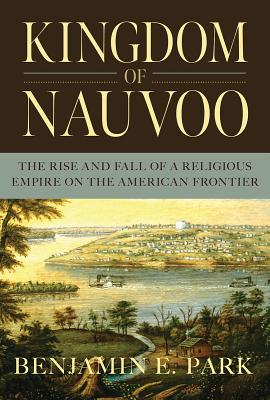
I found this book to be very interesting and informative. It seems that Mr. Park delved into the “meat” of each one of the new sources of information to bring this book to fruition. The cover of the book is beautiful and evocative of a farmer’s utopia. Within the book there are pictures to aid and complement the reader’s understanding.
As much as the book is interesting, it becomes dry at times and hard to follow the actual time period as it seems to go back and forth (but this may be a function of the breadth of info that had been gleaned). Also, it seems to me that phrases are intermittently repeated which are not necessary. And, lastly, while I always enjoy pictures to help my understanding when reading, I find that in my copy about half of them are so faint as to be illegible or not of good quality.
The slight “negatives” aside, I recommend this book to anyone who loves history or who is curious about early Mormon history. The forgotten is now revealed.
My thanks to Liveright Publishing and the author, Benjamin E Park, for this ARC in exchange for a review.
What do you get when you combine boomtown dynamics, theocratic bravado, manifest destiny, church v. state battles, secret and illegal marriage practices, America's chaotic expansion, a charismatic leader, a malleable and dogmatic populace, and a whole lot of fun and wackiness? Something like Nauvoo, Illinois in the mid-nineteenth century. And Benjamin E. Park's book does a fantastic job weaving all of these threads in an instructive, fair, and compelling way.
Park unearths vital information that isn't widely and easily available to modern Mormons -- he goes deeper than the shiny, toothless representation of the Nauvoo period proferred by Mormon leaders and their correlation-mandated materials. Some of those friendlier happenings are true and essential to the story, but when they are isolated it gives a faulty, lifeless utopian feel to a vicious and visionary paradigm in both Mormon and American history.
It's imperative that both the Mormon and historical contexts go together in a C.S.-Lewis-which-shear-is-more-essential-in-scissors way for the story, and Park has the skills and sheer expertise to accomplish the task, raising the ghosts not just among the brick and ornate edifices, but the fallen wooden shacks and buildings as well.
In the book's final pages, a personal connection brought me joy. My great-grandma^4, Mary Ann [Frost] Pratt, was fed up with the secret polygamy of her husband, one of the earliest Mormon apostles, Parley Pratt, and was granted a divorce from him. I was happy to see her name in print since it took much resolve to stand up for one's self amid such patriarchal secrecy. It really meant a lot that a book of this import includes such seemingly small details since her husband (my great-grandpa^4) has had endless ink used on his behalf. She's a hero of mine and I feel honored to be her descendant.
The book has my highest recommendation, and I will soon re-read it (and re-listen on Audible as well).
I've been meaning to read this for a while, and the reason I finally did is because American Zion just came out. I can't very well read that without reading this first!! Well, I can, I just figured this would be a better order.
I listened to the audiobook, while occasionally following along with the ebook, but honestly the audio was amazing so I barely had to reference the ebook. I really like that Mr Park made the book so digestible and interesting.
Many of the events described were already familiar to me, but I enjoyed reading more about them anyway. What I didn't know, was just how big of an influence the Mormons had on politics at the time, it was truly fascinating.
This was so well researched, I absolutely love the notes section. Seeing some of the books that are already on my tbr, and finding new ones to add is always a treat. I appreciate the effort the author put into Kingdom of Nauvoo, and I'm happy to report that, because of his excellent writing, I feel like I have a much better understanding of the Nauvoo period in history than before I started this book.
I am not as well read in Mormon history as I once was, back when my work as the Book Review editor for Dialogue: A Journal of Mormon Thought kept me, if not thoroughly familiar with all the books of history which passed through my hands, than at least abreast of most of the developments in the field. But it's been a few years since I've attended closely to such conversations, so I don't know if Benjamin Park's superb history is as unique or needed as I feel it is upon reading it. Still, that's my reaction, however unrepresentative of the current state of the sub-discipline it may be, and I'm standing by it: this is the most full and satisfying work of early Mormon history I've read since Richard Bushman's ground-breaking biography of Joseph Smith, Rough Stone Rolling, many years. And looking back on my thoughts about and reactions to the story which that book told, I realize how appropriate it is that Park's book put me in mind of Bushman's biography, because the story Park tells, making use of information about Smith's Council of Fifty which was unavailable to Bushman, deepens our engagement with questions anyone interested in early Mormon history must have about Smith's own relationship to American pluralism, liberalism, and democracy--questions which, arguably, Park answers differently than Bushman did.
To put it as simplistically as possible, Bushman presented Smith towards the end of his life, at least on my reading, as someone energetically, even frantically (and often duplicitly), cobbling together in his city of Nauvoo a distinctly, if unconventionally, American vision for himself and the Mormon people: political power, economic growth, military strength, personal liberty, etc. Park, however, emphasizes the profoundly--if usually incoherently or even ignorantly--illiberal and radical character of what Smith had in mind; he is able to speak more directly, with greater documentary support, as to what Smith called "theodemocracy," and how his expression of this ideal is obviously rooted in what so many early members of the Mormon church quite reasonably--and publicly--identified as the failures of democracy on the mid-19th-century American frontier. I am not entirely convinced by the case Park makes here for understanding Smith's experiments as representing something important in our assessment of the development of American democracy; Park sometimes writes as though he is producing a work of intellectual history, but his treatment of the theoretical arguments which the various (often obviously incompatible) facets of Smith's innovations touch upon isn't developed in a thorough enough way to really give us a "theory" of Joseph Smith himself.
Still, before a political theory, we need some political facts, and the facts which Park presents here are essential. I learned a huge amount from this book about things that I know Bushman, for all his research, had no answer to: basic matters like who the Mormons of Nauvoo supported in various Illinois elections, or how Smith's wholly quixotic presidential campaign was conceived, organized, and carried out in late 1843 and early 1844, or even such fundamentals of how voting was conducted in Nauvoo. Moreover, he weaves all of these facts together into a portrait of the American frontier (and in particular Illinois) which wonderfully complements other, more broad histories of 19th-century America, complete with extensive treatments of Stephen Douglas and multiple other key individuals. So as an addition to my historical understanding of the world Smith lived in and built towards the end of his life, Park's work is absolutely crucial. I'm going to have to think more about what a better understanding of all this provides me with in terms of my theoretical grasp of the evolution of liberal democracy in 19th-century America, but thanks to Park I have tools to do so that I lacked before, and that's something I'm deeply appreciative of.
A wild ride from start to finish. Despite knowing the end from the beginning, and the broad contours along the way, I compulsively consumed Park's account of Joseph Smith's religious, social, and political innovations during his time in Nauvoo.
For the first time I feel that I understand both sides of the the conflict between Illinois and the Mormons. The former were not devils solely hell-bent on destroying God's kingdom, and the latter were not, well, saints innocent of any offense. The Mormon practice of bloc voting was deeply anti-democratic though understandable given the failure of democracy in protecting their rights in Missouri and the unresponsiveness of the federal government to Mormon pleas for redress. Nauvoo's municipal abuse of habeas corpus review subverted the US legal system, and was both a response to failures of that legal system and prompted further rejection of the US courts to settle disputes. And the double-dealing on Mormon polygamy in Nauvoo—Joseph (and later Hyrum) privately expanded the number of non-monogamous sealings while publicly denying any such behavior—only worsened the Mormon predicament. (Brigham Young's later decision to be public about plural marriage allows me to at least entertain the possibility that polygamy served a divine function, but to me Joseph's secret polygamy is morally indistinguishable from John Bennett's many illicit affairs.)
Ultimately, while Joseph did not deserve to be assassinated, he needed to be held accountable. I find it interesting that, decades later, Utah was not allowed to enter the union until the federal government had rectified these three Mormon practices: the Church president was not allowed to be the territorial governor, polygamy was outlawed, and the Saints had to adopt the two-party political system (even though one of those parties was founded on eradicating polygamy).
The details on the Council of Fifty were all new to me and underscored two ideas. First, I was aware that the Utah Saints were antagonistic towards the US and even expected (hoped?) the Civil War would destroy the US altogether, but I'd thought that antagonism originated with Smith's martyrdom. Park makes it clear that Mormons were already hostile to democracy, not without reason, during Joseph's life. Second, Joseph had no "final" structure for Church governance in mind. He was constantly innovating new councils and governing bodies, and would have continued to do so as long as he lived.
I've been to Nauvoo. My siblings and I rather irreverently listened to "All Star" by Smashmouth while parked outside the Redbrick Store. (Sorry, ancestors!) I enjoyed the trip, but there's certainly a deeper layer of history in this city than the tour guides will tell you about when you go.
For one, by the time the Latter-day Saints / Mormons got to Nauvoo, they were very much of the belief that America had failed them. The Jacksonian-style hands-off federal government had refused to help them in their persecution, especially in the explosive atmosphere of Missouri. Martin van Buren's infamous statement to Joseph Smith that "your cause is just, but I can do nothing for you" came not so much from a personal failing, but the fact that van Buren — and most of America at the time — believed that the national government should not and COULD not intervene in the jurisdiction of the states. Religious freedom was a state, not a national, issue.
Joseph Smith implored the federal government to take a much bigger role in protecting "unalienable" rights, not so unlike abolitionists were advocating elsewhere, though focused of course on religious freedom and not racial injustice. (This appeal for a stronger federal government is ironic, because most American Mormons today are strongly anti-federal government.) One of his attempts to secure this was to run for President of the United States in 1844, though of course his campaign was cut short by his fateful episode in Carthage Jail that summer.
Park takes us through the years 1839-1847, as Nauvoo was established and the Mormon leadership essentially cut off most ties from the ethos of the United States and established their own independent "kingdom." Although this is usually explained to be a metaphorical kingdom by most LDS apologists, for Joseph Smith it was very literal. God was soon to show His hand, cut off America and the rest of the world from His presence, and establish His Kingdom on earth — Nauvoo, guided by the Church, was the preparatory place, with Joseph Smith at the very real head. The Council of 50, which he created and which superseded all other governing Church bodies, anointed him to be King in this apocalyptic realm. Not just in a sort of celestial sphere, but an actual one on earth.
What is most compelling about this book is Nauvoo's relationship to the "American experiment." The U.S.A. wasn't that old during Joseph's lifetime, and many people wondered whether the Spirit of '76 had taken them anywhere at all. NUMEROUS groups, including religious ones, wrote-off the American Dream as a failure and decided to create their own. (Nauvoo leaders even drafted their own replacement constitution.) These groups sought to reestablish what they believed was TRUE government, experimenting with radical changes in politics, economics, and sexuality. Mormonism was no exception. In fact, the Nauvoo Experiment was perhaps the most successful of them all, reaching its height in 1842-3 before burning up in the heat of its own zeal. Polygamy was perhaps its most infamous experiment, and contributed directly to the dissolution of yet another one of Joseph Smith's attempted "Zion" societies.
A few observations here. First, this book makes clear that Joseph Smith was very interested in power, and securing it for himself and his closest associates. His constant revisions to Mormon doctrine and Church practice and hierarchy were ALL made in an effort to establish his vision on his followers. (An apologist would say that it was God's vision he was trying to establish, but the fact that this always elevated and reaffirmed Joseph's social position begs the question.) When one hierarchical system didn't pan-out, he created a new one, and Nauvoo was a fertile place for new leading groups, evolving from the First Presidency's supremacy, to the Quorum of the Anointed, to the Council of Fifty. Once the members of one group could no longer be trusted, a newer and more authoritative body superseded it. The same went for ordinances. Baptism was originally THE saving ordinance, later superseded by the endowment, and then even later superseded by the "second anointing." Doctrine too changed along similar lines. Salvation was good, the Celestial Kingdom was better, but exaltation with a host of spouses and progeny was best. And THAT could only be granted through Joseph himself and his priestly / prophetic mediation. Technically this came from God, but why split hairs?
Second, polygamy was a mess. Its secretive introduction and clandestine nature didn't help. The fact that it became tied directly to exaltation — the next NEXT best thing to getting to Heaven — didn't do it any favors. In fact, it allowed Joseph to encourage (coerce?) many more women to marry him — many rather young women, and some already wed to other men. If they married him, they and their whole family would be exalted. If they didn't, they had no promise. His attitude in these matters seemed to be "don't shoot God's messenger," which again further begs the question.
Third, Brigham Young was a more effective leader than Joseph Smith was. Whereas Joseph was rather chaotic, sensitive to criticism, and solved problems by patching them up rather than admitting faults and rebooting, Brigham was a tyrant — and I use that word in its classical sense: an absolute ruler who brooks no opposition and makes no apologies. Instead of cowing about polygamy, he dove right into it (dividing Joseph's former plural wives between himself, Heber C. Kimball, and John Taylor, while of course taking on more). Instead of placating concerns, he excoriated those who opposed him, including Joseph's first and only legal wife Emma. Instead of hemming and hawing about authority, he put a portrait of himself and the other Apostles in the Celestial room of the Nauvoo Temple. Instead of trying to pretend to be part of the American system or reform it, he abandoned it altogether. What Joseph introduced Brigham perfected. Had he not, Mormonism wouldn't have survived, but been far more Balkanized than it is even today.
[Quote from Mark Twain's "Roughing It": "Now was Brigham become a second Andrew Johnson in the small beginning and steady progress of his official grandeur. He had served successively as a disciple in the ranks; home missionary; foreign missionary; editor and publisher; Apostle; President of the Board of Apostles; President of all Mormondom, civil and ecclesiastical; successor to the great Joseph by the will of heaven; “prophet,” “seer,” “revelator.” There was but one dignity higher which he could aspire to, and he reached out modestly and took that—he proclaimed himself a God!"]
The traditional LDS Church narrative about Nauvoo and the early Church is that the Mormons went from one scene of persecution to another, driven from place to place by wicked, devil-inspired people. This book — and any other book that seeks to present a historical rather than a hagiographical portrait of the Mormon story — strongly suggests that the story is far more nuanced. The Nauvoo I visited as a teenager, with its restored red-brick buildings, sleepy-town feeling, and smiling service missionaries dancing around in mid-19th-century clothing, belies a much more complex history than most Latter-day Saints understand. Nauvoo was every inch a radical experiment on the American frontier, and one with serious questions about the extent of Biblical interpretation, self-rule, sexual consent, and religious freedom that often fail to be satisfactorily addressed in modern LDS discourse.
Kindle. Wow. I started the book understanding an unordered list of bullet points and finished with a fleshed-out, thrilling 3D movie. It has been a while since I've been so engrossed in a story. (I highlighted 192 passages).
The Kingdom of Nauvoo has it all--scandals & secret societies, state vs federal tensions, legal battles, mobocracy, assassination attempts, migration, murder, a presidential run, an abandoned city. I'm still reeling from the breadth of the narrative. Park does an excellent job of presenting an engaging narrative based on the latest research available while offering his theses and interpretations in a middle-ground, unbiased (as is humanly possible) manner.
From an LDS church perspective, Nauvoo was by far and away the most radical time period in Mormon history. Polygamy, temple ordinances, and doctrines of becoming like God. Joseph's run for the presidency, the drafting of a new constitution, and contemplation of where to settle outside of the US (e.g., Texas, California, Oregon). I'm not sure Joseph would recognize the modern church.
The last thing point I'll highlight--this book is about much more than Mormon history. The only groups at the time advocating for stronger central government were abolitionists and Mormons. Sick of majoritarian rule, these groups wanted minorities protected, injustices remedied, and diversity to be accepted. So many of 2021's political and societal problems were manifest in Nauvoo over 150 years ago.
With newly released documents, Park has created a definitive history of the Mormon church’s polygamy chapter in Nauvoo. The book is really well-written and thought-provoking
Oh, happy day! Another perspective shared on this patch of land, the jumping off place, haunted by so many of my ancestors. I was pleased to see this on the shelves, and grabbed it up, waiting my turn in the queue for the audio copy. All of my father's lines reach back through some place having to do with the building up of the Kingdom - Kirtland, Missouri, Nauvoo, the prairies, mountains, Utah, Wyoming, and then all those places from which the missionaries brought back family - Scotland, England, Wales and Denmark. So many died for the cause, sacrificed, and suffered.
LDS history is fascinating, and not the least because it hasn't been particularly forthcoming with many of its parts and pieces - just like any family, no one wants to share the questionable bits. But now is time to share them, and this book is bold, well-researched and puts forth some disconcerting truths, and draws some uncomfortable conclusions. That said, if they are disconcerting and uncomfortable for us a century plus away, how much more would they have been in the very days of of their occurrence?
Truth is important and, if it is really truth, comes from many directions, at least in some semblance and form that is recognizable. I have always felt that Joseph S was felled more for political reasons than any other, and that even had he lived, Nauvoo was not going to be home for the Saints much longer.
I'm sure there are those who will not care a whit to read this book, and there are some who will make sure they don't read this book. But there are a number who will be as pleased as I am that it is out there on bookshelves, sharing another basket of truth on that charming village, its people and happenings in the mid-1800's on the east side of the Mississippi.
Growing up in Quincy, Illinois - which is relatively close, all things considered - to Nauvoo, a trip to Nauvoo to see where the "nutty Mormons" (as my father called them) tried to set up a religious kingdom was almost a "must-see" type of experience. In addition, having seen a movie (on the Late Show which was what the local TV stations used to show at 10:30 {CT} instead of a talk show featuring someone who is about as funny as a bad case of hemorrhoids) I became more and more curious over the years about the Mormon experience in Illinois. At some point, we made the trip to Nauvoo, but now, some 67 years later, I honestly have to admit to remembering nothing about it.
Having said all that, when I saw this book was coming out, I was hoping it would fill in the blanks and remind me what the Mormon's time in Illinois was all about, and I have to admit, it did all that and more. Meticulously researched and drawing upon documents from the Latter Day Saints church, Benjamin Park takes the reader back to before Nauvoo, explains what Nauvoo was all about and why it came to be, and culminates in the exodus of the Mormon faithful, eventually winding up in Salt Lake City.
Over the years, I have known a number of people who were members of the Mormon church and it's safe to say, the church has changed a great deal since the 1840's. I can't imagine any of the people I have known engaging in polygamy for example (I found that having one was more than enough, thank you very much!), yet that belief was one of the major problems that tended to separate the Mormons from most Americans, although it wasn't the only one. Joseph Smith, the church's founder, for example, most assuredly had developed a "God complex" which eventually led to his downfall and execution.
This book presents a truly fascinating look at the early years of the Mormon church and if you've ever wondered how it came to be, what it was all about in the early years, and how it almost self-destructed, this is must reading.
If there is one drawback, it would be the lack of illustrations. While there are some - all from the 1800's - a look at modern-day Nauvoo would have been helpful and of interest. It's truly amazing how a city of 10,000 or more people, has settled into a sleepy tourist area today with about 1800 people calling it home.
This book isn't for everyone, but if you have an interest in the Mormon church, early American history, particularly during the religious boom of the mid-1800's, this will give a good insight into what it was all about.
Fascinating telling of the story of the Mormon city of Nauvoo in the early 1840s, where a lot of really crazy stuff happened. If it were fiction, it would be hard to believe. But it was very real to the people living it, literally life and death battles, over federalism, minority rights, and the limits of democracy, all situated in a tense time in US history. And then there's Joseph Smith. Maybe there has never been a city so interwoven in every aspect with the fate and whims of one person. Park does a great job of both situating the city dynamics in the larger historical context, and of drilling down on how interpersonal dynamics - loyalties and betrayals - all contributed to the rise and fall of the place.
Smith’s death marked the end of a decisive period in Mormon history, one that is less familiar to most outsiders than the Church’s founding, in New York State, or its eventual move to Utah, where, against considerable odds, its members came to flourish. But the chaotic months of Smith’s Presidential campaign and his effort to establish a theocracy in Illinois are the subject of the historian Benjamin E. Park’s new book…
4.5 stars. Very interesting read. You get so much more out of church history by understanding this broader scope of how Nauvoo fit into American culture and events of the time, especially on the frontier. Interesting looks at how politics, laws, and faith affected everything from polygamy to women's rights to race to citizenship and rights and more, and how intertwined jail time and other repercussions were with various revelations and continually developing understanding of the gospel.
I think we forget just how complicated everything was establishing a new church on the outskirts of the new country still trying to get its footing. It took so much work and balance, and careful thought had to be put into everything. How amazing it is that they were able to achieve what they did, from setting legal precedents to maintaining staying power as a church and more, despite everything.
I took more notes but they probably won't fit here, so here is a blog post.
I’ve read more Mormon history than the average bear. That doesn’t make me an expert by any stretch. I’m nothing more than an armchair historian with a dose of attorney skepticism mixed in. Benjamin Park has done a great job with the new entry in Mormon History with his highly regarded Kingdom of Nauvoo: The Rise and Fall of a Religious Empire on the American Frontier. It is a great improvement over the Samuel Taylor’s Nightfall at Nauvoo.
Park’s book is a compelling history, built from contemporaneous accounts and from the previously unreleased minutes of the Council of Fifty Park’s reliance on the minutes helps clarify Joseph’s sometimes shifting political theology. Joseph like other’s claiming prophetic authority throughout history are disrupters who typically annoy the religious and political establishments. That annoyance lead a series of arrests and charges including treason. Joseph and his followers in the new Latter-day Saint movement were harassed and driven from place to place. The harassment culminated with vigilante mob violence and the infamous “Extermination Order” issued by Missouri governor, Lilburn Boggs.
Joseph was arrested and imprisoned for four months, during which time thousands of Mormon refugees moved to Illinois, where they had been promised protection by the state legislature, included a young Abraham Lincoln. Joseph escaped from jail before trial. Seeking redress for the wrongs Joseph traveled to Washington, D.C., to plead their case before the federal government. Despite the petitions President Martin Van Buren said “I can do nothing for you.” Disillusioned and angered, Joseph concluded to start over again and build a haven for church members.
Within a decade the Church and more than 20,000 members, fueled by European converts who flocked to Nauvoo, making it the largest city in Illinois with a particularly unusual and permissive charter granted by the state legislature. The charter allowed Nauvoo to develop as an almost standalone theocratic entity with a judiciary that could deny arrest warrants issued by neighboring jurisdictions thus protecting church members from prosecution. In addition the Nauvoo Legion, became a militia empowered to protect Nauvoo citizens with Smith as Lieutenant General. At the same time Joseph was elected mayor. With the consolidation of power in one person the seeds of future persecution were planted.
As both the city grew the Saint’s began construction of a temple that was the largest structure west of the metropolitan centers of the east coast. In the temple instituted new religious rituals such as posthumous baptism, through which LDS could baptize a living person as a proxy for someone already deceased. Another ritual that would plague the Church for generations was plural marriage.
Park spends a good part of the later part of the book on polygamy, the origins of which are not clear. It was taught secretly at first and Joseph denied its existence. Joseph publicly denied knowledge of polygamous marriages. One of the only documents Joseph ever recorded was a blessing he wrote to Helen Mar Kimball (who happens to be my 3rd great grandmother). In the blessings he promises that she and her family will be assured salvation. He also explained to others that the marriages were “too sacred to be talked about.” Joseph gradually taught the practice to others but not everyone approved even some family and close associates. When Emma learned of the practice she was furious and led the woman’s auxiliary organization, the Relief Society, in opposition. After Joseph attempted to disband the Relief Society, which Emma was president, she threatened divorce. Joseph promised that he would not take any more wives and transferred ownership of his property to Emma. I have covered the polygamy issue more fully in my review of In Sacred Loneliness: The Plural Wives of Joseph Smith, by Todd M. Compton.
Through all of the chaos surrounding polygamy Joseph announces a run for the Presidency of the United States in early 1844. Through a modern lens it seems to be an act of desperation to bring attention to the troubles the Saints had experienced at the hands of mobs. Yet the precision with which Joseph proceeds and the calling of missionaries to electioneer for throughout the large cities of the Northeast, and his efforts to recruit prominent non-LDS as a VP running mate demonstrates that it was considered a serious, nonetheless perhaps quixotic effort. The campaign came to an abrupt end when Joseph was murdered by a mob on June 27, 1844.
Park’s book is, too date, the best history of Nauvoo. In particular his treatment of the larger socio-political issues in the United States and how Nauvoo and it’s development flourished in that environment. It easy to see why Kingdom of Nauvoo was recognized as the book of the year by the Mormon History Association. One wonders if but for the disruption caused by polygamy and Joseph’s assentation what would have become of Nauvoo and Joseph.
I went into this read with great expectations. I got half way. Maybe some day I'll try to finish it, but for now, it's going back on the shelf. He did a lot of good homework and research, but I found the bias of the author came through in subtle and skeptical ways that, frankly, annoyed me. I tired of the feeling that he wanted to be sure that I knew he was not a believer, or follower of those strange people who lived in Nauvoo. He kept his distance.
Interestingly, I've been reading another book of first person journal accounts of the same people who were in Nauvoo at the time. To me, it's felt like a night and day difference, reading the real history, or reading his slant of the history. I prefer the real thing, from the mouths of the people who lived there then.
The stars are for his work, not for how much I enjoyed reading his work.
Well researched historical retelling of the city of Nauvoo Illinois, fresh to me with a new perspective: not the standard LDS history retold time after time to those who visit the Church historical sites, but instead a much more nuanced and interesting investigation of the political, cultural, and religious clashes of the early saints in the context of a rapidly evolving American state.
A highly readable, objective, and incredibly well-researched history of this important chapter in LDS and indeed American history. I wish I had visited Nauvoo historical sites after rather than before reading this book.
One of the most interesting books I’ve ever read! I feel like I understand more about lds church history and Joseph Smith after reading this book than I ever did as a member of the church.
Though some of the stories in here were familiar, prior to reading this, I had no context for the political motivations and factors of the time that had a HUGE influence on the trajectory of Joseph Smith and the church.
I highly recommend this to anyone who wants a good historically accurate look into the church during the foundational Nauvoo period!
Joseph quickly scribbling an ad hoc revelation that essentially just says “Thus saith the Lord, stop criticizing Joseph” is iconic.
Tip for future prophetic leaders: If you wanna do polygamy, make sure to not simultaneously and explicitly give your wife the task of relentlessly rooting out non-normative sexual behavior.
I wanted to like it more than I did. I think it succeeds at telling a more balanced narrative of the political realities of governing Nauvoo and it's controversial charter with accompanying ramifications throughout the years including it's significant impact on the conditions leading to Joseph and Hyrum's death. Polygamy in all its messiness is a significant thread throughout. It's treatment is largely centered around the author's theme for the book and remains a topic which rarely allows for uncomplicated explanations. There was interesting background on the introduction of Freemasonry during the Nauvoo era that I hadn't read much of. In the end, I think it is a worthwhile read into the expansive and often radical reimagination of political, social and religious life that Joseph drove during the Nauvoo era. Some areas I feel left me a little wanting: the treatment of polygamy during this era (and in general) can be a difficult one but it seemed both overrepresented and underdeveloped (is that even possible?) It's likely my own cognitive dissonance got in the way with the author's message. I also had this feeling that, while the author attempted to provide some backstory for the events leading up to the Nauvoo era and the accompanying impacts those events had on the evolution of societal, governmental and judicial thought of the Saints, it wasn't quite enough. I feel like there is great coverage of the magnitude and frequency of abuse of habeus corpus (to the point of absurbity from Joseph), for example, which allows me to have a much better understanding of the reasoning behind the state and national government responses along with citizens and towns around Nauvoo. I don't feel the same about the coverage of the magnitude and frequency of judicial or governmental efforts previous to the Nauvoo era that likely contributed to the extremism we see represented during the Nauvoo era. In the end, while I didn't love the book, I think it provides a valuable lens to see the Nauvoo era in both from American frontier history and Church history.
This book was a refreshing change of pace. Being fascinated with religion and its effect on society, I have read many books about LDS history. Until now, these books generally fell into two categories: ones which glorified and sanctified Joseph Smith and those which vilified him. This history focused on the generally unknown impact of the Mormons on Illinois and American politics, with plenty of interesting details on the development of LDS theology, while leaving judgement on Smith to the reader. Who knew Stephen Douglas was a friend to the Navoo Mormons, along with many other prominent politicians? Who knew Joseph Smith was General of an enthusiastic militia, willing to fight at Smith's direction? Who knew Smith's first plural wives were married to leaders in their church? Who knew that Smith directed a mob to destroy a printing press purchased and used by former followers to expose Smith and his plural marriage doctrine? I did not and was fascinated to learn this history. Joseph Smith and LDS evolution make a fascinating tale. Even more important, the LDS Church had a significant effect on the laws and customs of the United States. This book is a very readable elucidation of the Navoo era LDS impact on America.
Fascinating. Kingdom of Nauvoo is the first book about Nauvoo written after the release of the Council of Fifty minutes. Those minutes, along with other discoveries through the Joseph Smith Paper's Project and Ben Park's own research and analysis leads to a fascinating read about a tumultuous time in the history of The Church of Jesus Christ of Latter-day Saints. Dr. Park pays careful attention to include the voices and experiences of women and racial minorities who are often left out of narratives about this time. Park contextualizes the radical theocratic experiment began in Nauvoo while demonstrating how the LDS experiments fits in with contemporary challenges to American democratic ideals. It is the first work I've read that left me understanding why, from a legal, cultural, political, and religious perspective, the enemies of Joseph Smith felt that his murder was their only recourse. The book is well written and is an essential work in Mormon Studies that crosses over well to a general audience.
I noticed this book because I had visited Nauvoo when my family moved to Iowa after junior high. My grandmother was also a Mormon convert who gave herself to the church in her later years. What is striking about this book and about Nauvoo itself is how quickly the LDS community grew when it was first established. After they were run out of Ohio and then Missouri, then establishing a thriving community along the Mississippi in Nauvoo only to be run out again. (All inside of 15 years while sending missionaries abroad.). The book connects the history and growth of the church to this period of American history, an experiment in so many ways. They just wanted to be given some autonomy and protection from "mobocracy"-- wonder about the carryover from the early "legion" armed force Joseph Smith established and the modern day individualists protecting their lifestyles off the grid. Kind of dry, and I didn't read it carefully but informative historical story about America's Latter Day Saints and political power and alliances.
I've heard most of these stories already, but usually just in isolation. This history puts the actions of Mormons and their neighbors solidly in the 19th century frontier context. The actions Smith took surrounding polygamy in particular make more sense to me now. Park is telling a coherent story about actions and attitudes that seem incoherent and contradictory.
This is also the first book on Mormon history I've read that isn't either apologetics (Bushman) or a response to apologetics (Brooks, Brodie). It's clearly written for a larger audience. It feels so much like an "outsider's" history, that I was surprised to learn Park is a returned missionary.
The central character is, of course, Joseph Smith. Park's portrayal is very believable. Smith comes across as a narcissist with a clear God complex, but who is also not a malicious person. He knows he has something special, and he is deeply interested in developing his church into one that meets people's needs.
I also really enjoyed the politics, of course. The tensions over the role of religion are clearly relevant.
This was a pretty even-handed telling of the story, I felt. I grew up in the Church and didn't feel like this beat up either side too badly (beyond what they deserved). Did the Mormons act extralegally? Sure. Were they driven to a point where they didn't really feel like they had a choice? Also yes.
The discussion on how the Nauvoo courts abused writs of habeas corpus to essentially make Joseph Smith (and others) completely immune from any kind of arrest or prosecution was fascinating, and also mind-boggling. I can see why anti-Mormons ALSO felt like things reached a pass where they didn't have a choice other than extralegal methods to resolve their issues with the Mormons.
Four stars because that's the best I can give when five stars is "I would reread this over and over again" which is a really hard bar for a history book to hit :-)
Park produces excellent history that manages to navigate a complex set of source materials with care and precision. The result is an engaging read that asks productive questions concerning the ways sovereignty, faith, prejudice, and fear ebb and flow throughout this segment of American religious and political history. In doing so, he also makes the case that this particular story continues to resonate within the landscape of power in the contemporary United States. Well written, thoughtful, and balanced. Highly recommended.
The main focus on Joseph Smith’s attempt to establish a theocracy in response to democracy’s failure to protect them as religious minorities on the American Frontier is fascinating and well-done. I was expecting the notes from the Council of 50 to be more revealing and to take a more prominent role in the argument. In some ways I feel like the book could have been accomplished without them.
Readers who are members of the Church should probably note that this is an academic approach with no spiritual considerations of the church or Joseph.