

What do you think?

The Inevitability of Tragedy: Henry Kissinger and His World
The Inevitability of Tragedy is a fascinating intellectual biography of Henry Kissinger that examines his unique role in government through his ideas. It analyzes the continuing controversies surrounding Kissinger’s policies in such places as Vietnam and Chile by offering an understanding of his definition of realism; his seemingly amoral belief that foreign affairs must be conducted through a balance of power; and his “un-American” view that promoting democracy is most likely to result in repeated defeats for the United States.
Barry Gewen places Kissinger’s ideas in a European context by tracing them through his experience as a refugee from Nazi Germany and exploring the links between his notions of power and those of his mentor, Hans Morgenthau, the father of realism, as well as those of two other German-Jewish émigrés who shared his concerns about the weaknesses of democracy: Leo Strauss and Hannah Arendt.
Barry Gewen places Kissinger’s ideas in a European context by tracing them through his experience as a refugee from Nazi Germany and exploring the links between his notions of power and those of his mentor, Hans Morgenthau, the father of realism, as well as those of two other German-Jewish émigrés who shared his concerns about the weaknesses of democracy: Leo Strauss and Hannah Arendt.
480 pages, Hardcover
First published April 28, 2020
Ratings & Reviews
Friends & Following
Create a free account to discover what your friends think of this book!
Community Reviews
Displaying 1 - 30 of 68 reviews

December 6, 2020
"[For] Kissinger history is more like one damned thing after another, unpredictable and uncontrollable: the basis of foreign policy has to be a pursuit of the national interest because, in an uncertain world, that is the anchor of stability" (xv). Realpolitik often gets a bad rep as it goes against a certain idealism but what this book explores is the consequences of pursuing ideology over realpolitik and how this effects world order.
Order is not something which is easily achieved and it is something which is constantly being challenged. Tragedy is the consequence of failure to grasp with this insight and therefore the inability to stop chaos or tyranny from erupting. Democracy is no safeguard against tyranny (Hitler was democratically elected). Neville Chamberlain thought he achieved "peace in our time" by appeasing Hitler and therefore failed to see the potential threat he had to national security and the world order.
Gewens provides the reader with a philosophical background of Kissingers thought (giving outlines of the thought of Arendt, Leo Strauss and Morgenthau) while the second part of the book provides the reader with something closer to a biography of the man. Kissingers thought can be traced to his early experience of having lost all freedom in Germany and his seeing the limitless possibility of tragedy everywhere. No order is fixed but rather politics is the art of evolutionary stability; great statesmen prevent revolutions by gradually implementing changes and often the choice is between two negative outcomes. It is safe to say that this is as far from the cheery and optimistic mindset most Americans have historically had. There's no problem which can't be fixed, right?
Kissingers key influence stems from Hans Morgenthau - a German Jew who is the father of realism in international relations. Morgenthaus experience from Nazi Germany as well as his reading of Nietzsche led him to believe that the main driving force for people is power. One needs an insane amount of will power and drive in order to reach the pinnacle of the political hierarchy and once there the politician continues to pursue powerful goals for his or her own country. Power is a part of human nature (according to Morgenthau) and to ignore this fact will lead to appeasement of tyrants or tragedy. ('If you want peace, prepare for war' as the protorealist Thucydides put it).
Foreign policy is however not only about balancing power through diplomacy and war but (according to Morgenthau) can be summed up in the the struggle for the mind of man. If one can convince people of an idea then that significantly changes the likelihood of long term influence. "Winning of hearts and minds" is a catch phrase which is these days looked upon with cynicism because of its overuse during the Vietnam war but it is nevertheless key to foreign policy. It is also important when it comes to 'public opinion'. In a democracy one needs to be able to convince the public of the necessity of a certain kind of cynical foreign agenda. Kissinger stresses the need for the statesman to be a an educator, otherwise the people might lose sight of the long term goal.
Democracy itself can cause problems when elected officials say what the people want to hear and not what the republic needs to survive. Hitler again is an example of this. The appeal of Nazism was based on the fact that the charismatic demagogue said what the people wanted to hear and thereby managed to draw crowds his rallies (people actually had to pay to hear Hitler speak!). One of the reasons that these German Jews were sometimes labeled as undemocratic was for this specific reason. Statistical models of how rational agents behave cannot save the world from the possibility of tragedy (nor from our own human nature). Luckily the US has a constitution which provides a limit to what a politician can do.
Unlike Foucault, they believe that power and authority are not the same thing. Authority stems from the consensual acceptance of an order. Morgenthau is not against international guidelines for nations provided that one realizes that sovereign states should still have national interest as their main goal in foreign policy. Disbelief in authority of traditional institution (such as the supreme court) paves the way for demagogues to take hold of the public imagination (something which Arendt is particular worried about). When man is deprived of reason, all that is left is the fuel of the passions.
I found myself very much in agreement with the argument Leo Strauss laid out for the necessity of common sense. To the liberal rationalist, common sense is extremely malleable term which therefore doesn't bear close scrutiny. Strauss, however, stressed the importance of a common derived interpretation of reality which no rationality can provide (something more akin to a starting point for rationality). The rationalist attempt to eradicate the passions ultimately leads to tragedy - that is why the emergence and reemergence of nationalism, religious fanaticism and general belief in the meaning of life continues. To use modern terminology: societies that are WEIRD (western educated industrialized rich and democratic) seem to have a hard time understanding any other perspective than the 'enlightened rationalist' one. When we lose our common interest then all we have left is special interest and fraction (which again is great source of disorder). I found strong similarities between this view and the strain of thought within the Austrian school of economics (von mises, Hayek) which emphasizes the fact that rationality is a mere method, not a goal in itself. Rationality is used to achieve goals made by the individuals subjective preferences.
Perhaps what all these thinkers stress is the need for a certain autonomy. There is a tendency for society to streamline thought and get people to conform with a certain way of operating in the world. What is viewed as science and enlightened values provide ready-made ideologies for people to follow. Strauss, Arendt, Morgenthau and Kissinger all viewed thinking as something the individual does (a contributing reason why Kissinger fears AI so much). Thinking is a subversive act (according to Arendt) and can therefore be seen as dangerous by the majority. It is nonetheless important in order to be able to distill clarity amid such fleeting times as our own.
This is the most interesting book I've read this year as it managed to articulate thoughts which until now have been hunches och instinctual reactions to foreign policy.
Order is not something which is easily achieved and it is something which is constantly being challenged. Tragedy is the consequence of failure to grasp with this insight and therefore the inability to stop chaos or tyranny from erupting. Democracy is no safeguard against tyranny (Hitler was democratically elected). Neville Chamberlain thought he achieved "peace in our time" by appeasing Hitler and therefore failed to see the potential threat he had to national security and the world order.
Gewens provides the reader with a philosophical background of Kissingers thought (giving outlines of the thought of Arendt, Leo Strauss and Morgenthau) while the second part of the book provides the reader with something closer to a biography of the man. Kissingers thought can be traced to his early experience of having lost all freedom in Germany and his seeing the limitless possibility of tragedy everywhere. No order is fixed but rather politics is the art of evolutionary stability; great statesmen prevent revolutions by gradually implementing changes and often the choice is between two negative outcomes. It is safe to say that this is as far from the cheery and optimistic mindset most Americans have historically had. There's no problem which can't be fixed, right?
Kissingers key influence stems from Hans Morgenthau - a German Jew who is the father of realism in international relations. Morgenthaus experience from Nazi Germany as well as his reading of Nietzsche led him to believe that the main driving force for people is power. One needs an insane amount of will power and drive in order to reach the pinnacle of the political hierarchy and once there the politician continues to pursue powerful goals for his or her own country. Power is a part of human nature (according to Morgenthau) and to ignore this fact will lead to appeasement of tyrants or tragedy. ('If you want peace, prepare for war' as the protorealist Thucydides put it).
Foreign policy is however not only about balancing power through diplomacy and war but (according to Morgenthau) can be summed up in the the struggle for the mind of man. If one can convince people of an idea then that significantly changes the likelihood of long term influence. "Winning of hearts and minds" is a catch phrase which is these days looked upon with cynicism because of its overuse during the Vietnam war but it is nevertheless key to foreign policy. It is also important when it comes to 'public opinion'. In a democracy one needs to be able to convince the public of the necessity of a certain kind of cynical foreign agenda. Kissinger stresses the need for the statesman to be a an educator, otherwise the people might lose sight of the long term goal.
Democracy itself can cause problems when elected officials say what the people want to hear and not what the republic needs to survive. Hitler again is an example of this. The appeal of Nazism was based on the fact that the charismatic demagogue said what the people wanted to hear and thereby managed to draw crowds his rallies (people actually had to pay to hear Hitler speak!). One of the reasons that these German Jews were sometimes labeled as undemocratic was for this specific reason. Statistical models of how rational agents behave cannot save the world from the possibility of tragedy (nor from our own human nature). Luckily the US has a constitution which provides a limit to what a politician can do.
Unlike Foucault, they believe that power and authority are not the same thing. Authority stems from the consensual acceptance of an order. Morgenthau is not against international guidelines for nations provided that one realizes that sovereign states should still have national interest as their main goal in foreign policy. Disbelief in authority of traditional institution (such as the supreme court) paves the way for demagogues to take hold of the public imagination (something which Arendt is particular worried about). When man is deprived of reason, all that is left is the fuel of the passions.
I found myself very much in agreement with the argument Leo Strauss laid out for the necessity of common sense. To the liberal rationalist, common sense is extremely malleable term which therefore doesn't bear close scrutiny. Strauss, however, stressed the importance of a common derived interpretation of reality which no rationality can provide (something more akin to a starting point for rationality). The rationalist attempt to eradicate the passions ultimately leads to tragedy - that is why the emergence and reemergence of nationalism, religious fanaticism and general belief in the meaning of life continues. To use modern terminology: societies that are WEIRD (western educated industrialized rich and democratic) seem to have a hard time understanding any other perspective than the 'enlightened rationalist' one. When we lose our common interest then all we have left is special interest and fraction (which again is great source of disorder). I found strong similarities between this view and the strain of thought within the Austrian school of economics (von mises, Hayek) which emphasizes the fact that rationality is a mere method, not a goal in itself. Rationality is used to achieve goals made by the individuals subjective preferences.
Perhaps what all these thinkers stress is the need for a certain autonomy. There is a tendency for society to streamline thought and get people to conform with a certain way of operating in the world. What is viewed as science and enlightened values provide ready-made ideologies for people to follow. Strauss, Arendt, Morgenthau and Kissinger all viewed thinking as something the individual does (a contributing reason why Kissinger fears AI so much). Thinking is a subversive act (according to Arendt) and can therefore be seen as dangerous by the majority. It is nonetheless important in order to be able to distill clarity amid such fleeting times as our own.
This is the most interesting book I've read this year as it managed to articulate thoughts which until now have been hunches och instinctual reactions to foreign policy.

January 28, 2021
An admiring biography of Kissinger that, in between long asides and framing chapters, attempts to place him within the context of other German-Jewish emigre intellectuals in the United States. These would be Leo Strauss, Hannah Arendt, and Henry Morgenthau.
The commonality of their origins and journeys does not of course mean they have a common perspective and interpretation of the world. Leo Strauss' assertions on the West having lost its purpose and the upholding of liberal democracy as an inheritor to the tradition of the classics found him in later decades the intellectual antecedent to neoconservatives. Hannah Arendt, with her emphasis on human creativity, finds only a few places in all of history where humanity could have experienced real freedom. Hans Morgenthau, finally, is the one whose outlook most resembled Kissinger's. Their career paths differed - Morgenthau was dismissed as an advisor in 1965 for his public dissent on the Vietnam War. In Morgenthau's works, especially Politics Among Nations, takes a more pessimistic view, with almost a universal lust for power and selfishness being the rule among nations. Yet for all of their differences, they shared an understanding of the fragility of democracy, with the shadow of the fall of Weimar.
Gewen asserts that the trauma of leaving Germany left an impression on young Kissinger and that is a plausible story. While it is a trait of more suspect biographies to extrapolate too much based on a few childhood incidents, Gewen is on better footing here because of how much Kissinger's young adulthood in the United States and his service in the army in the Second World War extended into his later life.
After this come the chapters on Kissinger's time as Secretary of State and National Security Advisor, where the author admires Kissinger's drawing from European intellectual traditions. Here the story is more familiar and where Kissinger draws scorn from nearly all sides. The left, on the one hand, would criticize his toleration of a right-wing military coup in Chile, the bombing of Cambodia, and standing by during the Bengali genocide. The right, on the other hand, would say he was too soft in his negotiations with the Soviets and especially the Chinese, and any talk with them may have enabled a Frankenstein's monster. In Kissinger's time and ours, the fringe right (and sometimes Richard Nixon) wandered into open expressions of prejudice.
Gewen acknowledges the more serious criticisms, citing some authors such as Chris Hitchens and Greg Grandin. But these are only acknowledged before he moves on to a longer explanation of realism and the brutal balance of power that in Kissinger's view is the guarantor of international peace. He starts the book with the example of the 1973 coup in Chile, and Kissinger's own assertion, 'I don’t see why we have to stand by and watch a country go Communist because of the irresponsibility of its own people', as a demonstration of the reasoning of realpolitik - Kissinger's premises on the fragility of democracy, and of the Cold War mindset of fearing any Soviet intervention in the Western Hemisphere. Behind Allende, there was the fear of Castro.
Gewen concludes with an essay on the instructive value of Kissinger's career and political operations. Yes, but not necessarily in the way he thinks. While on the one hand, it is possible to draw many comparisons between the United States of the late 1970s and the United States of the late Trump administration: beset with the fear of domestic terrorism, unable to move past the original sins of racism, economically unstable, unsure of itself, prestige at a low ebb. Power and the balance of power do matter intensely and it would be folly to deny that. I would not dare lecture anyone who lost dozens of relatives to the Nazis on the benefits of appeasement. But if I was put on the spot and had to draw out anything at all from this presentation, perhaps it is that historical lessons can be overdetermined, and may not even begin to reveal any 'lessons' until decades later.
The commonality of their origins and journeys does not of course mean they have a common perspective and interpretation of the world. Leo Strauss' assertions on the West having lost its purpose and the upholding of liberal democracy as an inheritor to the tradition of the classics found him in later decades the intellectual antecedent to neoconservatives. Hannah Arendt, with her emphasis on human creativity, finds only a few places in all of history where humanity could have experienced real freedom. Hans Morgenthau, finally, is the one whose outlook most resembled Kissinger's. Their career paths differed - Morgenthau was dismissed as an advisor in 1965 for his public dissent on the Vietnam War. In Morgenthau's works, especially Politics Among Nations, takes a more pessimistic view, with almost a universal lust for power and selfishness being the rule among nations. Yet for all of their differences, they shared an understanding of the fragility of democracy, with the shadow of the fall of Weimar.
Gewen asserts that the trauma of leaving Germany left an impression on young Kissinger and that is a plausible story. While it is a trait of more suspect biographies to extrapolate too much based on a few childhood incidents, Gewen is on better footing here because of how much Kissinger's young adulthood in the United States and his service in the army in the Second World War extended into his later life.
After this come the chapters on Kissinger's time as Secretary of State and National Security Advisor, where the author admires Kissinger's drawing from European intellectual traditions. Here the story is more familiar and where Kissinger draws scorn from nearly all sides. The left, on the one hand, would criticize his toleration of a right-wing military coup in Chile, the bombing of Cambodia, and standing by during the Bengali genocide. The right, on the other hand, would say he was too soft in his negotiations with the Soviets and especially the Chinese, and any talk with them may have enabled a Frankenstein's monster. In Kissinger's time and ours, the fringe right (and sometimes Richard Nixon) wandered into open expressions of prejudice.
Gewen acknowledges the more serious criticisms, citing some authors such as Chris Hitchens and Greg Grandin. But these are only acknowledged before he moves on to a longer explanation of realism and the brutal balance of power that in Kissinger's view is the guarantor of international peace. He starts the book with the example of the 1973 coup in Chile, and Kissinger's own assertion, 'I don’t see why we have to stand by and watch a country go Communist because of the irresponsibility of its own people', as a demonstration of the reasoning of realpolitik - Kissinger's premises on the fragility of democracy, and of the Cold War mindset of fearing any Soviet intervention in the Western Hemisphere. Behind Allende, there was the fear of Castro.
Gewen concludes with an essay on the instructive value of Kissinger's career and political operations. Yes, but not necessarily in the way he thinks. While on the one hand, it is possible to draw many comparisons between the United States of the late 1970s and the United States of the late Trump administration: beset with the fear of domestic terrorism, unable to move past the original sins of racism, economically unstable, unsure of itself, prestige at a low ebb. Power and the balance of power do matter intensely and it would be folly to deny that. I would not dare lecture anyone who lost dozens of relatives to the Nazis on the benefits of appeasement. But if I was put on the spot and had to draw out anything at all from this presentation, perhaps it is that historical lessons can be overdetermined, and may not even begin to reveal any 'lessons' until decades later.

July 10, 2021
An interesting book but not a go-to if you want to learn a lot about HK specifically. As one other reviewer on here, it's really more a history of the intellectual world of anti-utopian realpolitik thinkers of whom HK was won. The book has really interesting chapters on Strauss, Arendt, and Morgenthau, three crucial European emigre thinkers who influenced HK. Gewen doesn't really spell out those connections, but again this isn't a systematic history.
A lot of folks might jump down my throat for this, but I've never really gotten the intense HK hate that's out there. Yes, he made mistakes that were probably immoral. The Cambodian invasion was a major escalation of the VN war with ruinous effects. Chile, like the Vietnam War, showed a failure to distinguish essential and secondary interests: Allende was not the highly legitimate leader the Left makes him out to be, and he had strong authoritarian tendencies, but really, Chile? We have to reverse a democratic outcome in a nation of less than 20 million because he might be a second Castro? That struck me as a fundamental loss of perspective, and I think Gewen handles that chapter well. Still, HK doesn't seem all that more Machiavellian than other US presidencies, and his accomplishments were huge: splitting the Chinese and Soviets, extricating the US from VN, achieving Israeli-EG peace and exiling the Soviets from the region, and toning down Cold War tensions significantly.
To really critique HK, you have to understand the level of morality he was operating at, and this is where Gewen is really valuable. Kissinger, like the other realpolitik thinkers, was fundamentally shaped by the experience of totalitarianism and Holocaust in Europe. He and these other thinkers did not see democracy as a protection against fanaticism, utopianism, and violence against the minority: they had seen Hitler gain real democratic legitimacy in Germany and believed those tendencies could take root anywhere. Moreover, they saw international politics as a competition over power in an anarchic system against other states with disparate and incommensurable value systems. To achieve a balance of power is the best way to ensure peace and stability, even if that means some level of injustice or stifling of change. HK thought this was especially important in the nuclear age where war could literally cause the destruction of civilization. So to pursue peace with the Soviets and Chinese and to downplay the role of moral concerns like human rights was, for HK, a higher form of morality, one focused more on staving off horrible outcomes and maintaining order.
That was the heart of his foreign policy thought, although I think that unlike Kennan and Morgenthau he failed to make the core/peripheral interest division clearly enough, and he was too much of a power-hungry, egotistical insider to disconnect himself from many COld War verities. Still, if you are going to criticize him, you have to criticize the principle that order and stability, especially in the anarchic world of international politics where norms, laws, and enforcement mechanisms for peace are weak, have an inherent moral value (not the only value of importance, but an important one). HK, more than the vast majority of US thinkers and diplomats, operated from that perspective, and Gewen does a great job telling the intellectual history of his worldview.
This is a somewhat specialized book. If you want a straight bio of HK, look elsewhere. If you have a high degree of interest in intellectual history and its relation to foreign policy, you will definitely enjoy this eclectic but compelling book that is more concerned with explaining HK than screaming about him, even though the author is more sympathetic to HK than I am.
A lot of folks might jump down my throat for this, but I've never really gotten the intense HK hate that's out there. Yes, he made mistakes that were probably immoral. The Cambodian invasion was a major escalation of the VN war with ruinous effects. Chile, like the Vietnam War, showed a failure to distinguish essential and secondary interests: Allende was not the highly legitimate leader the Left makes him out to be, and he had strong authoritarian tendencies, but really, Chile? We have to reverse a democratic outcome in a nation of less than 20 million because he might be a second Castro? That struck me as a fundamental loss of perspective, and I think Gewen handles that chapter well. Still, HK doesn't seem all that more Machiavellian than other US presidencies, and his accomplishments were huge: splitting the Chinese and Soviets, extricating the US from VN, achieving Israeli-EG peace and exiling the Soviets from the region, and toning down Cold War tensions significantly.
To really critique HK, you have to understand the level of morality he was operating at, and this is where Gewen is really valuable. Kissinger, like the other realpolitik thinkers, was fundamentally shaped by the experience of totalitarianism and Holocaust in Europe. He and these other thinkers did not see democracy as a protection against fanaticism, utopianism, and violence against the minority: they had seen Hitler gain real democratic legitimacy in Germany and believed those tendencies could take root anywhere. Moreover, they saw international politics as a competition over power in an anarchic system against other states with disparate and incommensurable value systems. To achieve a balance of power is the best way to ensure peace and stability, even if that means some level of injustice or stifling of change. HK thought this was especially important in the nuclear age where war could literally cause the destruction of civilization. So to pursue peace with the Soviets and Chinese and to downplay the role of moral concerns like human rights was, for HK, a higher form of morality, one focused more on staving off horrible outcomes and maintaining order.
That was the heart of his foreign policy thought, although I think that unlike Kennan and Morgenthau he failed to make the core/peripheral interest division clearly enough, and he was too much of a power-hungry, egotistical insider to disconnect himself from many COld War verities. Still, if you are going to criticize him, you have to criticize the principle that order and stability, especially in the anarchic world of international politics where norms, laws, and enforcement mechanisms for peace are weak, have an inherent moral value (not the only value of importance, but an important one). HK, more than the vast majority of US thinkers and diplomats, operated from that perspective, and Gewen does a great job telling the intellectual history of his worldview.
This is a somewhat specialized book. If you want a straight bio of HK, look elsewhere. If you have a high degree of interest in intellectual history and its relation to foreign policy, you will definitely enjoy this eclectic but compelling book that is more concerned with explaining HK than screaming about him, even though the author is more sympathetic to HK than I am.

May 29, 2020
Interesting overview of Kissinger's realpolitik philosophy contextualized by his childhood in Nazi Germany and by fellow German-Jewish emigres escaping Hitler.
Indeed, half of the book (the best half) focuses on the thought of the brilliant and combative philosophers Leo Strauss, Hannah Arendt, and Hans Morgenthau. Despite their differences, they rejected utopian moralism in favor of a Neitzschean Realism. They saw firsthand that democracy itself is no guaranteed safeguard of freedom and liberal values, and desperately wanted to warn their adopted country of the lessons they learned about human cruelty and irrationality.
Indeed, half of the book (the best half) focuses on the thought of the brilliant and combative philosophers Leo Strauss, Hannah Arendt, and Hans Morgenthau. Despite their differences, they rejected utopian moralism in favor of a Neitzschean Realism. They saw firsthand that democracy itself is no guaranteed safeguard of freedom and liberal values, and desperately wanted to warn their adopted country of the lessons they learned about human cruelty and irrationality.

February 16, 2021
The Inevitability of Tragedy: Henry Kissinger and His World, by Barry Gewen, is a biographical account of Henry Kissinger, placing him in the tradition of the Jewish-German refugees to the US in during and after WWII. Political philosophers like Hannah Arendt, Morgenthau and Strauss are all listed as influential philosophers and compared to Kissinger and his policy-decisions. Gewen looks at Kissinger's policy ideas in Chile overthrowing the Allende government, in Vietnam and compares these to the cynical realpolitik of the Jewish émigré to US in this period. To be frank, better reviews of this book have been written on Goodreads. From this readers perspective, this book was interesting when looking at the political philosophy comparisons of Kissinger and his contemporaries, and examining the historical context they came about. It is less interesting when engaging in apologistic rhetoric for the overthrow of Chile's democratic government. An examination of realpolitik is interesting, and Gewen does an excellent job looking at the philosophy behind interventionism, as well as setting it in a historical context. He does, however, make the intellectual leap of comparing Allende's government to the Nazi's, and setting up a democratically elected government as a focal point for Soviet intervention. The overthrow of Chile's government, and the elevation of Pinochet's government is one of the worst atrocities the US government supported during the Cold War, not least because it led to the violent murder of many thousands of innocent Chilean citizens. A more nuanced and less apologetic discussion would have been warranted, and would have increased the quality of discourse here slightly. This book was not bad by any stretch, nor was it overly challenging in its rhetoric (at least for this reader). Instead, it seems to me to be a bit of a logistical stretch for the author. His comparisons of Kissinger with long chapters on Arendt, Morgenthau and Strauss are well done and fascinating from a political philosophy standpoint, but the overall conclusion here seems stretched - a correlation that lacks some facts, if you will. I would recommend this for those looking to read a bit more deeply on Cold War political philosophy, and especially on realpolitik, but this is not the best generalized biography on Kissinger and his philosophies.
May 29, 2020
Incredibly well written. The authors sentences, long and complex, somehow flow seamlessly. Challenges my beliefs about Kissinger. Fascinating construction: not really a biography. More of a history and evolution of realpolitik.

November 30, 2022
How did Henry Kissinger go from being the man the Playboy Bunnies would most like to have for dinner to a man hated by both left and right; a man who became an issue in a presidential campaign forty years after he had left government. Gewen answers that question in this intellectual biography. It's fascinating.
Kissinger was fond of citing the following story: When the nefarious Cardinal Richelieu died in 1642, Pope Urban VIII is said to have declared: “If there is a God, the Cardinal de Richelieu will have much to answer for. If not … well, he had a successful life.” I have never been fond of Kissinger, considering some of his policies and actions to be wrong-headed, if not criminal. That being said, Kissinger was the great realist and perhaps the most influential Secretary of State in the 20th century. How he got there is the intriguing subject of this book.
Kissinger distrusted democracy, suggests the author, after witnessing the rise of Hitler through the democratic process. (The early section of the book details how quite precisely.) The lesson Kissinger learned from that is that democracy fails at thwarting tyranny and totalitarianism. Free speech can co-exist in a non-democratic society. He had the choice of returning to Germany following WW II but having served in the Army and achieved his American citizenship, he had been thoroughly Americanized, even coming to appreciate those from the fly-over states as being a more accurate representative of American culture. He wrote in his memoirs, “Nowhere else is there to be found the same generosity of spirit and absence of malice, as in small-town America.”
Kissinger despised pieties, believing that, like Richelieu, chaos can be a useful instrument of policy and furtherance of goals for the nation-state. He ultimately lost his position in government by losing support of both the left and right. His mantra was simply that the end (order and stability) justified the means. National interest was paramount, and morality in its service was futile and counter-productive.
The author goes into some detail discussing the influence of Leo Strauss, Hans Morganthau and Hannah Arendt on the politics of Kissinger. All were of German Jewish background. Arendt is best known for her seminal works on the origin of totalitarianism, a pertinent topic given that the 20th century gave rise to innumerable tyrannical isms: Communism, Nazism, Fascism, and now Islamism. All of them had seen the failure of democracy during and following the Weimar Republic and the democratic rise of Hitler. This left all of them suspicious of democracy and populism in particular. Each opposed quantification as a way of making decisions (the direct opposite of Robert McNamara.) Foreign policy and history have a subjective quality, and one needs to beware of idealism, marching into some place you don't understand even with the best intentions.
Kissinger’s role under Nixon was surprising, given Nixon’s constant belittling of Jews and overt anti-Semitism. So many in both parties feared Nixon’s irascible temper and general craziness, they saw Kissinger as a temperate restraint on Nixon. He was the ultimate realist, believing power should be used in the service of the nation, and he initially opposed MAD (Mutually Assured Destruction) arguing that the Russians would be emboldened by the policy as they could never believe the West would initiate its own destruction. His preference was for tactical nuclear weapons, and it was important the enemy believed the U.S. would use them. That was the only realistic self-defense strategy.
A very readable and intriguing book.
Kissinger was fond of citing the following story: When the nefarious Cardinal Richelieu died in 1642, Pope Urban VIII is said to have declared: “If there is a God, the Cardinal de Richelieu will have much to answer for. If not … well, he had a successful life.” I have never been fond of Kissinger, considering some of his policies and actions to be wrong-headed, if not criminal. That being said, Kissinger was the great realist and perhaps the most influential Secretary of State in the 20th century. How he got there is the intriguing subject of this book.
Kissinger distrusted democracy, suggests the author, after witnessing the rise of Hitler through the democratic process. (The early section of the book details how quite precisely.) The lesson Kissinger learned from that is that democracy fails at thwarting tyranny and totalitarianism. Free speech can co-exist in a non-democratic society. He had the choice of returning to Germany following WW II but having served in the Army and achieved his American citizenship, he had been thoroughly Americanized, even coming to appreciate those from the fly-over states as being a more accurate representative of American culture. He wrote in his memoirs, “Nowhere else is there to be found the same generosity of spirit and absence of malice, as in small-town America.”
Kissinger despised pieties, believing that, like Richelieu, chaos can be a useful instrument of policy and furtherance of goals for the nation-state. He ultimately lost his position in government by losing support of both the left and right. His mantra was simply that the end (order and stability) justified the means. National interest was paramount, and morality in its service was futile and counter-productive.
The author goes into some detail discussing the influence of Leo Strauss, Hans Morganthau and Hannah Arendt on the politics of Kissinger. All were of German Jewish background. Arendt is best known for her seminal works on the origin of totalitarianism, a pertinent topic given that the 20th century gave rise to innumerable tyrannical isms: Communism, Nazism, Fascism, and now Islamism. All of them had seen the failure of democracy during and following the Weimar Republic and the democratic rise of Hitler. This left all of them suspicious of democracy and populism in particular. Each opposed quantification as a way of making decisions (the direct opposite of Robert McNamara.) Foreign policy and history have a subjective quality, and one needs to beware of idealism, marching into some place you don't understand even with the best intentions.
Kissinger’s role under Nixon was surprising, given Nixon’s constant belittling of Jews and overt anti-Semitism. So many in both parties feared Nixon’s irascible temper and general craziness, they saw Kissinger as a temperate restraint on Nixon. He was the ultimate realist, believing power should be used in the service of the nation, and he initially opposed MAD (Mutually Assured Destruction) arguing that the Russians would be emboldened by the policy as they could never believe the West would initiate its own destruction. His preference was for tactical nuclear weapons, and it was important the enemy believed the U.S. would use them. That was the only realistic self-defense strategy.
A very readable and intriguing book.

November 29, 2020
To write about Henry Kissinger is to walk into a lion's den of controversy. Throughout his career, Kissinger has been anything but non-controversial. To some, he is a strategic and foreign policy genius who helped broker peace between Israel and Egypt and who reduced the risk of nuclear war. And, along the way, he earned a Nobel Peace Prize for negotiating an end to the U.S. war in Viet Nam. To others, to put it bluntly, he is a war criminal, a Machiavellian (in the most negative sense) who used war and violence on behalf of American imperialism. If someone holds an opinion about Kissinger, it's not likely to prove neutral or nuanced.
I'm intrigued by Kissinger and his reputation, not sure (and perhaps happily so) whether to cast him as angel or devil, saint or sinner. However, I suspect, like all of us, he's played both roles and a many in-between. But in any case, he's acted with immense power and influence so that his flaws and strengths are magnified in the light of public scrutiny. This is why I've read a good deal by and about Kissinger; by his vehement critics and his enthusiastic accolades, and I've read a fair amount of what the man himself has written. Thus, when I saw this title (which itself intrigued me) on the New York Times list of best books of the year, I decided to take a look. I'm glad I did.
[Kissinger] is more than a figure out of history. He is a philosopher of international relations who has much to teach us about how the modern world works—and often doesn’t. His arguments for his brand of Realism—thinking in terms of national interest and a balance of power—offer the possibility of rationality, coherence, and a necessary long-term perspective at a time when all three of these qualities seem to be in short supply. Gewen, Barry. The Inevitability of Tragedy: Henry Kissinger and His World. W. W. Norton & Company. Kindle Edition. [All subsequent quotes are to this book.]
But what I found when I opened it was not another biography of Kissinger (of which there are many and more to come), but something rather different. The book isn't simply a reconsideration of Kissinger's career (although that's certainly one topic), but its unique perspective arises from its use of Kissinger's actions and thought to reflect upon political actors and their actions at the highest level. Indeed, as I looked at the Table of Contents for the first time, I found chapters entitled "Leo Strauss and Hannah Arendt," "Hans Morgenthau," and "Hitler" as topics, as well as "Chile," "Vietnam," "Kissinger in Power," and "Kissinger Out of Power." The latter four chapters anyone might have expected, but Hitler, Strauss, Arendt, and Morgenthau? After reading the "First Person Prologue," I jumped over "Chile" and went right to "Hitler" even though I chomped at the bit to get to "Strauss and Arendt."
What Gewen has attempted--and accomplished--is to give voice to a view of political actors and action that Americans, as a whole, don't take kindly to. Gewen looks at the figures and situations in the chapters listed above to explore issues of political action and morality. As background, although not extensively discussed, are the late nineteenth and early-twentieth German thinkers Frederich Nietzche and Max Weber; Nietzche for his shattering ideas about morality and Weber for his assessment of the tragedy inherent in political action as described in his 1919 essay "Politics as a Vocation." The political phenomena that most affected the young Kissinger and his fellow, older German-Jewish refugees, Strauss, Arendt, and Morgenthau, was Hitler, who rose to power through a democratic process. Of course, as Gewen notes, Hitler began with violence in his "Beer Hall Putsch" and reverted to force and violence once firmly ensconced in power, but nevertheless, he and the Nazi party gained power via the electoral process. Thus, the failure of Weimar democracy to stand against the non-democratic forces of the Nazis and their Communist adversaries left a deep influence on these thinkers.
“Politics,” Weber famously declared, “is a matter of boring down strongly and slowly through hard boards with passion and judgment together.” Passion was necessary to define the politician’s goals; judgment provided the detachment required to guide behavior, “the ability to contemplate things as they are with inner calm and composure.” Someone who possessed passion but not a “realistic sense of responsibility” was little more than a “political dilettante” consumed by “sterile excitements” or by a romanticism that, in Weber’s words, “runs away to nothing.” The demagogue in particular was unsuited to the vocation of politics because “he runs a constant risk of becoming a play-actor, making light of the responsibility for the consequences of his actions and asking only what ‘impression’ he is making.” In Weber’s terms, the Hitler of these years, for all his oratorical success, was not a politician but a political dilettante, with no sense of realism or responsibility. It had to end badly for him. Weber’s analysis was prescient—at least it was up to 1923. For in that year, Hitler’s “sterile excitements” did in fact run away to nothing.
The most intriguing aspect of Gewen's chapter on Hitler was his account of Hitler as a mesmerizing performer. Hitler's rhetoric, his ethos and pathos, allowed him to gain power and to remain popular well into his regime. I couldn't avoid reading this account of Hitler's speeches and performance without thinking of the current American president and his shocking successes even as he failed to gain even a plurality of voters in either of his two elections. What do their electoral successes--limited as they were--mean for the viability of democracy?
Hitler told people what they wanted to hear. His pronouncements were not a challenge but a confirmation of his followers’ assumptions and preconceptions, an incitement to cast off the dreary restrictions of civility and rationality and allow their emotions full Dionysiac release, above all a permission both to maintain hope in the face of obdurate reality and to hate anyone or anything that was perceived to undermine that hope. Catholics, Socialists, and Communists, with intellectual structures of their own, were not as susceptible to him. He appealed to a devastated populace that, like him, had lost everything, including their established beliefs, felt a profound sense of grievance, and found consolation in a pan-Germanism that was part sentimentality and part utopianism, a sort of forward-looking nostalgia. The content of the speeches was important to that degree.
. . . .
Because he dwelled on longings instead of facts, he preferred abstractions to specifics, emphasizing honor, nation, family, loyalty. What distinguished him was the totality of his commitment, the intensity of a speaker who had stared into the abyss and drew back, once lost and now found—saved by extreme pan-Germanism and fanatical anti-Semitism and afterward devoted to spreading the message to others. He employed neither logic nor reason but sheer passion, while physically embodying the feelings of his audience like a medium.
. . . .
Hitler rallies were like religious revivals, where the crowds went not for the articulation of policy positions but for the release of unbridled emotion.
I leave it to the reader's imagination about how this account might apply to current events and persons.
I dove into the following chapter with great enthusiasm and yet a bit of puzzlement. As for the enthusiasm, I've lately rekindled my youthful enthusiasm--perhaps even infatuation--with the thought of Hannah Arendt. And conversely, I've only dipped into the works of Strauss, and I've never gotten a handle on why others have been so taken with his project. And how are these two thinkers related to Kissinger? On a direct level, it turns out almost not at all. Strauss (b. 1899) and Arendt (b. 1906) are about a generation older than Kissinger (b. 1923). Strauss and Arendt both obtained their educations entirely in Germany (and both in part from Martin Heidegger), while Kissinger was a kid out playing soccer. Kissinger completed high school after emigrating to the U.S. in 1938, and all of his further formal education came from Harvard after a four-year stint in the U.S. Army. Gewen finds no direct contact between Kissinger and Strauss, and Kissinger had only a passing encounter with Arendt when he edited a submission by her to a journal he was editing in the early 1950s (Arendt didn't like his heavy-handed edits.) So why are Strauss and Arendt included in this book? Both of these philosophers-turned-political thinkers brought their deeply learned thought and traumatic experiences as German-Jewish refugees to the U.S. and applied their insights to their understanding and appreciation of the American political system. Both were at once deeply appreciative of their new home and appalled by various American political beliefs, practices, and trends, as were Kissinger and Hans Morganthau.
I should add that Gewens' exposition and discussion of Strauss's project is the best that I've read: succinct and insightful. I was introduced to Arendt as an undergraduate and took enthusiastically to her perspective (although it was not easy for me to grasp, I must add). But I came to know Strauss only tangentially, as a scholar of the history of political thought. I believe Arendt to be the more widely read between she and Strauss so that Gewen does a great service for those like me who are Strauss-curious. (A good deal was written during the W. Bush years about Strauss and the neocons, but what I took from all of that is that Strauss shouldn't be saddled with their bellicose ways.) In distinction from his thorough exposition of Strauss's work, Gewens' treatment of Arendt is somewhat less focused on her concepts, although not without some detail and insight. For instance, his discussion of Arendt's On Revolution and its ideas about the social vs. the political; liberation as distinct from freedom; and her notion of authority. But he addresses much of his attention to her mixed attitudes toward her adopted country: a mix of fascination, enthusiasm, and deep critique, which she shared with the other German-Jewish emigres examined in this book. An example of her critique--and what drew the most negative responses other than her Eichmann writing--was her article about Little Rock and segregation. The article highlights her distinction between the social and the political. Gewen notes that few Americans appreciated (and many rejected) Arendt's social-political distinction and its implication for race relations. However, there exists at least one notable exception--although never publically expressed in response to the controversy--Leo Strauss, who also insisted on a strong distinction between the public and the private. Gewen notes that Arendt and Strauss
tended to view contemporary events from a great height, sub specie aeternitatis. A problem was never simply a problem to be solved by whatever means were at hand in the pragmatic American fashion; it had to be analyzed in terms of its deeper implications. What’s more, they were decidedly anti-utopian, sniffing out unbounded idealism wherever it arose, and skeptical of those who offered solutions to what seemed to them to be part of the human condition. Neither believed that prejudice and discrimination could ever be completely eradicated. Tamp it down in one area and it would reemerge in another. The best one could hope for was to keep it confined to the social realm, to develop or degenerate as it would. People could not—and should not—be forced to be good, since everyone knows what the paving stones are on the road to Hell.
To optimistic and idealistic Americans, such views were pessimistic and cynical. Arendt and Strauss were pessimistic to be sure, cautious about the uses of power, but neither was cynical. (p.150.)
Gewen concludes his consideration of Strauss and Arendt with this insight:
[E]ven the most valid criticisms of their thought are, in a way, beside the point, because they don’t grapple with the problem that was of the greatest urgency to the two German Jews as they surveyed the United States—the problem of democracy itself. Most of their American readers couldn’t be worried in the same way. Quite the contrary. Democracy for them wasn’t an issue to be addressed, it was a given—the life-sustaining ocean everyone swam in—and it was even more than that: a good, a virtue, an aspiration, a touchstone, a metric, a cause, a talisman, a foundation, a faith. Search long and hard and you will never find public figures in the United States ever openly declaring themselves against the spread of democracy at home or abroad. (This would become a problem for a Henry Kissinger trying to explain his policies to the American people.) But these two outsiders couldn’t share that faith. Democracy for them was a question, not an answer, and even if the solutions they devised were unsatisfactory or inappropriate to the real world of the United States, or perhaps any world at all, at least Arendt and Strauss were struggling to produce solutions when most of their compatriots couldn’t even see a problem. It was this challenge to the national orthodoxy by two foreigners that gives their writings on America such depth and richness, such salience. It is also, inevitably, what provokes the hostility each encountered from true believers in democracy and The American Way. The patriotically inclined, it’s clear, don’t like to think without banisters. (pp. 164-165).
Morganthau (b. 1904) as a subject of a chapter in this book seems an obvious choice. He is probably the most significant voice about international relations in the American academy between the end of World War Two and his death in 1980. And, like Kissinger, Strauss, and Arendt, he was a German-Jewish refugee to the U.S. But unlike Strauss and Arendt, Morganthau met and came to know Kissinger, becoming a mentor to his younger colleague. Their shared background and similar interests made this bond possible, but it ran deep. Morganthau became one of the most prominent and outspoken critics of the American involvement and later war in Vietnam while Kissinger, working for Nixon, attempted to prosecute the war while finding a way out, yet they remained on good (if strained) terms. In this chapter, Gewen provides a persuasive account of how the experiences and beliefs of these four refugees have come to influence American political thinking and in turn how they have been influenced by some of the prevailing traits of American political beliefs, such as Wilsonianism (cheerleading for democracy as a panacea) and isolationism ("let the rest of world be damned and leave us alone"). [Goodreads finds me too long-winded. To read the rest of my review go to my blog: https://sngthoughts.blogspot.com/2020...
I'm intrigued by Kissinger and his reputation, not sure (and perhaps happily so) whether to cast him as angel or devil, saint or sinner. However, I suspect, like all of us, he's played both roles and a many in-between. But in any case, he's acted with immense power and influence so that his flaws and strengths are magnified in the light of public scrutiny. This is why I've read a good deal by and about Kissinger; by his vehement critics and his enthusiastic accolades, and I've read a fair amount of what the man himself has written. Thus, when I saw this title (which itself intrigued me) on the New York Times list of best books of the year, I decided to take a look. I'm glad I did.
[Kissinger] is more than a figure out of history. He is a philosopher of international relations who has much to teach us about how the modern world works—and often doesn’t. His arguments for his brand of Realism—thinking in terms of national interest and a balance of power—offer the possibility of rationality, coherence, and a necessary long-term perspective at a time when all three of these qualities seem to be in short supply. Gewen, Barry. The Inevitability of Tragedy: Henry Kissinger and His World. W. W. Norton & Company. Kindle Edition. [All subsequent quotes are to this book.]
But what I found when I opened it was not another biography of Kissinger (of which there are many and more to come), but something rather different. The book isn't simply a reconsideration of Kissinger's career (although that's certainly one topic), but its unique perspective arises from its use of Kissinger's actions and thought to reflect upon political actors and their actions at the highest level. Indeed, as I looked at the Table of Contents for the first time, I found chapters entitled "Leo Strauss and Hannah Arendt," "Hans Morgenthau," and "Hitler" as topics, as well as "Chile," "Vietnam," "Kissinger in Power," and "Kissinger Out of Power." The latter four chapters anyone might have expected, but Hitler, Strauss, Arendt, and Morgenthau? After reading the "First Person Prologue," I jumped over "Chile" and went right to "Hitler" even though I chomped at the bit to get to "Strauss and Arendt."
What Gewen has attempted--and accomplished--is to give voice to a view of political actors and action that Americans, as a whole, don't take kindly to. Gewen looks at the figures and situations in the chapters listed above to explore issues of political action and morality. As background, although not extensively discussed, are the late nineteenth and early-twentieth German thinkers Frederich Nietzche and Max Weber; Nietzche for his shattering ideas about morality and Weber for his assessment of the tragedy inherent in political action as described in his 1919 essay "Politics as a Vocation." The political phenomena that most affected the young Kissinger and his fellow, older German-Jewish refugees, Strauss, Arendt, and Morgenthau, was Hitler, who rose to power through a democratic process. Of course, as Gewen notes, Hitler began with violence in his "Beer Hall Putsch" and reverted to force and violence once firmly ensconced in power, but nevertheless, he and the Nazi party gained power via the electoral process. Thus, the failure of Weimar democracy to stand against the non-democratic forces of the Nazis and their Communist adversaries left a deep influence on these thinkers.
“Politics,” Weber famously declared, “is a matter of boring down strongly and slowly through hard boards with passion and judgment together.” Passion was necessary to define the politician’s goals; judgment provided the detachment required to guide behavior, “the ability to contemplate things as they are with inner calm and composure.” Someone who possessed passion but not a “realistic sense of responsibility” was little more than a “political dilettante” consumed by “sterile excitements” or by a romanticism that, in Weber’s words, “runs away to nothing.” The demagogue in particular was unsuited to the vocation of politics because “he runs a constant risk of becoming a play-actor, making light of the responsibility for the consequences of his actions and asking only what ‘impression’ he is making.” In Weber’s terms, the Hitler of these years, for all his oratorical success, was not a politician but a political dilettante, with no sense of realism or responsibility. It had to end badly for him. Weber’s analysis was prescient—at least it was up to 1923. For in that year, Hitler’s “sterile excitements” did in fact run away to nothing.
The most intriguing aspect of Gewen's chapter on Hitler was his account of Hitler as a mesmerizing performer. Hitler's rhetoric, his ethos and pathos, allowed him to gain power and to remain popular well into his regime. I couldn't avoid reading this account of Hitler's speeches and performance without thinking of the current American president and his shocking successes even as he failed to gain even a plurality of voters in either of his two elections. What do their electoral successes--limited as they were--mean for the viability of democracy?
Hitler told people what they wanted to hear. His pronouncements were not a challenge but a confirmation of his followers’ assumptions and preconceptions, an incitement to cast off the dreary restrictions of civility and rationality and allow their emotions full Dionysiac release, above all a permission both to maintain hope in the face of obdurate reality and to hate anyone or anything that was perceived to undermine that hope. Catholics, Socialists, and Communists, with intellectual structures of their own, were not as susceptible to him. He appealed to a devastated populace that, like him, had lost everything, including their established beliefs, felt a profound sense of grievance, and found consolation in a pan-Germanism that was part sentimentality and part utopianism, a sort of forward-looking nostalgia. The content of the speeches was important to that degree.
. . . .
Because he dwelled on longings instead of facts, he preferred abstractions to specifics, emphasizing honor, nation, family, loyalty. What distinguished him was the totality of his commitment, the intensity of a speaker who had stared into the abyss and drew back, once lost and now found—saved by extreme pan-Germanism and fanatical anti-Semitism and afterward devoted to spreading the message to others. He employed neither logic nor reason but sheer passion, while physically embodying the feelings of his audience like a medium.
. . . .
Hitler rallies were like religious revivals, where the crowds went not for the articulation of policy positions but for the release of unbridled emotion.
I leave it to the reader's imagination about how this account might apply to current events and persons.
I dove into the following chapter with great enthusiasm and yet a bit of puzzlement. As for the enthusiasm, I've lately rekindled my youthful enthusiasm--perhaps even infatuation--with the thought of Hannah Arendt. And conversely, I've only dipped into the works of Strauss, and I've never gotten a handle on why others have been so taken with his project. And how are these two thinkers related to Kissinger? On a direct level, it turns out almost not at all. Strauss (b. 1899) and Arendt (b. 1906) are about a generation older than Kissinger (b. 1923). Strauss and Arendt both obtained their educations entirely in Germany (and both in part from Martin Heidegger), while Kissinger was a kid out playing soccer. Kissinger completed high school after emigrating to the U.S. in 1938, and all of his further formal education came from Harvard after a four-year stint in the U.S. Army. Gewen finds no direct contact between Kissinger and Strauss, and Kissinger had only a passing encounter with Arendt when he edited a submission by her to a journal he was editing in the early 1950s (Arendt didn't like his heavy-handed edits.) So why are Strauss and Arendt included in this book? Both of these philosophers-turned-political thinkers brought their deeply learned thought and traumatic experiences as German-Jewish refugees to the U.S. and applied their insights to their understanding and appreciation of the American political system. Both were at once deeply appreciative of their new home and appalled by various American political beliefs, practices, and trends, as were Kissinger and Hans Morganthau.
I should add that Gewens' exposition and discussion of Strauss's project is the best that I've read: succinct and insightful. I was introduced to Arendt as an undergraduate and took enthusiastically to her perspective (although it was not easy for me to grasp, I must add). But I came to know Strauss only tangentially, as a scholar of the history of political thought. I believe Arendt to be the more widely read between she and Strauss so that Gewen does a great service for those like me who are Strauss-curious. (A good deal was written during the W. Bush years about Strauss and the neocons, but what I took from all of that is that Strauss shouldn't be saddled with their bellicose ways.) In distinction from his thorough exposition of Strauss's work, Gewens' treatment of Arendt is somewhat less focused on her concepts, although not without some detail and insight. For instance, his discussion of Arendt's On Revolution and its ideas about the social vs. the political; liberation as distinct from freedom; and her notion of authority. But he addresses much of his attention to her mixed attitudes toward her adopted country: a mix of fascination, enthusiasm, and deep critique, which she shared with the other German-Jewish emigres examined in this book. An example of her critique--and what drew the most negative responses other than her Eichmann writing--was her article about Little Rock and segregation. The article highlights her distinction between the social and the political. Gewen notes that few Americans appreciated (and many rejected) Arendt's social-political distinction and its implication for race relations. However, there exists at least one notable exception--although never publically expressed in response to the controversy--Leo Strauss, who also insisted on a strong distinction between the public and the private. Gewen notes that Arendt and Strauss
tended to view contemporary events from a great height, sub specie aeternitatis. A problem was never simply a problem to be solved by whatever means were at hand in the pragmatic American fashion; it had to be analyzed in terms of its deeper implications. What’s more, they were decidedly anti-utopian, sniffing out unbounded idealism wherever it arose, and skeptical of those who offered solutions to what seemed to them to be part of the human condition. Neither believed that prejudice and discrimination could ever be completely eradicated. Tamp it down in one area and it would reemerge in another. The best one could hope for was to keep it confined to the social realm, to develop or degenerate as it would. People could not—and should not—be forced to be good, since everyone knows what the paving stones are on the road to Hell.
To optimistic and idealistic Americans, such views were pessimistic and cynical. Arendt and Strauss were pessimistic to be sure, cautious about the uses of power, but neither was cynical. (p.150.)
Gewen concludes his consideration of Strauss and Arendt with this insight:
[E]ven the most valid criticisms of their thought are, in a way, beside the point, because they don’t grapple with the problem that was of the greatest urgency to the two German Jews as they surveyed the United States—the problem of democracy itself. Most of their American readers couldn’t be worried in the same way. Quite the contrary. Democracy for them wasn’t an issue to be addressed, it was a given—the life-sustaining ocean everyone swam in—and it was even more than that: a good, a virtue, an aspiration, a touchstone, a metric, a cause, a talisman, a foundation, a faith. Search long and hard and you will never find public figures in the United States ever openly declaring themselves against the spread of democracy at home or abroad. (This would become a problem for a Henry Kissinger trying to explain his policies to the American people.) But these two outsiders couldn’t share that faith. Democracy for them was a question, not an answer, and even if the solutions they devised were unsatisfactory or inappropriate to the real world of the United States, or perhaps any world at all, at least Arendt and Strauss were struggling to produce solutions when most of their compatriots couldn’t even see a problem. It was this challenge to the national orthodoxy by two foreigners that gives their writings on America such depth and richness, such salience. It is also, inevitably, what provokes the hostility each encountered from true believers in democracy and The American Way. The patriotically inclined, it’s clear, don’t like to think without banisters. (pp. 164-165).
Morganthau (b. 1904) as a subject of a chapter in this book seems an obvious choice. He is probably the most significant voice about international relations in the American academy between the end of World War Two and his death in 1980. And, like Kissinger, Strauss, and Arendt, he was a German-Jewish refugee to the U.S. But unlike Strauss and Arendt, Morganthau met and came to know Kissinger, becoming a mentor to his younger colleague. Their shared background and similar interests made this bond possible, but it ran deep. Morganthau became one of the most prominent and outspoken critics of the American involvement and later war in Vietnam while Kissinger, working for Nixon, attempted to prosecute the war while finding a way out, yet they remained on good (if strained) terms. In this chapter, Gewen provides a persuasive account of how the experiences and beliefs of these four refugees have come to influence American political thinking and in turn how they have been influenced by some of the prevailing traits of American political beliefs, such as Wilsonianism (cheerleading for democracy as a panacea) and isolationism ("let the rest of world be damned and leave us alone"). [Goodreads finds me too long-winded. To read the rest of my review go to my blog: https://sngthoughts.blogspot.com/2020...

June 12, 2020
Comprehensive, in-depth examination of the forces and thinkers who influenced the ultimate diplomat of our era. It is hard to be neutral when it comes to Kissinger. For every foreign affairs achievement - opening up China, winding down Vietnam - there are offsets and blemishes - backing the overthrow of Allende in Chile, invading Cambodia. There are other instances where he did not apply his influence or power but simply looked the other way (e.g. East Timor).
Nevertheless, Gewen has compiled an excellent, very readable profile which tends to focus more on the forces that shaped his thinking. The study offers deep dives into the Nazi movement from which Kissinger escaped as a youth, his one-time mentor Hans Morgenthau (up until their fallout over Vietnam), Hannah Arendt and Leo Strauss. What you won't see in the bulky Kissinger memoirs are the internal battles and temper tantrums during the Nixon and Ford years.
Unlike other scathing profiles of Kissinger (think Christopher Hitchens and Seymour Hersh), this book dishes out criticism but balances these with acknowledgements that Kissinger inhabited an imperfect world populated by flawed and even deranged leaders; hence, less than salutary tactics were necessary.
Nevertheless, Gewen has compiled an excellent, very readable profile which tends to focus more on the forces that shaped his thinking. The study offers deep dives into the Nazi movement from which Kissinger escaped as a youth, his one-time mentor Hans Morgenthau (up until their fallout over Vietnam), Hannah Arendt and Leo Strauss. What you won't see in the bulky Kissinger memoirs are the internal battles and temper tantrums during the Nixon and Ford years.
Unlike other scathing profiles of Kissinger (think Christopher Hitchens and Seymour Hersh), this book dishes out criticism but balances these with acknowledgements that Kissinger inhabited an imperfect world populated by flawed and even deranged leaders; hence, less than salutary tactics were necessary.

January 27, 2022
I enjoyed this effort to address the complexity of Kissinger’s legacy without oversimplification. That said, the deep dives into Strauss, Morgenthau, and Arendt were probably deeper than they needed to be to make the author’s point about the intellectual underpinnings of Kissinger’s worldview. The analysis of Kissinger’s actions as a public figure, and the role he continued to play in shaping US thinking about its role in the world after leaving the Ford administration is where this book really shines.
January 29, 2022
This is one of the best books I have read for quite some time. Warning, however -- you need to enjoy history and, especially, foreign policy history for this book to interest you. While the focal point is Henry Kissinger, a man of exceptional talents and accomplishments, the chapters on Chile, Hitler and Vietnam were very insightful and educational.
March 20, 2021
Honestly, my first thoughts upon hearing about yet another biography of Kissinger was utter disinterest.
Imagining a soporific account of the rounds of Versaille talks and White House vendettas, no thanks.
But understand that this is an intellectual history of Kissinger. What got me interested was a review which focused on the unappreciated tension between democracy and autocracy. Democracy is great until you elect an autocrat. Kissinger summed it up nicely:
"I don't see why we need to stand by and watch a country go communist due to the irresponsibility of its people. The issues are much too important for the Chilean voters to be left to decide for themselves."
Needless to say, many of us do believe that (even) Chileans have a right to government for the people, by the people. Gewen, however, is a very skilled debater and an capable apologist for Realpolitik and Kissinger. He ties Kissinger to Leo Strauss, Hannah Arendt, and Hans Morgenthau by virtue of their shared experience in witnessing the overthrow of democratic Weimar Germany by the duly elected (albeit by a subplural majority) Adolf Hitler. Its an interesting idea with a lot of contemporary relavence among aspiring autocrats today.
Another big idea Gewen tackles is the eternal debate between Realpolitik and Wilsonian Idealism. Here he tends toward hard-line apologism for Realpolitik and cuts out Idealists as soft-headed and ripe for exploitation by. You have to have some interest in these ideas in order to be entertained by his arguments, but he makes it pretty easy. I didn't always agree with him, but he sure states his case beautifully.
The chapters on Chile, Hitler, Strauss, Arendt, and Morganthau are very nice free-standing essays and he weaves them into his overall narrative nicely (if not 100% convincingly). In the end, these terms are not as closely defined as Gewen would have you believe. Internal evidence in his own book shows that Moranthau opposed the Vietnam war on Realpolitik grounds, while Kissinger defended it on Realpolitik grounds. Everyone in the geopolitical world thinks they are acting rationally.
Recommended for anyone interested in mid-late 20th century geopolitics or the direction of liberal democracy today.
Imagining a soporific account of the rounds of Versaille talks and White House vendettas, no thanks.
But understand that this is an intellectual history of Kissinger. What got me interested was a review which focused on the unappreciated tension between democracy and autocracy. Democracy is great until you elect an autocrat. Kissinger summed it up nicely:
"I don't see why we need to stand by and watch a country go communist due to the irresponsibility of its people. The issues are much too important for the Chilean voters to be left to decide for themselves."
Needless to say, many of us do believe that (even) Chileans have a right to government for the people, by the people. Gewen, however, is a very skilled debater and an capable apologist for Realpolitik and Kissinger. He ties Kissinger to Leo Strauss, Hannah Arendt, and Hans Morgenthau by virtue of their shared experience in witnessing the overthrow of democratic Weimar Germany by the duly elected (albeit by a subplural majority) Adolf Hitler. Its an interesting idea with a lot of contemporary relavence among aspiring autocrats today.
Another big idea Gewen tackles is the eternal debate between Realpolitik and Wilsonian Idealism. Here he tends toward hard-line apologism for Realpolitik and cuts out Idealists as soft-headed and ripe for exploitation by. You have to have some interest in these ideas in order to be entertained by his arguments, but he makes it pretty easy. I didn't always agree with him, but he sure states his case beautifully.
The chapters on Chile, Hitler, Strauss, Arendt, and Morganthau are very nice free-standing essays and he weaves them into his overall narrative nicely (if not 100% convincingly). In the end, these terms are not as closely defined as Gewen would have you believe. Internal evidence in his own book shows that Moranthau opposed the Vietnam war on Realpolitik grounds, while Kissinger defended it on Realpolitik grounds. Everyone in the geopolitical world thinks they are acting rationally.
Recommended for anyone interested in mid-late 20th century geopolitics or the direction of liberal democracy today.

August 27, 2021
I was searching for a reasonably detailed and balanced biography of Henry Kissinger. I did not want an apologist. Nor did I want a reflexive call for his head on a platter. A web search led me to “The Inevitability of Tragedy: Henry Kissinger and His World” by Barry Gewen.
I have never encountered a biography that worked so vigorously to avoid the subject of the book!
This nearly 400 page effort spends roughly the first 260 pages (nearly two-thirds) talking about everyone and everything EXCEPT Kissinger. I understand Gewen is attempting to lay the foundation for the roots of Kissinger’s thinking. However, in a 400 page book, this could have been accomplished within a chapter, two at most, with far more Kissinger blended in. I would estimate Kissinger is involved in 5 to 10% of these first 260 pages. A biography of Leo Strauss, Hannah Arendt and Hans Morgenthau would have been more accurate in describing this portion of the book. Even Hitler is covered in more detail than Kissinger! Does anyone reading a book about Henry Kissinger honestly need approximately 10% of the book to cover the rise of Hitler and NAZI Germany? I am guessing anyone who picks up this book would not need this primer. And while Gewen touches on Kissinger as a young boy under the rising, fascist Reich, even that is no more than a passing mention.
I should add the opening chapter on Chile was interesting and informative.
The remaining 140 pages do engage Kissinger somewhat, though, even here, Gewen constantly gets sidetracked, and skims over most of Kissinger’s life, history and major achievements and failures. As I close the final pages of this misguided effort, I am left with the sense I am back where I began – looking for a biography of Henry Kissinger. I know only slightly more about the man today than I did the day I began reading Gewen’s work.
I have never encountered a biography that worked so vigorously to avoid the subject of the book!
This nearly 400 page effort spends roughly the first 260 pages (nearly two-thirds) talking about everyone and everything EXCEPT Kissinger. I understand Gewen is attempting to lay the foundation for the roots of Kissinger’s thinking. However, in a 400 page book, this could have been accomplished within a chapter, two at most, with far more Kissinger blended in. I would estimate Kissinger is involved in 5 to 10% of these first 260 pages. A biography of Leo Strauss, Hannah Arendt and Hans Morgenthau would have been more accurate in describing this portion of the book. Even Hitler is covered in more detail than Kissinger! Does anyone reading a book about Henry Kissinger honestly need approximately 10% of the book to cover the rise of Hitler and NAZI Germany? I am guessing anyone who picks up this book would not need this primer. And while Gewen touches on Kissinger as a young boy under the rising, fascist Reich, even that is no more than a passing mention.
I should add the opening chapter on Chile was interesting and informative.
The remaining 140 pages do engage Kissinger somewhat, though, even here, Gewen constantly gets sidetracked, and skims over most of Kissinger’s life, history and major achievements and failures. As I close the final pages of this misguided effort, I am left with the sense I am back where I began – looking for a biography of Henry Kissinger. I know only slightly more about the man today than I did the day I began reading Gewen’s work.

December 14, 2020
Riveting intellectual history that juxtaposes the political worldviews of notable German emigres such as Arendt, Strauss and Morgenthau to explain Kissinger's RealPolitik in Chile and Vietnam. While Gewen distances Kissinger from Hobbes, I am less convinced. The cynicism and disillusionment at the heart of his proposals for the advancement of national interests seem Hobbesian in the sense that we compromise moral principles for material gains.I think I was most surprised by Gewen's exploration of Arendt's Dissent article on the Little Rock forced integration. I never fancied her a defender of states rights' and nullification in the mold of Calhoun. Morgenthau emerges as a hero for me because of his witness to the futility of an Indochina policy predicated on saving face at any cost (The Hanoi Christmas bombings) even as Vietnamization makes evident the US retreat from an untrustworthy and morally bankrupt Saigon government. I take to heart his observation that "all nations live in constant fear" and that hegemony is not in the American national interest. The Obama-Kissinger connection in the "Kissinger Out of Power" chapter is insightful, though I wish Gewen had probed more exhaustively Kissinger's "evolutionary stability" thesis. This book drove home the wisdom and tragic fatalism of this Oliver Wendell Holmes quip "Every year if not every day we wager our salvation upon some prophecy based upon imperfect knowledge."This book is a masterful vindication a modern philosophical sensibility after the Treaty of Westphalia ( "Cuius regio, eius religio....")
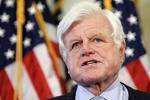
December 25, 2020
I didn’t know much about Kissinger so I thought I would check it out. But most of the book isn’t actually about Kissinger but about the intellectual history of realpolitik. That’s what was most interesting about the book. It illustrates how the shadow of escaping Germany influenced all the rest of his thought. It actually starts with a chapter on Hitler and then goes through Arendt and Strauss (providing a really good accessible overview of their thought). But the common thread is that all of these people were grateful to be in the US but they were also skeptical of democracy b/c it was what led to Hitler. Arendt said the only metric for judging a society was how likely it was to lead to something like totalitarianism. Indeed, what’s scary about the Hitler chapter is how popular he was (and how he came to power legitimately) - but the more autocratic he got, the more popular he became. So you can begin to understand why Kissinger sometimes felt it was necessary to ignore democracy to prevent communist governments. Not saying I agree with this, but it does provide some more context.

July 19, 2020
After some fits and starts with a history of Pinochet’s overthrow, Hitler’s rise to power, and a bit on Kissenger's Bavarian background, Gewen’s book takes form as a history of ideas with those of Strauss, Arendt and Morgenthau taking center stage. For me it was the highlight of the book since I was unfamiliar with Strauss and Morgenthau and it was a fun and educational walk through their background and political philosophy. Kissinger himself never really feels like the focus of the book until around the last third or so, which is all fine and good as it proved not to be just another biography. Once it did get into the depths of the Nixon administration, there was obvious focus on Vietnam and the machinations of that administration as they flailingly tried to extricate the US from the debacle. Though Gewen doesn’t come down with as much harsh criticism on Kissinger as he roundly deserves, it is of course difficult to paint a picture of the man without seeing him as an immoral failure no matter how much one discusses real politik or political philosophy.

November 10, 2020
This book provided a very interesting picture of Henry Kissinger and his thought process. It seemed to spend an inordinate amount of time on various other German-American philosophers with similar backgrounds to Kissinger. I wish that it had devoted some of that time to discussing his role in the Middle East instead. The first chapter about Chile was very interesting and clearly illuminated his belief system and how it played out in one specific instance of American foreign policy.

August 7, 2020
I simply could not get over the way this author chose to frame his ideas. Coming from a background in the study of history, interjections like "Who knows?" and "Does it really matter?" threw me off guard.
Buddy, that's what I came here to have you interpret and tell me.
Buddy, that's what I came here to have you interpret and tell me.

February 20, 2024
Henry Kissinger’s illustrious yet divisive track record has invited impassioned debate about the statesman's philosophical modus operandi. Throughout his life, Kissinger, the poster child of foreign policy Realism, had contributed to U.S. foreign policy in some shape or form for over four decades. As Nixon’s industrious national security advisor-cum-Secretary of State, Kissinger employed a mix of guile, manipulation, and sheer intellect to elevate himself as a theoretician of great power relations. His Realist approach, often misunderstood, is examined in Barry Gewen’s The Inevitability of Tragedy.
Gewen, a longtime editor at The New York Times Book Review, takes an unorthodox approach to scrutinizing his subject. He begins by describing the intellectual antecedents that function as a window into his mind – Leo Strauss, Hannah Arendt, Hans Morgenthau. These products of the German-Jewish diaspora, like Kissinger, maintained a robust skepticism of democracy as a panacea of the human condition. Scarred by Hitler’s thrusting to power, which was achieved through democratic means, these authors maintained a rather nihilistic worldview shaped by pragmatism rather than idealism. While Kissinger had no ties to either Strauss or Arendt, Morgenthau was the bridge that connected all three – Kissinger’s mentor and a colleague and friend to both Arendt and Strauss. Morgenthau, professor at the University of Chicago, pioneered the Realist foreign doctrine later adopted by his bespectacled protégé.
From here, Gewen pivots to pulling away the curtain to Kissingerian Realpolitik. He describes certain governing principles – existential cynicism, the absence of moralistic thinking, predilection for incrementalism and stability over perfectionism and justice, and above all the admission that life is inevitably tragic – that are both original but also alien to longstanding American motivations for foreign policy. The history of American foreign policy, as recounted by Kissinger, is one of convenient oscillations between isolationism and idealism. Shaped by its own continental seclusion, the U.S. did not have to grapple with the messy, internecine conflicts which fractured continental Europe. Perhaps Kissinger’s most direct inspiration, while not mentioned in this book, is Bismarck – the shrewd German Chancellor who used strategic calculation to mastermind Prussian unification in a schismatic Europe. Indeed, realpolitik, motivated by its fundamental pessimism about the human condition and aversion to idealistic proclamations, is a rather alien philosophy in light of U.S. history. It acknowledges the limits of intervention, perfection as the enemy of good, and the reality of no-win situations. Kissinger contrasts this with what he calls Wilsonianism, a hankering for absolutist ambition and melodramatic idealism. The history of U.S. foreign policy is rich with instances of Wilsonian strivings to “make the world safe for democracy,” which Kissinger argues lacks a fundamental understanding of global power dynamics and has led to quagmires like Vietnam.
The Inevitability of Tragedy is largely sympathetic to Kissinger’s Realism. It beckons for a more nuanced understanding of its mechanics and inspirations, arguing that it has much to teach about the world and of the limits of the traditional U.S. foreign policy doctrine. However, Gewen’s approach is disjointed – he fails to establish why certain covered thinkers were more important than others, despite the fact they shared no lasting ties with Kissinger and often expressed vehement disagreements over policy, especially the Vietnam War. Gewen also includes some out-of-place chapters on Salvador Allende and Hitler, both of whom hijacked democracy for exploitative purposes. The author would have been better suited to more broadly examine Kissinger’s intellectual formation, largely documented in the statesman's extensive publications, where he draws upon certain “philosophers of history” like Kant, Arnold Toynbee and Oswald Spengle. Rather than a comprehensive view of those inspirations, this book misleadingly fingers the lamentations of the German-Jewish diaspora as most insightful to the subject’s intellectual coalescence. Despite these errors, Gewen’s apologia rehabilitates the image of a highly consequential and gravely misunderstood figure.
Gewen, a longtime editor at The New York Times Book Review, takes an unorthodox approach to scrutinizing his subject. He begins by describing the intellectual antecedents that function as a window into his mind – Leo Strauss, Hannah Arendt, Hans Morgenthau. These products of the German-Jewish diaspora, like Kissinger, maintained a robust skepticism of democracy as a panacea of the human condition. Scarred by Hitler’s thrusting to power, which was achieved through democratic means, these authors maintained a rather nihilistic worldview shaped by pragmatism rather than idealism. While Kissinger had no ties to either Strauss or Arendt, Morgenthau was the bridge that connected all three – Kissinger’s mentor and a colleague and friend to both Arendt and Strauss. Morgenthau, professor at the University of Chicago, pioneered the Realist foreign doctrine later adopted by his bespectacled protégé.
From here, Gewen pivots to pulling away the curtain to Kissingerian Realpolitik. He describes certain governing principles – existential cynicism, the absence of moralistic thinking, predilection for incrementalism and stability over perfectionism and justice, and above all the admission that life is inevitably tragic – that are both original but also alien to longstanding American motivations for foreign policy. The history of American foreign policy, as recounted by Kissinger, is one of convenient oscillations between isolationism and idealism. Shaped by its own continental seclusion, the U.S. did not have to grapple with the messy, internecine conflicts which fractured continental Europe. Perhaps Kissinger’s most direct inspiration, while not mentioned in this book, is Bismarck – the shrewd German Chancellor who used strategic calculation to mastermind Prussian unification in a schismatic Europe. Indeed, realpolitik, motivated by its fundamental pessimism about the human condition and aversion to idealistic proclamations, is a rather alien philosophy in light of U.S. history. It acknowledges the limits of intervention, perfection as the enemy of good, and the reality of no-win situations. Kissinger contrasts this with what he calls Wilsonianism, a hankering for absolutist ambition and melodramatic idealism. The history of U.S. foreign policy is rich with instances of Wilsonian strivings to “make the world safe for democracy,” which Kissinger argues lacks a fundamental understanding of global power dynamics and has led to quagmires like Vietnam.
The Inevitability of Tragedy is largely sympathetic to Kissinger’s Realism. It beckons for a more nuanced understanding of its mechanics and inspirations, arguing that it has much to teach about the world and of the limits of the traditional U.S. foreign policy doctrine. However, Gewen’s approach is disjointed – he fails to establish why certain covered thinkers were more important than others, despite the fact they shared no lasting ties with Kissinger and often expressed vehement disagreements over policy, especially the Vietnam War. Gewen also includes some out-of-place chapters on Salvador Allende and Hitler, both of whom hijacked democracy for exploitative purposes. The author would have been better suited to more broadly examine Kissinger’s intellectual formation, largely documented in the statesman's extensive publications, where he draws upon certain “philosophers of history” like Kant, Arnold Toynbee and Oswald Spengle. Rather than a comprehensive view of those inspirations, this book misleadingly fingers the lamentations of the German-Jewish diaspora as most insightful to the subject’s intellectual coalescence. Despite these errors, Gewen’s apologia rehabilitates the image of a highly consequential and gravely misunderstood figure.
October 14, 2020
How did Kissinger come to think the way he did? How did it play out? The rise of Hitler in Weimar Germany was a key formative event in building his view of international relations. A key lesson is that autocrats can use democratic means to come to power, as Hitler did. Foreign policy making is tragic, always seeking the least worst option, depending on ambiguity and fudging it, improvising, being pragmatic and incremental, supporting continuity rather than upheaval, and avoiding most efforts to promote idealism, justice, morality and human rights unless there is a clear link to defending national interest. At the height of his power, this worldview led to START and other detente success, the end of the war in Vietnam, and opening to China.
The chapter on Vietnam is insightful. This was a highly popular war for Americans until it wasn't. The US military scaleup was designed by "the best and the brightest", but when it went sour it was college students and faculty from the top schools that led the protests to pull out. Kissinger supported the war until he visited South Vietnamese leader Thieu in 1967, and realized that the US position was hopeless in this civil war. He also realized as did many others around that time that there was no unified, global or regional communist movement leading to falling dominos; every communist country put its national interest first, most importantly, China and Russia. Gewen makes an original argument that the US pulling out was much trickier than many of us thought at the time. The US couldn't just close up shop and leave, because there were hundreds of US soldiers held as prisoners. There were also beginnings of present day ultra right wingers, George Wallace et al, that would jump on anything looking like surrender (echos of Weimer Germany in Kissinger's mind), and concerns that allies like Japan would worry about US resolve to defend them. So Kissinger's strategy was to get North Vietnam to negotiate, while pulling most US troops out, handing the fight to South Vietnamese, and backing them up with air power. The strategy had many challenges: North Vietnam knew the US wanted to leave, so why not wait them out? Thieu was, not surprisingly, difficult. So Kissinger upped the bombing, and eventually North Vietnam negotiated a few minor face saving points. The key to Kissinger was "peace with honor", including a decent interval between the end of US fighting and a communist takeover. While the cost was huge, there weren't any other options that seemed any better. Peace was at hand.
When added to his opening of China, and Strategic arms limitations with Russia, he was on a roll. The line outside his door was "like a Moroccan whorehouse". He was voted most admired man in 1973, number one choice of Playboy bunnies for a date, and on the cover of Time and Newsweek at the same time, the latter in a Superman costume.
Over the next few years, opinion flipped. Liberals saw him as a war criminal, and Conservatives thought he was soft and detente was a sign of weakness. After Ford, no President invited him back to a job (although all sought his advice). He ended up like Castlereagh, the 19th century British foreign secretary Kissinger wrote extensively about, that did the right but unpopular thing in promoting a realist balance of power arrangement that led to peace in Europe for decades. Even so, his memoires were best sellers, and he is considered the best secretary of state over the last 50 years.
The book is a good case study of the role of a scholar in government (advise politicians willing to listen) and after being in government (educate the public). Since he left office, realism had a good run with Reagan and Bush 1, but lost out to idealism with Clinton, Bush 2 and Obama. The results of the latter are not too impressive. Trump, for all his bizarreness, has shifted back to a more realist position (ending Iran nuclear deal, China trade disputes, taking out ISIS, negotiating with Taliban, supporting Taiwan but not Hong Kong) the results of which are still unknown.
The chapter on Vietnam is insightful. This was a highly popular war for Americans until it wasn't. The US military scaleup was designed by "the best and the brightest", but when it went sour it was college students and faculty from the top schools that led the protests to pull out. Kissinger supported the war until he visited South Vietnamese leader Thieu in 1967, and realized that the US position was hopeless in this civil war. He also realized as did many others around that time that there was no unified, global or regional communist movement leading to falling dominos; every communist country put its national interest first, most importantly, China and Russia. Gewen makes an original argument that the US pulling out was much trickier than many of us thought at the time. The US couldn't just close up shop and leave, because there were hundreds of US soldiers held as prisoners. There were also beginnings of present day ultra right wingers, George Wallace et al, that would jump on anything looking like surrender (echos of Weimer Germany in Kissinger's mind), and concerns that allies like Japan would worry about US resolve to defend them. So Kissinger's strategy was to get North Vietnam to negotiate, while pulling most US troops out, handing the fight to South Vietnamese, and backing them up with air power. The strategy had many challenges: North Vietnam knew the US wanted to leave, so why not wait them out? Thieu was, not surprisingly, difficult. So Kissinger upped the bombing, and eventually North Vietnam negotiated a few minor face saving points. The key to Kissinger was "peace with honor", including a decent interval between the end of US fighting and a communist takeover. While the cost was huge, there weren't any other options that seemed any better. Peace was at hand.
When added to his opening of China, and Strategic arms limitations with Russia, he was on a roll. The line outside his door was "like a Moroccan whorehouse". He was voted most admired man in 1973, number one choice of Playboy bunnies for a date, and on the cover of Time and Newsweek at the same time, the latter in a Superman costume.
Over the next few years, opinion flipped. Liberals saw him as a war criminal, and Conservatives thought he was soft and detente was a sign of weakness. After Ford, no President invited him back to a job (although all sought his advice). He ended up like Castlereagh, the 19th century British foreign secretary Kissinger wrote extensively about, that did the right but unpopular thing in promoting a realist balance of power arrangement that led to peace in Europe for decades. Even so, his memoires were best sellers, and he is considered the best secretary of state over the last 50 years.
The book is a good case study of the role of a scholar in government (advise politicians willing to listen) and after being in government (educate the public). Since he left office, realism had a good run with Reagan and Bush 1, but lost out to idealism with Clinton, Bush 2 and Obama. The results of the latter are not too impressive. Trump, for all his bizarreness, has shifted back to a more realist position (ending Iran nuclear deal, China trade disputes, taking out ISIS, negotiating with Taliban, supporting Taiwan but not Hong Kong) the results of which are still unknown.
June 3, 2022
People either admire or despise Henry Kissinger. I never really understood why, except in the sense that everything and everyone connected with the Vietnam war and/or Nixon is either admired or despised. What this book explained to me, and which I had never really grasped before, is just how foreign Kissinger's basic outlook and philosophy is/was. "Realpolitik" is a foreign policy based on maintaining a balance of power, rather than on "spreading American-style democracy world-wide" or "toppling a dictator" or even "fighting communism", and this was (and apparently continues to be) very unpalatable to the American tradition. I had never really thought about it in this way, and so I appreciate how this book made that clear. The author is more on the pro-Kissinger side, and his interest is mainly in explaining the intellectual background for Kissinger's diplomacy (and occasional brutality). People like Hans Morgenthau, Leo Strauss and Hannah Arendt, all fugitives from Nazi Germany, just like Kissinger himself, shared very similar and pessimistic views about history, something that can be summarized as "Bad things will happen. Try to minimize these bad things by, if necessary, doing some not-so-nice things yourself".
It took me a while to read this book - political philosophy is not something I think about on a daily basis - but I feel I have gained insight, and so I give it 4 stars. I would have given it 5 stars if it had contained a bit more about the actual diplomacy done by Kissinger and his staff. It seemed to me that the author assumed that any reader of this book would have had that background knowledge - which, in my case, was not true.
It took me a while to read this book - political philosophy is not something I think about on a daily basis - but I feel I have gained insight, and so I give it 4 stars. I would have given it 5 stars if it had contained a bit more about the actual diplomacy done by Kissinger and his staff. It seemed to me that the author assumed that any reader of this book would have had that background knowledge - which, in my case, was not true.

June 7, 2020
I have been giving too many 5 stars lately. This an interesting book. It is not a biography of Kissinger but rather a study of Kissinger's thought and a comparative analysis with public intellectuals with a similar background. Kissinger may downplay the impact of his German-Jewish origins on his thinking but it is fascinating to read about Leo Strauss, Hannah Arendt and Hans Morgenthau and how their thinking at outlook compare to Kissinger's. The author makes it clear that there are obviously differences but their temperament and foundation for much of their thought is obviously rooted in the collapse of Wiemar Germany. Most importantly is how none of them were every deluded into thinking democracy is infallible. There is the sense of "tragedy" that hangs over much of what they write. Just to underline the point the second chapter is on Hitler and his rise to power. This is a very even handed account of Kissinger and his thoughts and deeds. Gewen boldly begins with the Chile/Allende episode before going back to Hitler. He gives great context and his personal sketches are exceptional. This is an entertaining read and one sure to thrill anyone interested in learning about foreign policy and realism.

February 6, 2024
After a very slow start - the opening two chapters, on the overthrowing of Salvador Allende and the rise of Adolf Hitler, are tangential to the point of superfluous - the book undertakes a fascinating deep dive into Kissinger's worldview, with reference to the works of fellow German-Jewish refugees Leo Strauss, Hannah Arendt and Hans Morgenthau, before applying that worldview to the policy decisions Kissinger faced when in positions of power. I was impressed with the author's ability to capture the inherent complexity of statecraft (and the consequent problems faced by those of an overly ideological or morally rigid bent), and especially his ability to convey the merits of a Realist perspective for effective diplomacy. At times, though, I did feel the author avoided the really hard questions, such as whether Kissinger's actions in, for example, Cambodia, were truly the lesser evil of the options available to him. I came away from the book, if not necessarily willing to forgive Kissinger for everything he did, at least more able to see the nuances of his character and the difficulties of some of the decisions he faced.

April 25, 2022
If you don't already know about Henry Kissinger, you will not find an account of his life or career here; more an examination of the circumstances surrounding him and how they might have affected his decision making. The book is relatively high-minded and philosophical, but provides interesting insights into Kissinger's origins and his contemporaries. Is it certain that these things impacted Kissinger in the ways the author implies? No, but there's intuitive sense to it.
I did walk away from the book with a better understanding of the challenges of statecraft and an awareness that I am not cut out for it. As is often the case, the situations are nuanced and applying consistent and strict morality in an immoral world is easier said than done.
I'm still looking to learn more about Kissinger's career and diplomacy, recommendations welcome!
I did walk away from the book with a better understanding of the challenges of statecraft and an awareness that I am not cut out for it. As is often the case, the situations are nuanced and applying consistent and strict morality in an immoral world is easier said than done.
I'm still looking to learn more about Kissinger's career and diplomacy, recommendations welcome!

August 12, 2020
An exceptional essay on realpolitik, and a excellent testament of polemical individuals given proper context.
This book is not only about Kissinger and his views on the dynamics of power, diplomacy and the function of a statesman. It is a critical essay on politics, with hard emphasis on amoralist, realist foreign politics.
Fantastic chapters on the revolution of Chile, Nazi Germany and China. Moreover, a splendid overview of the Cold War through the lenses of a diplomat and realist politician
Fantastic references like Tocqueville, Bismarck. Sublime sections on Adolf Hitler, Leo Strauss, Hannah Arendt and Hans Morgenthau.
A fantastic introduction to foreign policy and political realism.
This book is not only about Kissinger and his views on the dynamics of power, diplomacy and the function of a statesman. It is a critical essay on politics, with hard emphasis on amoralist, realist foreign politics.
Fantastic chapters on the revolution of Chile, Nazi Germany and China. Moreover, a splendid overview of the Cold War through the lenses of a diplomat and realist politician
Fantastic references like Tocqueville, Bismarck. Sublime sections on Adolf Hitler, Leo Strauss, Hannah Arendt and Hans Morgenthau.
A fantastic introduction to foreign policy and political realism.
April 14, 2022
This is an amazing book, but it may not be what many expect. This is not a traditional biography, though it has a lot of interesting biographical information. Where most biographies or histories tell you about what a person did or maybe why, this book spends a considerable amount of time on the philosophical background and underpinnings of the thought process of Kissinger. That means a lot of philosophy and history of some philosophers that may not be what most expect, or want, in a biography. By the end of the book you can basically put yourself in any situation and think "what would Kissinger do" and probably be pretty close. It was a heavy read intellectually, but it was well worth it and this book changed my views on the world in general to be much more of a realist mindset.

July 20, 2026
NYT Notable Books 2020: 71/100
Rating this book was hard because truly I want to rate it low because I hate Kissinger (and this book did not change that), but I realize I have to focus on the book and not the subject. This book was fine. As with many books on US politics, it was dense. I appreciated that Gewen offered a lot of context for what was happening in Kissinger's time, who other thinkers of the time were, etc. but it felt like by the time we got to Kissinger himself, the book felt like it was almost over. It was interesting to understand more of the context of Kissinger's decisions, though this book presumes that the reader already has a fair amount of knowledge going in. Overall it was fine, but not my favourite US history book.
Rating this book was hard because truly I want to rate it low because I hate Kissinger (and this book did not change that), but I realize I have to focus on the book and not the subject. This book was fine. As with many books on US politics, it was dense. I appreciated that Gewen offered a lot of context for what was happening in Kissinger's time, who other thinkers of the time were, etc. but it felt like by the time we got to Kissinger himself, the book felt like it was almost over. It was interesting to understand more of the context of Kissinger's decisions, though this book presumes that the reader already has a fair amount of knowledge going in. Overall it was fine, but not my favourite US history book.

Read
February 9, 2021I'm going to stop giving books star ratings as a matter of practice when they fall into categories like this one. This book is probably great. Incredibly well researched, it delves into great detail on many aspects of Kissinger's life. It also goes into great detail about things that influenced him and people like him and whole theories of political science. To be honest, it was a little too much for me. I found myself skimming through page after page of some parts.
So while it's probably a great book, I didn't really enjoy reading it. I liked some of it, and didn't not like any of it, but it was just too much.
That said, I agree that Kissinger is unfairly labeled as a war criminal.
So while it's probably a great book, I didn't really enjoy reading it. I liked some of it, and didn't not like any of it, but it was just too much.
That said, I agree that Kissinger is unfairly labeled as a war criminal.

April 15, 2022
I am in awe of the author's ability to present, discuss and evaluate multiple philosophers and their thoughts on political power and world relationships. Less that 400 pages but not a quick read as time is required to digest and ponder. The influences by and on Kissinger and his peers include differing philosophies, shared tragedy and interconnecting world events. Aristotle, Socrates, Nietzche, Morgenthau, Arendt, Strauss, Hitler, Nixon, Kissinger, Russia, Soviet Union, China, WWI, WWII, Korea, Vietnam, the Cold War and all US Presidents from Eisenhower through Obama. It is utterly amazing that all are is included a single thought-provoking book

February 15, 2023
This was a fascinating book. Gewen does a masterful job outlining Kissinger’s complex worldview. He goes about this by fleshing out the lives and thoughts of other Jewish-German political thinkers that fled the Nazis to the US. The parallel with the thoughts of greats like Hannah Arendt, Leo Strauss and Hans Morgenthau, really allows the reader to understand the worldview formulated by deep thinkers that saw their country go over a cliff despite the promises that a democracy would never do so. It is with this frame that Gewen tracks Kissinger’s work and thought. Definitely a great read that introduced a brilliant world of thorough, complex and deep theories of international politics.
Displaying 1 - 30 of 68 reviews