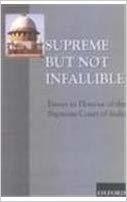
This volume was published on the semi-centennial anniversary of the Supreme Court of India, and contains essays by eminent judges (both past and present) of the Supreme Court, lawyers, jurists, and journalists. Together they have attempted to trace the evolution of the decision-making process and the legal philosophy followed by the highest court of the country over the years.
One of the best things about this book is its focus on, for the want of a better word, individuality. The essays try to outline the role of the Supreme Court in strengthening the Indian judiciary by analyzing its judgements in various cases, but it would be prudent to remember that these analyses are the exercises of a single mind (the essayist, in this case). That is why, their conclusions should be accepted with a grain of salt (as the authors frequently remind us to do). It is very much possible, and indeed probable, that even a well-read lay person will be confused by the legal terminology used in the essays. I urge the reader to make generous use of the internet.
It is not a coffee-table book, and it should not be read as such. It demands a certain amount of fortitude, as befits a book on the Supreme Court. Casual readers will more likely be disappointed, but if you do manage to finish it, it will be as rewarding an experience as any.