

What do you think?

Dime-Store Alchemy
In Dime-Store Alchemy, poet Charles Simic refects on the life and work of Joseph Cornell, the maverick surrealist who is one of America’s great artists. Simic’s spare prose is as enchanting and luminous as the mysterious boxes of found objects for which Cornell is justly renowned.
In a work that is in various degrees biography, criticism, and sheer poetry, Simic tells the story of Cornell’s life and illuminates the hermetic mysteries of his extraordinary boxes–objects in which private obsessions were alchemically transformed into enduring works of art. Simic sees Cornell’s work as exemplifying a distinctively American aesthetic, open to the world, improvisatory, at once homemade and universal, modest and teasing and profound. Full of unexpected riches, Dime-Store Alchemy is both an entrancing meditation on the nature of art and a perfect introduction to a major American artist by one of his peers–a book that can be perused at length or dipped into at leisure again and again.
In a work that is in various degrees biography, criticism, and sheer poetry, Simic tells the story of Cornell’s life and illuminates the hermetic mysteries of his extraordinary boxes–objects in which private obsessions were alchemically transformed into enduring works of art. Simic sees Cornell’s work as exemplifying a distinctively American aesthetic, open to the world, improvisatory, at once homemade and universal, modest and teasing and profound. Full of unexpected riches, Dime-Store Alchemy is both an entrancing meditation on the nature of art and a perfect introduction to a major American artist by one of his peers–a book that can be perused at length or dipped into at leisure again and again.
Hardcover
First published January 1, 1992
About the author
Charles Simic
269 books478 followersU.S. Poet Laureate, 2007-2008
Dušan Charles Simic was born in Belgrade, former Yugoslavia, on May 9, 1938. Simic’s childhood was complicated by the events of World War II. He moved to Paris with his mother when he was 15; a year later, they joined his father in New York and then moved to Oak Park, a suburb of Chicago, where he graduated from the same high school as Ernest Hemingway. Simic attended the University of Chicago, working nights in an office at the Chicago Sun Times, but was drafted into the U.S. Army in 1961 and served until 1963.
Simic is the author of more than 30 poetry collections, including The World Doesn’t End: Prose Poems (1989), which received the Pulitzer Prize; Jackstraws (1999); Selected Poems: 1963-2003 (2004), which received the International Griffin Poetry Prize; and Scribbled in the Dark (2017). He is also an essayist, translator, editor, and professor emeritus of creative writing and literature at the University of New Hampshire, where he taught for over 30 years.
Simic has received fellowships from the Guggenheim Foundation, the MacArthur Foundation, the Academy of American Poets, and the National Endowment for the Arts. His other honors and awards include the Frost Medal, the Wallace Stevens Award from the Academy of American Poets, and the PEN Translation Prize. He served as the 15th Poet Laureate Consultant in Poetry to the Library of Congress, and was elected as Chancellor of the Academy of American Poets in 2001. Simic has also been elected into the American Academy of Arts and Letters.
Dušan Charles Simic was born in Belgrade, former Yugoslavia, on May 9, 1938. Simic’s childhood was complicated by the events of World War II. He moved to Paris with his mother when he was 15; a year later, they joined his father in New York and then moved to Oak Park, a suburb of Chicago, where he graduated from the same high school as Ernest Hemingway. Simic attended the University of Chicago, working nights in an office at the Chicago Sun Times, but was drafted into the U.S. Army in 1961 and served until 1963.
Simic is the author of more than 30 poetry collections, including The World Doesn’t End: Prose Poems (1989), which received the Pulitzer Prize; Jackstraws (1999); Selected Poems: 1963-2003 (2004), which received the International Griffin Poetry Prize; and Scribbled in the Dark (2017). He is also an essayist, translator, editor, and professor emeritus of creative writing and literature at the University of New Hampshire, where he taught for over 30 years.
Simic has received fellowships from the Guggenheim Foundation, the MacArthur Foundation, the Academy of American Poets, and the National Endowment for the Arts. His other honors and awards include the Frost Medal, the Wallace Stevens Award from the Academy of American Poets, and the PEN Translation Prize. He served as the 15th Poet Laureate Consultant in Poetry to the Library of Congress, and was elected as Chancellor of the Academy of American Poets in 2001. Simic has also been elected into the American Academy of Arts and Letters.
Ratings & Reviews
Friends & Following
Create a free account to discover what your friends think of this book!
Community Reviews
Displaying 1 - 30 of 95 reviews
![Profile Image for s.penkevich [hiatus-will return-miss you all].](https://i.gr-assets.com/images/S/compressed.photo.goodreads.com/users/1735525095i/6431467._UX200_CR0,11,200,200_.jpg)
November 10, 2014
Collecting is a sort of artform in itself, the way objects arranged together or carefully chosen as a set can nestle into the heart and soul and reverberate with interpretive meaning. As we can discover in the works of visual artist Joseph Cornell (1903-1972), an arrangement of found objects can be constructed and juxtaposed not unlike how poets craft language in a poem through a thoughtful arrangement of grammar to evoke imagery and emotion. Few poets were better suited for a poetic expedition into Cornell’s artistry than Serbian-born, former Poet Laureate of the United States Charles Simic and in his collection Dime-Store Alchemy, Simic threads his poetic insights through Cornell’s awe-inspiring shadow box art as a blissful blend of essay, art criticism, and poetry. While the book unfortunately contains scant few photographs of the boxes—and in rather grubby resolution black and white—Simic’s poetry manages to paint their own portraits of the wonderment that was Cornell’s work. A book as enigmatic as the art it describes, Dime-Store Alchemy is a marvelous look at Cornell’s thematic motifs on chance, juxtaposition, nostalgia, the city as a labyrinth and a catalyst for artistic endeavours, that all point to Cornell’s gift of being able to ‘construct a vehicle of reverie, an object that would enrich the imagination of the viewer and keep him company forever.’
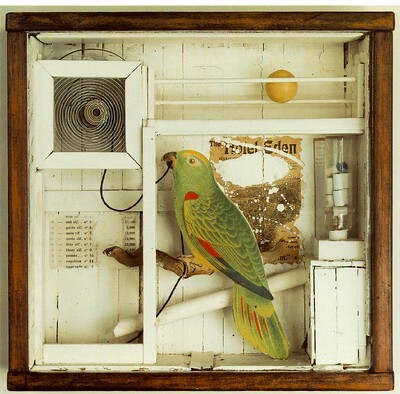
The Hotel Eden (1945)
Joseph Cornell ‘could not draw, paint, or sculpt, and yet he was a great American artist,’ Charles Simic writes in Dime-Store Alchemy, and yet he left a legacy as a pioneer and master of assemblage art. Inspired by the surrealists, Cornell worked in the mediums of avant-garde film and assemblage, spending his days winding through the streets of New York City collecting small objects that would come together in miraculous arrangement inside of a shadow box.
Collecting is an artform I’ve long enjoyed, especially as one for the purpose of giving away. When I worked as a delivery driver criss-crossing state lines all week, I would frequently find books I’d enjoyed in used bookstores, pick them up and then decide upon the right acquaintance upon whom I would gift the book. A pairing of people and poetry, if you will. But Dime-Store Alchemy was one I would frequently pick up to gift out and remains a beloved collection to me (the title was even my old instagram name back in the day). My route, the bookstores, and people I’d meet were my paint palette in this sort of way, something Cornell commented upon about NYC saying ‘my work was a natural outcome of my love for the city.’ Beauty is often in the details and through Cornell’s eyes, even a small scrap of trash could be plucked up and poised for greater beauty in his boxes.
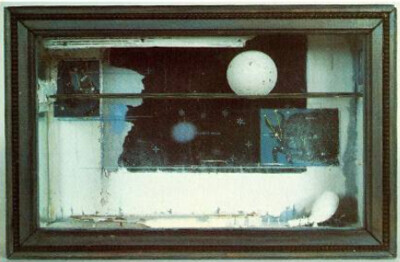
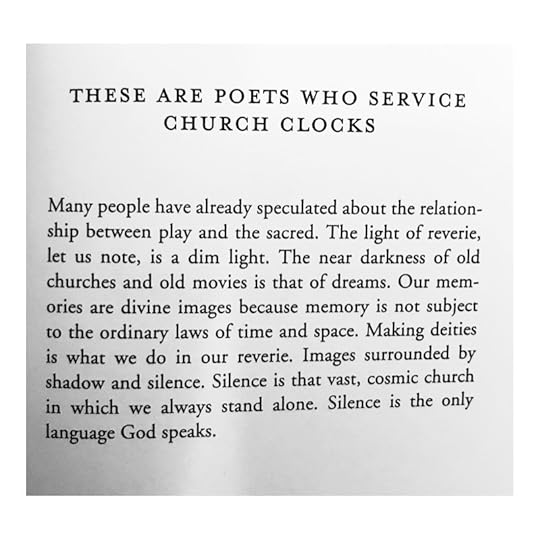
These Are Poets Who Service Church Clocks
‘Many people have already speculated about the relationship between play and the sacred. The light of reverie, let us note, is a dim light. The near darkness of old churches and old movies is that of dreams. Our memories are divine images because memory in not subject to the ordinary laws of time and space. Making deities is what we do in our reverie. Images surrounded by shadow and silence. SIlence is that Vast, cosmic church in which we always stand alone. Silence is the only language God speaks.”
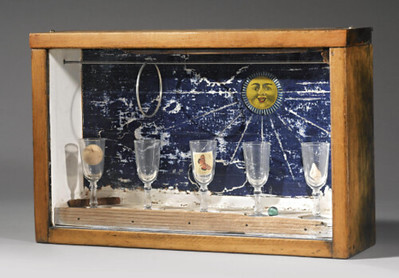
‘A toy is a trap for dreamers,’ Simic tells us, ‘the true toy is a poetic object,’ and Cornell’s boxes often look like some sort of abstract game. The balls and rings and cups that populate his surreal landscapes take on an elusive purpose that feels somehow both jovial and sinister at times. ‘Cornell’s boxes are reliquaries of days when imagination reigned,’ explains Simic, ‘they are inviting us, of course, to start our childhood reveries all over again’ and, in this spirit, we can think of the boxes like a portal into the imagination where the rules are as fluid as our interpretations. And the possibilities are endless as ‘the city has an infinite number of interesting objects in an infinite number of unlikely places.’
‘Marcel Duchamp and John Cage use chance operation to get rid of the subjectivity of the artist. For Cornell it's the opposite. To submit to chance is to reveal the self and its obsessions.’
I have long loved the work of Joseph Cornell and the poetry of Charles Simic and Dime-Store Alchemy is an amazing intersection of the two. A fun book with great insights but lacking in visual images, this is a great little read and a fun book to gift.
4/5
The Hotel Eden (1945)
Joseph Cornell ‘could not draw, paint, or sculpt, and yet he was a great American artist,’ Charles Simic writes in Dime-Store Alchemy, and yet he left a legacy as a pioneer and master of assemblage art. Inspired by the surrealists, Cornell worked in the mediums of avant-garde film and assemblage, spending his days winding through the streets of New York City collecting small objects that would come together in miraculous arrangement inside of a shadow box.
‘Somewhere in the city of New York there are four or five still-unknown objects that belong together. Once together they'll make a work of art. That's Cornell's premise, his metaphysics, and his religion, which I wish to understand.’
Collecting is an artform I’ve long enjoyed, especially as one for the purpose of giving away. When I worked as a delivery driver criss-crossing state lines all week, I would frequently find books I’d enjoyed in used bookstores, pick them up and then decide upon the right acquaintance upon whom I would gift the book. A pairing of people and poetry, if you will. But Dime-Store Alchemy was one I would frequently pick up to gift out and remains a beloved collection to me (the title was even my old instagram name back in the day). My route, the bookstores, and people I’d meet were my paint palette in this sort of way, something Cornell commented upon about NYC saying ‘my work was a natural outcome of my love for the city.’ Beauty is often in the details and through Cornell’s eyes, even a small scrap of trash could be plucked up and poised for greater beauty in his boxes.
These Are Poets Who Service Church Clocks
‘Many people have already speculated about the relationship between play and the sacred. The light of reverie, let us note, is a dim light. The near darkness of old churches and old movies is that of dreams. Our memories are divine images because memory in not subject to the ordinary laws of time and space. Making deities is what we do in our reverie. Images surrounded by shadow and silence. SIlence is that Vast, cosmic church in which we always stand alone. Silence is the only language God speaks.”
‘A toy is a trap for dreamers,’ Simic tells us, ‘the true toy is a poetic object,’ and Cornell’s boxes often look like some sort of abstract game. The balls and rings and cups that populate his surreal landscapes take on an elusive purpose that feels somehow both jovial and sinister at times. ‘Cornell’s boxes are reliquaries of days when imagination reigned,’ explains Simic, ‘they are inviting us, of course, to start our childhood reveries all over again’ and, in this spirit, we can think of the boxes like a portal into the imagination where the rules are as fluid as our interpretations. And the possibilities are endless as ‘the city has an infinite number of interesting objects in an infinite number of unlikely places.’
‘Marcel Duchamp and John Cage use chance operation to get rid of the subjectivity of the artist. For Cornell it's the opposite. To submit to chance is to reveal the self and its obsessions.’
I have long loved the work of Joseph Cornell and the poetry of Charles Simic and Dime-Store Alchemy is an amazing intersection of the two. A fun book with great insights but lacking in visual images, this is a great little read and a fun book to gift.
4/5

August 31, 2014
This book is excellent. It has writing about Cornell and from Cornell and inspired by Cornell. It has prose poems and references to poets and art and artists writing about art.
What it doesn't have, unfortunately, is the art itself. There are few poorly-reproduced black-and-white photos of Cornell's works, lumped together in the middle, but that's it. And Simic rarely elucidates which (if any) particular piece he is thinking of. If you, reader, are familiar with Cornell's corpus you may sometimes guess which piece Simic has in mind, but it would be so much lovelier if this were a lavish book with paired color plates and referenced poems (eg Dickinson's "Centuries of June," something by Rimbaud) printed out.
So if you were looking at my status updates and thinking of reading this, do, but I have to point out that much of what I posted, especially the visuals, is not present in the book.
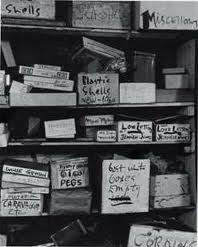
What it doesn't have, unfortunately, is the art itself. There are few poorly-reproduced black-and-white photos of Cornell's works, lumped together in the middle, but that's it. And Simic rarely elucidates which (if any) particular piece he is thinking of. If you, reader, are familiar with Cornell's corpus you may sometimes guess which piece Simic has in mind, but it would be so much lovelier if this were a lavish book with paired color plates and referenced poems (eg Dickinson's "Centuries of June," something by Rimbaud) printed out.
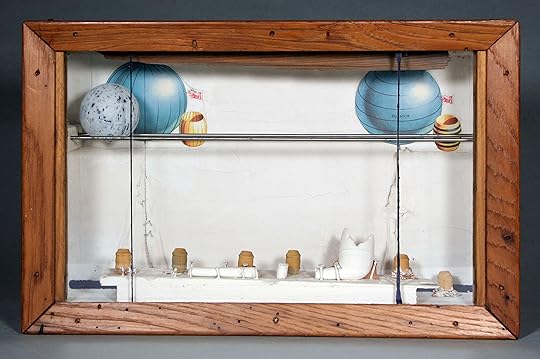
(Soap Bubble Set, Latitude and Longitude)
A soap bubble went to meet infinity.
So if you were looking at my status updates and thinking of reading this, do, but I have to point out that much of what I posted, especially the visuals, is not present in the book.
I pursue an image, no more.
--Gerard de Nerval

March 15, 2008
?
OK. Now that I've read Dime-Store Alchemy, I'll write something.
The goodreads forum has helped me reconnect with my literary life. I've sorted through half my library and collected several dozen to donate (not enough!), but all the inspiration around here made me succumb to a latent book-buying "sickness" and I placed a few on-line orders. "Asylum Dance" had been an elusive find, so when it turned up, I placed an order and added a few more titles to get "free" shipping. When the package arrived, D-S A was a disappointment because it seemed so teeny. I paid list price and expected something bigger, with more illustrations.
Back in 1981 a friend who worked with me in the art department at NBC sent me a poster from a Cornell exhibit at the Palazzo Vecchio, Florence, organized under the auspices of the International Council of the Museum of Modern Art, New York. I was bowled over. Imagine a 28 x 40 black background with the simple headline: "Joseph Cornell" reversed out in white. Below that floats a scrumptious 18 x 24 color reproduction of one of Cornell's finest aviary boxes. I've treasured it ever since. I've liked surrealism since high school but with Cornell's boxes I found a vulnerability and romanticism in his work I'd not found with any other artist. I was won over completely.
No bones about it, like Cornell, I'm a collector. My house is a Cornell box of memorabilia: sculpture, architectural fragments, statues, travel photos, postcards , movie posters, film reels, glass, copper, jewelry, plants, maps... all sorts of ephemera, bits and pieces of my life.
Although I loved Cornell most people didn't know about him and I felt like an outsider. Norman Rockwell is not my thing. I came across a couple books about Cornell in the early 1990's and was thrilled to learn more about the man. My favorite is still Hauptman's captivating study, "Stargazing at the Cinema". http://www.goodreads.com/book/show/22... a difficult book to match.
Simic's book is completely different, not an in-depth biographical, art historical study, but a different kind of scholarship. Simic achieves the near impossible. He writes the way Cornell made his boxes. I could read a passage and close my eyes and imagine Cornell's work. It's a little pocket book to turn to at any time for a meditative boost. So the $19.95 was well worth it. Dime-Store Alchemy is a 5 x 7, eighty-two page, hardbound, navy blue linen jewel, fabricated with a silver foil-stamped title and a matte coated, four-color reproduction of the Medici Slot Machine, 1942, which is tipped into a de-bossed window, an homage to Cornell in every sense of the word.
Bless computers and the internet. Anyone can have pictures of dozens of Cornell boxes at their fingertips. I don't know what it is about Nyack but it has produced two geniuses. Edward Hopper was born there, too.
OK. Now that I've read Dime-Store Alchemy, I'll write something.
The goodreads forum has helped me reconnect with my literary life. I've sorted through half my library and collected several dozen to donate (not enough!), but all the inspiration around here made me succumb to a latent book-buying "sickness" and I placed a few on-line orders. "Asylum Dance" had been an elusive find, so when it turned up, I placed an order and added a few more titles to get "free" shipping. When the package arrived, D-S A was a disappointment because it seemed so teeny. I paid list price and expected something bigger, with more illustrations.
Back in 1981 a friend who worked with me in the art department at NBC sent me a poster from a Cornell exhibit at the Palazzo Vecchio, Florence, organized under the auspices of the International Council of the Museum of Modern Art, New York. I was bowled over. Imagine a 28 x 40 black background with the simple headline: "Joseph Cornell" reversed out in white. Below that floats a scrumptious 18 x 24 color reproduction of one of Cornell's finest aviary boxes. I've treasured it ever since. I've liked surrealism since high school but with Cornell's boxes I found a vulnerability and romanticism in his work I'd not found with any other artist. I was won over completely.
No bones about it, like Cornell, I'm a collector. My house is a Cornell box of memorabilia: sculpture, architectural fragments, statues, travel photos, postcards , movie posters, film reels, glass, copper, jewelry, plants, maps... all sorts of ephemera, bits and pieces of my life.
Although I loved Cornell most people didn't know about him and I felt like an outsider. Norman Rockwell is not my thing. I came across a couple books about Cornell in the early 1990's and was thrilled to learn more about the man. My favorite is still Hauptman's captivating study, "Stargazing at the Cinema". http://www.goodreads.com/book/show/22... a difficult book to match.
Simic's book is completely different, not an in-depth biographical, art historical study, but a different kind of scholarship. Simic achieves the near impossible. He writes the way Cornell made his boxes. I could read a passage and close my eyes and imagine Cornell's work. It's a little pocket book to turn to at any time for a meditative boost. So the $19.95 was well worth it. Dime-Store Alchemy is a 5 x 7, eighty-two page, hardbound, navy blue linen jewel, fabricated with a silver foil-stamped title and a matte coated, four-color reproduction of the Medici Slot Machine, 1942, which is tipped into a de-bossed window, an homage to Cornell in every sense of the word.
Bless computers and the internet. Anyone can have pictures of dozens of Cornell boxes at their fingertips. I don't know what it is about Nyack but it has produced two geniuses. Edward Hopper was born there, too.

March 17, 2023
Somewhere in the city of New York there are four or five still-unknown objects that belong together. Once together they'll make a work of art. That's Cornell's premise, his metaphysics, and his religion, which I wish to understand.
A master of the prose poem, Simic has said that the form "is a monster-child of two incompatible impulses, one which wants to tell a story and another, equally powerful, which wants to freeze an image, or a bit of language, for our scrutiny." Here he describes the impact Cornell's boxes have:
They tempt the viewer in two opposite directions. One is to look and admire the elegance and other visual properties of the composition, and the other is to make up stories about what one sees.
The similarity in approach to their art makes Simic an intuitive and sympathetic choice to interpret Cornell's eccentric, surrealistic shadow box assemblages in this brief collection of mini-essays and prose poems.
This is what Cornell is after, too. How to construct a vehicle of reverie, an object that would enrich the imagination of the viewer and keep him company forever.
A master of the prose poem, Simic has said that the form "is a monster-child of two incompatible impulses, one which wants to tell a story and another, equally powerful, which wants to freeze an image, or a bit of language, for our scrutiny." Here he describes the impact Cornell's boxes have:
They tempt the viewer in two opposite directions. One is to look and admire the elegance and other visual properties of the composition, and the other is to make up stories about what one sees.
The similarity in approach to their art makes Simic an intuitive and sympathetic choice to interpret Cornell's eccentric, surrealistic shadow box assemblages in this brief collection of mini-essays and prose poems.
This is what Cornell is after, too. How to construct a vehicle of reverie, an object that would enrich the imagination of the viewer and keep him company forever.

December 8, 2020
An air of danger, eroticism, and crushing solitude play hide-and-seek in the crowd. The indeterminate, the unforseeable, the etherial, and the fleeting rule there. The city is the place where the most unlikely opposites come together, the place where separate intuitions momentarily link up.
Written from inside a Joseph Cornell shadow box. Simic conjures all the dreamy Utopia Parkway basement aromas 0f glue and antiqued wood and gobs of white paint, the mouldering Baedeker maps and toys and figurines. He illustrates the connection between the flâneur and alchemist, the synthesis of art, not only observing it in Cornell's work but by inhabiting and practicing it right here on the page. This is taking art seriously.
Written from inside a Joseph Cornell shadow box. Simic conjures all the dreamy Utopia Parkway basement aromas 0f glue and antiqued wood and gobs of white paint, the mouldering Baedeker maps and toys and figurines. He illustrates the connection between the flâneur and alchemist, the synthesis of art, not only observing it in Cornell's work but by inhabiting and practicing it right here on the page. This is taking art seriously.

June 11, 2019
"L'America è il luogo dove il Vecchio Mondo ha fatto naufragio. Il Paese è costellato di mercatini delle pulci e bancarelle improvvisate. Là c'è tutto quello che gli emigranti hanno portato nelle loro valigie e nei fagotti fin su queste sponde, e che i loro discendenti hanno buttato via con la spazzatura.
Una pila di 78 giri con le canzoni greche di una certa Marika Papagika; la faccia di una bambola di gomma d'origine incerta, con l'impronta dei denti di un bambino o di un cagnetto; cartoline color seppia di una città sconosciuta, cosparse di ditate unte; un grosso portagioie vuoto foderato di velluto nero; il menù di un hotel di Palermo che serviva del polipo; un vecchio libro francese di astronomia senza copertina e frontespizio; la fotografia ingiallita di un bambino cinese morto.
Mi viene fatto di pensare che avrebbero dovuto obbligarli a spogliarsi e buttare in mare le loro proprietà per il bene di un'America dove tutti andassero nudi."
Una pila di 78 giri con le canzoni greche di una certa Marika Papagika; la faccia di una bambola di gomma d'origine incerta, con l'impronta dei denti di un bambino o di un cagnetto; cartoline color seppia di una città sconosciuta, cosparse di ditate unte; un grosso portagioie vuoto foderato di velluto nero; il menù di un hotel di Palermo che serviva del polipo; un vecchio libro francese di astronomia senza copertina e frontespizio; la fotografia ingiallita di un bambino cinese morto.
Mi viene fatto di pensare che avrebbero dovuto obbligarli a spogliarsi e buttare in mare le loro proprietà per il bene di un'America dove tutti andassero nudi."


February 15, 2023
"Slike okružene senkom i tišinom. Tišina je ona pusta, kosmička crkva u kojoj uvek stojimo sami. Tišina je jedini jezik kojim Bog govori."
U pitanju je esej koncipiran po modelu umetnosti Džozefa Kornela. Čitav tekst u suštini predstavlja priču o umetniku koji nije znao ni da crta ni da slika, ali njegova umetnička dela, ili bolje reći umetničke kutije predstavljaju izvor nadahnuća za Čarlsa Simića i predstavljaju jedan od najboljih primera savremene umetnosti. Simić piše koncizno, direktno i inspirativno tako da sam se u toku čitanja knjige više puta pomagao internetom kako bi se upoznao sa životom i radom Kornela. Simić poput Kornela sakuplja anegdote i traga za mrvicama misli o Kornelu i sklapa ih u ovu knjigu baš kao što umetnik o kome piše sklapa nađene odbačene stvari u svoje kutije senki. Veoma interesantno književno delo, koncizno i vredno truda.
"Poezija odsutnosti, poezija minimuma, krhotine izgubljenog sveta."
"Praznina, to božansko stanje, ta škola metafizike.
Mala beličasta kugla
U ogoljenoj okrečenoj sobi
Sa znakom 'Tišina'"
U pitanju je esej koncipiran po modelu umetnosti Džozefa Kornela. Čitav tekst u suštini predstavlja priču o umetniku koji nije znao ni da crta ni da slika, ali njegova umetnička dela, ili bolje reći umetničke kutije predstavljaju izvor nadahnuća za Čarlsa Simića i predstavljaju jedan od najboljih primera savremene umetnosti. Simić piše koncizno, direktno i inspirativno tako da sam se u toku čitanja knjige više puta pomagao internetom kako bi se upoznao sa životom i radom Kornela. Simić poput Kornela sakuplja anegdote i traga za mrvicama misli o Kornelu i sklapa ih u ovu knjigu baš kao što umetnik o kome piše sklapa nađene odbačene stvari u svoje kutije senki. Veoma interesantno književno delo, koncizno i vredno truda.
"Poezija odsutnosti, poezija minimuma, krhotine izgubljenog sveta."
"Praznina, to božansko stanje, ta škola metafizike.
Mala beličasta kugla
U ogoljenoj okrečenoj sobi
Sa znakom 'Tišina'"

August 9, 2017
A beautiful poet on a beautiful artist. I love everything about this book and recommend it to anyone interested in Cornell's work.

March 20, 2017
Beautiful assessment of Joseph Cornell's work made by taking a Cornell-like approach to the task: little bits here and there--Cornell's diary entries, biographical notes, observations and descriptions of Cornell's works--baubles--that, arranged just so, create a mood and impression of Cornell similar to those invoked by Cornell's shadowboxes.

September 6, 2018
Precisamente hoy, acabo de responder una encuesta que compartió Jero en Goodreads, a la que respondí sin titubear: “I believe...* There's a time and place for every book and reading something you are not in the mood for will lessen the enjoyment”.
Este pequeñísimo libro lo adquirí junto a otro de Michel Butor, en una Feria Internacional del Libro de Monterrey, en el estand de la UNAM a un precio de ganga $30.00 pesos. De eso, ya debió ser hace unos buenos años.
No estoy 100 % seguro, pero, creo que ambos nombres los tomé de alguna recomendación que le leí al Vila-Matas. Y como ya es costumbre: no falla nunca.
En un viaje reciente a Monterrey, hurgando entre la biblioteca de papá, decidí revisar las cajas de libros que prácticamente están destinadas al olvido, libros ya leídos que no creo que vaya a leer más, o aquellos que no he leído pero que dudo mucho que me puedan interesar en el mediano o largo plazo. Y ahí estaba esta joya.
Esperando su tiempo. Su momento.
En la adolescencia me dio por dibujar, y cuando asistí a una exposición de Joan Brossa en el Museo Marco, me interesé por el arte objeto y la instalación. Me intrigaban esos personajes “basureros” que reutilizaban los despojos para convertirlos en algo más. Y ahí surgió por primera vez en mi vida el nombre de Joseph Cornell.
Sus cajas me perturbaron desde el primer momento, y me intrigaron, y me plantearon preguntas que pude formular hasta más de 20 años después; me abrieron los ojos a un mundo nuevo para el que no poseía un lenguaje con el cual, ya no digo pudiera explicarme, pudiera al menos traducir en palabras que me fueran entendibles aunque no pudiera comprender absolutamente nada de lo que me decía.
Hicieron falta años, tiempo, experiencia, ganancias y pérdidas, hizo falta una media vida, para que las palabras de Simic cayeran en mi interior como un balde de agua fría en medio de un paraje desértico: “Su aspecto era como el que imagino tendría Bartleby el día en que renunció a su trabajo para mirar a la pared desnuda frente a la ventana de su oficina” (p. 17).
Y me levanto de mi escritorio, corro un poco la cortina y me asomo por la ventana de mi estudio, veo la pared del edificio de al lado en el conjunto habitacional donde vivimos, veo las ventanas que siempre tienen las cortinas cerradas, veo el pedazo de cielo contaminado que alcanzo a mirar desde ese punto. Decido salir del estudio y acudir a la zotehuela para poder ver al menos un cacho más amplio de cielo. No soy Bartleby, pero preferiría sí serlo.
Simic consigue leernos el mundo a través de la mirada de la obra de Cornell, por medio de sus palabras delicadas, de sus pausas y su espacio temporal, alcanza a entregarnos en un puñado de páginas, unas cajas absurdas y caóticas en donde reside un orden que solo Cornell conquistó como ninguno; unas cajas que sirven como marcos, como escenarios de un teatro pequeño y portátil donde se pueden albergar los problemas del mundo, esquematizados en esbozos, apoyados en reconstrucciones de la realidad, en relecturas hondas de lo que rodeó al artista.
Leemos: “El silencio es una vasta iglesia cósmica donde siempre estamos solos. El silencio es el único lenguaje que habla Dios”, y nos desarmamos, nos dislocamos y pulverizamos en rizomas sin fin al entender que para abarcar la vida nos debemos bastar a nosotros mismos. “El silencio es el único lenguaje que habla Dios” sigue sonando en mi cabeza como un eco en bucle.
4’33”
La belleza de la palabra atomizada en un libro que penetra en nosotros con gentileza; la traducción al español no creo que opaque nada la imagen, la mirada, la sonoridad de Simic en la obra de Cornell. El sentimiento se traslada a la página y la ciudad y sus piezas-objetos están al alcance de nuestros pensamientos.
Este pequeñísimo libro lo adquirí junto a otro de Michel Butor, en una Feria Internacional del Libro de Monterrey, en el estand de la UNAM a un precio de ganga $30.00 pesos. De eso, ya debió ser hace unos buenos años.
No estoy 100 % seguro, pero, creo que ambos nombres los tomé de alguna recomendación que le leí al Vila-Matas. Y como ya es costumbre: no falla nunca.
En un viaje reciente a Monterrey, hurgando entre la biblioteca de papá, decidí revisar las cajas de libros que prácticamente están destinadas al olvido, libros ya leídos que no creo que vaya a leer más, o aquellos que no he leído pero que dudo mucho que me puedan interesar en el mediano o largo plazo. Y ahí estaba esta joya.
Esperando su tiempo. Su momento.
En la adolescencia me dio por dibujar, y cuando asistí a una exposición de Joan Brossa en el Museo Marco, me interesé por el arte objeto y la instalación. Me intrigaban esos personajes “basureros” que reutilizaban los despojos para convertirlos en algo más. Y ahí surgió por primera vez en mi vida el nombre de Joseph Cornell.
Sus cajas me perturbaron desde el primer momento, y me intrigaron, y me plantearon preguntas que pude formular hasta más de 20 años después; me abrieron los ojos a un mundo nuevo para el que no poseía un lenguaje con el cual, ya no digo pudiera explicarme, pudiera al menos traducir en palabras que me fueran entendibles aunque no pudiera comprender absolutamente nada de lo que me decía.
Hicieron falta años, tiempo, experiencia, ganancias y pérdidas, hizo falta una media vida, para que las palabras de Simic cayeran en mi interior como un balde de agua fría en medio de un paraje desértico: “Su aspecto era como el que imagino tendría Bartleby el día en que renunció a su trabajo para mirar a la pared desnuda frente a la ventana de su oficina” (p. 17).
Y me levanto de mi escritorio, corro un poco la cortina y me asomo por la ventana de mi estudio, veo la pared del edificio de al lado en el conjunto habitacional donde vivimos, veo las ventanas que siempre tienen las cortinas cerradas, veo el pedazo de cielo contaminado que alcanzo a mirar desde ese punto. Decido salir del estudio y acudir a la zotehuela para poder ver al menos un cacho más amplio de cielo. No soy Bartleby, pero preferiría sí serlo.
Simic consigue leernos el mundo a través de la mirada de la obra de Cornell, por medio de sus palabras delicadas, de sus pausas y su espacio temporal, alcanza a entregarnos en un puñado de páginas, unas cajas absurdas y caóticas en donde reside un orden que solo Cornell conquistó como ninguno; unas cajas que sirven como marcos, como escenarios de un teatro pequeño y portátil donde se pueden albergar los problemas del mundo, esquematizados en esbozos, apoyados en reconstrucciones de la realidad, en relecturas hondas de lo que rodeó al artista.
Leemos: “El silencio es una vasta iglesia cósmica donde siempre estamos solos. El silencio es el único lenguaje que habla Dios”, y nos desarmamos, nos dislocamos y pulverizamos en rizomas sin fin al entender que para abarcar la vida nos debemos bastar a nosotros mismos. “El silencio es el único lenguaje que habla Dios” sigue sonando en mi cabeza como un eco en bucle.
4’33”
La belleza de la palabra atomizada en un libro que penetra en nosotros con gentileza; la traducción al español no creo que opaque nada la imagen, la mirada, la sonoridad de Simic en la obra de Cornell. El sentimiento se traslada a la página y la ciudad y sus piezas-objetos están al alcance de nuestros pensamientos.

March 22, 2020
"All art is a magic operation, or, if you prefer, a prayer for a new image."

June 8, 2021
The great artist Joseph Cornell is a subject perfectly suited to the great poet Charles Simic. One might even say that Simic's poems are like Cornell boxes.

Read
September 30, 2014Dime-Store Alchemy perfectly pairs the mundane and the magical to capture Joseph Cornell's distinctive and various constructions, in boxes and otherwise. After looking at his boxes for decades, I now know their maker had the same offbeat, startling quality. The poet Charles Simic has produced a short, idiosyncratic, meditative discourse, with illustrations, on Cornell, his life on Utopia Boulevard, and his compelling enigmatic boxes.
A poet writing about an artist produces a third work of art, and so this relaxed and lovely writing is highly recommended for the triple pleasure of Cornell's constructions, Simic poetic insights, and the coming together of the two in this work.
A poet writing about an artist produces a third work of art, and so this relaxed and lovely writing is highly recommended for the triple pleasure of Cornell's constructions, Simic poetic insights, and the coming together of the two in this work.

June 19, 2012
At some point my need for a solution was replaced by the poetry of my continuous failure.
-Charles Simic, "Chessboard of the Soul"
-Charles Simic, "Chessboard of the Soul"

December 8, 2025
Il poeta delle cose incontra l'artista del collage
Più che un saggio sull'artista Cornell o un libro di versi, quest'opera è una raccolta di pensieri e di scritti di Simic ispirati dalle opere del surrealista-collagista di Nyack (curioso scoprire che condivide il luogo natale con Edward Hopper).
Le affinità elettive e poetiche dei due artisti sono in effetti evidenti: per entrambi gli oggetti più comuni, le cose quotidiane celano un senso nascosto di grande potenza che per casi fortuiti si puo' implicitamente mostrare proprio attraverso il fare artistico.
Il mondo è bello ma indicibile. Ecco perché abbiamo bisogno dell’arte
Poesia dell’assenza, poesia di grado minimo, frammenti del mondo perduto.
Il libro è quindi interessante per chi vuole approfondire la conoscenza di entrambi, anche se sul piano poetico non sono moltissime la pagine davvero "poetiche" di Simic, anche se sporadicamente appaiono certi lampi di genio:
Nella villa sul mare Seraphina suonava il pianoforte muto.
Immagini circondate dall’ombra e dal silenzio. Il silenzio è la vasta chiesa cosmica in cui siamo sempre soli. Il silenzio è l’unica lingua parlata da Dio.
Anche se l'idea di arte di Cornell non corrisponde pienamente alla mia (almeno nella negazione dell'azione creativa dell'artista che non si riduce, per me, a mero collezionatore di oggetti), i pezzi che Simic gli dedica sono originali e preziosi
Joseph Cornell non sapeva disegnare, dipingere o scolpire, eppure era un grande artista americano
Il mondo è bello ma indicibile. Ecco perché abbiamo bisogno dell’arte
Notevole ed inaspettato il parallelo tra Cornell e Dickinson, un collegamento stimolante che coglie linee sotteranee di corrispondenze artistiche tra i maggiori geni creativi dell'America passata
Se le poesie della Dickinson sono come le scatole di Cornell, un luogo dove si custodiscono i segreti, le sue scatole sono come le sue poesie, un luogo dove le cose improbabili si incontrano.
Più che un saggio sull'artista Cornell o un libro di versi, quest'opera è una raccolta di pensieri e di scritti di Simic ispirati dalle opere del surrealista-collagista di Nyack (curioso scoprire che condivide il luogo natale con Edward Hopper).
Le affinità elettive e poetiche dei due artisti sono in effetti evidenti: per entrambi gli oggetti più comuni, le cose quotidiane celano un senso nascosto di grande potenza che per casi fortuiti si puo' implicitamente mostrare proprio attraverso il fare artistico.
Il mondo è bello ma indicibile. Ecco perché abbiamo bisogno dell’arte
Poesia dell’assenza, poesia di grado minimo, frammenti del mondo perduto.
Il libro è quindi interessante per chi vuole approfondire la conoscenza di entrambi, anche se sul piano poetico non sono moltissime la pagine davvero "poetiche" di Simic, anche se sporadicamente appaiono certi lampi di genio:
Nella villa sul mare Seraphina suonava il pianoforte muto.
Immagini circondate dall’ombra e dal silenzio. Il silenzio è la vasta chiesa cosmica in cui siamo sempre soli. Il silenzio è l’unica lingua parlata da Dio.
Anche se l'idea di arte di Cornell non corrisponde pienamente alla mia (almeno nella negazione dell'azione creativa dell'artista che non si riduce, per me, a mero collezionatore di oggetti), i pezzi che Simic gli dedica sono originali e preziosi
Joseph Cornell non sapeva disegnare, dipingere o scolpire, eppure era un grande artista americano
Il mondo è bello ma indicibile. Ecco perché abbiamo bisogno dell’arte
Notevole ed inaspettato il parallelo tra Cornell e Dickinson, un collegamento stimolante che coglie linee sotteranee di corrispondenze artistiche tra i maggiori geni creativi dell'America passata
Se le poesie della Dickinson sono come le scatole di Cornell, un luogo dove si custodiscono i segreti, le sue scatole sono come le sue poesie, un luogo dove le cose improbabili si incontrano.

February 12, 2022
"inside everyone there are secret rooms. they're cluttered and the lights are out. there's a bed in which someone is lying with his face to the wall. in his head there are more rooms. in one, the venetian blinds shake in the approaching summer storm. every once in a while an object on the table becomes visible: a broken compass, a pebble the color of midnight, an enlargement of a school photograph with a face in the back circled, a watch spring – each one of these items is a totem of the self.
every art is about the longing of One for the Other. orphans that we are, we make our sibling kin out of anything we can find. the labor of art is the slow and painful metamorphosis of the One into the Other."
every art is about the longing of One for the Other. orphans that we are, we make our sibling kin out of anything we can find. the labor of art is the slow and painful metamorphosis of the One into the Other."

April 10, 2020
Update: After some rereading and processing, I have come to a much fuller appreciation of this text and can rate accordingly. Art is recreating, reassembling what has been tragically sundered. Art is seeking, looking, paying attention without dragging meaning into everything. Art is image. Art is collecting unlikely objects and looking in unlikely corners for beauty — not new beauty, just beauty that has skittered into the shadows and needs dusting off, making over and over and over again.
4/10/20: Fascinating insofar as the reflections on faith (?) and art. Got me thinking. The rest I may need to read several more times to appreciate.
4/10/20: Fascinating insofar as the reflections on faith (?) and art. Got me thinking. The rest I may need to read several more times to appreciate.

March 11, 2012
Simic, a poet, wrote this thoughtful appreciation of Cornell’s life work in 1992, some twenty years after Cornell passed away in a house in Bayside, Queens, that the artist had longed lived in on Utopia Parkway with his mother and brother. Cornell built boxes that contained found objects arranged for display within the boxes. Ignorant of Cornell’s life, work and residence, I ran by his house pretty regularly in the last two years of his life, the late teens of mine, heading up Utopia toward the Throgs Neck Bridge. Utopia Parkway is a tree-lined multiple lane avenue, not a closed parkway like the Hutchinson or Jackie Robinson. I can see myself building a box of my own with a faded Polaroid of me in running shirt and shorts, pair of Addidas shoes, maybe a quote in Latin from Thomas More and whatever a sojourn on the Parkway might yield.
A fan of the surrealists, Cornell had an expansive mind but a local range of wandering. Virtually all of his adult life was spent in the metropolitan area. He trained into Manhattan for work and for art and for the sheer sake of curiosity. From these wanderings, however, he constructed a richly imaginative world of associations that brought together past and present, local and global, words and images, things and thingamabobs in finely constructed, artificially aged box display cases.
Simic divided this small book (not quite 80 pages) into three parts, with each part made up of tiny titled chapters of a paragraph or three, a half page, a full page, a page and a third in length. You can imagine the book as a prose version of a Cornel box, or perhaps each part is a box or each chapter is a Cornellian box. It doesn’t much matter one way or the other but it’s pleasant to think along those line and to visiualize Simic’s beautiful prose. Some chapters describe particular boxes of Cornell’s; others link the writer and the artist together around an interest, an observation, something found. “We comprehend by awe,” is one chapter title. It begins, “Whitman, too, saw poetry everywhere. In 1912 Apollinaire spoke of a new source of inspiration: ‘Prospectuses, catalogues, posters, advertisements of all sorts’ which contain the poetry of our age. The history of the idea is familiar and so are its heroes, Picasso, Arp, Duchamp, Schwitters, Ernst—to name only a few. You don’t make art, you find it. You accept everything as material.” It also offers this, “The commonplace is miraculous if rightly seen, if recognized.” Simic has written a sublime recognition of Cornell and his work.
A fan of the surrealists, Cornell had an expansive mind but a local range of wandering. Virtually all of his adult life was spent in the metropolitan area. He trained into Manhattan for work and for art and for the sheer sake of curiosity. From these wanderings, however, he constructed a richly imaginative world of associations that brought together past and present, local and global, words and images, things and thingamabobs in finely constructed, artificially aged box display cases.
Simic divided this small book (not quite 80 pages) into three parts, with each part made up of tiny titled chapters of a paragraph or three, a half page, a full page, a page and a third in length. You can imagine the book as a prose version of a Cornel box, or perhaps each part is a box or each chapter is a Cornellian box. It doesn’t much matter one way or the other but it’s pleasant to think along those line and to visiualize Simic’s beautiful prose. Some chapters describe particular boxes of Cornell’s; others link the writer and the artist together around an interest, an observation, something found. “We comprehend by awe,” is one chapter title. It begins, “Whitman, too, saw poetry everywhere. In 1912 Apollinaire spoke of a new source of inspiration: ‘Prospectuses, catalogues, posters, advertisements of all sorts’ which contain the poetry of our age. The history of the idea is familiar and so are its heroes, Picasso, Arp, Duchamp, Schwitters, Ernst—to name only a few. You don’t make art, you find it. You accept everything as material.” It also offers this, “The commonplace is miraculous if rightly seen, if recognized.” Simic has written a sublime recognition of Cornell and his work.
March 19, 2015
"You don't make art, you find it. You accept everything as its material… The collage technique, that art of reassembling fragments of preexisting images in such a way as to form a new image, is the most important innovation in the art of this century… The commonplace is miraculous if rightly seen, if recognized." (p 19, 'We Comprehend by Awe')
"Modernism in art and literature gave unparalleled freedom to the individual to invent his or her own world from the parts of the existing one. It abolished the hierarchies of beauty and allowed an assemblage of styles and openness to daily experience. Only such all-inclusive aesthetic could make sense of American reality. Cornell lived these ideas in his art." (p 25. 'Coney Island Inside Every Head')
"All art is a magic operation, or, if you prefer, a prayer for a new image... The city is a huge image machine. A slot machine for the solitaries. Coins of reverie, of poetry, secret passion, religious madness, it converts them all. A force illegible." (p 30, 'A Force Illegible')
"At some point my need for a solution was replaced by the poetry of my continuous failure." (p 45, 'Chessboard of the Soul')
"Modernism in art and literature gave unparalleled freedom to the individual to invent his or her own world from the parts of the existing one. It abolished the hierarchies of beauty and allowed an assemblage of styles and openness to daily experience. Only such all-inclusive aesthetic could make sense of American reality. Cornell lived these ideas in his art." (p 25. 'Coney Island Inside Every Head')
"All art is a magic operation, or, if you prefer, a prayer for a new image... The city is a huge image machine. A slot machine for the solitaries. Coins of reverie, of poetry, secret passion, religious madness, it converts them all. A force illegible." (p 30, 'A Force Illegible')
"At some point my need for a solution was replaced by the poetry of my continuous failure." (p 45, 'Chessboard of the Soul')

March 14, 2018
quotable platitudes about modernism, magic, dreams, and memory
bland, ponderous descriptions of boxes, like crawling through mud when looking at the boxes themselves is like floating in air
unseemly worship of the artist and mythologizing of his supposed reclusivity
musings and prose reveries about boxes that are so unimaginative, so stilted, and so imo inaccurate that i felt several times like throwing this book across the room
i really feel like this book is an injustice to cornell’s art
how do so many, by the way, seem to miss the humor in his work?
bland, ponderous descriptions of boxes, like crawling through mud when looking at the boxes themselves is like floating in air
unseemly worship of the artist and mythologizing of his supposed reclusivity
musings and prose reveries about boxes that are so unimaginative, so stilted, and so imo inaccurate that i felt several times like throwing this book across the room
i really feel like this book is an injustice to cornell’s art
how do so many, by the way, seem to miss the humor in his work?
December 31, 2011
Simic is a terrific poet. Cornell's boxes are great. Psychogeography. Transience. Maps of dreams. Explorations. The reticence and magic spaces you get in in -f'rinstance -the music of Augustus Pablo are present in this work. Same way they are in Cornell's boxes. The ear and the eye hear and see...the mind connects what's seen and heard and read. Trust me -a terrific, and terrifically short- book.

February 20, 2013
This little book is a treasure. Being a poetry ignoramus, I had no idea how prolific and inventive a writer Charles Simic is. I read this after I had finished Utopia Parkway, a biography of Joseph Cornell. It is a beautiful coda to that book, adding breadth and a poetic appreciation, not only to Cornell's life and work, but to art's place in life.
January 29, 2016
I loved learning about Joseph Cornell's surreal art. Things that are not sayable. This poetry celebrates the beautiful world that just can't be put into words - but Simic is going to use words anyway. I need to read more about Cornell.

November 6, 2010
Simic + Cornell = What's Not to Love??
January 31, 2013
I always want to like Simic more than I do.


November 29, 2020
Continuing with the theme of "books I bought while traveling but hadn't read yet": when I opened my copy of Dime-Store Alchemy, I found the receipt and was reminded that I bought this at Dog Eared Books in San Francisco in December 2012. Nearly eight years after having bought it, I can say that I have now read it and am happy with my purchase. This slim volume consists of short pieces/prose poems about Joseph Cornell and his art and the larger context of his work. Some pieces of Simic's writing are about specific pieces by Cornell, and the book contains color photos of those works, some of which I've seen in person and others of which I haven't. Images and themes recur: dreams and daydreams and memories; labyrinths in general and New York City as a labyrinth in particular; secrets; chance juxtapositions, especially the chance juxtapositions of the city. "The commonplace is miraculous if rightly seen, if recognized," Simic writes (19), and the book proceeds by that logic. There are so many good images: "A white pigeon pecking on the marble steps of the library watched over by two stone lions" (5); "the chalk lines of hopscotch in the late afternoon sunlight and shadow" (36); "A phantom palace in a forest of bare trees, hoar frost and night" (54). (That last phrase is about one of Cornell's boxes - "Untitled (Pink Palace)".)
Simic writes about Cornell's art and practice as being "divination by contemplation of surfaces" (26): it's about finding "objects that belong together"; about walking (through the city) and looking to find those objects (14). I love this:
And this, from a piece that also talks about "The Man of the Crowd" by Poe and the allure of people-watching, the mysteries of strangers:
And this, which Simic quotes from a journal entry of Cornell's from January 24, 1947, about the view from the train to Penn Station from Queens:
In that same journal entry, Cornell talks about taking the bus to 11th Avenue and 42nd Street: here is that intersection in 1940:, eighty years ago, seven years before that journal entry of Cornell's. I walked through that intersection just this morning; in 1947 Cornell wrote about a cafeteria there, coffee and apple pie. He walked up 11th Avenue that day, like I did this morning; later today, I'll walk to MoMA and pay a visit to Taglioni's Jewel Casket and Untitled (Bébé Marie).
Simic writes about Cornell's art and practice as being "divination by contemplation of surfaces" (26): it's about finding "objects that belong together"; about walking (through the city) and looking to find those objects (14). I love this:
Early Sunday morning in June. It had rained after midnight, and the air and sky have miraculously cleared. The avenues are empty and the stores closed. A glimpse of things before anyone has seen them. (22)
And this, from a piece that also talks about "The Man of the Crowd" by Poe and the allure of people-watching, the mysteries of strangers:
I myself remember a tall man of uncommon handsomeness who walked on Madison Avenue with eyes tightly closed as if he were listening to music. He bumped into people, but since he was well dressed, they didn't seem to mind. (10)
And this, which Simic quotes from a journal entry of Cornell's from January 24, 1947, about the view from the train to Penn Station from Queens:
Just before going under tunnel looked up at freight cars—the word Jane scrawled on a box-car in large letters, red with a touch of pink, then touches of primary colors mingling with a scene of men working on the tracks with a long crane mounted on a car. (8)
In that same journal entry, Cornell talks about taking the bus to 11th Avenue and 42nd Street: here is that intersection in 1940:, eighty years ago, seven years before that journal entry of Cornell's. I walked through that intersection just this morning; in 1947 Cornell wrote about a cafeteria there, coffee and apple pie. He walked up 11th Avenue that day, like I did this morning; later today, I'll walk to MoMA and pay a visit to Taglioni's Jewel Casket and Untitled (Bébé Marie).
June 30, 2023
8.5/10.
"On a busy street one quickly becomes a voyeur. An air of danger, eroticism, and crushing solitude play hide-and-seek in the crowd. The indeterminate, the unforeseeable, the ethereal, and the fleeting rule there. The city is the place where the most unlikely opposites come together, the place where out separate intuitions momentarily link up." -p.10~11
"Like a comic-book Spider-Man, the solitary voyeur rides the web of occult forces." -p.11
"The collage technique, that art of reassembling fragments of preexisting images in such a way as to for a new image, is the most important innovation in the art of this century. Found objects, chance creations, ready-mades (mass-produced items promoted to art objects) abolish the separation between art and life. The commonplace is miraculous if rightly seen, if recognized." -p.19
"Poetry: three mismatched shoes at the entrance of a dark alley." -p.23
"All art is a magic operation, or, if you prefer, a prayer for a new image." -p.30
"Illusionists make it seem. It appears that the lady in the coffin is being sawn in half, except she isn't. There are two points to make about this: (1) philosophically, illusionism is a theory that the material world is an illusion; (2) Illusionism is a technique of using images to deceive. It raises the question of whether perception can give us true and direct knowledge of the world." -p.38
"I've read that Goethe, Hans Christian Andersen, and Lewis Carroll were managers of their own miniature theaters. There must have been many other such playhouses in the world. We study the history and literature of the period, but we know nothing about these plays that were being performed for an audience of one." -p.50
"Beauty is about the improbable coming true suddenly." -p.55
"The world is beautiful but not sayable. That's why we need art." -p.56
"On a busy street one quickly becomes a voyeur. An air of danger, eroticism, and crushing solitude play hide-and-seek in the crowd. The indeterminate, the unforeseeable, the ethereal, and the fleeting rule there. The city is the place where the most unlikely opposites come together, the place where out separate intuitions momentarily link up." -p.10~11
"Like a comic-book Spider-Man, the solitary voyeur rides the web of occult forces." -p.11
"The collage technique, that art of reassembling fragments of preexisting images in such a way as to for a new image, is the most important innovation in the art of this century. Found objects, chance creations, ready-mades (mass-produced items promoted to art objects) abolish the separation between art and life. The commonplace is miraculous if rightly seen, if recognized." -p.19
"Poetry: three mismatched shoes at the entrance of a dark alley." -p.23
"All art is a magic operation, or, if you prefer, a prayer for a new image." -p.30
"Illusionists make it seem. It appears that the lady in the coffin is being sawn in half, except she isn't. There are two points to make about this: (1) philosophically, illusionism is a theory that the material world is an illusion; (2) Illusionism is a technique of using images to deceive. It raises the question of whether perception can give us true and direct knowledge of the world." -p.38
"I've read that Goethe, Hans Christian Andersen, and Lewis Carroll were managers of their own miniature theaters. There must have been many other such playhouses in the world. We study the history and literature of the period, but we know nothing about these plays that were being performed for an audience of one." -p.50
"Beauty is about the improbable coming true suddenly." -p.55
"The world is beautiful but not sayable. That's why we need art." -p.56

February 9, 2017
This is one of my favorite little books of all time," along with Garcia Lorca's In Search of Duende (which is really an edited collection of his essays and lectures).
The accessibility of Joseph Cornell's boxes is not immediately evident to my mind, as they are issues/constructions of the heart. So allow the art critics to subject them to scrutiny. Simic, however, as they say at Interpol, is good, more than good, the best we got, with the "untranslatable." He's the one they send in for that. Who do we have? Simic. OK.
So if you have looked at Cornell's work over a lifetime or if you haven't and wish for an introduction to his work. You need not have satisfied this or that prerequisite to read Dime Store Alchemy as it stands alone, as a "book" by Simic, an object of art in its own right, and a written text, and a collection of poems however you wish to define poetry and an elucidation of another. He likes Cornell and that's all that is necessary.
The accessibility of Joseph Cornell's boxes is not immediately evident to my mind, as they are issues/constructions of the heart. So allow the art critics to subject them to scrutiny. Simic, however, as they say at Interpol, is good, more than good, the best we got, with the "untranslatable." He's the one they send in for that. Who do we have? Simic. OK.
So if you have looked at Cornell's work over a lifetime or if you haven't and wish for an introduction to his work. You need not have satisfied this or that prerequisite to read Dime Store Alchemy as it stands alone, as a "book" by Simic, an object of art in its own right, and a written text, and a collection of poems however you wish to define poetry and an elucidation of another. He likes Cornell and that's all that is necessary.
Displaying 1 - 30 of 95 reviews