

What do you think?

The Ministry of Truth: A Biography of George Orwell's 1984
'The best book I have read in a long time' C. J Sansom
George Orwell's last novel has become one of the iconic narratives of the modern world. Its ideas have become part of the language - from 'Big Brother' to the 'Thought Police', 'Doublethink', and 'Newspeak' - and seem ever more relevant in the era of 'fake news' and 'alternative facts'.
The cultural influence of 1984 can be observed in some of the most notable creations of the past seventy years, from Margaret Atwood's The Handmaids Tale to Terry Gilliam's Brazil, from Alan Moore and David Lloyd’s V for Vendetta to David Bowie's Diamond Dogs – and from the launch of Apple Mac to the reality TV landmark, Big Brother.
In this remarkable and original book. Dorian Lynskey investigates the influences that came together in the writing of 1984 from Orwell's experiences in the Spanish Civil War and war-time London to his book's roots in utopian and dystopian fiction. He explores the phenomenon that the novel became on publication and the changing ways in which it has been read over the decades since.
2019 marks the seventieth anniversary of the publication of what is arguably Orwell’s masterpiece, while the year 1984 itself is now as distant from us as it was from Orwell on publication day. The Ministry of Truth is a fascinating examination of one of the most significant works of modern English literature. It describes how history can inform fiction and how fiction can influence history.
368 pages, Hardcover
First published June 4, 2019
About the author
Dorian Lynskey
12 books77 followersDorian Lynskey is a British music journalist who currently writes for The Guardian, among other publications.
Ratings & Reviews
Friends & Following
Create a free account to discover what your friends think of this book!
Community Reviews
Displaying 1 - 30 of 254 reviews

May 14, 2019
In January 2017, Sean Spicer claimed that the crowd gathered to see President Trump take the oath of office was the "largest audience to ever witness an inauguration." When accused of misrepresentation Kellyanne Conway said her statement was "alternative facts." Over the following four days, sales of George Orwell's novel 1984 rocketed to number one bestseller.
Dorian Lynskey writes that more people know about 1984 than know 1984. It's catchphrases have entered the common language. Big Brother. Doublespeak. Newspeak.
In his book, Ministry of Truth, Lynskey examines the novel's origin, development, and influence in its time and its afterlife. Lynskey shows how Orwell's values and experiences shaped the novel and Orwell's purpose and intended message of the novel.
The book is in two parts, first telling the story of Orwell's life and beliefs, his world, the history of utopian and dystopian novels. In the second part, Lynskey covers the novel's influences, interpretations, and uses since its publication.
Since January 2017, dystopian novels have topped the best-seller lists and newly published ones find a ready audience. 1984 was not meant to be prophetic, but a warning based on Orwell's experience.
"What you're seeing and what you're reading is not what's happening," Trump proclaimed in a July 2018 speech, echoing the 1984 lines, "The party told you to reject the evidence of your eyes and ears. It was their final, most essential command." Orwell feared that objective truth "is fading out of the world." Seventy years later, we still share that fear.
Upon its publication, some thought it was a book that would only speak to one generation. Sadly, it has proven resiliently evergreen.
I received a free ebook from the publisher through NetGalley in exchange for a fair and unbiased review.
"The moral to be drawn from this dangerous nightmare situation is a simple one," [Orwell] explained in a press statement after the book came out. "Don't let it happen. It depends on you." quoted in The Ministry of Truth by Dorian Lynskey
Dorian Lynskey writes that more people know about 1984 than know 1984. It's catchphrases have entered the common language. Big Brother. Doublespeak. Newspeak.
In his book, Ministry of Truth, Lynskey examines the novel's origin, development, and influence in its time and its afterlife. Lynskey shows how Orwell's values and experiences shaped the novel and Orwell's purpose and intended message of the novel.
The book is in two parts, first telling the story of Orwell's life and beliefs, his world, the history of utopian and dystopian novels. In the second part, Lynskey covers the novel's influences, interpretations, and uses since its publication.
Since January 2017, dystopian novels have topped the best-seller lists and newly published ones find a ready audience. 1984 was not meant to be prophetic, but a warning based on Orwell's experience.
"What you're seeing and what you're reading is not what's happening," Trump proclaimed in a July 2018 speech, echoing the 1984 lines, "The party told you to reject the evidence of your eyes and ears. It was their final, most essential command." Orwell feared that objective truth "is fading out of the world." Seventy years later, we still share that fear.
Upon its publication, some thought it was a book that would only speak to one generation. Sadly, it has proven resiliently evergreen.
I received a free ebook from the publisher through NetGalley in exchange for a fair and unbiased review.
"The moral to be drawn from this dangerous nightmare situation is a simple one," [Orwell] explained in a press statement after the book came out. "Don't let it happen. It depends on you." quoted in The Ministry of Truth by Dorian Lynskey

September 19, 2019
This is about the making and repercussions of the book 1984 (also known as Nineteen-Eighty-Four). It is divided in two sections: Orwell’s life and how he came to write 1984 – and the impact and durability of 1984 since its’ publication in 1949.
Orwell died of complications from tuberculosis in 1950, he survived 1984’s release by only 227 days (page 186, my book). 1984 was a long work in the making and Orwell was scrupulous about editing his writing. He eliminated portions of his work that he felt unnecessary and detracted from the main themes.
The foremost impact on Orwell was his participation in the Spanish Civil War where he witnessed first-hand how forces like the Soviet Union were abusing power with the Republican Spanish forces that were against Franco. It would seem that there was more animosity within the Republican coalition than against their Franco opponents. Friends one day could easily become enemies the next day. All this influenced his two most important works of fiction “Animal Farm” and 1984.
Orwell also realized that totalitarian regimes can be an intersection – Fascism and Communism – both are authoritarian with a strong emphasis on an omnipotent and worshipped leader (Hitler, Stalin, Mao…), an unrestricted secret police, surveillance with informants…
The author also discusses the various works and authors who influenced Orwell. H.G. Wells is prominent with many of his works of science fiction. Also, Edward Bellamy, and very interestingly, Yevgeny Zamayatin, a Russian writer of the book “We” who fled the Soviet Union, and Arthur Koestler.
Unlike many intellectuals and writers of the era, Orwell was never fooled by the professed workers paradise of Stalin’s Soviet Union. In a very real sense Orwell would have agreed with Groucho Marx’s expression “I don’t want to belong to any club that would have me as a member”. He was an honest and profound skeptic.
1984, like “Animal Farm” was popular from the moment it was published. It continues to be successful due to the many levels of meaning within it. Winston Smith is the common underdog trying to find his way through an oppressive and labyrinthine regime that constantly saps his energy and relentlessly removes his privacy. He finds temporary bliss and companionship with Julia.
In the 1950’s and 1960’s it served to exemplify the Cold War and the totalitarian regime of the Soviet Union and its’ repression in the Eastern Bloc countries. It also served as a warning to the conformity and witch-hunts of the Joe McCarthy period. Later (Big Brother) it came to represent government, large corporations (IBM, Exxon…) and then the growth of computer data.
There were some after the year 1984 that felt the books' relevance would fade away. But then came 9/11 clearly illustrating the malevolence of fundamentalist religion (admittedly Orwell does not touch on religion, but in a very real way they are a form of Big Brother’s conformity and surveillance). This was followed by the endless wars in the Middle East, the rise of Putin in Russia, the economic rise of China and the total control by the Chinese Communist Party on its population where among other issues they have erased any reference to the Tiananmen Square massacre in 1989, and then came Trump with fake news, a constant word-play of truth and lies, enemies of the people…
Page 168 (my book)
One of the novels’ dark jokes is that it may not even be 1984. When Winston comes to write in his diary, he realises he isn’t sure, because “it was never possible nowadays to pin down any date within a year or two.” So the very first line he writes may be untrue. Orwell is telling the reader early on that this is a book in which you can trust nobody and nothing, not even the calendar.
Orwell died of complications from tuberculosis in 1950, he survived 1984’s release by only 227 days (page 186, my book). 1984 was a long work in the making and Orwell was scrupulous about editing his writing. He eliminated portions of his work that he felt unnecessary and detracted from the main themes.
The foremost impact on Orwell was his participation in the Spanish Civil War where he witnessed first-hand how forces like the Soviet Union were abusing power with the Republican Spanish forces that were against Franco. It would seem that there was more animosity within the Republican coalition than against their Franco opponents. Friends one day could easily become enemies the next day. All this influenced his two most important works of fiction “Animal Farm” and 1984.
Orwell also realized that totalitarian regimes can be an intersection – Fascism and Communism – both are authoritarian with a strong emphasis on an omnipotent and worshipped leader (Hitler, Stalin, Mao…), an unrestricted secret police, surveillance with informants…
The author also discusses the various works and authors who influenced Orwell. H.G. Wells is prominent with many of his works of science fiction. Also, Edward Bellamy, and very interestingly, Yevgeny Zamayatin, a Russian writer of the book “We” who fled the Soviet Union, and Arthur Koestler.
Unlike many intellectuals and writers of the era, Orwell was never fooled by the professed workers paradise of Stalin’s Soviet Union. In a very real sense Orwell would have agreed with Groucho Marx’s expression “I don’t want to belong to any club that would have me as a member”. He was an honest and profound skeptic.
1984, like “Animal Farm” was popular from the moment it was published. It continues to be successful due to the many levels of meaning within it. Winston Smith is the common underdog trying to find his way through an oppressive and labyrinthine regime that constantly saps his energy and relentlessly removes his privacy. He finds temporary bliss and companionship with Julia.
In the 1950’s and 1960’s it served to exemplify the Cold War and the totalitarian regime of the Soviet Union and its’ repression in the Eastern Bloc countries. It also served as a warning to the conformity and witch-hunts of the Joe McCarthy period. Later (Big Brother) it came to represent government, large corporations (IBM, Exxon…) and then the growth of computer data.
There were some after the year 1984 that felt the books' relevance would fade away. But then came 9/11 clearly illustrating the malevolence of fundamentalist religion (admittedly Orwell does not touch on religion, but in a very real way they are a form of Big Brother’s conformity and surveillance). This was followed by the endless wars in the Middle East, the rise of Putin in Russia, the economic rise of China and the total control by the Chinese Communist Party on its population where among other issues they have erased any reference to the Tiananmen Square massacre in 1989, and then came Trump with fake news, a constant word-play of truth and lies, enemies of the people…
Page 168 (my book)
One of the novels’ dark jokes is that it may not even be 1984. When Winston comes to write in his diary, he realises he isn’t sure, because “it was never possible nowadays to pin down any date within a year or two.” So the very first line he writes may be untrue. Orwell is telling the reader early on that this is a book in which you can trust nobody and nothing, not even the calendar.

June 12, 2019
I love books about books and so this, the biography of George Orwell’s most famous novel, “1984,” was a must read for me. This is split into two main sections; the first dealing with Orwell’s writing of the novel and the second part looking at the impact of the book.
If you are looking for a biography of George Orwell, this is not really the book for you. Although it covers part of his life, which mainly deals with the period where he was either considering writing, or actually working on, “1984,” this is not a book about his entire life. Rather it looks on influences on the novel, including Orwell’s time in Spain, the political situation leading up to the Second World War, utopias and dystopian novels that were popular at the time, the work of H.G. Wells, Orwell’s time at the BBC (including working with Guy Burgess), London during, and after, the war and other such events. Some of this is very funny – including a rather disastrous dinner party with H.G. Wells, other parts are insightful, such as Orwell’s thoughts on Dickens – you can only create if you care – some touching, such as Orwell’s refusal to accept his life was almost over, when he was terribly ill, and others really give a sense of those turbulent, political times. Orwell’s time in Spain allowed him to feel the paranoia and fear that comes with a totalitarian state, while he was obviously heavily influences by Stalin’s regime of obliterating free speech, rewriting history and forced confessions; even if such thoughts were not always welcomed by those who were concerned that books like, “Animal Farm,” would not be welcomed by our Allies…
Looking at whether, “1984” is still relevant, after being published in 1949 is almost a pointless question. The author shows how, throughout history, the book constantly comes back into favour during turbulent times. After Trump’s inauguration, when the press questioned his office claiming the largest crowd ever, which was obviously untrue, they were blithely informed that this was, “alternative facts.” Sales of “1984,” rocketed, as it had before and, undoubtedly, will again. Phrases from the book have come into common use – from Room 101, Big Brother, The Ministry of Truth and even the term, ‘Orwellian.’ Sometimes, you feel the author has really discovered every single reference to the novel is every television show, song, slogan and film. However, from ‘The Prisoner ,’ to David Bowie, these are covered in detail. I think, overall, I preferred the beginning of this book and the writing of the novel itself, but this is also interesting. It was also fascinating to learn what people imagined was warned against in the novel, and how they interpreted it. For example, the book is often seen as a warning about computers, and social media, when actually Orwell’s vision of a screen that watched you, came from televisions – which he never owned and which was taken off air during the war years anyway. Indeed, his understanding of technology was, in Lynskey’s words, rudimentary at best.
Overall, though, this is a wonderful read and very well written. The research is thorough and comprehensive – even exhausting at times. Yet, Dorian Lynskey manages to keep this readable and constantly unearths interesting nuggets of information, which will make you wish to read the novel again – or, if you have not read it before – discover Orwell’s world for yourself.
If you are looking for a biography of George Orwell, this is not really the book for you. Although it covers part of his life, which mainly deals with the period where he was either considering writing, or actually working on, “1984,” this is not a book about his entire life. Rather it looks on influences on the novel, including Orwell’s time in Spain, the political situation leading up to the Second World War, utopias and dystopian novels that were popular at the time, the work of H.G. Wells, Orwell’s time at the BBC (including working with Guy Burgess), London during, and after, the war and other such events. Some of this is very funny – including a rather disastrous dinner party with H.G. Wells, other parts are insightful, such as Orwell’s thoughts on Dickens – you can only create if you care – some touching, such as Orwell’s refusal to accept his life was almost over, when he was terribly ill, and others really give a sense of those turbulent, political times. Orwell’s time in Spain allowed him to feel the paranoia and fear that comes with a totalitarian state, while he was obviously heavily influences by Stalin’s regime of obliterating free speech, rewriting history and forced confessions; even if such thoughts were not always welcomed by those who were concerned that books like, “Animal Farm,” would not be welcomed by our Allies…
Looking at whether, “1984” is still relevant, after being published in 1949 is almost a pointless question. The author shows how, throughout history, the book constantly comes back into favour during turbulent times. After Trump’s inauguration, when the press questioned his office claiming the largest crowd ever, which was obviously untrue, they were blithely informed that this was, “alternative facts.” Sales of “1984,” rocketed, as it had before and, undoubtedly, will again. Phrases from the book have come into common use – from Room 101, Big Brother, The Ministry of Truth and even the term, ‘Orwellian.’ Sometimes, you feel the author has really discovered every single reference to the novel is every television show, song, slogan and film. However, from ‘The Prisoner ,’ to David Bowie, these are covered in detail. I think, overall, I preferred the beginning of this book and the writing of the novel itself, but this is also interesting. It was also fascinating to learn what people imagined was warned against in the novel, and how they interpreted it. For example, the book is often seen as a warning about computers, and social media, when actually Orwell’s vision of a screen that watched you, came from televisions – which he never owned and which was taken off air during the war years anyway. Indeed, his understanding of technology was, in Lynskey’s words, rudimentary at best.
Overall, though, this is a wonderful read and very well written. The research is thorough and comprehensive – even exhausting at times. Yet, Dorian Lynskey manages to keep this readable and constantly unearths interesting nuggets of information, which will make you wish to read the novel again – or, if you have not read it before – discover Orwell’s world for yourself.

November 17, 2025
Nov 17 ~~ review asap.
Nov 21 ~~ Fascinating book that details how Orwell created his best known book. I was very interested all the way through part one, which ends when Orwell dies.
Part two follows the life of the book after that, and was not quite as riveting for me, but did remind me of that famous television commercial we all talked about back in the day.
I was happy to read this and have a few of my 'why?' questions answered (such as why Winston feared rats so much) but fair warning: this book is full of spoilers so if by some chance you have not read 1984 yet, be sure and go there before coming here.
Nov 21 ~~ Fascinating book that details how Orwell created his best known book. I was very interested all the way through part one, which ends when Orwell dies.
Part two follows the life of the book after that, and was not quite as riveting for me, but did remind me of that famous television commercial we all talked about back in the day.
I was happy to read this and have a few of my 'why?' questions answered (such as why Winston feared rats so much) but fair warning: this book is full of spoilers so if by some chance you have not read 1984 yet, be sure and go there before coming here.

August 12, 2022
Коли я у березні переглядала опитування серед росіян про війну, то чи не найбільшу лють у мене викликала популярна в них теза: «ми - простиє малєнькіє люді, ми нє знаєм, што на самом дєлє проісходіт, всєй правди ми нікогда нє узнаєм». У «Профілактиці літератури» Орвелл писав, що тоталітаризм зрештою, можливо, вимагає невіри в саме існування об‘єктивної істини. Тобто «Ніщо не є істиною і усе є можливим».
І от книга «Міністерство Правди» Доріана Лінскі не лише по-новому висвітлює феномен твору Орвелла «1984», а й розглядає зміни в свідомості людей, шо живуть в таких тоталітарних країнах, як росія.
Лінскі називає це новим видом орвеллізму і вбачає Суркова піонером політики постправди за те, що саме він «інтенсивно генерував дестабілізаційний туман брехні, містифікацій та суперечливих фактів, природною реакцією на які був нігілістичний цинізм громадян». Так само нацисти пояснювали людям, що оскільки правда є завжди відносною, неможливо щось по-справжньому знати або розуміти. Це спокусливо, бо «звільняло пересічну людину від намагань будь-що зрозуміти». Ну і звісно від відповідальності. Так з‘являються безправні «простиє малєнькіє люді».
А завдяки інтернету цю альтернативну реальність росіяни, як «провідний світовий виробник дезінформації» протягли далеко за межі росії до демократичних країн, а ті й гадки не мали, які ж вони вразливі.
«Мораль, яку можна винести з цієї небезпечної кошмарної ситуації, проста: Не дозволяй цьому статися. Усе залежить від тебе», - казав Орвелл
Дуже рекомендую цю книгу.
Я дізналась про неї під час одного з ефірів Рагулівни. Здається, має бути Читанка, присвячена цій книзі, дуже чекаю. «Міністерство Правди» було написана три роки тому. Цікаво було б почитати нове дослідження про роль російської дезінформації у повномасштабній війні росіян в Україні.
На майбутнє записала собі у список почитати:
«Ніч ополудні» Кестлера
«Тридцяті роки» Малькольма Маґґеріджа
«Погляд назад. 200»-1887» Белламі
І от книга «Міністерство Правди» Доріана Лінскі не лише по-новому висвітлює феномен твору Орвелла «1984», а й розглядає зміни в свідомості людей, шо живуть в таких тоталітарних країнах, як росія.
Лінскі називає це новим видом орвеллізму і вбачає Суркова піонером політики постправди за те, що саме він «інтенсивно генерував дестабілізаційний туман брехні, містифікацій та суперечливих фактів, природною реакцією на які був нігілістичний цинізм громадян». Так само нацисти пояснювали людям, що оскільки правда є завжди відносною, неможливо щось по-справжньому знати або розуміти. Це спокусливо, бо «звільняло пересічну людину від намагань будь-що зрозуміти». Ну і звісно від відповідальності. Так з‘являються безправні «простиє малєнькіє люді».
А завдяки інтернету цю альтернативну реальність росіяни, як «провідний світовий виробник дезінформації» протягли далеко за межі росії до демократичних країн, а ті й гадки не мали, які ж вони вразливі.
«Мораль, яку можна винести з цієї небезпечної кошмарної ситуації, проста: Не дозволяй цьому статися. Усе залежить від тебе», - казав Орвелл
Дуже рекомендую цю книгу.
Я дізналась про неї під час одного з ефірів Рагулівни. Здається, має бути Читанка, присвячена цій книзі, дуже чекаю. «Міністерство Правди» було написана три роки тому. Цікаво було б почитати нове дослідження про роль російської дезінформації у повномасштабній війні росіян в Україні.
На майбутнє записала собі у список почитати:
«Ніч ополудні» Кестлера
«Тридцяті роки» Малькольма Маґґеріджа
«Погляд назад. 200»-1887» Белламі

June 7, 2019
I've a thousand and one things I'd like to say about The Ministry Of Truth. However, for the time being, I'll limit myself to this - if I had written this book, I think I would've died of pride.

not-for-me
June 24, 2019Decided very quickly this was not a book for me. I did not complete it. Tried it in June 2019.
I am not a fan of either dystopian or utopian novels! There is a lot of name dropping of authors and titles that do not interest me. I wanted it to be about Orwell, but it isn't. The superficial way it covered his time in Spain, put me off immediately. Never does it say clearly how Orwell's experiences in the Spanish Civil War directly influenced his writing.
I find the writing long-winded.
It seems to me the book is more about other authors than it is about Orwell.
Neither does it help that the narration by Andrew Wincott, which although clear, is over-dramatized.
I am not a fan of either dystopian or utopian novels! There is a lot of name dropping of authors and titles that do not interest me. I wanted it to be about Orwell, but it isn't. The superficial way it covered his time in Spain, put me off immediately. Never does it say clearly how Orwell's experiences in the Spanish Civil War directly influenced his writing.
I find the writing long-winded.
It seems to me the book is more about other authors than it is about Orwell.
Neither does it help that the narration by Andrew Wincott, which although clear, is over-dramatized.

September 2, 2019
Please give my Amazon review a helpful vote - https://www.amazon.com/gp/customer-re...
If this book had ended a chapter sooner, I would have given it a solid five-star rating. Instead, in the last chapter, author Dorian Lynskey succumbed to the most boring, cliched, overwrought hysteria imbibed by the boring and overwrought to discover in the not-leftist-of-the-moment if not the true Big Brother, then something that could pass for Big Brother if one squints just right.
Oh, bother.
Up to that point, this book is something of a tour de force.
It has three broad sections. The first section surveys all of the influences that preceded Orwell's "1984." I say preceded rather than influenced because it is not clear whether or how much influence earlier authors and books had on Orwell. Thus, we are introduced to the Utopian genre and its classics before moving into the dystopias that began cropping up after the Russian Revolution. With respect to the latter we get a discussion of Zamyetin's "We" and Huxley's "Brave New World," both of which seem to contain elements that Orwell would combine in 1984. There is a longish section on H.G. Wells - virtually a mini-biography - who developed the utopian and anti-utopian sub-genres of science fiction. We learn that Orwell and Wells knew each other, that in his later years, that Wells became something of an egotistical crank, and that Orwell didn't much get along with Wells.
The second section is simply about Orwell and the book itself. This section gives a relatively brief survey of Orwell's life and his writing of Animal Farm and 1984. He wrote the latter while fighting tuberculosis; he would die of TB in 1949 barely appreciating the success of 1984.
1984 is a rare book that captures both a moment and speaks to eternity. Totalitarianism was very much in the air in 1948, but it was also a new - and yet, somehow, ancient - form of government. 1984 spoke to the specific moment of a totalitarian superpower taking over the ancient countries of Europe. It also spoke to what was timeless about that moment; the eternal quality of government power unhindered by human virtue.
The third section speaks to the legacy of 1984. We are told how 1984 shaped political discourse and pop culture. We are told about plays, TV shows and movies. (I've been inspired enough to purchase the 1984 version of 1984 on DVD.) We get a surprising bit of information about David Bowie and his fascination with 1984, albeit maybe too much, but, on the other hand, Bowie and rock music have something to say to and about popular culture. As much, perhaps, as a movie or a play.
Lynskey seems to have dug into the Orwell archive. I've appropriated this quotation as a nice way of capturing my concerns about Antifa street thugs:
"Orwell wrote in his review of Borkenau, anticipating the title of Emmanuel Goldstein’s book in Nineteen Eighty-Four: The Theory and Practice of Oligarchical Collectivism. “The sin of nearly all leftwingers from 1933 onwards,” he later wrote, “is that they have wanted to be anti-Fascist without being anti-totalitarian.”
Lynskey, Dorian. The Ministry of Truth (p. 47). Knopf Doubleday Publishing Group. Kindle Edition.
Lynskey cites a letter to Arthur Koestler as a source. (“The sin of nearly all leftwingers”—Orwell, “Arthur Koestler,” CW XVI, 2548, p. 394.)
This makes for a pithy aphorism:
“The sin of nearly all leftwingers from 1933 onwards is that they have wanted to be anti-Fascist without being anti-totalitarian.”
- George Orwell
It also seems to explain the Antifa totalitarians in the streets who pride themselves on being "anti-Fascist" without reflecting on the role that their predecessors played in supporting the equally monstrous but longer-lived totalitarianism that Orwell wrote about.
And that leads up to my complaint.
In the last chapter, Lyndsey joins the party line and reveals that Donald Trump is not Big Brother exactly, but horrifically employing the dark arts of the Inner Party:
"Still, there are precedents in Orwell’s writing. During Trump’s campaign against Hillary Clinton, it was hard to watch the candidate whipping supporters into a cry of “Lock her up!” without being reminded of the Two Minutes Hate and Orwell’s description of the Party mindset: “a continuous frenzy of hatred of foreign enemies and internal traitors, triumph over victories, and self-abasement before the power and wisdom of the Party.”
Really? Was it the "Two Minutes Hate" or, to play the devil's advocate, was it a democratic expression of community outrage that "laws are only for the little people" while those with connections can get away scot-free with acts that would see someone who was not a Clinton indicted? This sense grows only stronger now that we have seen how the former Director of the FBI can violate security clearance laws, leak information, start a baseless investigation for two years, and, then, escape indictment, while opponents of the state can live to see SWAT teams breaking in their doors at 3 am with CNN stationed across the street because they have misremembered a date.
Which is more Orwellian?
Likewise, although painting Trump as an incipient fascist, Lyndskey says nothing about the street-level thuggery of Antifa or how leftists are suppressing speech on college campuses or how leftists are using their clout with internet companies to "deplatform" competing ideas.
What would Orwell have thought about that, one wonders?
We get the obligatory Kellianne Conway mentioned "alternative facts," as an Orwellian abandonment of objective truth, but apparently the modern delusion that people with penises can be "women" is nothing like 2+2=5.
Of course, my writing that will probably cause this review to be unpublishable....and how Orwellian is that?
It must have been so very rewarding for Lynskey to drop into conventional, boring, cliches, but it was so very stupid. Equating Trump in any way to Stalin, let alone Big Brother, does a disservice to the resistance to totalitarianism and to the victims of totalitarianism. Certainly, it is a quick way to earn five-star ratings and loud applause from the coastal elites and their fellow-travelers, but it is so brain dead and obscures deeper insights.
It also insults the intelligence of us who don't buy into the potty ideologies of the left or right. It offends those of us who are anti-totalitarian, and not merely anti-fascist.
If this book had ended a chapter sooner, I would have given it a solid five-star rating. Instead, in the last chapter, author Dorian Lynskey succumbed to the most boring, cliched, overwrought hysteria imbibed by the boring and overwrought to discover in the not-leftist-of-the-moment if not the true Big Brother, then something that could pass for Big Brother if one squints just right.
Oh, bother.
Up to that point, this book is something of a tour de force.
It has three broad sections. The first section surveys all of the influences that preceded Orwell's "1984." I say preceded rather than influenced because it is not clear whether or how much influence earlier authors and books had on Orwell. Thus, we are introduced to the Utopian genre and its classics before moving into the dystopias that began cropping up after the Russian Revolution. With respect to the latter we get a discussion of Zamyetin's "We" and Huxley's "Brave New World," both of which seem to contain elements that Orwell would combine in 1984. There is a longish section on H.G. Wells - virtually a mini-biography - who developed the utopian and anti-utopian sub-genres of science fiction. We learn that Orwell and Wells knew each other, that in his later years, that Wells became something of an egotistical crank, and that Orwell didn't much get along with Wells.
The second section is simply about Orwell and the book itself. This section gives a relatively brief survey of Orwell's life and his writing of Animal Farm and 1984. He wrote the latter while fighting tuberculosis; he would die of TB in 1949 barely appreciating the success of 1984.
1984 is a rare book that captures both a moment and speaks to eternity. Totalitarianism was very much in the air in 1948, but it was also a new - and yet, somehow, ancient - form of government. 1984 spoke to the specific moment of a totalitarian superpower taking over the ancient countries of Europe. It also spoke to what was timeless about that moment; the eternal quality of government power unhindered by human virtue.
The third section speaks to the legacy of 1984. We are told how 1984 shaped political discourse and pop culture. We are told about plays, TV shows and movies. (I've been inspired enough to purchase the 1984 version of 1984 on DVD.) We get a surprising bit of information about David Bowie and his fascination with 1984, albeit maybe too much, but, on the other hand, Bowie and rock music have something to say to and about popular culture. As much, perhaps, as a movie or a play.
Lynskey seems to have dug into the Orwell archive. I've appropriated this quotation as a nice way of capturing my concerns about Antifa street thugs:
"Orwell wrote in his review of Borkenau, anticipating the title of Emmanuel Goldstein’s book in Nineteen Eighty-Four: The Theory and Practice of Oligarchical Collectivism. “The sin of nearly all leftwingers from 1933 onwards,” he later wrote, “is that they have wanted to be anti-Fascist without being anti-totalitarian.”
Lynskey, Dorian. The Ministry of Truth (p. 47). Knopf Doubleday Publishing Group. Kindle Edition.
Lynskey cites a letter to Arthur Koestler as a source. (“The sin of nearly all leftwingers”—Orwell, “Arthur Koestler,” CW XVI, 2548, p. 394.)
This makes for a pithy aphorism:
“The sin of nearly all leftwingers from 1933 onwards is that they have wanted to be anti-Fascist without being anti-totalitarian.”
- George Orwell
It also seems to explain the Antifa totalitarians in the streets who pride themselves on being "anti-Fascist" without reflecting on the role that their predecessors played in supporting the equally monstrous but longer-lived totalitarianism that Orwell wrote about.
And that leads up to my complaint.
In the last chapter, Lyndsey joins the party line and reveals that Donald Trump is not Big Brother exactly, but horrifically employing the dark arts of the Inner Party:
"Still, there are precedents in Orwell’s writing. During Trump’s campaign against Hillary Clinton, it was hard to watch the candidate whipping supporters into a cry of “Lock her up!” without being reminded of the Two Minutes Hate and Orwell’s description of the Party mindset: “a continuous frenzy of hatred of foreign enemies and internal traitors, triumph over victories, and self-abasement before the power and wisdom of the Party.”
Really? Was it the "Two Minutes Hate" or, to play the devil's advocate, was it a democratic expression of community outrage that "laws are only for the little people" while those with connections can get away scot-free with acts that would see someone who was not a Clinton indicted? This sense grows only stronger now that we have seen how the former Director of the FBI can violate security clearance laws, leak information, start a baseless investigation for two years, and, then, escape indictment, while opponents of the state can live to see SWAT teams breaking in their doors at 3 am with CNN stationed across the street because they have misremembered a date.
Which is more Orwellian?
Likewise, although painting Trump as an incipient fascist, Lyndskey says nothing about the street-level thuggery of Antifa or how leftists are suppressing speech on college campuses or how leftists are using their clout with internet companies to "deplatform" competing ideas.
What would Orwell have thought about that, one wonders?
We get the obligatory Kellianne Conway mentioned "alternative facts," as an Orwellian abandonment of objective truth, but apparently the modern delusion that people with penises can be "women" is nothing like 2+2=5.
Of course, my writing that will probably cause this review to be unpublishable....and how Orwellian is that?
It must have been so very rewarding for Lynskey to drop into conventional, boring, cliches, but it was so very stupid. Equating Trump in any way to Stalin, let alone Big Brother, does a disservice to the resistance to totalitarianism and to the victims of totalitarianism. Certainly, it is a quick way to earn five-star ratings and loud applause from the coastal elites and their fellow-travelers, but it is so brain dead and obscures deeper insights.
It also insults the intelligence of us who don't buy into the potty ideologies of the left or right. It offends those of us who are anti-totalitarian, and not merely anti-fascist.
August 3, 2022
Я прочитав "Тисяча дев'ятсот вісімдесят четвертий" десь у 1988-89, як тільки він був опублікований в Радянському союзі, і спочатку цей роман здався мені книгою про минуле. Але, уважніше озирнувшись довкола, я побачив в реальності те, про що книга, в інших формах, але те ж саме по суті. Десь в кінці 90-х стало зрозуміло, що роман з його "міністерством правди" є й пересторогою про можливе майбутнє використання інформаційних технологій авторитарними режимами майбутнього. Нажаль, те майбутнє з'явилося поруч з нами вже за декілька років.
Тому "Біографія роману" придбав не роздумуючи, лише ознайомившись зі змістом, і не пожалкував, хоча війна й перервала це читання на декілька місяців, бо подібну літературу я зазвичай читаю в метро або під час подорожей потягами чи літаками.
Щодо самої книги, то вона дійсно розповідає історію роману як через більш близьке знайомство з автором із занурюванням в контекст історичних подій, на фоні яких народжуються головні ідеї твору, так і через огляд творів і авторів, чия творчисть вплинула на автора і жанр антиутопій в цілому (особливо я вирішив прочитати/послухати щось із Веллса, якого із захопленням читав в дитинстві, а Хакслі та Замятін - серед моїх улюблених книг з'явилися паралельно з Орвеллом).
Але найцікавіша частина книги для мене - це про життя твору після смерті автора - в культурі бунтівних 60-70-х, в рік, винесений у заголовок, і аж до часів Трампа і Путіна. Суть створеної росією пропагандистської машини автор вловив дуже точно.
Ну й окрема подяка автору, який, як виявилося тільки що, є музичним оглядачем The Guardian, за згадки про "1984" в творчості Леннона, Боуї та інших, а також розповідь про спроби постановок і екранізацій. Про альбом Боуї "Diamond Dogs" і невдалу спробу отримати права на постановку мюзікла по Орвеллу я читав і раніше, а от те, що він через авіафобію проїхав потягом всю територію Радянського союзу і споглядав військовий парад на Красной площі, і як це вплинуло на нього, для мене стало новиною. «Ця важка подорож посилила в Бові відчуття параної та паніки. На останньому етапі шляху додому він розмовляв із Роєм Голлінгсвортом із «Мелоді Мейкер» про те, як ця поїздка змінила його світосприйняття. «Розумієш, Рою,— казав співак, нервово випалюючи одну цигарку за іншою,— я бачив багато чого, і на мою думку, мені відомо, хто контролює цей чортів світ. Але після того, що я побачив у тій державі, я ніколи в житті не почувався таким до біса наляканим».» (Уривок з: Доріан Лінскі. «Міністерство Правди: Біографія роману Джорджа Орвелла «1984»).
А ще, завдяки цій "біографії роману" я зрозумів, що Старший Брат і ангсоц не перемогли, навіть у Орвелла. Тоді, наприкінці 80-х я не помітив (або не приділив уваги, або вже забув), що в романі є додаток "Про новояз", як погляд з 2050 року на мову тоталітарного минулого міністерства правди і поліції думок. Тому цікаво буде подивитися на світ після суспільних експериментів Росії і Китаю, якщо світ, сподіваюся, відповідально поставиться до попереджень Орвелла, Хакслі та інших, включно із сучасними "Black Mirror" та "WestWorld".
Тому "Біографія роману" придбав не роздумуючи, лише ознайомившись зі змістом, і не пожалкував, хоча війна й перервала це читання на декілька місяців, бо подібну літературу я зазвичай читаю в метро або під час подорожей потягами чи літаками.
Щодо самої книги, то вона дійсно розповідає історію роману як через більш близьке знайомство з автором із занурюванням в контекст історичних подій, на фоні яких народжуються головні ідеї твору, так і через огляд творів і авторів, чия творчисть вплинула на автора і жанр антиутопій в цілому (особливо я вирішив прочитати/послухати щось із Веллса, якого із захопленням читав в дитинстві, а Хакслі та Замятін - серед моїх улюблених книг з'явилися паралельно з Орвеллом).
Але найцікавіша частина книги для мене - це про життя твору після смерті автора - в культурі бунтівних 60-70-х, в рік, винесений у заголовок, і аж до часів Трампа і Путіна. Суть створеної росією пропагандистської машини автор вловив дуже точно.
Ну й окрема подяка автору, який, як виявилося тільки що, є музичним оглядачем The Guardian, за згадки про "1984" в творчості Леннона, Боуї та інших, а також розповідь про спроби постановок і екранізацій. Про альбом Боуї "Diamond Dogs" і невдалу спробу отримати права на постановку мюзікла по Орвеллу я читав і раніше, а от те, що він через авіафобію проїхав потягом всю територію Радянського союзу і споглядав військовий парад на Красной площі, і як це вплинуло на нього, для мене стало новиною. «Ця важка подорож посилила в Бові відчуття параної та паніки. На останньому етапі шляху додому він розмовляв із Роєм Голлінгсвортом із «Мелоді Мейкер» про те, як ця поїздка змінила його світосприйняття. «Розумієш, Рою,— казав співак, нервово випалюючи одну цигарку за іншою,— я бачив багато чого, і на мою думку, мені відомо, хто контролює цей чортів світ. Але після того, що я побачив у тій державі, я ніколи в житті не почувався таким до біса наляканим».» (Уривок з: Доріан Лінскі. «Міністерство Правди: Біографія роману Джорджа Орвелла «1984»).
А ще, завдяки цій "біографії роману" я зрозумів, що Старший Брат і ангсоц не перемогли, навіть у Орвелла. Тоді, наприкінці 80-х я не помітив (або не приділив уваги, або вже забув), що в романі є додаток "Про новояз", як погляд з 2050 року на мову тоталітарного минулого міністерства правди і поліції думок. Тому цікаво буде подивитися на світ після суспільних експериментів Росії і Китаю, якщо світ, сподіваюся, відповідально поставиться до попереджень Орвелла, Хакслі та інших, включно із сучасними "Black Mirror" та "WestWorld".

July 26, 2019
Dorian Lynskey has written one of the greatest and most compelling biographies possible in this book, and it is not even about a person! However, the first part, with its emphasis on the life of George Orwell, is a brilliant biography in itself. Lynskey brilliantly brings the man to life, with all his foibles and character, in a way that perfectly helps the reader understand how 1984 became the masterpiece that it is. The latter section also does a fantastic job of illustrating how Orwells death saved him from a great deal of anguish around the constant misinterpretation of his magnum opus. Well written, and surprisingly chilling when read in the modern age, this book is a must buy companion to the original novel. I heartily recommend it to any Orwellophile!

August 15, 2021
Amazing overview of Orwell's life and how he came to write what is arguably the most influential book of the last century. I really appreciated the analysis of how subsequent generations have re-interpreted and (in some ways) re-written the book. I take his point that Trump was too incompetent to be a true Big Brother. However, it remains to be seen if a future competent and dedicated cadre creates a new version of Trump. As the T-shirt says: "Orwell wrote 1984 as a warning, not an instruction manual."

August 10, 2019
“The Ministry of Truth” provides a fascinating if at times all too brief look at one of the most important books ever written. “1984” made such an impression on me when I read it in 1984 as a teenager that I would later name my daughter after the female protagonist. 70 years after its publication, it remains as relevant as ever. The fact that it is both embraced and attacked by all points on the political spectrum speaks for itself, but it was the Trump (mis-) Administration that catapulted “1984” back to the bestsellers list.
The first two-thirds of “The Ministry of Truth” intersperses a biography of George Orwell with literary influences on “1984.” This hybrid approach by British music critic Dorian Lynskey generally works well, but “Utopia Fever” (Chapter 2) is the one chapter I would skip because it focuses on an obscure book by Edward Bellamy that Orwell never acknowledged reading. In contrast, Lynskey does a fine job looking at the interactions of H.G. Wells and Aldus Huxley with Orwell and how they shaped his thinking. I was disappointed with Huxley’s “Brave New World” when I read it two years ago, but Lynskey left me wanting to give Wells a try.
Lynskey rightly points to Orwell’s Spanish Civil War memoir “Homage to Catalonia” and his allegory “Animal Farm” as the two most important works for understanding “1984.” “Animal Farm” is the only book I can still remember reading in middle school. I had no idea who Stalin or Trotsky were, but that didn’t really matter. In “Homage to Catalonia,” Orwell nearly lost his life fighting for Communism, but he ultimately concluded that the theory is unworkable in the real world due to the unchecked powers of its leaders. Lord Acton got it right: “Absolute power corrupts absolutely.”
Lynskey clears up some of the myths and misconceptions about “1984,” starting with the title. My English teacher told us the title was the inversion of the year Orwell wrote the book (1948), but this is just a “theory” as Lynskey puts it because Orwell died of TB seven months after publication and never provided an explanation. Some have dismissed “1984” for providing too bleak an assessment of the fate of mankind, but here Orwell was perfectly clear. Lynskey closes his book by repeating this quote from George, “The moral to be drawn from this dangerous nightmare situation is a simple one. Don’t let it happen. It depends on you” (p. 269).
It is important to point out what “The Ministry of Truth” is not. Lynskey only spends a few pages actually analyzing and assessing “1984.” You will have to look elsewhere for literary criticism. Lynskey provides a summary of “1984” as an appendix, but I would have much preferred an “Additional Readings.” Readers wanting to dig deeper must wade through 50 pages of footnotes.
The final 80 pages of “Ministry of Truth” focuses on the literary and popular culture progeny of 1984. This is where I wish Lynskey had gone into much more detail. Lynskey describes “1984” as being “intertwined" with Hannah Arendt’s “The Origins of Totalitarianism” (1951), but only devotes a few sentences to this seminal work. Lynskey offers this tantalizing statement, “Although Arendt was more knowledgeable about Germany and Orwell more interested in Russia, they came to many of the same conclusions: totalitarianism was the unprecedented intersection of ideology, bureaucracy, technology and terror” (p.193). I would devote a whole chapter to unpacking this.
I hope Orwell would have been disturbed if he had lived to see that the animated version of “Animal Farm” was funded by the CIA, but then Lynskey relates the even more disturbing fact that Orwell passed on a list of Brits he suspected to be Communists to British intelligence.
Two examples Lynskey provides of the Orwell-inspired pop culture landscape intrigued me. Even though I had recently read Dylan Jones “oral biography” of David Bowie, I had no idea that his album “Diamond Dogs” was intended to be part of a “1984” musical, but Orwell’s widow rejected the proposal. The second is this tidbit, “The BBC television series “Blake’s 7” knitted the cruelest innovations from Orwell, Huxley and Wells into a kind of “Star Trek” for the chronically pessimistic.” Hmmmm.
Lynskey devotes less than three pages to the biggest “1984” pop cultural artifact of the past 50 years, the movie released in 1984. Lynskey omits such basic information as box office receipts and critics’ reaction to the film. Lynskey trashes the Eurythmics soundtrack as “ill-fitting synth-pop.” Setting aside my belief that Annie Lennox has one of the most beautiful voices of all time, I think “Doubleplusgood” and “Sexcrime” work quite well. “Julia” is hauntingly beautiful.
Lynskey also only makes one passing reference to the country that most resembles “1984” today: North Korea (p.246). North Korea is listed with China and Iran, but neither of those countries are totalitarian. I cannot describe the overwhelming sense of relief when my flight from Pyongyang arrived in Beijing. It is the only time I have ever wanted to yell “Freedom at last!” in China.
The final chapter of “Ministry of Truth” only briefly takes up the topic of Donald Trump and his Orwellian tendencies. Lynskey is somewhat dismissive, suggesting that Trump is closer to Joseph McCarthy than Big Brother. “He has the cruelty and power hunger of a dictator but not the discipline, intellect or ideology” (p. 261). That might be the case, but it merits much more discussion than Lynskey gives it.
Lynskey doesn’t do more than list several books taking a darker view at the end of his introduction. The one book that he does not list that I wish he had devoted several pages to is “How Democracies Die” (Levitsky and Zablat, 2019). These Harvard professors argue that for the first time in history, Trump’s America meets all four of the criteria they establish for democracy to die, including jailing opponents (“Lock her up!”) and demonizing the press (“Enemy of the People!”).
Hillary is not in jail (yet) and one of the countless people Trump has sued in the past just called him a “whiny little bitch” last night on HBO (comedian Bill Mahler in tip top form), but what concerns me most is that roughly 40% of American voters continue to support him. Thanks to voter suppression, Project Veritas/Russian-style disinformation campaigns, and the electoral college, 40% could be enough to reelect Trump in 2020. “1984” might then just go from nightmare to reality.
The first two-thirds of “The Ministry of Truth” intersperses a biography of George Orwell with literary influences on “1984.” This hybrid approach by British music critic Dorian Lynskey generally works well, but “Utopia Fever” (Chapter 2) is the one chapter I would skip because it focuses on an obscure book by Edward Bellamy that Orwell never acknowledged reading. In contrast, Lynskey does a fine job looking at the interactions of H.G. Wells and Aldus Huxley with Orwell and how they shaped his thinking. I was disappointed with Huxley’s “Brave New World” when I read it two years ago, but Lynskey left me wanting to give Wells a try.
Lynskey rightly points to Orwell’s Spanish Civil War memoir “Homage to Catalonia” and his allegory “Animal Farm” as the two most important works for understanding “1984.” “Animal Farm” is the only book I can still remember reading in middle school. I had no idea who Stalin or Trotsky were, but that didn’t really matter. In “Homage to Catalonia,” Orwell nearly lost his life fighting for Communism, but he ultimately concluded that the theory is unworkable in the real world due to the unchecked powers of its leaders. Lord Acton got it right: “Absolute power corrupts absolutely.”
Lynskey clears up some of the myths and misconceptions about “1984,” starting with the title. My English teacher told us the title was the inversion of the year Orwell wrote the book (1948), but this is just a “theory” as Lynskey puts it because Orwell died of TB seven months after publication and never provided an explanation. Some have dismissed “1984” for providing too bleak an assessment of the fate of mankind, but here Orwell was perfectly clear. Lynskey closes his book by repeating this quote from George, “The moral to be drawn from this dangerous nightmare situation is a simple one. Don’t let it happen. It depends on you” (p. 269).
It is important to point out what “The Ministry of Truth” is not. Lynskey only spends a few pages actually analyzing and assessing “1984.” You will have to look elsewhere for literary criticism. Lynskey provides a summary of “1984” as an appendix, but I would have much preferred an “Additional Readings.” Readers wanting to dig deeper must wade through 50 pages of footnotes.
The final 80 pages of “Ministry of Truth” focuses on the literary and popular culture progeny of 1984. This is where I wish Lynskey had gone into much more detail. Lynskey describes “1984” as being “intertwined" with Hannah Arendt’s “The Origins of Totalitarianism” (1951), but only devotes a few sentences to this seminal work. Lynskey offers this tantalizing statement, “Although Arendt was more knowledgeable about Germany and Orwell more interested in Russia, they came to many of the same conclusions: totalitarianism was the unprecedented intersection of ideology, bureaucracy, technology and terror” (p.193). I would devote a whole chapter to unpacking this.
I hope Orwell would have been disturbed if he had lived to see that the animated version of “Animal Farm” was funded by the CIA, but then Lynskey relates the even more disturbing fact that Orwell passed on a list of Brits he suspected to be Communists to British intelligence.
Two examples Lynskey provides of the Orwell-inspired pop culture landscape intrigued me. Even though I had recently read Dylan Jones “oral biography” of David Bowie, I had no idea that his album “Diamond Dogs” was intended to be part of a “1984” musical, but Orwell’s widow rejected the proposal. The second is this tidbit, “The BBC television series “Blake’s 7” knitted the cruelest innovations from Orwell, Huxley and Wells into a kind of “Star Trek” for the chronically pessimistic.” Hmmmm.
Lynskey devotes less than three pages to the biggest “1984” pop cultural artifact of the past 50 years, the movie released in 1984. Lynskey omits such basic information as box office receipts and critics’ reaction to the film. Lynskey trashes the Eurythmics soundtrack as “ill-fitting synth-pop.” Setting aside my belief that Annie Lennox has one of the most beautiful voices of all time, I think “Doubleplusgood” and “Sexcrime” work quite well. “Julia” is hauntingly beautiful.
Lynskey also only makes one passing reference to the country that most resembles “1984” today: North Korea (p.246). North Korea is listed with China and Iran, but neither of those countries are totalitarian. I cannot describe the overwhelming sense of relief when my flight from Pyongyang arrived in Beijing. It is the only time I have ever wanted to yell “Freedom at last!” in China.
The final chapter of “Ministry of Truth” only briefly takes up the topic of Donald Trump and his Orwellian tendencies. Lynskey is somewhat dismissive, suggesting that Trump is closer to Joseph McCarthy than Big Brother. “He has the cruelty and power hunger of a dictator but not the discipline, intellect or ideology” (p. 261). That might be the case, but it merits much more discussion than Lynskey gives it.
Lynskey doesn’t do more than list several books taking a darker view at the end of his introduction. The one book that he does not list that I wish he had devoted several pages to is “How Democracies Die” (Levitsky and Zablat, 2019). These Harvard professors argue that for the first time in history, Trump’s America meets all four of the criteria they establish for democracy to die, including jailing opponents (“Lock her up!”) and demonizing the press (“Enemy of the People!”).
Hillary is not in jail (yet) and one of the countless people Trump has sued in the past just called him a “whiny little bitch” last night on HBO (comedian Bill Mahler in tip top form), but what concerns me most is that roughly 40% of American voters continue to support him. Thanks to voter suppression, Project Veritas/Russian-style disinformation campaigns, and the electoral college, 40% could be enough to reelect Trump in 2020. “1984” might then just go from nightmare to reality.

May 17, 2025
El libro es sólido y está muy bien documentado, pero en general sobra información y está sobrescrito. Como suele decirse café para muy cafeteros.

June 8, 2019
Dorian Lynskey’s The Ministry of Truth brilliantly seeks to uncover what forces shaped the novel 1984, both in terms of Orwell’s personal experiences and larger cultural elements, as well as survey how the novel has remained so popular in the seven decades since its publication.
The first part of the book could be described as a mixture of biography, history, and literary history. Lynskey does diligent work in piecing together the events and experiences of Orwell’s life that had a profound impact on his ideas and writing, such as his early experiences with colonialism in Burma, and his time in Spain fighting against fascists. This is interwoven alongside the historical events of the rise of fascism, the two world wars, and the Russian Revolution, events and political phenomena that he was keenly fascinated by and was a voracious reader of all the reports coming out of these developments. Lastly, his personal experiences and the political chaos is set against the backdrop of the late 19th/early 20th century fascination with utopian literature and optimism that science would supposedly lead to unbounded progress. Most notably, the voluminous body of works written by H. G. Wells dominated such discussions over how to craft an ideal society. While Orwell was certainly not the first to create an anti-utopian (or dystopian as it more commonly known today), his desire to create an inversion of such a popular genre would be combined with his political ideas and historical trends.
The second part deals largely with the aftermath of the novel. It sparked controversy and debate from day one of publication as many misinterpreted Orwell’s message or sought to paint it primarily as a critique of their own political opponents. This situation was further complication by Orwell’s own death, less than a year after its publication, leading to only more turmoil over who could claim Orwell’s message for their own. This part vividly shows the surge in popularity of both 1984, as many of its terms and ideas became implanted in our culture, and the rise of the dystopian genre, with many imitating or crafting altered versions of such Orwellian nightmares. People began to draw parallels between their own times and the world of 1984. David Bowie, for instance, was known to be an avid fan of the book and imbedded references to 1984 throughout his music. One chapter details the extremely high interest in the book during the 1984, ironic considering Orwell only alter the title to the year as a late change. Lastly, a chapter focuses on 1984 in the 21st century, where recent events, notably the 2016 American presidential election have caused a surge in sales of the book and interest in its themes of a post-truth world. Many have also seen the parallels in new surveillance technology, once an idea that 1984’s early readers dismissed as an outlandish possibility.
Lynskey’s book is a magnificent work for anyone who has enjoyed reading 1984. You don’t need an in-depth knowledge of the novel to understand this book, but that certainly will help as avid fans of 1984 will pick up the many connections, like Orwell’s extreme dislike of rats that he developed when fighting in Spain. The book is also a thought provoking one as readers will no doubt (unfortunately) be able to relate many ideas to current day situations. Today is the 70th anniversary of the publication of 1984 (published June 8th 1949), and even after so long the novel’s themes have continued to fascinate and terrify so many.
The first part of the book could be described as a mixture of biography, history, and literary history. Lynskey does diligent work in piecing together the events and experiences of Orwell’s life that had a profound impact on his ideas and writing, such as his early experiences with colonialism in Burma, and his time in Spain fighting against fascists. This is interwoven alongside the historical events of the rise of fascism, the two world wars, and the Russian Revolution, events and political phenomena that he was keenly fascinated by and was a voracious reader of all the reports coming out of these developments. Lastly, his personal experiences and the political chaos is set against the backdrop of the late 19th/early 20th century fascination with utopian literature and optimism that science would supposedly lead to unbounded progress. Most notably, the voluminous body of works written by H. G. Wells dominated such discussions over how to craft an ideal society. While Orwell was certainly not the first to create an anti-utopian (or dystopian as it more commonly known today), his desire to create an inversion of such a popular genre would be combined with his political ideas and historical trends.
The second part deals largely with the aftermath of the novel. It sparked controversy and debate from day one of publication as many misinterpreted Orwell’s message or sought to paint it primarily as a critique of their own political opponents. This situation was further complication by Orwell’s own death, less than a year after its publication, leading to only more turmoil over who could claim Orwell’s message for their own. This part vividly shows the surge in popularity of both 1984, as many of its terms and ideas became implanted in our culture, and the rise of the dystopian genre, with many imitating or crafting altered versions of such Orwellian nightmares. People began to draw parallels between their own times and the world of 1984. David Bowie, for instance, was known to be an avid fan of the book and imbedded references to 1984 throughout his music. One chapter details the extremely high interest in the book during the 1984, ironic considering Orwell only alter the title to the year as a late change. Lastly, a chapter focuses on 1984 in the 21st century, where recent events, notably the 2016 American presidential election have caused a surge in sales of the book and interest in its themes of a post-truth world. Many have also seen the parallels in new surveillance technology, once an idea that 1984’s early readers dismissed as an outlandish possibility.
Lynskey’s book is a magnificent work for anyone who has enjoyed reading 1984. You don’t need an in-depth knowledge of the novel to understand this book, but that certainly will help as avid fans of 1984 will pick up the many connections, like Orwell’s extreme dislike of rats that he developed when fighting in Spain. The book is also a thought provoking one as readers will no doubt (unfortunately) be able to relate many ideas to current day situations. Today is the 70th anniversary of the publication of 1984 (published June 8th 1949), and even after so long the novel’s themes have continued to fascinate and terrify so many.

July 26, 2021
Nineteen Eighty-Four,, sebuah novel distopia yang sering disalah fahami bukan sahaja oleh pembaca marhaen malah cendiakawan, ahli futuris dan penulis-penulis yang lain juga ramai yang tidak memahami maksud sebenar buku ini. George Orwell bukan menulis sebuah buku anti-fasis atau anti-komunis tetapi anti-totalitarianisme. Apa sahaja ideologi yang berusaha untuk mengekekalkan kuasa dengan menghadkan kebebasan bersuara jajahan mereka, ideologi itu dibenci Orwell. Suka hatilah apa nama mereka: fasis, komunis, sosialis, malah aliran liberal sekalipun.
The Ministy of Truth adalah usaha Dorian Lynskey untuk menghuraikan dengan teliti tokoh-tokoh, karya-karya dan insiden-insiden yang telah menginspirasi George Orwell untuk menulis karyanya yang paling terkenal itu. Nineteen Eighty-Four hanya boleh wujud setelah berlakunya perkara-perkara penting yang tercetus di suku pertama abad ke 20. Perang Dunia Pertama, kebangkitan komunisme di Rusia, tercetusnya Perang Saudara Sepanyol, Perang Dunia Kedua...ini semua telah menggerunkan Orwell dan beliau risau jika tidak dibendung, dunia mungkin akan terjerumus ke dalam Perang Dunia Ketiga dan kali ini pihak ekstremis mungkin boleh berjaya. Nineteen Eighty-Four sedikit sebanyak adalah sebuah amaran, di dalam bentuk sebuah karya fiksi, kepada pihak pro-demokrasi.
Ketelitian Dorian Lynskey menyelidik unsur-unsur yang mempengaruhi George Orwell mungkin terlalu terperinci jika pembaca belum pernah membaca karya Orwell, tetapi ketelitian inilah yang membuat buku ini sebuah 'biografi buku' yang sangat baik. Perlu diingatkan, ini bukanlah biografi George Orwell tetapi kerjayanya khususnya Nineteen Eighty-Four.
The Ministy of Truth adalah usaha Dorian Lynskey untuk menghuraikan dengan teliti tokoh-tokoh, karya-karya dan insiden-insiden yang telah menginspirasi George Orwell untuk menulis karyanya yang paling terkenal itu. Nineteen Eighty-Four hanya boleh wujud setelah berlakunya perkara-perkara penting yang tercetus di suku pertama abad ke 20. Perang Dunia Pertama, kebangkitan komunisme di Rusia, tercetusnya Perang Saudara Sepanyol, Perang Dunia Kedua...ini semua telah menggerunkan Orwell dan beliau risau jika tidak dibendung, dunia mungkin akan terjerumus ke dalam Perang Dunia Ketiga dan kali ini pihak ekstremis mungkin boleh berjaya. Nineteen Eighty-Four sedikit sebanyak adalah sebuah amaran, di dalam bentuk sebuah karya fiksi, kepada pihak pro-demokrasi.
Ketelitian Dorian Lynskey menyelidik unsur-unsur yang mempengaruhi George Orwell mungkin terlalu terperinci jika pembaca belum pernah membaca karya Orwell, tetapi ketelitian inilah yang membuat buku ini sebuah 'biografi buku' yang sangat baik. Perlu diingatkan, ini bukanlah biografi George Orwell tetapi kerjayanya khususnya Nineteen Eighty-Four.

December 19, 2020
Stunning and phenomenal look at George Orwell’s 1984. Traces the development of the book from its literary forbears, to the times and events which gestated the idea for the novel, to its immediate and distant impact.
If you want to deepen your understanding of Orwell’s book, I recommend this timely and relevant dissection.
If you want to deepen your understanding of Orwell’s book, I recommend this timely and relevant dissection.
October 11, 2020
This very slight book is an ideological polemic purporting to be the study of a great book. It demonstrates what happens when a writer becomes strangled by an almost manic devotion to an unquestioning political commitment. Lynskey is so wedded, so deeply suffocated by and drowned in his devotion to an unthinking socialist paradigm, that he can't see the wood for the trees.
We see signs of his overall intentions against Orwell even before we get to the meat of this polemic. Of Orwell's coruscating attack on socialism in his brilliant book "The Road to Wigan Pier" Lynskey offers this kind of superficiality: he claims that Orwell "seriously downplays the pleasures of working-class life in order to emphasize the hardships" and he describes Orwell's book as "a confused polemic". Oh yeah: socialism guarantees the pleasures of working-class life, indeed. What would Alexandr Solzhenitzyn have to say about that, I wonder? "Enjoy your pleasures, buddy, because the Gulag awaits." Lynskey's dogmatic leftist rhetoric, which massively pollutes his twitter-sphere comments and his newspaper reviews, precludes any understanding by him of the realities of the world around him. He is not interested in evidence; only rhetorical exhortations to the cause of a socialism that Orwell and others have called out for its lies, its demonic suppression of hundreds of millions of lives, and its gross failures as an economic model.
This book, with its trite take on Orwell's magnificent insight, reeks of prejudice, lack of objectivity, and tendentious left-wing rhetoric. I give it a second star only because it quotes Orwell liberally, allowing his gems to shine through even where this author displays them only in an effort to knock them down and remove their lustre.
We see signs of his overall intentions against Orwell even before we get to the meat of this polemic. Of Orwell's coruscating attack on socialism in his brilliant book "The Road to Wigan Pier" Lynskey offers this kind of superficiality: he claims that Orwell "seriously downplays the pleasures of working-class life in order to emphasize the hardships" and he describes Orwell's book as "a confused polemic". Oh yeah: socialism guarantees the pleasures of working-class life, indeed. What would Alexandr Solzhenitzyn have to say about that, I wonder? "Enjoy your pleasures, buddy, because the Gulag awaits." Lynskey's dogmatic leftist rhetoric, which massively pollutes his twitter-sphere comments and his newspaper reviews, precludes any understanding by him of the realities of the world around him. He is not interested in evidence; only rhetorical exhortations to the cause of a socialism that Orwell and others have called out for its lies, its demonic suppression of hundreds of millions of lives, and its gross failures as an economic model.
This book, with its trite take on Orwell's magnificent insight, reeks of prejudice, lack of objectivity, and tendentious left-wing rhetoric. I give it a second star only because it quotes Orwell liberally, allowing his gems to shine through even where this author displays them only in an effort to knock them down and remove their lustre.

December 26, 2019
A book not only about the genesis of Nineteen Eighty-Four but about it's lasting influence on other media, from reality TV to V for Vendetta. It also clarifies several myths about its creation. Writing the book on the isle of Jura was not, in fact, a suicide mission: Orwell's house was better heated with greater access to fuel than his flat in London. An even bigger myth that Lynskey tackles is the belief that Orwell 'won', thereby making his novel a museum piece. The following quote suggests its message remains as urgent as ever:
‘It is truly Orwellian that the phrase “fake news” has been turned on its head [my italics - take note] by Trump and his fellow authoritarians to describe real news that is not to their liking, while flagrant lies became “alternative facts” [...] Trump creates his own reality and measures his power by the number of people who subscribe to it: the cruder the lies, the more power its success demonstrates. Trump’s lawyer Rudy Giulani accidentally provided a crude motto for Versionland USA when he snapped at an interviewer, “Truth isn’t truth!”’
‘It is truly Orwellian that the phrase “fake news” has been turned on its head [my italics - take note] by Trump and his fellow authoritarians to describe real news that is not to their liking, while flagrant lies became “alternative facts” [...] Trump creates his own reality and measures his power by the number of people who subscribe to it: the cruder the lies, the more power its success demonstrates. Trump’s lawyer Rudy Giulani accidentally provided a crude motto for Versionland USA when he snapped at an interviewer, “Truth isn’t truth!”’
July 13, 2021
رواية كانت تحكي خلال الحرب الباردة عن الشمولية، وفي الثمانينيات أصبحت تحذيراً عن إجتياح التكنولوجيا، واليوم هي دفاع عن الحقيقة في المقام الأول.
دوريان لينسكي في كتابه وزارة الحقيقة عن رواية #جورج_أورويل ١٩٨٤
#كتب #القراءة
دوريان لينسكي في كتابه وزارة الحقيقة عن رواية #جورج_أورويل ١٩٨٤
#كتب #القراءة

August 26, 2019
More like a 3.5 but goodreads sucks and won’t let me rate books PROPERLY.

June 17, 2019
Can there be any novelist or journalist from the last century who has proved more enduringly influential than George Orwell? And has any single novel had anywhere the same influence as his dystopian masterpiece, “Nineteen Eighty-Four”? As Dorian Lynskey writes in “The Ministry of Truth”, his masterful biography of “Nineteen Eighty-Four”, it “remains the book we turn to when truth is mutilated, language is distorted, power is abused, and we want to know how bad things can get”; a warning from history that – sadly – never seems to lose its relevance. And, in “The Ministry of Truth”, it finally has a biography – and in Dorian Lynskey a biographer – worthy of its reputation, that so eruditely maps its origins and ever-lasting influence.
Firstly, readers should be aware that “The Ministry of Truth” is not a straight-ahead biography of George Orwell’s life (if that is what you’re looking for, Christopher Hitchens, Gordon Bowker, and Robert Colls have all produced terrific biographies of Orwell since the turn of the century). Instead, Dorian Lynskey bifurcated “The Ministry of Truth” into two halves: the first analysing the literary and political influences baring down on George Orwell during the production of “Nineteen Eighty-Four”; the second half discussing the massive cultural influence it has had in the seventy years since its publication and how “Orwell’s book continues to define our nightmares”.
“The Ministry of Truth” is superb at uncovering the influences and building blocks that made “Nineteen Eighty-Four”, and Lynskey expertly traces the genealogy of Orwell’s last novel, from the utopian sci-fi visions of H.G. Wells, on to the more dystopian work of Aldous Huxley’s “Brave New World”, through to Arthur Koestler’s anti-totalitarian masterpiece “Darkness at Noon”. Lynskey also unearths the roots of Orwell’s pessimism about the possibility of objective truth in bureaucratic societies in the writer’s personal life, through his persecution at the hands of Stalinist forces during the Spanish Civil War, or his wartime work at the BBC producing pro-allied propaganda (“for Orwell, working for a large bureaucracy in wartime was an invaluable education in the machinery of the state”).
But it is during the latter half of the book, when Dorian Lynskey uncovers the enormous influence that “Nineteen Eighty-Four” has had - not just on contemporary politics but also on popular culture – that “The Ministry of Truth” is really at its most impressive. It is this section, that really plays to Lynskey’s background as one of the foremost music writers of his generation, which shows the inspiration that “Nineteen Eighty Four” has been to everything from The Lego Movie to the Judge Dread ‘2000AD’ comics, from ‘A Clockwork Orange’ and the 1960s sci-fi series ‘The Prisoner’ on to the TV adaption of Margaret Atwood’s ‘The Handmaid’s Tale’ during the 2010s. There are absolutely fascinating tangents on David Bowie’s failed attempt to written an opera based on “Nineteen Eighty Four” (thwarted by Orwell’s flinty widow, Sonia) and how Orwell’s anti-totalitarian, anti-bureaucracy message was appropriated by advertisers like Apple (hi-jacked, as Lynskey says, as a form of “anti-corporate marketing, twisting Orwell’s fable into an upbeat fable for the information age”). And there is a terrific chapter on how “Nineteen Eighty Four” was covered and commemorated in the year 1984 itself – which saw what amounted to the creation of an ‘Orwell Industry’ - and when it appeared that “Orwell had graduated from literary hero to ubiquitous celebrity, while “Nineteen Eighty Four” had mutated from a novel into a meme”.
One of the threads running throughout “The Ministry of Truth” is how “Nineteen Eighty Four” has throughout the last seventy years, so often been embraced and appropriated by everyone from the neoconservative right, the anti-Stalinist left, classical libertarians, and on to more modern-day Infowars-addled conspiracy theorists. Despite Orwell’s best intentions and his lifelong commitment to Democratic Socialism), after his death “Nineteen Eighty Four” was twisted into “an ideological superweapon”. For decades after its publication, it would be employed as a cudgel by the Cold War-Right against all strands of the Left. Orwell’s early death meant his life overlapped with the public life of “Nineteen Eighty Four” for a mere 227 days. Lynskey is insistent that the novel does not, despite frequent misconceptions, represent Orwell’s repudiation of Socialism. Nonetheless, he acknowledges that “even before (the book) was out, people seemed determined to understand it”).
Dorian Lynskey isn’t a starry-eyed sycophant of Orwell’s and is unafraid to take to task the “wintry conscience of his generation”, whether for being unduly pessimistic or, alternatively, for having a wholly unrealistic view of ‘the proles’ as the potential saviours of liberty and freedom (“the least persuasive element of “Nineteen Eighty Four”). Lynskey also warns against glib assessments of “Nineteen Eighty-Four’s” nightmarish atmosphere as being the product of Orwell’s gloomy temperament or terminal illness (six months after the novel was published, he succumbed to the tuberculosis that wracked him during its writing).
“Nineteen Eighty Four” is seventy years old this month, and this remarkable biography captures just why it remains every bit as relevant as when it was first published. “The Ministry of Truth” is an absolutely essential read about Orwell’s ultimate warning from history, about his siren call about the pervasiveness of intrusive technology – particularly when it is combined with unaccountable bureaucracy and authoritarian politics. “The Ministry of Truth” makes overt (although never in a heavy-handed manner) how it is just a hop, skip and a jump from Big Brother, Newspeak, and the Two Minute’s Hate, to Russian troll farms, the Chinese Government’s Social Credit system, and “Alternative Facts”. This is a chilling forewarning about where our human civilisation might be going if we’re not extremely careful, extremely lucky or are not prepared to fight for it.
Firstly, readers should be aware that “The Ministry of Truth” is not a straight-ahead biography of George Orwell’s life (if that is what you’re looking for, Christopher Hitchens, Gordon Bowker, and Robert Colls have all produced terrific biographies of Orwell since the turn of the century). Instead, Dorian Lynskey bifurcated “The Ministry of Truth” into two halves: the first analysing the literary and political influences baring down on George Orwell during the production of “Nineteen Eighty-Four”; the second half discussing the massive cultural influence it has had in the seventy years since its publication and how “Orwell’s book continues to define our nightmares”.
“The Ministry of Truth” is superb at uncovering the influences and building blocks that made “Nineteen Eighty-Four”, and Lynskey expertly traces the genealogy of Orwell’s last novel, from the utopian sci-fi visions of H.G. Wells, on to the more dystopian work of Aldous Huxley’s “Brave New World”, through to Arthur Koestler’s anti-totalitarian masterpiece “Darkness at Noon”. Lynskey also unearths the roots of Orwell’s pessimism about the possibility of objective truth in bureaucratic societies in the writer’s personal life, through his persecution at the hands of Stalinist forces during the Spanish Civil War, or his wartime work at the BBC producing pro-allied propaganda (“for Orwell, working for a large bureaucracy in wartime was an invaluable education in the machinery of the state”).
But it is during the latter half of the book, when Dorian Lynskey uncovers the enormous influence that “Nineteen Eighty-Four” has had - not just on contemporary politics but also on popular culture – that “The Ministry of Truth” is really at its most impressive. It is this section, that really plays to Lynskey’s background as one of the foremost music writers of his generation, which shows the inspiration that “Nineteen Eighty Four” has been to everything from The Lego Movie to the Judge Dread ‘2000AD’ comics, from ‘A Clockwork Orange’ and the 1960s sci-fi series ‘The Prisoner’ on to the TV adaption of Margaret Atwood’s ‘The Handmaid’s Tale’ during the 2010s. There are absolutely fascinating tangents on David Bowie’s failed attempt to written an opera based on “Nineteen Eighty Four” (thwarted by Orwell’s flinty widow, Sonia) and how Orwell’s anti-totalitarian, anti-bureaucracy message was appropriated by advertisers like Apple (hi-jacked, as Lynskey says, as a form of “anti-corporate marketing, twisting Orwell’s fable into an upbeat fable for the information age”). And there is a terrific chapter on how “Nineteen Eighty Four” was covered and commemorated in the year 1984 itself – which saw what amounted to the creation of an ‘Orwell Industry’ - and when it appeared that “Orwell had graduated from literary hero to ubiquitous celebrity, while “Nineteen Eighty Four” had mutated from a novel into a meme”.
One of the threads running throughout “The Ministry of Truth” is how “Nineteen Eighty Four” has throughout the last seventy years, so often been embraced and appropriated by everyone from the neoconservative right, the anti-Stalinist left, classical libertarians, and on to more modern-day Infowars-addled conspiracy theorists. Despite Orwell’s best intentions and his lifelong commitment to Democratic Socialism), after his death “Nineteen Eighty Four” was twisted into “an ideological superweapon”. For decades after its publication, it would be employed as a cudgel by the Cold War-Right against all strands of the Left. Orwell’s early death meant his life overlapped with the public life of “Nineteen Eighty Four” for a mere 227 days. Lynskey is insistent that the novel does not, despite frequent misconceptions, represent Orwell’s repudiation of Socialism. Nonetheless, he acknowledges that “even before (the book) was out, people seemed determined to understand it”).
Dorian Lynskey isn’t a starry-eyed sycophant of Orwell’s and is unafraid to take to task the “wintry conscience of his generation”, whether for being unduly pessimistic or, alternatively, for having a wholly unrealistic view of ‘the proles’ as the potential saviours of liberty and freedom (“the least persuasive element of “Nineteen Eighty Four”). Lynskey also warns against glib assessments of “Nineteen Eighty-Four’s” nightmarish atmosphere as being the product of Orwell’s gloomy temperament or terminal illness (six months after the novel was published, he succumbed to the tuberculosis that wracked him during its writing).
“Nineteen Eighty Four” is seventy years old this month, and this remarkable biography captures just why it remains every bit as relevant as when it was first published. “The Ministry of Truth” is an absolutely essential read about Orwell’s ultimate warning from history, about his siren call about the pervasiveness of intrusive technology – particularly when it is combined with unaccountable bureaucracy and authoritarian politics. “The Ministry of Truth” makes overt (although never in a heavy-handed manner) how it is just a hop, skip and a jump from Big Brother, Newspeak, and the Two Minute’s Hate, to Russian troll farms, the Chinese Government’s Social Credit system, and “Alternative Facts”. This is a chilling forewarning about where our human civilisation might be going if we’re not extremely careful, extremely lucky or are not prepared to fight for it.

January 13, 2020
Lynskey takes us through Orwell's career, decade-by-decade, and then continues a decade-by-decade discussion of Orwell's role in culture since his death in 1950. It's an important topic today, of course, as the USA has a presidential administration waging war on objective reality and some 60 million "believers" buying into the "alternative facts." As a subject, then, I think Lynskey's work is hugely important. As a reading experience, however, it's less compelling. Lynskey has done tremendous research, but he feels compelled to quote from everything at every turn, which really hampers any narrative drive. He's at his best when he's wrapping up and summarizing in his own words. But reading the individual chapters can be a bit slow.
July 19, 2026
Jeigu myli Orwell'ą- puiki. Supranti asmenybę ir kontekstą.

March 8, 2024
3.5 stars
January 31, 2026
تعتقد ان الكتاب عن رواية 1984 ويتضح انه اكبر وابعد من ذلك.
قرائته مرهقه ولكنه يستحق.
قرائته مرهقه ولكنه يستحق.

October 5, 2021
‘ “Power is in tearing human minds to pieces and putting them together again in new shapes of your own choosing.”--George Orwell,
In 1949, George Orwell (the pen name of Eric Blair) published the most famous dystopian novel of the 20th Century. "1984" continues to be relevant to political life 73 years after its publication. Actually, with the advent of "alternative facts" and the gaslighting broadsides of Donald Trump and Company, it is probably too relevant for comfort.
This first section of this 2019 book, by British journalist Dorian Lynskey, gives readers a concise biography of Orwell, an essayist and leftist intellectual who was also an inveterate contrarian critical of his fellow socialists as much as those coal operators, bankers, and industrial honchos who gained off the misery of the working classes.
His direct introduction to the totalitarian world that inspired 1984 came when he and his wife volunteered to go to Madrid in 1936. They joined thousands of other international socialists of all stripes to fight for the Republican cause against Franco's fascist legions. He nearly died from a fascist bullet while as a combatant, but that wasn't the worst. A few months later he escaped Spain just ahead of a likely execution directed from Soviet apparatchiks. Stalin's agents co-opted what had been a broad anarchist, democratic socialist, and Marxist revolution into a one-size Soviet-style police state.
The lessons of Barcelona stuck with Orwell: first in his Spanish war report, "Homage to Catalonia", then a few years later with the trenchant fable "Animal Farm" and finally "1984". In between major works and a stint as a radio producer at the BBC, Orwell kept up a blizzard of journalism in magazines such as PARTISAN REVIEW. He also covered the Second World War and politics, of course, but also every subject imaginable from a defense of humorist P.G. Wodehouse to the Atomic Bomb.
Lynskey also shows us the literary inspirations for Orwell's magnum opus, an illustrious set of books including Edward Bellamy's LOOKING BACKWARD, Jack London's THE IRON HEEL, the early novels of HG Wells that Orwell devoured at school, and books by two of his later friends: Aldous Huxley (BRAVE NEW WORLD) and Arthur Koestler (DARKNESS AT NOON).
The second part of the book gives us a rundown of all the adaptations of "1984", including independent novels and movies that it inspired like Margaret Atwood THE HANDMAID's TALE and Ray Bradbury's FAHRENHEIT 451, as well as obvious nods to '1984' like Terry Gilliam's film BRAZIL and the Patrick McGoohan/George Markstein television series THE PRISONER.
It is not necessary to re-read the saga of Winston Smith and Julia against Big Brother again--there is a synopsis of the novel in the appendix of THE MINISTRY OF TRUTH but if you are like me you'll want to revisit the original novel (with a glass of Victory Gin) very soon.
In 1949, George Orwell (the pen name of Eric Blair) published the most famous dystopian novel of the 20th Century. "1984" continues to be relevant to political life 73 years after its publication. Actually, with the advent of "alternative facts" and the gaslighting broadsides of Donald Trump and Company, it is probably too relevant for comfort.
This first section of this 2019 book, by British journalist Dorian Lynskey, gives readers a concise biography of Orwell, an essayist and leftist intellectual who was also an inveterate contrarian critical of his fellow socialists as much as those coal operators, bankers, and industrial honchos who gained off the misery of the working classes.
His direct introduction to the totalitarian world that inspired 1984 came when he and his wife volunteered to go to Madrid in 1936. They joined thousands of other international socialists of all stripes to fight for the Republican cause against Franco's fascist legions. He nearly died from a fascist bullet while as a combatant, but that wasn't the worst. A few months later he escaped Spain just ahead of a likely execution directed from Soviet apparatchiks. Stalin's agents co-opted what had been a broad anarchist, democratic socialist, and Marxist revolution into a one-size Soviet-style police state.
The lessons of Barcelona stuck with Orwell: first in his Spanish war report, "Homage to Catalonia", then a few years later with the trenchant fable "Animal Farm" and finally "1984". In between major works and a stint as a radio producer at the BBC, Orwell kept up a blizzard of journalism in magazines such as PARTISAN REVIEW. He also covered the Second World War and politics, of course, but also every subject imaginable from a defense of humorist P.G. Wodehouse to the Atomic Bomb.
Lynskey also shows us the literary inspirations for Orwell's magnum opus, an illustrious set of books including Edward Bellamy's LOOKING BACKWARD, Jack London's THE IRON HEEL, the early novels of HG Wells that Orwell devoured at school, and books by two of his later friends: Aldous Huxley (BRAVE NEW WORLD) and Arthur Koestler (DARKNESS AT NOON).
The second part of the book gives us a rundown of all the adaptations of "1984", including independent novels and movies that it inspired like Margaret Atwood THE HANDMAID's TALE and Ray Bradbury's FAHRENHEIT 451, as well as obvious nods to '1984' like Terry Gilliam's film BRAZIL and the Patrick McGoohan/George Markstein television series THE PRISONER.
It is not necessary to re-read the saga of Winston Smith and Julia against Big Brother again--there is a synopsis of the novel in the appendix of THE MINISTRY OF TRUTH but if you are like me you'll want to revisit the original novel (with a glass of Victory Gin) very soon.

August 28, 2019
Part George Orwell biography, part social history, combined with a thorough, and always fascinating, look at the myriad influences which informed Nineteen Eighty-Four, and George Orwell's progress as a writer and thinker.
The second part on the book looks at Nineteen Eighty-Four's enduring appeal and how it has come to mean different things in different eras. This analysis goes right up to the present day with an exploration of Nineteen Eighty-Four in the era of Brexit, Trump, post-truth and fake news.
The Ministry of Truth: A Biography of George Orwell's 1984 is a triumph.
George Orwell would have approved, I feel sure.
5/5
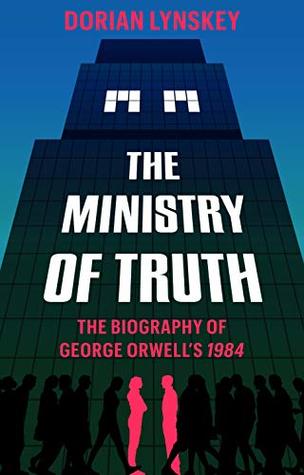
The second part on the book looks at Nineteen Eighty-Four's enduring appeal and how it has come to mean different things in different eras. This analysis goes right up to the present day with an exploration of Nineteen Eighty-Four in the era of Brexit, Trump, post-truth and fake news.
The Ministry of Truth: A Biography of George Orwell's 1984 is a triumph.
George Orwell would have approved, I feel sure.
5/5

July 8, 2023
Me parece una lectura imprescindible para cualquier amante de 1984.

March 24, 2025
Makes me want to read 1984. Again. And the Handmaid’s Tale. And Brave New World. And several I’d not heard of. Maybe not HG Wells …

August 12, 2019
4.5 stars, but rather dry - even as an audiobook. I'm not sure if I would have enjoyed it more in physical form where I could more readily trace/write down titles of all the books mentioned, or less because then paying attention would be even more taxing.
George Orwell had a long and varied life filled with lived experiences, but Nineteen Eighty-Four is probably his masterpiece.
This biography of the book itself focuses on the conversations and literary influences that forged elements of the book, so the biography of George Orwell the man is largely in the background.
However, for casual readers like me, that means learning an awful lot about George Orwell.
For example, I knew he fought in the Spanish Civil War and slept on the streets of Paris and London, but I didn't know that Eric Arthur Blair took on the name George Orwell to spare his "lower upper middle class" family the embarrassment of hearing of his travails in Down and Out in Paris and London (which I still haven't got around to reading, despite years of pestering from my mother).
See also: Orwell knocking the pretensions of his fancy schools, Orwell in Burma, Orwell's Oxford-educated wife dropping out of her master's and joining him in Spain, H.G. Wells calling him a "shit," a long radio and columnist history covering everything from op-eds slipped into opera reviews to fairy-tale adaptations for colonized India, popularizing Yevgeny Zamyatin's We and probably being solely responsible for its enduring legacy in English, escaping to a Greek island, marrying a self-professed "gold-digger" on his death bed, McCarthy getting ideas, David Bowie trying to make a musical version...
The whole book ends (and turns) on the difference between the first and subsequent editions of 1984:
George Orwell had a long and varied life filled with lived experiences, but Nineteen Eighty-Four is probably his masterpiece.
This biography of the book itself focuses on the conversations and literary influences that forged elements of the book, so the biography of George Orwell the man is largely in the background.
However, for casual readers like me, that means learning an awful lot about George Orwell.
For example, I knew he fought in the Spanish Civil War and slept on the streets of Paris and London, but I didn't know that Eric Arthur Blair took on the name George Orwell to spare his "lower upper middle class" family the embarrassment of hearing of his travails in Down and Out in Paris and London (which I still haven't got around to reading, despite years of pestering from my mother).
See also: Orwell knocking the pretensions of his fancy schools, Orwell in Burma, Orwell's Oxford-educated wife dropping out of her master's and joining him in Spain, H.G. Wells calling him a "shit," a long radio and columnist history covering everything from op-eds slipped into opera reviews to fairy-tale adaptations for colonized India, popularizing Yevgeny Zamyatin's We and probably being solely responsible for its enduring legacy in English, escaping to a Greek island, marrying a self-professed "gold-digger" on his death bed, McCarthy getting ideas, David Bowie trying to make a musical version...
The whole book ends (and turns) on the difference between the first and subsequent editions of 1984:
Displaying 1 - 30 of 254 reviews