Catharine Carey Logan and her family have enjoyed a peaceful and prosperous life as the Quakers and Delaware Indians share a mutually trusting relationship. Recently, however, this friendship has been threatened by violence against the Indians. Then, Catharine and her brother are taken captive by the Lenape in retaliation. At first, Catharine is afraid of her captors. But when a handsome brave begins to teach her about the ways of the Lenape, she comes to see that all people share the same joys, hopes, and fears.
Osborne crafts a thrilling story of romance and danger and remarkable courage.
Mary Pope Osborne is an American author of children's books and audiobook narrator. She is best known as the author of the Magic Tree House series, which as of 2017 sold more than 134 million copies worldwide. Both the series and Osborne have won awards, including for Osborne's charitable efforts at promoting children's literacy. One of four children, Osborne moved around in her childhood before attending the University of North Carolina. Following college, Osborne traveled before moving to New York City. She somewhat spontaneously began to write, and her first book was published in 1982. She went on to write a variety of other children's and young adult books before starting the Magic Tree House series in 1992. Osborne's sister Natalie Pope Boyce has written several compendium books to the Magic Tree House series, sometimes with Osborne's husband Will Osborne.
Standing in the Light is probably my least favorite book in the Dear America series (out of all of the ones that I’ve read). It seemed to lack depth and I got bored of the story in the middle of the book. The main relationship sort of made me uncomfortable, too, as it involved a thirteen year old captive falling in love with a seventeen year old who was one of her captors. There were also some parts where the religious elements were put in there too much, but I knew nothing about the Quakers, so it was sort of interesting to read about how the Quakers initially wanted to respect the Lenape people who lived in Pennsylvania.
I think the major issue with this book was that I had a sense of deja vu the whole time I was reading it. It felt like I’d already read this story before, but then I realized why I was having deja vu - this story was essentially Mary Jemison’s story but with a different ending. Earlier this year I read a book called Indian Captive: The Story of Mary Jemison and there were some scenes in this book that were pulled directly from Mary’s life. The author’s bio in the back of this book also said that the author has a “fascination with Indian captive narratives,” so it is possible that Mary Pope Osborne used parts of Mary’s story for inspiration. (Oh, and if Mary Pope Osborne’s name sounds familiar, it’s probably because almost every American knows her name. She’s the author of the Magic Treehouse series.)
The one thing that I really appreciated about this book was how this book taught a good message. This story is about challenging beliefs that people hold about groups of people and it’s about loving everyone even if they’re different than you. That’s a great message for kids to learn and it’s a message that tons of adults across the world still need to learn.
I would say that this installment in the series is still worth reading if you’re not familair with Mary Jemison’s story, but if you’re pretty familiar with Mary’s story, you can skip this one because it’s the same story as Mary's for most of the book.
i didn't remember this book as one of my childhood faves until mom talked about it. ah wow, this had a special place in my heart when i was around 10. ♥️
I currently finished Standing in the Light by Mary Pope Osborn. It begins with Indian attacks. Everyone is terrified. But when Cathrine Carey Logan and her brother Tohmas are kidnapped things change. After being separated from her brother and living with Indians her life is really really different. At that moment I realized what a could job the author did when describing the setting,characters,and the plot. I could really tell Cathrine's emotions because of the descriptions. I could tell Cathrine is scared and lonely because she can't understand the language or customs very well. With in time she starts to adapt to her new life. I can connect with Cathrine because being scared or lonely is something anybody could feel. Like one of my friends who moved to a different country. She didn't know any of their language or customs just like Cathrine. Overall this is one of my new favorite books. With suspense,mystery,a hint of sadness,and more this book gets my five star approval!
As a child I read a lot of the Dear America books, and this one tied with My Heart Is on the Ground for my favorite in the series. The author did a great job with character development and examining the cultures featured in the book. As the book opens, the reader, like Catharine, sympathizes with the Quakers and thinks the Native Americans are savages. Her capture seems like a tragedy. Then, as the book progresses, Catharine slowly changes her perspective and even falls in love. The reader feels all of these things happening: Osborne masterfully "shows not tells." By the end of the book, everything in Catharine's life is turned upside down. She changes dramatically, and it's obvious that the future she had planned for herself is no longer what she wants. I adored this book and its characters. Every character was vivid and real. Highly recommend!
Thirteen-year-old Catherine Logan, called Caty by her family and friends, lives in the Delaware Valley in Pennsylvania in 1763. Though she lives on the frontier, her life is somewhat carefree when the book begins; her biggest worry is that she wants a boy at school named Jess Owen to notice her, but because she a Quaker she is worried about becoming vain, for vanity is a sin for Quakers. Then she learns that a group of settles have massacred the residents of a peaceful Indian village. Caty becomes terrified that the Indians will retaliate by attacking settlers. Her worst fear comes true when Caty and her younger brother, Thomas, are captured by Lenape Indians.
Caty and her brother Thomas are treated well by the Lenapes, even though they are catpvies. They are adopted and shown kindness by their captors, as if they were members of the tribe. Still, Caty rebels every chance she gets. It is not until she gets to know Snow Hunter, a young man who was captured by the Lenapes as a child and chose to remain with the tribe, that Caty finds some hapiness in her new life, and she begins to wonder - does she even want to be rescued anymore?
I really enjoyed Standing in the Light when I first read in back in 1998, when it was originally published. I've always enjoyed historical fiction about Indian captives so I was glad when the Dear America series published a book about a girl captured by Indians. Caty was a likeable narrator and her adjustment to her new life seemed realistic. It was a little unbelievable that Caty was able to continue writing in her diary during her captivity but I was able to accept it due to the format of the series. Highly recommended for readers who enjoyed other Dear America books or who enjoy historical fiction about this subject.
I continue my reread of childhood books with one of my favorite Dear America books! I remembered the story in this one quite well, and the ending STILL punched me in the gut, even though I knew what was coming! The themes of anger and despair in this book make it eye opening to read even as an adult.
The story took place in Delaware Valley, Pennsylvania in 1763.
The main characters are the Lenape troup, Thomas Logan, Catherine Logan, Papa, Mama, Baby Will, White Owl, Little Cloud, Little One, and Snow Hunter.
Two Quaker children get caught by Lenape Indians. Catherine and Thomas are separated; Catherine falls in love with a Lenape warrior and gets put in a 'foster' family. Thomas and Catherine are together again and get rescued.
It was a pretty good book. It had action and romance. I just loved it. I think one of my favorite parts was when Catherine is given a bath and thinks they are torturing her. The one part I didn't prefer was when Baby Will gets worms.
In the book it really shows how different cultures relate. Quakers use 'Thee' and 'Thou'. The Lenape use washiba for rabbit. Quakers believe in God. Lenape believe in the Great Spirit.
2024 review: The emotional impact of this book only grows the older I get. I had to take breaks while reading it. I had forgotten that it was how I first learned of the Conestoga Massacre. I remember wondering if that had been made up when I first read this shortly after it was published and looking it up. I have this series along with several others to thank for my love of history. I'm not sure I can explain why this book is a favorite, nor how much it has shaped me. I just know that it has. Original review I have read this book so many times, that honestly I don't remember how many times I've read this book. The Dear America and Royal Diaries were some of my favorite books to read growing up. Of all of those books, this was my favorite. It still is. I've reread it even as an adult, and I still find the messages and story meaningful.
Oh my heart, I am SOBBING 😭 I remember the plot from childhood but couldn’t understand the depth of grief, loss, and love at that time. It’s a story of how we are all equal and valuable, no matter where we come from.
Content: loss of loved ones, suicidal thoughts, murder and injuries
This is my first Dear America book and I wonder what the others are like. This was obviously written as a children's book or at least for 9-12 year-olds.
I'm very disappointed in that the main character Catharine falls into routine with her Indian captors and begins to identify with and sympathize with them. This is a time of war, many people she knows have been captured and killed by Indians.
Apparently in today's politically correct society the Stockholm syndrome is no longer valid.
From Wikipedia: "Stockholm syndrome, or capture-bonding, is a psychological phenomenon in which hostages express empathy and sympathy and have positive feelings toward their captors, sometimes to the point of defending and identifying with them. These feelings are generally considered irrational in light of the danger or risk endured by the victims, who essentially mistake a lack of abuse from their captors for an act of kindness. The FBI's Hostage Barricade Database System shows that roughly 8% of victims show evidence of Stockholm syndrome.
"Stockholm syndrome can be seen as a form of traumatic bonding, which does not necessarily require a hostage scenario, but which describes 'strong emotional ties that develop between two persons where one person intermittently harasses, beats, threatens, abuses, or intimidates the other.' One commonly used hypothesis to explain the effect of Stockholm syndrome is based on Freudian theory. It suggests that the bonding is the individual's response to trauma in becoming a victim. Identifying with the aggressor is one way that the ego defends itself. When a victim believes the same values as the aggressor, they cease to be a threat."
As beautifully written as this story is, it is still a story of a very young girl and her brother being kidnapped and taken captive by a group of Indians who have no plans to return her to her family until forced to do so.
The author has obviously cast the "white man" in a negative light ignoring the fact that evil resides in the hearts of all men - white, red, yellow or black. Bad things happen to good people without it always being the white man's fault.
This book is the first Dear America book I have read (okay, I read some of the Royal ones, but...). I would highly recommend reading this, and keeping it on your shelf if you teach, however, it would be a difficult book to teach from. I think one of the reasons this book ranks high on my list of to-reads for all, it deals with some very heavy subjects -- one of them being the existence and definition of god. It's pretty powerful as Catherine gets captured and begins to assimilate to the tribe that captured her (as a replacement kid for some other kids that some white folk killed). As she learns their ways and begins to see they are not 'savages,' she questions her own beliefs about life and spirituality. This book also gives insight to how various Anglos approached 18th century settlement and forced migration of Native Americans, which is another reason this book is invaluable as an insight to history.
Very quick read. Written in diary form, story based in 1763 of a Quaker girl from Pennsylvania who was kidnapped by Indians. The big print makes you think its a kids book, but the language is actually fairly advanced. Basically the story is, she gets kidnapped by the Indians and fairly quickly make the mental shift from hating them as savages to questioning who the savages really are, only to then be kidnapped a 2nd time by the British -- who slaughter some of the people she's grown to love right in front of her eyes -- and forcibly return her to her family; i.e., anyone who knows anything about the history of whites who lived among the Indians during that period, especially female whites, already knows the story line. In every instance, once the whites have had a chance to get used to the difference in lifestyle, especially for women who had much more respect and status in NA tribes than in the white society, they generally preferred the Native American lifestyle.
This book is now on my fav list. It so good I read it in 3hr maby 4hr but it was realy good. I would recomend thee to read it. It kept me on the edge of my seat, my legs trembaling, even tears in my eyes at some parts. It was the coolest book ever. I still wonder for there are meany questons i wish to know. Those questons will always ask of me to find out. The It made me laugh at some parts.Mary Pope Osborne
I remember reading this book OVER AND OVER as a kid. It was so interesting, the idea of being kidnapped by Native Americans, the struggling to understand what was going on, and the sort of Stockholm Syndrome/understanding of the people she was captured by. I don't even remember how many times I read it. I absolutely loved it.
This book was really just a snooze, I had to do a history project. Honestly I felt like it was a chore to read. I finished the book and the ending was the best part because I was finally finished reading this piece of junk. If you like historical novels that refer a lot to God and Christ this is your book but for me I didn't enjoy the characters and her choices.
a bit slow at first, but eventually caught on and became quite enjoyable. the epilogue wrenches my heart a little more than usual, and I am saddened to be reminded of how poorly Native Americans were treated in colonial times.
In my early teens, this was my "Belle Book," which means it was the book I would get at the library even though I "read it already." It is one of my favorite books ever (even if it does get SAD). All the hearts. ❤
Oh man. This book was a trip, that's definitely trying really hard not to be problematic while still being problematic in terms of how the Native characters are presented.
You guyssss I read this book again after eleven years (!!!!) for a paper I'm doing and I'm going to compare it to real Indian captivities while also examining how the story is framed for elementary school readers.
I remember reading this book at the end of 4th grade, because it was the last day of 4th grade and the sun was streaming through the windshield of my family's car onto the book. I thought it was funny that the book was called Standing in the Light while it was standing in the light itself.
I forgot how wonderfully told this story is, and how heart-wrenching. There actually is quite a bit of violence in it, which I wasn't expecting. Catharine describes scalping and murder, not in great detail but I was surprised it was there at all. Her eventual identification with her captors is beautifully told, though a little overbearing and obvious at times. Still, I was surprised at the maturity of the voice in a novel meant for 8-10 year-olds.
What's strange about the book though is that Snow Hunter, the older boy that she falls in love with while in captivity, is actually white. He too was taken from his home at a young age and lived the rest of his life with the Lenape. This was a detail I'd forgotten-- and what does it mean that Catharine doesn't fall for a Native American after all, but a fellow white person who just happens to be in captivity with her? Osbourne barely mentions that SH isn't white. What is Osbourne trying to say about interracial marriage, as it does not appear at all in the book despite being about white people living among Native Americans?
Also insanely melodramatic that Catharine "never marries." I hate that. Marriage isn't the path for everyone but it was clearly meant to be in remembrance of Snow Hunter, to be his chaste whatever whatever until death when they can join with the Great Spirit or something. People can fall in love more than once, especially you know, after the age of 13 I'm sure you can love again. Everyone needs to chill.
I always go into Dear Americas about Native American interactions a little nervously because it seems to be a hit-and-miss chapter in American History for this series, sometimes doing it justice, and sometimes just being pretty epically disrespectful. This one was pleasantly surprising in how it honored the immensely emotional and difficult situation that it strives to interpret. What I really, deeply appreciated about this book was how elegantly and easily it brought the reader into an exercise of empathy. I'm not a Quaker, nor am I Christian, and the first fifth of the book was building empathy and understanding for Caty, our protagonist's life in a Quaker community in 1763, exploring the similarities (like first crushes and fear of long division) and the differences alike. After she is kidnapped by a nearby group of Lenape, you witness Caty's terror and anger - to such a degree she disregards everything she was taught to believe in her religious community - and the moment of growth and journey of empathy she then goes on after being reunited with her brother. As her empathy grows for her new community - whether you choose to see them as captors or an adoptive family - so does the reader's, and by the end of the book you feel as devastated, unmoored and lonely as she does, and are proud to see her family begin their journey to empathy. The ending doesn't shy away from the brutality of the treatment of most of the Native American tribes throughout American history, and it's heartbreaking. I cannot speak to the accuracy of the portrayal of the Lenape, as I'm woefully uneducated on that group, but it felt like their culture was written with respect, building bridges from one culture to another and giving space and grace for all the complicated emotions that come from this moment in history. I'll be chewing on this one for a while yet, I think.
Forever going to be one of my favorites from the Dear America series. I don't remember the first time I read this book, probably around the age of 14 or 15, but I had read others of the Dear America series before that. Growing up, I, like many other kids, had an interest in Native Americans. I think it was mostly spurred from watching Pocahontas and playing the computer game of hers where you learned different Native names for objects as you clicked on them. I even went as far as recording them all down along with pronunciation so I could learn them by heart.
Osborne has written an amazing book with this. It's designed for middle grade readers I believe so the language is easy but still touching in many ways. The plot is paced perfectly with enough in the beginning of Caty's life with the English to learn who she is and her concerns at just 13. When she and her brother are captured by the Lenape Indians, her writing reflects her intense distress in the short paragraphs until it gradually gets longer as she learns who the Lenape are. Her writing truly takes you on her journey with her as she gives away to her prejudices and opens her heart to the Lenape. And, as usual with this series, there is just a hint of romance thrown in which always was one of my favorite parts in the stories. This book in the series is probably the most touching that I have read and I think it's a beautiful, amazing read that can be enjoyed by all readers, not just middle grade.
So I know this is kind of a kid book...but I don't care. hahah I really enjoyed the 'Dear America' series when I was younger and I was reminded of that love when I joined good reads a while ago. Then I saw this book on bookswap and had to get it. And I'm glad I did.
This one of the ones I never read when I was younger but now that I know more about history and the significance of certain events I'm really glad I got it.
The writing is really simple (obviously) but I don't really care about that. It made it a quick read, but it was a good read none the less. The story of Caty truly touched my heart. I was near tears in a few parts. hahah
Chosen as a night-time read-aloud for my 10 year old son who is studying the Revolutionary War, I found this book to have some real relevance in today's world. As a young Quaker girl, Caty is quick to judge the Lanape people after she is kidnapped. However, she ends up finding them to be perhaps preferable to her own people, even falling in love. This book is yet another great example of why you should ALWAYS read the epilogue. There is some great follow-up about how the rest of Caty's life played out which left me and my son chatting joyfully for quite a bit even after the story was finished.
I was given this book by my lunch buddy and now family friend as a hoax to try to get me to read more in i think 3rd or 4th grade, well that didnt happen. but i it sat on my bookshelf for a couple years and i believe some where around 7th grade i picked it up and enojoyed it a lot, and this book made me realize that books are so situational to your life and a book that you dont like when your 10 you may like when your 13 so dont rule out every book that doesnt interest you now because it may later.
It wasn't terrible, but it wasn't amazing. It was good. It gives us great insight on how everyone is pretty much the same, no matter what their skin color is. I think that is an important thing to add to child/preteen literature since it's easier to plant ideas and thoughts in the mind of child rather than an adult or teen. (side note) The more history I learn, the more disappointed I am of the white English race. It is very sad how they treated other races. I'm ashamed. All in all a good, quick read for wasting time.


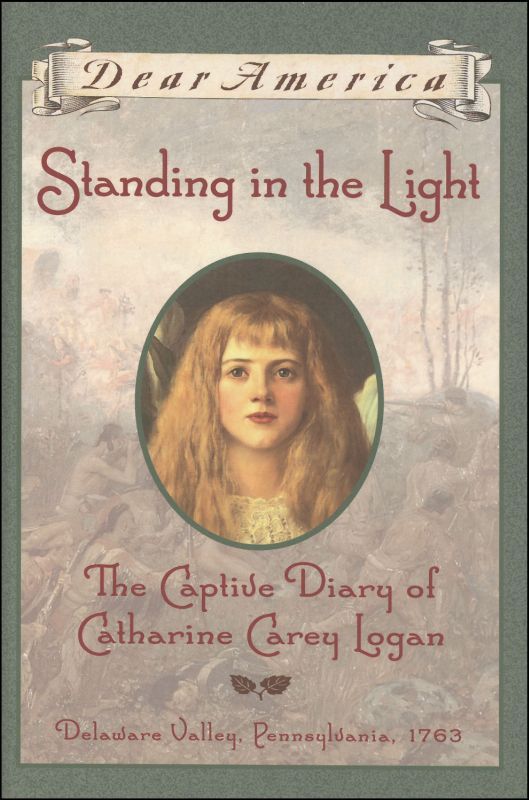
 Mary Pope Osborne