Colin Pinnock, on top of the world when he is selected as a junior minister to the new Prime Minister, receives a mysterious note that sends him into a world of mystery and murder.
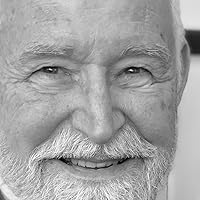
Robert Barnard (born 23 November 1936) was an English crime writer, critic and lecturer.
Born in Essex, Barnard was educated at the Royal Grammar School in Colchester and at Balliol College in Oxford. His first crime novel, A Little Local Murder, was published in 1976. The novel was written while he was a lecturer at University of Tromsø in Norway. He has gone on to write more than 40 other books and numerous short stories.
Barnard has said that his favourite crime writer is Agatha Christie. In 1980 he published a critique of her work titled A Talent to Deceive: An Appreciation of Agatha Christie.
Barnard was awarded the Cartier Diamond Dagger in 2003 by the Crime Writers Association for a lifetime of achievement.
Under the pseudonym Bernard Bastable, Robert Barnard has published one standalone novel and three alternate history books starring Wolfgang Mozart as a detective, he having survived to old age.
3.5-4 stars As is often the case with mysteries, I struggled with the pacing. At times the build was a bit too slow for me, and the ending slightly rushed but also drawn out -- which makes no sense, I know.
A few plot points were a tad too convenient, but overall I enjoyed this book.
Some reviewers have dismissed A Murder in Mayfair as a soft and therefore not so satisfactory offering...not one of Barnard's best. But I would vigourously argue the contrary: that it is a classic example of this author's dependable originality.
Volume after volume I keep waiting for the usual plot chestnuts to be trotted out: the broken hero, the prodigal son, the resentful daughter, the betrayed wife, the miscreant husband...but he never lets his characters or his plots fall into the usual swamps of banality. Before you know it, he HAS used those conceits,(and more classic still [spoiler alert] he reaches back into classic stepmother and evil twin archetypes) but in such fresh and unique ways that you hardly notice it and find you have entirely enjoyed the ride.
Barnard spins his tale out finely and nicely...one can hardly call it (capital S)"Suspense", that is, in the hideously gory formulae apparently preoccupying the gruesome thriller/horror genre of today. Rather I would suggest that one's interest gets caught up in the classic lit-crit traditions of "tension", a strategy more subtle and a technique in which Barnard is a master.
As I revel in my stroll through these titles, it strikes me that perhaps Robert Barnard just had too original a mind to rely on a single detective-led routine. It would have bored him quickly. Beyond his few Charlie White stories...and that character is far too well adjusted to have been accepted by today's audience which seems to prefer all manner of broken personal relationships and professional angst...instead, Robert Barnard obviously enjoyed dreaming up as great a variety of plot combinations as he could and so preferred to pursue that versatile destiny instead.
Finally, anyone who appreciates good writing, will view the Barnard Canon as excellent entertainment, simply because it IS such a well crafted collection of original work. Robert must have been an interesting person to live with. We should all be grateful he was so prolific. I know I am.
Mysteries, as a genre, are seldom poignant, yet this one is. Perhaps the most touching aspect of all is that the author, Robert Barnard, later suffered himself from Alzheimer's Disease, as does one of the peripheral characters in this book. It makes me wonder if he had a premonition of his coming condition or even already recognized signs of it in his life? Barnard has always been a favorite of mine, even though I don't like all of his books equally, I find he has a much greater range than most mystery writers. In this particular story, there are definitely overtones of the author's own political attitudes and leanings, and while I detest agendas in books of fiction, I am more willing to let it slide here, for a couple of reasons. One is, that the opinions expressed remain marginal to the plot and do not drive the story at all. Everyone is entitled to his opinion and is free to express it...as long as he isn't trying to force it down the reader's throat or worse, foist a load of undeserved guilt on us! Two is, that a politician holding firm beliefs and values is not only believable, but refreshing!
Regarding the villain of the piece, it was an easy call, although there were still plenty of surprises along the way. It is clear to me that Agatha Christie is his favorite writer and he pays subtle tribute to her in this novel of cryptic messages, far-flung relatives, and hidden identities! It also tantalized me with its similarity to a real case from the 19th century, involving the Duc de Preslin, the family governess, Henriette Deluzy Desportes, and the murder of his wife, as retold in the book: ALL THIS AND HEAVEN TOO, by Rachel Field.
Robert Barnard seems to be fascinated by the search for identity; in this case, Colin Pinnock is shocked to learn that he was adopted. Even more shocking, his biological father had murdered his wife (not Colin's mother--that was the nanny) and then disappeared. Colin's mother is dead and his father has dementia, so he sets out to learn the truth with the help of several researchers, including his ex-wife. So many twists and turns in this story, a delight to read.
Probably 3.5 definitely disturbing both as psychological thriller and because of the obligatory narrator threatened with physical harm scene at the end. Much creepier than expected given the English Mayfair trope. DPL book
Well, I thought I was reading "Murder in Mayfair" by D M Quincy. Instead I checked out "A Murder in Mayfair" by Robert Bernard. I enjoyed the Robert Barnard book. It was a good mystery although the villain seemed really over the top. So now I will be reading the D M Quincy book!
Well I liked it well enough. A little hard to believe some scenarios . But over all it was a good read. Short! Haven’t read anything else of his. I might try another. Good character development.
This story is not what the title suggests. It is not a murder mystery but an exploration of a man's background.It takes a while to get to the interesting part and I couldn't wait for it to be over.
A British MP starts getting mysterious messages that imply there is something about his personal history he does not know. He finds out he was adopted, and from there the plot thickens. An entertaining book… not great literature, but the writing is decent and the story interesting.
Probably not one of Barnard's best books, not because the writing isn't up to his usual standards but more due to the premise on which the story is based. An MP receives an anonymous note that says "Who do you think you are?" and immediately begins to wonder if he is adopted. That would never be the first thing that came to anyone's mind when reading those few words, especially since the main character has absolutely no reason to believe it. Get past that shaky start and the book moves right along as the MP begins delving into his past and the past of his birth parents finding murder and madness. I enjoyed the book but it is not my favorite of Barnard's works.
I loved this book. Once I started reading this book I couldn't put it down. Colin Pinnock's political party has just won the election and Colin is appointed a Minister in the Department of Education. While reviewing his mail he finds a card asking, "Who do you think you are?" This question leads us down an inquiry path beginning with who are his real parents, who is tailing him, is he in danger, and why would someone want to kill him.
This novel is completely British in tone and style. The clues to the murder unfold bit by tiny bit which kept it satisfying to the end. Not too heavy. Great for those who who may like to temporarily pretend to be across the 'pond.'
It's an old murder, with hidden identities. Likeable main character has you cheering for him and for his brilliance. Enjoyable who dunnit. Satisfying ending.
This was a fun read. Bernard`s plot was very clever and certainly spurred one to read on as fast as possible. His stories are more intellectual than most.