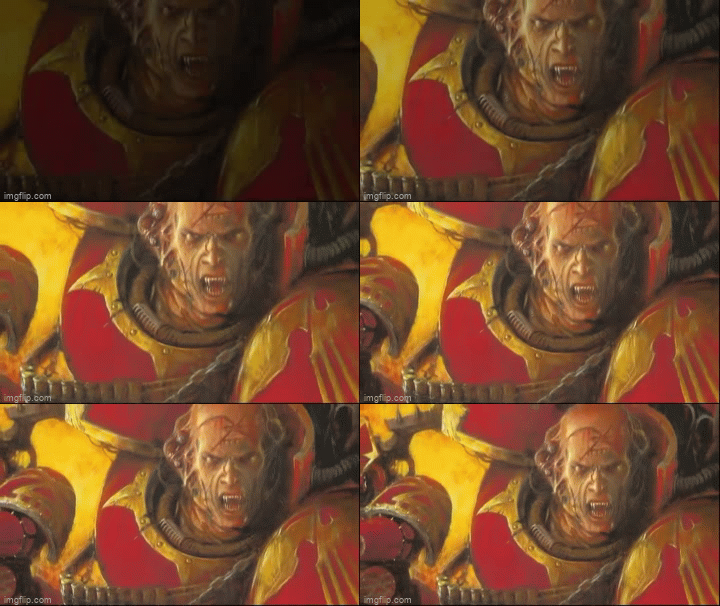
Blood will wash the dust away. Blood will wash the past away…
Even though the quality of its individual stories may vary slightly, Horus Heresy: Primarchs – the ongoing set of tales about the greatest of the Emperor’s children forging the fate of a whole galaxy – is one of my favourite Black Library series. Of special interest to me have been the legends of those nine who would later go on to embrace the darkness (or is it primordial truth?..) of Chaos. Besides, among a whole host of recognizable figures, the setting of Warhammer 30/40K can boast its own Alexander the Great, Julius Caesar, and also Spartacus. Yes, a transhuman one at that...
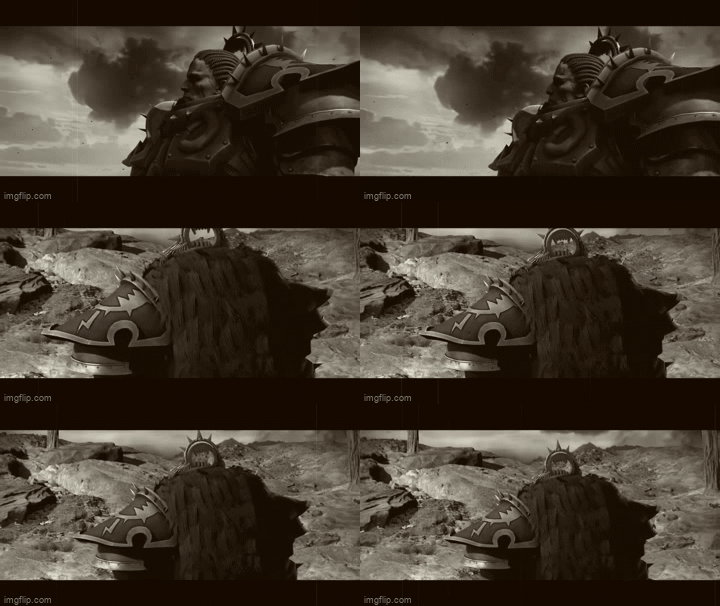
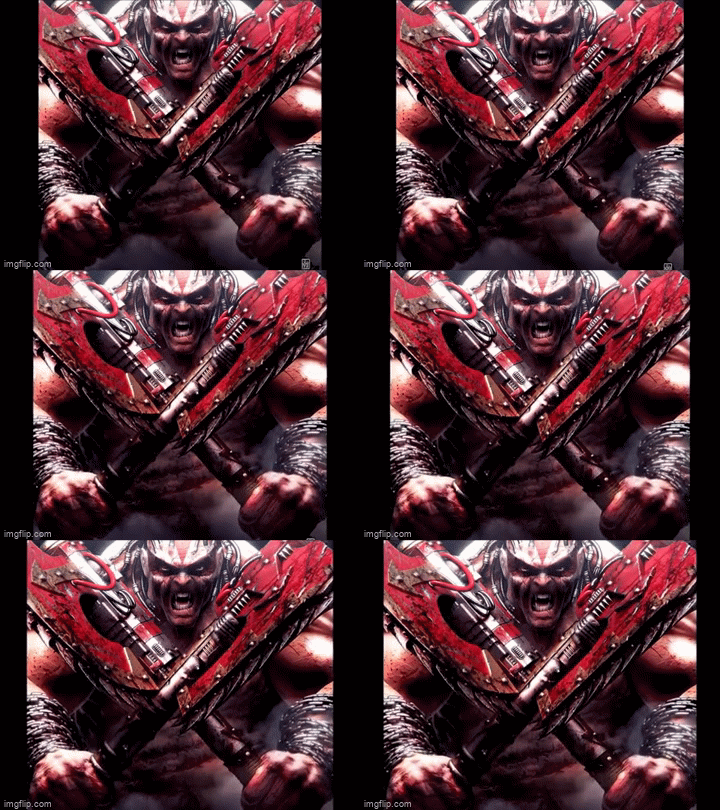
Unlike his brothers, the Twelfth Primarch is the only one who would not rise to rule over the world of his upbringing, and there was a very special reason for that. In the book, Angron’s previous life is sometimes mentioned by himself, but the larger part of it is shown through the visions of a Legion Librarian, tracing his father’s tortured life path from the beginning. Several times we see his younger self in the fighting arena, watched by degenerate spectators as he's forced to butcher his fellow slaves and the horrors unleashed upon them in the grim semblance of Ancient Rome’s most popular attraction – the spectacles of indescribably inhuman cruelty that effectively put Hunger Games and its likes to shame. Discovered at last by the Master of Mankind, this former gladiator-champion suddenly finds himself attired in the full panoply of a Legion commander which he has absolutely no wish to become. Like Corax and to an extent Mortarion, the Twelfth had been a leader of rebels, turned by his Creator into one who would instead go on to crush rebellions against the nascent Imperium’s tyranny. But, ever since taking part in the Great Crusade, Angron regards himself as only a ghost of his former self, and sees the Emperor as just another high-rider, a despot as much intent on his enslavement as those cursed others had been.
The Slave of Nuceria’s actual plot revolves around the question of Butcher’s Nails that Angron strongly wishes to see implanted in all of his warriors. Mistakenly believing that this twisted archeotech would make them better warriors more deserving of Angron’s respect, the majority of the legionaries crave their blessings – while the smaller, wiser part sees them for what they really are: a debased, horrible means of torture and punishment. (The actual reason for their implantation is revealed in the most darkly heart-wrenching episode of Angron’s past). Incidentally – ironically – it is the Legion’s current enemies, the population of yet another world they are sent to bring to Compliance, that eventually give the Eaters of Worlds the idea of constructing the best, most viable version of the implant. And then, of course, the Twelfth Legion’s doom follows…
Ian St Martin wonderfully portrays the strained relationships between the World Eaters and their gene-father, the legionaries’ desperate yearning to prove themselves to him – because, after having been (forcibly) reunited with his sons, he constantly makes them feel ashamed of what he perceives as their inadequacy. To Angron, the transhuman warriors under his command are so weak and worthless compared to the ordinary men and women whose resilience and bravery he’d so often witnessed – those who had fought beside him, bringing terrible retribution upon their oppressors, before the Primarch was snatched from them by a distant entity that denied the only true future both to himself and those he had suffered and fought with. Theirs had been the true bonds of blood – blood spilt together upon red sands for decades and later in a meticulously-planned rebellion – while the former War Hounds are just a poor replacement, at best.
But still, whether Angron wants it or not, he is his Legion’s gene-father, the sire they all look up to with utmost deference and trust, and anyway he is not to be blamed for what had been done to him – which is, I suppose, one of the most poignant tragedies of the entire Horus Heresy. Angron’s better part had been forever left on distant Nuceria, although it is darkly ironic that the Primarch who had showed such touching sentiment and care towards his enslaved mortal fellows would become the one to eventually turn his gene-sons into berserk, blood-crazed beasts with no trace of humanity altogether.
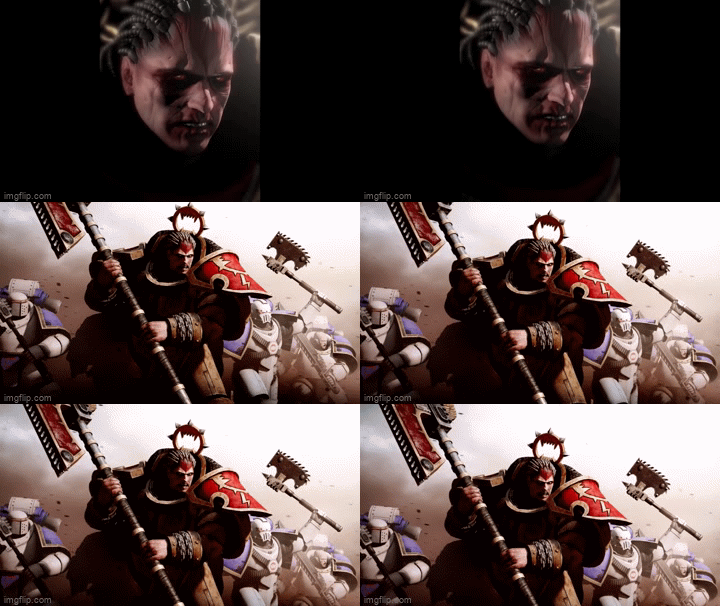
It’s also been interesting to follow the heated dispute of Centurions Mago and Khârn, regarding their father and the future of their Legion, both of them certain they know exactly which path would better suit their brothers. It is actually the question of what lengths Angron’s unloved sons would go to (all for the sake of the Legion) in ether obediently fulfilling his plan for them or strongly denying it in favour of their noble, proud history. However, both choices prove incredibly hard to make and bring only loss and ruination in the end.
There is a lot more to discuss about the story, which is no wonder since the Primarchs and their progeny still face the same existential and moral dilemmas as the common humankind, only on a much greater scale. In general, the style St Martin chose for this story, action-heavy and dialogue-rich in equal measure, perfectly matches the spirit of the 12th Legion. This predominantly curt, laconic prose conjures in the reader’s mind the metallic tang of blood and clash of weaponry, as Angron fights brutally time and again, the bloodthirsty song of the Butcher's Nails spurring him on, while his legionaries attempt to reforge themselves in their stern, scornful father’s image.
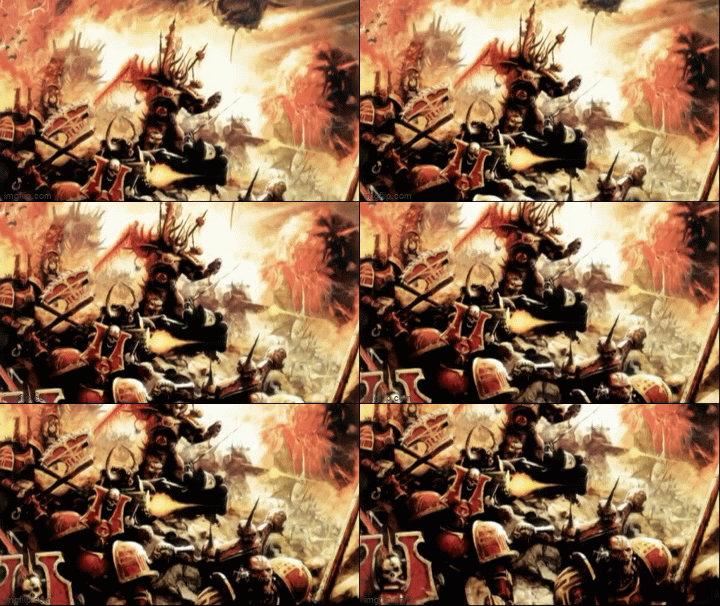
Like the rest of the Primarchs installments, this is a great story on its own, but would certainly feel even richer beside the other existing tales about Angron and his Legion. By the way, the prologue and epilogue could be perfectly read as two short stories in their own right, since they demonstrate the very beginning and the very end of the 12th Legion’s transformation brought about by its Primarch. Essentially, the World Eaters’ tale is the chronicle of desperate ambitions and false choices, paternal indifference and filial mistakes, shattered brotherhoods and subsequent lies of the decaying Imperium too ashamed to remember the truth. Not that the new, degraded, blood-crazed Eaters of Worlds themselves would care too much, anyway...