

What do you think?

The Author of the Acacia Seeds and Other Extracts from the Journal of the Association of Therolinguistics
first published in The Ascent of Wonder: The Evolution of Hard SF || Editors: Kathryn Cramer, David G. Hartwell
Unknown Binding
First published January 1, 1974
About the author
Ursula K. Le Guin
1,048 books32.4k followersUrsula K. Le Guin published twenty-two novels, eleven volumes of short stories, four collections of essays, twelve books for children, six volumes of poetry and four of translation, and has received many awards: Hugo, Nebula, National Book Award, PEN-Malamud, etc. Her recent publications include the novel Lavinia, an essay collection, Cheek by Jowl, and The Wild Girls. She lived in Portland, Oregon.
She was known for her treatment of gender (The Left Hand of Darkness, The Matter of Seggri), political systems (The Telling, The Dispossessed) and difference/otherness in any other form. Her interest in non-Western philosophies was reflected in works such as "Solitude" and The Telling but even more interesting are her imagined societies, often mixing traits extracted from her profound knowledge of anthropology acquired from growing up with her father, the famous anthropologist, Alfred Kroeber. The Hainish Cycle reflects the anthropologist's experience of immersing themselves in new strange cultures since most of their main characters and narrators (Le Guin favoured the first-person narration) are envoys from a humanitarian organization, the Ekumen, sent to investigate or ally themselves with the people of a different world and learn their ways.
She was known for her treatment of gender (The Left Hand of Darkness, The Matter of Seggri), political systems (The Telling, The Dispossessed) and difference/otherness in any other form. Her interest in non-Western philosophies was reflected in works such as "Solitude" and The Telling but even more interesting are her imagined societies, often mixing traits extracted from her profound knowledge of anthropology acquired from growing up with her father, the famous anthropologist, Alfred Kroeber. The Hainish Cycle reflects the anthropologist's experience of immersing themselves in new strange cultures since most of their main characters and narrators (Le Guin favoured the first-person narration) are envoys from a humanitarian organization, the Ekumen, sent to investigate or ally themselves with the people of a different world and learn their ways.
Ratings & Reviews
Friends & Following
Create a free account to discover what your friends think of this book!
Community Reviews
Displaying 1 - 30 of 51 reviews

April 26, 2026
“What is language?... Language is communication.”
This short fiction purports to be three, short academic papers about non-human language, for a therolinguistic journal (‘thero’ means ‘beast’).
Is it humility or arrogant anthropomorphising to make assumptions about culture and language of species so different from our own?
The first piece concerns messages “written in touch-gland exudation on degerminated acacia seeds laid in rows at the end of a narrow, erratic tunnel”. It analyses four passages, with several interpretations, many linguistic caveats, and warns against “ethnocentric interpretation”, such as thinking of ‘up’ as good and positive and ‘down’ as not.
Reading Penguin is apparently much harder, even when watching slowed-down video of their kinetic script “written almost entirely in wings, neck, and air”, that turns out to have more in common with other birds than with dolphins.
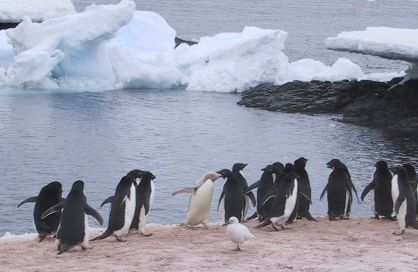
Image: Adélie penguin on Gourdin Island. Their language is purported to be rather different from that of the more individualistic Emperor penguins (Source)
The final article considers what language is, how it relates to art, and asks why therolinguists study only animals. It raises, then challenges, the belief that plants do not communicate, but acknowledges that decoding it would require very different methods:
“For it is simply not possible to bring the critical and technical skills appropriate to the study of Weasel murder mysteries, or Batrachian erotica, or the tunnel sagas of the earthworm, to bear on the art of the redwood or the zucchini”
It ends, considering the possibility of geolinguistics: “still more passive, wholly atemporal” than that of plants.
See also
• Ted Chiang’s Story of Your Life (filmed as Arrival), which I first reviewed HERE and then wrote a new one HERE, explores how to communicate with beings whose bodies, lives, culture, and language are utterly different from our own.
• Clever Hans, a horse who could allegedly do simple arithmetic by tapping a hoof, but was more likely a case of a well-trained animal and wishful thinking:
• Project CETI investigates the speech patterns of sperm whales and how similar they are to human speech. Their coda vocalizations are ‘highly complex’ and remarkably similar to our own.
• Translating the Rosetta Stone.
• The Roman Vindolanda tablets, giving insights into everyday life in a northern frontier outpost.
• Amal El-Mohtar & Max Gladstone's two-handed epistolary novella This Is How You Lose the Time War, which I reviewed HERE.
Short story club
I read this with The Short Story Club.
You can read this story HERE.
You can join the group here.
This short fiction purports to be three, short academic papers about non-human language, for a therolinguistic journal (‘thero’ means ‘beast’).
Is it humility or arrogant anthropomorphising to make assumptions about culture and language of species so different from our own?
The first piece concerns messages “written in touch-gland exudation on degerminated acacia seeds laid in rows at the end of a narrow, erratic tunnel”. It analyses four passages, with several interpretations, many linguistic caveats, and warns against “ethnocentric interpretation”, such as thinking of ‘up’ as good and positive and ‘down’ as not.
Reading Penguin is apparently much harder, even when watching slowed-down video of their kinetic script “written almost entirely in wings, neck, and air”, that turns out to have more in common with other birds than with dolphins.
Image: Adélie penguin on Gourdin Island. Their language is purported to be rather different from that of the more individualistic Emperor penguins (Source)
The final article considers what language is, how it relates to art, and asks why therolinguists study only animals. It raises, then challenges, the belief that plants do not communicate, but acknowledges that decoding it would require very different methods:
“For it is simply not possible to bring the critical and technical skills appropriate to the study of Weasel murder mysteries, or Batrachian erotica, or the tunnel sagas of the earthworm, to bear on the art of the redwood or the zucchini”
It ends, considering the possibility of geolinguistics: “still more passive, wholly atemporal” than that of plants.
See also
• Ted Chiang’s Story of Your Life (filmed as Arrival), which I first reviewed HERE and then wrote a new one HERE, explores how to communicate with beings whose bodies, lives, culture, and language are utterly different from our own.
• Clever Hans, a horse who could allegedly do simple arithmetic by tapping a hoof, but was more likely a case of a well-trained animal and wishful thinking:
• Project CETI investigates the speech patterns of sperm whales and how similar they are to human speech. Their coda vocalizations are ‘highly complex’ and remarkably similar to our own.
• Translating the Rosetta Stone.
• The Roman Vindolanda tablets, giving insights into everyday life in a northern frontier outpost.
• Amal El-Mohtar & Max Gladstone's two-handed epistolary novella This Is How You Lose the Time War, which I reviewed HERE.
Short story club
I read this with The Short Story Club.
You can read this story HERE.
You can join the group here.

April 21, 2026
#spinoff
“A primeira ocorrência do termo “terolinguista” remonta a 1974, num conto de antecipação de Ursula K. Le Guin, “The Autor of the Acacia Seeds and Other Extracts from the Journal of the Association of Therolinguistics.”
- “Autobiografia de um Polvo e Outros Relatos de Antecipação”, de Vinciane Despret -
Foi, portanto, Ursula K. Le Guin quem inventou o neologismo "terolinguística", partindo do grego “thèr” (animal selvagem) para referir o ramo da linguística que estuda e traduz as produções escritas por animais e, mais tarde, por plantas, quando publicou este pequeno texto de especulação científica em forma de relatório. Na primeira parte, a que dá título ao conto, abordam-se as mensagens deixadas por uma formiga através de secreções em 31 sementes de acácia dispostas em fila na entrada de um túnel do formigueiro, cuja tradução é realmente surpreendente.
Sementes 1 a 13: “Não tocar[ei] antenas. Não acariciar[ei]. Não gastar[ei] em sementes secas a doçura de [minha] alma. Pode ser encontrada quando [eu estiver] morta. Toque nesta madeira seca. [Eu] peço! [Eu estou] aqui!
O segundo segmento consiste no anúncio a uma expedição à escuridão gelada da Antártida, graças a uma bolsa da UNESCO, para estudar o mais difícil e inacessível dos dialectos de Pinguim, o do pinguim-imperador, que me fez lembrar o impressionante documentário “A Marcha dos Pinguins”.
Os poetas não se ouvem; não podem se ver. Eles só podem sentir o calor um do outro. Essa é sua poesia, essa é sua arte. Como todas as literaturas cinéticas, é silenciosa; ao contrário de outras literaturas cinéticas, é quase imóvel, indizivelmente subtil. O arrepio de uma pena; o deslocamento de uma asa; o toque, o toque leve e quente daquele ao seu lado. Na solidão indescritível, miserável e escura, a afirmação.
É com um editorial do presidente da Associação de Therolinguística sobre a linguagem e a arte das plantas que Le Guin conclui este incrível conto de antecipação, em que convida o leitor a extrapolar o seu pensamento, incutindo um toque de poesia ao tom formal do discurso científico.
E com eles, ou depois deles, não poderá chegar aquele aventureiro ainda mais ousado – o primeiro geolinguista que, ignorando a delicada e transitória lírica do líquen, lerá sob ele a ainda menos comunicativa, ainda mais passiva, totalmente atemporal, fria e vulcânica poesia das rochas: cada uma, uma palavra dita, sabe-se lá há quanto tempo, pela terra ela mesma, na imensa solidão do espaço e na sua ainda mais imensa comunidade.
“A primeira ocorrência do termo “terolinguista” remonta a 1974, num conto de antecipação de Ursula K. Le Guin, “The Autor of the Acacia Seeds and Other Extracts from the Journal of the Association of Therolinguistics.”
- “Autobiografia de um Polvo e Outros Relatos de Antecipação”, de Vinciane Despret -
Foi, portanto, Ursula K. Le Guin quem inventou o neologismo "terolinguística", partindo do grego “thèr” (animal selvagem) para referir o ramo da linguística que estuda e traduz as produções escritas por animais e, mais tarde, por plantas, quando publicou este pequeno texto de especulação científica em forma de relatório. Na primeira parte, a que dá título ao conto, abordam-se as mensagens deixadas por uma formiga através de secreções em 31 sementes de acácia dispostas em fila na entrada de um túnel do formigueiro, cuja tradução é realmente surpreendente.
Sementes 1 a 13: “Não tocar[ei] antenas. Não acariciar[ei]. Não gastar[ei] em sementes secas a doçura de [minha] alma. Pode ser encontrada quando [eu estiver] morta. Toque nesta madeira seca. [Eu] peço! [Eu estou] aqui!
O segundo segmento consiste no anúncio a uma expedição à escuridão gelada da Antártida, graças a uma bolsa da UNESCO, para estudar o mais difícil e inacessível dos dialectos de Pinguim, o do pinguim-imperador, que me fez lembrar o impressionante documentário “A Marcha dos Pinguins”.
Os poetas não se ouvem; não podem se ver. Eles só podem sentir o calor um do outro. Essa é sua poesia, essa é sua arte. Como todas as literaturas cinéticas, é silenciosa; ao contrário de outras literaturas cinéticas, é quase imóvel, indizivelmente subtil. O arrepio de uma pena; o deslocamento de uma asa; o toque, o toque leve e quente daquele ao seu lado. Na solidão indescritível, miserável e escura, a afirmação.
É com um editorial do presidente da Associação de Therolinguística sobre a linguagem e a arte das plantas que Le Guin conclui este incrível conto de antecipação, em que convida o leitor a extrapolar o seu pensamento, incutindo um toque de poesia ao tom formal do discurso científico.
E com eles, ou depois deles, não poderá chegar aquele aventureiro ainda mais ousado – o primeiro geolinguista que, ignorando a delicada e transitória lírica do líquen, lerá sob ele a ainda menos comunicativa, ainda mais passiva, totalmente atemporal, fria e vulcânica poesia das rochas: cada uma, uma palavra dita, sabe-se lá há quanto tempo, pela terra ela mesma, na imensa solidão do espaço e na sua ainda mais imensa comunidade.

April 17, 2026
This short story is written so it looks like reports from research scientists studying communication among members of non-human species such as ants, penguins, and plants. Le Guin was way ahead of her time. It's hard to believe that the story was first published in 1974 in the anthology "Fellowship of the Stars." She really did a great job with the scientific lingo and her dry humor.

December 8, 2024
O presente conto faz parte de uma antologia publicada na década de 1990 , The Ascent of Wonder: The Evolution of Hard SF, contendo diversos contos de ficção-científica, de forma a apresentar uma evolução do gênero. É também o conto no qual Vinciane Despret se baseia para escrever Autobiografia de um polvo: e outras narrativas de antecipação.
Ursula K. Le Guin tinha uma capacidade ilimitada de pensar formas de expressão de vida, além da humana e o fez durante toda a sua carreira literária. Aqui, não é diferente, e Le Guin, por meio de sua mente especulativa, cria o conceito de therolinguística, que estuda a escrita dos animais e plantas. Atualmente, há cientisticas que vêm observando interações químicas entre plantas que podem ser descritas como uma forma de linguagem. E mesmo os demais animais, além do animal humano, possuem meios de comunicação e expressão, apenas que não os consideramos dignos de serem considerados comunicação ou coisa do gênero. Pobre de nós, humanos.
A consciência, entendida como a capacidade de vivenciar, experimentar ou compreender aspectos ou a totalidade do mundo interior pelo ser humano. deu-nos o sentido de razão. Infelizmente, isso parece que nos fez crer que somos deuses ou semi-deuses perante toda as demais espécies, animais e vegetais, e delas dispormos como bem entendermos.
Como escreve na resenha ao livro de Despret, eu acredito que a forma de expressão humana não é única, que os animais também possuem consciência, personalidades etc., apenas que possuem outras formas de se expressarem que nós não entendemos (ou não temos interesse ou não queremos entender), mas isso não significa que o único meio de expressão válido seja a vocalização ou a escrita manual humana, e que sejamos, nós, seres humanos, o centro de todo o universo e que podemos destruir ou criar ao nosso bel prazer, sem pensar nas consequências aos outros seres e a nós mesmos. Podemos ser muito, mas enquanto não percebermos que a vida é simbiose, de que dependemos uns dos outros para seguir, acabamos sendo nada.
Ursula K. Le Guin tinha uma capacidade ilimitada de pensar formas de expressão de vida, além da humana e o fez durante toda a sua carreira literária. Aqui, não é diferente, e Le Guin, por meio de sua mente especulativa, cria o conceito de therolinguística, que estuda a escrita dos animais e plantas. Atualmente, há cientisticas que vêm observando interações químicas entre plantas que podem ser descritas como uma forma de linguagem. E mesmo os demais animais, além do animal humano, possuem meios de comunicação e expressão, apenas que não os consideramos dignos de serem considerados comunicação ou coisa do gênero. Pobre de nós, humanos.
A consciência, entendida como a capacidade de vivenciar, experimentar ou compreender aspectos ou a totalidade do mundo interior pelo ser humano. deu-nos o sentido de razão. Infelizmente, isso parece que nos fez crer que somos deuses ou semi-deuses perante toda as demais espécies, animais e vegetais, e delas dispormos como bem entendermos.
Como escreve na resenha ao livro de Despret, eu acredito que a forma de expressão humana não é única, que os animais também possuem consciência, personalidades etc., apenas que possuem outras formas de se expressarem que nós não entendemos (ou não temos interesse ou não queremos entender), mas isso não significa que o único meio de expressão válido seja a vocalização ou a escrita manual humana, e que sejamos, nós, seres humanos, o centro de todo o universo e que podemos destruir ou criar ao nosso bel prazer, sem pensar nas consequências aos outros seres e a nós mesmos. Podemos ser muito, mas enquanto não percebermos que a vida é simbiose, de que dependemos uns dos outros para seguir, acabamos sendo nada.

April 21, 2026
A challenging, abstract, philosophical short story, in three parts.
The first is about the language of ants, recorded on acacia seeds in a chemical form (coincidentally, recently saw a video of a type of moth that, as a caterpillar, drops to the ground to be abducted by ants. The caterpillar has disguised itself with the smell of ant larva, and so the ants take care of the caterpillar *for two years!* until it pupates and then emerges from underground in its moth form. There's a "cuckoo" story told in ant language).
The second section examines the language of penguins through motion, the swoop and roll of their underwater flights. This section was so evocative that I wrote a poem about the dance of the penguins. Thanks Ursula!
The third section is a step in the wrong direction, I believe, in that it is about plants and claims that they do not communicate. Much research lately has shown that indeed they do communicate. A forest is connected underground through a network of fungi, for example, or a plant attacked by a pest or disease emits a signal that alerts other plants nearby to up their defences.
There is so much we do not know, and perhaps will never know, unless we open our eyes, our hearts, and our minds.
All in all, this is a high-concept piece of short fiction.
The first is about the language of ants, recorded on acacia seeds in a chemical form (coincidentally, recently saw a video of a type of moth that, as a caterpillar, drops to the ground to be abducted by ants. The caterpillar has disguised itself with the smell of ant larva, and so the ants take care of the caterpillar *for two years!* until it pupates and then emerges from underground in its moth form. There's a "cuckoo" story told in ant language).
The second section examines the language of penguins through motion, the swoop and roll of their underwater flights. This section was so evocative that I wrote a poem about the dance of the penguins. Thanks Ursula!
The third section is a step in the wrong direction, I believe, in that it is about plants and claims that they do not communicate. Much research lately has shown that indeed they do communicate. A forest is connected underground through a network of fungi, for example, or a plant attacked by a pest or disease emits a signal that alerts other plants nearby to up their defences.
There is so much we do not know, and perhaps will never know, unless we open our eyes, our hearts, and our minds.
All in all, this is a high-concept piece of short fiction.

March 24, 2022
Here again that combination of ephemerality and reimagining ecosystems, including literary ecosystems, which is such a part of Le Guin’s aesthetic and philosophy. I wonder if she made a decision not to travel to the Antarctic herself, but to only know it vicariously, and then imagine it? She uses the genre of the factual report to such great effect in these bizarre, hilarious and yet also wondrously true Journal of Therolinguistics speculations on the extremities of what we understand as language. In graceful metafictive manoeuvres, Le Guin privileges poetry, both verbal and kinetic, over narrative. Fifty years before Suzanne Simrad’s How Trees Talk, Le Guin was imagining the languages and communications of all of the nonhuman: animal, plant and geological. If we can just pay attention.

Read
August 23, 2024Fun!

May 29, 2026
Mind-blowing, creative, and thought-provoking.
This short story is about the languages of animals and their writing systems, which therolinguists can translate and interpret.
What a creative mind to have written this amazing story. I loved it!
I need to read more of this author!
This short story is about the languages of animals and their writing systems, which therolinguists can translate and interpret.
What a creative mind to have written this amazing story. I loved it!
I need to read more of this author!

April 25, 2025
Ursula ets perfecta i tenies el cervell enorme

April 13, 2026
I swear this woman has three or four brains . A tongue in cheek short piece mimicking the dry tone of academic papers . Here the experts are delving deep into the language of animals and categorising sounds and gestures with the dispassionate gaze of scientific objectivity.
But still Le Guin creates a sense of wonder as the possibility of language beyond our comprehension in nature and the very rocks of the Earth beckon us all on .
But still Le Guin creates a sense of wonder as the possibility of language beyond our comprehension in nature and the very rocks of the Earth beckon us all on .

February 1, 2026
trying to engage critically with my readings for class but it's hard bc im stupid ❤️
this is the first piece i've read from le guin and i was surprised at the music-like quality her prose takes on. i think i (mistakenly) wrote off the sci-fi genre as a whole but its earnestness sneaks up on you. i like this quote from the story about the penguins: "The ruffling of a feather; the shifting of a wing; the touch, the faint, warm touch of the one beside you. In unutterable, miserable, black solitude, the affirmation. In absence, presence. In death, life." wow.
this is the first piece i've read from le guin and i was surprised at the music-like quality her prose takes on. i think i (mistakenly) wrote off the sci-fi genre as a whole but its earnestness sneaks up on you. i like this quote from the story about the penguins: "The ruffling of a feather; the shifting of a wing; the touch, the faint, warm touch of the one beside you. In unutterable, miserable, black solitude, the affirmation. In absence, presence. In death, life." wow.

April 16, 2024
This is such a beautiful little piece! Thinking about speculation and science and what kinda of worlds we can imagine within science and nature

May 5, 2026
Not exactly a story so much as a few fragments from a fictitious journal of “therolinguistics,” LeGuin’s piece here reminds me of a cross between a couple of other works I’ve read for my short story reading group, Howard Fast’s “ The Large Ant” and “Ten Excerpts from an Annotated Bibliography on the Cannibal Women of Ratnabar Island" by Nibedita Sen, with a little bit of Ted Chiang’s “Story of Your Life” thrown in for good measure. And while not exactly my cup of tea, either, there is some thought-provoking content here about language and systems of communication, as well as some wicked satire of the silliness of academia and academic writing. Professor Duby!

December 26, 2019
AKACIEFRØENES FORFATTER af Ursula K. Le Guin er en sjov lille tekst, en pudseløjerlighed, men lige så tankevækkende, som den er kort. Og ikke uden aktuelle og relevante budskaber for vor tids optagethed af klima og økologisk balance.
Læs anmeldelsen på K's bognoter: https://bognoter.dk/2019/12/26/ursula...
Læs anmeldelsen på K's bognoter: https://bognoter.dk/2019/12/26/ursula...
September 24, 2025
Fun short read about different kinds of communication. Makes me want to read more of her Sci Fi!

January 20, 2022
I disse tre små tekster gør Ursula Le Guin én ting soleklart: Science Fiction har et langt større potentiale end man tror. Genren forholder sig nemlig alt for ofte kun til STEM-delen af videnskabens verden. Det er rumskibene og gravitationsbølgerne, lange formler og kitler der er i hovedsædet, når man tænker på denne genre, men Le Guin skriver også sociologisk og lingvistisk Science fiction.
Teksterne i Akaciefrøenes forfatter beskæftiger sig alle med at afkode forskellige dyrs litteratur: myrerenes, pingvinernes og delfinernes sprog. Det er underfundige og radikale tekster, der tydeligt retfærdiggør, hvorfor Ursula Le Guin genoptrykkes i rivende fart i disse år. Hun var en økokritisk forgangskvinde med sand originalitet og opfindsomhed.
Teksterne i Akaciefrøenes forfatter beskæftiger sig alle med at afkode forskellige dyrs litteratur: myrerenes, pingvinernes og delfinernes sprog. Det er underfundige og radikale tekster, der tydeligt retfærdiggør, hvorfor Ursula Le Guin genoptrykkes i rivende fart i disse år. Hun var en økokritisk forgangskvinde med sand originalitet og opfindsomhed.
April 5, 2026
Калісьці ў дзяцінстве гэтае апавяданне падалося мне неверагодна доўгім і нудным, я не зразумела палову слоў, але... уразілася на ўсё жыццё. Кароткі тэкст перавярнуў мой светапогляд. З таго часу калі я чула пра тое, што чалавек - адзіная істота, якая... падстаўляйце: усведамляе сябе, мае мову, стварае мастацкія творы і гэтак далей, - я думала (не заўсёды наважваючыся пярэчыць уголас): што, ну што вы ведаеце пра іншых? Вы можаце адчуць гэты свет вачыма мурашкі, або пінгвіна, або - камня?.. А пачуць паэзію мурашкі, пінгвіна і - камня?..
Гэта неверагодна кранальны і прыўкрасны тэкст. Прыўкрасны самотны мураш, які "выделениями желез органов осязания на дегерменизированных семенах акации" напісаў сваё адзінае пасланне. Прыўкрасныя кінетычныя "тексты, написанные в воздухе почти исключительно крыльями и шеей" і перакладзеныя на чалавечую мову... балерынай, танцам. Прыўкрасныя людзі, гатовыя патраціць сваё жыццё на тое, каб зразумець мову раслінаў і "еще менее коммуникационную, еще более пассивную, полностью лежащую вне времени, холодную, вулканическую поэзию камней, каждый из которых – слово, произнесенное давным-давно самой Землей".
Среди тысяч разновидностей рыбьих литератур лишь в немногих можно обнаружить хотя бы какой-то юмор, обычно довольно простой и примитивный; возвышенное же величие языка акул и тарпонов чрезвычайно далеко от радостного ощущения жизненной силы, присущего текстам китообразных. Радость, сила и юмор – всеми этими качествами наделены авторы-пингвины, равно как и многие творцы утонченных произведений среди тюленей.
"Зразумець свет ТАК, як апісала Урсула, немагчыма неідэальнаму чалавеку. А я сёння менш веру ў чалавецтва, што па-за росшукамі новага паліва, новага віду зброі, новых спосабаў выкалочвання грошай навукоўцы, акрамя апантаных адзінак, патрацяць жыццё на разуменне мовы пінгвінаў".
Пасмейцеся з мяне: сёння ў метро я стрымлівала слёзы над творам без сюжэта, без адзінага дыялогу і персанажа. Плач Адама над страчаным Эдэмам.
Гэта неверагодна кранальны і прыўкрасны тэкст. Прыўкрасны самотны мураш, які "выделениями желез органов осязания на дегерменизированных семенах акации" напісаў сваё адзінае пасланне. Прыўкрасныя кінетычныя "тексты, написанные в воздухе почти исключительно крыльями и шеей" і перакладзеныя на чалавечую мову... балерынай, танцам. Прыўкрасныя людзі, гатовыя патраціць сваё жыццё на тое, каб зразумець мову раслінаў і "еще менее коммуникационную, еще более пассивную, полностью лежащую вне времени, холодную, вулканическую поэзию камней, каждый из которых – слово, произнесенное давным-давно самой Землей".
Среди тысяч разновидностей рыбьих литератур лишь в немногих можно обнаружить хотя бы какой-то юмор, обычно довольно простой и примитивный; возвышенное же величие языка акул и тарпонов чрезвычайно далеко от радостного ощущения жизненной силы, присущего текстам китообразных. Радость, сила и юмор – всеми этими качествами наделены авторы-пингвины, равно как и многие творцы утонченных произведений среди тюленей.
"Зразумець свет ТАК, як апісала Урсула, немагчыма неідэальнаму чалавеку. А я сёння менш веру ў чалавецтва, што па-за росшукамі новага паліва, новага віду зброі, новых спосабаў выкалочвання грошай навукоўцы, акрамя апантаных адзінак, патрацяць жыццё на разуменне мовы пінгвінаў".
Пасмейцеся з мяне: сёння ў метро я стрымлівала слёзы над творам без сюжэта, без адзінага дыялогу і персанажа. Плач Адама над страчаным Эдэмам.

April 11, 2026
Imagine how excited I was to discover a story by Le Guin that I hadn’t read! Read for the short Story Club, I’m a little early, so I’m going to collect my thoughts here and am interested to hear what others think of this story.
I have to admit, she nearly lost me and I nearly wrote this off as too boring, but then Le Guin trapped me with her usual lyrical prose, which, tongue in cheek, is often also hilariously funny. She does poke fun at the earnestness and conviction of many scientists.
I think one of the most important messages of this story is that we humans are often so sure that we are the only intelligent and artistic beings on this planet and that we would see and recognize the artistry of other species and entities, if we opened our minds. And indeed, while we haven’t yet decoded the language of intelligent animals like dolphins, we now, at least, believe them to be intelligent. Not to mention trees! Yes, she wrote about it 50 years before books on the communication and society of trees and plants were published.
Hasty humans writing off the poetry of lichen. The idea of kinetic literatures (like Bird and Penguin), which can only be adequately translated in dance! What a fantastic idea. That some subspecies communicated individually as opposed to chorally, like others.
I have to admit, she nearly lost me and I nearly wrote this off as too boring, but then Le Guin trapped me with her usual lyrical prose, which, tongue in cheek, is often also hilariously funny. She does poke fun at the earnestness and conviction of many scientists.
I think one of the most important messages of this story is that we humans are often so sure that we are the only intelligent and artistic beings on this planet and that we would see and recognize the artistry of other species and entities, if we opened our minds. And indeed, while we haven’t yet decoded the language of intelligent animals like dolphins, we now, at least, believe them to be intelligent. Not to mention trees! Yes, she wrote about it 50 years before books on the communication and society of trees and plants were published.
Hasty humans writing off the poetry of lichen. The idea of kinetic literatures (like Bird and Penguin), which can only be adequately translated in dance! What a fantastic idea. That some subspecies communicated individually as opposed to chorally, like others.
Read
March 23, 2026logging a five page short story here but who cares! fictional linguistics is a shocking blindspot for me but of course i love it (maybe now that im watching lord of the rings ill make it all the way down the rabbit hole to reading lhammas but i digress)
i quite liked the concept of translating the kinetic communication of adelie penguins not into spoken language but into ballet-- like ive always thought about the "language" of dance anyway, and like the possibility of dance as a language modality (rip my conlang based on mudras and steps from bharatanatyam) but dance being the closest human equivalent of animal language tickled me
i want more of this i wish there was more of this i wanna know how they translated the acacia seeds i wanna read emperor penguin poetry i wanna understand eggplant
i quite liked the concept of translating the kinetic communication of adelie penguins not into spoken language but into ballet-- like ive always thought about the "language" of dance anyway, and like the possibility of dance as a language modality (rip my conlang based on mudras and steps from bharatanatyam) but dance being the closest human equivalent of animal language tickled me
i want more of this i wish there was more of this i wanna know how they translated the acacia seeds i wanna read emperor penguin poetry i wanna understand eggplant

April 12, 2026
This is the current selection of GR Short Story Club, and, can you believe it?: This was my very first sampling by the author, Ursula Le Guin. I've always wanted to read something by her since watching the film, The Jane Austen Book Club. This is not really my genre and I think this may be my one and only, but I did find some aspects interesting.
I'm a huge fan of epistolary so the epistolary nature of the concept being discussed between the therolinguists (of Le Guin's creation), amused me somewhat. Also, I enjoyed the therolinguists' "scientific" prediction, ruling out the possibility of future phylolinguistics (another neologism by Le Guin). Therolinguists will certainly feel the cider squirted in their ears on that bet (LOL).
And so it is that today (2026), in fact, AI informs me that plants have a complex, non-verbal "language" based on chemical, electrical, and tactile signals to communicate with each other, insects, and microorganisms. Not at all surprising, eh?
I'm a huge fan of epistolary so the epistolary nature of the concept being discussed between the therolinguists (of Le Guin's creation), amused me somewhat. Also, I enjoyed the therolinguists' "scientific" prediction, ruling out the possibility of future phylolinguistics (another neologism by Le Guin). Therolinguists will certainly feel the cider squirted in their ears on that bet (LOL).
And so it is that today (2026), in fact, AI informs me that plants have a complex, non-verbal "language" based on chemical, electrical, and tactile signals to communicate with each other, insects, and microorganisms. Not at all surprising, eh?
Read
March 27, 2024"El autor de las semillas de acacia y otros extractos del diario de la Sociedad de Zoolingüistas"
...
Lástima que no haya otras ediciones. El punto es, el lenguaje. Pues que se le va a hacer si para el animal humano todo habla...¿Cómo es posible conocer el mundo sin lenguaje? Mis pensamientos van en la misma línea, así peculiar y cuidadosamente dispuestos como las semillas con los de Le Guin: "el lenguaje es comunicación" y sí, el arte es comunicación también-- el lenguaje es temporal... y suena muy necesario, a pesar de solo parecer una insinuación: es imprescidible aprehender esos otros lenguajes y hacer de ellos algo atemporal
...
Lástima que no haya otras ediciones. El punto es, el lenguaje. Pues que se le va a hacer si para el animal humano todo habla...¿Cómo es posible conocer el mundo sin lenguaje? Mis pensamientos van en la misma línea, así peculiar y cuidadosamente dispuestos como las semillas con los de Le Guin: "el lenguaje es comunicación" y sí, el arte es comunicación también-- el lenguaje es temporal... y suena muy necesario, a pesar de solo parecer una insinuación: es imprescidible aprehender esos otros lenguajes y hacer de ellos algo atemporal

August 28, 2019
It is amazing how intensely you can fall in love with a text in just seventeen pages. My feelings towards The Author of the Acacia Seeds is quite similar to that of She Unnames Them, only fonder. This quiet, scientific abstractness, that Le Guin creates, spoke to me in a way that surprised me quite a bit and I found it beautifully written and sort of funnely interesting. I found It with very few words made it easy for me to imagine a different world or time, one I’d like to see.
October 7, 2025
This book details scientific authors in the next century studying various languages of different animals. Basically, it's discovered that nearly every animal on earth can communicate in one way or another, so a whole new field of science is born. It's a quick and interesting read, I hope to find more books like this one.
April 29, 2026
Wow.
I did not look forward to this, expecting it to be too weird or too difficult, and also I'm not much of a fan of Le Guin (I admire her works but have enjoyed very few of them).
But I loved it. It's concise, poetic, and makes its points clear.
I recommend to everyone from age 8 or 9 up. (It's short! Give it a try!)
I did not look forward to this, expecting it to be too weird or too difficult, and also I'm not much of a fan of Le Guin (I admire her works but have enjoyed very few of them).
But I loved it. It's concise, poetic, and makes its points clear.
I recommend to everyone from age 8 or 9 up. (It's short! Give it a try!)
September 18, 2025
Interesting short story about the theory of language intertwined with nature. I find the idea of communication that Le Guin presents to be fascinating as well, is language subjective? Or rather passive?

October 3, 2021
Short story about the secret languages of animals we haven't even tapped into yet

November 21, 2021
Klassisk Le Guin, der sparker benene væk under mig

August 29, 2022
Oh, very weird, but also brilliant. I'm taking a class called Posthuman Things and this is one of our first readings. I'm sure I'll appreciate it even more after a discussion.

Read
February 18, 2023Printed in the 1974 "fellowship of the stars" story collection - edited by terry Carr - the theme of the stories in this collection is friendship between human and apien beings
Displaying 1 - 30 of 51 reviews