

What do you think?

Last Days in Old Europe
Part memoir, part reflection, this book brings to life central Europe during the last 10 years of the Cold War. It begins in Trieste in 1979 where the resonances of the Habsburg Empire are still strong. The second part moves to the darker, claustrophobic world of Vienna in 1985, where the atmosphere of the Cold War seemed to infiltrate every brick of a city hovering between two worlds, and even the most seemingly harmless of culinary establishments masked the game of espionage between East and West. In the third part, the story shifts to Prague in 1989 during the dramatic, intoxicating days of the "velvet revolution" and the long-awaited opening up of the east. Revolution, when it came was from above rather than Moscow was far more engaged with events during those turbulent November weeks than is generally appreciated. Throughout the book we encounter a diverse array of glittering penniless aristocrats, charming gangsters, even Amazonian blondes in the service of Eastern European spy agencies; fractious diplomatists and disinherited royalty supply a colorful supporting cast. With charm, wit and insight, Richard Bassett recreates through his personal encounters the elegy, farce and tragedy of Central Europe in the last days of communism.
221 pages, Paperback
First published January 1, 2019
Ratings & Reviews
Friends & Following
Create a free account to discover what your friends think of this book!
Community Reviews
Displaying 1 - 30 of 56 reviews

January 3, 2023
Last Days in Old Europe is, as its title suggests, a multi-part book which feels like three or four separate essays about time spent in Trieste, Vienna (and Graz), Prague, Poland, and the old East Germany. The first part deals in large part with the echoes of the Hapsburg Empire, for in the late 70's and early 80's, many elderly representatives of the ancien regime were still alive, and many of the aristocratic estates in Austria were still intact. Bassett lunched with the last Empress of the Austro-Hungarian Empire, and came to know many of the lesser nobility well. Because he was foreign correspondent for the Times in Vienna, he had unusual access to members of the social, artistic, and government elites, and he had many memorable encounters as a result. The story of how he came to be the Times representative in Vienna, absent any journalistic experience, is amusing in itself.
I spent time in Salzburg in the '80's, and have visited Graz and Vienna, and Bassett's memoir aligns with my memories of the easy-going but highly cultured milieu of those places. In fact, this book has made me more than a little nostalgic, and has whetted my longing for a return to Austria. Those who have not spent time in Austria are unlikely to understand how different Austria is from Germany. Austria has an imperial history going back centuries, while Germany was created by Bismarck in 1871; Vienna was an unquestioned center of culture in the 18th Century, when the city-states of Germany were small fiefdoms. The Austrians always struck me as more relaxed than the Germans, casting an amused eye on events, and that comes across in the book.
Bassett's account of the run-up to the collapse of Communism in Eastern Europe (or more correctly, Central and Eastern Europe) was very interesting to me, because I was living in Germany for most of that period. I left Germany in July of 1988, and the Berlin Wall came down sixteen months later. At the time neither I nor the author (nor really anyone else) saw any likelihood of an imminent demise of the Warsaw Pact, and yet over the course of two months in November and December of 1989, it all came tumbling down. Bassett's account made me remember the general anxiety in those months about the intentions of the Soviets, but we had nothing to fear in that respect; Gorbachev had made a decision to stand by and not support, militarily, at least, the communist regimes of the Warsaw Pact. It is still puzzling to me how Gorbachev thought that the Eastern European countries would remain friendly to Moscow after Soviet troops were removed, but either he was naive in that respect, or else he had concluded that the Soviet Union could no longer afford to maintain control over its client states in the Warsaw Pact. Certainly it is now well know that by 1989 the USSR had fallen far behind the West economically, so perhaps Gorbachev, like the UK after WW2, was simply facing the reality that the costs of empire were too high to bear.
Bassett's day-by-day account in Berlin and Prague in November 1989 makes it very clear how events were driven, first by the withdrawal of support by Gorbachev for Honnecker and Milos Jakes, and second by the demands, mostly by brave young people, for a change in government. But he also chronicles the earlier opening up of Hungary, and Lech Walesa's party in Poland. I remember when, in September 1989, the Hungarians opened the border with Austria, and I thought to myself, Well, why can't East Germans now travel to Hungary and then on to Austria and West Germany? And that is exactly what happened. It is likely that after Hungary had opened its borders, the fall of the Berlin Wall and the collapse of communism was inevitable.
The book's account of the fall of European Communism is fast-paced, but Bassett's description of the fading glories of pre-WW1 Austria and Trieste are equally interesting and profound, and his obvious love of the art and culture of the former Hapsburg Empire has caused me to do a good deal of Googling of various artists and leaders mentioned by Bassett.
I'm grateful for this very readable introduction to the culture of a lost time, and it has induced me to start reading Radetsky March, a book mentioned frequently by the author.
I spent time in Salzburg in the '80's, and have visited Graz and Vienna, and Bassett's memoir aligns with my memories of the easy-going but highly cultured milieu of those places. In fact, this book has made me more than a little nostalgic, and has whetted my longing for a return to Austria. Those who have not spent time in Austria are unlikely to understand how different Austria is from Germany. Austria has an imperial history going back centuries, while Germany was created by Bismarck in 1871; Vienna was an unquestioned center of culture in the 18th Century, when the city-states of Germany were small fiefdoms. The Austrians always struck me as more relaxed than the Germans, casting an amused eye on events, and that comes across in the book.
Bassett's account of the run-up to the collapse of Communism in Eastern Europe (or more correctly, Central and Eastern Europe) was very interesting to me, because I was living in Germany for most of that period. I left Germany in July of 1988, and the Berlin Wall came down sixteen months later. At the time neither I nor the author (nor really anyone else) saw any likelihood of an imminent demise of the Warsaw Pact, and yet over the course of two months in November and December of 1989, it all came tumbling down. Bassett's account made me remember the general anxiety in those months about the intentions of the Soviets, but we had nothing to fear in that respect; Gorbachev had made a decision to stand by and not support, militarily, at least, the communist regimes of the Warsaw Pact. It is still puzzling to me how Gorbachev thought that the Eastern European countries would remain friendly to Moscow after Soviet troops were removed, but either he was naive in that respect, or else he had concluded that the Soviet Union could no longer afford to maintain control over its client states in the Warsaw Pact. Certainly it is now well know that by 1989 the USSR had fallen far behind the West economically, so perhaps Gorbachev, like the UK after WW2, was simply facing the reality that the costs of empire were too high to bear.
Bassett's day-by-day account in Berlin and Prague in November 1989 makes it very clear how events were driven, first by the withdrawal of support by Gorbachev for Honnecker and Milos Jakes, and second by the demands, mostly by brave young people, for a change in government. But he also chronicles the earlier opening up of Hungary, and Lech Walesa's party in Poland. I remember when, in September 1989, the Hungarians opened the border with Austria, and I thought to myself, Well, why can't East Germans now travel to Hungary and then on to Austria and West Germany? And that is exactly what happened. It is likely that after Hungary had opened its borders, the fall of the Berlin Wall and the collapse of communism was inevitable.
The book's account of the fall of European Communism is fast-paced, but Bassett's description of the fading glories of pre-WW1 Austria and Trieste are equally interesting and profound, and his obvious love of the art and culture of the former Hapsburg Empire has caused me to do a good deal of Googling of various artists and leaders mentioned by Bassett.
I'm grateful for this very readable introduction to the culture of a lost time, and it has induced me to start reading Radetsky March, a book mentioned frequently by the author.

March 23, 2019
A delightful, romantic and spirited memoir of the author's life in beautiful Mitteleuropa - the heart of the Hapsburg Empire and also one of the areas that most suffered from the catastrophic consequences of WWII.
Some of the period narrated by the author encompasses the crucial last weeks of the Soviet dominance in Eastern Europe, and is a lively first-person direct account of some of the most important episodes of this revolutionary event, as the author was lucky enough to be able to visit a few Countries beyond the Iron Curtains, before Communism suddenly came crashing down with unexpected sweep and speed.
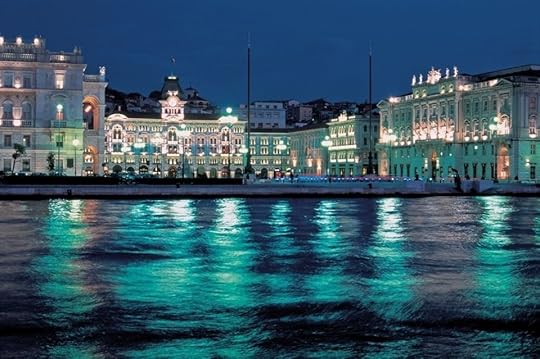
The book starts and ends very fittingly with the Most Austrian and least Italian of the Italian cities, Trieste, the multicultural seaport of the Austr0-Hungarian Empire, and one of its most characteristic places, the Molo Audace, from where the beautiful Hapsburg-built Piazza Unita' can be admired:
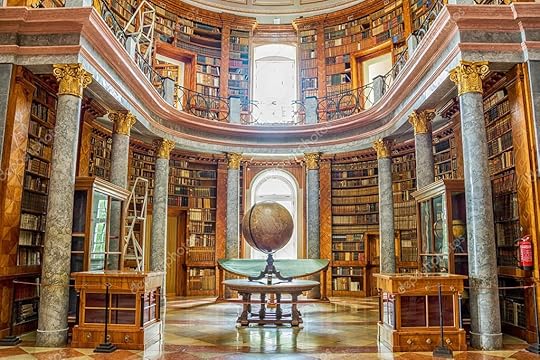
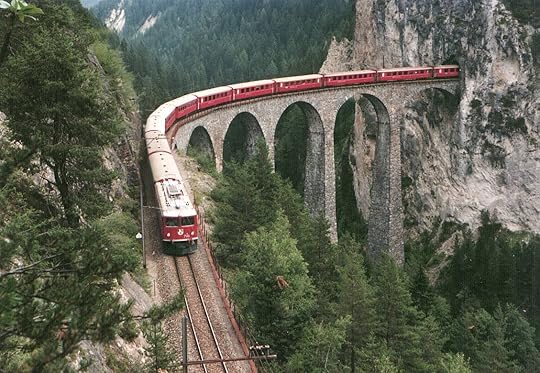
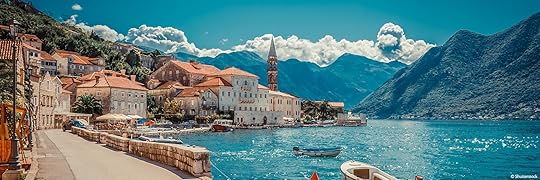
The travels and the acquaintances of the author are quite unique and fascinating, starting with meeting the last Empress of Austria and the last living man decorated by the Emperor Franz Josef, witnessing the funeral of the last King of Montenegro in Cetinje, visiting the precious library of the remote monastery in Pannonhalma (which fortunately survived the Communist regime in Hungary), passing through the mythical Checkpoint Charlie, enjoying the unforgettable scenic trip along the coast of Slovenia, strolling along beautiful Vienna, Graz and elegant Salzburg, and travelling along the historical and mythical Austrian Südbahn running all the way from Vienna to Trieste (which was a remarkable feat of engineering, passing through some awesome but hard to negotiate landscapes).
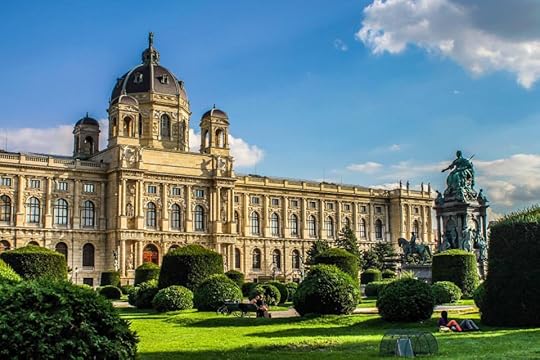
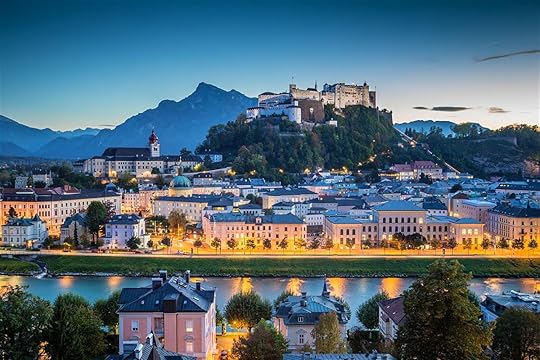
I can greatly relate to this charming little book, and for many personal reasons (my grandfather always kept in his study a portrait of the Emperor Franz Joseph; I remember strolling along the Molo Audace when I was a kid, spending my summer holidays on the Trieste and Slovenian coast, and I still vividly remember the sense of exhilaration that I felt when I saw the images of the fall of the Berlin Wall, marking an epochal moment in the history of Europe, possibly the real end of WWII), and reading it has been a nice stroll back down in memory lane.
Some of the period narrated by the author encompasses the crucial last weeks of the Soviet dominance in Eastern Europe, and is a lively first-person direct account of some of the most important episodes of this revolutionary event, as the author was lucky enough to be able to visit a few Countries beyond the Iron Curtains, before Communism suddenly came crashing down with unexpected sweep and speed.
The book starts and ends very fittingly with the Most Austrian and least Italian of the Italian cities, Trieste, the multicultural seaport of the Austr0-Hungarian Empire, and one of its most characteristic places, the Molo Audace, from where the beautiful Hapsburg-built Piazza Unita' can be admired:
The travels and the acquaintances of the author are quite unique and fascinating, starting with meeting the last Empress of Austria and the last living man decorated by the Emperor Franz Josef, witnessing the funeral of the last King of Montenegro in Cetinje, visiting the precious library of the remote monastery in Pannonhalma (which fortunately survived the Communist regime in Hungary), passing through the mythical Checkpoint Charlie, enjoying the unforgettable scenic trip along the coast of Slovenia, strolling along beautiful Vienna, Graz and elegant Salzburg, and travelling along the historical and mythical Austrian Südbahn running all the way from Vienna to Trieste (which was a remarkable feat of engineering, passing through some awesome but hard to negotiate landscapes).
I can greatly relate to this charming little book, and for many personal reasons (my grandfather always kept in his study a portrait of the Emperor Franz Joseph; I remember strolling along the Molo Audace when I was a kid, spending my summer holidays on the Trieste and Slovenian coast, and I still vividly remember the sense of exhilaration that I felt when I saw the images of the fall of the Berlin Wall, marking an epochal moment in the history of Europe, possibly the real end of WWII), and reading it has been a nice stroll back down in memory lane.

Read
March 15, 2026Sentimental to the point of dishonesty.... very poor man's paddy leigh fermor...
July 6, 2025
“[the] embodiment of a culture which took such seemingly irreconcilable differences easily in its stride and whose sum was always greater than the constituent parts.”

July 20, 2020
Another century, another time. Only 30-something years ago and look how the world has changed since. As there was no internet, no email, no social media, no immediate need to be in contact and communication with every single person you know, life worked differently. For The Times on the ground-in the thick of it reporter, communication to and from London was either by phone - landline or telex. A slower time meant it took longer for news to get out, and filing a report either by phone or telex meant one had to be succinct, accurate, illustrative - no photos. And in daily dealings one had to be resourceful, charming, intuitive and courageous. And when all this is happening behind the Iron Curtain, the Cold War at its peak during the late 1980s, then the story telling is even more intriguing, remote and marvellous.
So it was for Richard Bassett, when he took himself off to Trieste in the late 1970s, fresh out of Cambridge, and off to see the world. Fortuitously, he also took his french horn, of which he appears to have been quite accomplished. As a young man about town, with a curious mind, good manners, and a most pleasant demeanour, he has no trouble getting to know people, making friends, meeting interesting and extraordinary characters with stories and anecdotes of life perched on the border of Yugoslavia and Italy. There was still much dislike of Italy in this area, Yugoslavia had started its path to early 1990s imploding following the death of Tito. Bassett lives there for 3 years or so, landing himself a position as the lead french horn in a local orchestra with a punishing schedule of rehearsals and performances. Now we can see why Eastern Europe produces amazing orchestras and musicians.
Following a return to London, where he approaches The Times to be become an on-the-ground reporter in Vienna - such a recruitment process wouldn't even get a look in today- he makes his way to Vienna which was the centre of the Austro-Hungarian empire till WWI came along, with the dissolution of the monarchy and rearrangement of borders, banishment of the royal family, the horrors of WWII and invasion by the Nazis, a brief rule by Russia after the war. Again he slips sublimely into the circles that matter most, meeting people such as the former Empress of the empire, at this time fabulous in her 90s. He captures the essence of this ancient and historical city, at the cross roads of East and West, works his contacts and acquaintances. An intriguing city and society to be living in.
Next stop is Prague at the time of the Velvet Revolution, when the Communists were thrown out for good. The tidal wave of change throughout eastern Europe takes him to Warsaw and we read about how terribly the Poles have been treated by Germany, Russia, and others in between over the centuries. There is an element of danger and tension throughout this chapter, Bassett being under constant surveillance as he treads carefully through Romania and Bucharest; never too sure if he is in the right place while in Berlin.
This is a great memoir of a time and way of doing things that no longer exists. We are reading so many books about Europe during WWII, stories of concentration camp survival. of the lives of ordinary people through out Europe during this time. But very little of life behind the Iron Curtain told by those who were there. I loved this, exactly the type of memoir I adore. My only criticism - more photos would have helped all the imaginations in my mind.
So it was for Richard Bassett, when he took himself off to Trieste in the late 1970s, fresh out of Cambridge, and off to see the world. Fortuitously, he also took his french horn, of which he appears to have been quite accomplished. As a young man about town, with a curious mind, good manners, and a most pleasant demeanour, he has no trouble getting to know people, making friends, meeting interesting and extraordinary characters with stories and anecdotes of life perched on the border of Yugoslavia and Italy. There was still much dislike of Italy in this area, Yugoslavia had started its path to early 1990s imploding following the death of Tito. Bassett lives there for 3 years or so, landing himself a position as the lead french horn in a local orchestra with a punishing schedule of rehearsals and performances. Now we can see why Eastern Europe produces amazing orchestras and musicians.
Following a return to London, where he approaches The Times to be become an on-the-ground reporter in Vienna - such a recruitment process wouldn't even get a look in today- he makes his way to Vienna which was the centre of the Austro-Hungarian empire till WWI came along, with the dissolution of the monarchy and rearrangement of borders, banishment of the royal family, the horrors of WWII and invasion by the Nazis, a brief rule by Russia after the war. Again he slips sublimely into the circles that matter most, meeting people such as the former Empress of the empire, at this time fabulous in her 90s. He captures the essence of this ancient and historical city, at the cross roads of East and West, works his contacts and acquaintances. An intriguing city and society to be living in.
Next stop is Prague at the time of the Velvet Revolution, when the Communists were thrown out for good. The tidal wave of change throughout eastern Europe takes him to Warsaw and we read about how terribly the Poles have been treated by Germany, Russia, and others in between over the centuries. There is an element of danger and tension throughout this chapter, Bassett being under constant surveillance as he treads carefully through Romania and Bucharest; never too sure if he is in the right place while in Berlin.
This is a great memoir of a time and way of doing things that no longer exists. We are reading so many books about Europe during WWII, stories of concentration camp survival. of the lives of ordinary people through out Europe during this time. But very little of life behind the Iron Curtain told by those who were there. I loved this, exactly the type of memoir I adore. My only criticism - more photos would have helped all the imaginations in my mind.

April 17, 2020
Europe in the 1970s and 1980s was still in the grip of the cold war. The Iron Curtain was very much closed and in certain cities, there was still an underlying paranoia about who was working for who. Richard Bassett was a staff reporter for the Times and he was there watching events unfold around him.
Whilst Trieste is still in Italy, it has a very different feel, the light in January is at its most intense after the Bora wind, it scours the sky and lends an intensity and clarity to the place. It is this light that welcomes Basset in 1979. It had not long been in Italy but an international agreement had returned it from Yugoslavia a few years before. Basset was there to write about the people and place for the Times. As he looked around the city, he could still find fragments of the Habsburg Empire that hadn’t been fully extinguished in 1918. He settles in fast, being welcomed in by the great and the good of that society, making friends he would have for a long time. Away from the echelons of Trieste was a different world, a blend of dialects and culture left over from the Hasbergs could still be heard.
His second appointment was in Austria, which at this time, in particular Vienna, was where some of the warmer parts of the cold war were played out. Its proximity to the Iron Curtain and an austere rebuilding after the Second World War meant that it felt frozen in time. It was a strange staid society, men with slicked-back hair spoke in a language that was both sophisticated and insulting at the same time. It took Basset a while to get used to it, but he reached the point where he could hold his own against them. It was a place utterly drenched in history, plaques denoting a plethora of famous people and their achievements could be found down most streets. He would attend parties and circulate with the upper echelons of Viennese society, but this charmed life had to come to an end, as the paper expected him to cross the Iron curtain to visit Prague and Budapest.
Life of the other side of the curtain was very different to what he had come accustomed to, highlighted by an elderly lady that he met on the train who for the first time was allowed to travel but as the conversation carried on, the limits of where she could and couldn’t go still were very apparent. Basset was in Warsaw at the beginning of 1989 and as snow fell in the city all he could think of was the warmth and sun of the Adriatic. Life was about to get much busier for this reporter though, change was in the air in the Soviet capital and he would witness events as they unfolded that would change Europe for a generation.
I really enjoyed this. Basset has managed to give a taste of what it is like to mix with minor royals and aristocrats that had no power left but still had oodles of charm. This way of life has almost entirely vanished now, and it had echoes of the Europe that still existed back in the time that Patrick Leigh Fermor walked through. He is a perceptive writer, almost certainly from his journalist background, but his stories of these European cities are full of characters and life. It feels like ancient history until I remember that I can recall details of these events as they unfolded on my TV screen and in the papers.
Whilst Trieste is still in Italy, it has a very different feel, the light in January is at its most intense after the Bora wind, it scours the sky and lends an intensity and clarity to the place. It is this light that welcomes Basset in 1979. It had not long been in Italy but an international agreement had returned it from Yugoslavia a few years before. Basset was there to write about the people and place for the Times. As he looked around the city, he could still find fragments of the Habsburg Empire that hadn’t been fully extinguished in 1918. He settles in fast, being welcomed in by the great and the good of that society, making friends he would have for a long time. Away from the echelons of Trieste was a different world, a blend of dialects and culture left over from the Hasbergs could still be heard.
His second appointment was in Austria, which at this time, in particular Vienna, was where some of the warmer parts of the cold war were played out. Its proximity to the Iron Curtain and an austere rebuilding after the Second World War meant that it felt frozen in time. It was a strange staid society, men with slicked-back hair spoke in a language that was both sophisticated and insulting at the same time. It took Basset a while to get used to it, but he reached the point where he could hold his own against them. It was a place utterly drenched in history, plaques denoting a plethora of famous people and their achievements could be found down most streets. He would attend parties and circulate with the upper echelons of Viennese society, but this charmed life had to come to an end, as the paper expected him to cross the Iron curtain to visit Prague and Budapest.
Life of the other side of the curtain was very different to what he had come accustomed to, highlighted by an elderly lady that he met on the train who for the first time was allowed to travel but as the conversation carried on, the limits of where she could and couldn’t go still were very apparent. Basset was in Warsaw at the beginning of 1989 and as snow fell in the city all he could think of was the warmth and sun of the Adriatic. Life was about to get much busier for this reporter though, change was in the air in the Soviet capital and he would witness events as they unfolded that would change Europe for a generation.
I really enjoyed this. Basset has managed to give a taste of what it is like to mix with minor royals and aristocrats that had no power left but still had oodles of charm. This way of life has almost entirely vanished now, and it had echoes of the Europe that still existed back in the time that Patrick Leigh Fermor walked through. He is a perceptive writer, almost certainly from his journalist background, but his stories of these European cities are full of characters and life. It feels like ancient history until I remember that I can recall details of these events as they unfolded on my TV screen and in the papers.

March 7, 2021
Snobbery is a dull old business, and while this extended account of "famous duchesses I have lunched with" has some interesting interludes, they are not that interesting.
We need no longer imagine what would have happened if Evelyn Waugh had lived long enough to witness the European political landscape of the 1980s, his reincarnation is delivered up "generously wrapped in aspic" as Bassett remarks of luncheons in seedy old echt-Europe.
We need no longer imagine what would have happened if Evelyn Waugh had lived long enough to witness the European political landscape of the 1980s, his reincarnation is delivered up "generously wrapped in aspic" as Bassett remarks of luncheons in seedy old echt-Europe.

March 9, 2020
Quite boring, but an interesting read for Habsburg fanboys.

August 2, 2024
Deliciu pentru amatorii de istorie


Read
December 31, 2020A memoir of going out into Europe, and the continent opening up - and so a perfectly bittersweet read as Britain turns our backs on it and erects our own tinfoil curtain. Richard Bassett seems to have had one of those charmed lives that used to happen, where you'd go to Trieste in the seventies and find yourself befriending living links to the last days of the Habsburgs, before getting a job playing the French horn in an orchestra and in turn somehow parlaying that into a job as foreign correspondent for the Times. Sometimes, his ability to be in the right place at the right time verges on the ridiculous, as when, on a brief trip back to Scotland, he happens to find himself in the same train carriage as Fitzroy Maclean, a key player in the existence of post-war Yugoslavia, and gets to spend a day walking and drinking with him, discussing the likely consequences of Tito's recent death. The back cover compares Bassett to Patrick Leigh Fermor, which doesn't seem quite right – even aside from the decades which separate them, Bassett's travels are much more urban in flavour, and he seems a more cautious soul, not that that's saying much. But they do share that sense of travelling something like the Europe I picture when I hear 'Europe', a land of idiosyncratic local dialects, elegantly fading aristocrats and embassy balls. The phrase 'douceur de vivre' looms large, and occasionally his comfort with the old regimes, his easy access to the great and good can skirt the edges of complacency – though sections on, for instance, the inglorious election of Kurt Waldheim go some way to counter that. Also, for a reader of my generation, there's always going to be a slight disconnect in an unflappable elderly noblewoman called Blanka (though Bassett never specifically says she *doesn't* engage in electric martial arts battles...). But I will always be an easy mark for a polymath's evocative description of a gilded world now lost to time. All these Viennese cafés where the glamorous waitresses turn out to be spies, and acquaintances with murky allegiances, make it read like a Graham Greene where the protagonist never gets his comeuppance, and who could help being tempted by that? For a minute, as he moves to Warsaw, it seems like the narrative may be about to take a bleak turn at last - but of course he's there just in time for the fall of communism. Being extravagantly entertained by the Queen's Dragoon Guards, witnessing the fall of the Wall - it continues mostly to seem like a lark, and even when the Czechoslovak riot police get a bit tasty, he ends up safe in a hotel bar with Shirley Temple (how did I not know she was the US ambassador then?). Part of me wonders whether his charmed aura is sufficiently powerful that the real reason the Velvet Revolution didn't become another Tiananmen Square, as was apparently widely expected at the time, is that this would have ruffled Richard Bassett's composure to a degree the universe deemed unacceptable.
December 27, 2019
The author of the book is finishing his studies in Italy, then in Slovenia and in Austria in the 1980s. He needs to fund both studies and living expenses. As he takes various jobs from a member of the orchestra to a journalist he makes friends with the locals and attends various parties and other socialising events. In the course of the book he lives in Trieste, visits Zagreb, lodges in Ljubluana, Graz, moves to Vienna from where he takes trips to Salzburg and Budapest before being relocated to Warsaw and finally to Prague.
Before I’ve reached the third (and final) part of the book I thought I had misunderstood the title - Last Days of Old Europe. Initially, it seemed that by the old Europe the author meant the old dying out royalties and nobles whose lives were shuttered by the WWI and consecutive loss of all privilegies that normally would have been associated with their status. Meeting these personalities appeared at the core of the first two parts. The last part is dedicated to the disintegration of the Eastern European Communist bloc, that the author witnesses working as a foreign journalist posted to Poland and then to Cheque Republic.
I wasn’t enchanted by the book. Whereas the encounters with the representatives of Old Europe’s blue blood and elites appeared lyrical, the book to me lacked in substance. And the last part, which covered the last months of the Eastern Europe as it was shaking off the shackles of the Soviet dominance - one of the most fascinating periods in the end of the 20th century - barely kept me awake due to the dry way of presenting it.
The most eye-catching piece of unknown information for me personally was the fact that the old nobles even as they had lost all prestige of their positions, managed to preserve some of their money and properties, which enabled them to live much better in the Soviet-dominant countries than the rest of the population. Even though the blue bloods’ life was perhaps 90% worse than that one they could have potentially had the majority of their countrymen of course lived in much greater poverty.
A few pages on the Vienna orchestra were also extremely fascinating.
The question I kept asking myself throughout the first two parts was if the life was really so dull back then or it just the impression the book left me with? Even when the author lived in Trieste or later in Graz and Vienna, the countries outside of the Communist bloc, there seemed nothing exciting to do - except hobnobbing with the royalties and such likes of the old order - and that too didn’t look like much fun.
Before I’ve reached the third (and final) part of the book I thought I had misunderstood the title - Last Days of Old Europe. Initially, it seemed that by the old Europe the author meant the old dying out royalties and nobles whose lives were shuttered by the WWI and consecutive loss of all privilegies that normally would have been associated with their status. Meeting these personalities appeared at the core of the first two parts. The last part is dedicated to the disintegration of the Eastern European Communist bloc, that the author witnesses working as a foreign journalist posted to Poland and then to Cheque Republic.
I wasn’t enchanted by the book. Whereas the encounters with the representatives of Old Europe’s blue blood and elites appeared lyrical, the book to me lacked in substance. And the last part, which covered the last months of the Eastern Europe as it was shaking off the shackles of the Soviet dominance - one of the most fascinating periods in the end of the 20th century - barely kept me awake due to the dry way of presenting it.
The most eye-catching piece of unknown information for me personally was the fact that the old nobles even as they had lost all prestige of their positions, managed to preserve some of their money and properties, which enabled them to live much better in the Soviet-dominant countries than the rest of the population. Even though the blue bloods’ life was perhaps 90% worse than that one they could have potentially had the majority of their countrymen of course lived in much greater poverty.
A few pages on the Vienna orchestra were also extremely fascinating.
The question I kept asking myself throughout the first two parts was if the life was really so dull back then or it just the impression the book left me with? Even when the author lived in Trieste or later in Graz and Vienna, the countries outside of the Communist bloc, there seemed nothing exciting to do - except hobnobbing with the royalties and such likes of the old order - and that too didn’t look like much fun.

March 12, 2019
Like a fine torte accompanied by a coffee topped with a schlagober, Last Days in Old Europe is a treat to be savored. Richard Bassett has a knack for connecting with locals from the ancient regimes, either the Austria-Hungarian empire or Warsaw Pact communism and gaining an entry into the first society of each local. He brings us along with him into the coffee houses, pre-war apartments in grand palais, country houses and castles where we meet authors as yet untranslated into English, orchestra conductors and even the last Empress of the Austro-Hungarian empire. This is an intimate look at a Europe I long to experience but which, thanks to our modern methods of communication and turbo-capitalism no longer exist. And while two world wars also had something to do with the destruction of 'old Europe' Richard Bassett manages to find a good bit of it.
June 1, 2022
Charming memoir of the authors experiences in the 1970s and 1980s amongst the living remnants of the vanished Austro-Hungarian empire. It is extraordinary how many there were and how vibrant and fascinating they were. If like me you have a love for that world (and I don't mean to excuse or justify it) then I am sure you will get great pleasure from this book.
December 8, 2023
Written in a glibly supple prose whose slightly mothballed cadences have more in common with interwar British journalism than with the writing of its own time, this account of the author's experiences as a musician and journalist in pre-Wende Central Europe is ultimately an exercise in a kind of old-line Tory nostalgia, an expression of longing for a time when an English gentleman abroad was welcomed as the representative of a culture of genteel hierarchy and tradition and when the rabble now enjoying "messy weekends" in Majorca or Portugal courtesy of Ryan Air had the sense (or lack of funds) to stay at home. Bassett’s reflexive, squirearchal conservatism encourages a certain intellectual laxness that prevents him from engaging in a more vigorous, incisive way with the fraught times and places that are his book’s subjects, though as a narrative it has much of interest.
The first section, which chronicles Bassett's youthful toolings about in the faded splendor of the former principal cities of the Austro-Hungarian Empire before he finds his feet as a journalist, is mainly an inventory of the bric-a-brac, human and otherwise, of a disappearing Habsburg world that he encounters on his travels: white limestone castelli, shadowy Triestine cafes, and charming Gräfinnen living in elegantly straitened circumstances who serve coffee in Meissen cups, regale the author with tales of Albanian amours, and unfailingly say nice things about England. The author's reverence for old finery and old aristocratic titles is fetishistic, and, in a notable scene in which he attempts to fit himself into a tight Austrian dragoon's uniform for a formal dinner party, faintly autoerotic. In its second half, the book gathers momentum as Bassett describes his journalistic exploits covering the fall of communism in several Eastern Bloc countries, an event he celebrates. Interestingly, the author's mild brief with “actually existing socialism” doesn't seem primarily ideological, as one would expect of a Thatcherite; what animus he harbors is largely a matter of taste and style—socialism is vulgar and plebeian, and counters Bassett's own preferred aristocratic hierarchies with a reversed hierarchy of its own. The author seems alert to the irony that the collapse of communism that he cheers on has led to the destruction of some of the last vestiges of "Old Europe” that he so treasures, and that the polarities of the Cold War maintained for a time in a state of suspended animation on both sides of the Iron Curtain (he cites as an example the “faded art deco charm” of a Prague hotel, later a casualty of capitalist redecoration), but he doesn't pursue the subject or draw more searching conclusions about the End of History, preferring to content himself with wistful “sic transit gloria mundi” lessons about a vanished Mitteleuropa in the afterword. The result is a book enthusiastically blurbed by the likes of Anne Applebaum that may tire and frustrate a more discerning reader despite its occasional felicities of style and lively incident.
The first section, which chronicles Bassett's youthful toolings about in the faded splendor of the former principal cities of the Austro-Hungarian Empire before he finds his feet as a journalist, is mainly an inventory of the bric-a-brac, human and otherwise, of a disappearing Habsburg world that he encounters on his travels: white limestone castelli, shadowy Triestine cafes, and charming Gräfinnen living in elegantly straitened circumstances who serve coffee in Meissen cups, regale the author with tales of Albanian amours, and unfailingly say nice things about England. The author's reverence for old finery and old aristocratic titles is fetishistic, and, in a notable scene in which he attempts to fit himself into a tight Austrian dragoon's uniform for a formal dinner party, faintly autoerotic. In its second half, the book gathers momentum as Bassett describes his journalistic exploits covering the fall of communism in several Eastern Bloc countries, an event he celebrates. Interestingly, the author's mild brief with “actually existing socialism” doesn't seem primarily ideological, as one would expect of a Thatcherite; what animus he harbors is largely a matter of taste and style—socialism is vulgar and plebeian, and counters Bassett's own preferred aristocratic hierarchies with a reversed hierarchy of its own. The author seems alert to the irony that the collapse of communism that he cheers on has led to the destruction of some of the last vestiges of "Old Europe” that he so treasures, and that the polarities of the Cold War maintained for a time in a state of suspended animation on both sides of the Iron Curtain (he cites as an example the “faded art deco charm” of a Prague hotel, later a casualty of capitalist redecoration), but he doesn't pursue the subject or draw more searching conclusions about the End of History, preferring to content himself with wistful “sic transit gloria mundi” lessons about a vanished Mitteleuropa in the afterword. The result is a book enthusiastically blurbed by the likes of Anne Applebaum that may tire and frustrate a more discerning reader despite its occasional felicities of style and lively incident.

July 21, 2019
Not something I’d normally read, but sometimes you are at the mercy of what the English-language section of a bookstore in a foreign country has on offer.
Actually quite enjoyable and engrossing, and definitely recommended to any travelers to Trieste, Vienna, or Prague who want to learn a bit about the recent past of the city they’re visiting, and not just be inane tourists looking for contextless landmarks, good restaurants, and selfie opportunities.
Also recommended for any journalists, aspiring journalists, or ‘wish i became a’ journalists.
Actually quite enjoyable and engrossing, and definitely recommended to any travelers to Trieste, Vienna, or Prague who want to learn a bit about the recent past of the city they’re visiting, and not just be inane tourists looking for contextless landmarks, good restaurants, and selfie opportunities.
Also recommended for any journalists, aspiring journalists, or ‘wish i became a’ journalists.

August 28, 2021
Erg mooi boek. Romantische Engelse blik op Centraal-Europa maar ook een spannende beschrijving van de machtsovername in Praag in 1989. En gedrukt op heerlijk papier.

December 23, 2019
To have been in the right place at the right time with the right credentials, Richard Bassett can claim all three as this delicious little book testifies. Read this and touch the last dying embers of the world in 1914 before it slid into the abyss. A wonderful sarabande for a past age.
May 31, 2025
A brilliant piece of travel writing. Captivating, insightful, and witty, as the foreign correspondent covering the last decade behind the Iron Curtain in Mitteleuropa casts a long look back. An instant classic.
February 12, 2024
Bassett recounts his extraordinary experiences as student, musician and foreign correspondent in Central Europe in an era of profound change. Fresh out of Cambridge Bassett travels to Trieste, a city he had previously visited, and falls into company with several octogenarians, many of them aristocrats of the former Austro-Hungarian Empire. He is fascinated by and beautifully recounts how they maintained traditions and how they have adapted, following the collapse of the multi-ethnic, multi-lingual empire, the Second World War and communism. He moved from Trieste, on to Ljubljana, where he played first horn in the Symphony Orchestra, visted Zagreb, lived in Graz and then Vienna. He was a correspondent for The Times in Vienna and Warsaw and witnessed the collapse of communism in Poland, East Germany, Hungary and Czechoslovakia, and knew many in Croatia and Slovenia who predicted the collapse of Yugoslavia. Many can claim to be a witness to history, but few have the opportunities and good fortune that Bassett had as a gifted linguist with a sense of history and a talent for meeting the most extraordinary people. It's a wonderful read of bygone worlds!

April 22, 2019
I am sure much smarter people than me will write much better and more insightful reviews than I am about to, but felt compelled to after really enjoying this book. My millennial ignorance of Cold War goings on and Central European histories was highlighted, but also my interest ignited by Bassett’s readable and fascinating memoir of mittleuropa in the 1980s. He has shared some wonderfully insightful experiences in this delightful book, which crescendos with the fall of the Berlin Wall and subsequent tensions in Prague.
Highly recommend.
Highly recommend.
July 29, 2021
Dit boek had wat mij betreft wel duizenden pagina’s mogen tellen.
January 30, 2021
Bassett spent the 1980s roving the countries inside and around the borders of the former Hapsburg Empire as a journalist and musician. His memoirs capture the charms and idiosyncrasies of these places before the leveling forces of modernization spun up.
It’s the kind of book I would read over again if I were planning a trip to central or southeast Europe. Reading his description of Duino Castle near Trieste, you can’t help wanting to go there yourself. The vertiginous landscape here inspired Rilke to write the Duino Elegies. There’s an English translation of a famous excerpt:
By coincidence, I had just come across the same lines a few weeks before in The Soul of the Night, Chet Raymo’s meditations on the beauty of the night sky.
Speaking of translation, Bassett seems to have had an astonishing gift for languages, teaching himself to converse in every country he inhabited. He sets aside special attention to the nuances of the Austrian German dialect.
At each chapter the stage moves to a new city or country, enriched by its own colorful characters. One of them is Zita, the Empress of Austria who was ninety years old at the time of the author’s encounter, and had spent most of her life in exile from her home country.
As a professional French horn player, Bassett was sensitive to the mystique surrounding the rituals of music performance in the homeland of Mozart and Schubert. The secret sauce of the Vienna Philharmonic seems to have won over even the toughest critics. The orchestra was famous for “the richness of its string sound, the magical timbre of its horn section, ” and their “utmost crispness and precision.” Despite all the attention and ceremony their concerts attracted, locals who couldn’t afford tickets had a back door in:
During the last few months of 1989, Bassett hopped all over the map to keep up with quickly moving events as people took to the streets in Berlin, Warsaw, Budapest, and Prague to assert their national sovereignty. A few of Bassett’s retrospective observations struck me for their present day relevance.
It’s the kind of book I would read over again if I were planning a trip to central or southeast Europe. Reading his description of Duino Castle near Trieste, you can’t help wanting to go there yourself. The vertiginous landscape here inspired Rilke to write the Duino Elegies. There’s an English translation of a famous excerpt:
For beauty is nothing but the beginning of terror
which we are still able to endure,
and we are so awed because it serenely disdains
to annihilate us. Every angel is terrifying!
By coincidence, I had just come across the same lines a few weeks before in The Soul of the Night, Chet Raymo’s meditations on the beauty of the night sky.
Speaking of translation, Bassett seems to have had an astonishing gift for languages, teaching himself to converse in every country he inhabited. He sets aside special attention to the nuances of the Austrian German dialect.
Joseph Roth in his magnificent novel Radetzky Marsch described this ‘Austrian German’ as recalling ‘distant guitars in the night and the last delicate notes of a pealing bell’. ‘Es war eine sanfte aber auch präzise Sprache, zärtlich und boshaft zugleich’ (It was a gentle but also precise language, delicate and mischievous at the same time).
At each chapter the stage moves to a new city or country, enriched by its own colorful characters. One of them is Zita, the Empress of Austria who was ninety years old at the time of the author’s encounter, and had spent most of her life in exile from her home country.
Her smile and laughter were infectious, and she seemed to radiate an inner harmony born of an indifference to material things. I was aware of being in the presence of a deeply spiritual person, one for whom the perils of the world no longer held any threats. ‘Man ist was man ist’ (One is what one is), she told us with a smile.
As a professional French horn player, Bassett was sensitive to the mystique surrounding the rituals of music performance in the homeland of Mozart and Schubert. The secret sauce of the Vienna Philharmonic seems to have won over even the toughest critics. The orchestra was famous for “the richness of its string sound, the magical timbre of its horn section, ” and their “utmost crispness and precision.” Despite all the attention and ceremony their concerts attracted, locals who couldn’t afford tickets had a back door in:
…in the 1980s any impoverished Viennese could attend at least the second half of the concert by simply wandering ticketless into the Musikverein during the interval and avoiding the not-too-discerning eye of the attendants, who even sometimes shepherded the newcomers to the best standing places at the rear of the stalls.
During the last few months of 1989, Bassett hopped all over the map to keep up with quickly moving events as people took to the streets in Berlin, Warsaw, Budapest, and Prague to assert their national sovereignty. A few of Bassett’s retrospective observations struck me for their present day relevance.
…in the Alcron Hotel, the Czech national tricolours were vanishing from the waiters’ jackets and, even though Christmas decorations were being put up, the cameras which had covered every corner of the foyer were still firmly in place, a vivid symbol of the totalitarian state. We fondly imagined they would soon be dismantled along with the rest of the state apparatus of repression and surveillance, not knowing that within a generation such cameras would become de rigueur throughout many parts of the West.

August 21, 2019
Two themes dominate in this compelling book: A powerful sense of being present "in the moment" where extraordinary events that forever changed Europe took place; and a pervasive nostalgia for a lost way of life. Thankfully, although the latter theme provides the book with its gleam of authenticity and personal investment in the people, places and events, the book never becomes maudlin or sentimental (anticipated features that probably scared many readers off, to their loss).
The book starts off slowly in Bassett's early days as a foreign correspondent for The Times, navigating the complexities of the 1979-80 Balkans and moves on through mid-seventies Vienna and Central Europe. Everywhere, the late days of the aging Cold War dominates events and yet the social and cultural legacy of the vanished Habsburg empire also hang pervasively, almost like the background music in a film subliminally surrounds the action taking place on the screen. Bassett really picks up momentum in the final parts of the book, as he reports moment-to-moment on the collapse of the Berlin Wall and then even more dramatically, the peaceful collapse of the communist regime in Prague. Especially gripping is Bassett's account of the November day in 1989 when the Czech Central Committee had capitulated and Alexander Dubcek spoke to a packed Wenceslaus Square for the first time in 21 years. Bassett's depth of understanding of the cultural forces and nuances of the society he was observing greatly enrich the narrative. It brought to mind some of the more poignant newscasts by correspondent Joe Schlesenger that we in Canada were privileged to watch on TV over the years.
All in all, a delightful book.
The book starts off slowly in Bassett's early days as a foreign correspondent for The Times, navigating the complexities of the 1979-80 Balkans and moves on through mid-seventies Vienna and Central Europe. Everywhere, the late days of the aging Cold War dominates events and yet the social and cultural legacy of the vanished Habsburg empire also hang pervasively, almost like the background music in a film subliminally surrounds the action taking place on the screen. Bassett really picks up momentum in the final parts of the book, as he reports moment-to-moment on the collapse of the Berlin Wall and then even more dramatically, the peaceful collapse of the communist regime in Prague. Especially gripping is Bassett's account of the November day in 1989 when the Czech Central Committee had capitulated and Alexander Dubcek spoke to a packed Wenceslaus Square for the first time in 21 years. Bassett's depth of understanding of the cultural forces and nuances of the society he was observing greatly enrich the narrative. It brought to mind some of the more poignant newscasts by correspondent Joe Schlesenger that we in Canada were privileged to watch on TV over the years.
All in all, a delightful book.

March 13, 2026
3 essays, the first of which I waded through but, and I never thought I'd say this, I found Vienna and Prague incredibly dull. It takes something to make such cities at such a period in history boring, but Bassett managed it. Trieste was reasonably interesting for the dying embers of The Habsburg Empire. He hob nobs with elderly aristocrats- these are the last days the title refers to.
However, rather than insight into the last days of The Iron Curtain and the change in the air, we are told about Princess Margaret's trip to Hungary, where her equerry makes a smart-arsed quip. In amongst all the name dropping and cap doffing, it felt as though I was reading a book about the British establishment rather than the fall of communism. Cambridge, blah, blah, blah, Princesses, blah, blah, blah. Together with the dry writing, I struggled to finish it, which at 193 pages, is bad. However, 2 stars because Trieste had some interesting moments, as did the section in Poland.
However, rather than insight into the last days of The Iron Curtain and the change in the air, we are told about Princess Margaret's trip to Hungary, where her equerry makes a smart-arsed quip. In amongst all the name dropping and cap doffing, it felt as though I was reading a book about the British establishment rather than the fall of communism. Cambridge, blah, blah, blah, Princesses, blah, blah, blah. Together with the dry writing, I struggled to finish it, which at 193 pages, is bad. However, 2 stars because Trieste had some interesting moments, as did the section in Poland.

August 5, 2021
Lots of perceptive comments by other readers, so I won't add to them except to say the Richard Bassett is a fascinating person: he read law at Cambridge, has a masters in the history art from the Courtauld Institute of Art in London, played principal horn for the Slovenian National Opera Company, was staff foreign correspondent for the London Times in Central Europe, knows several languages, serves as a consultant in the City, has written eight books, and teaches, lectures, and leads cultural tours. He has an uncanny ability to meet people, get their trust, and encourage them to give him more contacts. Finally, he is extraordinarily lucky in fruitful chance encounters.

March 29, 2022
A delightful memoir from a British author whose biography is itself fun-- student in Law and History of Art at Cambridge; professional French horn player in late-1970s Ljubljana; foreign correspondent for the Times; guest at the faded social events of Vienna's "first society"; observer at the collapse of Communist rule in Poland and at the return of the remains of the last Montenegrin king to Cetinje. Bassett has gone on to teach at various universities and write a rather decent history of the Habsburg army. This is a memoir about the part of the world I devoted my academic life to, and it's a lovely treasury of places and sights that I remember. Very much worth finding and reading.

February 28, 2025
Extremely uneven book. I started to read it hoping to learn about Trieste. I've always wanted to visit and it seemed like a good idea to see it through someone else's eyes. Unfortunately there was very little about Trieste after the first few pages. There was plenty of pandering to long gone royalty, impoverished dukes, 'upper' echelons of society, 'proper' pronunciations and suitable clothing. It seems that author remembered he was a reporter only when writing about Prague's Velvet Revolutions.
November 8, 2025
Richard Bassett is well-connected and thanks to his skill as a horn-player he was able to support himself and have a fine old time in eastern Europe in the 70s and 80s. He progressed to becoming a Times journalist and witnessed many of the changes that took place in Austria, social and political. So often, the accounts of tea and soirees with the nobility of the ancien regime read like something from Victorian times, that I would be brought up short when I realised he is an almost exact contemporary of mine.
Elegant writing and a lively memoir.
Elegant writing and a lively memoir.
November 6, 2022
Starts off not promisingly. The author namedrpps lots of "characters" he comes across in Trieste. For characters read "people who try to keep up appearances and have an inflated sense of their own worth in a society which has moved on" However it gets better and the descriptoons of the austrian, etman and czech people who he mer ihis job are more realistic
Displaying 1 - 30 of 56 reviews