China expert Robert Spalding reveals the shocking success China has had infiltrating American institutions and compromising our national security.
The media often suggest that Russia poses the greatest threat to America's national security, but the real danger lies farther east. While those in power have been distracted and disorderly, China has waged a six-front war on America's economy, military, diplomacy, technology, education, and infrastructure--and they're winning. It's almost too late to undo the shocking, though nearly invisible, victories of the Chinese.
In Stealth War, retired Air Force Brigadier General Robert Spalding reveals China's motives and secret attacks on the West. Chronicling how our leaders have failed to protect us over recent decades, he provides shocking evidence of some of China's most brilliant ploys, including:
- Placing Confucius Institutes in universities across the United States that serve to monitor and control Chinese students on campus and spread communist narratives to unsuspecting American students.
- Offering enormous sums to American experts who create investment funds that funnel technology to China.
- Signing a thirty-year agreement with the US that allows China to share peaceful nuclear technology, ensuring that they have access to American nuclear know-how.
Spalding's concern isn't merely that America could lose its position on the world stage. More urgently, the Chinese Communist Party has a fundamental loathing of the legal protections America grants its people and seeks to create a world without those rights.
Despite all the damage done so far, Spalding shows how it's still possible for the U.S. and the rest of the free world to combat--and win--China's stealth war.
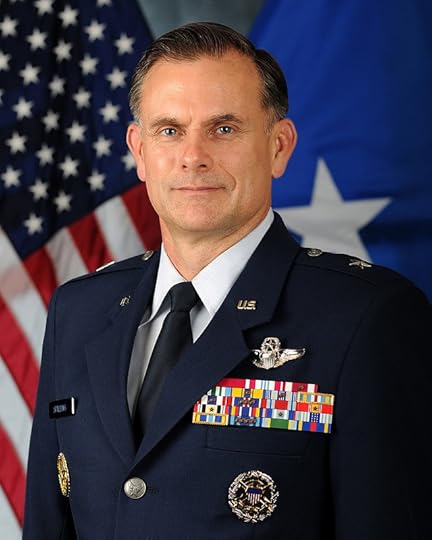
Rob Spalding is a national security strategist and a globally recognized expert on Chinese economic competition and influence. He retired from the US Air Force as a brigadier general. He is a former pilot of the B-2 Stealth Bomber, as well as former director for strategic planning at the National Security Council in the White House. He was the chief architect for the widely praised National Security Strategy. Rob has lived in Mainland China, both as an Olmsted Scholar and as the senior defense official at the US Embassy in Beijing, and traveled extensively throughout Asia. He is fluent in Mandarin. During the 2016 UUV Incident, Rob averted a diplomatic crisis by negotiating with the Chinese PLA for the return of the UUV, without the aid of a translator. Rob is a Life Member of the Council on Foreign Relations, and a Senior Fellow at the Hudson Institute, Washington, D.C. STEALTH WAR: HOW CHINA TOOK OVER WHILE AMERICA’S ELITE SLEPT is an executive summary of the last six years of Rob’s effort to combat the influence of the Chinese Communist Party in America and around the world. To watch Rob’s interviews on FOX News and CNBC, as well as numerous radio and YouTube channels, concerning matters of national security, 5G, and foreign policy, visit armchaireconomist.io.
This is my first 1-star review ever, so exciting times! I won't spend too much time here, because it's not worth my time. On a personal level, Spalding comes off as a bitter man who has a grudge against all those who don't take his Sinophobic ramblings seriously enough. He seems to suggest any disagreement with his opinions on China is evidence of China's intrusion into US political and economic life. Also, any book where the author thrice assures us he isn't racist probably should reflect more deeply on whether or not he is racist. I could further add that any book that justifes not providing references "because it's all true" is a book that sets off some warning bells.
On a more structural level, this book is delusional. There are many genuine reasons to criticise China, and Spalding does in fact outline many of these areas. But where he goes so wrong is this zero-sum mentality where any competition engaged in by China must directly be at the expense of US prosperity. It pains me that I must constantly reiterate this, but China can compete just like any other nation. Yes, at times they do it unfairly, but so does America. And that brings me to probably my greatest frustration with this book; Spalding seems to not realise that half the things he accuses China of doing, they have been doing for decades.
Anyway, for fear of rambling, I'll wrap it up. There was just one more passage I remember as particualarly cortisol-inducing. Spalding was saying that rather than fight conventional wars, China would rather compete politically and economically... and he posits this as a critique of China... I just can’t believe you would critique a country because it doesn't want to start wars... but I guess what else could you expect from a China Hawk like Spalding.
This is an awful book that amounts to yellow-peril propoganda.
This book is extremely eye opening. I always knew China was engaging in corrupt tactics from a technology IP perspective because that is the business I am in. When Huawei first developed their routers, it was literally the Cisco Systems operating system. When I worked at a distributor of computer parts and equipment, people were arrested for writing down serial numbers as they were being used for fake China created fakes. But economic warfare was way more than I expected. Also appalling was the chapter on "law-fare".
The author seems to be non-partisan as he criticizes both majority parties of the US. He is critical on Mitch McConnell for his wife's unholy alliance with the CCP as well as Obama and Biden. Although I disagree on some of the author's recommendations for rectifying the China problem, I do believe it is worth looking into.
At a minimum, the author does praise President Trump on his efforts and sees them as a positive step forward. However when I hear Biden come out and say "China is going to eat our lunch?" It gives me pause. How can a man in the VP seat for 8 years and still either be ignorant or complicit to what is going on there? It is not a long book, but very concise.
I was recently in Jamaica and saw a brand new highway that was fabricated by China for Jamaica. Reminded me of the chapter on Shri Lanka
Stealth War by Robert Spalding published 2019. Another book, another author recommended by the host of War Room Pandemic, Stephen K. Bannon. His guests, their books and the topics they discuss never disappoint. Out of the 3 that I have read so far 1. deceiving the sky 2. The China price 3. Stealth war, stealth war is the winner. The extent to which China (CCP) is kicking our A$$ while we (Americans) are asleep at the wheel is fully detailed in Spalding’s stealth war. Stealth war is absolutely worth diving into with zeal, not doing so would be at your own peril. It’s time we stop and pay attention to what our enemies have in store for us, what you will find is horrific. Truth is this, the clock is ticking and the empire known as America is getting beat to death while it sleeps, it’s that serious. WAKE UP; NOW!
2019 non-fiction book by retired U.S. Air Force Brigadier General Robert Spalding that argues the People’s Republic of China (PRC) has been waging a covert, multi-front campaign to undermine U.S. power and democratic institutions while American political, economic, and academic elites ignored or misunderstood the threat. Many of the older members of congress could
Spalding contends that China uses economic leverage, technology, education initiatives, trade practices, intelligence gathering, and infrastructure investments to reshape global power dynamics in its favor.
(For those who haven't been examining PLA doctrine books with google translate for their job, this is known as "The Three Tactics": -Public Opinion Warefare -Psychological Warefare and Legal Warefare)
He draws on the Chinese PLA strategy Unrestricted Warfare to explain how modern conflict operates without conventional battlefield engagement and offers policy recommendations for the U.S. to counter this “stealth war.”
4/5 Many members of congress have consistently portrayed China as an unquestionably positive economic force, given they were heavily invested into import businesses. Globalization in essence is the perfect strategy: promise your enemy short-term profits, and enlist them to help make your country the most powerful in the world.
Only detriment is that the book is defense-based in its worldview ends with a moralizing narrative that thinks in geopolitical fear terms which need deeper empirical support. It oversimplifies complex interdependence in U.S.–China relations. The result is that it can blur economic competition with covert aggression, which some analysts dispute. It is correct in assuming we need to realize china is a competitor, wrong in assuming that guns are the best answer. Good as an introduction, but insufficient for advanced students of geopolitics.
This book is deeply rooted in the context of the time when it was written. One wonders how it will age - if it ages badly, all the worse for all of us. A short summary would be that the author bangs the drums of war against China.
He translates the many ways in which China abuses the free market system and treats the market, as a front of a war they are waging against the world.
And if one reads the Art of War, suddenly everything makes sense. The entire Chinese effort is just winning a war without losing a single soldier (which is THE ultimate victory, according to Sun Tzu).
An eye opening read that gives you context to what is going on - the theft (IP and research), embezzling, flood of products in our marketplaces...
Nevertheless, it is not a 5 star book - the book should go a bit deeper into the issues, instead of pushing the opinions of the author on how the war should be waged back. Secondly, the deeeply rooted American patriotism is something I just cannot identify with. I do understand why though - the author has a laser focus on convincing the reader that we are under an assault and the we should do something about it. And the something is also outlined concisely and in bullet points.
The book is eye opening and I do now know how to handle it. It gives a lot of things happening around me context and almost makes me lose sleep.
I finished this informative book written by the retired Air Force Brigadier General Robert Spalding.
CCP have infiltrated on land of the free:
- Confucius Institutes are placed in universities across the United States
- CCP fake news media and their propaganda army are rampant in Youtube, Twitter and Facebook
- Intellectual property infringement and cyber attack
If Russia had influenced 2016 US election, CCP is going to do far more than Russian did in the upcoming 2020 election. CCP need to be stopped NOW.
How can we partner with an evil regime which is openly against our universal value for decades? America should wake up and start the decoupling process from mainland China before our freedom falls into the hands of CCP.
I knew the book would carry an anti-China bias but I did not expect it to be so strong. I think the book would have been better served if he presented a better balance.
His basic premise is that China has taken advantage of US and other countries over the past 20-30 years. There's definitely truth to his premise but I find it hard to believe that the US, which has been the world's number economic and military superpower in the world for the past 50-75 years consistently received the short end of the stick during these exchanges. That the US were unwillingly coerced into agreements where China benefited and US lost.
If anything, more blame should be placed on corporations and elites who sold out the middle class. A better title would be How China took over America with the help of American Elites and Corporations.
Fasten your seatbelt if you decide to read this concise volume on the threat to the United States and the free world posed by China. The author is a retired U.S. Air Force general who manned the China desk for the Joint Chiefs of Staff. He holds a doctorate in economics and is fluent in Mandarin.
He describes in detail how China has taken advantage of western largess, infiltrating our institutions of higher learning; spying on our corporations and stealing trade secrets; and, double-dealing on every agreement, negotiation and contract. All of this on the backs of willing corporate executives and naive government officials and elected representatives.
His prescription to cure us of this disease promises us short-term pain and long-term gain. His arguments are compelling and difficult to dispute. I only hope someone in a position to do something about it is listening.
Eye Opener! I didn't realize the extent of the competition we are in with China, and we don't even know it and aren't taking it seriously.
This book is a wake up call. Our nation's leaders, businesses and financial institutions are so intertwined with China and Chinese business, they don't realize the influence the Chinese Communist Party now has on them. The Chinese are in a game of chess with us, and we are playing checkers. They are not far from putting us in checkmate where we don't have a move left.
This book is a must-read for anyone interested in national security.
Dr. Robert Spaulding’s (Brig Gen, USAF Retired) is the best non-fiction book I have read in a decade. And certainly Dr. Spauding’s observations are even more important now with the most recent coverup of the Wuban-COVID-19 Pandemic that caused the entire world to respond much less slowly than they should. This book is written based on first-hand knowledge of a career military officer who served much of his time in China. Bottom line up front – CHINA IS NOT OUR FRIEND. One critic faults the author because of the lack of any endnote citations. Such criticism is without foundation. Dr. Paulding is a SME Subject Matter Expert who knows personally about what he writes. From2014 to 2016 he led the China division at the Joint Chiefs of Staff and before joining the Trump White House he was the US defense attache at the US Embassy in Beijing. From May 2017- January 2018 Brig Gen. Spaulding served as the Senior Director for Strategic Planning for the NSC National Security Council at the White House. Spaulding was known both inside and outside the administration as a China hawk. The author is a Chinese linguist, and a SME who helped draft the National Security Strategy. He was the author of a memo arguing very strongly for a government takeover of development of the nation’s 5G mobile network, arguing that only the government can properly defend technological infrastructure from Chinese interference. The memo’s unauthorized release caused uproar in the telecom community and created embarrassment for the White House. Spaulding was removed from the White House and the National Security Council staff as a staffer on January 31. Brig. Gen. Spaulding assumed the duties of Special Assistant to the USAF Vice Chief of Staff in February 2018 until his retirement. According to Dr Spaulding, CCP (Communist Party of China) regards the pillars of American freedom – freedom of speech and freedom of religion – as a direct threat to their existence, and plans to fight America, not with military weaponry, for their survival. Current military scholars recognize four aspects of power: DIME (diplomacy, information, military and economics) is a recent military term reinvigorated to remind the leadership and policy makers above them to consider national power as not limited to the military power alone. Spaulding itemizes the many centers of influence of the CCP including law firms, NGOs, and US legislators. Spaulding connects the CCP regular theft of intellectual property with a $37 bill per year los of income for impacted American workers. Dr. Spaulding describes evidence to show CCP uses piracy, espionage, backing, and counterfeiting to take advantage of the US. The author notes how the rapid growth of manufacturing in China has made the US totally dependent on China to the point that some military operations could be paralyzed. The current coronavirus pandemic has shown the fallacy of out-sourcing the vast majority of “cheap” generic pharmaceutical and PPE (Personal Protective Equipment) like masks, gloves, and surgical gowns has resulted in our own nation being unable to rapidly respond to the infections in the US. As far as the cyber/digital world, CCP launches sophisticated attacks on all aspects of the US while taking advantage of American openness. This book is a wake-up call for our entire nation. Spaulding contends that the US will lose it’s stature in the world until we institute dramatic changes including counterespionage and counter-cyber. In contrast to the US culture that usually only focuses for a four-year election cycle, culturally the Chinese plan for decades and centuries in the future. General Spaulding should return to his home town and run for elected office.
If this was my first book on the topic, and if I had less of an idea about the topic from other sources, I would have walked away thinking the author is somewhat unhinged, fairly paranoid and completely wrong. I mean, all this sounds crazy, so how can he not be wrong.... right?
General Spalding has revealed a threat to our national security that has flown under the radar of the American consciousness and evaded any effective defensive response by our leadership. In the midst of extreme political division between the major political parties that has taken the spotlight on the national stage, Spalding demonstrates that the elites from both parties have failed in their most fundamental and basic duty, to preserve and protect our security as a nation. While the Chinese Communist Party has attacked and weakened our industrial base, technological advantage and economic security, our leaders play petty politics. This is not a Republican or Democratic issue, this is an American issue which requires a unified response from all Americans; whether they are innovators, producers, distributors, consumers, legislators or academics. All must meet the challenge, as Americans.
I found this book a very fascinating, shocking, and eye opening political science read.
Extremely good book and well researched. Some really alarming bits.
Spalding knows his material. I especially enjoyed his "big picture" and future forecasting approach to what's happening in the world. Gave me an excellent idea of where things will be heading in the future. Lots of the book outlined the Belt and Road Initiative and indicated different tactics both locally in China, but also in developed countries and developing countries and how it affects global capital.
He also offered some really great strategies and actions that Western leaders can start implementing and their impacts.
Highly recommended for those who do international business, or who are interested in global politics and policy.
This is a really important book that explains why China is the biggest existential threat to the US and the world today. There’s no fluff here. Every sentence packs a punch. I couldn’t stop listening!
Almost felt like reading a conspiracy theory book - only it is written by a respectable public figure. I was inspired in weird ways after reading this. The book gives a interesting anchor point for understanding world geopolitics. One should still approach this book with the understanding that it is written from the point of view of an American patriot. I also spent some time thinking about what the future might hold given the current state of affairs.
Many of Brig.-Gen. Spalding's proposed solutions are reasonable and advisable, so it's strange that he couldn't sell me on the fundamental premise of his book: we are at war with China. He claims that China's use of non-armed force, non-lethal economic and social tactics are acts of war - and that they necessarily must be viewed as such.
And China has been a bad actor all over the place - market manipulation, intellectual property piracy and theft, multi-national investments that can't leave the country, over-fishing in international waters and claiming they'll crack down on such... And so much of this is (and has been) done openly. When we were there, we could buy any season of any TV show we wanted from a store with an actual storefront. And it was clear that it was all pirated. It was one step below Kramer bringing a camcorder into a theater. Everybody knows they're doing it. And doing it openly. Even when they say they're cracking down. That's a problem. (And Seasons of LOST in no way compare to pirating trade secrets, operating systems, etc...)
And that's not even mentioning China's list of Human Rights abuses. I teach my students about Tibet. (Spalding didn't bring up that the CCP has its own Dalai Lama waiting in the wings...) We studied the self-immolation of of Buddhist monks in 2012 (concurrently with the Arab Spring, by the way.) We studied and discussed the "Re-education Camps" that the Uighur population has faced. The Great Chinese Firewall. The One-Child policy. ...Etc... etc... All that to say, China is not getting a free pass in this review. Chances are, the above paragraphs are reasons enough to get this review blocked there. And our freedoms should be safe-guarded. Heaven knows, I believe our 4th Amendment Rights are near non-essestant these days. And Freedom of Speech doesn't feel nearly as free as it used to.
Even so, acting like the "War" that China is waging is the same thing as War is insanity. As is acting like we're not out there undermining and promoting our own interests as well.
It's a fine line Spalding is asking us to walk - I'm not even sure if he knows how fine that line is. China is out there trying (often successfully trying) to influence American spheres: universities, corpos, politicos, media, etc... You know: America. Subtly. Overtly. But lets not pretend that influence only goes one way. Spalding seems to think that it does. China can influence America by importing Chinese tuition-paying college students, for instance - and by keeping a close eye on them - reminding them to remember where they come from - they can exert all this influence on a helpless America. But that influence is going both ways. You're telling me Iowa didn't influence Xi, and Xi didn't influence the Dvorchaks? Come on. International travel reminds us that we are all in this together - even if the trip is only a two week stint.
But yes: America needs to play a better game. Trump isn't wrong on all he says about China's bad acting. On the other hand - and this is the line we have walk - what's the correct approach? We don't want to escalate things into a military conflict. But we don't want to look like - or become - chumps. I'd take it a step farther, though: not only do we not want things to escalate into a military conflict, Trump's rhetoric and trade war-esque actions toward China have undermined American interests as well as the other stuff outlined in the book. It would have been helpful to have a better relationship with them when the coronavirus first appeared, for instance. I've followed VOX for a long time, and remember when this article first came out. It mentions backing out of helping 39 of 49 countries prepare for pandemics. ...Among those countries: China. America First does not work in dealing with Pandemics. Trump's (and Spalding's) hard line on China here has been unhelpful. (Again, I'm not giving China a free pass here. US Intelligence has found that China intentionally misrepresented it's numbers and no doubt this story will continue to evolve. While I'm on the topic, that Spalding praises Trump's nuclear rhetoric. Comparing him to Kim Jong Un? In a favorable light? If Spalding really wants us to play Go (mentioned on page 182) on a 19X19 rather than 9x9, he should view that rhetoric as very myopic. I'm not sure it will get him the long term outcomes he's hoping for.
Spalding's writing as an American Patriot. And I'm a citizen loyal to my country, but lets go into this with eyes open. China may be playing a better game than we are right now, but we're playing the game. There are examples of this everywhere, but I'll just give one: "...China has failed to commit militarily to war-ravaged places like Syria and Afghanistan but has profited economically while the United States funds the cost of ensuring peace." This isn't so much a criticism of American foreign policy (not that there's nothing to criticize when it comes to endless wars with little-to-no exit strategy) but rather, Spalding is talking out of two sides of his mouth here. If China steps in to help, they're "exerting influence" and if they don't do anything, they "aren't shouldering their share of the load." So, China's in a Catch-22 there.
Speaking of Catch-22s, do you remember Milo Minderbender? He's the one who best satirizes Capitalism. Everybody's got stock in his Syndicate, so when the Syndicate makes money, it's good for all the troops. ...So when he hires German troops to bomb the Americans, they all make money: win-win.
Spalding paints a grim picture of American get-rich-quick/Anything-for-a-buck Capitalism. And rightfully so. The scariest part of the book for me was the Chinese ghost-cities. (Ghost because they were empty, not because they were populated by actual ghosts...) These billion dollar cities were invested in by American dollars (from the last bailout) and heavily overvalued. Spalding says China will inevitably default on these loans, and American banks will lose up to 80 cents on the dollar.
I'm not a math major, but that's not good. Here's a place where the alarm should be sounded. My portfolio's tied up in China. Your portfolio's tied up in China. Trump's speaking out two sides of his mouth... where are his ties made? Biden's son was brought up in the book. Mayor Pete's previous employer McKinsey was not portrayed in a good light. McConnell his wife Elaine Chao don't come off looking particularly good. So, in one sense, it was nice that the book attempted to be so nonpartisan.
On the other hand, it kind of looks like we're all screwed. Spalding's "fixes" are going to cost America BILLIONS, maybe more. And that's not counting the legal fights that will ensue to stop those fixes from taking place.
Spalding's "end-justifies-the-means" rationale was another tough sell. In order to save Capitalism, well, "If Wall Street will not police itself, government regulation will have to ensure that our citizens are not being cheated by financial institutions engaging in unfree trade. The SEC, Department of Commerce, the FASB, the PCAOB, the Treasury, the State Department, and the FBI will have to monitor the markets, the bad actors, the cyberattacks, the property thefts, and the piracy."
This guy's claiming to be a Libertarian, but that's a lot of government he just listed. (Not that I even disagree with him: cheaters should pay.)
I felt the same way, about his limiting freedom to protect freedom talk. Seems a little... police-state-ish.
Spalding brought up FDR's Four Freedoms at least 3 times as well: (Freedom of Speech, Freedom of Worship, Freedom from Want, and Freedom from Fear.) I'm not sure what percentage of Americans believe these are actually human rights, though. And which ones are present in the US. Do we really (or have we ever) had Freedom from Want here? And Freedom of Speech? Spalding mentioned the Marriott employee who was fired for liking a tweet, but that's as much an indictment on Capitalism as it is on Communist China. And really, it's a numbers game. I have a former colleague who was fired for a tweet. #NationalNews. I wonder if I'm running a risk just by bringing that up? Is this Freedom of Speech? There are a lot of people in that Chinese Market. And that market has spoken. And that market might just speak ourselves out of Freedom of Speech.
Spalding at times (even though he takes pains to say he's not) comes across as Sino-phobic or racist. Like boxing people out of America simply because they're Chinese? Or looking at all Chinese students as if they're potential IP pirates? IDK.
So Spalding didn't sell me: I don't think China's waging a war with the United States. I think that they're trying to exert and extend their power any way they can - just like the United States. And I think they're smart by putting money to use building up their infrastructure rather than bombs.
And on that point: I agree with Spalding - and think we should act now. Build up and rebuild our infrastructure. Invest in 5G. Make sure that 5G is secure. Fine ships that are bringing in pirated wares. When he said we should blow up ships that are overfishing... Again: no. That's weird and horrible. But that doesn't mean we do nothing. Capture them. Confiscate their fish. Give it to the homeless or something. Fine them. Fine the companies. I don't know. Most of the solutions-type stuff I agree with.
And if that's what Spalding means by us going to war with them... securing our cyber data and building up our infrastructure? Sure. Okay. Limiting American investment in China if we can't get the returns on that investment? Maybe: Probably. But all investment is risk, right? Divest all stocks from Chinese companies? That's getting a little trickier. We're all in this together at this point. China included.
But if that's our returning fire. Sure okay. Let's beat them at their own game, but let's not call that game war.
This book raises a worthwhile topic, and the author is pretty well positioned in the field, but has enough problems as a book (and in the general arguments he makes) to only be 4/5. It's essentially an argument that China is engaged in a lot of bad practices and is a long-term strategic rival to the US (and the West generally), and that immediate action by the US is needed ("in the next 3 years") to prevent Chinese domination of the world. Nothing really new, but the state-owned corporations, use of compelled IP transfer to Chinese partners, overseas Chinese used as agents, non-reciprocal access to China, counterfeit goods, hacking, etc. He mostly focused on commercial vs. intelligence or military challenges, and points out that Wall Street and US corporations are collaborators with the Chinese government in doing a lot of this.
The ultimate irony here is that almost everything the author accuses China of are also things the US Government has done at various points (and the author shows examples of when we basically did this to USSR, specifically using supply chain and financial-infrastructure attacks to wreck USSR trans-Siberian pipeline projects in the early 1980s and manipulation of the price of oil (along with SDI and restricting access to global financial markets) to bankrupt the USSR and force the collapse.). Trying to keep China out of various critical sectors is the same thing as keeping the US or allies in, in places where access can be used for strategic advantage later -- keeping the world using US corporate controlled communications infrastructure is the most obvious. Yes, the rules the US has set up are more "fair" and reasonable in a lot of ways than what China would set up, but there are areas where it's pure US self-interest and not particularly ideals at play.
Gratingly, the audiobook has a bunch of areas where the narrator clearly doesn't understand the text. There are also a few places where it's unclear if the author or editors made mistakes -- referring to a generic thing like C4ISR capability as a specific system (rather than something a specific system would provide).
The worst part is the rant on 5G. I can't tell if the author misunderstands aspects of the technology and telecommunications infrastructure, if he was attempting to make it accessible to a broad audience and failed, or if there were just editing issues. I think the most likely explanation is that someone believes vendor hype rather than actual deployment reality. 5G isn't a completely unprecedented thing -- it is more akin to pervasive high-speed cellular data (on par with the change between EDGE/1xRTT and 3G/4G) and not a "new Internet". There are absolutely concerns with having network infrastructure controlled by a potentially unreliable or foreign-state-controlled vendor, but the same applies to existing cellphone networks, Internet routers today, CPE used in consumer ISP deployments, etc. The problem is critical infrastructure under control of a potentially hostile actor (directly or indirectly), not the characteristics of a specific network upgrade.
Overall, I like the book for raising the issue of how to deal with a long-term rival like China, but wish the book were better.
Idiot Clinton sutpidly thought (As was west) that Richer China is Democratic China!! Idiots!! We know that China is our dangerous enemy 30 years back, Not Pakistan!!!
This book at its very essence is a policy paper outlining how China has covertly become a superpower over the last few decades through covert economic, political and military measures instituted. It explains how the West opened up to China with the hope of democratization and more importantly enormous profits in mind. China took advantage of America's weaknesses and adopted a blueprint to take over the western economic order. The author provides a prescription of measures that he states America must make in the next three years to avoid China surpassing American power.
Spalding makes a coherent and detailed argument regarding China's true motivations and impact on the USA. Spalding is attempting to sound the sirens for a u-turn on American policy towards China. He views China as a dire threat to America's basic freedoms, military superiority and economic well-being. His comparison of modern day China as being a continuation of a post-nazi regime is a farcical comparison not worthy of discussion. I think Spalding fails to provide enough emphasis on how the advent of the international corporation has governed American foreign and economic policy over the last few decades and necessitated this potential crisis. For those interested in economics or geopolitics this is an excellent primer on America's one-sided relationship with China and potential solutions for a nascent Chinese empire.
The book is not well-structured, with repetitions (like a reminder every 3 pages that China is a totalitarian state) and 'as we shall soon see' being a frequent phenomenon in the book. Content-wise, the book is no eye-opener. Maybe it was when it was released in 2019, but I highly doubt that, at least it couldn't have been for anyone but those who absolutely stay away from world news.
The book reeks of eurocentrism. It is no balanced book, rather it is almost as if published by government mouthpiece. It talks about how USA sees itself as a nation builder, not omitting any names like Japan, South Korea, even Poland and Czech Republic. Thankfully, Iraq and Afghanistan also find a mention, although the narrow interests of the USA in waging a war in those countries are conveniently omitted. Just a friendly reminder that Jamal Khashoggi was killed before this book was released, yet I don't see the USA trying to chase that holy grail of democracy with its middle east partners, which fit into the words used by the author for China, 'totalitarian state that openly opposes our core values'. However, China building infrastructure in African countries is not nation building, it is seen as IT-authoritarian system. There is a mention of China violating international law by fishing in territories it shouldn't. The similar international laws call for handing over British Indian Ocean Territory to Mauritius, yet it has not happened.
The book lists some unsubstantiated claims/assertions, for example, The fact is, we have about three years to stop the CCP's unrestricted war. I would really like to know how that number was arrived at. Let's assume that investors in the West were told the apartments would sell for $100,000. That is a steep price tag in a country where the average annual income is estimated at $7500. The author literally used an 'assumed' number for comparison. And he uses this to day to make his point about real estate bubble in China. While the conclusion about the bubble may be correct, the reasoning is very awkward, why did we not 'assume' a selling price of $15000?
The book is spot-on with its analysis of intellectual property battles. It meticulously lists the strategies there, and how China's opaque legal system often plays a role.
I am no China-lover, but I had to put down the book at just above 70% complete as I couldn't find a lot of new content in there. I would have liked if the author paused China-bashing for a chapter and tried to answer some more basic questions, like is the American 'free-trade' system really to die for if it is so easily exploited by players like China. After all it is this open market system that America pitches to the globe. Anyway, I must pause here, lest this review become a blog.
This was a super-interesting look into one of the most pressing current political issues of today, as well as the near and long-term futures. Author Robert S. Spalding III is a retired United States Air Force brigadier general. He is a former China strategist for the chairman of the Joint Chiefs of Staff and the Joint Staff at the Pentagon, as well as a senior defense official and defense attache to China. He earned his doctorate in economics and mathematics from the University of Missouri and is fluent in Mandarin, according to his bio in the book, as well as his Wikipedia page.
Robert Spalding:
As its title implies, Stealth War: How China Took Over While America's Elite Slept talks about an emergent China, hungry to expand its sphere of influence and project power, leveraging their newly-minted economic strength. Citing Michael Pillsbury's book The Hundred-Year Marathon, Spalding informs the reader of the desire of the Chinese Communist Party (CCP) to usurp America as the global hegemon. He writes that China is the biggest existential threat to the US and the World today. Spalding is sounding the alarm bell here, to a largely complacent and apathetic West. He gives the reader some important historical context to this power-play:
"...After Mao Zedong rose to power in 1949, ending a grueling civil war and launching the People’s Republic of China and the CCP, a plan began to take root for the nation to embark on a “hundred-year marathon.” As amorphous as it was ambitious, the undetailed plan was to return China to its “proper” place in the world as a great empire. Providing added motivation to Mao and his impoverished nation was a desire for vengeance against the current world order. Mao viewed the lowlights inflicted upon China over the previous one hundred years—the British Navy destroying its ports to win the Opium Wars, the collapse of the Qing Dynasty in 1912, and Japan’s seizures of Korea and Manchuria—as a “century of humiliation.” The CCP continues to foster resentment over these national humiliations by treating them as unhealed wounds and indoctrinating students about them in all grade levels, from kindergarten through university..."
Spalding lays out quite a damning case here. He mentions that the battlefield of the past, where large nation-state belligerents would fight face-to-face is a thing of the past. Citing the 1999 book Unrestricted Warfare: China's Master Plan to Destroy America written by CCP Major General Qiao Liang and Wang Xiangsui, Spalding says that the field of battle in the modern era has shifted:
"...War between nation-states in the twenty-first century looks much different than war in the nineteenth and twentieth centuries. Instead of bombs and bullets, it’s about ones and zeros and dollars and cents: economics, finance, data information, manufacturing, infrastructure, and communications. Control those fronts today, and you can win a war without firing a shot. It’s a simple, logical strategy. And it is one leaders in the West have been very slow to grasp. Our political, military, corporate, and fiscal leaders have failed to recognize the subtle game the CCP has been playing. They have been operating, understandably, under the now outdated idea that war is fought only with bombs and bullets. The CCP strategy, however, is to fight in other ways, utilizing a variety of tactics. It advocates and sponsors a constant focus on theft, coercion, economic sabotage, and monopolization of infrastructure on a global level—all to increase China’s sphere of influence. Everywhere..."
He notes that China does not follow the more traditional approach of letting free markets value its currency:
"...As for the Chinese unit of money, the yuan? It is not traders on the foreign exchange market who dictate how much it is worth— which is how every other currency in the world is valued—but the Chinese government..."
Stealth War also covers China's "Belt and Road Initiative". Spalding drops this quote at the end of the chapter dealing with Belt and Road:
"...If anything in this chapter bears repeating, it’s this quote from Nadège Rolland: “Belt and Road is an instrument of political warfare.” This cannot be stressed enough. Belt and Road is the geopolitical equivalent of the popular Chinese game Go, in which a player strategically places stones on a board to surround the stones of his or her opponent. When a stone is surrounded, it is captured and removed from the board. The player with the most captured stones and larger encircled territory is the winner. China is trying to infiltrate two-thirds of the world, an achievement that would allow it, in a sense, to encircle its rivals or cut off those rivals’ access to other parts of the world..."
Spalding mentions early on that questionable American ties to Chinese business and political interests are a bipartisan issue; with many individuals on both sides of the political aisle engaging in questionable to downright illegal activity. He mentions both Republican Senate majority leader Mitch McConnell and Democratic Joe Biden's son, Hunter Biden in some detail here.
Stealth War was a really well put-together book; author Spalding writes with an excellent style here. The writing is concise and succinct. Spalding lays out his case clearly and effectively.
I also found the formatting here to be very good; the book is broken into larger chapters, and each chapter into smaller segments with headers. Each segment; into easily-digestible paragraphs. As Spalding introduces each new topic, the writing begins with a header, and then unfolds the topic below. This makes for very effective writing and excellent communication. I always award extra points to a book that can employ engaging and effective writing in this way.
The book closes with a long list of recommendations, for both nation-states, and the individual. Spalding summarizes some of his proposals here:
"At root, we need an overarching strategy driven by four basic concepts:
1. Lead with Principles—Asserting the legitimacy of the four freedoms, the United States must enforce—unilaterally if necessary but multilaterally when able—the rules and norms of the international trade system by withholding access to our society and economy or directly punishing those who abuse it. We will reunite free-market principles and democratic norms. 2. Strengthen America—The national infrastructure must be rebuilt, military superiority reestablished, borders secured, and people cared for, all while regaining control of our fiscal future. 3. Organize to Compete—The twenty-first century requires a government fully enmeshed in the information and digital age. That government must support and protect our innovation at all costs. It must be capable of detecting digital theft, piracy, financial abuse, and valuation fraud. And it must work closely with the private sector to ensure the economic vitality and security of our industrial base. 4. Rebuild the International Order—The idea of principled order supported by the four freedoms is fundamentally sound. It is today’s international order that is unequal to the task of maintenance. The tools developed using the free world’s innovation, ideas, information, and capital must be devoted toward the shared monitoring and enforcement that can propel the new consensus to permanent peace."
This was an excellent book, that was very well researched, written, formatted, and delivered. I would definitely recommend it to anyone interested. 5 stars.
Question: Is China becoming a global power? My Answer: Undeniably Yes!
Before I read this book, I have been aware of China's vast influence and buying power.
This book delves deeper and explains how China became global power through diplomacy, theft (piracy), and deceit. It is astounding how much global influence they have attained within short period of time.
(I won't share the details. Please read the book.)
China truly adopts the mantra- "Keep your friends close and your enemies closer." It simply all started with diplomacy and shrewdly staying behind the scene.
It is one thing to defend the American principles of freedom and civil rights against the Chinese government that opposes those principles. However, to criticize the tactics used by China is deeply hypocritical as the US employs all of the same tactics. There is also a conspicuous lack of references or sources to defend the author’s claims beyond hearsay.
The extension of his anti-CCP mantra to all Chinese, and the insinuation that any Chinese-speaking person abroad could be complicit is appalling. This blatant racism is intolerable especially in the current context of anti-Asian violence.
This book was excellent. It integrated military, economic and political insights into a coherent whole with a clear red thread. Generall Spalding has very wise policy recommendations and deserves attention in the contemporary debate of free and democratic countries. Someone should write a follow up on the European Union and its relationship to China.
Loved the bluntness and extreme attitude he broached the concepts with. We are at extremes with China and the fact that these issues aren't on the front page all the time can lull us all into a false sense of security. The case-examples raised were eye opening and I highly recommend this!
People love reading books like 1984, be horrified of the dystopian world there, and then feel comfortable and grateful we live in mostly democratic societies when one is mostly free to pursue whatever path they want in life, believe in whatever they want etc...
This book will probably shatter that comfort, and is arguably scarier than 1984 for three reasons: It's real, its in our world, and it's only gonna become worse. China is well on it's way to become a society when the one in 1984 will seem like anarchy. The Chinese Communist Party already achieved total control over their population, they control everything, the narrative, the internet, news, media, education etc. With modern technology they have the means to do all of this, and it's way more effective than in the book 1984. The problem is, China doesn't want to stop there they want to dominate the world, and are already waging a subtle, stealth war not just against the west but against everyone who is not submitting to their will. This war is not a classic war with guns, but a subtle war in the economic, political, science, technology and many other fields. And they are winning mostly because the rest of the western world elite is blind or willingly silent mostly due to personal business interests with China, to all that China is currently doing to undermind it's rivals and become the world sole super power.
This book just confirmed and further developed my knowledge of the current global threat China possesses, and the only reason i haven't given it 5 stars, although i really think it deserves, is because the author acts like the US is really the best and most free country in the world, and despite some setbacks, they have good intentions, which i don't really agree with, although he is American so it's kinda understandable for his viewpoint.
I casually came across this book mentioned in General Narawane’s latest controversial memoir. The Indian diplomats had gifted this book to their UK counterparts to highlight Chinese actions in the world.
This book tries to explain how there is a systematic subversion by the Chinese Communist Party in all spheres of the free world democracies using their elites. He lists it as a result of clash of the ideals of Atlantic Charter and anti-democratic forces. It is the elites who are winning everywhere- from democracies to totalitarian dictatorships. The rest of the crowd are left to live in their fairy tale dream destinations of liberty, choice and religion.
At some point in the next few years, India and China are going to answer the worlds toughest question- does economic growth lead to democratization. As we progress further into the book, the maturity in the author’s arguments and examples increased and it grows more interesting. The first fifty pages felt like a non-stop slur with half baked arguments.
I am not American and I recognize the difficulty of trusting such a nation of warmongers. The USA today is far from the home of the brave and the land of the free as the yanks like to say. But the real threat of the CCP to the future freedom of any nation that still offers its citizens a modicum of freedom is well elucidated by the author in this book. As an old South African who takes no blame I remember how we were numbingly plied with propaganda from the nationalist government who were the architects of apartheid. The author of this book paints a much bleaker picture of the Chinese stealth threat against truthful objective and unbiased reporting by all media outlets in the USA and the rest of the world. In South !Africa Archbishop Desmond tutu was blocked by the CCP from talking to the Dalai Lama. You better believe this is a real threat and is very sinister, evil and covert.