

What do you think?

After You, Marco Polo
Franc and Jean Shor, a young American couple, set out in the mid-twentieth century to follow the seven century old trail of Marco Polo from Venice to Peiping. Polo's route lies in a no-man's land along the boundaries of Turkey, Iran, Russia, Afghanistan, Pakistan, and China. Only a handful of Westerners have crossed these high passes and unexplored valleys since Polo's time. Border skirmishes are frequent, strangers are automatically assumed to be enemies.
The Shors' adventures matched in fascination and variety those of Marco Polo. They picnicked with the Shah of Iran. The King of Afghanistan personally gave them permission to cross the forbidden and forbidding Wakhan Corridor. They trekked across the Gobi Desert where they found Genghis Khan's grave. They crossed deserts and mountain ranges, were entertained by the great and the savage.
Jean was kidnapped by the Chinese Communists. Franc contracted a deadly fever in the snowbound High Pamirs. One of their "trusted" guides turned out to be a bandit and murderer. They drove off wolves at night with flash bulbs; they slept in their clothes during the sand and snowstorms; they traveled by ancient bus, horse, yak, and on foot. Ultimately tribal warfare blocked their route across the high passes of the Wakhan Corridor in wildest Afghanistan. Unable to cross the Chinese border, ill and hungry, they literally staggered into the fabled peace and beauty of the Hunza Valley, the Shangri-La in northern Pakistan.
Jean Bowie Shor writes with humor, warmth, and sensitivity of these strange lands and exotic peoples. Set in the context of Marco Polo's travels and spiced with apt quotations from his Travels, this is at once a stirring adventure and a superior travelogue crammed with vivid detail and dramatic contrasts.
The Shors' adventures matched in fascination and variety those of Marco Polo. They picnicked with the Shah of Iran. The King of Afghanistan personally gave them permission to cross the forbidden and forbidding Wakhan Corridor. They trekked across the Gobi Desert where they found Genghis Khan's grave. They crossed deserts and mountain ranges, were entertained by the great and the savage.
Jean was kidnapped by the Chinese Communists. Franc contracted a deadly fever in the snowbound High Pamirs. One of their "trusted" guides turned out to be a bandit and murderer. They drove off wolves at night with flash bulbs; they slept in their clothes during the sand and snowstorms; they traveled by ancient bus, horse, yak, and on foot. Ultimately tribal warfare blocked their route across the high passes of the Wakhan Corridor in wildest Afghanistan. Unable to cross the Chinese border, ill and hungry, they literally staggered into the fabled peace and beauty of the Hunza Valley, the Shangri-La in northern Pakistan.
Jean Bowie Shor writes with humor, warmth, and sensitivity of these strange lands and exotic peoples. Set in the context of Marco Polo's travels and spiced with apt quotations from his Travels, this is at once a stirring adventure and a superior travelogue crammed with vivid detail and dramatic contrasts.
- GenresTravelNonfictionHistory
294 pages, Hardcover
First published January 1, 1955
Ratings & Reviews
Friends & Following
Create a free account to discover what your friends think of this book!
Community Reviews
Displaying 1 - 23 of 23 reviews

Read
June 24, 2017
I read After You Marco Polo for the first time in 2014. I loved traveling with the Shors, Franc and Jean. Their adventure of recreating the Marco Polo travels has no equal. They went to places that are still remote, and they did this at a time that's never to come anymore (before cell phones, and all the technology we have nowadays).
Bureaucracy though, is the same dog with a different collar. All kinds of travel require different permits, some simple (driver's license or passport), some more complicated, (visas, etc.)
One word on Jean. She has a peculiar background, (grand daughter of European travelers, one of the archetypes of a Texan woman, the cowgirl type. A girl who was fascinated by National Geographic magazines more than dolls, a teen that preferred horses to ball parties. A woman full of wanderlust.
I do not wish to talk a lot about the book since that will spoil it. All I can say is that Jean Shor writes with humor and wit. Her observations and exchanges, and their adventures, are fabulous, they were as wonderful this time as they were the first time I read it.

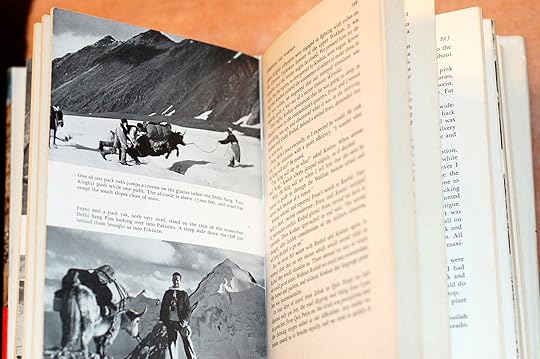
This hardcover edition has nice detailed maps corresponding to their trip, and interesting pictures they took themselves, with the story behind them.
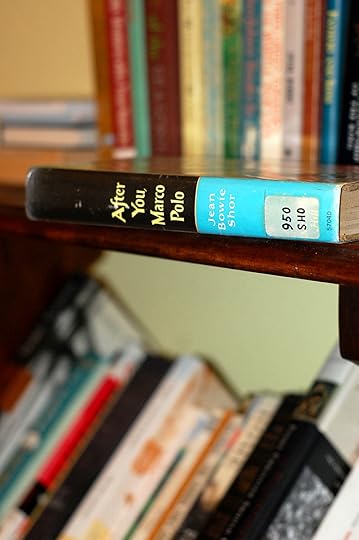
After You, Marco Polo, doubles for both of my book challenges, the Back to the Classics 2017, and the Classics Club. (Technically this is not what I'd call a classic, it's an old book that merits reading, and somehow a unique book from a bygone era, but it is not one of those iconic pieces of literature.)
August 31, 2023
I absolutely enjoyed this book. It has been the best I've read for years. Jean and Franc Shor were the first people to follow in the steps of Marco Polo in centuries, and their adventure was full of highs and lows. The book was written in 1955, but it can still be ordered on the internet. I read it with my phone at hand so I could look up places and people on the internet.

July 16, 2019
This book was a really neat adventure -- at times a little slow paced -- AND I learned lots! It was truly amazing to read about a couple in the 50s trekking through places where people hadn't even heard about America. My favorite humorous scene was from the mountains in Afghanistan where all the village's women stood around to watch Jean take a bath! To heck with modesty! hahhah! Then, as she pulled out her Lux soap, they all passed it around and cut off a piece because it smelled so lovely! For its time, even though it had these humorous culture clash moments, it wasn't nearly as ethnocentric as I had feared. She and her husband formed opinions about people not by the way the people of the world lived but instead by how they were treated.

May 28, 2022
Marvelous telling of a courageous journey in the late 40s/early 50s of a couple through dangerous remote territories. It took a while to get into the book but by the end I thoroughly enjoyed the lessons learned along the way. They were fearless and were ultimstely rewarded for their persistence. I loved the reception they received in thd Hunza Valley after an especially treacherous mountain crossing. I have no idea how they survived on so little food and the author didn't address some of the more delicate aspects of daily survival. I was so intrigued by the end of the book, I have sought out the couple's articles in old National Geographic magazines.
October 9, 2017
Absolutely magical. Jean Shor recounts the true story of the journey she and her husband made in the early 1950's following in the steps of Marco Polo from Venice to Iran (in the days of the young Shah) to Afghanistan and on horseback through the High Pamirs.
December 26, 2019
A great adventure story
I first read this book over 30 years ago and never forgot it. I was very happy to find it and read it again. It’s a real treasure full of interesting facts an hair raising stories.
I first read this book over 30 years ago and never forgot it. I was very happy to find it and read it again. It’s a real treasure full of interesting facts an hair raising stories.

May 28, 2019
An amazing account of a newlywed couple in the early 50’s following the trail of Marco Polo.

October 5, 2022
the book presents a trivial understanding about Hunza and exoticizes it more than necessary.

July 27, 2025
Oh my gosh! What an absolutely spectacular adventure written so that I could live it with Jean and Franc Shor!
October 18, 2025
Read years ago.

December 3, 2019
An incredible, real adventure book.

March 2, 2021
Marco Polo is famous for going to China and returning to Venice in the 1200s. Franc and Jean Shor decided to retrace his route in the years just after WWII. They found many of the areas traversed by Polo had changed very little. In some places his account was more useful than more modern ones.
The first trip follows Polo's route across the Gobi desert in China. The Shors return to Europe and begin in Venice. As they go through Europe and the Middle East into Iran, they have modern transportation. They stop to interview and take pictures of such people as the Shah of Iran. As they leave Iran, civilization gradually disappears.
Transportation is on horseback or on foot. Food and supplies are packed on oxen, yaks, horses or backs. Sending information and film back to New York is a challenge.
Afghanistan is often in the news. The descriptions mean so little to those of us living in what is considered civilized society. The Shors tackled a route called the Wakhan not seen by an outsider in a hundred years. The route leads up into the mountain ranges of the Himilayas and others as imposing. The altitude approaches 20,000 feet. Even the yaks have trouble breathing.
The guides speak no English. They are part of a Kirghiz band known to all but the Shors as bandits and murderers. When Franc becomes desperately ill, they wait to cart off the supplies. There is no food.
The Shors crawl over a glacier covered pass and descend into Hunza.
This is a fascinating book for its descriptions of the people and the places. The trip may have been in the 1940s, but the places and people had stayed the same for hundreds of years and, judging from the news, are much the same today. It brings a better understanding of conditions in the outlying areas of the Middle East today as well as in the past.
The hardships the Shors endured are hard to imagine even reading the text. The book is not a fast read as it is so intense. The pictures make the reader long for more. It is definitely not the usual travelogue.
The first trip follows Polo's route across the Gobi desert in China. The Shors return to Europe and begin in Venice. As they go through Europe and the Middle East into Iran, they have modern transportation. They stop to interview and take pictures of such people as the Shah of Iran. As they leave Iran, civilization gradually disappears.
Transportation is on horseback or on foot. Food and supplies are packed on oxen, yaks, horses or backs. Sending information and film back to New York is a challenge.
Afghanistan is often in the news. The descriptions mean so little to those of us living in what is considered civilized society. The Shors tackled a route called the Wakhan not seen by an outsider in a hundred years. The route leads up into the mountain ranges of the Himilayas and others as imposing. The altitude approaches 20,000 feet. Even the yaks have trouble breathing.
The guides speak no English. They are part of a Kirghiz band known to all but the Shors as bandits and murderers. When Franc becomes desperately ill, they wait to cart off the supplies. There is no food.
The Shors crawl over a glacier covered pass and descend into Hunza.
This is a fascinating book for its descriptions of the people and the places. The trip may have been in the 1940s, but the places and people had stayed the same for hundreds of years and, judging from the news, are much the same today. It brings a better understanding of conditions in the outlying areas of the Middle East today as well as in the past.
The hardships the Shors endured are hard to imagine even reading the text. The book is not a fast read as it is so intense. The pictures make the reader long for more. It is definitely not the usual travelogue.

August 16, 2013
This is the third time I have read this book.
The first I was 13 years old digging around in a strange part of a Texan library when I found this treasure. I read it in two days, and had to have my own copy. I spent $60 (most of my savings from selling cookies door to door at thirteen years old) to buy myself a copy (out of print). The second time, I read it to my father. He decided he also needed his own copy.
I don't know if I can call this a review. My review of this book is written in the trails I've walked, the foreign countries I've visited, the constant lust for more adventure in my blood. I had always wanted to travel, but this book put the fire in me at 13.
A month after I graduated high school, I was gone, solo backpacking for five months in nine different foreign countries. I'd saved everything I made working nights in high school. My motivation was in part due to this book.
Jean Bowie, a woman I'd never met, had inspired me to action.
Since then, I've never lost my love of travel. My first home of my own was a "home on wheels" so that I never had to be "stuck" anywhere. The next home, a school bus, is still my current home. Though travel plans look a bit different now because I've got a senior dog who is %100 reliant on me, this year I've got S. America planned.
And thanks to Jean, I'm planning a much needed future trip to Hunza Valley, Pakistan to finally see some of the places she wrote so engagingly about.
The first I was 13 years old digging around in a strange part of a Texan library when I found this treasure. I read it in two days, and had to have my own copy. I spent $60 (most of my savings from selling cookies door to door at thirteen years old) to buy myself a copy (out of print). The second time, I read it to my father. He decided he also needed his own copy.
I don't know if I can call this a review. My review of this book is written in the trails I've walked, the foreign countries I've visited, the constant lust for more adventure in my blood. I had always wanted to travel, but this book put the fire in me at 13.
A month after I graduated high school, I was gone, solo backpacking for five months in nine different foreign countries. I'd saved everything I made working nights in high school. My motivation was in part due to this book.
Jean Bowie, a woman I'd never met, had inspired me to action.
Since then, I've never lost my love of travel. My first home of my own was a "home on wheels" so that I never had to be "stuck" anywhere. The next home, a school bus, is still my current home. Though travel plans look a bit different now because I've got a senior dog who is %100 reliant on me, this year I've got S. America planned.
And thanks to Jean, I'm planning a much needed future trip to Hunza Valley, Pakistan to finally see some of the places she wrote so engagingly about.

February 10, 2014
A newly married couple set off to follow the trail of Marco Polo. Along the way they visit places described by Marco Polo, as well as places Marco Polo never got to, such as the Hunza Valley.
In lands of foreign languages, the Shors encounter a variety of people from kings, queens and Shahs, to
villagers, guides and yak pullers.
After meeting in China where they both worked and lived, Jean Bowie and Franc Shor were married, although Jean wouldn't have know otherwise as the service was in Chinese. The Shors, both seasoned travelers, soon are honeymooning across parts of China. While on their honeymoon Jean, an ardent follower of Marco Polo, is reminded of his explorations.
After Franc is willing to make the trek, the couple start leaping the hurdles. They overcome numerous obstacles, impossible with todays traveling systems and security. While preparing to leave and traveling through Europe, Franc adopted a necessary maxim, " After we leave here we won't get anything good to eat." This he would recite anytime they both dined at a restaurant with appealing delicacies. " He says it in New York before we leave for Paris, and in Paris before Rome, and in Rome before Cairo." Mrs. Shor says, " The grass is always dead on the other side of the street."
After all preparations are finished, so they think, the Shors set off on an eight month exploration through the Middle East, following Marco Polo's footsteps and just like him, trying to make it to China.
In lands of foreign languages, the Shors encounter a variety of people from kings, queens and Shahs, to
villagers, guides and yak pullers.
After meeting in China where they both worked and lived, Jean Bowie and Franc Shor were married, although Jean wouldn't have know otherwise as the service was in Chinese. The Shors, both seasoned travelers, soon are honeymooning across parts of China. While on their honeymoon Jean, an ardent follower of Marco Polo, is reminded of his explorations.
After Franc is willing to make the trek, the couple start leaping the hurdles. They overcome numerous obstacles, impossible with todays traveling systems and security. While preparing to leave and traveling through Europe, Franc adopted a necessary maxim, " After we leave here we won't get anything good to eat." This he would recite anytime they both dined at a restaurant with appealing delicacies. " He says it in New York before we leave for Paris, and in Paris before Rome, and in Rome before Cairo." Mrs. Shor says, " The grass is always dead on the other side of the street."
After all preparations are finished, so they think, the Shors set off on an eight month exploration through the Middle East, following Marco Polo's footsteps and just like him, trying to make it to China.
June 3, 2011
This is a wonderful book--well written, descriptive, interesting and intelligent. Yes, it was published in 1955, but it holds up well as an absorbing courterpoint to the travails of the political messes in the four main countries where following Marco Polo's trail was most difficult: Iran, Afganistan, Pakistan and China. I wonder if the shangra-la of Hunza exists in the modern world? This is a memoir that captures the characters of the people the author meets, from kings to highway robbers, and demonstrates insight into the "human condition" that transcends language, class, and locale. The author could have whined about the hardships she faced on this arduous journey. Instead, she focused on the thrills of her luck in making it in the first place, and the wonder of the events and people she met, often not so different those met by Marco Polo seven centuries earlier. It is a great and absorbing read.

November 24, 2016
When our broke and newly-wed selves went to the library on Friday nights, I became a devoted fan of the 915 Dewey section after reading this book. Years later I saw a copy in a library deaccessioned pile and stashed it away for later, which became now. The book was published in 1955 and I read it in 1969, then again today. It surprisingly retains it's relevance as the backdrop is the Silk Road which has been heavily bombed after years of war. I love cultural geography books and this one is at the top of the game.
June 6, 2021
Excellent travelogue detailing troubles and tribulations of a couple traveling much of Polo’s Silk Road route and dealing with powerful entities along the way in the 50’s. Entre into problems existing today!
November 30, 2009
Frank and Jean Shur set off to travel Marco Polo's route right at the time of the Communist takeover in China. A fascinating read.
August 28, 2013
What a delightful read this is. Grit, determination, and not a small amount of lunacy help this couple to trek the trail of Marco Polo.
January 23, 2019
One of the most interesting books I have ever read. Loved it! Highly recommend.

July 1, 2025
What a fascinating adventure and so many nuggets of interesting facts and so much to learn. Loved this book!
Read
April 10, 2014I read After You Marco Polo for the first time in 2014. I loved traveling with the Shors, Franc and Jean. Their adventure of recreating the Marco Polo travels has no equal. They went to places that are still remote, and they did this at a time that's never to come anymore (before cell phones, and all the technology we have nowadays).
Bureaucracy though, is the same dog with a different collar. All kinds of travel require different permits, some simple (driver's license or passport), some more complicated, (visas, etc.)
One word on Jean. She has a peculiar background, (grand daughter of European travelers, one of the archetypes of a Texan woman, the cowgirl type. A girl who was fascinated by National Geographic magazines more than dolls, a teen that preferred horses to ball parties. A woman full of wanderlust.
I do not wish to talk a lot about the book since that will spoil it. All I can say is that Jean Shor writes with humor and wit. Her observations and exchanges, and their adventures, are fabulous, they were as wonderful this time as they were the first time I read it.
This hardcover edition has nice detailed maps corresponding to their trip, and interesting pictures they took themselves, with the story behind them.
After You, Marco Polo, doubles for both of my book challenges, the Back to the Classics 2017, and the Classics Club. (Technically this is not what I'd call a classic, it's an old book that merits reading, and somehow a unique book from a bygone era, but it is not one of those iconic pieces of literature.)
Read
December 14, 2017An amazing travel log and surprisingly not dated at all considering it's publication date.
Displaying 1 - 23 of 23 reviews