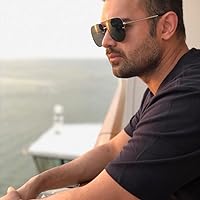
MARK OWEN er tidligere medlem af Naval Special Warfare Development Group, også kendt som SEAL Team Six, det amerikanske militærs absolutte eliteenhed. Gennem sin lange karriere har Mark Owen deltaget i hundredvis af dramatiske missioner rundt om i verden, blandt andet befrielsesaktionen mod fragtskibet Maersk Alabama, hvor somaliske pirater havde taget besætningen som gidsler. Men først og fremmest er Mark Owen kendt som manden, der var leder under den indsats, der førte til drabet på Osama bin Laden i Pakistan i maj 2011. Mark Owen var en af de første, der trængte ind i rummet, hvor terrorlederen skjulte sig, og han bevidnede bin Ladens død på første hånd. Mark Owens første bog, den anmelderroste EN SVÆR DAG, er den til dato bedste og mest troværdige gengivelse af missionen, der ledte til al-Qaidas endeligt.
The writing is terrible, even with the ghost writer, who I presume wanted to preserve Owen's down-home style, or pretend he had one. The content is sociologically interesting. I mean if you want to know what goes on in the mind of one Navy SEAL, especially one who protesteth far too much, here you go. Definitely no hero.
Some things that stood out for me:
A little pocket of Americana I never personally had any experience with: "I purchased my first assault rifle at school from my [high school] history teacher. It was an AR-15, a civilian version of the military's M-4. I'd earned the money for the rifle doing odd jobs for people in the village and working construction in the summer. Between classes, I paid my teacher seven hundred dollars, then took the rifle and locked it in my locker until the end of school. When the bell rang, I put it on the back of my snowmobile and rode home."
The video game nature of war to him: "The fighters tried to skid to a stop and raise their rifles in a weak-ass attempt to get some shots off. Before they even had a chance to level their AK-47s, Bert and the PJ fired multiple rounds into each fighter. They went down in a heap at the mouth of the alley... Both fighters were killed in action. I felt instant gratification. We'd gotten them. We'd missed on the first try, but didn't get discouraged."
"The drone's sensor operator fired an infrared laser, like a giant laser pointer, at the fighters' location. Under our night vision, it looked like a giant finger pointing to the fighters' exact location. It was something out of a video game."
But remember:
"Everyone moved as quietly as we we possibly could... After all, this wasn't a video game. You can't just get shot and re-spawn in place."
The way that "assaults," which the military seems to curiously use in place of "attack" (we "assaulted" the compound, we went on "assault," the "assaulters" were in position) seemed to turn him on: "As I watched the footage, I could make out the assaulters moving silently toward the target compound. I had done the same thing a million time, so I knew exactly how those guys felt. I was still getting excited just watching them. I knew their senses were on fire..."
As often happens in war, the enemy is dehumanized. In this case, just completely disregarded as human beings. In one chapter, the After Action Review, an interesting process in which every mission is completely dissected with the aim of improving the next one, is discussed. Mistakes were made. As a result of such a review, two escaped Taliban commanders are caught and killed and will "never be a threat again." However, he says, "many AARs and the lessons learned in them aren't so simple. Sometimes people die because we haven't clearly communicated and learned from our mistakes." Semantics: who are people, and who are not-people?
Man, there are a lot of drones flying around out there. In any movie, we would kind of be the bad guys, right? The evil empire with all the technology hunting down the ragtag rebels hiding in the hills and caves? Just saying. Strangely inverted iconography.
Anyhow, it just goes to show that despite huge technological advantages, you can't "win" a war/struggle if you don't put the right political strategies in place--eg, if you are going to kiss Pakistan's ass (Owen doesn't speak to this, so you have to go read other books to get this, such as The Wrong Enemy by Carlotta Gall) and let the Taliban take refuge there. I disagree with Owen's discussion about how the enemy manipulates the rules of engagement--or rather, I don't disagree that they do, but I think the cost of us ignoring them is too high. Still, clearly these rules put sometimes unreasonable constraints on getting the job done and I wonder if a more workable balance can't be found.
There was a curious disrespect for the abilities of the Afghan fighters the SEALs were supposed to be training. The SEALs did not seem to want to be doing this--the Afghans were thought to be slowing the SEALs down. Shouldn't there be more enthusiasm for teaching these guys and helping them become better fighters so the Americans can leave? There was almost a scorn that they didn't speak English, too, as if they should, rather than any consideration that the SEALs should be speaking Afghan. Kind of funny. Plus, I wondered why the Afghans would be such terrible fighters when many Afghans on our side had fought alongside the Taliban against the Soviets back in the day and were pretty tough fighters... why weren't the Afghan commandos recruited from those ranks?
Basically, this book went some distance to confirm my suspicion that despite his talk of sacrifice, these guys aren't especially patriotic. They may think they are, but if they'd been born in Russia or China or Saudi Arabia, they'd be loyal THERE, and probably members of THEIR elite forces. They're the same guys all over the world. They're in these roles because of the challenge, because of the nature of the work, because they see being a SEAL, or whatever branch of special forces they've chosen, as being the best of the best, kind of like how people who go to Harvard Law think THEY are the best of the best. ("I never wanted to be normal. I can't be average." Me either.) It's not that I don't believe that they feel some connection to American ideology, but I'd bet if they were born in another country they'd connect to that ideology, because they're just that kind of person--a person who is born loyal. Born to excel but also born to serve.
As for sacrifice, yes, there's a lot of it, but Olympic athletes also sacrifice, as do Himalayan climbers, and even elite scientists, doctors, and lawyers make sacrifices in favor of their careers at the expense of families and social lives. Not everyone lays their life on the line (climbers do). I suspect that for these SEAL guys that's a lot of the rush, and therefore not as much of a sacrifice as it might seem. I actually don't get the sense that these guys mind risking their lives so much. You can't simultaneously say you're no hero and be miffed when you're not getting a medal.
I do think the families make sacrifices, but maybe that's the issue--is it irresponsible for a commando to have a family? I think that about elite climbers, sometimes.
Owen argues that SEAL training insulates them from PTSD. Some might beg to differ, but perhaps there are re-entry difficulties all the same, and perhaps some of this is due to the intense experience of team identity he describes. I wonder if it would be easier for a fighter from an elite unit to re-enter a more collectivist society?
Anyhow, I agree. These guys aren't heros. They're job-doers. They do jobs that are difficult, dangerous, and apparently, very rewarding and exciting for them. They sacrifice, but I wondered how much of the sacrifice was for *us* and how much of it was so that they could be better, faster, stronger, etc.
This book is a follow-on to No Easy Day. I recommend it especially for the Orion and the Action and Adventure reading groups.
Mark Owen makes clear the physical and mental effort, constant practice, teamwork, and honest follow-up that go into successful SEAL missions.
The difficulty of BUD/S qualification and training is legendary; Owen explains why.
What I most liked--in addition to the clarity of the book--was Owen's discussion of AAR's, or After-Action Reviews, a no-holds discussion after every mission, no matter how tired a team is, of what went well, what went poorly, and how to improve.
I think this book is different in a lot of ways- he allows us to see the human element with its failures and how he overcame each of them to press forward. I loved to see what motivated him and also changed him. It was his training that made him great. Money well spent. Stay in your "3-feet"!
Man, what a book. This is by far one of my most favorite and best-written autobiographies I have read so far. Mark Owen, former Navy SEAL and member of SEAL Team 6 (DEVGRU) writes about his experience as a SEAL with multiple combat deployments to Iraq and Afghanistan and also Africa during which he connects and talks extensively about BUD/S, UDT and SEAL Weapons Qualifications Training. He has participated in the Captain Phillips rescue and the Bin Laden raid and writes about all the countless ops he has been in although it would've been even better if some of the information weren't censored for sensitive information (The Department of Defence would look for information in the book to check if it's classified or sensitive information the public shouldn't know about and censor it). Packed with action, violence, and horror, this book is a must-read for anyone who likes to read war novels and autobiographies written by people with actual past experience in the military.
"Gunfights are like car crashes. You tend to avoid them but they still happen" –Mark Owen
Even though the title is, “No Hero: “this truly is the story of an American hero. It takes us along with Mark Owen through Afghanistan and other parts of the Middle East in the midst of combat.
It shows that a hero is made up of guts and humility.
It’s truly a fantastic book that we all should read.
I'm not sure how to feel about this book, mainly in terms of the content as it is well written and easy to follow.
Having never had any military experience it is quite confronting to read the descriptions of missions and the "ease" associated with taking a life. I'm by no means a pacifist and understand that war and conflict is a tale as old as time but I wonder about it at times in our modern day. These things are painted in very black and white terms - they were bad guys - and the increase in rigour around the terms of engagement Owen describes in very negative, restrictive terms seemed reasonable to me and clearly were directed at preventing potentially unnecessary losses of life.
This is, of course, an outsider perspective so what do I know but I found the descriptions of operations to be quite transactional - follow orders, take out the target. Maybe this is the benefit of being a soldier - not really having the luxury of dwelling on the broader picture and being able to be single-minded about the 3 foot box.
I enjoyed this for its story telling. It didn't delve into the emotional or psychological side of elite warfare so much aside from a very cursory look at compartmentalisation, but it was interesting none the less. I also enjoyed the analytical approach to discussing deployments that gave an insight into what went on during missions. It read kind of blow by blow, but I think that was important to get the intensity of the situations across without being emotional about it. I did find it a little repetitive in places, but it didn't bother me too much as I was reading. I think this is a good book if you are interested in the tactical side of special operations and training.
I strongly recommend this book. For me, the concept of "The Three Foot World" alone made the entire book worth the read (I listened to the audio version). A well written, history of a SEAL's experiences during his career is about much more than firefights and killing bad guys, although there is some of that in this book. The book is really about what it takes to become a high performing professional in any field or endeavor.
Interesting but slightly unfocused and probably unnecessary. The author says he wanted to go into more of the day-to-day life and lessons of a SEAL than he did in his first book No Easy Day, but I just couldn’t shake the feeling he was trying to squeeze just a little more juice out of the lemon... for profit.
Wow. What a ride. From the Seal that wrote the first or one of the first retellings of the events of the Bin Laden raid comes a book about his events in special forces - the SEALs. He talks about several actions he and his teammates endured in Iraq and Afghanistan. Over the course of his deployments, we learn about his successes, his set-backs and how those were learning opportunities and how they were improved. We learn about his interactions with other areas of the military and how those impacted his (and his teammates) ability to complete their objectives or how they hindered success. The what could be learned and focus on your three feet of area of responsibility are probably the most impactful portions of the book. Especially to those not in the military or special forces community. Loved the book and I now should read the first one he published...
Mark Owen followed his first book with a great story of all of the things that make a Navy SEAL who they are. There are many inspiring, frightening, and tragic stories within this book, but they are all learning experiences for some of the greatest fighters and operators this world has ever seen. Owen did a great job of perpetuating how he deals with combat stress and the challenges that come with it. I will likely come back to this book in the future, as it was written perfectly in my opinion.
Lacks the direction and narrowed scope of “No Easy Day”, which had served the author much better as far as story telling goes.
Focuses more on Owen’s path in becoming a SEAL and more about the day to day life. However Owen’s frankness about his failures and shortcomings was refreshing in a book of this genre.
I am in awe of Navy seals and the sacrifices they make for our freedom. This particular author is one that focuses on team work and the mission at hand vs patting just himself on the back. No Hero’s underlying theme is to embrace the good of ‘your people’, focus on what you can control, and to always always always pay it forward.
Damn good book! I think Mark Owen and Kevin Maurer have completed their objective in making this book something inspiring for the future generations of warfighters.
This entire review has been hidden because of spoilers.
"The only easy day was yesterday" is a common phrase among Navy Seals. Owen's writes about his experiences as a Seal, including training and a few of his many missions. The reader learns of the strength of Seals' minds and bodies and the power of their brotherhood. Thank you, Mike C, for inspiring me to read this 8 years ago, and thank you to Goodreads for the "to read" field.
You can't possibly not like this guy after reading this book. And even though he comes from a completely different world than me, I could relate to him.
He's an Alaska boy who knows how to live off the land. He learned survival skills in grade school and sometimes rode a snowmobile to school. He always wanted to be a SEAL. I admire anyone who goes after their dream. I did the same (although my dream was not as hazardous). And although he is disciplined, he can be defiant. He's in hot water for not running his first book, No Easy Day, through the proper channels. This time for No Hero, he did. Some parts of the book are redacted. It's only a couple paragraphs and words here and there. But instead of excluding those parts from the book, he left them in. In his first book, he was very critical of the current administration. Some would say he's ballsy, while others would say he's a glutton for punishment.
I only gave it three stars because he left out a lot of things. He talked in great detail about his missions and the lessons he learned from them. But he's been out of the military for years and I want to know about his transition to civilian life. So many veterans suffer from PTSD. He could have helped many with his story.
He also made it seem like the only valuable lessons he learned was in the military. I come from a large Irish-American family and I learned something from all of my elders. I'm sure his missionary mom and dad taught him a few things as well. Bottom line, he revealed so much and yet so little. Not sure how much of the book was Mark and how much was Kevin, his co-writer.
What I loved about the book? He was honest about his faults, he made me laugh and most importantly, he made me understand what it was like in Iraq and Afghanistan. I do not know anyone in the military (my uncle was in Vietnam but I was told never to ask him about it). All I know about war is what I've seen in documentaries.
Mark Owen's books helped educate me. Thank you Mark and if there's a third book planned, please make it a solo mission this time.
I received this book through the Goodreads First Reads program. I have read Mr. Owen's previous book "No Easy Day" about the Osama bin Laden killing which I had some security and accuracy issues with at the time.
This story written by the former Seal is a must read for anyone interested in the military and Seal Teams in particular. Mr. Owen (a pseudonym) shows us what it takes to be a Seal and what kind of missions they might be used for.
This time around some of the censorship seems arbitrary as you can easily look up the book, "Rogue Warrior" by Richard Marcinko to see which Seal Team he was on, but it is blanked out in this book.
I liked the way Mr. Owen showed that even when a mission failed or they made mistakes that there was always something they learned from that and it helped them to grow. We all need to take this lesson to heart and not be afraid to step out of our comfort zones sometimes in order to make progress in our lives.
The Navy Seals may not think they are heroes, but we certainly owe a huge debt of gratitude to all that they have done over the years to make this country free and safe.
I completely enjoy and love books by heroes who are merely speaking of doing their job. In today's world a lot of people speak of little things like they are something to brag about. Mark Owen on the other hand is a hero who speaks of his heroic things merely as part of doing his job. As Mark states in the book, the people perceive SEALs as people who do extraordinary things, but Mark points out that they are people who do basic things extraordinarily. I think that they are amazing and born to lead people. I doubt that someone can be merely trained to do basic things extraordinary way. I think someone has to be born to be able to hand physical and mental task as those people do in the extraordinary way.
I enjoyed this book a lot. I haven't read "No Easy Day" by the same SEAL author, but I look forward to it. Can't compare the two yet, but curious to see what the other book, that put Mark on the map as the author, entails.
Segundo libro de Mark Owen tras su crónica de cómo mató a Bin Laden. El libro consta de ocho fogonazos, ocho recuerdos aislados desde que salió de la escuela de los SEAL hasta que se retiró, catorce años después. Son ocho misiones, las primeras de entrenamiento y las últimas en Afganistán, habiendo pasado por Irak. En cada una cuenta cómo fue todo y qué aprendió de ellas. El libro es interesante, al igual que su predecesor, a pesar de que el estilo del autor es tirando a aséptico, incluso cuando cuenta cómo eliminaban a los Talibanes casa por casa en remotas aldeas cerca de la frontera de Pakistán. Lectura interesante para el aficionado a estos temas.
I thought this was an amazing book! I really liked how he explained each thing that he and is team would prep for the mission and all the little things that they did before entering the compound or other mission areas. He talks about his experience throughout the book and how he failed multiple times but that did not stop him from trying to be the best seal he could. You learn about leadership and brotherhood in this book. So if you are interested in learning about seal operations or think about being a seal then this is a book I recommend for you.
I had loved No Easy Day and I love No Hero as well. I hope the author keeps on writing more and more books and readers like me always get transported to the War Zones and the high-intensity, kill-or-be-killed missions where we feel alive and full of adrenaline! I loved every chapter of this book and I recommend this book to all those who want to feel how it feels like to be a real hero. "The Only Easy Day Was Yesterday."
I haven't read his other book yet. I grabbed this one on audio for a 2 day road trip. Finished it in one day though.
My main take away from all the great advice he gave was "stay in your 3 foot world". Something we can remind ourselves in all aspects of our life - not just rock climbing or in combat.
I thought it was humbly written and honest. I look forward to reading his other book that much more.
No Hero Toby Inman 12/01/17 English 12-5 1- The author of this book, who is a former member of SEAL Team 6, wanted to tell the world the intimate side of war or the everyday life of it and to share some of his stories about the operations that didn’t make headlines. 2- This book was written this year when just about every week there's something in the headlines about the war in Afghanistan and its about the stuff that doesn’t make the news. 3- This book is made up of accounts that take place all over the world, but mostly in Afghanistan and Iraq. 4- The main character was Mark Owen who is a Navy SEAL with a no-quit attitude. Another character is Walt who is also a Navy SEAL and is short with a big mouth. Walt is also Mark’s swim buddy, a SEAL’s partner, throughout most of the book. Phil is also an important character in this book. He is Mark’s mentor and commanding officer some of Mark’s time as a SEAL. 5- Each chapter has its own theme which are purpose, confidence, fear, stress, mindset, trust, communication, relationships, accountability, discomfort, evolution, and compartmentalization. 6- This book starts of by him talking about a helicopter crash that he knew about from text messages and his friends that died in it. Then he tells about how he had always wanted to be a SEAL and the start of BUD/s. After that Mark shares some of his experiences in Afghanistan. He goes on to talk about lots of raids he did and some of the places where he was posted. He then ends the book by talking about making the decision to get out of the Navy and the hard transition to civilian life. 7- One literary device used in this book was imagery. One example of imagery is this “I stifled a long yawn as I walked back to our ready room and took off my kit, which was soaked with dust and sweat.” another device used was conflict. One example of conflict in this book could be any one of the many times that Mark said that he got in a gunfight during a mission. 8- One memorable quote was “People think SEALs are fearless. Think again. No one lives without fear; heights is my Achilles’ heel.” This quote stuck in my mind because to think that I share the same fear as someone who had been through BUD/s and 14 deployments around the world was astonishing. A second quote is “Beckwith fired most of the soldiers in the unit when he took command and started to recruit replacement using a flyer.” This was memorable because I thought it was funny that the leader of a project during the Vietnam war recruited soldiers using a flyer.
No Hero is a book that stays true to its title. This is a book that isn’t about the heroism of a Navy Seal, but about the teamwork of his unit, and what he learned through that teamwork. As well as what he learned training to become a Seal. Overall, I would say that this was a good read, but it reads more like a short story collection rather than a novel. Although because of that the book was never boring to me, but the stories were formulaic. The Majority of the stories would start with some type of mission or training the author Mark Owen went through, then it would be him reflecting on the meaning of that mission or training. But the stories were good and the lessons drawn out of them were nice as well, so it being formulaic didn’t bother me a lot. When I was reading this book, there were some passages that surprised me, there was one where the author sneaks up on sleeping terrorists and kills them all without hesitating. After this happens, the author does reflect on it, writing about stress caused by the war. But reading that passage especially showed a lot about the nature of war, which this book does a good job of explaining through the stories found later in it. Which definitely gave me a new perspective on at least how Navy Seals operate in a war. I found the writing style of this book to be pretty simple, no huge words I didn’t understand, but that didn’t take away from the book at all. One thing about the writing though that bothered me was that there were some points in the book where sentences were worded oddly or words seemingly out-of-place. Which I put down to typos, something that ruined the reading experience for me once I was immersed into the book. Now that you’ve read this review, I recommend this book to anyone that isn’t sensitive to death, and those who are looking for a read with some action. As well as to anybody who might be curious as to what a Navy Seal does, and how people train to become one.
I love books like, Red Platoon, & Black Hawk Down, so why not this?? Well, this felt more...well those other books jumped right into the action (pun intended) & it took us right into the gritty details of battle, we could see what these guys were going through ...
So that must mean THIS book didn’t do that? Not really, no... this book to me was more just about details of SEAL life. The grind of mission after mission, it reads more like a memoir/bio about his Navy life. I guess I can’t really complain because I mean...the book doesn’t claim to be action packed. I guess after “Lone Survivor” & “American Sniper” I just expected a little more...*bang bang* from a Navy SEAL story. I would say this book is more for people that care less about action packed accounts of battles, & more for people looking for what life as a NAVY SEAL is like.
As mentioned, the book doesn’t claim to be like, Black Hawk Down action packed - that means it would be unfair of me to judge it based on that. So why 3* then? Well...to be honest the book just sort of bored me, I felt that the writing was okay, however as another person has mentioned, he seems to have little respect for his enemy, which to me just feels odd. Overall the book is just very dry to me. There are some parts that were so “blah” and bland/boring that some areas in the middle felt like a chore to finish.
If you LOVED Black Hawk Down, or Gen. Kill, or Red Platoon...you may find this to be too dry. You will enjoy this book if you approach it like a memoirs. I have no clue how this book has an overall 4+* rating, but to each their own!! It was alright, nothing special.
I read No Easy Day: The Firsthand Account of the Mission That Killed Osama Bin Laden a few weeks ago and thoroughly enjoyed it. This book deals with a general overview of "Mark's" time while being in the military rather than a specific mission such as his previous book. I love why he wrote this book and that he would do his service in the military all over again. What I like most about this author is that he is realistic and flawed. Many veterans and military people I've read about are leaps and bounds ahead of me in terms of physical and mental strength such as Marcus Luttrell or Chris Kyle. I'm sure Mark is too, but he doesn't show off his super human strength. He has a more authentic nature to him. I like that a lot. It gives me hope that I can do great things in the military (Since I've been reading many books lately of these honorable servicemen I've been getting eager to join). And did Mark know any of those other famous SEALs?
I didn't know the Navy trains dolphins and sea lions to hunt people and detect bombs. That's wild.
Some good quotes:
"All you can control is what happens in your three-foot world."
"Slow is smooth, and smooth is fast."
"The only easy day was yesterday."
"Mindset if the common denominator for Special Forces."
"The mental toughness used to overcome BUDS is the same to overcome combat stress or PTSD."
What does it mean when the author said "copy redacted" ? Was he editing something out because of those dumb lawsuits against him?
Apparently the snow and mountains of Afghanistan could have better ski resorts than any in the USA. Too bad it's overrun by terrorists and radical people that don't value human life.
The Taliban fighting season is in the Spring when weather is optimal.