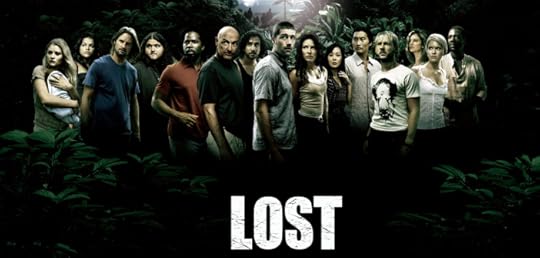
Cuando el vuelo 815 cae en una remota isla tropical, queda encallado en una quimera filosófica. Los sobrevivientes se organizan para protegerse de peligros surrealistas, pero insertos en un estado de naturaleza, nuestros héroes andrajosos y bronceados descubren que estaban perdidos desde mucho antes de que cayera el avión.
Sharon M. Kaye, PhD, is a professor of philosophy at John Carroll University in Cleveland, Ohio. She’s also the author of Big Thinkers and Ideas: An Introduction to Eastern and Western Philosophy for Kids.
A série televisiva “Perdidos/Lost” foi criada por Jeffrey Lieber, Damon Lindelof e J. J. Abrams e a 1º Temporada exibida em 2004/2005. Uma série que conjuga admiravelmente o drama e a ficção científica e que segue a vida dos sobreviventes de um acidente aéreo numa misteriosa ilha tropical, após o avião, que fazia a viagem de Sidney, na Austrália, para Los Angeles, nos Estados Unidos da América, se ter despenhado no Oceano Pacífico. Esta é uma das melhores séries televisivas que já vi – e que vou revendo com alguma regularidade – não conseguindo ter preferência por nenhuma das seis temporadas exibidas. O livro “A Filosofia Segundo Perdidos”, editado em 2008, organizado por Sharon M. Kaye, ele próprio fã incondicional de “Perdidos” é um conjunto de 22 artigos reunidos em quatro partes: Primeira Parte – L de Love (Amor), Segunda Parte – O de Origem, Terceira Parte – S de Sobrevivência e Quarta Parte – T de Transformação escrito por inúmeros escritores e que fazem uma brilhante análise sobre a série televisiva, os seus protagonistas, as suas vivências, os seus problemas na sobrevivência física e mental, na superação das suas difíceis condições de vida, … e, sobretudo, sobre o “medo” de nos vermos separados de tudo o que conhecemos e amamos, deixados sozinhos numa terra estranha. Os diferentes textos fazem essa análise desse “medo” porque é um medo filosófico, que diz respeito à condição humana e que nos obriga a a confrontar as profundas questões acerca de nós mesmos e do mundo. Na Primeira Parte são examinadas as questões éticas suscitadas pela série. A ética como um ramo da filosofia que diz respeito aos valores e à natureza do certo e do errado. Estando em tais condições extremas, as personagens de “Perdidos” enfrentam difíceis decisões que revelam perspectivas que todos nós devemos considerar nas nossas vidas morais. Na Segunda Parte existem um conjunto de ensaios que exploram um certo número de questões metafísicas suscitadas pela série. A metafísica é o ramo da filosofia que diz respeito aos fenómenos cuja explicação está para além da explicação da ciência. Na Terceira Parte são analisadas as questões sociais e políticas suscitadas pela série. A filosofia social e política respeita todas as dificuldades que se levantam quando os seres humanos tentam viver juntos e formar uma unidade maior do que o indivíduo. A ilha é um microcosmos das dinâmicas de poder que observamos nas nossas próprias comunidades. Na Quarta Parte avalia-se várias de questões religiosas suscitadas pela série. A filosofia e a religião são, historicamente, duas faces da mesma moeda. Aplicando uma análise racional a alguns dos momentos místicos retratados na série, conseguimos apreciar de forma mais completa o seu significado.” Este é um livro de consulta e leitura contínua, profunda e existencial, numa vertente filosófica e mística, interligando admiravelmente uma existência humana quotidiana – mas dramática - com acontecimentos misteriosos, que nos obrigam a uma profunda reflexão sobre o passado, o presente e o futuro. Obrigatório para os fãs incondicionais da série televisiva “Perdidos/Lost”…
This book is a collection of essays on various topics in philosophy that are inspired by the characters and situations on the TV series "Lost". There is no question that the creators of "Lost" intended the show to have a philosophical slant, given that some of the characters are named after prominent philosophers, including Locke, Hume, and Rousseau. The essays cover such topics as ethics (choosing right from wrong), metaphysics, social and political philosophy (how we live and work together in groups, make group decisions, and leadership), and religious issues (such as the existence of God).
These are very deep issues and questions, and require a precision in language that we don't normally need in everday life. That makes some of the essays challenging to read. They also demand time to reflect on what the authors are saying. This is not a quick read.
The quality of the writing is uneven. Some are very thoughtful and readable, some are a harder to follow and don't seem to come to any significant conclusion or point. One essay begins well, but the last two or three pages turn into an extreme-left wing condemnation of America and its failure to live up to its liberal ideals.
In terms of the TV show, these essays look at events from the first three seasons only ("Lost" begins its sixth and final season in January 2010). The narrative structure of the episodes changed significantly in Season 4 and again in Season 5. It would be interesting to see whether the authors would change some of their conclusions in light of the show's later development.
Overall, this is an interesting way to explore philosophical topics and theories, but be prepared to work at it.
I've been wanting to read this for quite some time, so I was thrilled when I found it in a Borders. Without thinking I immediately bought it & went out to my car to start reading (I was waiting to go pick someone up- I had a lot of time to kill, but nowhere to go).
Anyways- I probably read at least half of it, and absolutely hated it.
I was under the impression that the book would be exploring different philosophical theories that connected with the ever-popular "Lost theories"...possibly probing the various ideas people have for the "why?/whats going on?".
Instead- it was like a handbook for skin deep "philosophy".
Absolutely terrible. Needless to say, I went and returned it the very same day. Quite disappointing.
This book was informative and interesting if you like Lost and the little easter eggs the writers give us. This book reminded me of why I love lost so much; the writing is brilliant.
Este no es un libro de ficción sobre el show, sino es un libro que realiza ensayos filosóficos basándose en la historia de algunos de los personajes, de los desafíos que enfrentan o de las situaciones que se dan en la isla.
Los personajes que más han sido analizados son Jack, Locke, Desmond, Mr Eko, Sawyer y Sayid. Pero también se revisan algunas cosas de los demás personajes que, quizás no eran los más analizables desde estas perspectivas filosóficas.
¿Cómo recomiendo leer el libro? De a un ensayo por vez, así lo pueden procesar tranquilos, y con un lápiz a mano, así además se vuelve interesante para tomar algunas notas.
While some of the essays are a thinly veiled excuse to talk philosophy while having little to no meaningful connection to the show, there are at least a handful of essays that make it all worthwhile, especially those that really try to explain why the show is so popular - it all comes down to the stories of redemption that resonate with viewers. An insightful read for LOST fans who also want to know a little about philosophy. But I wouldn't suggest it for anyone except the die hard obsessives, like myself.
I think the largest problem with this book is that they wrote these essays before the show finished. Half of what there is to analyze about LOST is in the final episodes, in my opinion. Therefore, many of these essays were about the morals of situations that you could write for almost any popular tv show and not the more mystical aspects of the show. I would presume the Island as a character would have more fascinating topics to write about rather than the ethics of torturing a character to get information, which was the main topic that was brought up I felt.
There are a few interesting essays in this collection: 1) “Moral Stand-offs: Objectification on Lost,” 2) “No Exit...from the Island: A Sartrean Analysis of Lost,” 3) “Friends and Enemies in the State of Nature: The Absence of Hobbes and the Presence of Schmitt,” and 4) “Lost’s State of Nature.”
3) and 4) are very similar and touch on a lot of the same points. The contrasts between Rousseau, Locke, and Hobbes, and how they apply to the show are very insightful. The authors are clearly bigger fans of the former two, rather than the latter—at least as their philosophies apply to the show. Also, after reading this, I felt that some of the characters on did not appropriately represent their namesakes. Rousseau in particular.
I wish I had paid more attention in Philo 101 because I really enjoyed 1). The concepts of Mill were never difficult for me, but I found Kant to be exhausting. 1) really lays out moral decision-making nicely as it applies to the show. I thought Nietzsche’s “master-slave” relationship fit well into this same chapter, but could have easily been referenced in 3).
Bonetto’s take on Sartre’s definitions of sadism and masochism in 3) are very...literal? Intellectual? Definitely not the same as what Wikipedia would have you reading about. Speaking of which, do NOT look to Wikipedia for Sartre’s thoughts on either.
Chapter 9 is called “Lost, The Third Policeman, and Guerilla Ontology.” I cannot adequately express my dislike for Irish writers. If I had known ahead of time that much of Lost was based on The Third Policeman, I might have passed.
I’m still mad about the show. Looking at you, JJ, Carlton, and Damon.
Começando por dizer que sou fã do Lost, talvez a minha opinião sobre este livro seja um pouco suspeita. Mesmo assim, parece-me que este livro é capaz de interessar os seguidores da série, de forma a conhecerem de um ponto de vista filosófico alguns dos elementos mais prementes nesta história. Sharon M. Kaye, a autora, contou com a participação de convidados, todos ligados ao ramo filosófico, para a elaboração de 22 artigos sobre diferentes perspectivas: L(0ve), O(rigin), S(urvival) e T(ransformation), que analisam uma série de situações, relacionamentos e personagens consoante cada um destes temas.
Na minha opinião, o livro deveria chamar-se “Perdidos segundo a filosofia” e não “A filosofia segundo Perdidos”, visto que os autores analisam a série de acordo com uma série de correntes filosóficas, e não o contrário. Lançado a meio da terceira temporada, esta compilação de textos tenta resumir a importância que a filosofia teve no argumento o que, juntando ao facto de os produtores terem admitido que “foi tudo pensado”, nos ajuda a interpretar alguns temas e a esclarecer algumas dúvidas sobre o enredo.
Se considerarmos as correntes empíricas e existencialistas (de Locke e Sartre, respectivanente) ou perspectivas que roçam a religião e o metafísico (S. Tomás de Aquino), concluímos (ou confirmamos) que a série se dedica profundamente a analisar a condição humana da forma mais realista possível. Isto porque as personagens não só são profundamente tridimensionais, como dotadas de um grande realismo que permite uma enorme identificação por parte do público. Na verdade, o passado e os erros cometidos pelo grupo de perdidos perseguem-nos e determinam a forma como decidem viver na ilha que, de forma bastante simplista e resumida, lhes oferece uma oportunidade de redenção e de mudança. Desta forma, reforça-se a ideia de que a guerra entre o bem e o mal não é tão linear como em outras séries ou filmes, visto que em cada decisão há inúmeros componentes a ponderar e outros tantos a relembrar: o carácter de humanidade e o nível de complexidade em cada personagem e entre elas são bastante elevados.
Dos 22 autores convidados, há diferentes perspectivas acerca da ilha, do seu poder e do motivo que levou as personagens a lá chegar. Considerando várias correntes da filosofia, o livro pretende esclarecer conceitos-chave acerca do passado, das motivações e das crenças dos Losties: discute-se o existencialismo e a metafísica, a diferença entre coincidência e o destino (algo bastante abordado por Mr. Eko, John Locke e Jack Shepard) e entre acreditar e saber (algo bastante comentado devido às crenças de Rose), o desentendimento entre os náufragos e os Outros (ou serão os Losties os outros?) e a utilização de experiências comportamentais para se atingir um fim (onde se enquadra a Dharma Initiative), entre outros. Aliás, o recurso a nomes de referência na filosofia, como Locke, Rousseau ou Hume, espelha claramente a presença da filosofia na história, não tivessem algumas personagens estes apelidos.
Resumindo, aconselho a leitura deste livro a todos os fãs da série, ficando a aguardar esperançosa que a autora se dedique a lançar um segundo volume com a análise até ao último episódio. Foi com este livro que soube que o mesmo pertence a uma colecção de análise de conteúdo multimédia, como Seinfeld and Philosophy, The Simpsons and Philosophy, The Matrix and Philosophy e Harry Potter and Philosophy, entre muitos outros.
I totally loved this book and now I have to watch Lost for the third time just to see it again through the lens of this book.
One thing I don't like about these types of books is that they are generally written while the show or book or movie series is over, which can be really irritating. I tried to read a book of essays on Harry Potter but it was written only after book 3 and it was just so annoying to me that I didn't finish the book. This one, while slightly annoying for that same reason, was still entertaining to read because the philosophy of Lost through season 3 can stand on it's own. Lots of issues exist just in the premise of the show and the way the characters are all seeking redemption to give this book lots of good stuff to delve into. But then again, there are characters that didn't exist until after season 3 that would have been ripe for evaluation and critique!
What I REALLY wish is that they had made another book like this on the second half of the show - the issues would have been completely different and loads of fun to think about in the context of philosophy and the meaning of life.
As an avid fan of the series with an academic background that includes a lot of philosophy and theology, I found this book to be a thrill - for the most part. Like any collection of essays, some are stronger than others. The strongest, I felt, were those which dealt most broadly with the show's themes. The weakest were the ones more tightly focused - "What Do Jack and Locke Owe Their Fathers," which is unfortunately the first essay in the book, is an example here. Those few essays which examined aspects of the series through a theological lens, sadly, were among the least engaging. Beyond these exceptions, however, the essays fascinate, surprise, provoke, and challenge. Jessica Engelking's contribution "Lost, The Third Policeman, and Guerilla Ontology" is by itself worth the book's price. Those essays which relate to political and social philosophy (such as Peter S. Fosl's excellent piece "Friends and Enemies in the State of Nature") are wonderful without exception. If you enjoyed Lost because it made you think, you won't be disappointed by Lost and Philosophy.
As with all of the pop culture and philosophy books, this one is an exploration of various (basic) philosophical topics that were inspired by the show Lost. While I love Lost, and I do enjoy many of these pop culture and philosophy books, it is good to keep in mind that some of the essays are not so much about the show as it is about the philosophy and how certain philosophical principles are presented in popular culture.
That said, some of the essays were insightful and provided the reader with a nice analysis of the characters and plot devices used in the show. The show itself facilitated this to some degree, of course, and given that this was published before the final season, I am looking forward to seeing the next installment where more authors analyze and present their views on the closing philosophies of the entire series.
Solo para, a los que Lost les voló la cabeza, y además les gusta la filosofía. Algunos de los personajes de la extraordinaria serie de Lost simbolizan posturas filosóficas de comportamiento humano. Nombres como Locke, Russo y Hume también pertenecen a a grandes filósofos. Este libro revela las claves ocultas en la trama de la serie y también hace un análisis del carácter y comportamiento de los personajes mas representativos en alusión a las teorías filosóficas de comportamiento antes mencionadas.
This book is not new. It has some time already, but it´s a good read, and I haven´t gotten myself to read it until lately. It is a good thing to read about the show after it ended, or at least feels different. Perhaps if I read the book while the show was still on, I would´ve taken different thigns from it.
I got a C- in Existential Philosophy and my brain was never stretched so far! Here comes this book that links the famous philosophers and their ideologies to the hit TV series, LOST. You don't have to know a lot about philosophy to "get it". The editors do a great job of giving you a speed-reader's tour of weighty ideas before challenging you to see LOST as a real work of pop culture art.
I genuinely enjoy the Pop Culture and Philosophy series, and this one actually caused me to reacquaint myself with a series I once love (and sometimes hated for the trauma it put me through). A few of the articles weren't up to par, particularly Ch 1, which seemed to make a few specious claims about the show. But always a thought provoking book series.
That all the characters had daddy issues, a thing that I already knew... The big deal about this book is how they analyze the series, until season 4. How they drew conclussions about what could happen, and how they related everything that happened with philosophy. If you like philosphy and audiovisual analisys furthermore you enjoy watching Lost, is a good book to read.
I really love art that really causes me to go deeper. The show Lost is one of those pieces of art. This book goes into a lot of the deeper issues and ideas that can be found in Lost. While there were some articles that I found less interesting (the third section on survival) than others, they were all written very well.
MUM book club's Jan. selection If you are a fan of the tv show Lost, this book is very interesting in analyzing just what is going on. Everyone is lost in their own way. It has so much more depth than just a tv show.
A great premise, and some of the authors present some really interesting ideas. It's a shame that most of the essays feel like the author was scratching the bottom of the LOST barrel. A few essays are real gems, but they're lost in the shuffle. Borrow it from a friend once the show's over.
Very interesting and illuminating, especially if you watched the tv series. I especially liked existentialist Jeremy Barris' take that life is not absurd, but a mystery. We know some, but never have the full story and Lost explores those themes of human existence.