Jump to ratings and reviews
Rate this book

Outspoken

Behind Closed Doors: Sex Education Transformed

Rate this book
One thing we know for certain is that sex is personal: perhaps the most intimate thing of all. But sex is also shaped by a complicated web of cultural, social and political forces outside of ourselves. Fear-mongering, moral panic and outdated attitudes prevail, but if #MeToo has taught us anything, it's how dangerous it is to keep conversations about sex hidden from view. Behind Closed Doors invests in a radical, inclusive and honest sex education, taking us beyond learning about the 'birds and the bees', to identifying inequality that stands in the way of sexual freedom. From contraceptives to virginity, consent to pornography, transphobia to sexual abuse, the book shows how our desires are influenced by powerful political processes that can be transformed.

160 pages, Paperback

First published September 20, 2019

19 people are currently reading
1021 people want to read

About the author

Natalie Fiennes

3 books2 followers

Ratings & Reviews

What do you think?
Rate this book

Friends & Following

Create a free account to discover what your friends think of this book!

Community Reviews

5 stars
44 (17%)
4 stars
90 (36%)
3 stars
78 (31%)
2 stars
33 (13%)
1 star
2 (<1%)
Displaying 1 - 30 of 31 reviews
Profile Image for holly-scout.
7 reviews1 follower
January 17, 2020
Rating 2/2.5

I realise that my rating is, unfortunately, the lowest good reads rating of this book thus far. I was bought this book after seeing Hannah Witton’s positive review, and it is an understatement to say I was excited to read it. However, I was unfortunately left disappointed as I believe it failed to achieve its motivations, and goals.

Annoyingly, despite its title, blurb and conclusion. This book is not explicitly about Sex Ed, but rather an introduction to topics covered in sex ed with an explanative history and references to pop culture and mainstream events. It could be argued that this text could be used to transform the sex-ed curriculum, but it does not do the transforming itself.

I think the most glaring issue with the book is the extremely poor level of editing. Fiennes utilises footnotes, but these are not consistent at all, links to websites arbitrarily state access dates. Many in-text references and quotes (primarily those to named people eg So-and-so states that …) are not referenced or cited whatsoever, so even if the reader takes interest in the work or quote, they do not have the information to find it for themselves excluding the writer’s name. In addition, the term ibid is used, which is a great way to shorten footnotes and simplify references however there are cases where this could have and should have been used where it was not. This is certainly a case of either use it consistently or don’t use it at all, to avoid the editing looking messy and incomplete. There is a wide range of sources used, statistics, lots of news articles, resource sites, popular books (eg those you’d find on a high street bookshop) and academic works. I think the work would have benefitted from more academic sources, especially when explaining theories or academic works. I would have preferred it if the book did not rely so heavily on news articles.
There were mistakes and issues overlooked by the editing, for example, pages with the same whole quote on twice, and repetition which makes the read jarring, and holts the reading experience. Clear errors do make the work come across less credible, which is a disappointment for a book I had such high hopes for.

The book has short interviews throughout all chapters, they are very interesting and I enjoy the dynamic that they add. However, we fail to have access to extra information about these interviews. How did she find the participants, how were they interviewed, are they all from the UK, are they from different regions, what type of interview was it, how were the interviews edited, when did they take place, did they give consent to the interview etc. Would have liked to see this in a note section.

One short issue I had was her portraying 50 Shades of Grey a useful source of BDSM education when it has repeatedly been criticised for its misrepresentation of the practices of the BDSM community. In the same section, she equates Top and Sub as well as Bottom and Dom. This seems to be an odd cross over between BDSM and LGBTQ+ sex and was quite an uncomfortable point to read for me.

I found a significant issue in her chapter on contraception. I found it odd in a book aiming to transform sex ed from the current ‘outdated’ (p148) system, that she chooses to focus on 4 types of contraception that are the most well known and the most likely to be taught in schools already. The pill, condoms, abortion and natural planning - which are all largely heteronormative. Why not discuss other, less taught options, even common ones like the implant or coil. Or discuss the original four and comment on their heteronormativity and the issues with them being the primarily taught options, and why/how this should be changed (or transformed!). She does make excellent points on the mental and physical toll of hormonal contraception on women and briefly talks about how contraception can be used for reasons other than preventing pregnancy. I wish that these could have been the focus of the section, rather than the history of the development of the contraceptive. Teaching children and teens the functions, risks, statistics and uses of contraception is more important than what things were used to be condoms before our modern versions. This is an example of a flaw throughout the whole book, she makes excellent points but they are only short sentences and she ends up bogged down in the history/general knowledge explanation,

She makes excellent points in the Virginity chapter, on the social construct of virginity, its heteronormative ideal and its link to patriarchal power and control. Again, I wish these had been expanded on and focused on more. Annoyingly, more attention is given to the history behind the man who coined the term sex-positive than an actual explanation of the differences between sex positivity and negativity and the implications of both beliefs. This would have been a great area to discuss how sex education should move increasingly towards sex-positivity.

In this section, there is another glaring editorial miss, as she uses an article from The Week to illustrate how women do not usually admit to painful sex. This point had already been made in a previous chapter (with more relevant surroundings) using the same article. This repetition seemed highly unnecessary and could have been referred to rather than re-explained.

The later chapters seem to be much stronger overall, with increasing engagement with academia. The Abuse of Power chapter even has a section dedicated to engagement with black feminist theorist, Crenshaw. I enjoyed this engagement with theory and wished that this had been present throughout the entire book.

I think my favourite chapter was the Pornography chapter, where she makes the excellent point that porn has become the first method in sex education in the modern era. This point is so interesting that I could read a whole book about it, but this chapter moves off towards explaining the history of free porn and the workings of its tech side and one particular company employing porn stars. She also discusses the political standpoint that porn is an immoral social ill, and fails to counter this and explain that wanting to watch porn is completely okay and very common. This would have been a good place (as well as the sexuality chapter) to delve more into asexuality. However, asexuality is only very briefly referenced in short sentences at the end of paragraphs for the most part. I found this particularly disappointing.

Overall, this book comes across as a first or second draft rather than a finished product. It also reads as a history of elements that would be taught in sex ed, rather than a method for the future of sex ed. I think she makes some rather significant errors, particularly in the choice to focus on the traditional heteronormative methods of contraception. The ideas in this book aren’t written in a way to translate into a classroom and important arguments and elements are brushed under the carpet in order to emphasise the history and background of things and people.

This book had so many great ideas and potential and was, unfortunately, unable to realise them.
Profile Image for Caitlin.
45 reviews1 follower
August 12, 2021
I was really underwhelmed by this book. Despite a promising intro, the book doesn’t really explore approaches to sex education at all but instead acts as a sex education of sorts, briefly delving into a trove of meaty topics like gender, toxic masculinity and pornography. The points raised often feel basic and introductory to the topics - which may be great for someone new to these ideas but it didn’t really feel like that was the intended audience.

The book feels poorly referenced, with lots of claims lacking a source (I particularly found this frustrating when she made historical claims which didn’t seem quite right to me). I think it also could have done with some better editing all round- it felt very rough and ready. A shame from what looked like a really promising book from a great Pluto series.
Profile Image for Hestia Istiviani.
1,036 reviews1,962 followers
September 6, 2020
I read in English but this review is in Bahasa Indonesia

From culture, religion, class, race, gender, all the way to the randomness of which constituency you grow up in and how much funding your school receives, sex is political.


Masih karena membaca Mask Off yang merupakan satu seri dari Pluto Press, yakni Outspoken Series, aku tertarik untuk membaca Behind Closed Doors. Menawarkan premis tentang pendidikan seks, aku tertarik untuk mengetahui seperti apa pembahasannya.

Jangan berpikir bahwa buku ini membahas secara tradisional atau seperti buku pelajaran biologi zaman kita sekolah. Tidak. Seperti yang sudah aku kutip di atas, Fiennes membahasnya dari segi politik. Satu sudut pandang yang barangkali belum banyak kita ketahui. Perbedaan antara perempuan dan laki-laki punya pengaruh yang cukup besar dalam kehidupan sosial kita. Tidak sebatas yang satu bisa menghamili dan yang satu dihamili.

Fiennes juga menyentuh tataran perempuan dalam kepemimpinan. Bagaimana suara perempuan di ruang-ruang yang "tinggi" jabatan seringkali diabaikan. Padahal jelas-jelas mereka berhak ada di sana dan memiliki tanggung jawab yang sama dengan anggota yang laki-laki. "Penghilangan" suara ini tentu akan berpengaruh terhadap beragam kebijakan yang di dalamnya terdapat wanita atau warga yang minoritas.

There's much more to sex than putting condoms on bananas. These pages are brimming with politics, histories and case studies in order to provide context as to why we are where we are.


Behind Closed Doors bagiku seperti bacaan wajib untuk siapapun. Mudah dicerna dan dapat dihabiskan selama satu hari.
Profile Image for Sophie Blunt.
30 reviews3 followers
November 5, 2019
As a sex education teacher myself I was delighted when I found out a new book that promised to transform sex education was to be published. I ordered it immediately and have just put it down. Whilst the content is fine, I am left disappointed. Transformative, it is not. It is a well written and superbly researched history of sex. It does not inform how to translate this to the classroom, nor does it answer the questions that the pupils I teach regularly ask me about sex, love and relationships. Enjoyable, but does not deliver what it says on the tin.
Profile Image for Kirsty.
64 reviews
May 10, 2025
A basic introduction to some of the topics behind sex education.

While it was interesting it did feel disjointed and opportunities for expansion on some of the better conversations were missed. I also agree with other reviews that criticise the referencing, there was an overwhelming dominance of websites instead of journal articles although some notable academics were mentioned (including Slavoj Žižek for one line in the last chapter which was an amusing surprise).

Overall, it was an okay book with some interesting points and statistics but it was hardly transformative.
Profile Image for Nika.
250 reviews38 followers
June 15, 2020
To view the review in its proper formatting, you can read it here on my blog instead of below.

This super short book of just about 150 pages really has the potential to make you question well anchored thoughts & ideas in your mind. Starting from how "virginity" is a purely heteronormative & invented term, which is still being used too often in our society, to how we're not taught about the diversity of genitals among us human beings or how "gender" is really defined. The content is made up of short chapters of just about 10 pages each, so a really fluid reading flow is created, making you want to go on & on. It felt inclusive, mentioning people of all kind of different backgrounds within the statistics & it has been successfully avoided at being too dominantly white from my point of view.

I felt like the ideal target group of this book would actually be the adolescents who are to receive sexual education. It seemed like a lot of the topics might be really revelatory for them & the book itself could even be used as a base, while going deeper into certain topics. Taken in general terms, the book was quite well written, in a simple & accessible way. Even I myself, having nothing to do with the field of sexual education, found myself writing down thoughts & ideas on how it could be best implemented in schools in a transformed way. Points as in, that "sex ed" lessons should be taught by a guest lecturer, preferably of young of age, who would be invited for multiple sessions. That way the students could see that person as someone relatable, be more at ease to speak with & ask questions.

As I also read it out in one of the 4 reviews for "Behind Closed Doors" on the goodreads website, there is a huge problem with the book.... The fact that it hasn't been edited properly. While reading it, I felt like I could have done the job of the editor myself & that's one of the worst signs for a book. All in all there were 6 points due to which I had to lower the rating by multiple stars:

1. Footnotes haven't been formatted in a uniform way. Some quoted books have a page mention, others don't:

"J. Ewing, 'Sex education in schools,' Health Education Journal 2, no. 1 (1944): 11-18." (p. 10) - with the page mention

"Mallanaga Vatsyayana, Kamasutra (Oxford: Oxford University Press, 2009)." (p. 3) - without any page mention


Some websites have a mentioned last access date, some mentioning the day, the month & the year, others just the month & the year; others don't have any at all... The general formatting of the quoted websites was done in different ways, so that it would literally drive you nuts while reading:

"www.bbc.co.uk/news/uk-england--25762151 (last accessed 03/2019)" (p. 8) - with the access date

"www.newyorker.com/magazine/2009/11/30... Accessed January 2019." (p. 18) - with the access date written in a different way

"www.ncbi.nlm.nih.gov./pubmed/28711608." (p. 19) - without any access date


At times, the same name of the website was mentioned twice, one after the other, instead of noting something like "same as above". In other cases, the mention "Ibid" was used (for the 1st time, on the 32nd page of the book), when the same title was quoted consecutively. Later on in the book, this practice was abandoned once again. Where is the logic??!!

"9 LGBT in Britain: Trans Report (London: Stonewall, 2018) www.stonewall.org.uk/system/files/lgb..."
10 Ibid. "(p. 32) - with the mention of Ibid

"4 www.stonewall.org.uk/sites/default/fi...."
5 www.stonewall.org.uk/sites/default/fi...." (p. 74) - web address pointlessly repeated twice in the footnotes


2. The way the titles of the chapters have been chosen was misleading. The strange naming of the first chapter as "Sex: I am fast" was neither explained within the content, nor did it fit to it in any way. You would expect some reference from the animal kingdom, but nope, it was just left as it is. The same goes for the eleventh chapter, Sex work: The oldest job in the world. Here the author actually corrected herself within the text, saying that it isn't actually the oldest job... It seemed like catchy titles were randomly chosen in order to convince someone to purchase the book while browsing through the table of contents.

"Sex work may not actually be 'the oldest profession in the world' (as I've called it in the title of this chapter) - midwifery, for instance, is likely far older - but it has been around for a very long time." (p. 130)


3. There were multiple typos within the text. Below are just a couple of examples but there might have been even more out there.

"We know that people who do not identity with the sex they were given at birth have always existed." (p. 24)

"What we're witnessing here, in the words of 'J', a 22-year-old trans man and activist, is intentional, aggressive and repeated misgendering:," followed by the title " 'J', 22" (p. 26)

"[...] If hook-ups are your thing, Tinder and Grinder make it available with a swipe [...]" (p. 83) - on p. 138 the author did finally manage to spell the name of the app correctly

"I'll be focussing primarily on the porn that most people watch - free, mainstream, commercial and for heterosexual consumption." (p. 118) - this one could still be open for debate as a "British" writing of the word


4. The formatting of the titles within the text was completely illogical. The same formatting was used for both the regular titles, as well as before a person's quote, putting their name in bold. You were constantly confused, whether a new topic was introduced or whether that was simply the name of a person.

5. There were multiple repetitions of the same information without any added value. The quote you see below isn't a mistaken repetition, the exact same wording of information is literally mentioned multiple times within just 4 pages.

"In the piece Turner argued that Travis, and other non-binary and trans-feminine people, were a threat to children and should not be allowed to use female changing rooms." (p. 25)

" 'They are just permitting men - any man - to walk into a flimsily curtained space where giggling teenage girls check out a friend's new dress in their bras.' " (p. 28)

"In the words of Turner, '[Topshop] are just permitting men - any man - to walk into a flimsily curtained space where giggling teenage girls check out a friend's new dress in their bras.' " (p. 29)


This was a recurring phenomenon, so that just about 30 pages later, you got to experience it again. At least in the case below, both quotes were referenced to the same online article as their source.

"Research shows that 30 per cent of cis-women report pain during heterosexual vaginal sex, 72 per cent report pain during anal sex, and 'large proportions' don't tell their partners when sex hurts." (p. 68)

"The piece explored the fact that around 30 per cent of (cis) women experience pain during vaginal sex and 'large proportions' wouldn't tell their partner about it." (p. 91)


Even within these painful repetitions, we were not gifted consistency as a reader. The next time that it happened, only one of the quotes mentioned its source.

"For instance, with 90 per cent of sexual violence cases happening between people that know each other, some have shown that the justice system fails to accommodate the difficulty of bringing the law into relationships." (p. 60) - referenced to an online article as its source

"90 per cent of sexual violence cases take place between people who already know each other." (p. 96) - mentioned by itself as if it's a given fact


Just when you think that all the variations of repetitions have been exhausted, another one is thrown at you. How about repeating the exact same expression found in a footnote, within the main text?

"6 For the majority of this, we'll be talking about mainstream, mass consumed and free heterosexual pornography, since that categorises by far the most porn online." (p. 118) - mentioned in the footnote first

"I'll be focussing primarily on the porn that most people watch - free, mainstream, commercial and for heterosexual consumption." (p. 118) - mentioned in the next sentence after the footnote, within the main text
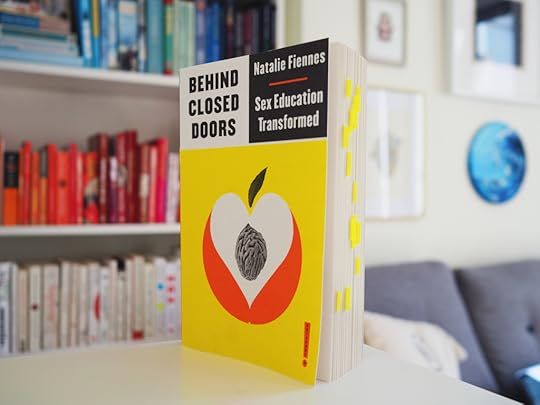

6. The fact that the "Resources" part mentioned in the end of the book only referred to various organisations on topics such as Mental Health Support, Sex and Gender or Consent and Sexual Violence instead of the quoted resources, was perplexing to say the least. This meant that an interested reader, wanting to dive deeper into the subject matter would be forced to go through the footnotes on the individual pages, sorting through the mentioned websites & books, in order to find reading suggestions. All this unnecessary work instead of having a simple list in the end of the book to refer to.

All the numerous points that have been mentioned above are simply a catastrophe to me as a reader. Never in my life have I come across a book riddled with so many mistakes & inexactitudes. The success of a well formatted book equals in drawing complete attention to the content, which wasn't the case for "Behind Closed Doors". Here, the formatting was so devastating, that it drew way too much attention to itself, instead of staying invisible & letting the text speak.

To still include some positive parts, a good introduction was given on the topic of what being a transgender means in our society & the difficulties linked to it. Even though I'm familiar with the subject matter myself, there were still moments that made me reflect on my existing knowledge. The same goes for the mentioned suggestion of the legalisation of sex work, which helped me think further towards the topic of the legalisation of drugs & to question my opinions.

Two last little points that were not related to the fault of the author but the publishing company:

- The name of the website of the publishing company printed on the back of the book outspokenbooks.com is not correct. It has been changed into plutobooks.com. Thinking that it's a new publishing company, I was willing to give them the newbie discount, but then I actually saw on their website that they have been around since 1969! "Pluto Press is a radical political publishing house. Founded in 1969, we are one of Britain’s oldest radical publishers". They should really know better than publishing inexact information on the covers of their books...

- The same goes for the name of their Instagram page. Mentioned as "@outspoken.books" on the cover of the book, it has in the meantime been changed into @plutopress.

What I read out from the author's Instagram page, was that she put in about a year's work & hundreds of interviews with young people into this book, which unfortunately, wasn't noticeable enough (or was made less noticeable due to insufficient editing). I wish she would have rather mentioned that in the introduction, the entire work that was involved in roder to create this content, rather than only using the history of sexuality to start off the book.

I would have liked to have given the book at least the rating of 3/5 ★ due to the relevance of the mentioned topics but reading through something that feels more like a 2nd or a 3rd draft, rather than the final product, is simply inexcusable. With "Behind Closed Doors" I've been taught the lesson to stay away from books published by Pluto Press in the future. I really hope that another edition of this book will be printed at some point, with all the mentioned points corrected. In the meantime, I would suggest you the book "Closer" by Sarah Barmak. It speaks about similar topics as in "Behind Closed Doors", while focusing more on the female side of sexuality. It was one of my favourite books that I read in 2019 (with a & you will get to enjoy an excellent quality of writing.

Profile Image for n.
74 reviews106 followers
May 31, 2020
nope, this book doesn’t revolve around the classic sex education, but rather talks about the histories and politics behind it: biological sexual difference & its impact (hormones in sports), gender identity and its single-gender spaces problem, the problem of masculinity in a patriarchal, misogynistic society, body image and beauty standards, sexual consent and rape culture, the history of contraceptives, the concept of virginity and purity, sexual violence, sexuality, pornography and how it affects us, the reality of sex work and its law (does it protect the sex workers?), and dating in the digital age.

this is most certainly NOT a basic sex education. this book helps to map the current problems to restructure the design of radical sex education: that you must understand the problem, its context, and its implications to transform it. as like Fiennes stated in the book, “Oppression and resistance have formed the way we come to understand the sexuality of others and ourselves.” this aims to create a more developed, nuanced and critical understanding of sex.

in the end, sex education meant to be used to empower, not to degrade.
Profile Image for Inez Gallagher.
110 reviews1 follower
September 11, 2022
Had high hopes for this! Intro made me think we were in for something good but I was… incorrect and underwhelmed. Rather than being about sex ed, this was more of an intro to sex/sexuality? No real linking back to the ed ever.

Examples were illustrate, but aside from the personal testimonies and interviews (w no discussion of methodology!!) everything was so basic and generic! Where was the actual research???

Biggest flaw of this was in the editing - found typos, incorrect/inconsistent footnotes, repetitions..

Shame bc should have been good! We! Move!
Profile Image for Jessica Macdonald .
203 reviews4 followers
March 13, 2024
I feel like I’m in the minority here looking at the reviews but I did really enjoy this book (enough to read it in pretty much one sitting)!

Yes, it was a bit missold in the sense going into it I thought it was going to be more of a discussion on how we can revolutionise our sex education system, rather than more of a journey through key sex education talking points, but once I got over that I thought it was well written, had really interesting points and delivered what it set out to do.

I think at some point, regardless of what your ‘interest’ is, you begin to see the same information in each book about that topic that you read but it was nice to see some discussion I’d not seen before about the how the genesis of the birth control pill lies in eugenics and some really shocking statistics on police intervention on sex work.

Overall, a fascinating read for anybody interested in sex or sex education, and as the book concludes, we should never stop learning!
Profile Image for ele.
89 reviews8 followers
August 21, 2021
forse più un 2.5

piuttosto didascalico e, talvolta, ridondante; utilissimo per avere una visione generale sui temi che riguardano l'educazione sessuale (e sentimentale?) e potrebbe essere perfetto come libro di testo per delle lezioni di educazione sessuale, ma al tempo stesso la sua generalità sfocia anche nella superficialità e penso che si sarebbe potuta permettere di approfondire alcuni argomenti

(comunque una lettura molto utile)
Profile Image for Wanda Stuardo.
38 reviews2 followers
March 13, 2022
me gustó bastante este libro, es un buen acercamiento hacia una mirada crítica de la educación sexual como la conocemos. aborda varios temas como la masculinidad, la iamgen corporal, derechos sexuales y reproductivos, trabajo sexual, consentimiento, entre muchas otras cosas. me gustó harto la contextualizacion historica de cada tema. lo único es que me hubiese gustado mayor profundización y extensión en cada uno de los temas
Profile Image for Ilja.
102 reviews19 followers
August 14, 2020
It was good, just pretty basic with a lot of information I knew already, so that lowered my enjoyment of it. I would recommend it when you’re new to the subject though.
Profile Image for gugu gaga.
83 reviews1 follower
August 4, 2024
Berdasarkan Penelitian dalam buku ini, sebagian besar anak muda di seluruh dunia mungkin mendapatkan pendidikan seks di sekolah, namun sekolah bukanlah tempat mereka belajar tentang seks. Beberapa dari mereka mungkin telah diajarkan oleh para pemimpin agama atau anggota keluarga, namun sebagian besar dibiarkan mencari dengan cara sendiri; belajar tanpa sengaja atau berselancar di internet. Oleh karena itu penulis mempertanyakan alasan kenapa seks begitu sulit untuk diajarkan? Hal ini berkaitan erat dengan seks yang dianggap sangat pribadi, bisa dibilang merupakan bentuk keintiman tertinggi, namun seks juga terhubung dengan jaringan rumit diluar tubuh biologis. Dalam buku ini, Natalie Fiennes bertutur melalui sejarah, percobaan, politik dan budaya mempengaruhi seks edukasi dari generasi ke generasi yang bisa diterima oleh kaum mudah.

Pendidikan seks formal yang kita kenal sekarang belum terbentuk sejak lama, namun pendidikan seks selalu ada seperti disampaikan antar generasi dari mulut ke mulut melalui dongeng, mitos dan cerita seperti yang tercatat 400 SM dalam Kamasutra. Natalie mengungkapkan fakta sejarah bagaimana seks edukasi ini awalnya terbentuk melalui kolonialisme eropa, ekspansi kolonial yang bertujuan membangun kekayaan dan kerajaan namun juga mengubah pola pikir. Pada tahun 1767 melalui ajaran gereja, gagasan ketat tentang seks dan pernikahan, gereja memperkenalkan pendidikan seks global pertama dalam sejarah manusia. Tidak hanya sampai disitu, pada tahun 1915 saat perang dunia 1 yang merenggut 16 juta tentara di Inggris, membuka pintu ledakan penyakit menular sexual atau penyakit kelamin. Hal ini terjadi karena seks bebas yang dijajakan oleh perempuan-perempuan untuk para tentara sebagai sumber nafkah dikala Inggris dilanda oleh kemiskinan. Alhasil, pada tahun 1916, pemerintah Inggris melarang pekerja seks mendekati para tentara berseragam dan menjadi awal bagi inggris menetapkan edukasi seks pertama secara formal. Saat edukasi seks mendunia, tidak semua negara menyetujui edukasi seks ditetapkan karena bisa menimbulkan kontroversial dan ambiguitas. Seks dianggap jorok! Dan faktanya, seks tidak melulu soal kelamin.

Pada bab-bab awal, Natalie Fiennes menjelaskan secara luas untuk membantah asumsi publik bahwasanya seks bukan semata-mata soal kelamin. Secara biologis, pandangan umum jenis kelamin hanyalah dua, yaitu laki-laki dan perempuan. Namun ada satu hal yang sering dikucilkan yaitu munculnya jenis kelamin Intersex yang tidak condong kedalam dua jenis kelamin sebelumnya. Jenis kelamin ini memunculkan kontroversi sepanjang abad ini, seperti kasus Caster Semenya seorang atlet pelari tercepat di dunia pada tahun 2009 yang dicemooh karena memiliki hormon pria yang fisiknya bertubuh wanita. Mencuatnya kasus ini memunculkan perdebatan publik sekaligus cerminan kegagalan pemerintah dalam mengedukasi masyarakat dalam mengenali seks yang rumit. Tak berakhir disitu, Fiennes menyampaikan bahwa seks juga mempengaruhi sisi politik seperti perdebatan Maskulinitas dan feminitas. Pada tahun 2016 saat pemilu panas antara Donald Trump dengan Hillary Clinton, kaum maskulinitas meningkatkan pemilihan Trump setelah kontroversial wawancara Trump merendahkan kaum perempuan sebagai alat seksualitas.

Seks juga mempengaruhi kebebasan dalam berpendapat, seperti hak bagi kaum trans yang sering dikucilkan publik. Fiennes memandang hal ini melalui dua lensa. Kaum Trans harus mengikuti kodrat dalam menggunakan sarana publik sebelum pemerintah menyediakan fasilitas yang layak bagi mereka. Pernyataan ini di tuliskan karena menilik kasus Travis Alabanza yang menggunakan kamar ganti perempuan padahal dirinya berjenis kelamin laki-laki. Dalam sisi lensa lainnya, Fiennes melihat kasus trans merupakan bentuk kegagalan pemerintah dalam penegakan hukum yang layak bagi mereka. Semisal menggali isu ini hingga akar, terdata bahwa 80% kaum trans merupakan korban diskriminasi dan kekerasan.

Untuk memahami isu seks, masyarakat perlu mengetahui bahwa seks merupakan bentuk lingkungan kita. Baik secara politik, budaya dan sejarah seks membentuk sistem kemasyarakatan yang kompleks. Salah satu satu contohnya yaitu penggunaan KB di indonesia yang mengatur jumlah anak secara politik.

Pendidikan seks seperti yang diajarkan saat ini sudah ketinggalan zaman dan siap untuk diubah. Dalam buku ini penulis mengeksplorasi pendekatan-pendekatan lain dan mencari cara baru yang inklusif bagi pemuda untuk belajar tentang seks dan gender. Ada lebih banyak hal dalam seks daripada menaruh kondom di atas pisang. Halaman - halaman penuh dengan politik, sejarah dan studi kasus kenapa kita bisa berada ditempat ini. Buku ini ditujukan kepada orang yang dianggap melampaui usia yang memerlukan pendidikan seks.
Profile Image for Aprianti.
11 reviews
June 30, 2021
Floris and Blancheflour (1200)

If any woman approaches [the fountain] who has slept with a man. And she kneels on the ground. To wash her hands,

The water will scream as thought it were mad,
And turn as red as blood.
Whichever maiden causes the water to act thus
Shall soon be put to death

And those that are clean maidens [virgins],
They may wash themselves in the stream.
The water will run silent and clear
It will not cause them any harm

Itu cerita yang disadur dari buku ini ketika King of Babylon “memilih” istri dari banyak pilihan gadis. Hanya yang “perawan” lah yang ia pilih, yang tidak, soon be put to death. Manusia bervagina yang dianggap “purity” “good entity” apabila selaput dara “utuh”, tidak banyak protes, dan memiliki laku hidup berdasarkan male gaze.

Obrol sex education via buku Behind Closed Doors #NatalieFiennes, yang adalah jurnalis Guardian dan the Independent, ya gitu-gitu aja sih sebenernya. Not surprise dalam arti tidak apologis, ya. Tapi reflektif. Sejak zaman [pengetahuan] sebelum Plato dkk., era Victorians yang normalisasi scientia sexualis dan meliyankan ars erotica, hingga saat ini era 5.0 (?) yang relasional dengan smartphone ft. smart-people; non manusia-berpenis cis-gender seringkali terancam karena produk wacana yang falusentrik. Baik oleh kebijakan struktural, juga karena “tongkrongan” yang ga sehat dan inklusif.

Behind Closed Door kalau dibahasakan di kita tuh artinya “obrolan tongkrongan” yang seksis, misoginis, merendahkan, dsb. terkait seks, perilaku seks, anything in between, baik terhadap manusia cis-gender, sampai yang non-binary dan panseksual yang dianggap “patut” dijadikan bahan bercandaan-merendahkan. Ada aja obrolannya dan hal tersebut dianggap “yaudah lah obrolan tongkrongan doang kan di keseharian ga gitu”

Sex is political! Ia dikungkung sekaligus terjerembab atas power/knowledge. Seks bahkan seringkali tidak membicarakan seks, tapi power. FGM, rape-war yang digunakan suata negara untuk menaklukkan daerah jajahannya, keinginan mendominasi melalui [percobaan] perkosaan, BANYAK.

Baca buku ini seperti baca buku karya-karya Eve Ensler. Perlu dibaca untuk mengingatkan, tapi tidak cukup untuk memahami sex education secara komprehensif dan tidak dari perspektif elitis. Contoh-contoh seperti Erika Lust dalam “pornografi yang progresif” juga tidak cukup dipahami monolitik dari perspektif [feminisme] liberal & libertarian. Dalam buku ini, locus utama penelitiannya memang UK dan US saja, tapi pola bahasannya tetap bisa dikait-gunakan untuk memahami bahasan sex education di Indonesia.


Profile Image for Raegel.
4 reviews1 follower
February 20, 2023
Similar to any of the reviews I’ve seen on this book, my main issue with it is it’s misleading title and blurb. Leading potential readers to think that this book will encapsulate how the facets of sex education have evolved over time, it instead touches on the different topics included under (relationship and) sex education.

Despite this disappointment, Natalie Fiennes does a great job at covering such complex topics like consent, virginity, modern dating, and the Stonewall riots in a manner that is engaging and nicely packaged. Although the chapters aren’t particularly groundbreaking or deeply analytical, I think it represents a good example of the basics of seeing sex education through the lens of intersectionality. Although the author mentions in the conclusion that this book is actually tailored for those who are a bit older than those who are thought of needing sex education, I beg to differ! I think we as a society underestimate the ability of young people to grasp more complex concepts of love, relationships, and sexuality in the modern age. I’d definitely recommend this to anyone who wants to dip their toes into the vast literature that is love, gender, and sexuality.

PS: I especially enjoyed the introduction of the book, where the author emphasises how “sex education programmes tend to reflect the policies of the times” - because they’re absolutely right! Learning about how World War One was a catalyst for formalising sex education was also very eye opening!


Profile Image for Nisa.
327 reviews18 followers
April 30, 2021
Berbeda sama dua buku Pluto Press (Outspoken) yang udah gue baca lebih dulu, buku ini yang paling lama selesainya.

Ada beberapa hal yang ga sejalan sama apa yang gue anut soal isi buku ini. Emang agaknya susah kalo udah ngebahas gender dan LGBTQ+ ini karena di hidup gue, gender ya cuma ada dua. Apapun keputusan mereka, gue respect tentu saja. Tapi gue masih ga nangkep gitu sama konsepnya.

Awalnya gue beli buku ini karena tertarik soal tema Sex Education yang masih tabu untuk dibicarakan. Ternyata, isi buku ini lebih daripada itu. Kita diajak keliling-keliling dulu soal masalah gender, sexual abuse, consent, porn, sex workers, relationship... macem-macem deh, yang nantinya disimpulkan menjadi si sex education ini.

Dibilang menarik, ya... menarik. Tapi jujur gue ga terlalu nangkep banyak ilmu atau informasi baru dari buku ini.
Profile Image for Sofia Petitti.
2 reviews
February 1, 2021
Overall the book had interesting concepts and touched on a variety of areas to do with sex. I was disappointed to find multiple typing errors in the book, this effects the credibility of the text. Also, the writing style in some areas was very much quoting lots of other sources and always saying "in the words of" this gets quite annoying to read when it's riddled throughout the book.
Profile Image for roxy punk.
58 reviews
August 14, 2022
Informative book. At times the author has claims that are not true in order to back up facts. For example claiming that just like there is no reaserch showing the effect of PC games on the mind, there is no reaserch showing the effects of porn on the brain. The first claim is false. So I would recommend checking claims and reaserch. But overall I recommend it.
Profile Image for mafaldauvetta.
156 reviews4 followers
April 24, 2021
Un saggio che affronta tutte le tematiche più attuali legate a sesso e genere, indagando anche la storia alle spalle. Interessante. È un testo per chi vuole cominciare a approcciarsi a questi temi, richiede sicuramente degli approfondimenti.
Profile Image for L.
102 reviews
December 4, 2022
this needed so much more editing imo. it was all over the place and there were unfortunate grammar mistakes. the book was filled with constant assertions and hypotheses that went nowhere with no point to what was being mused upon. i don’t feel like i learnt much from this at all, unfortunately.
Profile Image for Lucia Plavakova.
32 reviews38 followers
August 12, 2023
Všetky kľúčové témy SexEd (súhlas, antikoncepcia, panenstvo/panictvo, sexualita, rodová identita, sexbiznis, sexuálne násilie, pornografia, vzťahy a randenie) podložené dátami a historickým kontextom. Vynikajúce.
4 reviews
November 30, 2025
ends with this book is aimed at people who are considered beyond the age where sex ed is needed - i disagree. good book for year 9/10s. felt a bit student activism peak NUS. good starter book don’t know why i read it
Profile Image for Millie Austin.
22 reviews
February 4, 2025
was fine but so much more that could’ve been covered n some bits fell flat ! overall v interesting but fine rather than good
335 reviews1 follower
June 7, 2025
I do think sex education needs to change and improve. Consent needs to be taught along side with stds. I didn’t learn anything new but it was still informative.
Profile Image for AA_Logan.
392 reviews21 followers
August 26, 2024
I’m afraid the book doesn’t quite match my expectations. It seems I’m not the only reader who was expecting a more practical exploration of the subject than the potted history of and whilsestop tour round human sexuality that we got. As others have noted, it’s academic rigour is wanting (seemingly granting the use of rape as a weapon of war equivalence with catcalling on college campuses at one point), it’s an engaging read that I found very little to disagree with, but one that would be better served by a more accurate title- I doubt I’d have read it if it was clearer what its content was.
Profile Image for Qonita .
306 reviews100 followers
January 10, 2022
tentang sejarah dan keberjalanan sex education. i remembered this to be quite important (and gave a 4!) but tbh udah lupa-lupa inget isinya apa, jadi mungkin penulisannya kurang nendang (review ditulis tgl 10/1/22).
Displaying 1 - 30 of 31 reviews

Can't find what you're looking for?

Get help and learn more about the design.