

What do you think?

Narrative of My Captivity Among the Sioux Indians
“I was a member of a small company of emigrants, who were attacked by an overwhelming force of hostile Sioux, which resulted in the death of a large proportion of the party, in my own capture, and a horrible captivity of five months' duration.”
In May, 1864, Fanny Kelly and her family joined an emigrant train heading westwards.
Many of the men and women who had set out from Kansas would never reach their destination.
Fanny Kelly’s Narrative of My Captivity Among the Sioux Indians provides personal insight into the dangers that faced migrants as they made lengthy journeys across the great wilderness of America.
The 19th century frequently saw tension and violence erupt between eastern pioneers and the Native Americans that they were displacing. Kelly’s account is an inside look at what at what captivity among the Native Americans of the Great Plains was like, by someone who experienced it at first hand.
Kelly begins her book by detailing how she and her new husband decided that they wished to begin a new life in the west and planned for the journey, before discussing the details of the attack and her capture.
The most interesting aspect of the book is the observations that Kelly made whilst living amongst the Sioux in captivity. Although obviously biased, it remains a brilliant insight into the way of life of this famous Great Plains tribe.
After Kelly became free she recorded all the events that she could remember of those traumatic months in her book Narrative of My Captivity Among the Sioux Indians which was published in 1871. Kelly passed away in 1904.
In May, 1864, Fanny Kelly and her family joined an emigrant train heading westwards.
Many of the men and women who had set out from Kansas would never reach their destination.
Fanny Kelly’s Narrative of My Captivity Among the Sioux Indians provides personal insight into the dangers that faced migrants as they made lengthy journeys across the great wilderness of America.
The 19th century frequently saw tension and violence erupt between eastern pioneers and the Native Americans that they were displacing. Kelly’s account is an inside look at what at what captivity among the Native Americans of the Great Plains was like, by someone who experienced it at first hand.
Kelly begins her book by detailing how she and her new husband decided that they wished to begin a new life in the west and planned for the journey, before discussing the details of the attack and her capture.
The most interesting aspect of the book is the observations that Kelly made whilst living amongst the Sioux in captivity. Although obviously biased, it remains a brilliant insight into the way of life of this famous Great Plains tribe.
After Kelly became free she recorded all the events that she could remember of those traumatic months in her book Narrative of My Captivity Among the Sioux Indians which was published in 1871. Kelly passed away in 1904.
170 pages, Kindle Edition
First published August 25, 1871
Ratings & Reviews
Friends & Following
Create a free account to discover what your friends think of this book!
Community Reviews
Displaying 1 - 30 of 155 reviews

April 29, 2022
This book was originally published in 1873, and what I think I loved most about it was knowing the history and depictions of the time were accurate because it was written by the person who had actually lived through the ordeal.
There are a lot of other captivity stories out there, but usually they're written by another person from historical notes, and the use of letters and diaries to tell that person's story. An example would be The Woman With the Blue Tattoo, by Margot Mifflin. That was another book I really enjoyed, but this one, IMO, because it is written by Fanny Kelly herself, is a standout.
Of course, Fanny Kelly was also a person of her time. This means that the writing, which was exceptional throughout, was also florid and maudlin at times. Even so, she does not spare the reader when she speaks of the atrocities that took place.
All in all, quite the intriguing story. It made me look Fanny Kelly up so I could read a bit more about her.
There are a lot of other captivity stories out there, but usually they're written by another person from historical notes, and the use of letters and diaries to tell that person's story. An example would be The Woman With the Blue Tattoo, by Margot Mifflin. That was another book I really enjoyed, but this one, IMO, because it is written by Fanny Kelly herself, is a standout.
Of course, Fanny Kelly was also a person of her time. This means that the writing, which was exceptional throughout, was also florid and maudlin at times. Even so, she does not spare the reader when she speaks of the atrocities that took place.
All in all, quite the intriguing story. It made me look Fanny Kelly up so I could read a bit more about her.

August 19, 2017
Definitely not for the squeamish!

February 10, 2022
Remarkable details on the day-to-day life of the Sioux, but Mrs. Kelly sure doesn't skimp on the brutality, torture, and murder. I barely made it through her first account, skipped past all the rest.
January 29, 2014
This book is a most fascinating treatise (also a very saddening one) on an Indian attack of a small pioneer caravan entering Wyoming territory and then one woman's experience's with the Indians throughout that territory until her rescue at a US Calvary fort in current day SW South Dakota. Sorry that was so long winded, but that happens after reading something like this. The writing is beautiful and deliberate, but very correct and extremely florid. It was, however, fascinating, to read all the descriptions and be able to see, in my minds eye, what she was seeing. I live in Wyoming and the last time I made a trip to Casper I made sure I paid attention to the places in that area where the original attack occurred. The attack and the Fort her husband managed to make it to were in the areas of Glenrock and Douglas. There are still signs for the remains of the fort. That area is very hilly with lots of creeks with trees along them. An area just ripe for the picking. Later she says she's with the Sioux along Powder River. We cross Powder River at the town of Powder River (very small) to get to Casper and that area is very open with few trees. She also describes being in a battle up north. Up there, along the Big Horns, there are vast plains where the Indians liked to camp (as shown by the Battle of the Little Big Horn) because it gave them water, space, food, and protection. The base camp for the tribe she was with was in southern Montana. Eventually the US Calvary put enough pressure on the Sioux tribes they decided to pretend to give her back at a fort in South Dakota. She was able to alert the Calvary so they were able to rescue her. All the hows and whys? You need to read her book. It's too good to pass up for 99 cents.

September 11, 2014
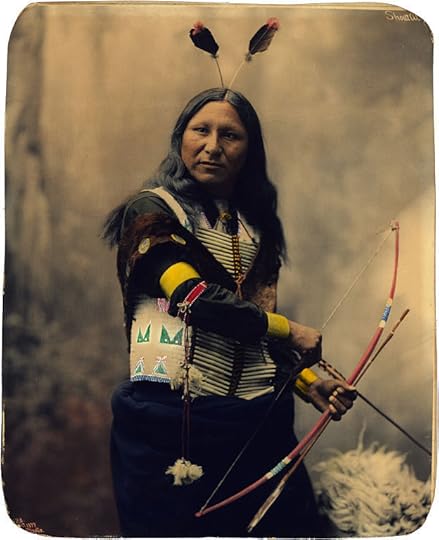
Un indien Oglagla en 1899
Ce livre est un témoignage qui nous transporte dans l'Ouest américain suivre les terribles aventures Fanny Kelly, une jeune fille de dix-neuf ans. Le 12 juillet 1864 dans le Wyoming, le convoi avec lequel elle se rend au Nord-Est des États-Unis tombe sur une bande de sauvages menaçants, les Sioux Oglagla. Ils plusieurs dizaines à entourer le petit groupe, arrogants, provocateurs, enhardis par le nombre. Ils commencent à se servir dans le chariot sous l’œil impuissant des propriétaires; puis, après s'être bien amusé à effrayer leurs proies, s'emploient à massacrer tout le monde. Seul son mari parvient à s'enfuir: elle est capturée avec sa toute petite fille, et sont toutes deux réduites en esclavage.
Au milieu des Indiens, la vie d'esclave est loin d'être une sinécure, mais elle trouve au fond d'elle même les ressources pour surmonter cette épreuve et ne pas sombrer dans le désespoir. Les femmes sont traitées comme des bêtes de somme, tandis que les hommes sont habitués à la guerre, à la violence, et ont pour coutume de s'habituer à mépriser la douleur depuis l'âge le plus tendre. Elle adoucit quelque peu son sort en prodiguant à ses ravisseurs les dehors d'une bonne volonté et d'un empressement constant, évidemment simulé. Cela lui épargne bien des coups et des cris, mais non pas de terribles frayeurs; car ces rudes guerriers passent en un clin d'œil de l'enjouement le plus puéril et détendu à la cruauté furieuse la plus extrême, et ce pour les motifs les plus légers. Elle ne manque pas non plus de les écouter et donne un témoignage de premier ordre de leur mentalité et de leurs état d'esprit par rapport à l'arrivée toujours croissante de nouveaux arrivants sur des terres où la solitude commence à se raréfier.
Je ne dévoile rien de plus des nombreuses péripéties aventureuses passionnantes qu'elle relate. Le courage et la ténacité de cette jeune fille est épatant. C'était une lecture saisissante, captivante, et édifiante en tout point.

July 27, 2013
One of the WORST books I have ever read! This was supposedly a true story - bah! If this is true she should have become an interpreter - she supposedly knew Exactly what the chief was saying to her - in HIS language on her second day of captivity - wow what skill!! Then she was supposedly held for over five months - yet there are NO details of anything that happened to her. All she does is describe the scenery and lament about being "tortured" - yet there are only two or three specific incidences that document any of her time in captivity. For someone with such great language skills she sure had a lousy memory! This seems like it was nothing more than a bunch of lies to create more hatred toward the Indians at that time and for her to get money from the government. I can't believe this actually sold "thousands" of copies - really?!

September 17, 2017
I found this book a quick read. Honest and to the point, the author smashes the ' honorable Indian' stereotype and lays the people bare for what they were, human, scared and surviving.

Read
September 14, 2016I am working on my senior thesis and my topic is Native American and white relations in the 19th century in the western United States. This was an interesting captivity narrative to read. You really have to take everything Fanny says with a grain of salt. She is very dramatic in her descriptions of the Native Americans and I doubt many things that she says. However, this book will help me in my research because it shows how the image that white people created of Native Americans and how this image negatively portrayed a group of people.

July 13, 2014
Whenever I read a true account of heading westward by covered wagon, I'm always struck by how closely it resembles Oregon Trail on the Apple II. Good times. Mrs. Fanny Kelly and her party were about to ford the Platte River with dysentery when they were set upon by a band of Oglala Sioux. Some killing later, she, her daughter, and another woman and child stare wretchedly as all their worldly possessions are pillaged or burned, and then they're bundled up on the backs of two horses and hurried away. (Her husband made it back to a fort and raised the alarm.) During the first night, Fanny contrives to drop Mary from her saddle so she can wait until the Indians have passed and run to the road and fort. The next ten days are on horseback as the Indians take her back to their village. There are harrowing incidents, being a captive narrative. She is made to carry a six-foot long ceremonial pipe in her arms, gets fed up and drops it, and is nearly punished with burning to death.
Fanny Kelly was taken in 1864. For those who don't remember recent sesquicentennials, the Dakota rose up in Southern Minnesota, were interned on Pike Island at Fort Snelling (currently under water, go check it out) and banished from our state. The Oglala Lakota lived mainly west of Minnesota already, but they were full aware of what happened and absorbed some of the displaced Dakota people.
By the time they reach the Lakota camp, Mrs. Kelly is happy to see other women, race notwithstanding. Mrs. Kelly is put to work as a servant in the household of a chief named Ottawa, but the US Army is in pursuit and the entire thousand-plus person encampment flees days and miles into the Badlands, where, of course, there is no food. Fanny chides the Indians for dumping their supplies while fleeing, because of the subsequent starving weeks; she was throwing things out of her covered wagon as fast as possible to gain speed while fleeing the Indians three weeks ago, but that's different. Her racist double standards are so earnest. When every Indian in a village, man, woman, and child, is slaughtered, it's punishment; when every white person is slaughtered, it's an atrocity. When the Indians use deception, it's because they're sneaky, amoral devils; when she deceives the Indians, she's clever. The Lakota women are modest like Victorians and that's a confusing aberration. Why would they be modest? They're savages.
Ottawa was kind to Mrs. Kelly, and his wives were all decent to her, save the head wife, who was kind of jerk. Ottawa gave her a little girl companion to compensate for her dead daughter Mary. The Oglala Lakota evidently maintained a policy of killing hostages. Highlights of her captivity include Ottawa's kind sisters, writing a coded letter to General Sully, and running into a few white people around camp. One was a girl kidnapped from New Ulm during the war, utterly miserable, another was a woman who had been taken as a girl as she was the sole survivor of a frontier family succumbed to smallpox. Ottawa told them that white women often had tea together, so they had an unusual tea party. Mrs. Kelly also noted many fair-skinned half-white children from fort marriages, usually ended when the soldier's wife turned up from Back East. Before winter, Mrs. Kelly was ransomed back to the closest fort and her husband. One of the last chapters is a general index of Indian atrocities in the West, because nothing shocking enough happened to Mrs. Kelly herself. Narrative of My Captivity Among the Sioux Indians is readable and somewhat interesting if you accept that it's racist as hell. It's so racist. If you can stomach "savage" and "Indian" used interchangeably, it's not great, but of historical value.
http://surfeitofbooks.blogspot.com/20...
Fanny Kelly was taken in 1864. For those who don't remember recent sesquicentennials, the Dakota rose up in Southern Minnesota, were interned on Pike Island at Fort Snelling (currently under water, go check it out) and banished from our state. The Oglala Lakota lived mainly west of Minnesota already, but they were full aware of what happened and absorbed some of the displaced Dakota people.
By the time they reach the Lakota camp, Mrs. Kelly is happy to see other women, race notwithstanding. Mrs. Kelly is put to work as a servant in the household of a chief named Ottawa, but the US Army is in pursuit and the entire thousand-plus person encampment flees days and miles into the Badlands, where, of course, there is no food. Fanny chides the Indians for dumping their supplies while fleeing, because of the subsequent starving weeks; she was throwing things out of her covered wagon as fast as possible to gain speed while fleeing the Indians three weeks ago, but that's different. Her racist double standards are so earnest. When every Indian in a village, man, woman, and child, is slaughtered, it's punishment; when every white person is slaughtered, it's an atrocity. When the Indians use deception, it's because they're sneaky, amoral devils; when she deceives the Indians, she's clever. The Lakota women are modest like Victorians and that's a confusing aberration. Why would they be modest? They're savages.
Ottawa was kind to Mrs. Kelly, and his wives were all decent to her, save the head wife, who was kind of jerk. Ottawa gave her a little girl companion to compensate for her dead daughter Mary. The Oglala Lakota evidently maintained a policy of killing hostages. Highlights of her captivity include Ottawa's kind sisters, writing a coded letter to General Sully, and running into a few white people around camp. One was a girl kidnapped from New Ulm during the war, utterly miserable, another was a woman who had been taken as a girl as she was the sole survivor of a frontier family succumbed to smallpox. Ottawa told them that white women often had tea together, so they had an unusual tea party. Mrs. Kelly also noted many fair-skinned half-white children from fort marriages, usually ended when the soldier's wife turned up from Back East. Before winter, Mrs. Kelly was ransomed back to the closest fort and her husband. One of the last chapters is a general index of Indian atrocities in the West, because nothing shocking enough happened to Mrs. Kelly herself. Narrative of My Captivity Among the Sioux Indians is readable and somewhat interesting if you accept that it's racist as hell. It's so racist. If you can stomach "savage" and "Indian" used interchangeably, it's not great, but of historical value.
http://surfeitofbooks.blogspot.com/20...

December 19, 2020
_Narrative_ is a suspenseful recollection of Fanny Kelly's capture by savage Indians on America's western plains. She tells her true story without hidden objective or apology. Her account not only gives the reader a glimpse into the sufferings of a young woman held captive by the Sioux and Blackfeet, but also reveals strategies and motives of American settlers, Indian fighters, and the U.S. government and military. This book lacks many gory details of her capture and captivity, but that is forgivable considering the trials Kelly had to relive to retell this account.
June 19, 2012
True adventure of an early sojourner on the the new Oregon trail that led through the great plains, and over some of the most forbidding mountain ranges in the world, all while endevouring to deal with the then free and untamed Native American Indian tribes at the height of their strength.
Pretty well presentd for being an account born amongst the purple prose common of the 1800's, the author and face of the book, Fanny Kelley, presents her remarkable tale in uncvontrived humility with astute insight.
Kelly was an indomitable and brave member of the dauntless spirit of Americana that we all hope has been passed from such as her on to us.
A role model for all, particularly women and girls, pioneers such as Kelly's words and acts of and those of her peers of are often bypassed today, to the loss of all.
A trip worth taking.
JFB
Pretty well presentd for being an account born amongst the purple prose common of the 1800's, the author and face of the book, Fanny Kelley, presents her remarkable tale in uncvontrived humility with astute insight.
Kelly was an indomitable and brave member of the dauntless spirit of Americana that we all hope has been passed from such as her on to us.
A role model for all, particularly women and girls, pioneers such as Kelly's words and acts of and those of her peers of are often bypassed today, to the loss of all.
A trip worth taking.
JFB

December 13, 2020
The number one thing I look for in a book is that it holds my attention and makes me want to get back to it as soon as possible. This narrative certainly did that in an accurate and authentic portrayal of settlers and Indians. No romantic Hollywood version here.
One thing I liked about Fanny Kelly particularly was that she gave credit where credit was due. She suffered terribly as a prisoner of the Sioux, but she also spoke kindly about them when it was warranted and equally negatively about the white man and his broken promises. It was an authentically fascinating insight into the times. Not to mention that her descriptions of the unplundered lush land and abundant animals and game made you think about how things were before we humans decided to cover the earth with pavement.
One thing I liked about Fanny Kelly particularly was that she gave credit where credit was due. She suffered terribly as a prisoner of the Sioux, but she also spoke kindly about them when it was warranted and equally negatively about the white man and his broken promises. It was an authentically fascinating insight into the times. Not to mention that her descriptions of the unplundered lush land and abundant animals and game made you think about how things were before we humans decided to cover the earth with pavement.

March 9, 2008
Interesting book in that it was written over 100 years ago and is one of the few "firsthand accounts" of captivity among a Native American tribe in the 19th century. Looking back at her words now, I am reluctant to believe all Fanny Kelly says, especially when given some of the circumstance surrounding the book at the time of its writing. All that said, for anyone interested in this oft-overlooked period of American History, it's worth the read.

June 15, 2019
“After a bondage lasting more than five months, during which I had endured every torture, I once more stood free among people of my own race,” wrote the young bride Fanny Kelly in 1865. Despite the raging Civil War, settlers sought their fortunes out West with a diminished military presence. In a cycle of violence between government troops and Indian raiding parties, Kelly’s wagon train was caught in the middle and she was captured by the Oglala band of the Sioux. She and her captors faced austerities, cold weather and starvation. Kelly observed death, tortures and atrocities. She is cagey about what she herself underwent, though a vivid account of a thunderstorm is laced with the language of gang rape. I wish there were more descriptions of Oglala culture, instead of pronouncements like: “Instinct, more than reason, is the guide of the red man.” Ok, and yet some of Kelly’s observations are nuanced about their customs and sympathetic to their predicament, noting the savagery of whites.

December 14, 2016
Very intriguing true story written by a young pioneer mother whose family was slaughtered by the Sioux Indians as they traveled west. She and her daughter were taken captive, the daughter was lost, and Fanny herself suffered much at their hands. Through it all she marveled at the beauty of nature and the providence of God. She was saved by the cavalry after 5 months.
This entire review has been hidden because of spoilers.

September 14, 2020
Excellent!
This story is amazing and rings totally true, although politically incorrect with some of the language used in the narrative. The most interesting feature of this book is the way the Sioux Indians eventually develop both affection and respect for their unwilling captive. Fanny grudgingly begins to care for them too.
This story is amazing and rings totally true, although politically incorrect with some of the language used in the narrative. The most interesting feature of this book is the way the Sioux Indians eventually develop both affection and respect for their unwilling captive. Fanny grudgingly begins to care for them too.
January 25, 2022
This was a brutal factual account written by a woman named Fanny Kelly whose wagon train was overcome by Sioux in 1864 and she was taken captive. Her husband escaped but her adopted daughter was also taken. Fearing for her daughter’s future, she helped her to get away but she was never found. Fanny was eventually saved and reunited with her husband but this was no happily ever after story.
February 11, 2014
This is like reading a history book. Fanny Kelly tells her story, but you also get the feeling a lot she's does not tell. Due to the time some things were not talked about. Would recommend for anyone interested in how the West was settled

August 1, 2026
I picked this up for a reading challenge so had no expectations nor biases. It started off well with the author immediately taking us to the moment when her group of immigrants was attacked by the Sioux Indians, and then her subsequent life as their captive.
In the beginning, her angst & negative portrayal of the Sioux Indians feels justified, given her plight at their hands. She also gives us an interesting peek into the lives & culture of the natives, how they stand in comparison to the other native tribes, the dynamics between the natives & the whites. Her courage, resilience & intelligence as a captive is commendable.
I never knew the extent of cruelty of the Indians. They seemed to possess a strange mix of primitive beliefs & behaviour, as well as shrewdness, cunning & treachery one would expect from the whites. For someone who likes to learn about new cultures & people, these segments were interesting.
But later on, the author gets vindictive in her repeated negative representation of the whole situation: that only one party was evil while her side was the good side. I mean, lady! Your people crossed into a completely new continent, you intrude into someone else's land, and when they happen to defend themselves fiercely and you get caught up in this conflict, you portray yourself & your entire people as innocent victims! I couldn't help marvel at this amazing sense of entitlement that the whites had. Once upon a time, they're "uncivilized & uncouth" themselves, wallowing in the dark ages, yet how quickly they seemed to have forgotten their own history & spread out across the world, invading other people's lands, looking down upon them, calling them savages! Once upon a time, they're pagans themselves, until Christianity engulfed them, and now they started behaving like they're God's own people. The sheer hypocrisy, when they mercilessly massacred people & robbed their nations, they'd forget God; but behave holier than thou at other times.
The author's rantings continue for several chapters, towards the end, even after her rescue. In the final chapters, when she reveals her situation as a widow trying to survive, it becomes clearer that perhaps, this book wasn't an honest record of incidents but might be heavily biased for commercial success.
By the end, I had no compassion left for the writer despite her woes. The Sioux Indians might have been a cruel, scary race of people. But hey! You trespassed into their land, and they're fully justified to fight back in every way they could.
Overall, I wouldn't recommend this book for learning about culture or history.
PS: I applaud the author for her beautiful writing though. The language, especially when she writes about feelings, emotions, moments (basically anything where the natives aren't involved) is poetic.
In the beginning, her angst & negative portrayal of the Sioux Indians feels justified, given her plight at their hands. She also gives us an interesting peek into the lives & culture of the natives, how they stand in comparison to the other native tribes, the dynamics between the natives & the whites. Her courage, resilience & intelligence as a captive is commendable.
I never knew the extent of cruelty of the Indians. They seemed to possess a strange mix of primitive beliefs & behaviour, as well as shrewdness, cunning & treachery one would expect from the whites. For someone who likes to learn about new cultures & people, these segments were interesting.
But later on, the author gets vindictive in her repeated negative representation of the whole situation: that only one party was evil while her side was the good side. I mean, lady! Your people crossed into a completely new continent, you intrude into someone else's land, and when they happen to defend themselves fiercely and you get caught up in this conflict, you portray yourself & your entire people as innocent victims! I couldn't help marvel at this amazing sense of entitlement that the whites had. Once upon a time, they're "uncivilized & uncouth" themselves, wallowing in the dark ages, yet how quickly they seemed to have forgotten their own history & spread out across the world, invading other people's lands, looking down upon them, calling them savages! Once upon a time, they're pagans themselves, until Christianity engulfed them, and now they started behaving like they're God's own people. The sheer hypocrisy, when they mercilessly massacred people & robbed their nations, they'd forget God; but behave holier than thou at other times.
The author's rantings continue for several chapters, towards the end, even after her rescue. In the final chapters, when she reveals her situation as a widow trying to survive, it becomes clearer that perhaps, this book wasn't an honest record of incidents but might be heavily biased for commercial success.
By the end, I had no compassion left for the writer despite her woes. The Sioux Indians might have been a cruel, scary race of people. But hey! You trespassed into their land, and they're fully justified to fight back in every way they could.
Overall, I wouldn't recommend this book for learning about culture or history.
PS: I applaud the author for her beautiful writing though. The language, especially when she writes about feelings, emotions, moments (basically anything where the natives aren't involved) is poetic.

March 12, 2016
I was in the mood for a woman pioneer story and this one delivered. This is the autobiography of Fanny Kelly. She was traveling west from Kansas to Idaho when their wagon train was attacked by Sioux Indians. She and her adopted daughter were taken captive. This lady showed extreme courage and endurance that was amazing. Forced marches, hard work, threatened with death and starvation were what became of her life. Some of the scenes were ghastly. She describes what it felt like to see scalped heads when you were a white woman. She also describes the most beautiful prairie meadow and could not find the enjoyment because she had no freedom. Some of this story takes place at Fort Sully which used to be located about 20-30 miles from my home town. It was abandoned in the 1890's and is under water at the present time.
June 15, 2022
Interesting enough. More of a 3.5. A brutal experience, but also framed in a very pro-America way. It made me wonder about the editing process of the book at the time it was published. You hear the opinion of Native Americans suggesting white settlers invaded their land and stole their resources, but never ever is it implied that any of that is true or wrong. The most interesting aspects are of course the world of the indigenous people and their customs. I don't know what more I can ask for from a person who, like it or not, was in a perilous captive situation. I think I want to do further reading to learn more about the world of the American West before... ya know...we showed up.
August 21, 2021
Read this book with a huge grain of salt. Fanny Kelly wass not a writer. She was a woman held captive. She needed the money so she wrote the book. I felt I was slogging through the pages... You know she omitted some truths and exaggerated some of her experiences. Also, she hated the "savages" and she wanted her readers to know that they could not be trusted. So that is the point of view from which she wrote.

April 22, 2020
Amazing woman
She survived. Her personal strength along with her faith, she overcame her circumstances. She submitted to their will and tried to be obedient. She survived, never giving up. Her daughter was killed.
She survived. Her personal strength along with her faith, she overcame her circumstances. She submitted to their will and tried to be obedient. She survived, never giving up. Her daughter was killed.
March 12, 2025
I selected this book after it was mentioned in the ‘Smoke Jumper’. A difficult writing style for me and it left me with several unanswered questions. I wonder why some people were taken prisoner whilst others were killed? Why did the ‘white people’ decide that it would a good idea try and traverse a known hostile area in small groups? What was the indication that they were heading for better lives anyway? I had always assumed the majority of the settlers were missionaries but that did not appear to be true. Certainly an incredibly harsh life.

October 17, 2023
First-hand account from a woman who was enslaved for five months by Indians. My favorite aspect was the honest insight into Native American life in the Midwest of the mid 19th century. She both disparages and praises her captors and their related tribes. Histories that leave you with no clear narrative or assessment are always my favorite.

August 1, 2021
I happened upon this Librovox recording via YouTube, and found it a fascinating first-hand account. When I finished, I immediately started it over so that my husband could listen with me. It's quite an adventure!
Fanny Kelly was part of a small wagon train moving west in the 1860s, when a band of Indians ravaged them. Most of her people were killed, and she was separated from her husband. She lived among her captors for nearly 6 months, at which time she was ransomed and returned to her husband.
Because there were constant battles with the encroaching settlers, the Indians among whom Fanny lived were constantly on the move. No sooner would they set up camp and begin to establish a routine, when the alarm would be sounded and the women would be called upon to take down their tipis, load up horses and dogs, and travel on. It was wearying and Kelly suffered much deprivation and exposure to the elements.
Kelly was a religious woman, a Christian, and unabashedly called upon divine intervention. In many cases, there did seem to be miraculous deliverance. For example, in one instance they were preparing to burn her at the stake. She sought to make her peace with God, and meanwhile remembered the money she had secreted away in her dress. She pulled it out and made gifts to her captors. They were so delighted that they cancelled the execution.
The author gleaned interesting insights into the domestic lives of the Indians. Women were relegated to a life of hard work and subservience, and often several women shared the same man. There were petty squabbles and jealousies to contend with, making the hard work all the more miserable. I found Kelly to be an amazingly strong woman, in that she asserted diligent attention to the cultivation of cheerfulness. She sometimes sang while she worked, to the delight of her listeners. Her attitude no doubt contributed to her survival.
Some might take issue with Fanny Kelly's use of the word "savage," however some of the acts she witnessed could not be described any other way. Putting a pioneer woman's baby in the oven? [Shudder] However, I felt Kelly tried to be fair in also calling out acts of kindness and nobility.
There was a happy ending for her, and in the end she was treated with utmost respect by those who had kidnapped her. The final chapters are historical documents lending credence to her personal story.
A riveting memoir, full of cultural and historical interest.
Fanny Kelly was part of a small wagon train moving west in the 1860s, when a band of Indians ravaged them. Most of her people were killed, and she was separated from her husband. She lived among her captors for nearly 6 months, at which time she was ransomed and returned to her husband.
Because there were constant battles with the encroaching settlers, the Indians among whom Fanny lived were constantly on the move. No sooner would they set up camp and begin to establish a routine, when the alarm would be sounded and the women would be called upon to take down their tipis, load up horses and dogs, and travel on. It was wearying and Kelly suffered much deprivation and exposure to the elements.
Kelly was a religious woman, a Christian, and unabashedly called upon divine intervention. In many cases, there did seem to be miraculous deliverance. For example, in one instance they were preparing to burn her at the stake. She sought to make her peace with God, and meanwhile remembered the money she had secreted away in her dress. She pulled it out and made gifts to her captors. They were so delighted that they cancelled the execution.
The author gleaned interesting insights into the domestic lives of the Indians. Women were relegated to a life of hard work and subservience, and often several women shared the same man. There were petty squabbles and jealousies to contend with, making the hard work all the more miserable. I found Kelly to be an amazingly strong woman, in that she asserted diligent attention to the cultivation of cheerfulness. She sometimes sang while she worked, to the delight of her listeners. Her attitude no doubt contributed to her survival.
Some might take issue with Fanny Kelly's use of the word "savage," however some of the acts she witnessed could not be described any other way. Putting a pioneer woman's baby in the oven? [Shudder] However, I felt Kelly tried to be fair in also calling out acts of kindness and nobility.
There was a happy ending for her, and in the end she was treated with utmost respect by those who had kidnapped her. The final chapters are historical documents lending credence to her personal story.
A riveting memoir, full of cultural and historical interest.

October 24, 2013
I love the flowery language in this book! To me, it was as soothing as an afternoon at the beach. For example: "We then beheld the lovely valley of the prairies intersecting the deep green of graceful slopes, where waves tall prairie grass, among which the wild flowers grow. Over hundreds of acres these blossoms are scattered, yellow, purple, white, and blue, making the earth look like a rich carpet of variegated colors; those blooming in spring are of tender modest hue, in later summer and early autumn clothed in gorgeous splendor. Solomon's gold and purple could not out-rival them." We don't write like this anymore - some will enjoy it, as I did, while some will not care for it.
October 10, 2016
Captivating...
I love this type of book. It was written from the experiences of Mrs. Kelly after being taken hostage by Indians. After killing the men they burned & destroyed all their goods and wagons. Ms. Kelly was then taken over 300 miles to the rest of the tribe.
There were some parts that made me go ugh! Torture, scalping, (Little Mary) and just utter brutality. I guess we forget they were different and we did encroach on their lives and land. There are some interesting parts on the structure of their daily lives. All in all, a really good read.
Ms. Kelly did get free but suffered thru the rest of her life.
I love this type of book. It was written from the experiences of Mrs. Kelly after being taken hostage by Indians. After killing the men they burned & destroyed all their goods and wagons. Ms. Kelly was then taken over 300 miles to the rest of the tribe.
There were some parts that made me go ugh! Torture, scalping, (Little Mary) and just utter brutality. I guess we forget they were different and we did encroach on their lives and land. There are some interesting parts on the structure of their daily lives. All in all, a really good read.
Ms. Kelly did get free but suffered thru the rest of her life.
November 5, 2019
Unique historical factual drama abounds in this autobiographical study
This unique work of factual dramatic autobiography is fascinating and filled with incredible historical facts. A wonderful book written in a clear and crisp way that is relevant for the modern reader of Plains History. I found this a very moving book that has whet my appetite for more historical information of the American Indian, the Pioneer and the interplay of the Government agency who each had a profound agenda of their own. A fascinating history of incredible value in today’s modern yet still savage world.
This unique work of factual dramatic autobiography is fascinating and filled with incredible historical facts. A wonderful book written in a clear and crisp way that is relevant for the modern reader of Plains History. I found this a very moving book that has whet my appetite for more historical information of the American Indian, the Pioneer and the interplay of the Government agency who each had a profound agenda of their own. A fascinating history of incredible value in today’s modern yet still savage world.
June 15, 2015
excellent biographical report of a woman captured by Native American tribes. The descriptions of various festivals, ceremonies, and every day life were interesting. Fanny Kelly's reactions to her circumstances and her faith in God assisted in keeping her alive. It is interesting to discover how different bands within the same tribe functioned, how different tribes lived, and how Fanny adapted to her circumstances. It seems that the human race, regardless of ethnic background have both good hearts and vestiges of evil.
Displaying 1 - 30 of 155 reviews