

What do you think?

Run Me to Earth
From award-winning author Paul Yoon comes a beautiful, aching novel about three kids orphaned in 1960s Laos—and how their destinies are entwined across decades, anointed by Hernan Diaz as “one of those rare novels that stays with us to become a standard with which we measure other books.”
Alisak, Prany, and Noi—three orphans united by devastating loss—must do what is necessary to survive the perilous landscape of 1960s Laos. When they take shelter in a bombed out field hospital, they meet Vang, a doctor dedicated to helping the wounded at all costs. Soon the teens are serving as motorcycle couriers, delicately navigating their bikes across the fields filled with unexploded bombs, beneath the indiscriminate barrage from the sky.
In a world where the landscape and the roads have turned into an ocean of bombs, we follow their grueling days of rescuing civilians and searching for medical supplies, until Vang secures their evacuation on the last helicopters leaving the country. It’s a move with irrevocable consequences—and sets them on disparate and treacherous paths across the world.
Spanning decades and magically weaving together storylines laced with beauty and cruelty, Paul Yoon crafts a gorgeous story that is a breathtaking historical feat and a fierce study of the powers of hope, perseverance, and grace.
Alisak, Prany, and Noi—three orphans united by devastating loss—must do what is necessary to survive the perilous landscape of 1960s Laos. When they take shelter in a bombed out field hospital, they meet Vang, a doctor dedicated to helping the wounded at all costs. Soon the teens are serving as motorcycle couriers, delicately navigating their bikes across the fields filled with unexploded bombs, beneath the indiscriminate barrage from the sky.
In a world where the landscape and the roads have turned into an ocean of bombs, we follow their grueling days of rescuing civilians and searching for medical supplies, until Vang secures their evacuation on the last helicopters leaving the country. It’s a move with irrevocable consequences—and sets them on disparate and treacherous paths across the world.
Spanning decades and magically weaving together storylines laced with beauty and cruelty, Paul Yoon crafts a gorgeous story that is a breathtaking historical feat and a fierce study of the powers of hope, perseverance, and grace.
272 pages, Hardcover
First published January 28, 2020
About the author
Paul Yoon
15 books496 followersPaul Yoon was born in New York City. His first book, ONCE THE SHORE, was selected as a New York Times Notable Book and a Best Debut of the Year by National Public Radio. His novel, SNOW HUNTERS, won the 2014 Young Lions Fiction Award.
A recipient of a 5 under 35 Award from the National Book Foundation and a fellowship from the New York Public Library’s Cullman Center for Scholars and Writers, he is currently a Briggs-Copeland Lecturer at Harvard University along with his wife, the fiction writer Laura van den Berg.
A recipient of a 5 under 35 Award from the National Book Foundation and a fellowship from the New York Public Library’s Cullman Center for Scholars and Writers, he is currently a Briggs-Copeland Lecturer at Harvard University along with his wife, the fiction writer Laura van den Berg.
Ratings & Reviews
Friends & Following
Create a free account to discover what your friends think of this book!
Community Reviews
Displaying 1 - 30 of 631 reviews

February 6, 2020
This is a novel about friendship and war and trauma and separation and suffering, how people try to maintain their humanity even when they are treated like animals. The first section is gloriously good and overall, this is an outstanding novel. I admire the elegance of the structure. With each progressive section, though, the story starts to fall apart as if the writer didn't quite know where to go. Khit's characterization falters. She feels incomplete. But I absolutely swallowed this book, read it in three hours. I was literally walking around my house reading it because I didn't want to put it down. There are the most exquisite details—a tender moment between father and son, a girl remembering the weight of a doctor's coat around her shoulders, a friendship between an old man and a young one. What a fantastic read.
How lush is that title? Goddamn.
How lush is that title? Goddamn.

January 19, 2020
Breathe in. Breathe out. One more time: Breathe in. Breathe out. Another book crushed my soul and sledgehammered and stabbed my heart several times. Another stunning, emotional, heartbreaking reading.
Normally I have high pain tolerance and I never mind reading gory, crude, dark stories but this book took place in Laos on 1969, very gruesome war zone. At the very same war zone, three little orphans riding on motorbikes, travelling through the fields filled with the bombs, delivering medical supplies, helping the wounded people.
They think they’re playing game even though they’re middle of the hell, the violence, the massacre… It reminded me a father’s efforts to trick his son they were playing a treasure hunt game when they were construction camp. Yes, I’m talking about the movie: La Vita e bella ( Life is beautiful)
But in this story, the situations, the heart throbbing threats and terror those little children endured were not beautiful. Prany, his little sister Nio and their friend Alisak are trying their bests to keep their heads above the water. 7 years later we find out they are separated and we read their lives by going back and forth between present and past.
I have to emphasize: the author described the effects of the war for the civilians incredibly realistic. They lost their homes, their fields and they don’t want to involve in politics but when it’s war time and if you want to survive, you cannot stay in the middle of the road. They crash you. So you have to choose a side even though it means you will pay for the consequences of the choices you’ve made.
I enjoyed the poetic, mind spinning, powerful writing and the characterization. Only thing I found a little problematic that made me cut my one star was too many POVED storytelling and too many flashbacks that made me confused and distracted my attention so several times I stopped and read the previous pages again to make sure I was at the right track.
Overall: Paul Yoon is the one the greatest and talented storyteller and I’m looking forward to read more books of him.
Special thanks to Edelweiss and Simon &Schuster for sending this epic journey’s ARC COPY in exchange my honest review.
Normally I have high pain tolerance and I never mind reading gory, crude, dark stories but this book took place in Laos on 1969, very gruesome war zone. At the very same war zone, three little orphans riding on motorbikes, travelling through the fields filled with the bombs, delivering medical supplies, helping the wounded people.
They think they’re playing game even though they’re middle of the hell, the violence, the massacre… It reminded me a father’s efforts to trick his son they were playing a treasure hunt game when they were construction camp. Yes, I’m talking about the movie: La Vita e bella ( Life is beautiful)
But in this story, the situations, the heart throbbing threats and terror those little children endured were not beautiful. Prany, his little sister Nio and their friend Alisak are trying their bests to keep their heads above the water. 7 years later we find out they are separated and we read their lives by going back and forth between present and past.
I have to emphasize: the author described the effects of the war for the civilians incredibly realistic. They lost their homes, their fields and they don’t want to involve in politics but when it’s war time and if you want to survive, you cannot stay in the middle of the road. They crash you. So you have to choose a side even though it means you will pay for the consequences of the choices you’ve made.
I enjoyed the poetic, mind spinning, powerful writing and the characterization. Only thing I found a little problematic that made me cut my one star was too many POVED storytelling and too many flashbacks that made me confused and distracted my attention so several times I stopped and read the previous pages again to make sure I was at the right track.
Overall: Paul Yoon is the one the greatest and talented storyteller and I’m looking forward to read more books of him.
Special thanks to Edelweiss and Simon &Schuster for sending this epic journey’s ARC COPY in exchange my honest review.

November 5, 2019
This novel starts out in Laos in 1969 and revolves around three orphan teenagers. Prany, his younger sister Noi and their friend Alisak. We are quite quickly immersed into the storyline of these three as they ride their motorcycles across bomb laden fields. They have been hired by Yang, the medical doctor at the field hospital, to run errands, fetch medical supplies, etc back and forth from one field hospital to another. The teenagers love the thrill of riding the motorcycles and the money that they are being paid as well as the food and shelter that the hospital provides.
The novel is written through the voices of the characters, back and forth, past through present. I did have some problem with the flow, it was not always easy to follow and because we visit the same times/places with each character I found it repetitive at times. This isn’t an easy book to read, there is so much sadness and death. The civilians are the ones who must suffer while their homes are being bombed, their fields decimated and they find themselves homeless and starving. They are often apolitical but are forced to choose a side in order to live or die. Many just want things to go back to the way they were.
I marked many passages in this book, here is one that was especially heartbreaking. Noi is speaking as if from a dream “She wondered, too, what proof of herself, of them, would remain in this house after they were gone. The motorcycles, perhaps. The piano with its loose panel and those pouches and their fingerprints on each and every key they touched but never pressed down. There was the dirt stain from her shirt against a closet wall as she and her brother sought cover from a bomb. The mop she used in the ward without realizing how bloody the water was until she saw it all over her palms”.
Later in the book we will find out what happened to these characters and how they were forever linked to each other. The novel is sparse but beautifully written, I can tell that the author poured his heart into it.
I read historical fiction because I love to learn about places that I’ve never visited. The area in Laos where the story takes place is hilly with many pine trees. The “Plain of Jars” is described as the location of thousands of stone jars, scattered around the foothills. Their history dates back to the Iron Age about 500 BC. There is also mention of old statues of Budda which have fallen or been bombed and now lie in the forest covered by vegetation. Yet the people endure, they still consider this their home and hope for peace.
I received an ARC of this novel directly from the publisher. It is set to publish January 28, 2020 by Simon and Schuster.
The novel is written through the voices of the characters, back and forth, past through present. I did have some problem with the flow, it was not always easy to follow and because we visit the same times/places with each character I found it repetitive at times. This isn’t an easy book to read, there is so much sadness and death. The civilians are the ones who must suffer while their homes are being bombed, their fields decimated and they find themselves homeless and starving. They are often apolitical but are forced to choose a side in order to live or die. Many just want things to go back to the way they were.
I marked many passages in this book, here is one that was especially heartbreaking. Noi is speaking as if from a dream “She wondered, too, what proof of herself, of them, would remain in this house after they were gone. The motorcycles, perhaps. The piano with its loose panel and those pouches and their fingerprints on each and every key they touched but never pressed down. There was the dirt stain from her shirt against a closet wall as she and her brother sought cover from a bomb. The mop she used in the ward without realizing how bloody the water was until she saw it all over her palms”.
Later in the book we will find out what happened to these characters and how they were forever linked to each other. The novel is sparse but beautifully written, I can tell that the author poured his heart into it.
I read historical fiction because I love to learn about places that I’ve never visited. The area in Laos where the story takes place is hilly with many pine trees. The “Plain of Jars” is described as the location of thousands of stone jars, scattered around the foothills. Their history dates back to the Iron Age about 500 BC. There is also mention of old statues of Budda which have fallen or been bombed and now lie in the forest covered by vegetation. Yet the people endure, they still consider this their home and hope for peace.
I received an ARC of this novel directly from the publisher. It is set to publish January 28, 2020 by Simon and Schuster.

November 28, 2019
I have read and been moved by the beautiful writing and affecting stories by Paul Yoon with two other books, one a novel and one a collection of stories, but this one - omg - is just so stunningly horrific and beautiful at once! It’s eye opening, shedding light on a conflict in Southeast Asia, not Vietnam and Cambodia which I felt I knew a little more about, but the conflict going on in Laos in the 1960’s. The CIA with the Royal Lao Government fighting the Communist Pathet Lao with bombings, according to the author’s note , “These bombing missions would last nine years (from 1964 to 1973) and would end up totaling more than five hundred and eighty thousand. This is the equivalent of one bombardment every eight minutes, twenty-four hours a day, for nine years.” Unimaginable and trying to imagine the number of people and the devastating impact it had on them is staggering to me. With these fictional characters, Yoon helps us imagine some of that. I really couldn’t put it down. These characters - I had to know what would happen to them.
Three children, Prany and his sister Noi and their friend Alisak, left without parents during this cruel and horrific time, - all they had was each other as they barely manage to survive. The description of the lives they lived was heartbreaking. Then they are hired by Vang, a doctor who watches out for them as they perform dangerous errands for supplies, traveling by motor bike through fields of undetonated bombs and help care for the wounded. I held my breath multiple times while reading this. Seven years later he finds a way out for them, but they get separated. In these multiple narratives moving forward in the decades that follow, we learn their fate and what this war has done to them. I can’t stop thinking about Prany and Noi and Alisak. I wish I could do this justice and say something more original than it was gut wrenching and heartbreaking and beautifully written. This is a one that I won’t soon forget. Now I need to read the other collection of stories that Yoon has written and try to be patient for his next book.
I received an advanced copy of this book from Simon & Schuster through Edelweiss.
Three children, Prany and his sister Noi and their friend Alisak, left without parents during this cruel and horrific time, - all they had was each other as they barely manage to survive. The description of the lives they lived was heartbreaking. Then they are hired by Vang, a doctor who watches out for them as they perform dangerous errands for supplies, traveling by motor bike through fields of undetonated bombs and help care for the wounded. I held my breath multiple times while reading this. Seven years later he finds a way out for them, but they get separated. In these multiple narratives moving forward in the decades that follow, we learn their fate and what this war has done to them. I can’t stop thinking about Prany and Noi and Alisak. I wish I could do this justice and say something more original than it was gut wrenching and heartbreaking and beautifully written. This is a one that I won’t soon forget. Now I need to read the other collection of stories that Yoon has written and try to be patient for his next book.
I received an advanced copy of this book from Simon & Schuster through Edelweiss.

February 4, 2020
Powerful and intense, the war i bomb torn Laos is brought to life in the stories of three teenagers. Alisak, Prango and Noi, along with the doctor Vang are first introduced to the reader as they are working in an old farmhouse converted to a hospital. Outside is a field strewn with land mines. These characters and screw more are weaved throughout the six connecting stories.
Beauty alongside violence, displacement alongside friendship, cruelty alongside those, who had great risks to themselves, stayed to help those they could. The tone is dark. melancholy, as we discover what happens to each of these characters. This is not a happy story but there are moments that transcend the circumstances. Laos was the most bombed city of the Vietnam war and this, I feel a necessary book to show what innocent civilians went through in the name of war. The innocent paid a high price for a war that garnered nothing.
Thankfully, the book ends in a moment of grace and hope.
Beauty alongside violence, displacement alongside friendship, cruelty alongside those, who had great risks to themselves, stayed to help those they could. The tone is dark. melancholy, as we discover what happens to each of these characters. This is not a happy story but there are moments that transcend the circumstances. Laos was the most bombed city of the Vietnam war and this, I feel a necessary book to show what innocent civilians went through in the name of war. The innocent paid a high price for a war that garnered nothing.
Thankfully, the book ends in a moment of grace and hope.

December 14, 2019
This was a very intense, heartbreaking, yet beautiful book.
The struggle of three teenage orphans to survive in Laos, beginning in 1969.
Tons of bombs were being dropped and many of them never detonated..a state of constant danger.
The three...Alisak, Prany and his sister Nori, friends and neighbors from the same village are left to care for each other and they end up at a bombed out hospital where they learn to care for patients and make runs for hospital supplies on motorcycles. There is an older, perpetually drunk doctor named Vang that looks out for them there.
Time comes to clear out everyone... helicopters arrive and these people get separated during the process, horrific things happen to some..the years go by, different paths taken during this time of war.
The story as a whole spans decades as we see what happens to these characters.
I knew nothing about Laos regarding the Vietnam War. I learned a lot!
Fantastic author!
Thank you to Netgalley, Simon & Schuster for the ARC
The struggle of three teenage orphans to survive in Laos, beginning in 1969.
Tons of bombs were being dropped and many of them never detonated..a state of constant danger.
The three...Alisak, Prany and his sister Nori, friends and neighbors from the same village are left to care for each other and they end up at a bombed out hospital where they learn to care for patients and make runs for hospital supplies on motorcycles. There is an older, perpetually drunk doctor named Vang that looks out for them there.
Time comes to clear out everyone... helicopters arrive and these people get separated during the process, horrific things happen to some..the years go by, different paths taken during this time of war.
The story as a whole spans decades as we see what happens to these characters.
I knew nothing about Laos regarding the Vietnam War. I learned a lot!
Fantastic author!
Thank you to Netgalley, Simon & Schuster for the ARC

August 26, 2019
Alisak, Prany, and Noi were paid in American dollars for helping keep the ward clean and for assisting people who were trying to save as many civilians as possible in a war that had been going on in various forms for most of their lives.
Alisak and Prany were 17 years old -in the fall- of 1969.
Noi was a year younger. They had spent three years surviving the rainy seasons and strangers. They wandered the country finding work where they could, ( riding motorbikes and helping at the hospital), avoiding the armies.
They often were jolted awake from the sound of bombers - as the war shifted boundaries endlessly.
“They stayed a full night once in the woods, sitting on the ground by their bikes and listening not to the rain, which fell silently, but to the endless torrent of the bombers somewhere above the canopy that seemed so close they kept expecting one to crash down on them”.
We follow the 3 orphan kids
during the 1960’s Laos.
Life was unbearable and murderous. With gorgeous prose - this historical fiction takes us to the year 2018.
Vang Vieng was the medical doctor-dedicated to helping and wounded
“at all costs”.... that the kids reported to.
The thought of kids serving as motorcycle carriers during a horrific war - riding across fields filled with unexploded bomb‘s - their life in that much danger - was unheard of.
I guess that’s what the doctor meant by “at all costs”....
But.. Doctor Vang was a good man. Eventually he helps the kids leave the country. Journaling from country to country was not only confusing & exhausting... but frightening.
“This new world. Still afraid”.
The story spans decades...with gripping adventures- bursting with emotional gut-wrenching stories.
I found myself wanting to know more about beautiful archaeological landscape of Laos. I stepped outside of the brutalities of war ( with kids) > something that never fails to tear my heart out, to look up more details about Phonsavan.... the capital of Xiangkhoang, Providence of Laos.
The country side is dominated by green hills and pine forests.
Phonsavan’s most famous attraction is the nearby ‘Plain of Jars’.
Thousands of stone jars - mostly sandstone are scattered around the upland valleys and lower foothills. They are visually so unique- beautiful... and the history fascinating dating back to the Iron Age - 500 BC.
In the authors notes - Paul Yoon acknowledges that he altered the geography of Laos and the timeline of the war - particularly the bombings on the Plain of Jars to fit the purpose of the story. It worked: mixing great storytelling with history - when it works - as this novel does - is my favorite way to learn new facts.
The prose was spare, fierce and gorgeous.
The journey we are taken on is indelibly drawn, with heroines fighting their way every step of every day....( haunting, brutal, & achingly beautiful), the earth itself rises up...and into our hearts.
This was my first book by Paul Yoon. I’ve wanted to read him for a long time.
I plan to work backwards and read his other books that I missed.
Thank you Simon & Schuster, Netgalley, and the gifted young author: Paul Yoon!!
Alisak and Prany were 17 years old -in the fall- of 1969.
Noi was a year younger. They had spent three years surviving the rainy seasons and strangers. They wandered the country finding work where they could, ( riding motorbikes and helping at the hospital), avoiding the armies.
They often were jolted awake from the sound of bombers - as the war shifted boundaries endlessly.
“They stayed a full night once in the woods, sitting on the ground by their bikes and listening not to the rain, which fell silently, but to the endless torrent of the bombers somewhere above the canopy that seemed so close they kept expecting one to crash down on them”.
We follow the 3 orphan kids
during the 1960’s Laos.
Life was unbearable and murderous. With gorgeous prose - this historical fiction takes us to the year 2018.
Vang Vieng was the medical doctor-dedicated to helping and wounded
“at all costs”.... that the kids reported to.
The thought of kids serving as motorcycle carriers during a horrific war - riding across fields filled with unexploded bomb‘s - their life in that much danger - was unheard of.
I guess that’s what the doctor meant by “at all costs”....
But.. Doctor Vang was a good man. Eventually he helps the kids leave the country. Journaling from country to country was not only confusing & exhausting... but frightening.
“This new world. Still afraid”.
The story spans decades...with gripping adventures- bursting with emotional gut-wrenching stories.
I found myself wanting to know more about beautiful archaeological landscape of Laos. I stepped outside of the brutalities of war ( with kids) > something that never fails to tear my heart out, to look up more details about Phonsavan.... the capital of Xiangkhoang, Providence of Laos.
The country side is dominated by green hills and pine forests.
Phonsavan’s most famous attraction is the nearby ‘Plain of Jars’.
Thousands of stone jars - mostly sandstone are scattered around the upland valleys and lower foothills. They are visually so unique- beautiful... and the history fascinating dating back to the Iron Age - 500 BC.
In the authors notes - Paul Yoon acknowledges that he altered the geography of Laos and the timeline of the war - particularly the bombings on the Plain of Jars to fit the purpose of the story. It worked: mixing great storytelling with history - when it works - as this novel does - is my favorite way to learn new facts.
The prose was spare, fierce and gorgeous.
The journey we are taken on is indelibly drawn, with heroines fighting their way every step of every day....( haunting, brutal, & achingly beautiful), the earth itself rises up...and into our hearts.
This was my first book by Paul Yoon. I’ve wanted to read him for a long time.
I plan to work backwards and read his other books that I missed.
Thank you Simon & Schuster, Netgalley, and the gifted young author: Paul Yoon!!

December 5, 2019
Three orphans struggle to survive amid the relentless bombing of Laos. The bombs leave in their wake death, carnage and unexploded remnants making travel by foot or vehicle a potentially deadly undertaking. And, the sky: The hopelessness reflected in a sky obliterated by bombing. A partially visible sky reveals a glimmer of optimism. Birds flying a sky in all its blue glory mirror freedom and flight from a country damaged and devastated. There are so many metaphors for the discerning reader to find within the pages of this beautifully written novel. Eventually, the orphans land with a kindhearted physician to work as aids in his makeshift hospital. Their stories and those of others stretch across decades of separation, stealth, imprisonment, survival and death.

August 28, 2019
!! NOW AVAILABLE !!
4.5 Stars
A story that spans decades, and yet still manages to gracefully intertwine these different times and places together with beauty and a simple elegance through the storylines of Alisak, Prany and Noi – three young teenagers whose lives and families have been torn apart in 1960s Laos.
Loss is their original bond, these three who soon become their own family, each quietly reliving a conglomeration of memories they can neither forget nor truly share. And yet, still, in order to survive, they must a place to find shelter, and a means of finding food.
In taking shelter in another bombed out building, a field hospital which is still operating, albeit at a diminished capacity, they find work through a doctor, Vang, which is rife with danger. They act as couriers, riding motorcycles across a UXB studded landscape, unexploded bombs, those that had yet to be detonated. There is little choice, few opportunities, and they have grown up in this environment.
Eventually, they will end up living apart, living lives bonded to the other through their shared past, but living very different lives from their past shared lives, and from each other. Still, they are bonded through these shared memories.
This is both simply and beautifully written, with the slowly evolving stories of these people coming to the surface, quietly powerful stories that are now seared on my heart.
Pub Date: 28 Jan 2020
Many thanks for the ARC provided by Simon & Schuster through Edelweiss
4.5 Stars
A story that spans decades, and yet still manages to gracefully intertwine these different times and places together with beauty and a simple elegance through the storylines of Alisak, Prany and Noi – three young teenagers whose lives and families have been torn apart in 1960s Laos.
Loss is their original bond, these three who soon become their own family, each quietly reliving a conglomeration of memories they can neither forget nor truly share. And yet, still, in order to survive, they must a place to find shelter, and a means of finding food.
In taking shelter in another bombed out building, a field hospital which is still operating, albeit at a diminished capacity, they find work through a doctor, Vang, which is rife with danger. They act as couriers, riding motorcycles across a UXB studded landscape, unexploded bombs, those that had yet to be detonated. There is little choice, few opportunities, and they have grown up in this environment.
Eventually, they will end up living apart, living lives bonded to the other through their shared past, but living very different lives from their past shared lives, and from each other. Still, they are bonded through these shared memories.
This is both simply and beautifully written, with the slowly evolving stories of these people coming to the surface, quietly powerful stories that are now seared on my heart.
Pub Date: 28 Jan 2020
Many thanks for the ARC provided by Simon & Schuster through Edelweiss

July 10, 2020
3 orphans who have come together finding themselves in the worn torn country of Laos. Taken in by a doctor in a make shift hospital. Running errands as a means of survival. Then being separated and recalling the lives they had - a family that formed after losing their first one.
A story of loss of connections to those who became family.
The devastation and cost of war and how lives are changed forever.
A story of loss of connections to those who became family.
The devastation and cost of war and how lives are changed forever.

May 5, 2020
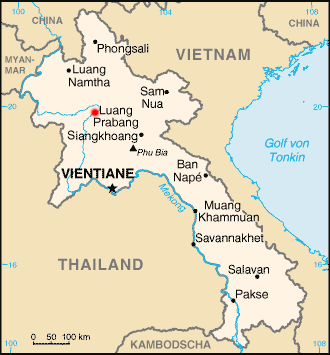
Source: CIA World Factbook map of Laos on Wikimedia Commons
I knew little of Laos before reading Run Me to Earth. I knew about where it was on a map, but that's it. Thanks to this book, I now know more than I did before.
Whilst Laos is a relatively small country (236,800 sq km or 147,140 sq miles, which is smaller than the United Kingdom), it is the most heavily bombed country per capita in history, more even than both Japan and Germany during WWII. From 1964 to 1973, the U.S. dropped more than two million tons of ordnance on Laos, which is "the equivalent of one bombardment every eight minutes, twenty- four hours a day, for nine years". I was flabbergasted to read that in the author's note at the beginning of the book. I am ashamed. No, I wasn't yet born, and I was not responsible, but my country was.
Run Me to Earth tells the fictional story of three orphans whose parents were killed during these years. They did whatever they could to survive and eventually were given a place to stay in a large house converted to a hospital. In exchange, they helped take care of the patients and picked up supplies. This was dangerous as there were unexploded bombs everywhere, many sunk into the earth, that would be detonated if they happened to ride their motorcycles over them. In fact, 30% of the bombs had failed to explode on impact. Even today, children are killed or maimed when they spy something shiny on the ground and run over to investigate. Did I mention being ashamed?
The story follows these three orphans throughout their childhood and adult years. The author writes very well and I was really taken in during the first part of the book. Unfortunately, the story is told through the voices of several people, which didn't work for me. It felt too far removed when people other than the orphans were narrating and I stopped feeling an emotional attachment to the story. I think I would have liked it more had it been told only in the orphans' voices.
I'm still glad I read it, especially because I was inspired to Google Laos and learned a few things I hadn't known. That always makes me happy!
3.5 stars rounded up.
(Click here to read an article about the bombings. Over 40 years later, there are an estimated 80 million pieces of unexploded ordnance remaining in Laos. Warning: there are a couple graphic photos of injured people that are difficult to see.)

August 27, 2019
This story primarily focuses on the effects of warfare on innocent civilians living in a war-torn society. While the beginning starts off in a 1969 Laos town with bombs dropping like rain and airplanes swarming over like flies, this is a minimal part of the story. The results after the war are the central emphasis.
It begins with three teenage orphans Alisak, Prany, and Noi who scavenge supplies and help a farmhouse-turned-medical facility in exchange for money, shelter, and food. They risk going into the dangerous apocalyptic-like town of Phonsavan with bombs dropping all around to find medical care and pick up hurt civilians while befriending a doctor at the facility named Vang. However, this setting only lasts for the first 28% of the book (on a Kindle). With the four seeking to leave, they are then separated while on their way to be rescued. It is at this point where the story really begins.
The remainder of the book sheds light on what happened to Alisak, Prany, Noi, and Vang after being separated. Some of them were released after being imprisoned by communists and reeducated for seven years, though it does not recount their time or reeducation in prison. Other characters were rescued only to experience a sensation of loneliness and separation, while some did not make it. The suffering ensued by each reflects the dejected nature of post-traumatic stress that civilians experience when growing up in a battle zone.
There are no chapters, it is divided into parts by character. The first part (the first 28% mentioned above) is told from Alisak’s point of view. It then goes through four other characters viewpoints in sections detailing what occurred after being separated.
The setting was different, and I enjoyed the premise. I did not feel connected with Alisak or Auntie, but I really enjoyed Prany, Noi, and Khit. Since it jumps right into the story from the start, the beginning first two parts of Alisak and Auntie felt slightly disjointed as I was trying to piece a few things together. Overall, I really liked the novel though it was not an expeditious page turner for me. Nevertheless, it is an important story that speaks volumes. Many thanks to Netgalley, Paul Yoon, and Simon & Schuster for this ARC.
More on this topic:
President Barack Obama Visits Laos
Communism in Laos
Laos during the Vietnam War
It begins with three teenage orphans Alisak, Prany, and Noi who scavenge supplies and help a farmhouse-turned-medical facility in exchange for money, shelter, and food. They risk going into the dangerous apocalyptic-like town of Phonsavan with bombs dropping all around to find medical care and pick up hurt civilians while befriending a doctor at the facility named Vang. However, this setting only lasts for the first 28% of the book (on a Kindle). With the four seeking to leave, they are then separated while on their way to be rescued. It is at this point where the story really begins.
The remainder of the book sheds light on what happened to Alisak, Prany, Noi, and Vang after being separated. Some of them were released after being imprisoned by communists and reeducated for seven years, though it does not recount their time or reeducation in prison. Other characters were rescued only to experience a sensation of loneliness and separation, while some did not make it. The suffering ensued by each reflects the dejected nature of post-traumatic stress that civilians experience when growing up in a battle zone.
There are no chapters, it is divided into parts by character. The first part (the first 28% mentioned above) is told from Alisak’s point of view. It then goes through four other characters viewpoints in sections detailing what occurred after being separated.
The setting was different, and I enjoyed the premise. I did not feel connected with Alisak or Auntie, but I really enjoyed Prany, Noi, and Khit. Since it jumps right into the story from the start, the beginning first two parts of Alisak and Auntie felt slightly disjointed as I was trying to piece a few things together. Overall, I really liked the novel though it was not an expeditious page turner for me. Nevertheless, it is an important story that speaks volumes. Many thanks to Netgalley, Paul Yoon, and Simon & Schuster for this ARC.
President Barack Obama Visits Laos
Communism in Laos
Laos during the Vietnam War

November 17, 2020
I could not put down this story of three orphaned friends from a hill town in Laos. Alisek, Pranny and his sister Noi are in their late teens when we meet them in 1969, working in an abandoned farmhouse with Vang, a doctor who is working hard to save the lives of people injured and maimed by the bombing. "Farmhouse" probably doesn't conjure up the right visuals as it is an abandoned plantation home of a French tobacco farmer whose many rooms are filled with art, fine furniture, and many of the finer things in life that the locals are not typically exposed to. Not only are people maimed by the bombing, but the landscape is littered with unexploded bombs that the three teens must navigate in their jobs as motorcycle couriers for the doctor.
Yoon's writing has a "you are there" quality as we travel through the years with these and other characters, as they work their courier jobs, as they are given a place on the last helicopter out of the area, as they find their way to refugee camps in Thailand and as they find their way through life. All of the main characters are connected in some way to "Auntie" a woman who helps people cross the Mekong river to the Thai camps. Part of the "you are there" quality is portraying the psychological and emotional dimensions of being a refugee, not knowing where you are going next or even if you will live beyond the day.
Each chapter focuses on one of the main characters in a different time period, starting in 1969 and ending in 2012. These stories illuminate the danger and dislocation of life during and after the war, but also the dedication and commitment of people trying to live and save lives. Alisek, Pranny and Noi are bonded at a young age with each other and Vang, a bond that carries through to the end of their lives. In the last scenes of Run Me to Earth, I was surprised by my emotion, ended up sobbing and having to reread the poignant last chapter again.
On a personal note, we have many refugees from the Vietnam War (from Laos, Cambodia and Vietnam) here in Minnesota, some I interact with on a regular basis. To me, it is so important to understand their experience from stories, not just news reports, and am grateful for this book, as well as The Sympathizer and The Refugees to name two others. I would be remiss if I did not mention The Latehomecomer: A Hmong Family Memoir in which Kao Kalia Yang tells the story of the Hmong people through her family's journey from Laos, through refugee camps and ultimately settling in St. Paul Minnesota. It would make a great companion piece to Run Me to Earth.
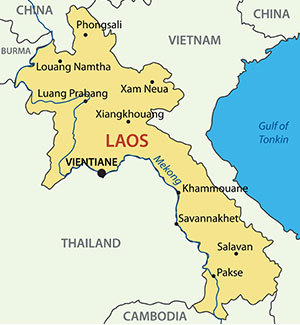
Lastly, this is a great article about Laos and why it was the most bombed country in the Vietnam War, including a map that includes familiar locations in this book.
Why I'm reading this: I must have read a review a few months ago and put this on hold at the library where things have been slow to circulate given, well you know . . . pandemic. It came in this week at about the same time that Kirkus published it's list of 100 best fiction of 2020. Since this was on the list, I decided to get going on it!
Yoon's writing has a "you are there" quality as we travel through the years with these and other characters, as they work their courier jobs, as they are given a place on the last helicopter out of the area, as they find their way to refugee camps in Thailand and as they find their way through life. All of the main characters are connected in some way to "Auntie" a woman who helps people cross the Mekong river to the Thai camps. Part of the "you are there" quality is portraying the psychological and emotional dimensions of being a refugee, not knowing where you are going next or even if you will live beyond the day.
Each chapter focuses on one of the main characters in a different time period, starting in 1969 and ending in 2012. These stories illuminate the danger and dislocation of life during and after the war, but also the dedication and commitment of people trying to live and save lives. Alisek, Pranny and Noi are bonded at a young age with each other and Vang, a bond that carries through to the end of their lives. In the last scenes of Run Me to Earth, I was surprised by my emotion, ended up sobbing and having to reread the poignant last chapter again.
On a personal note, we have many refugees from the Vietnam War (from Laos, Cambodia and Vietnam) here in Minnesota, some I interact with on a regular basis. To me, it is so important to understand their experience from stories, not just news reports, and am grateful for this book, as well as The Sympathizer and The Refugees to name two others. I would be remiss if I did not mention The Latehomecomer: A Hmong Family Memoir in which Kao Kalia Yang tells the story of the Hmong people through her family's journey from Laos, through refugee camps and ultimately settling in St. Paul Minnesota. It would make a great companion piece to Run Me to Earth.
Lastly, this is a great article about Laos and why it was the most bombed country in the Vietnam War, including a map that includes familiar locations in this book.
Why I'm reading this: I must have read a review a few months ago and put this on hold at the library where things have been slow to circulate given, well you know . . . pandemic. It came in this week at about the same time that Kirkus published it's list of 100 best fiction of 2020. Since this was on the list, I decided to get going on it!

January 28, 2020
Though presented as a novel, “Run Me to Earth” is a tightly integrated collection of six masterfully written stories. It begins in 1969 in a Laotian valley called the Plain of Jars, where the sound of bombings is so frequent that nobody hears them anymore. A gracious farmhouse, abandoned by its French owner, is the site of a makeshift hospital offering what little medical attention the exhausted staff can manage with dwindling supplies and intermittent electricity. Surrounded by unexploded cluster bombs, the hospital has no shortage of mangled patients, who arrive on foot or in wheelbarrows — sometimes blown to bits as they approach the building.
“Run Me to Earth” focuses on three teenagers — Alisak, Prany and his sister, Noi — who have known nothing but war most of their lives. Their parents either succumbed to opium or were shot, leaving them to wander the country as a tightknit trio. Relief arrives when a nurse spots the orphans sleeping near a river and asks whether they can drive motorbikes. In that moment, they become accidental partisans in a conflict they know nothing about. “The vehicle that pulled up to recruit them could have been from the other side and they. . . .
To read the rest of this story, go to The Washington Post:
https://www.washingtonpost.com/entert...
“Run Me to Earth” focuses on three teenagers — Alisak, Prany and his sister, Noi — who have known nothing but war most of their lives. Their parents either succumbed to opium or were shot, leaving them to wander the country as a tightknit trio. Relief arrives when a nurse spots the orphans sleeping near a river and asks whether they can drive motorbikes. In that moment, they become accidental partisans in a conflict they know nothing about. “The vehicle that pulled up to recruit them could have been from the other side and they. . . .
To read the rest of this story, go to The Washington Post:
https://www.washingtonpost.com/entert...

February 22, 2020
The word that comes to mind for me is: "well-intentioned."
Why it didn't work better for me: the narrative voice is distancing, formal, and a little vague. Everything felt mysteriously shrouded. I wasn't let into the story.
I have a feeling that these characters might live large, rich, three-dimensional lives in Yoon’s imagination, but when it came to writing the words down, he wouldn’t let loose of his literary intention to let these characters tell their story.
Why it didn't work better for me: the narrative voice is distancing, formal, and a little vague. Everything felt mysteriously shrouded. I wasn't let into the story.
I have a feeling that these characters might live large, rich, three-dimensional lives in Yoon’s imagination, but when it came to writing the words down, he wouldn’t let loose of his literary intention to let these characters tell their story.

March 27, 2020
This book should have been right up my alley, but unfortunately I did not really connect with it. I found it very disjointed and I was expecting more about the relationship among the three orphans, but they were together only in the first part of the book and even then they could have been strangers. Interesting for its treatment of the story about the havoc caused by the unexploded bombs in Laos and the dislocation caused by war, but the book moved me only rarely. I have rounded my 3.5 star rating up to 4 because of the subject matter. I received a free copy of this book from the publisher.

Want to Read
March 11, 2020Cultural icon (among the bookish, anyway) Nancy Pearl interviews Author Paul Yoon!
Spoiler alert: he's completely adorable in person, and has superb taste in art and film.
Spoiler alert: he's completely adorable in person, and has superb taste in art and film.

February 28, 2020
The landscape always seemed to remain the same.
Burned out homes and small businesses, streets turned into impassable ruts and gulleys, and faces expressing blank stares along with the bitter finality of acceptance.
Alisak, Prany, and Noi must survive somehow within the disastrous panorama of Laos in the 1960's. Caught in the uproar between the Communist Pathet Lao and the Royal Lao Government, the Hmong people were trained by the CIA to fight in accord with the government. And the bombings? One cannot even imagine the constant onslaught of minute by minute explosions from 1964 to 1973. Hell itself must have been a quiet reprieve.
Paul Yoon takes us to a small farmhouse in 1969 in the countryside that was converted into a makeshift hospital. It's here that we peer among those in recovery, those on the rim of death, and those who have lost their own battle against the powers that leave only thoughts of mortality and morbid destruction. The three teenagers have mastered the skill of riding motorcycles through the dangerous terrain in order to bring medicines and supplies to Vang who is in his own losing battle of wits and survival.
"He kept pushing his mind forward, from a day to a month to a year, but the more he tried the more he couldn't. He saw nothing. In that moment, he could imagine nothing."
And in the midst of all this hopelessness, Yoon inserts particles of beauty, friendship, comaraderie, and the backbone of survival. We see individuals ripping canvases of artwork from the walls to sell later, or moreso, to experience humanity captured in the beauty of brilliant colors, brush strokes of style, and groupings of figures posing in the mundane of the day.
Run Me to Earth causes us to look beyond the admitted war between North and South Vietnam and cast our eyes on the forgotten people of Laos suffering through the abominations of relentless bombings. Laos provided a side pocket for which the Communists could venture into South Vietnam. It was a man-made hell in the making. But Paul Yoon's beautiful prose helps us to focus on the people themselves and the ever present forces of living for the next day.
Run Me to Earth tells its story in a compact little novel......but the impact will last a lifetime.
Burned out homes and small businesses, streets turned into impassable ruts and gulleys, and faces expressing blank stares along with the bitter finality of acceptance.
Alisak, Prany, and Noi must survive somehow within the disastrous panorama of Laos in the 1960's. Caught in the uproar between the Communist Pathet Lao and the Royal Lao Government, the Hmong people were trained by the CIA to fight in accord with the government. And the bombings? One cannot even imagine the constant onslaught of minute by minute explosions from 1964 to 1973. Hell itself must have been a quiet reprieve.
Paul Yoon takes us to a small farmhouse in 1969 in the countryside that was converted into a makeshift hospital. It's here that we peer among those in recovery, those on the rim of death, and those who have lost their own battle against the powers that leave only thoughts of mortality and morbid destruction. The three teenagers have mastered the skill of riding motorcycles through the dangerous terrain in order to bring medicines and supplies to Vang who is in his own losing battle of wits and survival.
"He kept pushing his mind forward, from a day to a month to a year, but the more he tried the more he couldn't. He saw nothing. In that moment, he could imagine nothing."
And in the midst of all this hopelessness, Yoon inserts particles of beauty, friendship, comaraderie, and the backbone of survival. We see individuals ripping canvases of artwork from the walls to sell later, or moreso, to experience humanity captured in the beauty of brilliant colors, brush strokes of style, and groupings of figures posing in the mundane of the day.
Run Me to Earth causes us to look beyond the admitted war between North and South Vietnam and cast our eyes on the forgotten people of Laos suffering through the abominations of relentless bombings. Laos provided a side pocket for which the Communists could venture into South Vietnam. It was a man-made hell in the making. But Paul Yoon's beautiful prose helps us to focus on the people themselves and the ever present forces of living for the next day.
Run Me to Earth tells its story in a compact little novel......but the impact will last a lifetime.

February 15, 2020
The writing was beautiful in this one, but it left me feeling a little cold. I’m having trouble putting my finger on what I didn’t like about the book, though. The book centers around three orphans during wartime 1969 Laos. Individual stories slowly reveal what happens to each of them during and after an attempted airlift out of Laos. I think I just wanted to know more about the individual experiences of the orphans in a less detached way. Still - a fascinating story. 3.5⭐️

May 3, 2021
This was a devastatingly beautiful novel telling the story of three Laotian and their fates following the American carpet bombing of their country in the 70s. The three characters’ stories are told in snippets over time giving us a visceral memoir of war, violence and the indomitable human spirit that drove Alisak, Noi, and Phran. I thought it was well-written and feel that I have a lot more to learn about that piece of history.

June 2, 2020
Laos had over 2 million tons of ordinance dropped on it over a 9 year bombing campaign starting in 1964. That's the equivalent of a bomb every 8 minutes for those 9 years the US dropped in an area roughly the size of Utah. More bombs than it dropped during the entirety of WWII, and 30% of these cluster bombs have yet to explode.
It is against that backdrop that we are introduced to 3 orphans, Alisak, Prany and Noi living in an abandoned farmhouse turned makeshift hospital in the Plain of Jars. The children on motorbikes wend their way through unexploded ordinance to retrieve supplies and deliver patients. And it sounds unremittingly grim but proves a dreamlike read with the occasional bursts of searing violence.
The chapters swing across the years and traverse the globe taking us out of Laos and into France, New York and Spain. How these teenager can and cannot escape their past. Beautifully melancholic with perfectly realized grace notes throughout. Of things hid in a piano, the brush of a father's fingers against a child's heel as he drives beneath him in a tree, a bike shop and the smell of the ocean. Memories burnished to a shine and held close in contrast to those burning moments of horror. Just an incredibly written, finely wrought, hypnotizing piece of work.
It is against that backdrop that we are introduced to 3 orphans, Alisak, Prany and Noi living in an abandoned farmhouse turned makeshift hospital in the Plain of Jars. The children on motorbikes wend their way through unexploded ordinance to retrieve supplies and deliver patients. And it sounds unremittingly grim but proves a dreamlike read with the occasional bursts of searing violence.
The chapters swing across the years and traverse the globe taking us out of Laos and into France, New York and Spain. How these teenager can and cannot escape their past. Beautifully melancholic with perfectly realized grace notes throughout. Of things hid in a piano, the brush of a father's fingers against a child's heel as he drives beneath him in a tree, a bike shop and the smell of the ocean. Memories burnished to a shine and held close in contrast to those burning moments of horror. Just an incredibly written, finely wrought, hypnotizing piece of work.

July 20, 2023
This story opens in 1969 in Laos, the most bombed country of the Vietnam War: “the equivalent of one bombardment every eight minutes, twenty-four hours a day, for nine years.” Three orphaned teens (siblings Pranny and Noi, and their friend, Alisak) work as motorcycle couriers with an eccentric doctor at a large farmhouse that has been converted into a field hospital. They do their best to survive in the midst of war. When they must evacuate, they get separated, and the storyline then follows their individual experiences.
The novel is beautifully written, and its primary theme is displacement. It is told from various viewpoints, relating memories, sufferings, and the impact of war upon the civilian population of Laos. The individual threads are elegantly knitted together in loops and flashbacks. It is a moving story of the bonds formed through shared trauma. I can also recommend Yoon’s Snow Hunters.
The novel is beautifully written, and its primary theme is displacement. It is told from various viewpoints, relating memories, sufferings, and the impact of war upon the civilian population of Laos. The individual threads are elegantly knitted together in loops and flashbacks. It is a moving story of the bonds formed through shared trauma. I can also recommend Yoon’s Snow Hunters.

December 31, 2019
Run Me To Earth, this compassionate, powerful novel, concerns three young people whose lives were uprooted in Laos in the late 1960's. Their entwined fates are presented in prose so evocative it's impossible to believe Paul Yoon did not witness the events first-hand. The carpet bombings of Laos, one of the most shameful actions by the Americans in their misguided efforts to rout out North Vietnamese supply lines during the Vietnam war, reverberates through the present day. That there is still live ordinance in the countryside, has been acknowledged by President Obama. Also, with relation to events of today, desertion of a friendly force, the Hmong, echoes the recent desertion of the Kurds. Don't be fooled by the relative short length of this novel. It packs a wallop.

February 6, 2020
5 stars. Run Me To Earth follows the beautiful, yet tragic, depicted story of three orphaned children and their mentor in Laos in the 1960’s during war-torn Vietnam, to 2018. While their story is deeply heartbreaking, it’s also filled full of love and hope. It’s an important story that speaks volumes, and is so profound I found myself slowing down while reading as sure not to miss anything, stopping only to catch my breath. The effects of war on the lives of humans was skillfully depicted making a lasting impression on me that I’m still absorbing. Paul Yoon’s fascinating story about history I never knew existed is one I’ll be re-reading in the future. I’ve already purchased a hard cover copy for my keeper shelf. A must read.
Many thanks to NetGalley and Simon & Schuster for this arc!
Many thanks to NetGalley and Simon & Schuster for this arc!

December 20, 2020
Southeast Asia had very difficult eras in the second half of the 20th century: civil wars in Korea and Vietnam, pitting the communist North against the capitalist South, genocide in Cambodia under Pol Pot, and perhaps the least known story of Laos, where bombs fell every nine minutes for more than a decade. This is the backdrop for Yoon's novel about three orphan teenagers in 1969: Prany, his younger sister (Noi) and their friend, Alisak. The three are corralled into running errands by a field doctor, riding their motorcycles across bomb laden fields. They are separated during a mass evacuation and the book is told from various POVs, recounting their memories of friendship, hardship, and the devastation of Laos. I did not connect with the characters nor the discordant storylines.

Read
July 9, 2021Incomplete, DNF, it's me not you...
The writing was above average, the scenes were intense but I just couldn't connect to the horror these children witnessed for some reason. I got stuck half way and just had more interesting reads calling to me.
I would rather just set this aside. Perhaps, I'll pick it up again one day. I think Paul Yoon is not someone I aspire to read.
No rating, it wasn't bad and since I failed to finish, I can't exactly say what prevented me. Maybe it would have been better as a short story instead of a short novel.
The writing was above average, the scenes were intense but I just couldn't connect to the horror these children witnessed for some reason. I got stuck half way and just had more interesting reads calling to me.
I would rather just set this aside. Perhaps, I'll pick it up again one day. I think Paul Yoon is not someone I aspire to read.
No rating, it wasn't bad and since I failed to finish, I can't exactly say what prevented me. Maybe it would have been better as a short story instead of a short novel.

April 22, 2026
Between 1969 and 1973, the United States dropped about two million tons of bombs on Laos, an amount comparable to what was dropped on Germany and Japan during World War II. This means that, on average, a new shipment of death fell every eight minutes for nine years. This historical fact is not just an introduction to the novel Run Me to Earth, but its foundation, because everything that follows is a consequence of those bombings.
In this devastated landscape, Paul Yoon follows three orphans who survive by helping in an improvised hospital and driving through terrain sown with unexploded bombs. Their movements are always restricted, almost ritualistic: stepping off the marked path means death. Even in this early part of the novel, it’s clear that Yoon does not build the story around the spectacle of war, but around its remnants; what lingers in bodies, in memories, in the silences between sentences.
The novel then spans decades and shifts perspectives, following not only the fates of these children but also the echoes of their choices. Characters like Auntie or Khit are not there to round out the narrative but to deepen it, to show that trauma does not belong only to those who experienced it directly but also to those who inherit it. Yoon’s storytelling rejects linearity and clarity; its structure is fragmented, often elliptical, and it is precisely in those gaps that the novel finds its greatest strength.
What sets Run Me to Earth apart is its restraint. Violence is rarely shown explicitly, but it is always present; as pressure, as foreboding, as something that shapes every choice the characters make. Yoon writes economically, but never coldly; his sentences are charged with the weight of the unspoken. In this sense, the novel suggests more than it shows, leaves more than it gives, asking the reader to actively participate in piecing it together.
Such an approach, of course, will not suit everyone. Jumps through time, the absence of clear answers, and a narrative that refuses classic catharsis can be frustrating. Yet, it is precisely this incompleteness that feels like the most honest response to the novel’s subject: some stories, especially those born of war, cannot be told to the end.
Run Me to Earth is not a novel that offers closure, but one that remains, like one of those unexploded bombs beneath the ground, quietly present, long after the last page is turned.
In this devastated landscape, Paul Yoon follows three orphans who survive by helping in an improvised hospital and driving through terrain sown with unexploded bombs. Their movements are always restricted, almost ritualistic: stepping off the marked path means death. Even in this early part of the novel, it’s clear that Yoon does not build the story around the spectacle of war, but around its remnants; what lingers in bodies, in memories, in the silences between sentences.
The novel then spans decades and shifts perspectives, following not only the fates of these children but also the echoes of their choices. Characters like Auntie or Khit are not there to round out the narrative but to deepen it, to show that trauma does not belong only to those who experienced it directly but also to those who inherit it. Yoon’s storytelling rejects linearity and clarity; its structure is fragmented, often elliptical, and it is precisely in those gaps that the novel finds its greatest strength.
What sets Run Me to Earth apart is its restraint. Violence is rarely shown explicitly, but it is always present; as pressure, as foreboding, as something that shapes every choice the characters make. Yoon writes economically, but never coldly; his sentences are charged with the weight of the unspoken. In this sense, the novel suggests more than it shows, leaves more than it gives, asking the reader to actively participate in piecing it together.
Such an approach, of course, will not suit everyone. Jumps through time, the absence of clear answers, and a narrative that refuses classic catharsis can be frustrating. Yet, it is precisely this incompleteness that feels like the most honest response to the novel’s subject: some stories, especially those born of war, cannot be told to the end.
Run Me to Earth is not a novel that offers closure, but one that remains, like one of those unexploded bombs beneath the ground, quietly present, long after the last page is turned.
January 20, 2020
"Run Me to Earth" by Paul Yoon showed a lot of promise and potential, but I just couldn't follow the storyline. The writing was decent, but I was so confused about what was going on. The plot kept tripping me up. Even the synopsis had me scratching my head. I always try to give historical fiction a chance, but these kind of long-winded stories just never make an impact with me. This genre is easily forgettable and overhyped. The three orphaned-children were interchangeable. I couldn't keep them straight. I just felt depressed and underwhelmed in the end. I don't think novels about the atrocities of war are my cup of tea. Also, this book lacked emotion. I kept waiting for this big, profound moment to happen and it never did.
Thank you, Netgalley and Simon & Schuster for the advance copy.
Release date: January 28, 2020
Thank you, Netgalley and Simon & Schuster for the advance copy.
Release date: January 28, 2020

February 9, 2020
A beautiful, heartbreaking, emotional, traumatic story of three orphans. Wonderfully written and simultaneously cruel and hopeful, Run Me To Earth is a fantastic portrayal of that time period. I learned a lot of history and was swept up in this complicated story of survival. The author captures these tragic stories in a lovely, poetic way. 4⭐️ Thank you to the publisher for the advance reader in exchange for my honest review.

February 4, 2020
[I received a copy of this book from the publisher/Edelweiss.]
First, I recommend reading the book and not doing the audiobook. I tried to do both. I lost complete interest listening to the story. I was more intrigued when I read the story.
I did not know anything about the Laotian Civil War. As Americans, we are used to hearing about the Vietnam War, probably because the war in Laos is called the Secret War between the CIA and Hmong versus the communists who seized power in Laos. We rarely hear about how Laos played a role during the Vietnam War.
Reading about the struggle to survive in Laos during war is heartbreaking. It really makes you think about what would happen if your world was all of a sudden turned upside down and war was introduced to your daily life. Imagine you are an orphan in a war ravaged country. How are you going to survive?
This is not a feelgood story. It is heartbreaking and sad. It goes through decades between the war and after the war and how an evacuation forever changed these three teens lives. I loved the part though when Prany goes to France. That is my favorite part of the story, as well as where life ended up leading him after the war.
And the food...when they order all that food...I kept thinking about how they were deprived for so long, not knowing if they would have food, to all of a sudden having an opportunity to eat as much as they wanted, because they finally could...to imagine living like that! Yoon does an excellent job of showing the reader what life is like living in war and what it means after the war.
First, I recommend reading the book and not doing the audiobook. I tried to do both. I lost complete interest listening to the story. I was more intrigued when I read the story.
I did not know anything about the Laotian Civil War. As Americans, we are used to hearing about the Vietnam War, probably because the war in Laos is called the Secret War between the CIA and Hmong versus the communists who seized power in Laos. We rarely hear about how Laos played a role during the Vietnam War.
Reading about the struggle to survive in Laos during war is heartbreaking. It really makes you think about what would happen if your world was all of a sudden turned upside down and war was introduced to your daily life. Imagine you are an orphan in a war ravaged country. How are you going to survive?
This is not a feelgood story. It is heartbreaking and sad. It goes through decades between the war and after the war and how an evacuation forever changed these three teens lives. I loved the part though when Prany goes to France. That is my favorite part of the story, as well as where life ended up leading him after the war.
And the food...when they order all that food...I kept thinking about how they were deprived for so long, not knowing if they would have food, to all of a sudden having an opportunity to eat as much as they wanted, because they finally could...to imagine living like that! Yoon does an excellent job of showing the reader what life is like living in war and what it means after the war.
Displaying 1 - 30 of 631 reviews