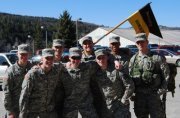
The platoon leader and platoon sergeant are two of the most important leaders in the U.S. Army. The way platoon leaders and sergeants work together as a team can cause the success or failure of companies, battalions, brigades, and divisions. They represent the leading edge of leadership on and off the battlefield. On the battlefield, platoon leaders and sergeants build their platoons, empower squad leaders, integrate outside elements, and use troop-leading procedures to plan and lead. Off the battlefield, platoon leaders and sergeants prepare their platoon for combat through tough training. The platoon leader and platoon sergeant’s ability to coach, teach, and mentor their Soldiers leads directly to the readiness of our formations. World-wide, platoon leaders and sergeants are personally leading the U.S. Army at the lowest level. This handbook is a guide for new leaders to help prepare them for a critical crucible of leadership that will determine the U.S. Army’s ability to fight and win our country’s wars.
The Department of the Army (DA) is one of the three military departments within the Department of Defense of the United States of America. The Department of the Army is the Federal Government agency within which the United States Army is organized, and it is led by the Secretary of the Army who has statutory authority 10 U.S.C. § 3013 to conduct its affairs and to prescribe regulations for its government, subject to the limits of the law, and the directions of the Secretary of Defense and the President.
The Secretary of the Army is a civilian official appointed by the President and confirmed by the Senate. The highest-ranking military officer in the department is the Chief of Staff of the Army, who is also a member of the Joint Chiefs of Staff. Other senior officials of the Department are the Under Secretary of the Army (principal deputy to the Secretary) and the Vice Chief of Staff of the Army (principal deputy to the Chief of Staff.)
The Department of War was originally formed in 1789 as an Executive Department of the United States, and was renamed by the National Security Act of 1947 to the Department of the Army on September 18, 1947. By amendments to the National Security Act of 1947 in 1949, the Department of the Army was transformed to its present-day status.
Book Review for The First 100 Days of Platoon Leadership:
Resources: AAR Script, METL and ATN access, Family Readiness Resources, First Inventory, First Range,
Overall Impression: This short handbook made by Center for Army Lessons Learned contained a lot of useful links to resources, explained various programs in detail, and provided a lot of examples from actual platoon leaders, i.e. the PL and the PSG, through the use of quotes and real-life based vignettes. In the following highlights I come across the details that stood out the most to me.
Key Highlights: The director of CALL stressed the importance of this publication: platoon leadership is a critical crucible of leadership that will determine the U.S. Army’s ability to fight and win our country’s wars.
General Overview:
As a PL, you are responsible for soldier’s lives – the most critical army resource.
Definition of leadership: to provide purpose, direction, and motivation.
Soldiers remember if a leader takes charge and is organized.
Army Values: LDRSHIP: Loyalty, Duty, Respect, Selfless Service, Honor, Integrity, Personal Courage.
Gen. Milley: Our No. 1 task, bar none, remains readiness. Readiness for what? Readiness for war.
Regarding expectations: Which leader can be given less guidance to execute a task and who needs to be given additional direction and supervision?
Building the Team:
A platoon where leaders do not share hardships may not function as well.
Most companies have access to MWR funds to supplement the cost of moral and team-building events.
Leaders should be wary of making immediate identity changes as they assume their position. By changing them too fast, new leaders may show a lack of interest in the platoon’s identity.
In the case of the lost NVG and the inexperienced PSG, the PL had to step up and report. My commander knew he could trust me to keep him informed and take responsibility for my platoon’s actions. I learned a lot from that first field problem and I’ve used what I learned from that experience the rest of my career. Incorporoate pre-physical training with junior leaders to get to know each other in ways you just can’t during the duty day.
Soldiers are always watching leaders – those that neglect their platoon struggle. Always maintain a high personal standard.
Back each other up.
Current PL “I believe to this day, if I was not as engaged with my Soldier, if we didn’t build trust, and if I did not take the time to answer that phone call, I would have spent the next couple weeks planning a memorial service instead of visiting my Soldier in the hospital.
Former special forces commander – PSG asks: Did I want him to work for me or with me? He was asking for me to empower him and to learn from him without directly stating that.
Communicating face-to-face with NCOs is really the only way to communicate better.
TALK TO PSG before giving any assessment to the commander
Using Squad Leaders
Platoon-level leaders MUST be confident in their decisions and not flexible on standards or at a decision point.
PL and PSGS should know the amount of time it takes to accomplish specific tasks for their platoon – so that they can check on their squads without micromanaging.
Require Squad Leaders to keep leader books. Furthermore, they should be practical and up-to-date.
Effective Counseling at the Platoon Level
Formal and informal counseling are important, but documentation of sessions is key to maintaining a common operational picture.
Use DA Form 4856 – create pre-filled talking points
Having a 1SG review negative counseling ensures company level buy-in. Before this, discuss your thoughts with the PSG and prepare points on the DA Form 4856 and the NCO support form.
PL’s are critical to the counseling process because they are the senior raters for squad leaders.
PL AND PSG MEETING: Honestly discuss your platoon and what needs to be done to improve it. Try to make it personal and record topics/plan of action later. It is important to document counseling in the DA 4856 or a memorandum as soon as possible after the event.
Engaged Leadership (Resources)
Soldiers tend to share more in their off-time. Army Regulation 600-85 (Stressors) talks about what challenges may be facing his soldiers and how to support them during everyting from traffic violations to deaths.
“Taking care of Soldiers’ families and issues is often overlooked by leaders. This may seem to work in the short-term but always fails… Leaders who ignore problems, belittle problems, or are overly aggressive with discipline can put Soldiers into a downward spiral….If the soldier was contemplating suicide because of the drug and family issues, he now knows his leaders do not care and are not there to support him.
Resources for Soldiers: Squadron Chaplain (one on one) Regiment-embedded behavioral health (PTSD or suicidal ideations) Army Community Services (multiple programs) Family Advocacy Program (spouse and child abuse) ASAP (drug and alcohol issues) Military family life counselors (one-on-one counseling and financial help)
Time and Task Management
PL needs to identify, based on their commander’s requirements and priorities, what has to be done that day versus what can be held off until the next day.
Platoons that plan to support their company’s training calendar have an easier time prioritizing their tasks. Ensuring that soldiers understand the training calendar and what they will be doing keeps morale high by providing predicatability.
Notes on Mission Command
There is no reason to lose patience and become irrational. People respect confidence and patience because it makes you a rational logical thinker.
Leaders who fail to remain within the intent or keep their higher headquarters informed risk breaking trust within the unit and may cause unintended effects at higher levels.
Platoon Training – Look up CATS on ATN.ARMY.MIL
Platoon leaders (PLs) and platoon sergeants (PSGs) train Soldiers on individual tasks to support their company’s collective tasks and mission essential task list (METL).
Companies plan and execute training using the T-week concept. The T-week concept is a 13-week calendar that ensures companies properly plan, resource, prepare for, and execute training.
Platoon level leaders track their training individually by team and squad using a platoon-training tracker or Excel spreadsheet. This data should be in a leader’s smartbook.
Platoons manage traiing at the platoon level by understanding how company training management works, providing input during the company training meeting, tracking the platoon, and developing training that supports higher-level collective tasks.
Leaders and units are restricted in their tactical-task training time due to competing priorities such as taskings, mandatory 350-1 training, maintenance, and other requirements.
Leaders must understand their commanders intent when deciding which tasks to train on. What to train on is always a conversation between PLs and commanders. Maintaining an open and constant line of communication is key for PLs.
To execute properly, platoon-level leaders must research their company’s METL, identify which individual and collective tasks support particular METSs, decided on training, and then prepare training plans to meet the METs.
Opportunity Training
Providing more training outside of the prescribed calendar pays huge dividends – Outgoing PL
Opportunity training should focus on the basics and nest with the platoon’s training path.
A key resource is Soldier Training Publication (STP) 21-1-Soldier’s Manual of Common Tasks (SMCT), Warrior Skills Level I (October, 2006).
Think about time available that leaders tend to overlook, such as the post services road march. Use that to tests equipment and improve tactical skills.
Make sure to backbrief your commanders to get buy in.
Sergeant’s Training Time
This time should be selected and planned, each having a task, condition, and standard.
Squad leaders are the key to a strong STT program. Direction in what to train may come from the company or platoon level, but squad leaders will take that direction and turn it into training plans and instruction.
Platoon-level leaders should protect this time as much as possible. An easy way to protect STT is to ensure it is on the company training calendar and to send squads away from the company to train in a designated training area or other location separating them physically from the company.
Preparing your First Range
Our leaders need to be proactive, planning from the bottom up to be successful.
Receive the Mission: Determine the training audience and the commanders intent and end state for the event. The company XO is a key resource during this phase. The XO can often provide historical data, expectations, templates, and other assistance.
Issue the Warning Order: The OIC will elad, but needs to assemble the NCOIC, RSO, and other key leaders asap and provide them a warno. The range’s date and time should be on the company training calendar and distributed to junior leaders.
Make a tentative plan: OICs and NCOICs need to determine which field manual contains the qualification standards for the weapon system to be trained, access the Army’s Standards in Training Commision (STRAC) on the Army Training Support Center’s (ATSC’s) website to determine the authorized ammunition, review the unit standard operating procedure (SOP), collect information from the local range branch, print any relevant T&Eos, and gather any other applicable documents.
Initiate Movement: Train and certify leaders. This should be planned and briefed event during the company training meeting
Conduct Reconnaissance – Often times, coordination with range control must be done prior to a recon, so this should be planned early. Confirm number of lanes for firing, location of ammo point, water point, casualty collection point, concurrent training site, retraining site, etc.
Complete the plan: Tentative plan is confirmed based on recon, and the RSO builds the risk assessment with input from the OIC and NCOIC. Oftentimes, a concept of operations (CONOPs) brief and a signed risk assessment are due to range control at a set time before the range can lock in land.
Issue the order: The order is issued to subordinates who will facilitate the range but also to any other platoons or companies who may attend.
Supervise: Rehearse the casualty evacuation (CASEVAC)/medical evacuation (MEDEVAC) plan using the actual personnel, medics, and vehicles along the full route from the range to the hospital allows the OIC, NCOIC, and RSO to confirm their ability in executing a CASEVAC if needed.
During execution, the OIC and RSO should keep a copy of the risk assessment on them
A thorough AAR should be conducted of the non-tactical administration of the range and any tactical tasks evaluated using a T&EO. The tactical AAR will help junior leaders determine what needs to be retrained during STT and future ranges.
In a story of two Ranges, we see two different platoons conduct a range – one just goes there, eats MREs, and then goes home and plays call of duty. The SPC at the range didn’t perform particularly well – but there wasn’t much motivation.
On the other range with 2nd platoon – they move there tactically and set up sectors of fire, etc., and switch out to conduct the range. They have hot chow coordinated by the XO and supply sergeant, they receive PMI during their wait to go on the range, and they use NVGs to ruck back in the morning under limited visibility. The SPC in this scenario is excited – he loved being out at night, etc.
Training Resources: Training support center (TSC) on each post provides training aids, devices, simulations, and sumulators (TADSS) for training
Home-station Instrumentation Training System (HITS) works wit hthe Instrumentable Multiple Integrated Laser Engagement System (IMILES). HITS allow unit to collect data from live training events to include location, audio/video, and the effect of a simulated battlefield. HITS should be used when units train force-on-force during STXs/field training exercises (FTXs) and is supported out of TSCs.
Range control: A resource for leaders planning ranges. They can share previous range packets and help refine static or live-fire range plans.
Engagement Skills Trainer (EST): simulated weapons on screen – part of every PMI to give Soldiers virtual repetitions before a range is executed.
Virtual Battlespace 2 (VBS2): digital video-game based training platform
Mission Training complex: Varied – can help train and certify leaders on key radio and mission command systems.
Center for Army Lessons Learned: https://call2.army.mil/Login.aspx If unsure where to start, use the request for information section to engage directly with analysts.
Army Training Network (ATN): Identifies tasks related to their METL
Knowledge
Command Supply Discipline Property accountability is a hallmark of a disciplined platoon. Command Supply Discipline Program (CSDP) purpose is to execute inventories, sign equipment to the user level, maintain accountability in garrison and the field, and maintain a detailed property book. Failure to account for equipment can be a costly or even career-ending failure.
PSGs should own their platoons sensitive items and have a correct master authorization list (MAL)
Inventories and layouts should be on the company training calendar to protect them from unscheduled events. Most commanders ask PLs to review and sign their property book monthly and notify the supply sergeant and executive officer (XO) of any discrepencies in a timely manner. *Use paint markers.
Platoons lay out equipment for multipile types of inventories such as command, cycle, and pre- and post-field exercises.
TMs can be found on the electronic technical manuals (ETM) application on the Logisitics Support Activity (LOGSA) website at http://liw.logsa.army.mil Be sure to request access to download relevant publications. * During 2CR in processing
A binder full of hand-receipts is good to keep in the office, but a good working copy would be to have an updated TIM for each individual end item and go down the list, marking what is there and what isn’t. – Former PL
Lay out the equipment by the TM. Check what is present (reality) vs what is reflected on the component listing (ideal). Mark all PLT equipment with a paint marker.
Signing equipment down to the user is critical because it prevents a leader from having to pay for equipment. Add this to squad leader counseling to ensure junior leaders understand their responsibilities as property owners.
Property should be inventoried prior to going to the field to asses serviceability.
Platoon-level leaders maintain a correct master authorization list (MAL) of weapons, night vision goggles, radios, etc. Squad leaders should be required to do the same.
Leaders maintain a property book to keep accountability of their equipment. At a minimum, it should include relevant TMs, sub and component receipts, and shortage annexes. The way you conduct the inventory tells others what type of leader you are. Do you do the hard right or do you take shortcuts?
During your first inventory, take pictures of hard-to-identify items and ensure pilferable items are marked with a stencil or paint marker.
When something goes down, they should be able to say why it was down and what the expected outcome will be (replace or repair) and when the part will come in. – current forward support company commander.
At the platoon level, maintenance and repairs are tracked on the DA 5988-E. It also includes relevant publication numbers for technical manuals need for preventive maintenance checks and services (PMCS). Review the equipment’s service due data. The date should be on the training calendar and deconflicted with any training. The XO should be notified of any differences between the actual status and the DA Form 5988-E status.
Faults should have a work-order number and a relevant work code attached. Faults that do not have a work code often have not been verified by maintenance personnel.
Once parts are ordered against a fault they are tracked on a DA Form 5988-E and by NSN and the date the part was requested. Leaders need to be aware of the priority code (02: Five-day turnaround, 05 – eight-day turnaround, and 12 – 30-day turnaround) and request a change to the priority through the XO as needed.
Most units require a mechanic to confirm a fault before it is input onto DA Form 5988-E. PLs and PSGs need to confirm any faults with the motor sergeant to ensure they are validated and input into the system.
“Motor-pool Mondays.” Parts arriving to repair broken equipment need to be installed within the week. Leadership must ensure DA Form 5988-E and technical manuals are on-hand.
A leader’s presence during maintenance speaks to the platoon’s priorities.
Performing after-use PMCS of vehicles in a vehicle patrol base is critical.
Platoon Cohesion and Discipline
Leaders must always maintain good order themselves, so that they may lead by example. Maintaining good order and discipline, and being fair and impartial with rewards and punishment builds trust and maintains morale.
High standards help create a sense of ownership and pride in the platoon.
Care must be taken when building rite-of-passage programs into the platoon to ensure they do not cross into hazing.
PLs need to be involved in all levels of reward, corrective actions, and punishment at the platoon level.
PLs and PSGs can counsel, give corrective training, and recommend UCMJ to the commander.
Counseling should include a detailed plan of action. Proactive counseling can stop small issues before they become major and require more drastic measures. A leader owes it to their Soldiers and NCOs to give them honest feedback.
Stopping a Soldier backing up a vehicle without a ground guide and providing an immediate demonstration on how to safely back up a vehicle with a ground guide is an example of an on-the-spot corrective action. Providing extra preliminary marksmanship instruction (PMI) is another.