Many of the earliest books, particularly those dating back to the 1900s and before, are now extremely scarce and increasingly expensive. Hesperides Press are republishing these classic works in affordable, high quality, modern editions, using the original text and artwork.
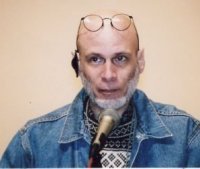
Prolific writer of a wide variety of works in Chinese 林语堂 and English; in the 1930s he founded several Chinese magazines specializing in social satire and Western-style journalism.
Lin, the son of a Chinese Presbyterian minister, was educated for the ministry but renounced Christianity in his early 20s and became a professor of English. He traveled to the United States and Europe for advanced study; on his return to China, he taught, edited several English-language journals, and contributed essays to Chinese literary magazines.
In 1932 Lin established the Lunyu banyuekan (“Analects Fortnightly”), a type of Western-style satirical magazine totally new to China at that time. It was highly successful, and he soon introduced two more publications. In 1935 Lin published the first of his many English-language books, My Country and My People. It was widely translated and for years was regarded as a standard text on China. The following year he moved to New York City to meet the popular demand for his historical accounts and novels. In 1939 he published his renowned English novel Moment in Peking. The Wisdom of China and India appeared in 1942.
Although he returned to China briefly in 1943 and again in 1954, Lin both times became involved in disputes stemming from his stand in favour of literature as self-expression rather than as propaganda and social education. In addition to writing books on Chinese history and philosophy, he made highly acclaimed English translations of Chinese literary masterpieces, such as Famous Chinese Short Stories Retold (1952).
Su Dongpo's life is one of the most celebrated in thousands of years of Chinese history. This book, the work of a brilliant scholar of the early twentieth century, is both a fitting testimony and a gushing love letter to the lasting influence of the man who holds one of the most prominent places for Chinese intellectuals over the centuries, and to those worldwide who choose to admire the lives of the most prominent figures of the many dynasties.
Su was a product of a social system that survived, in varying forms, for many centuries: a literati. His place in that span was during the northern Song dynasty, the latter half of the eleventh century. Taught to absorb as much as possible of the classics of Chinese literature at a young age, he came to prominence by his remarkable performance at the national examinations, the entry point into a life of participation in the upper reaches of the Chinese government. An apparently ungifted politician, his mark came at first through remarkable poetry and outspoken criticism of corrupt practices of government officials. Under Wang Anshi, the government was attempting to institute a system of "state capitalism," generally forcing farmers to participate in taking loans from the government in ways that led first to corruption and then to destitution in the countryside.
Su the social critic and defender of the little guy is established early in Mr. Lin's narrative. As the biography goes on, Lin calls him "an incorrigible optimist, a great humanitarian, a friend of the people, a prose master, an original painter, a great calligraphist, an experimenter in wine making, an engineer, a hater of puritanism, a yogi, a Buddhist believer, a Confucian statesman, a secretary to the emperor, a confirmed winebibber, a humane judge, a dissenter in politics, a prowler in the moonlight, a poet, and a wag." (vii) Politically, he spent the majority of his career exiled to lesser posts or in exile. At the end of his life, he was brutally persecuted essentially died from the poor conditions he lived in.
Su moved around a lot. My recent trip back to Hangzhou was the occasion for me to revisit this biography, which I first picked up five years ago. He lived in Hangzhou twice, and his fame is such there that you can order Dongpo pork and Dongpo Shrimp at the restaurants there even today. I (re)read most of this book in and around Hangzhou, the city where I could walk upon the famous land bridge across the famous West Lake that Su built a thousand years ago, and still exists just the same.
The flaw in this book is also a strength. The author is clearly in love with his subject, and there are times when one has to wonder how many of the stories that accrue to Su are apocryphal and how many of the warts of Su are not represented in the work. At some point, I don't suppose I care. The story of a man so intellectually curious, so able across many arenas of human accomplishment, is aweworthy to begin with. The growth of the angry young social critic into a mature, kind, forgiving man clearly in touch with himself and his enlightenment is unforgettable. Despite persecutions, despite the way his critics treated him, the model presented by Lin of Su is inspiring. We should all aspire to as much.
Don't get excited. The word "gay" did not have its current connotations back in the 1940s. But a fascinating look at the life of a cultured bureaucrat in Sung-dynasty China who was repeatedly purged and exiled for being a political dissident—including against a program of what Lin Yutang calls (perhaps in an anachronism) "state capitalism" that was driving farmers into debt. Now I want to hit the history books to fill in the gaps in my understanding of this era.....
A good biographer should never belittle the people he/she doesn't like while glorifying the ones he admires. This is just what Lin Yutang did in this book, which I find very disappointing, as much as I admire Su Tungpo.
Finishing this book right after graduation during COVID-19 put me in an interesting position. I looked back at all the little problems and confusions that bothered me over the past 5 years and realized how trivial they are. Then I look forward to the big problems in society today and realize what a complicated world that I’m stepping into. Tungpo’s open-mindedness and his insistence on doing the right things and voicing his concerns enabled him to find pleasure wherever he was, either in exile or right at the top of the regime. I guess this peaceful mindset and genuineness are probably the best gifts that will keep inspiring me as I embark on my career.
When it comes to Ci (A style of poetry originating in the Tang Dynasty and prevailing in the Song Dynasty, written in musical notation and with sentences of varying length), Su Tungpo created bold poetic style; When it comes to poetry, he is one of the best in the northern Song Dynasty; Speaking of painting, he had achieved much; As for calligraphy, Tungpo is among one of the four greatest calligraphers.
On reading Lin Yutang's Gay Genius, tears and laugh struck me in turns, and I think this is also the Tungpo in Lin Yutang's eyes. More like a history book than a conventional autobiography, the book disintegrates the political struggles of the Song Dynasty. It also has a unique perspective, the story was told not in the "posterity" of biographies, but by a narrative of contemporaries.
Su Dongpo's intelligence and talent enabled him to never forget who he was and what he wanted in the ups and downs. No matter facing what kind of difficulties and frustrations, he always played a role as a true self. The great poet who expressed his feelings and spoke his mind directly, rather than playing the role of a complacent official or a self-pitying civilian. As an official, he was a minister who worked hard for the welfare of the people; For the people, he is a qualified citizen interested in public affairs. He had much talent, yet never cried for injustice--as been done by him all the time: do more, speak less. I like “古之成大事者,不惟有超世之才,亦必有坚忍不拔之志” (Since ancient times, great things have been achieved not only by extraordinary talents, but also by perseverance). All these made who he was--the greatest genius of all time in my eyes.
The author indeed added a lot of personal emotions. The enemies of Su all look cruel, immoral, and unreasonable according to his description. However, my reading experience is still pretty good. I don't really care how many percent of it is fiction and how many percent is reality. Just keep in mind that there may be something unreal and you will get a chance to meet one of the most excellent persons throughout Chinese history. The life attitude of Su can support and touch everyone around him. His experience can comfort and relieve those in their adversities. I really like him as well as Wu Fugu, a friend of Su who is really like a Chinese immortal.
What an incredible life and an incredible narrative by Yutang. A definite must-read for anyone interested in ancient China, specifically the Song dynasty and its upheavals. The only comment I can add is that, as always happens with the big heroes of ancient China, it sometimes feels a little subjective where Su Dongpo was always the hero. Taking that into context and trying to extrapolate, it makes an amazing reading into Song dynasty politics, the Wang Anshi feud, and the repercussions for the dynasty, some of which have reverberated all the way to the foundation of the Communist Party.
Many of Su's poems are lost in translation, but we shouldn't blame Lin; he did a great job in presenting us the genius. The language back then was just too different from modern English.
Most of Su's ideas about freedom of speech are still worth learning. Although over 9 centuries have passed, we haven't progressed much. Honest people, now as then, face great chances to be silenced. Who's to blame?
The author is one of the super fans to SuDongpo. As a result, this book is full of praise which may exaggerated the strengths of Su. However, this love also induced the author to search materials about Su as much as he can. After reading this book, I’m impressed with the talent of Su. Moreover, Su also have some weaknesses in his personality such as irritable character which tells me that nobody is perfect. As a consequence, we shouldn’t be too strict with ourselves. Compared with Su, I feel I’m so lucky and ordinary.
This entire review has been hidden because of spoilers.