

What do you think?

The Lucky Star
The National Book Award winning author returns to his original fictional territory--the lives of the dispossessed in San Francisco--with a parable about the limitations of desire and life at the margins of society
In such earlier works of fiction as The Rainbow Stories and The Royal Family, William T. Vollmann wrote memorably of characters living in the seamy underbelly of San Francisco's Tenderloin district. In this new novel, Vollmann returns to that gritty world with a story that centers around a woman with magical powers whom everyone loves, and who has to love them all back.
Neva's world is a bar in the Tenderloin. Her worshippers include Richard, the ineffectual, alcoholic, occasionally omniscient narrator; a hardcore transgender street worker named Shantelle; the brisk but motherly barmaid Francine; and the former Frank, who has renamed herself after Judy Garland. When Judy starts to love Neva too much, Judy's retired policeman boyfriend embarks on a mission of exposure and destruction.
Crafted out of language by turns eloquent, terse, humorous, sensual, and spiritual, The Lucky Star aches with compassion as it examines loneliness, celebrity, abuse and the heroism of marginalized people who in the face of humiliation and outright violence seek to love in their own way, and stand up for who they are.
In such earlier works of fiction as The Rainbow Stories and The Royal Family, William T. Vollmann wrote memorably of characters living in the seamy underbelly of San Francisco's Tenderloin district. In this new novel, Vollmann returns to that gritty world with a story that centers around a woman with magical powers whom everyone loves, and who has to love them all back.
Neva's world is a bar in the Tenderloin. Her worshippers include Richard, the ineffectual, alcoholic, occasionally omniscient narrator; a hardcore transgender street worker named Shantelle; the brisk but motherly barmaid Francine; and the former Frank, who has renamed herself after Judy Garland. When Judy starts to love Neva too much, Judy's retired policeman boyfriend embarks on a mission of exposure and destruction.
Crafted out of language by turns eloquent, terse, humorous, sensual, and spiritual, The Lucky Star aches with compassion as it examines loneliness, celebrity, abuse and the heroism of marginalized people who in the face of humiliation and outright violence seek to love in their own way, and stand up for who they are.
672 pages, Hardcover
First published February 18, 2020
About the author
William T. Vollmann
101 books1,602 followersWilliam Tanner Vollmann is an American author, journalist, and essayist known for his ambitious and often unconventional literary works. Born on July 28, 1959, in Los Angeles, California, Vollmann has earned a reputation as one of the most prolific and daring writers of his generation.
Vollmann's early life was marked by tragedy; his sister drowned when he was a child, an event that profoundly impacted him and influenced his writing. He attended Deep Springs College, a small, isolated liberal arts college in California, before transferring to Cornell University, where he studied comparative literature. After college, Vollmann spent some time in Afghanistan as a freelance journalist, an experience that would later inform some of his works.
His first novel, You Bright and Risen Angels (1987), is a sprawling, experimental work that blends fantasy, history, and social commentary. This novel set the tone for much of his later work, characterized by its complexity, depth, and a willingness to tackle difficult and controversial subjects.
Vollmann's most acclaimed work is The Rainbow Stories (1989), a collection of interlinked short stories that explore the darker sides of human nature. His nonfiction is equally notable, particularly Rising Up and Rising Down (2003), a seven-volume treatise on violence, which was a finalist for the National Book Critics Circle Award.
Over the years, Vollmann has continued to write prolifically, producing novels, short stories, essays, and journalistic pieces. His work often delves into themes of violence, poverty, and the struggles of marginalized people. He has received several awards, including the National Book Award for Fiction in 2005 for Europe Central, a novel about the moral dilemmas faced by individuals during World War II.
Vollmann is known for his immersive research methods, often placing himself in dangerous situations to better understand his subjects. Despite his literary success, he remains somewhat of an outsider in the literary world, frequently shunning public appearances and maintaining a low profile.
In addition to his writing, Vollmann is also an accomplished photographer, and his photographs often accompany his written work. Painting is also an art where's working on, celebrating expositions in the United States, showing his paintings. His diverse interests and unflinching approach to his subjects have made him a unique voice in contemporary American literature.
Vollmann's early life was marked by tragedy; his sister drowned when he was a child, an event that profoundly impacted him and influenced his writing. He attended Deep Springs College, a small, isolated liberal arts college in California, before transferring to Cornell University, where he studied comparative literature. After college, Vollmann spent some time in Afghanistan as a freelance journalist, an experience that would later inform some of his works.
His first novel, You Bright and Risen Angels (1987), is a sprawling, experimental work that blends fantasy, history, and social commentary. This novel set the tone for much of his later work, characterized by its complexity, depth, and a willingness to tackle difficult and controversial subjects.
Vollmann's most acclaimed work is The Rainbow Stories (1989), a collection of interlinked short stories that explore the darker sides of human nature. His nonfiction is equally notable, particularly Rising Up and Rising Down (2003), a seven-volume treatise on violence, which was a finalist for the National Book Critics Circle Award.
Over the years, Vollmann has continued to write prolifically, producing novels, short stories, essays, and journalistic pieces. His work often delves into themes of violence, poverty, and the struggles of marginalized people. He has received several awards, including the National Book Award for Fiction in 2005 for Europe Central, a novel about the moral dilemmas faced by individuals during World War II.
Vollmann is known for his immersive research methods, often placing himself in dangerous situations to better understand his subjects. Despite his literary success, he remains somewhat of an outsider in the literary world, frequently shunning public appearances and maintaining a low profile.
In addition to his writing, Vollmann is also an accomplished photographer, and his photographs often accompany his written work. Painting is also an art where's working on, celebrating expositions in the United States, showing his paintings. His diverse interests and unflinching approach to his subjects have made him a unique voice in contemporary American literature.
Ratings & Reviews
Friends & Following
Create a free account to discover what your friends think of this book!
Community Reviews
Displaying 1 - 30 of 50 reviews

October 14, 2020
Another Vollmann mega-tome. Having read Royal Family and Butterfly Stories, I am not sure this volume adds too much to the prostitution-focused body of work. He covers a lot of the same ground, albeit from a different angle.
I've reviewed the other 2 works above at length so won't reiterate the themes and motifs. This is both an alarming and saddening work. It challenges the reader on several fronts. It could be called excessive, but the spirit of its composition is investigative and its characters ring true. You will feel as if you are walking among these unconventional human beings, and will discern beneath their grunged-up facades the frightfully flawed souls scrounging for relevance in a dehumanizing environment. The texture of the book is very readable, with fewer moments of transcendental speculation - the phantasmagoric Vollmann hides in the shadows, going for gritty Realism, lots of dialogue.
The audio version is impressive, and the gender politics can create easily misinterpreted couplings in the mind's eye. It is a wise and libidinous portrayal of broken and flawed relationships and lives. Unexpurgated raw material for all the frothing Vollmann fans, but likely to arouse deep anxiety in those unfamiliar with his style.
I've reviewed the other 2 works above at length so won't reiterate the themes and motifs. This is both an alarming and saddening work. It challenges the reader on several fronts. It could be called excessive, but the spirit of its composition is investigative and its characters ring true. You will feel as if you are walking among these unconventional human beings, and will discern beneath their grunged-up facades the frightfully flawed souls scrounging for relevance in a dehumanizing environment. The texture of the book is very readable, with fewer moments of transcendental speculation - the phantasmagoric Vollmann hides in the shadows, going for gritty Realism, lots of dialogue.
The audio version is impressive, and the gender politics can create easily misinterpreted couplings in the mind's eye. It is a wise and libidinous portrayal of broken and flawed relationships and lives. Unexpurgated raw material for all the frothing Vollmann fans, but likely to arouse deep anxiety in those unfamiliar with his style.

February 24, 2020
It is a telling detail that the prevalence of cash routinely caught my attention. I think there's a significance in such. Most of this dreamish novel of the tenderloin occurs in a pub frequented by marginalized women i.e. lesbians, transsexuals' and prostitutes. The cost of drinks and pills assumes an almost liturgical significance. It reflects upon my own experience of relative privilege. I never have cash unless I am going to a book sale. There's a aura of trust around my transactions. There's also an indestructible nexus of surveillance capitalism. I suppose it is notable that I don't frequent pubs all that often any more.
The Lucky Star is also a parable of sorts. It has a Christ figure. This one has a magic vagina. She loves everyone and everyone loves her. One might surmise a consequent dynamic of empathy and self-confidence? Not quite. I feel Vollmann provides a more realistic approach to the effect of the messianic.
This novel is often a meditation on desire, by which I mean a series of exercises repeated to achieve a transcendence. It is also an explicit catalogue of orgasms and the attendant description. Oh, and there's plenty of delusion, physical violence and substance abuse. The Lucky Star is likely something which needs to be pressed upon, the rituals and details need to be witnessed as ongoing. I was fortunate then to read this over holiday.
The Lucky Star is also a parable of sorts. It has a Christ figure. This one has a magic vagina. She loves everyone and everyone loves her. One might surmise a consequent dynamic of empathy and self-confidence? Not quite. I feel Vollmann provides a more realistic approach to the effect of the messianic.
This novel is often a meditation on desire, by which I mean a series of exercises repeated to achieve a transcendence. It is also an explicit catalogue of orgasms and the attendant description. Oh, and there's plenty of delusion, physical violence and substance abuse. The Lucky Star is likely something which needs to be pressed upon, the rituals and details need to be witnessed as ongoing. I was fortunate then to read this over holiday.
February 23, 2020
UPDATED 2.25.2020:
I have decided against commenting on this book much until more have read it. Yes, I have my perspectives. Yes, there is some greatness. Yes, there is some far from great. This is about all I'll say: were it simple, I wouldn't struggle with the legitimacy of my writing a review right now.
But the reason I abstain is that the book is so new. Who the fuck am I to sway anyone, however slightly, one way or the other when a novel has barely yet had a chance at readership? Like most of you, I read books by dead people. It's just better.
To expand, I'm currently reading ee cumming's sole novel. Neither cummings nor you are going to be affected in any way by my opinion. And all our shit is opinion. Plus, ee doesn't have to satisfy Viking Press' litmus of success (units sold).
So I abstain from detail, refuse to choose any number of stars for The Lucky Star, etc. Everyone that knows me knows my opinion on WTV en masse, so you can read those and assign here as you so choose. You will find those ratings range between 3-and-5 stars. This one is in the lower wheelhouse. You only have so many stars to choose from, you know? Go ahead.
OR:
You must be my lucky star
'Cause you shine on me wherever you are
I just think of you and I start to glow
And I need your light and baby, you know
Starlight, star bright, first star I see tonight
Starlight, star bright, make everything all right
Starlight, star bright, first star I see tonight
Starlight, star bright, yeah
You must be my lucky star
'Cause you make the darkness seem so far
And when I'm lost you'll be my guide
I just turn around and you're by my side
Starlight, star bright, first star I see tonight
Starlight, star bright, make everything all right
Starlight, star bright, first star I see tonight
Starlight, star bright
Yeah (yeah yeah yeah yeah)
Come on shine your heavenly body tonight
'Cause I know you're gonna make everything all right
Ugh come on!
Shine your heavenly body tonight
'Cause I know you're gonna make everything all right
You may be my lucky star
I'm the luckiest by far
You may be my lucky star
I'm the luckiest by far
Starlight, star bright, first star I see tonight
Starlight, star bright, make everything all right
Starlight, star bright, first star I see tonight
Starlight, star bright, yeah
Come on! Shine your heavenly body tonight
'Cause I know you're gonna make everything alright
Ugh come on!
Shine your heavenly body tonight
'Cause I know! You're gonna make everything alright
You may be my lucky star
I'm the luckiest by far
You may be my lucky star
I'm the luckiest by far
You may be my lucky star (you may be my lucky star)
I'm the luckiest by far (what you do to me baby? )
You may be my lucky star (you know)
But I'm the luckiest by far (but I'm the luckiest by far)
Starlight, star bright, first star I see tonight
Starlight, star bright, make everything all right
Starlight, star bright, first star I see tonight
Starlight, star bright
Starlight, star bright, you make everything alright
What you do to me baby? (Baby baby baby)
You've got to stay by my side tonight (tonight tonight tonight)
You may be my lucky star
What you do to me baby? (baby baby baby)
I'm the luckiest by far
Starlight, star bright baby
Starlight, star bright
Stay by my side tonight
What you do to me baby? (Baby baby baby)
What you do, what you do to me baby? (Baby baby baby)
Stay by my side tonight (tonight tonight tonight)
You may be my lucky star
What you do to me baby? (Baby baby baby)
You my
I'm the luckiest by far
Starlight, star bright, baby
Starlight, star bright
Honestly, I'm cool with either.
_________
2.23.2020
Jury in deliberation until fever passes. Literal ‘fever,’ not literary.
I have decided against commenting on this book much until more have read it. Yes, I have my perspectives. Yes, there is some greatness. Yes, there is some far from great. This is about all I'll say: were it simple, I wouldn't struggle with the legitimacy of my writing a review right now.
But the reason I abstain is that the book is so new. Who the fuck am I to sway anyone, however slightly, one way or the other when a novel has barely yet had a chance at readership? Like most of you, I read books by dead people. It's just better.
To expand, I'm currently reading ee cumming's sole novel. Neither cummings nor you are going to be affected in any way by my opinion. And all our shit is opinion. Plus, ee doesn't have to satisfy Viking Press' litmus of success (units sold).
So I abstain from detail, refuse to choose any number of stars for The Lucky Star, etc. Everyone that knows me knows my opinion on WTV en masse, so you can read those and assign here as you so choose. You will find those ratings range between 3-and-5 stars. This one is in the lower wheelhouse. You only have so many stars to choose from, you know? Go ahead.
OR:
You must be my lucky star
'Cause you shine on me wherever you are
I just think of you and I start to glow
And I need your light and baby, you know
Starlight, star bright, first star I see tonight
Starlight, star bright, make everything all right
Starlight, star bright, first star I see tonight
Starlight, star bright, yeah
You must be my lucky star
'Cause you make the darkness seem so far
And when I'm lost you'll be my guide
I just turn around and you're by my side
Starlight, star bright, first star I see tonight
Starlight, star bright, make everything all right
Starlight, star bright, first star I see tonight
Starlight, star bright
Yeah (yeah yeah yeah yeah)
Come on shine your heavenly body tonight
'Cause I know you're gonna make everything all right
Ugh come on!
Shine your heavenly body tonight
'Cause I know you're gonna make everything all right
You may be my lucky star
I'm the luckiest by far
You may be my lucky star
I'm the luckiest by far
Starlight, star bright, first star I see tonight
Starlight, star bright, make everything all right
Starlight, star bright, first star I see tonight
Starlight, star bright, yeah
Come on! Shine your heavenly body tonight
'Cause I know you're gonna make everything alright
Ugh come on!
Shine your heavenly body tonight
'Cause I know! You're gonna make everything alright
You may be my lucky star
I'm the luckiest by far
You may be my lucky star
I'm the luckiest by far
You may be my lucky star (you may be my lucky star)
I'm the luckiest by far (what you do to me baby? )
You may be my lucky star (you know)
But I'm the luckiest by far (but I'm the luckiest by far)
Starlight, star bright, first star I see tonight
Starlight, star bright, make everything all right
Starlight, star bright, first star I see tonight
Starlight, star bright
Starlight, star bright, you make everything alright
What you do to me baby? (Baby baby baby)
You've got to stay by my side tonight (tonight tonight tonight)
You may be my lucky star
What you do to me baby? (baby baby baby)
I'm the luckiest by far
Starlight, star bright baby
Starlight, star bright
Stay by my side tonight
What you do to me baby? (Baby baby baby)
What you do, what you do to me baby? (Baby baby baby)
Stay by my side tonight (tonight tonight tonight)
You may be my lucky star
What you do to me baby? (Baby baby baby)
You my
I'm the luckiest by far
Starlight, star bright, baby
Starlight, star bright
Honestly, I'm cool with either.
_________
2.23.2020
Jury in deliberation until fever passes. Literal ‘fever,’ not literary.

Want to Read
January 28, 2020STOP ME IF YOU THINK YOU'VE HEARD THIS ONE BEFORE:
A Return to the Royal Family
"As a dog returns to his vomit, so a fool repeats his folly."
Proverbs 26:11
Character Recognition
Neva ("the lesbian") = the Queen of Whores
Richard = Henry Tyler
Frank/Judy ("the transwoman") = Irene (?)
Y Bar = Bar Thirteen Negro
Suggested Vocabulary for Reviews
Adjectives:
Controversial
Gritty
Low-rent
Marginalised
Mundane
Piteous
Seamy
Seedy
Sloppy
Sordid
Tawdry
Uncouth
Unrequited
Nouns:
Desire
Destruction
Dive
Exposure
Love
Low life
Margins
Outcast
Underbelly
Conclusion: Yet Another Example of the Banality of Transgression
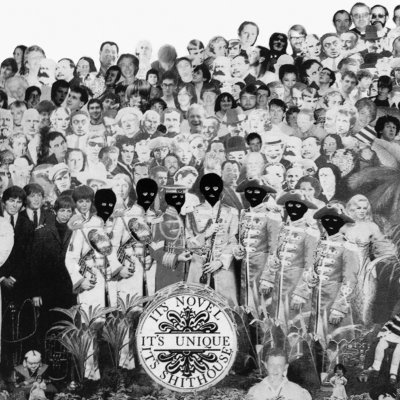
This Is Serious, Mum
SOUNDTRACK:
A Return to the Royal Family
"As a dog returns to his vomit, so a fool repeats his folly."
Proverbs 26:11
Character Recognition
Neva ("the lesbian") = the Queen of Whores
Richard = Henry Tyler
Frank/Judy ("the transwoman") = Irene (?)
Y Bar = Bar Thirteen Negro
Suggested Vocabulary for Reviews
Adjectives:
Controversial
Gritty
Low-rent
Marginalised
Mundane
Piteous
Seamy
Seedy
Sloppy
Sordid
Tawdry
Uncouth
Unrequited
Nouns:
Desire
Destruction
Dive
Exposure
Love
Low life
Margins
Outcast
Underbelly
Conclusion: Yet Another Example of the Banality of Transgression
This Is Serious, Mum
SOUNDTRACK:

November 5, 2019
This is a Whitman's sampler of characters and their varying slow burn relationships with Neva, a magical Christ-like figure cursed/blessed with the power to dispense seemingly endless love. But this is delicious, vulgar, beautiful, sick Vollmann. One chump's polished turd is another's oxygenated jewelry. Some sulk in the moonlight as others bask in surplus sunlight bouncing off of a big space rock. However, all of us are users, abusers and addicts of love.
I walked away from this book with a much higher awareness of the worth of everyone around me. The A-Listers, the understudies, the chorus, the backstage crew, the audience, the ticket takers, the folks in the alley behind the theater.
I walked away from this book with a much higher awareness of the worth of everyone around me. The A-Listers, the understudies, the chorus, the backstage crew, the audience, the ticket takers, the folks in the alley behind the theater.
February 21, 2020
how do i describe this sprawling story of the sordid and the sad in a little capsule? as we can expect from vollmann, no one can keep their happiness longer than the chemical half-life of it. the lesbian is maybe supposed to be jesus but she's more of the stranger in the strange land, a strange land that the author has visited before but maybe never with more focus. the story is all unhappiness, the characters all wounded and exposed, and it's still all quite beautiful.

March 22, 2020
In the perhaps-uncustomarily brief Afterword appending his latest not-at-all-brief novel—one of a number of them set primarily in San Francisco’s Tenderloin district—William T. Vollmann confesses that “THE LUCKY STAR may be my most cynical book. Sexual abuse, street crime, poverty, illness, police violence and addiction saunter through its pages, dressed in the lurid livery of false consciousness.” Perhaps you have yourself read some Vollmann and have some idea of how varieties of “false consciousness” operate in his work. Very often it can be detected in caustic irony or humour so dark it could hardly be expected to elicit reliable chortles—you'd be excused for imagining it might instead render the average reader a trifle queasy. Take a line from the new novel currently under consideration, in which our narrator, Richard, unambiguously meant to be understood as a sort of conceptual Vollmann surrogate, notes with horrendous faux bonhomie that “I sincerely wanted what was best for Neva; I was as responsible a citizen as the husband who stabbed to death his runaway wife for the sake of the children.” That line comes fairly late in the book. By the time we get to it, there can be no mistaking that Richard is not anything like a blasé sociopath snide in his disavowal of empathy, but rather all too empathetic, a man waylaid in a collective purgatory of traumatized and discarded souls whose anguish he cosigns and thereby co-owns, a lower depths fellowship, “all of us,” as he summarizes much earlier, “who had ever been spat on.” The “false consciousness” inherent to the brief ironic fragment quoted above is less malice than symptom, expression of pervasive hurt and hurtful rationalizations, the habitually spat upon person’s sense of the everyday violence endemic to the social field, the violence to which marginalized people are always vulnerable and which they all too often internalize, learning to do cruelty to themselves and to their habitually spat upon fellows. It is a little bit of dry humour almost entirely lacking in humour, a joke that we might imagine wishes to deflect, if not for the fact there can be no question of deflection when Richard has occasion to make such “jokes.” Why? We have come to know full well that the extreme pain Richard experiences as a matter of routine requires far stronger drugs to enable even the most fleeting remediation. The dryness of that unpleasant non-joke finds a parallel at the end of Vollmann’s Afterword, the author addressing the title of his novel and how he more or less had it forced upon him, everyone at Viking, his long-suffering editor Paul Slovak perhaps most especially, pleading that he agree to abandon the original one he much preferred. Following a somewhat calculatedly pathetic remonstration, Vollmann closes by addressing the reader directly, the “false consciousness” here playfully affected: “Reader, please do keep my secret. Don’t tell anyone what the real title is.” The imposed title, or the title ultimately selected on account of an imposition (or so the author insists), is actually quite a fine one, resonating as it does ever so nicely with another bit of tacit cynicism early in the novel proper, another example extremely consonant with the previous two I have rapidly fielded. This example, crucially, involves screen legend and larger than life tragic figure Judy Garland, the veritable patron saint of Vollmann’s novel, destroyed both by the calumny of her world and by herself, though by herself only insofar as she was an extension of the world which consigned her to her grim and extremely public bondage. “Hadn’t Judy Garland found herself a lucky star?” The line may on the surface seem innocuous, but the further you progress in this novel the more you will have cause to reflect upon its brutal irony. Judy Garland who, as a twelve-year-old, could “already sing as if she were a woman whose heart had been hurt,” who floundered haplessly "pretending to be a little girl, pretending to be a happy wife and mother, giving and giving until she broke.” Though the figure of Judy Garland is polyvalent and dynamic within the broad (not to say dense) schematics of THE LUCKY STAR, it might serve us to pinpoint two crucial components of the mythos: 1) a woman who codepedently gives of herself out of a compulsive need for adulation until she is used up and despoiled; 2) a supernatural performer and epochal icon, representative of a kind of enhanced feminine ideal, beloved especially to the queer community (or queer communities). Two principal characters, “the lesbian” Neva and “the transwoman” Judy, will come to embody distinct elements of this already split mythos. “I believe that many of us lead sad lives without knowing it,” writes Vollmann near the beginning of his Afterword, “and that our society is sick.” Vollmann sees himself as cynical with regard to the way he comes at the society, mirthlessly japing its sundry monstrosities, its cruelty and its stupidity and its ghastly consumerist zeal. It is the people with whom he sympathizes, especially people on the margins who suffer terribly. Though he wishes to (and succeeds at) creating a literary work rich in pathos, he does not shy away from detailing the ways in which his suffering creations have been inculcated by their society, especially on account of how they have been infected with a toxic need that in turn cannot help but grow gangrenous. That the aforementioned Neva and Judy are very often named for their descriptors, “lesbian” and “transwoman,” could very well lead us to a discussion of Vollmann’s original preferred title for the novel, but I am going to go along with his fatuous prohibition and abstain from telling you what that title is or was. Suffice it to say, the book originally took the name of one of these inadequate and actively-marginalizing labels, these labels key to how the society at large stratifies its modes of exclusion. Though I have already revealed the two characters we might have cause to deem the principals, the novel revolves around a number of characters, the majority of them regulars at a Tenderloin bar, the Y Bar, a little ways up the “gentle slope of lower Jones Street.” There is the narrator Richard, the Vollmann surrogate, perhaps something like the William the Blind figure from the author’s SEVEN DREAMS cycle, resident (at least for a time) of the Amity Hotel; Selene, the transwoman (a sex worker who sleeps with men but who desires to be with women, considering herself a lesbian); Letitia; the magisterial and opportunistic (though queer by preference) Xenia; Samantha (Selene’s best friend) and Shantelle (black sex worker and the transwoman Judy’s “frenemy”); there is also Sandra and her older boyfriend “the straight man,” Hunter, a young lesbian and a student, Francine the bartender, and a number of others. The transwoman Judy is in a relationship with another regular, a man who at one point we come to understand possesses the surname Slager, though he is otherwise uniformly referred to as “the retired policeman,” the label once again an inadequate means to circumscribe or reduce what is far more complicated (and fully human) than may at first appear to be the case. The retired policeman is a cruel misanthrope who beats and humiliates Judy, she in turn cherishing his brutality to a large extent on account of its constituting not only attention, but the kind of attention she has come to believe she deserves, the violence visited upon her since childhood having seen her mutate over time into a species of desperate masochist. Though the retired policeman is unspeakably vile, his is also a form of tenderness that has itself become terribly malformed, he himself a product of his own contexts and sundry traumas. The detective's need to know, to infiltrate, and to "arrest" are a byproduct of impotence, itself both cause of and effect of psychospiritual pain. The catalyst for THE LUCKY STAR is the entrance of Neva, the lesbian, a woman who has herself mutated, turned witch by an island coven, her own history of abuse and suffering put to work in the fostering of a mandated martyrdom. She comes to assume the part of the Judy Garland mythos that is called upon to give of itself until used up, despoiled. A magic serum causes Neva to appear no more than twenty or twenty-five years of age, though in fact she is a woman approaching sixty. Having been conscripted into her new martyr’s cause by the Jewish island witch lady Reba, Neva has been sent off with her enabling serum, a bottomless satchel of $100 bills, and the directive/warning that “you’re going to love them all the same, but the ones who will love you as broken things are the ones like you.” The novel proper, narrated by Richard, begins after the death of Neva and takes the form of a forensic-type reconstruction of her life leading up to and terminating in her giving of herself as sexual martyr to the entire dramatis personae of the Y-Bar and adjoining domains. It is a reconstruction that would have to involve a great deal of imagination and projection, this explicitly creative business (or creative license) sometimes directly addressed. Within the novel, Neva, whose originally mysterious origins are elaborated in detail, is likened to, in her transformed incarnation, a bodhisattva. (In the Afterword Vollmann presents her as a Christ figure.) “Aquinas distinguishes between love as an appetite and love as a willed act. What the lesbian offered was the second.” If Neva arrives to give herself sexually to all who may need palliation (men, women, and other), doing so as a willed act, those who come to her for palliation come with their hurt, their loneliness, and a destabilizing overflow of utterly insatiable appetite. It is need itself that is destructive and terminal. Just ask any addict. (It should hardly need mentioning that the Tenderloin marginals who seek out Judy with increasing desperation are likewise people with a tendency to look for ersatz happiness via chemical means.) Richard writes parenthetically (in literal parentheses) that “we loved her because we could not help it, but how that made us feel was a variable matter.” This has all the hallmarks of a veritable time bomb, no? Various deadly sins are excited, various sinners suddenly at direct odds. “Whenever we came to Neva our hearts were pounding; and when we left we found ourselves bedazzled, dizzy, exhausted, with headaches, sore throats and various photosensitivities. The better Neva made us feel, the more depleted we were afterward. How could it be any other way?” Other commentators have already noted that Vollmann’s endless tableaux of sex acts and Neva-wrought ecstasies are strange, perhaps increasingly unpleasant, and in their accumulation productive of a certain sorrowful deadening, inescapably bleak. The narrator Richard at one point mentions his editor having written to ask him if all the climaxes and so forth aren’t perhaps going to turn readers off. Hidden among the copious “Notes on Sources” at the back of the book there is one such note revealing that Vollmann did evidently receive a disquieted memorandum (a more or less verbatim one) from long-suffering Paul Slovak. It seems clear to this reader, a recovering drug addict and alcoholic himself, that much of this business has to to with the tragedy of diminishing returns, the progressive nature of an illness which finds the solution in time achieving for the original problem that the, ahem, solution ineffectively treats, its comprehensive surreptitious triumph. We know that Neva, “a candle that burns on and on without oxygen,” is to be slowly drained or otherwise snuffed, and there is much to a passage that hints at her immediately forthcoming demise by beginning “When one begins to come down from low-grade ecstasy mixed with meth…” Need will destroy those whose need can never be met. There can only be hope for those who treat the need like a condition rather than serving it like a slave. It is Judy the transwoman, modelling her ideal of femininity after her legendary namesake—the woman who sang about the hopeful mystical somewhere at the other end of the rainbow—who is the most broken, the most heartlessly discarded, and as such the most purely needful. We expect Judy to maintain her position as purely tragic vessel, but I am not sure it proves quite so simple, and neither does Vollmann, who in his Afterword would seem to conclude that finding a tiny modicum of hope for his Judy was perhaps his greatest achievement in carrying out the undertaking that THE LUCKY STAR constitutes. Judy sees stardom and adulation as the only drug that could possibly be half as worthy as her precious Neva, the loving of whom is in practice almost pure torment. For the transwoman to be loved is to be seen, humiliation the cost of doing business. “Just as the Wicked Witch of the West was the true friend who slipped Judy Garland her amphetamines on the set of THE WIZARD OF OZ, it might fall out when Francine declined to play savior that Snake Goddess Shantelle supplied the other Judy with just the right happiness pills, thereby profiting not only in cash, but also in entertainment, because when the transwoman got high enough, whatever humiliations her loving public inflicted quickly slopped out of her consciousness, so that the fun could continue all night, in the spirit of children torturing a small animal for hours, careful not to let their victim escape into premature insensibility. To tell you the truth, this was more fun than Judy’s so-called act.” The need in Judy shows, it has a quality of the obscene to it, inciting further cruelties from those around her. Again, Vollmann paints it pretty clear: “Judy’s face was crumpled with pain and slimy with tears. It was the ugliest face I have ever seen—the waste product of hatred.” This degradation is not only a hiccup on the road to phantom fame, it very much reflects Judy's understanding of what it means to be a woman, this having been established for her by virtue of her experiences within her society. Judy will be slipped a judicious microdose of the yellow serum and give at least one enthusiastically applauded performance at a club called the Pink Apple, having achieved momentary success as a diva by way of embracing and making use of her own perceived disgustingness. In his Afterword, Vollmann reveals that when he asked his “genderqueer friends in Seattle” what advise they would give a self-hating and self-destructively codependent transwoman like Judy, they said “We’d tell her to embrace her inner disgustingness.” Vollmann considered this a key revelation. It may seem like odd consolation. Sure, okay. But I don’t think you could call it false consciousness.

Read
February 26, 2020It's been a whole generation since the Royal Family (2000), Vollmann's last opus set in the Tenderloin. In that earlier book, he seemed to say just about everything that could be said about the illicit economy in the few city blocks bound by van Ness, McAllister, Geary, and Market. So why now return to his old gritty haunts? is it simply for nostalgia's sake? Not exactly. Lucky Star is a very different book. His slightly creepy obsession with whores has turned into a slightly dopey obsession with Woman-in-general as the great goddess and life-giver. Large parts of this book basically read like soft core porn - emphasis, alas, as much on soft core as porn...
In addition to the Royal Famiy, Vollmann is also the author of Rainbow Stories (1989), which I consider the single greatest literary portrait of San Francisco. Unfortunately, I wouldn't say he's a terribly acute observer of the city in the 21st century; he mostly just grumbles about the kids on their smartphones. In short, for me Lucky Star was a bit of a disappointment. All the same, it did have its moments. I'll remember the description of a father who loves his child by forgetting what he knows about them.
In addition to the Royal Famiy, Vollmann is also the author of Rainbow Stories (1989), which I consider the single greatest literary portrait of San Francisco. Unfortunately, I wouldn't say he's a terribly acute observer of the city in the 21st century; he mostly just grumbles about the kids on their smartphones. In short, for me Lucky Star was a bit of a disappointment. All the same, it did have its moments. I'll remember the description of a father who loves his child by forgetting what he knows about them.
June 28, 2026
The book follows a Tenderloin bar's regulars, sex workers, addicts, and barflies, who orbit around a trans woman they treat almost like a saint or icon, weaving their own lives and devotion around her.
The San Francisco bar is filled with dreamers, hustlers, drinkers, lovers, ex lovers, future ex lovers, and enough longing to stock a pharmacy. Francine pours drinks. Xenia sells reinventions by the hour. Shantelle chases affection with the stamina of a marathon gambler. Judy wrestles with age, desire, memory, and her own reflection. Selene prepares for marriage. Every stool carries a history. Every cocktail carries a confession. Every conversation carries evidence of unrequited desire.
The title shines with cheerful irony. Lucky appears in the title. Luck appears scarce in daily life. Characters chase romance, money, beauty, companionship, dignity, escape, and fresh beginnings. Each pursuit sparkles like a slot machine. Each payout arrives in nickels.
Vollmann turns the bar into a constellation. Every patron becomes a star. Some stars burn bright. Some stars flicker. Some stars drift across the room trailing cigarette smoke and old regrets. A lucky star guides sailors across dark water. These lucky stars guide patrons toward another round.
Vollmann gives generous space to transgender lives without polishing away rough edges. Vanity struts through the room. Jealousy orders another drink. Fantasy powders its nose in the restroom. Hope keeps checking the door. Age keeps checking the mirror.
Several scenes sparkle with comic energy, then pivot toward loneliness with startling grace. A wedding celebration gathers joy and sorrow into the same glass. A casual remark opens decades of memory. A flirtation blooms. A friendship frays. Time keeps pouring.
Many novels chase plot like a greyhound chasing a mechanical rabbit. This book prefers people. Character after character steps forward carrying wounds, jokes, desires, grudges, and private myths. Vollmann listens with unusual patience. Even brief exchanges gather emotional weight. Even background figures leave fingerprints on the imagination.
My favorite feature involved the language of chance. Even though the original intended title of the book was totally different, stars, wishes, bets, risks, and dreams drift through the book like chips across a gaming table.
Everyone gambles on love. Everyone gambles on identity. Everyone gambles on tomorrow. The house keeps collecting. The players keep playing. The Lucky Star offers humor, heartbreak, compassion, and hard earned wisdom. It gazes at people standing near society's margins and grants each person full gravity. Every star in this sky shines with a different color. Together they create a strange and beautiful night.
A lot of my criticism centers on how a story that wants to dignify a marginalized person ends up, in its backstory, doing something that sits very uneasily next to that goal. It's the kind of contradiction that makes the book hard to recommend without a heavy asterisk.
Vollmann built his career on radical empathy projects, embedding with sex workers, the homeless, and the violent fringe across decades of nonfiction and fiction (the Seven Dreams cycle, Europe Central, The Royal Family) to argue that society discards people it should be looking at directly.
The Lucky Star sits in that tradition. I can see what the book is reaching for, dignity for people on society's margins, the cost of worship, the gap between how someone is seen and who they are.
Vollmann clearly wants the reader to sit with discomfort rather than look away. Apart from vomit and/or sex on every page, major literary attention has gone to how the novel handles her childhood and adolescence, and that's the place where, for me, the project's stated compassion runs into material I think a serious work owes more caution.
A writer chasing the marginalized voice can end up reproducing the very harm the project claims to expose. That tension is, candidly, where my admiration for Vollmann's ambition stops and my discomfort with this particular execution starts.
The question of who gets to be seen and on what terms hasn't gone away, if anything streaming culture and influencer worship have made it sharper. The question the book asks still bites. Whether this is the book I'd hand someone to ask it, that's where I hold back.
❤️ 🇮🇱
The San Francisco bar is filled with dreamers, hustlers, drinkers, lovers, ex lovers, future ex lovers, and enough longing to stock a pharmacy. Francine pours drinks. Xenia sells reinventions by the hour. Shantelle chases affection with the stamina of a marathon gambler. Judy wrestles with age, desire, memory, and her own reflection. Selene prepares for marriage. Every stool carries a history. Every cocktail carries a confession. Every conversation carries evidence of unrequited desire.
The title shines with cheerful irony. Lucky appears in the title. Luck appears scarce in daily life. Characters chase romance, money, beauty, companionship, dignity, escape, and fresh beginnings. Each pursuit sparkles like a slot machine. Each payout arrives in nickels.
Vollmann turns the bar into a constellation. Every patron becomes a star. Some stars burn bright. Some stars flicker. Some stars drift across the room trailing cigarette smoke and old regrets. A lucky star guides sailors across dark water. These lucky stars guide patrons toward another round.
Vollmann gives generous space to transgender lives without polishing away rough edges. Vanity struts through the room. Jealousy orders another drink. Fantasy powders its nose in the restroom. Hope keeps checking the door. Age keeps checking the mirror.
Several scenes sparkle with comic energy, then pivot toward loneliness with startling grace. A wedding celebration gathers joy and sorrow into the same glass. A casual remark opens decades of memory. A flirtation blooms. A friendship frays. Time keeps pouring.
Many novels chase plot like a greyhound chasing a mechanical rabbit. This book prefers people. Character after character steps forward carrying wounds, jokes, desires, grudges, and private myths. Vollmann listens with unusual patience. Even brief exchanges gather emotional weight. Even background figures leave fingerprints on the imagination.
My favorite feature involved the language of chance. Even though the original intended title of the book was totally different, stars, wishes, bets, risks, and dreams drift through the book like chips across a gaming table.
Everyone gambles on love. Everyone gambles on identity. Everyone gambles on tomorrow. The house keeps collecting. The players keep playing. The Lucky Star offers humor, heartbreak, compassion, and hard earned wisdom. It gazes at people standing near society's margins and grants each person full gravity. Every star in this sky shines with a different color. Together they create a strange and beautiful night.
A lot of my criticism centers on how a story that wants to dignify a marginalized person ends up, in its backstory, doing something that sits very uneasily next to that goal. It's the kind of contradiction that makes the book hard to recommend without a heavy asterisk.
Vollmann built his career on radical empathy projects, embedding with sex workers, the homeless, and the violent fringe across decades of nonfiction and fiction (the Seven Dreams cycle, Europe Central, The Royal Family) to argue that society discards people it should be looking at directly.
The Lucky Star sits in that tradition. I can see what the book is reaching for, dignity for people on society's margins, the cost of worship, the gap between how someone is seen and who they are.
Vollmann clearly wants the reader to sit with discomfort rather than look away. Apart from vomit and/or sex on every page, major literary attention has gone to how the novel handles her childhood and adolescence, and that's the place where, for me, the project's stated compassion runs into material I think a serious work owes more caution.
A writer chasing the marginalized voice can end up reproducing the very harm the project claims to expose. That tension is, candidly, where my admiration for Vollmann's ambition stops and my discomfort with this particular execution starts.
The question of who gets to be seen and on what terms hasn't gone away, if anything streaming culture and influencer worship have made it sharper. The question the book asks still bites. Whether this is the book I'd hand someone to ask it, that's where I hold back.
❤️ 🇮🇱

March 13, 2020
This is a hard one for me. I love the idea and intention behind this book as described by WTV in the afterward. But the execution of the novel was not my cup of tea. Others may disagree, but I just didn’t get much out of this one.
June 30, 2021
Neva, the sexual martyr of the underworld, turns cervical mucus, puke, urine, spirts and squirts of every variety into sacraments for the congregation of fringe-characters orbiting her. Her intentions are unclear, but she appears to give everything for nothing, which doesn’t sit well with the Retired Policeman, who spends the course of the novel looking for any way to besmirch her. There are sections that remind me of De Sade: many passages of very specific fetishes explored in detail. The “other” inhabited by Vollmann in this tome isn’t Nazis, Stalinists, Native Americans or their colonizers, but women. It’s insightful and only sometimes devolves into the goofy sex-obsession of an old man. I don’t know if spending a month with this was a positive for my life, but it was entertaining.

partially-read
May 21, 2025After putting this aside for a while, I came back to give it another go. Sadly, this is the first Vollmann book that I've attempted that just felt like a misfire, and I'm not in the mood to go much further with it... at least for now.

December 2, 2020
The Lucky Star feels like the culmination of a number of things for Vollmann. Though clearly he’s still a the height of his abilities. It’s the final book In his transgender series, and represents what he’s best at - showing the good and bad in the lives of the most marginalized, their histories, spirit and flaws. The lucky star gives a narrative where no desire is checked, and feeling left unexplored, and unfolds in a sprawling maximalist format approaching an old Russian drama, but of course with a throughly modern voice. Vollman’s commentary at the end eliminates the need to guess at an interpretation, and also illuminates just how curious he is to explore life, good and bad. It’s fearless writing... again!

February 24, 2025
I'll have to chew on this. Not an easy novel. Judy wears the reader down. Eventually, too, does Neva (and the others). Nobody gets out alive or with their dignity, I guess.

May 11, 2020
Writing a book should be self-indulgent, but not too much. Or, maybe, it depends on which direction your indulgence of self might lean. (That's where reasonable editors come in.) I gave a copy of a WTV book to a friend twenty odd years ago and he returned it, half-read, saying, the guy's just a perv. Well, my friend's a bit of a perv, too. Might have been Whores For Gloria? Anyhow, I sure have loved me some Vollmann books in the interim. Fathers and Crows? That whole Seven Dreams series. Burning intelligence, and rage, and exhaustive research... Devastating. The Royal Family? So good. This big book, however- which is actually like a pale ghost of The Royal Family- kind of skims along the surface, a story of several regulars in a San Francisco tenderloin bar, with lots of repetition- mostly of the sexual sort; a treatise on happiness, personal sacrifice for the benefit of others, sketches of the marginalized. Some memorable characters and poignancy but overall could have been reduced by two thirds.

April 11, 2020
3.5 stars--I'm not sure there's anything here we didn't already get in TRF and WfG, but it's still good. I confess I don't find the misery of prostitutes--even one such as Neva--as endlessly fascinating as Vollmann and, further, I'm impatient for him to complete the Seven Dreams books already, so...yeah. Also, good gravy but the sex writing is bad at times! The "mystical intensity" he tries to evoke often results in unintentional humor. (The NYTimes reviewer picked one of my "favorite" similes, in which breast-sucking is compared to a bird-dog gently retrieving a dead fowl to the hunter's waiting hand, which...I guess...would be...one, uh, way to look at it?) Happily, here as in any Vollmann novel, there are plenty of other compensations to be had, so the occasional full-body cringe is a small price to pay.

April 20, 2020
2.5 Stars
Full Review
Vollmann is known for being somewhat difficult with his editors and often refusing to make cuts, sometimes even taking lower royalties and advances to offset the risk of the size of his books. However, this is one that really would have benefited from a lot of cuts and rearrangement. There’s a pretty good 300-400 page book inside this 600 page one. As it stands, I really can’t recommend this book unless you’re a hardcore Vollmann fan. Otherwise, you’re better off picking up The Royal Family.
Full Review
Vollmann is known for being somewhat difficult with his editors and often refusing to make cuts, sometimes even taking lower royalties and advances to offset the risk of the size of his books. However, this is one that really would have benefited from a lot of cuts and rearrangement. There’s a pretty good 300-400 page book inside this 600 page one. As it stands, I really can’t recommend this book unless you’re a hardcore Vollmann fan. Otherwise, you’re better off picking up The Royal Family.
May 10, 2023
DNC. Barely got into the book and was deeply off put by the representations of gender and sexuality. At least in the beginning, the author doesn't really name some of the characters, instead, they're just referred to repeatedly as "the transgender woman" and so on. Perhaps this was intentional and later on the characters get to be more dimensional than just their gender/sexuality.

March 1, 2025
The landscape of William T. Vollmann's The Lucky Star is similar to his previous underworld epic, The Royal Family. There's even a point where our character reaches a particular stage in an open relationship where they're taking a mouthful of urine. There's a lot of bodily fluids here, though. I don't know as many Judy Garland quotes but there's one Yogi Bera said: It's déjà vu all over again. Where was this lengthy tome going? According to the last note on the matter from the author, we're holding the last volume of an incomplete trilogy. I am certain that Vollmann attained a deeper understanding of his identity enough to get behind 600+ pages of degradation and abuse to express a point made by himself that wasn't so obvious he couldn't trust the reader to gather as much from the text alone. Who is a writer without that trust? Especially with a novel this cumbersome? Glad I was told afterward than come to any initial conclusions on my own. Otherwise, another glass of frosty yet bitter beer.

March 15, 2020
After finishing the novel, I was finding myself wishing the Afterword had come as a prologue since the title The Lesbian changed the story for me. This is a novel that grows on you.

March 24, 2026
so much boring dialog. such a boring plot. the afterward was the best part
this book should have been 200 pages at most
this book should have been 200 pages at most

February 21, 2023
This book nearly did me in. I genuinely do understand why he resisted cutting it by a couple hundred pages, but several times I found myself sorely wishing he had done so. The only book coming to mind that was harder for me to finish was from another postmodernist William: Gass’s The Tunnel, but for very different reasons. Vollmann is hit or miss for me, and while I think this book has a lot to say, enjoying a text is something I value, and I absolutely did not enjoy it.

July 26, 2020
This is a 3.5/5
*My hands are still in surgeon gloves 24/7 and I'm tapering off of painkillers, so I'll type until the pain arises again, so by no means is this approaching the totality of my thoughts on this book.
"The Lucky Star", is the second part in a trilogy that will come to a close with another novel about around the time . . . it might be awhile. I have not read the first part in the trilogy, but I can almost be sure that, "The Lucky Star", has more in common with my favourite William T. Vollmann novel, "The Royal Family". Set in poorer areas of California, specifically San Fransisco, we follow a sordid collection of the hopeless ones whose lives rise or fall according to the success of their various delusions and dreams. Then, Neva, a Goddess, arrives and commits every recorded sexual act, and then some, with our cast of characters - it's not as disgusting, or erotic, as that may suggest, but rather more of an overused way for Vollmann to express to the reader that what these forgotten characters need most of all is love, understanding, somewhere warm and comforting to possess that they can return to.
It's a long book, Vollmann is perhaps too viciously blunt about certain themes, and the persistent adoration of Neva can become tiring. And while the prose is typically strong, it is far from his finest achievement - that belongs to, "Europe Central", "The Royal Family", "The Rainbow Stories", and, "Last Stories". In, "The Lucky Star", it's easy to fall into the world of nighttime San Fransisco, with its neon-lit, rain-soaked streets and blinking Asian food restaurants and overpriced bars nestled in a a shadow, day and night, of the new, absurdly-named, Silicon Valley companies crammed into their own otherworldly districts. This is the atmosphere that hooked me with, "The Royal Family", and brings to mind, especially when the wife-beating, retired policeman is investigating Neva, who, "just don't look right".
There's a lot of comparisons of William T. Vollmann, and this novel, to authors and works that I can't see much connection to, but if there's one that runs throughout his career, it has to be Dostoevsky - a focus on the mad and forgotten, often criminal, characters, the byproducts of their particular nation in a specific age; more fixated on the grotesque nightmares of a person's interior than their exterior actions; the story comes to a proper end, but we're dealing with stories that don't lead to large conclusions; reflecting the failings of larger institutions, and moral and class systems, in the protagonists; using forceful, and not overly dense and decorative, prose to to describe realistic situations that open the reader up to a story that's going to leave them with, hopefully, a better understanding and an appreciation, and/or horror, of the novel's world and its inhabitants. Basically, Vollmann is doing work that matters, and more often than not, he's writing miles ahead of his peers. So it's a bit frustrating that the few kinks, along with the more fluid and less poetic prose, fogged over all that this novel has to offer, for I'm glad it exists, but I know it had all the ingredients to be something much more. And one last thing: the afterword, rather than being the disservice to the book, turns out to be a touching send off that also functions as a sort of fuck you to his publisher for not allowing him to run with his original title due to his gender and - this fucking term - "the times we live in" - don't skip it.
*My hands are still in surgeon gloves 24/7 and I'm tapering off of painkillers, so I'll type until the pain arises again, so by no means is this approaching the totality of my thoughts on this book.
"The Lucky Star", is the second part in a trilogy that will come to a close with another novel about around the time . . . it might be awhile. I have not read the first part in the trilogy, but I can almost be sure that, "The Lucky Star", has more in common with my favourite William T. Vollmann novel, "The Royal Family". Set in poorer areas of California, specifically San Fransisco, we follow a sordid collection of the hopeless ones whose lives rise or fall according to the success of their various delusions and dreams. Then, Neva, a Goddess, arrives and commits every recorded sexual act, and then some, with our cast of characters - it's not as disgusting, or erotic, as that may suggest, but rather more of an overused way for Vollmann to express to the reader that what these forgotten characters need most of all is love, understanding, somewhere warm and comforting to possess that they can return to.
It's a long book, Vollmann is perhaps too viciously blunt about certain themes, and the persistent adoration of Neva can become tiring. And while the prose is typically strong, it is far from his finest achievement - that belongs to, "Europe Central", "The Royal Family", "The Rainbow Stories", and, "Last Stories". In, "The Lucky Star", it's easy to fall into the world of nighttime San Fransisco, with its neon-lit, rain-soaked streets and blinking Asian food restaurants and overpriced bars nestled in a a shadow, day and night, of the new, absurdly-named, Silicon Valley companies crammed into their own otherworldly districts. This is the atmosphere that hooked me with, "The Royal Family", and brings to mind, especially when the wife-beating, retired policeman is investigating Neva, who, "just don't look right".
There's a lot of comparisons of William T. Vollmann, and this novel, to authors and works that I can't see much connection to, but if there's one that runs throughout his career, it has to be Dostoevsky - a focus on the mad and forgotten, often criminal, characters, the byproducts of their particular nation in a specific age; more fixated on the grotesque nightmares of a person's interior than their exterior actions; the story comes to a proper end, but we're dealing with stories that don't lead to large conclusions; reflecting the failings of larger institutions, and moral and class systems, in the protagonists; using forceful, and not overly dense and decorative, prose to to describe realistic situations that open the reader up to a story that's going to leave them with, hopefully, a better understanding and an appreciation, and/or horror, of the novel's world and its inhabitants. Basically, Vollmann is doing work that matters, and more often than not, he's writing miles ahead of his peers. So it's a bit frustrating that the few kinks, along with the more fluid and less poetic prose, fogged over all that this novel has to offer, for I'm glad it exists, but I know it had all the ingredients to be something much more. And one last thing: the afterword, rather than being the disservice to the book, turns out to be a touching send off that also functions as a sort of fuck you to his publisher for not allowing him to run with his original title due to his gender and - this fucking term - "the times we live in" - don't skip it.

September 1, 2026
Another great novel from Vollmann, the afterword pulls everything together and all of the ideas all click into place.
November 23, 2020
Not my first Vollmann - in fact I've read and loved much of his other work - but this was the first of his novels set in the Tenderloin district that I've read. I wasn't sure what to expect, but I did enjoy it overall, although the book has its flaws.
I do agree with the criticism about the novels repetitiveness - it probably could've been a bit shorter - and much of the sympathy that I had for the characters was somewhat diluted by the "pornographic" content.
Furthermore, despite the authors best intentions, I think that readers might consider him out of step with the current LGBTQ movement and I'm concerned that this may hinder his legacy.
However, some passages had me in tears (specifically a passage when the Judy Garland character recounted the homophobia and transphobia that she was subject to) and for someone like me, in the end, I think that the novel had its desired effect - wanting to have more sympathy for others.
In spite of its length, The Lucky Star was also my quickest Vollmann read. It only took me a few weeks. Other books, like Europe Central, Fathers and Crows and The Dying Grass, I really took my time and my reading spanned over a few years.
This book may not be the best entry point for a Vollmann neophyte, but if is, give the book all of your attention and a real chance.
I do agree with the criticism about the novels repetitiveness - it probably could've been a bit shorter - and much of the sympathy that I had for the characters was somewhat diluted by the "pornographic" content.
Furthermore, despite the authors best intentions, I think that readers might consider him out of step with the current LGBTQ movement and I'm concerned that this may hinder his legacy.
However, some passages had me in tears (specifically a passage when the Judy Garland character recounted the homophobia and transphobia that she was subject to) and for someone like me, in the end, I think that the novel had its desired effect - wanting to have more sympathy for others.
In spite of its length, The Lucky Star was also my quickest Vollmann read. It only took me a few weeks. Other books, like Europe Central, Fathers and Crows and The Dying Grass, I really took my time and my reading spanned over a few years.
This book may not be the best entry point for a Vollmann neophyte, but if is, give the book all of your attention and a real chance.

May 18, 2021
4.5. For whatever this is worth to you, this might be the most "William T. Vollmann" William T. Vollman book I've read. By which, I mean that it's a heavy tome of insane characters in brutal circumstances, mixed w/ a tinge of surrealism. And I jumped into it w/ blind faith in Mr. Vollmann. And somewhere along the line, these characters & situations come to life: purely authentic & somehow, frighteningly, relatable. Great work.

February 6, 2026
This is my first Vollmann. Maybe not the best place to start. I read the entire book in less than a week. At times it felt like a slog, I just wanted to get through it. What is there to say. First of all, on the surface, this is a disgusting book. There are so many triggers. Thankfully I am of an age that I am not going to run to the nearest mother figure and cry about that. I grew up in a world where critical thinking still existed.
Every single character in this book has suffered some form of abuse, either explicitly outlined in the story or offstage. The character who has been and continues to be abused to most is Neva...our magical whore, Christ-figure who 'loves' everyone and whom everyone 'loves' in return. But is it really love? Given the manner in which the love is expressed, I would say its all simply lust with one exception: the retired policeman. I think J.D. is the only character in this novel who actually acts from a position of love. He is also the only character who does not succumb to Neva's charms.
J.D. actions throughout the novel are motivated by his love for Judy. He wants her back by his side. Even though their relationship is abusive, it is consensual and seems to be what they both want and are comfortable with. J.D. really loves Judy. Judy, on the other hand, is very confused and narcissistic in her behavior. I must admit I wanted to literally kill Judy many times while reading this book. She really wore on me and I was impressed by the tolerance the other character showed her...especially Neva. She was given a chance at opportunities the others were not and showed time and again she was not ready. In the end, her quest to be a woman is totally and completely rejected and I believe rightfully so. She'll never be a 'real woman'. Makes one wonder if this is a statement about transgender women in general or just Judy. I guess only Vollmann knows for sure.
The sexually explicit episodes in this book are pervasive. I found that initially they were titillating but as the novel wore on, so did the sexual descriptions. It also seems that as the sexual episodes wore on, Neva seemed to wear down. At first she was 'above' the clientele of the Y bar but as the story goes on, she starts to take drugs like all the others. One has to wonder if she takes them to keep her energy up or to numb herself from the day to day banality of continuous sex. at first her 'i love yous' seem very believable but as she wears on, the members of her community begin to question her sincerity and her behavior begins to reflect something isn't quite right. By the way, addiction is also a common thread in this story. Everyone is addicted to something and all of them are addicted to Neva.
When I finally finished reading all 627 pages of this book, I didn't have the energy to read the afterword. I will do that later. I admit this novel has given me a lot to think about, but that is often one of the earmarks of a good book. I have 2 more Vollmann volumes on my tbr shelf but they will sit there for a while. His books are not marathon reads, at least not in my opinion. I say read this book at your own risk.
Every single character in this book has suffered some form of abuse, either explicitly outlined in the story or offstage. The character who has been and continues to be abused to most is Neva...our magical whore, Christ-figure who 'loves' everyone and whom everyone 'loves' in return. But is it really love? Given the manner in which the love is expressed, I would say its all simply lust with one exception: the retired policeman. I think J.D. is the only character in this novel who actually acts from a position of love. He is also the only character who does not succumb to Neva's charms.
J.D. actions throughout the novel are motivated by his love for Judy. He wants her back by his side. Even though their relationship is abusive, it is consensual and seems to be what they both want and are comfortable with. J.D. really loves Judy. Judy, on the other hand, is very confused and narcissistic in her behavior. I must admit I wanted to literally kill Judy many times while reading this book. She really wore on me and I was impressed by the tolerance the other character showed her...especially Neva. She was given a chance at opportunities the others were not and showed time and again she was not ready. In the end, her quest to be a woman is totally and completely rejected and I believe rightfully so. She'll never be a 'real woman'. Makes one wonder if this is a statement about transgender women in general or just Judy. I guess only Vollmann knows for sure.
The sexually explicit episodes in this book are pervasive. I found that initially they were titillating but as the novel wore on, so did the sexual descriptions. It also seems that as the sexual episodes wore on, Neva seemed to wear down. At first she was 'above' the clientele of the Y bar but as the story goes on, she starts to take drugs like all the others. One has to wonder if she takes them to keep her energy up or to numb herself from the day to day banality of continuous sex. at first her 'i love yous' seem very believable but as she wears on, the members of her community begin to question her sincerity and her behavior begins to reflect something isn't quite right. By the way, addiction is also a common thread in this story. Everyone is addicted to something and all of them are addicted to Neva.
When I finally finished reading all 627 pages of this book, I didn't have the energy to read the afterword. I will do that later. I admit this novel has given me a lot to think about, but that is often one of the earmarks of a good book. I have 2 more Vollmann volumes on my tbr shelf but they will sit there for a while. His books are not marathon reads, at least not in my opinion. I say read this book at your own risk.
April 5, 2026
an unflinching tale of survivors - marginalised queer folk, in all their struggles, harsh realities, and occasional transcendence. there’s a great quote from vollmann’s afterword, an essential read upon concluding the novel portion, that states: “This is a tale about the violation boundaries, and about those strategies, inspiring, inspiring, pathetic, sacrificial, unhealthy and otherwise, through which the violated try to go on living”.
positioning the narrator, described as “occasionally omniscient”, as a straight cis-male outsider, is a highly effective way of vollmann acknowledging and imbuing the text with his own inevitable shortcomings as someone who is not apart of the communities he is writing about. through this, and his notoriously meticulous research, there is a tremendous grounding of people, story, and location in a reality. another quote from his afterword: “Like my characters, the interviewees deserve far better world than they find. The bigotry, shame and self-hatred that so many of them have faced would have crushed me. In affirming to the world who they are and whom they love, they exemplify a beautiful female strength which occasionally moved me to tears”. he knows his place as an ally, letting himself be a voice for the people he meets, and the characters they inspire, rather than a voice *over* these people feigning some sort of objective distance.
additionally, it is this grounding that makes the flights of mythic and fantastical happenings and references, all the more special and profound when they occur. weaving greek history and literature, with globe-spanning myths and fairytales, the fantasy worlds of celebrity and hollywood, and more throughout the narrative.
positioning the narrator, described as “occasionally omniscient”, as a straight cis-male outsider, is a highly effective way of vollmann acknowledging and imbuing the text with his own inevitable shortcomings as someone who is not apart of the communities he is writing about. through this, and his notoriously meticulous research, there is a tremendous grounding of people, story, and location in a reality. another quote from his afterword: “Like my characters, the interviewees deserve far better world than they find. The bigotry, shame and self-hatred that so many of them have faced would have crushed me. In affirming to the world who they are and whom they love, they exemplify a beautiful female strength which occasionally moved me to tears”. he knows his place as an ally, letting himself be a voice for the people he meets, and the characters they inspire, rather than a voice *over* these people feigning some sort of objective distance.
additionally, it is this grounding that makes the flights of mythic and fantastical happenings and references, all the more special and profound when they occur. weaving greek history and literature, with globe-spanning myths and fairytales, the fantasy worlds of celebrity and hollywood, and more throughout the narrative.
July 24, 2026
This is one of my least favorite Vollmann books, it took forever to finish because I just didn’t want to read it and the whole thing is just a very bleak cynical story full of mean-spirited characters and undeserving victims.
I think the best part of the book is the Afterword where Vollmann explains his intentions in detail and I think you get more out of just reading that than you get out of the actual book. I also think it should have been titled The Lesbian like Vollmann wanted and mentions in the afterword, I associate ‘The Lucky Star’ so much with the Madonna song that my brain linked the two inseparably and I couldn’t get the song out of my head while I was reading it (I realize that’s not a problem with the book but it was really annoying).
This book is a lot and I think if it was most people’s first time reading Vollmann they probably wouldn’t want to read more. This was the final work of fiction of his that I had left to read (until A Table For Fortune comes out) so I’m glad I read it but this was not a book I enjoyed very much. I wish it had played more with the witch/island stuff instead of just going back and forth between people hanging out in a bar and domestic violence. This felt like a worse version of The Royal Family.
I think the best part of the book is the Afterword where Vollmann explains his intentions in detail and I think you get more out of just reading that than you get out of the actual book. I also think it should have been titled The Lesbian like Vollmann wanted and mentions in the afterword, I associate ‘The Lucky Star’ so much with the Madonna song that my brain linked the two inseparably and I couldn’t get the song out of my head while I was reading it (I realize that’s not a problem with the book but it was really annoying).
This book is a lot and I think if it was most people’s first time reading Vollmann they probably wouldn’t want to read more. This was the final work of fiction of his that I had left to read (until A Table For Fortune comes out) so I’m glad I read it but this was not a book I enjoyed very much. I wish it had played more with the witch/island stuff instead of just going back and forth between people hanging out in a bar and domestic violence. This felt like a worse version of The Royal Family.

August 17, 2026
I’d been intrigued by the work of Vollmann for some time before I picked this book up. The premise, though certainly out-there, really intrigued me, and I was curious to find out what the fuss was with his novels.
Having read it, I can say that I understand (and wholeheartedly agree with) the buzz.
The Lucky Star is a novel all about celebrity, idolatry, sexuality and the expression of one’s desire, womanhood, masculinity, the relationship we have with technology and the disconnect it encourages… and a lot more. It’s also, thanks to Vollmann’s deliciously varied use of language, simile and metaphor, one of the most enjoyable reading experiences I’ve had in quite some time.
Though one can argue (and, I think, rightly) that this book is overwritten, the sentences he weaves are so devastatingly beautiful that it makes the former critique redundant. It could’ve been 600+ pages longer and I wouldn’t have cared. The world he creates and the characters he portrays felt, by the end of the novel, like my familiars, though they were unlike anyone I know in my own life.
To be honest, it’s probably a 5-star reading experience for me. I’m just holding off until I see what the rest of his bibliography is like - you can best believe I’m reading everything this guy has ever written!
Having read it, I can say that I understand (and wholeheartedly agree with) the buzz.
The Lucky Star is a novel all about celebrity, idolatry, sexuality and the expression of one’s desire, womanhood, masculinity, the relationship we have with technology and the disconnect it encourages… and a lot more. It’s also, thanks to Vollmann’s deliciously varied use of language, simile and metaphor, one of the most enjoyable reading experiences I’ve had in quite some time.
Though one can argue (and, I think, rightly) that this book is overwritten, the sentences he weaves are so devastatingly beautiful that it makes the former critique redundant. It could’ve been 600+ pages longer and I wouldn’t have cared. The world he creates and the characters he portrays felt, by the end of the novel, like my familiars, though they were unlike anyone I know in my own life.
To be honest, it’s probably a 5-star reading experience for me. I’m just holding off until I see what the rest of his bibliography is like - you can best believe I’m reading everything this guy has ever written!
Displaying 1 - 30 of 50 reviews