

What do you think?

Background to Danger
Kenton's career as a journalist depended on his facility with languages, his knowledge of European politics, and his quick judgment. Where his judgment sometimes failed him was in his personal life. When he finds himself on a train bound for Austria with insufficient funds after a bad night of gambling, he jumps at the chance to earn a fee to help a refugee smuggle securities across the border. He soon discovers that the documents he holds have a more than monetary value, and that European politics has more twists and turns than the most convoluted newspaper account.
280 pages, Paperback
First published January 1, 1937
About the author
Eric Ambler
124 books519 followersSuspense novels of noted English writer Eric Ambler include
Passage of Arms
(1959).
Eric Ambler began his career in the early 1930s and quickly established a reputation as a thriller of extraordinary depth and originality. People often credit him as the inventor of the modern political thriller, and John Le Carré once described him as "the source on which we all draw."
Ambler began his working life at an engineering firm and then at an advertising agency and meanwhile in his spare time worked on his ambition, plays. He first published in 1936 and turned full-time as his reputation. During the war, people seconded him to the film unit of the Army, where he among other projects authored The Way Ahead with Peter Ustinov.
He moved to Hollywood in 1957 and during eleven years to 1968 scripted some memorable films, A Night to Remember and The Cruel Sea, which won him an Oscar nomination.
In a career, spanning more than six decades, Eric Ambler authored 19 books, the crime writers' association awarded him its gold dagger award in 1960. Joan Harrison married him and co-wrote many screenplays of Alfred Hitchcock, who in fact organized their wedding.
Eric Ambler began his career in the early 1930s and quickly established a reputation as a thriller of extraordinary depth and originality. People often credit him as the inventor of the modern political thriller, and John Le Carré once described him as "the source on which we all draw."
Ambler began his working life at an engineering firm and then at an advertising agency and meanwhile in his spare time worked on his ambition, plays. He first published in 1936 and turned full-time as his reputation. During the war, people seconded him to the film unit of the Army, where he among other projects authored The Way Ahead with Peter Ustinov.
He moved to Hollywood in 1957 and during eleven years to 1968 scripted some memorable films, A Night to Remember and The Cruel Sea, which won him an Oscar nomination.
In a career, spanning more than six decades, Eric Ambler authored 19 books, the crime writers' association awarded him its gold dagger award in 1960. Joan Harrison married him and co-wrote many screenplays of Alfred Hitchcock, who in fact organized their wedding.
Ratings & Reviews
Friends & Following
Create a free account to discover what your friends think of this book!
Community Reviews
Displaying 1 - 30 of 163 reviews

March 10, 2020
LE SPIE
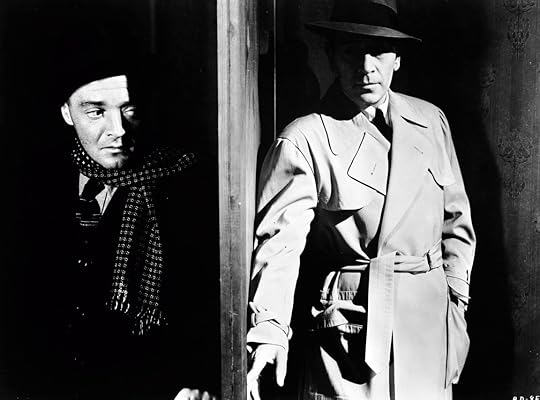
Trench e Borsalino non potevano mancare.
Pubblicato nel 1937, è il secondo romanzo di Eric Ambler.
Uscì in US col titolo Background to Danger, rimasto anche al film omonimo che ne fu tratto nel 1943, il titolo che Ambler preferiva: mentre negli altri paesi di lingua inglese, UK in testa, il titolo che l’editore scelse fu Uncommon Danger giudicando respingente la parola “background”.
Non poteva mancare Peter Lorre (a sinistra nella foto).
Ambler si muove sul suo terreno preferito: spionaggio, politica internazionale. Ribadisce la sua fascinazione per i paesi dell’est. E anticipa un tema che nella politica economica mondiale sta per diventare vitale: le fonti energetiche. In questo caso, giacimenti di petrolio.
Le sue antenne belle dritte lo spingono a mettere in gioco anche forze politiche di destra (nazisti e la rumena Guardia di Ferro).

E non poteva mancare neppure Sydney Greenstreet (a sinistra, seduto), che insieme a Peter Lorre l’anno prima aveva recitato in “Casablanca”.
Su questo background piuttosto pericoloso, finisce per caso Kenton, un giornalista inglese col vizio del gioco, e quindi col problema di debiti da pagare e denaro da reperire.
Ovvio che se sul treno per Vienna fa amicizia con un uomo che è disposto a pagarlo se gli fa da corriere e fa passare la dogana a un certo pacco, ovvio che un tizio così, uno come Kenton accetta.
Quando arriva all’appuntamento per consegnare il pacco trova che l’uomo del treno è diventato cadavere fresco.
Kenton si da alla fuga. Ma finisce sotto attenzioni, e fuoco, incrociati: perché il morto è una spia russa che fa il doppio gioco ed è in possesso di documenti e mappe sulle riserve petrolifere della Bessarabia, contesa da russi e inglesi, ma che fa gola anche a Hitler e i suoi alleati fascisti rumeni.
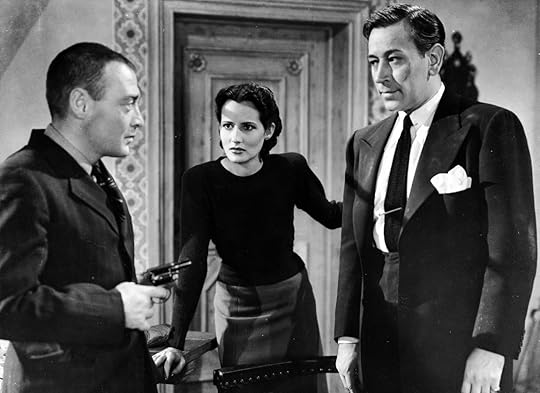
La donna protagonista è Brenda Marshall e interpreta un’agente sovietica. Ambler era senza dubbio critico verso la politica occidentale.
Un uomo innocente incastrato per caso in un gioco più grosso di lui. Vaso di coccio tra vasi di ferro.
Solo che o i vasi di ferro non sono così indistruttibili, o quello di coccio è particolarmente tenace.
Ambler approfitta per seminare qualche critica al capitalismo e guadagnarsi accuse di simpatie ‘rosse’.
Per me si conferma maestro del thriller: del thriller dal respiro internazionale, in grado di costruire sfondi e trame moderne dinamiche e intelligenti. Nessuna meraviglia che Graham Greene lo definisse unquestionably our best thriller writer (senza dubbio il nostro miglior autore di thriller” e per John Le Carré fosse the source on which we all draw (la fonte da cui tutti attingiamo).
PS
“Le spie” è il titolo del film nella versione italiana.
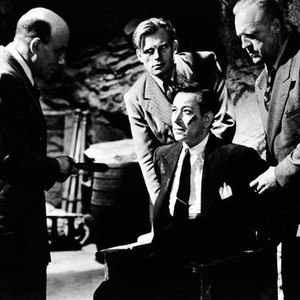
Un innocente (George Raft) nelle mani di loschi nemici.
Trench e Borsalino non potevano mancare.
Pubblicato nel 1937, è il secondo romanzo di Eric Ambler.
Uscì in US col titolo Background to Danger, rimasto anche al film omonimo che ne fu tratto nel 1943, il titolo che Ambler preferiva: mentre negli altri paesi di lingua inglese, UK in testa, il titolo che l’editore scelse fu Uncommon Danger giudicando respingente la parola “background”.
Non poteva mancare Peter Lorre (a sinistra nella foto).
Ambler si muove sul suo terreno preferito: spionaggio, politica internazionale. Ribadisce la sua fascinazione per i paesi dell’est. E anticipa un tema che nella politica economica mondiale sta per diventare vitale: le fonti energetiche. In questo caso, giacimenti di petrolio.
Le sue antenne belle dritte lo spingono a mettere in gioco anche forze politiche di destra (nazisti e la rumena Guardia di Ferro).
E non poteva mancare neppure Sydney Greenstreet (a sinistra, seduto), che insieme a Peter Lorre l’anno prima aveva recitato in “Casablanca”.
Su questo background piuttosto pericoloso, finisce per caso Kenton, un giornalista inglese col vizio del gioco, e quindi col problema di debiti da pagare e denaro da reperire.
Ovvio che se sul treno per Vienna fa amicizia con un uomo che è disposto a pagarlo se gli fa da corriere e fa passare la dogana a un certo pacco, ovvio che un tizio così, uno come Kenton accetta.
Quando arriva all’appuntamento per consegnare il pacco trova che l’uomo del treno è diventato cadavere fresco.
Kenton si da alla fuga. Ma finisce sotto attenzioni, e fuoco, incrociati: perché il morto è una spia russa che fa il doppio gioco ed è in possesso di documenti e mappe sulle riserve petrolifere della Bessarabia, contesa da russi e inglesi, ma che fa gola anche a Hitler e i suoi alleati fascisti rumeni.
La donna protagonista è Brenda Marshall e interpreta un’agente sovietica. Ambler era senza dubbio critico verso la politica occidentale.
Un uomo innocente incastrato per caso in un gioco più grosso di lui. Vaso di coccio tra vasi di ferro.
Solo che o i vasi di ferro non sono così indistruttibili, o quello di coccio è particolarmente tenace.
Ambler approfitta per seminare qualche critica al capitalismo e guadagnarsi accuse di simpatie ‘rosse’.
Per me si conferma maestro del thriller: del thriller dal respiro internazionale, in grado di costruire sfondi e trame moderne dinamiche e intelligenti. Nessuna meraviglia che Graham Greene lo definisse unquestionably our best thriller writer (senza dubbio il nostro miglior autore di thriller” e per John Le Carré fosse the source on which we all draw (la fonte da cui tutti attingiamo).
PS
“Le spie” è il titolo del film nella versione italiana.
Un innocente (George Raft) nelle mani di loschi nemici.

December 23, 2024
Another in Ambler's tried and true formula featuring an innocent man getting mixed up in high stakes international intrigue. The story centers on a journalist caught up in the pre-WWII European political tensions involving the struggle between fascism and communism. There's also an element of corporate espionage/sabotage, and Ambler has some harsh words for the metastasis of capitalism's influence on the volatile political landscape of the time, often through seedy means.
Ambler's stories are generally a different breed than modern thrillers, understated in a low-key early 20th century British manner and relying far more on psychological tension and mystery than derring-do, much like John le Carré, who has cited Ambler as an influence. That said, Background to Danger features more action than most, particularly gunplay, chase scenes, fights and torture. The pacing throughout is excellent, and there are some truly dastardly antagonists that would be right at home in a James Bond film. The story has aged quite well, and is just as enjoyable today as I'm sure it was when first published.
Ambler's stories are generally a different breed than modern thrillers, understated in a low-key early 20th century British manner and relying far more on psychological tension and mystery than derring-do, much like John le Carré, who has cited Ambler as an influence. That said, Background to Danger features more action than most, particularly gunplay, chase scenes, fights and torture. The pacing throughout is excellent, and there are some truly dastardly antagonists that would be right at home in a James Bond film. The story has aged quite well, and is just as enjoyable today as I'm sure it was when first published.
December 25, 2023
An enjoyable 1930s political thriller that provides a good plot with a fast-paced narrative and events that sees [Desmond] Kenton, a free-lance British journalist embroiled in pre-WWII espionage.

October 27, 2014
Eric Ambler is one of my favorite authors with good reason. He is the quintessential thriller writer. Even Ian Fleming called Ambler the inspiration for his James Bond series.
Background to Danger has all the thrills of an Alfred Hitchcock movie. English journalist Kenton finds himself in hot water when he agrees to help a fellow European traveler smuggle some 'securities' out of Germany in the final days before World War II. Before he knows it, Kenton is on the run, hunted by the police for murder and by a colorful assortment of characters, some sinister, others simply suspicious.
I highly recommend this book and any other Ambler book you can find. There is a reason why authors like Fleming and Alan Furst imitate him.
Background to Danger has all the thrills of an Alfred Hitchcock movie. English journalist Kenton finds himself in hot water when he agrees to help a fellow European traveler smuggle some 'securities' out of Germany in the final days before World War II. Before he knows it, Kenton is on the run, hunted by the police for murder and by a colorful assortment of characters, some sinister, others simply suspicious.
I highly recommend this book and any other Ambler book you can find. There is a reason why authors like Fleming and Alan Furst imitate him.
August 30, 2026
Desmond Kenton loses his last marks to poker dice in Nuremberg and boards a third class train toward Vienna, broke and shivering. A stranger with a suitcase full of secrets buys his silence with six hundred marks and a small favor.
By morning the stranger lies dead in a hotel room, and Kenton carries an envelope wanted by Soviet agents, a British oil baron, and a sadist using the name Colonel Robinson. The whole crooked economy of interwar Europe seeps through the cracks.
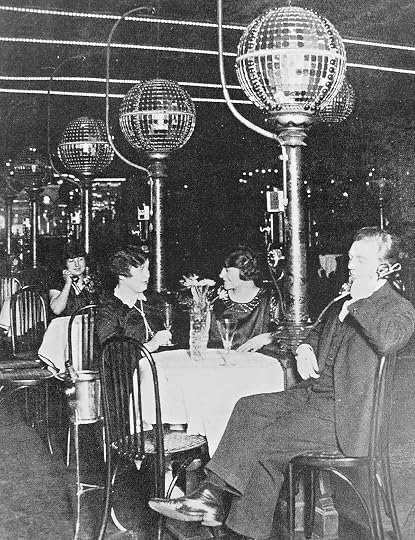
Petroleum sits at the center of every plot point. Pan-Eurasian wants Romanian oil fields and hires the smooth operator Saridza to grease a coup. The company chairman Balterghen handles regime change the way other executives handle a supply contract, stomach powder and a cigar close at hand. The boardroom scenes carry the tone of satire but in hindsight read like prophecy, oil money buying governments decades before that turned into its own genre.
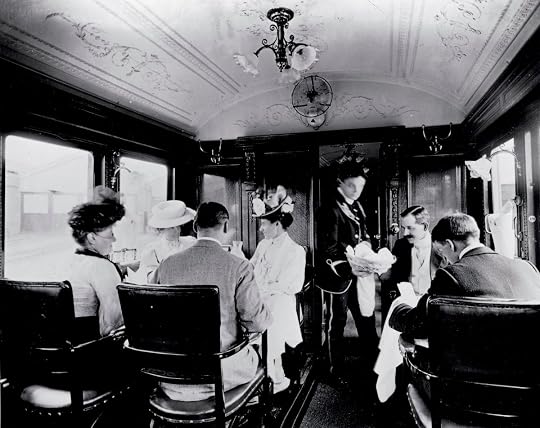
Kenton makes an unlikely courier. A coward by his own account, hopeless with a pistol and worse with his fists, he stumbles through danger on nerve, cheap cigarettes, and a journalist's habit of asking the wrong question at the worst possible moment. Ambler turns that ordinariness into something rare for 1937, a hero built from doubt instead of muscle.
Zaleshoff, the unofficial Soviet man in Zurich, hides behind a defunct machine tool firm and a face the narration pins as knobbly and rugged. He proves the shrewdest operator on either side of the ledger, patient where Kenton panics and generous where Saridza calculates without warmth. The sexy Femme Fatale Tamara pilots a supercharged Mercedes with cool nerve.
Short scenes stacked like a deck being shuffled for the next hand move fast and clean. Ambler trusts dialogue to carry politics. The villains lean toward caricature, Balterghen especially, a boardroom crocodile mixing geopolitics and indigestion with the same practiced hand. Coincidence is used profusely, but the book's cynicism about capital and empire ages rather well.
Ambler's book doesn't have le Carré's patience or Fleming's glamour but it does carry a message of fear and suspicion and hatred. This is lean, fast, morally alert entertainment, stamped on every page with the passport of the modern spy novel.
❤️ 🇮🇱
By morning the stranger lies dead in a hotel room, and Kenton carries an envelope wanted by Soviet agents, a British oil baron, and a sadist using the name Colonel Robinson. The whole crooked economy of interwar Europe seeps through the cracks.
Petroleum sits at the center of every plot point. Pan-Eurasian wants Romanian oil fields and hires the smooth operator Saridza to grease a coup. The company chairman Balterghen handles regime change the way other executives handle a supply contract, stomach powder and a cigar close at hand. The boardroom scenes carry the tone of satire but in hindsight read like prophecy, oil money buying governments decades before that turned into its own genre.
Kenton makes an unlikely courier. A coward by his own account, hopeless with a pistol and worse with his fists, he stumbles through danger on nerve, cheap cigarettes, and a journalist's habit of asking the wrong question at the worst possible moment. Ambler turns that ordinariness into something rare for 1937, a hero built from doubt instead of muscle.
Zaleshoff, the unofficial Soviet man in Zurich, hides behind a defunct machine tool firm and a face the narration pins as knobbly and rugged. He proves the shrewdest operator on either side of the ledger, patient where Kenton panics and generous where Saridza calculates without warmth. The sexy Femme Fatale Tamara pilots a supercharged Mercedes with cool nerve.
Short scenes stacked like a deck being shuffled for the next hand move fast and clean. Ambler trusts dialogue to carry politics. The villains lean toward caricature, Balterghen especially, a boardroom crocodile mixing geopolitics and indigestion with the same practiced hand. Coincidence is used profusely, but the book's cynicism about capital and empire ages rather well.
Ambler's book doesn't have le Carré's patience or Fleming's glamour but it does carry a message of fear and suspicion and hatred. This is lean, fast, morally alert entertainment, stamped on every page with the passport of the modern spy novel.
❤️ 🇮🇱

April 12, 2026
Eric Ambler is often called "the father of the modern thriller" (sorry John Buchan), and so for me is therefore kinda like Elvis or the Beatles: you don't have to necessarily love the work itself, but you DO have to appreciate its impact on everything that came after.
Ambler wrote six pre-WWII novels, then took an eleven year break while serving in the British Army (and apparently doing some other stuff; war wasn't THAT long) before writing another dozen between 1951-1981. Written back in 1937, this book was only his second, and at least IMHO is a fairly simplistic early effort, full of thriller clichés (or at least things that later become clichés): repetitive captures and escapes, endless dialogue (including WAY too much bad guy monologuing), etc. It also features what was to become an Ambler trademark: an "ordinary man" (i.e., an innocent — if not outright feckless — schlub) who quickly gets involved in some mystery/crime/spy caper that allows him to discover unknown (and certainly unrealistic) inner reserves of intelligence, insight, courage and physical prowess.
The writing here is generally dated, and so we get awkward/amusing bits like:
In any case, without Ambler leading the way, there may never have been a MacLean, Clancy, Fleming or le Carré; so props (and an extra half star) just for that.
____________________________________
(This is the fifth of a half dozen used/cheap "read-and-toss" books brought on my current trip back to Taipei. I wasn't intentionally going for a 1930s-60s thriller vibe here, but these old "pocket books" are just the perfect size and length to take on such trips, where one spends a LOT of time either sitting in coffee shops or waiting for the metro...)
Ambler wrote six pre-WWII novels, then took an eleven year break while serving in the British Army (and apparently doing some other stuff; war wasn't THAT long) before writing another dozen between 1951-1981. Written back in 1937, this book was only his second, and at least IMHO is a fairly simplistic early effort, full of thriller clichés (or at least things that later become clichés): repetitive captures and escapes, endless dialogue (including WAY too much bad guy monologuing), etc. It also features what was to become an Ambler trademark: an "ordinary man" (i.e., an innocent — if not outright feckless — schlub) who quickly gets involved in some mystery/crime/spy caper that allows him to discover unknown (and certainly unrealistic) inner reserves of intelligence, insight, courage and physical prowess.
The writing here is generally dated, and so we get awkward/amusing bits like:
"Over a meal of Wicklkraut and beer, Mr. Hodgkin told several old and salacious anecdotes. All were in a Rabelaisian vein and concerned the amorous adventures of commercial travelers."But then every once in a while, we get something like this — "Her hair was short, henna'd and dressed in innumerable curls that stood out stiffly round her head, so that with her back to the light she looked like a rather disreputable chrysanthemum" — that show flashes of his more clever/mature style to come.
In any case, without Ambler leading the way, there may never have been a MacLean, Clancy, Fleming or le Carré; so props (and an extra half star) just for that.
____________________________________
(This is the fifth of a half dozen used/cheap "read-and-toss" books brought on my current trip back to Taipei. I wasn't intentionally going for a 1930s-60s thriller vibe here, but these old "pocket books" are just the perfect size and length to take on such trips, where one spends a LOT of time either sitting in coffee shops or waiting for the metro...)

October 10, 2012
Before Graham Greene (and his in his so-called “entertainments"), before Len Deighton, before Robert Ludlum, before John Le Carre, and before Alan Furst, there was Eric Ambler. Ambler is often credited as the father of the contemporary thriller. Perhaps, John Buchan deserves the title, but Ambler is the recognized master. Ambler, who started writing these the 1930s, sets the tone for fast-paced, international intrigue. Many years ago, I read Ambler's A Coffin for Dimitrios, which I enjoyed, so I was happy to find a copy of Background to Danger and plunge back into Ambler's work. I was not disappointed.
Background to Danger starts with an international correspondent who's lost most of his money gambling, and finds himself sharing a compartment on a train with a stranger who claims to be a Jewish refugee escaping Nazi agents with some important documents. I won't go into further detail, as the plot moves quickly from that basic premise. Ambler’s writing is fast-paced and clear, with enough character to draw in the reader. His plot lines, as you may recognize from the brief teaser I just gave you, would suit perfectly for an Alfred Hitchcock movie. In fact, that's a good question, whether Hitchcock ever used any of Ambler’s works for any of his movies. He certainly could have.
You don't get the characterization and depth in Ambler that you do in Greene or Le Carre, but you do get the fast-paced intrigue at a level similar to what we find currently in Alan Furst. If you're looking for a fine read of intrigue set in the volatile Europe of the 1930s, you would have a hard time doing better than Ambler’s work.
Background to Danger starts with an international correspondent who's lost most of his money gambling, and finds himself sharing a compartment on a train with a stranger who claims to be a Jewish refugee escaping Nazi agents with some important documents. I won't go into further detail, as the plot moves quickly from that basic premise. Ambler’s writing is fast-paced and clear, with enough character to draw in the reader. His plot lines, as you may recognize from the brief teaser I just gave you, would suit perfectly for an Alfred Hitchcock movie. In fact, that's a good question, whether Hitchcock ever used any of Ambler’s works for any of his movies. He certainly could have.
You don't get the characterization and depth in Ambler that you do in Greene or Le Carre, but you do get the fast-paced intrigue at a level similar to what we find currently in Alan Furst. If you're looking for a fine read of intrigue set in the volatile Europe of the 1930s, you would have a hard time doing better than Ambler’s work.

November 30, 2007
I'm am surprised I enjoyed this as much as I did! It's not the typical type of story I read. The mysteries I'm used to reading are far more "fluffy" than this. However, the characters in "Background to Danger" were so intriguing and - oddly enough, warm - that I found myself sucked into the characters as much as the mystery.
I've only given this four stars because, really, of my own personal tastes and lack of knowledge on the countries and foreign relationships the story deals with. I'm sure the book is worthy of 5 stars for anyone who knows more about this era, and is more used to this kind of mystery.
Being the squimish person that I am, I was very pleased that the book isn't very graphic. Yes, people get killed, but, happily, Ambler doesn't go into much detail.
I also appreciated the good guy/bad guy, somewhat blurred lines of right and wrong... the story presents interesting circumstances that place our protagonists in situations where what would appear to be "wrong" is, perhaps, actually "right." This said, the story focuses on the mystery and the "messages" aren't overly apparent and really just a subtext for those wishing to seek them.
This is a very interesting read and I'd be more than happy to read it again and partake of another Ambler adventure.
I've only given this four stars because, really, of my own personal tastes and lack of knowledge on the countries and foreign relationships the story deals with. I'm sure the book is worthy of 5 stars for anyone who knows more about this era, and is more used to this kind of mystery.
Being the squimish person that I am, I was very pleased that the book isn't very graphic. Yes, people get killed, but, happily, Ambler doesn't go into much detail.
I also appreciated the good guy/bad guy, somewhat blurred lines of right and wrong... the story presents interesting circumstances that place our protagonists in situations where what would appear to be "wrong" is, perhaps, actually "right." This said, the story focuses on the mystery and the "messages" aren't overly apparent and really just a subtext for those wishing to seek them.
This is a very interesting read and I'd be more than happy to read it again and partake of another Ambler adventure.

September 16, 2021
Effortlessly excellent though I have to say one or two elements stretch credulity a little, such as the hero burrowing under the barbed wire forming the border between Austria and Czechoslovakia and several bullets narrowly missing him when those firing have previously hit other people.
These are minor criticisms though of a story which is fast-paced and uses the lead up to the second world war so effectively as a background for the race to find some incriminating photographs before they fall into the wrong hands. Trains are wonderful places to set thrillers and allow people to meet other people and change their lives as a result.
Recommended.
These are minor criticisms though of a story which is fast-paced and uses the lead up to the second world war so effectively as a background for the race to find some incriminating photographs before they fall into the wrong hands. Trains are wonderful places to set thrillers and allow people to meet other people and change their lives as a result.
Recommended.

August 26, 2019
It is easy to see how Eric Ambler came to enjoy so much success in Hollywood. His books have a cinematic quality to them. He is obsessed with advancing the plot. And he does so, here, with Background to Danger, in a fashion as strong as any other book he wrote, including A Coffin for Dimitrios. Ambler's chapters can easily be broken into scenes and you can practically see the shot as it would appear before the camera. Transitions, done with flashbacks, directly relate to cinema, as does his transitions that amount to plot points, along with easily visualized fades and dissolves.
Background to Danger was published a few years before A Coffin for Dimitrios. And it seems to me that Ambler is working towards what he will ultimately achieve in Dimitrios. That is, both these novels work towards what will be the "buddy movie" genre in Hollywood and both are fitted out in a manner that would later be seen in the anti-heroes of 70s films. Go to the film version of Dimitrios and this notion is even more evident, with two confirmed anti-heroes in the lead roles, Peter Lorre and Sydney Greenstreet as newly framed friends in the fight against corruption.
The unexpected friendship in Background to Danger comes with the relationship built up between Kenton ("not Kenten") and the Soviet spy, Zaleshoff, and his sister, Tamara. Ambler does so at a cost, however. He distorts history and current events to make the Russians friendly, heroic, ethical, and altruistic. In the process, he trivialized the crimes of Stalin, endorses the Moscow Show Trials, and contributes to the creation of the Trotsky bogeyman. Eventually, Ambler came to recant of these views and his novels became far less political.
But in Background, in the world of 1937, it's enough that Zaleshoff is anti-Nazi. That is what matters. It must have been a shock to the filmgoing audiences, then, when in just a few years, kindly Uncle Joe would sign up to a non-aggression pact with Hitler, invade eastern Poland, and enable the start of World War II. As with many who had succumbed to the lure of the Soviet dictator in order to fight fascism, the filmgoers and writers such as Ambler would soon have their illusions shattered. That is why, I suppose, that so many of Ambler's later books treat corruption, despotism, and widespread massacre as an integral part of human society everywhere.
Background to Danger was published a few years before A Coffin for Dimitrios. And it seems to me that Ambler is working towards what he will ultimately achieve in Dimitrios. That is, both these novels work towards what will be the "buddy movie" genre in Hollywood and both are fitted out in a manner that would later be seen in the anti-heroes of 70s films. Go to the film version of Dimitrios and this notion is even more evident, with two confirmed anti-heroes in the lead roles, Peter Lorre and Sydney Greenstreet as newly framed friends in the fight against corruption.
The unexpected friendship in Background to Danger comes with the relationship built up between Kenton ("not Kenten") and the Soviet spy, Zaleshoff, and his sister, Tamara. Ambler does so at a cost, however. He distorts history and current events to make the Russians friendly, heroic, ethical, and altruistic. In the process, he trivialized the crimes of Stalin, endorses the Moscow Show Trials, and contributes to the creation of the Trotsky bogeyman. Eventually, Ambler came to recant of these views and his novels became far less political.
But in Background, in the world of 1937, it's enough that Zaleshoff is anti-Nazi. That is what matters. It must have been a shock to the filmgoing audiences, then, when in just a few years, kindly Uncle Joe would sign up to a non-aggression pact with Hitler, invade eastern Poland, and enable the start of World War II. As with many who had succumbed to the lure of the Soviet dictator in order to fight fascism, the filmgoers and writers such as Ambler would soon have their illusions shattered. That is why, I suppose, that so many of Ambler's later books treat corruption, despotism, and widespread massacre as an integral part of human society everywhere.

June 16, 2018
Mi resta molto poco da leggere di Ambler. Per questo lo centellino: uno all'anno. Questa storia di spie scritta nel 1937 non ha perso alcuno smalto, grazie anche ai continui colpi di scena (forse un filo troppi?) e alla lucidità nell'analisi del sistema 'criminale' della grande finanza internazionale (a suo tempo gli procurò la fama di simpatizzante dell'Unione sovietica che ebbe poi difficoltà a scrollarsi di dosso). Rispetto al solito l'azione è molto serrata e un po' ci perde la brillantezza dei dialoghi che sono, di norma, il punto di forza dei suoi racconti. Non manca invece l'ironia che è il suo marchio di fabbrica. Ottima lettura stagionale

May 7, 2024
Really enjoyed this fast paced, espionage thriller. Set in mid 1930s Austria and Czechoslovakia, the story involves business and political intrigue, stolen government documents and a back and forth struggle between Soviet operatives and Nazi sympathizers. It's action packed with two murders, a bit of torture, a couple of shootouts, dramatic escapes, an illegal border crossing and even a car chase. Published in 1937, this is a pioneer example of the genre with many of the features we've come to expect from an espionage thriller. I found this one quite engaging and at times a page turner. Definitely a worthwhile read - if only to better understand how the genre has evolved in the last 87 years.
June 21, 2018
Kenton's career as a journalist depends on his facility with languages, his knowledge of European politics and his quick judgment Where his judgment sometimes fails him, however, is in his personal life. When he travels to Nuremberg to investigate a story about a top-level meeting of Nazi officials, he inadvertently finds himself on a train bound for Austria after a bad night of gambling. Stranded with no money, Kenton jumps at the chance to earn a fee helping a refugee smuggle securities across the border; yet, he soon discovers that the documents he holds have far more than cash value - and that they could cost him his life.
(Description from the publisher – per WorldCat – slightly edited.)
In the United States, Uncommon Danger was published as Background to Danger.
I didn't care for Ambler's first book. Too much of a parody, I thought. From what I have read, others felt the same way. This book, Uncommon Danger, however, is much better. Exciting and well written, Uncommon Danger held my interest right through very last line.
At times, Uncommon Danger reads like a Marvel Comic, with all the escapades Kenton goes through, but Ambler tells it in such a way that it all seems realistic.
Uncommon Danger was made into a film using the US title, Background to Danger, released in 1943. It was directed by Raoul Walsh and starred George Raft as the protagonist (renamed Joe Barton), Sydney Greenstreet, and Peter Lorre. Somehow, I don't see George Raft in this role, because I see Kenton not as hard-nosed or jaded as the character George Raft typically portrayed (or as he seemed to be in real life).
(Description from the publisher – per WorldCat – slightly edited.)
In the United States, Uncommon Danger was published as Background to Danger.
I didn't care for Ambler's first book. Too much of a parody, I thought. From what I have read, others felt the same way. This book, Uncommon Danger, however, is much better. Exciting and well written, Uncommon Danger held my interest right through very last line.
At times, Uncommon Danger reads like a Marvel Comic, with all the escapades Kenton goes through, but Ambler tells it in such a way that it all seems realistic.
Uncommon Danger was made into a film using the US title, Background to Danger, released in 1943. It was directed by Raoul Walsh and starred George Raft as the protagonist (renamed Joe Barton), Sydney Greenstreet, and Peter Lorre. Somehow, I don't see George Raft in this role, because I see Kenton not as hard-nosed or jaded as the character George Raft typically portrayed (or as he seemed to be in real life).
September 5, 2026
An early Ambler – his second published novel – and all the hallmarks of his later works are here, albeit there are obvious issues with both the characters and plot. Nevertheless, it’s fast-paced and entertaining; a more-than-serviceable, page-turning thriller, even if it’s much more work-a-day and conventional than the brilliant ‘The Mask of Dimitrious’, written just two years later.
Read more at https://byspokeword.substack.com/
Read more at https://byspokeword.substack.com/

July 11, 2011
I just re-read the back of this book, and I do not recognize any of the plot details described. If what memory I do have serves, then this was one of my least favorite books amongst Ambler's repertoire (the top favorite being the most excellent "Coffin for Dimitrios"). The main issue (again, if I am remembering the right book) was that the whole package did not come together as it does in some of Ambler's other work. The different locales, the over-arching conspiracy, the every-man protagonist who ends up in a situation that goes way over his head, and who has to rely on wit and courage to out-do the opposition--it's all here, but it lacks the verve and romance that Ambler achieved elsewhere. Put bluntly, there were moments when I was bored and ready to read something else.
That said, Ambler is well worth reading. He writes about complicated conspiracies and plots, pulling in governments and crime syndicates and businesses and journalists and any other occupation ripe for the picking. Best of all, he spins these stories 1930s, when Europe and the rest of the world thought that the horrors witnessed in the Great War of two decades past were enough to deter any government from sparking another such conflict. In this time, the borders between countries are still semi-porous, and people can travel across the continent and bear witness to a wealth of cultures and ideas and enterprises. The Europe that Ambler describes is bruised from warfare, yet still retains an innocence that overlooks the underlying tensions that remain. It's a fascinating period, and Ambler wrote within it with a good eye for what people were thinking and feeling at the time.
That said, Ambler is well worth reading. He writes about complicated conspiracies and plots, pulling in governments and crime syndicates and businesses and journalists and any other occupation ripe for the picking. Best of all, he spins these stories 1930s, when Europe and the rest of the world thought that the horrors witnessed in the Great War of two decades past were enough to deter any government from sparking another such conflict. In this time, the borders between countries are still semi-porous, and people can travel across the continent and bear witness to a wealth of cultures and ideas and enterprises. The Europe that Ambler describes is bruised from warfare, yet still retains an innocence that overlooks the underlying tensions that remain. It's a fascinating period, and Ambler wrote within it with a good eye for what people were thinking and feeling at the time.
January 11, 2018
The perfect book to read on a red-eye (late night to early morning) flight from San Francisco to Washington, DC. As usual, our hero is a normal working stiff, independent of the larger forces into whose orbit he is suddenly thrust. His allies, and eventual friends are Soviet agents; although (again as usual) Ambler does not romanticize them or hide the hard edges of espionage work. The villains are rich capitalists and their agents; Ambler does get off a few rants on corporations as the hidden drivers of government agendas and national goals.
Our English hero is helped by another Englishman along the way; the helper delivers an electrifying speech on the realities of life in continental Europe, away from England, ending with how he watched the Gestapo kick an old man to death on his own front stoop. It made me proud to be a member of the Anglosphere, until I thought a little too much about the realities of life in England and English behavior overseas.
All that being said, the book still gets 4 stars due to the excellent characters, the fine writing, the great sense of time and space. I may not be able to read any more thrillers, after turning the last page on the last Ambler.
Our English hero is helped by another Englishman along the way; the helper delivers an electrifying speech on the realities of life in continental Europe, away from England, ending with how he watched the Gestapo kick an old man to death on his own front stoop. It made me proud to be a member of the Anglosphere, until I thought a little too much about the realities of life in England and English behavior overseas.
All that being said, the book still gets 4 stars due to the excellent characters, the fine writing, the great sense of time and space. I may not be able to read any more thrillers, after turning the last page on the last Ambler.

March 10, 2018
It's hard to believe that this was written over eighty years ago; as a gripping and gritty spy drama it is as fresh and pacily plotted as an contemporary work in the genre. It's easy to see why Ambler was so highly regarded by the likes of Graham Greene and John Le Carre. Featuring a down on his luck journalist who finds himself at the centre of a plot to destabilise an entire Eastern European economy and whose refusal to take the easy way out leads him into an ever more murky and dangerous labyrinth of espionage, Uncommon Danger paints a fascinating picture of the period just before the Second World War. That the plot has been hatched by big business with little concern for its implications for ordinary people, and that there's a very sympathetic portrayal of a Soviet spy says much for Ambler's political views at the time. Uncommon Danger has a message, but it also has an action packed plot and is a pacy, entertaining read.

January 2, 2013
There is something that really appeals to me about pre-Cold War spy stories, and in particular these books of Ambler's that take place in the build-up to WWII. There are so many shifting alliances and plays to gain control of some natural resource (here, oil), the motivations that drive the action seem so much less a matter of black and white ideological differences, and, in a sense, the stakes feel a bit lower. That could be a bad thing, but here it makes it easier for the book to be fun, without the harrowing tension of somebody like Le Carre. This one has a common feature in books featuring an amateur detective/spy— a main character you regularly want to slap for being so dumb— but that isn't really a flaw; it's a well-written and nicely paced spy story.

November 23, 2012
Early Ambler. The signs of the later brilliance are there, and the novel is full of the atmosphere of foreign intrigue...darkened by the looming advance of WW II, but the plot is a little overly convoluted in relation to the pay-off of the revelations. A must-read for Ambler fans, but not for those who are new to his work or for those with only a casual interest. Intriguing worth looking at and thinking about as a literary precursor to post WW II film noir...the seeds for that dark view of the post war world are sown in the years leading up to the big conflict. Hmmmmm....
December 10, 2011
Eric Ambler was a precursor to John Le Carre and Robert Ludlum (says the jacket copy), and this novel is set in eastern Europe during the run-up to World War II, first published in 1937. It's a great story, urbane and literate, told in efficient, elegant prose, with a lot of historical interest due to its era and locale.

June 7, 2013
Great book. I love the spirit of hope and the determination to make a contribution for a better life on this planet—and the story is full of suspense, I like the way Ambler built his characters and love the his playful language.
Definitely a recommendation from me
Definitely a recommendation from me
April 21, 2017
Two things were good about the book. One, it is very pacily written. so is a true thriller. Secondly, it has created the plot against a very true to life situation in Pre Second World War Romania. However, the events are predictable and a bit over the top. good read though.

Read
May 27, 2024An early Ambler with a plot centering on the orchestration of regime change in order to benefit an oil multi-national. Nowhere is it more apparent than in an early Ambler novel that the world’s real villains are corporations. Our hero, Kenton, is an appealingly unheroic journalist with a gambling habit, and his love interest is a Soviet woman (Englishmen were still morally permitted to fancy Russians in 1937) who, it’s made clear, is not conventionally attractive, as well as being a very capable driver and a fast thinker. There’s also a positive portrayal of a fat older woman, the fantastic Madame Smedoff, an agent now in her eighties with a lifetime’s experience of grand strategy in espionage and labour organising (she’s said to have met Marx). Every time I read Ambler he pulls out another surprise.

January 23, 2021
When reading Ambler's espionage thrillers, especially his earliest works, it pays to remember that many believe he created the modern spy thriller and had a significant part in propelling it toward becoming a more realisic genre.
This book, written in 1937, is one of his earliest. As I started reading, it felt somewhat derivative. That is, till I suddenly realized so many of the conventions of spy thrillers I'd grown used to in both books and movies were probably newly conceived when Ambler wrote this book--the naive protagonist who gets involved in something much bigger than he could ever possibly be aware of simply by being in the wrong place at the wrong time; who then thinks he's committing a small and relatively meaningless infraction, only to discover he's up against forces more connected, more powerful and more lethal than he could ever have imagined.
Once I grocked that this book probably had an early hand in creating those conventions it hit me just how fresh, and fun, this book actually was. I thoroughly enjoyed it.
This book, written in 1937, is one of his earliest. As I started reading, it felt somewhat derivative. That is, till I suddenly realized so many of the conventions of spy thrillers I'd grown used to in both books and movies were probably newly conceived when Ambler wrote this book--the naive protagonist who gets involved in something much bigger than he could ever possibly be aware of simply by being in the wrong place at the wrong time; who then thinks he's committing a small and relatively meaningless infraction, only to discover he's up against forces more connected, more powerful and more lethal than he could ever have imagined.
Once I grocked that this book probably had an early hand in creating those conventions it hit me just how fresh, and fun, this book actually was. I thoroughly enjoyed it.

October 28, 2022
Like all Ambler books, this one is firmly anchored in political history -- a major factor why I love them. Another important feature is the excellent description of the places where the book(s) take(s) place. Taking place a couple of years before World War II, at heart of the matter is a plot to forge an alliance between Rumania and Nazi Germany devised by supporters of the Rumanian far-right leader Codreanu (who in real life was assassinated in 1938, a year after publication of this book). An additional -- and totally credible -- twist is that the conspiracy is supported by a London-based multinational oil company that sees a Condreanu takeover as advantageous to its business. Plus ça change, plus c'est la même chose...
Typically for an Ambler plot, the protagonist is an outsider (this time a journalist) who gets drawn way above his head into the historical events but who then rises to the challenges. Background to Danger has non-stop action and suspense, even more than an average Ambler story.
Typically for an Ambler plot, the protagonist is an outsider (this time a journalist) who gets drawn way above his head into the historical events but who then rises to the challenges. Background to Danger has non-stop action and suspense, even more than an average Ambler story.

January 8, 2020
Ambler shows great insight by singling out business as the instrument of creating policies that guide governments. On page 94, he writes:
"It was difficult Kenton had found to spend any length of time in the arena of foreign politics without perceiving that political ideologies had very little to do with the ebb and flow of international relations. It was the power of Business, not the deliberations of statesmen that shaped the destinies of nations."
"It was difficult Kenton had found to spend any length of time in the arena of foreign politics without perceiving that political ideologies had very little to do with the ebb and flow of international relations. It was the power of Business, not the deliberations of statesmen that shaped the destinies of nations."

May 28, 2022
Perhaps the first leftist thriller to come out of England, this fast-paced tale races across eastern Europe with (perhaps too) little time for scenic views or local color. I have to say I slightly prefer the old jingoes like Buchan or Childers in terms of narrative technique, but Ambler is remarkably prescient in his attention to the connection between petroleum interests, big business, and international conflict.

November 9, 2024
Whenever I read a book like this, I feel like there should be a moratorium on writing and publishing new books. Honestly, what's the point? Ambler is better than Le Carré, and certainly far better than Mick Herron or David McCluskey.
His protagonists are plausible. Not heroes, just ordinary people who find themselves in a tough spot, and are surprised to learn they have more grit than they realised. And so a thrilling adventure unfolds.
Let's not publish any new books until we've read all the old ones, OK?
His protagonists are plausible. Not heroes, just ordinary people who find themselves in a tough spot, and are surprised to learn they have more grit than they realised. And so a thrilling adventure unfolds.
Let's not publish any new books until we've read all the old ones, OK?

September 30, 2024
Great brisk read. Five stars for pure enjoyment, ominous interwar atmosphere, plotting, and style. And if you are also curious about the history of the thriller genre, this novel offers more confirmation that Ambler marks the exact midpoint between Buchan and Fleming.

May 9, 2020
Ambler's second book. It was an interesting, not so compelling read. But as a founder of the spy novel genre, probably important to read a few of his.
Displaying 1 - 30 of 163 reviews