Peter Burian and Brian Swann recreate Euripides' The Phoenician Women which explores, with all its deeply disturbing ironies, the fateful history of the House of Laios following the tragic fall of Oedipus, King of Thebes. Their lively translation of this controversial play reveals the cohesion and taut organization of a complex dramatic work.
Euripides (Greek: Ευριπίδης) (ca. 480 BC–406 BC) was a tragedian of classical Athens. Along with Aeschylus and Sophocles, he is one of the three ancient Greek tragedians for whom any plays have survived in full. Some ancient scholars attributed ninety-five plays to him, but the Suda says it was ninety-two at most. Of these, eighteen or nineteen have survived more or less complete (Rhesus is suspect). There are many fragments (some substantial) of most of his other plays. More of his plays have survived intact than those of Aeschylus and Sophocles together, partly because his popularity grew as theirs declined—he became, in the Hellenistic Age, a cornerstone of ancient literary education, along with Homer, Demosthenes, and Menander. Euripides is identified with theatrical innovations that have profoundly influenced drama down to modern times, especially in the representation of traditional, mythical heroes as ordinary people in extraordinary circumstances. This new approach led him to pioneer developments that later writers adapted to comedy, some of which are characteristic of romance. He also became "the most tragic of poets", focusing on the inner lives and motives of his characters in a way previously unknown. He was "the creator of ... that cage which is the theatre of William Shakespeare's Othello, Jean Racine's Phèdre, of Henrik Ibsen and August Strindberg," in which "imprisoned men and women destroy each other by the intensity of their loves and hates". But he was also the literary ancestor of comic dramatists as diverse as Menander and George Bernard Shaw. His contemporaries associated him with Socrates as a leader of a decadent intellectualism. Both were frequently lampooned by comic poets such as Aristophanes. Socrates was eventually put on trial and executed as a corrupting influence. Ancient biographies hold that Euripides chose a voluntary exile in old age, dying in Macedonia, but recent scholarship casts doubt on these sources.
В противоположность "Семерым против Фив" Эсхилла, "Финикиянки" - очень длинная пьеса, она захватывает и события, касающиеся Эдипа и Антигоны, а называется "Финикиянками" из-за хора женщин из Финикии, которых война задержала в Фивах. Еврипид существенно изменил миф, оставив Эдипа и его жену Иокасту живыми в момент братоубийства Этеокла и Полиника. Иокаста в горе совершает самоубийство, увидев их мертвые тела. Для чего автору понадобилось менять миф или, по крайней мере, избирать менее популярную и известную версию? Очевидно, для него основной идеей является неприемлемость превознесения власти, как ценности, выше уз братской любви и родства.
این نمایشنامه به وقایع پیش از نمایشنامه "زنان فریادخواه" میپردازه و تقریبا تمام آنچه که باید پیش از خوندن این نمایشنامه بدونین، در اولین مونولوگ یوکاسته گفته میشه. من توی نمایشنامههای کلاسیک یونان دنبال چنین تراژدی میگشتم و واقعا لذت بردم =) نقش خدایان در تعیین سرنوشت میرایان پررنگ بود. تأکید میکرد که نمیشه از تقدیر و خواستهی خدایان فرار کرد. یوکاسته به عنوان یک مادر، سعی در برقراری عدالت و صلح میکنه و میخواد خانوادهش رو از فروپاشی نجات بده. کرئون، برادر یوکاسته، در دوراهی محافظت از خانواده و سرزمینش قرار میگیره ولی در نهایت تصمیمی که میگیره نتایجی خلاف خواستهش به بار میاره. آنتیگونه، دختر یوکاسته، نماد وفاداری و استقلال عمله که در برابر خواست کسی سر خم نمیکنه و خودش برای زندگیش تصمیم میگیره که این در یونان باستان واقعا جسورانهست.
یادداشتی برای یادآوری به ماهی قرمز (خودم) : یوکاسته همسر لائیوس بود که فوبوس آپولو به لائیوس گفته بود اگر صاحب فرزند بشی، فرزندت تو رو به هلاکت میرسونه و خاندانت از میان خون خواهد گذشت. اما لائیوس توی مستی فرزندی در دامان یوکاسته میذاره و پسر نوزادش رو به چوپانی میده که قوزکهاش رو با میخ به هم بدوزه (برای همین به اون پسر میگفتن ادیپوس به معنای پا ورم کرده) و اون رو در کشتزار رها کنه. اسبآموزان پولیبوس کودک رو پیدا میکنند و بزرگش میکنند. ادیپوس در جوانی متوجه حقیقت میشه و راهی معبد فوبوس آپولو میشه تا بدونه پدر و مادر واقعیش کی هستند. لائیوس هم به سمت معبد میره تا بپرسه آیا پسرش هنوز زندهست یا نه. توی دوراهی، پدر و پسر به هم برخورد میکنند. گردونهران لائیوس به ادیپوس میگه که از سر راه بره کنار ولی ادیپوس مغرور قبول نمیکنه و اسب پای ادیپوس رو لگد میکنه و طبق همون تراژدی معروف پسر، پدر خودشو میکشه. کرئن، برادر یوکاسته، معمایی طرح میکنه تا کسی که جواب رو پیدا میکنه، یوکاسته باهاش ازدواج کنه و پادشاهی سرزمین رو بهش بده. ادیپوس معما رو حل میکنه و بدون اینکه بدونه با مادر خودش ازدواج میکنه و صاحب 4 فرزند میشن. سرانجام ادیپوس متوجه میشه که همسرش در واقع مادرشه و چشمهای خودش رو از کاسه در میاره و پسرانش اون رو زندانی میکنند. ادیپوس هم پسرانش رو نفرین میکنه و دو برادر از ترس اینکه دچار بلا و نفرین نشن، تصمیم گرفتند که برادر کوچکتر به سرزمین دیگهای بره و هر یک سال پادشاهی رو بین خودشون تقسیم کنند ولی برادر بزرگتر که یک سال مزه قدرت رو چشیده، حاضر نمیشه پادشاهی رو به برادر کوچکترش تحویل بده و جنگ بین دو برادر (آدراستوس پدر زن پولونیکس بود و ازش حمایت میکرد) رخ میده. نمایشنامه شرح این جنگه =))))
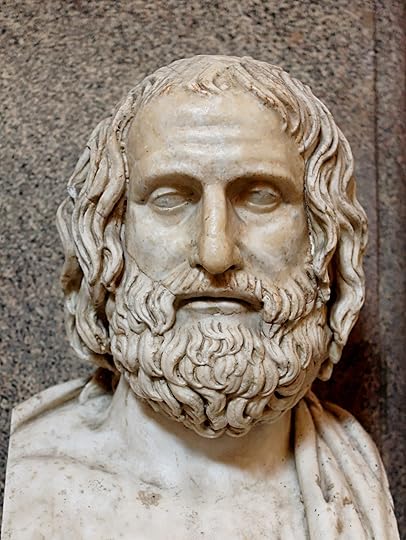
Euripides (ca. 480-406 BCE) - Roman copy of a 4th century BCE Greek original
Sufficiency's enough for men of sense. Men do not really own their private goods; we simply care for the things which are the gods', and when they will, they take them back again.
Euripides, his eleven year older competitor, Sophocles, and their deeply admired elder, Aeschylus, all lived through some of Athens' most exciting and trying times. Aeschylus was alive to witness and participate in the great victories over the Persians (Euripides has been said to have been born on the very day of the victory at Salamis, while Sophocles sang in a boys' choir in honor of that victory), all were alive to witness Athens' rise to the status of great power as the increasingly tyrannical head of the Delian League, and the two younger playwrights had to experience the long series of wars of struggle for hegemony over Greece between Athens and Sparta ending in crushing defeat for their beloved home polis. Throughout that time theater was by far the most significant art form, both politically and socially, in the polis of Athens.
The death and destruction of the decades' long war between Athens and Sparta necessarily had a profound effect on the younger playwrights' work, and The Phoenician Women (ca. 410) is one of the darkest plays Euripides wrote. Though the text that has come down to us has been significantly adulterated (like Aeschylus' Seven Against Thebes), I've found it to be particularly powerful.(*)
The Phoenician Women is a continuation of the story of Oedipus and Jocasta. Oedipus is self-blinded and suicidal and their sons, Polyneices and Eteocles, have imprisoned him for his own (and their) good. In order to avoid the foretold war between themselves, they have agreed to alternately share the rule, each relieving the other after one year. But, of course, already at the first annual changing of the guard Eteocles reneges. So war it shall be. This is set up quickly, and then the multi-leveled drama really begins.
The dramatic self-sacrifice of Menoeceus, the son of Creon (Jocasta's brother), assuages one god's resentment; great acts of martial valor on both sides mutually cancel; and Polyneices and Eteocles meet in single battle. Whatever the outcome, it will be a tragedy for their mother.
Alone among the mentioned playwrights, Euripides had a particular understanding and sympathy for women (who had no easy situation in classical Athens); again and again, he subtly undermined the dominant social attitudes towards women through his work. In his plays the men are laden with feelings of honor, pride and revenge, while the women are endowed with a much richer palate of roles and emotions. This is true again of this piece.
For the leading character in this play is Jocasta, whose son, Oedipus, (in Euripides' telling) was the result of a rape by her husband, Laius, (she wanted to avoid the foretold horrors); who was set up by Fate to marry her son unknowingly; who bore the shame and suffering of this marriage once Oedipus' identity was known; and who spoke reason to her intemperate sons repeatedly, vainly trying to save their lives and those of the armies arrayed against each other. I could not but identify Athens and Sparta with those sons, and I wonder if similar thoughts caused Euripides to place in her mouth such eloquent words of admonishment and wisdom.(**)
All ends badly in this dark play, whose dramatic poetry assures multiple re-reads just for the sheer pleasure of it. Yet Laius' curse has still not completely played itself out...
Read in the translation by Elizabeth Wyckoff
(*) Unlike Seven Against Thebes, which, though it is based on the same legendary events as Euripides' The Phoenician Women, became for me an empty piece of bravado in the interminable listing of the martial virtues of the twice seven captains. Euripides wisely chose to keep this bit short.
بین تمام کلاسیکهای یونانی که خوندم شاید بشه گفت زنان فنیقی پیچیدهترین روایت رو داره و روایتی بعضاً متفاوت از زندگی ادیپوس ارائه میده (یوکاسته رو زنده نگه میداره و جور دیگهای میکشه و همچنین جنگ بین پسرانش رو قبل از رفتن به کلونوس ترتیب میده و آنتیگونه رو زنده نگه میداره) خلاصه خیلی خواندنی بود روایت اورپیدس و شهبازی هم خوب ترجمه کرده بود. تنها مورد این بود که پانویس کردن نام انگلیسی اساطیر کافی نیست و بایست یه توضیح مختصر از اسامی خاص هم پانویس بشه
An interesting play that tells the same story as Aeschylus' earlier play Seven Against Thebes; in the introductory notes by Philip Vellacott, it is suggested that this play does not concern fate to the same degree as SAT does. Having said that, there is a lot of talk of fate and destiny in this play, specifically regarding events of the past, but fundamentally I agree that this play is significantly less religious than Seven Against Thebes, leaning into political discourse more than anything else. I do see the influence of 'free will' on the decision of Eteocles and Polyneices to fight (much more so than in Aeschylus), which is suggested by Vellacott as representing Athens and Sparta in the late stages of the Peloponnesian war. Further analysis is required on my behalf, but I did find this play to be an interesting read regardless; it has a bizarre structure for Greek tragedy, and a spurious ending, which seems very disjointed and perhaps anachronistic. I do wonder where Euripides ended the play originally, as I highly doubt the final sections were his work.
The Phoenissae by Euripides, a Greek tragedy first performed in 408 BCE, is also known as The Phoenician Women, The Phoenician Virgins and The Phoenician Maidens. The translation I read is available here https://www.perseus.tufts.edu/hopper/...
Because this play is less well known, I wanted to read this before reading Aeschylus’s Seven Against Thebes.
In this one Oedipus has a very small role, and the play’s action sits roughly between Aeschylus’s Seven Against Thebes and Sophocles’s Antigone
The main conflict is between two sons of Oedipus, Polyneices and Eteocles, who go to war with each other when one breaks his oath of sharing the rule of the city.
The play has several soliloquys to describe the action off stage, one is over 100 lines that describes the conflict, it’s the kind of scene that slows down the dramatic action to report events, otherwise this was an entertaining read.
What I relished the most about this play were the speeches that made observations about: equality; the cost of not finding a resolution to a conflict; and Antigone’s courage to defy what is expected of her.
Curse of the House of Cadmus 10 July 2018 – Brisbane
Well, it seems that Euripides has taken the story of the Seven Against Thebes and completely rewritten it, and then given it a title that has absolutely nothing to do with the story either. Okay, there is the whole Cadmus being a Phonecian thing, but my understanding was that by the time we get to the whole Oedipus mess they were no longer Phonecians but Greek, though I should note that this is really only about five generations. Still, I suspect that the original people who went to see the play probably knew about as much as I did when I started reading it.
Mind you, Euripides has shaken things up a bit here because it was my understanding that Jocasta hung herself at the end of Oedipus Tyrannos, and also that Oedipus disappeared off to Colonus pretty much after the story as well. Well, it seems that in this version he is hanging around in the back rooms of the palace while all of the mess between Polyneices and Etocles is going on. Then there is the whole Antigone affair where she disobeys Creon and buries her brother, only to be banished. Once again, you never think that Oedipus is somewhere in the background, though Euripides is pretty clear that he is in this play (even though he doesn’t make an appearance).
The introduction to this play talks about how at the time it was performed Athens was facing a siege by Sparta, and it was very clear that she was probably not going to win the war. However, if we know our Greek mythology we know that Thebes manages to withstand the siege, even though everything ends up in a complete mess anyway. For instance, when the whole Antigone episode is finished we find that Creon is a completely broken man with absolutely nothing left. In fact, it appears that the whole Theban dynasty has been gutted, and what for – disobeying a god (though to the Greeks that was probably a pretty big deal).
In a way there is a suggestion that this curse goes all the way back to Cadmus, the Phoenician founder of Thebes. Interestingly I discovered that Cadmus was said to have originally brought writing to the Greeks, though this has since been debunked on the grounds that the Phoenician alphabet that we inherited developed after the Bronze Age collapse, and made its way to Greece sometime during the dark ages. They did have a form of writing back then, but we basically are unable to read it.
[image error]
So, Cadmus sort of kills a dragon, plants its teeth into the grown and out pops a bunch of warriors (sounds somewhat familiar, doesn’t it) and Cadmus then gets them to fight each other, which they do until only five remain, and those five then start building the city of Thebes. The problem that Cadmus faced is that it turned out that the dragon was Apollo’s pet (of course it was), so he now has to do penance for killing the dragon, which basically involved him being turned into a dragon. Oh well, I guess that’s the life of the Greek heroes.
Look, I could go on through Pentheus, who upset Dionysius (by basically banning his worship, and then locking him up), but it then comes down to King Laius, Oedipus’ father and Creon’s brother. He was basically told that he wasn’t allowed to have any children, and if he did then really bad things would happen (such as his son killing him and then marrying his wife). Well, he decides to refrain except that he gets drunk one night and conceives a child, so he decides that the best thing to do is bind his legs together and toss him on a mountain to die. Yeah, story of Oedipus’ life and all that. Look, it really seemed as if the gods, or particularly Apollo, really had it in for the Thebans because after this whole Oedipus affair things really started getting out of hand because the prophecy, as we know, came true.
I’m not sure if this is a whole fate vs free will type of play that Oedipus Rex was, but rather an examination of the absolute mess that Thebes has landed up in. Sure, they beat off the Argives, but at what cost. Well, maybe Creon could have been a little nicer, and a lot less stubborn, but it seems as if the whole Laius affair really wasn’t going to end any other way but really, really badly.
نمایشنامه زنان فنیقی به بازروایت جنگ تبس و آرگوس در نتیجه اختلاف بین دو فرزند اودیپوس میپردازه. بازروایتی که اقتباسی آزاد از اساطیر به حساب میاد و با روایات قبلی تفاوت های اساسی داره. در ادامه به چند نمیونه از این تفاوت ها به طور خلاصه اشاره میکنم و سعی میکنم دلایلش رو ذکر کنم.
متاسفانه ترجمه ای که من از زنان فنیقی داشتم یادداشت ها و توضیحات نداشت و بنابراین تجربه من از این نمایشنامه پیچیده و پر از کاراکتر کامل نبود و سوالات بسیاری برام بوجود اومد. مخصوصا که اضافات خیلی زیادی داشت که اصالت نمایشنامه رو تحت تاثیر قرار داده بودن. ولی این مشکلات باعث نشد که لذتی که از خوندنش بردم از بین بره.
اوریپیدس معمولا در نمایشنامه های خودش به منظور رسیدن به هدفش عدم هماهنگی زیادی در اسطوره های کانون شده بوجود میاورد و آثارش عدم هماهنگی زیادی با داستان های اسطوره ای داره. برای مثال: در نمایشنامه الکترا برای الکترا (که در زبان یونانی به معنی "ازدواج نکرده" است) به منظور افزایش بار دراماتیک وضعیت اسفناک الکترا، ازدواجی اجباری رو با مردی عامی و بیسواد در نظر گرفته. در نمایشنامه های هلن و ایفیگنی در توریس سرنوشت کاراکترهای هلن و ایفیگنی رو تغییر داده. در نمایشنامه اورستس مرگ هلن رو به دست اورستس مجنون و تشنه انتقام رقم میزنه. و موارد گوناگون دیگه.... در نمایشنامه زنان فنیقی هم اوریپیدس مرگ اودیپوس و یوکاستا رو چندین سال به تاخیر میندازه (در کانون اساطیر، یوکاستا بعد از لو رفتن تقدیر اودیپوس خودکشی میکنه و اودیپوس هم قبل از جنگ تبس و آرگوس عروج میکنه)، برای کرئون فرزند جدیدی در نمایشنامه بوجود میاره و ازدواج هایمون با آنتیگونه فسق میشه و موارد متعدد دیگه.
هر کدوم از این عدم هماهنگی ها و دستکاری سنتهای اسطوره دلیل مخصوص خودش رو در پس زمینه روایت تراژدی داره. اما برای خواننده مطلع از اساطیر ممکنه سردرگمی بوجود بیاره. اما علت این عدم هماهنگی ها چی میتونه باشه؟ اوریپیدس نمایشنامه نویس روشنفکر و فیلسوف بزرگی هم هست و ترکیب اسطوره و وقایع معاصر فرصتیه براش که بتونه بوسیله تغییر اسطوره نظرش رو درباره رویدادهای تاریخی و عقاید عامه در دوران معاصر در لفافه روایت ایراد کنه. در "فرزندان هراکلس" و " پناه جویان" حمایت خودش رو از آتنی ها بوسیله روایت قهرمانی از وقایع اسطوره ای به طرزی که دلاوری آتنی ها رو نشون بده، اعلام میکنه. نمایشنامه هایی که در سالهای ابتدایی جنگ آتن و اسپارتا ساخته شده ان. در "زنان تروا" بوسیله روایت زندگی زنان تروا بعد از جنگ تروا و مصائب زنان و کودکان جنگ زده مخالفت خودش رو با لشکرکشی ها و امپریالیسم (!) دو طرف حنگ اعلام میکنه. در "ایون" به طور کنایی به نژادپرستی و اصالت گرایی آتنی ها انتقاد میکنه و در "اورستس" در ضمن روایت وحشی گری و جنون اورستس اشاره ای به وقایع معاصر آتن و حمله جوانان آریستوکرات به بنیان های دموکراسی و کشتارها و سرکوب های طرفداران جمهوری میکنه. اما در این نمایشنامه زنده بودن یوکاستا مقدمه ای میشه برای دیالوگی اخلاقی و فلسفی بین دو طرف جنگ به داوری مادرشون یوکاستا. این دیالوگ (استیخومیثیا) بین دو برادر، یعنی اتئوکلس پادشاه تبس و برادرش پولینسز شورشی انتقام جوی خلع شده از سلطنت، برقرار میشه. در این رقابت کلامی نظرات پادشاهی وفادار به کشور و خیانتکاری که به سرکردگی دشمن به جنگ سرزمین خودش میره، بیان میشه و مفهوم وفاداری و وطن مورد بررسی قرار میگیره.
اما مبنای وجود این دیالوگ میتونه وقایع سالهای پایانی جنگ باشه، آلکیبیادس سردار تبعید شده آتنی در جمع اسپارتان ها (دشمنان آتن) سخنانی رو ذکر میکنه که توکیدیدس به این صورت نقل قول میکنه: "شهر من وقتی مورد احترام من است که به حقوق من احترام بگذارد، من به شهری که به من خیانت کند علاقه ای ندارم. در واقع، من به سرزمینم (آتن) خیانت نکردم بلکه سرزمینی که دیگر از آن من نبود را بار دیگر به دست آوردم. مردی که حقیقتا به شهرش علاقه ای داشته باشد، از هیچ تلاشی برای باز پس گرفتن آن شهر دریغ نمیکند. حتی حمله به مردم شهرش" این سخنان به راحتی میتواند همتراز کلمانی باشه که اوریپدس به بهانه دیالوگ اتئوکلس و پولینیسز، از زبان پولینیسز خیانت کار و تبعید شده نقل میکنه. و این نمونه آگاهی اوریپدس رو به شرایط معاصر نشون میده. اوریپیدس قراتر از آیسخولوس و سوفوکلس روشنفکری بوده که در ملتهب ترین دوران آتن سرسختانه ترین حمله ها رو به فضای سیاسی و روشنفکری آتن میکنه و نتیجه اش رو هم میبینه. که اقبال کم داوران دیونیزیا به اوریپیدس در جشنواره های سالانه آتن از نتایج مشخص این حملاته.
This quickly became one of my favourite of Euripides' plays.
It's also one of his richest and most tragic.
Eteocles and Polynices are sons of Oedipus, and they had an arrangement to share the rule of Thebes. They'd take turns annually. Eteocles becomes king in turn but refuses to hand off the rule to Polynices. Polynices then rallies an Argive army and attacks Thebes.
The story doesn't just follow these two, though, but features a very large cast of characters, including Antigone, Jocasta, Tiresias, Creon, and Oedipus.
The story is therefore a bit different from Sophocles' version of the characters, since Oedipus is still in Thebes during this time, and Jocasta is still alive to see her sons fight it out.
The play is undeniably tragic, and I thought that Euripides did a great job of capturing that, especially in the smaller story arcs (such as Creon's story with his son Menoeceus, and Antigone's relationship with Oedipus and Polynices).
Τον περασμένο Ιούλιο θα παρακολουθούσα τις Φοίνισσαι από τον ΘΟΚ (Θεατρικός Οργανισμός Κύπρου) και είπα (όπως συνήθως) να πάρω και το κείμενο να το διαβάσω για να έχω μια καλύτερη εικόνα του τι παρακολούθησα.
Και μιας και θα έπαιρνα τις Φοίνισσαι του Ευρυπίδη λέω γιατί να μην πάρω και το Επτά Επί Θήβας του Αισχύλου.
Και μιας και θα έπαιρνα Αισχύλο και Ευρυπίδη λέω γιατί να μην πάρω και το σίκουελ τους, την Αντιγονη του Σοφοκλή.
Έτσι κατέληξα να διαβάζω και τα τρία έργα αφού παρακολούθησα το ένα στο θέατρο.
Παρόλο που μελέτησα την Αντιγόνη φοιτητής με τις Φοίνισσαι και τους Επτά θα ήξερα τι έγινε αμέσως πριν τα γεγονότα της Αντιγόνης.
Η Αντιγόνη είναι η μόνη που εμφανίζεται και στα τρία έργα ενώ άλλα πρόσωπα εμφανίζονται σε δύο ή μόνο ένα έργο.
Ο Κρέοντας κι ο Τειρεσίας εμφανίζονται και στην Αντιγονη και στις Φοίνισσαι, ο Ετεοκλής στους Επτά και στις Φοίνισσαι, η Ισμήνη στους Επτά και στην Αντιγόνη.
Παρόλα αυτά η Ιοκάστη ο Οιδίποδας ο Πολυνείκης και ο Μενοικέας εμφανίζονται μόνο στις Φοίνισσαι ενώ ο Αίμονας κι η Ευριδίκη μόνο στην Αντιγόνη.
Η αισχύλεια εκδοχή των Φοινισσών κλασικά είναι πιο λιτή με μόλις 6 πρόσωπα συμπεριλαμβανομένου και του χορού ενώ η Αντιγόνη έχει 10 και οι Φοίνισσαι 12 πρόσωπα.
Με άλλα λόγια κλασικός Ευρυπίδης με περισσότερους υποκριτές και περισσότερη πλοκή.
Διαβάζοντας την Αντιγόνη ανακάλυψα και τρύπα στο σενάριο του Κωνσταντίνου και Ελένης. Η έκδοση του Κάκτου που έχω είναι η ίδια με αυτή του Κωνσταντίνου και της Ελένης. Κι οι σελίδες ακόμη συμφωνούν. Παρόλα αυτά ο Κωνσταντίνος ζητά από την Ελένη να κάνει μετάφραση αλλά αυτή είτε δεν έχει ιδέα είτε κάνει σκονάκι. Ενώ τώρα ξέροντας ότι το κείμενο είναι αντικριστό με την μετάφραση οι σκηνές με την τάξη μπάζουν από παντού.
Τελείωσα αυτή την κριτική με μια άχρηστη πληροφορία. Τι να κάνουμε είμαι νερντ και στο αρχαίο δράμα και στα ελληνικά σιτκομς
نمایشنامه زنان فنیقی مرتبط با نمایشنامه افسانههای تبای هست. از زاویه دیگر ماجرا... دقیقا اون بخشهایی که نبودشون در افسانههای تبای حس میشد. میشه گفت ماجرای این نمایشنامه بعد از دو نمایشنامه اول تبای، و قبل از نمایشنامه آنتیگونه هست. همچنین در این نمایشنامه هم آنتیگونه دیالوگهای طوفانی و اندوهناکی داشت.
▪︎آه تبای، خشم تو خشم نیست، بل کشتار از پی کشتار است! با مرگی نحس در پی مرگی سهمناک و خون ریزی شوم در پی خون ریزی هراس انگیز خاندان ادیپوس را تباه ساختی! وای وای وای! آه ای کاخ! کدامین مویه گر را با انبانی از نالههای غم بار بخوانم تا با من بگرید.
Another take on in the Oedipus cycle. Curses & tragedy all around. Greed & power are difficult to give up. In this story, you'd rather kill your brother than share an inheritance.
„Rostirea adevărului se face fără ocolișuri și nu îi trebuie dreptății lămuriri subtile. Ea se vădește pe potriva ei, în timp ce nedreptatea, bolnavă-n sine însăși, se cere vindecată prin sofisme.”
En esta ocasión nos enfrentamos a un ejercicio de innovación y enriquecimiento por parte de Eurípides. La prodigiosa agilidad narrativa y creativa, junto con su intervalo ético —noble e inteligente—, son cualidades que se hacen notar en su reelaboración del mito tebano asociado a la estirpe de Edipo y, más en específico, al episodio de confrontación entre Eteocles y Polinices, motivada por la disputa por el poder de la polis —capítulo que ya recogiera previamente Esquilo en su «Siete contra Tebas».
En esta versión el dramaturgo renuncia a la fidelidad mitológica y da rienda suelta a su imaginación: respeta los rasgos principales del mito —el enfrentamiento de los dos hermanos, las batallas en las siete puertas de la ciudad, el asesinato mutuo—, pero reformula aspectos secundarios del relato para cumplir, supongo, su objetivo: una reelaboración más trabajada, compleja y, en ocasiones, más irónica del material mítico.
Así, el lector encontrará peculiaridades que, para quien esté familiarizado con la tradición edípica, pueden parecer audaces. En primer lugar, Yocasta permanece con vida; en segundo lugar, Edipo aparece confinado en una de las habitaciones más recónditas del palacio tebano; en tercer lugar, intervienen personajes con mayor protagonismo que en la versión de Esquilo: Meneceo, Tiresias y Antígona asumen roles casi fundamentales para el desarrollo del texto. Todas estas decisiones enriquecen la densidad argumental y, de paso, la carga filosófica de la obra.
El tratamiento que ofrece Eurípides a sus personajes es más humano en comparación con Esquilo: el autor ateniense reconoce la causa de Polinices —como lo indican la lógica y el sentido común—, sin santificarlo; los rasgos de ambición en su carácter siguen siendo evidentes. Asimismo, figuras como Meneceo, Creonte, Antígona e incluso el propio Edipo resultan profundamente humanizadas y complejas bajo la pluma del dramaturgo.
Lo que busca retratar el autor es la lucha entre poderes políticos, la naturaleza insensata de esos conflictos, cómo los agentes de autoridad actúan movidos por la ambición y el egoísmo, y cómo ello puede devenir en calamidad no sólo para la polis, sino para la integridad de la vida humana, la justicia y el tejido social. Tanto Eteocles, Polinices como Creonte funcionan como esbozos de la lógica del poder y de la injusticia, tan típica de dirigentes belicosos como los que gobernaron muchas polis griegas.
Del mismo modo que la obra ofrece un cuadro sombrío de la condición humana bajo tales regímenes, propone una alternativa representada por Meneceo: un hombre que, por principios y por amor a su ciudad, se sacrifica para restablecer la paz. Es, en cierto sentido, un héroe euripídeo.
Resulta también llamativo que el texto esté plagado de espolios e interpolaciones —en muchos casos indignos de Eurípides, aunque entretenidos para la lectura—. A mí la obra me ha gustado: valoro especialmente el mensaje y la experiencia estética que representa su lectura. Muy recomendada.
P.D: Escrito muy a prisas, se acaba el dia pero mis lecturas pendientes no, hace falta agilizar un poco.
"Sufficiency's enough for men of sense. Men do not really own their private goods; we simply care for the things which are the gods', and when they will, they take them back again."
4,5/5!
The Phoenician Women is Euripides's take on the myth of Oedipus and his family, set after Oedipus has learned the horrifying truth of his marriage to Jocasta. But unlike in the most famous version of this myth (Sophocles: Oedipus the King), Jocasta did not kill herself when the truth was revealed. Oedipus now haunts his palace, blinded and in agony, while Jocasta tries to stop her sons from fighting each other over the throne.
I like the myth of Oedipus and his family, but it has never been a favorite of mine, which led me to never prioritise reading this play. But today, I felt like reading a play and I finally thought it was time to read this one and I am so, so glad I did. This was a wonderful, emotionally impactful and interesting play – definitely one of my favorite versions of this myth cycle ever written. Euripides is just that good!
I do love the absolute clusterfuck of a tragic ending that Sophocles gives these characters in his famous play, but I have to admit I do like the idea of Jocasta surviving to see her sons fall out. Seeing her try her best to broker peace and get her sons to see that there is no sense in fighting and killing, that broken oaths and murdering your relatives will only ever result in pain. I really liked her wisdom, won through immense hardship and emotional turmoil, and her ability to see both sides of this war, not idolising or demonising either son. She loves her family, all of them, and it is because of this that she is able to see a peaceful way out and fight for it. Obviously we know where the play will end, but that's the thing with good tragedies - we know how everything ends yet we hope it won't come to that. Reading this tragedy was exactly like that. Knowing what's coming makes everything, every scene and quote and moment hit harder. Jocasta is a wise character also in the sense that she knows the inevitability of fate and the power of the gods: if they want something, they will take it, no matter what. The fate of the family of Oedipus is an interesting case study on the weight of destiny, prophecy, fate, curses and the power of the gods.
While Jocasta was, for me, the shining star and heart of this tragedy, I have to say that every single character had their moment. Eteocles, even though he annoys me for the most part, also clearly loves his mother and city. Creon has my empathy when but he loses all that when He challenged me. Polynices is the easier brother to empathise with, but he too is not fully in the right, as Jocasta points out. And Antigone, fearsome as ever, really won me over in her last scenes where she Oedipus appear but briefly but he is, as a character, so larger-than-life, so despite his limited page-time, he is a memorable one. I mean, he's Oedipus, for god's sake.
Alongside fate, curses and all that, this play deals a lot with patriotism. The sons of Oedipus are both driven by ambition and their love for their city. Being away from Thebes has been painful for Polynices – the greatest pain there is, he even says. And when they grieve the loss of their home acutely. But it is not just the boys' actions that are born out of love for Thebes: Jocasta wants to protect her city and so does Antigone, Creon and Menoceus, Creon's son. Thebes is not just a home; it is their birthright, the seat of their family, a part of them. This family has irrevocably fucked up Thebes in many ways – as Tiresias puts it, this city has been ill for a long time – but they won't let it go, because even though they were the ones who made it ill, they want to be the ones to heal it. But patriotism is not a pure motivator in the play, as it often truly is in real life either. Polynices and Eteocles, if they truly loved and wanted only what is best for Thebes, they would not fight, they would co-rule peacefully. Eteocles admits to wanting power and to be the sole sovereign, but he also talks all high and mighty about wanting to protect Thebes. The love for their home is outweighed by their pride and hatred of each other.
I have to talk about how familial love and relationships are depicted in this play. This family is, granted, really messed up, but there's also so much genuine love there. Jocasta loves all her children and does all she can to save her warring sons. The boys hate each other, but they also behave exactly like siblings do when they argue: they call each other "it" and "that", call each other names, yell over each other's sentences. And then, when Antigone loves her brothers, Polynices especially, and we all know how far she is willing to go out of love for him. Oedipus might have cursed his sons, but he still grieves, and even if his love for his wife/mom was tainted by the truth, he clearly admired and adored her. And then, Antigone This play is a brilliant example of a tragedy also because of this: for any of it to hurt, there has to be more than just hatred or bitterness, there needs to be love there.
Finally, just a quick mention, I have to say how happy it made me to see that Parthenopaeus is known as his mother's son, the son of the great huntress Atalanta, and nobody seems to think twice about it. He carries a shield with her image to war, proud of his warrior mother's legacy and strength. There are hardly any warrior women out there in Greek myth and women are not often associated like this with warfare, so it is super cool to see Atalanta's prowess in battle respected and highlighted. Her son is not ashamed of her weird, untraditional mother.
I would happily recommend this play. It's a moving, poignant family tragedy.
It is a pity that The Phoenician Women does not share the renown of some other tragedies in the modern age, since personally I found it to be equally interesting as a text, if not more so. My interest in the text came not necessarily from the story itself though, but more the literary controversy that goes with it, since so much of the remaining play is of dubious authenticity. This is something that I found fascinating, since I enjoyed being able to engage in some of the academic debate surrounding the play by exploring genuine Euripidean style in comparison to some of the disputed speech and coming to my own conclusions based on my reading of it. What is particularly clear in the pieces of text which are known to be later additions, is the modern obsession with making the myths 'fit together' since much of the corruption of the text seems to come from an attempt to link varies parts of the Theban saga together. This is something which I find particularly interesting, since Euripides and other tragedians of Ancient Greece (naturally, both Sophocles and Aeschylus as well as lesser-known others) seem to be much less concerned with the factual accuracy and logic behind the stories than their later readers, and thus this would suggest that the playwrights were attempting to convey to their audience something other than merely the story itself. For me, therein lies the beauty of tragedy, since the plot is of little importance in comparison to the incredible characterisations and philosophical arguments made by the plays. The Phoenician Women helped me to realise the culture of Ancient Greek tragedy and how it was perceived by the contemporary audience, and thus it shall hold a dear place in my heart as I come to explore further the world of 5th century Athens.
این نمایشنامه یکی از مهجورترین نمایشنامههای اوریپیده... در حدی که حتی یک عکس هم از یک اجرای درست و درمون از این نمایشنامه پیدا نکردم... خیلیها هم میگن بیشتر بخش نمایشنامه بعد از اوریپید توسط کسان دیگری به متن اضافه شده و حتی بعضیها معتقدن این نمایشنامه کلاً توسط افراد دیگری و به نام اوریپید منتشر شده.
به هر حال، این نمایشنامه از لحاظ تاریخی بعد از ادیپ شهریار سوفوکل و قبل از آنتیگنه و ادیپ در کلونوس قرار میگیره و به داستان هر سهی اینها هم اشاره میکنه... البته گویا اوریپید دربارهی ادیپ و آنتیگنه هم نمایشنامههایی داشته که به دست ما نرسیده! نکتهی جالب این نمایشنامه برای من اسمش بود... در حالی که تمام نمایشنامههای یونانیای که دیده بودم تا حالا به اسم قهرمانشون مزین شده بود (مثل ادیپ، الکترا، هلن و...) این نمایشنامه اسمش به گروه همسرایان اشاره میکنه! در واقع زنانی فینیقی که در صحنه حاضرند و داستان رو نظاره میکنن و در جاهایی اشعاری رو میخونند! حالا برام این سؤال پیش اومده که آیا خود نویسندگان یونانی برای آثارشون اسم گذاشتند یا این اسمها محصول دوران مدرنه؟ اگه کسی میدونه کمکم کنه!
Matica hrvatska Zagreb, 1919. Preveo Koloman Rac O da! Čitah ovo u izdanju iz 1919. Baš je fino mirisala knjiga. Imala je one prelijepe žute i oker stranice. Ha! Izdanje posjeduje predgovor Kolomana Raca. Baš je neki old skul predgovor, Rac baca književnoumjetnički stil pri književnopovijesnom i književnoteorijskom materijalu. Književnoumjetnička strana mu baš ne ide. Jezik prijevoda je pisan praktički suvremenim hrvatskim standardom. (I)jekavština, fonem "ć" umjesto suglasničke skupine "št" itd. Poneki turcizam iskoči, no zbilja bi zadovoljilo i Nives Opačić. U vezi jezika samog Euripida, nema se što posebno reći. Niti se radi o književnopovijesnoj poetici gdje je jezik bio toliki odraz umjetnika, niti se umjetnik smatrao nekakvim genijem. Druga furka. Dijalozi su kvalitetno sklepani. Nije mi se dalo išta bilježiti te već vratih knjigu u Znanstvenu, inače bih bacio citate... Jebiga. Zanimljivost konstrukcije ove tragedije jest da je pisana u šest činova. Tragedija u šest činova, zar je Euripid bio na drogama? Sada sam zamislio Euripida i Sokrata, zbilja su bili frendovi, da sjede na zidiću napušeni i ljubomorno rogobore protiv Heraklita Efeškog (koji je tad već bio podosta mrtav, no računam da znaju za njega, a i znali su nedvojbeno za njega). Sadržaj drame prati postedipovska događanja. Postedipovska u smislu toga što se sve događa nakon što je Edip spavao s vlastitom majkom, ubio vlastita oca te iskopao vlastite oči. Edip je u ovoj drami staro kljuse koje se javlja u zadnjem činu. Sve se vrti oko njegove dvojice sinova Polinika i Eteokla. No, neću sad prepričavati. Samo bih istaknuo jednu zanimljivost. Udobno se smjestite, slijedi dejvidajkovština kod Euripida. Eteoklo brani grad Tebu od vlastita brat Polinika. Kreont, Eteoklov dvorski velikodostojnik, pita vrača Tiresiju hoće li se Teba obraniti (ona je pod opsadom). Tiresije navodi da neće, jedino ako Kreont žrtvuje svog sina. Zašto? Kadmo, osnivač Tebe, je stvorio svoje gradsko pučanstvo tako što je razbacao zmajeve zube od kojih su i nastali ljudi (Tebanci). Kadmo je morao ubiti zmaja jer je želio na mjestu zmajeva obitavališta osnovati Tebu. Pustimo sad Radoslava Katičića, ostanimo na modrogledom zavjereniku i egotriperu s Isle of Wrighta. U samo tekstu se stanovnici Tebe nazivaju "Zmajevcima". Zmaj, "Zmajevci", reptili... Koja je druga spona dejvidajkovštine i Euripida? Ljudska žrtva. Zmaj je bio Aresovo ljubimče, zato da umire Aresa (da Ares pomogne Tebancima) moraju ubiti potomka koji je sačuvao najčišću krv "Zmajevaca". To je Menekej, Kreontov sin. Jebote! Davidu Ickeu treba pokazati ovu tragediju. Bez zafrkancije, uistinu je zanimljiva neljudsko (zmajsko) porijeklo Tebanaca. Hasta luego!
Phoenician Women, the longest extant Greek tragedy, takes its name from the chorus, maidens from Phoenicia en route to serve at Apollo’s Delphi shrine who are incidentally caught up in the fraternal conflict at Thebes. Thebans traced their ancestry to Phoenicia, hence the connection.
The play, like Aeschylus’ Seven Against Thebes, follows on the Oedipus tragedies, the extant version of which is by Sophocles. Euripides transforms Sophocles: Oedipus does not exile himself from Thebes but is imprisoned by his sons, Jocasta does not kill herself but lives on in Thebes, Kreon does not become king. Instead, as in Seven Against Thebes, Oedipus’ sons, Eteokles and Polyneikes, swear to share the kingship in alternating years. Of course this agreement breaks down; Eteokles refuses to give up the kingship. Seven Against Thebes and Phoenician Women tell of the ensuing attack on Thebes by Polyneikes and an army of Argive allies. For Eteokles this is about power. He says, “I’d run to the rising of the sun, I’d go beneath the earth, if I could have absolute power, the greatest god of all … I will not part with power! This one thing makes wrong right: power.” Polyneikes fights for justice, for the solemn oath that Eteokles and he swore. In the end both absolute power and absolute justice destroy one another. Both think only of themselves, what is in their own interests, not what is in the best interest of the city. In striking contrast, Euripides has Kreon’s younger son, Menoikeus, sacrifice himself to save Thebes, the city and the community, from destruction. Only now Jocasta kills herself, Oedipus is exiled, and Kreon becomes king. The circuit is complete. The curses of gods and men satisfied.
In their Introduction the translators remark, “Euripides’ Phoenician Women, esteemed in antiquity, is largely despised or neglected today. And in truth, it is not an easy play to understand, or to like.” They go on to make the case that these harsh judgements are mistaken. I concur. The background narration sets the scene, the action sweeps along, the characters are memorable, the ending inexorable, the lessons unmistakable.
I wish I understood this play better. I always have trouble pinning down Euripides' theology. Aeschylus preaches clearly enough I can understand it. Did Euripides really think a Theban needed to die to placate a god for the death of the dragon? Or was that just a device to present a situation the audience might find familiar-- a son willing to die for his city, and a father willing to lose the city to save his son? I'm guessing he's proposing that as plausible possibility, and since causation is something of a side issue in this play, he can afford to be speculative.
Poor Jocasta is a moving figure in this play, and the main character. But it's odd the way the chorus just drops out of the play altogether, and the coda at the end, regarding burial and banishment, seems like it ought to be a separate play.
Euripides doesn't shrink from some dramatic challenges, such as bringing the brothers face-to-face, with Jocasta, for a parley. It's interesting that the worst thing about exile, according to Polynikes, is that he can't say what the thinks-- a slave's lot, not being able to speak one's mind.
Aims to fill in the gap between Sophocles' King Oedipus and Oedipus at Colonus, explaining in more detail the events that led to Antigone's struggle. Thebes is saved, but fratricide is added to the list of "crimes committed by the house of Laios against the gods", Jocasta cannot catch a break and Creon remains a coward (although I like what Euripides decided to do with him, we already know he's a prick in Antigone , so here despite being super ok with fucking everyone over, he is above sacrificing his own child, so at least he is better than Agamemnon in that sense). Sons fight for power, a mother fights for peace and Oedipus still laments tragically fighting the Fates. I quite enjoyed Jocasta's description of him:
But in the palace the blind old man constantly strives to master his tearful longing for the pair of like feather who were severed from the yoke of family love. He hastens to take his own life with bloody sword or noose slung over rafters, groaning in distress at the curses he levelled at his sons. With persistent cries of anguish he hides away in darkness.
عرضت المسرحية سنة 411/410 قبل الميلاد وتتناول المسرحية أسطورة عائلة أوديب المشهورة والتي استمد الكثير من الشعراء اليونانيين وغيرهم منها قصصهم ومسرحياتهم وعلى رأسهم سوفوكليس في مسرحية أوديب ملكا ومسرحية أوديب في كولون
وفي هذه المسرحية يسلط يوربيديس على الصراع ما بين ولدي أوديب على حكم مدينة طيبة مع لمحة جانبية عن لعنة أوديب ومآسيه
Tragedia dove, in una veste un po’ diversa dal solito, viene racchiuso tutto il mito di Edipo e la maledizione che ha pesato su tutta la sua famiglia. Euripide si riconferma il mio autore greco classico tragico preferito per forma e rappresentazione dei personaggi.