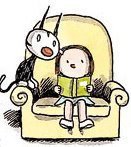
Chased by bloodhounds on a German plain after escaping from a Nazi concentration camp, Askild is a painter, a murderer and a thief.
His son, Niels “Jug Ears” Junior, uses dynamite to blow up the privy when his father sells his cherished coin collection.
Grandson Asger fears dogs coming out of the walls, and can’t stop obsessing about the space under the stairs. He is haunted by the time he spent down there with his fat aunt. He has a confession to make and a buried treasure to find. But first he must plumb the depths of his shipwrecked family history. Unable to banish Doghead, a horror from his childhood, to the shadow realm, he reveals the very bad deeds children can do — to push his family story forward, past a point of no return.
Three generations of wild and dysfunctional Eriksson men are seen through layered and looping stories in a richly imaginative novel that has become a huge bestseller in Europe.
you know how in american movies...most, not all, something has to be happening all the time...things blowing up, slapstick comedy,megan fox running etc. whereas in most of the european movies i've seen, nothing overly exciting happens at all. in many of the films the vast majority of the time is taken up with people just talking to each other. in other words, they are primarily character studies.
well such is the case with doghead, which is a european book, written in denmark where it won many literary prizes, and well deserved too.things do happen, but not much that is overly dramatic. the book is primarily a character study of one scandinavian family, and as such, is extremely well done.i was never bored for a minute, which is about the highest praise i can give to a book. so if you like very well written literary fiction, you should really read this book. you won't be disappointed.
and by the way, i like both american and european films.
8 CDs ready for us to listen to on the next road trip.
Which we did, stuck in slow moving traffic through the Alps, stuck in the queue to get through the ticket machines at the Brenner pass, stuck in the traffic around Stuttgart, cruising the autobahn past Koblenz and Cologne.
I'm not very good at listening to books, it turns out. I got on much better when I found a printed insert in the box with the family tree of the Svenssons and the Peterssons, and could check on who these people were in relation to one another. Hard to keep names straight in your head without those black and white marks on the page.
It gave us some laughs. But it's also hard to quite work out what it is all for, when you hear one half on the way south and the other half on the way north, three weeks later. What's the point of it all?
I guess it says something about me that I was surprised when I read the flyleaf of this book and saw that it was described as a story about "a wildly dysfunctional Norwegian family." I didn't think they were all that dysfunctional - it's just that the author describes their dysfunction in such a mesmerizing way. Of course, my own family would never be the poster family for functional. Ramsland weaves his story back and forth in time so that we begin to understand what makes each character significant; we begin to understand why certain subject (such as the stolen coin collection) continue to pop up in family conversations. We begin to see why Grandpa was not quite a war hero, fat Anne Katerine was not just a harmless old aunt,and how Jug Ears's character was formed by his unusual appendages. I'm actually reading this for a second time which is unheard of for me. It's that interesting a novel, that crazy a story...I want to make sure I didn't miss a thing.
The most fantastic Danish read I have ever read! Highly recommended for any man trying to remember how it was being a boy and any boy trying to figure out what it means to grow up...
Mah, miracolo che sia riuscita a finirlo. In questa saga familiare che copre tre generazioni sono tutti un po' squinternati, non se ne salva uno. Ambientato tra Norvegia e Danimarca, abbiamo a che fare con una famiglia disfunzionale, partendo dal nonno che diventa un alcolizzato dopo esser sopravvissuto in un lager tedesco, arrivando alla nipotina che si porta a letto quasi ogni maschio del paese. Inoltre, ogni personaggio ha diversi soprannomi, quindi ci si mette un po' a capire di chi si sta parlando. Forse il libro dovrebbe essere divertente e far ridere, ma sarà un umorismo che non capisco. A me non sembra la classica tragicommedia che potrebbe strappare qualche sorriso. Tra il nonno che tocca il petto alla nipotina per vedere se le è cresciuto il seno, una zia ritardata che si struscia sul nipotino, e una ragazzina di 12-13 anni che stava per essere stuprata da coetanei, ero parecchio disgustata. Leggere di famiglie del genere non fa per me.
Read about 100 pages. It was somewhat interesting & darkly/wryly funny, but dysfunctional family stuff is not what I want to read right now. Plus, Askild's nightmares he was having from his time as a German prisoner were haunting me too.
Als oma Bjørk op sterven ligt en briefjes naar haar kleinzoon in Amsterdam begint te sturen, kan Asger zijn verleden niet meer ontlopen. Hij keert terug naar huis naar Denemarken om zijn oma nog eenmaal te zien en uiteindelijk het verhaal van zijn familie te vertellen dat bepaald niet over rozen is gegaan.
Zijn familie is afkomstig van Noorwegen, waar zowel de familie van zijn vader als zijn moeder vandaan kwamen. Het verhaal begint bij Askild, die bevriend is met Bjørk's broer Ejlif en waardoor hij haar in haar eigen tuin tegen komt. Maar Bjørk's vader, de rijke boer Thorsten Svensson, ziet hem helemaal niet zitten als aankomende schoonzoon. Het zijn de jaren '30-40 en als Askild tegen de lamp loopt met onfrisse en steeds in schaal vergrotende smokkelpraktijken wordt hij voor 2 jaar naar een Duits concentratiekamp gestuurd, dat hij wonder boven wonder overleeft. Terug thuis kan hij toch Bjørk voor zich winnen hoewel er ook een jonge arts op de loer ligt. En dan begint hun gemeenschappelijke verhaal...
De ene helft van de karakters heten Niels en Knut, maar worden meer bij hun respectieve bijnamen genoemd dan wat anders, zoals daar zijn Appelkop, Flapoor, Liegbek, .... Het is een verhaal van een alcoholicus als vader en grootvader, de strijd van kinderen die opgroeien en voor een plaatsje knokken thuis om er uiteindelijk uit te vliegen en niet meer terug te komen; er komt nogal wat drama in voor ook al zijn de toestanden niet altijd ontzettend spectaculair. De karakterschets van de familie is groots gedaan en trekt je mee in hun belevenissen, tegenslagen en verwerkingen, maar het wordt nergens sentimenteel. Integendeel, humor en groteske situaties doen je meer glimlachen dan wat anders. Bij tijden ademt het boek de melancholie uit die zo bij een Scandinavische familieroman als deze hoort. Ook mythische Noorse verhalen worden er opnieuw bij gehaald.
De vertelkunst voert hier duidelijk de boventoon. Zoals Asger aan het einde van het boek opmerkt, zijn de verhalen de lijm die zijn famile samen houdt, want zonder hen valt zijn familie onherroepelijk uit elkaar. De schrijfstijl is toch wel zeer sterk, want ze houdt je vast tot het einde, ook al desintegreert net het einde in wat losse en vage draadjes net zoals Asger's familie in feite. Dit verhaal doet veel aan die bekende uitspraak van Tolstoy denken: "Elke ongelukkige familie is ongelukkig op haar manier. Maar het is de manier waarop ze het ongeluk delen dat hen een familie maakt." En als je over een disfunctionele familie wil lezen, mag je zeker voor deze kiezen.
Morten Ramsland (1971) is een Deense schrijver die Deens en kunstgeschiedenis studeerde in Aarhus. Hij brak met Hondenkop door in 2005 in Denemarken, waarvoor hij Den Gyldne Laurbær won, de Prijs van de Deense Boekhandelaren. De Nederlandse vertaling van de hand van Gerard Cruys verscheen in 2006.
Happy families, as Tolstoy noted, are so much alike that they make for dull fiction. It's dysfunction we want. And in his first novel to be published in English, the Danish writer Morten Ramsland has served up a smörgåsbord of dysfunction.
As the novel's narrator, Asger Eriksson (aka The Liar, The Latchkey Kid, The Bastard Boy, The Danish Shrimp, and The Bandit), notes at one point in his saga of three generations of his family, “There was Anne Katrine, who was robbed of her mother's love. There was Leila, who lost both her parents. There was Niels Junior, with his ears and his corset. There was Knut, with his broken nose. There was Madam Mother's reproachful grief, Grandmother Elisabeth's illness, and Grandfather Hans Carlo's galloping tumor. There was Great-grandfather Thorsten's bankruptcy. There was Grandma Bjørk with her alcoholic husband, and there was Grandpa Askild with part of his index finger missing and those bloodhounds on an eastern German plain.”
Who would blame this Dane for being melancholy? The Eriksson family is dragged all all over the Scandinavian landscape by the roguish, bullying head of the clan, Grandpa Askild. And yet, this is a raucous, high-spirited novel, laced with dark humor and creepy stuff out of Scandinavian folklore. And while Mr. Ramsland has been likened by blurbists to John Irving, he never goes over the top or sinks into sentimentality the way Mr. Irving sometimes does. The novel's title brings to mind the movie My Life as a Dog, and it has some of the same boy's-eye-view, off-kilter observation of an eccentric world.
Above all, the novel is a tribute to the power of narrative, the preservation of memories, however distorted and embellished, that makes a family into a coherent unit. At the end of the novel, Asger reflects that “none of us realized that the stories were the glue holding our family together, because it was only after they vanished that everything began to disintegrate, and slowly we were scattered to the winds.”
To return to Tolstoy, every unhappy family is unhappy in its own way. But it's the way they share the unhappiness that makes them family.
Dette er en af de største positive litterære overraskelser, jeg har været ude for. For det er herligt at læse stor litteratur, som man ved, er fantastisk - men nogle gange skal man tage fat i den bog på reolen, som vennerne har talt om (syv af mine Goodreads-venner har læst den og giver den fire i gennemsnit), og som man har hørt så meget godt om.
Så det gjorde jeg - og jeg blev i den grad imponeret over, hvordan Ramsland får fortalt en historie om en families slægtshistorie. Det er ikke fordi, historien indeholder de store spændingsmomenter og gåder, der skal opklares, det er bare velskrevet og velfortalt. Kort fortalt: Det fungerer.
Undervejs i min læsning fik jeg sådan en lyst til at genlæse Everything is Illuminated af Jonathan Safran Foer. Noget i 'Hundehoved' mindede mig om Foers debut fra 2002. Slægtsfortællingen og måske også skrivestilen og de fortælletekniske kneb, der bliver brugt - såsom magisk realisme.
Hvad enten du endnu ikke har fundet alle de bøger, du skal have læst her til sommer eller blot mangler en god bog at læse i, så få dine fingre i hundehovedet og gå i gang.
Jeg har i hvert fald fået afkræftet en eller to fordomme omkring samtidig dansk litteratur, og det er jo slet ikke så skidt endda.
There's only one thing I enjoy more than reading and that's reading lists describing books I haven't yet read. And there's one thing I enjoy even more than that (which means that, logically, there are two things I enjoy more than reading...ad infinitum) - my OCD purrs with priapic prolepsis when an online bookstore emails through a link to a 24 hour super sale. Oooh yes, 10,000 books to trawl through, many at 95% off. Hours of cross-referencing, researching, checking reviews on Goodreads,checking whether they are on sale elsewhere, weighing up whether spending two dollars on a book compensates for a below par review, deciding whether I really do want to be that person who has 'coffee table' books meticulously angled to all points of the compass in a 'randomly' scattered manner just because that oversized hardback on ancient Egyptian graffitti has been discounted by $50. I normally end up with a 10 kilo haul of dross, dogends and literary detritus. However, every now and again, a gem appears in the pick 'n mix, making the whole process super special. Doghead was one of those seriously surprising, seriously unexpected and seriously Danish books that came out of the blue. It's simply...well, it was a surprise for me, so..ditto. Read it. You won't be disappointed.
Ահա մի լավ գիրք, որը խորհուրդ եմ տալիս կարդալ․ շատ հավանեցի։ Մի ընտանիքի, նորվեգա-դանիական մի գերդաստանի պատմությունն է, յուրատեսակ սագա՝ գերդաստանի կրտսեր անդամի աչքերով ու խոսքերով։ Դանիացի գրողը վարպետորեն, թել առ թել հյուսում է ուշագրավ պատմություն մարդկային ճակատագրերի, փոխհարաբերությունների ու էն ամենի մասին, ինչ պատկերացրիք, որ կարելի է պատմել էս կտրվածքով :)
«Հայացքս իջեցնում եմ ներկաբծերով ծածկված ձեռքերիս։ Բազում տարիներ պատկերացրել եմ, թե ինչի նման կլինի Շան գլուխը կտավին։ Այժմ, երբ նա ինձ է նայում իր գարշելի դնչով, ես չգիտեմ, թե արդյոք ճիշտ եմ պատկերել նրան։ Ինձ դուր չի գալիս այն, ինչ տեսնում եմ։ Ոչ առանձնապես գեղեցիկ է, ոչ էլ առանձնապես տգեղ․ մի չաղ ու ճարպոտ բան է․․․ Ինձ շրջապատող պատկերները շատ խոսուն են, բայց կարծում եմ, որ ինձ խռովում է հաճույքի ու զզվանքի հարաբերական չափաբաժինը։ Այն, որ այդքան մեծ տհաճությունը պարտադրաբար չի նշանակում հաճույքի բացակայություն։ Երբ սանդուղքի տակի խորդանոցում տեսա Շան գլուխը, դա այն ուրվականը չէր, որին հնարել էր Ստինեն՝ ինձ վախեցնելու համար։ Ես տեսա մի զգայապատրանք՝ մտքի կառույց, որը մարմնավորում էր չաղ հորաքույրս»։
Sorry, but we have to refer to Tolstoy again. To paraphrase, all happy families are alike (and dull), but all dysfunctional families are unhappy in their own unique (and often very amusing) way, and this very dysfunction, and, indeed unhappiness, brings them together. Here is a story (or, rather, a collection of stories, some of which are actually true), told by an unreliable narrator, of three generations of nomadic Scandinavians,jumping back and forth through time, moving from POW camps in 1940s Eastern Germany, via Norway, to Denmark, to...well, I won;t spoil the end for you! A darkly funny tale of sex, drugs, alcohol, various crimes, mental illness, family in-fighting and finally self-awareness. By turns upsetting, moving and laugh-out-loud funny. If you have the same dark, maybe even bleak, sense of humour as me, read it! Twice! (The first time, you'll miss some important bits!).
I picked this book up simply because of the cover and the title. I hadn't heard anything about it before picking it up.
It's really, really good.
I've read The Girl with the Dragon Tattoo and Smilla's Sense of Snow over the past year and noticed a striking similiarity between the two heroines. it was refreshing to read a book that doesn't stick to that female character.
Doghead is a family history as well as a slight tragedy and very funny. The story starts at the end of World war II and continues to the modern day. it is about the ties that bind people together, sibling love and rivalary as well as mushrooms.
Wow - I REALLY REALLY liked this book! It is most definitely 4.5 stars. All of the newly translated Nordic fiction I'm getting my hands on is really satisfying!!
This is a multi-generational family story told from a male point of view. There is a lot of family dysfunction, troubling childhood experiences, love, loss and, did I mention, a healthy dose of family dysfunction? This one teeters right on the edge of absurd but never really crosses the line. It really held my attention from page one until the very last word. This is everything that I thought "The Corrections" was going to be but without the pretentiousness.
This one is a serious contender for the Favorite Book List! Fabulous reading - at least for me.
Heerlijk boek. Naar het einde toe werd het wat rommelig, alsof de auteur nog vlug vlug wat gebeurtenissen aan de verhaallijn wou toevoegen, of wat losse eindjes wou verklaren, maar de - in grote getale aanwezige - personages maken alles goed. Een boek dat bol staat van de liefde voor familie, vol treurnis ook, en aanvaarding van een verloren leven. Fantastisch geschreven, luidop lachen grappig, en ondanks het vleugje magisch-realisme, en personages die Appelkop en Flapoor heten (waarom ken ik zo niemand?) toch heel herkenbaar. Aanrader!
I got through roughly 33% before I just could not take anymore. I don't care how big of an international hit this book was, or how many awards the author received, it's a disgusting read. The characters are disgusting. What they do is disgusting, and frankly I want to kick it all the way back to the library.
A fictional colourful family story that is strangely believable as factual. The multitude of characters took a while to be able to distinguish, but once the pieces clicked together the story was entertaining. A fun and different style of writing, but not sure if I enjoyed it enough to try something else from his hand.
Хороший сторителлинг, дети мои, это когда персонажи дрянь, жизнь и приключения их тоже мало привлекательны, а оторваться от книги невозможно.
Скандинавская семейная сага с привкусом Гюнтера Грасса, но гораздо более мягкая и в чем-то даже поэтичная.
Не понимаю пока, какая там доля автофикшена, но реальность своих персонажей Рамсланд не скрывает. И не щадит, если уж на то пошло, вываливает столько подноготной о себе и родственниках, сколько обычно и не выдумаешь.
“В то время никто из нас не осознавал, что все эти истории — клей, связывающий членов нашей семьи, потому что стоило им смолкнуть, как все начало распадаться, и постепенно нас разбросало по всему свету.”
В общем, обычная семья, все как у людей ) Может поэтому и так интересно?
+1 автор из Дании 3 датские премии, 2 итальянские, 1 французская
Random Buch aus dem Bücherschrank - und direkt ein ziemlicher Glücksgriff. Nachdem ich ein wenig gebraucht habe, um reinzukommen, habe ich den Rest des Buches ziemlich geliebt. Sehr schön geschrieben und tieftraurig. Wahrscheinlich nicht für jeden was, aber für mich hat's genau die richtigen Punkte getroffen.
Татуированные члены, непримиримые браки, лесные трипы - все за что мы любим скандинавов. Но если без шуток - семейная сага про то, что истории надо собирать и хранить, чтобы продолжать склеивать семью.
Egentlig er denne boka mellom 3 og 4 stjerner for meg. Den er underholdende og ganske god, men også litt for mye av det gode. Vipper opp til 4 siden den er godt skrevet.
Últimamente he leído tantas sagas familiares (y variantes) que podría escribir un tratado sobre ellas. Cabeza de perro, de Morten Randstand, ha sido la más reciente, y una de las más interesantes. En primer lugar, yo matizaría un poco la sinopsis oficial de esta novela. ¿Divertidísima? Yo no diría tanto. ¿Originalísima? Permíteme dudarlo. ¿Episodios disparados? No sé yo, me pregunto qué entiende Salamandra por disparatados. Sí que es cierto, sin embargo, ese tono entre cautivador y grotesco, ese paso de ternura a brutalidad en cuestión de líneas. Creo que ese es uno de sus grandes aciertos. Sí que estoy también de acuerdo con esta crítica en Politiken: Ramsland escribe como si fuera un camión de bomberos con la sirena puesta y a toda marcha El ritmo de la novela es trepidante, y no es difícil mantenerse inmerso en la lectura. Una vez has entendido que Stinne y Signe son chicas, que Thorsten y Thor son personas diferentes pero Orejotas y Niels Junior son la misma, que los nombres largos e impronunciables suelen ser lugares y que hay continuos (y un tanto arbitrarios) saltos en el tiempo, empiezas a disfrutar de la novela. ¡A mí solo me llevó medio libro conseguirlo! A pesar de ello, y aunque parece que la cultura escandinava nos queda muy lejos, si a Cabeza de perro le quitas todos elementos nórdicos te queda una simple historia familiar. Y no cualquiera, sino algo parecido a la maravillosa Las cenizas de Ángela. No a Cien años de soledad, o Hijos de la medianoche, como dice la contraportada, sino a de la familia de Frank McCourt. Y solo por eso, bien merece una oportunidad.
Where do I begin? This novel is translated from the Danish, and the author has been compared to John Irving. Are you tempted yet?
At first, I didn’t see the comparison to Irving, but the more I read, the more I got it. In essence, this is the story of a family. But not just any family. This is a wacky Norwegian family.
Narrated by Asger Erikkson, the novel tells the story of his parents, his grandparents, and Asger himself. We also learn about his great-grandparents. So, it’s a family saga. But it’s an incredible family saga. The narrative is full of humor and spectacular happenings and coincidences. The author’s characterizations are rich, and the relationships are amazingly intricate. Thank goodness for the family tree at the front of the book! The tree also helps with another feature of the novel: nicknames! Several characters have multiple nicknames, and those are included on the tree.
I initially compared this novel to Middlesex, based on the family saga element. But I do think it’s more like Irving—very, very funny. So worth reading!
Hvor skal jeg starte, og hvor skal jeg slutte? Den her bog er lang og kort, kringlet og legende let. Forvirrende og meningsfuld.
Hundehoved er en historie om flere generationers liv og værker, som bliver fortalt og beskrevet i nøgtern detalje. Ramsland skriver ufatteligt godt, så godt at man til tider bare vil have mere, men han ender nogle gange også med at snuble over gentagende beskrivelser, som til at starte med er sjove, men ender lidt fladpandede. Til tider svær at læse, men oftest hyldende morsom i sine beskrivelser af banale og ligegyldige detaljer. Jeg har på fornemmelsen, at denne bog er et produkt af en flere måneders lang skriveøvelse, hvor Ramslund har skrevet uden at tænke på, hvor bogen skulle slutte; alle små detaljer er et produkt af sjove idéer, der pludselig er indtræffet, og som selvfølgelig skulle flettes ind i historiens væv. Uden at vide, hvor han slutter, kommer Ramslund dog stadig i mål. For mit eget vedkommende er jeg stadig i gang med at bearbejde slutningen.