A leading political and business thinker identifies the greatest threat to our economic future: the things we think we know—but don’t
America is at a crossroads. In the face of global competition and rapid technological change, our economy is about to face its most severe test in nearly a century—one that will make the recent turmoil in the financial system look like a modest setback by comparison. Yet our leaders have failed to prepare us for what lies ahead because they are in the grip of a set of "dead ideas" about how a modern economy should work. They wrongly believe that
Our kids will earn more than we do Free trade is always good, no matter who gets hurt Employers should be responsible for health coverage Taxes hurt the economy Schools are a local matter Money follows merit These ways of thinking—dubious at best and often dead wrong—are on a collision course with economic developments that are irre-versible.
In The Tyranny of Dead Ideas, Matt Miller offers a unique blend of insights from history, psychology, and economics to illuminate where today’s destructive conventional wisdom came from and how it holds our country back. He also introduces us to a new way of thinking—what he calls "tomorrow’s destined ideas"—that can reinvigorate our economy, our politics, and our day-to-day lives. These destined ideas may seem counterintuitive now, but they will coalesce in the coming years in ways that will transform America.
A strikingly original assessment of our current dilemma and an indispensable guide to our future, Miller’s provocative and path-breaking book reveals why it is urgent that we break the tyranny of dead ideas, for it is only by doing so that we can move beyond the limits of today’s obsolete debates and reinvent American capitalism and democracy for the twenty-first century.
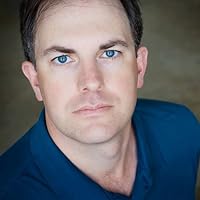
Matt Miller is a syndicated columnist, a commentator for NPR's Morning Edition, and the host of the radio program Left, Right & Center. His articles have appeared in the Atlantic Monthly, the New Republic, and the New York Times Magazine. He was previously a senior adviser to the director of the White House Office of Management and Budget and a management consultant with McKinsey & Company. He lives in Los Angeles.
Well, this is it, 100 books in one year. Would it be that this book was in the top 10 of the year, or the top 50. The first half of the text, which deals with Mr. Miller's Dead Ideas, is excellent, reasoned and well argued. I found myself nodding in agreement with most of his points, especially those about taxes (should be higher) and schools (should be nationalized). Most of Miller's points are diametrically opposed to the talking points of both parties.
Take taxes, for instance. He quotes Wagner's Law, which posits that as people get more affluent, they demand more of the services (police, schools, strong military) that only government can provide. (90) He also points out the idea that taxes have little or no effect on income levels; the argument of "putting more money in consumer's pockets" is misleading. (102) The real problem is one of low wages, which torpedoes his arguments on globalization.
If Wagner's law is true, then as wages drop or remain stagnant (as they have in real dollars for the vast majority of people since the 1980s) then we should be asking for less government services, not more. Defense spending is still through the roof, and the money bomb that is Medicare and Social Security is not far off. Miller does allow that we need less protectionism and more protection for those who get hurt. I agree, but we will not get that in an age where
1. The average hedge fund CEO makes 12,000 times as much in a year as the average American family. Why would they give that up without a Progressive movement making them do so? Meaning a Progressive Movement with actual balls, not limos. (141) To his credit, Miller quotes historian Michael McGerr, who wrote that people will revolt only when the plutocrats attempt to set themselves up as a new aristocracy. I agree, but that has to come from the bottom. The political elites and the plutocrats are the same people. Why else would Mitt Romney not want to release his tax returns? Why else are 54% of the US Senate millionaires as of 2010?
2. With businesses paying multiple millions in lobbying costs to get billions of federal dollars, who do you think will be protected? The owners of these businesses. The rest of us will get low paying service jobs with little or no bennies. I do agree that business needs to get out of the health insurance business, which may allow higher wages. But I doubt it. Call me cynical, but since corporations are people (shareholders, that is) they have been proven over and over again to be more important than the workforce.
In any event, the Dead Ideas that Miller points out are right on, but his remedies are vague and uninspiring. For example, this on making education better: "institutionalize skeptical thinking, challenges to orthodoxy and questioning of fundamental premises." (232) That sounds great! Have you ever actually tried it? I have multiple times, and am tired of reaping the "benefits": charges that I indoctrinate students, am a liberal bull shit artist, a fraud, cruel and a jerk. And that is just from the parents in the last 4 years. God knows what my bosses think, but I have a pretty good idea. America loves individualism but abhors the individual. Unless they are rich or a celebrity. Then we are supposed to forgo our individuality and act like them. I suppose this is what Miller is railing about.
As with any writing about economic and political policy, the author's beliefs and values influence his interpretation of history and the conclusions he draws about the current situation. I'm sure a large part of the reason I enjoyed this book so much is that I'm coming from a very similar place as Miller and he confirms my thinking much more often than he challenges it (why I noticed the book in the first place and decided to read it, I'm sure). Still, I think it's a well-written book that may not challenge my thinking but does challenge many of the assumptions behind our current public policy debates.
He calls these "Dead Ideas": The Kids Will Earn More Than We Do, Free Trade Is "Good" (No Matter How Many People Get Hurt), Your Company Should Take Care of You, Taxes Hurt the Economy (and They're Always Too High), Schools Are a Local Matter, and Money Follows Merit. I might call some of them American Myths, as they exercise powerful control over our identities and discourse regardless of their relation to facts and reality. Miller has a chapter for each idea where he explains their origins and how they either made sense in their historical contexts or, at least, were logical products of history, then goes on to show how they are now more harmful than relevant and their time has come.
And, as with most everything, the analysis and criticism is clearer and more complete than the constructive solutions, but the book does have a part two describing what Miller sees as the necessary and inevitable way forward. I think he's a little unrealistic about the resistance that will impede these "destined ideas," but they play well as counterparts to the problems of the dead ones.
I really enjoyed this look at the "Dead Ideas" we as a nation and (often) Republicans/conservatives cling to, even as we see the economy spiral out of control, our schools failing, affordable health care becoming a disappearing dream for millions of Americans, Social Security looming on the horizon as millions of Baby Boomers reach that magical age of 62 . . . AAAGGGH!!!
I know, sounds depressing and scary, but I actually found it really refreshing and cautiously optimistic; his style reminds me of another favorite "smart guy" I enjoy reading/watching, Fareed Zakaria. They take an unflinching look at tough issues, but their intelligence and underlying faith in America come through and leave you feeling like maybe we can get through all of this mess, if only . . . That's the tough part! I wonder how long all of his potential solutions to the "Dead Ideas" will take to catch on and hopefully become reality!?!
A very interesting read I would recommend to ANYONE who wonders what's next, how will we get out of this, and does anyone really have any fresh ideas to resolve the classic divide between the Democrats ("spend") and the Republicans ("just say NO - to EVERYTHING!!")and get us all moving forward.
This book was absolutely fascinating. Everyone I know should read it -- you may not agree with all of the author's conclusions and policy prescriptions (I didn't) but I guarantee that you will shake your head numerous times in agreement with the underlying analysis, and have at least a few "oh crap" moments as you realize how much differently we're going to need to do things here in America if we are to have a reasonable chance at maintaining our standard of living and our status in the world.
Through numerous excellent examples and historical analysis, the author makes what should be a painfully obvious point but is sadly obscured by inertia, intellectual laziness, and the short-sighted politics of self interest: Times have changes and we as a country need to make major changes if we want to continue thriving as a country.
Moreover, he compellingly explains why many huge changes are coming whether "we" want them to or not. The only question is whether we will change proactively when we can better manage the transitions, or will we change when macroeconomic and other unstoppable forces clobber us into it the hard way.
Sadly, I fear we are in for the hard way on many of the issues.
This was not a typical book I read and was definitely more liberal also. It discussed the following list of ideas that the author thinks are dead and need to be rethought:
1. Our kids will earn more than we do 2. Free trade is always good, no matter who gets hurt 3. Employers should be responsible for health coverage 4. Taxes hurt the economy 5. Schools are a local matter 6. Money follows merit.
I did think the book was well written and the first half explained the problems with the second half covering solutions. The ideas were interesting even if I don't agree with them. The most useful part of the book was the Afterword. It explained the need for people in your organization that can speak the truth to you without having to worry about political concerns. Those people that have no agenda and just want to improve the organization. This person has always been critical for me while I served and serve in various leadership positions. It was nice to see the explanation of that position and examples where it is was used in history and today.
An indispensable account for running the Healthcare, Education, and other political systems in the U.S. If it was my choice I'd allow Matt to put all of these policies into action for the better of this country if possible. If you tend to be a stone cold Republican or Democrat, he using stone cold facts from other countries to persuade the reader to his liking. Amazing Book
Here’s a book that made me re-think the conventional wisdom of such ideas as “Free trade is always good, no matter who gets hurt, Employers should be responsible for health coverage, Taxes hurt the economy, Schools are a local matter, Money follows merit.”
Matt Miller's makes the argument in this book that the U.S. is operating under a series of outdated ideas that will necessarily change within the next 10 years because holding onto them with lead to economic decline. In the second part of the book he purposes new ideas to replace the old ones he lists and how they will come about. His argumentation appears sound and because all of these ideas are politically charged and require political solutions he uses evidence and testimony from both liberal and conservative think tanks and advisors to strengthen his argument. For each idea he goes through the history of how it came about and how it was even sound for its time; he then details how circumstances have changed to make the idea obsolete or even dangerous for the future of the U.S. Kids will earn more than their parents. Miller makes the objective case that for most Americans this is no longer the case. The fact that this became an established idea in American thought in the first place was because America stood as the sole economic power in the world following World War II, which gave us 40 plus years of children earning more than their parents. Government offices in the executive and legislative branches, as well as conservative and liberal economists agree that taxes are going up no matter which party is in charge. He decries that we must face this fact first and foremost. Free trade is "good" (no matter how many people get hurt). Miller charges that economists have largely been complicit in a "good" conspiracy. Globalization taken as a whole and over the long term is good for the world. The problem, as nearly everyone agrees, is that some people get hurt, especially people in more developed nations that lose their jobs to people in lower-income nations. The conspiracy is that it doesn't matter because the net effect is positive - the problem with that is that it is a subjective evaluation and not objective science. Miller proposes to avoid protectionist policies by having employment insurance and job re-training for those that lose their jobs, which will lessen the opposition to inevitable trends like businesses moving off shore in search of a competitive edge and as a result uplifting the world's poor. Your company should take care of you. Many people already know the problem with this is that few people work for the same company their whole lives as they did 30, 40, and 50 years ago. The company cannot be the only thing to take care of you because they cannot cover the costs of medical care and maintain a competitive edge with companies that do not offer it or have foreign workers. Miller instead proposes that the government provide a minimum amount of healthcare in some form, be it a single payer or a voucher, which companies can supplement on to if they wish. Taxes hurt the economy (and they're always too high). The first part of this idea Miller debunks is that taxes hurt the economy. He quotes statistics by the budget offices of the Congress and executive branches that show that to pay for Medicare and Social Security taxes will have to be raised to at least around 22%. He also shows that among developed countries, from those with the highest taxes, like the Scandinavian countries to the U.S. the tax rate shows little to no correlation to economic growth. One proposed reason for this is that European countries tax smarter by lowering corporate taxes to encourage businesses to locate in their country, taxing the rich more heavily, and relying more on "sin" taxes like gas, tobacco, and alcohol. Schools are a local matter. Schools in the U.S. are disorganized messes because they're often run by people who do not have schools are their primary interest and because there is no easy way to compare one to another. Miller argues that schools will actually be more free if they have a clear set of national standards that they must maintain while freeing them up to experiment in how to better achieve those standards. Money follows merit. This is a more focused dead idea. Miller argues that Lower Uppers, the people that sit below the immensely wealthy are beginning to seethe at the ghastly payouts for CEOs that do not seem to deserve their pay given their results. His logic continues that if it seems more like luck that these CEOs have reached the positions they have, instead of the Vice Presidents below who seem more capable, then they might also look down and wonder how much lives of the poor are based on luck, such as the prebirth lottery - which family one happens to be born into, or where - which largely determines a person's life outcomes. Miller proposes that these increasingly dissatisfied people are the hope that America has to bring about the changes listed above because they have the power to do so. Overall the book is well written, the points well taken. While some may disagree with specific policy recommendations, the broad ideas are well supported by evidence.
This entire review has been hidden because of spoilers.
It's a very interesting time to be reading this book. Every one of Miller's "dead ideas" listed in this book is being brought forth as a timeless fact in our current GOP political campaign. While I can quibble with the details, the ideas that are brought up can be proven, in fact, dead. Most of the ideas are still believed to be tried and true descriptions of the way the U.S. works, but some ideas, such as the idea that the people at the top deserve to be there through meritocracy, are finally beginning to get some scrutiny. There have been too many examples of malfeasance, personal greed, and incompetence for meritocracy NOT to get a second look.
What is amusing about this book, however, is the ideas Miller himself take as common fact with no justification that could also be considered dead. The biggest one I take issue with is Miller's belief that the multinational corporation will basically save the world. This comes out in two different guises. First, Miller believes that without a doubt globalization can bring emerging countries out of poverty. This ignores quite a bit of evidence to the contrary; countries that are being used as sweatshop labor are often showing no improvements at all. The labor is being done is "free trade zones" that cut down any benefit from taxes and often groups organizing for more labor rights are put down at the end of the rifle. The jury is still out in other words and it's wrong to take it for granted. Global trade could be when all advantages are counted a lose-lose for the majority of the world's population. The second guise the belief that multinationals will save the U.S. itself. This overlooks the fact that the multinationals are doing their best to hollow themselves out and are, in themselves, a huge cause of income inequality. Miller decries income inequality but seems to overlook this key cause. By shedding their workforce multinationals assure that the bulk of the rewards go to a very elite class of people (and a very small group of unskilled laborers), not a group of middle income workers. Also he overlooks the fact that the current state of the U.S. is largely dictated by the elite upper group of CEOs. He calls on this group to help improve the country openly, but this group is the largest benefactor of the status quo and it's very unlikely to happen.
As long as you are aware of its flaws, this book provides quite a bit of food for though (especially in terms of its views on education, which I'm not going to get into). It's a worth read, but ironically it is also a partial victim of today's group of "dead ideas."
Let me start by saying I like Matt Miller. A bunch. Call his politics whatever you like...Centrist Democrat, Progressive, Socialism loving Liberal..I really don't care.
I find his ideas around taxes, education and health care reasonable and compelling. Two things I've always appreciated about his columns is his use independent organizations to back up the numbers he uses (CBO, CED etc) and that he suggests legislation to address issue and fiscal programs to pay the bill. He suggests what he views as practical solutions to our national problems which have elements that both liberals and conservatives can buy into (and parts they both could oppose).
Tyranny addresses areas Miller writes about often, the federal deficit,social security, taxes, education, health care and the income disparity in the US. The main point of the "dead ideas" is that the 1950's are gone and they ain't coming back. The post WWII world wide economic and political dominance of the US is fading and we have failed from a political standpoint acknowledge this change and address the problems we now face with new solutions. Never mind the problems that face us with an aging population.
But this book came up short for me in terms of what I expect from Miller. I think you can get better information and writing from his Washington Post columns than from Tyranny. It also comes up short compared to The 2% Solution (his previous book).
Miller is at his best when using economic data and new ideas from the world of business, heath care and education to address public issues. In fact, go find his column in the Post from today (September 8th, 2010) if you have never read him before. Too much time in Tyranny is spent on name dropping who agrees with or recommends different solutions to Miller. The entire section on how the income inequality in the US will be solved when the lower-rich (a measly 1-2 mil a year) rebell against the super rich seemed a complete waste of time. The entire book seemed rushed, as if he wanted to add stuff to existing columns so it could be published as a book.
I really do like the writings and opinions of Matt Miller. He seems a voice of reason, moderation and fresh ideas in a political era that really needs all three of those attributes. He is better than this book.
In most things political, I am a fence-sitter. I try to see the merit of both sides of any argument and then when the time comes to make a decision or a vote, I take in as much evidence to support both sides and make the best choice I can with the information I have. I am a member of no political party. These things may be indicative of my career as a journalist. When I came to this book I expected an unbiased account of problems facing us today and some profound paths toward positive change. Matt Miller is supposed to be the "center" on "Left, Right, and Center," no?
It reads like a formulaic rundown of liberal talking points. I was so frustrated by it that I nearly put it down multiple times. One such time is when he writes "...I'm not trying to persuade you that these approaches represent the course we should take. I'm arguing that this is basically what's in the cards..." Have you ever had someone say to you, "I'm not trying to be mean, but..." just before they say something terribly mean? That's how I felt throughout this book. He says he's not persuading, but trying to convince someone of a new truth is exactly that. He consistently describes how and why things were chosen in the past, how and why they are going to fail, and then *solves!* them with a mostly left slanted idea that may be a terrific solution to a problem, but rarely addresses the desires of all the people affected by it. One of the most difficult things for me here was that before I read the book I agreed with some of those solutions, but Miller made me feel so manipulated as a moderate that I found myself leaning back in the other direction. He presents his points as an assumed sell, and what that tells me is "Buyer Beware."
I heard an NPR segment about this book that piqued my interest. Who wouldn't LOVE this title?? I am so glad I read this book, it is great to get you thinking about things you may not have thought about and in ways you may not usually think. I almost returned the library copy and went to buy my own copy so I could write in it, but it is a very "current" book, so it may not be relevant in 10 years. For full disclosure, it took me almost 2 full months to wade through this book. It is NOT an easy or quick read. BUT...it is worth it if you are interested in thinking about questions such as:
Are higher taxes always bad for the economy? Maybe we should be more open minded about higher taxes...(blasphemy!!)
Is local control really the best model for an excellent education system?
Why is it business' responsibility to provide health care for its employees and how does this affect the competitive advantage of American companies? (He does not advocate for socialized medicine, but has some interesting ideas for how to make our current system better and less dependent on business, which in turn would make American businesses more viable in the world wide marketplace.)
There are several other worthwhile ideas in the book, and while I don't necessarily agree with him on everything, I think frequently he is right on. Either way, you will be more educated for the public debates to come after reading The Tyranny of Dead Ideas.
One dead idea he doesn't tackle...the agrarian school calendar...but that is a discussion for another day! Now to go discover the dead ideas in my own life....
Great idea for a book, the problem is that each issue covered in this book is a book itself- versus the soundbite he wrote. For those with a very limited knowledge of these issues this is a great book to start with, you'll be able to navigate a cocktail party afterwards.
I will however not knock the quality and direction of his thought. With few exceptions I think his take on things is right on(have to differ on free trade with him, Britain tried to keep the industrial revolution tech at home- it didn't work so why should we think we can keep our tech onshore this time?).
I'm not quite so sure that I'm as gloomy about the future as the author either. Technology has fundamentally altered every industry it has touched, both lowering costs and improving quality. Do you like banking or communication better today or ten years ago? Once technology is applied to health care, education, and government it should be possible to see real improvement in the quality of service provided and a decrease in the associated costs.
On another note we also need to take another look at our tax system. Technology has completely altered the business framework. Let's use music as an example. Not many music stores around these days, so where has all the money that used to pay rent, utilities, taxes, or product shipping gone? I could be wrong but I think a large percentage of those dollars are now in the Apple slush fund, neither taxed or distributed to shareholders. As always industry has moved light years ahead while government is still trying to address a situation that no longer exists or is relevant.
Here is another great nonfiction book recently released by Matt Miller who purposes that the world is changing and we are living with a lot of "dead ideas. We wrongly believe that (1)our kids will earn more than we do (2) free trade is always good no matter who gets hurt, (3) employers should be responsible for health coverage, (4) taxes hurt the economy (5) schools are a local matter (6) money follows merit.
Miller does a concise job of explaining his premise that we need fresh ways of looking at a globalized world. He does not believe American is doomed, but the US will need to adapt to changes and hopefully do it in a smart and enlightened way.
The author's interesting prediction is that it won't be the middle class or the lower classes that become the disenchanted group that spurs changes in the economy/politics/society, but the lower upper middle class who are currently loosing ground with no great bubbles in sight to restore their ability to compete with the really wealthy. Out of this group he thinks will come the most dissension. (I guess because the rest of us are use to being screwed and expect to be screwed at regular intervals?) I think Miller's predictions of which ideas will naturally evolve are very realistic and strong possibilities. It's one of those books I'll want to go back and reread in 10 years.
This book certainly gets you thinking about the overall concept of dead ideas... those ways of thinking that are usually taken for granted but no longer serve their original purpose or defeat the ability to improve. In the context of management I think of it as pretty much any idea or process that begins with "but we've always done it that way." The question that has long sicen stopped being asked is why it is being done that way and is that way actually serving any valuable purpose.
This book explores specific political ideas like whu health insurance in the U.S. is provided by employers, espeically in a time when employers are not for life. Likewise, he takes to task concepts like the assumed "good" of free trade, the assumptions that taxes hurt the economy and the incredibly poor design of the local controlled school system. This last one was hard for me as I specifically moved to my current home in large part for my kids to go to better schools. But he makes an excellent point about the incredible inefficiency of the system and the way it hinders research and development of better education modesl, models which are thriving elsewhere.
Not generally a fan of books that are about the economy or politics. However,I picked up this book as a start in trying to research and gain a better prospective as the 2012 elections approach. I am not anywhere close to understanding the complicated issues tied with our economic system, so for a person who has a limited background or vocabulary in that realm this book was fairly simple and the concepts easy to grasp. It is a middle ground perspective with an outside the box analysis which I appreciated as it criticized common ideals of both the republican and democratic parties. I think it is a good read for anyone who is willing to look at another way of thinking about the role of our government. The book is written under six points with logical reasoning and explanations as to why many of our "ideals" are somewhat skewed or in need of some updating. I think its fairly simple and fast read so worth following up on. Also the book was written in 2009, but I did see that the main points are still prevelant in the most recent election.
Yes, definitely, read this, if for no other reason than to shake the firmness off of ossified thinking. "Intellectual inertia" and low motivation to change from the comfort zone will do more than cripple us as a culture and society. I suggest that anyone who has any charge over others (managers, teachers, organizers) read this to be refreshed and invigorated.
Miller's seven deadly sins have become seven separate albatross birds that we seem to have firmly fixed in front, bringing doom. Since truth is always paradoxical, the way out from these strangle-holding habits lies in counter-intuitive thinking. I particularly liked the chapters on education.
I wish Miller had spent more energy in providing solutions than in presenting the problems simply because the problems, the dead ideas, are easily recognized. But the solutions need to be supported with stronger evidence. But this is not a flaw, only my preference.
To sum: Read this if you want more than criticism of current events; read it if you want to find the solutions.
WOW! I learned so much in each section of this book. Each chapter lays out a clear timeline/history that useful just in itself. He challenges ideas on the left and the right.
Summary: "These ways of thinking—dubious at best and often dead wrong—are on a collision course with economic developments that are irreversible. • our kids will earn more than we do • free trade is always good, no matter who gets hurt • employers should be responsible for health coverage • taxes hurt the economy • schools are a local matter • money follows merit
Matt Miller, one of America’s most creative public-affairs thinkers, offers a unique blend of business-world acumen and public-policy vision to lay bare how this conventional wisdom holds our country back, and he introduces us to a new way of thinking—what he calls "tomorrow’s destined ideas"—that can reinvigorate our economy, our politics, and our day-to-day lives."
The author, who was a White House aide during the Clinton administration and who works as a consultant, examines some "dead ideas," i.e., ideas that we take for granted in our world that are holding back potential prosperity. A quick summary of the "dead ideas" he examines:
Our kids will earn more than we do. Free trade is always good. Companies should provide for their employees (i.e., benefits like health insurance). Taxes always hurt the economy and must be lowered. Education should be dealt with at the local level. Money follows merit.
Miller does a great job showing first how these ideas have gotten entrenched and then how they limit us as a nation. Then, through examples, he shows how "destined ideas" can overthrow the dead ones very effectively. In the end, he really calls for critical thinking about some of our basic assumptions about economics and the nature of corporations. His ideas are timely, well thought out, and worth serious thought.
This is a (somewhat) nonpartisan take on the Dead Ideas that are paralyzing the American economy: education is a local matter, our kids will make more than us, employers should be responsible for health care, et al.
The book is not very data driven and assumes a lot in the way of proposed solutions. There's kind of a lefty slant to his palliative measures, which is maybe applicable for some cases, but not in others. Also, the thinking doesn't go terribly deep on some issues, e.g. the chapter on health care concentrates primarily on who should pay for it and takes a well-it-can't-be-business-so-it-must-be-government tack without first examining why health care is so expensive to begin with.
Still, there's a lot to like about this book. It's a great exposition on concepts no longer applicable in our global and technologically advanced economy. Certainly thought provoking, I'd recommend every politician, CEO, and concerned citizen give it a read.
Okay just to get the negative out of the way about this book, and why it didn't get 4 stars. The author basically doled out a lot of advice on avoiding "dead ideas", but never really delves into the the firm guidelines needed to grasp new ideas.
As I was reading this book, the one thing I noticed in my conversations, is that this book inspired me to discuss the possibilities of exploring new and different ideas. It can't be said that this book provided and specific ideas or methods of thinking, but there were points at which I used the real world examples the author cited. This book will get your "new ideas" wheels turning, and lend more different ways of thinking in the face of the information age, and our stalling economy.
If you listen to KCRW's Left, Right, and Center, you know the moderator Matt Miller. He worked in the Clinton Administration and now works as a consultant for corporations and non-profits. His perscriptions here are powerful. He identifies a list of dead ideas that continue to paralyze us politically. They include: Employers should be responsible for health care; Taxes hurt the economy; Local control of schools is a good thing. This book is not an ideological diatrabe but a book that will shake your thinking and help you to reconsider whether these dead ideas paralyze your thinking. They certainly did with me. I highly recommend this book. This book is not the kind of book that will get you angry at straw men, but the kind of rational thinking that we so desperately need.
This is the best book ever written about what it happening in America today. Whatever side of the political spectrum you fall into, MIller explains the history of things like health care, unions, corporations and many other things in ways that make sense and ring true. He talks about how we have reached a point where many of our assumptions are no longer true but set in stone. One such idea is that every generation will earn more than their parents, which is no longer true.
I highly recommend this book. It is an entertaining and fun read as well as being a really smart look at the situation in which we find our economy.
A succinct read from the get-go in the diagnosis, an iconoclasm that burns brightly, but which falters or weakens with a prescription that manages to throw in an apotheosis of the business leader, the C-suite executive and the board of directors as American heroes, fully flawed and unable to follow instructions or examples of exo-American experience. Read it for the contours of the debate, the framing behind the framing of the debate, and you will benefit from the clearer perspective, but dash the salt on the overpaid celebrity executive and irresponsible leaders and boards of directors of corporate America.
I listened to this book (audio book), and probably should have picked in up in print instead. I think I liked it, but often was distracted and don't believe I captured the full context of the author's arguments. I certainly found his ideas interesting at least. At least in a print book, you can pause when you choose to and think about the author's point. In audio, you're at the mercy of the speed of the reader, and while hitting the pause button is possible, you lack seeing the text to review the material. So I'm giving this book a conditional 4 stars (out of 5) pending my re-reading it, which I am planning to do.
It took me quite some time to finish this. Not the only reason that I am a slow reader. But I wanted to read it properly. At a time when politics seems to be so destructive and politicians so determined to do everything possible to keep the wealth and control of the country within a narrow set of people, it is actually refreshing to see that there are still people out there who can think rationally for collective good.
Mind that there are a few policy suggestions from Matt that are already dead ideas by themselves. But the number of such instances are very few in my opinion.
Overall, I think all Americans should read this book. Highly recommended.
This is an excellent book; I highly recommend it to every person who cares deeply about the course of our nation. The book is actually quite an easy read--I finished it in a couple of days. But the ideas are profound. What is most interesting in this book is the balance between which things should be done by the national government, and which policies are best handled by private industry. It is very thought-provoking, and really made me think about my assumptions about politics, economics, and education in the United States.
This book was very interesting, and it did have a LOT of good ideas, but it also had a couple of severe weaknesses. First, it presented NO evidence whatsoever for the claims that it was making. Second, it took the "bipartisan" approach...that of attempting to pretend like everyone and every political attitude was always equally to blame for everything...which is a dangerous and boring crock of crap.
Read the chapters about the problems, skim the ones aobut Miller's suggested solutions.
A book that is full of common sense and logic. I found that I did not get much new out of it (although there are some new slants on a few things) as it closely matches my own thinking. Unfortunately, as the author admits near the end it is highly unlikely that anything as sensible, practical, and workable as these ideas will ever see the light of day in Washington DC, the vortex of dead ideas.
not fun, but extremely informative. i don't agree with everything but at least he is trying to be pragmatic and face the realities of the changing world. america's status in the world is changing and will continue to do so. we can't be arrogant and continue thinking that all good ideas come from us.