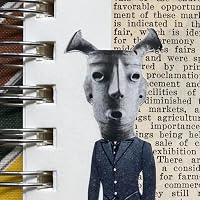
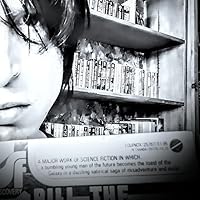
Four-BEE was an utopian city. If you didn't mind being taken care of all your long long life, having a wild time as a "jang" teen-ager, able to do anything you wanted from killing yourself innumerable times, changing bodies, changing sex, and raising perpetual hell, it could be heaven. But for one inhabitant there was always something askew. He/she had tried everything and yet the taste always soured. And then he/she succeeded in committing the one illegal act--and was thrown out of heaven forever. But forever is not a term any native of that robotic utopia understood. And so he/she challenged the rules, declared independence, and set out to prove that a human was still smarter than the cleverest and most protective robot.
Tanith Lee was a British writer of science fiction, horror, and fantasy. She was the author of 77 novels, 14 collections, and almost 300 short stories. She also wrote four radio plays broadcast by the BBC and two scripts for the UK, science fiction, cult television series "Blake's 7." Before becoming a full time writer, Lee worked as a file clerk, an assistant librarian, a shop assistant, and a waitress.
Her first short story, "Eustace," was published in 1968, and her first novel (for children) The Dragon Hoard was published in 1971.
Her career took off in 1975 with the acceptance by Daw Books USA of her adult fantasy epic The Birthgrave for publication as a mass-market paperback, and Lee has since maintained a prolific output in popular genre writing.
Lee twice won the World Fantasy Award: once in 1983 for best short fiction for “The Gorgon” and again in 1984 for best short fiction for “Elle Est Trois (La Mort).” She has been a Guest of Honour at numerous science fiction and fantasy conventions including the Boskone XVIII in Boston, USA in 1981, the 1984 World Fantasy Convention in Ottawa, Canada, and Orbital 2008 the British National Science Fiction convention (Eastercon) held in London, England in March 2008. In 2009 she was awarded the prestigious title of Grand Master of Horror.
Lee was the daughter of two ballroom dancers, Bernard and Hylda Lee. Despite a persistent rumour, she was not the daughter of the actor Bernard Lee who played "M" in the James Bond series of films of the 1960s.
Tanith Lee married author and artist John Kaiine in 1992.
Goodness, what a gorgeous book! 1977 DAW paperback printing with cover and inset art by Don Maitz. #226 in the DAW pantheon, just in case you are a collector…...okay, okay…..I know, I have a bad tendency to get caught up in the aesthetics. I make no apologies for my love of obscure pulp paperbacks…….
What we have here is a book called “Drinking Sapphire Wine,” by Tanith Lee, and it is the second volume in the Four-BEE duology, preceded by “Don’t Bite the Sun.” I suppose that each book could be read as a stand alone, although to be honest I really don’t believe that “Drinking Sapphire Wine” will make much sense if you haven’t read the first installment. Lee did the great bulk of her world building in “Don’t Bite the Sun” and someone trying to tackle this as a singular work will be a little bit lost. The Four-BEE books were supposed to be a trilogy, but Lee decided to finish the story in two installments. It’s a shame, because I could easily have followed these characters for at least one more outing. If you are interested in seeing what I had to say about “Don’t Bite the Sun,” you can read my review of that book here:
A short summary of where we are at in the story is necessary here. It’s been a few years since the events recorded in “Don’t Bite…..” Our unnamed narrator from the first book has taken on a male body and persona for a time and has been trying to integrate him/herself back into Jang society. S/he has also been spending time at the Historical Archives, reading up on customs from the times before the great domed cities. Discovering the fine art of duelling, S/he decides to accept a challenge from another Jang male. As it turns out, though, the act of a conscious taking of another life is still considered one of the taboo crimes in Four-BEE, and our protagonist is put on a trial of sorts and forced to choose between Personality Dissolution (PD) or exile outside of the dome, away from society. The narrator chooses exile, and switches back to a female body before S/he is placed outside the comfortable confines of Four-Bee.
Outside the dome, she (hereafter referred to as female, since she can never change her sex again) tries to settle into a life of lonely seclusion. She is familiar with the desert however, as a result of her archaeological adventures from the first book. She soon encounters the fauna of the desert in the form of a cute, furry critter she nicknames “Grey-Eyes” because it has, well, grey eyes. There is a broadly comic section where the Grey-Eyes infiltrates the sandship that our narrator lives in and gets into the food processor, causing it to malfunction in spectacular fashion. This malfunction causes a significant section of the nearby desert to get watered, an event that would only be normal during the infrequent rains that come through once or twice a year. The subsequent growth of the desert flora reminds her of her ecstasy at seeing the growth the first time on the expedition, and she cooks up a plan to have Four-BEE send her a water mixer so that she can continue to water the desert.
She soon settles into a daily routine of watering her desert oasis and communing with the reborn land around her. She is even visited by a member of the Four-BEE media, who wants to make a motion picture record of her exploits in an attempt to discredit her among the denizens of the huge glass city. But then her isolation is shattered as others begin to arrive from Four-BEE in open rebellion against the ruling Committee, the quasi-robot overlords of the great domed cities.
No spoilers from here on out. Suffice it to say that our narrator acquires allies and hidden enemies in ever-greater quantities and the story comes to a head as you just know that the Q-R Committee can’t abide by a societal disruption of epic proportions……
The Four-BEE duology is ultimately successful because Tanith Lee keeps her focus steadfastly on the big ideas of human nature. Her idyllic society is put out of balance by the singular human quest that transcends time and technology…..who are we? What is our purpose here? Are we merely slaves to the System, acting in accordance with prescribed norms, or do we really have free will? Surely these are questions of value, even in a society like Four-BEE, where death has been conquered and absolute freedom to do just about anything is the norm.
And by way of explanation from earlier in the review….it is the INTENT of terminal harm that gets our narrator exiled from Four-BEE, not the act itself. The loser of the duel was brought back from his/her life-spark in the Limbo Tubs as usual, so no real death occurs. The big shock to the system was in the mere pantomiming of harmful action. Her media coverage has backfired on the Committee and provided for a platform of unrest among the citizenry at large, especially the younger, adolescent Jang class. This indicates that the society at large is stagnant and perhaps even a bit sick. How can creativity and individualism survive in a nanny state where there is no want or need and crime and vice don’t exist? Can the spark of human existence thrive in such a society, even when the society seems benign and comforting on the surface? Tanith Lee knows the answers to these questions, and she plays out her narrative in fine and entertaining fashion throughout.
“Drinking Sapphire Wine” exhibits a bit of a more standard and linear writing style than you will find in “Don’t Bite……” The spirit of the story is fully intact, but there is less shimmering and shiny clutter to be found here. I’m certain that this is a result of the main plot action shifting from the domed cityscape to the sparse and sandy desert region of the planet. There is still no resolution as to whether or not this is a future Earth or a completely alien environment, though the clues definitely point more towards this being a future Earth where humanity has evolved in conjunction with technology in the wake of some cruel environmental disaster. But it is also obvious that the desert terrain of the planet is healing itself, and could be livable again given the kind of care that our narrator and her cohorts are willing to confer. If I were to employ the metaphors and similes of my review for “Don’t Bite…..” I would have to say that this book is way less glam rock and way more one of those acoustic “unplugged” albums that were so popular back in the day. The essence of the story is intact, but it’s less noisy and not covered in glitter and sequins.
Mass media is more often than not anchored to the time that it was created. A book will often tell you more about the time that it was written than it does about any supposed future. As such, one could easily dismiss these novels as relics of the hippie past, one where The Merry Pranksters stayed on the commune and grew closer to the land while they expanded their minds, but that would be shortchanging the bigger ideas that Lee brings to the table. That said, there IS a sort of sweet, hippified vibe to the proceedings, not surprising given that these novels were a product of the post Aquarian Age ethos that was still floating around in the air in the mid 1970s.
The Four-BEE duology is a futuristic bildungsroman for the science-fiction aficionado. The world building is exquisite, the characters are compelling, and the language that Lee uses shimmers and shammies with what can only be termed as passion. I highly recommend that you seek out these two somewhat obscure entries in the Tanith Lee canon. You will be pleasantly surprised by what you find.
It seemed at first, that Don’t Bite the Sun wouldn’t benefit from a sequel, but Lee pulled it all together nicely. It’s not the best I’ve read from her. I like it for what it is and the story is well-told.
Taking place a long time after Don’t Bite the Sun, possibly decades though the passage of time is not often felt by the immortal Jang, Drinking Sapphire Wine returns us, at first, to the domed city of Four BEE and to our nameless protagonist. Starting off with a male/masc body, they are discontent and depressed. They still remember their romp through the desert in the previous book and their dead pet they had the androids of Four BEE bury outside. However, things within their Jang circle are getting complicated. They feel distant from their friends; Danor is returning from Four BAA and she appears to be on the fence on her feelings for the main character. Zirk, in both male/masc and female/femme bodies, is an annoying piss ant, Hergal is acting high and mighty, and Hatta is going through some change of his own. The main character keeps drinking (both the literal and metaphorical) sapphire of wine of Four BEE and just keeps living discontently.
However, after the main character and Zirk get into a duel, where they deliver a killing blow to Zirk, the androids that rule Four BEE ultimately decided give them a choice: remove their memories and original personality and de-age them to a child or exile till death. The main character bites the sun, they defy the androids. They choose exile. Now, by themselves in the desert. The main character will think upon their trials, tribulations, and relationships while surviving in the desert by working their own land. But they won't be alone for long...
Don't Bite the Sun was a strange novel that, despite that strangeness, ended up being a very thought-provoking novella. Drinking Sapphire Wine wasn't as thought-provoking as its plot returns to a more basic surviving in the wilderness story--though nothing too extreme happening--but it was still a fun and interesting novella that sees our protagonist's journey to its fitting end. It's also more humorous than the previous book and I very much enjoyed Tanith Lee's comedy. Prior to this little duology, I only read her more serious and darker works and the comedy wasn't too present there. Lee can be pretty damn funny when she wants to; her humor ranges from snarky to dry, but overall very British.
In this sequel, several things come to light about the world. Both we as the readers and the main character themself come to learn that the utopia of the domed cities is a fabrication. Yes, the cities had laws of several kinds, but for the most part, even with the constant suicides of the immortal Jang teens, there was very little law-breaking or significant punishment that followed. This obviously changes with the main character's confrontation with Zirk in the beginning. In the domed cities, the desire to kill or murder has been completely effaced and as such there is no jail or form of punishment for such things. But after the confrontation, everyone, even the ruling androids, are at a lost until the main character is offered those choices that I mentioned at the start of this review. Once the main character leaves the domed cities, in a female/femme body--their last body change for forever--we start to see how insignificantly the androids regard them. Quite odd for a group who wish to see them returned to "proper" society and acting accordingly. Eventually, the main character is joined by other runaway Jang after a video of them and their new farm is broadcasted across the domed cities, and shortly after that more of the utopic visage of the domed cities sloughs off. Apparently, Four BEE sends the main character and their companions intentionally, faulty-built equipment that will malfunction, a way so they can't directly harm or kill them.
Everyone who joins the main character are deemed anti-social and against the cities' ideals. It's quite interesting: a utopic society that lets humans do whatever they want and takes care of their every needs, immediately starts despising its former citizens who want a life outside of it. While we could see small cracks of this in Don't Bite the Sun, it's in full force here. Now, I want to remind people this a Tanith Lee book, The Dispossessed by Ursula K. Le Guin, it is not. Don't expect in-depth descriptions of how the domed cities or the main character's new farming commune are actually structured or work. If anything, the ultimate political thing that can be said about this novella, if anything, is that there are no true utopias. Even in a society where there is no capitalism, sexism, patriarchy, transphobia, racism, class distinction, i.e. the rest, utopia is but a masquerade. As soon as you step out of that utopia, your personhood is denied and written off as wrong. No idea if Lee was trying to provide a metaphor for something here or responding to something in real life at the time, but either way she isn't wrong with this criticism.
But as I said, this book is more about the main character's personal journey. They feel very abandoned by their friends and loved ones, even before their exile. In a way, they come to finally love themselves and find happiness; but the true meat of the story, is them learning to cast off the domed cities' utopia and realize how it stunted them emotionally and mentally. The main character comes to learn that they can thing for themselves and that they can find their worth in both doing those things and knowing that they can do them. This is what the other runaway Jang come to eventually learn as well when they join up with the main character. The main character also learns that they can still make meaningful connections with others, particularly with Danor, who loves somebody else but still end sup being good friends, and with the mysterious Esten, who now wears the main character's former male/masc body. They can genuinely love all these people in different ways, not as forms of escapist pleasure or something to fill the void, but to actually love them as friends and lovers equally.
And this is where we come to the title...
Sapphire wine is a literal drink in Four BEE. It's a beautiful blue color and delicious, but everyone drinks it a lot. At the book's end, the main character has started a vineyard on the farm with the other Jang and comments that it might not be the best tasting thing, but it will be better than the sapphire wine. The sapphire wine is the lies, the rose-tinted glasses, the naivete, the drugged-up revelry, and all those other overly idealistic things that the domed cities feed to the Jang, what keeps them inhibited. When you stop drinking it, you realize what you can do, not just with and for yourself, but with others too.
Biting the sun will burn your mouth, but drinking sapphire wine is not the way to cool it. I loved this little series.
Every bit of the masterpiece that Don’t Bite the Sun was.
At first, I wasn’t sure what more Tanith Lee could do in this universe. Don’t Bite the Sun was perfect New Wave science fiction. But then, by the end, I was blown away by the emotional growth of the Narrator and her friends.
Don’t Bite the Sun explores the function and psychology behind utopia. Drinking Sapphire Wine explores that theme further and in greater depth. As I said before, this is a must-read for New Wave SF readers.
I really enjoyed this series - a lot more than I thought I would given the back cover. I didn't like this book as much as the first one but I still thought it delved into some pretty deep material given it was so short.
Once again the book explores what really makes people happy. In this book the main protagonist (we never learn his/her name) continues to try different things to make his/her happy - beginning with a change of gender to male for a while. During this phase he commits a crime (even though there really is no crime in this utopian world) and offered two choices - exile or have your brain wiped. He choses the former. Back in female form she is sent out into the desert to live her life on her own terms.
I liked this series because it made me have a serious reassessment about some of the things I take for granted and think about what really does make a person happy. I think the book was really clever like that.
"In 2019, I read and mostly enjoyed Tanith Lee’s Don’t Bite the Sun (1976). The sequel Drinking Sapphire Wine (1977) follows the same nameless narrator of the first volume. It’s set in the same post-scarcity future replete with advanced technology where youth, the Jang, are encouraged (and “taught” [...]"
This is the sequel to the first book, "Don't Bite the Sun." It is also, by modern standards, quite short at 171 pages, but Tanith Lee makes every page count. The basic story relates the main character's eventual banishment from the utopia, where everything is provided but nothing has meaning and there is no meaningful work to do. Lee makes the world an especially rich one; her descriptions give the world texture and beauty. Lee also explores the concept of emotional meaning with people who can change their bodies, but never actually die.
This sounds like a rather simple, even overused premise, but there's a good, and finite story here. Lee provides enough description to allow the reader to build this world and the people in the imagination, and it's really incredible to behold. I'm sure I will be going back to this book, like I return eventually to a number of her older, simpler works, to spend a few hours of enjoyment.
Spoilers ahoy! I'm writing this from the perspective of a starry-eyed fan,
It's a world where bodies are simply another sort of costume, and gender is a matter of personal taste, but also one where living in heaven comes with a life of perpetual praise and worship for smothering coddling. In the first book, the nameless protagonist learned that they could make nothing, do nothing and be nothing. She (for this is her dominant self identified gender, though not her body at all moments) has matured a bit, having spent a non-specific amount of time hiding in the fantasies of the past as a coping mechanism.
Sapphire Wine follows the further misadventures of her hapless friends as well, and adds new characters for interesting and funny social interplay. A lot of the book's strength is not in external occurrences but in people's reactions to each other and even the novel's explosive climax is again, most interesting in how it effects the characters and not even in their sort of peril.
Most of the book is based on her mellowing out and getting an ability to look after other people, so if I had to characterize the coming of age aspect other reviewers have commented on, there's a maternal theme (delightfully neutral "makerish" in the character's post gender vocabulary) and a lot of forbearing patience with other people's dysfunction without being a doormat. If you like really pretty, Tanith Lee's descriptions are also a joy to read. If your sci-fi needs spacewars and an ending more exact than getting your stuff together and making the best of a lousy situation, this book is going to bore you to tears.
One thing I disagree with is the garden of Eden motif people apply to the books- there is a garden, but Lucifer's choice to rule in hell over serving in heaven fits better here. I'm normally not one for an intentional Abrahamic religious allegory, but the protagonist explicitly examines it in both books when she discusses god. Her observation is that the QRs that order and regulate the paradise for the humans prevent god from functioning, and implictly they replace them. It not at all heavy handedly written that the payment for all goods and services required is hysterical thank yous and that all pleasures are possible only in the stricture of completely arbitrary social rules. For example May/December romances or actual homosexuality are not forbidden, per say, but gently and firmly discouraged because breaches in conformity might leave the people of the society content with their lot in life. The culture facilitates selfishness at the cost of human connection- everyone has the bodies they find beautiful and spends all their time trying to have sex with whatever people they consider the best mirrors on themselves, so everyone is lonely. Neediness, and the silly ineffectual acts of rebellion people in the dome cities get up to is actually preferable to being useful by the QRs.
Humans are functionally banned from anything they could feel true passion over- Danor's sexual dysfunction, rather than just a character quirk of frigidity, it's a symptom of the society, as is the complete suppression of the desire to create... even the total control over their human reproduction lets the QR's insert themselves completely into the needs and lives of their subjects. A repeated theme is frustrated desire- Hergal in the first book is not allowed to be a bird, Thinta's cat obsession is twarted even though there's no reason she shouldn't get to have the cat body she wants. Citizens of the dome cities take meddling for granted, but the QRs have had a note of sabotage in everything they do for a long time. They are loving gods, but nonetheless parasites, bribing people with their birthright at the cost of the one thing the humans have that they don't- it's not the eternal spark or soul that can be body swapped, its the internally generated capacity to really be into things. Indeed you almost get the sense in this post scarcity society, that emotional energy is a redundant invention that doesn't literally power the QRs as much as keep them in power.
That the protagonist committed murder, even if it was an act of self defence, might give the QRs pause that people's feelings might be hurt if they were constantly getting offed by other people and needing a new body, but even consensual, harmless war also undermines the QRs monopoly on being the only thing to feed you and make you feel; if you can fear death even as a moment's irritation and the people in power can't stop it, the monopoly is lost.
The protagonists iconoclasm and contentment with creating her primitive back-to-the-land dictatorship (she's the defacto leader, it's really more a personality thing) disguised as a commune is not about rejecting technology, its new citizens embrace whatever they can scrounge or rediscover, and its not about scarcity or property rights, its functionally about self determination. She doesn't look forward to say, resuming natural childbirth, and I think if it were an option nobody in the garden really wants an artificially shortened lifespan, but being in a sort of lesser place is the current price for not living like pampered pets. It's a compromise, much like everything else the humans get stuck with in the exile ends up being. I get the sense that they're in more danger of eventually staging a coup against the domes than regressing into barbarism.
The next bit is a MAJOR SPOILER
A note, before I conclude, about Hatta. We've got the theme of compromise here, and it's something worth unpacking in his case. Hatta begins expressing his unrequited love through a mask of deliberate physical ugliness (a representative of his own rebellion against a world where everything is perfect and pretty), wanting the protagonist for her mind and not her every changing parade of bodies, but she has no interest in sharing herself with him- she certainly doesn't need him and he has nothing to share with her other than more smothering QR style nurturing. Love in the Tanith Lee book is about giving, for example Danor and her Older Person lover work because they're able to offer something the other needs to complete each other and Hatta isn't able to give more than fussing in the safety of the domes. Discarding the Hatta identity for the protagonist's old male body, the protagonist's ideal for that gender, Hatta desperately compromises his own identity to get the upper hand with her, for once enjoying being desired but losing the ugliness that was part of who he was. I was a bit worried this was too close to being a story about a girl finally giving into the advances of a "Nice Guy" who always treated her right, given Hatta's constant usefulness, but thankfully they didn't go there.
When the body is disfigured Hatta decides that he's lost the ability to be wanted along with his looks and plans a real suicide- the baby she uses as an argument to stay his hand is symbolic of actually having a shared project, but there's more than that, she also declares a feeling for him as a person and his looks become a compromise, half her sexy poet, half the ugliness he likes to wear. She has become able to love him because he, like many others, is now able to act like an adult.
This entire review has been hidden because of spoilers.
I have never owned or read the combined version of these books (Biting the Sun), but as I read and read and read Don’t Bite the Sun, I kept waiting for the desert part and being disappointed that it was NOT YET, and then short when it happened. Then I got to Drinking Sapphire Wine and realized that the part I really liked was here. This is the balance to the wild loopiness of the first book, as our heroine punches through and comes out the other side, an anarchist pain in the ass. There’s a part where she basically breaks an AI by being an annoyance and it cracked me up to no end. I don’t know, I really needed this book in this moment. All that said, I was a tad disappointed by the ending, but I can see how Lee landed there.
Lee has such wild imagination and commitment to following through on it, that I find I really admire her writing. She has a flare for being descriptive in ways that are vivid, but not so overwritten as to be irritating. If you’ve never read this duology, I’d recommend giving it a go.
In the world of Four-BEE, where young adults live an endless immortal life of pure excess our narrator who's been bucking the trend gets in over their head, and ends up exiled to a life out in the desert.... things progress from there...
Unfortunately it progresses to the first real "miss" by Tanith Lee for me, though even here it's not so much the case of it being a bad book so much as a pointless one - all of the good scenes and themes and such were already in Don't Bite the Sun, and done better there too. A lot of the strangeness and ambiguity is missing, and instead we just play out the scenario to an inevitable and pretty flat conclusion.
It's fine? Don't go out of your way to avoid it, but it's also super worth seeking out. Better to have left the first book as a standalone.
(me da pena, pero ha sido uno de los pocos drops de 2021. y que conste que no es una mala historia, sino que hay ciertas decisiones que toma Tanith, dentro de la historia, que no me convencieron, pero a vosotros puede que sí os gusten).
J'adore cette autrice et je ne me lasse pas de découvrir son talent de narration. Sous des aspects futiles et légers elle arrive à aborder des sujets très profonds et complexes.
The 1977 DAW paperback still holds a prominent spot on my bookshelf, tucked away with the other Tanith Lee's I've read over the years. The Don Maitz artwork of this period is fantastic, and his work, along with Frazetta and Eggleton, helped to create the cover whore I am today. And the contents are fantastic - much more so than when I first read this book, not having read the first part, Don’t Bite the Sun, and struggling to figure out what was going on.
Lee's sensuous use of language is here, and her character driven narrative, and her focus on big ideas. In short, our gender-swapping narrator from the first story commits the ultimate sin in a crimeless society and is banished to the desert. There, stuck in her final body until she ages and dies, or suicides, our narrator creates a lush paradise in the desert and attracts friends and enemies - old and new. I wasn't that thrilled with the ending, where things get tied up neatly with a bow and everyone is happy and in love. I prefer super sad, or melancholy, or sometimes even no resolution at all. But I'll tag that to my own personal preference, and raise my glass of sapphire wine in toast to Tanith Lee's writing skills.
I first read and Bite the Sun and this sequel in my teens. Tanith Lee writes so lyrically with such evocative prose of this loopy dystopic utopia in a far away post-apocalyptic future. And yes, the domed city of Four Bee is both. What do you do in a hedonistic world where everything can be and is done for you by android servants? You can even change bodies and genders. Eternal vacation--or eternal childhood. Drinking Sapphire Wine picks up the narrative where the first left off with Jang exiled from her pampered existence--but she doesn't remain alone for long. And I rather loved what it had to say about the price of staying in--or leaving--Eden. And on your own two feet. Recently a book combining both short novels was released as Biting the Sun.
A powerful conclusion to Don't Bite the Sun. I feel like the narrator's voice had matured appropriately after the time elapsed since the first book. An interesting statement on growing up and escaping the trappings of sanitised modern life and the meaningless hedonism of youth. And most of all, being different from the people around you and forging your own path. Fantastic reading
In 1982, I read this and the first in the duo (Don't Bite the Sun). I was reading them both for the second time. I reread them again and still loved them about fifteen years later.
In Tanith Lee’s Don’t Bite the Sun (1976), the anonymous 25-year-old narrator repeatedly burns her mouth by biting the sun--challenging the system of her perfect, post-scarcity, dome-enclosed city run by QRs (quasi-robots or androids) and worked by robots for their pampered human charges—by trying and failing to do meaningful things like work or make a baby. She and her Jang (young) friends take drugs, “have love,” play sabotage, make social circles, pay for things with “emotional energy,” change genders, commit suicide, and exit Limbo in new bodies ready to resume their hedonistic lives.
All that continues in the sequel, Drinking Sapphire Wine (1977), but the narrator is now a he (wearing the body of a handsome consumptive Romantic poet) and is immersing himself in the History Tower, researching forgotten customs of humanity like God and dueling. As his frenemy and occasional lover Hergal “the Turd” tells him, “You sit up there on your tail in the History Tower, in the dust with a couple of rusty robots that don't know what rorl [century] it is. You read about things that don't exist anymore and won't ever exist anymore. Adventures, wars, illness, obsolete social behavior patterns--poets.” Needless to say, the narrator is still unfulfilled by life in his society, and his friends can’t understand him: “And your vocabulary!” she bawled. “Those words! Factory? What's that?” “A place where they make audio plugs,” I said.
The plot of this second novel begins with the return to the narrator’s city Four BEE of a former lover/friend Danor (currently female), a duel to the death with an envious jerk called Zirk (currently male), and an exile from the utopia-dystopia city into the harsh, hostile, beautiful desert:
“Now’s your chance to prove you can do more than sit on your tail complaining and drinking sapphire wine with your tears of self-pity. Come on, come and do battle with me, come and fight me. I'm more than a match for you. I'll devour you if I can, but I'll do it cleanly and openly, not with words and dark little tanks in Limbo. Don't be afraid of human death and human age. I've seen it all, and I know it. It's just dust blown over the rocks. Look at me, how dead and old I seem, and yet, watch me grow, watch me live. Come on. Come and find me. I'm waiting.”
Will the narrator find a way to stop drinking sapphire wine and to live a “real” life? What gender body will he (she?) choose to live out his (her) life in? Will he (she?) go crazy in isolated exile in the desert? Will dome city life continue carrying on stagnantly and safely without him (her?)?
Like the first novel, this one is bleak and humorous, Lee revealing how, despite all their gender and body changes, people remain essentially the same, and how living an immortal life of ease with robots doing all the work and androids making all the decisions may not be so enjoyable, if you are a thinking person who wants to live a meaningful life.
There are some neat surprises and twists and developments and characters. I like the love between the Jang Danor and the Older Person Kam and between Hatta the Horror and the narrator. I like the narrator trying to make “My Garden” in the desert. I like the benevolent QR Committee starting to act a little less benevolently. And the rediscovery of the ancient human past here and there is neat. I also liked the Jang slang used (though it’s really not necessary, because Lee uses plenty of regular slang):
“My name’s Esten,” he said. “Derisann to meet you.” “Damn you, you’ve got a farathooming bloody cheek. What are you up to, you bastard? What’s the grakking game, you--”
I like the decadent sf descriptions: “Kley was female right now which meant watch out, but when I glanced about, in a new body. Dazzling. Hair like lava, eyes like raw gold, skin like polished brass, and dressed to kill in see-through pattern with gold daggers, and with a brazen skull--of all antique masterpieces--grinning on her groin shield.”
The novel is pretty conservative re gender despite all the gender changing. There are hints of the narrator in her female body being attracted to another Jang in a female body, but she never acts on that and remains heterosexual, like almost everybody she knows (apart from her makers—parents—who do live together as males). Though it is neat to find out that Hatta became female for a while to try to understand the narrator, he says he’s 80% male, and everyone is predominantly one or the other. There are no hermaphrodites or neither nor or neutral or non-gendered bodies; there are only male or female bodies.
Although the novel is promoting living a real life in the real world rather than in a druggy VR, does Lee make it too easy (via “water mixer” machines etc.) for the narrator to make her My Garden in the desert? There apparently aren’t any predators, and the insects don’t bite or bother but just make pleasing whispering noises with their wings. Is this really “real” life?!
Anyway, for 1977, the novel feels ahead of its time and is a compact, strong, stimulating read, and fans of Tanith Lee (like me!) should like it.
7/10 If you enjoyed the first, this sequel is a good revisit and "ending" for characters you know. The main character changes from teenager wanting not to be a teenager to having adulthood thrust upon her by teenagers. A few new aspects of people suffering from the "perfect" world are explored.
If you only moderately enjoyed the first novel of this 2 novel series, you can stop at the first. It's not as fresh as the first novel because it can't avoid the old school scifi theme of "humans versus robots". However, that's the whole point realized in the first book, and it has some expansion in this one.
This gets the LGBTQ label because there's no gender restrictions for characters. However, the modern reader might find it old fashioned in that males always pair with females and females always pair with males as if there could be no other conceivable pairing. Unlike the first novel, this gives a slight hint that there may be other possible pairings, but again it's so subtle that I wonder if there were editorial mandates about this in 1980.
Whereas the first book focused on world-building this utopia and organically developing the understanding for a greater need of purpose, this second focuses solidly on the main character's full understanding and education in that purpose and, ultimately, achieving a way forward with it.
It is interesting that Danor is a brought up as more significant than the previous- her asexuality was more of a tertiary thing than a strong trauma but here we see it repurposed into something with more depth.
I think that while the details of the main character's education are interesting enough they lack the wonder of first seeing the author's vision of the world of four-BEE and comes off less impressive (a lot of My Side of the Mountain vibes). The exile is ultimately at the behest of the QR and committee so it feels strange at times to consider their 'cleverness' with their given materials when QR could force ego-death whenever.
I think a third book would have been interesting but I am glad to have read this interesting series in its current form.
In this dystopian future, death isn't permanent but when the protagonist (from Don't Bite the Sun) kills someone with intent, they are sentenced to either being mindwiped or exiled to the desert. They choose the desert and through accident they end up growing a garden. And soon other rebels start arriving to join them in their exile.
I wasn't sure Lee would have more to say about this world, but I quite liked it. There's big moments of slapstick humour in this, like when the desert animal they're trying to befriend absolutely destroys their ship, and when a bunch of wasted hippies arrive and are absolutely useless. The thing about trying to build a utopia is that so many people come along who bring nothing to the project… It's all quite unrealistic but it's a short book and doesn't outstay its premise.
To me, fantasy and sci-fi only work if the author leaves things somewhat relate able. If things are too fantastic, it's really hard to get into the story. Unfortunately, this one falls into that trap. This futuristic civilization of immortal people who can do almost anything they want and are cared for by electronic caregivers is just so out there. On top of that, the characters are either lacking in personality or just plain annoying. All told, that doesn't leave much to hook me into this book.
"Don't Bite the Sun" isn't the kind of story I would expect a sequel to. That this book is decent and successfully builds upon its predecessor is pretty impressive to me.
Worth a look if you enjoyed the first "Four-BEE" book, but it is not essential. If the first book left you cold, this is probably not worth the time.
A neat novella from Tanith Lee in the 70s that focuses on a theoretical future where young people can choose whatever gender body they want and live a wild partying existence - within limits, cared for by robots and algorithms. Our main, never satisfied with her life in society, decides to take exile in the desert wastes after an accidental murder, and builds their own self sufficient anarchist society, all while dealing with a side relationship between and older and younger person and how she feels about that person. Probably one of genre's earliest examples of sci-fi and trans people that I'm aware of.