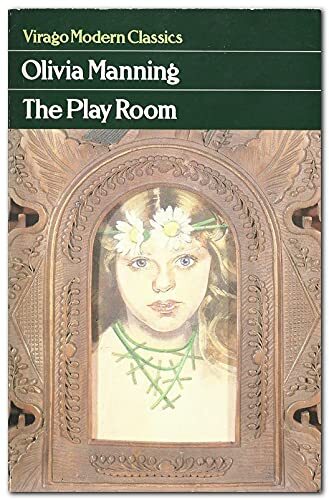
Olivia Manning CBE was a British novelist, poet, writer and reviewer. Her fiction and non-fiction, frequently detailing journeys and personal odysseys, were principally set in England, Ireland, Europe and the Middle East. She often wrote from her personal experience, though her books also demonstrate strengths in imaginative writing. Her books are widely admired for her artistic eye and vivid descriptions of place. In August 1939 she married R.D. Smith ("Reggie"), a British Council lecturer posted in Bucharest, Romania, and subsequently in Greece, Egypt and Palestine as the Nazis over-ran Eastern Europe. Her experiences formed the basis for her best known work, the six novels making up "The Balkan Trilogy" and "The Levant Trilogy," known collectively as Fortunes of War. As she had feared, real fame only came after her death in 1980, when an adaptation of "Fortunes of War" was televised in 1987.
Laura has lived her 15 years in a very uninteresting town. She dreams of moving away to London and not having to answer to her mother who never lets her have any fun, and her father by contrast who isn't interested in anything she does or says. She is infatuated with her friend Vicky after Vicky performed a small act of kindness to Laura that she has never forgotten. She also seems to have everything Laura desperately craves, as well as being beautiful, intelligent and popular. She dreams that one day Vicky will come with her to London. After a disturbing event that occurs whilst Laura and her brother are trespassing on holiday on a private estate, Laura believes telling Vicky what happened will bring them closer together. To some extent it does work, except that Vicky's best friend Gilda can't stand to see Vicky being close to someone else and tries to separate them. However, Gilda soon goes away on her family holiday, leaving Laura and Vicky to spend lots of time together, in particular going to dances at the notorious local factory. The summer ends in tragedy. I must read more of Olivia Manning.
The Play Room is a dark insular coming of age novel. Set during the "Swinging Sixties", it follows 15 year old Laura, who lives in a dreary seaside town and dreams of escaping to London to work in a Chelsea boutique. She becomes transfixed by and entangled with Vicky Logan, a beautiful, magnetic girl from a more privileged background, whose dangerous fascination with an older, more reckless local man leads the girls into dangerous situations.
Olivia Manning brilliantly captures a provincial town left completely unaffected by the vibrancy of the 1960s. Rather than the technicolor optimism of Swinging London, this world is still a claustrophobic, post-war landscape mired in the past. Olivia Manning also nails teenage obsession, social yearning, the painful desire to reinvent oneself, the polite veneer of day to day interactions which unwittingly expose the bitterness, friction, and lurking resentments just below the surface.
Be warned it's pretty bleak fare but if you enjoy social realism and domestic tales set in the 1960s then this is nigh on essential.
4/5
Fifteen-year-old Laura lives with her family in the seaside town of Camperlea. It is the Swinging Sixties, and Laura's ambition is to leave home for London and work in a Chelsea boutique. Meanwhile she worships her schoolfriend Vicky Logan who is all Laura longs to be: popular, outrageous, sensual, she lives in a large house on "the right side of town." Vicky knows she can have any man she wants - but she chooses a rough factory worker, Clarrie Piper. She begins to frequent the factory dances and Laura watches in powerless dread and fascination as the teasing game Vicky plays through one feverish summer draws to its inevitable, terrifying conclusion
The Play Room is a 1969 novel by Olivia Manning, her first novel after her renowned Balkan Trilogy. It is the story of 15 year-year old Laura, living in a seaside town of Camperlea, modeled after Manning’s own hometown of Portsmouth. Laura has low self-esteem and admires her beautiful and wealthy classmate, the 16-year old Vicky. However, Vicky’s time is occupied by a close relationship with the seemingly unworthy Gilda. Vicky lives with her loving family still reeling from the death of their son/brother is a motorbike accident.,
When Laura and younger brother Tom’ escape their dreary homelife for a summer excursion with an old neighbor on the Isle of Wright, their free license to roam leads them to stumble across the property of the strange Mrs. Toplady who keeps a playroom of life-sized nude dolls. Laura and Tom escape from Mrs. Toplady, with the younger Tom more aware than the naïve Laura of Mrs. Toplady’s reality.
Back in Camperlea, Laura uses a story about her experience with Mrs. Toplady’s Play Room to gain entry into the realm of Vicky and Gilda. When Gilda departs for a few months, Vicky turns to Laura for companionship, which largely consists of dragging Laura to local dances. Vicky drives them on the same motorbike her brother died on and chooses to get with a rough young factory worker at the dances. The story is primarily how Laura reacts to Vicky’s risk-taking and proceeds on to a very dramatic resolution.
This is a seemingly typical slice-of-life story of several months in the life of a 15 year old Portsmouth girl in the mid-late 1960s. She has problems with her parents, seeks to be friends with much cooler girls and spends a summer going to school dances, all fairly generic 15-year-old girl experiences of that time. But Manning includes some very striking oddities into her story, such as Mrs. Toplady, her Play Room, the Vicky and Gilda relationship, Vicky’s risk-taking, and the ending, aspects that take this story beyond the norm.
I imagine that many readers find that these oddities made the story unrealistic, or that Manning’s failure to develop the odd themes more made them gimmicky. While I grant the truth in both of these points, I find that these were outweighed by the positive heightened interest these oddities brought to the storytelling. My interest was certainly piqued. (I always enjoyed the juxtaposition of the generic and the odd in David Lynch’s Blue Velvet, although with Lynch the odd outweighs the generic whereas here the generic outweighs the odd)
Yes, Manning could have had better characterization, better explanations and less loose strings in this story. It is not her most cohesive storytelling. However, it is one of her most interesting ones. I thought the setting and atmosphere she created of the seaside community was superb as I could adequately envision the town, the homes, the dance halls and other seaside settings. Additionally, the story was told in Manning’s typically clear and uncluttered prose.
I really enjoyed this story and rate it as 4.25 stars.
A dark coming of age story that looks at both the main character Laura's obsession with her beautiful friend, Vicky, and Vicki's obsession with a dangerous boy that leads to a terrible climax.
Nowadays, so many books seem to advertise dangerous as sexy. Twilight's heart throb Edward Cullen admits that he wants to kill his love, Bella, and that he stalks her, watching her sleep at night. I think most of us have, at some time or other, been attracted to a 'bad boy'. This book is an antidote to that.
Clarrie is a bad boy, but a really bad one, and not so charming, either, but Vicky is drawn to him. The first time she meets him, he is manhandling her naive friend Laura, and Laura is terrified, but Vicky is instantly attracted. Vicki is a placid, dreamy girl, who takes everything with a smile, and seems to not really care about anything, but she becomes drawn to Clarrie, although Laura remains terrified of him. This is all seen through the eyes of the innocent younger Laura, to whom Vicky is some kind of goddess. Laura also experiences naive romantic feelings for Vicky's handsome father, and her attempts to impress him with a foam stuffed bra are both pitiful and disturbing.
The play room of the title is something that Laura and her brother glimpsed on a trip to an island, a sinister room filled with lifesize naked dolls, owned by the disturbing "Mrs Toplady". Her story about this strange room was what earned her entrée into the society of Vicky and her best friend, even though Laura didn't really understand the story herself. The lingering sinister nature of this story remains with us, although they never go back to the island or see Mrs. Toplady again. It is also possible that the playroom is actually the world itself, and it is the cruel, powerful people like Clarrie, who play with the weak, like Laura and Vicky.
This book reminds us of the true violence and darkness that lurks behind the civilised veneer of society, and that even protective parents like Laura's mother, cannot really ever protect us from that.
A fascinating and haunting book. Manning’s fluent yet precise style belies the danger, bitterness and violence that swirls just under the surface of everyday life in this engrossing story. At first, it seems to be a simple post-war coming-of-age but develops into something really unexpected. The narrator is not someone to warm to instantly but, gradually, we feel and experience with her the fraught relationships with both her mother and the friend she idolises. There are so many vivid scenes and finely drawn dialogue that you feel as if you’re actually there with the characters, listening in. The ending was slightly strange for me, not a bad one, it just didn’t seem to fit quite right.
Odd this. I was conscious I was reading something very well-written, and much of what it had to say about the vicissitudes of 1960s adolescence chimed with me. Also I suspect the atmosphere and the imagery will remain with me - another feature of the writing - but it felt a very jerkily-told tale, patchy and strange, so difficult to know how to 'rate' it. I felt it was 'OK' but suspect it deserves more.
I have read this before but have not the slightest recollection of it; not sure even in which decade.
Another re-read, this one from when I was sixteen myself, and I thought I was so much more sophisticated than the protagonist Laura, because I was now living in London, though some time after the 1960's when this was set, and knew it wasn't all a giant bohemian party that she, stuck in a sedate small town somewhere in Sussex, innocently believes, and couldn't have been back in the 1960's. The ambiance is very 1960's - 'discos', 'boutiques', andthe beginnings of serious consumerism are portrayed, along with the so-called 'sexual revolution'. Feminism is just round the corner for clever young girls like Laura, who don't want to turn into their mothers. Laura is fascinated by a classmate called Vicky, blonde and exceptionally good looking, and mistakenly worships her. Vicky is rather superficially portrayed, but we gather that though she is indolent, she is unconventional enough to take out her late brother's large motorbike with her two friends on it (she must be stronger than she appears to be to hold it up). Vikcy in turn becomes fascinated by a sinister man named Clarrie Piper who works at a local factory, and continues to meet him, even though his violence and contempt for women become increasingly evident. Vicky is the daughter of a wealthy architect, both indulged and neglected by her parents. Laura's own, a retired naval officer and his harrassed wife, have no comprehension of the dangers into which she is being introduced. At the beginning of the book, she and her brother,on holiday on the Isle of Wight, were shown a room of mechanical sex dolls by one 'Mrs Toplady'. Typically, they did not tell their parents about this episode. Without writing a spoiler, it is relevant to the rest. Olivia Manning's writing is always excellent, and her acid humour is particularly evident in this.
This takes place in the 1960s, in a small British seaside town, where teenage Laura longs to grow up and move to London someday. She also longs to be friends with beautiful Vicky Logan, whom Laura worships. But just when something happens to pull Laura and Vicky together and it seems Laura's dreams might come true, Vicky is drawn into an affair with a rough factory worker.
I read this (a Virago reprint) on the strength of Manning's The Balkan Trilogy and The Levant Trilogy, and I was rather disappointed. I occasionally felt some sympathy for Laura, whose life is constricted by her looks, her small town, and her unsympathetic mother, but none of the other characters came alive for me. Perhaps the book's short length (under 200 pages) contributed to this feeling; the characters and situations generally felt underdeveloped.
This cautionary tale from the point of view of a 15-year old is of course less sophisticated than The Balkan or Levant trilogies. But the depiction of a youngster yearning for a larger life is spot on, and the character, Laura, very real and likeable in all her thoughts and actions. The mystery character, Vickie . . . She is very real too. I remember such girls from adolescence, driven by who-knew-what emotions (or hormones?) to risk their lives in pursuit of danger, adventure. I felt a bit frustrated, though, that little attempt was made to tie Vickie's behavior to her circumstance. Maybe there is not always a motivating psychology behind adolescent behavior. But contrasting Laura's sense to Vickie's refusal of sense, makes impossible a purely biological attribution. Anyway, this is a thoughtful novel and one young people, even these days since the conflicts are timeless, could read and discuss.
I had to add this book to Good Reads as it wasn't showing at the time of my reading it. I have mixed feelings about the novel. Did I enjoy it? No. Not really. I do think it accurately covered the stifled trapped feeling you can get living in a small town where everyone knows your business...and yet you can, as the author shows, create secret lives. It only touches on the Technicolor aspects of the sixties in terms of how radically culture changed...and how quickly while those living on the outskirts were still mired, as the author states, "...not even before the war (II) but before the other war (I.)
Although this was Manning's ninth novel, it felt to me like a very junior effort. The first half of the book is mostly about 15 year old Laura Fletcher's trip to the Isle of Wight with her younger brother Tom. Staying with their mother's former char-lady, they have their first whiff of independence during this holiday where they go largely unsupervised, to the extent that they almost get abducted by a weird woman who keeps bizarre "dolls" in the play room of the title. Using the story of these sex toys as leverage, Laura then tries to tighten her friendship with rich and gorgeous Vicky, whose budding sexual cravings take many forms. Laura nearly catches Vicky having sex with Gilda, then watches her succumb to the venomous spell of a sadistic working-class lad who eventually rapes and kills her. The book has its moments and Laura, an obvious stand-in for the author, is intermittently interesting, but altogether it doesn't gel as a story of the pitfalls of adolescence.
This is purportedly about the darker side of adolescent sexuality, but it doesn't completely ring true. The best part of the book is the gruesome Mrs Toplady and the discovery of the play room, full of naked adult dolls. It does tie up with Vicky's destruction like a malleable doll, at the hands of Clarrie, but her descriptions of rough Sixties youths and their dances and speech just doesn't sound real.
This entire review has been hidden because of spoilers.
Last week, when I needed a literary pick-me-up, I turned to my Virago bookcase and I pulled out a little book by Olivia Manning.
It looked very promising: a coming of age story set in an English seaside town in the swinging sixties.
Laura was fifteen, and she dreamed of leaving home for the bright lights of London. She wanted to leave her dull, lower middle class family behind. Her strict mother, her unassuming father, her irksome younger brother.
But that was in the future. What she wanted right now was to be friends with Vicky Logan. She was lovely, the cherished daughter of liberal, well to do parents, and she had once shown Laura a small kindness that Laura had never forgotten.
It felt a little predictable, a little stereotypical, but the two girls offered an interesting study in contrasts.
Vicky had every advantage, but she lacked a certain spark and had no interest in the world outside her hometown; Laura had fewer advantages, but she was bright and she was ready to fly.
So who really had most advantages?
Laura’s mother accepted an invitation for her children to spend the Easter holidays with an old acquaintance on the Isle of Wight. It had been one of those invitations made out of politeness with no expectation of it ever being accepted. And so Laura and her brother, Tom, found themselves with bed and board, but otherwise left to their own devices.
On one fateful day Laura and Tom stumbled into a private estate. They didn’t mean to trespass, but the incoming tide had caught them unawares. The strange ‘Mrs Toplady’ invites them into ‘her’ home and shows them the play room, full of naked, anatomically correct adult dolls, twisted into suggestive poses. Laura and Tom run.
It was strange, and nicely under-explained, but it didn’t quite work.
Because it came out of nowhere, and because there were no consequences.
But it gave Laura a wonderful story that would draw her into Vicky’s circle.
Vicky, much more sophisticated than Laura, understands more about the play room than Laura, and she is intrigued.
Laura falls into the role of best friend when Vicky’s friend Gilda is away on an extended family holiday. The pair go to parish dances, and then to more grown up dances with workers from the local factory.
Laura is captivated by the atmosphere and the music, and Vicky is captivated by a rough factory worker. She is out of her depth, as manipulated as one of the dolls in the play room, and the summer will not end happily.
The story was compelling, there were some nice moments, but I am afraid that this book just did not work.
So much of the dialogue, so many of the things that happened, just didn’t quite ring true.
And I was left wondering what Patricia Highsmith or Barbara Vine would have made of ‘Mrs Toplady’; there was, I think, the potential for a more interesting story in this material.
Olivia Manning is the author of many wonderful novels, and I am disappointed to have to say that ‘The Play Room’ is not one of them.
A kind of empty melting morsel of a book, not dreadful, but nowhere near as powerful and meaningful as the blurb had me believe.
Laura is a classic bildungsroman character, living a vibrant inner life while the world around her seems both desperately attractive and completely out of reach. I understand why these types of books get written, and why children or youths are such popular choices for the protagonists, but I still finished this book wondering what exactly Manning had intended to say with it. Why had she chosen this girl, this place, this scenario? And, since she had, why did she bottle halfway through and hurry the ending as if the place was closing and she hadn't time to do the thing properly?
There was only one really good scene in this book, one really evocative place, and that was the crumbling old estate that they had to pass through on the way to the abandoned sea-plane hangar. The impression of things ending, the old world fading and returning to the earth which was, I think, part of the book's idea, was never so strong as when Laura and her erstwhile companions spent time here. The imagery of gnarled old fruit trees long beyond bearing and cottages with their roofs tumbled in made more sense to me than any of the old town/new town dichotomies. The hangar itself was another symbol of abandonment and change, looming huge and dark, a leftover from the war, over a town coming to grips with the new world.
Laura so badly wants to join that new world, and though her New Best Friend Vicky doesn't share her enthusiasm, I never really felt that to be a barrier to her leaving the dreary town of Camperlea and fulfilling her dreams of moving to London and having fun. Manning attempted to make Vicky this unreachable goddess-type, Laura's ultimate idol, but Laura was so young that it really just came off as the kind of hero-worship that won't hold a determined young woman back when she gets to the point of leaving for London. Vicky would never have held someone in thrall for so long.
So the stakes were already lowered more than I expected, and when the ending happened so suddenly and without resolution, I was left feeling deflated.
This book evokes perfectly the atmosphere of the sixties and inter generational conflict in a coming of age story with a very dark side and an interesting, entirely believable heroine